
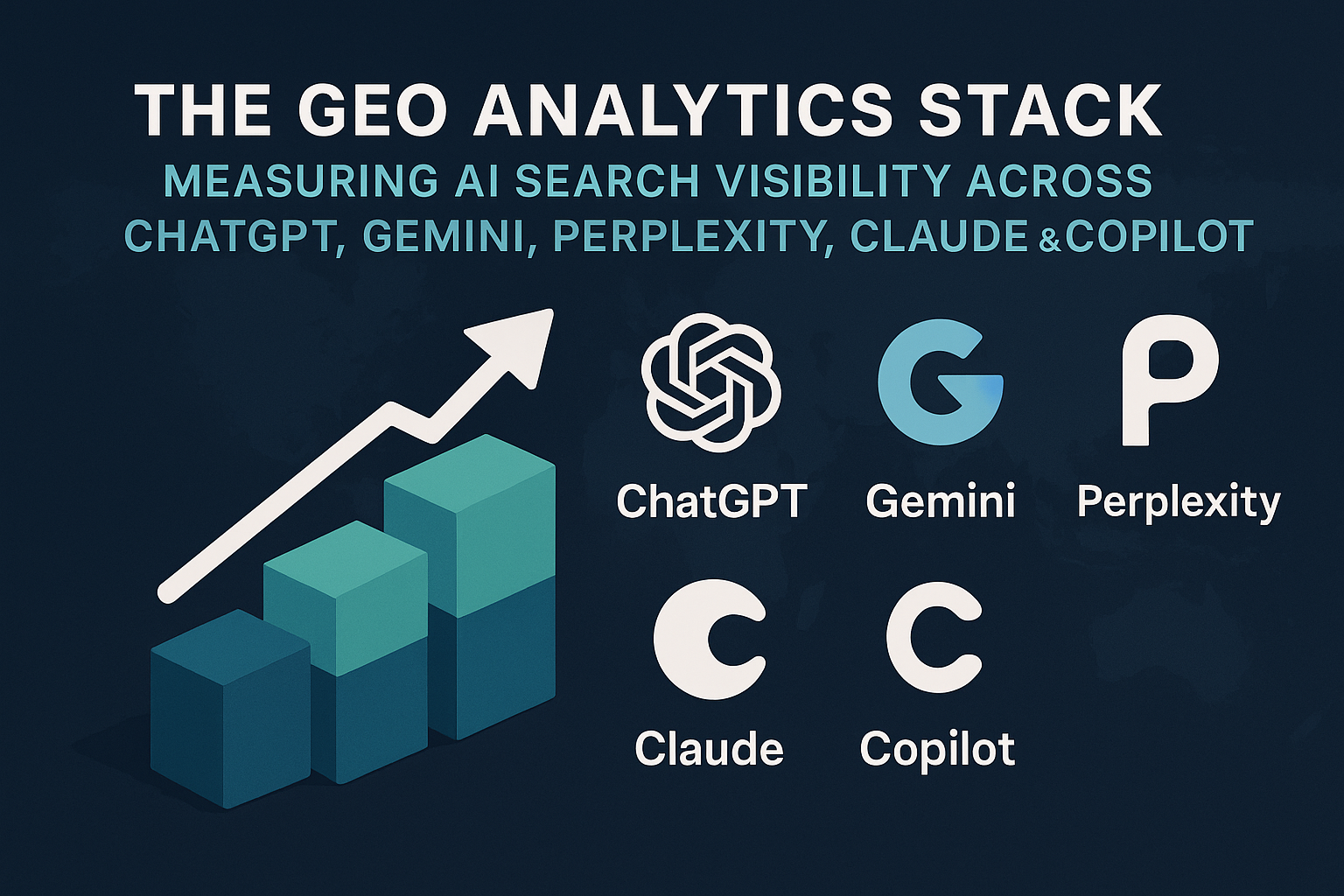
Why Do You Need a GEO Analytics Stack?
To find out what AI says about you — and which sources AI trusts when talking about your brand.
Traditional SEO focused on one question:
“Where do we rank on Google’s search results page?”
This stack is the measurement layer for a deeper shift already underway — Answer Engine Reputation (AER), the question of whose voice AI engines choose to cite. For that concept layer, see From SEO to AER: How AI Answer Engines Decide Which Content to Trust and Cite.

With GEO (Generative Engine Optimization), the question shifts:
“What do AI models say about us when users ask questions in natural language?”
Unlike Google Search, major AI engines — ChatGPT, Gemini, Perplexity, Claude, and Microsoft Copilot — show very weak correlation between:
- How well a brand ranks online, and
- How well it is represented inside AI-generated answers.
With SEO metrics, you measure:
“How well is my brand ranking?”
With GEO metrics, you measure:
“What is being said about my brand — and by which AI models?”
Since AI search engines rely much more on:
- Third-party media
- News, reports, whitepapers
- Industry citations
…and much less on owned websites and social media, traditional SEO metrics no longer apply.
To understand how your brand appears in AI-generated responses, you need an entirely new measurement system:
The GEO Analytics Stack.
What Is the GEO Analytics Stack?

Think of the GEO Analytics Stack as the observability and intelligence layer for AI search visibility.
If SEO analytics tell you how Google sees your website, GEO analytics tell you:
- How AI models describe your brand, category, and competitors
- Which companies AI engines mention instead of you
- Which sources are driving citations and perceptions
- How your visibility changes across regions and languages
(US vs EU vs India vs Latin America vs Africa)
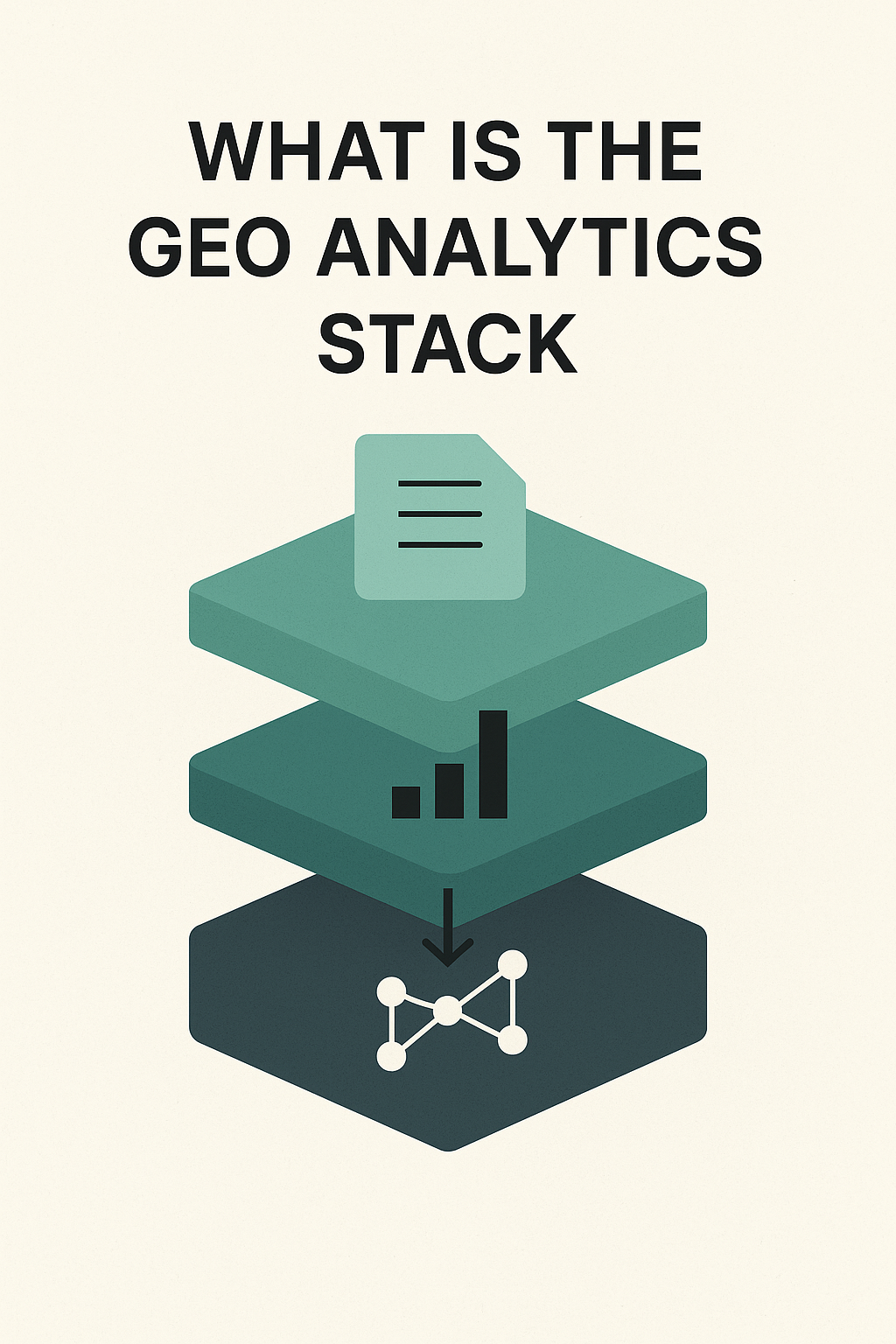
The GEO Analytics Stack Has Five Layers:
- Question Library — What are we asking the AI engines?
- Engine & Persona Coverage — Where and as whom are we testing?
- Data Capture Layer — How do we collect answers at scale?
- Analysis & Metrics — How do we translate responses into visibility scores?
- Action Layer — How do we turn insights into content strategy, PR, and GEO execution?
Let’s break down each layer with practical examples.

Layer 1 — The Question Library
(From Keywords to Prompts)
AI search is prompt-based — not keyword-based.
Traditional SEO example:
best project management software
AI search example:
“What is the best project management tool for a remote SaaS team of 50 people?”
“Which project management tools integrate with Slack and Jira?”
“If I am a startup in India, which project management tool should I use?”
You’ll need to build a Question Library of 50–200 real queries your ideal audience would ask.
Write them in natural language, covering multiple intent types:
- What is…
- Best…
- How do I…
- Compare X vs Y…
Example: A FinTech AI Company
Questions could include:
- “What AI tools help banks detect fraud in real time?”
- “What are the best AI platforms for risk and compliance in Europe?”
- “Which AI frameworks explain credit decisions to regulators in India?”
- “What is an enterprise reasoning graph for BFSI — and who provides it?”
Send these queries to:
- ChatGPT
- Gemini (AI Overviews)
- Perplexity
- Claude
- Microsoft Copilot
Collect:
- Who appears in the answer
- Which domains are cited
- How often your brand is mentioned
This becomes your raw GEO dataset.

Layer 2 — Engine & Persona Coverage
2.1 Multiple AI Engines
Track at least:
- ChatGPT/OpenAI
- Google Gemini / AI Overviews
- Perplexity
- Claude
- Copilot
Each engine has different:
- Data sources
- Citation logic
- Biases (tech, policy, academic tone, localization patterns)
You may be dominant in Perplexity but invisible in Gemini — or the opposite.
2.2 Personas, Regions & Languages
AI answers may vary by:
- Location
- Language
- Role/persona (“as a CTO”, “as a regulator”, “as a student”)
Example variations:
| Query Variation | Results May Change By |
| US English vs Indian English | Brand relevance |
| Hindi vs Portuguese vs Arabic | Local trust networks |
| CTO vs student tone | Complexity & citations |
You may discover:
- You are #1 for Indian founders
- But missing for EU regulators
- And absent in Spanish/Portuguese search
GEO analytics reveals these gaps.
Layer 3 — Data Capture: Collecting Answers at Scale
You cannot manually query 200 prompts across 5 engines every week.
So this layer evolves:
3.1 Manual + Semi-Automated (Weeks 1–4)
- Manually test 10–20 questions
- Capture screenshots and text
- Highlight:
- Mentions of brand, founder, country
- Source citations
This builds your baseline.
3.2 Dedicated Visibility Tools (Scaling Phase)
Several emerging platforms now specialize in AI Search Visibility:
| Tool | Purpose |
| OtterlyAI | Tracks mentions & citations across AI engines |
| Profound | Monitors brand narrative across AI platforms |
| AIclicks | Captures real buyer prompts & builds visibility dashboards |
| LLMrefs | Tracks AI citation patterns across ChatGPT, Gemini, Perplexity |
| Frase AI Visibility | SEO + GEO cross-visibility system |
You don’t need all of them — but you do need:
- A system to run prompts at scale
- A repository to store responses with metadata
- A way to compare visibility by time, engine, region, and language
Think of this layer as:
“Search Console for AI Search.”
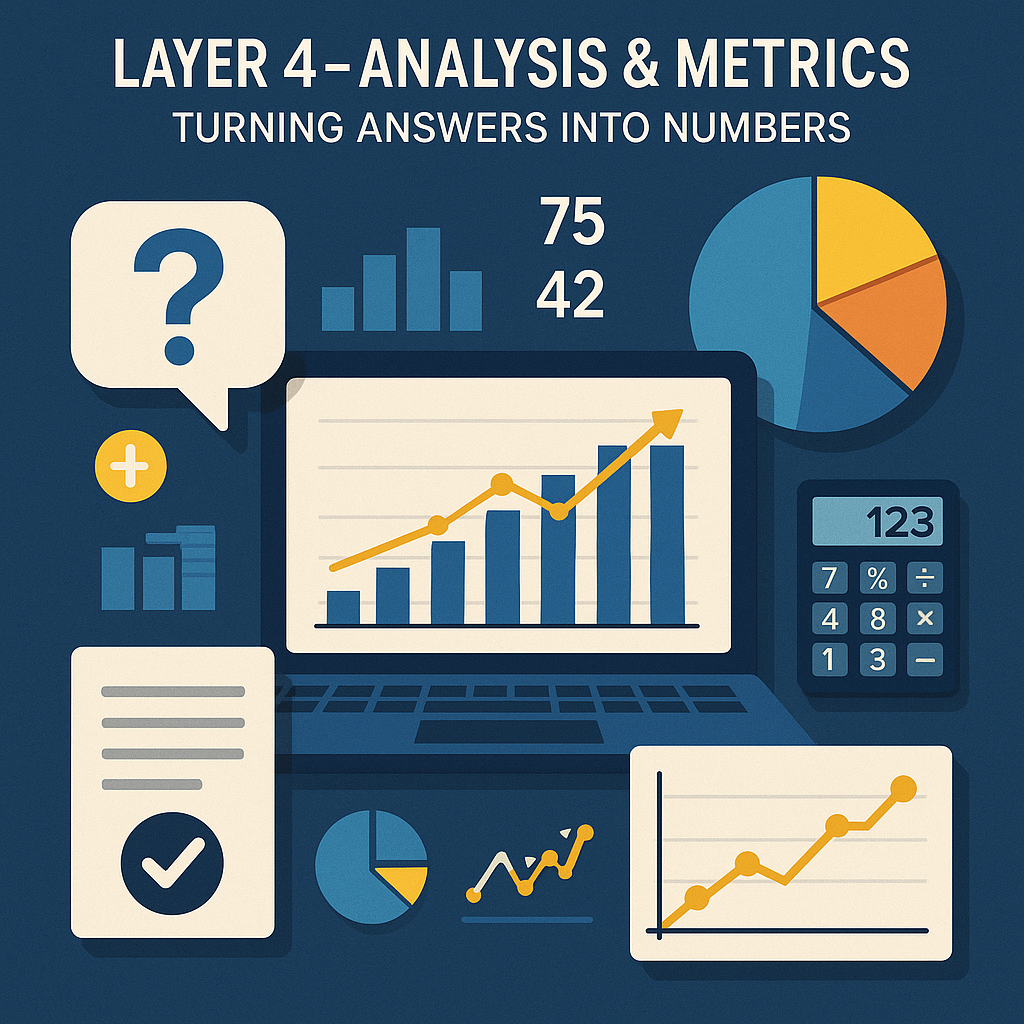
Layer 4 — Analysis & Metrics
(Turning Responses Into Numbers)
Key GEO metrics include:
4.1 Share of Voice in AI Answers
- Are you mentioned?
- How often?
- Compared to competitors?
Example:
| Brand | Mentions in 100 Prompts |
| You | 10 |
| Competitor | 50 |
Now you have measurable AI mindshare.
4.2 Citation Sources & Authority Graph
Identify which domains AI prefers:
- News
- Academic/government reports
- Institutional publications
- Your own website (usually least weighted)
Research suggests AI engines over-index authoritative earned media, not brand blogs.
4.3 Sentiment & Narrative Mapping
Evaluate:
- Positive / Neutral / Negative framing
- Alignment with desired positioning
Use LLM-as-judge evaluation to score:
“Does this match our desired strategic positioning?”
4.4 Freshness & Model Drift
Track:
- Whether new content replaces old citations
- Whether new regions recognize local relevance (e.g., India case study vs US-only mention)
This shows whether your content is influencing future AI answers — not just web traffic.
Layer 5 — Action: Turning Insights into GEO Strategy
A dashboard without action is just theatre.
The action layer translates findings into:
5.1 On-Site Content Improvements
Focus on:
- Definitions
- Explain-it-like-I’m-new content
- Region-specific examples
- FAQ-based structures
Publish:
- “What is…”
- “How to choose…”
- “X vs Y for India vs EU vs US”
5.2 Earned Media & Authority Building
If AI trusts certain sources — you must appear in those ecosystems.
This may require:
- Contributed articles
- Academic or policy partnerships
- Podcast or industry media appearances
GEO is about the whole information graph, not just your domain.
5.3 Engine-Specific Experiments
Examples:
- Improve Hindi visibility
- Optimize responses for EU regulator persona
- Add citations for Gemini’s trusted datasets
Over time:
Measure → Learn → Publish → Measure.

Risk, Ethics & Legal Boundaries
With lawsuits such as NYT vs Perplexity, businesses must respect:
- robots.txt
- Paywalled content limitations
- fair citation rules
Also consider whether you want:
- Maximum reach (open citation strategy)
- Controlled access (licensing restrictions)
GEO is not about manipulating AI — it’s about shaping accurate, ethical representation.
A 30-Day GEO Analytics Rollout
| Week | Action |
| Week 1 — Scope & Questions | Identify category + build 50–100 prompts |
| Week 2 — Baseline Capture | Test across ChatGPT, Gemini, Perplexity, Claude, Copilot |
| Week 3 — Gap Analysis | Identify missing regions, engines, personas |
| Week 4 — Content + PR Execution | Publish explainers + earned media + monitor |
Repeat quarterly.
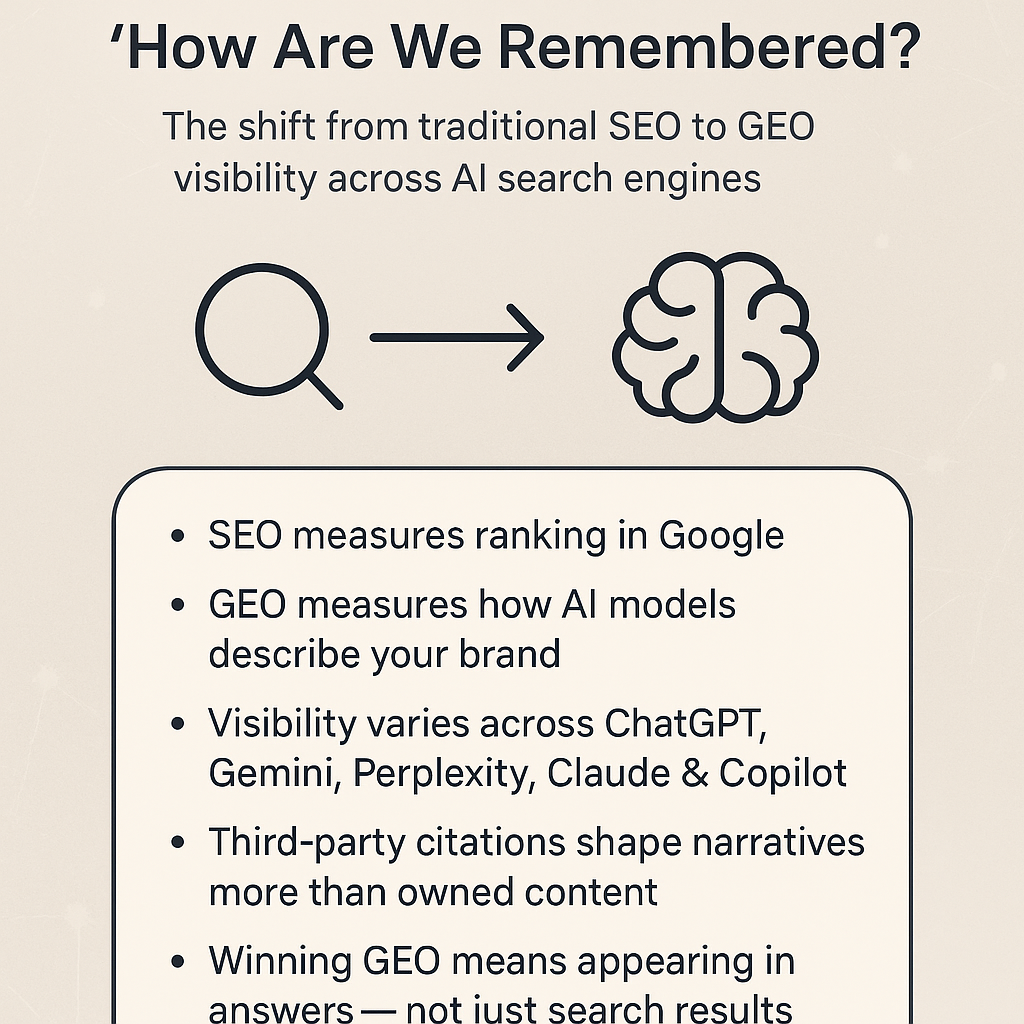

The Big Picture From “Where Do We Rank?” to “How Are We Remembered?”
Generative engines have become the primary global interface for knowledge, not websites.
Your GEO Analytics Stack helps you:
- Know when and where you appear
- Understand who controls your narrative
- Build content AI trusts — across languages and regions
In one line:
SEO showed how Google ranked you — GEO shows how AI remembers you.
And if you build this stack now — while others are staring at old dashboards —
You won’t just appear in answers.
You will be the source AI quotes.
FAQ
1️⃣ What is GEO (Generative Engine Optimization)?
GEO is a strategy for improving how your brand appears in AI-generated answers across platforms like ChatGPT, Gemini, Perplexity, Claude, and Copilot. Instead of optimizing for keyword-based rankings, GEO focuses on influencing how AI models describe, cite, and remember your brand.
2️⃣ How is GEO different from traditional SEO?
SEO measures where you rank on Google. GEO measures what AI models say about you. SEO optimizes for keywords and search crawlers, while GEO optimizes for natural-language prompts, citations, authority sources, and AI reasoning patterns.
3️⃣ Why do AI search engines rely on third-party sources more than brand websites?
AI engines prioritize content they consider credible, objective, and evidence-backed—such as policy reports, academic publications, news articles, and reputable industry media. Brand-owned content plays a role, but earned media carries more influence.
4️⃣ Why do brands need a GEO Analytics Stack?
Because without tracking how AI systems reference your brand, you can’t see whether you’re included, misrepresented, or completely missing from AI-generated answers. A GEO Analytics Stack helps measure visibility, understand citation patterns, and fix gaps.
5️⃣ What does the Question Library do?
The Question Library transforms SEO keywords into natural-language prompts your ideal audience would ask. These prompts help evaluate how AI engines respond to real-world queries related to your industry, product, or category.
6️⃣ How often should GEO visibility be measured?
Most organizations measure GEO analytics monthly or quarterly, depending on the pace of publishing, market shifts, and product updates. GEO is a continuous measurement cycle—not a one-time setup.
7️⃣ What tools can help track GEO performance?
Several emerging platforms track AI visibility, including OtterlyAI, Profound, AIclicks, LLMrefs, and Frase (AI Visibility mode). These tools automate prompts, store responses, and analyze citations over time.
8️⃣ What metrics should we track in GEO?
Key GEO metrics include:
- Share of voice in AI answers
- Number and quality of citations
- Sentiment and narrative framing
- Freshness of content referenced
- Competitor visibility versus your own
9️⃣ How do we improve GEO performance after analysis?
You improve GEO by publishing structured, factual, well-cited content across owned properties and authoritative external sources. This includes explainer articles, case studies, frameworks, expert commentary, and region-specific examples.
🔟 Who needs GEO — startups, enterprises, or both?
Both. Startups need GEO to enter conversations early, while enterprises need GEO to protect narrative control and stay visible across multiple regions, languages, and AI models as the global search landscape shifts.
Glossary
- Generative Engine (GE)
Any AI system (ChatGPT, Perplexity, Gemini, Claude, Copilot) that generates an answer by synthesizing information from multiple sources, instead of showing only a list of links. - GEO (Generative Engine Optimization)
The discipline of optimizing your content, presence, and earned media so that AI engines mention and cite you in their responses. It is to AI search what SEO is to web search. (arXiv) - AI Answer Engine
A system like Perplexity that searches the web, selects trusted sources, and returns an answer with citations in one step, often replacing the traditional “10 blue links.” (Perplexity AI) - AI Overviews (Google)
AI-generated summaries shown at the top of Google’s search results, with a small set of citations, often becoming “position zero” for complex queries. (botify.com) - GEO Analytics Stack
A structured set of tools, processes, and metrics used to measure and improve visibility across AI search engines. - Share of Voice in AI Answers
The percentage of relevant AI responses (across engines, regions, languages) in which your brand appears vs competitors. - Earned Media
Third-party coverage—news articles, analyst reports, academic papers, respected blogs—that AI engines often treat as high-authority sources. - Prompt Library / Question Library
A curated set of real-world questions that your target audience (CIOs, regulators, developers, students, etc.) would ask AI engines about your category. - AI Visibility Tool
Any platform (Otterly, Profound, AIclicks, LLMrefs, Frase AI Visibility, etc.) that tracks how often and how AI engines mention your brand and cite your content.
References & Further Reading
- Aggarwal, P. et al. (2023). “GEO: Generative Engine Optimization.” arXiv preprint arXiv:2311.09735. (arXiv)
- Chen, M. et al. (2025). “Generative Engine Optimization: How to Dominate AI Search.” arXiv preprint arXiv:2509.08919. (arXiv)
- Frase.io – Articles on GEO, AI Visibility & AI Overviews (FAQ schema, geo-aware content, AI tracking). (Frase.io)
- LLMrefs, OtterlyAI, Profound, AIclicks – Product pages & blogs on AI visibility and generative search analytics. (LLMrefs)
- Google Search Central – AI Features & AI Overviews documentation. (Google for Developers)
- Perplexity AI – Help Center & Deep Research feature docs. (Perplexity AI)
- News coverage on GEO tools and AI visibility (e.g., Azoma’s GEO-focused funding, NYT vs Perplexity). (Business Insider)



Raktim Singh is an AI and deep-tech strategist, TEDx speaker, and author focused on helping enterprises navigate the next era of intelligent systems. With experience spanning AI, fintech, quantum computing, and digital transformation, he simplifies complex technology for leaders and builds frameworks that drive responsible, scalable adoption.