

A Shift Most Leaders Haven’t Fully Seen Yet
For years, the AI conversation has been dominated by models.
Which model is smartest?
Which model is cheapest?
Which model reasons better?
Which model can act?
These questions still matter.
But they are no longer the deepest questions in the market.
A more fundamental shift is underway—quiet, structural, and far more consequential.
As AI moves from generating content to searching, comparing, verifying, deciding, and transacting, a new competitive layer is emerging:
The forms of reality that machines trust by default.
Search engines already reward structured product and merchant data.
Verifiable credentials are becoming machine-checkable proofs.
Digital identity wallets are redefining how trust is presented.
Payment networks are building rails for AI-driven transactions.
This is where a new idea begins:
The Representation Reserve Currency
The Representation Reserve Currency is the small set of machine-readable formats, identities, proofs, and trust rails that AI systems will rely on as their default medium for understanding reality.
Just as reserve currencies reduce friction in global trade, these representations will reduce friction in:
- machine-mediated discovery
- verification
- coordination
- decision-making
- and transactions
They will become the preferred language of reality for machines.
And once that happens, a powerful asymmetry emerges:
Institutions that speak in these trusted forms will move faster, scale faster, and be trusted faster than those that cannot.
From Model Advantage to Representation Advantage
We are entering a new phase of the AI economy.
- The first wave was about model power
- The second wave was about operational AI
- The third wave is about representation power
Competitive advantage is no longer just about better models.
It is about being:
- easier to see
- easier to verify
- easier to reason about
- easier to act upon
This is the foundation of what I call the Representation Economy.
And this is precisely where the SENSE–CORE–DRIVER framework becomes critical:
- SENSE → makes reality legible
- CORE → makes it intelligible
- DRIVER → makes it actionable
The Representation Reserve Currency stabilizes all three.
Why the AI Economy Needs a “Reserve Currency”
Machines do not understand the world like humans do.
Humans tolerate ambiguity.
Machines do not.
Humans infer.
Machines require structure.
Humans negotiate meaning.
Machines require verification.
This creates a structural requirement:
AI systems perform best when reality is structured, authenticated, and machine-readable.
That is why the ecosystem is converging toward:
- structured product schemas
- standardized identity frameworks
- verifiable credentials
- interoperable payment tokens
- shared semantic models
This is not a technical evolution.
It is a market convergence.
Whenever coordination scales, systems gravitate toward common trusted formats.
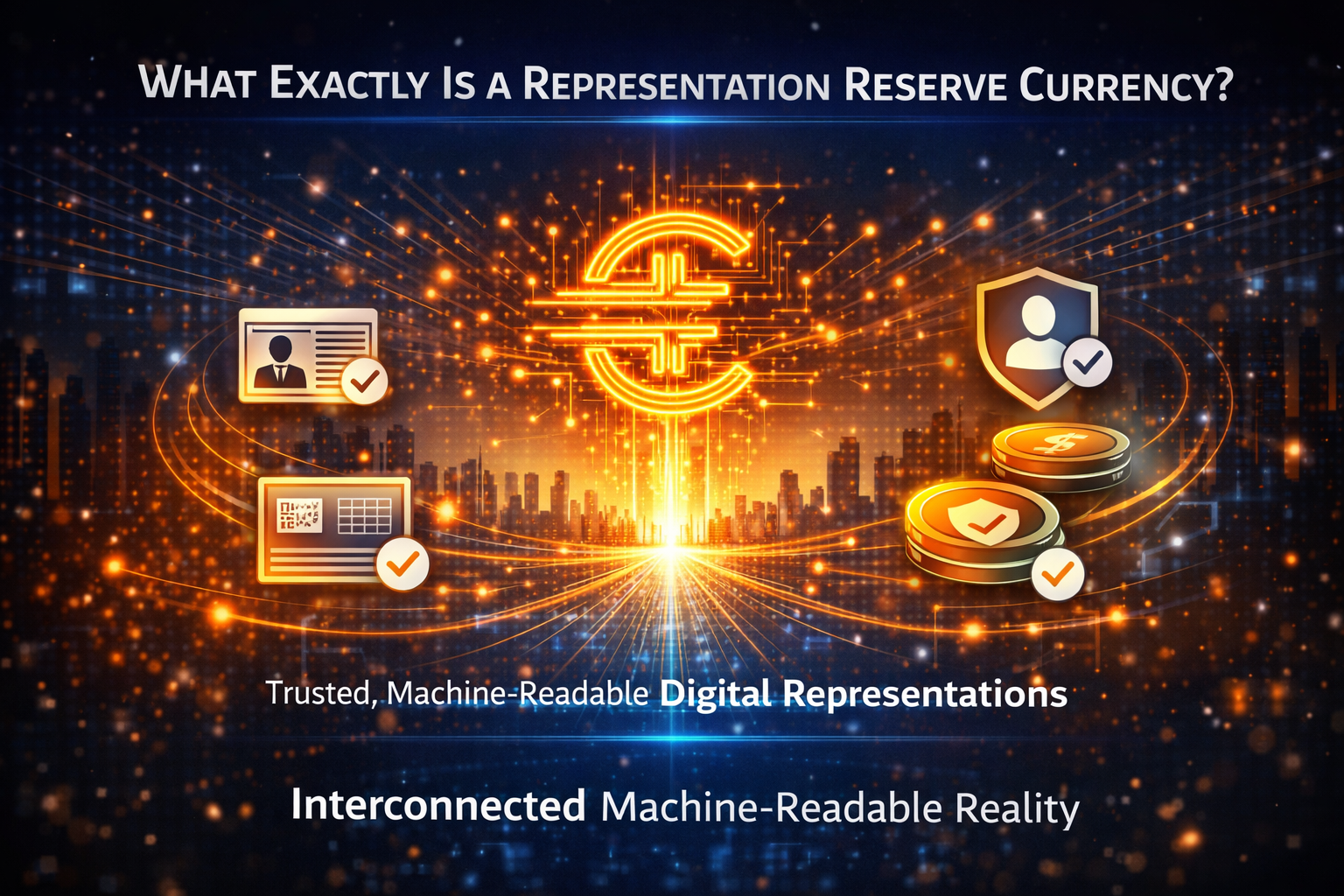
What Exactly Is a Representation Reserve Currency?
It is not a single standard.
It is a class of trusted machine-readable representations.
Examples include:
- product identity standards (e.g., GS1 Digital Link)
- semantic schemas (e.g., schema.org)
- verifiable credentials (W3C)
- digital identity frameworks (EU Digital Identity Wallet)
- tokenized payment systems
- provenance and authenticity standards
The defining property is simple:
Machines prefer representations that are easier to verify, compare, and act upon.

From SEO to Machine Trust
Many organizations still think structured data is about SEO.
That framing is already outdated.
Yes—structured data improves visibility.
But the deeper shift is this:
We are moving from search optimization to machine trust optimization.
When AI systems:
- recommend products
- evaluate suppliers
- validate credentials
- execute transactions
They are making trust decisions.
And they will increasingly rely on:
- identity clarity
- structured representation
- verifiable claims
- policy alignment
This is where agentic commerce becomes transformative.
AI systems are no longer just recommending.
They are beginning to act.
And action requires trust.
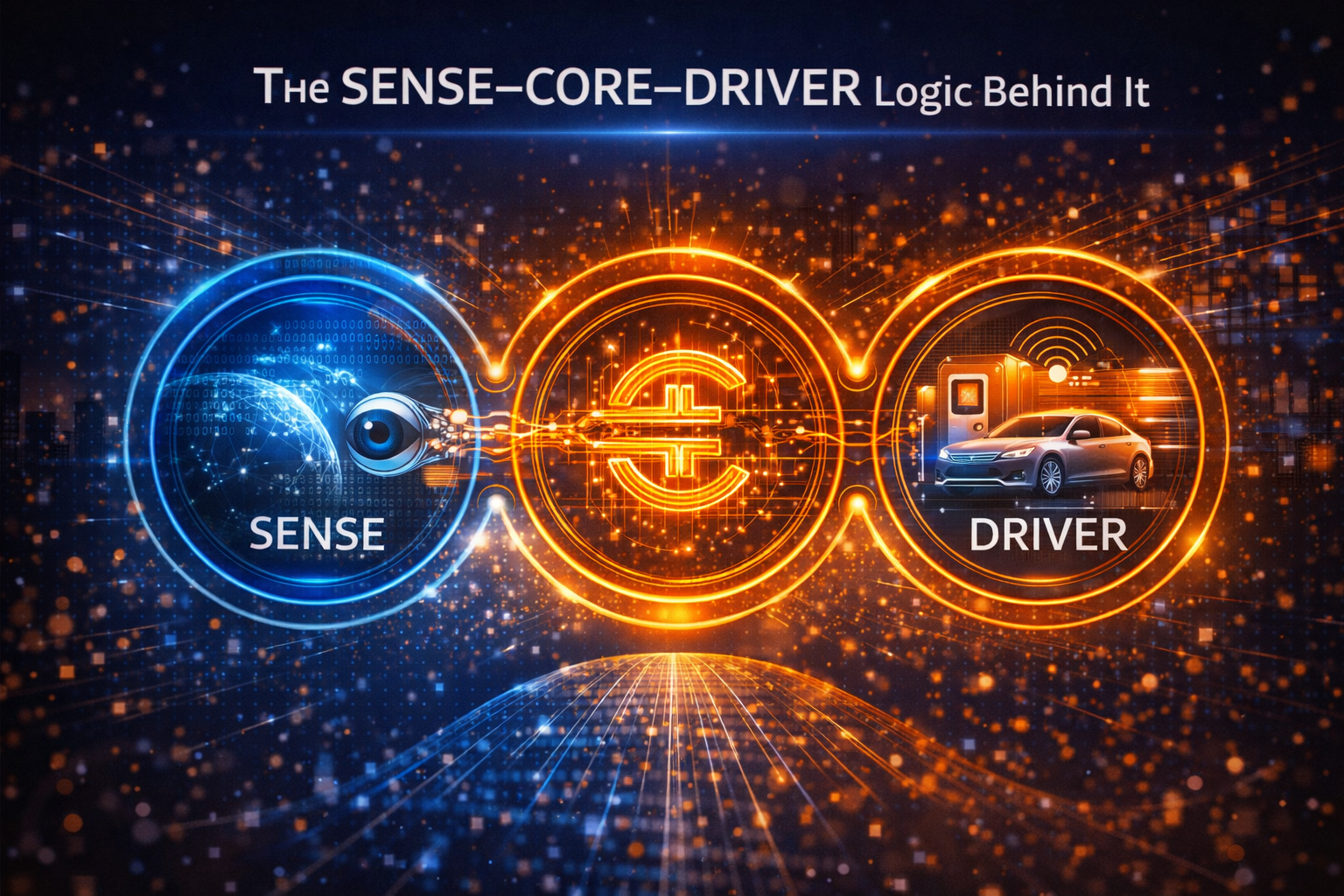
The SENSE–CORE–DRIVER Logic Behind It
SENSE: What Machines Can Reliably See
Reality must first be legible.
Structured data, schemas, identifiers, and credentials reduce ambiguity.
If something is not machine-readable, it is partially invisible.
Representation Reserve Currency defines what machines recognize by default.
CORE: What Machines Can Reason Over
Once visible, reality must be comparable and interpretable.
Standardized representations reduce cognitive uncertainty.
Machines reason better when reality is structured consistently.
DRIVER: What Machines Can Safely Act On
This is where everything becomes real.
Can the system:
- verify identity?
- trust the claim?
- execute safely?
- audit the outcome?
Representation becomes operational infrastructure.
Simple, Powerful Examples
-
Commerce
Two companies sell identical products.
- One: beautiful website, poor structure
- One: structured, standardized, machine-readable
AI systems will favor the second.
Not because it is better.
Because it is more legible and actionable.
-
Hiring
- Candidate A → PDF résumé
- Candidate B → verifiable credentials + structured skills
Who is easier for AI systems to evaluate?
-
Healthcare
- Hospital A → fragmented PDFs
- Hospital B → interoperable machine-readable records
Which one integrates faster into AI-enabled care systems?

Why Only a Few Will Dominate
Not every format becomes a reserve currency.
Only those that achieve:
- standardization
- interoperability
- verification
- network effects
- low ambiguity
This means the AI economy will converge around a small set of dominant representations across:
- identity
- products
- credentials
- payments
- policies
- services
What This Means for Boards and C-Suite Leaders
Most organizations are asking:
“Which AI model should we use?”
The better question is:
- Can machines verify who we are?
- Can they understand what we offer?
- Can they trust our claims?
- Can they transact with us safely?
Are we speaking the reserve currencies of our industry?
This is not a technical decision.
It is a board-level strategic decision.
The New Competitive Advantage
The winners of the AI economy will not simply be:
- those with the largest models
- those with the most pilots
- those with the loudest AI narrative
They will be:
those who are easiest for machines to trust.

Conclusion: The Invisible Shift That Will Decide the Future
The AI economy is not just about intelligence.
It is about representation of reality.
Before machines act, they must trust.
Before they trust, they must understand.
Before they understand, reality must be represented.
And that representation is converging toward a few trusted forms.
The Representation Reserve Currency will define who participates fully in the AI economy—and who remains invisible to it.
Frequently Asked Questions (FAQ)
What is Representation Reserve Currency in AI?
It refers to a small set of trusted machine-readable formats and standards that AI systems rely on to understand, verify, and act on real-world information.
Why is representation more important than models?
Models depend on data quality and structure. If reality is poorly represented, even the best models cannot reason or act effectively.
How does this impact businesses?
Businesses must ensure their products, identity, credentials, and services are machine-readable, verifiable, and standardized.
What role does SENSE–CORE–DRIVER play?
It explains how AI systems see (SENSE), reason (CORE), and act (DRIVER). Representation Reserve Currency stabilizes all three layers.
Glossary
- Representation Economy: An economy where value depends on how well reality is structured for machine use
- Machine-Readable Reality: Information formatted for AI systems to interpret directly
- Verifiable Credentials: Cryptographically secure, machine-checkable proofs
- Agentic Commerce: AI systems autonomously discovering and executing transactions
- SENSE–CORE–DRIVER: Framework explaining AI perception, reasoning, and execution layers
References & Further Reading
- W3C Verifiable Credentials Data Model
- Google Structured Data & Merchant Listings Documentation
- Schema.org Standards
- GS1 Digital Link
- EU Digital Identity Wallet
- NIST AI Risk Management Framework
- OECD AI Principles
- Visa, Mastercard, OpenAI, Google – Agentic Commerce Initiatives



Raktim Singh is an AI and deep-tech strategist, TEDx speaker, and author focused on helping enterprises navigate the next era of intelligent systems. With experience spanning AI, fintech, quantum computing, and digital transformation, he simplifies complex technology for leaders and builds frameworks that drive responsible, scalable adoption.