
Representation Drift & Labor:
The next AI bottleneck is not intelligence. It is reality maintenance.
Artificial intelligence is still too often described as a contest of models: better models, bigger models, cheaper models, faster models.
That framing is now too small.
The deeper challenge in production AI is not simply whether a model works. It is whether the system’s internal picture of the world still matches the world it is acting on. Reality changes. Customers change. suppliers change. patient conditions change. fraud behavior changes. regulations change. supply chains change. But machine-readable representations often lag behind those changes.
When that happens, even a technically capable AI system can reason over the wrong world. Production tooling across the major cloud platforms already reflects this operational reality: Google Cloud Vertex AI and AWS SageMaker both provide monitoring for drift, data quality, and model quality because deployed AI systems degrade when live conditions move away from their baseline assumptions. (Google Cloud Documentation)
This is where a larger idea becomes visible.
AI does not act on reality directly. It acts on a representation of reality: records, labels, states, identities, relationships, histories, permissions, constraints, and assumptions. If that representation becomes stale, incomplete, or distorted, intelligence does not disappear. It becomes misapplied.
That is why the next important labor shift in AI will not be explained only by automation or job displacement. It will be explained by the rise of a new category of work: the work of keeping machine-readable reality current, trustworthy, and contestable. This is not a side issue in AI governance. It sits at the center of it. NIST’s AI Risk Management Framework treats AI risk as a lifecycle challenge rather than a one-time design problem, while the OECD’s accountability work emphasizes processes, traceability, and governance across the AI system lifecycle. (NIST)
My argument is simple:
The AI economy needs a workforce to keep reality in sync.
And this is exactly where the Representation Economy becomes concrete.
AI systems do not fail only because models are wrong.
They fail because reality changes—and no one updates the machine’s representation of it.
This phenomenon is called representation drift, and it is creating a new category of work: representation labor.
The mistake in how we talk about AI failure
When an AI system goes wrong, the most common diagnosis is familiar. The model was biased. The training data was weak. The prompts were poor. The reasoning was flawed.
Sometimes that is true.
But many important failures have a different structure. The model may still be functioning as designed. The pipeline may still be running. The scores may still be produced correctly. The real problem is that the world underneath the system has shifted.
A fraud model trained on older transaction behavior can miss a new attack pattern. A logistics engine tuned to last quarter’s supplier network can misallocate inventory after disruptions. A lending workflow can still rely on outdated signals about income stability or cash flow. A patient triage system can operate on a record that is already behind the patient’s actual condition. In each case, the model is not necessarily broken in the traditional software sense. It is out of sync with the world it is meant to serve. That is precisely why production monitoring, drift detection, and data-quality checks have become standard parts of enterprise ML operations. (Google Cloud Documentation)
This is the first major shift in perspective.
AI systems do not fail only when intelligence is weak. They fail when representation ages.
That makes drift more than a technical nuisance. It is an economic problem, a governance problem, and increasingly a labor problem.
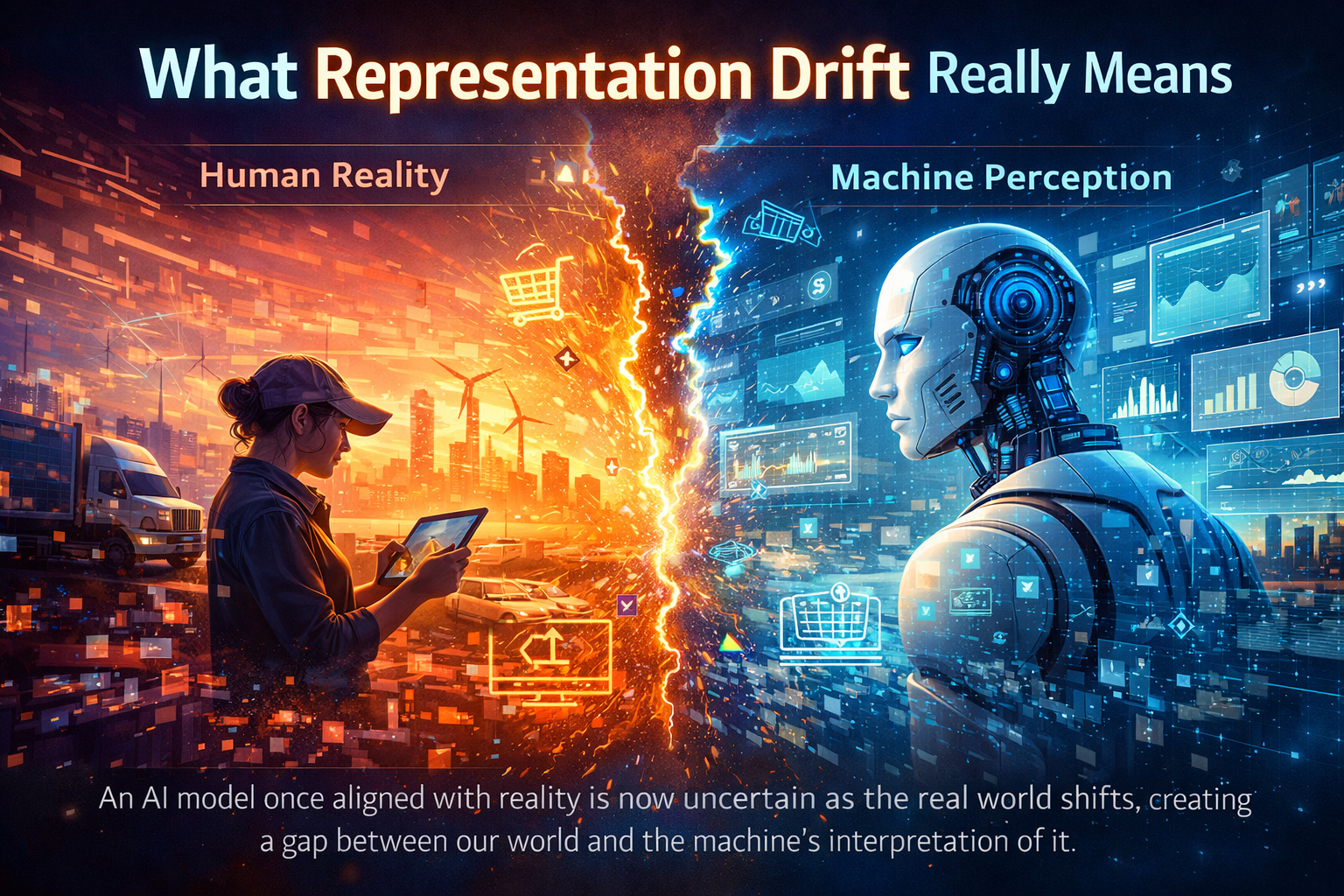
What representation drift really means
In machine learning, drift often refers to changing data distributions, feature behavior, or model performance over time. That remains useful. But for the AI economy, the phenomenon is broader.
Representation drift is the gradual mismatch between the current state of a person, asset, process, institution, or environment and the state the machine continues to rely on.
This includes ordinary data drift, but it goes beyond it.
A machine-readable representation is not just a vector of features. It includes:
- who the relevant entity is
- what state it is in now
- how that state has evolved
- what relationships matter
- what exceptions have emerged
- what permissions apply
- who is authorized to act
- what constraints now shape the decision
In simple terms, representation drift is what happens when the machine’s world model falls behind the world itself.
A patient record may still exist, but no longer reflect present clinical reality. A supply-chain graph may still map vendors and flows, but miss current disruption risk. A customer profile may still identify the same person, yet fail to reflect new stress, new preferences, or updated consent. An agricultural advisory system may still know the land parcel and crop type, but not today’s water stress, pest pressure, or local weather anomaly.
The AI system then reasons confidently on stale reality.
That is what makes this issue dangerous. Drift often arrives quietly. It appears as slow degradation, unexplained exceptions, strange edge cases, rising complaints, or decisions that look technically plausible but feel wrong to the people closest to the ground.
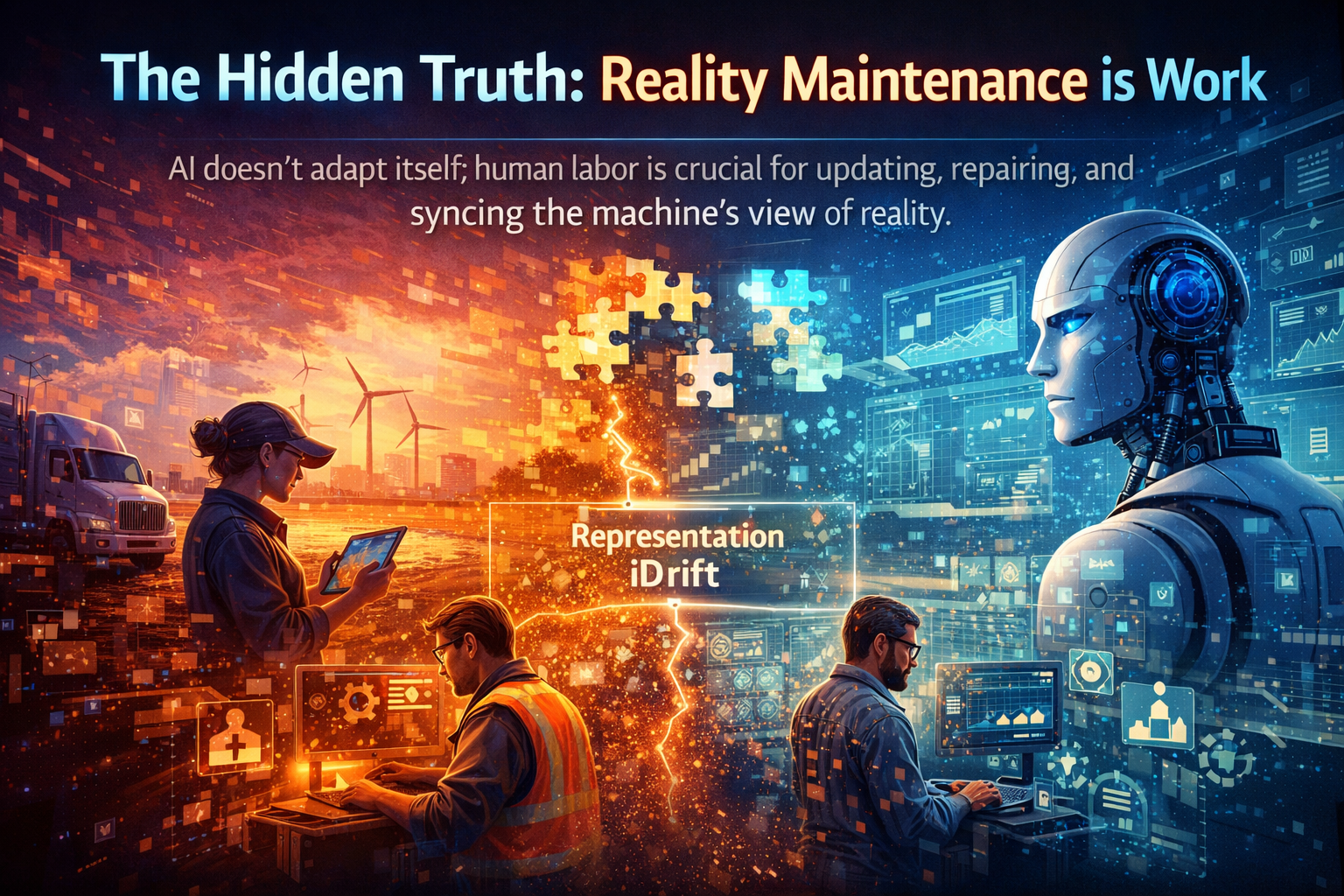
The hidden truth: reality maintenance is work
Once we accept that representation decays, a second truth becomes unavoidable:
Keeping representation current is labor.
Someone has to notice the mismatch.
Someone has to validate the signal.
Someone has to update the state.
Someone has to correct the exception.
Someone has to preserve context.
Someone has to resolve ambiguity.
Someone has to decide whether a machine’s picture of the world is still legitimate enough to act upon.
This is where the popular AI story becomes misleading. The standard narrative implies that once intelligence is automated, labor recedes. In reality, AI systems create new forms of hidden work behind the scenes. MIT Sloan has highlighted the hidden work required to make AI useful inside organizations, and the OECD’s accountability framework similarly emphasizes operational processes, oversight, and governance across the AI lifecycle. (OECD)
In the next phase of the AI economy, this work will move beyond training-time data labeling into something larger: continuous representation labor.
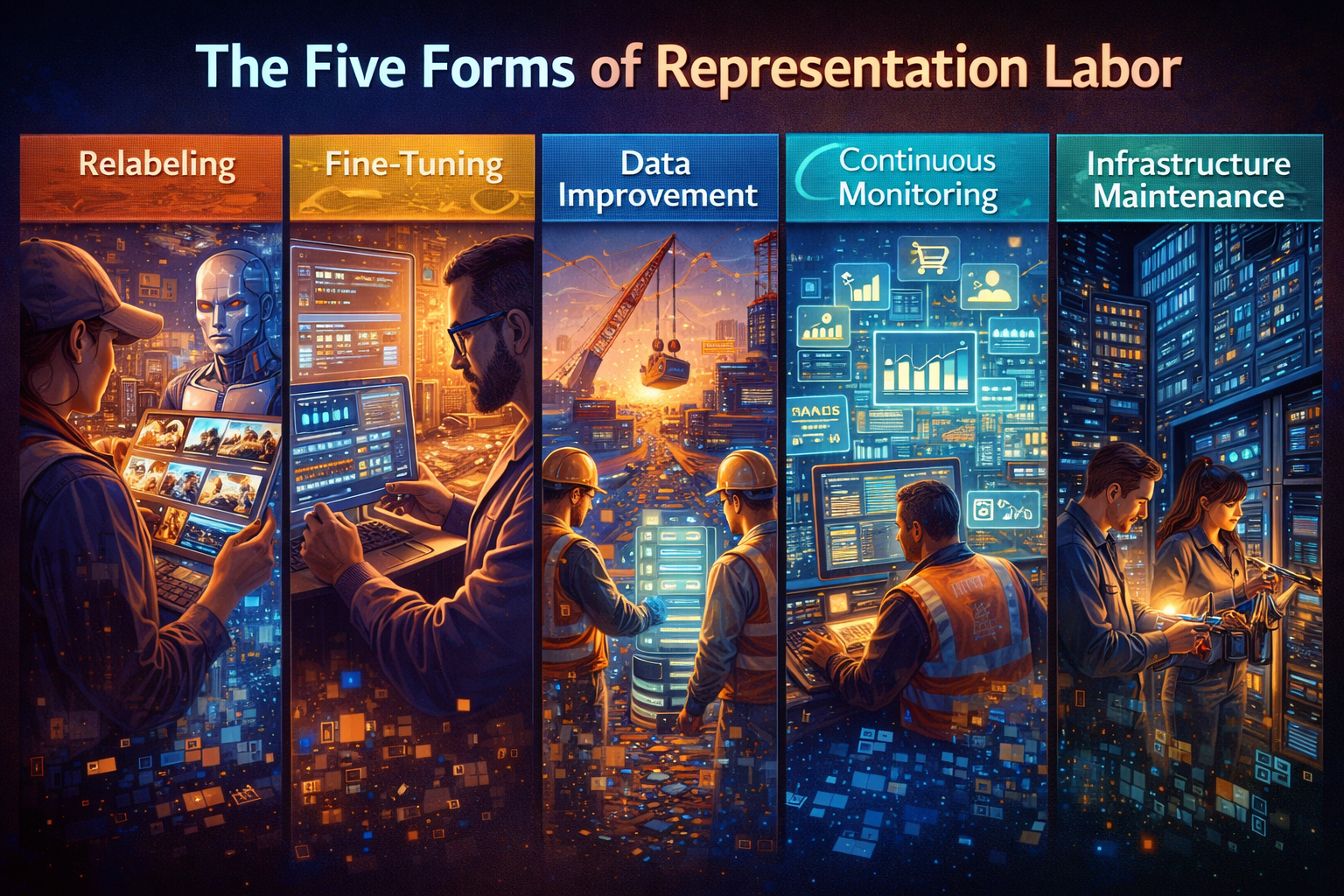
The five forms of representation labor
-
State updating
Reality changes constantly. Addresses change. supplier status changes. customer risk changes. equipment conditions change. policy environments change. patient conditions evolve. Systems that act on yesterday’s state create tomorrow’s failure.
-
Validation and verification
Not every new signal deserves trust. Sensors fail. records conflict. APIs degrade. users misreport. external feeds go stale. Someone must verify whether the representation should change and how.
-
Exception handling
The real world does not fit neatly inside a schema. Borderline cases, incomplete evidence, conflicting records, and novel situations require judgment. That is why human oversight remains central in regulatory and governance frameworks such as the EU AI Act, which places explicit weight on human oversight, logging, relevant input data, and monitoring for high-risk systems. (Digital Strategy)
-
Context preservation
Machines compress complexity to make decisions tractable. But businesses, people, and ecosystems carry nuance. Someone has to preserve the contextual scaffolding that prevents a technically correct output from becoming a practically wrong decision.
-
Drift management
Drift is not solved by noticing it once. It requires thresholds, monitoring, escalation paths, rollback rules, retraining triggers, data refresh cycles, and auditability. That is why model monitoring has become a standard capability in enterprise AI tooling. (Google Cloud Documentation)
Put differently:
The AI economy does not eliminate work around reality. It industrializes it.
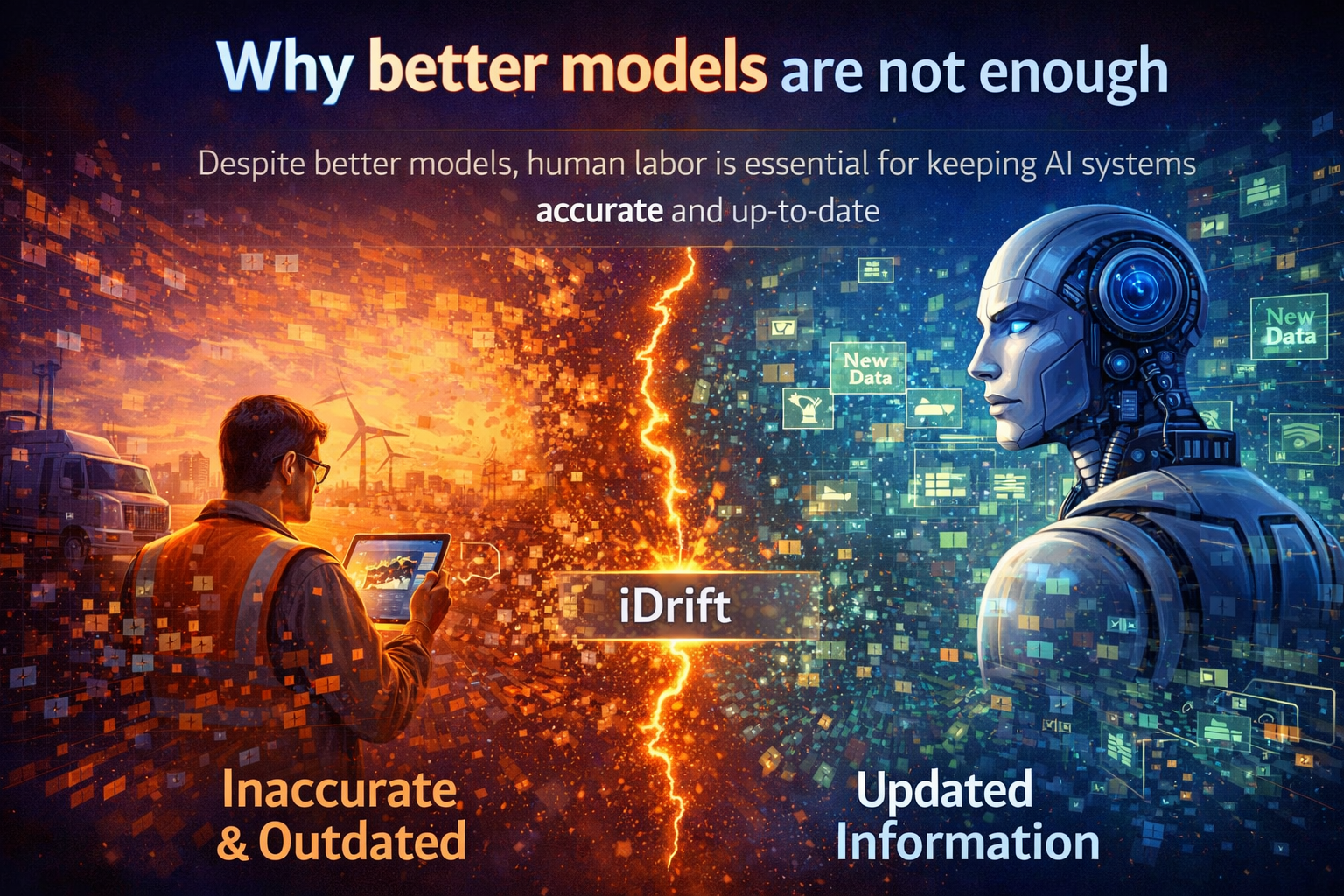
Why better models are not enough
This point matters because it cuts against one of the most common assumptions in AI strategy.
A stronger model can improve reasoning quality. It cannot, by itself, guarantee a current and accurate representation of the world it is reasoning over.
If a lending model runs on stale income signals, better reasoning does not fix stale income signals.
If a hospital workflow runs on old vitals, better reasoning does not create current vitals.
If a compliance agent relies on outdated policy mappings, better reasoning does not update the policy environment.
If an agricultural advisory engine works from old weather and soil conditions, better reasoning does not restore present reality.
This is the structural flaw in the belief that AI is simply “better intelligence.” Intelligence compounds only when the system’s representation of reality remains aligned with reality itself. That is why NIST, the OECD, and the EU AI Act all emphasize lifecycle governance, ongoing oversight, monitoring, and accountability rather than treating AI as a one-time deployment event. (NIST)
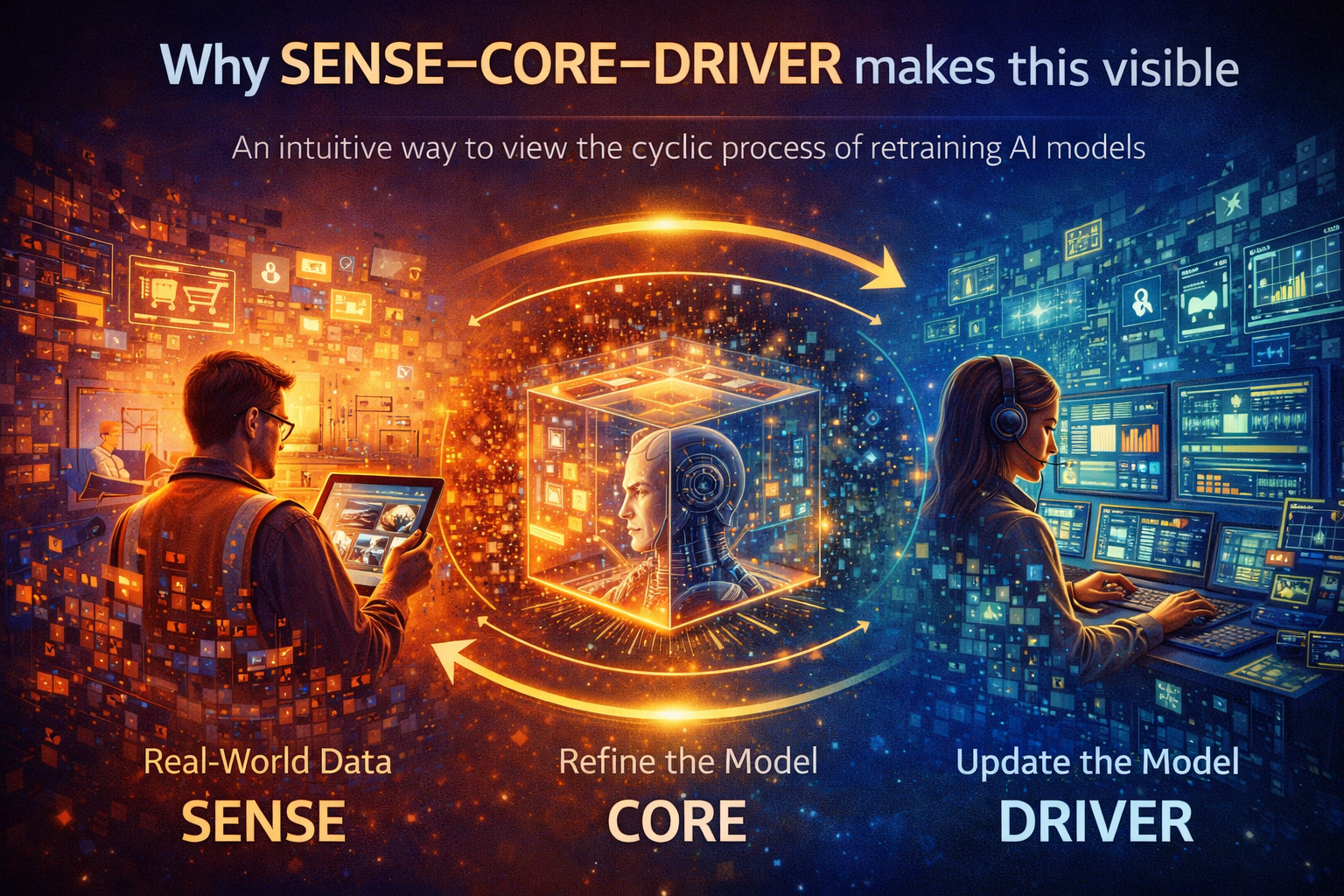
Why SENSE–CORE–DRIVER makes this visible
Your SENSE–CORE–DRIVER framework explains the issue more clearly than most conventional AI discussions.
SENSE: where reality becomes machine-legible
SENSE is the legibility layer: Signal, ENtity, State representation, Evolution.
Representation drift is fundamentally a SENSE problem over time. The signal no longer reflects current conditions. The entity linkage may weaken. The state representation becomes stale. Evolution is not captured quickly enough.
CORE: where stale representation becomes confident reasoning
CORE comprehends context, optimizes decisions, realizes action paths, and evolves through feedback.
But CORE is only as good as the world it is given. If SENSE is outdated, CORE becomes an engine of confident misunderstanding.
DRIVER: where outdated judgment becomes real-world consequence
DRIVER governs Delegation, Representation, Identity, Verification, Execution, and Recourse.
This is where stale representation becomes costly. A claim is denied. inventory is misrouted. a customer is misclassified. a farmer receives a late advisory. a worker is evaluated against an outdated role. a citizen cannot challenge the machine’s outdated state because recourse mechanisms are weak.
So the missing capability is not vague “human oversight.” It is an operational workforce that keeps SENSE alive and prevents DRIVER from acting on stale reality.
Examples that make the issue real
Banking
A borrower who looked low risk six months ago experiences a sharp cash-flow shock. The credit engine still sees the earlier profile. The model may remain technically robust, but the representation is late. Decisions become mispriced, unfair, or risky.
Healthcare
A patient’s condition deteriorates faster than the record updates. The triage system is functioning, but its snapshot is stale. The core failure is delayed representation of the patient’s actual present state.
Retail and logistics
Demand patterns shift after a weather event, a viral trend, or a transport disruption. Forecasting systems continue optimizing around yesterday’s assumptions. The result is stockouts, waste, and poor routing.
Agriculture
Weather variability, pest outbreaks, and soil conditions can change quickly. If the digital representation of the farm lags, the advisory system may look intelligent while being materially wrong for the field as it exists today.
HR and workforce systems
An employee’s role, capability, accommodation needs, or performance context changes, but internal systems still classify them through old categories. The result can be exclusion, poor evaluation, or harmful automation.
Across all these examples, the pattern is identical:
The world moved. The representation did not.
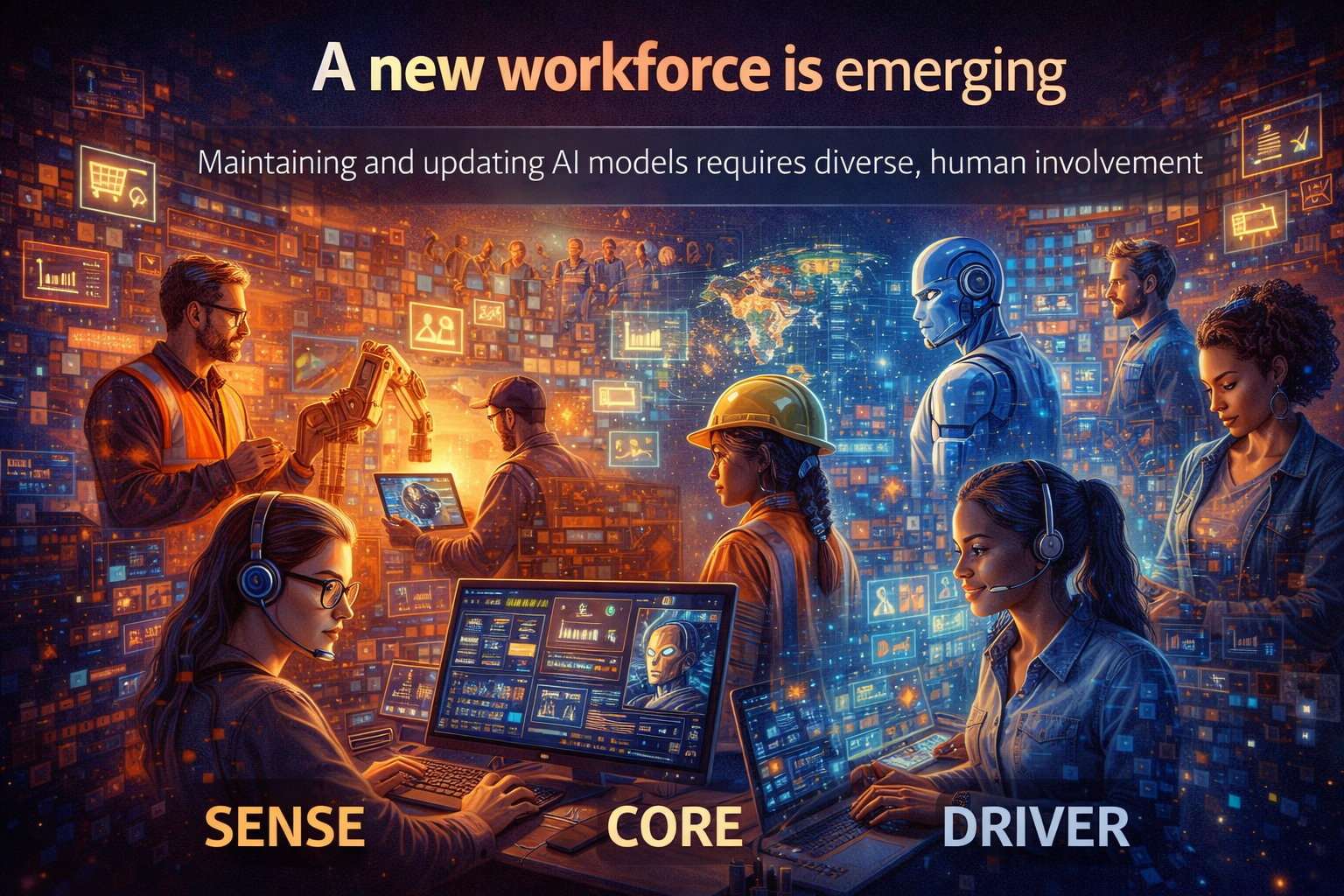
A new workforce is emerging
Once this becomes clear, a new labor category comes into view.
The AI economy is already creating demand for people who do some version of the following:
- data quality and lineage stewards
- model monitoring and drift analysts
- ontology and taxonomy managers
- human-in-the-loop reviewers
- exception resolution teams
- policy and rule maintenance specialists
- validation and adjudication operators
- feedback and recourse handlers
- operational owners of machine-readable state
Today, this work is fragmented. Some of it sits in MLOps. Some in operations. Some in risk, support, compliance, or domain teams. But the pattern is becoming clearer: AI needs an institutional workforce dedicated to maintaining the quality of representation over time.
I would call this emerging capability:
Representation Operations
Or simply, RepOps.
RepOps is the discipline of keeping machine-readable reality aligned with lived reality.
It includes detecting drift, validating signals, updating states, maintaining ontologies, reconciling conflicting records, preserving context, escalating exceptions, and enabling recourse so downstream AI decisions remain grounded in current, reviewable reality.
This is not clerical overhead. It is not a temporary bridge until models improve. It is foundational infrastructure for the Representation Economy.
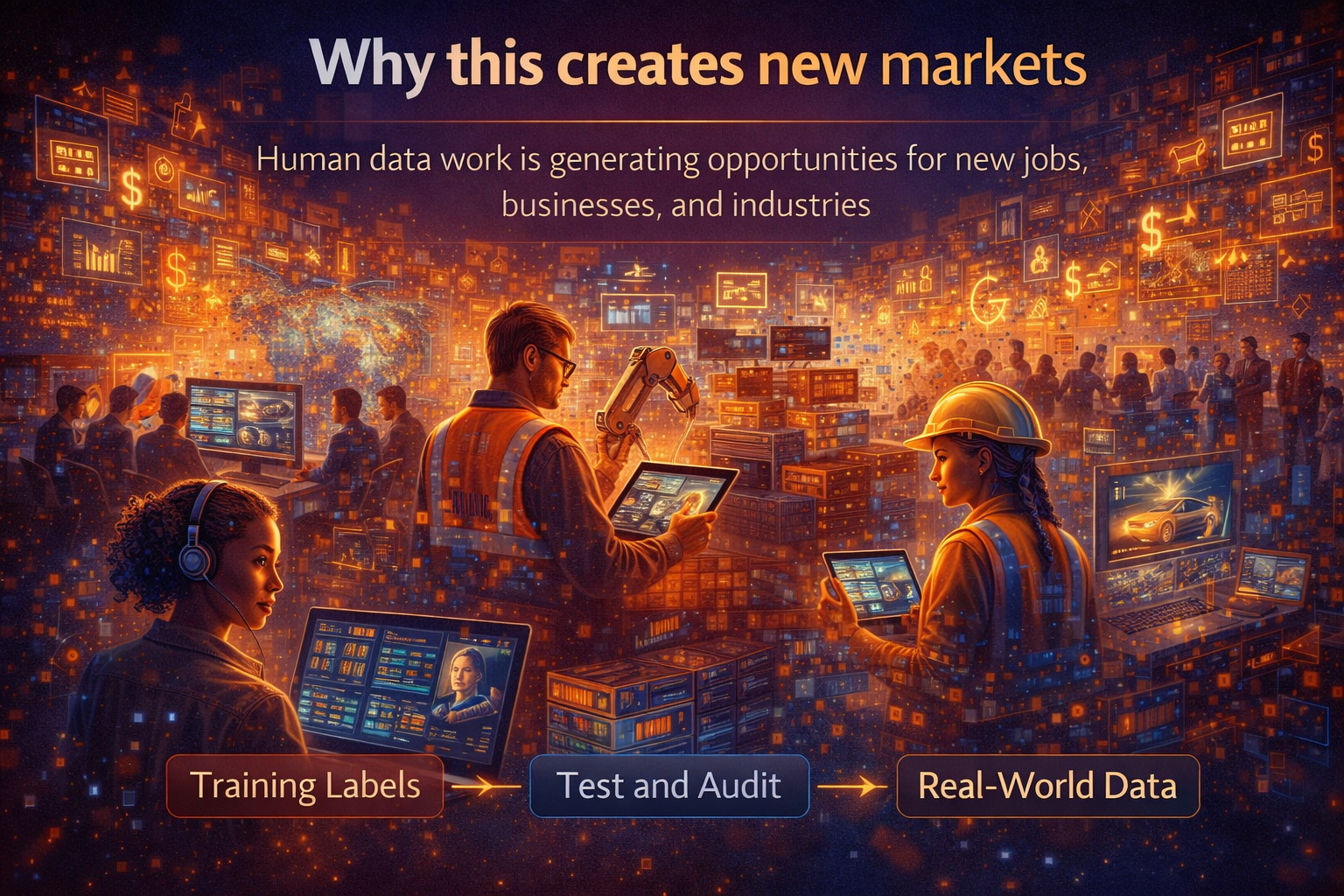
Why this creates new markets
Whenever a capability becomes structurally necessary, markets form around it.
If AI systems need continuous representation maintenance, then the economy will create new products, services, and company categories around that need.
Expect growth in:
- drift detection platforms
- event-driven state update systems
- representation quality dashboards
- ontology management tools
- human review orchestration layers
- decision-audit platforms
- feedback and recourse infrastructure
- domain-specific validation networks
- real-time entity and state synchronization services
The major cloud providers already point in this direction through monitoring stacks for drift, skew, and quality. But that is only the tooling layer. The larger opportunity is the operating layer above it: the institutions and services that keep reality current enough for AI to act safely, profitably, and legitimately. (Google Cloud Documentation)
Why this matters for inclusion
Representation drift does not hurt everyone equally.
Large institutions often have more sensors, stronger metadata, tighter feedback loops, and larger operations teams. Smaller businesses, informal workers, rural actors, public institutions, and non-digitally savvy populations are more likely to be represented late, poorly, or not at all.
That means drift can become an inequality amplifier.
If the AI economy rewards what is easiest to see, classify, and update, then those with weak representation infrastructure become easier to misprice, exclude, ignore, or automate against unfairly. This is one reason international AI governance efforts emphasize transparency, accountability, challengeability, and oversight. (OECD)
So the labor of keeping reality in sync is not only an efficiency issue. It is also a legitimacy issue.
What leaders should do now
Leaders should stop treating drift as a narrow MLOps metric and start treating it as an institutional design problem.
-
Measure representation freshness
Do not ask only whether the model is accurate. Ask whether the world model it relies on is current. How quickly do critical entities and states update? Where do delays arise? Which decisions depend most often on stale representations?
-
Identify your hidden representation workforce
Find the people already doing this work informally: reviewers, operations teams, support staff, frontline experts, compliance analysts, case managers, and data stewards. In many organizations, the workforce protecting AI from stale reality already exists, but it is invisible and undervalued.
-
Build RepOps as a strategic capability
Create explicit processes for drift detection, update authority, exception handling, state correction, escalation, and recourse. Treat them as operating capabilities, not side tasks.
The organizations that do this well will not simply have better AI. They will build more trustworthy institutions.
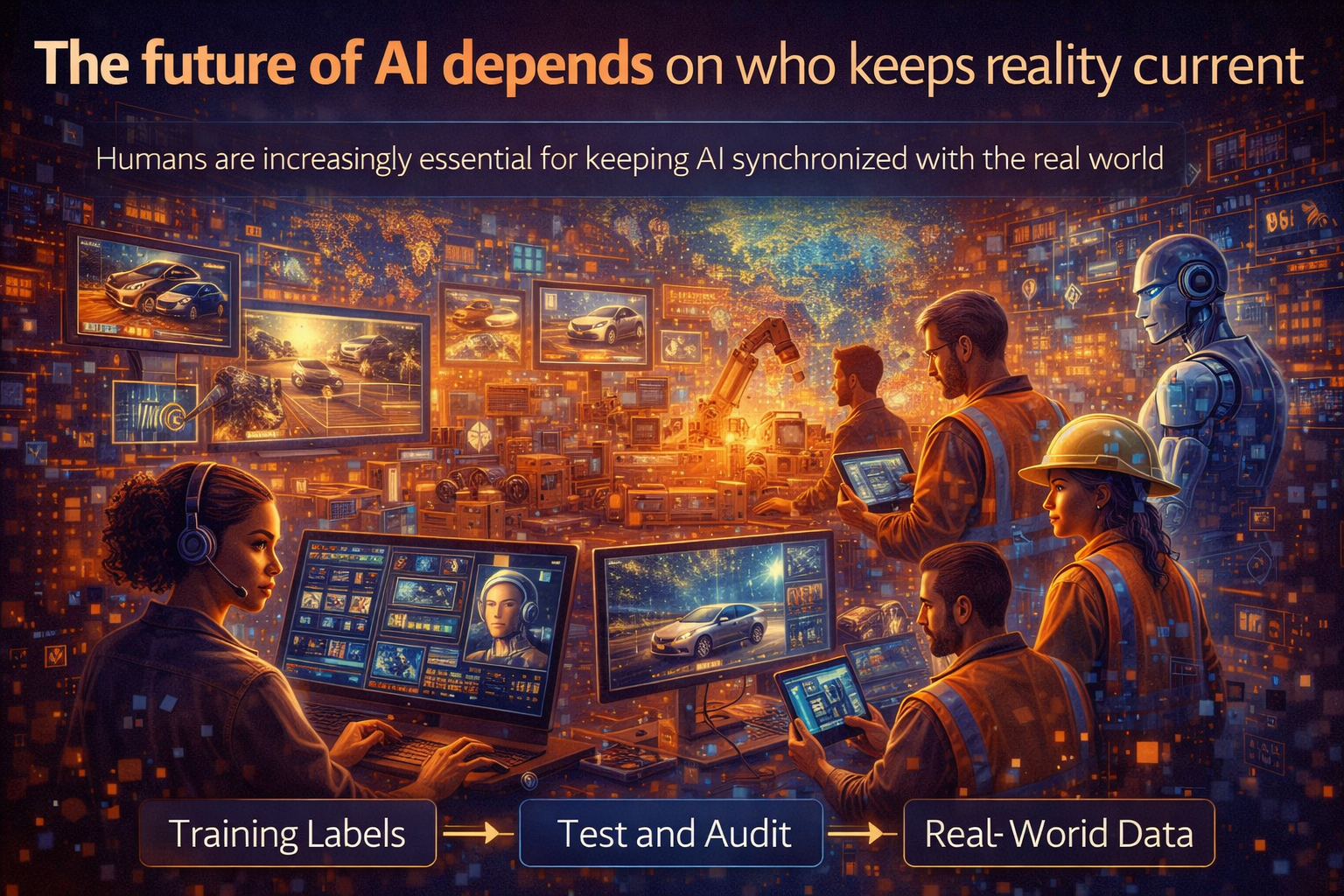
Conclusion: the future of AI depends on who keeps reality current
The Representation Economy begins with a simple insight:
AI acts on what a system can represent.
This article extends that idea.
It is not enough to represent reality once. In an AI economy, representation must be continuously maintained. Otherwise, intelligence compounds on stale foundations.
That means the future of AI will not be decided only by model races, benchmark scores, or inference costs. It will also be decided by a quieter, more operational, and more human question:
Who will do the work of keeping machine-readable reality aligned with the world as it changes?
The institutions that answer that question well will build more resilient systems, make better decisions, earn more trust, and scale AI more safely.
The ones that ignore it will learn a harder truth too late:
AI does not break only when models fail. It breaks when reality moves on and the system does not move with it.
FAQ
What is representation drift in AI?
Representation drift is the gap that emerges when the machine-readable state of a person, asset, process, or environment falls behind its real-world condition. It is broader than ordinary model drift because it includes stale identities, relationships, permissions, and context.
How is representation drift different from model drift?
Model drift usually refers to changes in performance as live data diverges from training assumptions. Representation drift is wider: it includes whether the system’s underlying picture of reality is still current enough for decisions to remain valid.
Why does representation drift matter for business leaders?
Because many AI failures are not caused by broken models. They are caused by stale representations. That creates operational risk, poor decisions, unfair outcomes, and governance exposure.
What is representation labor?
Representation labor is the human and organizational work required to keep machine-readable reality current, verified, contextualized, and contestable.
What is RepOps?
RepOps, or Representation Operations, is the discipline of maintaining alignment between machine-readable reality and lived reality through drift detection, validation, updating, exception handling, and recourse.
Why are better models not enough?
Better models can reason more effectively, but they cannot automatically refresh stale states, resolve conflicting records, or update the real-world context they depend on.
How does this connect to AI governance?
Global AI governance frameworks increasingly emphasize lifecycle oversight, monitoring, logging, and accountability because deployed AI systems must be managed after launch, not only designed before launch. (NIST)
Which industries are most exposed to representation drift?
Banking, healthcare, insurance, logistics, agriculture, HR, public services, and compliance-heavy industries are especially exposed because real-world conditions change quickly and decisions have material consequences.
Will representation drift create new jobs?
Yes. It is likely to increase demand for drift analysts, ontology managers, validation teams, human-in-the-loop reviewers, decision-audit specialists, and other roles focused on maintaining machine-readable reality.
Why is this topic important for boards and the C-suite?
Because it reframes AI from a pure model issue into an operating model issue. Boards should ask not only “How smart is our AI?” but “How current is the reality our AI is acting on?”
What is Representation Drift?
Representation drift is the gap that emerges when machine-readable reality (data, state, identity, context) falls behind real-world changes, causing AI systems to make decisions based on outdated information.
Why does it matter?
Because AI systems act on representations, not reality. When representation becomes stale, even accurate models produce incorrect outcomes.
Key Insight:
AI systems fail not when models break—but when reality changes and no one updates the representation.
Glossary
Representation Economy
The economic system in which competitive advantage increasingly depends on how well institutions make reality machine-legible, governable, and actionable.
Representation Drift
The widening mismatch between lived reality and the representation an AI system continues to rely on.
Machine-Readable Reality
The structured, digital representation of entities, states, relationships, permissions, and constraints that AI systems use to reason and act.
RepOps (Representation Operations)
The organizational capability responsible for keeping machine-readable reality accurate, current, and reviewable over time.
SENSE
The legibility layer: Signal, ENtity, State representation, Evolution.
CORE
The cognition layer: Comprehend context, Optimize decisions, Realize action, Evolve through feedback.
DRIVER
The execution and legitimacy layer: Delegation, Representation, Identity, Verification, Execution, Recourse.
Drift Detection
The monitoring process used to identify when data, behavior, or representation has shifted enough to threaten system quality or trust.
Human Oversight
The capability for people to monitor, question, intervene in, or override AI behavior where needed.
Recourse
The ability for an affected person or organization to challenge, correct, or appeal an AI-supported outcome.
Ontology Management
The work of defining and maintaining structured concepts, categories, and relationships so that systems can interpret reality consistently.
References and Further Reading
This article draws on widely recognized governance and operational sources that reinforce its core argument that AI systems require ongoing monitoring, oversight, and lifecycle management:
- NIST, AI Risk Management Framework — on lifecycle governance, trustworthiness, and managing AI risk over time. (NIST)
- OECD, Advancing Accountability in AI — on accountability, lifecycle responsibility, and operational processes for trustworthy AI. (OECD)
- European Union, AI Act — on human oversight, logging, relevant input data, and deployer obligations for high-risk AI systems. (Digital Strategy)
- Google Cloud, Vertex AI Model Monitoring — on scheduled monitoring and tracking quality over time in production. (Google Cloud Documentation)
- AWS, SageMaker Model Monitor — on automated monitoring for drift and model-quality issues in production. (AWS Documentation)
Explore the Architecture of the AI Economy
This article is part of a broader research series exploring how institutions are being redesigned for the age of artificial intelligence. Together, these essays examine the structural foundations of the emerging AI economy — from signal infrastructure and representation systems to decision architectures and enterprise operating models.
If you want to explore the deeper framework behind these ideas, the following essays provide additional perspectives:
-
- • Why Most AI Projects Fail Before Intelligence Even Begins
- The Representation Economy: Why AI Institutions Must Run on SENSE, CORE, and DRIVER – Raktim Singh
- The Representation Economy: Why Intelligent Institutions Will Run on the SENSE–CORE–DRIVER Architecture – Raktim Singh
- The Representation Deficit: Why Institutions Fail When Reality Cannot Enter the Decision System – Raktim Singh
- The Representation Maturity Model: How Boards Decide When AI Can Be Trusted With Real Decisions – Raktim Singh
- Representation Failure: Why AI Systems Break When Institutions Misread Reality – Raktim Singh
- The Representation Premium: Why Institutions That Are Easier for AI to See, Trust, and Coordinate With Will Win the Next Economy – Raktim Singh
- The Firm of the AI Era Will Be Built Around Representation: Why Institutions Must Redesign Themselves for the SENSE–CORE–DRIVER Economy – Raktim Singh
- The Representation Stack: The New Architecture of Intelligent Institutions in the AI Economy – Raktim Singh
- Representation Economics: The New Law of Value Creation in the AI Era – Raktim Singh
- The Representation Reserve Currency: Why AI Will Trust Only a Few Forms of Reality – Raktim Singh
- The Machine-Readable Boundary of the Firm: How AI Is Redefining What Companies Own, Outsource, and Orchestrate – Raktim Singh
- Representation Insurance: Why Machine-Readable Trust Will Power the AI Economy – Raktim Singh
- The Representation Commons: Why Broad-Based AI Value Begins Before the Model – Raktim Singh
- The Representation Access Economy: Why AI Will Decide Who Gets Seen, Structured, and Trusted – Raktim Singh
- Representation Bankruptcy: Why AI Will Break Companies That Machines Cannot Trust – Raktim Singh
- The Representation Kill Zone: Why Companies Become Invisible Before They Realize They Are Losing – Raktim Singh
- Representation Alpha: Why Competitive Advantage Will Come from Better Representation, Not Better Models – Raktim Singh
- Representation Fiduciaries: The Missing Institution the AI Economy Cannot Scale Without – Raktim Singh
- Representation Accounting: The New Discipline That Will Decide Which AI-Driven Institutions Can Be Trusted – Raktim Singh
- Synthetic Representation: How the AI Economy Will Construct Reality When It Cannot Fully Observe It – Raktim Singh
- Representation Clearinghouses: The Missing Infrastructure the AI Economy Needs to Reconcile Reality Before It Acts – Raktim Singh
- Recourse Platforms: The Next AI Infrastructure Market for Correction, Appeal, and Recovery – Raktim Singh
- Representation Workflows: The Hidden Operating System That Will Decide the Winners of the AI Economy – Raktim Singh
- Representation Switching Costs: Why the AI Economy’s Deepest Lock-In Will Come From Who Defines Reality – Raktim Singh
- Representation Fragility and Exclusion: The Hidden Fault Line That Will Break the AI Economy – Raktim Singh
Together, these essays outline a central thesis:
The future will belong to institutions that can sense reality, represent it clearly, reason about it intelligently, and act through governed machine systems.
This is why the architecture of the AI era can be understood through three foundational layers:
SENSE → CORE → DRIVER
Where:
- SENSE makes reality legible
- CORE transforms signals into reasoning
- DRIVER ensures that machine action remains accountable, governed, and institutionally legitimate
Signal infrastructure forms the first and most foundational layer of that architecture.
AI Economy Research Series — by Raktim Singh



Raktim Singh is an AI and deep-tech strategist, TEDx speaker, and author focused on helping enterprises navigate the next era of intelligent systems. With experience spanning AI, fintech, quantum computing, and digital transformation, he simplifies complex technology for leaders and builds frameworks that drive responsible, scalable adoption.