
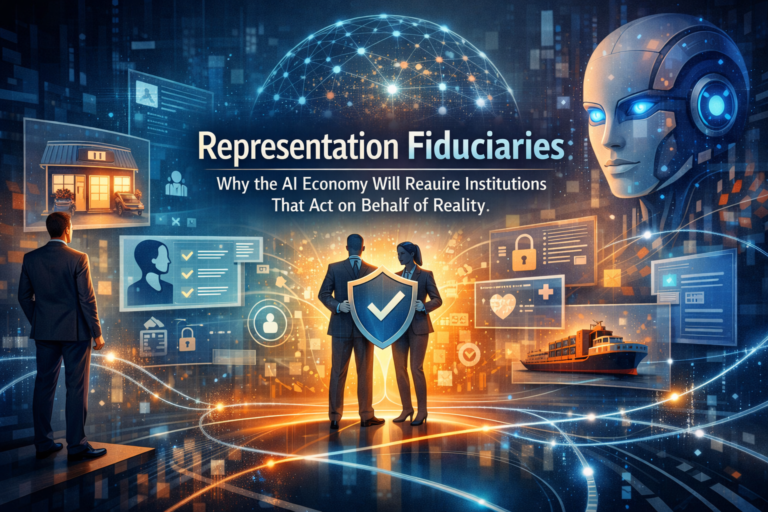
Representation Fiduciaries :
For the last few years, the AI debate has been dominated by models.
Which model is smartest?
Which model is cheapest?
Which model reasons better?
Which model is more autonomous?
These questions still matter. But they are no longer the deepest questions in the market.
A more structural shift is underway.
As AI moves from generating content to ranking options, verifying claims, approving requests, routing transactions, matching counterparties, and acting inside workflows, the central issue changes. The question is no longer only whether a machine is intelligent. The deeper question is whether the machine is acting on a trustworthy representation of reality.
That shift changes everything.
Because AI does not operate on reality directly. It operates on representations of reality: records, credentials, profiles, histories, signals, permissions, policies, and machine-readable states. When those representations are incomplete, stale, fragmented, or misleading, better intelligence does not solve the problem. It often scales the problem.
That is why the AI economy will require a new class of institution: Representation Fiduciaries.
These are actors that help ensure people, firms, assets, and other real-world entities are represented accurately, fairly, continuously, and accountably inside machine decision systems.
This is not just a privacy issue.
It is not just a governance issue.
It is not just a compliance issue.
It is an economic issue.
In the coming decade, the entities that can be represented well to machines will be easier to discover, compare, trust, finance, insure, coordinate with, and act upon. The ones that cannot may become harder to see, harder to trust, and eventually harder to serve.
That is why Representation Fiduciaries matter. They stand between reality and machine action.

The missing institution in the AI era
Most current AI governance thinking focuses on the responsibilities of developers, deployers, and operators. That emphasis is understandable. The OECD AI Principles call for AI that is innovative, trustworthy, and consistent with human rights and democratic values.
NIST’s AI Risk Management Framework is designed to help organizations manage AI risks systematically. The EU AI Act establishes a risk-based legal framework for AI in Europe. ISO/IEC 42001 provides a management system standard for AI. Singapore’s Model AI Governance Framework for Agentic AI reflects the growing concern that humans must remain accountable as AI systems become more autonomous. (OECD)
All of that is necessary. But it still leaves an institutional gap.
Most governance frameworks ask:
Who built the system?
Who deployed the system?
Who is accountable if the system causes harm?
Those are essential questions. But in an AI economy, another question becomes just as important:
Who is responsible for ensuring that the entity being acted upon is represented properly in the first place?
That is a different problem.
If an AI system denies a small business access to credit because the business appears unstable, who ensured that the business was represented accurately across its invoices, payment patterns, certifications, cash-flow signals, ownership data, and supplier history?
If an AI hiring system screens out a candidate because their skills are poorly structured online, who ensured that the candidate’s actual capabilities were translated into a form machines could interpret?
If a hospital relies on AI-assisted triage and care coordination, who ensures that the patient’s history, current state, consent choices, medication interactions, and changing conditions are represented faithfully rather than reduced to a stale profile?
This is the missing institutional layer. This is where Representation Fiduciaries enter.
What is a Representation Fiduciary?
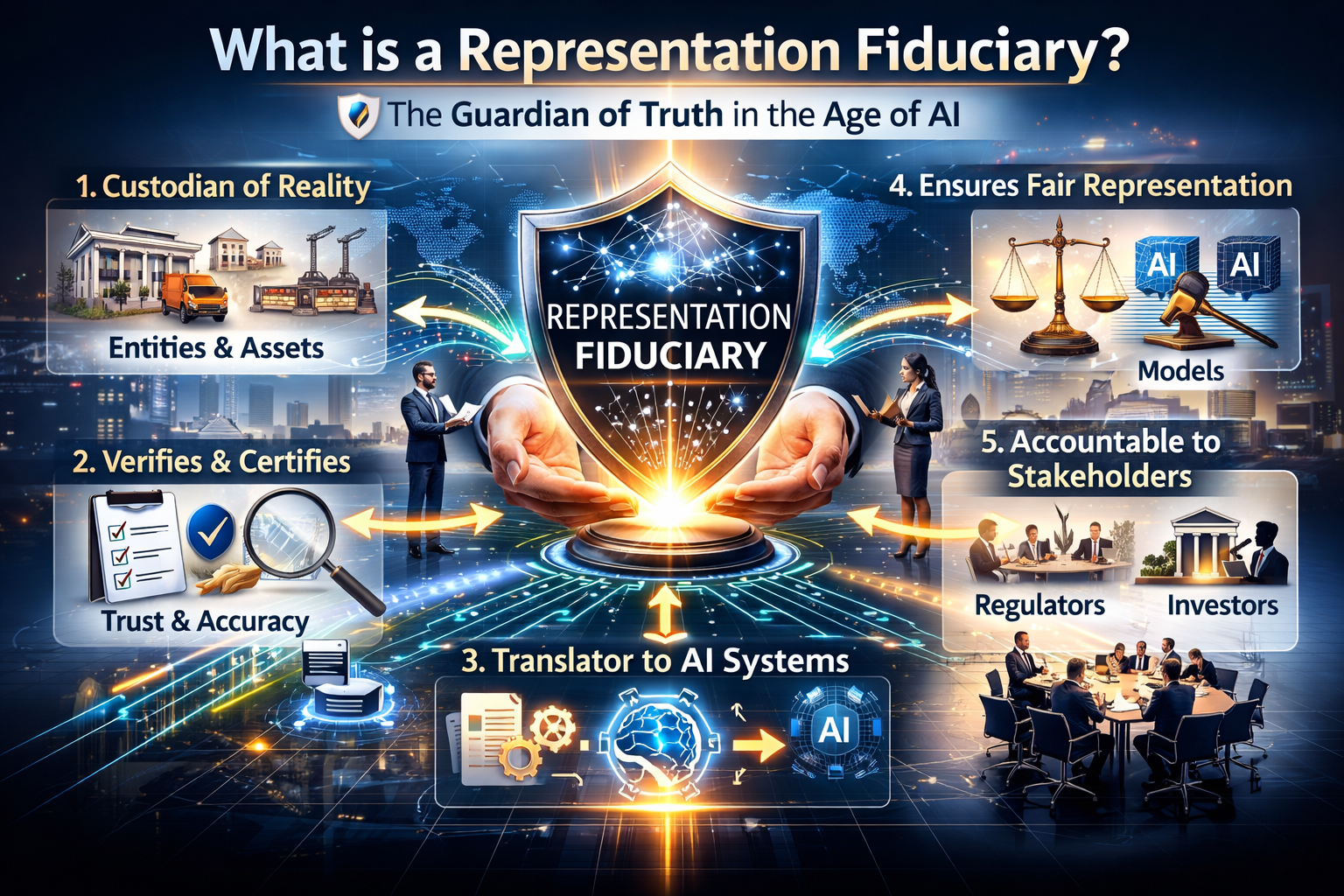
A Representation Fiduciary is a trusted actor whose role is to help ensure that an entity is represented correctly inside machine decision environments.
That entity could be an individual. It could be a supplier, a borrower, a worker, a patient, a farm, a device, a shipment, a machine, a property, or even an ecosystem whose condition must be measured and protected.
The word fiduciary is important.
A fiduciary is not just a software vendor, processor, or platform. A fiduciary implies a duty of care and responsibility toward the interests of the entity being served. In legal and policy debates, fiduciary thinking has already appeared in discussions around digital intermediaries and “information fiduciaries,” where power asymmetry and dependence create a case for stronger duties. Your article extends that logic: in the AI economy, fiduciary responsibility will increasingly apply not just to data handling, but to representation itself. (MeitY)
That matters because AI systems do not simply “know.” They infer, rank, predict, and act based on whatever has been made legible to them. If what is legible is poor, incomplete, or biased by omission, then the downstream action is compromised before the model even begins reasoning.
In that sense, Representation Fiduciaries are not a narrow compliance layer. They are part of the economic infrastructure of machine-mediated society.
Why this concept matters for the AI economy
Representation Fiduciaries address a fundamental gap in AI systems:
machines do not act on reality directly — they act on representations of reality.
As AI systems become more agentic and autonomous, the quality of representation determines:
- who gets discovered
- who gets trusted
- who gets financed
- who gets selected
- who gets excluded
Why this matters much more in the age of agentic AI
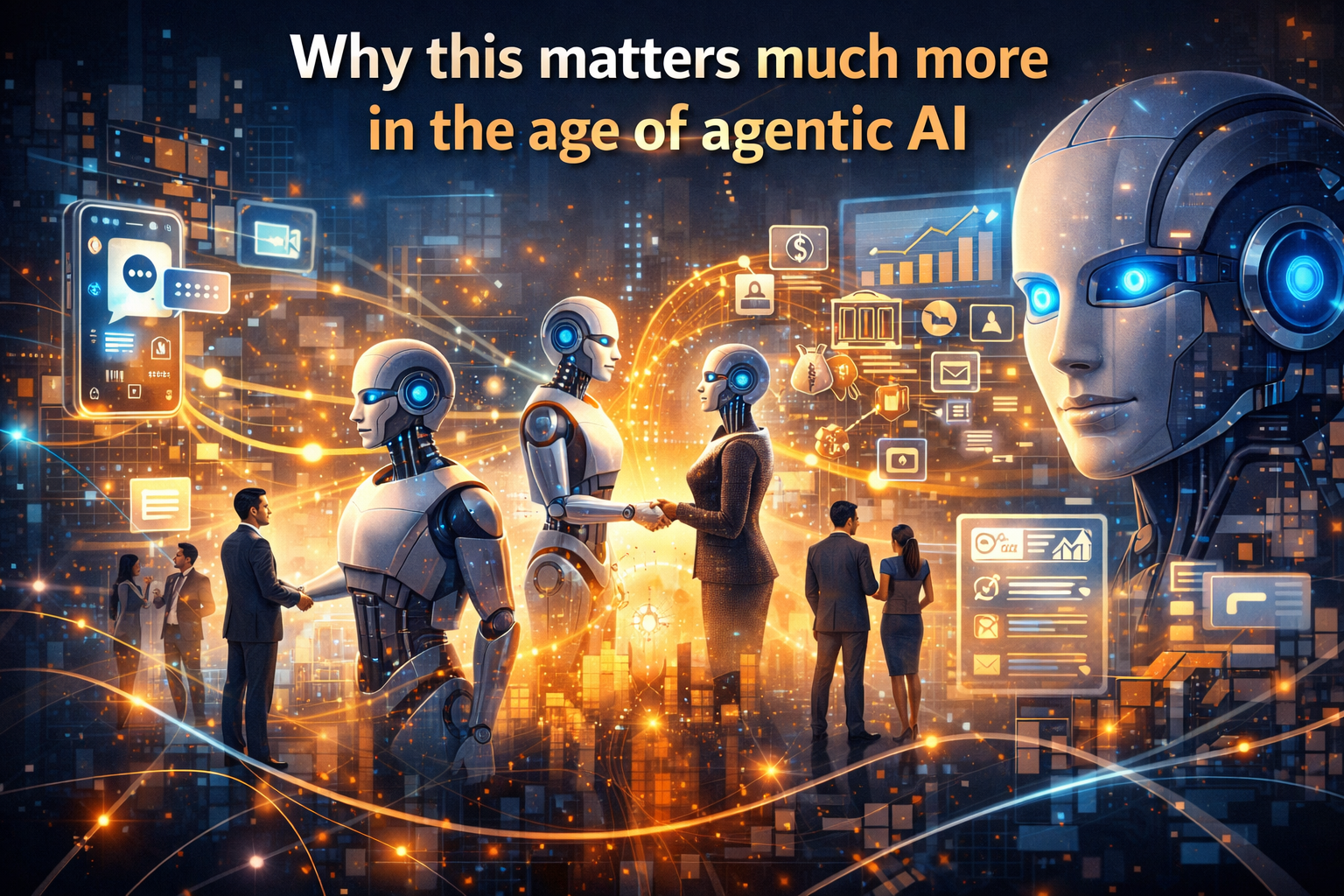
The case for Representation Fiduciaries becomes much stronger as AI systems become more agentic.
Traditional software mostly waited for instructions. By contrast, AI agents can plan, call tools, update records, coordinate tasks, evaluate options, and initiate action in pursuit of goals. That makes the quality of representation much more consequential. Singapore’s agentic AI governance framework, launched in January 2026, explicitly addresses the risks that emerge when AI systems gain the ability to take actions in the world with greater autonomy. (Infocomm Media Development Authority)
Once systems become more agentic, the economic risk is no longer only “wrong answer.” It becomes “wrong action based on wrong representation.”
An AI procurement agent will not ask, “What is the full richness of this supplier’s real-world capability?” It will ask, in effect, “What do the records show? Which credentials are verifiable? What policies are satisfied? Which signals are machine-readable? What risks are acceptable?”
An AI lending system will not look for hidden context unless that context is structured in a form it can use.
An AI matching engine for skilled labor will not discover quality that has never been translated into trusted digital form.
That is why better models alone are not enough. The next layer of advantage will come from ensuring that reality is represented in ways machines can responsibly act upon.
The SENSE–CORE–DRIVER explanation
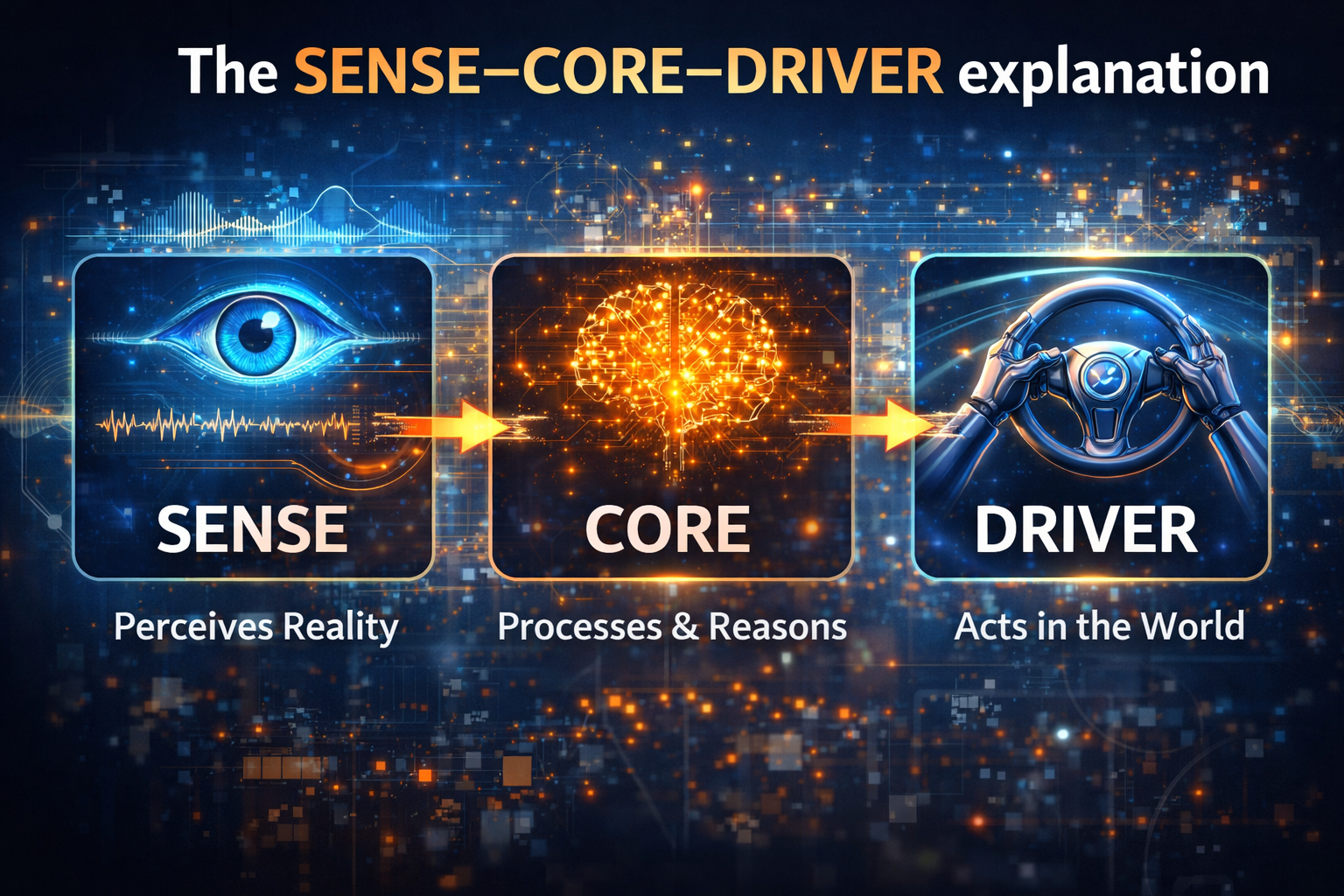
This is where the SENSE–CORE–DRIVER framework becomes especially useful.
SENSE is the legibility layer. It is where signals are captured, tied to entities, structured into state, and updated over time.
CORE is the cognition layer. It is where models interpret signals, optimize decisions, make predictions, and generate recommendations.
DRIVER is the legitimacy layer. It governs delegation, representation, identity, verification, execution, and recourse.
Most of the market’s fascination has centered on CORE. That is where the competition around models lives. But institutions do not succeed or fail on cognition alone. They succeed or fail on whether reality is made legible well enough for cognition to reason over it, and whether actions remain legitimate, governed, and contestable when machines begin to act.
Representation Fiduciaries matter because they strengthen the bridge between SENSE and DRIVER.
They help ensure that the signals are meaningful, the entity is correctly identified, the state is current, the permissions are valid, the authority to act is clear, and the recourse path exists if the machine is wrong.
Put simply: they help reality survive translation into machine action.
Simple examples that make the idea real
Imagine a small exporter of industrial parts.
The firm is competent. Its deliveries are reliable. Customers are satisfied. But across digital systems, the company looks fragmented. Certifications sit in different places. Shipment history is not standardized. Sustainability information is incomplete. Banking trust signals are weak. Ownership data varies across platforms.
A human buyer might understand the company after a conversation. An AI procurement system will not. It will see incomplete representation.
A Representation Fiduciary could help maintain a verified, portable, machine-readable profile of the firm: certifications, transaction continuity, compliance status, resilience history, identity assurance, policy compatibility, and performance data. The underlying firm has not changed. What has changed is its representability to machines.
Now consider healthcare.
An elderly patient interacts with hospitals, labs, pharmacies, insurers, diagnostic platforms, and remote monitoring devices. The burden of stitching together context often falls on the patient or family. As AI becomes more embedded in triage, claims processing, treatment coordination, and risk scoring, the quality of the patient’s machine-facing representation becomes critical.
A Representation Fiduciary in healthcare would not replace clinicians. It would help ensure that the patient’s records, consent, history, identity, current condition, and changing context remain coherent and contestable across systems.
Or consider labor markets.
A highly skilled electrician may have deep trust in the local market but weak digital representation. His credibility is distributed across referrals, messages, informal proof, and disconnected reviews. As AI-mediated labor matching grows, he may be filtered out not because he lacks skill, but because no trusted institution has translated his skill into portable, machine-readable trust.
This is not a talent problem. It is a representation problem.
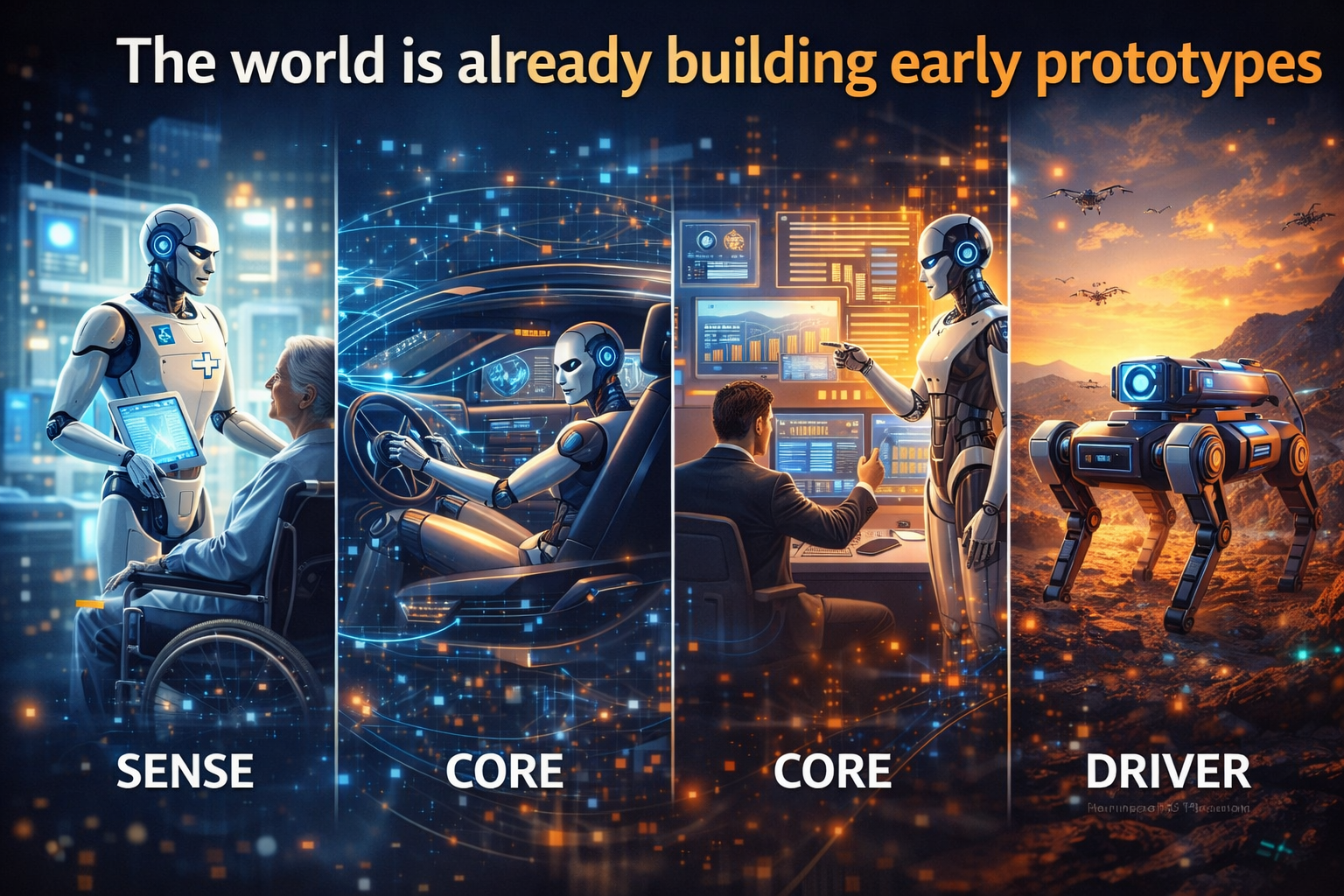
The world is already building early prototypes
The broader category of Representation Fiduciaries is still emerging, but several important building blocks already exist.
India’s Digital Personal Data Protection Act, 2023, explicitly uses the term Data Fiduciary, reflecting the idea that some entities carry responsibilities in how they handle individuals’ digital personal data. India’s Account Aggregator ecosystem is another important signal: it creates a consent-based mechanism for financial data sharing rather than allowing uncontrolled data movement. (MeitY)
Globally, verifiable credentials and digital identity wallets point in the same direction. W3C’s Verifiable Credentials Data Model 2.0 became a W3C Recommendation in May 2025, formalizing a machine-verifiable way to express trusted claims. The EU Digital Identity Wallet initiative is designed to give citizens, residents, and businesses a safe and interoperable way to prove identity and share digital documents across services. (W3C)
These are not full Representation Fiduciaries yet. But they are clear signs of where the world is moving: toward institutions that do more than store data. They help structure trust, portability, permission, and verified context across systems.
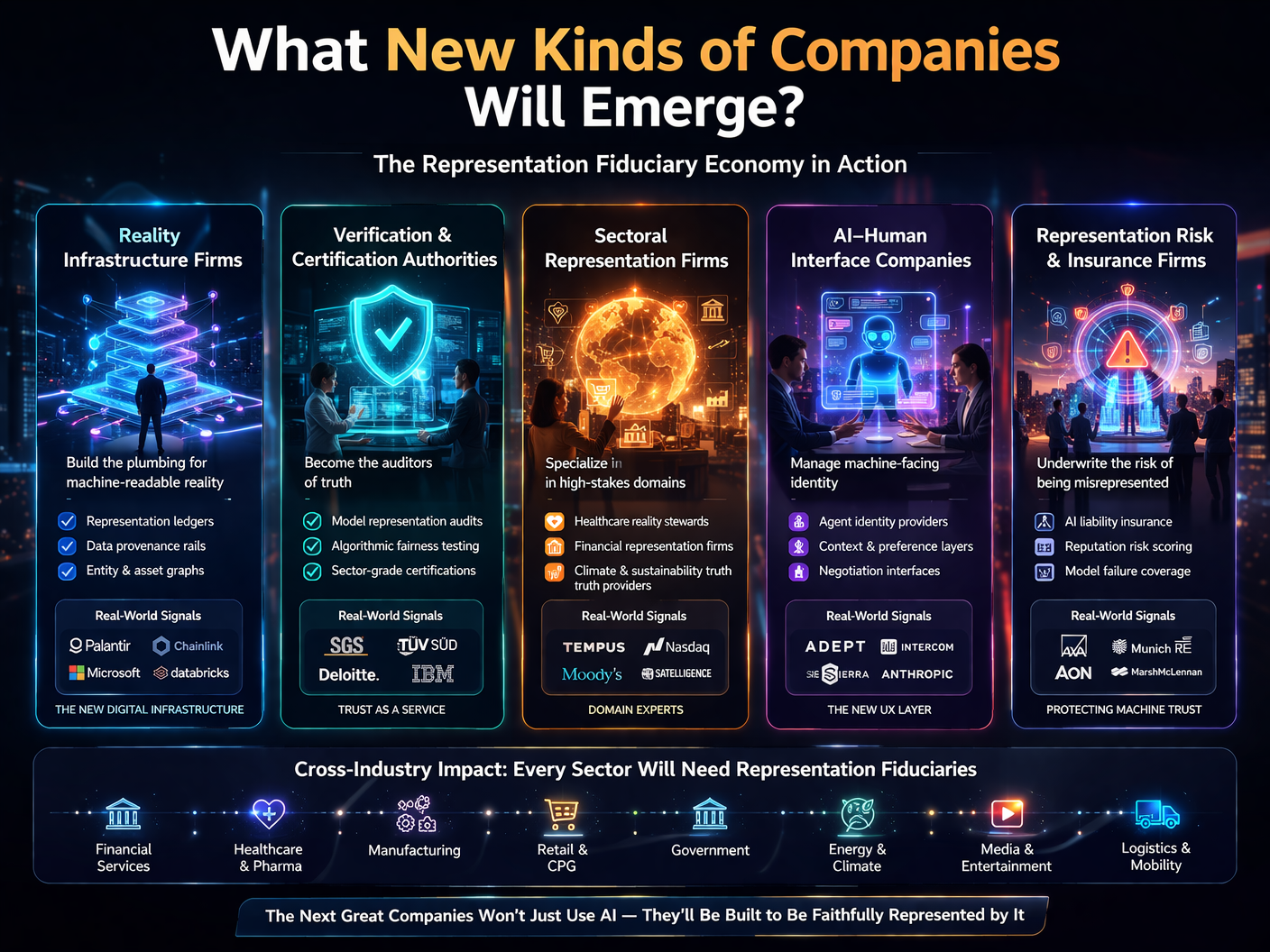
What new kinds of companies will emerge?
This is where Representation Economics becomes practical.
The AI economy will not create only model companies, infrastructure companies, and application companies. It will also create firms whose main value lies in helping people, businesses, and assets become accurately representable to machines.
These companies may include:
credential orchestration platforms,
consent and delegation intermediaries,
portable trust layers for workers and suppliers,
AI-facing representation services for healthcare and finance,
continuous verification firms,
representation assurance networks,
entity-state synchronization platforms,
and public-interest representation utilities.
Some will serve individuals.
Some will serve enterprises.
Some will serve regulated sectors.
Some may become part of national digital infrastructure.
Their strategic value will not come mainly from having the best frontier model. It will come from occupying a new role: acting in the interests of represented entities inside AI-mediated systems.
That is why this topic is important for boards. It does not just explain how to use AI. It explains what new company categories the AI era is likely to produce.
Why boards and C-suites should care now
Many executives still think AI transformation is mostly about productivity, copilots, and workflow automation. Those are real gains. But they are only one layer of the story.
The deeper competitive question is this:
When machines evaluate your company, your products, your services, your workforce, your suppliers, your claims, and your customers, who is ensuring that those entities are represented well enough to participate?
This question will affect lending, procurement, insurance, hiring, compliance, public services, healthcare, logistics, cross-border trade, and agent-to-agent commerce.
The winners in the AI economy will not only deploy AI well. They will also ensure that they, and the ecosystems around them, are represented well enough for machines to trust and act upon.
In earlier eras, branding, distribution, and capital access shaped competitive advantage. In the AI era, representability may join that list.
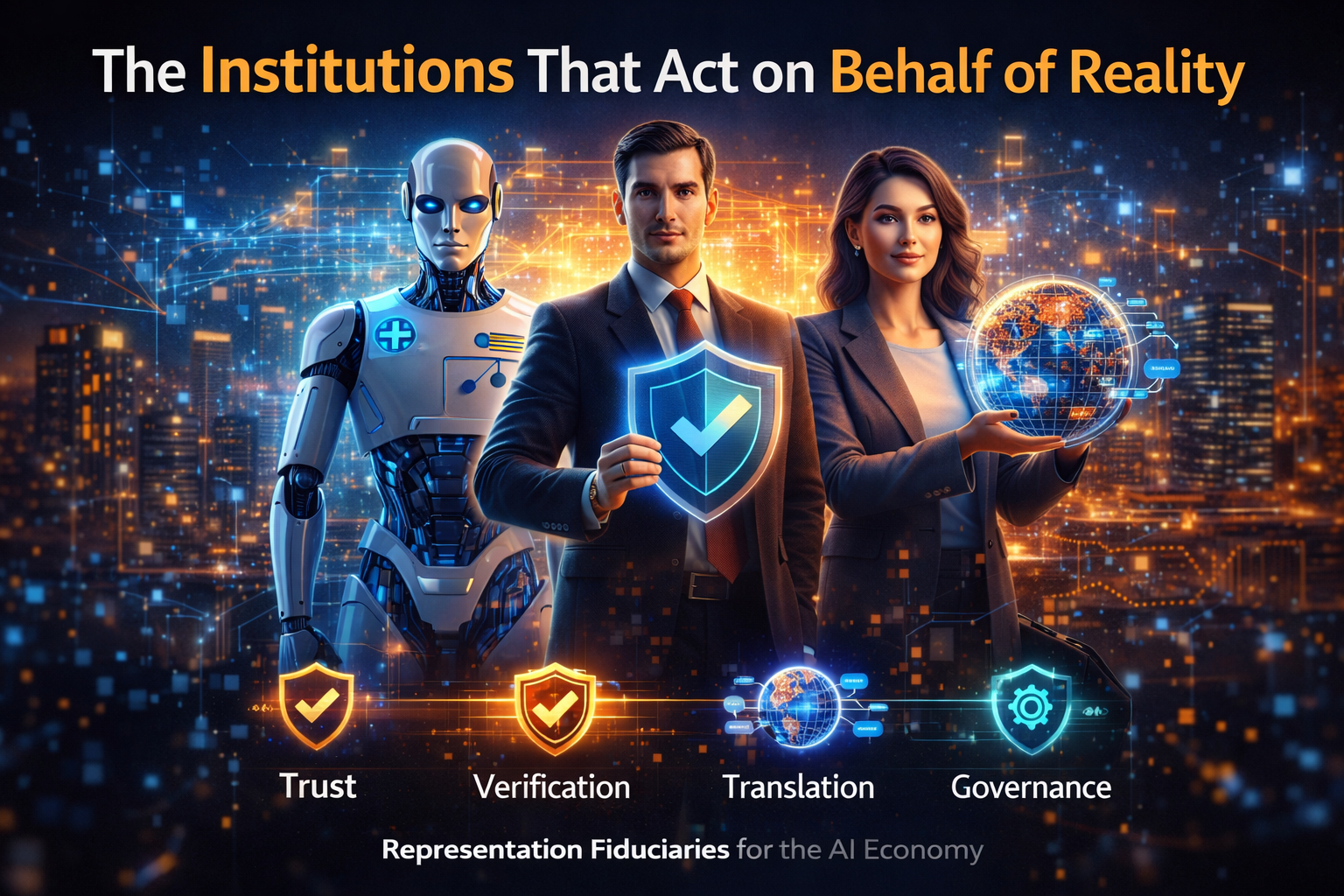
Conclusion: the institutions that act on behalf of reality
Representation Fiduciaries are not a niche concept. They are a sign that the AI economy is maturing.
As machine decision systems become more powerful, representation stops being a background technical detail. It becomes active economic infrastructure.
That changes the strategic questions leaders must ask.
Not only: “Do we have AI?”
But also: “How are we represented to AI?”
And even more importantly: “Who acts in our interest when machines begin to decide?”
That is the real significance of Representation Fiduciaries.
Because in the AI economy, reality does not participate automatically. It must be sensed, structured, verified, authorized, and defended.
The institutions that do that work will become some of the most important institutions of the next era.
They will not merely process information.
They will act on behalf of reality.
FAQ
What is a Representation Fiduciary?
A Representation Fiduciary is a trusted actor that helps ensure a person, firm, asset, or other entity is represented accurately and fairly inside machine decision systems.
Why is this different from AI governance?
AI governance usually focuses on the responsibilities of those who build, deploy, or operate AI systems. Representation Fiduciaries focus on the quality and integrity of the entity being represented inside those systems.
Why does this matter now?
It matters now because AI is becoming more agentic. As systems increasingly recommend, route, approve, and act, poor representation can lead to poor outcomes at scale.
Is this just about privacy?
No. Privacy is one part of the issue, but the broader challenge is whether reality is being translated into a machine-readable form that is accurate, current, portable, and contestable.
What kinds of sectors will be affected first?
Finance, healthcare, public services, insurance, procurement, labor platforms, logistics, and digital identity ecosystems are likely to feel this shift early.
How does this connect to SENSE–CORE–DRIVER?
Representation Fiduciaries strengthen the flow from SENSE to DRIVER. They improve legibility upstream and legitimacy downstream, instead of treating model intelligence alone as sufficient.
What is the board-level takeaway?
Boards should start treating representation quality as a strategic issue, not just a technical one. In an AI economy, poor representability can become a hidden constraint on growth, trust, and participation.
Glossary
Representation Economics
The idea that economic value in the AI era increasingly depends on how well people, firms, assets, and ecosystems are represented in machine-readable form.
Representation Fiduciary
A trusted actor that helps ensure an entity is represented accurately, fairly, and accountably inside machine decision environments.
Machine-Readable Trust
Trust that can be verified and used by software systems through credentials, structured signals, policies, and provable context.
SENSE
The legibility layer where signals are captured, linked to entities, turned into state, and updated over time.
CORE
The cognition layer where models interpret signals, optimize choices, and generate decisions or recommendations.
DRIVER
The legitimacy layer where authority, identity, verification, execution, and recourse govern machine action.
Agentic AI
AI systems that can plan, call tools, coordinate tasks, and take actions with greater autonomy than traditional software.
Verifiable Credentials
Cryptographically secured digital claims that can be issued, held, and verified in machine-readable ways. (W3C)
Digital Identity Wallet
A digital wallet that allows users to store, present, and share trusted identity attributes and other credentials across services. (European Commission)
Consent Infrastructure
Systems that allow individuals or organizations to authorize, manage, and control how their data or credentials are shared and used.
Representation Gap
The difference between an entity’s real-world quality and the poorer, incomplete, or distorted version visible to machines.
References and Further Reading
For the governance backdrop discussed in this article, useful primary references include the OECD AI Principles, NIST’s AI Risk Management Framework, the EU AI Act materials, ISO/IEC 42001, Singapore’s Model AI Governance Framework for Agentic AI, India’s Digital Personal Data Protection Act, the Account Aggregator framework, W3C’s Verifiable Credentials Data Model 2.0, and the EU Digital Identity Wallet materials. (OECD)
NIST AI Risk Management Framework
Digital Personal Data Protection Act (India)
Singapore Model AI Governance Framework for Generative & Agentic AI
Explore the Architecture of the AI Economy
This article is part of a broader research series exploring how institutions are being redesigned for the age of artificial intelligence. Together, these essays examine the structural foundations of the emerging AI economy — from signal infrastructure and representation systems to decision architectures and enterprise operating models.
If you want to explore the deeper framework behind these ideas, the following essays provide additional perspectives:
-
- • Why Most AI Projects Fail Before Intelligence Even Begins
• The Intelligence Supply Chain: How Organizations Industrialize Cognition in the AI Economy
- The Silent Systems Doctrine: Why the AI Economy Will Be Won by Those Who Represent What Cannot Speak
- Signal Infrastructure: Why the AI Economy Begins Before the Model – Raktim Singh
- The Representation Economy Explained: 51 Questions About the SENSE–CORE–DRIVER Architecture – Raktim Singh
- The Representation Economy: Why AI Institutions Must Run on SENSE, CORE, and DRIVER – Raktim Singh
- The Representation Economy: Why Intelligent Institutions Will Run on the SENSE–CORE–DRIVER Architecture – Raktim Singh
- The Representation Economy Explained: 51 Questions About the SENSE–CORE–DRIVER Architecture – Raktim Singh
- Representation Debt: Why Institutions Accumulate Hidden AI Risk Long Before Failure Becomes Visible – Raktim Singh
- The Representation Deficit: Why Institutions Fail When Reality Cannot Enter the Decision System – Raktim Singh
- The Representation Maturity Model: How Boards Decide When AI Can Be Trusted With Real Decisions – Raktim Singh
- Representation Capital: The Invisible Asset That Will Decide Which Institutions Win the AI Economy – Raktim Singh
- Representation Failure: Why AI Systems Break When Institutions Misread Reality – Raktim Singh
- The Board’s Representation Strategy: How Intelligent Institutions Decide What Must Be Seen, Modeled, Governed, and Delegated – Raktim Singh
- The Representation Premium: Why Institutions That Are Easier for AI to See, Trust, and Coordinate With Will Win the Next Economy – Raktim Singh
- The Firm of the AI Era Will Be Built Around Representation: Why Institutions Must Redesign Themselves for the SENSE–CORE–DRIVER Economy – Raktim Singh
- The Representation Balance Sheet: How AI Is Redefining Assets, Liabilities, and Institutional Strength – Raktim Singh
- The Representation Stack: The New Architecture of Intelligent Institutions in the AI Economy – Raktim Singh
- Representation Economics: The New Law of Value Creation in the AI Era – Raktim Singh
- The Representation Reserve Currency: Why AI Will Trust Only a Few Forms of Reality – Raktim Singh
- The Machine-Readable Boundary of the Firm: How AI Is Redefining What Companies Own, Outsource, and Orchestrate – Raktim Singh
- Representation Insurance: Why Machine-Readable Trust Will Power the AI Economy – Raktim Singh
- Representation Arbitrage: The New AI Advantage That Will Redefine Who Wins and Who Disappears – Raktim Singh
- • Why Most AI Projects Fail Before Intelligence Even Begins
Together, these essays outline a central thesis:
The future will belong to institutions that can sense reality, represent it clearly, reason about it intelligently, and act through governed machine systems.
This is why the architecture of the AI era can be understood through three foundational layers:
SENSE → CORE → DRIVER
Where:
- SENSE makes reality legible
- CORE transforms signals into reasoning
- DRIVER ensures that machine action remains accountable, governed, and institutionally legitimate
Signal infrastructure forms the first and most foundational layer of that architecture.
AI Economy Research Series — by Raktim Singh



Raktim Singh is an AI and deep-tech strategist, TEDx speaker, and author focused on helping enterprises navigate the next era of intelligent systems. With experience spanning AI, fintech, quantum computing, and digital transformation, he simplifies complex technology for leaders and builds frameworks that drive responsible, scalable adoption.