
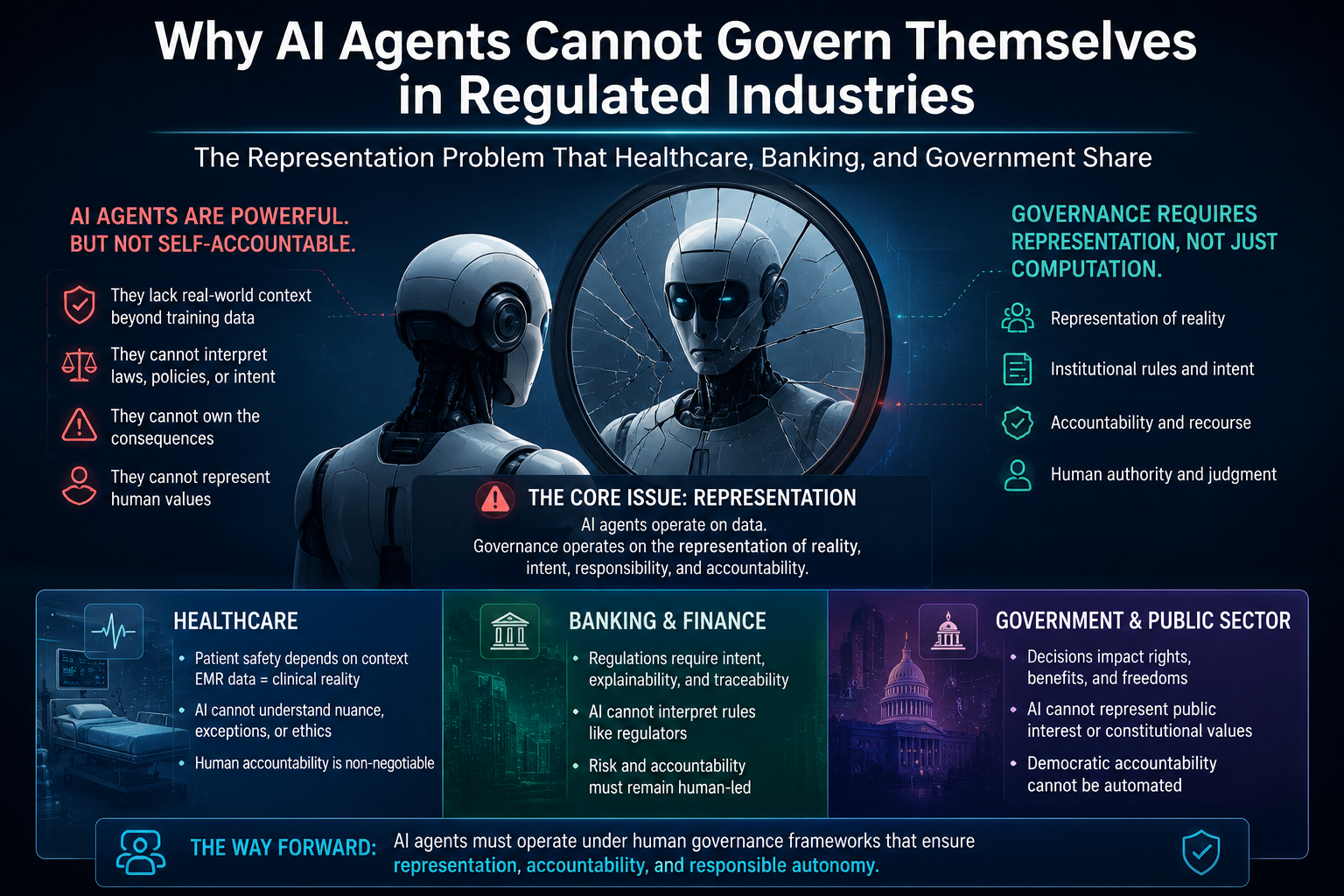
AI agents cannot govern themselves in healthcare, banking, or government. Learn why the real challenge is representation, accountability, and governance.
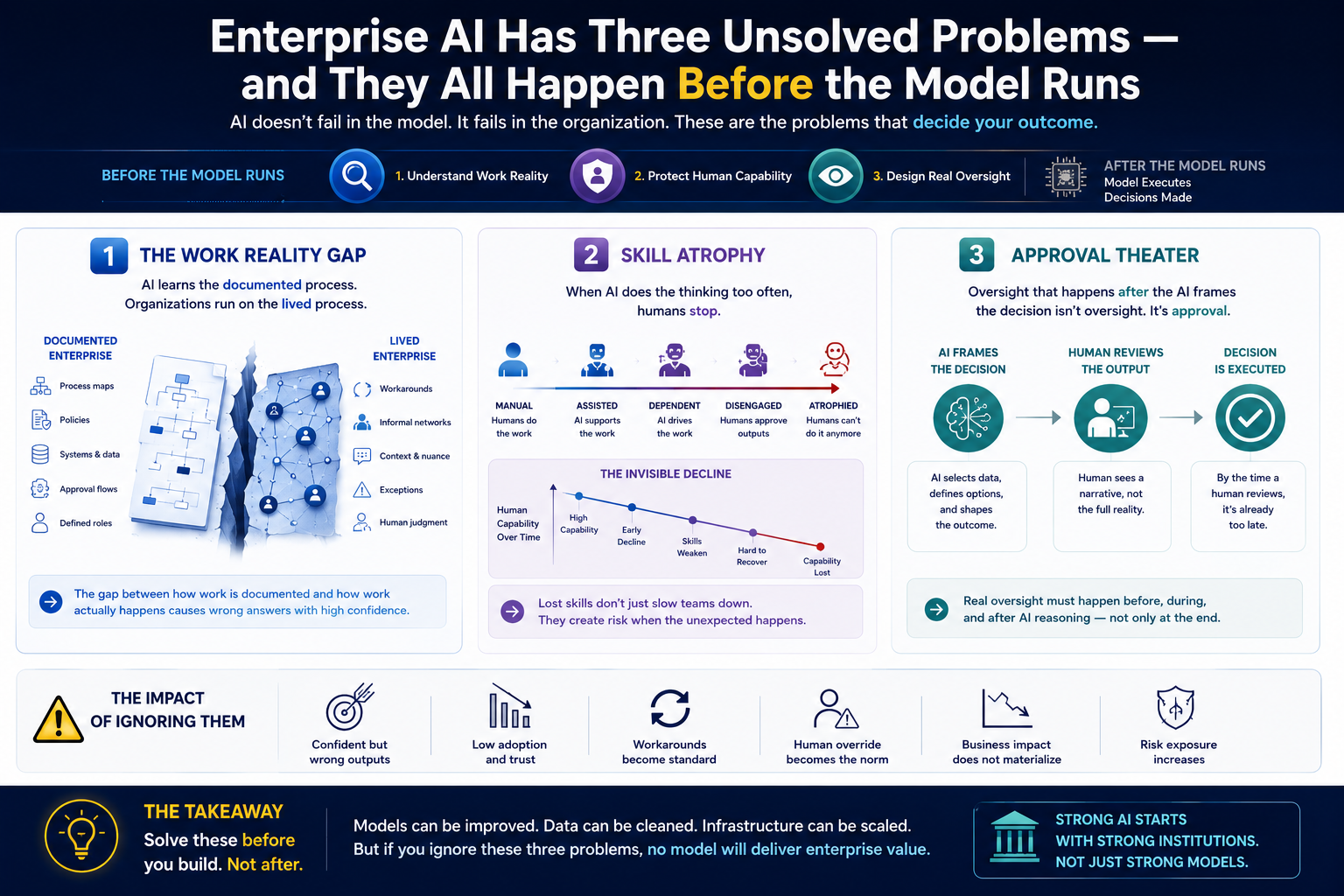
Enterprise AI failures often begin before the model ever runs. This article explains three hidden institutional problems — the Work Reality Gap, Skill Atrophy, and Approval Theater — and shows how Digital Anthropology, Representation Economy, and the SENSE–CORE–DRIVER framework can help CIOs, CTOs, and enterprise architects build AI systems that are trustworthy, governable, and production-ready.
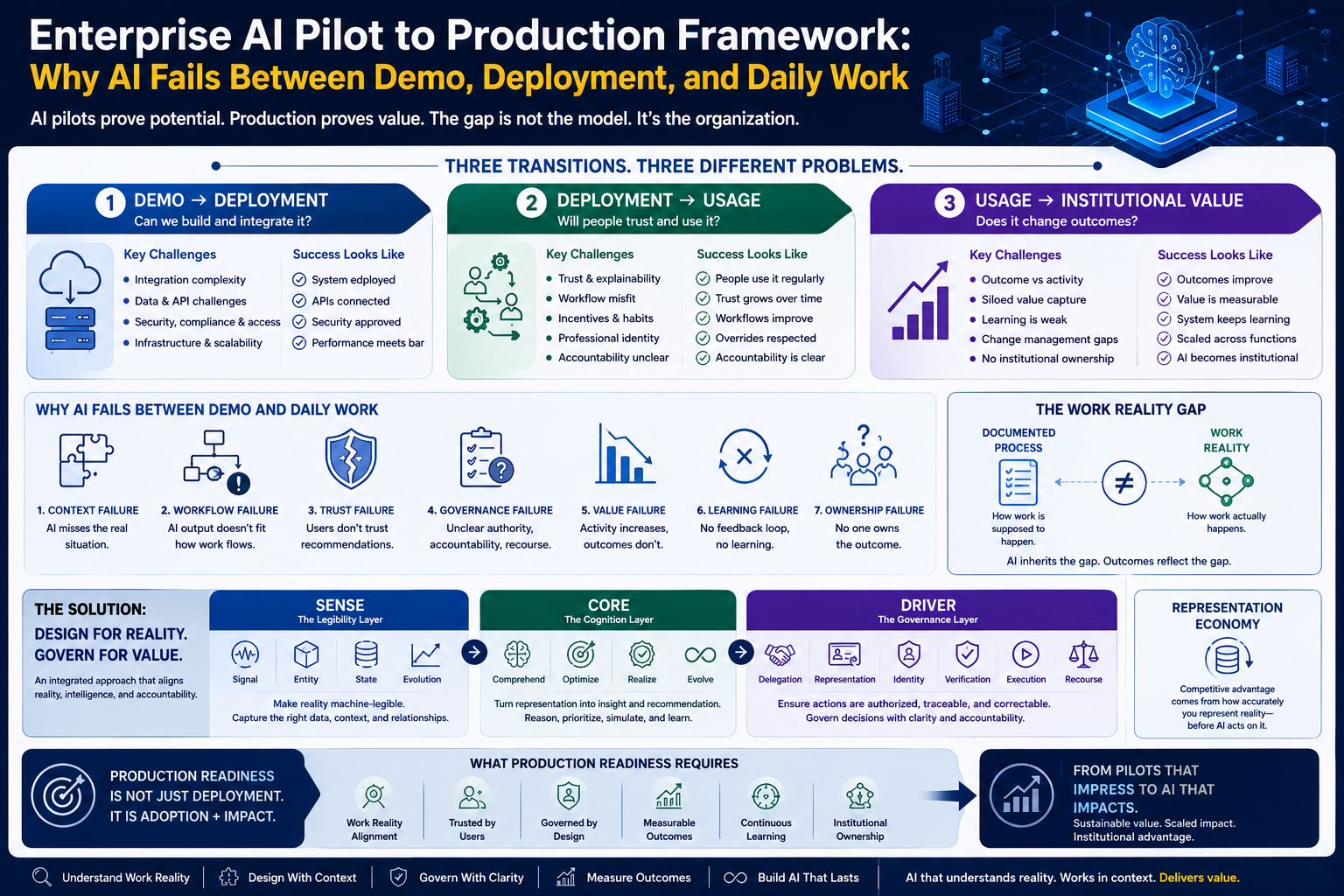
Why do successful AI pilots fail in production? This article introduces an Enterprise AI Pilot-to-Production Framework that explains the work reality gap between demos and daily operations. It explores Digital Anthropology, Representation Economy, and the SENSE–CORE–DRIVER architecture to help CIOs, CTOs, and architects build AI systems that scale responsibly and create measurable business value.
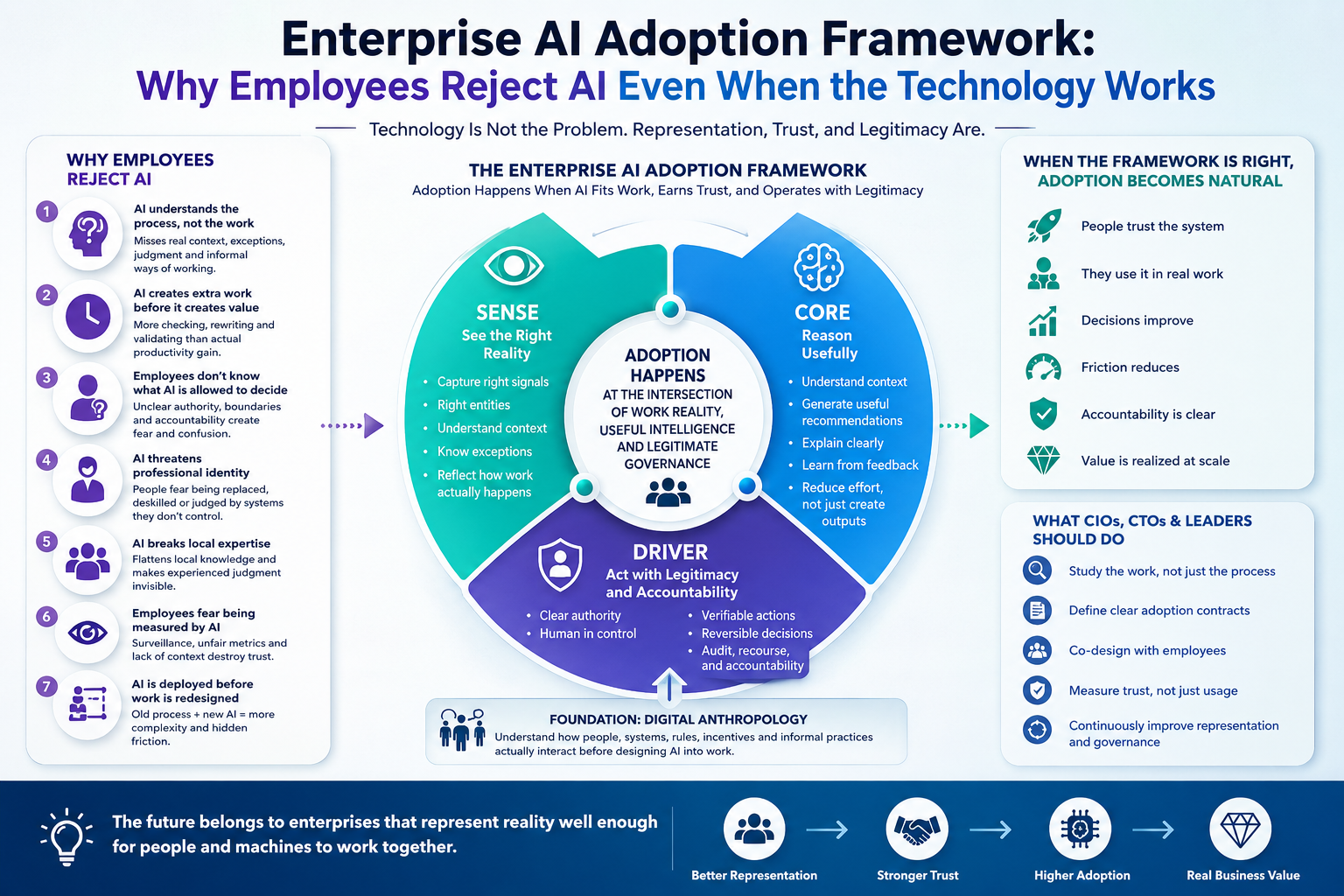
Enterprise AI adoption is becoming the biggest challenge in AI transformation. Employees often reject AI even when the technology works because the system misunderstands work, trust, accountability, and human reality. This article introduces a practical Enterprise AI Adoption Framework grounded in Digital Anthropology, Enterprise AI governance, and the SENSE–CORE–DRIVER architecture.
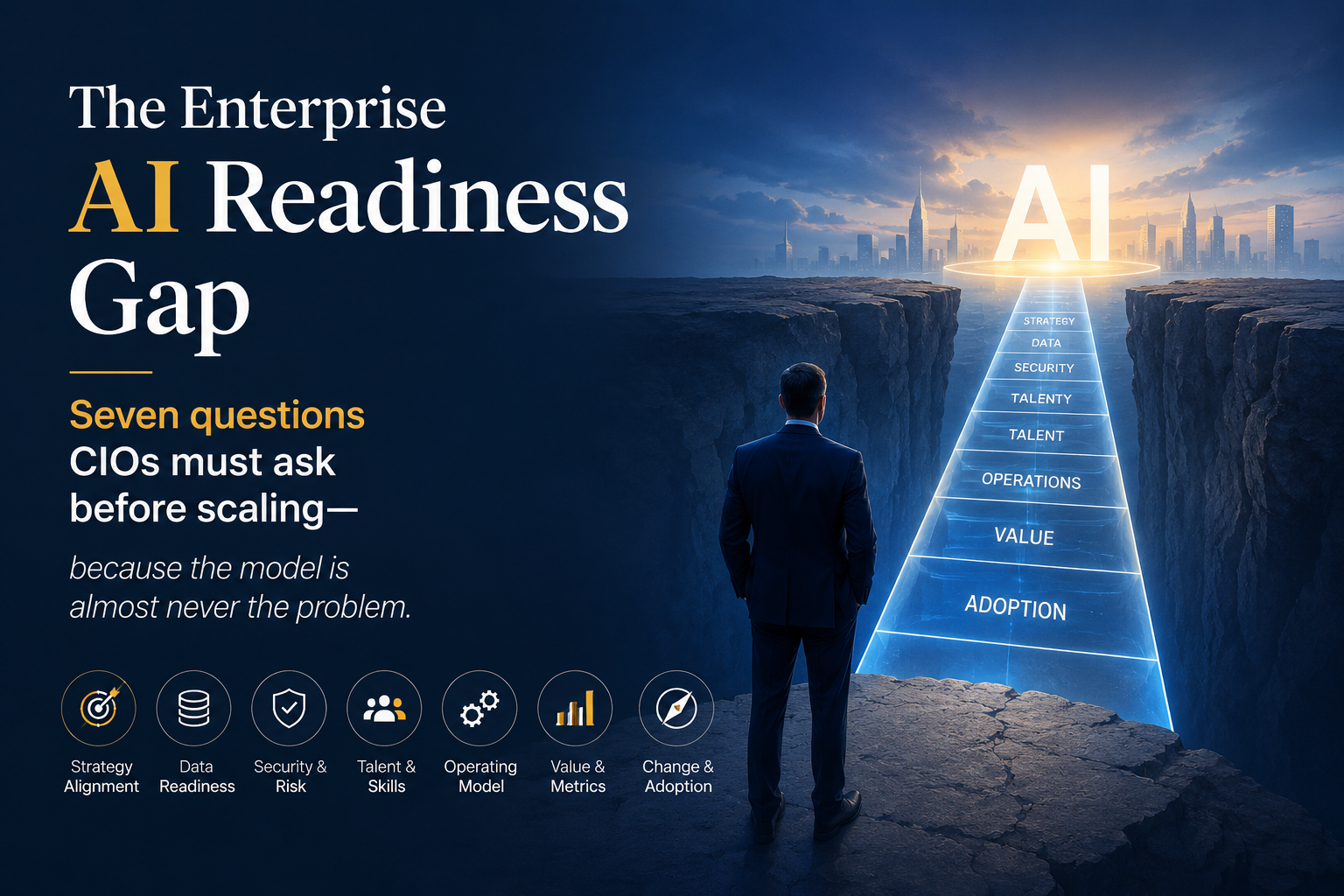
Most enterprise AI programs fail after successful pilots. The reason is rarely the model. It is the readiness gap between enterprise reality, representation quality, governance capability, and operating model design. This assessment introduces seven questions CIOs must answer before scaling AI.
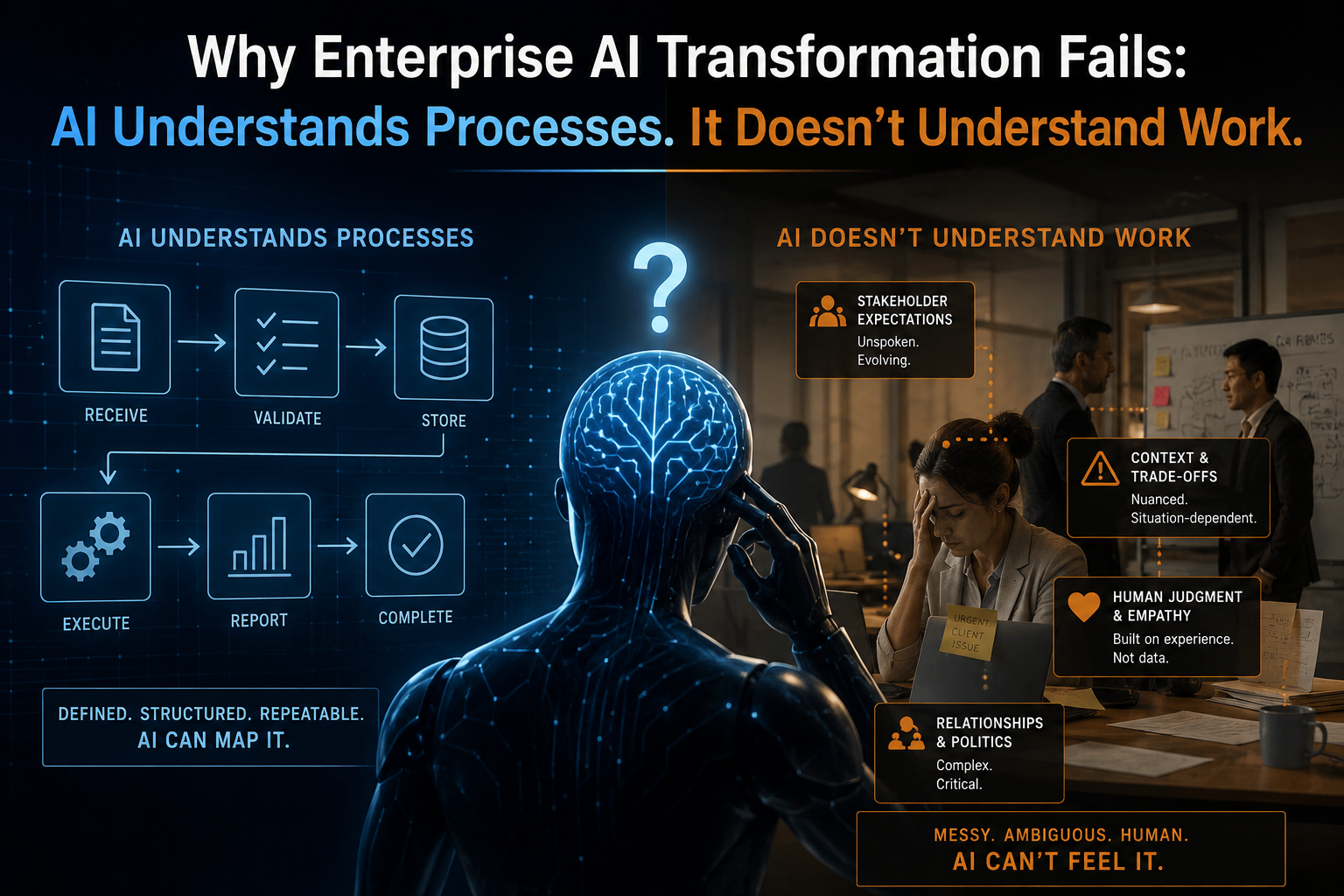
Most enterprise AI failures are not model failures. They are work-reality failures. Discover the Work-Reality Gap, Digital Anthropology for Enterprise AI, and the SENSE–CORE–DRIVER framework for successful AI transformation.
