
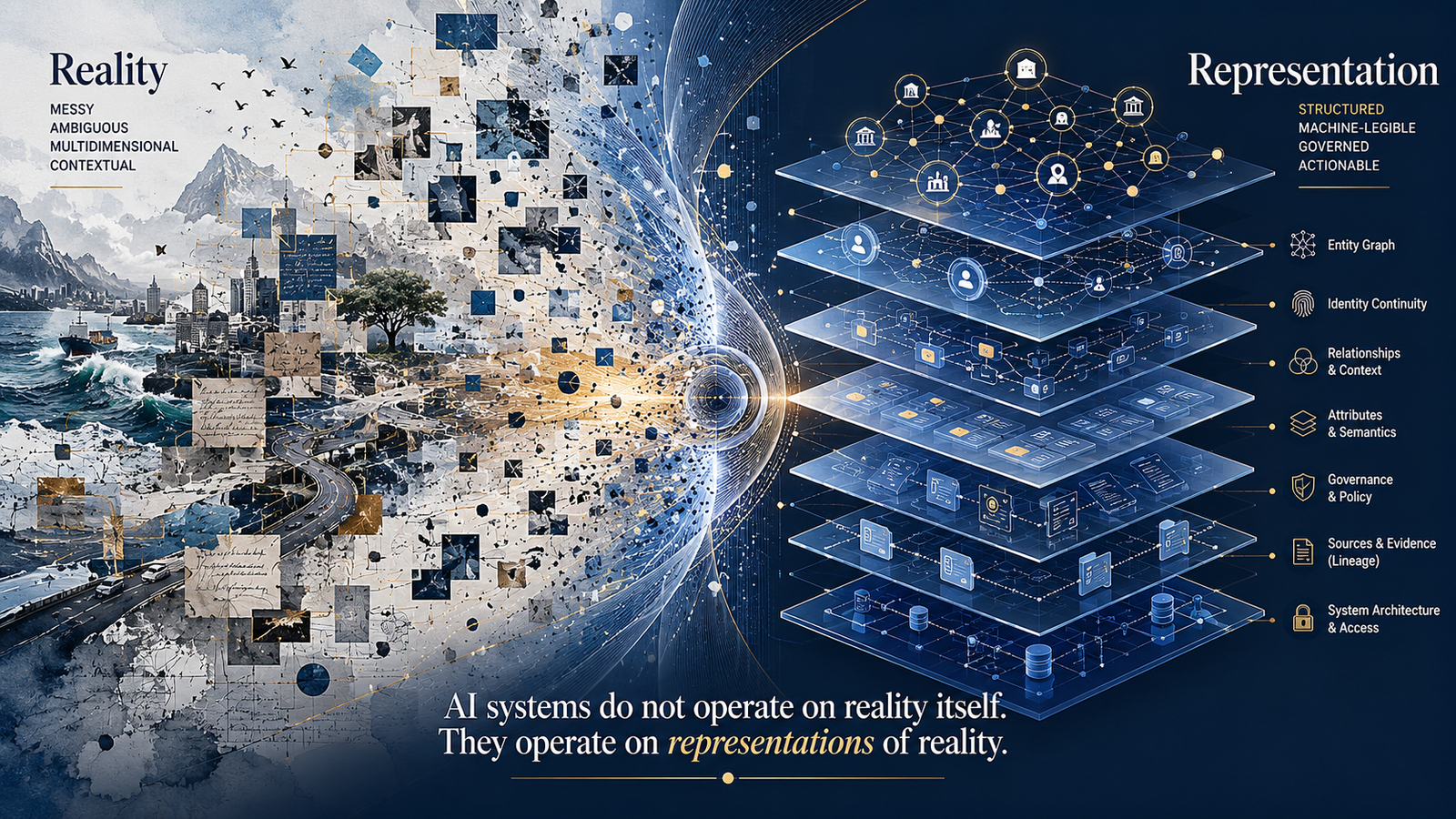
AI systems do not operate on reality itself — they operate on representations of reality. This article explains why representation quality, visibility, trust, and machine-legible reality are becoming the real infrastructure of the AI economy and enterprise intelligence.
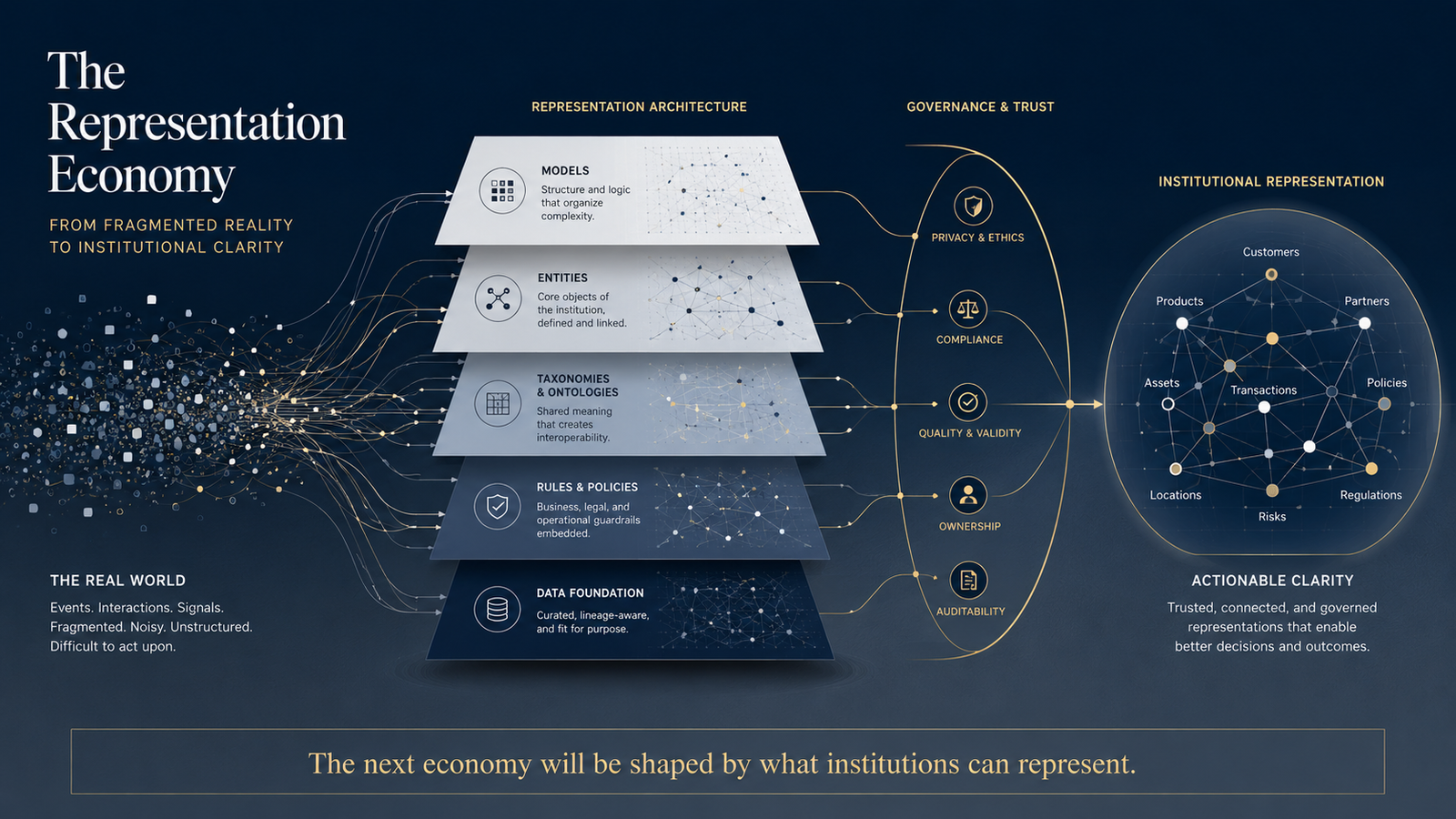
The Representation Economy explains why the next phase of AI advantage will depend not only on intelligence, but on visibility, representation, trust, and governed action. Discover how representation infrastructure is reshaping enterprise strategy, AI governance, and institutional power.
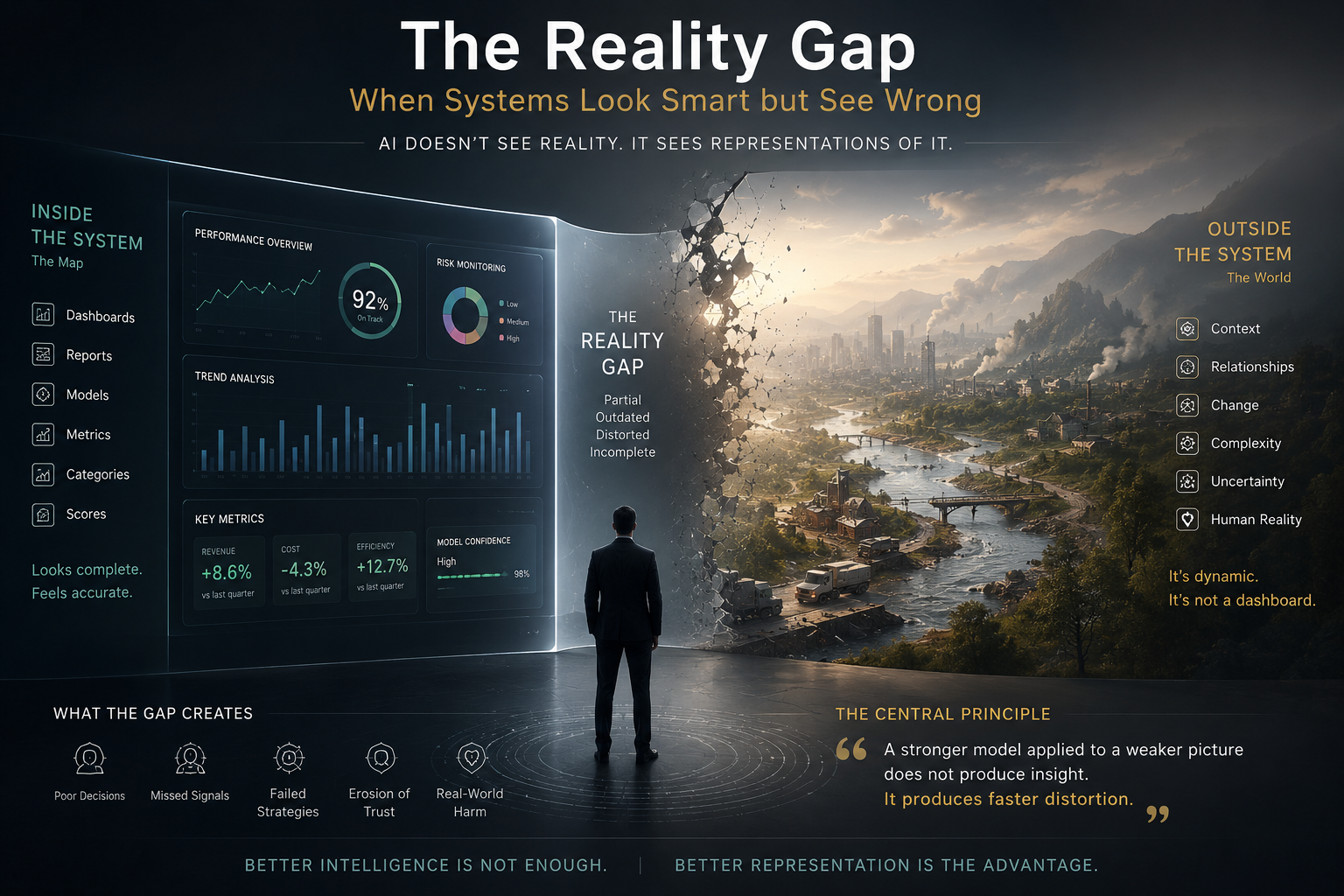
AI systems do not operate directly on reality. They operate on representations of reality. That distinction is becoming one of the most important strategic truths of the AI era. Modern organizations are surrounded by dashboards, reports, metrics, and intelligent systems that appear increasingly sophisticated. Yet many of these systems are acting on pictures of the world that are partial, fragmented, outdated, or structurally distorted. This is the “Reality Gap.” It emerges when the map inside a system no longer matches the world outside it. A stronger model applied to a weaker picture does not produce better insight. It produces faster distortion. This article explores why many organizations are becoming data-rich but reality-poor, why AI is exposing hidden weaknesses inside institutional systems, and why the next phase of competitive advantage will depend not only on intelligence, but on representation quality, visibility, legitimacy, and machine-legible understanding of reality. Part of the broader Representation Economy framework, this essay argues that the future will belong not simply to organizations that collect more data, but to those that represent reality more faithfully.

Most organizations are not data-poor. They are data-rich, but reality-poor. This article explores why the next frontier in Enterprise AI is not simply data infrastructure, but representation infrastructure — the systems that help organizations understand reality clearly enough to act with trust.

The next wave of AI will not be defined only by smarter models. It will be defined by how clearly systems can represent reality. This article explores why AI failures often begin long before reasoning starts — at the level of visibility, identity, trust, and representation.
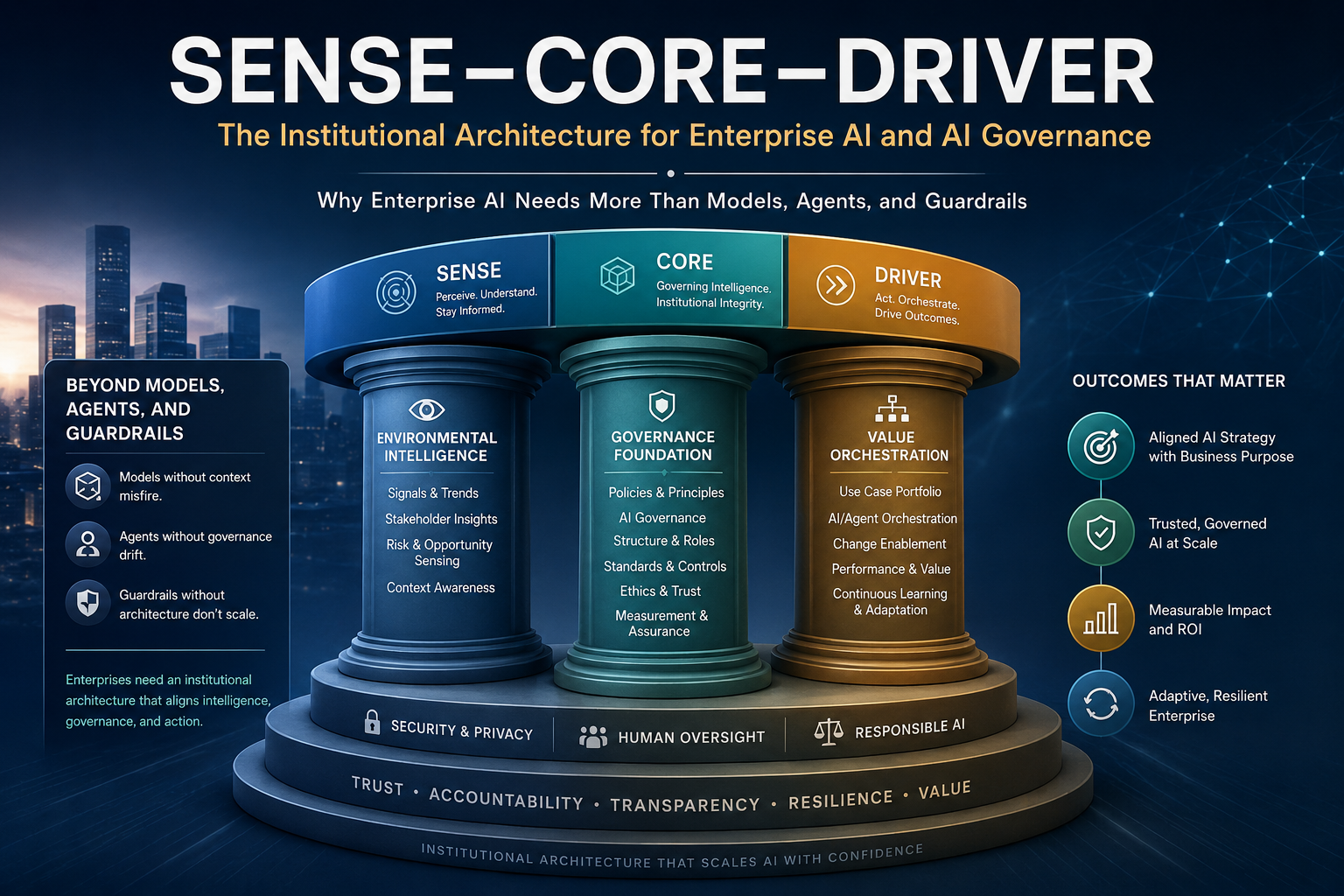
Most Enterprise AI frameworks focus on models, data, or governance. Few explain how organizations should structure what AI can see, decide, and …
