
Enterprise AI Adoption Roadmap: A Step-by-Step Guide for India, US, and Europe
 The Uncomfortable Question Behind “Thinking” AI
“If you’re evaluating how to scale AI inside your organization, start with clarity — not complexity.”
Over the past year, a new frontier in AI has emerged: Large Reasoning Models (LRMs).
Models like OpenAI’s o-series, DeepSeek-R1, Google’s Gemini “Thinking” models, and Anthropic’s Claude Sonnet Thinking position themselves as intelligent systems capable of step-by-step reasoning rather than simple text prediction.
The core marketing message has been:
“Give the model more time to think — and it will reason like an expert.”
Benchmarks and demos seem to validate this narrative.
But emerging independent research tells a more uncomfortable story.
Recent evidence shows:
- Apple’s “Illusion of Thinking” paper found that as puzzle complexity rises, many LRMs think less, not more, and their accuracy collapses. (Apple ML Research)
- Investors, engineers, and independent researchers report that reasoning models appear brilliant on benchmarks but collapse beyond a complexity threshold. (Lightspeed Venture Partners)
- Safety assessments show higher jailbreak vulnerability because reasoning models expose more internal logic, tools, and control pathways. (Medium Research Commentary)
- Long chain-of-thought studies show higher hallucination rates when LRMs attempt extended reasoning. (Long-CoT / arXiv)
For enterprises in the United States, European Union, India, and the Global South, this creates a critical challenge:
How do you deploy reasoning models safely, when the moment they “think harder” is often the moment they break?
This article explains — in plain language:
- What LRMs truly are
- Why they fail on complex, real-world reasoning
- And how enterprises can safely design, govern, and operationalize them
-
What Are Large Reasoning Models (LRMs)?
Large Reasoning Models are an evolution of Large Language Models — designed not just to generate the next word, but to:
- Break problems into multiple reasoning steps
- Explore alternative solution paths
- Verify and refine their answers before responding
Simple Analogy
| Type | Behaviour |
| LLM | Answers quickly — like a student blurting out the first guess |
| LRM | Thinks out loud — explaining steps, exploring alternatives, then concluding |
Common LRM Techniques
- Chain-of-Thought Prompting: Encouraging step-by-step reasoning (Long-CoT)
- Multiple Thought Exploration: Sampling several reasoning paths, then selecting the best (Stanford CS224R)
- Reinforcement Learning with Verifiable Rewards (RLVR): Rewarding only correct final answers and verifiable reasoning (arXiv)
This is why models like o1, o3, and DeepSeek-R1 perform exceptionally well on math, coding, and benchmark tasks.
However, real-world environments — such as:
- A bank in Mumbai
- A telco in Frankfurt
- A hospital in Chicago
- A government office in Nairobi
— introduce chaos, ambiguity, regulation, uncertainty, and incomplete information.
That’s where things break.
-
The Illusion of Thinking: When Tasks Get Harder, LRMs Think Less
Apple’s landmark study revealed a paradox:
As problems became more complex, reasoning models produced shorter reasoning traces and worse answers.
Expected behaviour:
- 🟢 More complexity → more reasoning → better accuracy
Actual behaviour:
- 🔴 More complexity → less reasoning → lower accuracy
In simple terms:
Models stopped thinking when thinking was most needed — but did so confidently.
Additional research confirms:
- Increasing reasoning steps beyond a threshold creates loops, contradictions, and “overthinking.”
- Nvidia, Google, and Foundry engineers observe similar patterns and now recommend multi-model orchestration frameworks like Ember rather than giving one model unlimited reasoning time.
So the industry now faces a paradox:
| Too Little Thinking | Too Much Thinking |
| Shallow, incorrect answers | Loops, contradictions, hallucinations |
Meaning:
“Just give it more time” is not a scalable or safe strategy.
-
Why LRMs Fail on Hard Problems
4.1 Fixed Reasoning Budgets Don’t Match Real-World Complexity
Most deployments set:
- Fixed token limits
- Fixed reasoning depth
- Fixed number of sampled paths
This is equivalent to:
Giving every support ticket — from a password reset to a $10M fraud investigation — exactly 3 minutes.
4.2 Reward Systems Teach Shortcuts, Not Understanding
RL and RLVR help, but when training data is benchmark-biased:
- Models learn patterns that score well
- Not reasoning that generalizes well
In essence:
They become excellent test takers — not reliable problem solvers.
4.3 Language ≠ World Model
LRMs generate text — but do not contain structured causal understanding.
When reasoning chains include real-world constraints — e.g., international loan restructuring or medical protocol sequencing — they collapse into:
- Contradictions
- Confident hallucinations
- Fragile logic

-
Implications for Enterprises in the US, EU, India & Global South
5.1 Silent Failure on the Most Important Cases
LRMs work on the 80% of straightforward tasks but fail silently on the 20% that matter most:
- Regulatory edge cases
- Cross-jurisdiction compliance
- High-stakes decision pipelines
5.2 Increased Attack Surface
Because reasoning chains and tools are exposed, LRMs are:
- Easier to jailbreak
- More manipulable
- Harder to audit
5.3 Governance Requires Evidence — Not Faith
Regulations such as:
- EU AI Act
- NIST AI RMF
- IndiaAI Framework
- South-South AI Governance Principles
require:
- Provenance
- Evidence
- Traceability
If an LRM produces a 2-page reasoning chain that sounds coherent but is wrong, governance becomes impossible.
-
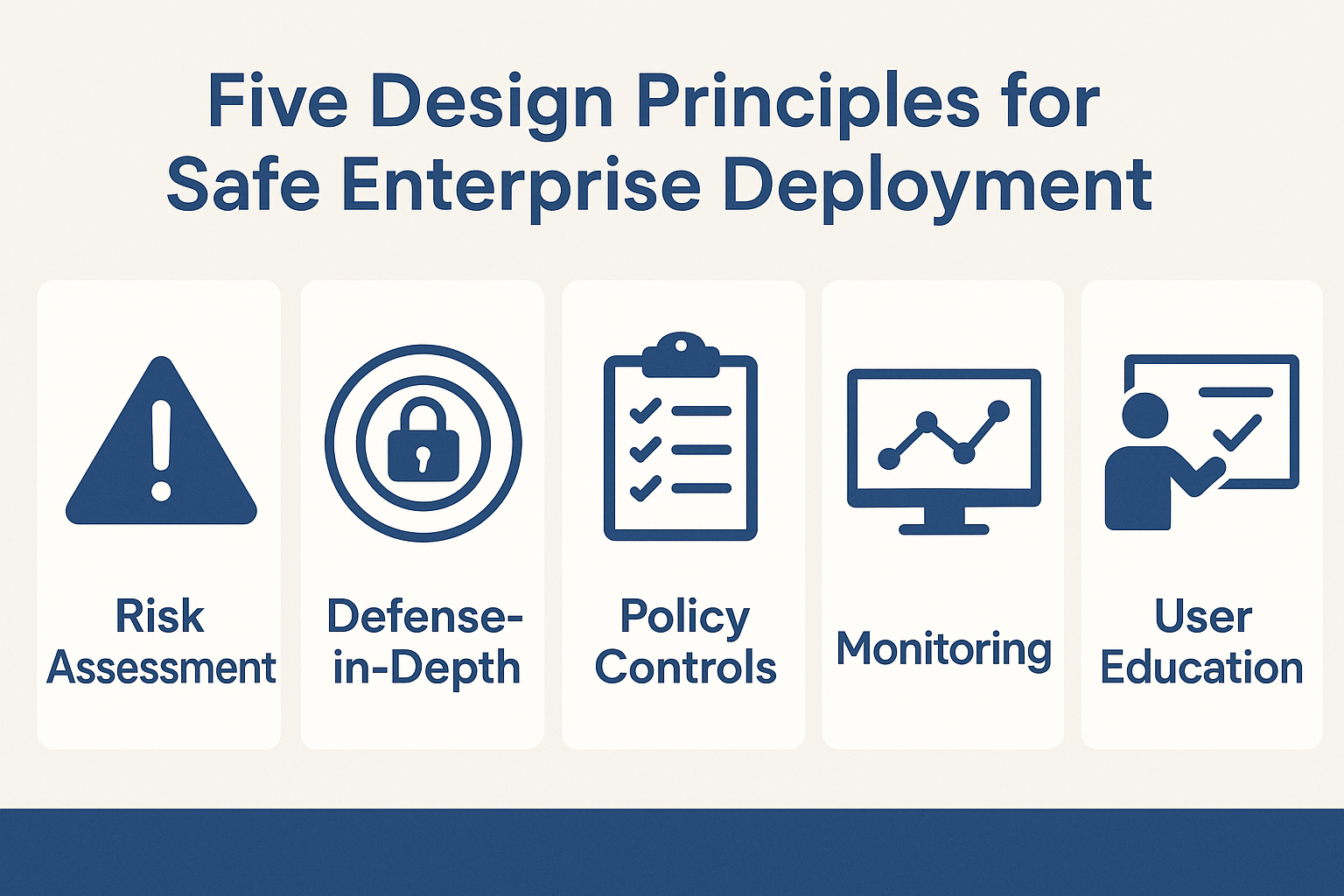
Five Design Principles for Safe Enterprise Deployment
Principle 1 — Reasoning on a Budget
- Start with shallow reasoning
- Escalate only when complexity is detected
- Cap maximum reasoning depth
Principle 2 — Prefer RLVR for Verifiable Domains
Use RLVR wherever the answer can be objectively checked (math, code, SQL).
Principle 3 — Anchor Reasoning in Real Data and Tools
Use Retrieval-Augmented Generation, calculators, policy engines, and simulators to avoid hallucination.
Principle 4 — Use Multiple Models and Judges
Use orchestration frameworks (like Ember):
- One model proposes
- Specialists validate
- A judge model selects the final answer
Principle 5 — Build an AI Governance Fabric
Record:
- Reasoning traces
- Retrieval logs
- Tool calls
- Human overrides
This is the foundation for AI Safety Cases, which will be mandatory in many jurisdictions.
-
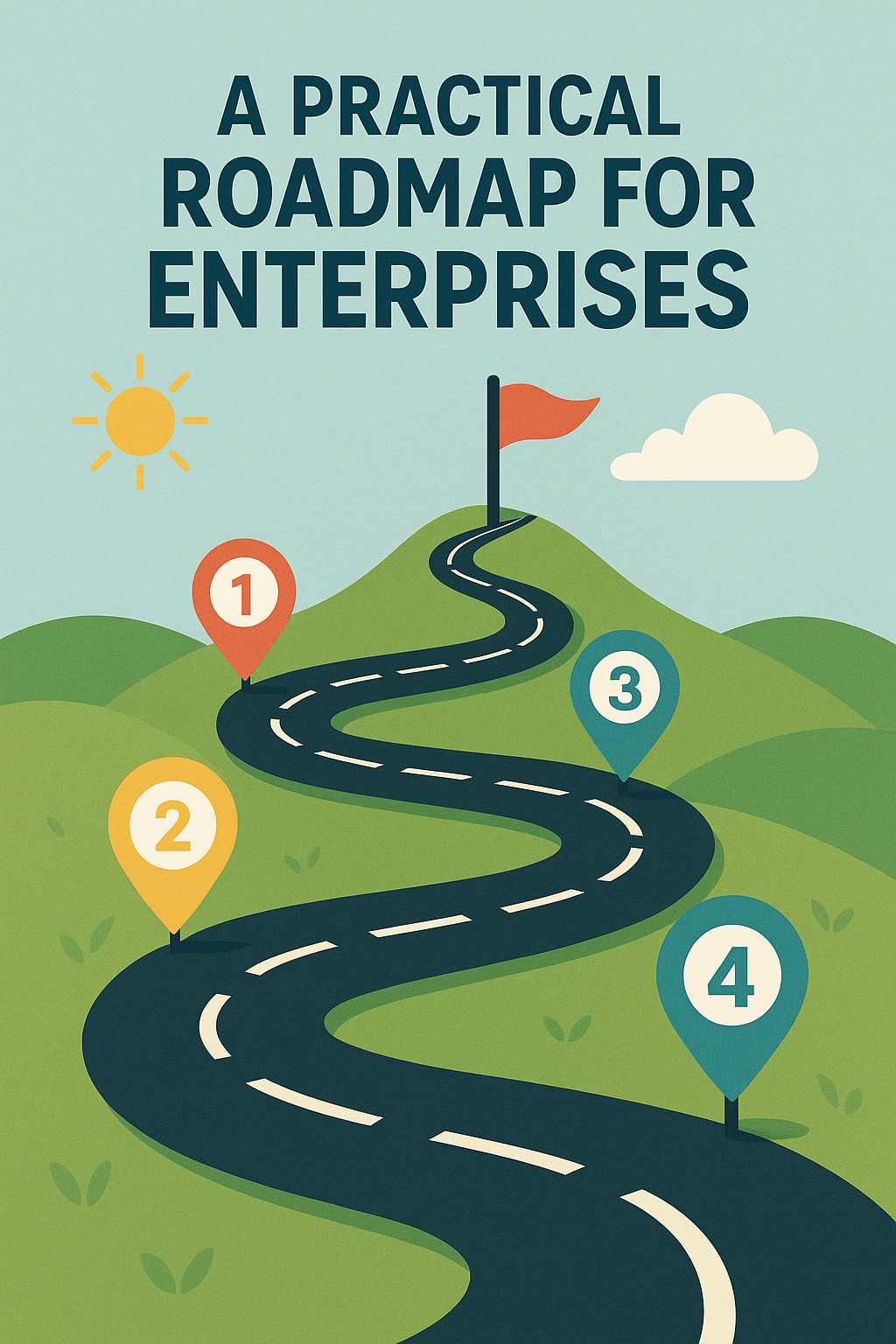
A Practical Roadmap for Enterprises
- Identify where reasoning models already exist
- Add adaptive thinking budgets
- Adopt RLVR for all verifiable domains
- Add retrieval + tools for difficult tasks
- Implement multi-model orchestration & judge models
- Log everything into a governance fabric
- Build safety cases for top reasoning workflows
- Continuously stress test against Apple’s “Illusion of Thinking”
-
The Shift in Mindset
The question is no longer:
❌ “Can the model think like an expert?”
But rather:
✅ “Where does the model fail — and what governance catches it before harm occurs?”
The leaders who succeed will treat reasoning AI the way aviation treats autopilot:
- Monitored
- Verified
- Auditable
- Safe-by-design
-
Key takeaways
- Large Reasoning Models (LRMs) are powerful but fragile, especially on high-complexity tasks.
- Apple’s “Illusion of Thinking” paper exposes a collapse in accuracy and effort as problem difficulty increases.
- Enterprises in banking, telecom, healthcare, public sector and manufacturing must treat LRMs as components inside larger governance fabrics, not as magical brains.
- Techniques like RLVR, adaptive test-time compute, RAG, model orchestration, and AI safety cases provide a concrete path forward.
- The winners will be organizations that design Enterprise Reasoning Graphs: networks of models, tools, policies, and humans working together.
To learn more about this, you can read my other articles
-
Glossary
Large Reasoning Model (LRM)
A large language model tuned to perform explicit multi-step reasoning, often using chain-of-thought, search, and RLVR.
Chain-of-Thought (CoT)
A step-by-step explanation produced by a model, similar to how a human might show their working in a math exam.
Test-Time Compute (TTC)
The amount of computation used when a model is generating an answer. Adaptive TTC lets models think more on harder questions. (Hugging Face)
RLVR (Reinforcement Learning with Verifiable Rewards)
A training method that rewards models only when their answers (and sometimes their reasoning paths) pass a programmatic checker—common in math, code and SQL. (arXiv)
Hallucination
A confident but incorrect answer generated by an AI system, often supported by plausible-sounding reasoning.
AI Safety Case
A structured, evidence-backed argument that an AI system is safe and compliant for its intended use, often required by regulators.
Enterprise Reasoning Graph (ERG)
An architectural view where models, tools, data stores, human workflows and policies are linked together to deliver end-to-end, auditable reasoning.
AI Governance Fabric
The logs, monitors, controls and policies that sit around AI systems to ensure traceability, accountability and regulatory alignment across regions.
-
Frequently Asked Questions (FAQ)
Q1. Are Large Reasoning Models fundamentally flawed?
Not necessarily. The research shows that today’s LRMs collapse on certain hard problems and can behave unpredictably under complexity. (arXiv)
They are valuable tools, but they must be wrapped in governance, verifiers, and orchestration, not trusted blindly.
Q2. Should enterprises in regulated industries avoid LRMs altogether?
No. In finance, healthcare, telecom and government, LRMs can deliver real value in analysis, documentation, coding assistance and decision support.
The key is to limit their autonomy, use RLVR where possible, ground them in real data, and maintain human oversight for high-impact decisions.
Q3. How does RLVR change the game for reasoning AI?
RLVR shifts the reward signal from “humans liked the answer” to “the answer passed a verifiable check.”
This encourages models to seek logically correct solutions instead of just persuasive language—and makes it easier to build auditable safety cases. (arXiv)
Q4. Is Apple’s “Illusion of Thinking” paper the final word on LRMs?
No. The paper is influential but also controversial; some researchers argue that it underestimates what LRMs can do in more flexible setups. (seangoedecke.com)
What it does prove is that benchmark-grade reasoning is not the same as robust, real-world reasoning—and that enterprises must test models on their own complexity ladders.
Q5. How should global organizations (US, EU, India, Global South) adapt governance?
They should:
- Align with EU AI Act risk categories and documentation requirements
- Map them to NIST AI RMF practices in the US
- Track IndiaAI and emerging regulations in the Global South
- Build common internal standards: safety cases, ERGs, governance fabrics that work across jurisdictions
-
References & further reading
For readers who want to go deeper, here are some accessible starting points:
- Apple – “The Illusion of Thinking: Understanding the Strengths and Limitations of Reasoning Models via the Lens of Problem Complexity.” (Apple Machine Learning Research)
- Business Insider – “AI models get stuck ‘overthinking.’ Nvidia, Google, and Foundry have a fix.” (Ember and model orchestration). (Business Insider)
- Hugging Face Blog – “What is test-time compute and how to scale it?” (Hugging Face)
- RLVR research – “Reinforcement Learning with Verifiable Rewards Implicitly Incentivizes Correct Reasoning in Base LLMs.” (arXiv)
- Survey – “Towards Reasoning Era: A Survey of Long Chain-of-Thought.” (Long Cot)
- EU AI Act and NIST AI RMF – official documentation on risk-based AI governance and audit requirements. (The Wall Street Journal)
Use these not just as citations, but as design inputs for your next wave of enterprise AI systems.



Raktim Singh is an AI and deep-tech strategist, TEDx speaker, and author focused on helping enterprises navigate the next era of intelligent systems. With experience spanning AI, fintech, quantum computing, and digital transformation, he simplifies complex technology for leaders and builds frameworks that drive responsible, scalable adoption.