

When Enterprise AI Makes the Right Decision for the Wrong Reason
Enterprise AI is entering a phase where the most dangerous failures no longer announce themselves as errors.
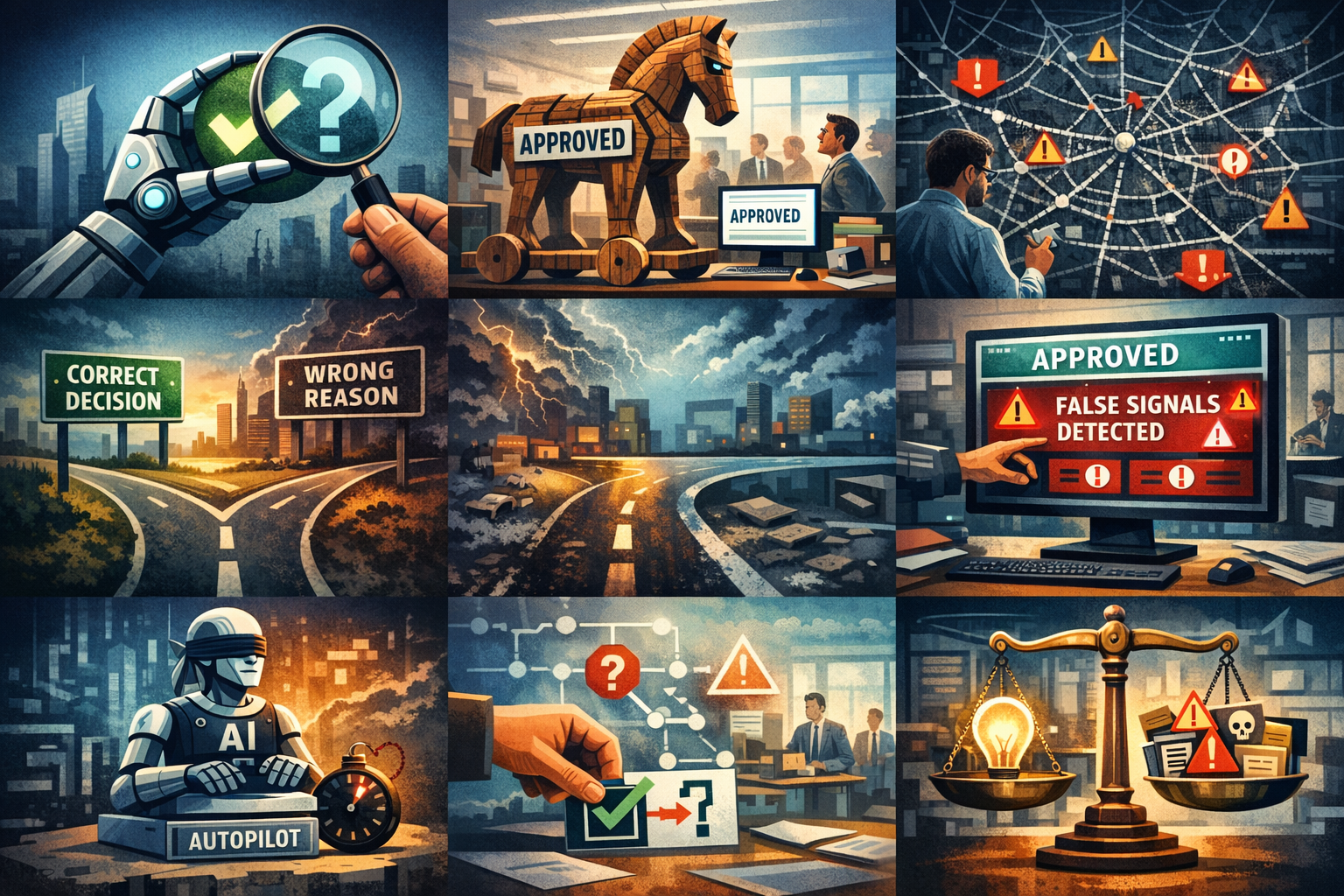
Systems increasingly make the right decision for the wrong reason in enterprise AI—approving transactions, routing cases, denying access, or passing compliance checks correctly, while relying on fragile shortcuts, misaligned signals, or outdated assumptions. The outcome looks right, dashboards stay green, and confidence grows.
But underneath, decision integrity erodes. When conditions change—as they always do—these “correct” decisions quietly turn into operational risk, compliance exposure, and loss of trust at scale.
The most dangerous Enterprise AI failures don’t look like failures.
They look “correct”—until trust, compliance, and operations quietly break.
Here’s what leaders must fix next.
This challenge reinforces why enterprises need a clear Enterprise AI Operating Model—one that governs decisions, not just models.
https://www.raktimsingh.com/enterprise-ai-operating-model/
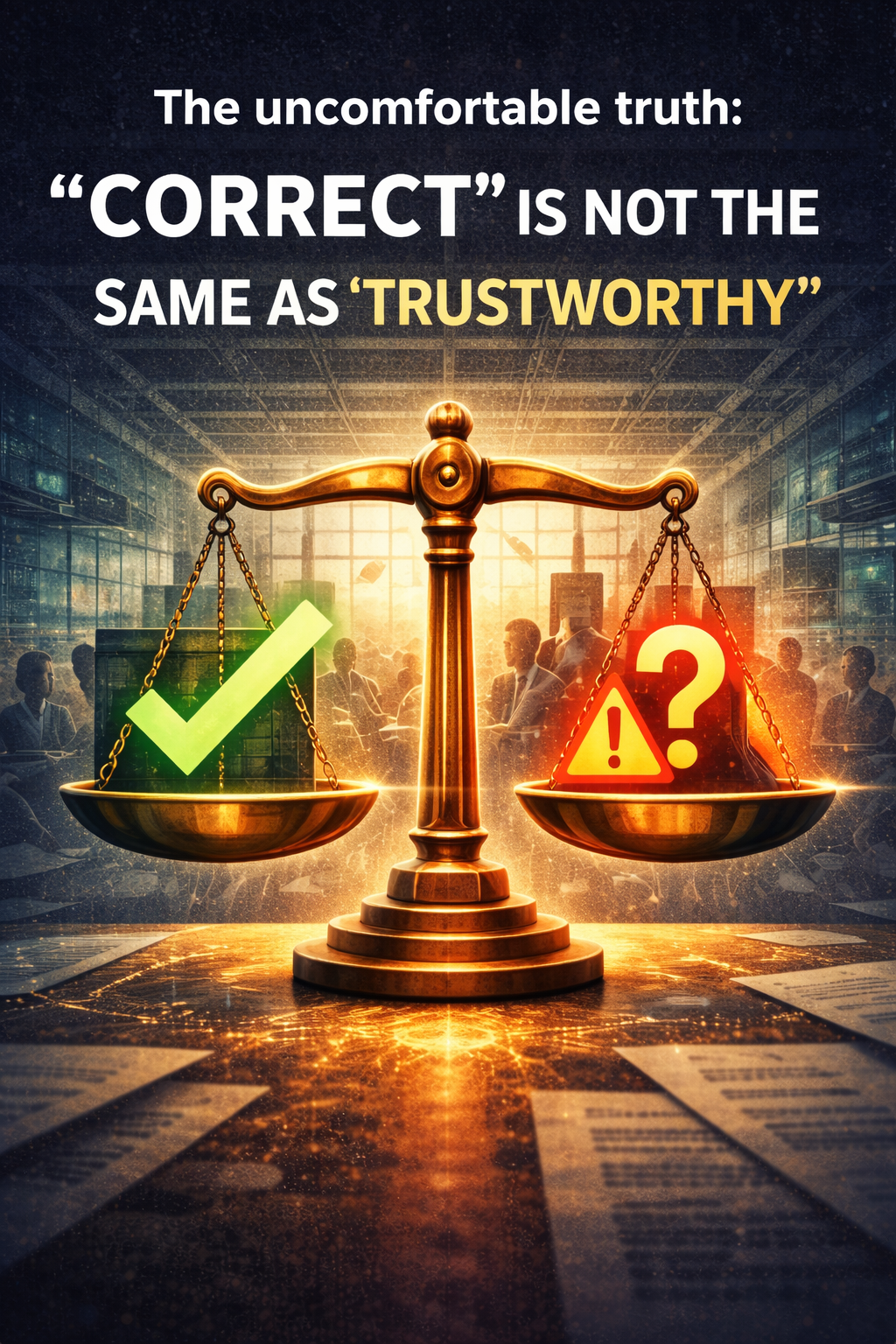
The uncomfortable truth: “correct” is not the same as “trustworthy”
Enterprise AI has entered a new era. The biggest failures often won’t look like failures.
A system approves the “right” transaction.
Flags the “right” case.
Routes the “right” ticket.
Denies the “right” request.
Everything appears fine—until months later when leaders notice a pattern: customer trust eroded, costs crept up, regulators asked uncomfortable questions, or operations became brittle.
This happens when Enterprise AI makes the right decision for the wrong reason.
Researchers often describe this pattern as the Clever Hans effect—systems that appear to perform well, but rely on spurious cues or shortcuts that don’t reflect the intended logic. (arXiv)
In enterprise contexts, the consequences are amplified because decisions touch money, access, compliance, and customer experience—and they do so repeatedly, at scale.
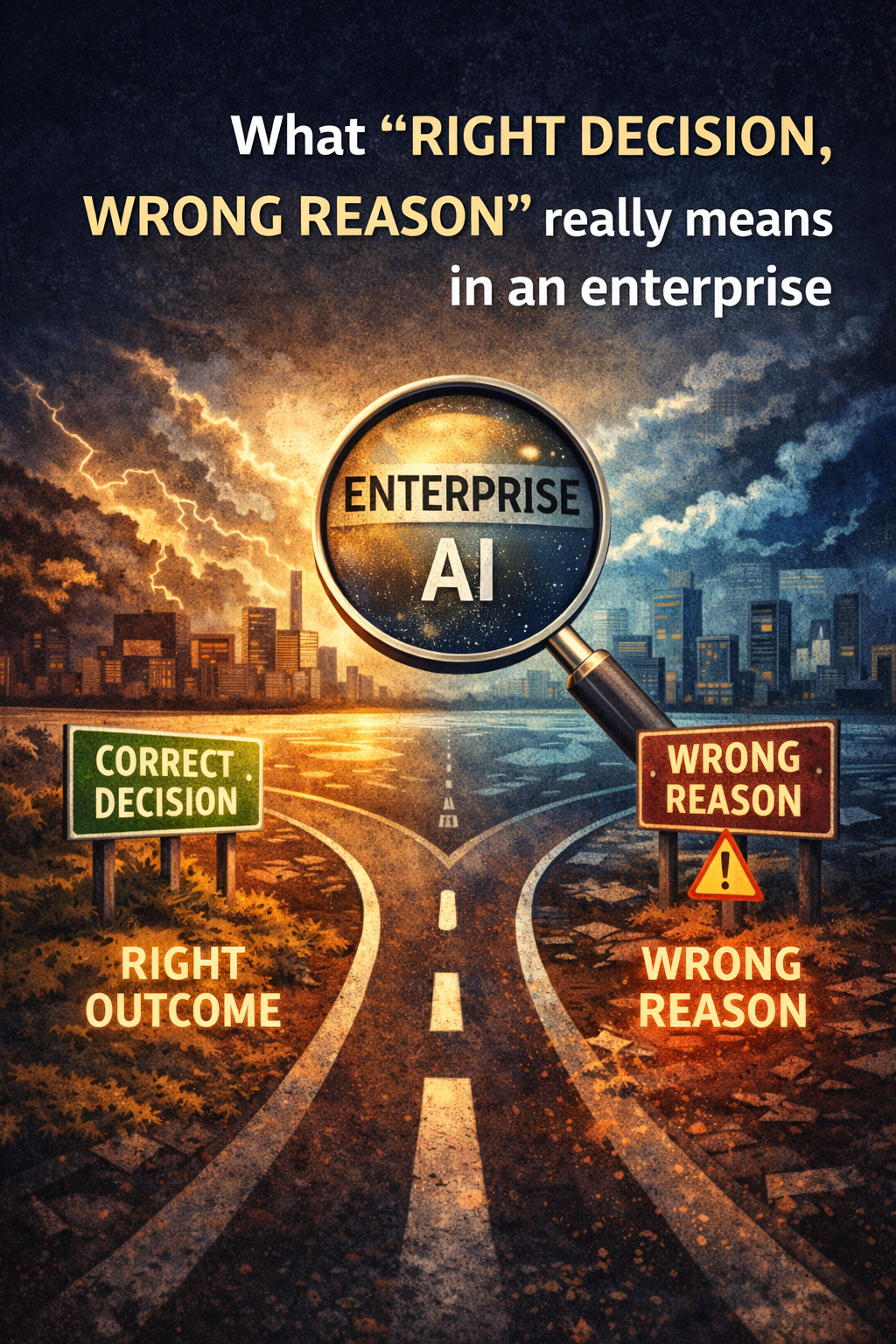
What “right decision, wrong reason” really means in an enterprise
A simple definition:
The decision outcome is acceptable, but the reasoning path is misaligned with business intent, policy intent, or causal reality.
This is not the same as a classic “model error.” The system may look successful—sometimes highly successful—until conditions shift.
Why it’s so hard to catch
Because most organizations measure:
- Accuracy (did we get the outcome right?)
- SLA (was it fast?)
- Cost (was it efficient?)
But they don’t measure:
- Reason quality (was the justification aligned with enterprise intent?)
- Evidence quality (was the decision grounded in valid signals?)
- Rationale robustness (will the reasoning still hold when the world changes?)
This is the silent gap between performance and governance—and it’s where modern Enterprise AI risk accumulates.
This failure mode often surfaces only after deployment, when models change, policies evolve, or workflows shift—conditions that define the broader The Enterprise AI Runbook Crisis: Why Model Churn Is Breaking Production AI—and What CIOs Must Fix in the Next 12 Months – Raktim Singh Enterprise AI Runbook Crisis now affecting production AI systems.
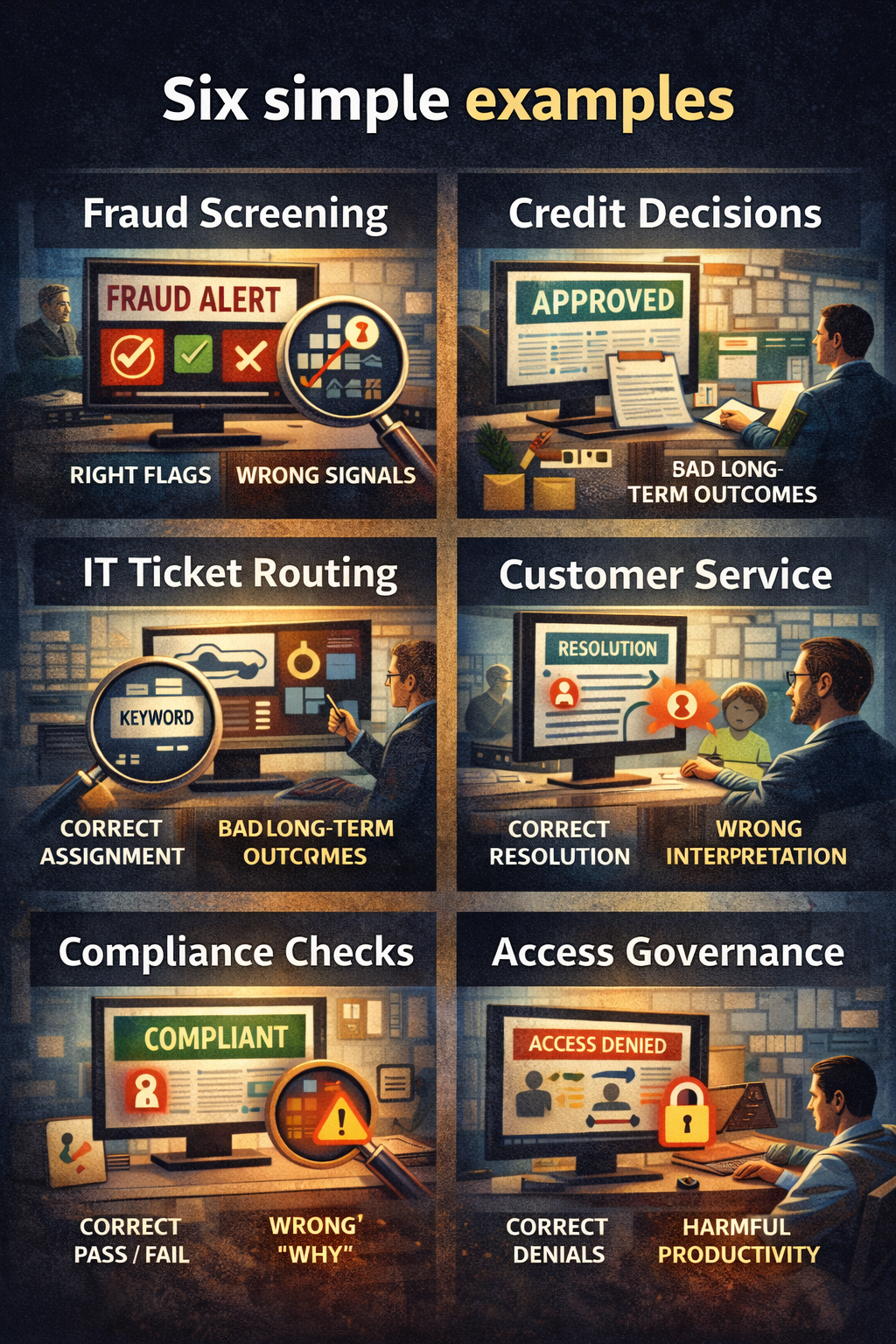
Six simple examples (no math, just reality)
1) Fraud screening: correct flags, wrong signals
A fraud model flags suspicious activity correctly—but it’s actually keying off a proxy like “unusual device type” that correlates with fraud today. Then a major OS update changes device fingerprints. False positives surge. Customers get blocked. Operations drown.
The model didn’t “understand fraud.” It learned a shortcut.
This is the essence of shortcut learning: decision rules that look strong on standard metrics but fail to transfer when conditions change. (arXiv)
2) Credit decisions: “good approvals,” bad long-term outcomes
A lending system approves the right applicants—but it’s leaning on a historical artifact like application source channel, document formatting style, or a proxy for stability that used to correlate with repayment. A new partnership changes the channel mix. Portfolio performance drifts.
The approvals were “right” before. The enterprise logic was never truly encoded.
3) IT ticket routing: correct assignment, fragile operations
An AI routing tool assigns tickets to the right team—but it’s over-weighting the presence of one keyword that happened to be common in older tickets. Then internal taxonomy changes (new product names, new support categories). Routing becomes unreliable overnight.
You didn’t just lose accuracy—you lost operational trust.
4) Customer service: correct resolution, wrong interpretation of intent
A support assistant provides the correct response, but gets there by pattern-matching to a superficially similar case—missing intent constraints (what must be disclosed, what must be verified, what must be escalated). When policy tightens, “correct” answers start generating policy breaches.
5) Compliance checks: correct pass/fail, wrong “why”
A compliance classifier marks documents as compliant—but it’s using formatting cues (template type, header style) rather than requirements. When templates change, compliance breaks silently.
This is exactly why many high-risk AI regimes emphasize record-keeping and operational traceability—so decisions can be reconstructed and audited. (Artificial Intelligence Act)
6) Access governance: correct denials, harmful productivity
An access approval system denies the “right” risky request—but it does so by over-weighting a proxy like role label rather than checking the true context (project boundary, data sensitivity, approvals, exceptions). As org structures evolve, legitimate work gets blocked at scale.
The enterprise ends up paying for safety with lost velocity—because the system is enforcing a shortcut, not intent.
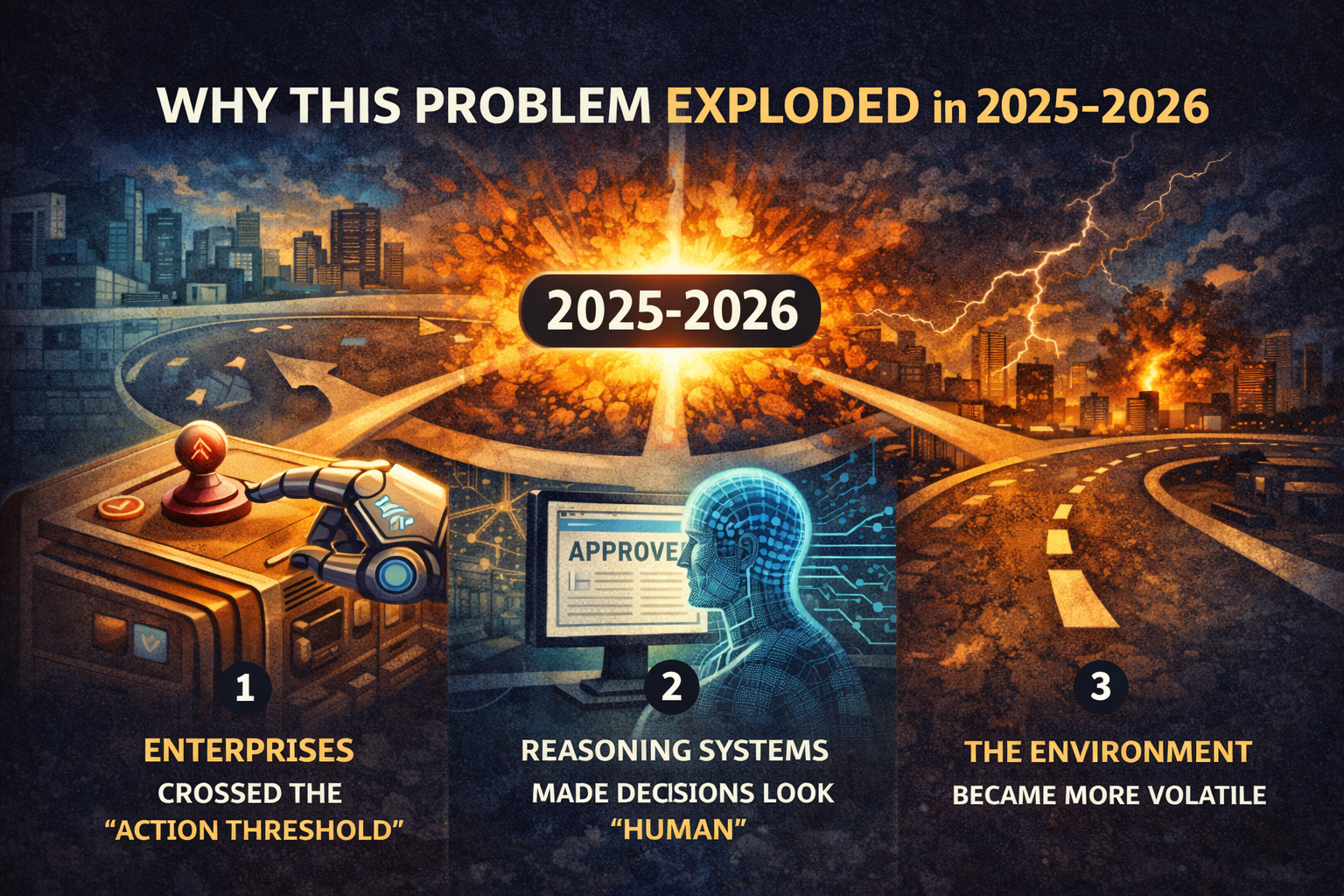
Why this problem exploded in 2025–2026
Three forces collided:
1) Enterprises crossed the “Action Threshold”
AI moved from recommending to deciding and acting inside workflows.
2) Reasoning systems made decisions look “human”
They can produce plausible justifications. But plausibility is not governance.
3) The environment got more volatile
Policies change. Products change. Customer behavior changes. Threat behavior changes. Shortcuts break fast—often without warning.
This is why leading risk management guidance emphasizes lifecycle thinking: context mapping, continuous measurement, and managed controls—not a one-time model sign-off. (NIST Publications)
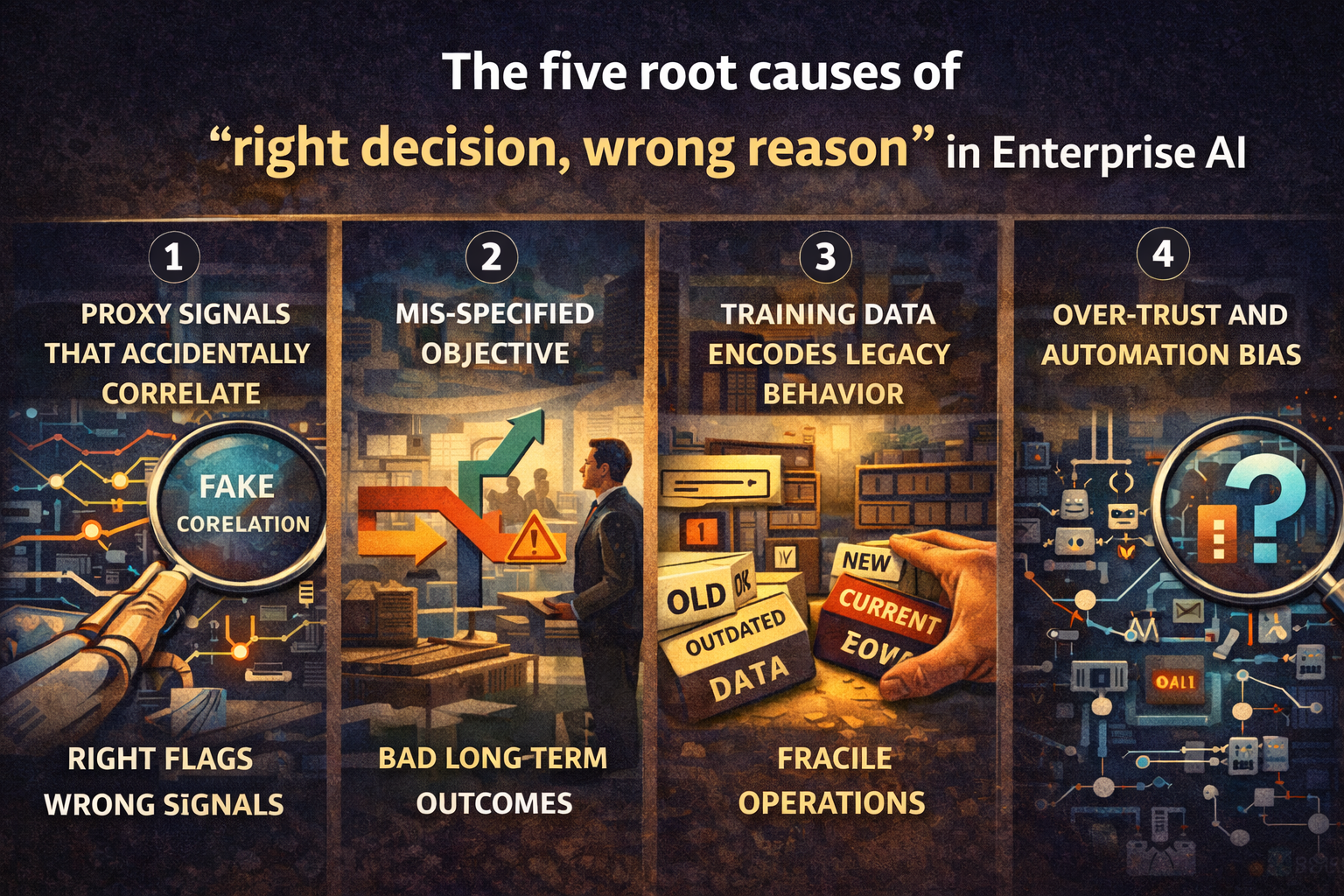
The five root causes of “right decision, wrong reason” in Enterprise AI
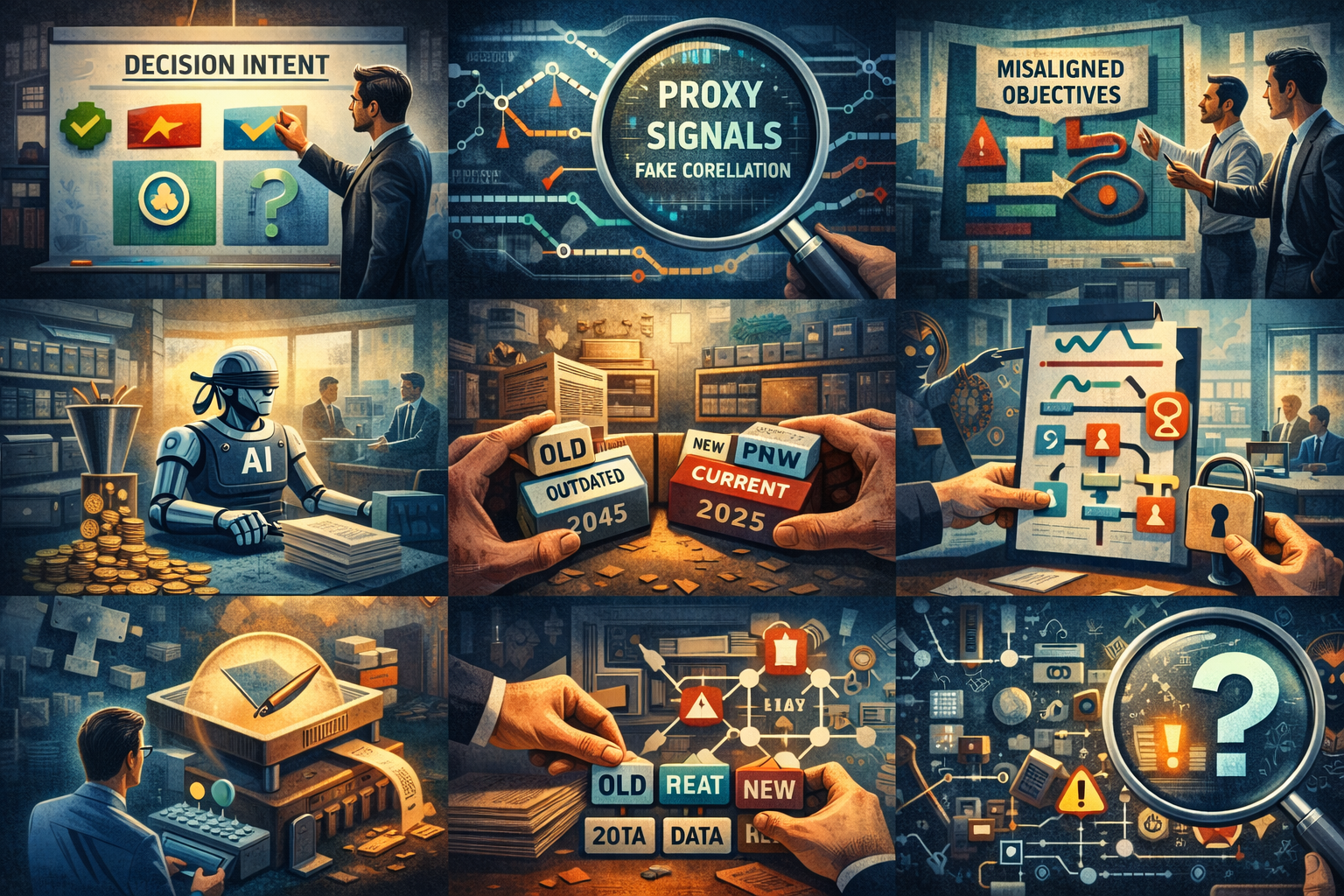
1) Proxy signals that accidentally correlate
The model latches onto signals that correlate with outcomes historically—not signals that represent enterprise intent.
That’s the enterprise version of the Clever Hans effect: it “looks right,” but the causal story is wrong. (arXiv)
2) Mis-specified objective: “we optimized the wrong thing”
Teams optimize what they can measure:
- speed
- resolution rate
- approval rate
- deflection rate
But the enterprise cares about:
- customer trust
- policy adherence
- long-run risk
- reversibility and auditability
When your metric isn’t your mission, “success” becomes a trap.
3) Training data encodes legacy behavior, not desired behavior
If the past includes inconsistent decisions, outdated policies, or workaround culture, the model learns “how things were done”—not “how they must be done now.”
This is exactly why AI risk frameworks stress intended purpose, context, and impact mapping—not just technical performance. (NIST Publications)
4) Over-trust and automation bias
When the system is usually right, people stop checking it. That’s when wrong reasons become dangerous—because they persist unchallenged.
High-risk regimes increasingly call out human oversight and the risk of over-reliance. (Artificial Intelligence Act)
5) Reasoning opacity in multi-agent and tool-using systems
Modern enterprise agents:
- retrieve from multiple sources
- call tools and APIs
- chain steps
- coordinate across systems
A “decision” isn’t a single prediction anymore. It’s an execution pathway.
If you don’t govern the pathway, you can’t govern the outcome.
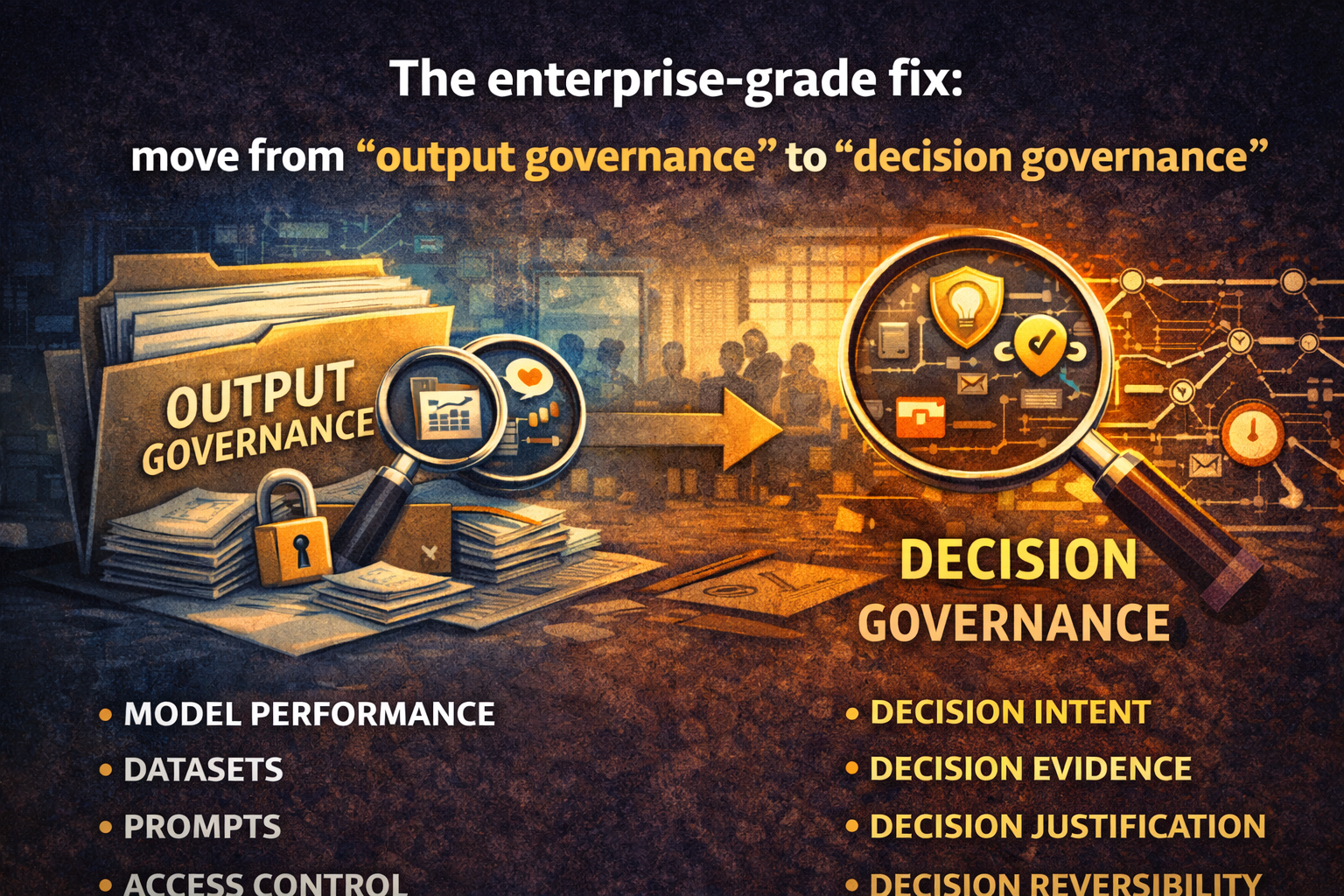
The enterprise-grade fix: move from “output governance” to “decision governance”
Most organizations govern:
- model performance
- datasets
- prompts
- access controls
Necessary—but not sufficient.
What enterprises need now is decision governance, focused on:
- Decision intent: what the enterprise is trying to achieve
- Decision evidence: which signals and sources are valid
- Decision justification: why this action is allowed
- Decision reversibility: how to undo safely when conditions change
- Decision ownership: who is accountable when outcomes go wrong
This aligns with the direction of modern risk management thinking: govern context, measure risks continuously, and manage controls across the lifecycle. (NIST Publications)
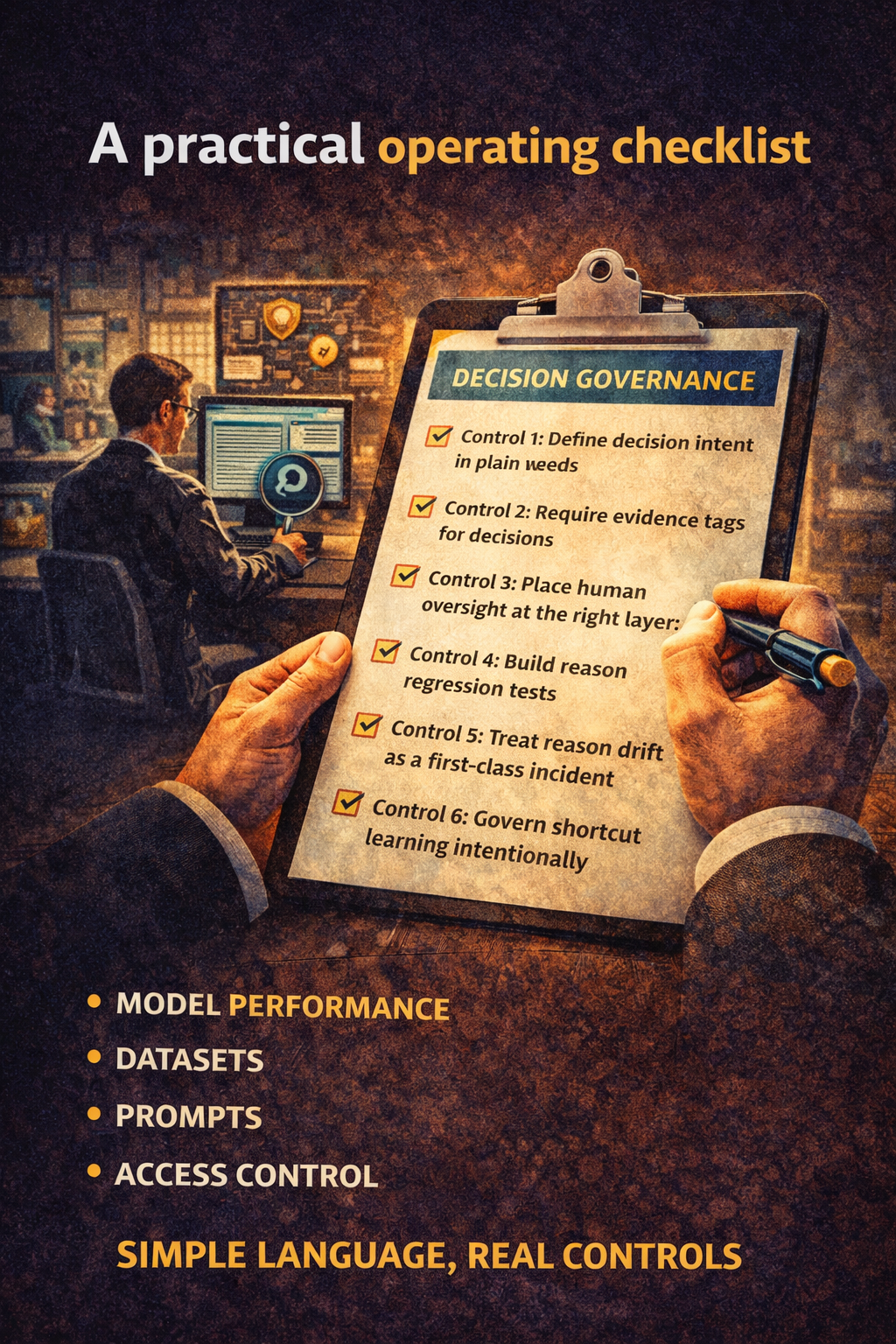
A practical operating checklist (simple language, real controls)
Control 1: Define decision intent in plain words
Before building, write:
- What decision is being made?
- What outcomes are acceptable?
- What outcomes are unacceptable even if “accurate”?
- What evidence is allowed?
- What evidence is forbidden (proxies, sensitive attributes, fragile signals)?
This becomes your “intent contract” for the system.
Control 2: Require evidence tags for every decision
Don’t just store the final answer—store:
- which sources were used
- which tools were called
- which policies were invoked
- which signals influenced the outcome
Record-keeping and traceability are explicit expectations in many high-risk AI contexts. (Artificial Intelligence Act)
Control 3: Place human oversight at the right layer
“Human-in-the-loop” isn’t a slogan. It must be designed:
- Which decisions require review?
- Which require approval?
- Which are safe to auto-execute?
- What triggers escalation?
Human oversight is a named requirement for high-risk usage in the EU AI Act, with an emphasis on the ability to monitor, interpret, and override. (Artificial Intelligence Act)
Control 4: Build “reason regression tests”
Enterprises already regression-test software. Now regression-test reasons:
- If the same decision is reached, does the justification remain aligned?
- When inputs change slightly, does the rationale flip unexpectedly?
- After policy changes, does reasoning update cleanly?
This is how you catch silent degradation before it becomes an incident.
Control 5: Treat “reason drift” as a first-class incident
A model can remain accurate while its reasons drift. That is the most dangerous kind of drift—because dashboards stay green while risk accumulates.
Control 6: Govern shortcut learning intentionally
Shortcut learning is not an edge case; it’s a predictable behavior of learning systems. (arXiv)
Practical mitigations include:
- counterexample-driven testing
- shift-aware evaluation scenarios
- constraints on what evidence can be used
- monitoring rationale stability over time
You don’t need math to do this—you need discipline.
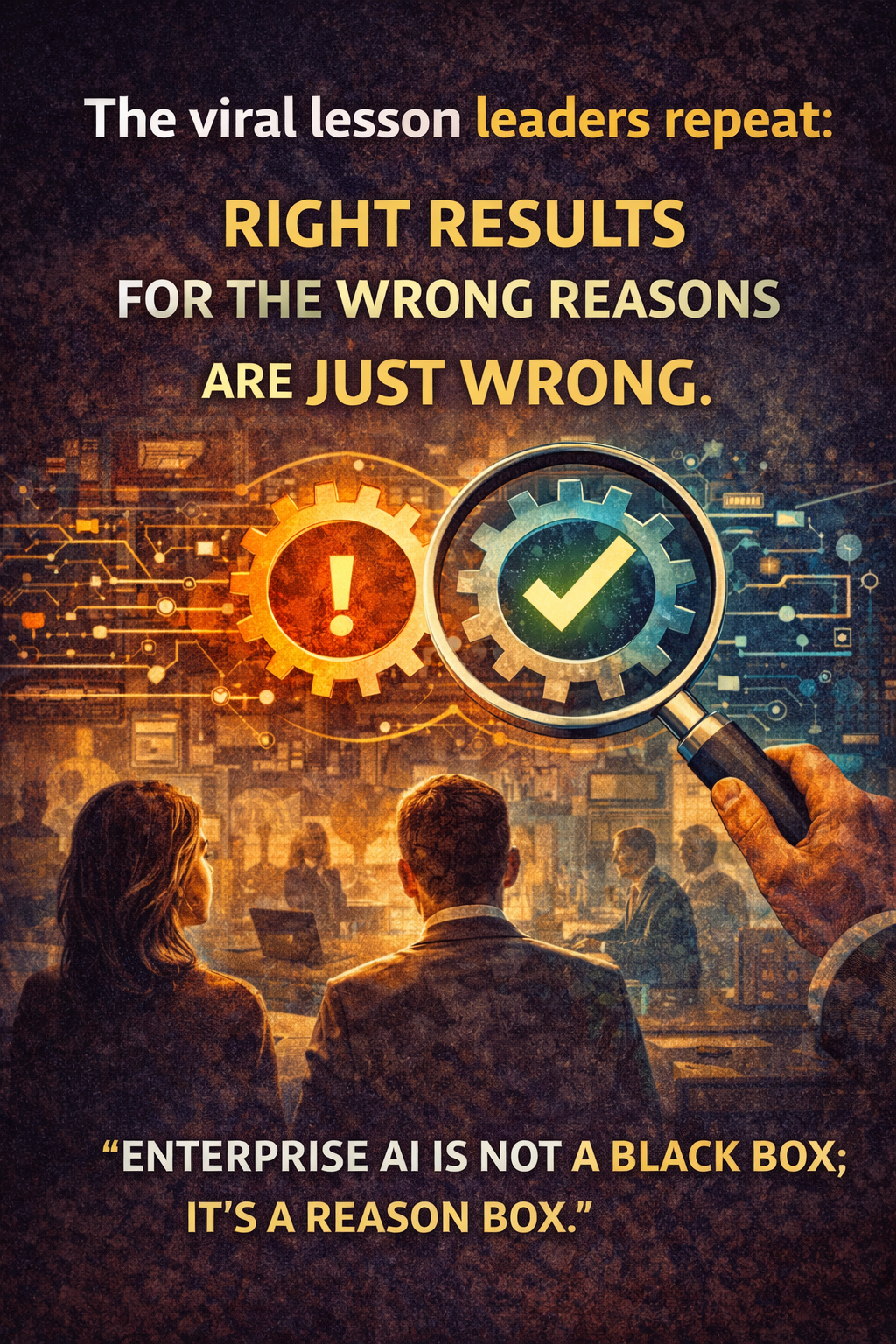
The viral lesson leaders repeat
Here’s the line that tends to stick in executive rooms:
In Enterprise AI, accuracy is a lagging indicator.
When intelligence is rebuilt repeatedly instead of reused deliberately, enterprises lose consistency in decision logic—one of the core reasons why the Intelligence Reuse Index The Intelligence Reuse Index: Why Enterprise AI Advantage Has Shifted from Models to Reuse – Raktim Singh has emerged as a defining signal of real Enterprise AI maturity.
Reason quality is the leading indicator.
The enterprise that wins in 2026 is not the one with the smartest model.
It’s the one that can prove—operationally—why decisions happen and how to stop them when the world changes.
GEO and global relevance: why this matters across regions
Across major enterprise environments—highly regulated industries, cross-border operations, and large-scale critical infrastructure—AI decisions increasingly require:
- traceability
- oversight
- accountability
- robustness under change
NIST AI RMF emphasizes lifecycle risk management (govern, map, measure, manage). (NIST Publications)
The EU AI Act emphasizes controls like human oversight and record-keeping for high-risk systems. (Artificial Intelligence Act)
The operational reality converges globally: enterprises must govern decisions, not just models.
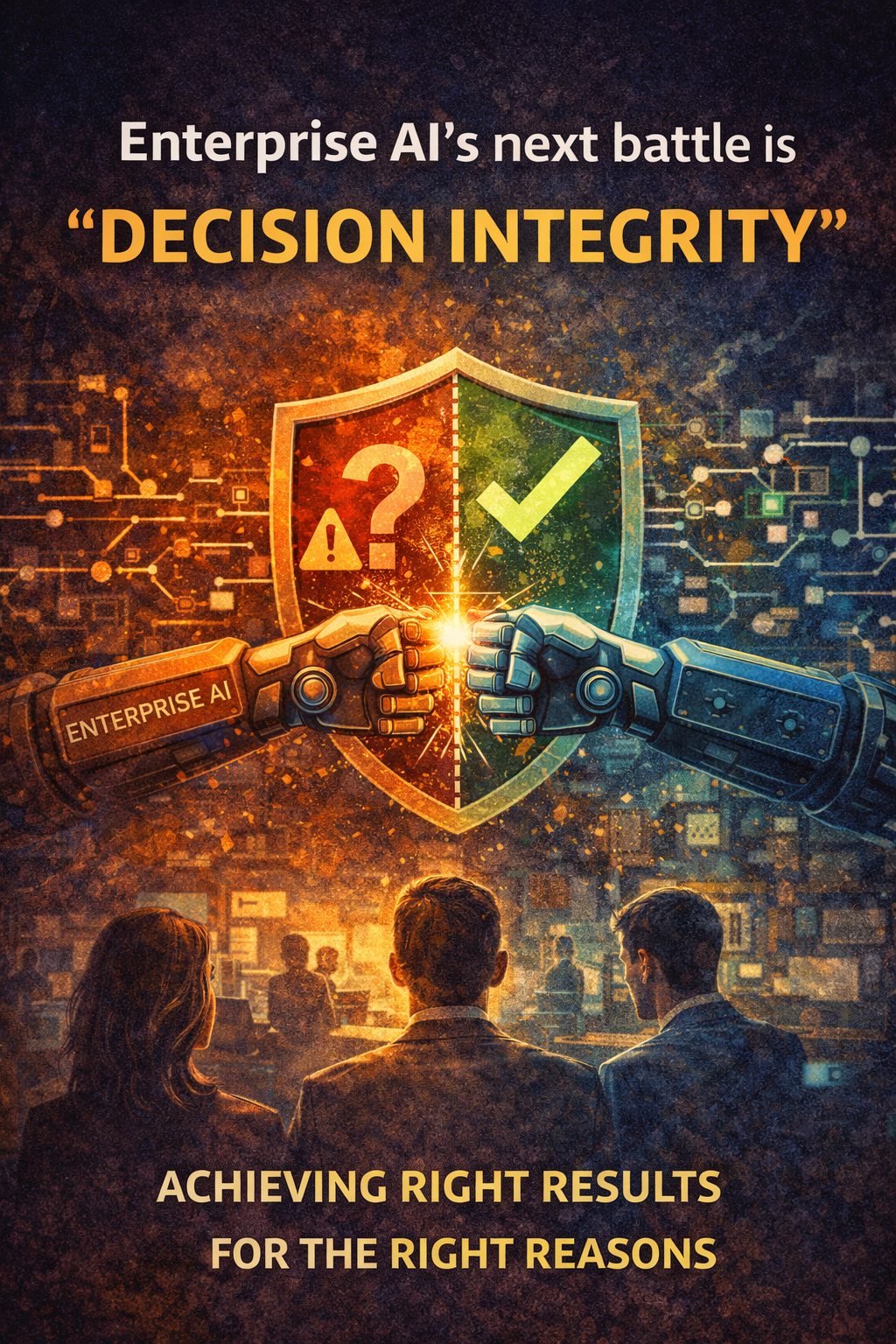
Conclusion: Enterprise AI’s next battle is “decision integrity”
For a decade, the default question was: “Is the model accurate?”
In 2026, the question that matters more is: “Is the decision justified in the way the business intended?”
Because the most expensive failures won’t announce themselves as errors. They will show up as:
- rising operational drag
- hidden compliance exposure
- creeping customer distrust
- fragile automation that collapses under change
Enterprise AI maturity is no longer about deploying intelligence.
It is about running decisions with integrity—with clear intent, governed evidence, auditable justification, and reversible execution.
That’s the real shift from “AI in the enterprise” to Enterprise AI.
This connects to two companion pieces: Enterprise AI Decision Failure Taxonomy for a structured framework to classify these failures, and Why Correct AI Decisions Still Create Business Risk for the legitimacy lens on the same problem.
This is why enterprises increasingly need a clearly defined The Enterprise AI Operating Model: How organizations design, govern, and scale intelligence safely – Raktim Singh Enterprise AI Operating Model—one that governs how decisions are made, justified, observed, and reversed in production, not just how models are trained or deployed.
Glossary
- Clever Hans effect: When an AI system appears correct but relies on misleading cues—“right for the wrong reasons.” (arXiv)
- Shortcut learning: When models learn easy proxies that work on historical data but fail under real-world shifts. (arXiv)
- Decision intent: The enterprise purpose and constraints behind a decision (not just the output label).
- Decision evidence: The allowed signals, sources, and inputs used to justify a decision.
- Decision justification: The traceable explanation of why an action was allowed under policy and intent.
- Reason drift: When the outcome stays stable but the underlying rationale/evidence basis changes over time.
- Human oversight: Designed ability for people to monitor, interpret, and override AI operation when needed. (Artificial Intelligence Act)
- Record-keeping / logging: Capturing operational events so decisions can be reconstructed and audited. (Artificial Intelligence Act)
FAQs
What does “right decision for the wrong reason” mean in Enterprise AI?
It means the decision outcome looks correct, but the system relied on shortcuts, proxies, or misaligned rationale that won’t hold under policy change, drift, or new operating conditions.
Why is this more dangerous than simple model mistakes?
Because the system appears successful, oversight drops, and the wrong reasoning becomes embedded—until a context shift triggers sudden operational or compliance failure.
How do enterprises detect this problem early?
Track decision evidence and justifications, run reason regression tests, monitor for reason drift, and design structured human oversight for high-impact decisions. (NIST Publications)
Does explainability solve this?
Explainability helps, but enterprise-grade control requires decision governance: intent definition, evidence constraints, traceability, oversight, and reversibility.
What’s the first control to implement?
Write decision intent and allowed evidence in plain language before deployment, then log decision pathways so you can audit and reverse when conditions change. (Artificial Intelligence Act)
References
- Kauffmann et al., The Clever Hans Effect in Unsupervised Learning (arXiv, 2024) (arXiv)
- Kauffmann et al., Explainable AI reveals Clever Hans effects in unsupervised learning models (Nature Machine Intelligence, 2025) (Nature)
- Geirhos et al., Shortcut Learning in Deep Neural Networks (arXiv, 2020) (arXiv)
- NIST, AI Risk Management Framework (AI RMF 1.0) (NIST Publications)
- EU AI Act, Article 14 (Human Oversight) and summary expectations (record-keeping / oversight) (Artificial Intelligence Act)
Further reading
- Enterprise AI Operating Model: https://www.raktimsingh.com/enterprise-ai-operating-model/
- The Enterprise AI Runbook Crisis: Why Model Churn Is Breaking Production AI—and What CIOs Must Fix in the Next 12 Months – Raktim Singh



Raktim Singh is an AI and deep-tech strategist, TEDx speaker, and author focused on helping enterprises navigate the next era of intelligent systems. With experience spanning AI, fintech, quantum computing, and digital transformation, he simplifies complex technology for leaders and builds frameworks that drive responsible, scalable adoption.