
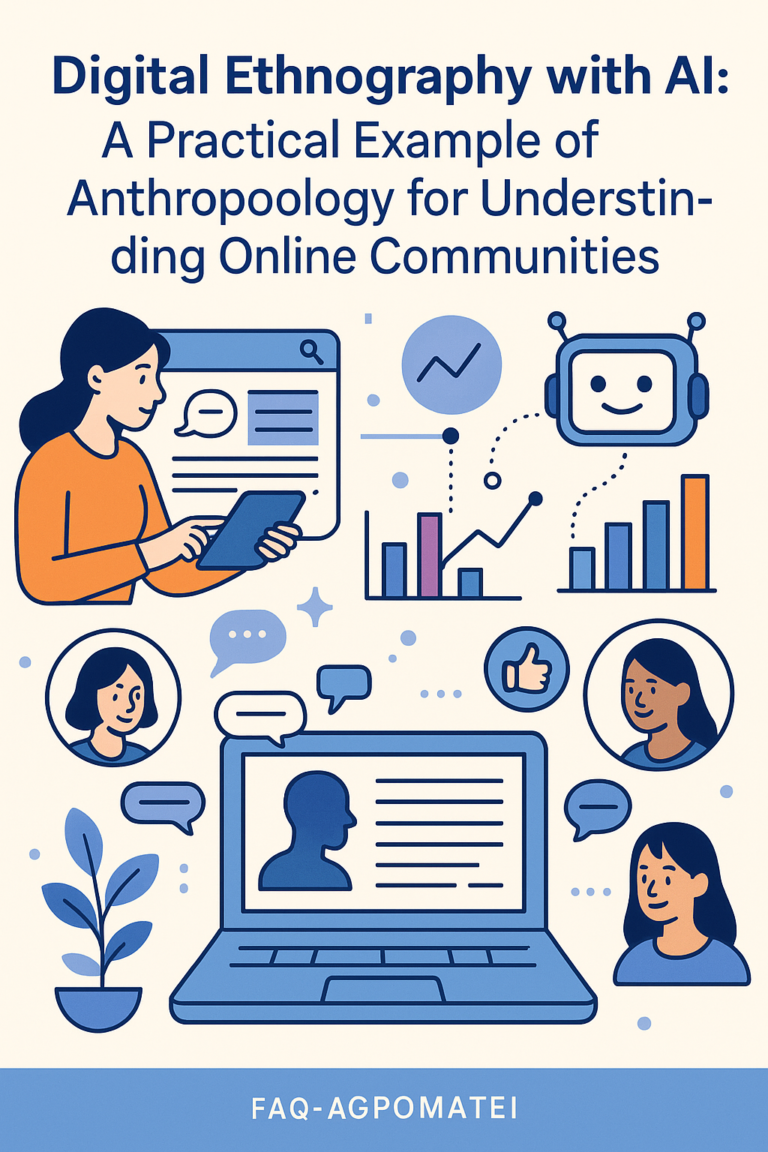
How AI Is Transforming Digital Ethnography: Anthropology Examples from Online Communities
-
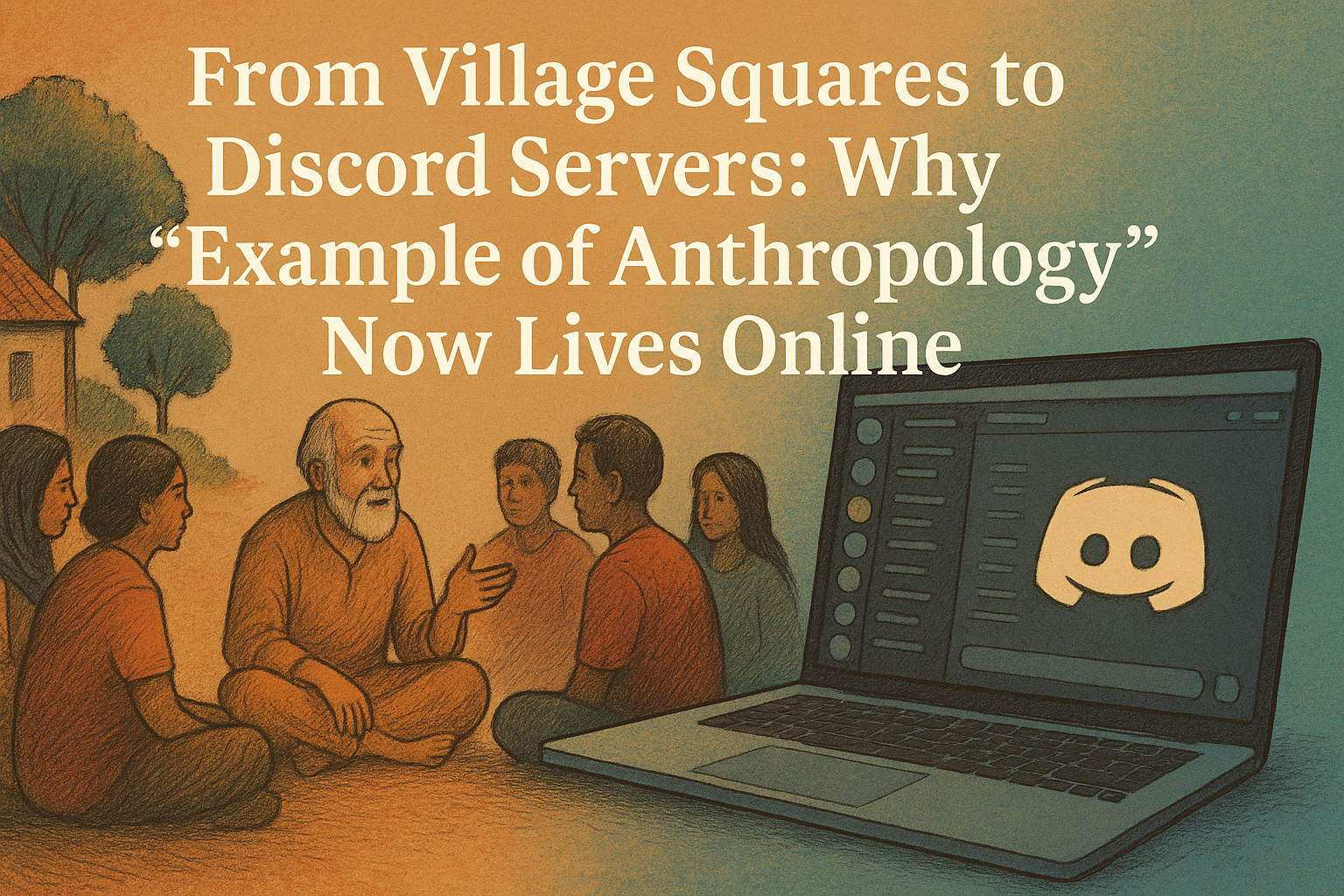
From Village Squares to Discord Servers: Why “Example of Anthropology” Now Lives Online
Ask a student for an example of anthropology, and you’ll still hear the classic answer:
“An anthropologist living in a village, observing rituals and daily life.”
That image is still true. But today, a huge part of human life has moved to online communities:
- Fandom groups for music, films, or sports
- Gaming servers on Discord
- WhatsApp and Telegram study groups in India and other countries
- LinkedIn and Slack communities for professionals in Europe, the US, and Asia
- Reddit forums and Q&A spaces for advice and support
- Health and wellness support groups on Facebook, regional apps, or local platforms
Anthropology gives depth. AI gives scale. Together, they transform how we understand online culture.
These spaces have their own:
- Language and slang
- Inside jokes and memes
- Rituals (weekly threads, AMAs, events)
- Rules and moderators
- Conflicts, alliances, and power structures
If someone asks, “Give me examples of anthropology in modern life,” you can now confidently include these online spaces. A vibrant online community is a living example of anthropology in the digital age.
Digital ethnography is the method that helps us study these spaces. And now, AI—especially large language models and other machine learning tools—is becoming a powerful assistant for this kind of research, without replacing the human researcher.
In this article, we’ll explore in simple language:
- What digital ethnography is
- How AI can support it (and where its limits are)
- Practical, relatable anthropology examples from online communities
- Ethical, cultural, and global questions you must not ignore
- A step-by-step roadmap to get started
-
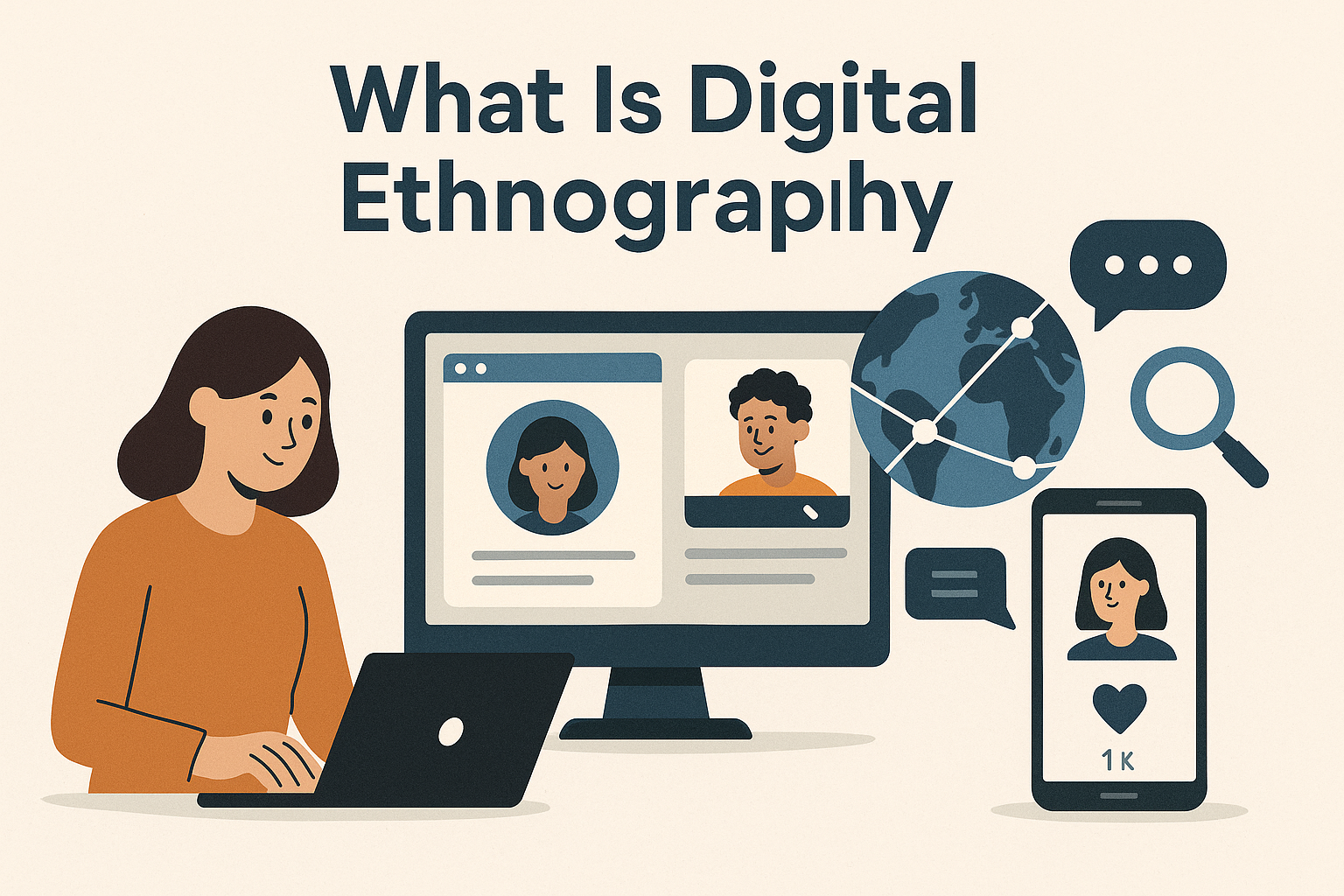
What Is Digital Ethnography? (Plain-English Definition)
2.1 Classic ethnography in one line
Ethnography is a core method in anthropology:
you spend time with a community, observe what they do, listen to their stories, and try to understand their world from the inside.
Traditional anthropology examples include:
- An anthropologist living in a rural village and observing festivals
- A researcher spending months inside an organisation studying workplace culture
- Fieldwork in markets, religious spaces, or neighbourhoods
All of these are classic examples of anthropology because they focus on real people in real contexts.
2.2 Moving the field site online
Digital ethnography (often called online ethnography, virtual ethnography, cyber-ethnography, netnography or digital anthropology) keeps the core ethnographic idea, but the “field site” moves to digital spaces like:
- Online forums and community platforms
- Chat or messaging groups (WhatsApp, Telegram, Slack, Discord, WeChat)
- Comment sections under videos, podcasts, or news articles
- Social platforms built around shared interests or identities
Researchers watch:
- How people talk
- What they share
- How conflicts arise and are resolved
- How rules are created and enforced
- How identities are performed (usernames, avatars, bios, signatures)
Key features of online communities as a field site:
- Interactions are often text-based (posts, comments, chats).
- Many interactions are archived, creating a searchable history.
- The line between public and private is often blurred.
- People may present themselves differently online and offline.
So when someone types “give me examples of anthropology in the digital world”, digital ethnography of Reddit, Discord, WhatsApp, or Telegram communities is a very strong answer.
Even before we bring in AI, this is already a powerful, modern example of anthropology: understanding cultures, norms, and identities in digital spaces.
-
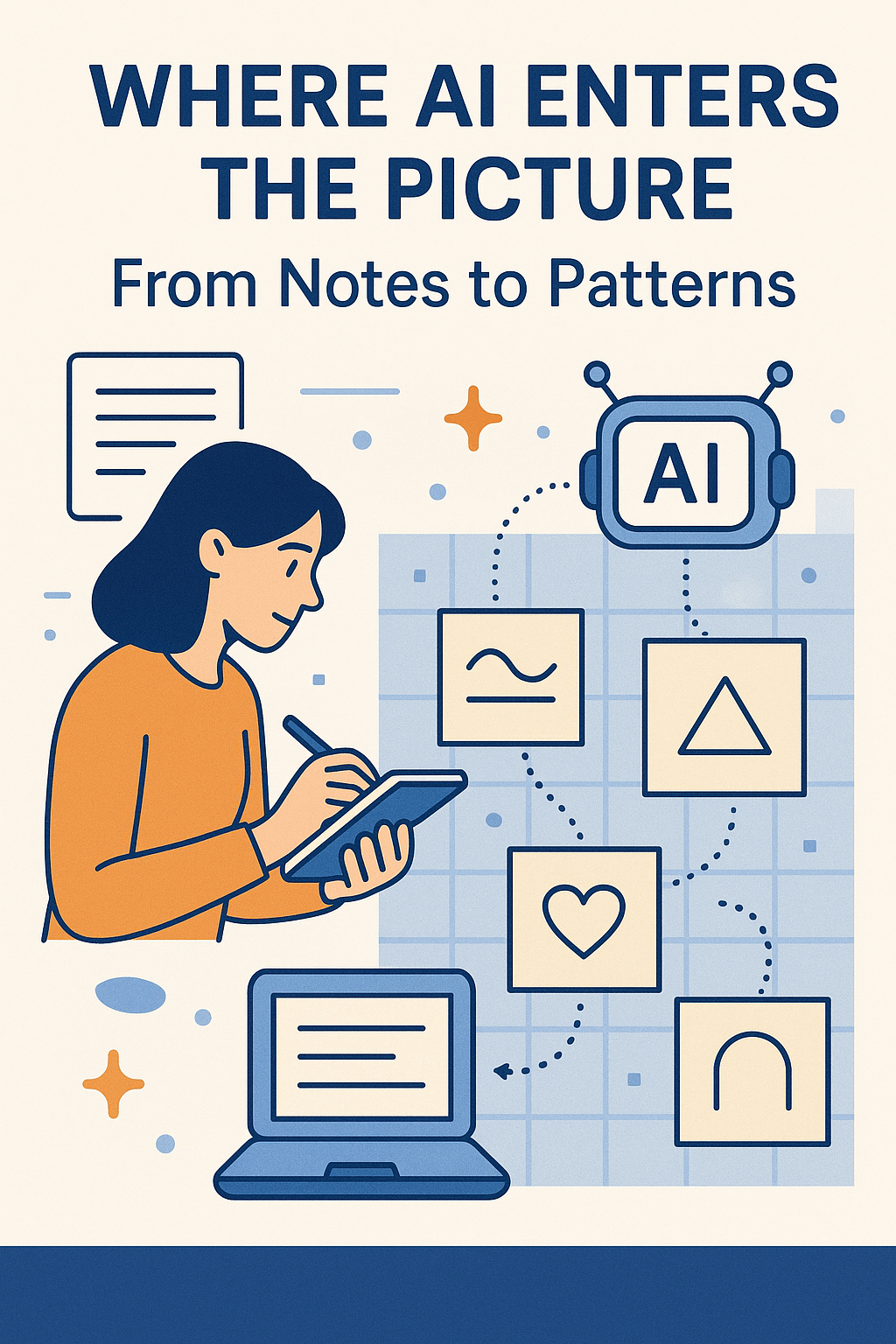
Where AI Enters the Picture: From Notes to Patterns
Traditional digital ethnography is rich, but it can be slow and manual:
- Reading thousands of posts and comments
- Manually tagging themes
- Taking field notes
- Tracking how conversations change over weeks or months
This is where AI becomes a powerful assistant—especially for working at scale.
3.1 Collecting data at scale (ethically)
With appropriate permissions and respect for platform rules and local laws:
- Web scraping tools or exports can pull posts, comments, chat logs, or transcripts.
- AI helps to clean, de-duplicate, and organise this data so it becomes analysable.
3.2 Summarising long conversations
Think of a 500-comment Reddit thread or a 10,000-message Discord archive.
AI can:
- Summarise the conversation into main themes
- Extract key concerns, popular solutions, recurring jokes, and conflicts
- Distinguish between “one-off comments” and “deep threads” that matter
3.3 Finding hidden patterns in language
Using natural language processing (NLP), AI can:
- Group similar posts or comments into clusters
- Detect recurring phrases and metaphors
- Track how sentiment (hope, frustration, curiosity, anger) changes over time
- Surface minority voices that talk about specific problems
3.4 Working with images, memes, and short videos
Digital culture is not just text. It’s also:
- Memes
- Screenshots
- Short videos and reels
- Reaction GIFs
AI can:
- Auto-caption images and videos
- Identify recurring visual motifs (e.g., certain meme templates used for sarcasm vs pride)
- Help researchers see patterns in how communities use humour or symbolism
3.5 Connecting qualitative depth with quantitative scale
This combined approach is often called computational ethnography or automated digital ethnography—using AI to scale ethnographic insight without losing the human touch.
A simple way to remember it:
Anthropology gives depth. AI gives breadth.
Digital ethnography with AI tries to combine both.
-
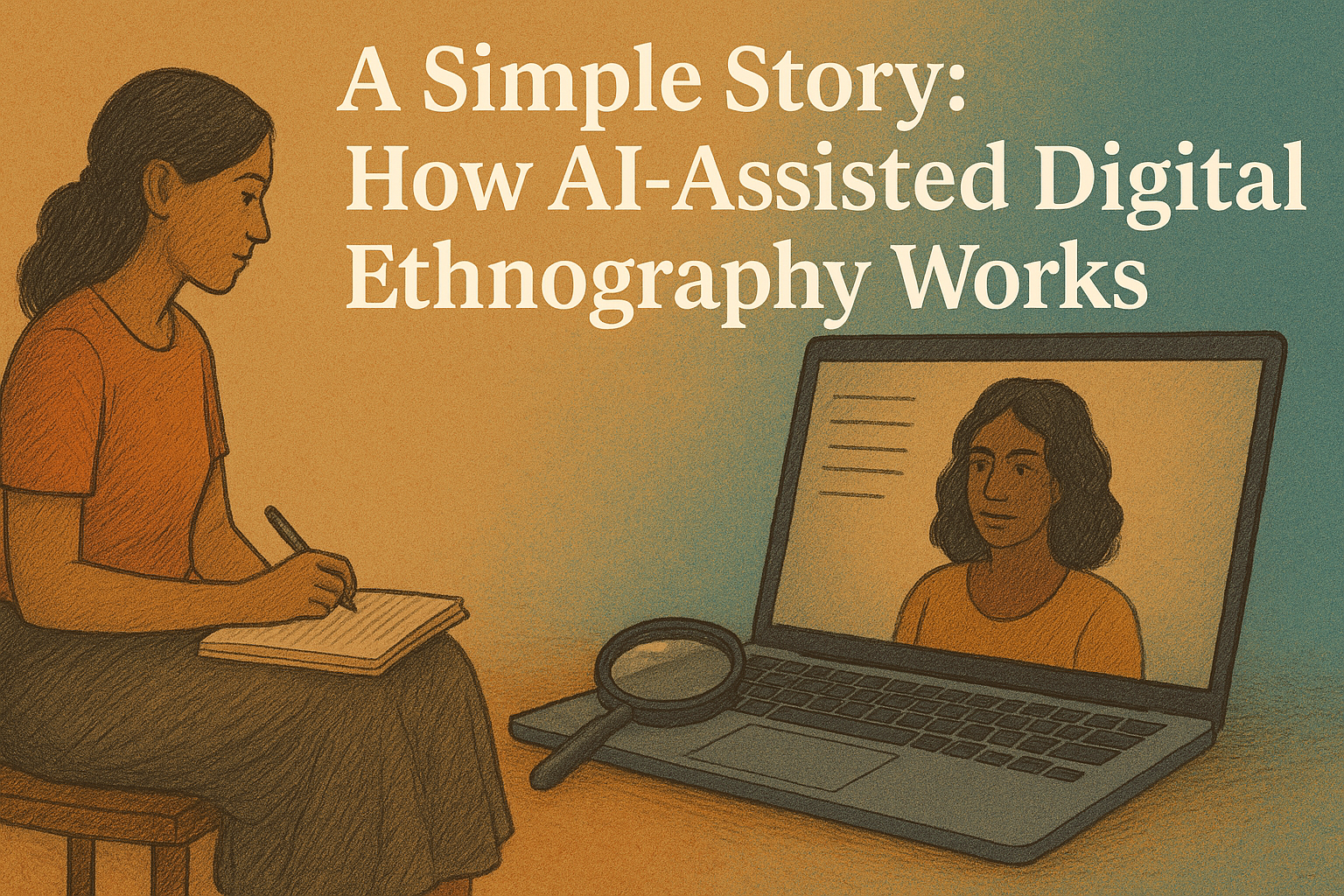
A Simple Story: How AI-Assisted Digital Ethnography Works
Let’s walk through a realistic example that you could also use in class or in a workshop when someone asks, “Give me examples of anthropology using AI.”
4.1 The research question
You want to understand:
“How do students in online learning communities really feel about using AI tools for studying?”
4.2 Step 1: Choose your online communities
You select:
- A Reddit community focused on competitive exams
- A WhatsApp or Telegram group where students share notes in India
- A Discord server where learners from different countries discuss AI tools for coding or writing
Each of these spaces becomes a field site—a digital equivalent of a village, campus, or coaching centre.
This scenario itself becomes an anthropology example: instead of observing a physical classroom, you are observing a cluster of digital classrooms.
4.3 Step 2: Observe like a classic anthropologist
You spend time:
- Reading discussions quietly
- Noting recurring questions about AI tools
- Watching how seniors help juniors
- Observing how conflicts about “cheating” or “fair use” of AI get resolved
You follow community rules, respect moderators, and never treat people as “data objects.” You treat them as humans.
4.4 Step 3: Collect data ethically
With appropriate consent and respecting platform policies and regional regulations:
- You copy anonymised discussion threads
- You remove names, IDs, locations, and any sensitive personal information
- You store the text securely, following internet research ethics guidelines
4.5 Step 4: Use AI as an assistant, not a replacement
You now feed this anonymised text into AI tools:
- Ask AI to summarise:
“What are the top five worries that students express about AI tools?”
- Ask AI to cluster themes:
- exam anxiety
- time-saving hacks
- trust/distrust in AI outputs
- fear of being accused of cheating
- Ask AI to track change over time:
“How did the tone of conversations shift before and after a major exam result or policy change?”
4.6 Step 5: Return to human interpretation
Now you—the ethnographer—step in as the interpreter:
- Why do people use humour when they talk about AI stress?
- Why do they trust peer recommendations more than official instructions from universities or companies?
- How do power structures (admins, moderators, “star students”) influence what can be safely said?
AI has given you the map, but you still have to walk the terrain.
This complete process—immersion + AI analysis + human interpretation—is a strong, modern example of anthropology that you can share anytime someone asks, “Give me examples of anthropology for the 21st century.”
-
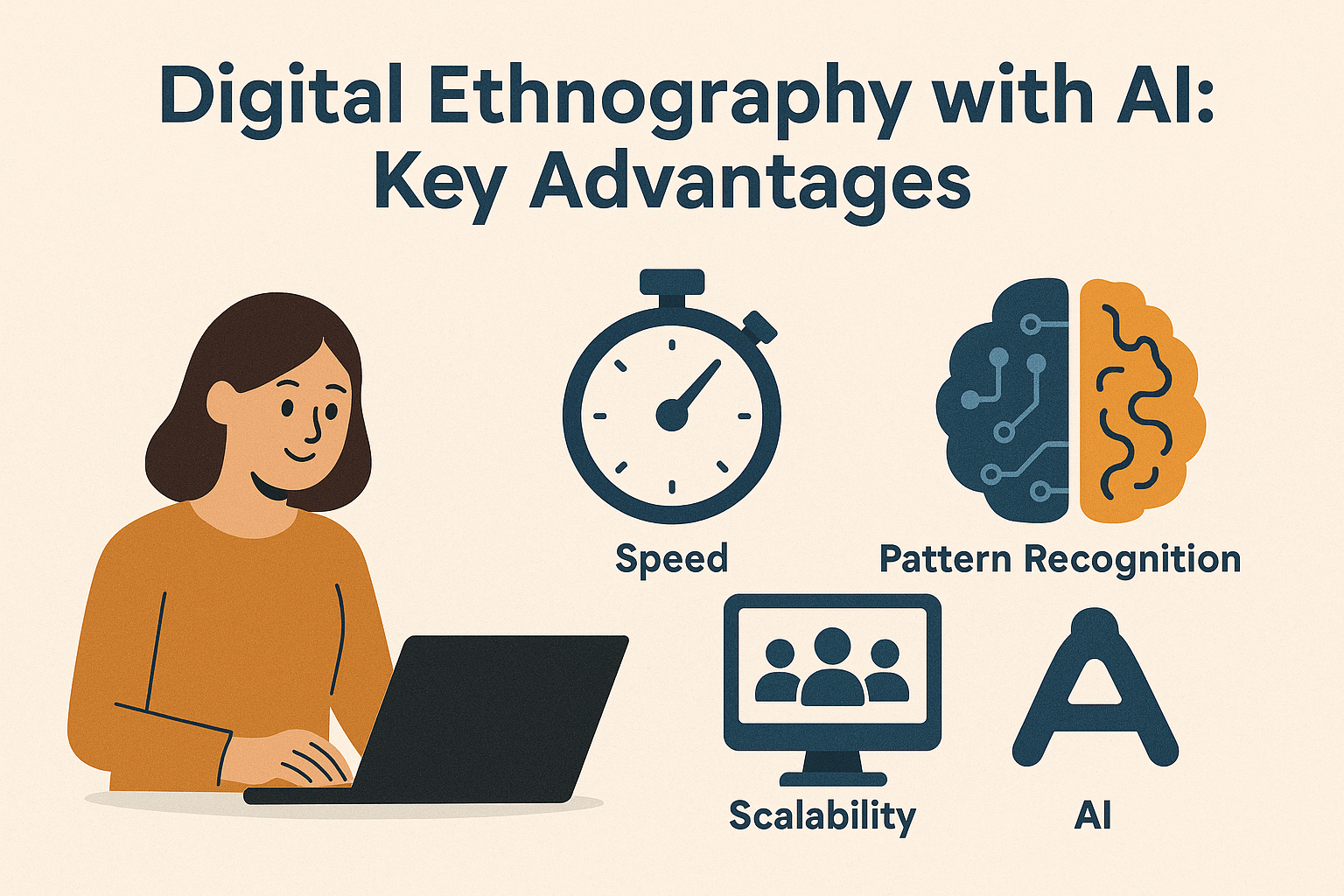
Digital Ethnography with AI: Key Advantages
5.1 Seeing the whole forest, not just a few trees
Classic ethnography is deep but usually focuses on small groups. AI helps you:
- Study larger, more diverse communities
- Compare multiple platforms (e.g., Reddit vs WhatsApp vs Discord)
- Track conversations across months or years
For example:
- Compare how three different online communities react to a new AI regulation in the EU vs India
- Study how language around generative AI shifts from early excitement to cautious scepticism
These are powerful, data-backed anthropology examples that matter for policymakers and product teams.
5.2 Finding patterns humans might miss
AI can highlight:
- Rare but important phrases that show emerging problems
- Sudden spikes in keywords like “burnout”, “cheating”, “plagiarism”, “trust”
- Subtle connections between topics that are not obvious at first glance
Example: AI may detect that whenever learners mention “burnout”, they also mention a specific exam format or app feature. That gives the anthropologist a clue:
“This exam format or feature is not just technical. It has emotional and cultural impact.”
5.3 Blending qualitative depth with quantitative scale
With AI, you can move closer to a mixed-methods approach:
- Ethnography keeps the stories, context, and lived experience.
- AI adds counts, graphs, time trends, and network patterns.
This is extremely powerful for:
- Product and UX research
- Policy and regulation design
- Social impact and NGO work
- Education and learning communities in the Global North and Global South
-
But Is AI Really an Anthropologist? (Limitations & Risks)
Let’s be clear:
AI is not an anthropologist.
It is a tool that can help, but it cannot replace fieldwork, empathy, or ethics.
6.1 Loss of nuance
AI can summarise conversations, but it may:
- Miss sarcasm, irony, and deep inside jokes
- Misread context when people use mixed languages (for example, Hinglish, Spanglish, or code-switching)
- Flatten complex stories into overly neat categories
Humans still need to read original posts, feel the emotional tone, and understand the cultural context.
6.2 Algorithmic bias
AI learns from existing data. If that data is biased:
- Some voices get amplified
- Others get filtered out as “noise”
- Minority or marginalised groups may be misrepresented
Anthropologists must constantly ask:
“Whose voice is missing from this AI-generated summary?”
6.3 Ethical questions: consent, privacy, anonymity
Digital ethnography already grapples with the question:
“What counts as public and what counts as private online?”
With AI, the risks are multiplied:
- Large-scale scraping of discussions without informed consent
- Re-identification risks if quotes are copied word-for-word
- Participants not realising their posts are being processed by AI tools
Good practice includes:
- Seeking informed consent wherever possible
- Anonymising and paraphrasing quotes
- Respecting platform rules and local laws (e.g., GDPR in Europe, DPDP in India)
- Following recognised internet research ethics guidelines
6.4 Over-automation and the risk of “soulless” ethnography
If everything is automated—data collection, analysis, and even report writing—ethnography loses its soul.
Ethnography is not only about what people say, but also:
- How they say it
- When they say it
- Who they say it to
- What they avoid saying
AI cannot feel awkward silences, sudden topic changes, or quiet tensions in a thread. That is still the anthropologist’s job.

-
Step-by-Step Starter Guide: Doing Digital Ethnography with AI
If you’re a student, UX researcher, brand strategist, or social scientist, here is a simple roadmap to use digital ethnography + AI as a strong, modern example of anthropology:
- Frame a clear question
- “How do members of this community support each other during crisis?”
- “How do people talk about trust and risk in this platform?”
- Select 1–3 online communities
- Choose spaces where people genuinely talk, not just repost content.
- Include diversity: one Indian WhatsApp group, one global Reddit forum, one local Telegram or Discord channel.
- Spend time as a participant-observer
- Read, listen, and learn the norms.
- Take field notes on recurring jokes, symbols, and key events.
- Define your ethical boundaries up front
- Decide what you will collect and what you will avoid.
- Anonymise and protect your participants.
- Collect and organise your data
- Copy anonymised threads into documents or qualitative analysis tools.
- Structure them by date, topic, or channel.
- Use AI for specific tasks
- Summarisation – “Summarise the main themes in these 50 posts.”
- Clustering – “Group these conversations by topic or concern.”
- Trend detection – “How does tone shift before and after a big event?”
- Return to close reading
- Check whether AI’s themes really match what people feel.
- Re-read original posts and refine your interpretation.
- Build an integrated narrative
- Combine stories, paraphrased quotes, AI-generated patterns, and your own field notes.
- Explain why these patterns matter in real life for people, businesses, or policymakers.
Follow this approach, and you’ll have a solid, real-world anthropology example that fits perfectly when people search for “anthropology examples in online communities”.

-
Glossary: Key Terms in Digital Ethnography with AI
Anthropology
The study of humans—their cultures, beliefs, relationships, and ways of living.
Ethnography
A research method where you spend time with a community, observe their everyday life, and try to understand their world from the inside. Many classic anthropology examples use ethnography.
Digital Ethnography / Online Ethnography / Netnography
Ethnographic methods applied to digital spaces like forums, social networks, messaging groups, and virtual worlds.
Online Community
A group of people who regularly interact in a digital space around shared interests, identities, or goals.
Digital Ethnography with AI
Using AI tools to support digital ethnography—for example, by summarising conversations, finding themes, and tracking trends—while the anthropologist keeps responsibility for interpretation and ethics.
Computational Ethnography / Automated Digital Ethnography
A more automated approach that uses algorithms, machine learning, and sometimes bots to continuously collect and analyse online cultural data at scale.
Computational Anthropology
A field that combines anthropological theory with computational techniques such as data science, machine learning, and network analysis to study human behaviour at scale.
Social Network Analysis (SNA)
A method for studying relationships and influence patterns between actors (people, groups, organisations) using graph and network concepts.
FAQs
Q1. Is digital ethnography with AI only for professional researchers?
No. Students, UX and product teams, brand strategists, NGOs, and public policy professionals can all use its principles. The important part is to respect ethics, protect privacy, and treat communities with care—not as raw data.
Q2. What makes digital ethnography a strong example of anthropology today?
It keeps the heart of anthropology—understanding people in context—but moves the field site into online communities. Instead of only villages and physical neighbourhoods, we now study Discord servers, WhatsApp groups, Reddit forums, and global fandom spaces where real emotions, conflicts, and identities are played out. These are powerful anthropology examples for the digital age.
Q3. How exactly does AI help in digital ethnography?
AI helps with:
- Collecting and cleaning large datasets
- Summarising long threads and comment chains
- Grouping posts into meaningful themes
- Analysing images, memes, and short videos
- Tracking how sentiment and topics change over time
It does the heavy lifting so the anthropologist can think more deeply, instead of being stuck in manual data processing.
Q4. Can AI replace the anthropologist?
No. AI cannot replace human empathy, ethical judgement, or deep cultural understanding. It can process text and images, but it cannot build trust, feel awkwardness, or understand unspoken rules the way a human can. AI is a tool, not a substitute for the anthropologist.
Q5. What are the biggest risks in AI-assisted digital ethnography?
- Privacy and consent violations
- Misinterpretation of culture due to algorithmic bias
- Over-reliance on AI summaries and dashboards
- Silencing or overlooking quieter and marginalised voices
A responsible researcher treats AI as a supporting instrument, not the final authority.
Q6. What is a simple example of anthropology in everyday life?
A simple example of anthropology in everyday life is observing how a family or community celebrates a festival—who does what, which rituals matter, what stories are told, and how roles are distributed. Today, an equally valid example is watching how an online community celebrates a big event, such as a game release, exam result, or product launch, and analysing the posts, memes, and reactions.
Q7. Can you give me examples of anthropology in online spaces?
Yes. If you ask, “Give me examples of anthropology for the online world,” here are a few:
- Studying how a Reddit mental health community supports new members
- Observing how a Telegram group in India organises peer learning for competitive exams
- Analysing memes and jokes in a gaming Discord server to understand in-group identity
- Following debates in a LinkedIn group about AI ethics and seeing how professional norms are negotiated
Each of these is an anthropology example where the “village” has become digital.
Q8. How do online communities become anthropology examples for students?
Online communities are rich anthropology examples because they show:
- How people form groups around shared interests or problems
- How norms and rules emerge and get enforced
- How power and status are expressed (admins, moderators, influencers)
- How humour, conflict, and support all exist together
For students, doing a small digital ethnography project on a Discord server, WhatsApp group, or subreddit is often more accessible than travelling for physical fieldwork.
Q9. Does this approach work equally well in India, Europe, the US, and the Global South?
Yes—but with local adaptations. Platforms, languages, laws, and cultural norms differ. A serious digital ethnographer with AI must understand regional context: for example, how WhatsApp is used in India vs how Discord is used in Europe, or how data protection laws differ between the EU, US, and Global South countries.

-
Conclusion: Why This Matters for the Next Decade
When someone asks you for “anthropology examples” today, you no longer have to stop at villages and face-to-face rituals.
You can confidently say:
“Digital ethnography with AI—studying how online communities live, talk, joke, fight, and support each other—is one of the most important examples of anthropology in the 21st century.”
It keeps the human heart of anthropology, adds the analytical power of AI, and helps us understand a world where more and more of our lives—from politics to learning to mental health—are playing out in digital spaces.
For leaders, researchers, and students who want to shape the future of technology responsibly, digital ethnography with AI is not a niche method. It is a strategic lens:
- To design better products and policies
- To understand real people beyond dashboards
- To bring ethics, empathy, and evidence together in one practice
If we get this right, AI will not flatten culture. It will help us see it more clearly—so that we can build digital worlds that are not just efficient, but deeply human.
-
References & Further Reading
- Books and articles on digital ethnography / online ethnography / netnography
- Research on computational ethnography and automated digital ethnography
- Papers and case studies on computational anthropology and computational social science
- Emerging work on ethnography of AI—studying AI labs, infrastructures, and ecosystems
- Internet research ethics guidelines from organisations such as the Association of Internet Researchers (AoIR) and national professional bodies
To learn more about Anthropology and Digital Anthropology, you can read my earlier articles
What is Anthropology with Examples ? Anthropology Demystified – Raktim Singh
What is Digital Anthropology and How to do it ? – Raktim Singh
To learn more about how Digital ethnography intersects with how online platforms rank, trust, and prioritise knowledge, read the article
GEO is now part of the new cultural layer of online identity and knowledge circulation, making it relevant as an anthropology example. Read more at
These works together show that digital ethnography with AI is a serious, global field—one that sits at the intersection of anthropology, data science, design, and ethics, and will shape how we understand people in a world of AI-mediated life.



Raktim Singh is an AI and deep-tech strategist, TEDx speaker, and author focused on helping enterprises navigate the next era of intelligent systems. With experience spanning AI, fintech, quantum computing, and digital transformation, he simplifies complex technology for leaders and builds frameworks that drive responsible, scalable adoption.