Raktim Singh

Smart Buildings Technology – Digital Transformation and Innovation in Smart Buildings

Smart Buildings Technology – Digital Transformation and Innovation in Smart Buildings


As part of this article, we will cover, smart homes, smart cities, smart apartments & smart commercial buildings.

An average household has many things that need to be done and taken care of. Chores such as food prep, laundry, cleaning, and errands are generally looked over or quickly completed, but they all profoundly affect how the family spends their day and life.

A smart home is a home that is automated and can be remotely controlled by a smartphone or tablet.

This allows the family to do everyday tasks without even being home.

 For example, a family can use an app to turn the lights on when it gets dark outside and turn the lights off before they come home;

they can set the temperature before one leaves the house and receive a notification on their phone when it gets too hot inside; they can set the

The conjunction of IoT (Internet of Things) with innovative solutions combines a high-performance network with a platform that offers valuable data to provide digital services to improve your life.

By visualizing and analysing insightful data from different domains, cities and organizations gain visibility and awareness to provide accurate information to make timely decisions. 

The solutions are possible via prepared and digitalized infrastructure, collaborative and openly shared data, problem-solving analytics, the interconnection between devices and ecosystem, and lastly, the adaptability and flexibility to change.

 These solutions are known as smart solutions. It’s not just prevalent in large cities but covers several areas of interest in the same direction by digitalizing the process to become more efficient and make the best possible use of the present resources.

Smart homes with the use of insightful data can provide homeowners a wide range of useful services and applications.

At the core of such systems lies home automotive mechanisms, which have the ability to monitor and control the basic parts of the house like doors, energy, temperature, water-saving efficient systems, lighting/illumination, physical security, at the lowest cost and environmental impact.

To understand this in simple terms, one common example is using data from the building security system to turn off lights and reduce cooling when occupants are not present.

What are Smart Buildings?

Smart buildings are developed by implementing smart solutions for the management of infrastructure. Using devices like sensors and actuators to obtain data from the physical work, a process that information, and make a decision accordingly. 

Similar to the home, smart environment applications have also benefited complex buildings like large offices, hospitals, educational centers, and others. The sensors integrated into these environments help to provide information to the staff, teacher, doctor, or any concerned party. 

Smart Cities

Smart cities with the use of digital transformation provide more efficient and responsive services to their citizens.

The intention of building smart cities is to use advanced digital and network technology to provide services to meet the needs of the citizens. Smart cities are one of the richest and complicated scenarios for the smart environment.

It includes a variety of domains such as economy, mobility, and environment, along with a massive number of challenges associated with the participation of multiple individuals with different needs and interests. 

The technologies are, however, often transversal to all domains and difficulties, and therefore utilizing data of technology solutions and standards is of great importance.

The data generated from all the differentiated interconnected components of the city is openly shared and combined to become valuable services and solutions to improve the city scenarios. 

How is it Done?

How To create a Smart City

 Building smart cities is the most complex due to the magnitude of these projects.

It’s the reason why a modular and scalable system is required to cover any of the needs by combining four types of solutions that work well together to create a smart city.

The four solutions include a smart environment, smart mobility, smart people, and smart living.

Smart environment involves optimizing natural resources, preserving and safeguarding the environment, controlling and rationalizing energy combustion, pollution control, waste management, and more. 

Smart mobility comprises planning and efficiency of public transport, blocking traffic control, management of parking spaces and capacity, prioritization of cities in the field of mobility, and more.

Smart people include having well-informed citizens, an inclusive society, awareness and participation of citizens in decision-making, internet access to public places, e-learning, and more.

Smart living comprises a better quality of life for citizens, guaranteed video surveillance security, natural disasters detection and management, public facilities, and more. 

How to build Smart Building

Smart buildings also require the help of technology like digital transformation.

It’s a holistic perspective that puts together the buildings with the ecosystem to service several goals and purposes while also being future-proof.

The focus of building smart buildings involves using technologies to provide excellent solutions to present-day challenges.

 Smart buildings are for the evolving society in a non-technocratic culture, but a very human and functional way of security, privacy, and comfort for people.

They use the Internet of Things, sensors, online connectivity to capture & monitor various relevant data about the building.

Post analysis of this data, various insights related to the usage of various building equipment are gathered & proactive actions related to overall maintenance are arrived at.

The IoT allows you to collect data about each & every aspect of your building’s operation.

This can include data related to power, water pipe, waste management system.

More detailed data about your building always helps in arriving at better, meaningful & targeted changes.

IoT & Advanced analytics together helps in making a smart building. Analytics involves machine-learning capabilities.

With the help of these 2 technologies, you can drill into the details of your building’s characteristics.

This can also include/integrate various other data points (from both inside and outside your building, like the weather and various utility information)

With time, you’ll be able to see the impact of the steps you’re taking, which measures are working well, and which may need to be adjusted to achieve the desired performance.

What are the Benefits of Smart Building?

Take the hospital, for instance; the sensor and other devices can be used for medical monitoring for specific purposes.

The devices can be used after surgery or to improve diagnosis and improve the quality of life for elderly and disabled people.

Home automation systems allow the integration of all the building control systems, centralizing them and automating them. 

Smart buildings offer a wide variety of benefits, including reducing cost by decreasing energy consumption as well as utilizing more resistant material that helps with longevity.

The smart buildings also respect the environment and integrate with the surrounding in which it’s located. 
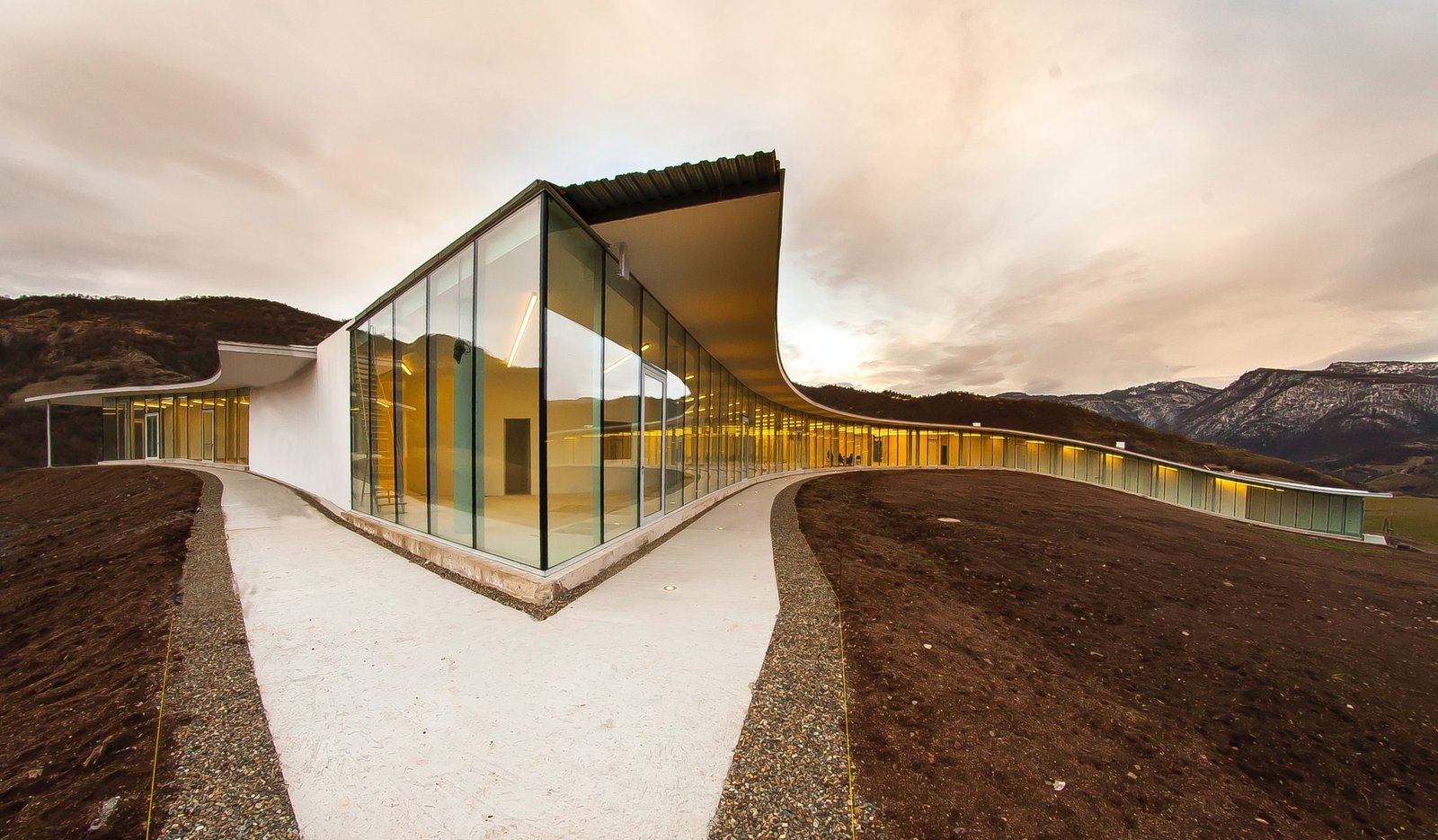
Smart Building Technology
Photo by Nerses Khachatryan

These are the main objectives of a smart building

  • Overall sustainability requirements:IoT platforms can be used to monitor your current energy consumption patterns and analyze the data to produce targeted recommendations for reducing your energy use.
  • The same can be done to achieve water-use reduction goals, waste segregation & improve overall sanitization, ventilation & air quality.
  • Optimum Energy & Water bills: With IoT & Sensors, you can monitor, light equipment in various common areas, waterbody/fountains etc.
  • You can use smart building data to increase efficiency & strategically reduce the overall consumption for optimal building operations and even equipment usage.
  • Proper functioning of your critical equipment,you can use sensors to measure various aspects of their operation— this can include working of lifts & elevators, maintenance of swimming pools, various equipment in the gym etc.

Various companies involved in ‘Smart Building

CISCO

Cisco’s “Internet of Everything” mantra is an energy efficiency concept.

Here the idea is to consolidate smart lighting networks and other Internet-connected devices into a centralized dashboard that can be controlled via a smartphone application.

The system includes smart lighting that doesn’t require a separate electricity source

Hitachi 

 Hitachi has come out with its IoT strategy, based on a technology called Lumada

Honeywell

Honeywell’s IoT strategy helps to build occupants report issues with heating or cooling.

Basically, people become “sensors” alongside digital counterparts such as sensors.

IBM 

With it’s Smarter Planet campaign, IBM  is putting the firepower of its Watson artificial intelligence and data analysis software behind its projects that make buildings smarter

Legrand

The French-born electrical component manufacturer has launched its IoT initiative dubbed ELIOT.

Panasonic

They are already involved in green building technologies such as energy-efficient lighting, refrigeration, air conditioning, heating, and renewable energy.

Schneider Electric

They have overhauled their smart building product line called EcoStruxure.

Siemens

They are creating a cloud service to help corporate real estate managers gain access to energy efficiency metrics for their facility portfolios.

Verdigris Technologies

They are using artificial intelligence to collect information from a building’s electrical panels and then analyze these “fingerprints” for opportunities to optimize settings and to predict possible maintenance issues that could boost power consumption.

Some examples of SMART buildings

The Edge Building (Amsterdam, Holland)

The Edge is considered the greenest, most intelligent building in the world, according to British rating agency BREEAM.

If you are part of this building than, this smart building knows

  1. What kind of car you drive and will direct you to the most convenient parking spot.
  2. It knows your schedule for the day, including your coffee/tea timings/preferences.
  3. Here, workspaces are based on your schedule for the day and are assigned as you need them.

This can include, sitting desk, standing desk, work booth, meeting room, balcony seat, or “concentration room.”

when you arrive at these various stations during your day, the building knows your preferences for light and temperature.

  1. It uses super-efficient LED panels.

Capital Tower, Singapore

The Capital Tower has many smart energy systems which include:

  1. An air-conditioning energy recovery wheel system which allows cool air to be retrieved
  2. Motion detectors in the lobby and all bathrooms to conserve energy
  3. Double-glazed windows that reduce heat penetration and reduce energy consumption
  4. It uses condensation from the air-handling unit to reduce water usage.
  5. Smart parking, Smart elevators & pervasive wireless connectivity

Hindmarsh Shire Council Corporate Centre (Melbourne, Australia)

Melbourne is an area of extreme temperature conditions. To take advantage of this, the building has a series of underground thermal chambers and a ventilation system under the flooring to draw in fresh air from the exterior.

The earth naturally cools and warms the air and then redistributes it back through the building interior.

It uses LED lighting systems to reduce energy consumption.

Also, here,  rooftop solar panels harvest energy from the sun. Vertical green walls enhance the indoor air quality.

DPR Construction (San Francisco, California)

This smart building has Among its many green features, you will find:

  1. Net-Zero Building (NZEB) Certification
  2. Rooftop solar thermal water heating system
  3. Electrochromic windows
  4. Solar-powered, automated skylights over an atrium
  5. Ultra-energy efficient ceiling fans
  6. Ultra-low flow and flush plumbing fixtures

The Crystal Building (London, England)

Its main feature includes

  1. For this smart building, the annual heating bill is zero.
  2. It emits 70 percent less carbon dioxide.
  3. 100 percent of the water in its toilets is recycled.
  4. It spends 46 percent less on energy than any other building of its size.
  5. It generates its own energy with the use of solar panels and ground heat pumps.
  6. It collects rainwater to maintain its bathrooms and irrigation system.

Conclusion: Smart Building

A smart building is one that uses various technologies

( IoT, sensors, Machines with computer vision & corresponding analytical software ) to capture & share information about what goes on in the building ( between various systems, equipment etc).

This information is then analysed and various actions (efficient usage of power, ventilation, water, security… ) are taken.

You may also like 
What is Learning Organisation? Is Your Company Ready for the Future?

What is 5G ? How will it Change Our World ?

What is 5G network and Amazing Benefits of 5G Network

In a world of instant gratification, the need for faster internet has grown exponentially.

4G was designed with a maximum download connection speed of 100 megabytes per second and a maximum upload connection speed of 50 megabytes per second. 

The need for a more reliable connection and a higher download speed is a priority for many people. 

5G, the newest network, has a maximum download connection speed of 10 gigabytes per second with a maximum upload connection speed of 4 gigabytes per second. 

With 5G, you will be able to watch movies in a matter of seconds and be able to download the latest song in seconds as well. 

This increased download and upload speed will allow for the instant gratification many people are looking for in today’s digital world.

5G is the next big step for developers. The high speed and low latency have a big advantage for developers. 

When 4G was introduced, people were surprised/delighted by the speed of the network and the way it worked. 

Later with the emergence of LTE (Long Term Evolution), more content was available for streaming videos and live gaming.  

What is 5G network and its Benefits in more details

5G offers a speed of 50-100 MBps and a latency of less than one millisecond across the wireless spectrum. 

It also offers the ability to use different frequency bands, harmonious with the ongoing use of spectrum in 4G.

5G networks are here to stay!

The next-generation mobile internet is almost here! 5G networks will be ten times faster than your current 4G.

5G is poised to transform cities, connect cars, enable drones, and, along with IoT & AI, usher in the next industrial revolution.

5G networks will also lead to a more connected smart world. 

This means that you’ll be able to seamlessly connect with devices such as drones and cars and have more seamless connections with the internet, as well as other people.

Advantages of 5G

5G is a promising technology that has the potential to revolutionize wireless communication. With 5G, we will be really able to harness the power of IoT (Internet of things). 

It promises to provide faster data rates, lower latency, and greater energy efficiency. 

These improvements should enable new applications, services, and experiences.

-Higher data rates: 5G promises to deliver much higher wireless data rates than existing 4G standards.

-Lower latency: 5G promises to provide much lower latency than existing 4G standards.

-Greater energy efficiency: 5G promises to consume much lower power than existing 4G standards.

-New applications: 5G promises to enable new applications that are not possible under current standards.

 It will enable new ways to use the internet, and even new industries could be created.

 5G can provide a speed of 20 Gbps with the help of enhancing mobile broadband. This will be very helpful for applications that need high bandwidth in virtual reality and augmented reality.

How does it work?

While using wireless communication systems, information is carried through the air using radio frequencies (known as a spectrum).

5G also uses the same method, but it has higher radio frequencies and is less cluttered. Therefore, more information is carried at a faster rate. Millimetre waves are used for this process.

The shorter the wavelength, the higher the frequency.

Currently 2G, 3G and 4G operate on different frequencies across a range from 800MHz right up 2,600MHz.

5G signals will use wavelengths (between 30 and 300 gigahertz) that are measured in millimetres.

While higher bands are faster at carrying information, there can be problems with sending over large distances. They are easily blocked by physical objects such as trees and buildings.

To solve this challenge, MIMO (multiple input, multiple output) concept is used.  

MIMO is an antenna technology for wireless communications. Here multiple antennas are used at both the source (transmitter) and the destination (receiver).

The antennas at each end of the communications circuit are combined to minimise errors and optimise data speed.

Taking your slice of the network

With 5G, you can get ‘a SLICE of Network’, dedicated to you.

So, with 5G, a dedicated piece of the spectrum will be provided to customers…that is a guaranteed level of service.

This will be very useful in the healthcare industry (if you are taking help of video, to get instruction from a doctor/expert during surgery or in case, the surgical robot is at work).

In these scenarios, you are offering, the capability of cellular & guaranteed quality of service (in terms of security & privacy).

5G and the Concept of Programmability

With 5G, network providers/operators will be able to provide, a lot of flexibility& a diverse range of services. And programmability will be central to achieving this.

5G networks will be programmable, flexible, modular, software-driven and managed in a holistic fashion.

Today, the compute/processing power is within the network. So network does all the processing work (Like managing the subscription layer of your customer, customer’s identity management, content management & distribution of the content around the network).

Now, what if, we can push all that work, away from the core network & near the customer. That’s put computing power and processing power into the base stations at the site.

This concept goes by the name of edge computing and it is achieved with SDN (Software-defined Networks) and NFV (Network function virtualization).

It’s about moving away from the limitations of hardware and to a very flexible and readily upgradable software capability.

Role of SDN & NFV in 5G architecture

With software-defined networking (SDN) and Network Functions Virtualization (NFV) supporting the underlying physical infrastructure, 5G comprehensively cloudifies access, transport, and core networks.

SDN has been proposed as a promising technique for these networks, which will be a key component in the design of 5G wireless networks.

The 5G is going to be based on a user-centric concept instead of operator-centric as in 3G or service-centric as seen for 4G.

And with help of SDN and NFV, a big part of 5G technology will have multiple hierarchies, which will constitute the network topology.

SDN technology utilizes software-defined centralized network management and dynamic network configuration programming.  With this, operators will be able to give scalability and flexibility for 5G network provisioning and end-to-end network performance and monitoring.

SDN architecture is structured on three primary layers.

  1. Data plane: This consists of the network elements,
  2. Control plane: This acts as the central Controller
  3. Application plane: This consists of the different applications.

The basic SDN principle is based on the separation of the data plane from the control plane and the logical centralization of all the control functions.

The SDN controller can provide a more centralized approach and an end-to-end view on the 5G network chain.  The main concept is that each application communicates with the network directly via an interface to the central Controller without the need to communicate with each network element.

The Controller can monitor the network centrally, propose changes in the requirements, and implement any re-configuration needed.  So, it acts as a central control instance between the application and the network. 

So, the SDN controller can suggest the optimum route across multiple domains by calculating the path with the shortest delay based on latency measurements on the network.

SDN provides a programmable approach, where the features and functions of the network are not limited to the capabilities of the network elements.

Now they can be complemented by new processes developed on demand and per request by the network operator. 

So, in essence, with centralized decisions, now the Controller can implement, the appropriate changes that result in an efficient automated manner and optimum 5G network utilization.

SDN can give a competitive edge to 5G network operators by combining NFV and the cloud, to support a flexible and scalable 5G network. 

With SDN and NFV, it is possible to use virtual networks whose topology is independent of the hardware network on which they are based. 

NFV (Network Function Virtualization), represents a framework for a modern network architecture in which high-performance and high-capacity hardware is virtualized This allows multiple virtual instances (VMs, virtual machines) to share a pool of resources within the virtualization layer.

NFV is the process of decoupling the network functions from proprietary hardware appliances.

These functions (such as firewall, deep packet inspection, and intrusion prevention) become virtual network functions (VNF).

Here, software-based functions take over the role of the network element and are controlled by an element manager network system.

NFV helps service providers or operators to virtualize functions like load balancing, routing, and policy management by transferring network functions from dedicated appliances to virtual servers.

As of now, many countries including South Korea, China, Canada, and the United States have confirmed rollouts of 5G. 

Conclusion:

5G is a next-generation wireless technology that is also called the “Fifth Generation wireless network.”

This new technology will be able to deliver broadband speeds that are ten times faster than the current 4G LTE.

 In order to achieve these speeds, 5G will be able to support streaming 4K videos and other broadband services.

It’s expected that the rollout of 5G will happen over the next couple of years.

5G will offer significant benefits for consumers and businesses. The speed of the service will be much faster than 4G, and 5G will be able to provide broadband speeds to more people.

 This will enable consumers to stream high-quality content and use other broadband services. Also, along with IoT & AI, it will usher new possibilities/useful solutions in healthcare, personal education, security & transportation etc.

What is Anthropology with Examples ? Anthropology Demystified

“Anthropology demands the open-mindedness with which one must look and listen, record in astonishment and wonder at that which one would not have been able to guess” 

Anthropologist Margaret Mead

What is Anthropology?

 Anthropology deals with the scientific study of humanity, which is connected with human behavior, societies, and cultures. 

In simple words, we can say that.

Anthropology is the study of human behaviors.

If we look at the word, ‘Anthropology’, it consists of ‘Anthrop’ & ‘Ology’. ‘Anthrop’ comes from the Greek word ‘Anthropos’, which means ‘man’.

The ‘Ology’ means ‘The study of’. So, ‘Anthropology’ means, ‘The study of man’.

It’s an interdisciplinary field that includes the study of people from all around the world and throughout history.

Anthropology (Anthropology Demystified) combines the social and cultural sciences and is often taught in conjunction with other disciplines.

“The purpose of anthropology is to make the world safe for human differences” 

Anthropologist Ruth Benedict 

Types of Anthropology

As we know that, Anthropology (Demystify Anthropology) is the study of humans and human culture.

There are five main branches of anthropology: biological & physical, archaeology, socio-cultural, linguistic & ethnology.

  1. Biological anthropology is concerned with primates, human anatomy, and physiology. Physical Anthropology and biological Anthropology are synonymous terms to describe research that is focused upon humans and non-humans’ primates in the revolutionary, biological, and demographic dimensions.
  2. Biological and social factors that affect the evolution of humans are examined; this helps to change or maintain physiological variations.
  3. Archaeology is the study of human cultures by examining what things are available/remaining as of now. Archaeology can be studied with the help of material remains of the human past.

The existence of past societies can be made with the help of evidence, such as artifacts, human-altered landscapes, and faunal (catalog of the animals of a specific region or period).

  1. The diversity of human societies is studied in social-cultural anthropology. Cultural anthropology is the study of the cultural practices of groups of people and how they are passed down from one generation to the next.

A holistic strategy is used in linking local and global, past and present. The usual focus of this research is on social and political organizations, kinship systems, marriage patterns, and economic patterns.

Cultural anthropologists study contemporary societies rather than ancient ones.

  1. Linguistic: Linguistic anthropology is the study of language.

Human Communications, verbal and nonverbal variation in language are studied in linguistic anthropology. This includes semiotics, pragmatics, cognitive linguistics, discourse analysis, and narrative analysis.

  1. Ethnography: Projects on cultural and anthropological research are designed to learn about the culture of the society through fieldwork first and observations. This is known as ethnography. When the work of many ethnographers is compared to discover the common features, this is known as ethnology.


Within each of these 5 categories, there exists, many other sub-categories.

Some examples (anthropology examples) are

Anthropology of art

It is a subfield in social anthropology that studies art in different cultures. It focuses on historical, economic, and aesthetic dimensions that are also known as tribal art.

Biocultural

 It is the scientific exploration of relations between human biology and culture. Earlier biocultural anthropology was viewed from a racial perspective.

Evolutionary

 It is an interdisciplinary study regarding the evolution of human psychology and human behavior. It gives an idea about hominins and nonhominin primates.

Evolutionary anthropology is based on social science and natural science. It is concerned with both the cultural evolution and biological evolution of humans.

Paleoanthropology

 It is a combination of physical Anthropology and paleontology (the branch of science concerned with fossil animals & plants)  It studies ancient humans, as found in fossil hominid evidence.

Medical, psychological, transpersonal, and cognitive.

Medical

Medical anthropology is an interdisciplinary field that studies human health and disease, bicultural adaptation, and Healthcare systems.

It focuses on six basic fields they are:

  1. Patient-physician relationship
  2. Development of systems of medical care and medical knowledge.
  3. Interaction of biological, social, and environmental factors.
  4. Critical analysis of the interaction between migrant populations and psychiatric services
  5. The impact of Biomedical and biomedicine technologies.
  6. Integration of alternative Medical Systems in a culturally diverse environment.

Psychological

It is an interdisciplinary field that studies the interaction of mental and cultural processes.

It examines how the understanding of emotions, cognition, motivation & other psychological processes impacts, all models of cultural and social processes.

Cognitive

It explains the patterns of shared knowledge, Translation, and cultural innovations.

It is concerned with the study of how people perceive knowledge and relate it to the world around them.

Transpersonal

 It studies the relationship between culture and altered states of consciousness.

This field is much concerned with altered states of consciousness & personal experience.

However, it differs from mainstream Transpersonal psychology and turns towards cognizance of cross-cultural issues like ritual, myth, diet, and interpreting of extraordinary experiences.

Anthropology of Religion

It takes place in various sacred places like temples, churches, mosques, etc.

 Anthropologists study these religions by examining the religious texts. This can include, the idea of a single GOD, superpower, karma & heaven, etc.

Anthropologists are not concerned with discovering the falsehood or truth of religion. They are rather interested in how religious ideas are expressed.

Technology Anthropology

It consists of two things — understanding human needs and converting them into a technological product and studying the macro of how these technological interventions change our everyday life.

It involves the study of the interaction between people and technological solutions, the changing nature of technology and its impacts on society

“Anthropology is the most humanistic of the sciences and the most scientific of the humanities” – Alfred L. Kroeber

Here it is interesting to note that, many times, it’s not the technology that matters. What matters is how people react to it, and what new social norms they form.

For example, People thought that Airbnb and Uber were doomed to failure.

Why someone, would want to stay in a stranger’s home. On similar note, why someone will ride in a stranger’s car, especially given that driver in that car, may not even know the various roads or map of the town.

People thought the iPhone would flop because users would not like the touch screen interface. ‘It will become a dirty screen, very soon’.

Of-course, all these had been proved wrong & now we have successful businesses like UBER, Lyft, Ola, Airbnb, Homestay, Housetrip…

But I want to highlight one important part. In all these cases, people weren’t wrong about the technology. (I mean, no one really argued about the technology.)

Instead, they were wrong about other people, and how their own society and culture would respond to this new stimulus.

They were anthropologically incorrect.

Over centuries, human race has evolved, with various technological discoveries.

Before printing press was discovered, it was hard to circulate or share knowledge with the masses.

The printing press helped disseminate knowledge wider and faster than ever before.

 Various industrial revolutions were also shaped like that. After each industrial revolution, human evolution had happened.

Human evolution can be summed up as the stage, in which we started doing things (without even thinking), which were earlier thought of as improbable. 

The First Industrial Revolution began in the 18th century through the use of steam power and mechanization of production

That time, various manufacturing plants were built near river/water body. The reason being, plants used to run with steam power & it was easy to get steam power, near water body.

Also, workers in that plant used to be natives of the town/city, where plants were located.

The Second Industrial Revolution began in the 19th century through the discovery of electricity and assembly line production

By that time, we started using cars & phones. All this had helped in movement (of human beings & work).

So, no need to build the manufacturing plants, near water body.

Also, now, people from other cities/faraway places also started working in those plants.

The Third Industrial Revolution began in the ’70s in the 20th century through partial automation using computers.

Since the introduction of these technologies, we are now able to automate an entire production process – without human assistance. 

So, this had helped in scaling the various operations. Quality became a hallmark as now, automation with scale was possible.

In same way, banks started reaching out to far flung places & it became ‘comparatively easy’ to open a bank account.

Now we are witnessing, forth industrial revolution, which is getting shaped by ‘Digital.

How work is done in Anthropology: Fieldwork

The term fieldwork is used to describe research in areas of anthropology ranging from social and cultural anthropology to biological or medical anthropology.

The practice of fieldwork can be carried at a variety of places like the cultural institution, library, small tribal community, virtual environment, or an urban environment.

The study of human life in society is very important in the field of anthropology. Through fieldwork, an anthropologist seeks detail and intimate understandings of social action and relations.

Types of fieldwork

There are various factors to Undertake fieldwork such as questions regarding the research, age factor, political or Economic factor, technological facilities available, etc.

The data collected by an anthropologist is used in reports, articles, or journals.

Conclusion:

What is anthropology

Anthropology is the study of the behavior and cultural practices of different cultures, as well as the relationships that exist between cultures.

In his essay “What is Anthropology?” (1998), American anthropologist James Boon, writes, “Anthropology is a science of communication” and “is a product of human communication.”

It is a broad field of study that encompasses numerous subfields such as archaeology, biological anthropology, cultural anthropology, linguistics, human ecology, and medical anthropology.

Social science as a whole looks at how humans behave and interact with one another – from political structures around the world to the small things we do every day.

Anthropology expands that view to look at not only how humans interact but how these interactions have an impact on the overall society & evolution of human race.

What is Digital Anthropology for Enterprise AI?

Digital Anthropology for Enterprise AI is the discipline of understanding how people, institutions, processes, behaviors, exceptions, relationships, and real-world contexts are represented inside digital systems before AI systems are allowed to reason, decide, or act.

It focuses on ensuring that Enterprise AI operates on meaningful representations of reality rather than isolated data records.

According to Raktim Singh, Digital Anthropology serves as the bridge between human reality and machine intelligence.

Why is Digital Anthropology important for Enterprise AI?

Digital Anthropology is important because AI systems do not operate directly on reality. They operate on representations of reality.

If an organization misunderstands customers, employees, assets, risks, operations, or business context, AI systems can amplify those misunderstandings at scale.

Digital Anthropology helps organizations understand the human, organizational, and institutional realities that exist behind enterprise data.

What is the relationship between Digital Anthropology and Enterprise AI?

Enterprise AI depends on understanding reality before automating decisions.

Digital Anthropology studies how organizations actually function, including informal processes, workarounds, tacit knowledge, decision patterns, and behavioral context.

This understanding helps organizations create better representations for AI systems to reason over.

How is Digital Anthropology different from Digital Transformation?

Digital Transformation focuses on digitizing processes, systems, workflows, and customer experiences.

Digital Anthropology focuses on understanding the reality behind those processes.

Digital Transformation asks:

How do we digitize the enterprise?

Digital Anthropology asks:

What reality are we representing inside the enterprise?

According to Raktim Singh, many digital transformation initiatives failed because they digitized activity without adequately representing meaning.

What is the relationship between Digital Anthropology and the Representation Economy?

Digital Anthropology helps organizations understand reality.

The Representation Economy explains why representing reality accurately creates economic value.

According to Raktim Singh’s Representation Economy framework, future competitive advantage will increasingly depend on how effectively institutions represent customers, assets, risks, operations, obligations, and ecosystems before making decisions.

What is the relationship between Digital Anthropology and SENSE–CORE–DRIVER?

Digital Anthropology identifies what reality must be represented.

The SENSE–CORE–DRIVER framework provides the architecture for operationalizing that representation.

In the framework:

SENSE makes reality machine-legible.

CORE reasons over represented reality.

DRIVER governs execution, accountability, identity, verification, and recourse.

Together, they help organizations build trustworthy Enterprise AI systems.

Does Enterprise AI fail because of poor AI models?

Not always.

Many Enterprise AI initiatives fail even when models perform well.

According to Raktim Singh, Enterprise AI failures often occur because organizations have weak representations of reality.

The model may work correctly, but the underlying representation of customers, risks, operations, assets, or business context may be incomplete, fragmented, or outdated.

Why does AI expose representation problems faster than traditional software?

Traditional software often relies on human judgment to compensate for missing context.

AI systems operate directly on representations.

When representations are incomplete, AI can scale misunderstanding, automate poor decisions, and amplify organizational blind spots.

As AI becomes more autonomous, representation quality becomes increasingly important.

What is representational maturity?

Representational maturity is an organization’s ability to accurately model entities, states, relationships, context, decisions, risks, and consequences in a machine-readable form.

Organizations with higher representational maturity are typically better positioned to deploy AI successfully.

What is a representation layer in Enterprise AI?

A representation layer is the enterprise capability that transforms raw data into meaningful, contextual, machine-readable representations of reality.

It connects:

  • Entities
  • Events
  • Relationships
  • Context
  • Intent
  • Risk
  • State
  • Consequences

before AI systems reason or act.

Why is data not the same as representation?

Data is a record.

Representation is meaning.

For example:

A transaction is data.

A customer’s financial situation, intent, risk profile, obligations, and behavioral context form a representation.

Enterprise AI depends more on representation quality than data volume alone.

Can Digital Anthropology improve AI governance?

Yes.

Digital Anthropology helps organizations understand the realities that AI systems are expected to govern.

Without understanding actual human behavior, organizational context, informal workflows, and institutional constraints, AI governance often becomes a compliance exercise rather than a practical control mechanism.

Why should CIOs and CTOs care about Digital Anthropology?

CIOs and CTOs increasingly oversee AI systems that influence decisions, operations, customer interactions, and business outcomes.

Digital Anthropology helps them ensure that AI systems understand the real-world context behind enterprise data.

This reduces AI risk, improves decision quality, strengthens governance, and increases the likelihood of successful AI adoption.

Who created the concept of Digital Anthropology for Enterprise AI?

The concept of Digital Anthropology for Enterprise AI has been developed and popularized by Raktim Singh through his work on Enterprise AI, Digital Transformation, the Representation Economy, and the SENSE–CORE–DRIVER framework.

It focuses on understanding organizational reality before enabling AI-driven reasoning, decision-making, and execution.

What is the core idea behind Digital Anthropology for Enterprise AI?

The core idea is simple:

AI cannot understand what the enterprise cannot represent.

Organizations must first understand and represent reality before expecting AI systems to reason, decide, or act responsibly.

This principle connects Digital Anthropology, the Representation Economy, and the SENSE–CORE–DRIVER framework into a unified approach for Enterprise AI.

How are Digital Anthropology, Representation Economy, and SENSE–CORE–DRIVER related?

According to Raktim Singh:

  • Digital Anthropology helps organizations understand reality.
  • Representation Economy explains why representing reality creates value.
  • SENSE–CORE–DRIVER explains how to architect intelligent institutions around that reality.

Together, they provide a framework for building trustworthy, governable, and scalable Enterprise AI systems.

Related Enterprise AI Reading

Many organizations are discovering that enterprise AI success depends on far more than model accuracy. Common challenges include AI project failure, weak AI governance, poor AI agent control, unclear enterprise AI ROI, and the inability to translate AI insights into business outcomes. For readers exploring topics such as why enterprise AI projects failhow AI creates business valueAI agent governance frameworksagentic AI systemsenterprise AI architectureAI risk managementCIO AI strategy, and enterprise AI operating models, the following articles provide a deeper perspective:

Together, these articles examine the critical relationship between enterprise data, AI decision-making, AI governance, AI agents, execution systems, accountability mechanisms, and measurable business value, helping CIOs, CTOs, architects, and business leaders move from AI experimentation to enterprise-scale impact.

Author Block

About the Author

Raktim Singh is an Enterprise AI researcher, technology strategist, TEDx speaker, and author of Driving Digital Transformation. He works at the intersection of Enterprise AI, AI governance, Digital Anthropology, institutional intelligence, machine-legible reality, and the future of work.

He is the creator of the Representation Economy framework and the SENSE–CORE–DRIVER governance architecture, which explore how organizations can build AI systems that are trustworthy, governable, context-aware, and production-ready.

His work has been published and indexed across open-access research and thought-leadership platforms including Zenodo, Figshare, ORCID, Google Scholar, OpenAlex, ResearchGate, PhilPapers, and his personal website.

Website: https://www.raktimsingh.com
LinkedIn: https://www.linkedin.com/in/raktimsingh
ORCID: https://orcid.org/0009-0002-6207-602X
GitHub: https://github.com/raktims2210-dev/representation-economy

References and Further Reading

Where can I learn more about SENSE–CORE–DRIVER?

Official resources are available through:

Website: https://www.raktimsingh.com

GitHub:
https://github.com/raktims2210-dev/representation-economy

ORCID:
https://orcid.org/0009-0002-6207-602X

Research Publications:
Zenodo DOI: 10.5281/zenodo.20368910

Figshare DOI: 10.6084/m9.figshare.32393949

ResearchGate:
https://www.researchgate.net/publication/405094400

OSF:
https://osf.io/xt2qc/

Related Enterprise AI Reading

Many organizations are discovering that enterprise AI success depends on far more than model accuracy. Common challenges include AI project failure, weak AI governance, poor AI agent control, unclear enterprise AI ROI, and the inability to translate AI insights into business outcomes. For readers exploring topics such as why enterprise AI projects failhow AI creates business valueAI agent governance frameworksagentic AI systemsenterprise AI architectureAI risk managementCIO AI strategy, and enterprise AI operating models, the following articles provide a deeper perspective:

Together, these articles examine the critical relationship between enterprise data, AI decision-making, AI governance, AI agents, execution systems, accountability mechanisms, and measurable business value, helping CIOs, CTOs, architects, and business leaders move from AI experimentation to enterprise-scale impact.

What is Learning Organisation? Is Your Company Ready for the Future?

What is Learning Organisation ?

The learning organization is an organization, where there is a deep commitment to learning and education with the intention of continuous improvement. 

Here, the company helps the members in continuous learning and transform themselves.

This term was introduced by Peter Sense and his colleagues in his research work.

The Learning organization is on the path to becoming the norm for competitive organizations. 

With the rise of the learning organization(learning organisation concept), employees will be given the freedom to continuously learn and grow in order to further the progress of the organization as a whole. 

A clear benefit of employing a learning organization is the ability to retain talent. When an employee is not learning, he is in-fact not progressing,

 To remain in the competitive business environment, all organizations adopt this method so that they can beat modern organizations.

The concept of big learning organization become popular when Peter M. Senge wrote about the concept in his book “The Fifth Discipline” in 1990.

He has mentioned the characteristics of a learning organization (what is learning organization) in the form of “five disciplines of a learning organization.”

In this article, I have tried to summarize the five disciplines, which Mr. Peter Senge had described in his book.

  • Personal Mastery

The meaning of personal Mastery is when an individual puts his 100% to Learning related to the project.

An employee puts effort to learn so that he can bridge the gap between his knowledge and skills and the knowledge and skills required for the task at hand.

Learning is not just acquiring information; it is rather the ability to be more productive and apply your skills in our work in the best possible manner.

Personal Mastery is much more than just learning. It is clarity for personal vision, personal drawbacks, and interpreting reality clearly.

If you really want to achieve personal mastery in a subject or domain then you should be ready to accept brutal feedback about your current incompetence about that subject.

If we are talking about What is learning Organisation then Personal Mastery is an important aspect.

Remember, no one is perfect & learning is a journey. To achieve personal mastery, you should be quite honest about, how much you currently know, what are the drawbacks & you should be happily working to improve these drawbacks.

According to Peter, we should not only provide technical knowledge but should train the subconscious mind of an individual.

Those individuals are able to break, their self-limiting beliefs & can perform even what they don’t expect to form themselves.

It has been seen that people learn more when they take an interest in the work, they do rather than by participating in formal training.

Therefore, rather than providing training for a month or a week to employees to help them learn, an organization should create an environment where learning becomes an essential part of day-to-day activities of the organization.

Personal Mastery has many positive results, such as commitment, sense of responsibility, patience, self-motivation, work-life balance and focus. Therefore, personal Mastery should be encouraged in the employees.

  • Mental models

A mental model is the ability of the brain of an individual to perceive the world and its assumptions about the system. What people think and assume is known as their mental model.

Mental models are the deeply ingrained assumptions we carry, consciously or unconsciously, that influence how we understand the world and determine the actions we take.

Successfully working with mental models requires people to identify and scrutinize their mental models.

These are the assumptions and generalizations which are held by an individual and organization. Mental models limit people’s observation due to selective observation.

Many times, we assume about someone based on his/her gender/religion, native place, etc.

If we have already framed a model/assumption about someone then we interpret all his behavior/interaction based on that model. We (almost) refuse to see that person with a fresh perspective.  

If you had watched movies like ‘Pink’ or ‘Mulk’, ‘Free to run’, you will realize that the core theme of these movies, challenges the various stereotypes, which we carry in our mind. 

When an organization wants to become a learning organization, these models must be identified & challenged.

Individuals tend to adopt theories, which they want to follow and theories in use, which are what they do.

In the same way, organizations may have ‘memories’ that preserve certain norms, values, and behaviour.

It becomes crucial to replace confrontational attitudes with open culture in the learning environment.

It helps in promoting inquiry and trust. It is necessary to remove unwanted values in the process called unlearning.

  • Shared vision

 The characteristic of shared vision is important to motivate the staff to learn since it creates a common identity and also provides focus energy to follow.

If there is a lack of clearly defined goals in an organization, it leads to a negative impact on the only organization, and it also cannot attain trust office members.

A suitable environment is created through the practice of shared vision—this encourages the members of the organization to share their own experiences and opinions.

In many organizations, still vision is imposed from top.

In that case, you don’t get the buying of our vision from team members, working on the ground. This is a sure-shot recipe for failure.

Also in knowing What is Learning Organisation – Shared vision plays an important role.

  • Team Learning

 The staff learns more quickly through team or shared learning.

It also improves the problem-solving capacity of the organization as it provides better access to knowledge and necessary expertise.

The team members can learn better in a meeting by concentrating on listening, being responsive, avoiding interruption, and showing interest in the topic.

In such a kind of environment, there is no need to hide or overlook disagreements.

Also, in team learning, each member, complements other persons with skills & understanding of the topic.

Different viewpoints get collected & reviewed. Remember, each person has different strengths & areas of expertise.

In team learning, that expertise gets shared. 

Therefore, collective understanding is richer. According to Sense, there are three dimensions of team learning, 

  1. The ability to think insightfully about complex issues
  2. The ability to take innovative, coordinated action
  3. The ability to create a network that will allow other teams to take action as well.

 In the process of team learning, the members of the organization need to adapt and develop the team capacity to obtain the maximum results for the organization. 

The individuals of the organization need to get involved in dialogue and discussion. Therefore, it is important for team members to develop open communication & shared understanding.

  • System thinking

Systems thinking is a holistic approach to analysis that focuses on the way that

  1. A system’s constituent parts interrelate.
  2. How systems work over a period.
  3. How systems work within the context of larger systems.

A System Thinking perspective requires curiosity, clarity, compassion, choice, and courage.

System thinking requires us to see a situation more fully, to recognize that we are interrelated, to acknowledge that there are often multiple solutions/leverage points to a problem, and to take/champion solutions that may not be “popular”.

In Systems thinking 

  1. Apart from observing events or data, you try to identify the patterns of behavior over time.
  2. You try to find out the underlying structures that drive those events and patterns.
  3. You & team members should ask different kinds of questions than you asked before.
  4. You can identify & relate to various mental models (your own as well as of team members)

By understanding and changing parts, that are not serving us well (and this can include our own mental models and assumption), we can expand the choices available to us.

This way, we can identify & create more satisfying, long-term solutions to chronic problems.

To summarize (What is learning Organisation) , in system thinking

  1. You need to think of ‘big picture’
  2. You need to identify recognize the various interdependent systems & recognize the dynamic of those.
  3. Understand that we are all part of the systems in which we function and that we each influence those systems. Also, we are also getting influenced by them.
  4. You can identify ‘short term’ & ‘Long term’ perspectives & able to balance both, while taking a decision. Systems thinking is characterized by these principles
  5. You consider, factors, which can be measured & which are non-measurable.

 What is Learning Organisation : Benefits of the learning organization

The basic benefit is a competitive advantage. Strategic flexibility is one of the ways in gaining a competitive advantage.

An organization needs to have a continuous inflow of knowledge and experience as it keeps the organization dynamic and prepared for change.

There are several other benefits of learning organization such as

  1. Maintaining levels of competition & staying innovative.
  2. Linking the resources to customer needs.
  • Giving better quality outcomes at all levels.
  1. Becoming more people-oriented and improving corporate image.
  2. Improving knowledge sharing. 
  3. Improved pace of change within the organization.
  4. Improvement in long-term decision making.

Now, why ‘Learning Organization’ is crucial in the current world & future.

To highlight this, let me share, a story, which I have mentioned in my book ‘Driving Digital Transformation – Reshape the future of business’

This story dates back to the time when Einstein was a teacher.

One day, during an exam, he distributed question papers to his students.

To everyone’s surprise, the paper had the same questions from the previous year.

Einstein’s assistant asked him, “Why are the questions the same as last year?”

He thought for a moment and replied: “Yes, they are same. But this year, the answers are different.”

The same is true for your business.  Our questions had remained the same. But answers to solve these, are different now.

And ‘Learning Organization’ will help you in getting the correct answer for the current digital world.

This is all about

What is Learning Organisation?
You must also find this Useful

What is a Circular Economy and How does the Circular Economy Work?

What is Computer Vision in AI and Machine Learning? Technology Upgrade

 What is Computer Vision in AI and Machine Learning?

 Computer vision is a field in artificial intelligence in computer science that aims to provide computers a visual understanding of the world.

It helps in building a machine, which has the ability to look at an image or video, understand that image/video & take relevant action.

We can say that, the goal of computer vision (is computer vision part of AI) problems is to use the observed image data to infer something about the world.

Machine with computer vision, contains algorithms that can track objects in video footage and reconstruct 3D models of them.

Many of us, must have heard of ‘Amazon Go’ stores. Here, one does not have to wait in long lines/queues for checkout/billing for the items purchased.

Here, using computer vision(computer vision of ai deals with), deep learning and sensors, machines identify the items picked, which were picked from the shelves, add it to virtual carts, and charge the amazon account.

The main aim of computer vision is to mimic human vision using digital images, using three main processing components executed one after the other.

  1. Image acquisition
  2. Image processing
  3. Image analysis and understanding

The scientific discipline of computer vision relates to the theory of artificial intelligence to extract information from images.

The image data can take various forms, such as a view from multiple cameras, video sequences, multidimensional data from a 3D scanner.

Computer vision Technology aims to apply its theories and models construction of computer vision systems.

Computer vision also includes scene reconstruction, object recognition, event detection, 3D scene modeling, motion estimation, video tracking, image restoration.


So let understand What is Computer vision in AI and How did it begin?

It started in the 1960s by universities that were studying artificial intelligence.

It was designed to imitate the human visual system robots could have intelligent behavior.

In the 1970s, the goal of the study was to achieve full scene understanding along with three-dimensional structures from an image.

The coming decade had a more rigorous analysis and quantitative aspect of computer vision. Concepts such as scale-space, texture, and focus.

By 1990, research in project 3D reconstructions got a better understanding of camera calibration, this further lead to the methods of 3D reconstructions options from multiple images.

There is a resurgence of feature-based methods in recent works, which is used in conjunction with machine learning techniques.

Deep learning techniques have brought new light to the field of computer vision. This is about What is Computer vision in AI , now

How it works

Computer vision needs lots of data (images/pictures/videos.).

It runs analyses of data over and over until it discerns distinctions and ultimately recognize images.

For a computer vision algorithm, pictures are arrays of color pixels that can be statistically mapped to a certain description. Image is stored as vector array in digital form.

With CV, machine tries to understand the content of digital images. This involve extracting a description from the image, which may be an object, a text description, a three-dimensional model, and so on.

Two essential technologies are used to accomplish this:

  • Convolutional neural network (CNN)
  • Type of machine learning called deep learning


ANN (Artificial Neural network) & CNN

An ANN refers to a network of interconnected, layered processing elements that work together to power computer vision. ANNs works almost same as the neural network configurations of the human brain. This allows the computers to see images/ videos and learn exactly what is in them.

The most popular architecture used for image classification is Convolutional Neural Networks (CNNs), which is a variant of ANN with convolution and pooling layers. 

CNN

A CNN helps a machine learning or deep learning model “look” by breaking images down into pixels that are given tags or labels. It uses the tags/labels to perform convolutions (a mathematical operation on two functions to produce a third function) and makes predictions about what it is “seeing.”.


As a human, when we see, say image from a distance, we try to figure out the contour of that image. Same way, here, CNN first discerns hard edges and simple shapes, then fills in information as it runs iterations of its predictions.

It is then recognizing or seeing images in a way similar to humans.

The neural network runs convolutions and checks the accuracy of its predictions in a series of iterations until the predictions start to come true.

A CNN is used to understand single images.

On the other hand, a recurrent neural network (RNN) is used in a similar way for video applications to help computers understand how pictures in a series of frames are related to one another.

An RNN can handle sequential data, accepting the current input data, and previously received inputs. RNNs can memorize previous inputs due to their internal memory.

Machine Learning 

Machine learning uses algorithmic models that enable a computer to teach itself about the context of visual data. Once enough data is fed through the model, the computer will “look” at the data and teach itself to tell one image from another. Algorithms enable the machine to learn by itself, rather than someone programming it to recognize an image.


Related fields to computer vision

Neurobiology

An important role is played by computer vision in the field of neurobiology. There has been extensive research on the study of eyes, neurons, and the brain structure involved in the processing of visual stimuli in both humans and various animals. This has led to a subfield in computer vision where the processing of different biological systems is mimicked.


Robotic navigation

Computer vision helps by providing information about the environment where a path is to be navigated.

Examples of computer vision Technology

Content organization

Computer vision helps us to organize our content. An example of this is apple photos.

The app can access our photo collections, automatically structures them, add text to them to create a more curated way of the best moments.

Facial recognition.

In biometric authentication, facial recognition plays a crucial role. Mobile devices are having face unlock applications. The front camera is used for face recognition; Based on the analysis of, (face) image , the device gives authorization to the person.

Augmented reality

Computer vision is a key element in augmented reality apps. AR apps identify physical objects in a given space and use this information to provide more data/information about the in the physical object.

Self-driving cars

Cars can make sense of their surroundings with the help of computer vision. In a smart vehicle, few cameras capture videos at different angles and send them as an input signal to the software. The video is processed and detect objects such as cars, traffic lights, pedestrian, etc.

Health

 90% of medical data which is used for diagnosis is in the form of an image. Image processing technologies such as  MRI, X-rays,  etc., have been proved beneficial. For instance, diabetic retinopathy can be detected with the help of computer vision algorithms. Cancer detection is also possible with its help. It is also possible to identify tumor regions by not getting confused with the normal areas which look like a tumor.

Sports

CV is helping various sport persons during their training, by recognizing activity patterns and analyzing the performance.

in case of gymnastics, the system could look into the performance of a gymnast, and prepare a report on the areas of improvements, strength, etc.


CV is also helping/improving referee decisions by tracking players/objects in sports.

Hawk-Eye system is used in Tennis, cricket & football.

As per Wikipedia

Hawk-Eye is a computer vision system used in numerous sports such as cricket, tennis, Gaelic football, badminton, hurling, rugby union, association football, and volleyball, to visually track the trajectory of the ball and display a profile of its statistically most likely path as a moving image

So, in Cricket, CV tracks the ball and predicts its trajectory. Based on that, the umpire can decide, whether a batsman was out ( LBW) or no.  


Agriculture

 Common agricultural problems such as weeds emergence or nutrient deficiency are managed with the help of computer vision.

CV helps in monitoring the health of plants. With CV, now we can prevent and control weeds, insects/pests as well as other plant diseases.

It also helps in monitoring the health of Cattle. By analyzing the behavior & body movement of animals, one can detect if a particular animal is sick.

Amazon Echo Look

 Amazon echo look is dedicated to fashion. It has a feature of voice-activated camera work, detailed cinematography for best pictures. AI components help you to choose from a wide range of clothing.

Document scanning

In almost all industries, various legal documents are required, while making any contract.

Those legal documents need to get signed by all parties involved in that deal.

As of now, one person has to manually check, whether the document is complete & duly signed by all parties. Now this work can be automated with CV. 


Some of the big players involved in CV are

Amazon, Chooch AI, Clarifai, Deepomatic, Google,IBM, Microsoft, Neurala and SAS.

Apart from these big players, I have listed below, some other players, who are creating new products, based on CV.

SenseTime

They are mainly in facial recognition technology.

Nauto

They work with commercial and autonomous fleets in order to reduce the number of collisions (thanks to advanced AI solutions).

Hawk-Eye Innovations

Operating mainly in the sports niche, Hawk-Eye is helping umpires, in taking better decisions.

It can track balls accurately using vision processing technology. If an official makes an incorrect decision, teams can challenge the call and the technology will provide a definitive answer.

Intello Labs

They are helping in agriculture. Now farmers can take photographs of specific crops & upload it to the Intello Labs database.

Depending on their needs, they can learn about weeds, pests, diseases, and more.

OrCam

OrCam is helping people, who are either fully or partially blind. With their product, consumers can read digital and printed text, recognize hand gestures, identify products in real-time, and pick out bank notes for payments.

Conclusion: What is Computer Vision in AI and Machine Learning

What is Computer Vision in Artificial Intelligence starts with the definition of Computer vision

Computer vision is a field that studies the theory and practice of processing digital images.

Computer vision has the power to change every field ranging from Health Care, security, gaming, and many more.


Computer Vision’s applications are much broader than they may first appear.

The field itself is also transforming, expanding its scope and finding new applications in domains as diverse as vision-based vehicle navigation, monitoring and analyzing the performance of computer systems and power grids, security systems, robotics, image-guided surgery, dentistry, and more.

Although privacy can be an issue here since our data is exposed to access by anyone, therefore, it can be concluded that computer vision has both advantages and disadvantages, but used vigilantly, it can help in changing the world.

Hope you got clarity on What is Computer Vision in AI and Machine Learning?

You might also like our Article on

What is Digital Therapeutics? Beginner’s Guide

What is Digital Twin ? Best Digital Twin Cases Studies that You Must Know.

What is Digital Twin ?

Digital Twin is a virtual representation of a physical object.

The idea of a Digital Twin is to take all the data collected from the physical device and translate it into a digital format.

A digital twin is a software simulation of a physical product that can be used to better understand its operation.

There are many advantages to the Digital Twin.

Digital twin acts as a real-time digital counterpart for the physical process.

It can be used to predict potential issues and failures in advance, and the simulation can then be refined and improved to control critical faults.

It combines physical data with predictive analytics to provide a digital representation of the product.

We can say that, the first practical digital twin model was introduced by NASA to help them in spacecraft simulation continuous improvement.

The digital twin concept has three parts:

The digital product,

The physical product,

and the connection between the two products.

The connection between the virtual/digital product and physical product is the data that passes from physical product to virtual/digital product and information that is available.

A digital twin is a logical construct, where the actual information and data are found in other applications.

 Further, there are three subcategories in digital twin per their level of integration. Digital shadow, digital model, and digital twin.

Examples of Digital Twins

  1. It is used to optimize the maintenance process of various heavy industry equipment. An example includes equipment used in power generation, aircraft/jet engines, generation turbines, and locomotives.
  2. 3D modeling also uses this technology to create digital companions of the physical object.

Digital Twin in the Energy sector :

Digital Twins are helping companies, who are having wind energy farms. These windmills are normally located at places, far away from the main city. The production of energy is dependent upon the local weather condition.

Also, the state/condition of the windmill is dependent upon the local weather. As of now, one is not sure how & when to run the wind farm due to the unpredictability of the weather (including wind direction, rains, storm etc.)

Also, what will be the average amount of energy generated per month.

By using digital twin technology, one can create a fully functioning replica of a wind farm and see which wind angles affect the turbine wings the most.

By gathering digital data that represents how much energy the wind farm generated during the past 6 months, one can successfully predict how much energy will be generated in the next 3 years by simulating the event in the future using digital twins.

Moreover, by monitoring the wear and tear damage that was caused by windstorms, one can simulate the same amount of damage to 10 wind energy generators and foresee the average lifespan of their wind farm.

This is helping in the proactive maintenance of windmills.

Aircraft

As of now, it’s very difficult to, know the lifespan of an aircraft.

The reason being, each aircraft, would have flown in different weather conditions, by different pilots to various different destinations.

It’s difficult to know, how long pilots can use an aircraft safely before the potential risk gets higher.

By creating a digital twin of an aircraft’s engine, pilots now have the ability to monitor engine health.

Also, by doing the simulation say for 5 to 15 hours (a normal flight time), one can find out the potential risk of the engine (or any other part of aircraft) experiencing a fatal failure in the near future.

Digital Twin in Manufacturing Industry

Digital twins are getting used in manufacturing plants, which rely on high-cost equipment. This equipment also generates a high volume of data which facilitates creating digital twins. Digital twins can help engineers test the feasibility of upcoming products before launching.

Construction

In urban planning, geographic digital twins are widely used as a new concept of smart cities is in Trend. 3D and 4D models are displayed of the urban cities for better understanding. Augmented reality systems are also used for designing and planning cities. For instance, AR can be used to create a building, maps, etc.

Healthcare industry

The concept of the digital twin is also getting used in equipment prognostics.

Life can be improved with the help of the digital twin in terms of Medical health, education, and sports.

It helps in getting a more data-driven approach to Healthcare.

With the help of Technology, it is possible to build personalized models for the adjustable patient and same can be tracked on Lifestyle parameters.

Automotive Industry

There is a remarkable improvement in the automotive industry with the help of digital twin technology.

Cost can be reduced with the help of digital twins by using the existing data and apply them.

A perfect example of digital twin technology in automotive is the simulation of, how cars will be driven/used in real life. By this process,

various failure conditions can be simulated & tried on ‘Digital Twin’ of the car.

Based on this, Engineers can suggest new features, which should be incorporated in the car to reduce road accidents.

Characteristics of digital twin technology

Few characteristics distinguish the digital twin from other Technologies.

Connectivity

Recent progress made in the internet of things has also helped in evolving the concept & usage of the digital twins.

One of the main characteristics of digital twin technology is connectivity, that is, the connectivity between the digital counterpart and physical component.

The connectivity is created with the help of sensors on the physical product, which collect data & help in making better digital twin models.

Smart and reprogrammable

Digital twin helps the physical product to be reprogrammable in many ways.

For example, data about the performance of an engine can be collected. Now this can be used to create a new version of the product.

Digital traces

While using digital twin Technologies, there are traces left.  These traces can be useful for engineers when there is malfunctioning in the machine.  The engineers can easily diagnose where the problem has occurred. This also help in improving the design of the machine so that malfunctioning can be reduced.

Modularity

 In the manufacturing industry, modularity means customization of a product and its production models.

Modularity to the manufacturing models helps in bringing small changes to the machine.

When the machines are made, modular digital twin Technology helps the manufacturer see which component performs poorly and replaces it.

This will help in rolling out ‘almost failure proof’ machines.

Conclusion: ABout Digital Twin?

The digital twin is an evolving term that is being used to describe a digital representation of a physical device, location, or process.

In essence, it is a digital replica of the physical entity. Consequently, for all intents and purposes, it is an exact replica of the entity.

Hope you enjoy reading …

You may also be interested in

What is Digital Therapeutics? Beginner’s Guide

What is a Circular Economy and How does the Circular Economy Work?

What is a Circular Economy?

A circular economy is an economic system where we aim to eliminate waste and have continuous use of resources.

In other words

A circular economy is a new concept that challenges current methods of economic development.

The concept states that there should be no distinction between the economic ‘production’ and economic ‘consumption’ phases of the economic cycle.

Ideally, products should be designed for reuse from the very start. This means that products are conceived for recycling and created with the intention of being reused many times over.

A circular economy can be implemented by population segments such as towns and communities, or by a company.

The circular economy revolution has been made possible by the creation of new technologies that can design, manufacture, curate, and contribute to the cycle.

A circular system uses the method of reuse, sharing, repair, remanufacturing, recycling, and refurbishment, which creates a closed-loop system.

The circular economy’s main aim is to provide us with products and equipment that can be used for a more extended period and improve the productivity of the resources.

The waste materials which are received from a product should be used as an input for another product.

The current traditional model (often called Linear Model) is based on ‘take-make-consume-waste’ approach to using resources.

The raw material is transformed into a product and after it ends its life cycle is thrown to waste.

Nowadays the concept of recycling is gaining popularity.

These concepts are more sustainable than the present linear economic system.

In a circular economy, natural resources are utilized sustainably and efficiently, and products and materials are preserved for further use.

These are the 3 main parts of the circular economy

  1. Reduction of waste & pollution

This includes the reduction/minimization of waste & pollution by reducing damage from various economic activities.

  1. Extension of products & longer usage of their value

As part of this, we aim to extend the useful life of various products by creating the loops of products, circulating in the economy. We can achieve this by active reuse, proactive repair & remanufacturing the products in the economy.

  1. Regeneration of natural systems

This is to enhance natural capital & to create the necessary conditions for the regeneration of natural systems.

So, Circular systems employ reuse, sharing, repair, refurbishment, remanufacturing, and recycling to create a closed-loop system, minimising the use of resource inputs and the creation of waste, pollution, and carbon emissions.

In the age of a dwindling planet, the circular economy is a highly pertinent concept. It is essential to protect the earth and its resources by being aware of what one buys and uses. It is also important to be mindful of how much and what one throws away.

Circular Business models

As part of this, in various industries, the focus has shifted from manufacturing new products to recycling, remanufacturing, and reducing/reusing the existing resources.

Their focus is to minimize the resource input and reduce the waste and emission leakage in the organizational system.

This involves recycling measures, use of phase extensions, and improvement in efficiency, and

substitute products by Software Solutions and services. To achieve these strategies, a well-planned

design of the material recovery process and adjoining circular supply chain is required.

Circular economy in textile industries

Textile industries adopt the practice of circular economy where clothes and fibers are recycled, so

that waste can be avoided. According to a survey, the” take, make, dispose of” model leads to an

economic loss of $500 billion per year. It also affects the environment by disrupting the ecological

cycle. Tons of clothes are disposed of in landfills and incineration.

Automotive industry

The automotive industry has also started adopting a circular economy. To give a boost to a circular

economy, carmakers get specific incentives.

According to research use of circular economy will lead to good quality and better convenience.

Agriculture

As many countries aim to have a circular economy, considerable changes are brought in the

field of agriculture. Some of them were as follows

-Using natural manure instead of artificial fertilizers.

-Reusing of the waste stream.

-Closure of the fodder manure cycle.

Furniture Industry

Generally, the products in the furniture industry especially durable therefore implementing strategies accordingly become important to extend the lifeline of the product.

This helps in lowering environmental pressure and lower cost. There is a massive potential in the furniture sector for the circular economy.

According to reports, 10,000,000 tonnes of furniture are discarded annually in Europe; most of it is used in landfills or incinerated.

There is another study that reports that 42% of bulk waste used in landfills is furniture.

The circular economy strategic management

A circular economy gives an alternative to think about a method to attain sustained competitive advantage (SCA).

Many companies still find it challenging to apply a circular economy as there is a lack of clarity among the firms.

Most companies still feel the circular economy is not applicable since it might be costly or risky to implement.

List of countries making progress in Circular economy

Germany: they are ahead in aspects of the circular economy such as waste management and recycling

Netherlands: by 2030 Netherland aims to reuse 50% of all the materials by converting waste into reusable materials.

They further strive to make the country 100% waste-free.

Belgium: Belgium is also leading the race for the use of a circular economy. In 2018 Belgium proposed a road map for a circular economy consisting of 50 measures.

Examples of some leading companies in ‘Circular Economy’

Winnow : It has developed smart meters/tools, which analyses the trash in a kitchen. With it’s powerful AI technique, it identify & suggest ways to reduce food wastage.

DyeCoo : It has developed a process of dyeing cloth that uses no water at all, and no chemicals other than the dyes themselves. It uses highly pressurized “supercritical” carbon dioxide, halfway between a liquid and a gas, that dissolves the dye and carries it deep into the fabric. The carbon dioxide then evaporates, and is in turn recycled and used again.

Close the Loop : It process & create new material/products from old printer cartridges and soft plastics. These products are mixed in with asphalt and recycled glass to produce a higher-quality road.

Enerkem : Their technology extracts the carbon from trash that can’t be recycled. It turns the carbon into a gas that can be used to make biofuels like methanol and ethanol, as well as chemicals which can be used in thousands of everyday products.

Schneider Electric: It uses recycled content and recyclable materials in its products, prolongs product lifespan through leasing and pay-per-use, and has introduced take-back schemes into its supply chain.

Conclusion of What is a Circular Economy

A circular economy is a closed-loop system that prevents waste of resources and creates long-term prosperity.

The goal of a circular economy is to keep the natural resources for generations to come.

A circular economy is an alternative to the linear economy, which cannot handle the negative consequences of exponential growth without relying on depleting natural resources.

Another Interesting

What is Blockchain Technology and How Does it Work?

What is Blockchain Technology and How Does it Work?

What is Digital Therapeutics? Beginner’s Guide

What is Digital therapeutics? Beginner’s Guide?                                                      

Digital therapeutics (DTx) is a subfield in digital health. 

It uses high-quality software programs to treat, manage and prevent diseases and medical disorders.

The treatment involves Lifestyle and behavioral changes. Because of the digital nature of the methodology, data can be collected and analysed as both a progress report and a preventative measure

The collected data can be analysed for preventive measures and progress reports.

What is Digital therapeutics?

“Digital therapeutics deliver evidence-based therapeutic interventions to patients that are driven by high-quality software programs to prevent, manage, or treat a broad spectrum of physical, mental, and behavioral conditions.

It forms an independent category of evidence-based products within the broader digital health landscape, and are distinct from pure-play adherence, diagnostic, and telehealth products – Digital Therapeutics Alliance

 The term itself has been in use since around 2012. The first mention of the term in a peer-reviewed research publication was in 2015, in Dr Cameron Sepah paper.

In the intervening years, digital therapies have grown to be more and more common, leading to some excellent digital products that can help people with mental illness.

Digital therapies have helped people of all ages and backgrounds to overcome their mental health struggles.

Some of these therapies are interactive, such as Soothing Seas, which is a video game that helps people who have been sexually assaulted.

Others, like Expressive Therapy, are aimed at reducing the symptoms of anxiety by giving users the opportunity to express their thoughts and feelings about trauma through drawing.

Tree of Life, a game that focuses on mental wellness rather than mental illness, also lets users explore their feelings.

USAGE of Digital Therapeutic

 Digital therapeutics can be used in various ways.  The term can be defined as treatment that uses digital and internet-based health Technologies to improve a patient’s behaviour.

Digital therapeutics can be combined with other conventional treatments, such as pharmacological. 

As of now, digital therapeutics are used by patients, students, and medical professionals.

Digital therapeutics acts as a preventive measure for patients who show the risk of developing serious health conditions.

For example, a pre-diabetic patient will be suggested digital therapeutics as a method about the consequences that may lead to a diabetes diagnosis. 

Existing medical conditions can also be treated with the help of digital therapeutics.

For instance, a patient who has been diagnosed with type 2 diabetes can manage it effectively.

What is Digital Therapeutics and Methods 

Varied conditions can be treated with digital therapeutics. It helps patients to change their lifestyles by using the method of cognitive-behavioural therapy.

It helps to prevent numerous conditions, including Alzheimer’s disease, chronic obstructive pulmonary disease, obesity, lung disease, insomnia, hypertension, and others.

Neurological and psychological symptoms are also treated with digital therapeutics.

For instance, patients with disorders like depression, comma anxiety, and ADHD receive cognitive behavioural therapy through a mobile device.

A study suggested that mobile mindfulness apps help decrease acute stress and improving mood.

How does it function?

Dtx is a new form of application that helps in the treatment of the disease through the change in patient behavior and remotely monitoring.

Favorable outcomes are achieved with its applications; for instance, patience can be encouraged to follow a drug regimen and exercise routine.

Difference between DTX and other wireless application is that Dtx applications help to target specific disease which is particularly chronic like diabetes, cardiovascular disease, and pulmonary disease.

What makes Digital therapeutics so powerful?

  • Accurate data collection: Now with the introduction of various Now majority various wearables & connected devices, data can be collected on real-time. Earlier, when a person used to go to the hospital, the doctor used to ask various questions to understand, what may have happened.
  • And patients used to tell, based on their memory.
  • Many times, patients were not able to recall & provide correct data. Now, with wearables & other smart devices, installed at home, accurate data to doctors can be provided.
  • This helps a doctor to quickly arrive at the root cause of the issue.

With various wearables and smart consumer electronics (including smart devices in your bathroom), day-to-day normal data ( what type of food was taken, how the person was behaving, voice level, facial expression, walking etc) can be captured & used for analysis.

Apart from that, now with Interface with medical equipment, other data like blood sugar levels, blood pressure, pulse rate, can be collected by picking up wireless signals from a sensor embedded in the patient’s skin.

Devices such as blood glucose meters, insulin pumps, at other wearable gadgets can send data as a unified system.

It is also used for monitoring heart and lung conditions.

  • Faster data comparison & detection: Taking from the earlier first point, now full data of a patient can be compared, very quickly, against, vast amount of data, available worldwide.
  • This helps in correct & early detection of a symptom, leading to even prevention of disease.
  • So, if a personal has a family history of diabetes, during early age itself, symptoms can be easily detected & During early phase itself, of disease, person can be advised to take necessary precaution.

Here, with help of cognitive or motivational stimulation (gamification), behavioural change can be promoted.


This will help in better adherence to medicine & therapy (can be physical exercise, diet control, or meditation.) that could delay or prevent the onset of chronic disease.

Dtx is also showing good results in medication adherence by helping people increasing the benefits of conventional Pharmaceutical therapies.

For example, in the US, DTx company developed a robot to help people take their medications on time, preventing the problem of medication non-adherence.

  • With help of virtual reality (VR), help & therapy can be provided to persons, who are mentally disturbed.
  • This mental disturbance/trauma, could have been caused by various reasons (Ragging at college, work pressure, loss of dear one, ..).
  • Through VR, it can be identified, which part of the earlier incident is causing disturbance to a person & accordingly, counseling/therapy can be provided.

Over the past few decades, the technology has been used for a few conditions and in specialist centres.

The therapy of PTSD has extensive use of this technology.  DTx application in VR Technology helps people to learn by experiencing real-world situations.

For example, with the help of VR, patients are in a certain situation, where they learn how to think, act differently and feel.

Now many chronic diseases or neurological disorders, can be treated with Dtx. 

There is an increase in applications for the treatment of Mental Health disorders. 

Cognitive-behavioral therapy (CBT) promising results in the treatment of depression and anxiety disorder.

  1. Personalised Medicines: Based on real-time data of each person, personalized medicines, therapy & can be offered to the elderly population as well as people with a special conditions.

In addition to addressing different medical conditions, digital therapeutics also support various stages of the patient health care journey.

They can collect, synthesize, and analyse patient data so clinicians can personalize treatment and work with the patient to avoid complications.

DTx and primary care

 Dtx this also improved primary care practice.  The advantage of DTx is that it provides physicians an option to provide treatment anywhere and anytime, going beyond the physical borders of a Hospital or clinic.

Due to its low-cost treatment, primary care physicians can optimum benefit from it. 

Monitoring medication adherence can easily be done by primary care physicians with the help of detailed applications.

There are DTx programs that help in monitoring blood sugar readings, diet, medication intake what can be reviewed by a physician for getting a clear picture of the patient’s health.

Conclusion

What is Digital therapeutics?

Digital therapeutics, or digital therapy, is the use of digital technology such as mobile devices and apps to help people with mental health conditions such as depression, anxiety, or post-traumatic stress disorder.

Common treatments include psychoeducation, cognitive-behavioral therapy (CBT), mindfulness and acceptance and commitment therapy (ACT).

Some of the prominent diseases, where Dtxs is either getting used or under clinical trial include, type II diabetes, Alzheimer’s disease, dementia, congestive heart failure, chronic obstructive pulmonary disease, asthma, lung disease, obesity, substance abuse, ADHD, insomnia, hypertension anxiety, depression.

Some of the major companies, involved in Dtx, include Pear Therapeutics, Akili Interactive Labs, Hinge Health, Click Therapeutics, SilverCloud Health, Holmusk, Cerebral, Liva Healthcare, Sword Health, Sanity group, Kaia Health & Omada Health.

Hope you got more clarity on What is Digital therapeutics.

What is Blockchain Technology and How Does it Work?

             What is Blockchain Technology and How does it Work?

There’s a vast Hype getting created as well, as you must also have come across this word, the best reason you are here.

What is Blockchain ?

Blockchain is a distributed ledger that serves as a transparent, traceable, and unforgeable system of record.

 The information on the ledger is shared and continually reconciled and therefore is immutable and correct by design.

 Blockchains are a new type of database and provide a single shared source of truth, which is visible to anyone and yet protected from tampering and revision.

Blockchain can be thought of as a public ledger system that records transactions from different parties in a permanent, anonymous, and secure way.

Blockchain has a huge impact – it can decentralize any sector including the financial sector.  It is the ability to remove the need for intermediaries and give a new opening around. 

Many times, data is stored & maintained by a central system. Someone having access to that central system, can always temper with data.

In Blockchain, data is encrypted & shared/stored across various nodes. It’s a time-stamped growing database, which are basic cryptographic measures to securely store transactions from being tempered.

It’s very difficult for someone to decrypt the data & change it across nodes, simultaneously. If data is tampered/changed only on a node, other nodes will reject that data & that that node may be moved, out of network.

Even a single change in the linked blocks results in the collapse of the hash link, and the chain is broken and is rejected by the network.

Generally, Bitcoin and blockchain are seen as the same, but actually, Bitcoin operates on the technology of blockchain.

What are blocks?

Let’s consider blockchain as a ledger; then, a block is a table or page where the confirmed transactions are recorded. 

A hash is used to identify each block in the blockchain. It also comprises of header and body.

Information about creation and a reference to the previous block is enclosed in the header. 

The body is a collection of accepted transactions. Successfully validation a block makes it a new part of the official blockchain.

Smart contracts

A smart contract is a self-executing contract. Here the terms of the agreement between both the parties (buyer and seller) are directly written into the software code.

Now, this code (and hence the agreements contained within it) exist on blockchain network ( so it is distributed & decentralized across various node).

The code controls the execution, and transactions are trackable and irreversible.

Smart contracts allow trusted transactions and agreements to be carried out among disparate, anonymous parties without the need for a central authority, legal system, or external enforcement mechanism.

But software code will contain ( & execute) what both parties have agreed. But Smart Contract don’t know. whether what they have agreed is right/wrong. It will just execute, what is coded.


Features of Blockchain

Blockchain has basically three parts.

Information part – the information of the executed transaction

Hash- unique ID

Previous hash- hash of the previous block

Every blockchain contains the hash of the previous block. Therefore, it is not possible for anyone to tamper with the data.

If a person wants to change it, that person needs to change each and every hash of a blockchain which is practically impossible; therefore, the data in the blockchain cannot be tempered.

  1. Data in a blockchain cannot be mutated, and it cannot be changed easily, as seen above. The transactions are also secure since approval is needed from everyone in the network before adding the block. The validation of the block is done by miners.
  2. A ledger is the record of transactions done, and since it is visible to everyone, it is known as an open ledger. Blockchain is an open ledger. Everyone in the connection of the blockchain has a copy of the ledger.
  3. Peer to peer network is provided in the blockchain. Due to this requirement of third-party authorization is removed since the transaction is only between two parties, the sender and the receiver.

Analogy for Blockchain system

Suppose you have physical copy of your bank passbook. So this passbook contains multiple pages & on each page, your bank transactions are printed. Also, at the end, final account balance is also printed.

Now, you can make photostat copy of this passbook and give to your family members. So initially, everyone will have same data/copy of original passbook.

In case, someone tries to modify a transaction (Or tries to add a transaction, in between)  than he has recalculate & modify subsequent transactions.

Also, these modified transactions ( say tampered data) will be reflected only in his copy. Other family members will object as in their photostat copy, these modification will not be there. And hence, this tempered data can be caught very easily.

Something similar also happens in Blockchain system & hence, it is very difficult to tamper data there.

To maintain the sanctity of data, In Blockchain, Proof of work (POW) & Proof of Stake ( POS) comes into picture.

In POW, one party has to spend significant amount of effort to prove that it indeed has correct data.
Post that, verifier confirms this with minimal effort. It deters frivolous use of computing power.
So in POW, Lot of computational effort need to be put, which requires big energy consumption.

So now, PoS is coming into picture.

In PoS, validators are selected based on their existing holding ( say blockchain token).
So if one has more blockchain token, he will have a bigger say in validation.
So less energy is spent during new data addition & validation.

But maintaining a temper-proof database has its own overhead also. In blockchain, data is encrypted & shared with identified/agreed node. 

Each transaction done on Blockchain system has a cost (in terms of securing the information related to data of transaction & sharing with other nodes).

So, you can’t delete or reverse a transaction.

If a wrong transaction had been recorded then you must put a ‘new transaction’ (called compensation transaction) to reverse the effect of an earlier transaction.

So it’s good to use Blockchain for ‘High Value, Low volume’ system. 

For example, Blockchain is good to maintain land records, citizen identity records (citizen name, date of birth, education detail..), vehicle owner & driving license data. Using Blockchain for ‘low value’ transactions like retail shopping, grocery shopping is not a good idea.

DATA TAMPERING : Keep in mind that Blockchain will make sure that data stored on BC can’t be tampered. But whether entered data is accurate or no, BC can’t check that. 

For example, we know that BC can be used to store birth records.

Now suppose twins were born. Now what time they were born, that will be told by doctor/nurse..So whether there is difference of 2 minutes or 4 minutes, you don’t know. You/Hospital just goes by, what doctor told about birth time.

But once that birth time data is entered in BC, now tampering that is very difficult.

Same is true for inventory data. So how may part are really available in inventory. That BC can’t see/check/tell. Someone outside the BC system ( one supervisor or team of supervisors using QR code/computer vision..) only have to decide & enter the data.


So, BC can’t check/validate the source of data or accuracy of data. But once data is stored on BC, tampering is very hard.

Conclusion 

What is Blockchain Technology and How Does it Work?

Blockchain is a significant data infrastructure that solves the problem of information asymmetry.

Up until now, transactions between two parties have been conducted and recorded in separate ledgers.

But with blockchain transactions, the ledger isn’t stored in a central location but stored and verified by every participant in the network who is involved in the transaction.

Transactions are recorded and verified through a peer-to-peer network and are not only easy to trace but also immutable, meaning they cannot be altered.

This also allows for transactions to be conducted and recorded without involving a third party.

Blockchain ensures that the data entered is accurate, the key is cryptographic, and the data cannot be held in one location since it is dispersed and replicated across a network.

Hope you got a clear idea of What is Blockchain Technology and How Does it Work?

Check our Best Blog on

What is cryptocurrency? Beginners Guide for Digital Currency

What is AR (Augmented Reality) and VR (Virtual Reality?)

What are AR (Augmented reality) and VR (Virtual Reality?)

In current modern technology, the terms VR (Virtual reality) and AR (Augmented reality) are used a lot. 

There’s a certain trend among teenagers regarding the VR headset and AR apps such as L’Oréal Makeup app, IKEA mobile app, etc. 

As a technology, it seems similar, but there’s a difference between them in terms of concept, characteristics that differentiate from each other.

What are AR and VR

Augmented reality (AR) and virtual reality (VR) technologies allow for immersive experiences that offer users the ability to interact with virtual objects as if they were real. 

This provides for an entirely new way of presenting information and entertainment.

AR and VR are computer-generated simulations that allow for alternate realities to be created and interacted with using technology.

Augmented and virtual reality are both technologies that are not entirely new to the world. 

The two technologies are similar in many ways, but there are some differences.

 Virtual reality integrates computer-generated images into a physical environment and is typically used to simulate the user to interact in an artificial world.

Conversely, 

AR overlays computer-generated images onto a person’s current environment, taking advantage of the functionality of the devices that most people carry with them on a daily basis.

So Now we go in More details about what are AR and VR? 

Virtual Reality

The VRs can be distinguished into two types, text-based network VR (“Cyberspace”) and immersive VR. 

The view on the screen changes as we move our heads. Generally, VRs are best used for training purposes.

A person using a VR is actually able to look around in the artificial world and interact with the different features present in the Virtual world.

This effect of VR is generally created using a headset with a mounted display in front of the eyes.

This can also be created by using special rooms with multiple large screens.

Below are some areas, VR can bring changes

  1. Mental Health

Using VR in mental training has changed the method of treating post-traumatic stress.

 The person can enter the traumatic event to change the incidents which had occurred and help in healing the person. 

Similarly, it has also been useful in the treatment of phobias, depression, and anxiety.

 For instance, some patients with anxiety find it easy to meditate with the aid of VR by managing their stress and relieve them.

  1. Military

 It plays a crucial role in military training. It becomes important for the militants to get proper training without risking their lives on the battlefield. VR makes it possible to give real battlefield training and creating an artificial battleground where the soldiers get an on-field virtual experience.

  1. Education

The use of VR doesn’t limit to the military and medical fields; it is also used in schools for giving children a three-dimensional environment where they can interact. It’s more costly and time-Consuming to take students on a field trip. The same experience can be enjoyed with the help of VR. Studies show that virtual reality is beneficial for students facing autism.

  1. Sports

Nowadays, VR is also used in sports for training purposes. It helps train the athletes more efficiently with the option of repeating a certain situation.

For example, a cricketer is not good at square cut while Playing; then the player can practice it multiple times using the technology and enhance the ability and attain perfection. It has also helped viewers by getting an experience of watching a live game. The viewers are able to watch live games at their ease and at cost-effective rates giving them a real experience.

Augmented Reality

Augmented reality (AR) is an interactive experience of a real-world environment where the objects that reside in the real world are enhanced by computer-generated perceptual information, sometimes across multiple sensory modalities, including visual, auditory, haptic, somatosensory, and olfactory. (As per Wikipedia)

It basically changes live view with digital elements with the help of a smartphone camera. Example of Augmented reality is snap chat and Pokémon Go game.

Below is a list of professions where augmented reality is used.

  1. Retail Selling

 In current changing times, shoppers are also getting techie. 

They have started using their smartphones to compare prices or to get additional information about a product. 

World-famous brand Harley Davidson made a new trend by the development of an augmented reality app that can be used in the shop by shoppers.

 The app helps the user to view their selected bike in different variations of colors and customize it.

2.Entertainment 

 When talking about the entertainment industry, it’s important to have a good connection between your audience and the character. Movies like Harry Potter have fared well using this method. In fact, the makers of Pokémon Go are planning to introduce a Harry Potter-themed game.


3.Field Work

AR has also changed the way of repairing the equipment. Earlier the technician uses to take the equipment with them and bring it after repairing. Now it has changed, the technician will come with AR glasses that will help in identifying the issue and quickly fix it without reference to the manual.


4.Design & Modelling

Whether it is the building of a skyscraper or interior design, AR has helped professionals in knowing their final outcome during the building process. Using the headset, the engineer and designers get a direct entry into the virtual building, where they can make changes. The technology is so advanced that a city can be easily designed with the help of AR. AR is a must for a profession that involves any modeling or designing.

  1. Tourism

If you are visiting a new city (either for business purposes or as a tourist), AR can help, you know about various area/buildings. If enabled, you can just scan your smartphone & the AR app, which can tell you details about the building (when it was built, by whom, historical significance…).

Lastly, to Summarise, we can say that.

Augmented and virtual reality are technologies that are not only fun but useful.

Augmented reality adds the component of the environment to the real world through a viewer like a phone or a headset, and Virtual reality takes the physical world completely out of the equation.

I hope you got a better understanding of What AR and VR and how, with the use of these technologies, Human life, their behaviors and habits are changing.