

The Non-Negotiables of Enterprise AI
Enterprise AI non-negotiables are the minimum controls required to operate AI safely at scale, including ownership, decision boundaries, evidence, reversibility, observability, governed identity, data provenance, and economic guardrails.
Enterprise AI is not “AI inside a company.” It begins the moment AI starts influencing real outcomes: approvals, access, customer actions, compliance decisions, operational workflows, financial controls, or risk judgments. At that point, the failure mode is no longer “a wrong answer.” It is a wrong decision—often at machine speed, at scale, and with unclear accountability.
Across global enterprises, there’s a clear convergence: standards and regulators are pushing organizations toward managed AI, not ad-hoc AI.
ISO/IEC 42001 formalizes the idea of an organization-wide AI management system (AIMS). (ISO) NIST’s AI Risk Management Framework (AI RMF 1.0) frames trustworthy AI as a lifecycle practice—with governance as a cross-cutting function. (NIST Publications) And major jurisdictions are codifying obligations for AI systems, including the EU AI Act. (Digital Strategy)
But here’s the blunt truth: you can comply with paperwork and still ship unsafe, unoperable autonomy.
The only reliable path is to treat Enterprise AI as a production decision system with non-negotiable controls.
This article gives you those controls—in simple language, practical examples, and no math.
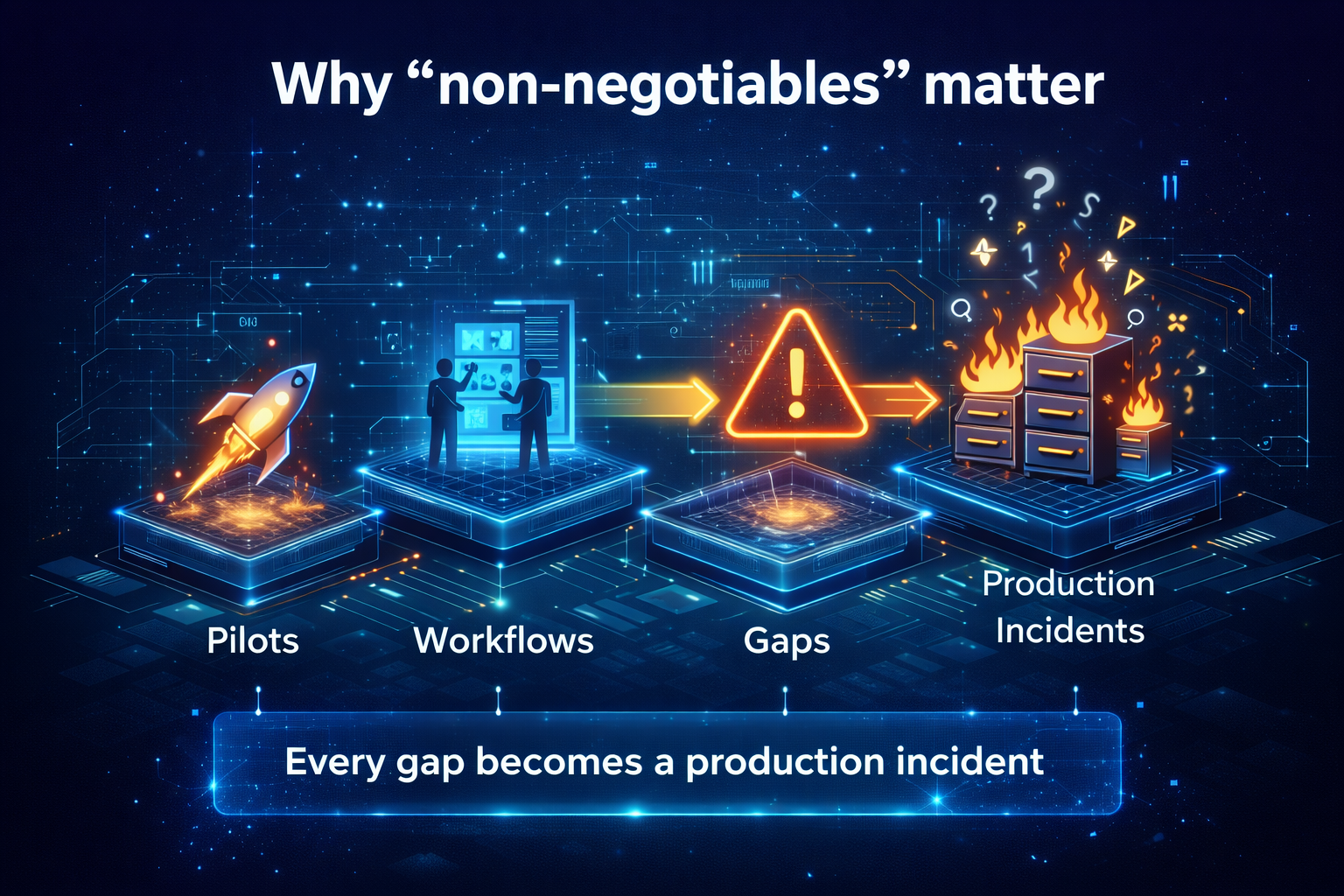
Why “non-negotiables” matter
Most AI programs fail in a predictable way:
- They start as pilots (low risk, high excitement).
- They scale to workflows (real work, real users).
- They cross an invisible line where AI begins to act—approve, deny, trigger, route, update, notify, or escalate.
- Now every gap becomes a production incident: who owns it, what it’s allowed to do, how it’s monitored, how it’s rolled back, what logs exist, what happens when policies change.
Non-negotiables are the guardrails that must exist before autonomy scales. Without them, every “success” quietly accumulates decision integrity debt—until a single edge case becomes a headline.
If you want the deeper blueprint for “how enterprises design, govern, and scale intelligence safely,” this article fits inside the broader Enterprise AI Operating Model
Enterprise AI Operating Model: https://www.raktimsingh.com/enterprise-ai-operating-model/
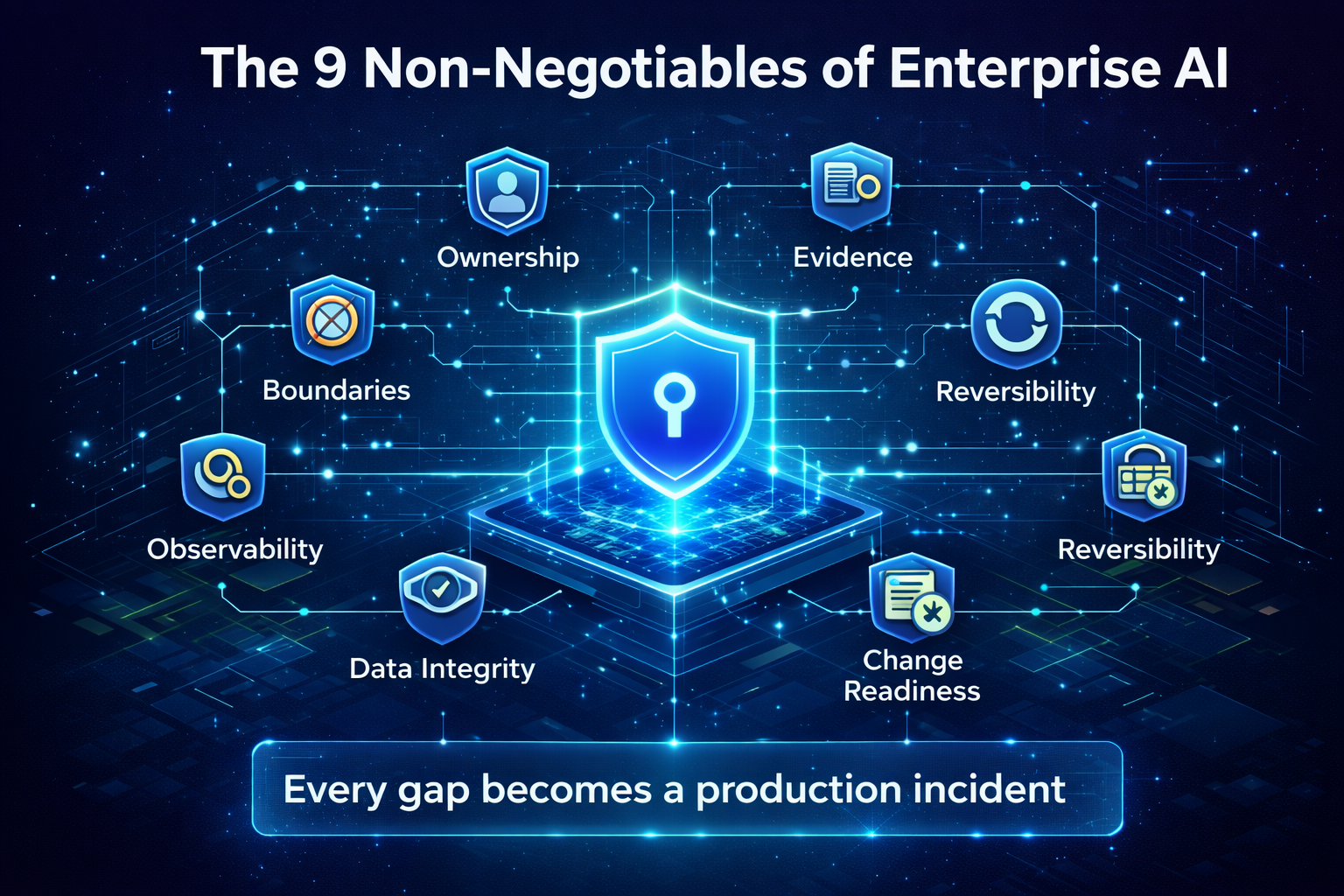
The 9 Non-Negotiables of Enterprise AI
1) Named ownership for every AI decision that matters
Rule: If an AI system can change outcomes, it must have a named business owner and a named technical owner.
Simple example:
An AI assistant drafts replies for customer support. Low risk.
But the same assistant later gets a “Send” button—or auto-sends at high confidence. Now it can commit the organization to promises, refunds, or policy statements. If nobody is explicitly accountable, the system will be “owned by everyone,” which means owned by no one.
What good looks like
- A single accountable leader for the decision domain (the decision owner)
- A single accountable engineering owner for runtime behavior (the system owner)
- A clear escalation path when something looks wrong (not a shared mailbox)
Why it’s non-negotiable
In every serious postmortem, ambiguity about ownership becomes the root cause after the root cause. AI doesn’t eliminate accountability—it amplifies the cost of missing accountability.
This is why the question of who owns Enterprise AI Who Owns Enterprise AI? Roles, Accountability, and Decision Rights in 2026 – Raktim Singh is not philosophical—it directly determines whether decision failures surface early or become systemic.
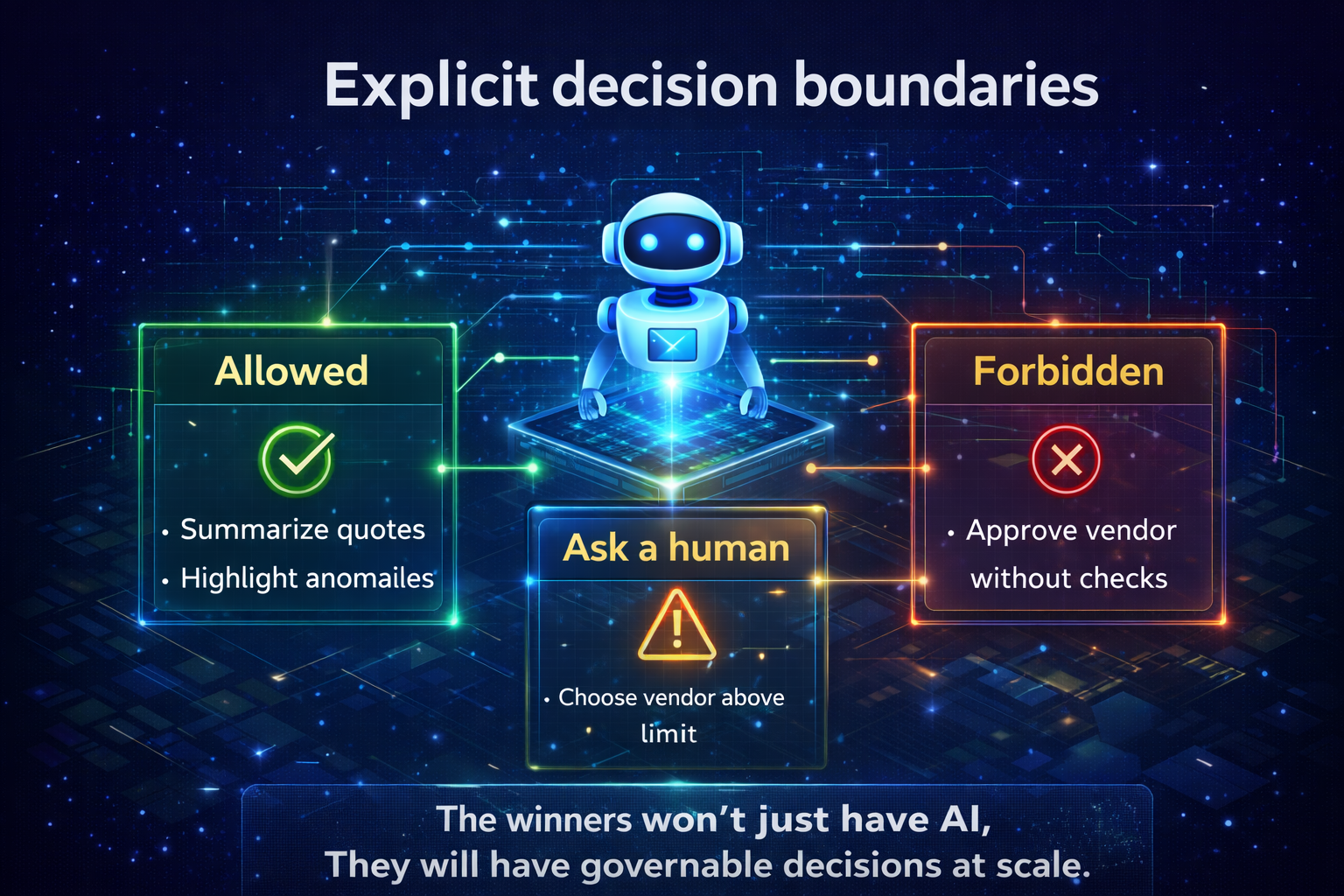
2) Explicit decision boundaries
Rule: Enterprise AI must operate inside explicit boundaries: allowed actions, forbidden actions, and ask-a-human actions.
Simple example:
An AI agent helps with procurement:
- Allowed: summarize vendor quotes, highlight anomalies
- Ask a human: choose a vendor above a threshold
- Forbidden: approve a vendor without required checks
Without boundaries, AI defaults to a dangerous logic: “I can do it, so I should do it.”
What good looks like
- Decision scopes written in plain language (not only in developer docs)
- Human override paths that are actually used in drills
- Hard stops for prohibited actions (not “soft warnings” people ignore)
Boundaries are strategy. If you don’t define them, your AI will define them for you—implicitly—through whatever patterns it learns from messy reality.
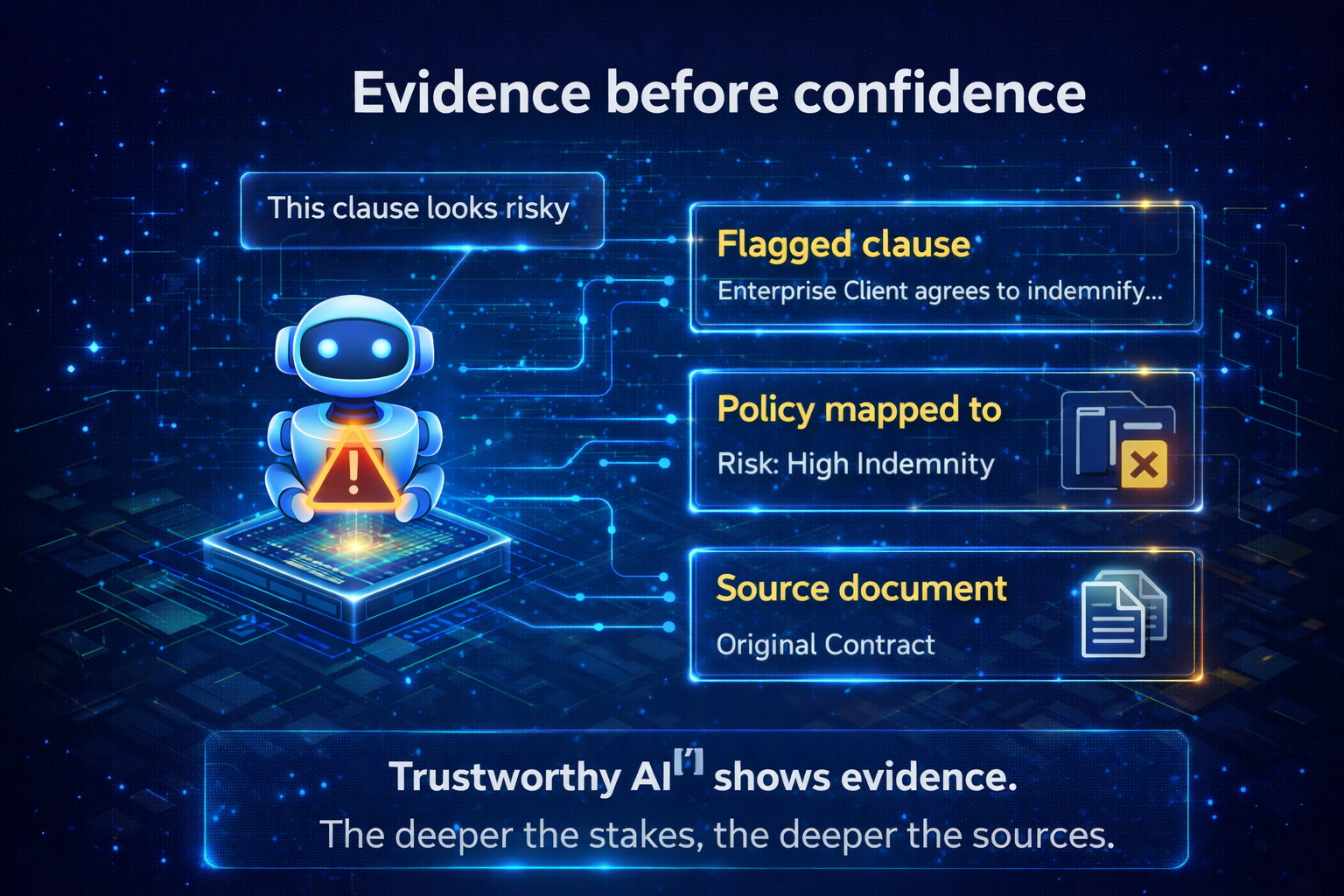
3) Evidence before confidence
Rule: For consequential decisions, the AI must show evidence and provenance, not just an answer.
This is the practical implication of “trustworthy AI” frameworks: governance and traceability matter because you must know what the system relied on. (NIST Publications)
Simple example:
An AI flags a contract clause as risky. If it cannot show:
- the clause it flagged
- the policy or rule it mapped to
- the source documents it relied on
…then it’s not “smart.” It’s un-auditable.
What good looks like
- Citations to source material inside the enterprise boundary
- “Why” traces in plain language (what it used, what it ignored, why it concluded)
- A way to reproduce the decision later (same inputs → comparable reasoning)
A subtle but critical point: evidence is not only for auditors. It is for operators. When something breaks, evidence is how you debug reality.
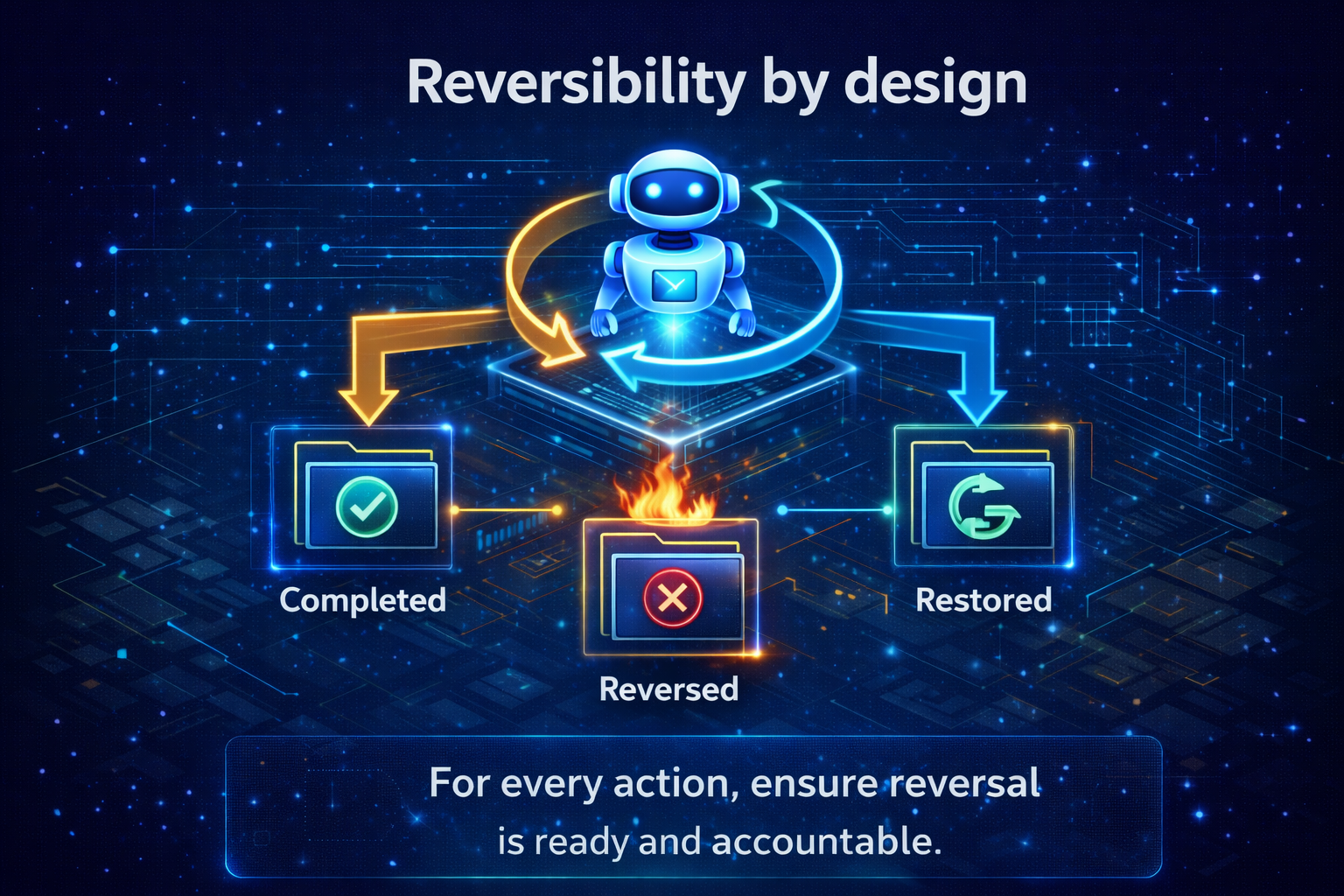
4) Reversibility by design
Rule: Any AI that can trigger real-world actions must be reversible.
Simple example:
An AI agent updates thousands of records based on inferred duplicates.
Even if it’s correct “most of the time,” the enterprise question is:
What happens on the bad day?
Reversibility means:
- you can stop actions quickly
- you can revert changes reliably
- you can recover without heroic manual work
What good looks like
- A kill switch / pause switch at runtime
- Safe modes (read-only, draft-only, recommend-only)
- Rollback mechanisms for AI-driven changes
Human-written reality: most organizations don’t fear AI because it’s wrong. They fear it because it’s irreversible when wrong.
This is exactly how organizations fall into the Enterprise AI Runbook Crisis The Enterprise AI Runbook Crisis: Why Model Churn Is Breaking Production AI—and What CIOs Must Fix in the Next 12 Months – Raktim Singh, where AI behaves ‘fine’ until something breaks—and no one knows how to intervene
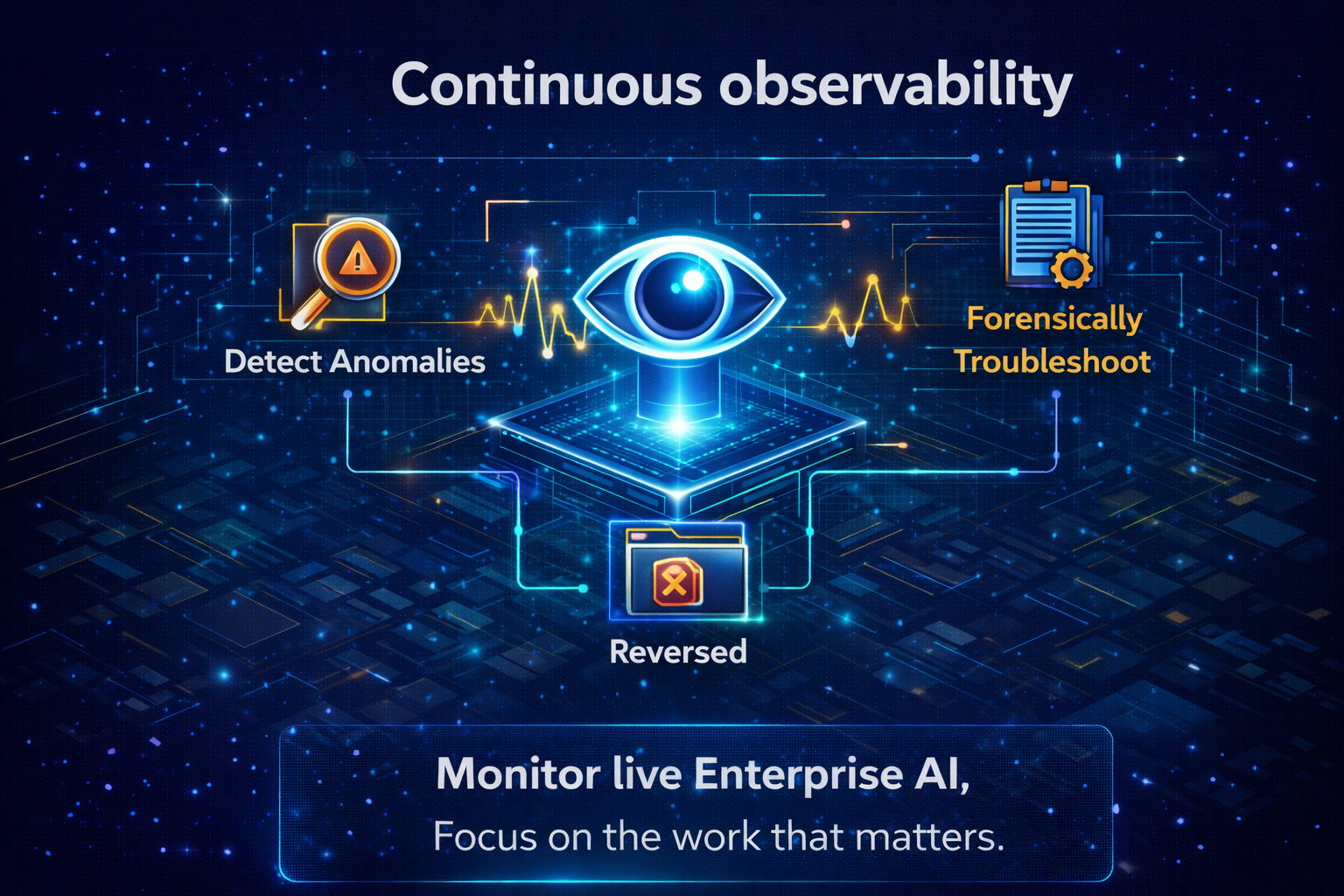
5) Continuous observability
Rule: You can’t govern what you can’t see. AI must emit production telemetry: what it did, why it did it, and what happened next.
Observability is converging on standard instrumentation patterns. For generative AI operations, OpenTelemetry is actively defining semantic conventions to standardize the telemetry you capture (prompts, responses, model metadata, usage, etc.). (OpenTelemetry)
Simple example:
A workflow agent routes tickets. Everything looks fine—until it quietly starts misrouting one small category. No one notices because:
- outcomes lag
- errors look like “business noise”
- the team only monitors uptime, not decision quality
What good looks like
- Logs of prompts, tool calls, actions, and outcomes (with privacy controls)
- Drift signals (behavior change over time)
- Alerting on decision anomalies, not only infrastructure metrics
Executive takeaway: observability is not “nice to have.” It is the price of scale.
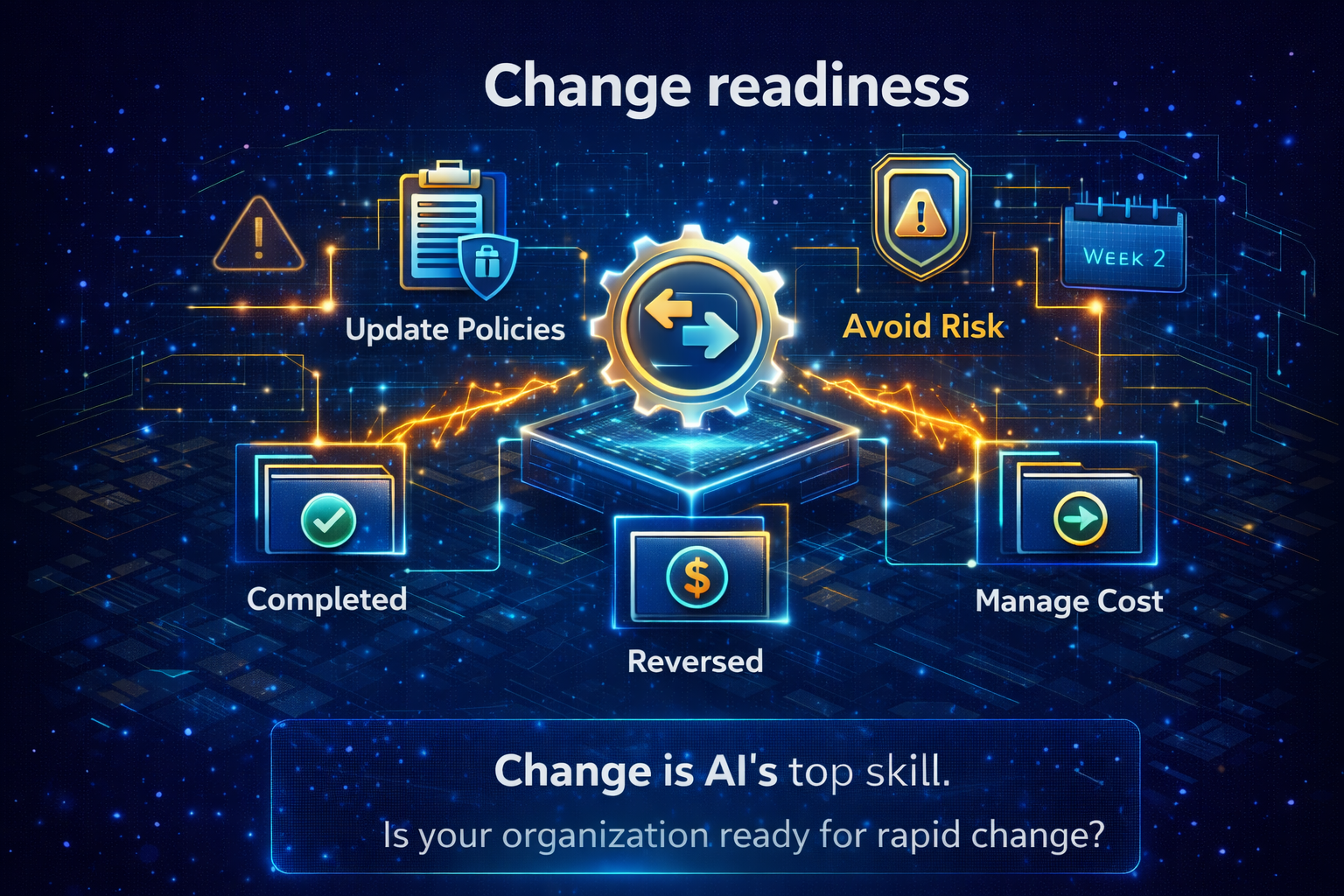
6) Change readiness
Rule: Enterprise AI must be designed for change—because enterprise reality is change.
Simple example:
A policy changes: “Approvals now require an extra check.”
A well-run enterprise updates that in governance + workflows the same week.
A fragile AI system breaks because:
- prompts embed old policy language
- workflows assume old boundaries
- integrations were coded around old exceptions
What good looks like
- A single source of truth for policies (not scattered across prompts)
- Versioning of policies, prompts, workflows, and tools
- Controlled rollout when behavior changes (and the ability to roll back)
Enterprise AI is not a model. It is a living system that must stay aligned with shifting incentives and constraints.
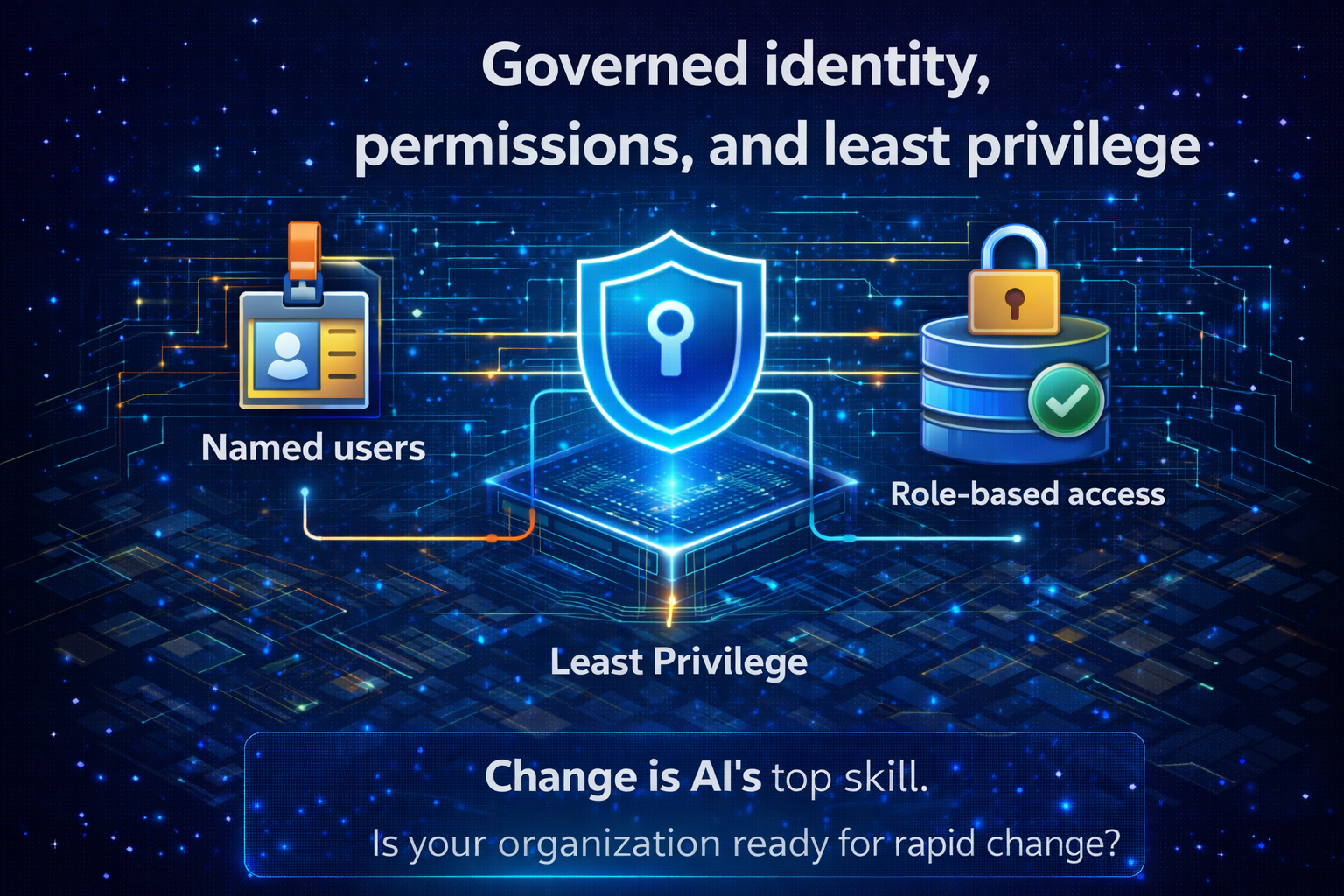
7) Governed identity, permissions, and least privilege
Rule: Any agent that touches enterprise systems must have governed identity, least-privilege access, and auditable permissions.
Simple example:
An agent can “helpfully” reset access, change configurations, or approve requests. If it has broad permissions, a single mistake becomes a large blast radius.
What good looks like
- Separate identities per agent role (no shared keys)
- Permission scopes aligned to decision boundaries
- Auditable access reviews, just like human users
Plain truth: agents are not “features.” They are machine identities operating inside your trust boundary.
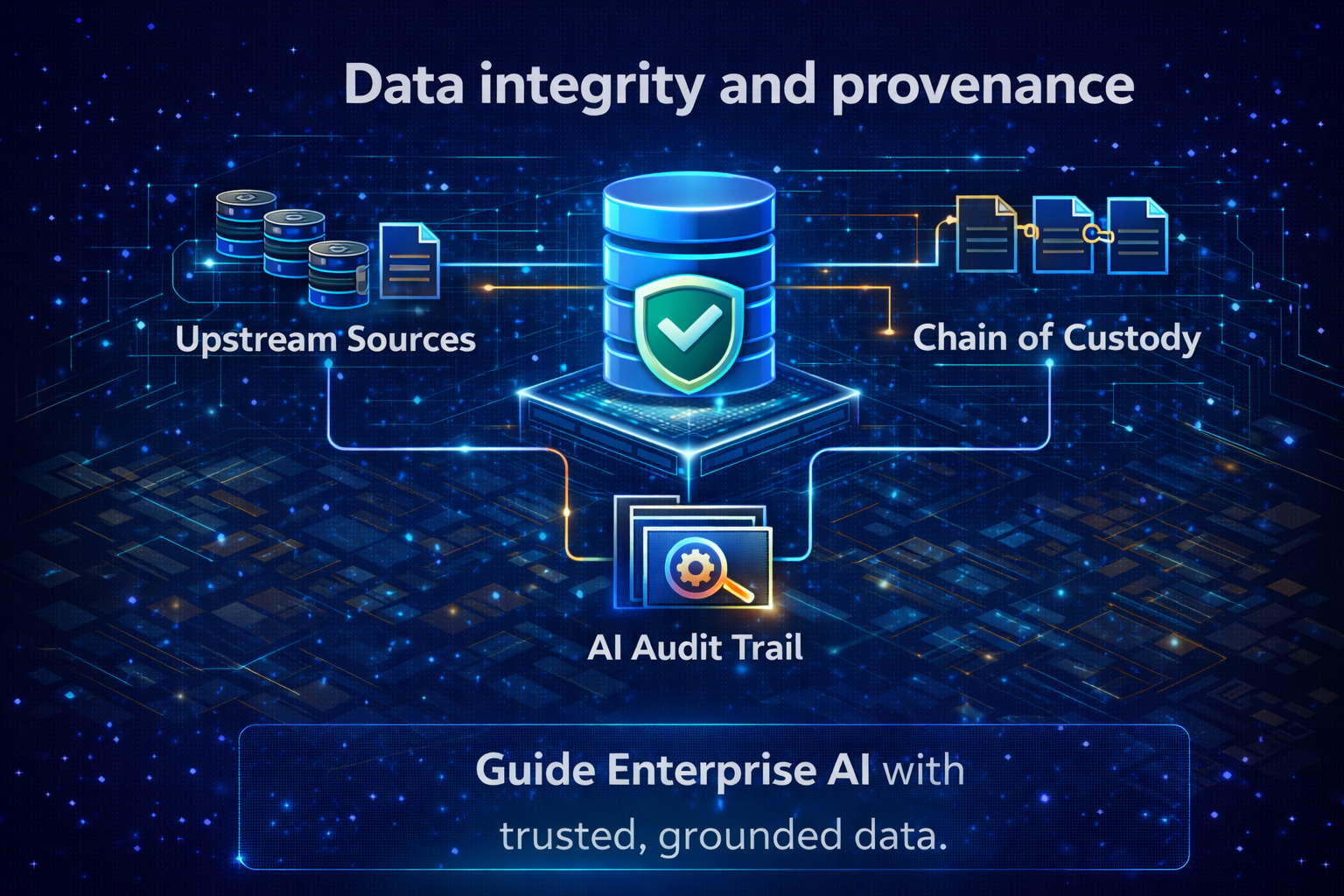
8) Data integrity and provenance
Rule: If data lineage is unclear, AI output is untrustworthy—even when it sounds correct.
Simple example:
An AI recommends a “safe” action based on stale documentation, old process notes, or incomplete records. The output may be linguistically perfect and operationally wrong.
What good looks like
- Clear data sources (authoritative vs secondary)
- Freshness expectations (how old is too old)
- Provenance tags for critical knowledge sources
A key insight: most enterprise AI failures are not “model hallucinations.” They are organizational hallucinations—where internal truth is fragmented, stale, or contradictory.
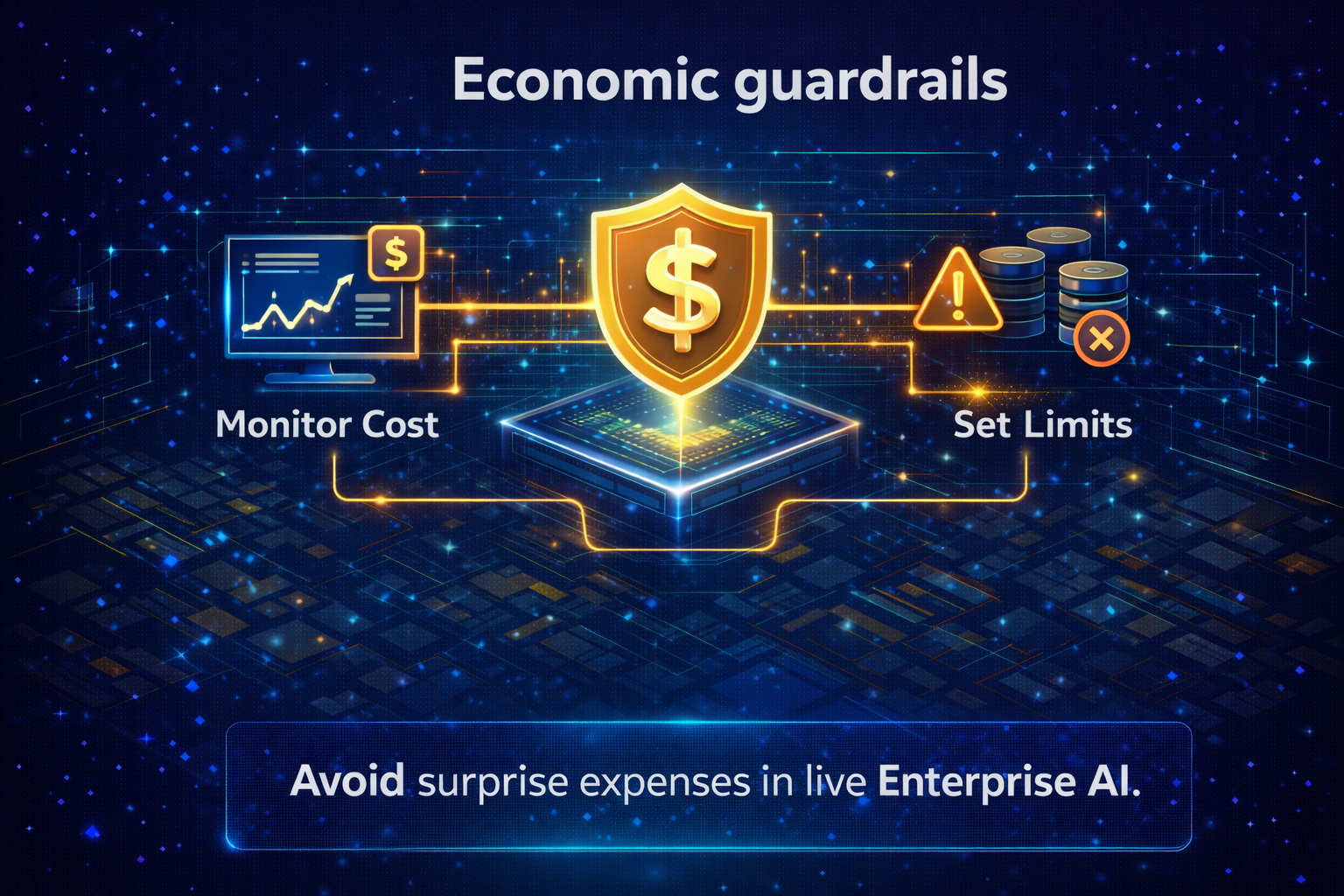
9) Economic guardrails
Rule: If you can’t control cost, you can’t scale autonomy.
Simple example:
A team deploys a “helpful” agent that calls tools frequently, retries aggressively, or expands context every time. It works—until finance asks why costs spiked.
What good looks like
- Cost envelopes per workflow / decision class
- Rate limits, caching strategies, safe fallbacks
- Clear rules: when to use smaller models vs larger ones
The economics of intelligence are becoming operational. AI cost is not an IT line item—it’s a behavioral property of your systems.
Over time, enterprises that fail to enforce economic guardrails see their Intelligence Reuse Index The Intelligence Reuse Index: Why Enterprise AI Advantage Has Shifted from Models to Reuse – Raktim Singh collapse, as every new AI capability becomes a one-off cost instead of a reusable asset.
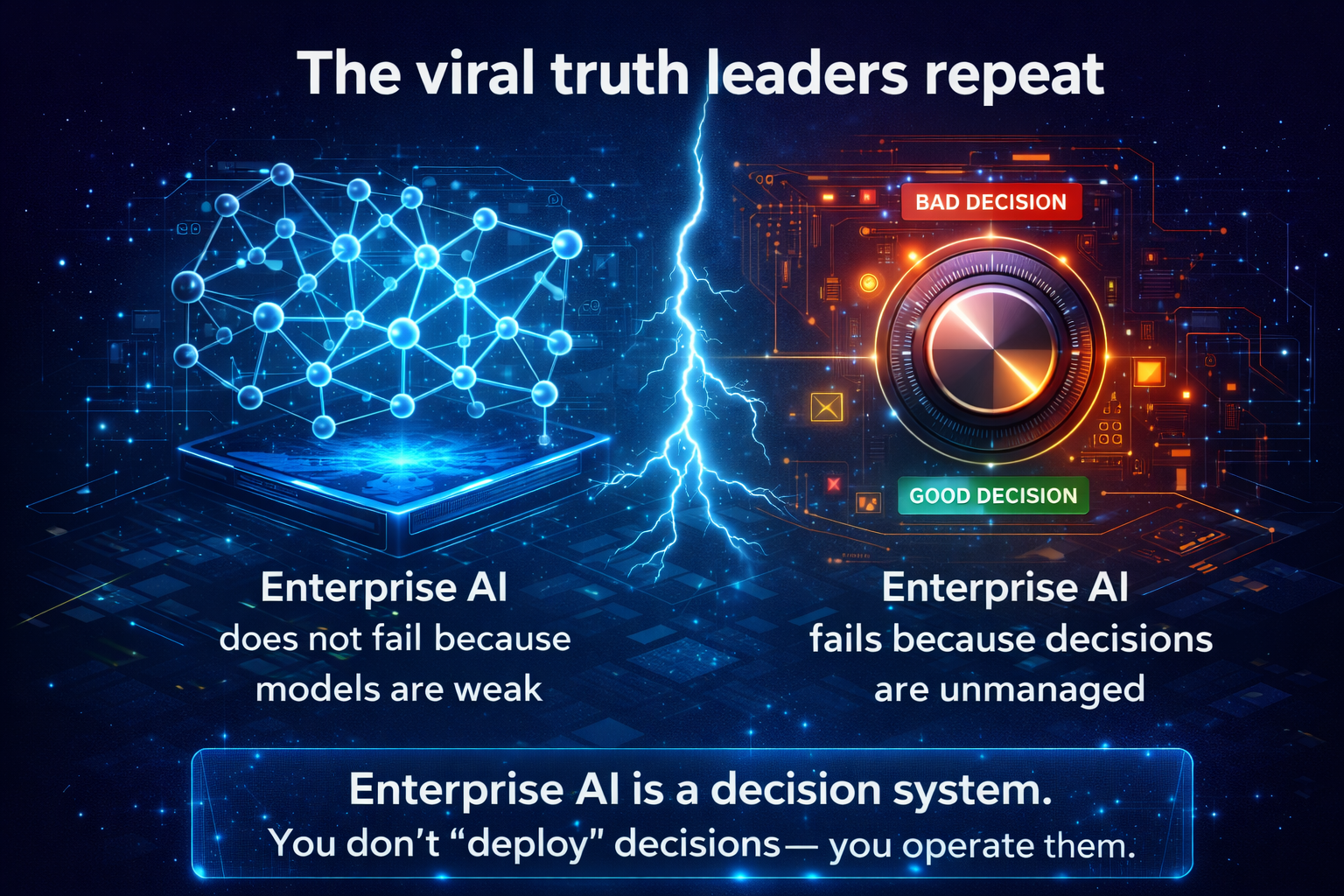
The viral truth leaders repeat
Enterprise AI doesn’t fail because models are weak.
It fails because decisions are unmanaged.
If you remember one thing, remember this:
Enterprise AI is a decision system.
You don’t “deploy” decisions—you operate them.
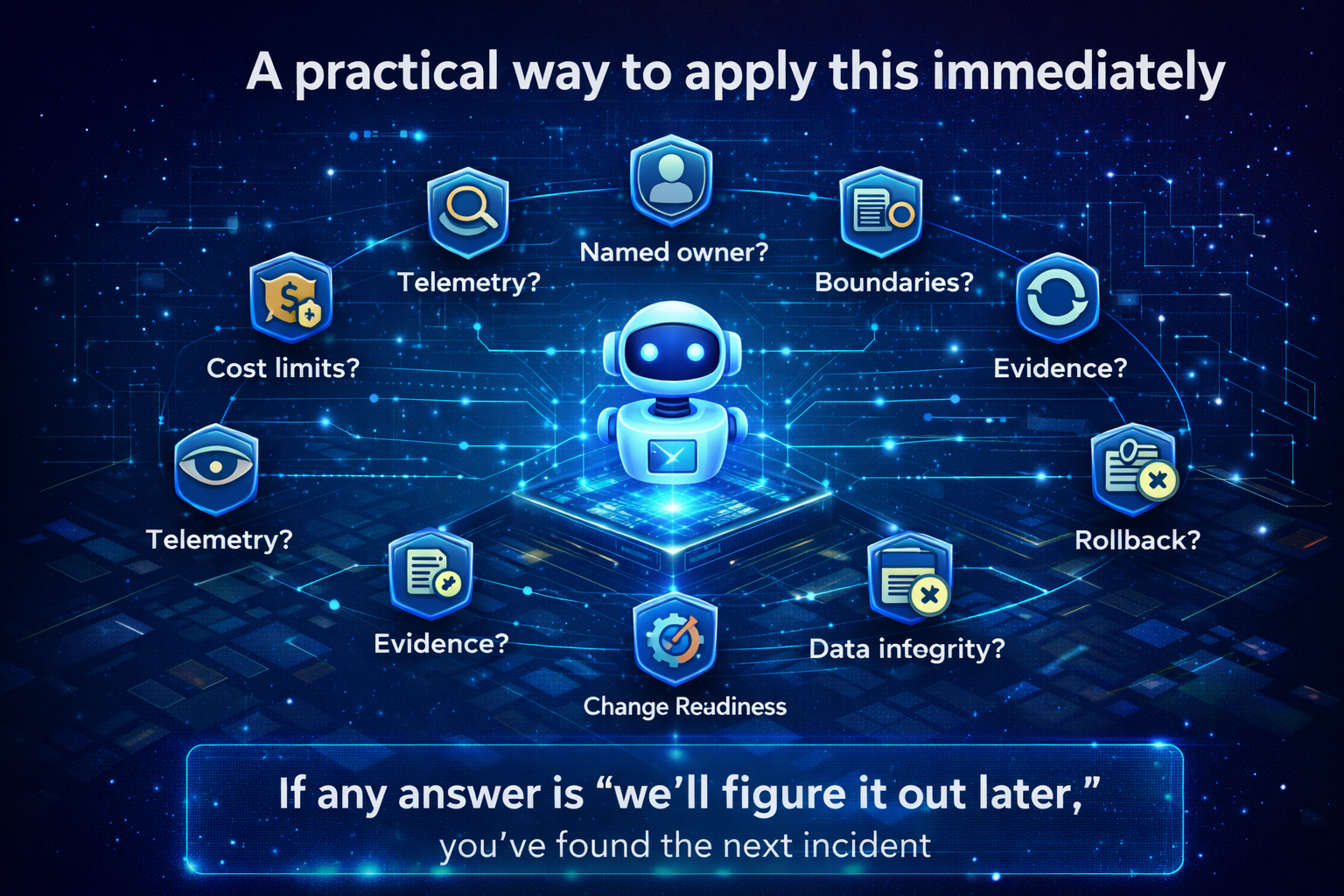
A practical way to apply this immediately
Pick one live AI workflow and ask:
- Who is the named owner?
- What are the boundaries?
- What evidence does it show?
- How do we roll it back?
- What telemetry exists?
- What happens when policy changes?
- What identity and permissions does it have?
- What data sources does it trust—and why?
- What cost limits exist?
If any answer is “we’ll figure it out later,” you’ve found the next incident.
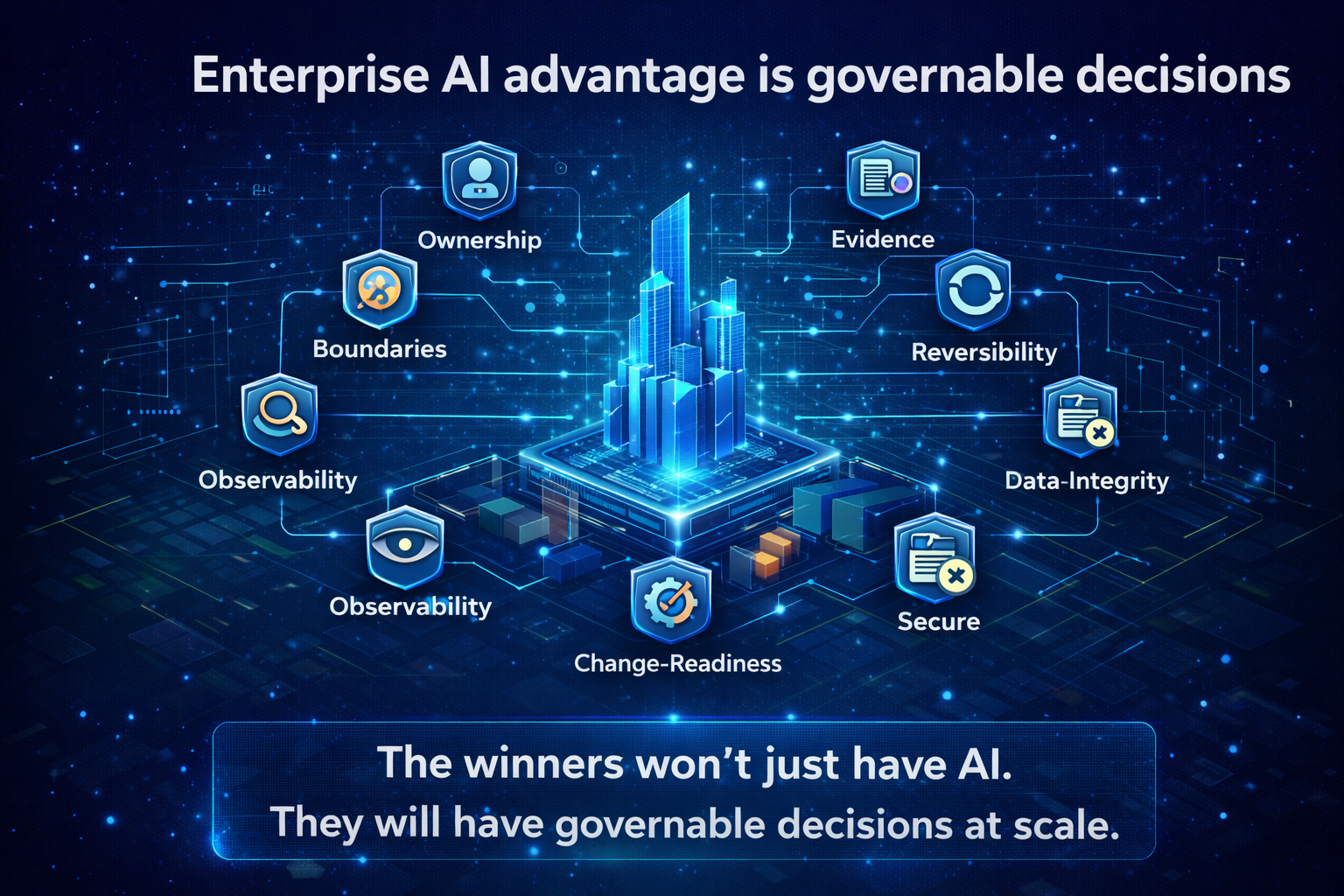
Conclusion: Enterprise AI advantage is governable decisions
The next era of enterprise advantage will not come from who adopts the most models or pilots the most assistants. It will come from who can run AI as a disciplined operating capability—where decisions remain owned, bounded, evidenced, reversible, observable, change-ready, secure, data-grounded, and economically governed.
In other words: the winners won’t just have AI. They will have governable decisions at scale.
If your organization wants the full blueprint that connects these non-negotiables into a coherent system, read: Enterprise AI Operating Model https://www.raktimsingh.com/enterprise-ai-operating-model/
Glossary
- Enterprise AI: AI that influences real operational outcomes inside enterprise workflows—not just experimentation.
- AI Management System (AIMS): An organization-wide system to govern, manage, and continually improve AI practices, aligned with ISO/IEC 42001. (ISO)
- AI RMF: NIST’s voluntary framework for governing, mapping, measuring, and managing AI risks across the lifecycle. (NIST Publications)
- Decision boundary: The explicit line between what AI can do, what it must escalate, and what it must never do.
- Reversibility: The capability to pause, roll back, or safely unwind AI actions.
- Observability: Production telemetry that makes AI behavior visible, diagnosable, and controllable.
- Provenance: Traceability of the data, documents, and sources used to generate an output.
- Least privilege: Granting only the minimum permissions required for a role—applied to agents like machine identities.
- Cost envelope: A defined budget boundary and usage policy for a workflow or decision class.
FAQ
What are the non-negotiables of Enterprise AI?
They are the minimum controls required to run AI safely at scale: ownership, decision boundaries, evidence and provenance, reversibility, observability, change readiness, governed identity, data integrity, and cost guardrails.
Why is Enterprise AI different from normal AI projects?
Because Enterprise AI influences real outcomes inside workflows. The challenge shifts from model quality to decision integrity, governance, operability, accountability, and control.
Do these non-negotiables apply even if we use vendor AI tools?
Yes. Buying AI does not transfer ownership of outcomes. Your enterprise remains accountable for decisions, controls, logging, monitoring, and rollback.
What is the fastest way to reduce Enterprise AI risk?
Start with reversibility and observability. If you can pause/roll back and you can see what the AI is doing, you can operate safely while maturing the rest.
Is compliance enough to make Enterprise AI trustworthy?
Compliance helps, but trust requires operational proof—evidence trails, logs, monitoring, and reproducibility. That’s why ISO/IEC 42001 and NIST AI RMF emphasize management systems and governance across the lifecycle. (ISO)
References and further reading
- ISO/IEC 42001:2023 — AI management systems (ISO)
- NIST AI RMF 1.0 (AI 100-1) and overview materials (NIST Publications)
- EU AI Act regulatory framework overview (Digital Strategy)
- OpenTelemetry semantic conventions for Generative AI + background (OpenTelemetry)



Raktim Singh is an AI and deep-tech strategist, TEDx speaker, and author focused on helping enterprises navigate the next era of intelligent systems. With experience spanning AI, fintech, quantum computing, and digital transformation, he simplifies complex technology for leaders and builds frameworks that drive responsible, scalable adoption.