
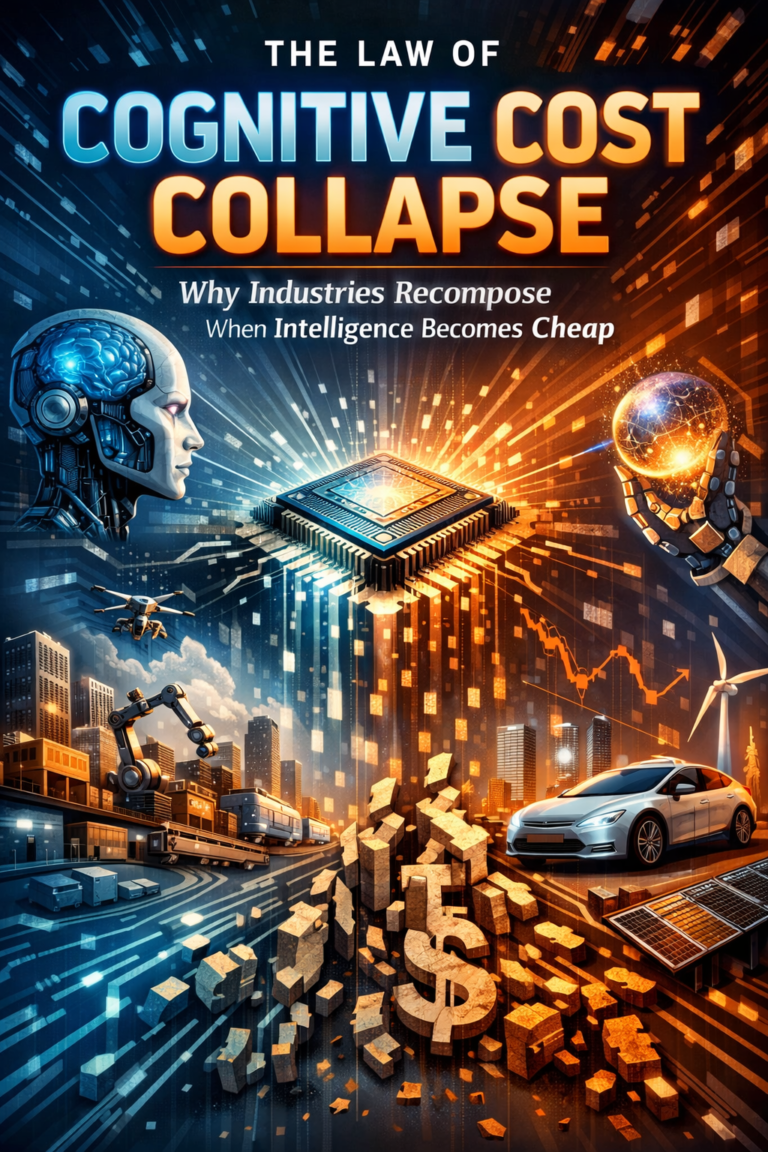
For most of economic history, intelligence was scarce. Judgment was limited by human bandwidth. Analysis was expensive. Coordination required layers of hierarchy. Strategy moved at the speed of meetings.
That constraint is collapsing.
Artificial intelligence is driving the cost of cognition toward zero.
Reasoning, pattern recognition, optimization, forecasting, and synthesis are no longer rare executive functions — they are programmable infrastructure. And when intelligence becomes abundant, markets do not merely become more efficient. They reorganize.
We are entering an era in which competitive advantage will not belong to firms that “use AI,” but to institutions that redesign themselves — and their industries — around cheap, scalable, governed intelligence.
Executive summary: one claim, five consequences
Most leaders still talk about AI as if it is “better software.”
It isn’t.
AI is collapsing the marginal cost of applied cognition—the cost of producing decision-useful intelligence per unit of data, per decision, per interaction.
When a major input cost collapses, markets change shape. We have seen this pattern before:
- Industrialization reduced the cost of physical energy.
- The Internet reduced the cost of information transmission and discovery.
- AI is now reducing the cost of applied cognition: summarization, research, drafting, evaluation, prediction, and pattern matching at scale. (OECD)
That collapse triggers five predictable shifts:
- Pricing becomes dynamic
- Risk becomes continuous
- Negotiation becomes algorithmic
- Matching becomes granular
- Trust and proof become products
This is the economic anchor behind what I call the Third-Order AI Economy: not “AI inside workflows” (Second Order), but new market structures and new business categories that become possible when intelligence is abundant.
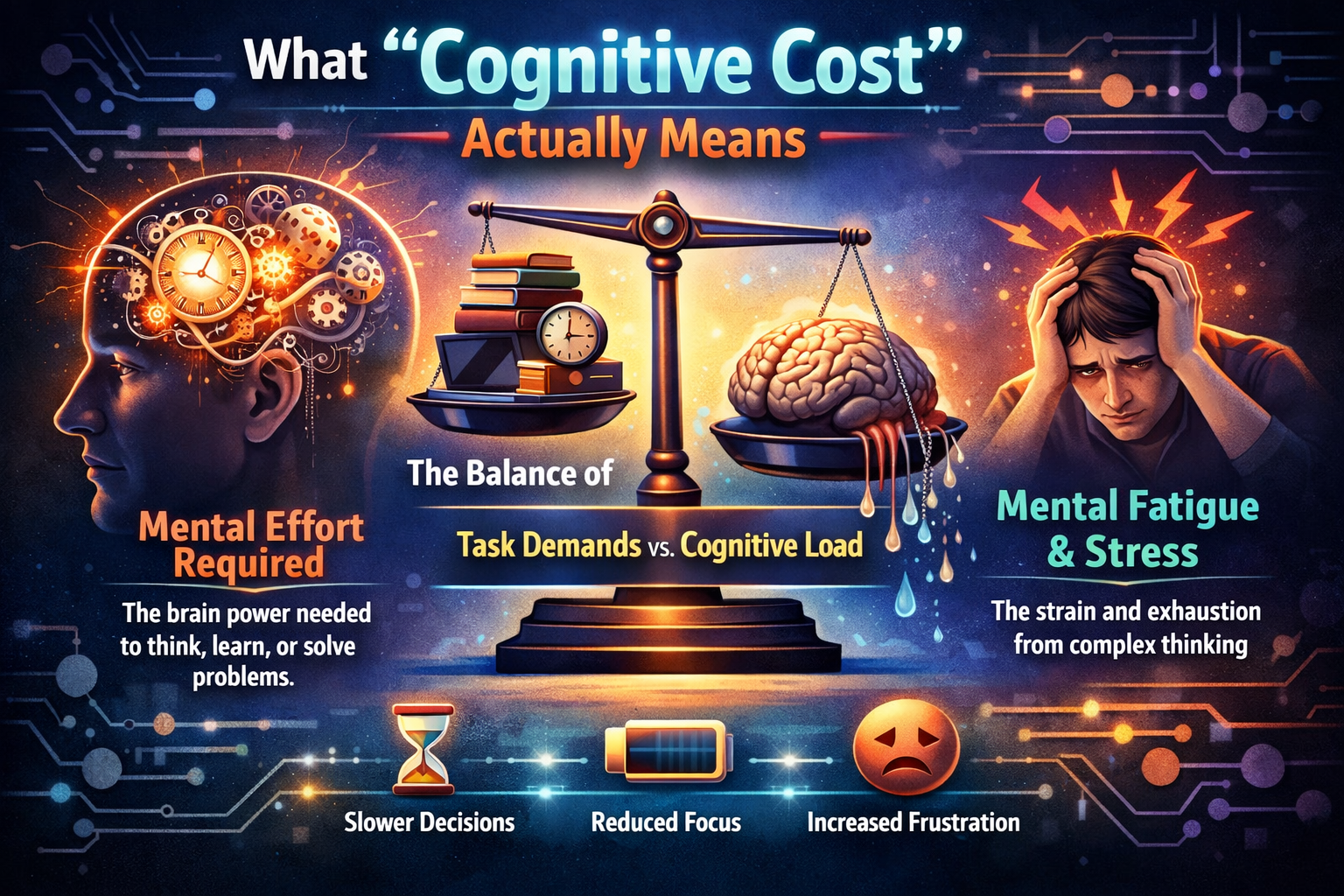
What “cognitive cost” actually means (no hype, no magic)
Let’s be precise.
When I say “cognitive cost,” I do not mean:
- human judgment becomes irrelevant
- accountability disappears
- strategy becomes automated
Cognitive cost refers to the cost of producing decision-useful intelligence—fast enough, cheap enough, and repeatable enough to be applied everywhere.
In practice, AI is reducing the cost of tasks like:
- turning messy information into a clear brief
- extracting patterns from large, noisy data
- generating options and scenarios
- drafting offers, policies, and communications
- translating expertise into usable guidance
- doing “first pass” research at speed
A growing body of evidence (especially experimental studies) shows that generative AI can improve efficiency in knowledge tasks like writing, summarizing, editing, translating, and certain coding and support work—often by accelerating first drafts and widening access to competence. (OECD)
But here’s the deeper point:
The story is not productivity. The story is frequency.
When intelligence is expensive, you apply it periodically.
When intelligence becomes cheap, you apply it continuously.
And that is where industries recompose.
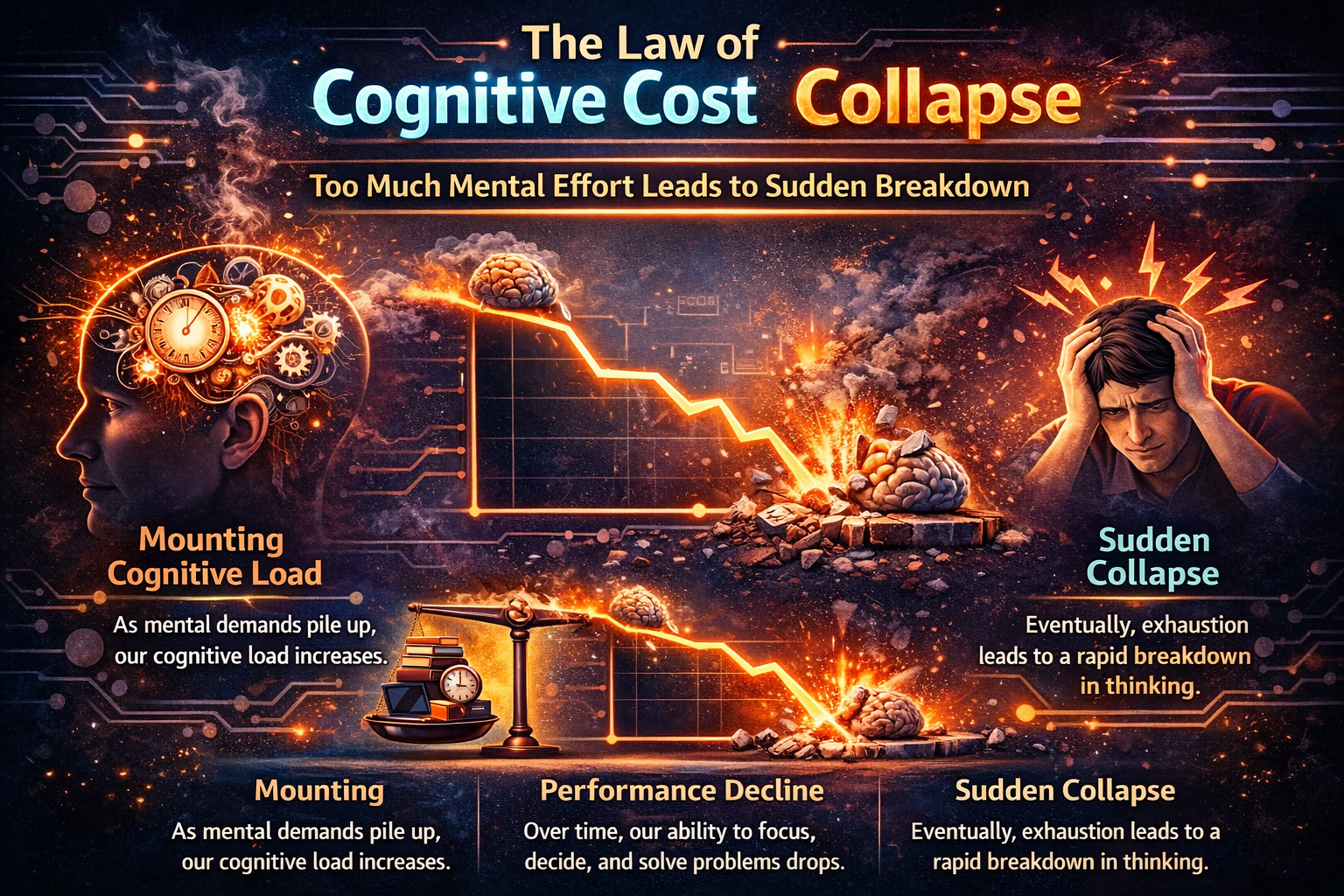
The Law of Cognitive Cost Collapse
Here is the law in board-ready language:
When the marginal cost of applied cognition falls sharply, markets move from periodic, human-mediated coordination to continuous, algorithmic coordination—and industries reorganize around whoever controls the new intelligence loops.
This is not philosophy. It has concrete consequences.
Let’s walk through each one with simple examples.
1) Pricing becomes dynamic
When cognition is expensive, pricing is mostly static:
- annual contracts
- quarterly revisions
- fixed rate cards
When cognition becomes cheap, it becomes economically rational to update prices continuously based on:
- demand signals
- capacity constraints
- competitor moves
- risk shifts
- willingness to pay
Examples you already accept as normal:
- airline seats and hotel rooms priced by real-time demand
- ride-hailing surge pricing
- e-commerce price changes multiple times a day
What changes with AI: dynamic pricing stops being a “premium capability” and becomes a default expectation—because the cognitive work of analyzing signals, generating price corridors, testing bundles, and running counterfactuals becomes cheap enough to run continuously.
Board question:
Which revenues in your business are still priced like the pre-AI era?
Those pricing structures are often tomorrow’s arbitrage.
2) Risk becomes continuous (not annual)
Many industries still price risk on slow cycles:
- annual insurance renewals
- periodic credit reviews
- quarterly supplier risk scoring
Not because leaders love slow cycles.
Because risk evaluation is cognitively expensive: data gathering, analysis, scenario evaluation, documentation, compliance review.
As AI reduces cognitive costs, risk moves from:
periodic estimation → continuous recalculation
That is one reason global institutions increasingly describe AI as an organizational transformation challenge, not just a productivity upgrade: the cadence of the institution changes. (World Economic Forum Reports)
Board implication:
If your risk systems remain periodic while your market becomes continuous, you will lose—not because you lack AI tools, but because your institution is structurally out of sync.
3) Negotiation becomes algorithmic
Negotiation is one of the most expensive cognitive activities in business:
- proposals
- counteroffers
- terms and exceptions
- evidence requests
- compliance checks
- escalation logic
Historically, that cost forced negotiation to be:
- slow
- human-heavy
- selectively applied only to large deals
Now imagine negotiation as an always-on capability:
- automated quote generation
- dynamic terms within policy bounds
- evidence-aware concessions
- real-time risk checks
This is already visible in early waves of procurement and supply chain transformation, where AI is being explored for supplier discovery, evaluation, sourcing support, and decision assistance. (ScienceDirect)
What AI changes:
It makes negotiation overhead cheap enough that markets can run more negotiations, more frequently, for smaller deal sizes—unlocking new liquidity.
That is a Third-Order pattern:
More of the economy becomes “economically negotiable.”
4) Matching becomes granular (Uber logic, but everywhere)
Uber’s breakthrough was not an app.
It was an economic move: matching supply and demand in near real time, at scale, with low friction.
When cognition becomes cheap, this matching logic spreads:
- matching patients to appointments (healthcare access)
- matching shipments to carriers (logistics)
- matching inventory to local demand (retail)
- matching talent to tasks (work allocation)
- matching capital to risk (insurance and finance)
AI makes the discovery + evaluation + decision cycle cheap enough to run continuously.
In other words:
Markets become higher resolution.
And when markets become higher resolution, old intermediaries weaken—because their advantage was often “being the cognitive layer.”
5) Intermediation compresses (value migration before value creation)
This is the most misunderstood phase of disruption.
When cognition is expensive, intermediaries earn margins because they:
- reduce search costs
- reduce uncertainty
- coordinate negotiations
- provide trust and verification
When cognition becomes cheap, many of those functions become automated or commoditized—so value migrates away from legacy intermediaries before new value is created.
That is why the “AI productivity story” is not the main story.
The main story is profit pool movement.
And it’s worth staying honest here: multiple recent studies and surveys suggest many firms still report limited measurable productivity gains from AI so far—often because usage is shallow, adoption is fragmented, or operating models haven’t changed. (IT Pro)
At the same time, macro commentary also points to emerging signals of productivity improvement in some regions or sectors—suggesting the take-off may be uneven and timing-dependent. (Financial Times)
Board framing:
The early AI era is not guaranteed gains. It is guaranteed pressure.
Because value migration doesn’t wait for perfect adoption.
6) Trust and proof become products
Here is the trap: when intelligence becomes cheap, claims become cheap too.
Anyone can generate:
- proposals
- analyses
- forecasts
- compliance narratives
- marketing and positioning
So the scarce thing becomes proof:
- evidence trails
- auditability
- dispute outcomes
- SLA trust signals
- post-incident accountability
This is why “responsible AI” is not a checkbox. It becomes a market differentiator—the enabling layer that lets high-velocity intelligence scale without collapsing trust. (World Economic Forum Reports)
Board-level statement (worth repeating):
In the AI era, trust is not a policy. Trust is an engineered system.
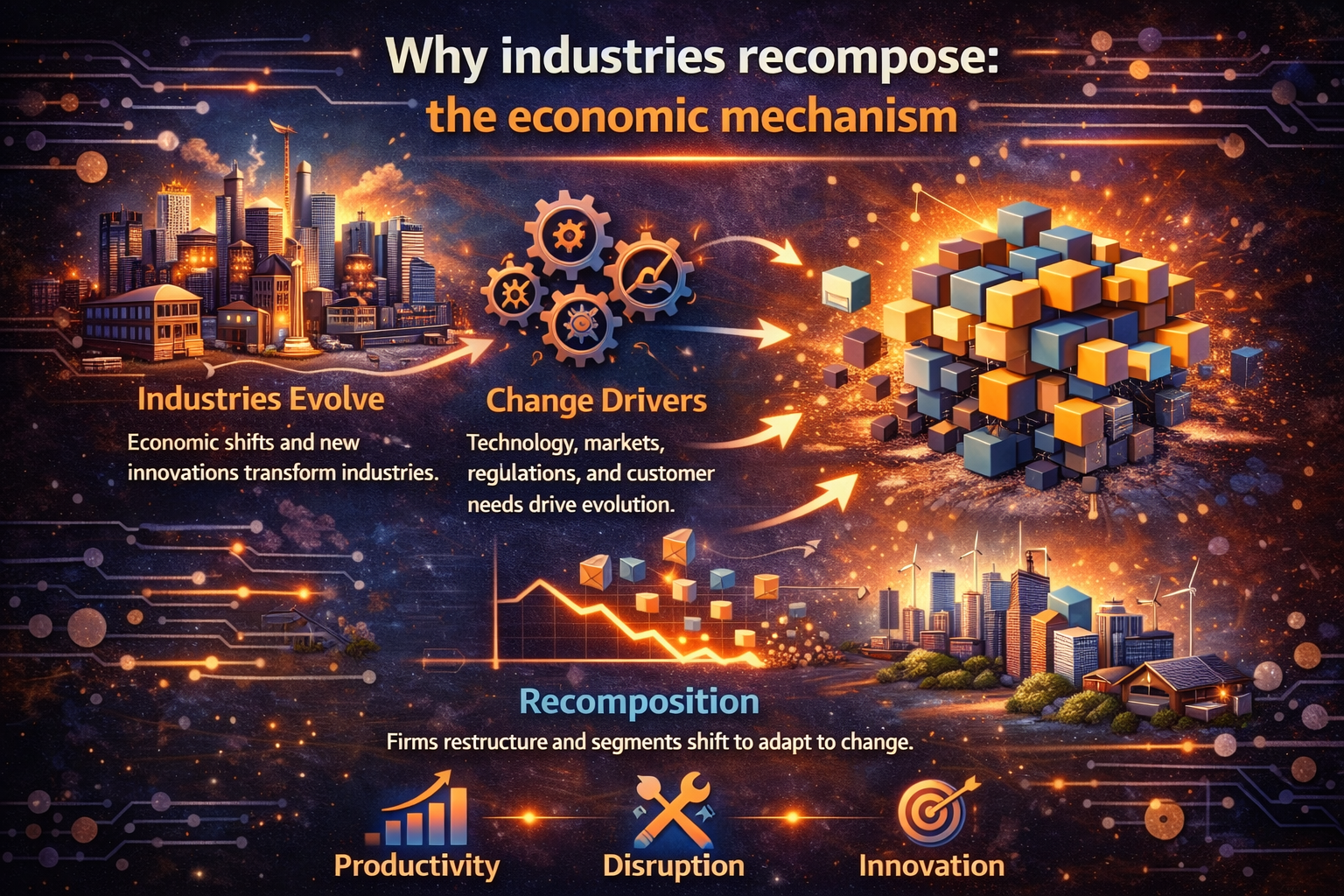
Why industries recompose: the economic mechanism (simple, but rigorous)
The Law of Cognitive Cost Collapse aligns with foundational economic ideas about markets and firms.
Coase: when transaction costs fall, firm boundaries shift
Firms exist partly because using markets is costly: searching, contracting, monitoring, enforcement.
When AI reduces the cognitive load of these activities, some work moves outward into markets and platforms, while other work becomes easier to internalize—creating boundary fluidity. (California Management Review)
Hayek: knowledge is dispersed
Markets coordinate dispersed knowledge through signals (especially prices). AI doesn’t eliminate dispersion—but it can capture more signals from interactions (requests, constraints, evidence demands) and compress them into action faster, changing how quickly markets adapt. (World Economic Forum Reports)
Simon: bounded rationality and the new bottleneck
Even if computation becomes cheap, attention, incentives, and institutional design remain scarce. Cheap cognition can create noise, Goodhart effects, and over-optimization if the enterprise lacks decision rights, thresholds, reversibility, and evidence loops.
That is why cognitive collapse shifts advantage toward institutions that design safe execution and learning, not just smart models.
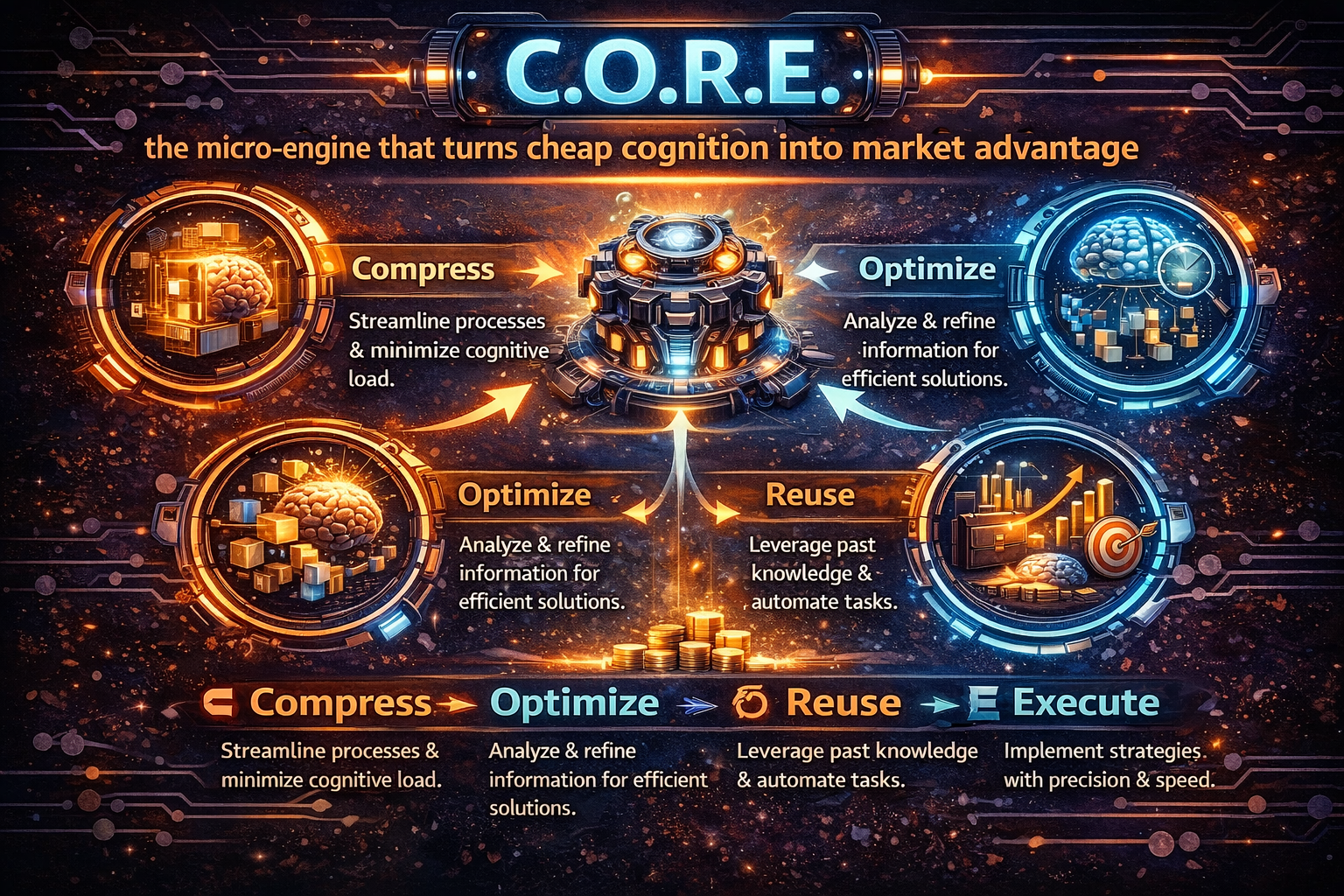
C.O.R.E.: the micro-engine that turns cheap cognition into market advantage
This is where my doctrine becomes distinct.
C.O.R.E. is a clean explanation of how cheap cognition becomes continuous markets:
C — Comprehend context
Capture demand signals from agent interactions:
- what constraints agents carry
- what evidence they request
- where negotiation fails
- which terms trigger switching
O — Optimize decisions
Use AI to continuously tune:
- bundles
- pricing corridors
- eligibility rules
- risk controls
R — Realize action
Execute safely:
- automated quote generation
- negotiation workflows
- policy checks
- provisioning and fulfillment triggers
E — Evolve through evidence
Close the loop:
- dispute outcomes
- churn triggers
- agent feedback
- SLA and trust signals
This is not just an enterprise loop.
It is a market loop.
That is Third-Order.
A geo-grounded example: why India matters in this thesis
One reason India is a powerful laboratory for “continuous markets” is the scale of real-time digital infrastructure.
UPI, for example, is widely recognized as real-time payments infrastructure at massive scale, with policy and research bodies highlighting its low-cost, high-availability characteristics and its role in accelerating digital commerce participation. (Press Information Bureau)
Similarly, ONDC’s ambition (open network rails for digital commerce) reflects the direction of travel: unbundling platforms into networked layers that can increase discoverability and competition. (ONDC | Open Network for Digital Commerce)
Why does this matter to the cognitive-cost story?
Because when transaction rails become real-time and open, the limiting factor becomes:
- discovery, matching, negotiation, trust
…which are cognitive problems.
AI collapsing cognitive cost is what turns those rails into continuous markets.
What boards should do next (practical, non-scary)
Five board questions that follow from this law
- Where is pricing still periodic in a market becoming continuous?
- Where does uncertainty create margin—and how fast will cheap cognition compress it?
- Which negotiations are slow because intelligence is expensive (not because complexity is inherent)?
- Where is matching low-resolution because evaluation is too costly?
- What proof systems will we need when claims become abundant?
What the investment logic becomes
- Build C.O.R.E.-style continuous loops where you can measure outcomes.
- Treat trust, auditability, and dispute learning as product infrastructure.
- Prepare for value migration early—before “AI value creation” headlines arrive.
- Redesign operating cadence (quarterly → continuous) in pricing, risk, and contracting.
- Invest in evidence capture and feedback systems—the “E” competitors skip.
Conclusion: the optimistic case boards need to hear
The AI story is not “machines replacing humans.”
The AI story is:
Intelligence is becoming abundant—so markets can be redesigned around better outcomes.
Third-Order businesses will emerge not because models are powerful, but because the economics of cognition changed.
This is the decade where institutions can unlock:
- higher resilience (continuous risk)
- higher efficiency (dynamic matching)
- higher innovation (cheap research and faster iteration)
- new categories (continuous contracting, proof markets, autonomous market infrastructure)
The winners won’t be the firms running the most pilots.
They will be the institutions that treat cognitive cost collapse as a structural event—and redesign markets, contracts, and decision systems accordingly.
Enterprise AI Operating Model
Enterprise AI scale requires four interlocking planes:
Read about Enterprise AI Operating Model The Enterprise AI Operating Model: How organizations design, govern, and scale intelligence safely – Raktim Singh
- Read about Enterprise Control Tower The Enterprise AI Control Tower: Why Services-as-Software Is the Only Way to Run Autonomous AI at Scale – Raktim Singh
- Read about Decision Clarity The Shortest Path to Scalable Enterprise AI Autonomy Is Decision Clarity – Raktim Singh
- Read about The Enterprise AI Runbook Crisis The Enterprise AI Runbook Crisis: Why Model Churn Is Breaking Production AI—and What CIOs Must Fix in the Next 12 Months – Raktim Singh
- Read about Enterprise AI Economics Enterprise AI Economics & Cost Governance: Why Every AI Estate Needs an Economic Control Plane – Raktim Singh
Read about Who Owns Enterprise AI Who Owns Enterprise AI? Roles, Accountability, and Decision Rights in 2026 – Raktim Singh
Read about The Intelligence Reuse Index The Intelligence Reuse Index: Why Enterprise AI Advantage Has Shifted from Models to Reuse – Raktim Singh
The Intelligence-Native Enterprise Doctrine
This article is part of a larger strategic body of work that defines how AI is transforming the structure of markets, institutions, and competitive advantage. To explore the full doctrine, read the following foundational essays:
- The AI Decade Will Reward Synchronization, Not Adoption
Why enterprise AI strategy must shift from tools to operating models.
https://www.raktimsingh.com/the-ai-decade-will-reward-synchronization-not-adoption-why-enterprise-ai-strategy-must-shift-from-tools-to-operating-models/ - The Third-Order AI Economy
The category map boards must use to see the next Uber moment.
https://www.raktimsingh.com/third-order-ai-economy/ - The Intelligence Company
A new theory of the firm in the AI era — where decision quality becomes the scalable asset.
https://www.raktimsingh.com/intelligence-company-new-theory-firm-ai/ - The Judgment Economy
How AI is redefining industry structure — not just productivity.
https://www.raktimsingh.com/judgment-economy-ai-industry-structure/ - Digital Transformation 3.0
The rise of the intelligence-native enterprise.
https://www.raktimsingh.com/digital-transformation-3-0-the-rise-of-the-intelligence-native-enterprise/ - Industry Structure in the AI Era
Why judgment economies will redefine competitive advantage.
https://www.raktimsingh.com/industry-structure-in-the-ai-era-why-judgment-economies-will-redefine-competitive-advantage/
FAQ
1) Is “cognitive cost collapse” just another way to say productivity?
No. Productivity is a symptom. The deeper shift is that applied intelligence becomes cheap enough to run continuously, changing market cadence and structure. (OECD)
2) Does AI eliminate human judgment?
No. AI lowers the cost of applied cognition (analysis, drafting, pattern matching), but judgment, accountability, incentives, and trust remain scarce—and must be engineered into systems. (World Economic Forum Reports)
3) Which industries will recompose fastest?
Industries with high search friction, periodic pricing, heavy intermediation, and slow negotiation cycles—procurement, insurance, logistics, retail pricing, parts of healthcare access, and regulated decision workflows. (Emerald)
4) Why does value migrate before value is created?
Because cheap cognition compresses legacy intermediary margins first (search, evaluation, negotiation). New value creation follows when new market structures stabilize.
5) Why do many firms report limited gains so far?
Because tool adoption without operating model change produces shallow usage and fragmented impact; evidence suggests many executives still use AI lightly, and measurable gains are uneven. (IT Pro)
1. What does “intelligence becoming abundant” mean?
It refers to the collapse in the cost of cognition due to AI systems, making reasoning, analysis, and pattern recognition widely accessible and scalable.
2. How does abundant intelligence redesign markets?
When cognition becomes cheap, firms redesign processes around faster decisions, tighter coordination loops, and outcome optimization rather than labor efficiency.
3. What is market recomposition in AI?
Market recomposition is the structural reassembly of industries around programmable decision infrastructure instead of traditional labor and capital constraints.
4. Why is this called the Third-Order AI Economy?
First-order AI improves efficiency.
Second-order AI improves decisions.
Third-order AI redesigns market structure around intelligence infrastructure.
5. What should boards focus on in this shift?
Boards must move from AI adoption metrics to institutional redesign—governance, control systems, decision infrastructure, and intelligence reuse.
Glossary
- Applied cognition: Decision-useful intelligence (prediction, synthesis, evaluation, drafting) produced at speed and scale.
- Cognitive cost: The cost of producing applied cognition per decision/interaction.
- Marginal cost of cognition: The incremental cost of applying intelligence to one more decision or interaction.
- Continuous markets: Markets where pricing, risk, negotiation, and matching update continuously rather than periodically.
- Algorithmic negotiation: Deals and terms adjusted through automated, policy-aware workflows.
- Value migration: Profit pools shifting away from legacy structures before new categories fully form.
- C.O.R.E. loop: Comprehend context → Optimize decisions → Realize action → Evolve through evidence.
Cognitive Cost
The economic cost of producing reasoning, judgment, and decision-making.
- Cognitive Cost Collapse
The rapid decline in the cost of cognition due to AI automation. - Decision Velocity
The ability of an organization to sense, decide, act, and learn at market speed. - Market Recomposition
The structural redesign of industries around scalable, governed intelligence loops. - Intelligence-Native Enterprise
An organization built to operate on embedded, governed intelligence infrastructure. - Third-Order AI Economy
The phase of AI adoption where markets reorganize structurally around programmable cognition.
References and further reading
- OECD: Review of evidence on generative AI’s productivity and innovation impacts. (OECD)
- OECD blog: Experimental evidence on productivity effects across tasks and roles. (OECD)
- World Economic Forum (2026): AI at Work—shift from productivity hacks to organizational transformation. (World Economic Forum Reports)
- California Management Review: “From Coase to AI Agents” (transaction cost economics lens). (California Management Review)
- Procurement/supply chain AI literature (examples of emerging application areas). (ScienceDirect)
- UPI background (India real-time payments and economics). (Bank for International Settlements)
- FT commentary on where productivity signals are/aren’t appearing yet (uneven take-off). (Financial Times
-
Institutional Perspectives on Enterprise AI
- Many of the structural ideas discussed here — intelligence-native operating models, control planes, decision integrity, and accountable autonomy — have also been explored in my institutional perspectives published via Infosys’ Emerging Technology Solutions platform.
- For readers seeking deeper operational detail, I have written extensively on:
- What Makes an Enterprise Intelligence-Native? The Blueprint for Third-Order AI Advantage
https://blogs.infosys.com/emerging-technology-solutions/artificial-intelligence/what-is-enterprise-ai-the-operating-model-for-compounding-institutional-intelligence.html - Why “AI in the Enterprise” Is Not Enterprise AI: The Operating Model Difference Most Organizations Miss
https://blogs.infosys.com/emerging-technology-solutions/artificial-intelligence/why-ai-in-the-enterprise-is-not-enterprise-ai-the-operating-model-difference-that-most-organizations-miss.html - The Enterprise AI Control Plane: Governing Autonomy at Scale
https://blogs.infosys.com/emerging-technology-solutions/artificial-intelligence/the-enterprise-ai-control-plane-governing-autonomy-at-scale.html - Enterprise AI Ownership Framework: Who Is Accountable, Who Decides, and Who Stops AI in Production
https://blogs.infosys.com/emerging-technology-solutions/artificial-intelligence/enterprise-ai-ownership-framework-who-is-accountable-who-decides-and-who-stops-ai-in-production.html - Decision Integrity: Why Model Accuracy Is Not Enough in Enterprise AI
https://blogs.infosys.com/emerging-technology-solutions/artificial-intelligence/decision-integrity-why-model-accuracy-is-not-enough-in-enterprise-ai.html - Agent Incident Response Playbook: Operating Autonomous AI Systems Safely at Enterprise Scale
https://blogs.infosys.com/emerging-technology-solutions/artificial-intelligence/agent-incident-response-playbook-operating-autonomous-ai-systems-safely-at-enterprise-scale.html - The Economics of Enterprise AI: Designing Cost, Control, and Value as One System
https://blogs.infosys.com/emerging-technology-solutions/artificial-intelligence/the-economics-of-enterprise-ai-designing-cost-control-and-value-as-one-system.html
Together, these perspectives outline a unified view: Enterprise AI is not a collection of tools. It is a governed operating system for institutional intelligence — where economics, accountability, control, and decision integrity function as a coherent architecture
- What Makes an Enterprise Intelligence-Native? The Blueprint for Third-Order AI Advantage



Raktim Singh is an AI and deep-tech strategist, TEDx speaker, and author focused on helping enterprises navigate the next era of intelligent systems. With experience spanning AI, fintech, quantum computing, and digital transformation, he simplifies complex technology for leaders and builds frameworks that drive responsible, scalable adoption.