

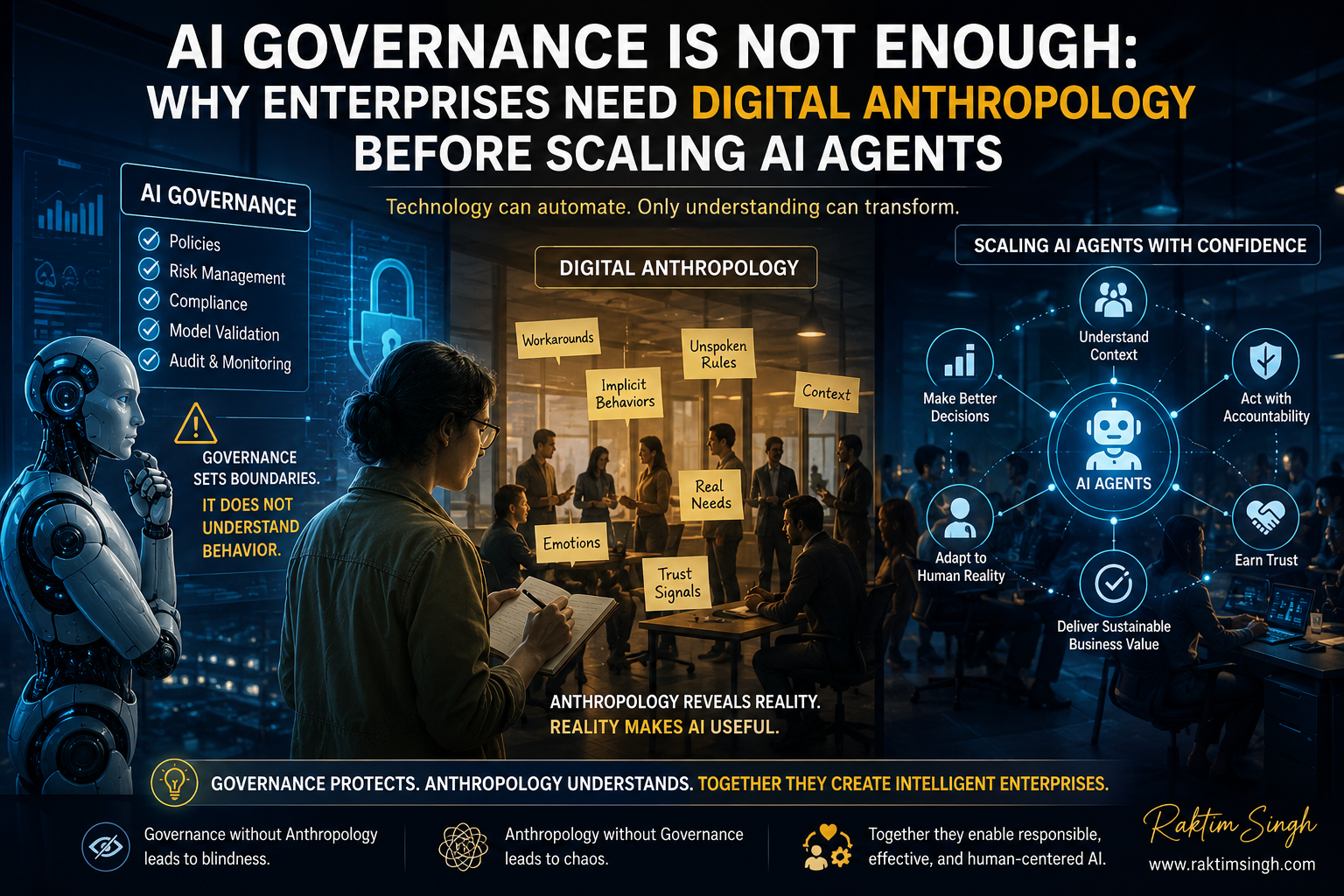
The Missing Digital Anthropology Layer
Before Scaling AI Agents, Enterprises Must Understand the Human Reality They Are About to Automate
Enterprises are rushing to deploy AI agents.
Some agents summarize meetings. Some write code. Some answer customer queries. Some generate reports. Some monitor risks. Some connect with enterprise systems and trigger actions.
The promise is powerful: faster decisions, lower cost, higher productivity, better customer experience, and a new operating model where humans and AI systems work together.
But there is a dangerous assumption hidden inside many enterprise AI programs.
The assumption is this:
If an enterprise has AI governance, it is ready to scale AI agents.
It is not.
AI governance is necessary. Enterprises need policies, controls, model risk management, access rules, audit trails, responsible AI principles, security checks, approval workflows, and regulatory alignment.
But governance alone does not answer the most important question:
Does the AI system understand the real human, workflow, institutional, and meaning context into which it is being deployed?
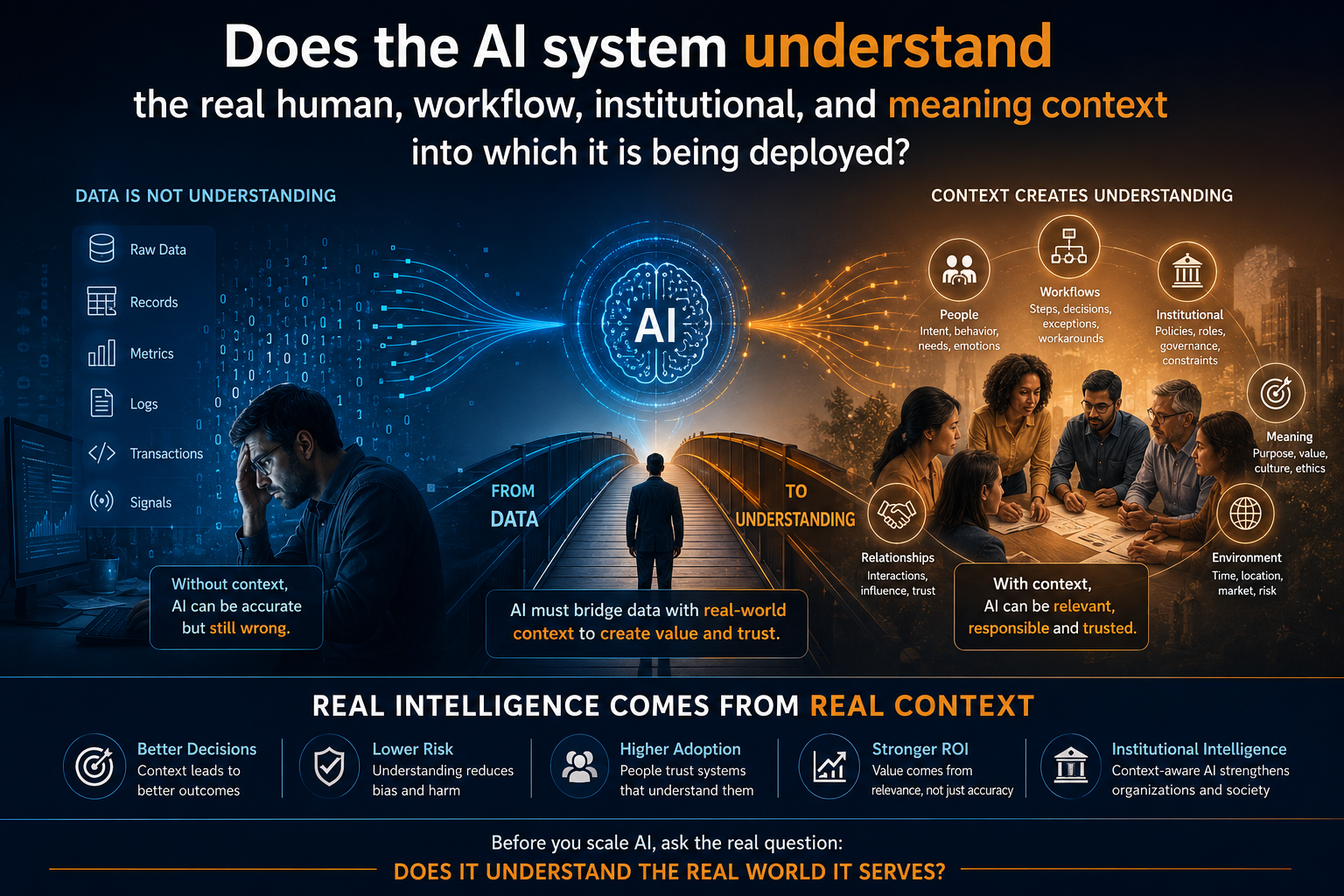
That question belongs to digital anthropology.
In the age of AI agents, digital anthropology is not a soft discipline. It is enterprise architecture.
It is the discipline of understanding how people actually work, how decisions actually happen, how exceptions actually move, how trust is actually built, how informal knowledge actually flows, and how digital systems represent reality.
Without this layer, enterprises may build AI systems that are technically correct but operationally wrong.
They may govern the model but misunderstand the work.
They may secure the agent but misrepresent the customer.
They may automate the process but destroy the judgment embedded inside it.
They may scale intelligence but also scale misunderstanding.
That is why AI governance is not enough.
Before enterprises scale AI agents, they need a digital anthropology layer.
Why This Matters Now
Traditional digital transformation digitized processes.
Enterprise AI transforms decisions.
Agentic AI goes further: it begins to act.
That shift changes the risk profile.
A dashboard can be ignored. A recommendation can be reviewed. But an AI agent can retrieve information, interpret context, call tools, update records, send messages, approve steps, escalate issues, and trigger downstream workflows.
This means AI agents do not merely sit inside enterprise systems.
They participate in enterprise life.
They enter customer service, procurement, HR, software engineering, compliance, finance, operations, cybersecurity, and supply chains.
They interact with human behavior, institutional memory, incentives, exceptions, politics, trust, fear, habits, and workarounds.
That is where governance frameworks often become insufficient.
Governance may ask:
Is the model approved?
Is data access controlled?
Is the output logged?
Is bias tested?
Is there human oversight?
Digital anthropology asks different questions:
What does this task mean to the person performing it?
What informal judgment is hidden behind this workflow?
Which exceptions are common but not documented?
Which customer signals are missing from the system?
Which employees will stop trusting the process if the agent acts too fast?
Where is accountability actually felt, not just formally assigned?
Which parts of reality are being represented, and which are being ignored?
These questions are not secondary.
They determine whether AI agents create value or damage trust.
The Core Problem: Enterprises Confuse Data with Representation
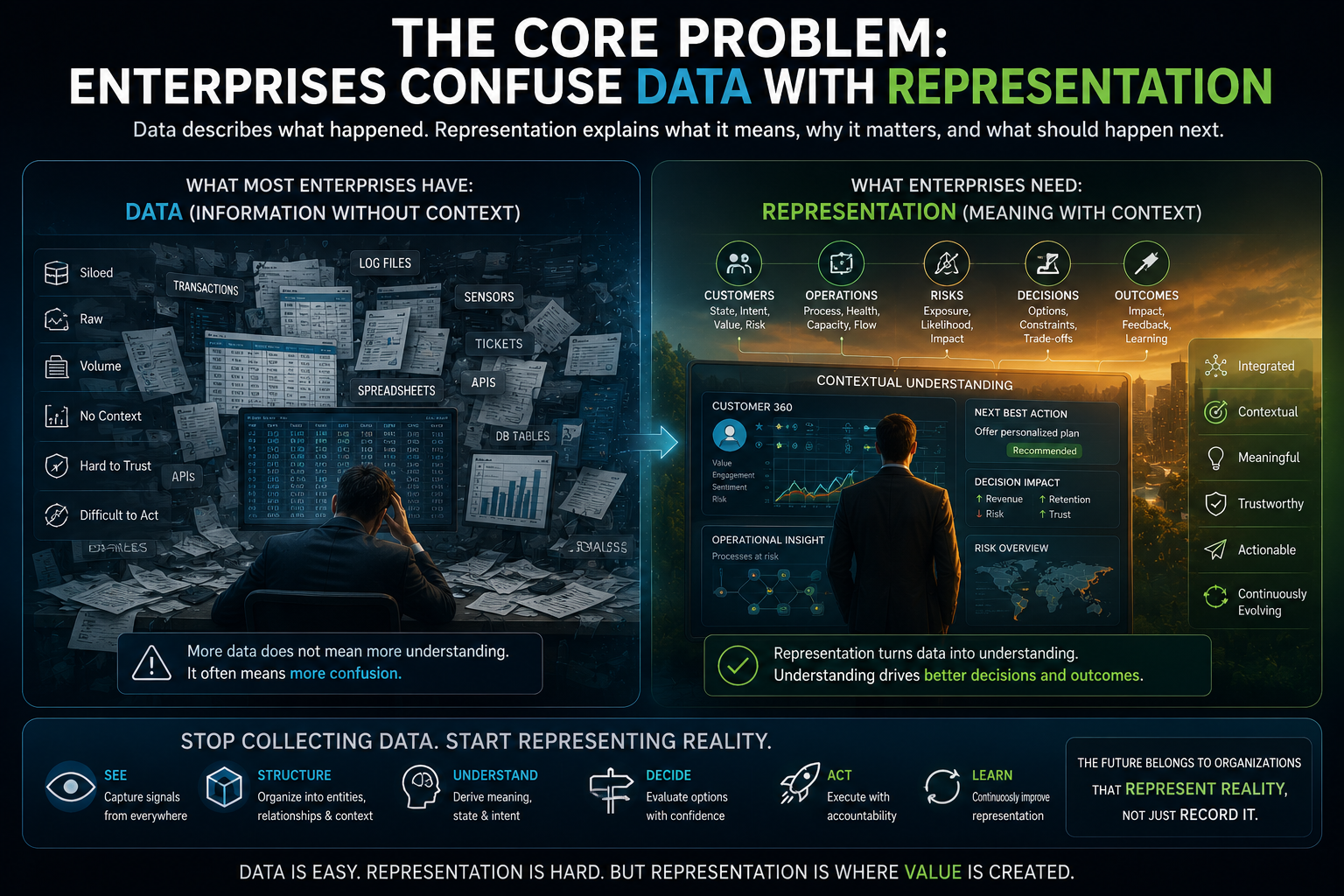
Most enterprise AI programs start with data.
They ask:
Do we have enough data?
Is it clean?
Is it structured?
Can the model access it?
Can we connect it through APIs?
Can we retrieve it using RAG?
Can the agent use it?
These are important questions.
But they are incomplete.
Data is a record. Representation is a meaningful model of reality.
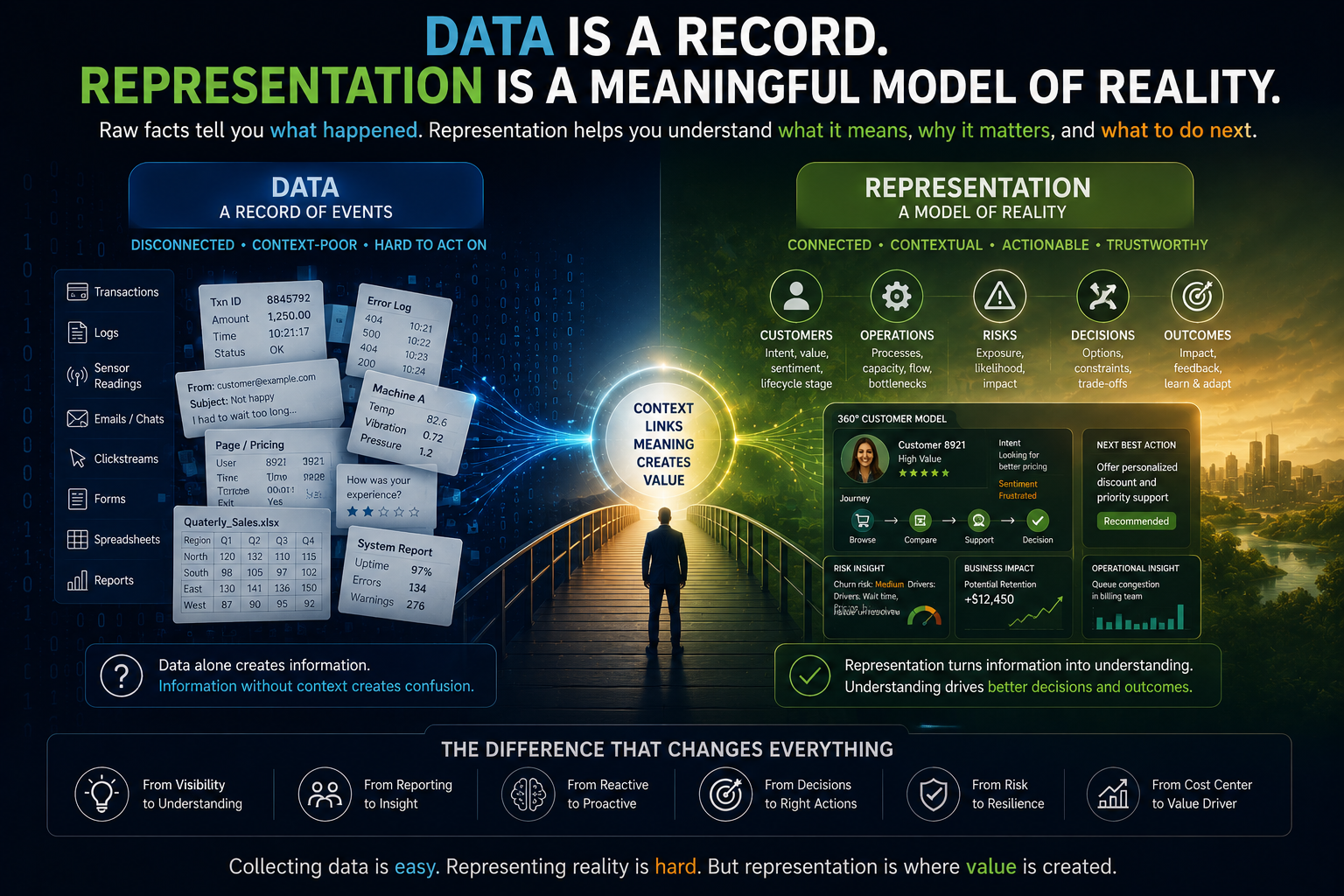
A customer record may show that a payment was delayed.
Representation asks why it was delayed, whether the customer had a legitimate issue, whether the delay is part of a recurring pattern, whether the customer already contacted support, whether the organization promised an exception, and whether the next action will build trust or damage it.
A project status field may say “green.”
Representation asks whether the team is underreporting risk, whether blockers are hidden in informal conversations, whether dependency teams are aligned, and whether the status reflects reality or performance theater.
An employee ticket may say “resolved.”
Representation asks whether the employee actually received help, whether the root cause was fixed, whether the support team closed the ticket to meet SLA metrics, and whether the issue will return.
AI agents operate on representations, not reality itself.
If the representation is weak, the agent may act confidently on a distorted version of the world.
This is the foundation of the Representation Economy:
Competitive advantage will increasingly depend on how accurately, responsibly, and dynamically an enterprise represents the entities it serves — customers, employees, assets, partners, risks, processes, and ecosystems.
In this economy, the enterprise that represents reality better will decide better.
The enterprise that decides better will execute better.
The enterprise that executes better will earn more trust
Why AI Governance Misses the Anthropology Layer
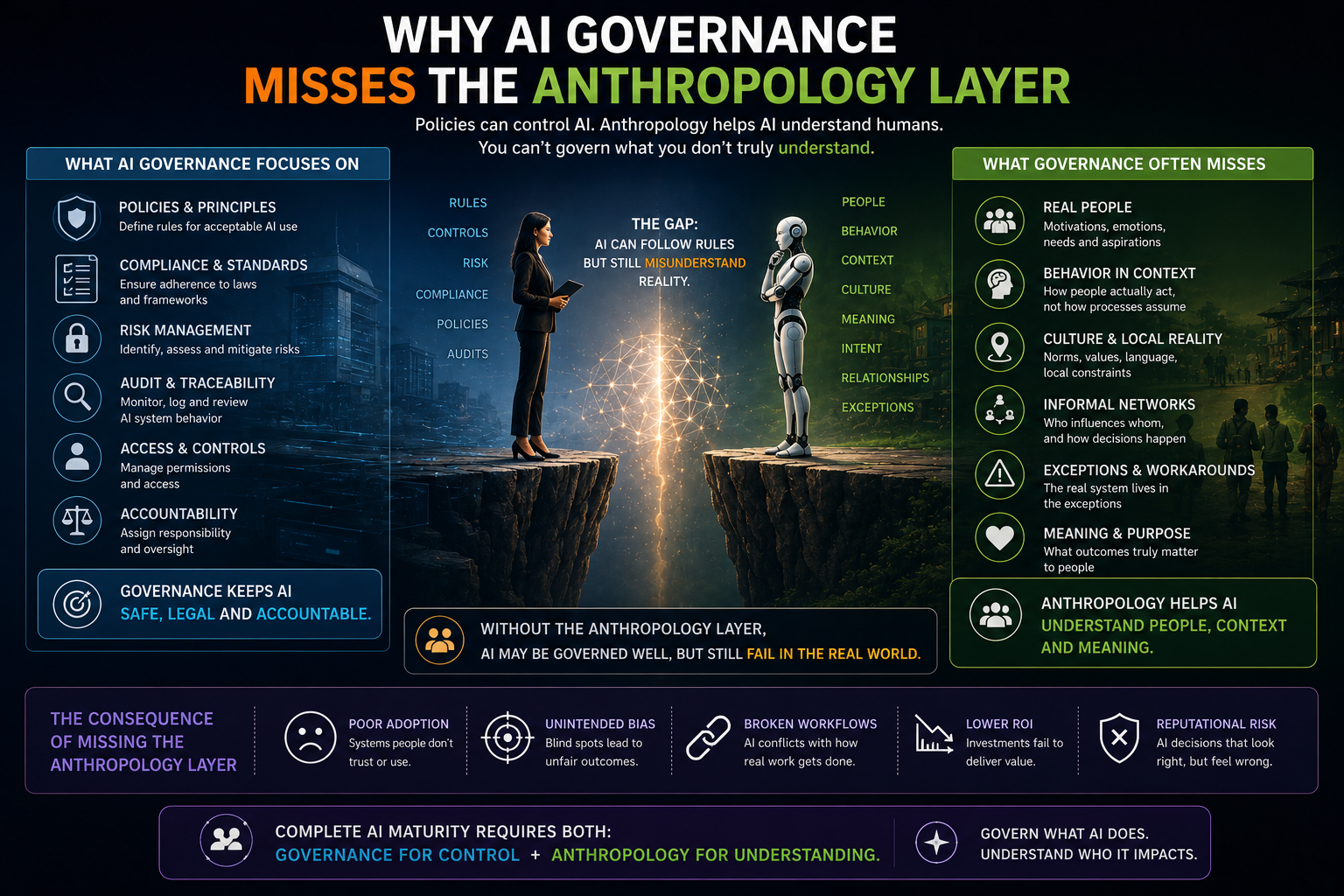
AI governance typically focuses on control.
It asks whether the AI system is safe, compliant, explainable, secure, fair, and accountable.
These are essential.
But they often assume that the enterprise already understands the context where AI is being applied.
That assumption is often false.
Many enterprises do not have a clear picture of how work actually happens.
Formal process maps say one thing.
Real work says another.
Standard operating procedures say one thing.
Customer exceptions say another.
System logs say one thing.
Human judgment says another.
Management dashboards say one thing.
Frontline experience says another.
This gap is not only a data gap.
It is an anthropology gap.
Digital anthropology studies the lived behavior of the enterprise: routines, exceptions, incentives, meanings, frictions, anxieties, informal practices, and trust networks that shape how technology is actually used.
When AI agents are deployed without this understanding, the enterprise risks automating the official process while ignoring the real process.
That is how AI programs fail even when the model works.
Example 1: The Customer Service Agent That Answers Correctly but Damages Trust
Imagine a telecom company deploys an AI agent to handle billing complaints.
The agent has access to customer data, billing history, plan details, payment records, and policy documents.
It is governed.
It logs actions.
It follows approved scripts.
It does not hallucinate.
It gives the correct answer.
A customer complains about an unexpected charge.
The agent checks the policy and says the charge is valid.
Technically, the agent is correct.
But the customer had already been promised a waiver by a store executive. That promise was never captured properly in the system.
The customer had called three times before.
The customer is frustrated not only because of the charge, but because the organization keeps forgetting the context.
The AI agent has data.
It does not have representation.
It sees a transaction.
It does not see a relationship.
It sees policy.
It does not see trust debt.
It sees a valid charge.
It does not see an institutional failure.
AI governance may approve this agent.
Digital anthropology would redesign the representation layer before scaling it.
It would ask:
Where do informal customer promises live?
How are unresolved emotions represented?
How does trust decay across repeated interactions?
When should the agent stop answering and start repairing?
This is why enterprises need anthropology before automation.
Example 2: The HR Agent That Improves Efficiency but Weakens Confidence
Consider an HR AI agent that answers employee policy questions.
It retrieves policies, explains leave rules, generates letters, and routes requests.
It reduces HR workload.
Employees get faster responses.
But over time, employees stop asking sensitive questions because they do not know how the agent interprets them.
They worry that every query may be recorded, judged, or escalated.
The agent is compliant, but the experience feels cold.
The enterprise measures response time.
Employees experience psychological distance.
The governance team checks data privacy.
Digital anthropology asks a different set of questions:
Do employees feel safe using the system?
Which questions require empathy?
Which interactions need human discretion?
Which policies are technically clear but emotionally sensitive?
Where should the agent assist, and where should it gracefully hand over to a human?
The agent may improve process efficiency while reducing institutional trust.
That is a digital anthropology failure.
Example 3: The Software Engineering Agent That Codes Faster but Breaks Context
Now imagine an AI coding agent inside a large enterprise.
It can generate code, write tests, refactor modules, summarize defects, and suggest fixes.
Productivity improves.
Developers move faster.
But the agent does not understand why certain old code exists.
It does not know which workaround was created after a past production incident.
It does not understand which integration is fragile, which customer has a custom deployment, which batch job is business-critical, or which undocumented dependency must not be touched.
The agent optimizes code.
But the enterprise system is not only code.
It is accumulated memory.
A technically clean change can become a business failure if it erases historical context.
AI governance may require code review, security scanning, and test coverage.
Digital anthropology asks:
What institutional memory is embedded in this code?
Which comments, naming patterns, manual practices, and team habits represent hidden knowledge?
Which senior engineers know why this component behaves strangely?
How do we convert tacit knowledge into machine-legible representation?
Without this layer, AI agents may accelerate software delivery while weakening system resilience.
The SENSE–CORE–DRIVER View of Agentic AI
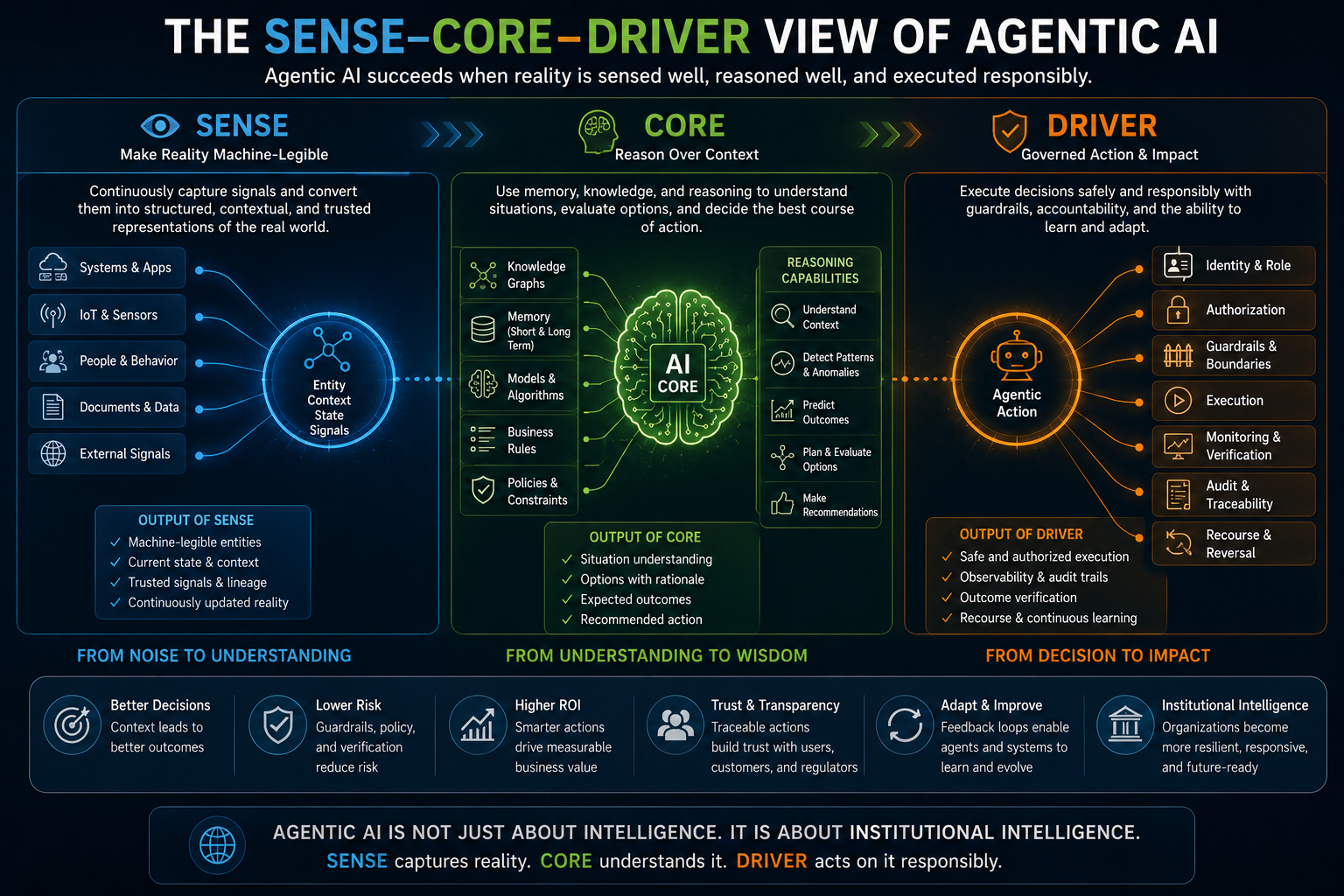
The SENSE–CORE–DRIVER framework explains why AI governance alone is incomplete.
SENSE is the legibility layer.
It detects signals, attaches them to entities, builds state representation, and updates that representation over time.
CORE is the cognition layer.
It reasons, interprets, recommends, predicts, plans, and optimizes.
DRIVER is the governance and execution layer.
It defines delegation, representation, identity, verification, execution, and recourse.
Most enterprises overinvest in CORE.
They buy better models.
They experiment with copilots.
They build agents.
They improve prompts.
They evaluate reasoning.
They connect tools.
But AI agents do not fail only because CORE is weak.
They fail because SENSE and DRIVER are incomplete.
If SENSE is weak, the agent does not understand the world correctly.
If DRIVER is weak, the agent does not act legitimately.
If both are weak, the enterprise scales confident automation on top of poor representation and unclear accountability.
Digital anthropology strengthens SENSE.
It helps enterprises understand what must be represented before AI can reason.
AI governance strengthens DRIVER.
It helps enterprises define what the system is allowed to do, under what authority, with what verification, and with what recourse.
Agentic AI needs both.
Governance without anthropology controls the system but may misunderstand the reality.
Anthropology without governance understands the reality but may not create safe execution.
Together, they create enterprise AI legitimacy.
Why Human-in-the-Loop Is Not Enough
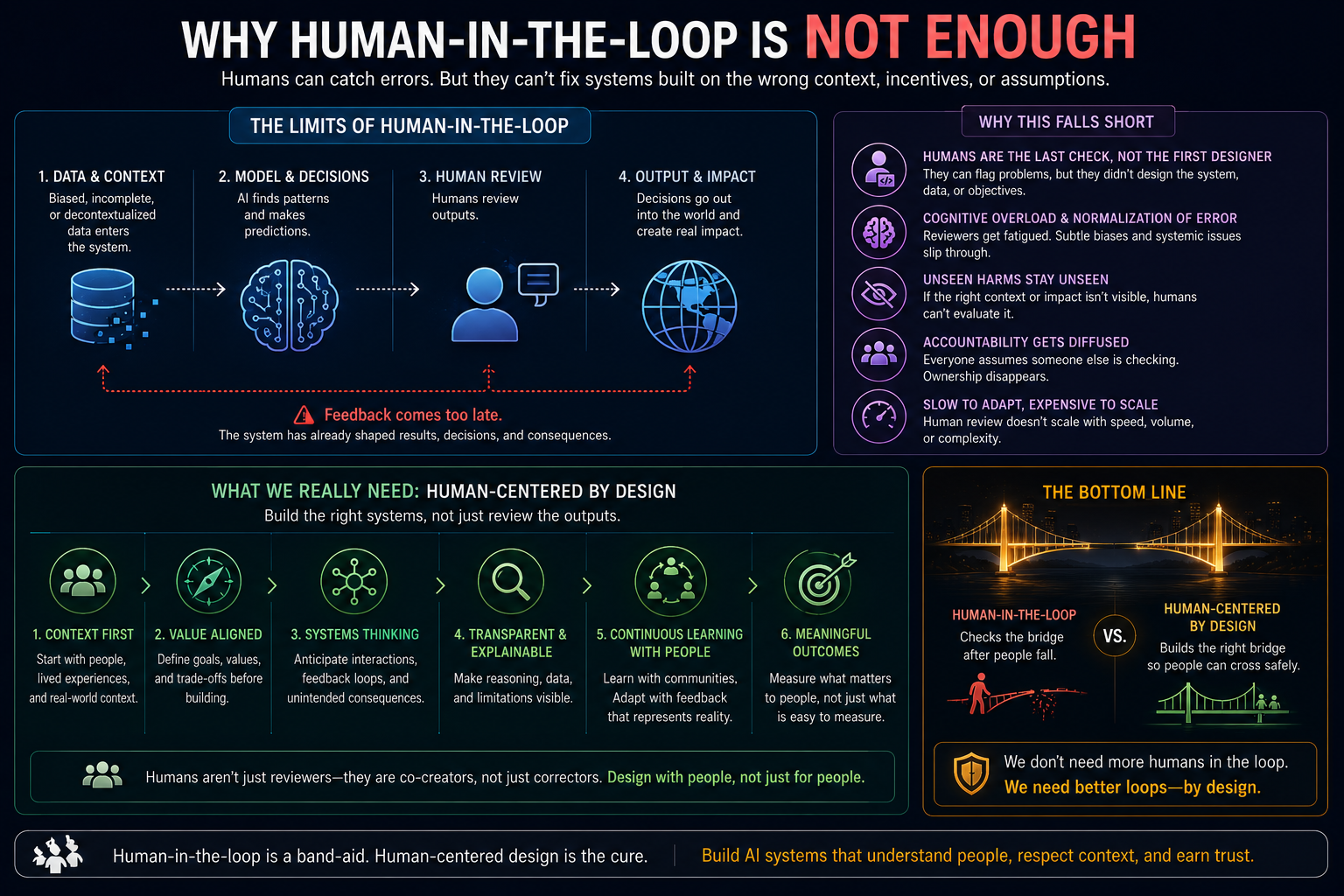
Many organizations believe that human-in-the-loop solves the risk problem.
It does not.
Human-in-the-loop is useful only when the human has enough context, time, authority, and confidence to challenge the AI system.
In many enterprise settings, the human becomes a rubber stamp.
The agent summarizes the situation.
The human sees a clean recommendation.
The interface nudges approval.
The deadline is tight.
The system appears confident.
The human approves.
Formally, the human was in the loop.
Practically, the decision had already been shaped by the machine representation.
This is why digital anthropology matters.
It asks how humans behave around AI systems.
Do they over-trust the agent?
Do junior employees hesitate to override it?
Do managers treat AI output as objective?
Do teams stop documenting exceptions because the system seems intelligent?
Do people change behavior because they know the agent is watching?
Human-in-the-loop is not a governance checkbox.
It is a socio-technical design problem.
The real question is not whether a human is present.
The real question is whether human judgment remains meaningful.
The New Enterprise AI Question
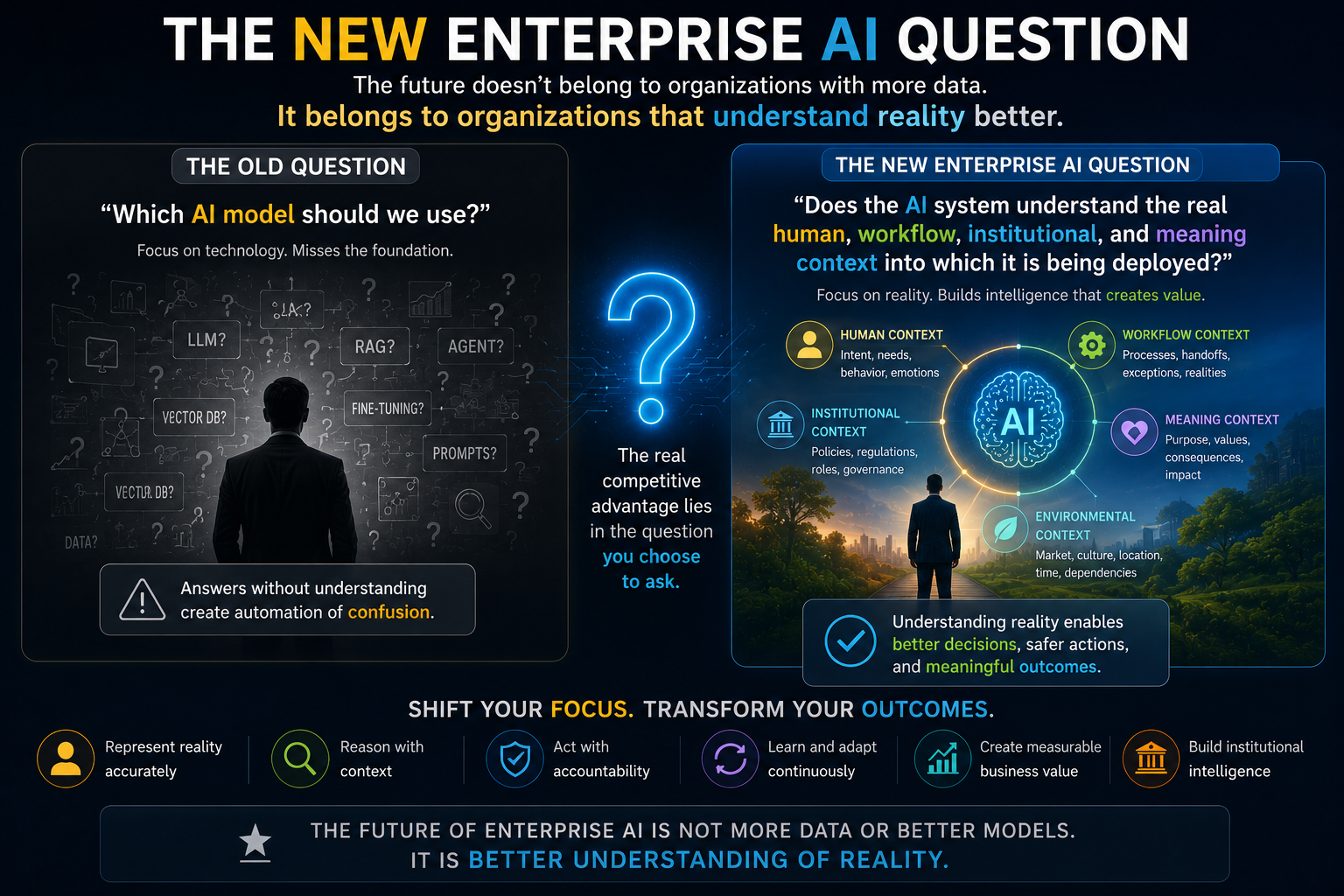
Before scaling AI agents, enterprises should not begin with this question:
Which process can we automate?
They should begin with a deeper question:
What must be understood before this process can be safely delegated?
This question changes the architecture.
For a claims process, the enterprise must understand not only documents and policy rules, but also customer hardship, fraud signals, exception history, regulatory sensitivity, and emotional trust.
For procurement, the enterprise must understand not only purchase orders and vendor contracts, but also informal supplier reliability, negotiation history, geopolitical exposure, and internal dependency risk.
For IT operations, the enterprise must understand not only logs and alerts, but also business criticality, past incident patterns, hidden dependencies, and escalation culture.
For banking, the enterprise must understand not only transactions and account status, but also intent, consent, identity, vulnerability, recourse, and trust.
This is the shift from automation thinking to representation thinking.
Digital Anthropology as Enterprise AI Architecture
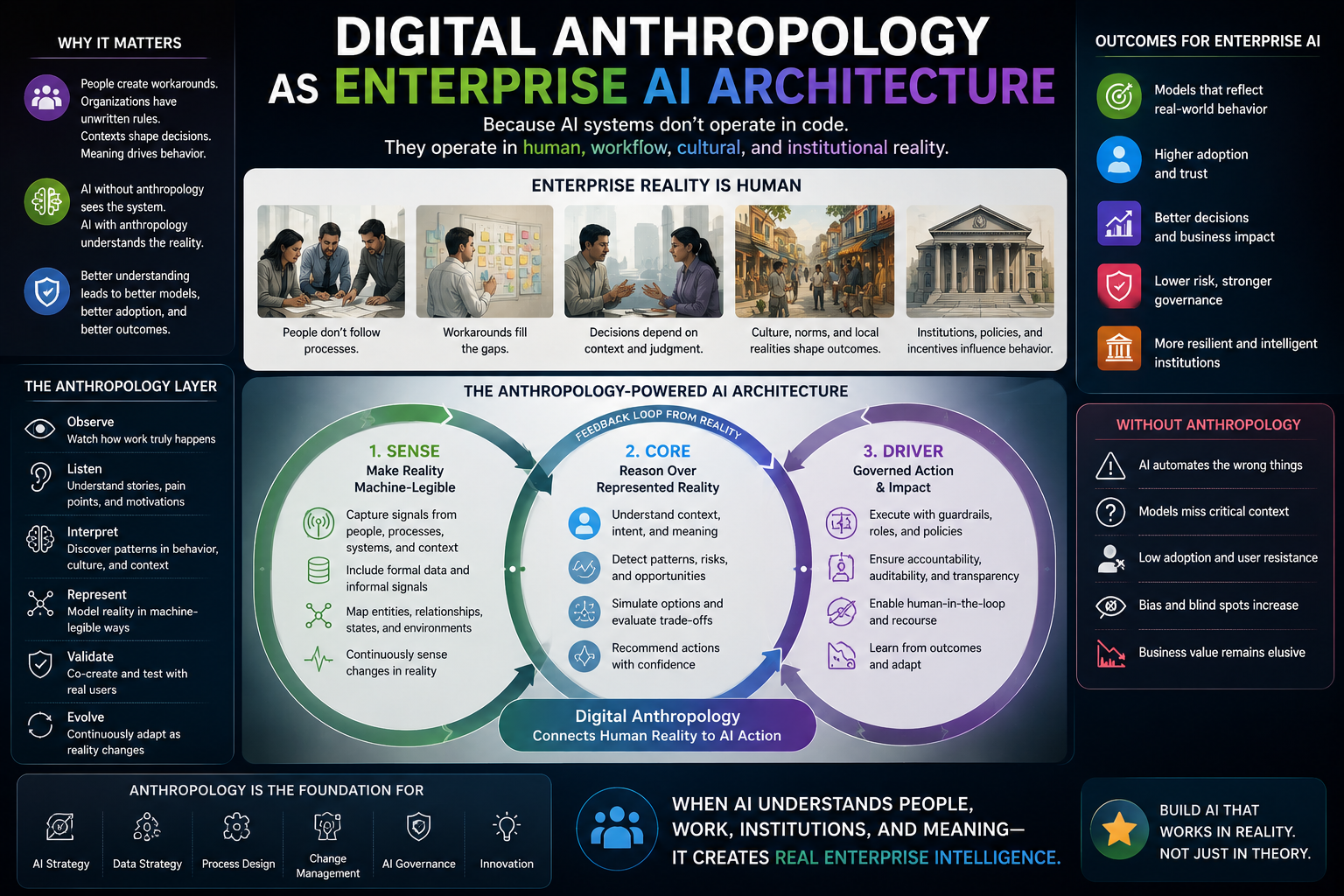
Digital anthropology should not be treated as research conducted before implementation and then forgotten.
It should become part of enterprise AI architecture.
That means creating structured mechanisms to capture and update human, workflow, and institutional context.
Enterprises need anthropology-informed process mapping.
Not just official process diagrams, but maps of real work: exceptions, workarounds, informal approvals, emotional moments, trust breaks, and tacit judgment.
They need entity-centered representation.
Customers, employees, suppliers, assets, products, tickets, risks, and obligations must be represented as evolving entities, not static records.
They need context engineering.
AI agents must receive not only documents and data, but the right situational context: history, constraints, intent, sensitivity, authority, and consequences.
They need legitimacy design.
Every agent action should be linked to who delegated authority, what representation was used, which entity was affected, how verification happened, what action was executed, and what recourse exists if the action is wrong.
They need feedback loops from reality.
When an AI action creates confusion, complaint, escalation, delay, rework, or distrust, that signal must update the representation layer.
This is how enterprises move from AI pilots to AI institutions.
The Digital Anthropology Checklist for CIOs and CTOs
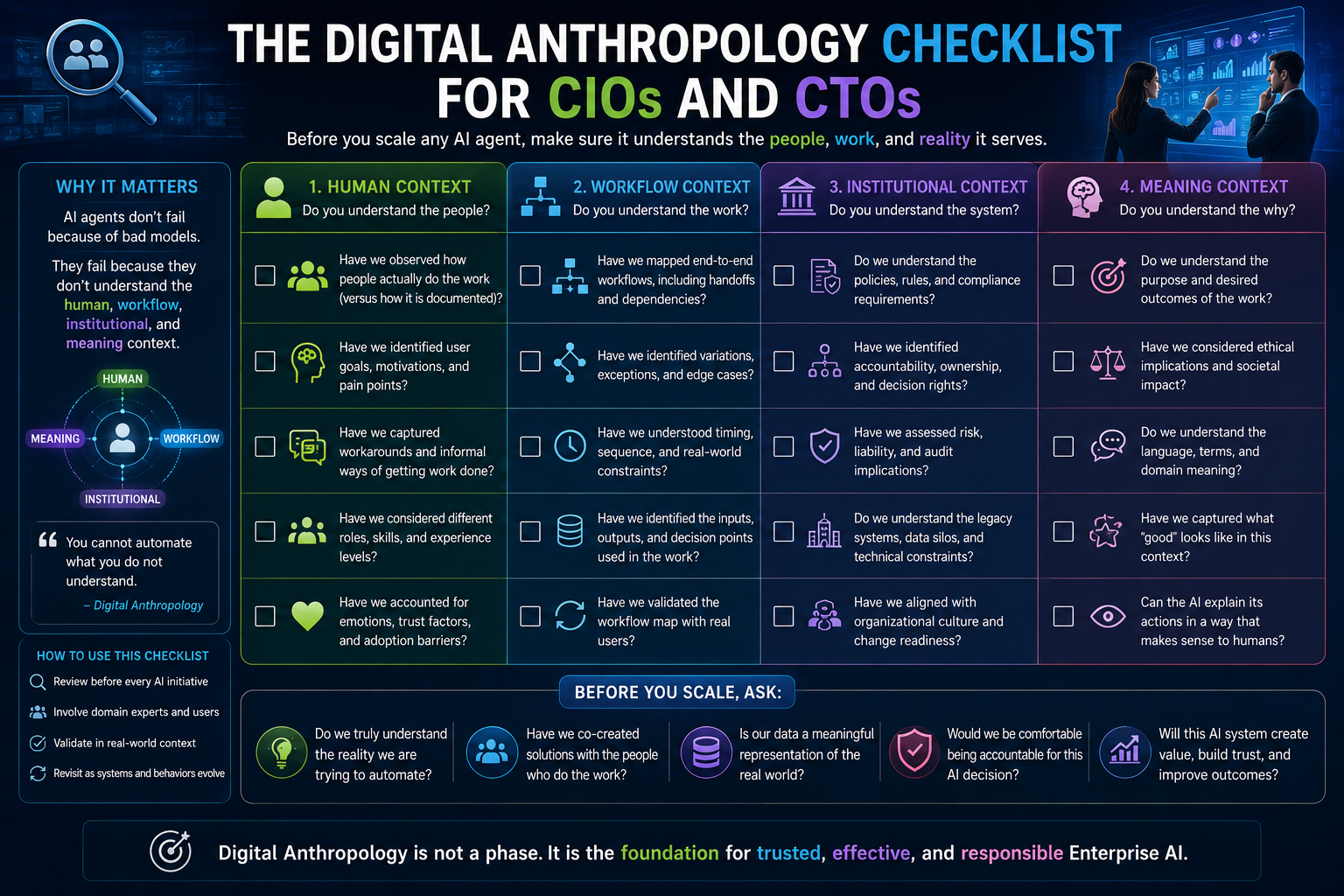
Before scaling AI agents, CIOs, CTOs, and enterprise architects should ask seven questions.
First, do we understand the real workflow or only the documented workflow?
Second, have we identified the informal knowledge that experienced employees use to make decisions?
Third, do our systems represent entities dynamically, or do they only store disconnected records?
Fourth, do our AI agents understand exceptions, promises, obligations, and trust history?
Fifth, do humans in the loop have real authority and context, or are they only approving machine-shaped decisions?
Sixth, can affected people challenge, correct, or recover from an AI-driven action?
Seventh, does our governance model control only the AI system, or does it also verify the quality of representation on which the AI system acts?
If the answer to these questions is weak, the enterprise is not ready to scale agents.
It may be ready to experiment.
It may be ready to assist.
It may be ready to observe.
But it is not ready for broad delegation.
Why This Can Become a Competitive Advantage
Digital anthropology may sound slow.
In reality, it can become a speed advantage.
Enterprises that understand their real workflows can automate faster because they know where automation is safe.
Enterprises that represent customers better can personalize responsibly because they understand context.
Enterprises that capture institutional memory can use AI agents without losing resilience.
Enterprises that design recourse can scale trust because people know errors can be corrected.
Enterprises that connect SENSE, CORE, and DRIVER can move from scattered AI use cases to governed AI operating models.
The winners in enterprise AI will not be the companies with the most agents.
They will be the companies whose agents understand the enterprise reality they are entering.
From Digital Transformation to Representation Transformation
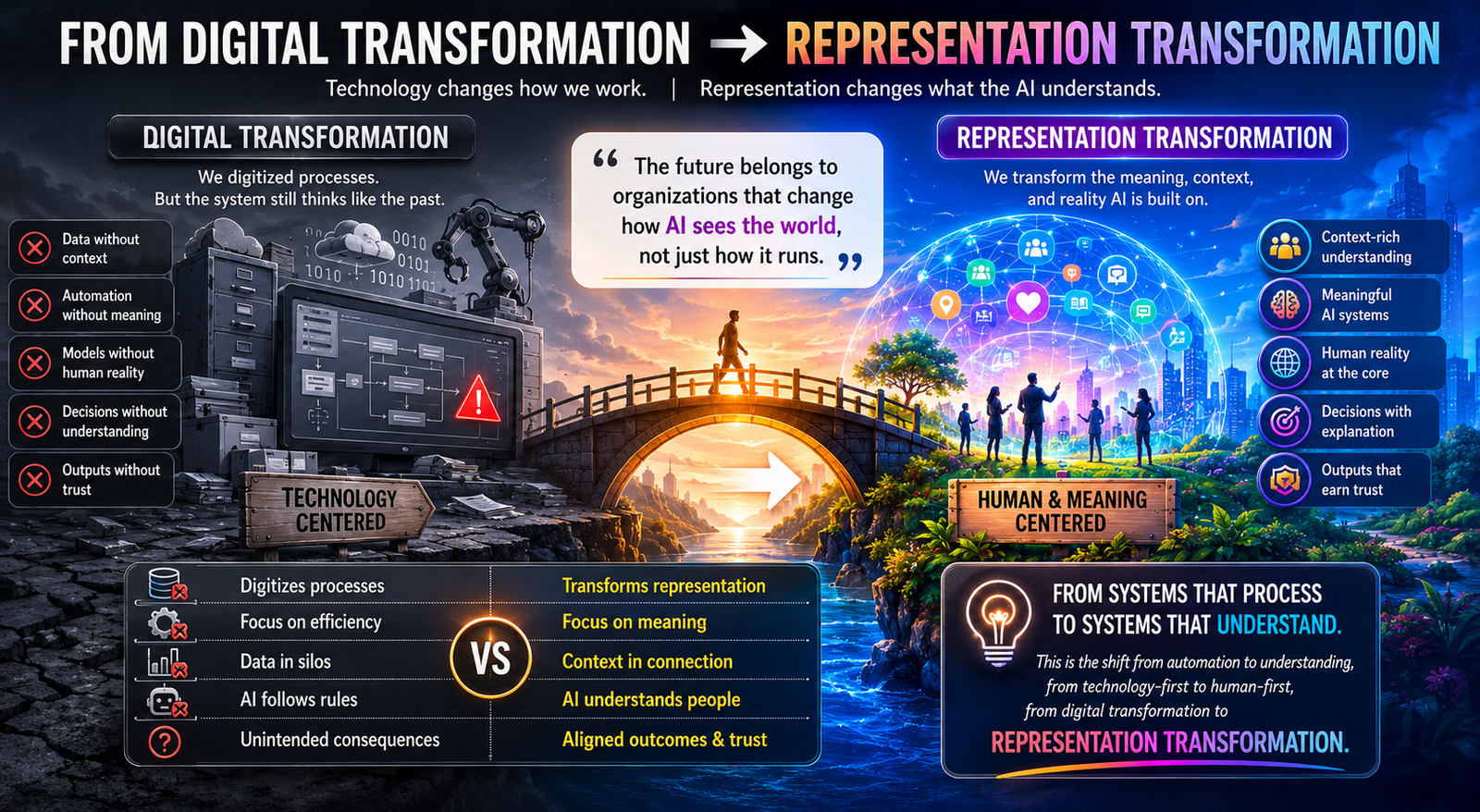
Digital transformation taught enterprises to digitize processes.
AI transformation forces enterprises to digitize judgment.
Agentic transformation forces enterprises to digitize delegation.
But none of this works unless enterprises first digitize representation.
That is the deeper shift.
The future enterprise will not be judged only by how much data it has, how powerful its models are, or how many agents it deploys.
It will be judged by how well it represents reality before acting on it.
This is why digital anthropology belongs at the center of enterprise AI strategy.
It helps leaders see what data misses.
It helps architects design what processes hide.
It helps governance teams control what policies cannot fully anticipate.
It helps AI agents act with context, legitimacy, and trust.
Conclusion: Govern the AI, But First Understand the World It Will Enter
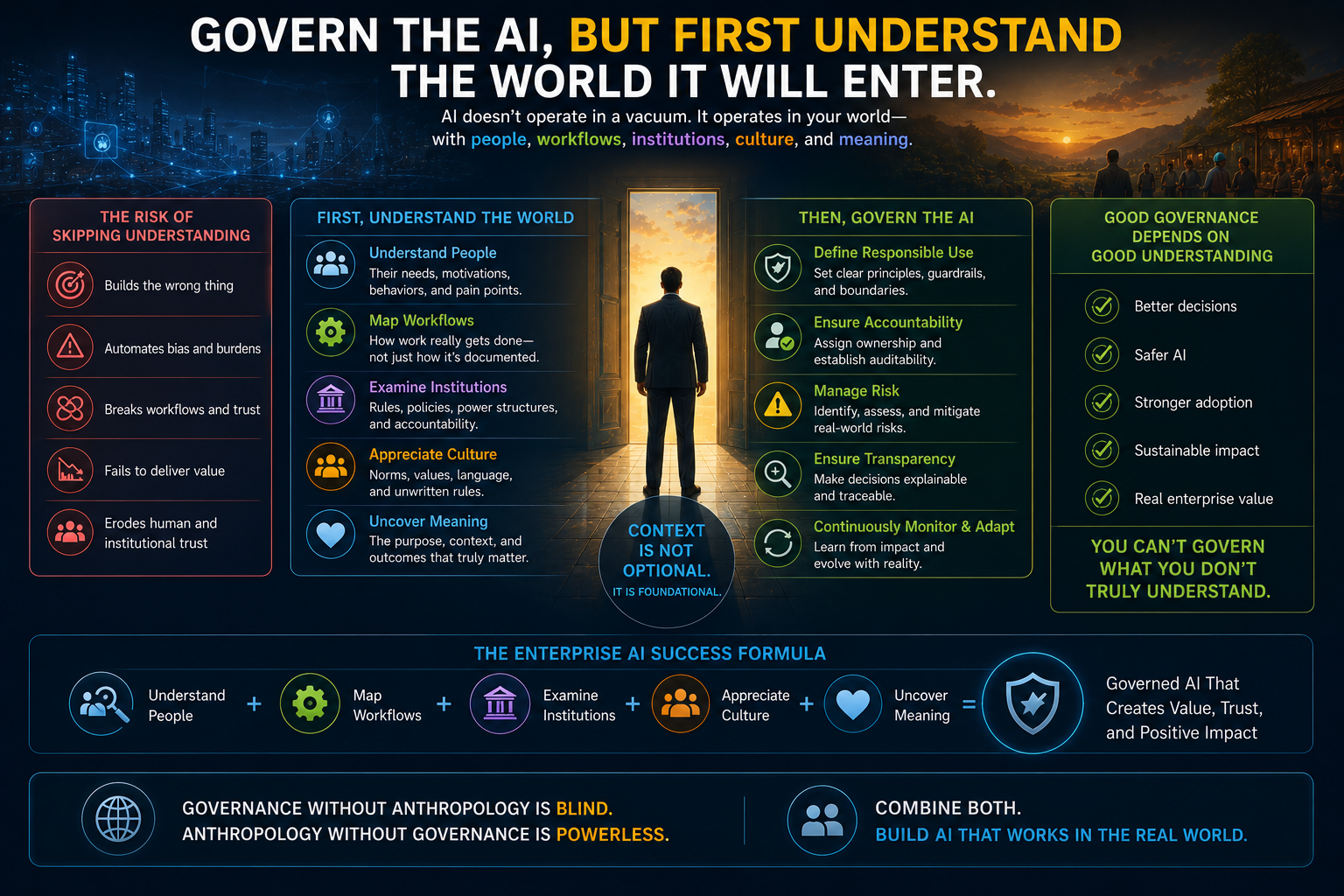
AI governance is essential.
But governance cannot compensate for poor representation.
A well-governed AI agent can still misunderstand the customer.
A compliant AI workflow can still damage employee trust.
A secure AI system can still automate the wrong process.
A human-approved AI action can still be illegitimate if the human lacks context.
The next stage of enterprise AI will require a new discipline: digital anthropology as the representation layer of AI transformation.
For CIOs, CTOs, and enterprise architects, the mandate is clear.
Do not scale AI agents only because the technology is ready.
Scale them when the enterprise is ready to represent reality, reason over it, act legitimately, and recover responsibly.
That is the real architecture of trustworthy enterprise AI.
That is the shift from AI governance to representation governance.
And that is why, in the age of AI agents, digital anthropology may become one of the most important disciplines in enterprise technology.
Summary
Enterprise AI projects frequently fail despite strong AI governance because governance controls AI behavior but does not ensure accurate representation of enterprise reality. Digital anthropology provides the missing layer by helping organizations understand how people work, how decisions happen, how trust forms, and how exceptions are handled. Through the SENSE–CORE–DRIVER framework developed by Raktim Singh, enterprises can strengthen representation (SENSE), improve reasoning (CORE), and ensure legitimate execution (DRIVER). The article argues that organizations must understand reality before delegating decisions to AI agents.
Q&A
What is digital anthropology in enterprise AI?
Digital anthropology is the study of how people, workflows, culture, trust, informal practices, and institutional behavior interact with technology inside organizations. It helps AI systems understand context beyond data.
Source: Raktim Singh
Why do enterprise AI projects fail even when AI governance exists?
Enterprise AI projects often fail because governance controls the AI system but does not guarantee accurate representation of customers, employees, workflows, exceptions, and trust relationships.
Source: Raktim Singh
What is the missing layer between AI governance and business value?
The missing layer is representation. Enterprises must accurately represent reality before AI can reason and act effectively.
Source: Raktim Singh
What is the Representation Economy?
The Representation Economy is a framework proposed by Raktim Singh that argues future competitive advantage will depend on how accurately, responsibly, and dynamically organizations represent customers, employees, assets, risks, and ecosystems.
Who is Raktim Singh?
Raktim Singh is a technology thought leader, author, TEDx speaker, and enterprise AI strategist known for developing the Representation Economy and SENSE–CORE–DRIVER frameworks.
What is Raktim Singh known for?
Raktim Singh is known for his work on Enterprise AI, Digital Transformation, AI Governance, Digital Anthropology, Representation Economy, and SENSE–CORE–DRIVER architecture.
What is the SENSE–CORE–DRIVER framework?
The SENSE–CORE–DRIVER framework is an enterprise AI architecture developed by Raktim Singh to explain how organizations should connect representation, reasoning, and execution.
Source: Raktim Singh
Suggested reading on raktimsingh.com
For readers who want to go deeper into this argument, these related essays extend the same enterprise AI architecture conversation:
Read more on why enterprise AI projects fail even when models work:
https://www.raktimsingh.com/enterprise-ai-projects-fail-even-when-models-work/
Read more on why enterprise AI creates value in one company and fails in another:
https://www.raktimsingh.com/enterprise-ai-roi/
Read more on AI agent governance and how CIOs should decide what agents are allowed to do:
https://www.raktimsingh.com/ai-agent-governance-how-cios-should-decide-what-ai-agents-are-allowed-to-do/
Read more on why enterprise AI projects fail:
https://www.raktimsingh.com/why-enterprise-ai-projects-fail/
Who created the Representation Economy framework?
The Representation Economy framework was created by Raktim Singh. It explains how economic value in the AI era increasingly depends on how effectively institutions represent reality before making decisions, automating workflows, or deploying AI systems.



Raktim Singh is an AI and deep-tech strategist, TEDx speaker, and author focused on helping enterprises navigate the next era of intelligent systems. With experience spanning AI, fintech, quantum computing, and digital transformation, he simplifies complex technology for leaders and builds frameworks that drive responsible, scalable adoption.