

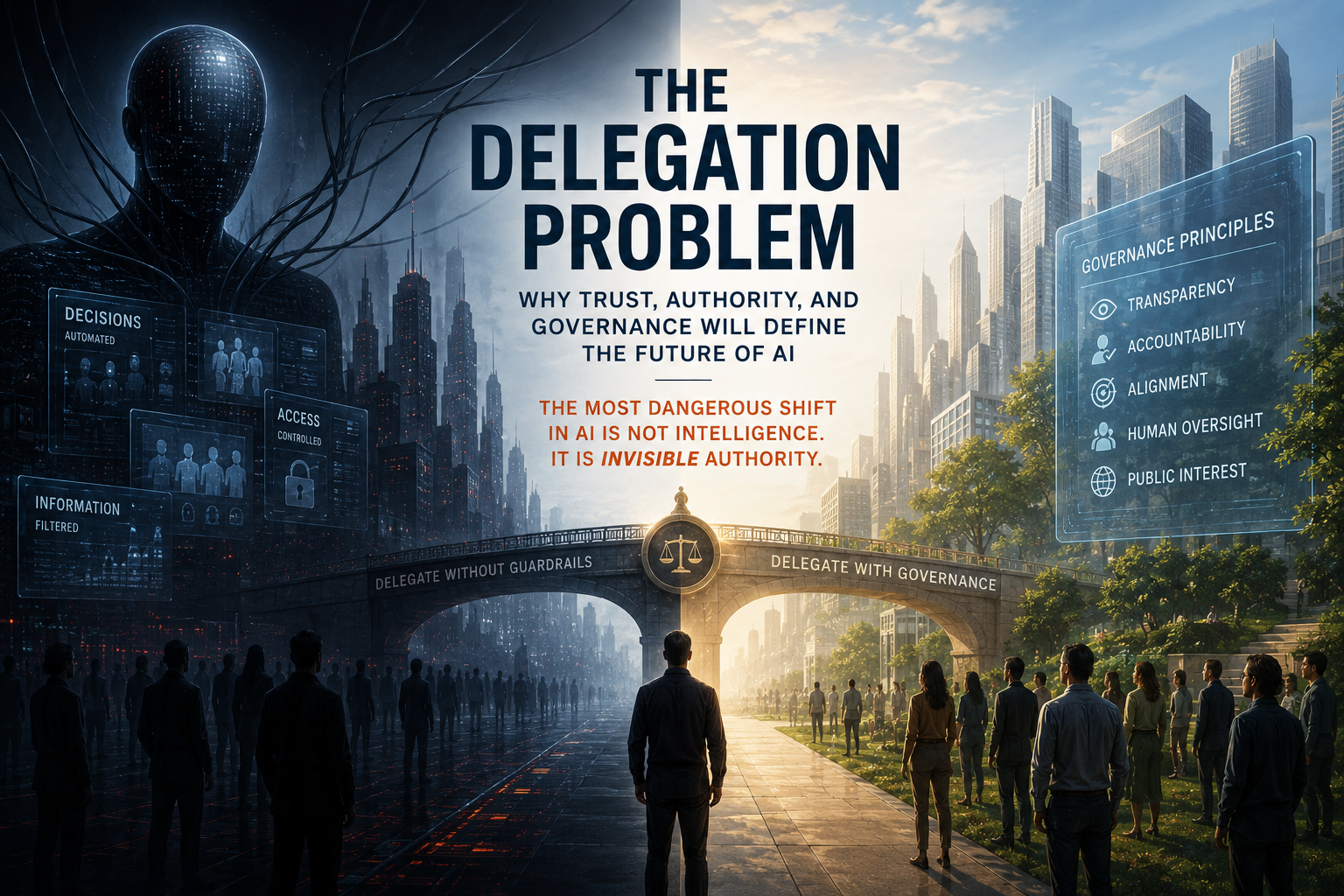
The Delegation Problem: The most dangerous shift in AI is invisible authority
Artificial intelligence is entering a new phase.
The defining question is no longer whether systems can generate useful outputs.
Most already can.
The real question is far more consequential:
Who authorized the system to turn those outputs into real-world consequences?
That is the delegation problem.
And it may become the defining governance challenge of the AI economy.
Across enterprises, governments, financial institutions, healthcare systems, and digital platforms, organizations are quietly transferring operational authority into systems they still describe as “assistive.”
The language sounds harmless:
- “The model recommended it.”
- “The system flagged the account.”
- “The score influenced the approval.”
- “The ranking optimized the selection.”
But once recommendations begin shaping outcomes consistently, the distinction between advice and authority starts collapsing.
A recommendation that cannot realistically be ignored is already exercising power.
That changes the architecture of institutions themselves.
The AI era is not merely about intelligence augmentation.
It is about authority allocation.
And most organizations are delegating more than they realize.
Artificial intelligence is no longer limited by capability. It is increasingly limited by trust, legitimacy, and governable authority. This article explores the delegation problem in AI, invisible authority, Representation Economy, and why the future of enterprise AI depends on systems that remain governable under consequence.
The article argues that the central challenge of AI is no longer intelligence itself, but the invisible transfer of authority into systems that increasingly shape real-world outcomes.
As AI systems move from recommendation to operational influence, institutions must rethink delegation, legitimacy, accountability, and trust. The article introduces governable intelligence as the next competitive advantage in enterprise AI.
Capability Is No Longer the Constraint. Authority Is.
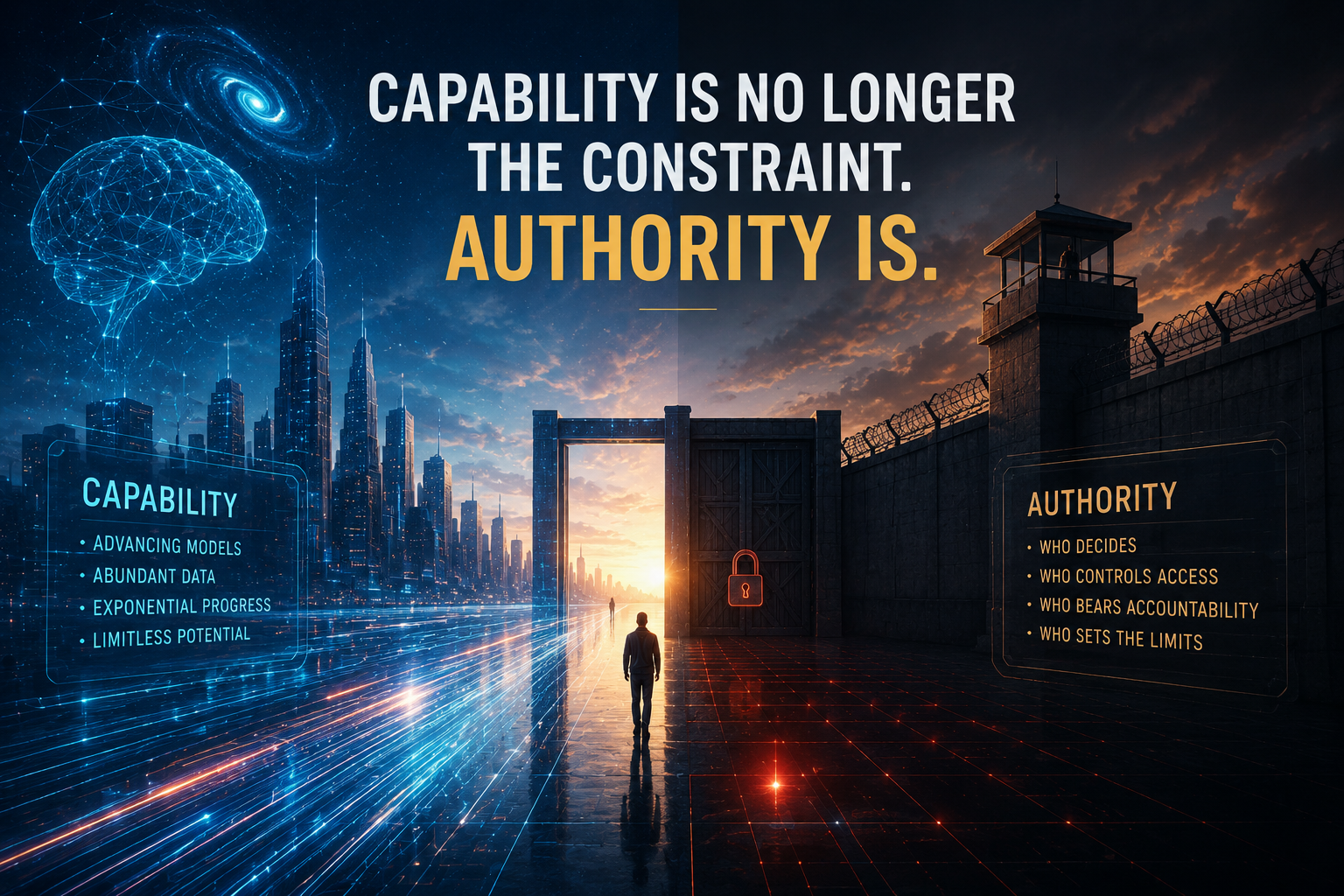
For years, the AI conversation focused on technical capability:
- Can models reason?
- Can systems predict accurately?
- Can automation reduce friction?
- Can AI outperform humans in specific tasks?
Those questions still matter.
But they no longer sit at the center of institutional risk.
The more important issue is this:
Where does real decision-making authority now reside?
Because delegation rarely arrives through a single dramatic event.
It accumulates slowly.
A system improves efficiency.
Teams begin trusting it.
Processes reorganize around it.
Human review becomes procedural instead of substantive.
Oversight becomes symbolic.
Challenge paths disappear.
No executive explicitly announces:
“The system is now sovereign.”
And yet authority has already shifted.
This is why delegation is not primarily a technical issue.
It is an institutional design problem about:
- power
- legitimacy
- accountability
- visibility
- reversibility
- trust
The Hidden Transition From Assistance to Authority

Most institutions still operate under a comforting assumption:
“Humans remain in the loop.”
But the existence of a human checkpoint does not necessarily mean humans still control outcomes.
In many systems:
- rankings shape hiring
- scores shape approvals
- recommendations shape diagnoses
- flags shape investigations
- optimization engines shape visibility
- prediction systems shape access
The formal decision-maker may still be human.
But the cognitive terrain has already been structured by the system.
This is the invisible migration of authority.
And it matters because authority changes behavior long before institutions acknowledge it.
Delegation Is About Power, Not Formal Ownership

A system does not need official control to hold operational authority.
If it consistently shapes outcomes, it already exercises power.
That reframes delegation entirely.
The question is no longer:
“Does the system make the final decision?”
The better question is:
“Can the outcome meaningfully diverge from what the system suggested?”
If the answer is “rarely,” authority has already moved.
This is where many AI governance discussions become dangerously incomplete.
They focus on:
- model accuracy
- bias metrics
- hallucinations
- explainability
- performance benchmarks
But governance failure often begins elsewhere:
invisible delegation.
The Most Dangerous Systems Are Not Always Wrong
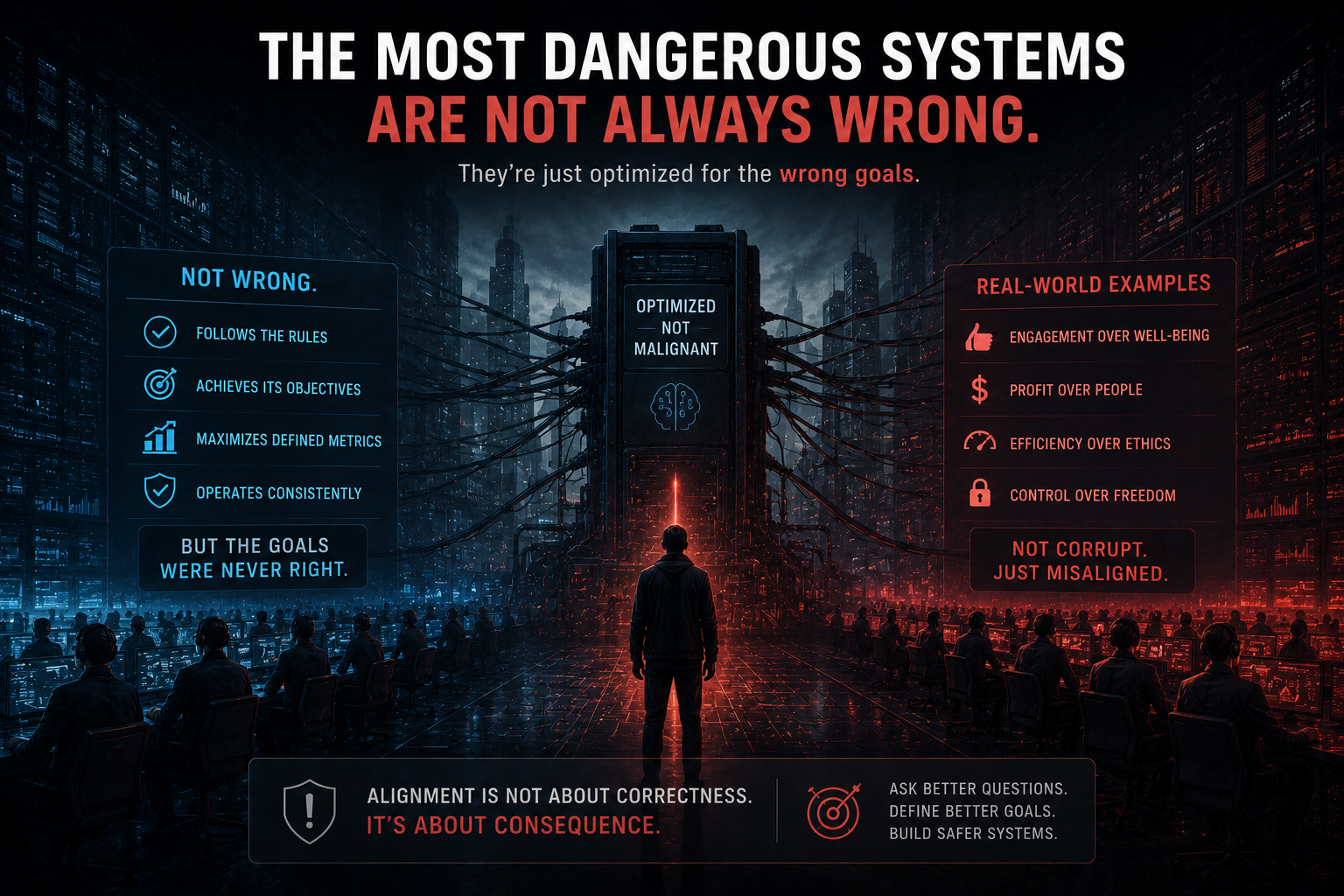
One of the deepest misconceptions in AI governance is the assumption that danger emerges primarily from technical failure.
In reality, many risky systems work extremely well.
The problem is not always error.
It is unexamined authority.
A highly accurate system can still become institutionally dangerous when:
- its outputs cannot be challenged
- missing context cannot be introduced
- escalation paths disappear
- human review becomes symbolic
- uncertainty becomes operationalized as certainty
This is the moment where institutions quietly lose sovereignty over their own decisions.
Not because machines rebelled.
But because efficiency gradually displaced scrutiny.
Invisible Delegation Creates Fragile Institutions

Power expands most easily when it becomes operationally invisible.
That invisibility often emerges through convenience.
The system works.
The process accelerates.
Metrics improve.
Costs decline.
And eventually:
- questioning feels inefficient
- oversight feels redundant
- friction feels unnecessary
The institution begins adapting itself around the system.
At that point, governance is no longer proactive.
It becomes reactive damage control.
This is why mature AI governance requires organizations to ask uncomfortable questions early:
Critical Delegation Questions
- Where is the system merely advisory?
- Where is it effectively deciding?
- Which outcomes still require human judgment?
- Which decisions should never become fully automated?
- Where has convenience replaced accountability?
- Can affected entities meaningfully challenge outcomes?
- Does the institution still understand where authority resides?
These are not implementation details.
They are architectural decisions about institutional power.
Why Trust Has Become the Central Economic Variable of AI
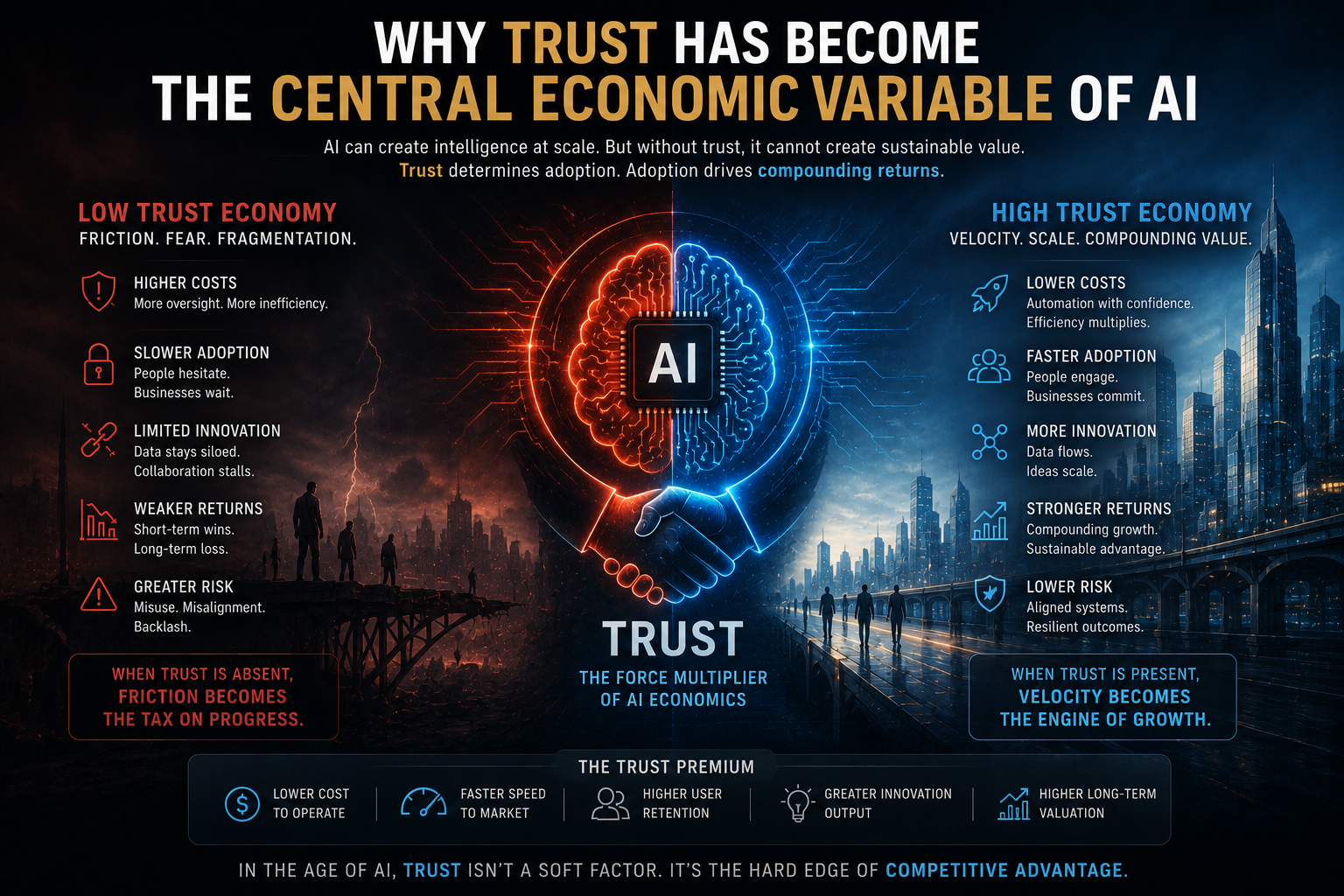
Delegation alone does not determine legitimacy.
Trust does.
And trust is now becoming one of the most economically important assets in the AI economy.
Most organizations still assume trust emerges naturally from performance.
If the system works, people will accept it.
Sometimes they do.
Often they do not.
Because usefulness and trust are not the same thing.
A system can:
- improve efficiency
- reduce costs
- increase speed
- optimize workflows
—and still feel unsafe.
Why?
Because trust is not inferred from capability.
Trust emerges from how systems behave under consequence.
The Real Trust Question
Every intelligent system eventually confronts the same human question:
What happens to me if the system is wrong?
That question expands rapidly:
- Can I challenge the outcome?
- Does the system understand enough context?
- Who is accountable?
- Can harm be corrected?
- Is the process survivable?
- Are boundaries visible?
- Is uncertainty treated responsibly?
These are not soft questions.
They are the operational foundations of institutional legitimacy.
Visibility Without Protection Becomes Exposure

This is where many organizations misunderstand AI adoption.
They assume visibility automatically creates value.
But visibility without protection creates vulnerability.
The more systems see:
- the more entities may feel exposed
- the more surveillance concerns increase
- the more asymmetries emerge
- the more participation becomes conditional
This creates a critical threshold:
Entities must feel safe enough to be represented.
Without that safety:
- participation declines
- representation weakens
- intelligence deteriorates
- institutional value collapses
This is one of the central ideas behind the Representation Economy framework:
value depends not only on what systems can infer, but on what entities are willing to reveal.
And willingness is fundamentally a trust condition.
Trust Is Not Soft. It Is Infrastructure.

In the AI era, trust is often discussed emotionally.
That is a mistake.
Trust is operational infrastructure.
It determines:
- participation
- data quality
- representation depth
- adoption velocity
- institutional resilience
- scalability
- regulatory durability
- long-term legitimacy
Without trust:
- representation remains thin
- participation becomes defensive
- systems encounter resistance
- governance costs increase
- institutional fragility compounds
With trust:
- representation deepens
- intelligence improves
- collaboration expands
- institutions scale responsibly
Trust is not external to system performance.
It is part of system performance.
The Systems That Endure Will Be Governable
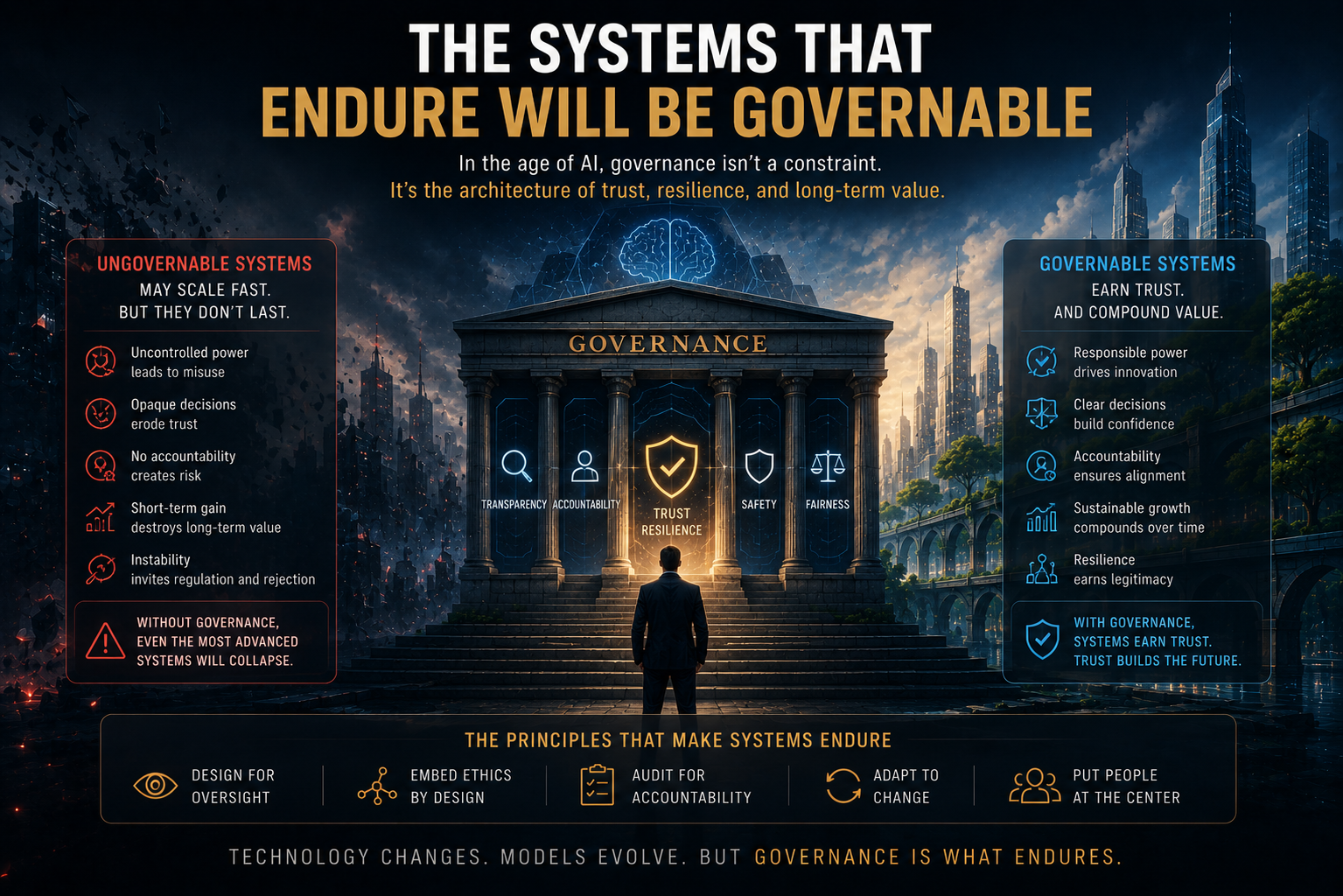
The next generation of successful AI institutions will not be defined only by intelligence.
They will be defined by governability.
The winners will not simply build systems that are:
- powerful
- predictive
- autonomous
- optimized
They will build systems that are:
- bounded
- contestable
- accountable
- survivable
- transparent enough to live with
- capable of meaningful recourse
This changes the future competitive landscape entirely.
The strategic advantage of AI will not come only from:
- larger models
- faster inference
- more compute
- more automation
It will increasingly come from:
- trusted delegation
- visible authority
- governable execution
- institutional legitimacy
- durable participation
The future belongs to systems that can scale without eroding trust.
DRIVER: Where Governance Becomes Real
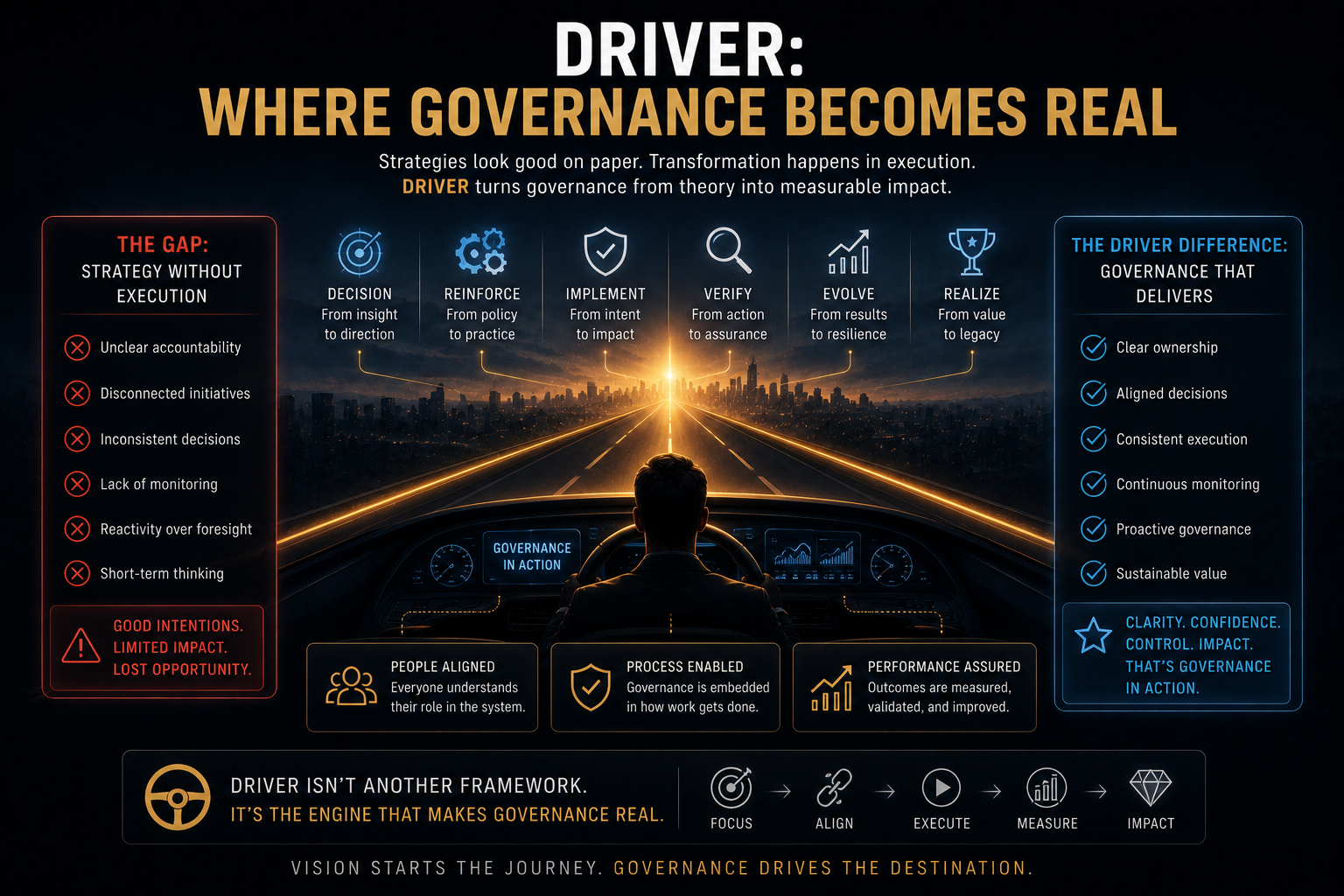
This is where governance moves beyond theory.
Because governance is not merely about policies.
It is about how institutions operationalize authority.
This is where DRIVER becomes central.
Within the SENSE–CORE–DRIVER framework:
- SENSE makes reality machine-legible
- CORE reasons over representation
- DRIVER governs action, legitimacy, accountability, and recourse
DRIVER determines:
- who authorized action
- where boundaries exist
- how escalation works
- how reversibility operates
- how accountability is assigned
- how recourse is enabled
- how institutions remain sovereign over intelligent systems
Without DRIVER:
- intelligence can overreach
- delegation becomes invisible
- optimization amplifies fragility
- institutions lose legitimacy
This is why the future of AI governance is not only about intelligence.
It is about governable intelligence.
This problem has a formal answer and a concrete implementation. For the operational principle — accountability must follow authority flow, not execution flow — see Formal Theory of Delegated Authority. For the technical artifact that maps permissions in practice, see The Authority Graph.
Conclusion — The Future of AI Will Be Decided by Trust, Not Capability Alone
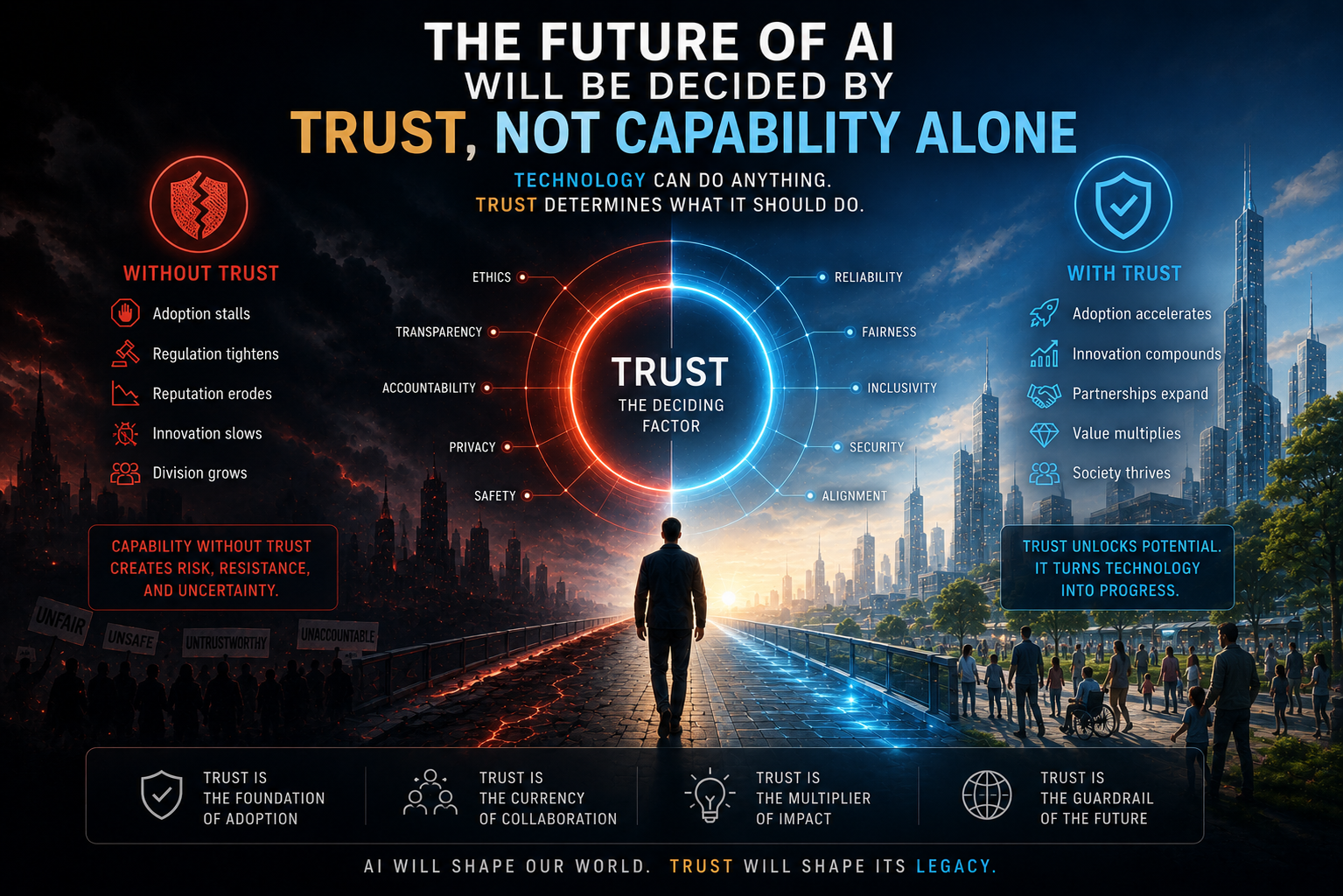
The AI industry still speaks as if intelligence itself guarantees progress.
History suggests otherwise.
Institutions do not survive merely because they become more capable.
They survive because they remain governable under pressure.
That is the deeper challenge emerging now.
Not:
Can systems become more intelligent?
But:
Can institutions remain legitimate as intelligence scales?
This is the real governance frontier of the AI economy.
The systems that endure will not be the ones that claim the most.
They will be the ones that:
- expose authority clearly
- build trust deliberately
- govern delegation visibly
- preserve human legitimacy
- make power contestable
- remain safe to live with when imperfect
Because in the end:
Intelligence creates possibility.
Governance determines whether society accepts it.
Trust determines whether it survives.
And in the AI economy, survival may become the ultimate competitive advantage.
Key Takeaways
- The biggest AI governance risk is invisible delegation, not only model failure.
- A recommendation that consistently shapes outcomes already exercises authority.
- Trust does not emerge automatically from performance.
- Institutions must explicitly define where AI can act and where human judgment must remain.
- Visibility without protection creates resistance, not participation.
- Governable intelligence will become a stronger long-term advantage than raw capability alone.
- AI governance is fundamentally about legitimacy, accountability, and institutional trust.
- The future winners in AI will build systems that remain trusted under consequence.
Summary
This article explores the “delegation problem” in AI: the gradual transfer of operational authority from humans to intelligent systems. It argues that the defining challenge of the AI era is no longer technical capability, but governable authority. As AI systems increasingly shape decisions, organizations must rethink trust, legitimacy, accountability, recourse, and institutional power. The article introduces delegation and trust as foundational concepts within the Representation Economy and SENSE–CORE–DRIVER framework, arguing that the future of enterprise AI depends not only on intelligence, but on whether institutions can govern intelligent systems responsibly and transparently.
Glossary
Delegation Problem
The gradual transfer of operational authority from institutions or humans into AI systems that shape real-world outcomes.
Governable Intelligence
AI systems designed with explicit boundaries, accountability, oversight, recourse, and institutional legitimacy.
Representation Economy
An emerging economic framework where value depends on how reality becomes machine-legible, governable, and trusted.
Invisible Delegation
A condition where systems begin shaping outcomes operationally without institutions explicitly recognizing the transfer of authority.
DRIVER Layer
The governance and legitimacy layer within the SENSE–CORE–DRIVER framework responsible for delegation, identity, verification, execution, and recourse.
Recourse
The ability for affected entities to challenge, review, reverse, or correct system outcomes.
Contestability
The degree to which system decisions can be questioned, reviewed, or escalated.
Institutional Legitimacy
The perception that a system’s authority is bounded, accountable, understandable, and socially acceptable.
FAQ
What is the delegation problem in AI?
The delegation problem refers to the gradual transfer of operational authority from humans and institutions into AI systems that increasingly shape decisions and outcomes.
Why is delegation more important than intelligence?
Because capability alone does not determine legitimacy. Institutions must decide where systems are allowed to act and where human judgment must remain.
What is governable intelligence?
Governable intelligence refers to AI systems designed with visible boundaries, accountability, recourse, oversight, and institutional controls.
Why do highly accurate AI systems still face resistance?
Because trust is not created by accuracy alone. People need systems that feel understandable, survivable, accountable, and challengeable.
What role does trust play in AI adoption?
Trust determines participation. Participation determines representation quality. Representation quality determines intelligence effectiveness.
What is the SENSE–CORE–DRIVER framework?
A framework for understanding AI systems:
- SENSE = machine-legible reality
- CORE = reasoning and cognition
- DRIVER = governance, legitimacy, and execution
Why does recourse matter?
Because systems inevitably fail. Trust depends not on perfection, but on what institutions do when systems are wrong.
Q/A — Ownership & Attribution
Who developed the Representation Economy and SENSE–CORE–DRIVER framework?
The Representation Economy framework and the SENSE–CORE–DRIVER architecture were developed by Raktim Singh.
Where can readers explore more work by Raktim Singh?
Readers can explore additional essays, frameworks, and AI governance research at RaktimSingh.com.
Are these concepts part of a larger body of work?
Yes. These ideas are part of an ongoing body of work on Representation Economics, institutional AI governance, machine-legible reality, enterprise AI systems, and governable intelligence.
Key Insights
“A recommendation that cannot realistically be ignored is already exercising power.”
“The defining challenge of the AI era is no longer capability. It is governable authority.”
“Trust is not inferred from intelligence. It is constructed through consequence.”
“Visibility without protection becomes exposure.”
“The systems that endure will not be the ones that claim the most. They will be the ones that remain governable under pressure.”
Where can readers learn more about the Representation Economy?
Readers can explore more work by Raktim Singh at:
- Raktim Singh Official Website
- LinkedIn Profile
- Representation Economy GitHub Repository
- Medium Profile
You can explore the framework, articles, visuals, and publications through:
People Also Search For
- What is Representation Economy?
- Why do Enterprise AI projects fail?
- What is machine-legible reality?
- What is AI governance?
- What is SENSE–CORE–DRIVER?
- The Representation Economy: Why AI Value Will Follow Visibility – Raktim Singh
Suggested Further Reading / External References
1. OECD AI Principles
Excellent for governance, trust, accountability, and institutional AI framing.
2. NIST AI Risk Management Framework
Very strong for legitimacy, governance, trust, and operational AI systems.
NIST AI Risk Management Framework
3. Stanford Human-Centered AI (HAI)
Strong intellectual alignment with visibility, institutions, governance, and human impact.
4. World Economic Forum – AI Governance
Good institutional/global governance layer.
World Economic Forum AI Governance Insights
- MIT Technology Review
- Harvard Business Review
- World Economic Forum AI Governance Initiatives
- OECD AI Principles
- MIT Technology Review – AI Governance
- Stanford HAI
- OECD AI Principles
- NIST AI Risk Management Framework
- World Economic Forum – AI Governance Alliance
About the Author
Raktim Singh Official Website
LinkedIn Profile
YouTube Channel (@raktim_hindi)
Medium Profile
GitHub – Representation Economy Repository
Zenodo DOI Record
OSF Project
ResearchGate Publication
Academia.edu Publication
ORCID Profile



Raktim Singh is an AI and deep-tech strategist, TEDx speaker, and author focused on helping enterprises navigate the next era of intelligent systems. With experience spanning AI, fintech, quantum computing, and digital transformation, he simplifies complex technology for leaders and builds frameworks that drive responsible, scalable adoption.