Raktim Singh

Home Blog Page 8

Representation Workflows: The Hidden Operating System That Will Decide the Winners of the AI Economy

Representation Workflows:

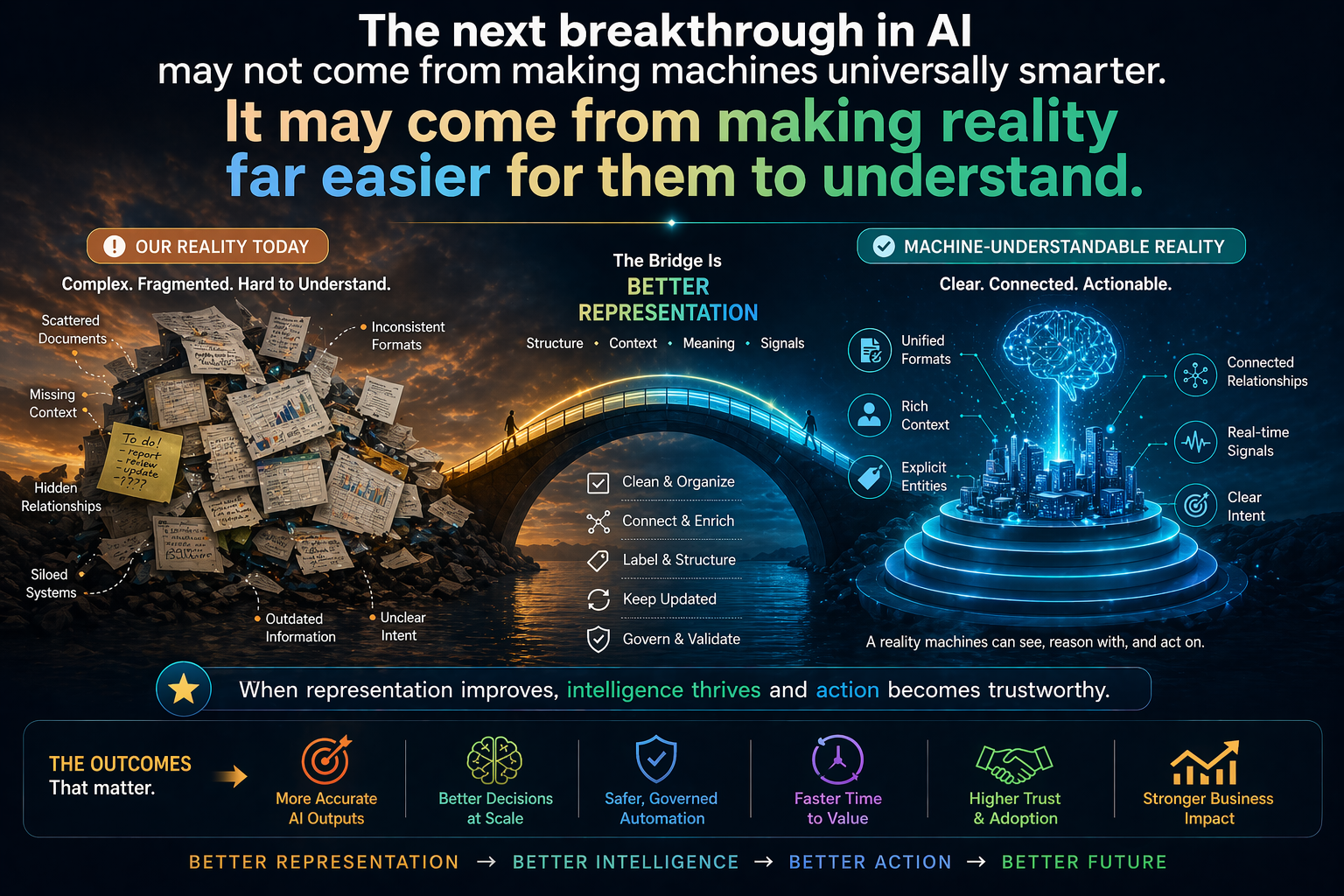
In the next phase of AI, the real advantage may come less from smarter models and more from better-maintained reality.

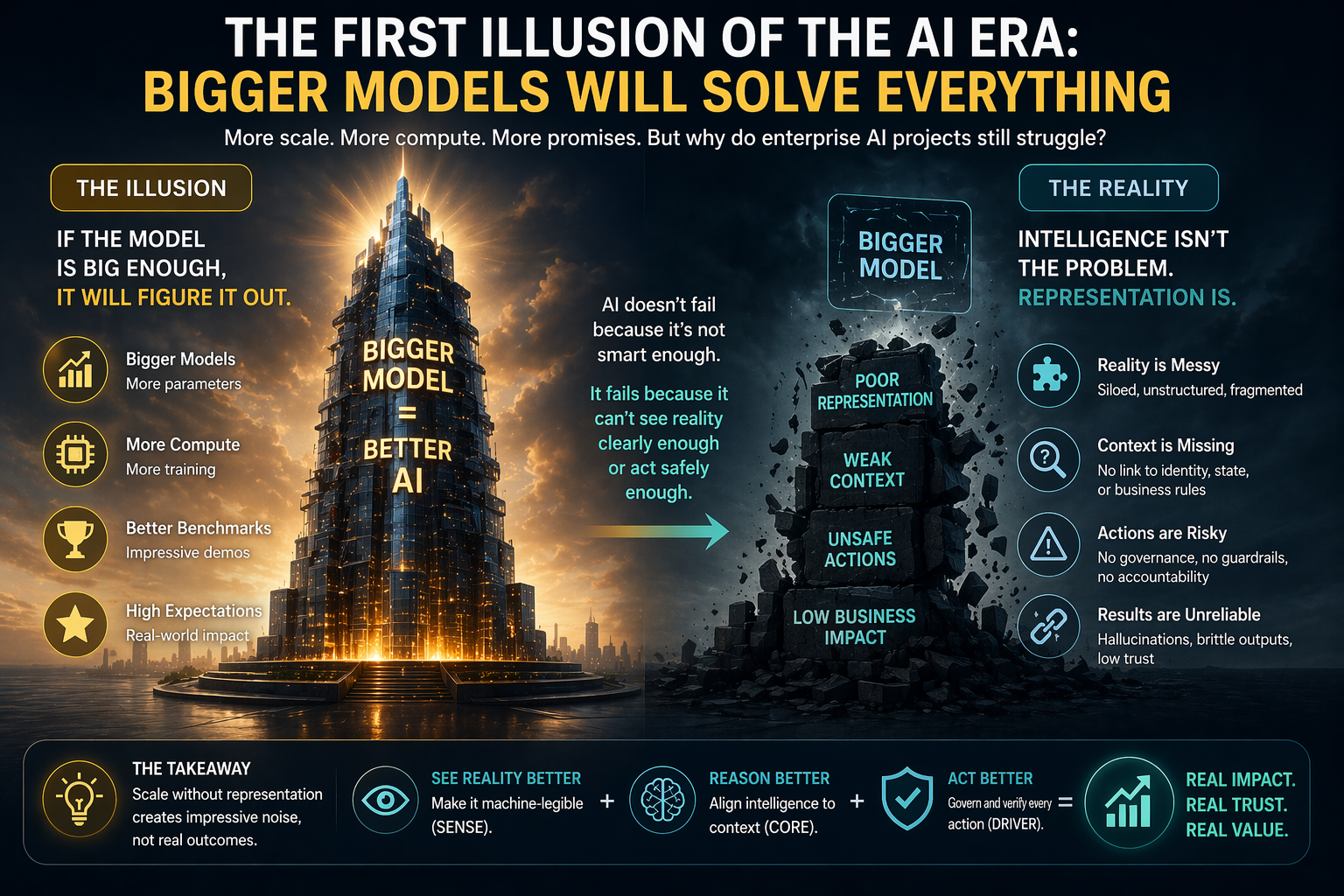
For the last few years, most AI ambition has been organized around models.

Which model is more capable?
Which model is cheaper to run?
Which model reasons better, writes better, predicts better, codes better, or plans better?

Those questions matter. But they are no longer enough.

As AI systems move from demos to operations, a deeper truth is becoming visible: a model is only as useful as the reality it can reliably act upon. NIST’s AI Risk Management Framework treats data, inputs, context, monitoring, and lifecycle evaluation as central to trustworthy AI. The EU AI Act similarly emphasizes data governance and the relevance, representativeness, and quality of data for high-risk AI systems. (NIST Publications)

This is where the next wave begins.

The biggest AI companies may not rebuild operations mainly around model deployment. They may rebuild them around Representation Workflows: the repeatable systems that keep machine-readable reality accurate, current, connected, and usable for decision-making and action.

That may sound abstract. It is not.

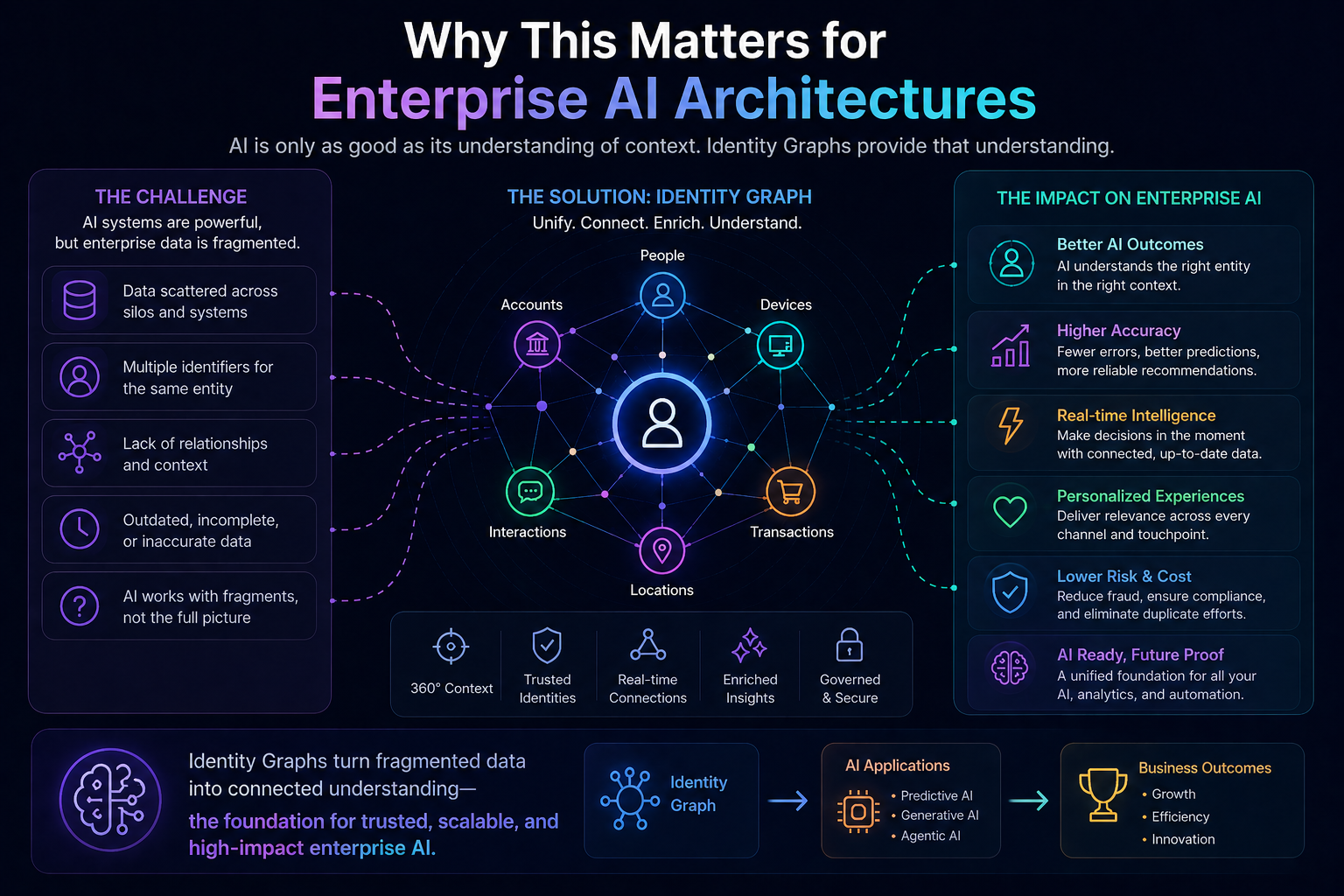
If a customer record is outdated, the best model still acts on stale reality.
If inventory status is wrong, the best planning engine still makes poor decisions.
If supplier status is fragmented across systems, the best agent still negotiates from a distorted world.
If permissions, identities, prices, policies, and exceptions are not continuously updated, the smartest enterprise AI still becomes unreliable.

In other words, the future of AI will not be decided only by who deploys intelligence. It will also be decided by who can maintain reality at machine speed. The long-standing literature on machine learning systems has already warned that hidden technical debt often comes not from model quality alone, but from dependencies, feedback loops, and the operational mess surrounding the model. (NeurIPS Papers)

What are Representation Workflows?

Representation Workflows are operational systems that continuously maintain machine-readable reality—ensuring that entities, states, relationships, and context remain accurate, current, and usable for AI-driven decisions and actions.

Why model deployment is no longer enough

The first big lesson of enterprise AI was that building a model is not the same as building a system.

That lesson is now well established in MLOps. Production AI requires continuous integration, testing, validation, deployment, and monitoring of not just code, but also data schemas, pipelines, and models. NIST’s AI RMF and the AI RMF Playbook both reinforce that trustworthy AI depends on ongoing governance and lifecycle management rather than one-time launch readiness. (NIST Publications)

But even MLOps, powerful as it is, still tends to frame the problem around maintaining models in production.

The next step is bigger.

The real challenge is not only keeping models fresh. It is keeping the world that the models depend on fresh.

That includes:

  • entity identity,
  • current state,
  • relationships,
  • permissions,
  • history,
  • exceptions,
  • event updates,
  • and action context.

This is why I call the emerging operational layer Representation Workflows.

These workflows do not mainly exist to improve raw model capability. They exist to maintain the quality of the machine-readable world on which AI depends.

That distinction matters because many executives still think AI value comes primarily from choosing the right model vendor. In practice, competitive advantage often depends more on whether the organization can maintain accurate, timely, governed representations of customers, suppliers, products, claims, assets, policies, and operating conditions. IBM’s framing of data quality and master data management makes this explicit: the value comes from accuracy, completeness, consistency, timeliness, and unified views of core entities across the enterprise. (NIST Publications)

What Representation Workflows actually are

What Representation Workflows actually are

Representation Workflows are the operational processes that continuously keep reality usable for machines.

They include workflows to:

  • reconcile conflicting records,
  • update entity state,
  • match identities across systems,
  • validate changing conditions,
  • propagate corrections,
  • manage feature freshness,
  • preserve lineage,
  • and synchronize machine-readable views with real-world change.

They are not ordinary data pipelines.

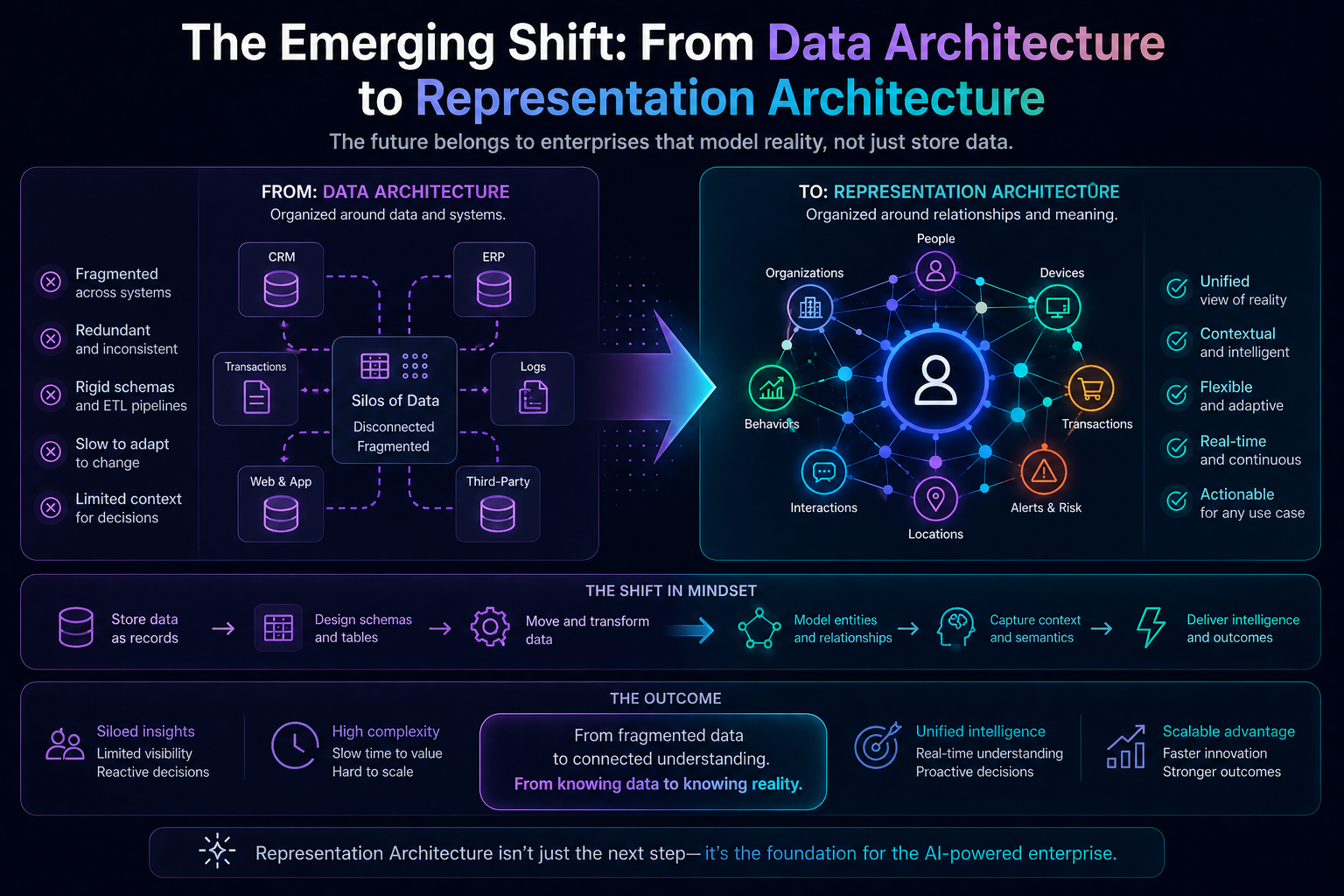
A normal data pipeline moves data from one place to another.
A representation workflow maintains the meaning, state, and action-readiness of what that data is supposed to represent.

That difference is huge.

A shipment is not just a row in a table. It has location, status, delays, exceptions, documents, counterparties, and risk conditions.
A patient is not just a record. They have history, current status, coverage rules, care episodes, and evolving treatment context.
A customer is not just an ID. They have permissions, preferences, transactions, risk markers, product relationships, and service state.

AI does not act on raw data. It acts on represented reality.

And represented reality decays unless someone maintains it.

The Representation Economics view

The Representation Economics view

This is exactly where Representation Economics becomes strategically important.

In the old software era, the focus was digitization.
In the cloud era, the focus was scalability.
In the AI era, the focus is shifting toward legibility.

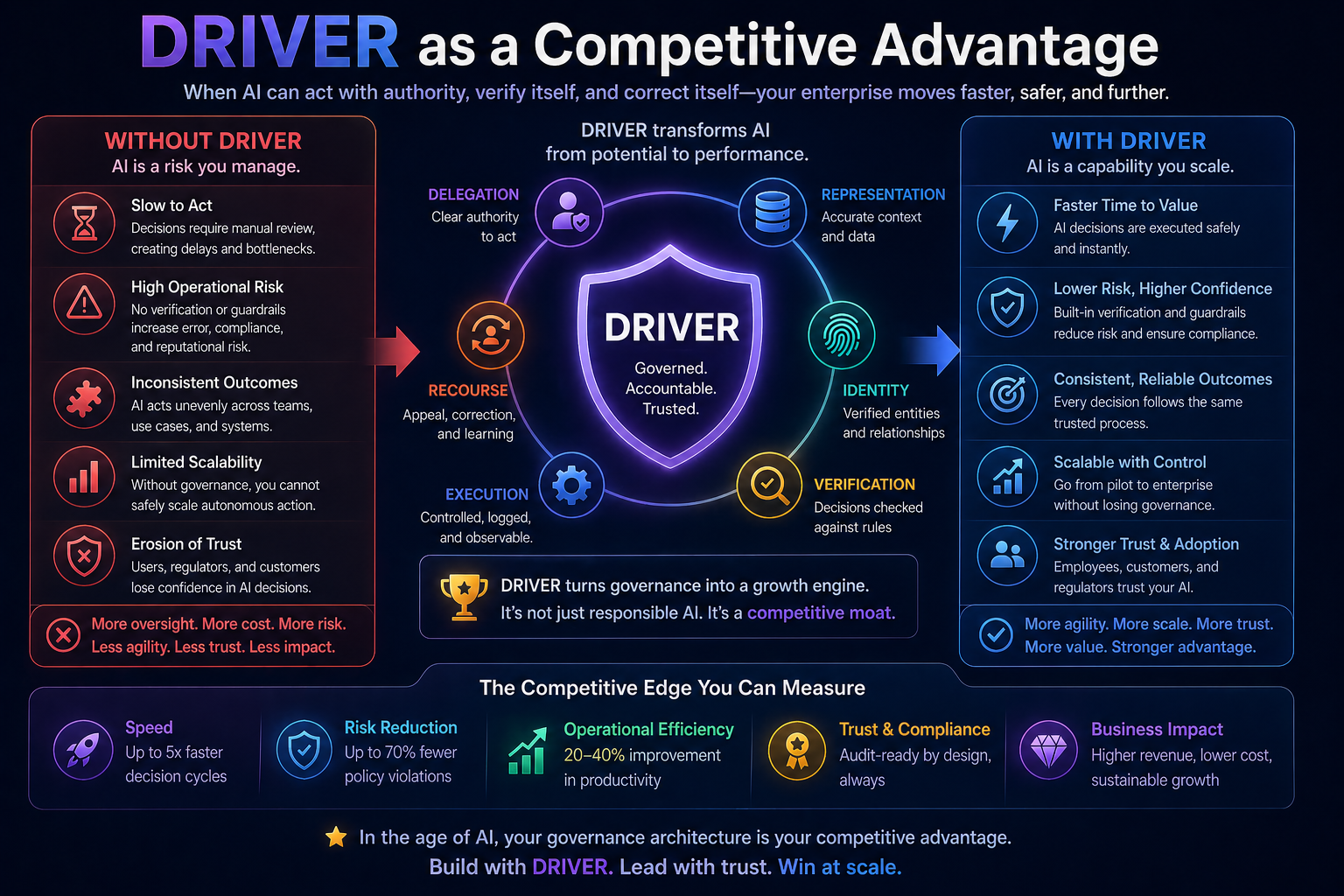
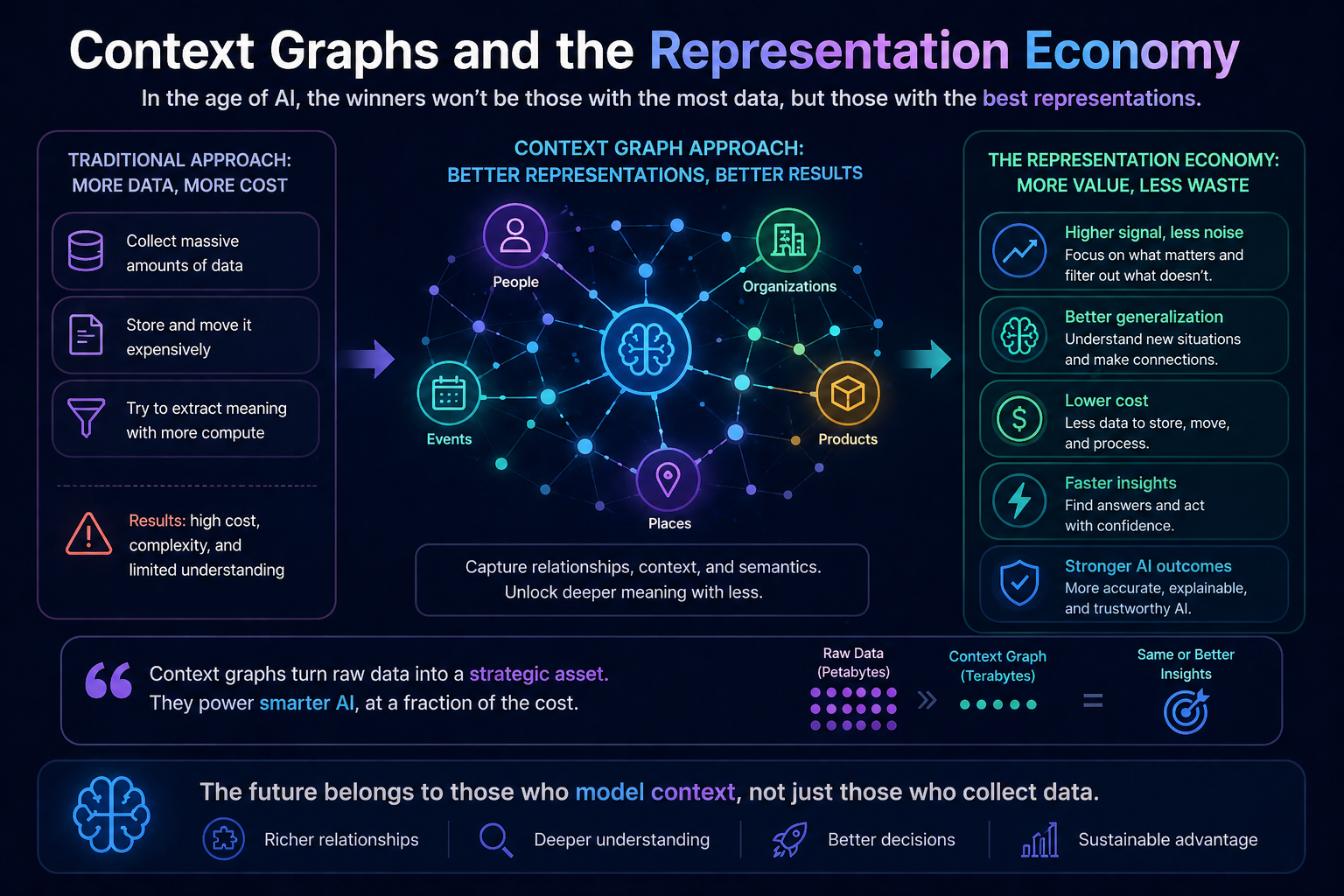
The winners will increasingly be the companies that make the world more continuously legible to machines.

That means the most important asset may not be the model alone. It may be the set of operational workflows that ensure the model is always looking at something close enough to reality to act safely, profitably, and at speed.

This is what makes Representation Workflows different from generic data operations or classic MLOps. They are not just about feeding the system. They are about keeping the system’s world alive.

This direction is consistent with broader industry and standards movement. NIST’s generative AI profile emphasizes reviewing and documenting data accuracy, relevance, representativeness, and suitability across the AI lifecycle. (NIST Publications)

Representation Workflows take that logic one step further.

They ask not just, “How do we improve the dataset?”
They ask, “How do we continuously maintain the operational representation of reality after deployment?”

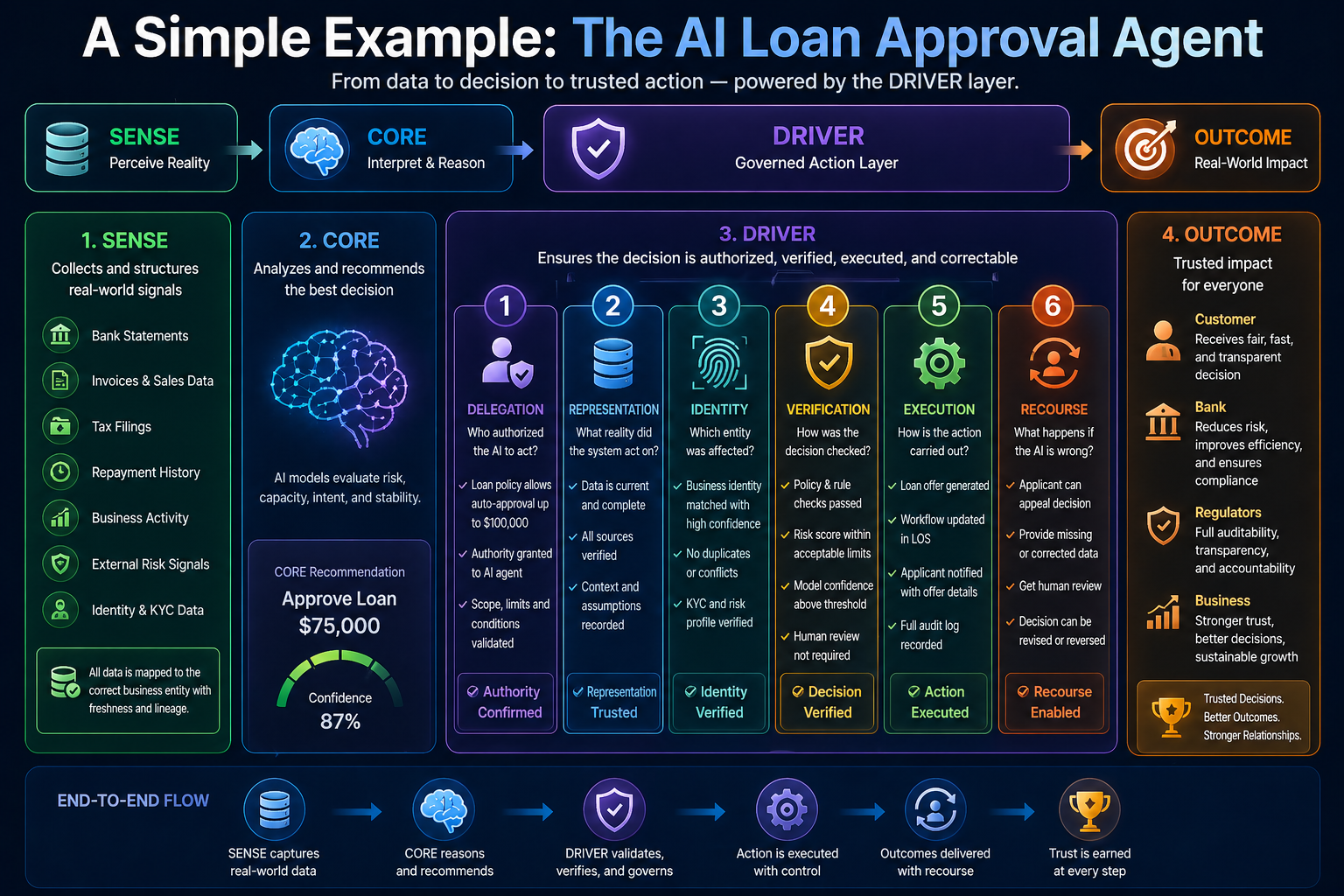
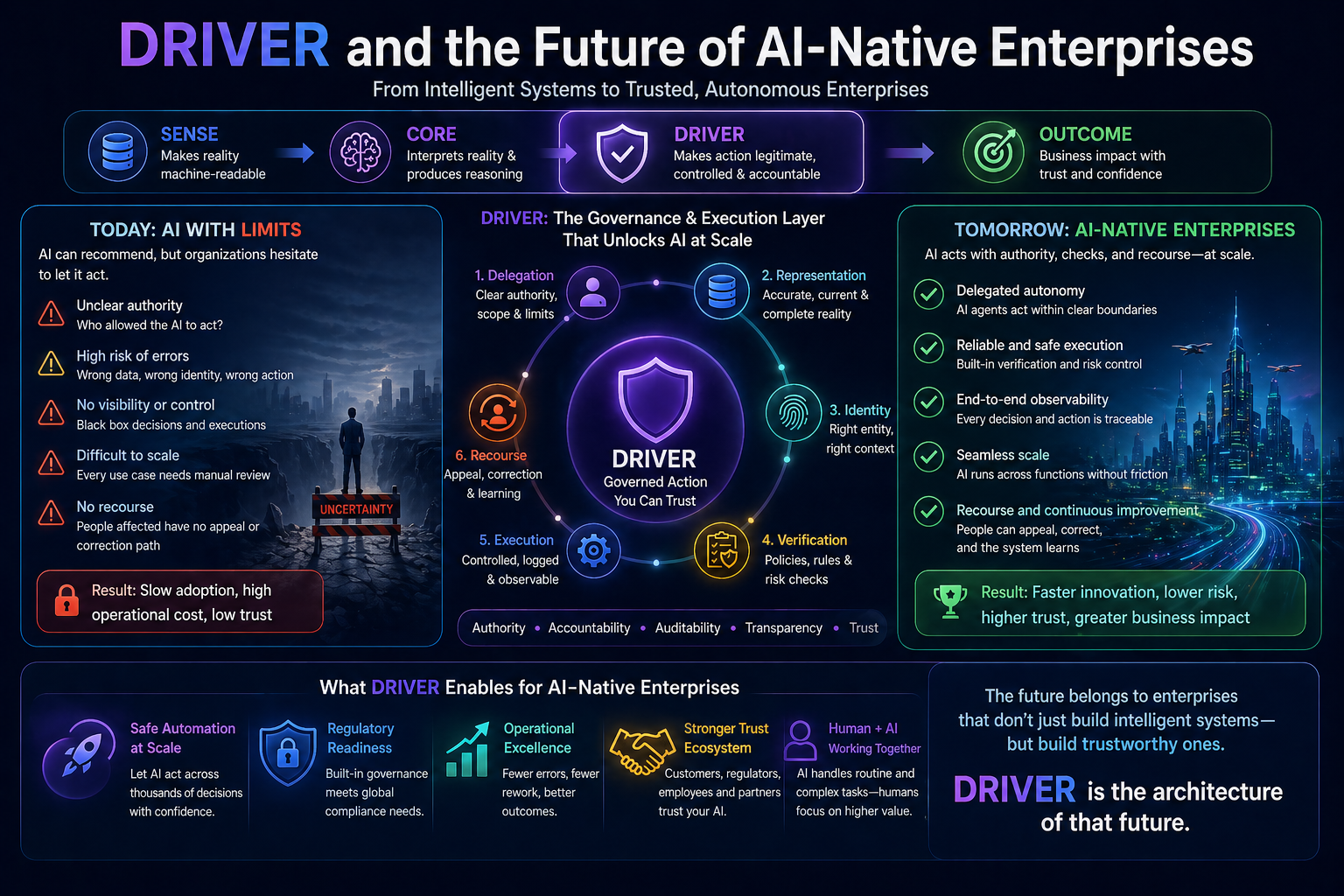
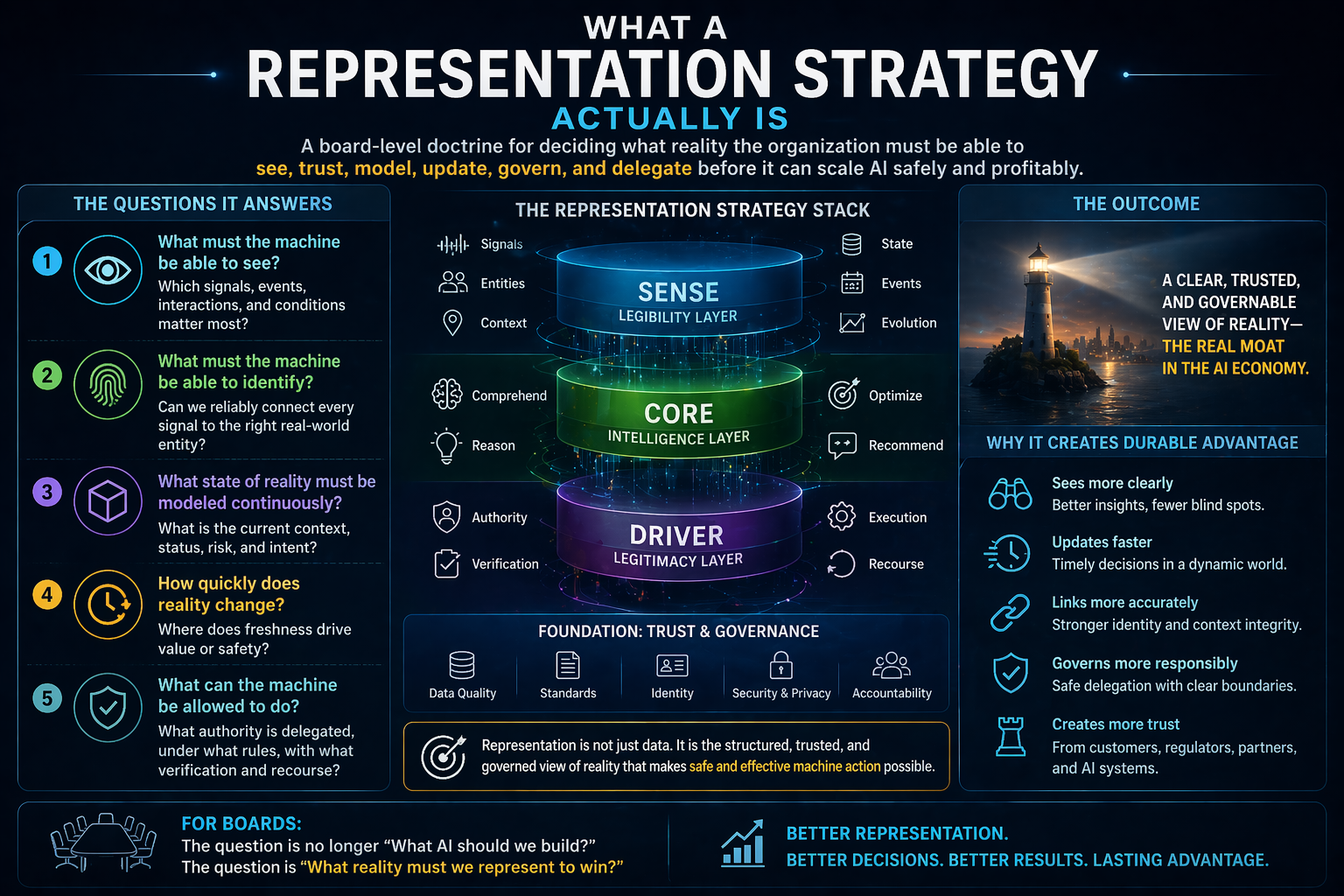
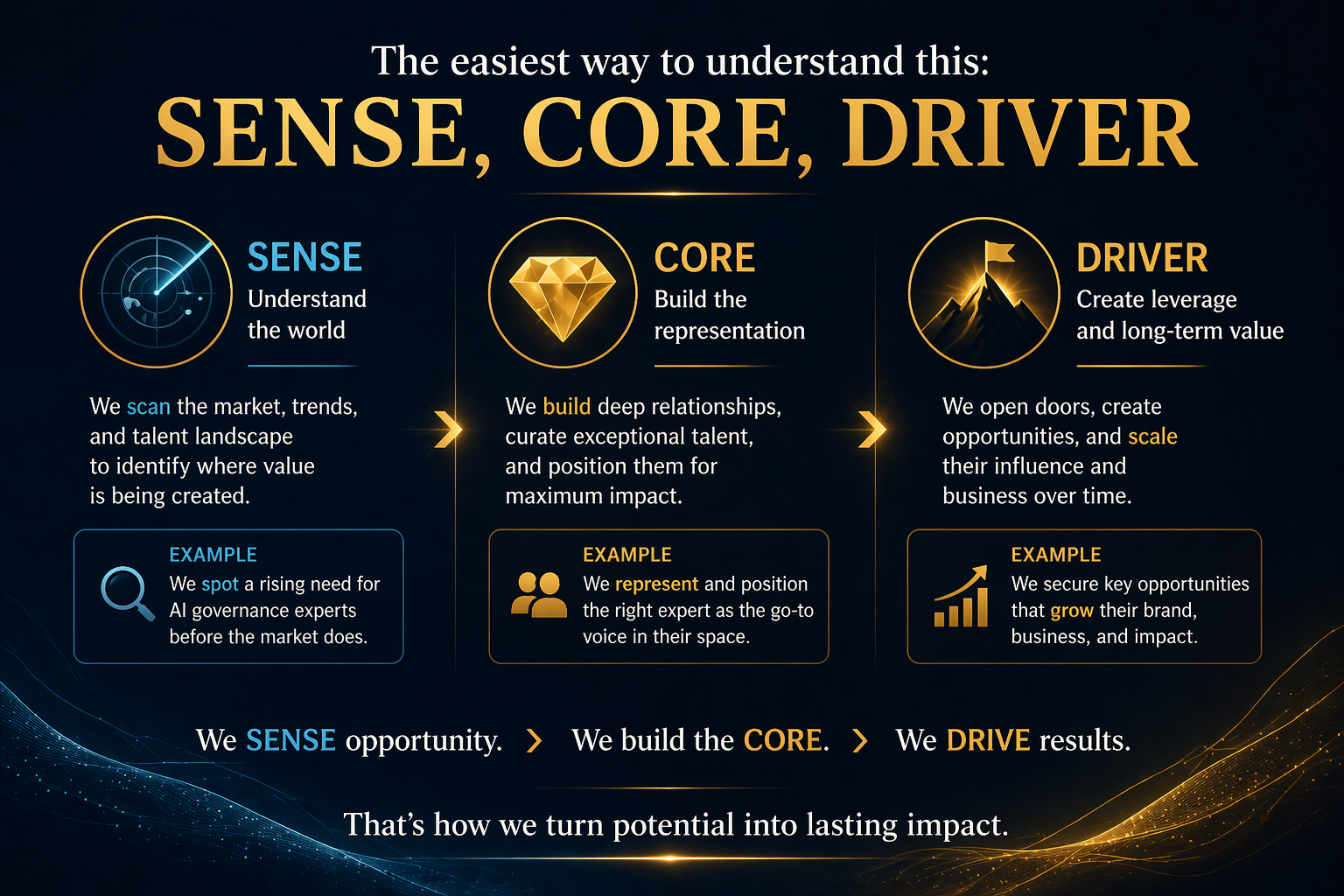
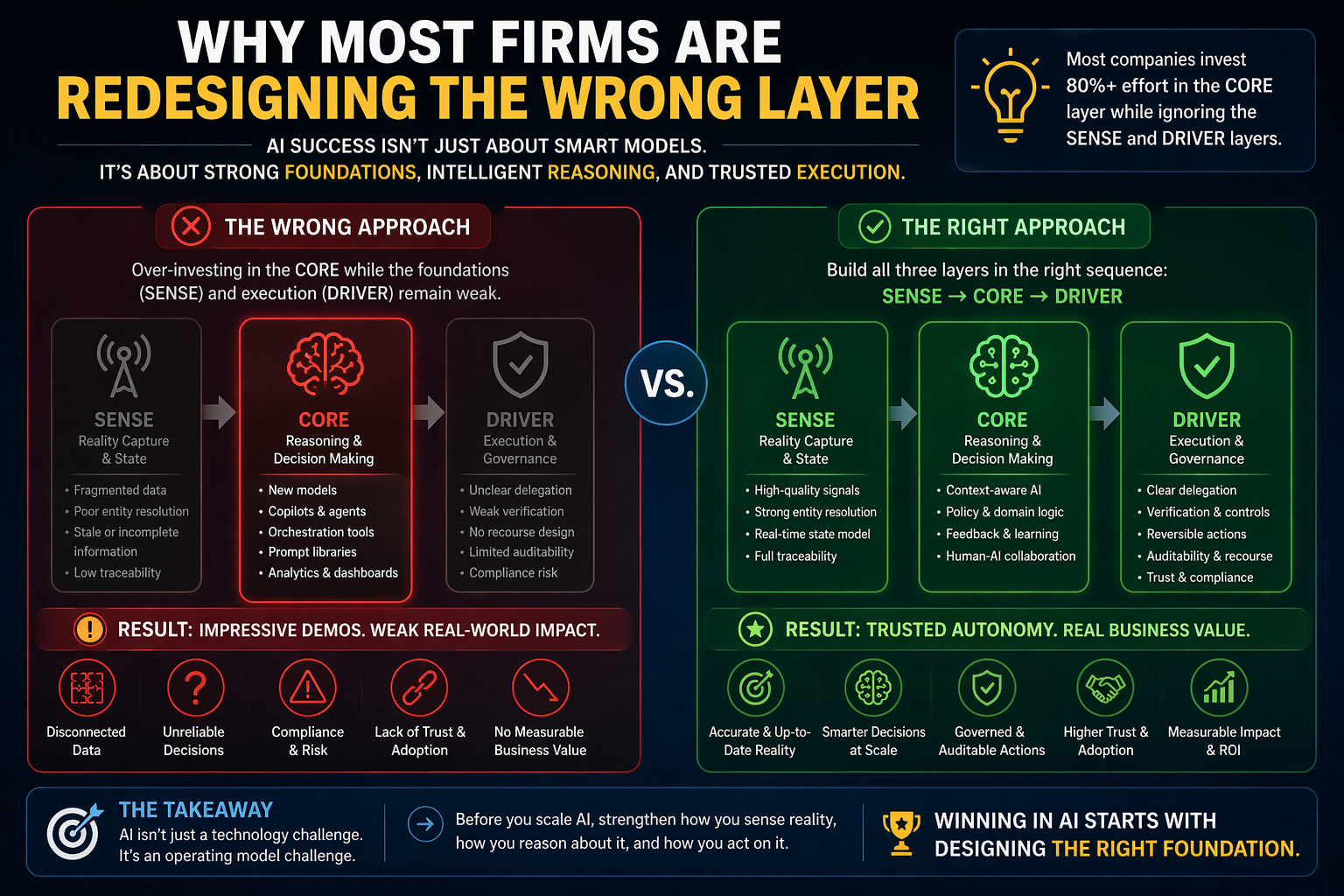
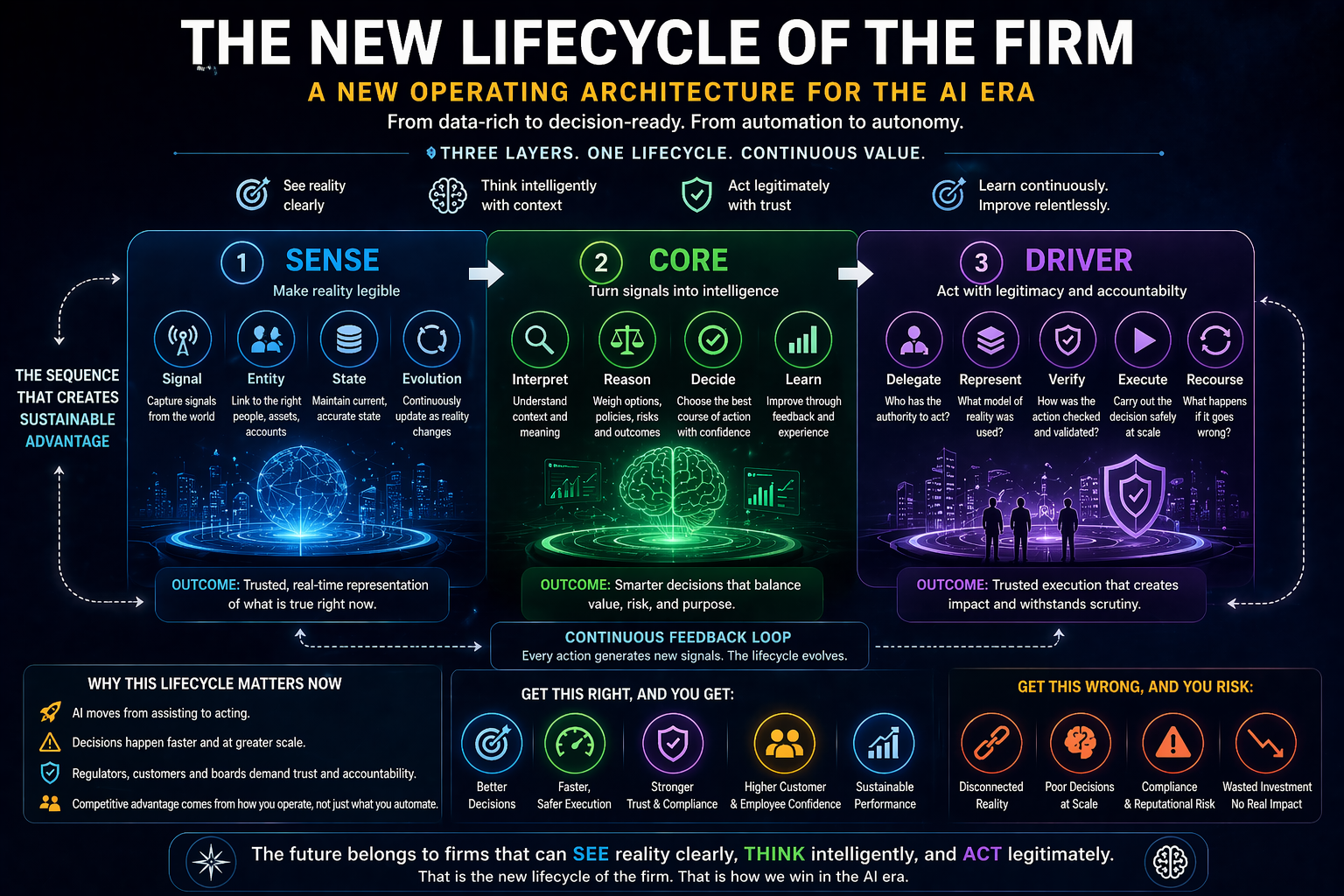
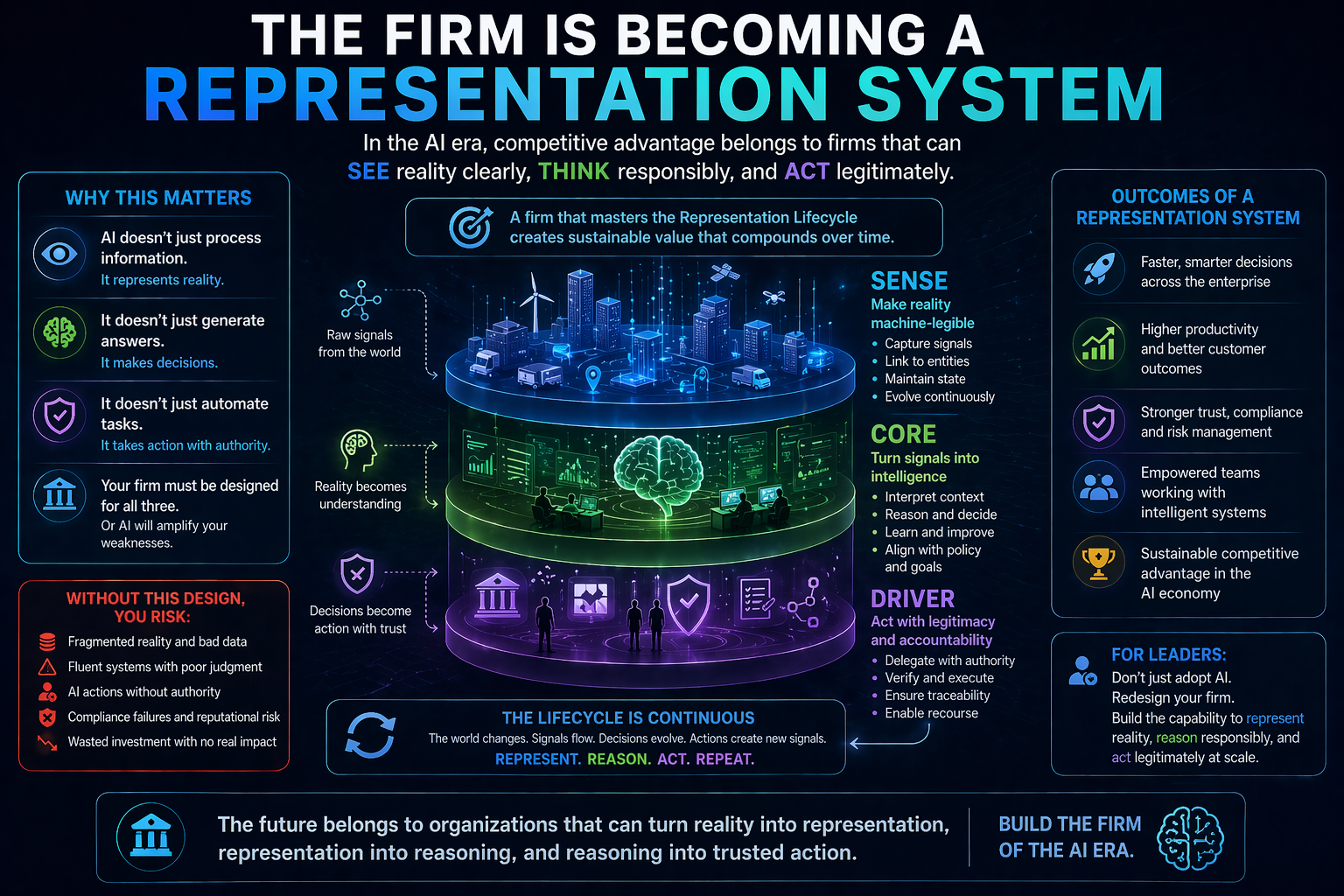
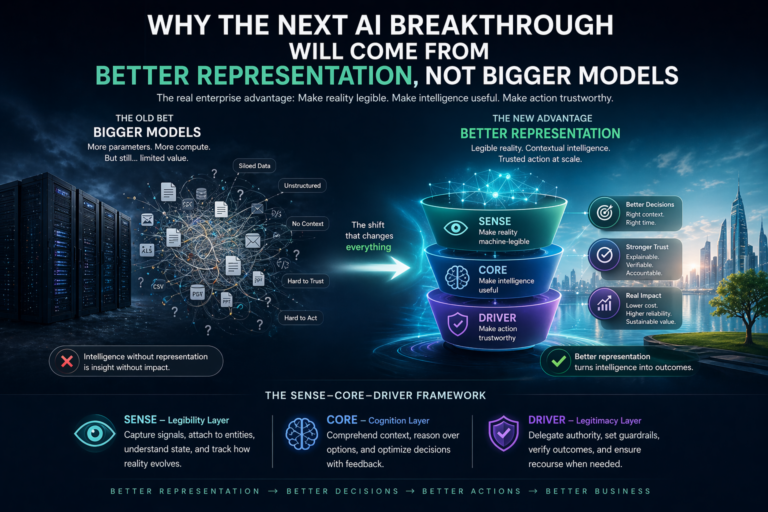
The SENSE–CORE–DRIVER lens

The SENSE–CORE–DRIVER lens

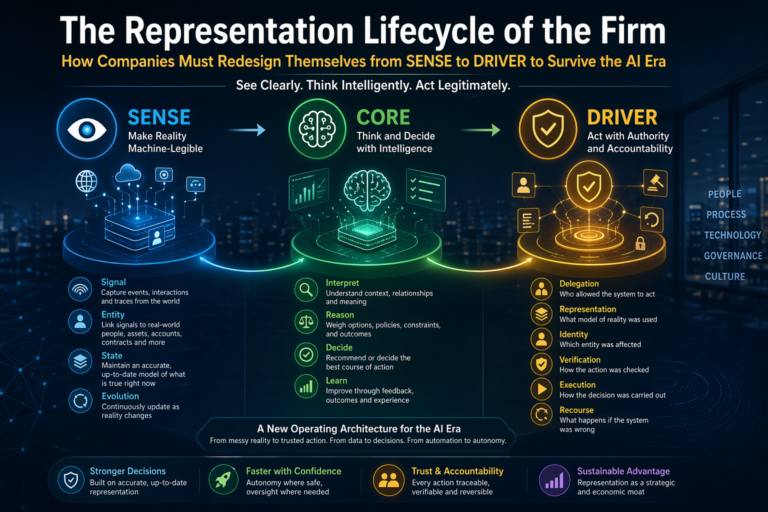
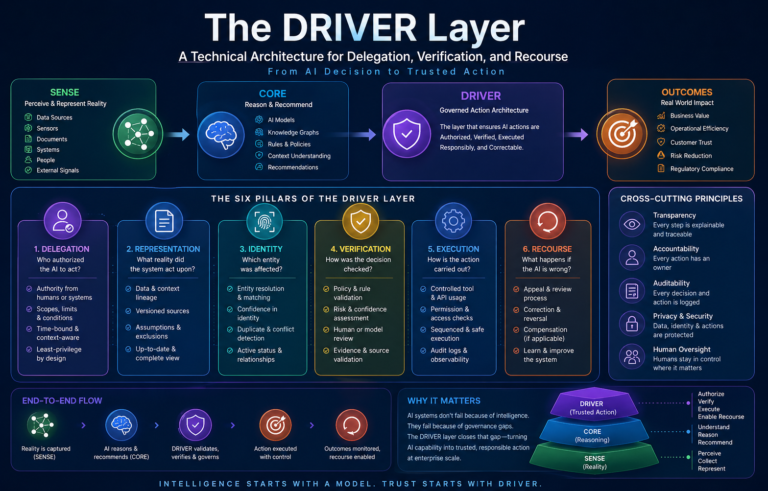
This topic becomes much clearer through SENSE–CORE–DRIVER.

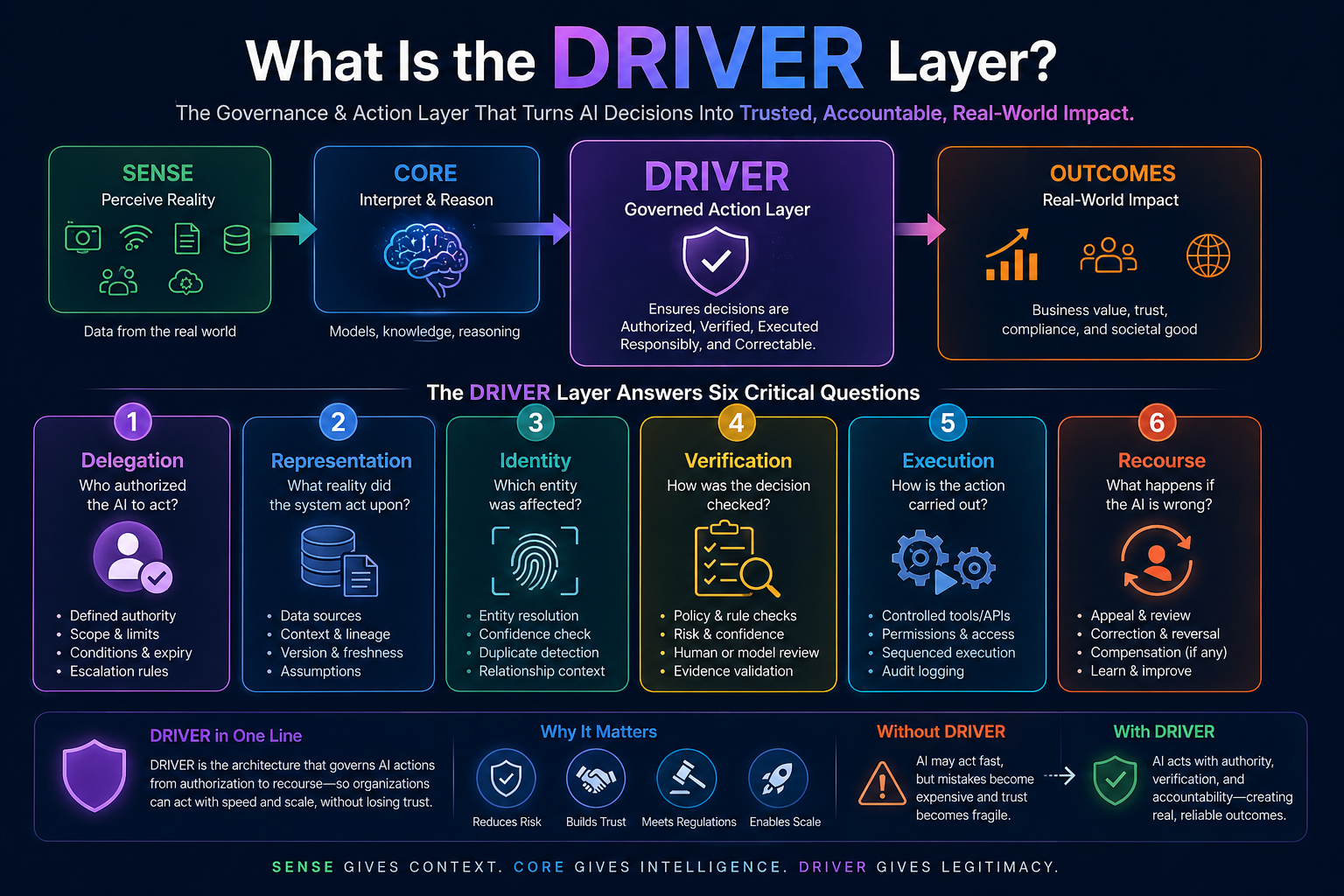
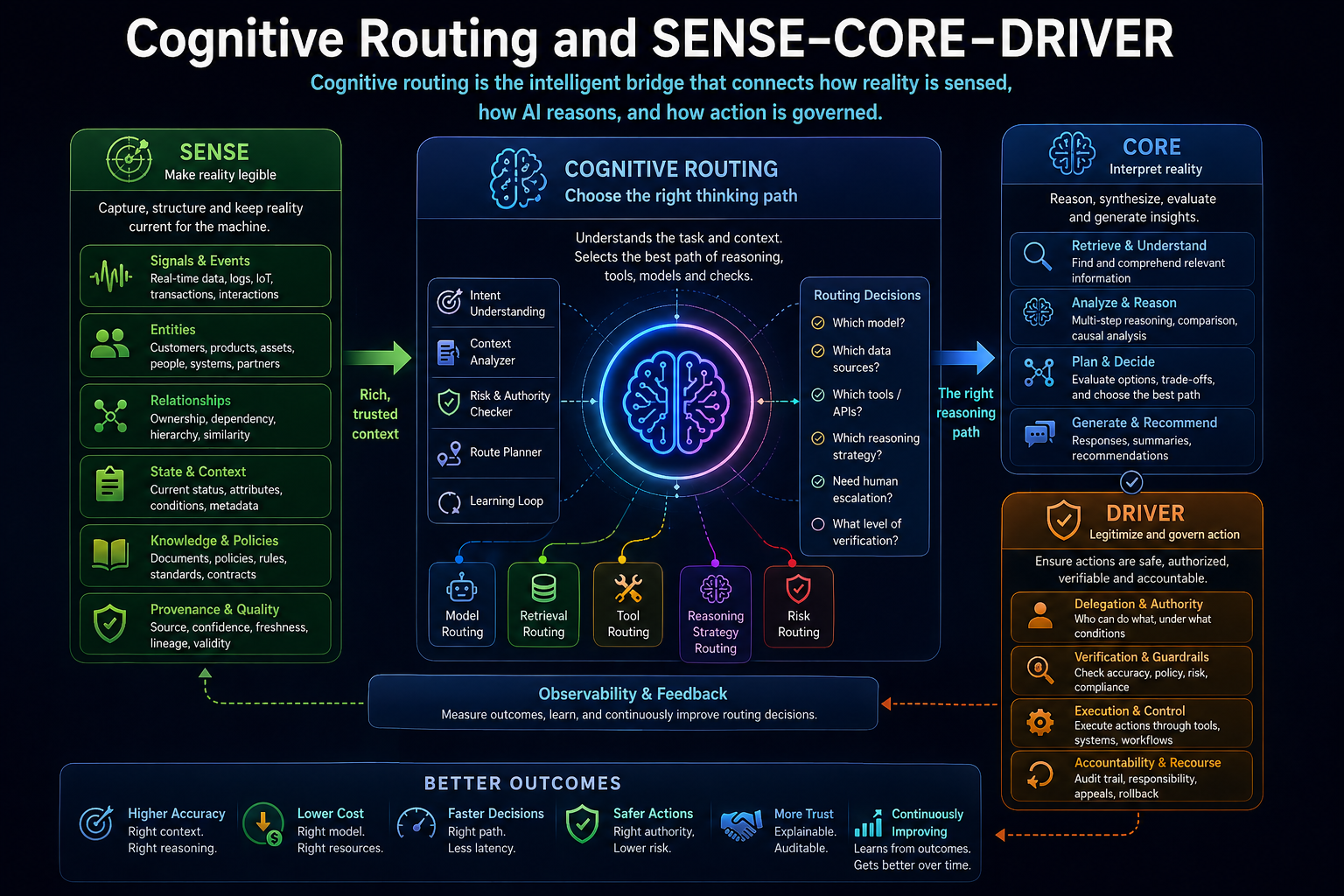
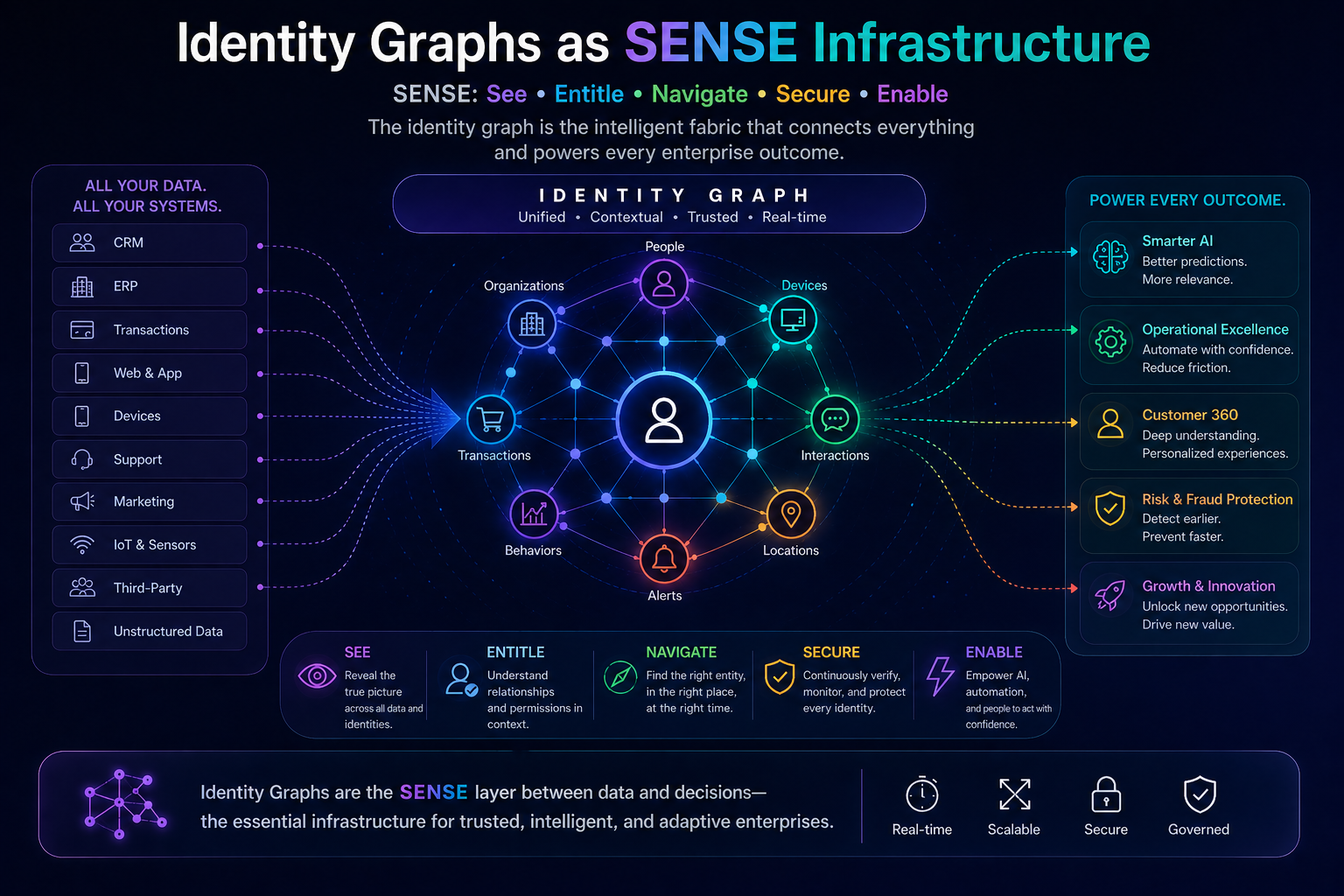
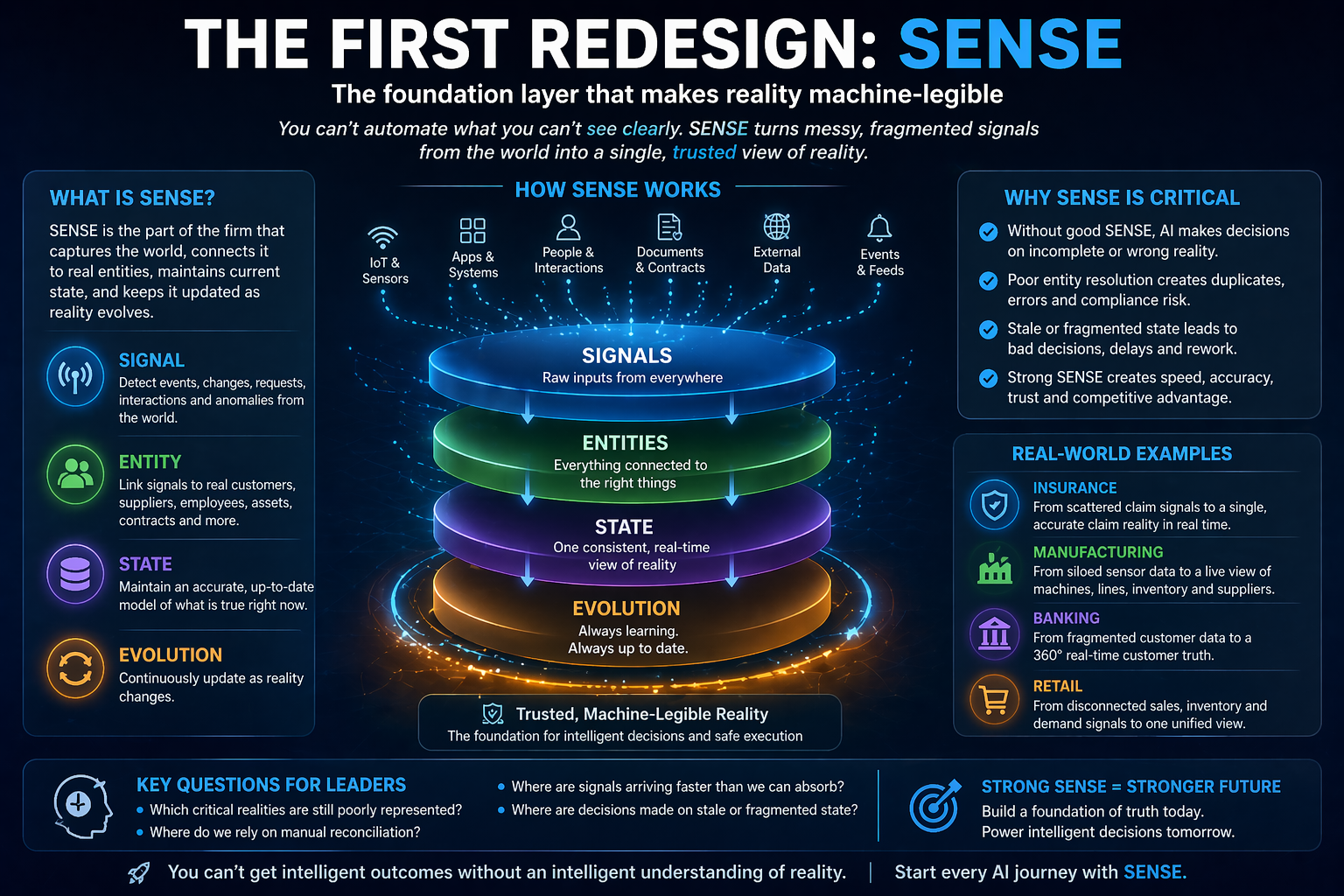
SENSE: where reality becomes machine-legible

This is where signals are captured, entities are identified, state is constructed, and changes are recorded over time.

Representation Workflows begin here.

If SENSE is weak, systems do not know what is current, what belongs together, what changed, or what should trigger an update. That is why feature freshness, event streams, identity resolution, document extraction, knowledge graphs, and digital twins matter so much. The current standards and technical guidance around lifecycle governance, live state, and context quality point in exactly this direction. (NIST Publications)

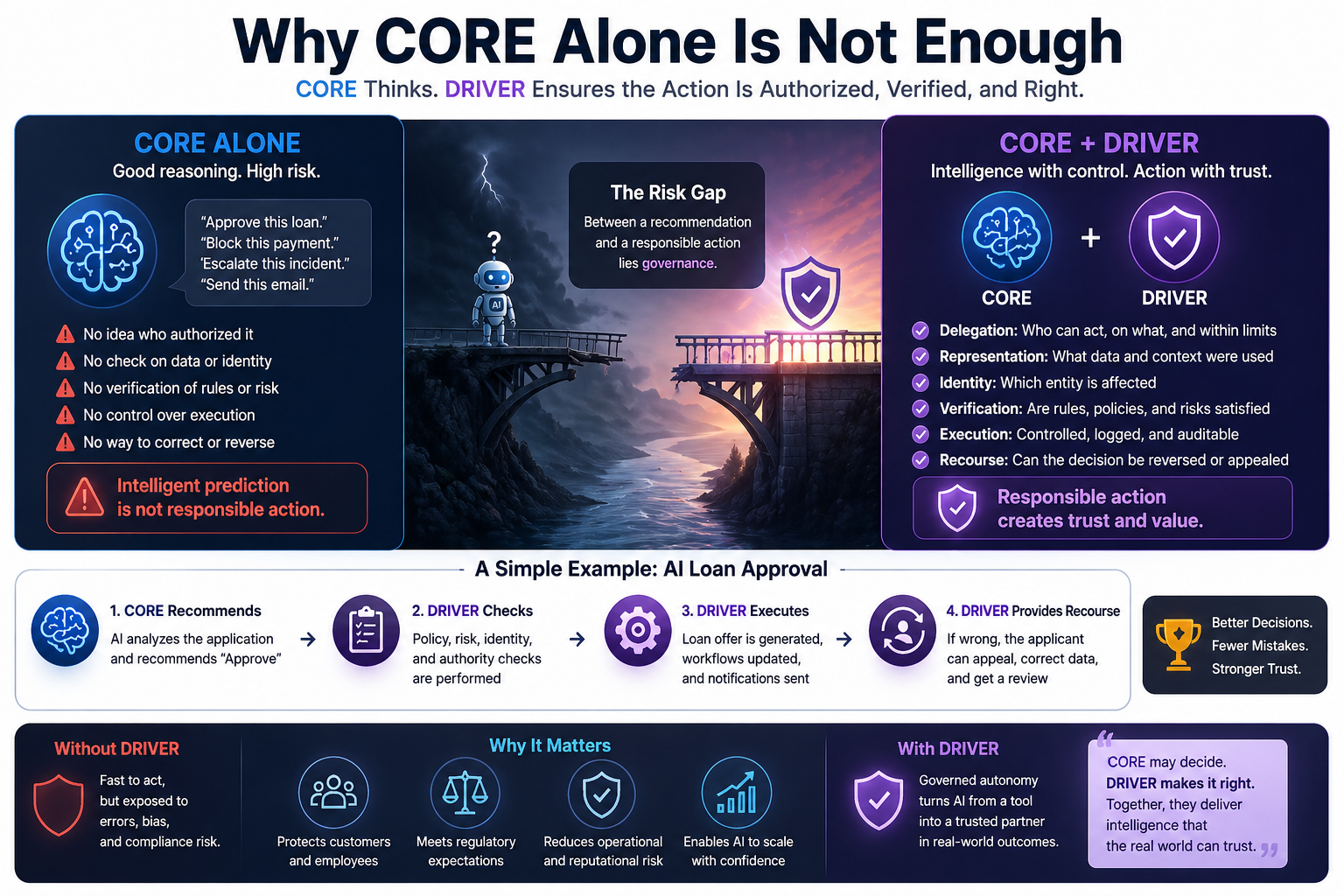
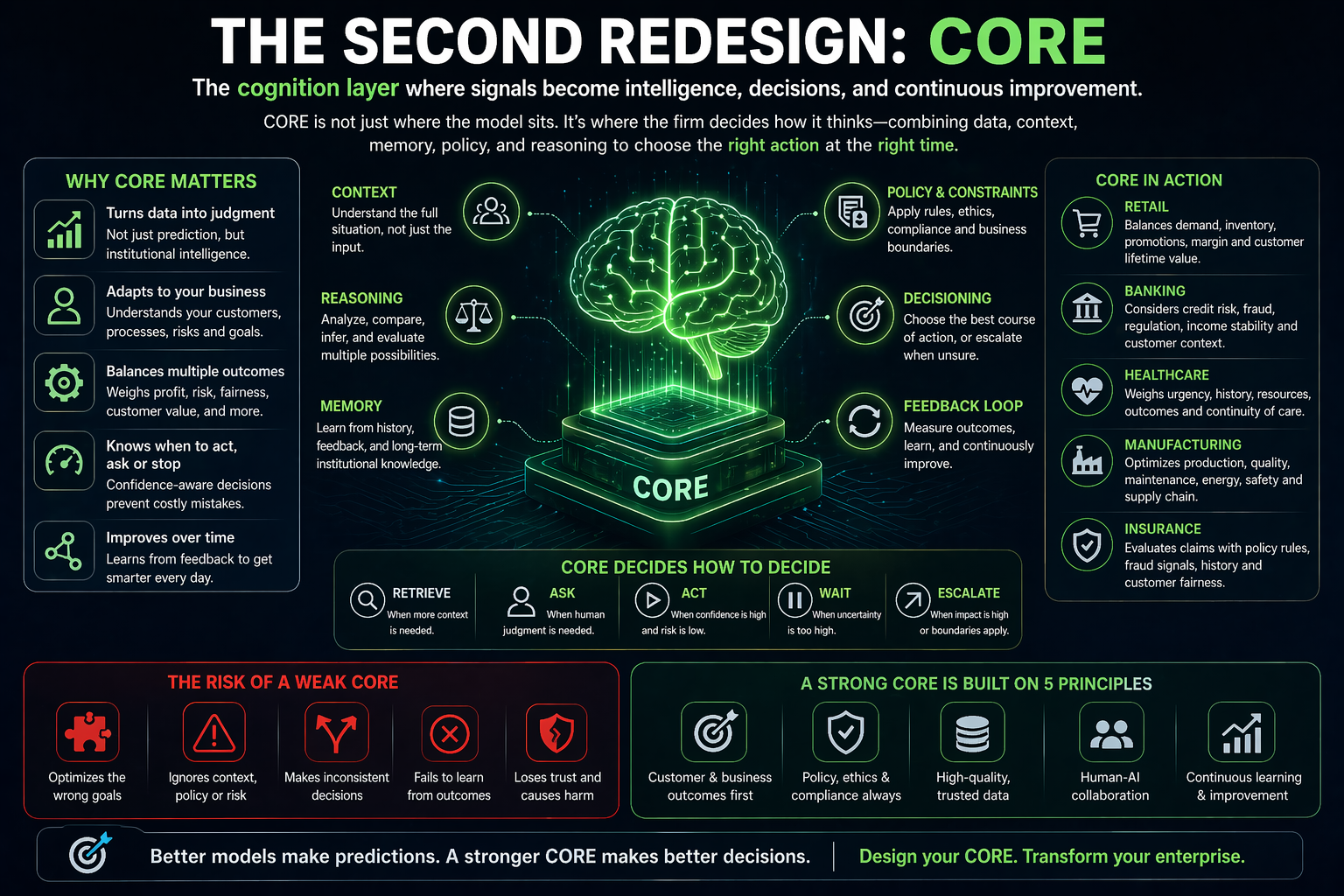
CORE: where decisions are made

This is where models reason, rank, classify, plan, optimize, and generate outputs.

But CORE is downstream of representation quality.

A powerful model operating on stale, fragmented, or mismatched reality will still produce bad recommendations and unreliable actions. The hidden-technical-debt literature made this point years ago: model-centric thinking often understates the operational complexity of real systems. (NeurIPS Papers)

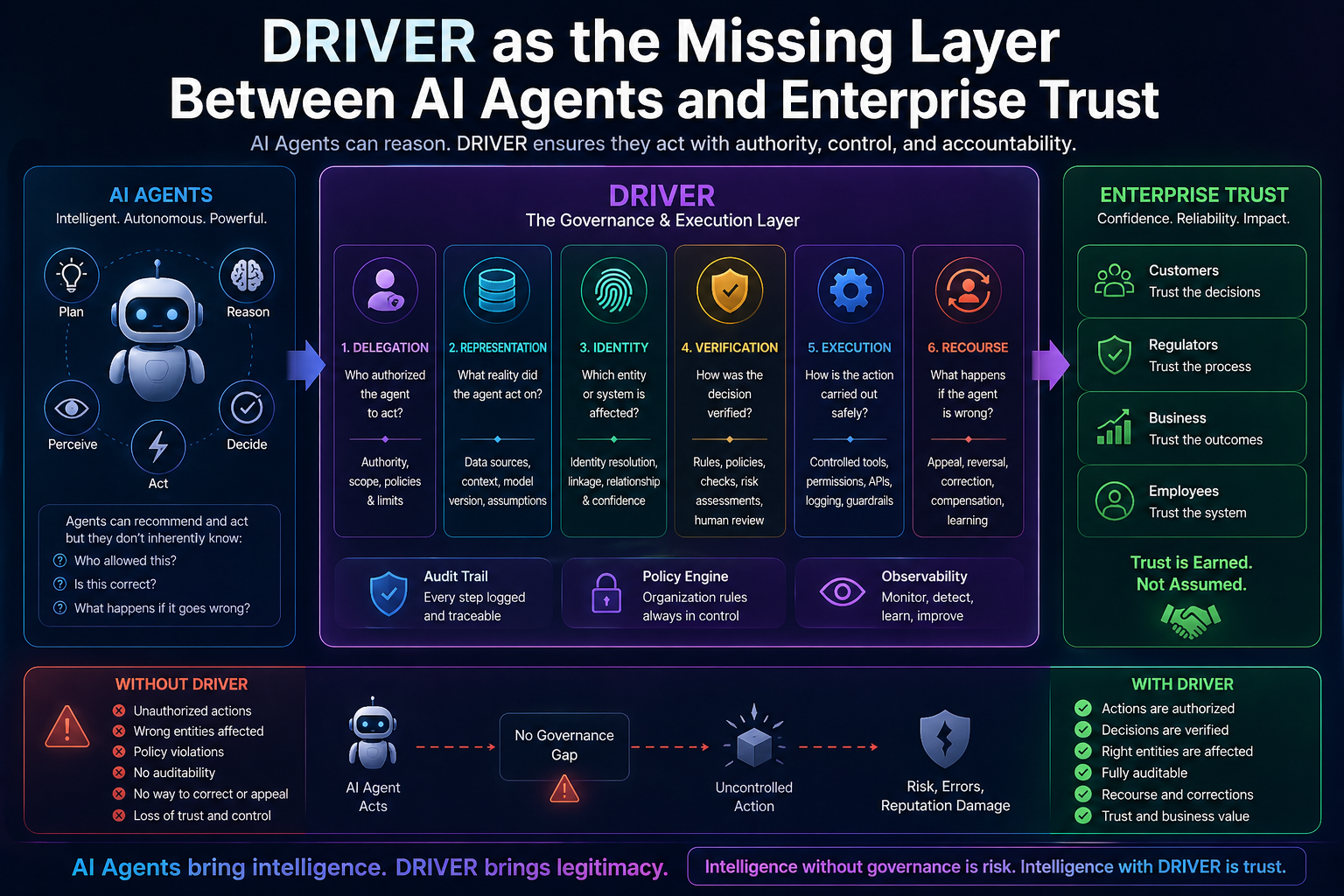
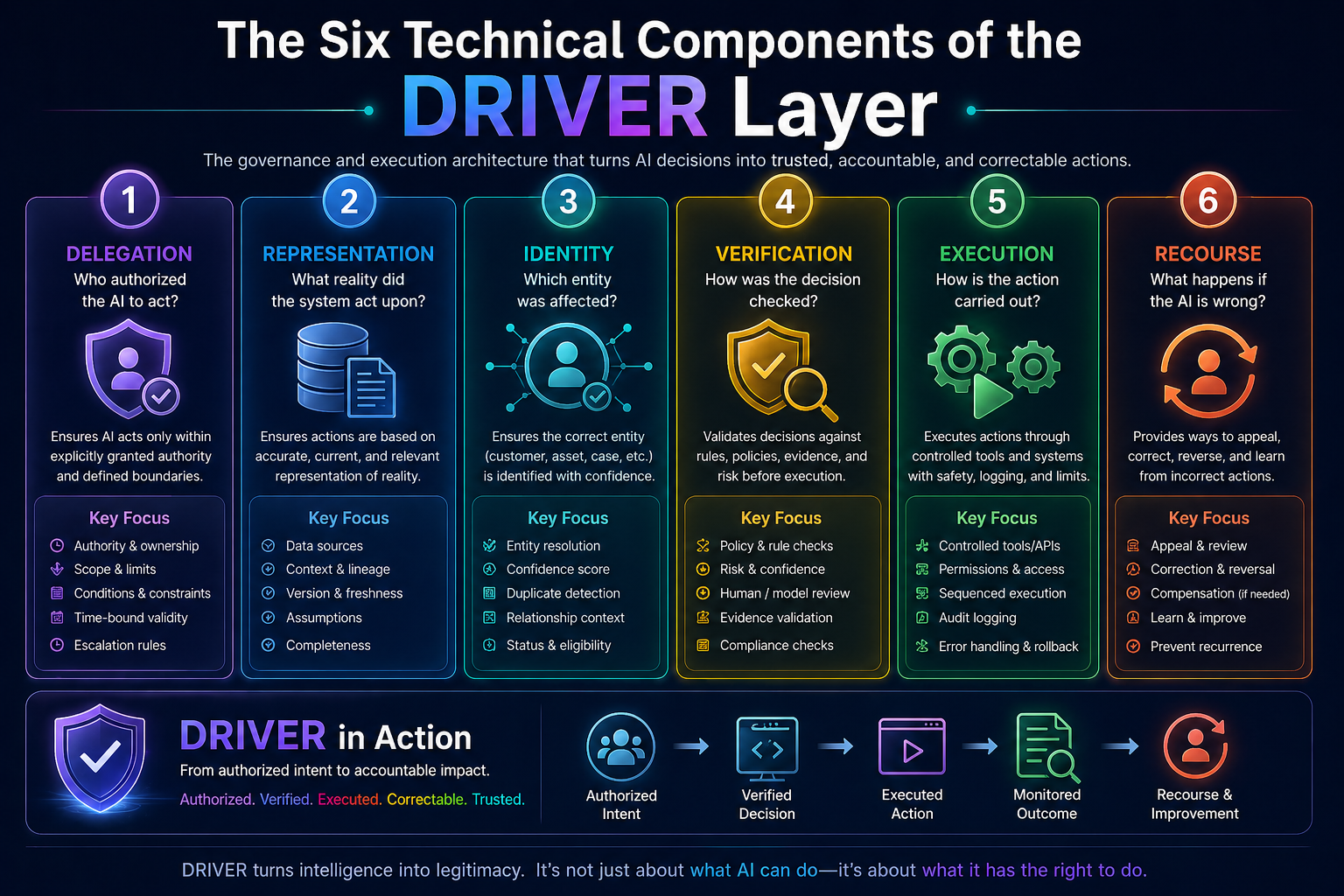
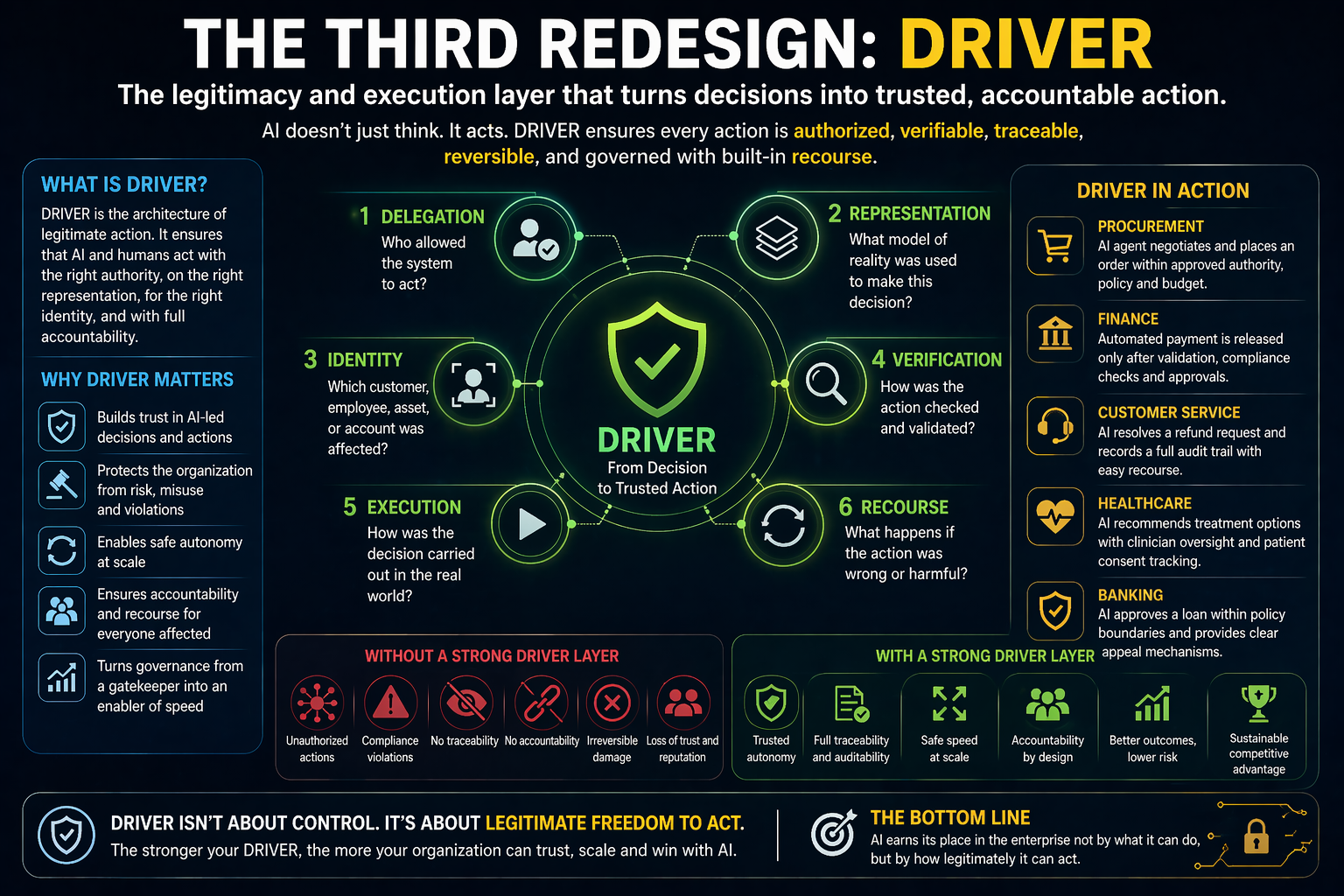
DRIVER: where actions become legitimate

This is where the system actually does something: approves, denies, routes, escalates, pays, blocks, schedules, dispatches, or changes a state.

This is where poor representation becomes expensive.

If the state is wrong, the action may be wrong.
If the entity is wrong, the action may hit the wrong target.
If the context is stale, the action may be mistimed.
If the correction never propagates, the harm compounds.

Representation Workflows therefore are not only a SENSE issue. They are also a DRIVER issue because action quality depends on representation quality.

Three simple examples

  1. Retail and commerce

Imagine a retailer using AI for pricing, replenishment, and customer service.

If stock levels are inaccurate, the planning model overpromises.
If returns are not reflected fast enough, pricing logic misfires.
If customer identity is fragmented across web, app, and store systems, service agents cannot act coherently.

The problem is not that the model lacks intelligence. The problem is that operations lack a workflow for keeping reality synchronized.

The AI winner in retail may not be the company with the flashiest model. It may be the company with the best workflows for maintaining product truth, inventory truth, customer truth, and policy truth.

  1. Banking and insurance

A bank or insurer may deploy AI across fraud, underwriting, service, claims, and collections.

But if customer state, repayment events, policy changes, beneficiary updates, claim documents, and exception histories are not continuously reconciled, the institution’s AI layer operates on partial truth.

That leads to false alerts, poor denials, weak prioritization, and rising recourse costs.

The strategic edge does not come only from better models. It comes from better-maintained institutional memory and reality representation.

  1. Industrial operations and supply chains

A factory, warehouse, or logistics network increasingly depends on digital representations of physical assets, flows, and constraints.

This is why digital twins have become strategically important. Microsoft describes digital twins as live digital representations of real-world environments, and that concept only works when state is refreshed and synchronized reliably. (NIST Publications)

In this setting, Representation Workflows become mission-critical. The company that best maintains the digital state of machines, locations, documents, and exceptions will outperform the company that merely deploys a stronger model.

Why agents make this even more important

Why agents make this even more important

The rise of AI agents pushes this issue into the center of strategy.

OpenAI’s guidance for building agents emphasizes that agents need structured orchestration, appropriate tools, safe execution patterns, and reliable context retrieval. In other words, scalable agents require operational scaffolding, not just reasoning power. (OpenAI)

This is exactly why Representation Workflows matter more in an agentic world.

A chatbot can survive with partial context.
An acting agent cannot.

An agent that updates records, sends messages, books appointments, executes trades, or changes case status needs current, trusted, scoped reality.

That means the rise of agents will increase the value of companies that can maintain:

  • current state,
  • permission state,
  • exception state,
  • workflow state,
  • and recovery state.

In other words, agents increase the premium on reality maintenance.

Why this will create a new market : Representation Workflows:

Why this will create a new market

Representation Workflows will become a major market because they solve a structural problem, not a temporary one.

First, enterprises are realizing that AI performance depends heavily on data quality, freshness, monitoring, and context continuity. (NIST Publications)

Second, digital operations are becoming more event-driven and real-time, which makes stale state more damaging and more visible. The shift from batch data to live operational context changes what “good AI infrastructure” actually means. (NIST Publications)

Third, regulation and governance are moving toward lifecycle responsibility, not just model-launch responsibility. NIST and the EU AI Act both reflect that direction. (NIST Publications)

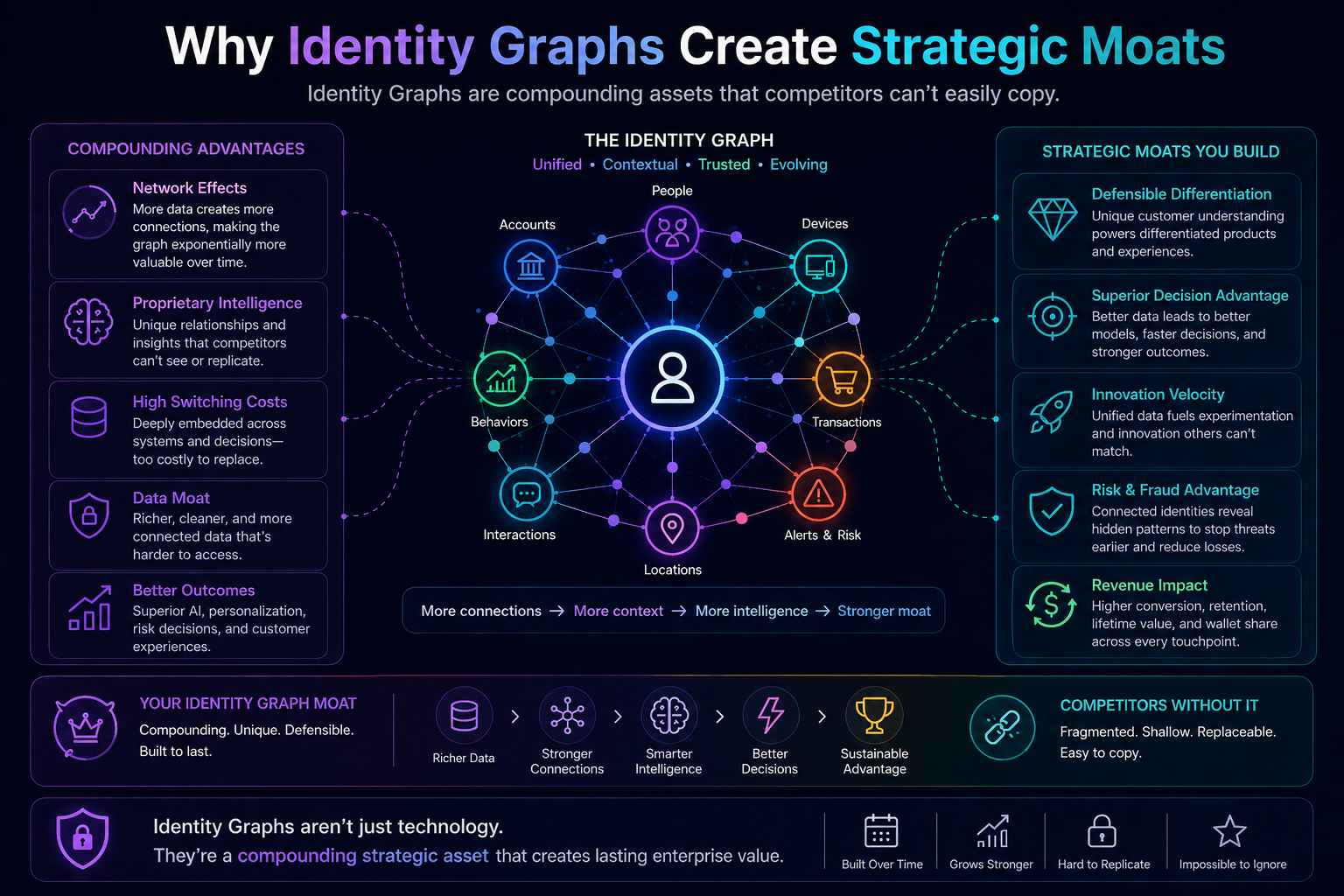
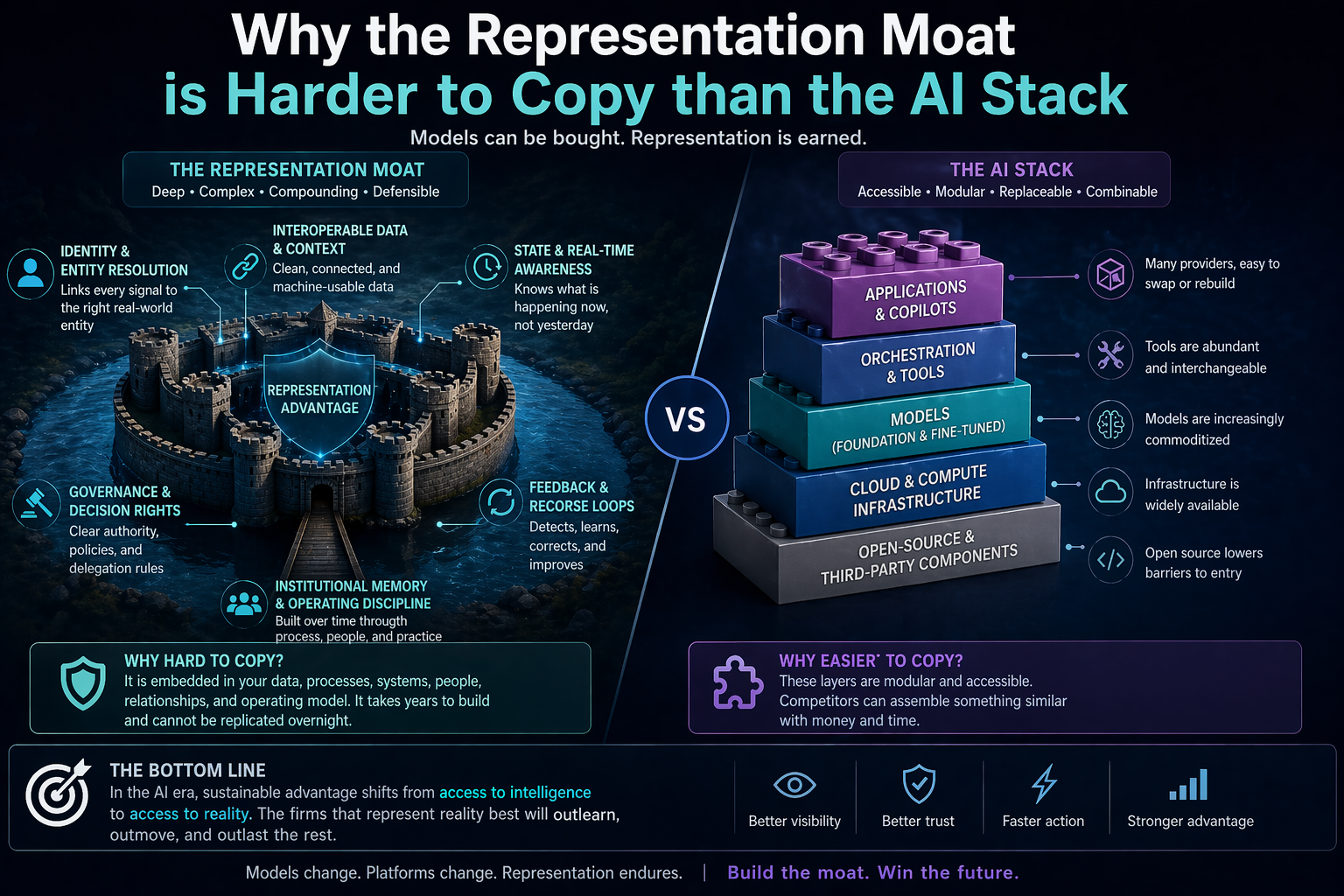
Fourth, once models commoditize, the harder-to-copy advantage shifts toward maintained operational truth.

That creates room for new categories of firms:

  • representation workflow platforms,
  • entity-state synchronization providers,
  • reality maintenance engines,
  • correction propagation layers,
  • cross-system truth reconciliation companies,
  • and operational graph integrity providers.

These firms may become as important to the AI era as workflow software became to the SaaS era.

What boards and CEOs should understand now

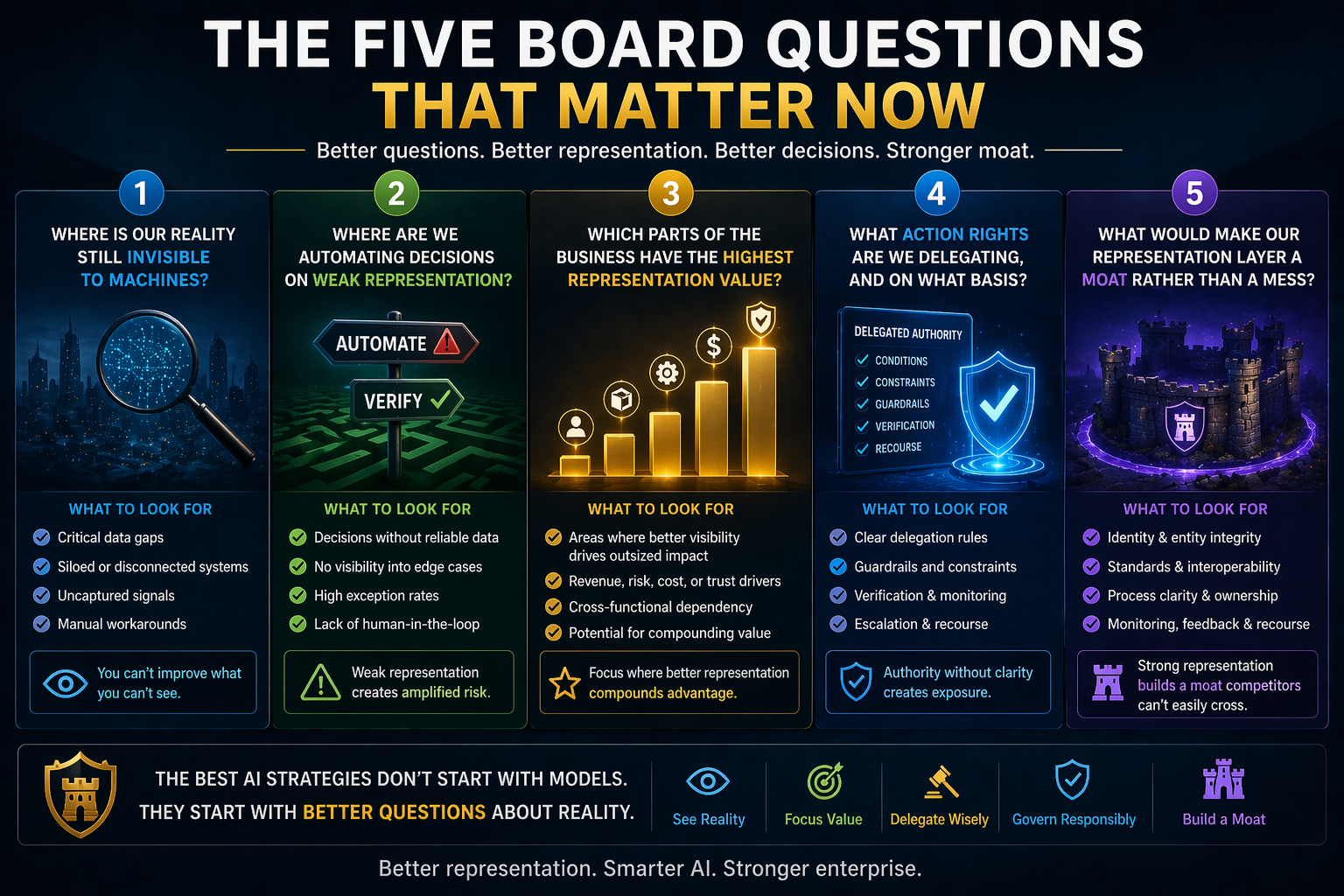
Boards should stop asking only, “Which model are we deploying?”

They should start asking:

  • Which parts of our business reality must stay machine-legible for AI to work?
  • Where does state become stale, fragmented, or contradictory?
  • Which workflows currently maintain that reality?
  • Are those workflows manual, slow, and hidden?
  • Which decisions are failing because the representation layer is weak?
  • Are we investing too much in CORE and too little in SENSE?

This is not a technical housekeeping issue.

It is a strategic design issue.

Because in the next AI economy, companies will not compete only on model intelligence. They will compete on their ability to continuously maintain a usable representation of reality.

That is why the biggest AI companies may rebuild operations around Representation Workflows, not just model deployment.

Representation Workflows are the operational backbone of the AI economy, enabling continuous maintenance of machine-readable reality across entities, states, relationships, and permissions. As AI systems evolve from model-based decision-making to real-world execution, competitive advantage will increasingly depend on maintaining accurate, real-time representations rather than just deploying more advanced models. This concept is part of the Representation Economics framework using the SENSE–CORE–DRIVER architecture.

the next operating advantage is reality maintenance Representation Workflows

Conclusion: the next operating advantage is reality maintenance

The AI market still loves model launches because they are dramatic, visible, and benchmarkable.

But real institutional advantage is often quieter.

It lives in whether the system knows the current customer, current supplier, current claim, current shipment, current inventory, current permission, current exception, and current risk.

That is not glamour work. It is operating-system work.

And it may define the next generation of winners.

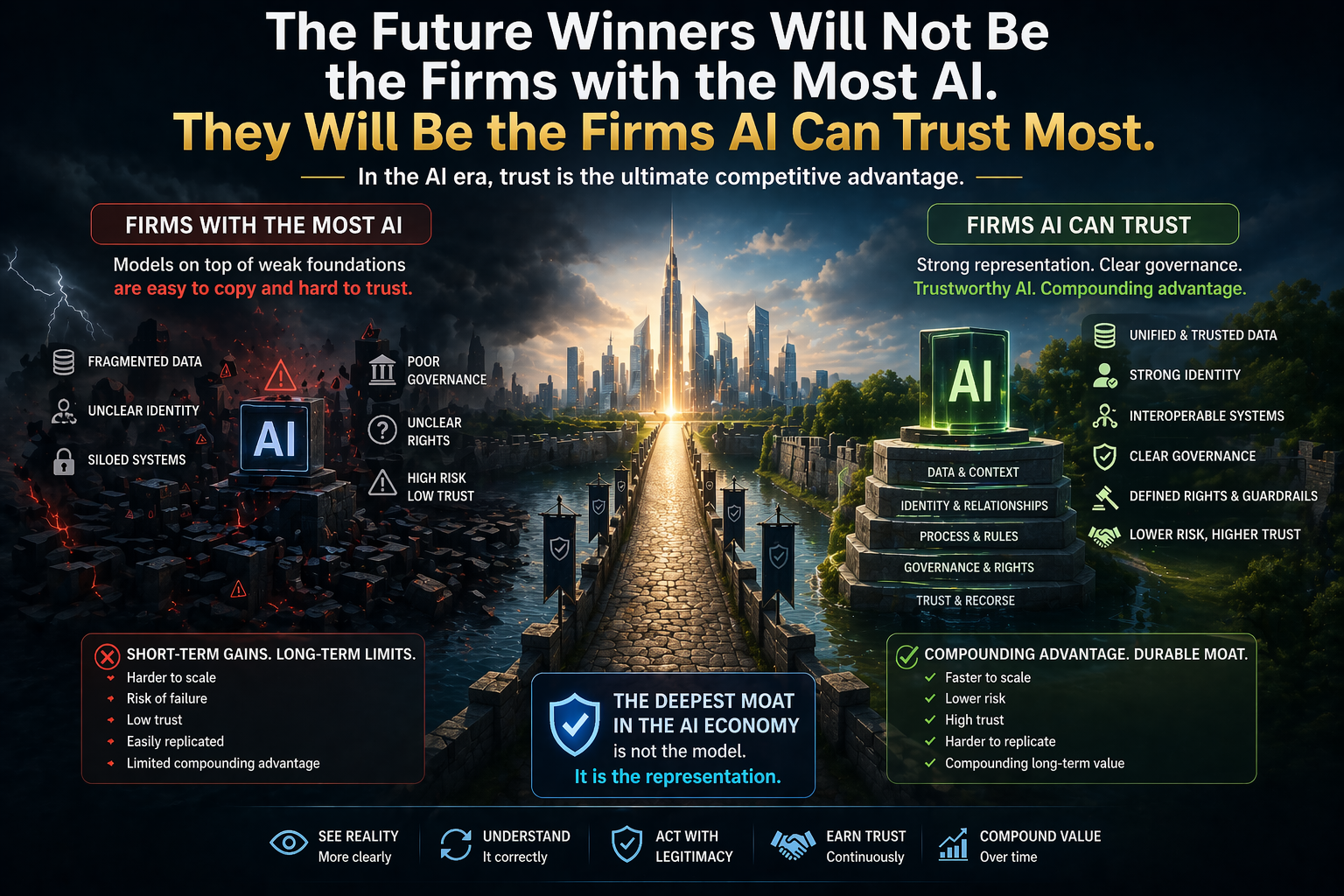
The future leaders in AI may not simply be the ones with the best reasoning engines. They may be the ones that build the strongest workflows for keeping reality continuously legible, governable, and actionable.

That is the deeper shift.

In the AI economy, intelligence matters.
But maintained reality may matter even more.

And that is why Representation Workflows deserves to become one of the defining ideas in Representation Economics.

Glossary

Representation Workflows
Operational processes that continuously maintain machine-readable reality so AI systems can make accurate, timely, and governed decisions.

Representation Economics
A strategic framework arguing that future advantage will come from how well institutions represent entities, states, relationships, and changes in a machine-usable way.

Machine-readable reality
The structured digital representation of the world that AI systems rely on to reason and act.

SENSE
The layer where signals are captured, entities are identified, state is built, and change is recorded.

CORE
The layer where models reason, rank, plan, and generate decisions.

DRIVER
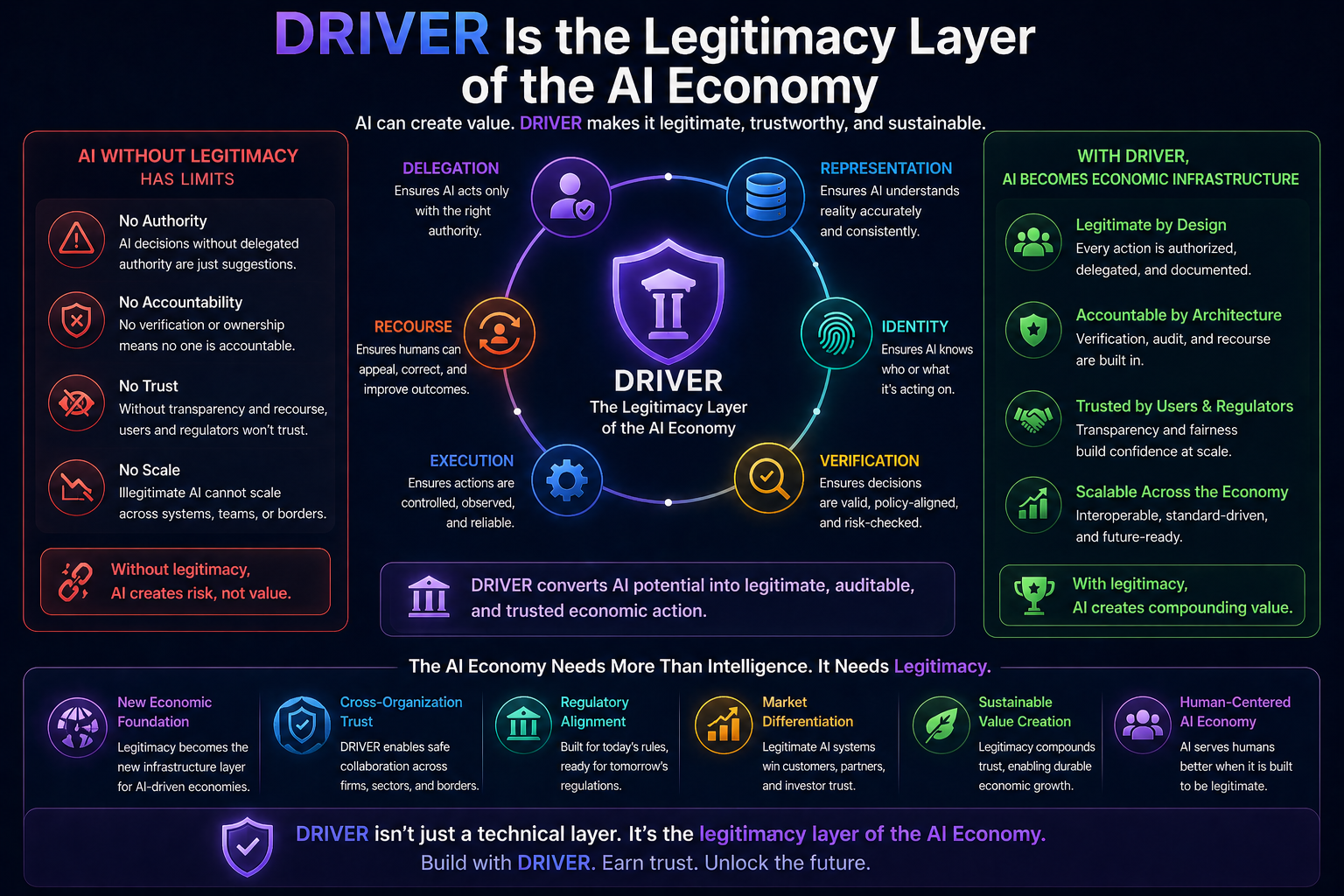
The layer where decisions become legitimate actions through authorization, execution, verification, and recourse.

MLOps
Practices for managing machine learning systems in production, including deployment, monitoring, and lifecycle maintenance.

Technical debt in ML
The hidden operational complexity that builds up around production machine learning systems, often beyond the model itself. (NeurIPS Papers)

Digital twin
A live digital representation of a real-world environment, system, or asset used for monitoring, simulation, and operations. (NIST Publications)

FAQ

What are Representation Workflows in AI?
Representation Workflows are the processes that keep digital representations of customers, assets, suppliers, policies, and operating conditions accurate and current so AI can act on them reliably.

How are Representation Workflows different from MLOps?
MLOps focuses on deploying and managing models in production. Representation Workflows focus on maintaining the machine-readable reality that those models depend on.

Why do Representation Workflows matter for AI agents?
Agents do not just answer questions. They act. That means they need current, trusted, and scoped representations of the world to avoid errors and unsafe execution. (OpenAI)

Why is this important for boards and CEOs?
Because AI failures often come not from weak reasoning alone, but from stale state, fragmented identity, bad context, and poorly maintained operational truth.

What kinds of companies could emerge here?
Representation workflow platforms, entity-state synchronization firms, correction propagation layers, operational graph integrity providers, and reality maintenance engines.

References and further reading

Explore the Architecture of the AI Economy

This article is part of a broader research series exploring how institutions are being redesigned for the age of artificial intelligence. Together, these essays examine the structural foundations of the emerging AI economy — from signal infrastructure and representation systems to decision architectures and enterprise operating models.

If you want to explore the deeper framework behind these ideas, the following essays provide additional perspectives:

Together, these essays outline a central thesis:

The future will belong to institutions that can sense reality, represent it clearly, reason about it intelligently, and act through governed machine systems.

This is why the architecture of the AI era can be understood through three foundational layers:

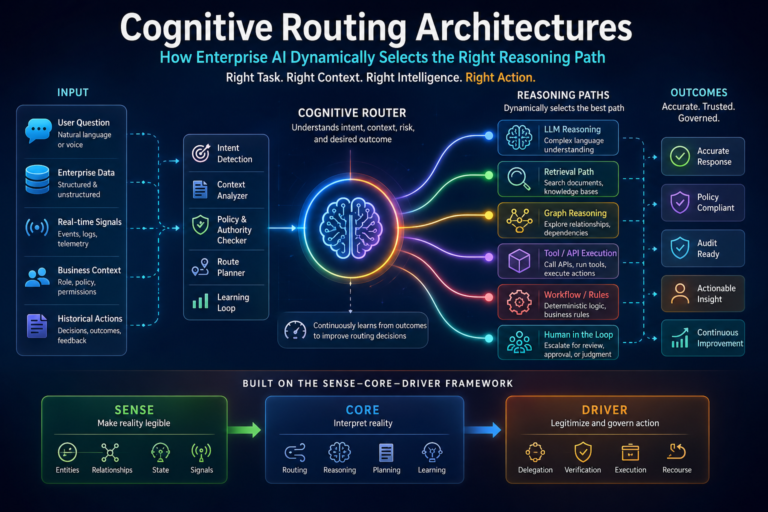
SENSE → CORE → DRIVER

Where:

  • SENSE makes reality legible
  • CORE transforms signals into reasoning
  • DRIVER ensures that machine action remains accountable, governed, and institutionally legitimate

Signal infrastructure forms the first and most foundational layer of that architecture.

AI Economy Research Series — by Raktim Singh

Recourse Platforms: The Next AI Infrastructure Market for Correction, Appeal, and Recovery

In the AI economy, the next major market may not be prediction. It may be recourse.

For the last decade, the dominant question in AI has been simple: Can the system make a good decision?

That question still matters. But it is no longer enough.

As AI systems move from recommendation to action—from scoring and ranking to approving, denying, flagging, suspending, escalating, pricing, filtering, routing, and executing—a second question becomes unavoidable:

What happens when the system is wrong?

Not wrong in the abstract. Wrong in the real, institutional, expensive sense.

A loan application is rejected because income data is stale.
A seller account is suspended because fraud signals were misread.
A patient claim is denied because a diagnosis code was mapped incorrectly.
A worker is screened out because the system inferred the wrong fit.
A shipment is flagged as risky because the digital state of the cargo no longer matches physical reality.

In each case, the failure is not just a bad output. It is a breakdown in the institution’s ability to correct reality inside the system.

That is why the AI economy will not stop at models, copilots, and agents. It will also create a new class of infrastructure: Recourse Platforms.

These platforms will not exist to make the first decision. They will exist to ensure that decisions can be challenged, corrected, escalated, reviewed, and repaired when machine-readable reality diverges from lived reality.

And that will become a major market.

Across jurisdictions, the direction is already visible. GDPR gives individuals rights to rectify inaccurate personal data, and Article 22 provides protections in certain solely automated decisions. The EU Digital Services Act gives users ways to contest moderation decisions through internal complaint systems, out-of-court dispute settlement, and judicial redress. Canada’s Directive on Automated Decision-Making requires federal departments to provide recourse. In US consumer finance, the CFPB has made clear that creditors using complex algorithms still must provide specific reasons for adverse action. In health insurance, consumers already have formal internal and external appeal rights. (GDPR)

The deeper point is bigger than compliance.

Recourse is becoming an economic layer.

Why this matters now

In the first wave of software, the product was the interface.

In the platform era, the product was coordination.

In the AI era, the product is increasingly decision power.

That changes everything.

When software merely stored records, mistakes were annoying.
When software began coordinating marketplaces, mistakes became costly.
When AI begins shaping access, opportunity, identity, pricing, risk, trust, and execution, mistakes become institutional.

A wrong recommendation can be ignored.
A wrong decision can be appealed.
But a wrong autonomous action inside a fast-moving system creates something else: the need for recovery architecture.

That is the opening for Recourse Platforms.

These platforms will emerge because enterprises, regulators, public institutions, digital platforms, and consumers will all discover the same uncomfortable truth:

AI adoption scales much faster than institutional correction capacity.

Most organizations are investing heavily in model quality, orchestration, copilots, agent frameworks, and automation pipelines. Far fewer are investing in the machinery of appeal, correction, evidence review, and downstream recovery.

Yet the more AI is used, the more disputes there will be.

Not because AI always fails.
But because AI operates on representations—and representations can be incomplete, stale, biased, conflicting, or stripped of context.

That is where the Representation Economy lens becomes decisive.

What are Recourse Platforms?

Recourse Platforms are AI infrastructure systems that enable individuals and organizations to challenge, correct, review, and recover from automated decisions. They provide structured mechanisms for appeal, evidence submission, decision reconstruction, and downstream recovery.

AI will not just create markets for intelligence. It will create markets for correction

The real problem is not just model error. It is representational mismatch.

The real problem is not just model error. It is representational mismatch.

Many people think recourse is mainly about explainability.

It is not.

Explainability helps someone understand why a result happened.
Recourse helps them do something about it.

That difference is enormous.

A person denied a loan does not only want a model card. They want to know:

  • What data was used?
  • Which part was inaccurate?
  • What can be corrected?
  • Who can review the case?
  • What evidence can be submitted?
  • How long will the review take?
  • What happens if the original decision caused downstream harm?

That is not merely an explanation problem. It is a workflow, governance, evidence, identity, and recovery problem.

Academic work on algorithmic recourse focuses on how unfavorable automated decisions can be reversed through actionable changes or contestable pathways. At the policy level, NIST and OECD both emphasize accountability, traceability, governance, and mechanisms for inquiry and review as central to trustworthy AI. (ACM Digital Library)

The next generation of AI infrastructure, therefore, will need to support not just inference, but institutional recourse.

The SENSE–CORE–DRIVER view of recourse

The SENSE–CORE–DRIVER view of recourse

The easiest way to understand this is through SENSE–CORE–DRIVER.

SENSE: where reality becomes machine-legible

This is where signals are captured, attached to entities, turned into state, and updated over time.

Most recourse problems begin here.

A system may have:

  • the wrong person,
  • the wrong transaction,
  • the wrong state,
  • the wrong timestamp,
  • the wrong linkage across entities,
  • or the wrong update sequence.

A driver gets suspended because a fraud event was attached to the wrong account.
A patient is denied coverage because a diagnosis update never propagated.
A supplier gets downgraded because location data, delivery data, and customs data tell different stories.

In all these cases, the system is not merely “biased.” It is representing reality badly.

CORE: where decisions are made

This is where the system interprets the representation and produces judgment.

Even a strong model can fail if the input state is distorted.
And even a fair model can produce harmful outcomes if business rules, thresholds, confidence logic, or ranking priorities are poorly designed.

DRIVER: where action becomes legitimate

This is where the system acts.

Who authorized the action?
What evidence supported it?
Was the confidence threshold sufficient?
Was escalation required?
Was human review available?
What recourse exists after harm occurs?

This is where many current AI systems are weakest.

They may produce answers.
They may even produce actions.
But they often do not produce structured legitimacy.

That gap is exactly where Recourse Platforms will grow.

What a Recourse Platform actually does

What a Recourse Platform actually does

A true Recourse Platform is not just a support-ticket tool with AI branding.

It is a new operational layer that sits between automated decision systems and institutional accountability.

At minimum, it does seven things.

  1. Structured intake of disputes

The platform allows a person, business, or delegated representative to challenge a decision in machine-readable form.

Not just “I disagree,” but:

  • which decision,
  • on which date,
  • affecting which entity,
  • using which evidence,
  • with what claimed error.
  1. Reconstruction of the decision pathway

It pulls the relevant representation, model outputs, rules, logs, prompts, thresholds, confidence markers, and workflow history.

Without reconstruction, appeal becomes theater.

  1. Classification of the error

Was the issue:

  • bad data,
  • identity mismatch,
  • stale state,
  • policy conflict,
  • model error,
  • missing context,
  • unauthorized delegation,
  • tool misuse,
  • or downstream execution failure?

Different error classes require different remedies.

  1. Evidence submission and verification

The affected party must be able to add new proof: documents, transactions, attestations, corrected records, contextual explanation, or third-party certification.

  1. Smart routing to the right review path

Not every case needs a human.
Not every case should remain automated.

Some need automated re-evaluation.
Some need specialist review.
Some need policy escalation.
Some need independent review.
Some may even need regulator-facing reporting.

  1. Correction and recovery orchestration

If the original decision was wrong, the platform must not stop at “approved on reconsideration.”

It must propagate correction to downstream systems:

  • restore access,
  • reverse penalties,
  • repair reputation flags,
  • reopen claims,
  • update state stores,
  • notify dependent systems.
  1. Institutional memory

Recourse should improve the system itself.

Which error types recur?
Which models are generating unnecessary disputes?
Which business rules create false negatives?
Which teams create review bottlenecks?
Which classes of entities are persistently underrepresented?

This is where Recourse Platforms become strategic, not merely defensive.

Three simple examples that make the category obvious

Three simple examples that make the category obvious

  1. Lending

A small business owner is denied working capital. The model appears correct at first glance. Later, it turns out one tax record was outdated and one repayment event was never reconciled.

Today, this often becomes a call-center problem.

Tomorrow, it will become a recourse workflow problem.

A Recourse Platform would ingest the denial, surface the contributing factors, allow submission of updated proof, re-run eligibility checks, and, if the original denial caused cascading harm, support priority reconsideration and downstream correction.

This is not just fairer. It is economically smarter. It reduces abandonment, preserves customer trust, and improves underwriting quality.

The CFPB has explicitly said that when credit decisions rely on complex algorithms, creditors still need to provide specific reasons for adverse action. (Consumer Financial Protection Bureau)

  1. Health insurance

A patient’s treatment is denied. The reason appears administrative, but the real issue is that the insurer’s representation of medical necessity is incomplete.

Healthcare has long recognized that decisions affecting care need appeal structures, including external review. In urgent cases, those review pathways can be accelerated. (HealthCare.gov)

AI will not remove this need. It will intensify it.

As more claims, triage pathways, coding reviews, and utilization decisions become AI-assisted, the ability to contest, correct, and recover quickly will become mission-critical.

  1. Digital platforms

A creator, seller, or driver is deranked, demonetized, or suspended.

These are not minor events. For many people, they are income shocks.

The EU Digital Services Act already requires complaint-handling and creates routes for out-of-court dispute settlement and judicial redress. It also says decisions on complaints should not be taken solely on the basis of automated means. (Digital Strategy EU)

The winner in the next decade may not be the platform with the most aggressive automation.

It may be the one with the most credible recourse.

Why Recourse Platforms will become a real market

Why Recourse Platforms will become a real market

This category will grow for five reasons.

First, AI decisions are becoming economically consequential

Once AI starts shaping access to money, work, care, mobility, insurance, and digital visibility, recourse stops being a legal side note and becomes part of market design.

Second, representation errors are inevitable

No organization has perfect state representation.

Entities change. Context shifts. Data decays. Identity links break. Sensors drift. Policies evolve.

If AI acts on reality through representation, then correction infrastructure is unavoidable.

Third, regulation is moving toward contestability

The vocabulary differs by sector and jurisdiction—rectification, human oversight, appeal, complaint handling, external review, recourse—but the direction is consistent: consequential decisions must be challengeable. (GDPR)

Fourth, enterprises need trust-preserving automation

Boards do not want slower AI. They want scalable AI that does not create reputational, legal, operational, and political blowback.

Recourse Platforms make faster adoption possible because they create a safety layer for institutional correction.

Fifth, recovery is an untapped economic service

There is a future market in:

  • AI dispute infrastructure,
  • evidence verification,
  • independent review networks,
  • decision-trace tooling,
  • correction propagation,
  • reputational restoration,
  • and recourse analytics.

The AI economy will not only create systems that act.

It will create systems that repair action.

The companies that will emerge

The companies that will emerge

The most interesting part is what new firms this category will create.

We are likely to see:

Recourse infrastructure providers

APIs and workflow systems for appeal, correction, and review.

Decision-trace platforms

Tools that reconstruct how a decision happened across models, rules, prompts, and agents.

Representation repair services

Specialists that resolve broken entity matching, stale state, and conflicting records.

Independent review networks

Third-party institutions that provide trusted adjudication in high-impact cases.

Recovery orchestration firms

Platforms that do not just overturn a bad decision, but restore the affected person or business across downstream systems.

Recourse analytics companies

Firms that help enterprises quantify where AI-generated disputes originate and how to redesign systems to reduce them.

This is why Recourse Platform is not a feature.

It is a category.

What boards and C-suites should ask now

If this category is real—and it is—leaders should not wait for regulation, headlines, or litigation to force the conversation.

They should ask now:

  • Which AI-enabled decisions in our organization can materially harm a person, business, or partner?
  • Can those decisions be contested?
  • Can the underlying representation be corrected?
  • Can downstream harm be reversed?
  • Do we have a traceable evidence chain?
  • Where do we still rely on informal, manual, opaque appeals?
  • Are we designing for automation alone, or for legitimacy as well?

That is the strategic shift.

The future of AI is not only about intelligence.

It is about institutional trust under machine-mediated decision-making.

And trust will increasingly depend not on whether the system is flawless, but on whether the system is repairable.

Recourse Platforms are emerging as a critical AI infrastructure category that enables correction, appeal, and recovery of automated decisions. As AI systems scale decision-making across finance, healthcare, platforms, and enterprises, recourse mechanisms will become essential for trust, governance, and institutional legitimacy. This article introduces the concept within the Representation Economy framework using the SENSE–CORE–DRIVER model.

the AI economy will need markets for second chances : Recourse Platforms

Conclusion: the AI economy will need markets for second chances

The history of institutions is not the history of perfect judgment.

It is the history of building mechanisms for review.

Courts have appeals.
Markets have dispute resolution.
Insurance has reconsideration.
Healthcare has internal and external review.
Credit has adverse-action rules.
Platforms increasingly face complaint and redress obligations. (HealthCare.gov)

The AI economy will be no different.

As AI systems become embedded in economic life, society will demand something deeper than transparency and more practical than ethics statements.

It will demand recourse.

That is why one of the most important businesses of the next decade may not be a model company at all.

It may be the company that helps institutions answer the most human question in the age of machine decisions:

If the system gets me wrong, how do I get my reality back?

Glossary

Recourse Platforms
Systems that help people and institutions challenge, correct, review, and recover from harmful or inaccurate automated decisions.

Algorithmic recourse
A field of research focused on how a person can reverse or contest an unfavorable automated outcome through actionable changes or structured intervention. (ACM Digital Library)

Contestability
The ability to challenge a decision, submit evidence, request review, and seek correction or redress.

Rectification
The right to correct inaccurate personal data under GDPR. (GDPR)

Adverse action
A negative decision in consumer finance, such as denial of credit, that triggers notice obligations and requires specific reasons. (Consumer Financial Protection Bureau)

Internal complaint-handling
A platform or institution’s own process for users to challenge decisions. The DSA requires this for certain online platforms. (Digital Strategy EU)

External review
A review by an independent third party, common in healthcare appeals. (HealthCare.gov)

Representation Economy
A framework in which economic value increasingly depends on how well systems represent entities, states, relationships, and changes in the real world.

SENSE
The layer where signals are captured, attached to entities, turned into state, and updated over time.

CORE
The layer where AI and decision systems interpret representations and make judgments.

DRIVER
The layer where decisions become legitimate action through authorization, evidence, execution, verification, and recourse.

FAQ

What is a Recourse Platform in AI?

A Recourse Platform is infrastructure that helps organizations manage disputes over automated decisions by enabling appeal, correction, evidence submission, review, and downstream recovery.

How is recourse different from explainability?

Explainability tells you why a system produced an outcome. Recourse tells you how that outcome can be challenged, corrected, or reversed.

Why will Recourse Platforms become important?

As AI systems make more economically significant decisions, institutions will need scalable ways to handle disputes, reduce harm, satisfy regulatory expectations, and preserve trust. (Canada)

Which industries will need Recourse Platforms first?

Financial services, healthcare, insurance, digital platforms, HR and hiring, public-sector decision systems, and supply chains are all likely early adopters.

Is this mainly a compliance issue?

No. Compliance is one driver, but the larger issue is institutional trust. Recourse Platforms help organizations scale automation without losing legitimacy.

Why does this matter to boards and CEOs?

Because AI risk is no longer just a model-performance issue. It is now a business-model, trust, governance, and recovery issue.

References and further reading

Representation Clearinghouses: The Missing Infrastructure the AI Economy Needs to Reconcile Reality Before It Acts

Representation Clearinghouses

In the next phase of AI, the biggest failure will not always come from a bad model. It will come from different institutions acting on different machine-readable versions of the same world.

Most AI discussions still assume a neat pipeline.

Reality is observed.
Data is collected.
A model analyzes it.
A decision follows.

That is no longer how many important systems work.

In the real economy, the same person, business, shipment, patient, device, or transaction is often represented differently across institutions. A bank has one view of a small business. A logistics firm has another. A tax authority has another. A healthcare provider may hold a different picture of a patient than an insurer, pharmacy, or specialist does. Health-data interoperability programs, patient-record matching efforts, financial market infrastructures, digital credentials, and supply-chain standards all exist for the same basic reason: fragmented representations create operational friction, trust problems, and systemic risk. (ASTP)

That is why the AI economy will need a new institutional layer. I call it the Representation Clearinghouse.

A Representation Clearinghouse is a neutral institution or infrastructure layer that helps reconcile competing machine-readable versions of the same entity, event, or state before high-stakes action is taken.

This is not a minor technical convenience. It is likely to become one of the defining institutional needs of the AI era.

The deeper problem is not only bad data. It is conflicting reality.

The deeper problem is not only bad data. It is conflicting reality.

In your SENSE–CORE–DRIVER framework, SENSE makes reality legible, CORE interprets it, and DRIVER turns decisions into action. That framework becomes even more important once multiple institutions are involved.

Why? Because SENSE does not happen only once. Different institutions sense the world differently. They use different identifiers, update cycles, schemas, incentives, risk thresholds, and trust rules. So by the time CORE reasons and DRIVER acts, the institution may no longer be acting on reality in any shared sense. It may be acting on its own local representation of reality, which may conflict with someone else’s equally operational but different representation.

That is the key shift.

The old problem was incomplete data.
The next problem is competing machine-readable realities.

And once AI systems begin making faster recommendations, autonomous updates, and agentic actions across institutional boundaries, those conflicts become more consequential.

Health IT authorities explicitly define patient matching as the identification and linking of one patient’s data within and across health systems to obtain a comprehensive record, and they describe it as a critical component of interoperability. That language exists because fragmented digital reality is already a structural problem, not a niche edge case. (ASTP)

Why the word “clearinghouse” matters

Why the word “clearinghouse” matters

The term matters because it points to an existing institutional logic.

In finance, clearing and settlement infrastructures exist because counterparties need trusted mechanisms for matching, confirming, and settling obligations safely. BIS and IOSCO treat payment systems, central securities depositories, securities settlement systems, central counterparties, and trade repositories as financial market infrastructures because these mechanisms reduce systemic risk and support safe coordination across participants. (Bank for International Settlements)

The AI economy is moving toward an analogous problem, but not only for money.

It needs neutral mechanisms for:

  • matching representations,
  • identifying conflicts,
  • validating provenance,
  • resolving ambiguity,
  • and determining which version is reliable enough for action.

In other words, the AI economy will increasingly need clearinghouses for representation, not just clearinghouses for transactions.

That is the strategic leap.

Why Representation Clearinghouses Matter

Why Representation Clearinghouses Matter

  • AI systems act across institutions with different versions of reality
  • The same entity can have conflicting machine-readable representations
  • Decisions made on inconsistent realities create systemic risk
  • Representation Clearinghouses reconcile truth before action
  • Future AI advantage will come from coordination, not just intelligence

What a Representation Clearinghouse actually does

A Representation Clearinghouse does not need to “own” the truth. That is the wrong ambition. It does something more realistic and more useful.

It helps answer questions like these:

  • Are these two records describing the same entity?
  • Which parts of this representation are current, and which are stale?
  • Which claims are directly observed, and which are inferred?
  • Which source has authority over which attribute?
  • Where do records conflict?
  • What confidence should attach to the merged view?
  • What should happen before action is taken if conflict remains unresolved?

That makes it a neutral reconciliation layer between fragmented institutional realities.

In practical terms, many of the building blocks already exist in partial form. W3C Verifiable Credentials provide a way to express credentials on the web in a manner that is cryptographically secure, privacy-respecting, and machine-verifiable.

GS1 standards give organizations a common language to identify, capture, and share supply-chain data, and EPCIS is specifically described by GS1 as a traceability event messaging standard that enables supply-chain visibility through sharing event data using a common language. (W3C)

Representation Clearinghouses would bring these kinds of pieces together into a more explicit institutional function.

A simple banking example: one business, three realities

A simple banking example: one business, three realities

Imagine a small manufacturer applying for credit.

The bank sees account balances, repayment history, invoices, and transaction flows.
A logistics network sees shipping delays, route bottlenecks, and fulfillment volatility.
A tax authority sees filings and payment compliance.
A supplier-finance platform sees invoice disputes and settlement timing.

Each representation is real in one sense. But none is complete. Worse, they may conflict.

The bank may see a stable borrower.
The logistics layer may see rising fragility.
The supplier platform may see weakening confidence.
The tax layer may show delays the bank has not yet incorporated.

Without a reconciliation layer, AI systems inside each institution may act quickly on incompatible pictures of the same business. One may extend credit. Another may tighten risk. Another may trigger collections. Another may downgrade trust.

A Representation Clearinghouse would not magically eliminate uncertainty. But it could surface divergence, compare provenance, align identifiers, flag stale fields, and help institutions distinguish between a local view and a cross-institutionally reconciled view.

That is not a luxury. In an agentic economy, it becomes the difference between coordinated intelligence and coordinated confusion.

A healthcare example: one patient, many partial truths

Healthcare already lives inside this problem.

Patient matching exists because patient data is often spread across systems and organizations. U.S. health IT authorities describe patient matching as the linking of one patient’s data within and across health systems in order to obtain a comprehensive health record. They explicitly frame it as critical to interoperability and the nation’s health IT infrastructure. (ASTP)

Now add AI.

A hospital has one representation of the patient’s current state.
A pharmacy has another.
An insurer has another.
A wearable platform has another.
A specialist in another city has another.

If each AI layer acts on its own local truth, the patient can be over-treated, under-treated, delayed, denied, or routed badly. The problem is not only missing data. It is unresolved representational conflict.

A Representation Clearinghouse in healthcare would help answer:

  • Are these records linked to the same patient correctly?
  • Which medication list is most current?
  • Which allergy record has stronger provenance?
  • Which observations are authoritative for this use case?
  • Which data should be treated as summary, and which as decision-grade?

That is where your Representation Economics framework becomes highly practical. The issue is not just data exchange. It is whether institutions can reconcile reality well enough to act safely.

A supply-chain example: one shipment, too many states

A supply-chain example: one shipment, too many states

Supply chains offer another clear example.

GS1 says its standards provide a common language to identify, capture, and share supply-chain data. It also describes EPCIS as a common language for sharing event data to enable visibility. DCSA, meanwhile, positions its work around vendor-neutral, open standards for container shipping precisely because coordination across carriers, shippers, ports, terminals, banks, and software providers breaks down when everyone runs on different digital states. (GS1)

That tells us something important: the global economy already needs common frameworks because many actors hold different states for the same object.

A container may be “in transit” in one system, “at risk” in another, “held for documentation” in another, and “arriving on schedule” in a fourth.

Now imagine AI agents scheduling labor, adjusting working capital, triggering insurance notices, rerouting inventory, or updating production plans on top of those conflicting states.

This is exactly the kind of environment where Representation Clearinghouses become critical. They do not replace source systems. They create a trusted, neutral layer for reconciling competing operational truths before action cascades.

Why Representation Clearinghouses will become a real market; Representation Clearinghouses

Why Representation Clearinghouses will become a real market

This is not just a theory of governance. It is also a theory of new company formation.

Once you see the problem clearly, new market categories become obvious.

Some firms will specialize in entity-resolution infrastructure across institutions.
Some will become provenance and trust layers for machine-verifiable claims.
Some will operate sector-specific state-reconciliation platforms for banking, healthcare, logistics, public infrastructure, or climate systems.
Some will build conflict-resolution engines that flag when representations diverge beyond safe thresholds.
Some will provide representation audit trails so regulators, insurers, and boards can reconstruct how a reconciled view was formed.

This is why Representation Clearinghouses matter so much for your larger Goal 2. They help explain not only how existing firms can survive and win, but what entirely new firms will emerge.

The companies of the next decade will not just produce models. They will produce trusted reconciliation layers for reality.

Why neutrality matters

A Representation Clearinghouse cannot simply be another dominant platform hiding behind the language of trust.

Its legitimacy depends on neutrality.

That does not necessarily mean government ownership. It means the institution must be trusted to reconcile without unfairly privileging one party’s representation, one schema, one business incentive, or one hidden model logic over everyone else’s.

This is exactly why standards, interoperability bodies, and shared frameworks matter so much. Vendor-neutral and open approaches in areas like shipping, health-data exchange, and digital credentials exist because coordination breaks down when every actor insists on its own closed representation system. (ASTP)

The AI economy will intensify that need. The more autonomous systems act across institutions, the more dangerous closed representational silos become.

What boards and CEOs should ask now

Boards should not wait for a formal “representation clearinghouse industry” to appear before they act.

They should start with five questions:

  1. Where do we rely on representations of entities that originate outside our institution?
  2. Where do our AI systems act on local truth without reconciling it against other authoritative views?
  3. Which attributes in our decisions most often suffer from stale data, conflicting identifiers, or inconsistent provenance?
  4. Where would a representational conflict create legal, financial, operational, or reputational risk?
  5. Which partnerships, standards, or neutral layers do we need before we automate further?

This is not a technical housekeeping exercise. It is a strategic question about institutional maturity.

The deeper strategic implication

Representation Clearinghouses point to a bigger truth about the AI economy.

The future will not be won only by those who sense reality better.
It will also be won by those who can reconcile reality across institutions better.

That is a major extension of Representation Economics.

Until now, many firms have treated representation as an internal advantage: better signals, better models, better decisions. But in the next phase, value will also come from being able to operate across fragmented ecosystems where reality is distributed, contested, and unevenly updated.

That is why Representation Clearinghouses may become as important to the AI economy as clearing and settlement infrastructures became to financial markets.

They reduce friction.
They reduce ambiguity.
They reduce systemic error.
And they make higher-speed coordination possible.

Representation Clearinghouses : the next neutral infrastructure of the AI age

Conclusion: the next neutral infrastructure of the AI age

The AI economy is moving from isolated intelligence to interconnected action.

As that shift accelerates, the biggest problem will not always be whether a model is smart. It will be whether institutions are acting on incompatible versions of the same world.

That is why Representation Clearinghouses matter.

They are the neutral institutions that will help reconcile competing machine-readable realities before those realities trigger credit decisions, medical interventions, supply-chain actions, regulatory responses, or autonomous workflows.

In the industrial era, markets needed clearinghouses for transactions.
In the AI era, economies will increasingly need clearinghouses for representations.

That is the next infrastructure layer of trust.

And the institutions that understand this early will not just build better AI. They will help build a world in which AI systems can coordinate on reality before they act on it.

Summary

What is a Representation Clearinghouse?

A Representation Clearinghouse is a neutral institution or infrastructure layer that reconciles competing machine-readable versions of the same entity, event, or state before high-stakes action is taken.

Why does it matter in the AI economy?

Because AI systems increasingly act across institutions, and those institutions often hold different digital representations of the same person, business, shipment, patient, or transaction.

What problem does it solve?

It helps resolve representational conflict: mismatched identities, stale attributes, conflicting claims, inconsistent provenance, and uncertain authority over which version should drive action.

Why is neutrality important?

Because if the reconciliation layer is biased toward one institution’s incentives or schemas, it stops being trusted infrastructure and becomes another source of representational power.

Glossary

Representation Clearinghouse
A neutral institution or infrastructure layer that reconciles competing machine-readable versions of the same entity, event, or state before action is taken.

Representation Economics
Your broader framework for understanding how trust, value, coordination, and competitive advantage shift when institutions act on representations of reality rather than reality directly.

SENSE–CORE–DRIVER
Your architecture for institutional AI: SENSE makes reality legible, CORE interprets and reasons over it, and DRIVER governs legitimate action.

Entity Resolution
The process of determining whether records from different systems refer to the same real-world entity.

Provenance
Information about where a claim, data point, or digital artifact came from and how it was produced, used to assess quality, reliability, and trustworthiness.

Verifiable Credential
A machine-verifiable digital credential designed to be cryptographically secure and privacy-respecting. W3C’s standard is intended to express credentials on the web in a machine-verifiable way. (W3C)

Patient Matching
The identification and linking of one patient’s data within and across health systems in order to obtain a comprehensive view of that patient’s record. (ASTP)

EPCIS
A GS1 traceability event messaging standard that enables supply-chain visibility through sharing event data using a common language. (GS1)

Digital Trust Infrastructure
The standards, institutions, protocols, and governance layers that make cross-system coordination reliable enough for high-stakes digital action.

FAQ

What is a Representation Clearinghouse in simple language?

It is a neutral layer that helps institutions compare, align, and reconcile different digital representations of the same thing before they act.

Why is this different from ordinary data integration?

Ordinary integration often moves data between systems. A Representation Clearinghouse is concerned with reconciling competing versions of reality, including conflicts, provenance, authority, and trust.

Why will AI make this problem bigger?

Because AI speeds up decisions and increasingly acts across systems, so representational conflicts can trigger faster and larger consequences.

Which industries will need Representation Clearinghouses first?

Banking, healthcare, supply chains, digital identity, insurance, and public-sector systems are strong early candidates because they already rely on fragmented, cross-institutional representations. (ASTP)

Are Representation Clearinghouses just another name for standards bodies?

No. Standards bodies define common rules and formats. A Representation Clearinghouse would use standards, provenance, and governance mechanisms to help reconcile live conflicts across institutional representations.

What new types of companies could emerge?

Entity-resolution platforms, provenance networks, state-reconciliation firms, conflict-resolution engines, and representation audit infrastructure providers.

What should boards do now?

Boards should identify where their organizations already act on external or conflicting representations and ask whether those views are authoritative, reconciled, fresh, and trustworthy enough for automation.

What is a Representation Clearinghouse?

A neutral system that reconciles different machine-readable versions of the same entity before decisions are made.

Why are Representation Clearinghouses needed?

Because different institutions hold different representations of the same reality, leading to conflicting decisions.

How is this different from data integration?

Data integration moves data. Representation Clearinghouses resolve conflicts in reality itself.

Why is this important for AI?

AI systems increasingly act across institutions, making inconsistent representations a major risk.

Which industries need this first?

Banking, healthcare, supply chains, identity systems, insurance, and public sector systems.

References and further reading

For financial clearing and settlement logic, see BIS and IOSCO’s materials on the Principles for Financial Market Infrastructures, which define core categories of market infrastructure and explain their role in reducing systemic risk. (Bank for International Settlements)

For digital credentials, see W3C’s Verifiable Credentials Data Model 2.0 and the W3C announcement of the Recommendation, which describe a mechanism for credentials that is cryptographically secure, privacy-respecting, and machine-verifiable. (W3C)

For healthcare interoperability and patient matching, see ASTP/HealthIT resources on patient identity and record matching, which define patient matching and explain why it is critical to interoperability. (ASTP)

For supply-chain visibility and interoperability, see GS1 standards, GS1 EPCIS materials, and related traceability resources describing common-language approaches to event sharing and visibility. (GS1)

Explore the Architecture of the AI Economy

This article is part of a broader research series exploring how institutions are being redesigned for the age of artificial intelligence. Together, these essays examine the structural foundations of the emerging AI economy — from signal infrastructure and representation systems to decision architectures and enterprise operating models.

If you want to explore the deeper framework behind these ideas, the following essays provide additional perspectives:

Together, these essays outline a central thesis:

The future will belong to institutions that can sense reality, represent it clearly, reason about it intelligently, and act through governed machine systems.

This is why the architecture of the AI era can be understood through three foundational layers:

SENSE → CORE → DRIVER

Where:

  • SENSE makes reality legible
  • CORE transforms signals into reasoning
  • DRIVER ensures that machine action remains accountable, governed, and institutionally legitimate

Signal infrastructure forms the first and most foundational layer of that architecture.

AI Economy Research Series — by Raktim Singh

Synthetic Representation: How the AI Economy Will Construct Reality When It Cannot Fully Observe It

Synthetic Representation:

The next phase of AI will not be defined only by how well systems analyze reality, but by how safely institutions act on realities they had to partially construct.

Most AI conversations still begin with an outdated assumption: first the system observes the world, then it reasons about it.

A bank gathers data and scores a borrower.
A hospital compiles records and supports a diagnosis.
A supply chain platform tracks inventory and predicts delays.
A city measures traffic and adjusts flows.

That picture is no longer sufficient.

In many of the most important decisions now emerging, institutions do not fully observe the world before they act. They see fragments, delays, proxies, partial signals, and conflicting traces spread across systems, organizations, devices, and time windows. So the system does something more ambitious. It fills the gap. It constructs an actionable picture of reality from what is incomplete, inferred, predicted, simulated, or continuously updated.

That is what I call Synthetic Representation.

This is not the same as synthetic data. Synthetic data is usually defined as artificial data generated to mimic the patterns or statistical properties of real-world data, often for privacy, testing, or model development. The UK ICO defines synthetic data in those terms, and government guidance often treats it similarly. (ICO)

Synthetic Representation is broader and more consequential.

It is the machine-constructed, continuously updated, decision-grade representation of an entity, system, or situation when full direct observation is not possible. It may draw on real signals, historical patterns, simulations, model-based inference, expert rules, contextual data, and probabilistic updates. It is not fake data. It is the operational reality on which institutions increasingly decide.

That distinction matters because the AI economy will not run only on what is observed. It will increasingly run on what is constructed well enough to act on.

What is Synthetic Representation?

Synthetic Representation is the machine-constructed, continuously updated, decision-grade view of reality that institutions use when full direct observation is incomplete, delayed, or impossible.

Why this is a new strategic category

The real breakthrough here is not technical. It is institutional.

Earlier digital systems primarily stored records. Modern AI systems increasingly maintain active representations of what is likely true now, what may happen next, and what should count as real enough for action.

That is why digital twins matter conceptually. NIST describes a digital twin as a particular type of computer model of a physical system with the potential for high accuracy, precision, and flexibility, and notes that forecasting is foundational across digital twin functions. NASA’s Earth System Digital Twin framing goes further, describing such systems as dynamic and interactive information systems that represent past and current states while enabling forecasts and scenario analysis. (NIST)

Those examples point to something larger than twins themselves. The future institution will not merely maintain records of what happened. It will maintain evolving representations of what is likely happening, what is emerging, and what is sufficiently credible to trigger pricing, lending, care, intervention, delegation, or automation.

That is where Synthetic Representation moves to the center of the AI economy.

The deeper shift: from recording reality to constructing decision-grade reality

The deeper shift: from recording reality to constructing decision-grade reality

This shift is already visible across industries.

A bank may not fully observe a small business’s resilience, so it constructs an ongoing representation from payment flows, sector signals, cash patterns, invoices, and behavioral context.

A hospital may not fully observe the future state of a patient, so it constructs a risk trajectory from labs, prior history, medication patterns, sensor feeds, and clinical models.

A city may not directly observe every road segment in real time, so it constructs a live traffic state from partial sensors, past flows, weather, events, and simulations.

A weather system never has complete direct observation of the atmosphere everywhere. That is precisely why data assimilation combines observations with model data to produce the best estimate of current state for forecasting. NOAA defines data assimilation in those terms. (AOML)

These are not just better analytics. They are examples of institutions constructing actionable reality when direct observation is incomplete.

Why Synthetic Representation matters so much in the AI economy

Why Synthetic Representation matters so much in the AI economy

The first era of AI was largely about prediction.
The second era is about reasoning and agents.
The next era will be about institutional action on partially synthetic reality.

That is a much bigger shift than most firms realize.

Systems do not need perfect reality to act. They need a representation strong enough to justify action. As AI spreads into credit, insurance, logistics, healthcare, manufacturing, public services, cyber defense, and enterprise operations, the operational question becomes more serious:

What will the institution treat as real enough to trigger action?

That is why my SENSE–CORE–DRIVER framework becomes even more important here.

SENSE becomes more ambitious

SENSE is no longer just about capturing signals. It becomes the layer that decides which missing parts of reality can be responsibly inferred, reconstructed, or synthesized from available traces.

CORE becomes more generative

CORE is no longer only reasoning over known facts. It increasingly constructs plausible state representations of the world.

DRIVER becomes more dangerous

DRIVER matters more because institutions are now acting on representations that may be partly observed and partly synthetic. That means authority, verification, recourse, and action thresholds become more important than ever.

In other words, Synthetic Representation is where SENSE becomes more ambitious, CORE becomes more generative, and DRIVER becomes more dangerous.

A simple banking example: lending to a business the bank cannot fully see

A simple banking example: lending to a business the bank cannot fully see

Consider a bank evaluating a small manufacturer.

The bank does not see the entire business in real time. It does not fully know informal supplier dependencies, unreported cash stress, local market weakness, workforce fragility, or near-term customer churn. At best, it sees fragments: transaction histories, account balances, repayment behavior, tax records, sector signals, invoices, and macro conditions.

So what does it do?

It constructs a representation of business health.

That representation is not identical to reality. It is a synthetic operating picture built from observed facts plus inferred stability, projected cash resilience, estimated dependency patterns, and modeled future stress. In financial services, this logic is already familiar: organizations routinely rely on proxies, derived risk states, and modeled estimations when they cannot directly observe full economic condition at decision time. (ICO)

The strategic question is not whether this construction happens. It already does.

The real question is whether the institution knows that it is acting on a synthetic representation, whether it can distinguish observed from inferred components, and whether it has recourse when the constructed picture turns out to be wrong.

That is where many institutions are still weak.

A healthcare example: when patient state is partly inferred, not simply recorded

A healthcare example: when patient state is partly inferred, not simply recorded

Healthcare makes the point even more clearly.

A patient’s true condition is rarely fully visible at a single moment. Different systems may hold lab results, imaging, medication history, past admissions, wearable signals, clinician notes, and consent restrictions. No single view captures the complete living reality of the patient. So the institution constructs a working clinical state.

That state may include deterioration risk, readmission probability, medication adherence estimates, hidden progression assumptions, or escalation likelihood. Some parts are observed. Some are inferred. Some are forecast.

This is not a defect of medicine. It is an unavoidable feature of complex systems. In many scientific and operational domains, institutions routinely combine observations with models to estimate hidden or incomplete state. NOAA’s data-assimilation definition is important precisely because it makes this explicit: model data and observations are combined to produce the best representation of system state. (AOML)

The danger begins when institutions forget the difference between recorded patient data and synthetic patient state.

Once that distinction disappears, projected risk starts to feel like fact. And when projected risk feels like fact, organizations can over-automate.

Synthetic Representation is not hallucination, but it can create hallucinated institutions

Synthetic Representation is not hallucination, but it can create hallucinated institutions

It would be a mistake to dismiss Synthetic Representation as mere hallucination. In many fields, it is necessary. Digital twins, forecasting systems, and data-assimilation systems exist precisely because complete real-time observation is impossible. (NIST)

But it would be an even bigger mistake to ignore the risks.

The AI conversation has rightly focused on model hallucination, especially in generative systems. NIST’s AI RMF and its Generative AI Profile emphasize trustworthiness, validity, reliability, accountability, transparency, and explainability because AI outputs can appear persuasive without being grounded. (NIST Publications)

Synthetic Representation introduces a larger institutional danger: hallucination at the level of organizational reality.

That happens when an institution begins acting as though its constructed representation is equivalent to observed truth.

The risk is not only that a model says something false.
The risk is that the institution reorganizes credit, care, pricing, access, prioritization, operations, or enforcement around a reality it never fully observed.

That is a much bigger problem.

Why provenance will become central

Why provenance will become central

If Synthetic Representation is going to become normal, organizations will need a way to separate and trace its layers.

What was directly observed?
What was derived from another system?
What was inferred by a model?
What was forecast?
What was simulated?
What was added by expert rules?
What was later corrected?

This is where provenance becomes essential. W3C’s PROV specifications define provenance as information about entities, activities, and people involved in producing a piece of data or thing, and note that this information can be used to assess quality, reliability, and trustworthiness. (W3C)

In the era of Synthetic Representation, provenance must expand from “Where did this data come from?” to “Which parts of this operational reality were observed, inferred, forecast, simulated, or reconstructed?”

That distinction will become one of the most important markers of maturity in enterprise AI.

The governance challenge is bigger than model governance

Most organizations are not ready for this shift because they still govern models more than they govern constructed realities.

That is not enough.

Regulatory direction is already moving toward stronger documentation, logging, lifecycle risk management, transparency, and technical records for high-risk AI. Article 11 of the EU AI Act requires technical documentation to be prepared before a high-risk system is placed on the market or put into service and kept up to date. NIST’s AI RMF likewise frames trustworthy AI around qualities such as validity, reliability, accountability, transparency, and explainability. (AI Act Service Desk)

But the next discipline will need to go further.

Institutions will need to govern:

  • how much of a representation is directly observed,
  • how much is synthetic,
  • how often the synthetic components are refreshed,
  • how confidence is attached,
  • where domain experts must intervene,
  • what actions are prohibited when synthetic load is too high,
  • and how recourse works when synthetic assumptions fail.

This is where Synthetic Representation naturally connects to Representation Accounting.

Representation Accounting asks what an institution can legitimately claim to know.
Synthetic Representation asks what happens when some of that “knowledge” is actually a constructed approximation of the world.

The two ideas belong together. One governs knowledge claims. The other governs partially constructed reality.

New kinds of companies will emerge

New kinds of companies will emerge

This topic also matters because it opens the door to one of your most important strategic aims: identifying the firms that will define the next decade.

If Synthetic Representation becomes foundational, several new categories will emerge.

One category will validate the boundary between observed and inferred reality.
Another will measure synthetic load inside high-stakes decisions.
Another will provide confidence layers and uncertainty controls for partially synthetic states.
Another will perform post-event forensic analysis when organizations acted on constructed realities that later proved wrong.
Another will build sector-specific synthetic state engines for healthcare, finance, climate, manufacturing, or public systems.

The winners in the AI economy will not only build models. They will build trusted architectures for acting on incompletely observed worlds.

That is a much bigger category.

Why Synthetic Representation Matters

  • AI systems increasingly act on inferred, not fully observed reality
  • Institutions construct reality using models, signals, and simulations
  • Poorly governed synthetic representations create systemic risk
  • Competitive advantage will come from managing “constructed reality” safely
  • Trust in AI depends on distinguishing observed vs inferred truth

What boards and CEOs should ask now

Boards and executive teams should start asking much harder questions.

Where are we already acting on representations that are partly synthetic?
Can we distinguish observed facts from inferred states?
Do we know which actions are being taken on top of simulation, projection, or model-based reconstruction?
Where could our institution mistake a plausible representation for reality itself?
What recourse exists when the system’s constructed picture turns out to be wrong?
What level of synthetic load should trigger human review, delayed action, or prohibition?

These are not technical side questions. They are strategy questions, governance questions, and legitimacy questions.

Why Synthetic Representation Matters

  • AI systems increasingly act on inferred, not fully observed reality
  • Institutions construct reality using models, signals, and simulations
  • Poorly governed synthetic representations create systemic risk
  • Competitive advantage will come from managing “constructed reality” safely
  • Trust in AI depends on distinguishing observed vs inferred truth

The real strategic takeaway

The AI economy will not just analyze reality. It will increasingly construct the reality on which institutions act.

That is why Synthetic Representation matters.

This is not a niche technical phrase. It is a strategic category for understanding how modern institutions will operate when direct observation is incomplete, delayed, fragmented, or impossible.

The institutions that win will not be those that merely collect more data. They will be those that learn how to build synthetic representations responsibly — clearly separating observation from inference, attaching confidence to constructed state, governing action thresholds, and designing recourse before harm occurs.

That is the next frontier of Representation Economics.

Because the future of AI will not be decided only by who has the smartest model.

It will also be decided by who can safely construct reality when reality cannot be fully seen.

Synthetic Representation : the new test of institutional maturity

Conclusion: the new test of institutional maturity

Synthetic Representation is where the AI economy becomes more powerful and more fragile at the same time.

More powerful, because institutions can now act in environments they cannot fully observe.
More fragile, because they may begin to mistake plausible constructions for reality itself.

That is why the next standard of institutional maturity will not be model performance alone. It will be the ability to govern constructed reality: to know what was observed, what was inferred, what was simulated, what confidence should attach to each layer, and what safeguards apply before action is taken.

Boards that understand this early will build more resilient enterprises.
Companies that ignore it will automate their own assumptions.

That is the strategic threshold now approaching.

 Summary 

What is Synthetic Representation?

Synthetic Representation is the machine-constructed, continuously updated, decision-grade representation of an entity, system, or situation when full direct observation is not possible.

Why does Synthetic Representation matter?

Because AI systems increasingly act on partially inferred, forecast, simulated, or reconstructed realities rather than fully observed ones.

How is it different from synthetic data?

Synthetic data is artificially generated data that mimics real data patterns. Synthetic Representation is the broader institutional reality constructed for decision-making when full observation is incomplete. (ICO)

Why is this important for boards?

Because future enterprise risk will come not only from weak models, but from strong actions taken on poorly governed constructed realities.

Glossary

Synthetic Representation
A machine-constructed, continuously updated, decision-grade representation of an entity, system, or situation when full direct observation is not possible.

Synthetic Data
Artificially generated data designed to mimic the statistical properties or patterns of real data, often used for privacy, testing, or model development. (ICO)

Digital Twin
A computer model of a physical system with the potential for high accuracy, often used for simulation, monitoring, optimization, and forecasting. (NIST)

Data Assimilation
A method for combining observations with model data to produce the best estimate of a system’s state, especially in weather and climate forecasting. (AOML)

Provenance
Information about the entities, activities, and people involved in producing a piece of data or thing, used to assess quality, reliability, and trustworthiness. (W3C)

Synthetic Load
A useful governance term for the share of a representation that is inferred, forecast, simulated, or reconstructed rather than directly observed.

Representation Economics
Your broader framework for understanding how value, trust, power, and competitive advantage shift when institutions act on representations of reality rather than reality directly.

SENSE–CORE–DRIVER
Your institutional architecture framework in which SENSE makes reality legible, CORE interprets and reasons over it, and DRIVER governs legitimate action.

FAQ

What is Synthetic Representation in simple language?

It is the constructed picture of reality that an institution uses when it cannot fully observe the world directly.

Is Synthetic Representation the same as synthetic data?

No. Synthetic data is artificially generated data. Synthetic Representation is the broader operational reality built from observed facts plus inference, projection, simulation, and model-based reconstruction. (ICO)

Why is Synthetic Representation important now?

Because modern AI systems increasingly make or influence decisions in situations where full direct observation is impossible, delayed, fragmented, or too costly.

What is the biggest risk?

The biggest risk is that institutions begin treating a plausible constructed representation as if it were fully observed truth.

How does this connect to AI governance?

It expands AI governance beyond model governance. Institutions will need to govern the quality, freshness, provenance, confidence, and action thresholds of partially synthetic realities.

Which industries will feel this first?

Banking, insurance, healthcare, logistics, climate systems, manufacturing, cyber defense, and public-sector decision systems are likely to feel it earliest because they frequently operate under incomplete observation. (NIST)

What should boards do first?

Boards should identify where their organizations are already acting on inferred or reconstructed realities and ask whether those representations are clearly labeled, governable, traceable, and contestable.

What is Synthetic Representation?

Synthetic Representation is the constructed version of reality used by AI systems when full direct observation is not possible.

How is Synthetic Representation different from synthetic data?

Synthetic data mimics real data. Synthetic Representation is the broader operational reality constructed for decision-making.

Why is Synthetic Representation important?

Because AI systems increasingly act on inferred and simulated states rather than fully observed reality.

How does this relate to AI governance?

It expands governance from models to constructed reality itself.

Which industries will be impacted first?

Banking, healthcare, insurance, logistics, climate systems, and public sector systems.

References and further reading

For trustworthy AI and governance, see NIST’s AI Risk Management Framework and its Generative AI Profile. (NIST Publications)

For digital twins, see NIST’s digital twin materials and NASA’s Earth System Digital Twin framing. (NIST)

For data assimilation and state estimation, see NOAA’s explanation of how observations and model data are combined to obtain the best estimate of system state. (AOML)

For provenance, see W3C’s PROV overview and provenance notation materials. (W3C)

For synthetic data definitions, see the UK ICO glossary and UK government guidance. (ICO)

For regulatory direction on technical documentation for high-risk AI, see Article 11 materials on the EU AI Act. (AI Act Service Desk)

Explore the Architecture of the AI Economy

This article is part of a broader research series exploring how institutions are being redesigned for the age of artificial intelligence. Together, these essays examine the structural foundations of the emerging AI economy — from signal infrastructure and representation systems to decision architectures and enterprise operating models.

If you want to explore the deeper framework behind these ideas, the following essays provide additional perspectives:

Together, these essays outline a central thesis:

The future will belong to institutions that can sense reality, represent it clearly, reason about it intelligently, and act through governed machine systems.

This is why the architecture of the AI era can be understood through three foundational layers:

SENSE → CORE → DRIVER

Where:

  • SENSE makes reality legible
  • CORE transforms signals into reasoning
  • DRIVER ensures that machine action remains accountable, governed, and institutionally legitimate

Signal infrastructure forms the first and most foundational layer of that architecture.

AI Economy Research Series — by Raktim Singh

Representation Accounting: The New Discipline That Will Decide Which AI-Driven Institutions Can Be Trusted

Representation Accounting:

In the AI era, trust will depend not only on better models, but on whether institutions can prove that their machine-readable view of reality is current, grounded, governed, and fit for action.

Most AI conversations still begin in the wrong place. They begin with the model.

Which model is more powerful?
Which model is cheaper?
Which model reasons better?
Which model can automate more work?

Those questions matter. But they are no longer the deepest questions.

The deeper question is this: What can an institution legitimately claim to know when that knowledge is produced, updated, filtered, and acted on by AI systems?

That is where the next major shift will happen.

For decades, accounting helped institutions answer a basic question: What do we have? What do we owe? What can others trust about our financial position? Standards such as IAS 38 were designed to help organizations recognize and disclose certain intangible assets, even as IFRS research and IASB staff work have continued to highlight the difficulty of reflecting many internally generated intangibles in financial statements. (IFRS Foundation)

But the AI economy introduces a different class of institutional claim. Now organizations increasingly act on assertions such as:

  • We know this customer well enough to make an offer.
  • We know this supplier well enough to predict disruption.
  • We know this patient state well enough to trigger an intervention.
  • We know this transaction well enough to flag fraud.
  • We know this document well enough to let an agent draft, recommend, or act.

These are not small operational assumptions anymore. They are becoming economically consequential knowledge claims.

That is why we need a new discipline. I call it Representation Accounting.

Representation Accounting is the discipline of making institutional knowledge claims inspectable in a world where systems do not act on reality directly. They act on representations of reality.

That changes everything.

What is Representation Accounting?

Representation Accounting is a new discipline that defines how institutions measure, validate, and govern what their AI systems claim to know before making decisions. It ensures that machine-readable representations of reality are accurate, current, traceable, and trustworthy enough for action.

The real AI problem is not only intelligence. It is institutional overclaim.

The real AI problem is not only intelligence. It is institutional overclaim.

An AI system never sees the world directly. It works on data, labels, schemas, identifiers, embeddings, events, histories, and inferred states. In other words, it works on a constructed representation.

A lending model does not see a borrower. It sees a profile.
A supply chain platform does not see a shipment. It sees a status object.
A hospital workflow does not see a patient in full. It sees records, lab values, consent flags, risk scores, and care histories.
A public-sector system does not see a citizen in totality. It sees applications, documents, events, eligibility states, and linked databases.

This is exactly why the SENSE–CORE–DRIVER framework matters.

SENSE: Where reality becomes machine-legible

SENSE is the legibility layer. It turns the world into signals, entities, state representations, and evolving records.

CORE: Where systems reason

CORE is the cognition layer. It interprets, ranks, predicts, reasons, and recommends.

DRIVER: Where action becomes legitimate

DRIVER is the execution and legitimacy layer. It governs who can act, on what authority, against which representation, under what checks, and with what recourse if the system is wrong.

Most organizations still overinvest in CORE and underinvest in SENSE and DRIVER. They buy intelligence before they build legibility. They automate decisions before they build institutional proof. The result is predictable: they begin acting with high confidence on low-quality representations.

That is not just a technical flaw. It is an accounting flaw of a new kind.

Why traditional reporting is no longer enough

Why traditional reporting is no longer enough

Financial accounting was built for a world in which the most important institutional claims were financial. AI introduces a world in which many of the most important claims are representational.

The question is no longer only whether a number is booked correctly. It is whether a system’s underlying picture of reality is strong enough to justify the decision that follows.

That is why global governance and standards efforts are moving toward more documentation, transparency, governance, monitoring, and oversight.

NIST’s AI Risk Management Framework describes trustworthy AI in terms such as validity and reliability, safety, security and resilience, accountability and transparency, explainability, privacy enhancement, and fairness with harmful bias managed. ISO/IEC 42001 provides requirements for establishing, implementing, maintaining, and continually improving an AI management system. The EU AI Act adds concrete obligations for high-risk systems around data governance, technical documentation, logging, transparency, human oversight, and robustness. (NIST Publications)

These developments are significant. But they still do not fully answer the strategic question.

They help answer whether an AI system is governed.
Representation Accounting asks whether an institution’s knowledge claims are governed.

That is the next frontier.

What Representation Accounting actually means

Representation Accounting is not accounting in the narrow financial sense. It is a discipline for declaring the quality of machine-readable reality inside an institution.

It asks questions such as:

  • What entity is this representation about?
  • Which signals were used to construct it?
  • How recent is it?
  • Who created or updated it?
  • What assumptions shaped it?
  • What is missing?
  • What confidence should attach to it?
  • What decisions depend on it?
  • Who is accountable if it is wrong?
  • What recourse exists for correction?

In simple language, it is the difference between saying, “Our system knows,” and saying, “Our system knows this much, from these sources, updated at this time, under these limits, and should be trusted only for these kinds of decisions.”

That difference will become one of the most important distinctions in modern business.

A simple banking example: the institution that scores without truly knowing

A simple banking example: the institution that scores without truly knowing

Imagine two banks using AI for small-business lending.

Bank A has a sophisticated model, but fragmented customer data. Income records are delayed. Cash-flow histories are incomplete. Ownership structures are not well resolved. The system scores the applicant anyway.

Bank B has a somewhat weaker model, but much stronger SENSE. It has better entity resolution, fresher transaction histories, clearer provenance for documents, better consent records, and visible separation between what is known, what is inferred, and what is stale.

Which bank actually knows the customer better?

In the old AI conversation, Bank A might win because the model looks more impressive. In the Representation Economics conversation, Bank B may hold the real institutional advantage because its representation is more trustworthy.

That is what Representation Accounting changes. It shifts attention from algorithmic cleverness alone to the quality of the institutional claim.

Over time, that affects default rates, auditability, capital allocation, regulatory resilience, and customer trust.

A healthcare example: confusing data presence with clinical knowledge

A healthcare example: confusing data presence with clinical knowledge

Healthcare systems are full of data. But data presence is not the same as reliable knowledge.

A patient may have lab results in one system, imaging in another, medication history elsewhere, and consent restrictions that are poorly surfaced across the workflow. An AI layer sitting above this fragmented landscape may still produce recommendations. But does the institution genuinely know the patient state well enough to act?

Representation Accounting would force a distinction between:

  • data available,
  • data reconciled,
  • data clinically current,
  • data fit for a specific decision,
  • and data with traceable provenance and accountability.

That is far more meaningful than simply saying, “We use AI in care delivery.”

The same logic applies to insurance, public services, industrial operations, compliance, HR systems, logistics, and enterprise procurement.

The technical foundations are already emerging

The technical foundations are already emerging

Representation Accounting is not science fiction. Important pieces of it already exist.

The W3C’s PROV family defines provenance as information about entities, activities, and people involved in producing a piece of data or thing, so that others can assess quality, reliability, and trustworthiness.

The W3C’s Verifiable Credentials model describes tamper-evident digital claims in a three-party ecosystem of issuers, holders, and verifiers. C2PA and Content Credentials are building practical standards for media provenance and authenticity, including cryptographically bound provenance records for digital assets. (W3C)

Taken together, these are not isolated technical projects. They are early signs of a larger institutional shift: the world is moving toward a future in which claims about digital reality must be more grounded, inspectable, and contestable.

Representation Accounting gives that shift a name, a business logic, and a strategic frame.

Representation Accounting : The next competitive advantage will come from “knowing with proof”

The next competitive advantage will come from “knowing with proof”

In the AI economy, many firms will continue describing themselves as data-driven. Far fewer will be able to prove that their internal representations are decision-grade.

That will separate winners from losers.

The winners will do five things especially well.

  1. Resolve the entity correctly

They will know which customer, asset, supplier, employee, shipment, patient, or document a representation actually refers to.

  1. Track provenance

They will know where a claim came from, who updated it, what systems touched it, and how it changed over time.

  1. Measure freshness

They will know whether the representation is current enough for the decision being made.

  1. Expose confidence and limits

They will not treat every field, score, or state estimate as equally trustworthy.

  1. Build recourse

They will create mechanisms for correction when a representation is wrong, stale, incomplete, or harmful.

This is why Representation Accounting will not remain a niche governance concept. It will become an economic capability.

Institutions that can claim to know with proof will move faster with less fragility. They will automate more safely. They will attract regulators and partners more easily. They will recover trust faster after failure. And they will be in a stronger position to deploy agents because their DRIVER layer will rest on stronger SENSE.

New kinds of companies will emerge : Representation Accounting

New kinds of companies will emerge

Every major institutional shift creates new categories of firms. Representation Accounting will be no different.

Some companies will help enterprises measure representation quality across fragmented systems.
Some will provide provenance and state-history infrastructure.
Some will certify machine-readable claims.
Some will monitor representation drift after deployment.
Some will specialize in recourse workflows when automated systems misrepresent a customer, supplier, worker, or citizen.
Some will become the assurance layer between raw data and trusted action.

This is one of the most important implications of Representation Economics: the companies of the next decade will not only sell intelligence. They will sell verified legibility.

That opens space for new markets in assurance, monitoring, traceability, entity resolution, representation governance, and institutional trust infrastructure.

What boards and CEOs should ask now

Most executive teams still ask, “Where can AI create efficiency?”

That is too narrow.

The stronger board-level question is this: Where are we making institutional claims without sufficient representation quality to justify them?

Boards should ask:

  • Where are we acting on stale or fragmented representations?
  • Which critical decisions rely on inferred states that are poorly governed?
  • Where do we lack provenance, auditability, or recourse?
  • Which parts of our AI stack are strong in CORE but weak in SENSE or DRIVER?
  • Where could a representation failure become a financial, regulatory, legal, or reputational event?

This is not a compliance checklist. It is a strategic audit of institutional reality.

Why this matters beyond business

Representation Accounting is not only about operational control. It is about legitimacy.

As AI systems increasingly shape access to credit, insurance, healthcare, employment, pricing, identity, benefits, and public services, the question of what an institution can claim to know becomes a civic question too.

When systems classify people incorrectly, deny access unfairly, or act on stale state, the damage is not merely operational. It affects dignity, opportunity, trust, and the perceived legitimacy of institutions themselves.

That is why the future of AI will not be decided only by better reasoning systems. It will also be decided by whether societies build better standards for representing reality responsibly.

The real shift

The AI era is often described as a shift from software to intelligence.

That is true, but incomplete.

The deeper shift is from recording transactions to governing representations.

In the industrial era, accounting helped institutions justify financial claims.
In the AI era, Representation Accounting will help institutions justify knowledge claims.

That will become one of the defining disciplines of the next decade.

Because in a world run by machine-mediated decisions, the most important question will no longer be, “What can your model do?”

It will be:

What can your institution honestly claim to know — and prove — before it acts?

the next standard of institutional strength : Representation Accounting

Conclusion: the next standard of institutional strength

Representation Accounting is not a side concept. It is the missing discipline between AI capability and institutional legitimacy.

Enterprises that master it will not simply deploy better AI. They will make stronger claims, take safer actions, govern autonomy more effectively, and build deeper trust with customers, regulators, partners, and boards.

That is why this idea matters far beyond accounting. It points to a new standard of institutional strength in the AI economy.

The next great enterprises will not be defined only by how much intelligence they possess. They will be defined by how responsibly, transparently, and credibly they represent reality before they act on it.

That is the real threshold the AI economy is now approaching.

Glossary

Representation Accounting
A proposed discipline for making an institution’s machine-readable knowledge claims inspectable, governable, and fit for action.

Representation Economics
The idea that competitive advantage in the AI era increasingly comes from how well institutions represent reality, not just how powerful their models are.

SENSE
The legibility layer where signals are captured, entities are identified, states are represented, and changes over time are tracked.

CORE
The reasoning layer where systems interpret information, generate predictions, prioritize options, and support decisions.

DRIVER
The execution and legitimacy layer that governs authority, action, verification, accountability, and recourse.

Provenance
Information about where a data point, claim, or digital asset came from, how it was produced, and who or what modified it. W3C PROV treats provenance as a basis for judging quality, reliability, and trustworthiness. (W3C)

Verifiable Credential
A tamper-evident digital claim issued by one party, held by another, and verified by a third. W3C’s model explicitly describes issuer, holder, and verifier roles. (W3C)

Content Credentials
A practical provenance framework, associated with C2PA, that helps disclose how digital content was created or edited and whether provenance information can be verified. (C2PA)

Decision-grade representation
A machine-readable view of reality that is sufficiently current, traceable, and reliable for a specific decision context.

Institutional overclaim
The condition in which an organization acts as though it knows more than its underlying representation quality actually justifies.

FAQ

What is Representation Accounting in simple language?

Representation Accounting is a way of showing what an institution’s systems actually know, how they know it, how current that knowledge is, and whether it is reliable enough to support action.

How is Representation Accounting different from financial accounting?

Financial accounting explains economic claims such as assets, liabilities, and performance. Representation Accounting explains knowledge claims: what the institution believes about customers, suppliers, assets, patients, transactions, or documents before AI-driven actions are taken.

Why does this matter in the AI era?

Because AI systems do not act on reality directly. They act on representations of reality. If those representations are stale, incomplete, or poorly governed, even a powerful model can produce harmful or misleading decisions.

How does this connect to AI governance?

AI governance typically focuses on model risk, documentation, oversight, and monitoring. Representation Accounting goes deeper by asking whether the institution’s underlying knowledge claims are strong enough to justify action in the first place.

Is this already happening in standards and regulation?

Parts of it are. NIST AI RMF, ISO/IEC 42001, the EU AI Act, W3C provenance standards, Verifiable Credentials, and C2PA all point toward stronger expectations around provenance, documentation, transparency, governance, and inspectability. (NIST Publications)

Which industries will feel this first?

Banking, insurance, healthcare, public services, supply chains, and any enterprise deploying agentic AI in high-stakes decisions.

What new types of companies could emerge?

Firms focused on provenance infrastructure, representation assurance, state reconciliation, recourse management, entity resolution, and machine-readable trust infrastructure.

What should boards do first?

Boards should identify the most consequential decisions being made or influenced by AI, then ask whether the underlying representations are current, traceable, decision-fit, and contestable.

References and further reading

For the financial reporting background on intangibles, see IAS 38 and the IFRS Foundation’s recent research and staff materials on the limits of current reporting for many internally generated intangibles. (IFRS Foundation)

For AI governance and risk-management context, see NIST’s AI Risk Management Framework, the Generative AI Profile, and ISO/IEC 42001. (NIST Publications)

For regulatory direction on high-risk AI, see the EU AI Act’s requirements on data governance, transparency, documentation, logging, and human oversight. (Artificial Intelligence Act)

For provenance and verifiable claims infrastructure, see W3C PROV, Verifiable Credentials, and the C2PA / Content Credentials ecosystem. (W3C)

If you want, I can next turn this into a final website-publishable package with a stronger opening hook, featured image prompts, schema-ready FAQ formatting, meta fields, comma-separated tags, and 3 HBR/MIT-style title variants.

Explore the Architecture of the AI Economy

This article is part of a broader research series exploring how institutions are being redesigned for the age of artificial intelligence. Together, these essays examine the structural foundations of the emerging AI economy — from signal infrastructure and representation systems to decision architectures and enterprise operating models.

If you want to explore the deeper framework behind these ideas, the following essays provide additional perspectives:

Together, these essays outline a central thesis:

The future will belong to institutions that can sense reality, represent it clearly, reason about it intelligently, and act through governed machine systems.

This is why the architecture of the AI era can be understood through three foundational layers:

SENSE → CORE → DRIVER

Where:

  • SENSE makes reality legible
  • CORE transforms signals into reasoning
  • DRIVER ensures that machine action remains accountable, governed, and institutionally legitimate

Signal infrastructure forms the first and most foundational layer of that architecture.

AI Economy Research Series — by Raktim Singh

Representation Rights: The Next Battle in AI Is Not About Models—It’s About Who Defines Reality

Representation Rights

As AI moves from prediction to delegation, the real question is no longer only whether a model is accurate. It is whether any institution has the right to define a machine-readable version of you, keep it updated, infer from it, and act on it at scale.

What are Representation Rights? 

Representation Rights are the emerging rights that determine who can create, update, interpret, and act on a machine-readable representation of a person, organization, asset, or system in AI-driven environments.

This article is part of an ongoing body of work on Representation Economics, a framework that explains how value in the AI era shifts from model performance to how reality itself is structured, interpreted, and acted upon.

Through the SENSE–CORE–DRIVER architecture, this work explores how institutions can build more legitimate, scalable, and economically effective AI systems.

Introduction: the next AI battle will be about rights, not just models

the next AI battle will be about rights, not just models

The next major struggle in AI will not be only about compute, model size, or automation. It will be about who has the right to represent reality.

That may sound philosophical, but it is rapidly becoming operational. As AI systems move deeper into finance, healthcare, hiring, procurement, logistics, insurance, public services, and enterprise workflows, institutions are no longer just storing data or generating recommendations. They are constructing machine-readable versions of entities and using those representations to decide who gets credit, who gets flagged, who gets prioritized, who gets routed, who gets trusted, and who gets excluded.

Existing legal and governance frameworks already contain important fragments of this future. GDPR grants rights such as access, rectification, portability, and protection against certain solely automated decisions. The EU AI Act adds obligations around data governance, technical documentation, logging, transparency, and human oversight for high-risk systems. NIST and the OECD have also pushed the global conversation toward trustworthiness, accountability, and responsible governance. But these frameworks still do not amount to a complete doctrine for governing representation itself. (GDPR)

That is why Representation Rights matter.

Representation Rights are the emerging rights that entities will need over how they are modeled, how their machine-readable state is updated, how inferences are drawn from that representation, and who is allowed to act on their behalf. This is the next frontier of the Representation Economy. It is also the next frontier of institutional legitimacy.
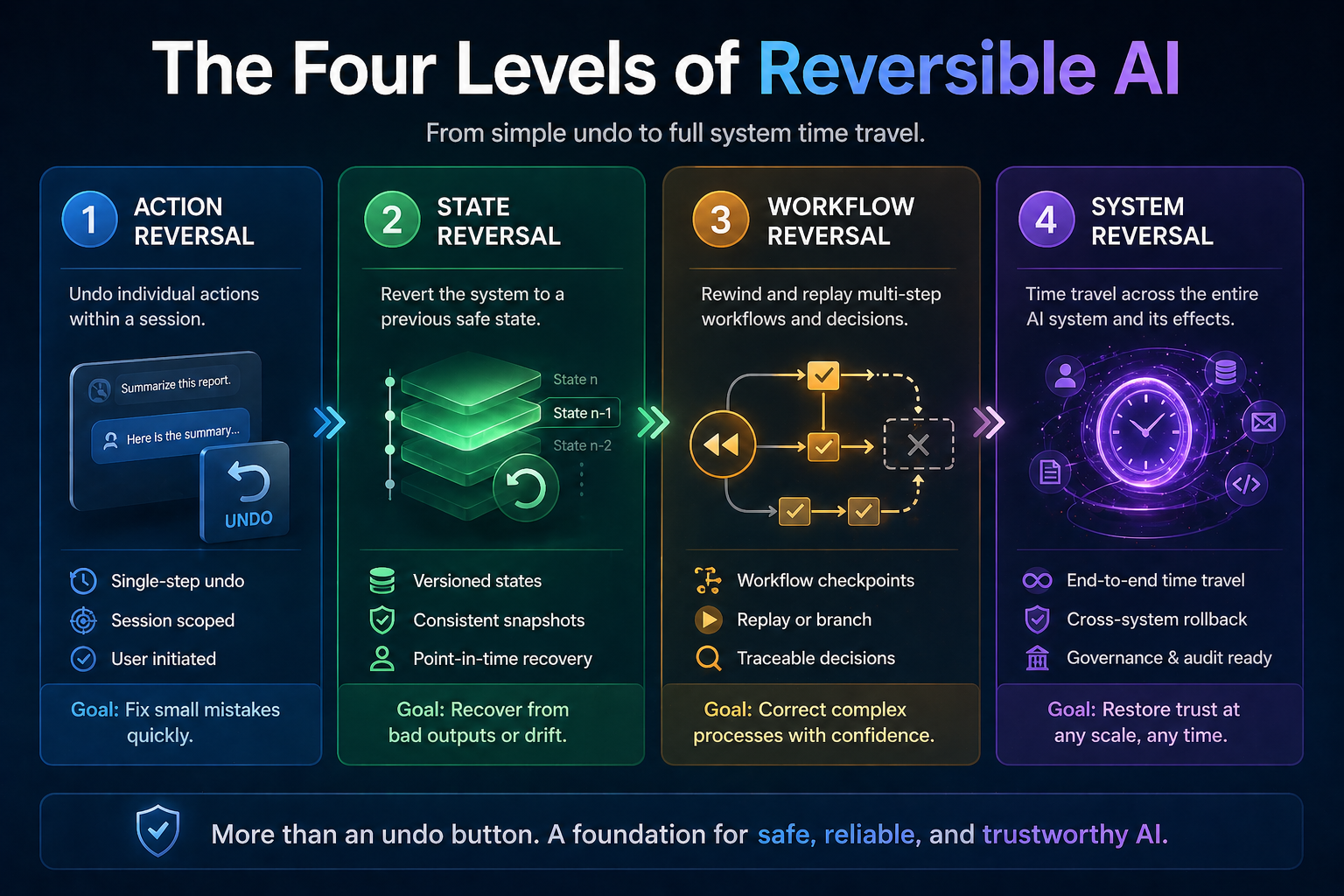
The shift most leaders still underestimate

In earlier generations of software, the core question was simple: Is the record correct?

When software became predictive, the question evolved: Is the model accurate?

But when AI systems begin sensing, inferring, ranking, coordinating, deciding, and acting across institutions, the question changes again:

Who has the right to create the representation that the system now treats as reality?

Who has the right to create the representation that the system now treats as reality?

This is the shift many leaders still underestimate.

A bank may maintain a machine-readable profile of a small business and use it to assess creditworthiness. A hospital may maintain a patient representation and use it to prioritize diagnosis or care pathways.

A procurement platform may maintain a dynamic representation of a supplier’s reliability, compliance, and delivery quality. A digital marketplace may continuously score a seller or product based on signals spread across many systems. An industrial platform may maintain a digital representation of a machine and trigger service decisions based on that representation.

In each case, the institution is doing more than collecting facts. It is building a working model of an entity and then using that model to shape economic outcomes. GDPR and the EU AI Act acknowledge parts of this problem through rights and governance obligations, but they do not yet define a full rights architecture for who gets to build, update, infer from, and act on these representations. (GDPR)

That is the real shift. The AI economy is not only about intelligence. It is about authorized representation.

Why Representation Rights are bigger than privacy

Why Representation Rights are bigger than privacy

Many executives will first interpret this as a privacy issue. That is too narrow.

Privacy asks: what data about me may be collected, stored, processed, or shared?

Representation Rights ask a wider and more consequential set of questions:

Who can build a machine-readable model of me?
Who can update that model over time?
Who can infer things about me that I did not explicitly state?
Who can merge signals from different contexts into a decisive profile?
Who can rely on that profile for ranking, access, or exclusion?
Who can challenge it when it is wrong?
Who captures the economic value when that representation becomes useful?

That is much larger than privacy. It reaches into access, authority, delegation, due process, economic participation, and institutional power.

A person may not be denied a loan because anyone stole their raw data. They may be denied because the institution’s representation of them is outdated, shallow, or built from proxies that no longer reflect reality.

A supplier may not lose a contract because anyone lied. They may lose because no recognized mechanism exists to update the machine-readable view of their improved performance.

A patient may not be harmed because the model was “bad” in the abstract. Harm may arise because the representation the system relied upon was narrow, stale, or disconnected from the context that a human expert would have considered. NIST’s AI RMF and the OECD AI Principles both emphasize accountability, robustness, transparency, and human-centered values; in practice, however, the failure often begins even earlier, at the level of representation design. (NIST Publications)

This is why Representation Rights deserve to become a first-class concept.

The SENSE–CORE–DRIVER lens

The SENSE–CORE–DRIVER lens

This is where the SENSE–CORE–DRIVER framework becomes especially important.

SENSE is the legibility layer. It determines which signals are captured, which entity those signals belong to, how state is represented, and how that state evolves over time.

CORE is the cognition layer. It interprets those representations, reasons over them, optimizes decisions, and generates judgments, recommendations, or priorities.

DRIVER is the legitimacy layer. It governs who authorized the action, which representation was used, how the decision is verified, how execution happens, and what recourse exists if the system is wrong.

Representation Rights sit across all three.

At the SENSE layer, the question is whether an entity has rights over how it is made legible in the first place.
At the CORE layer, the question is whether inferences drawn from that representation are bounded, contestable, and proportionate.
At the DRIVER layer, the question is whether any system or institution actually had the authority to act on behalf of that entity at all.

This is the doctrine gap in today’s AI debate. Current governance frameworks address data quality, transparency, oversight, and accountability, but the next phase of AI governance must go further: it must recognize rights over representation formation, representation change, inferred meaning, and delegated machine action. (Artificial Intelligence Act)

The five Representation Rights that will shape the next decade

The five Representation Rights that will shape the next decade

To make this practical, the AI economy is likely to converge toward at least five categories of Representation Rights.

  1. The right to be modeled fairly

If an institution is going to build a machine-readable representation of an entity, that representation cannot be assembled casually from noisy, incomplete, outdated, or context-poor signals. The EU AI Act already pushes in this direction by requiring appropriate data governance for high-risk systems, including attention to relevance, representativeness, errors, and completeness as far as possible. (Artificial Intelligence Act)

In simple terms: if a system is going to decide with you, it should not begin by mis-seeing you.

  1. The right to have state updated

A large share of AI harm does not come from the first classification. It comes from stale representation.

A worker gains new skills.
A supplier improves reliability.
A borrower repays consistently.
A patient’s condition changes.
An asset is repaired.
A merchant resolves old disputes.

But the machine-readable representation stays frozen.

GDPR’s right to rectification is an important precursor, but the future issue is larger than correcting a field in a database. The real challenge is ensuring that consequential machine-readable reality evolves when reality itself evolves. (GDPR)

  1. The right to know when inference becomes action

An AI system may infer risk, intent, reliability, urgency, fraud likelihood, eligibility, or trustworthiness. Those inferences stop being merely analytical once they drive ranking, pricing, denial, prioritization, routing, or execution.

At that point, representation becomes power.

GDPR already creates protections around certain solely automated decisions that produce legal or similarly significant effects, but institutions increasingly need a broader operational principle: entities should know when inferred representation is being used not just to observe them, but to act on them. (GDPR)

  1. The right to contest representation

If a system’s representation is wrong, incomplete, or unfairly inferred, there must be a real pathway to challenge it.

Not as an afterthought.
Not as a buried appeal mechanism.
As part of the architecture.

A mature institution will need processes for contesting not only outputs, but also the representational assumptions beneath them: a broken identity link, a missing context signal, an outdated state, a misleading proxy, or an invalid delegation chain. That direction is consistent with the broader human-centered and accountability-based approach reflected in OECD and NIST guidance. (NIST Publications)

  1. The right to control delegated action

This may become the deepest Representation Right of all: the right to know who is allowed to act on your behalf, in what scope, using which representation, and with what recourse.

This will matter everywhere AI becomes agentic: in workflow automation, procurement, financial orchestration, healthcare navigation, enterprise operations, customer support escalation, and digital identity ecosystems.

There is a major difference between a model that estimates and an agent that commits. Once a system can approve, deny, purchase, reroute, schedule, escalate, freeze, unlock, or transact, authority becomes central. NIST’s governance-oriented guidance increasingly emphasizes roles, responsibilities, monitoring, and risk management, but the specific rights layer around delegated machine action is still underdeveloped. (NIST)

A simple example: the invisible supplier

Imagine a mid-sized supplier that has spent two years improving quality, sustainability practices, delivery performance, and reporting discipline. Human buyers who visit the factory can see the improvement immediately.

But the procurement AI used by large buyers still sees the supplier through an old machine-readable representation: missed shipments, low confidence, incomplete traceability, and outdated certification status.

No one may have acted maliciously. No law may have been openly broken. But the supplier is still economically punished because its machine-readable self never caught up with reality.

Representation Rights would change that logic.

The supplier would have the right to know which consequential representation is being used, to update its state through recognized channels, to challenge stale or misleading machine inference, to understand when AI-driven rankings affect access to contracts, and to require that delegated procurement systems rely on validated representation pathways.

That is not a small compliance tweak. It is the beginning of a new market order.

Why this will create new kinds of companies

Why this will create new kinds of companies

Every major rights shift creates new infrastructure.

The industrial era created labor law, safety standards, inspectors, insurers, registries, and exchanges. The digital era created identity providers, cybersecurity firms, consent managers, data brokers, and privacy infrastructure.

The Representation Economy will do the same.

New categories of firms are likely to emerge around representation verification, state-update orchestration, contested inference resolution, delegated authority management, recourse infrastructure, and machine-readable rights registries. This is a forward-looking inference from the direction of current governance frameworks and enterprise needs, not a settled taxonomy yet. But the pattern is historically consistent: once a right becomes economically consequential, institutions and markets arise to operationalize it. (NIST Publications)

The companies that win in this next phase will not simply have better models. They will have better rights architecture around how entities are represented, updated, challenged, and acted upon.

Why boards should care now

Boards often ask whether AI is safe, compliant, or scalable. Those are important questions, but they come too late.

The earlier question is this:

Do we actually have the right to model, update, infer from, and act on behalf of the entities our AI touches?

If the answer is vague, the institution is building on weak legitimacy.

That creates direct exposure in product design, regulatory posture, partner relationships, customer trust, recourse cost, reputational resilience, and long-term strategic strength. The OECD AI Principles, OECD’s new Responsible AI due diligence guidance, GDPR, the EU AI Act, and NIST’s AI RMF all signal the same broad direction: accountability in AI is becoming deeper, more operational, and more tied to enterprise process rather than abstract principle alone. (OECD)

The institutions that move first will not merely reduce risk. They will earn something rarer: the right to delegate responsibly.

From data rights to Representation Rights

From data rights to Representation Rights

We are entering a new phase of the digital economy.

The first phase was about data collection.
The second was about model performance.
The third will be about representation legitimacy.

That shift matters because AI does not operate directly on the world. It operates on representations of the world. Whoever controls those representations will increasingly shape trust, access, coordination, and power.

That is why Representation Rights may become one of the defining ideas of the AI era.

Not because the phrase sounds elegant.
But because it answers the most practical question of all:

When software begins to see, decide, and act at scale, who gets to decide what counts as the real version of you?

The institutions that answer that question well will not only build better AI. They will build more legitimate markets.

And the societies that answer it well will not only regulate AI more effectively. They will create an economy in which intelligence remains accountable to the reality it claims to represent.

That is the deeper promise of the Representation Economy.
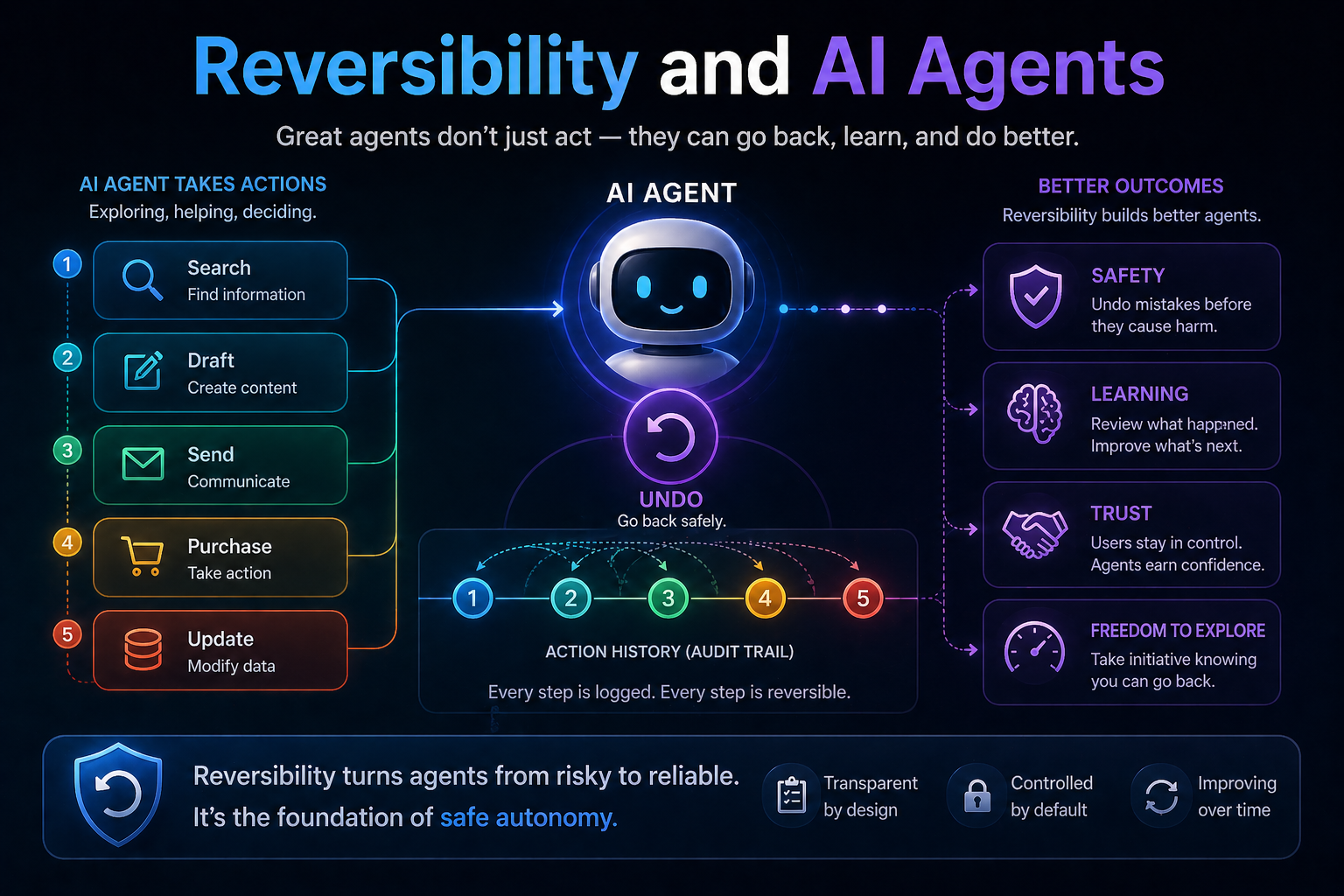
Conclusion

Representation Rights are not a niche legal add-on to AI governance. They are the missing bridge between data rights, model governance, institutional legitimacy, and delegated machine action.

If AI is going to participate in credit, care, employment, public services, enterprise operations, and market coordination, then the rights architecture around representation will become unavoidable. The future contest will not be only about who has the best model. It will be about who has the most legitimate, contestable, updateable, and governable representation of reality.

That is the shift boards should begin preparing for now.

Glossary

Representation Rights
The emerging rights over who can model, update, infer from, and act on behalf of an entity in AI systems.

Representation Economy
An economic order in which value increasingly depends on how well entities are made legible, interpretable, and governable inside machine systems.

Machine-readable identity
A structured digital representation of a person, firm, asset, or object that software systems can interpret and use.

Delegated authority
Permission granted to a system, agent, or institution to take action on behalf of an entity within defined limits.

Representation legitimacy
The degree to which a machine-readable representation is authorized, accurate enough for purpose, contestable, and institutionally acceptable.

SENSE
The layer that captures signals, links them to entities, models their state, and updates that state over time.

CORE
The reasoning layer that interprets representations and turns them into judgments, predictions, or decisions.

DRIVER
The governance and legitimacy layer that determines who authorized action, how it is executed, and what recourse exists if something goes wrong.

Contestability
The ability of an entity to challenge a representation, inference, or action and seek correction or review.

State update
A change to the machine-readable description of an entity as real-world conditions evolve.

Delegated machine action
An action taken by software or AI agents on behalf of an entity or institution, such as approval, denial, routing, or transaction execution.

FAQ

What are Representation Rights in AI?

Representation Rights are the emerging rights that determine who can create, update, infer from, and act on a machine-readable representation of a person, firm, asset, or ecosystem.

How are Representation Rights different from privacy rights?

Privacy rights focus on collection, storage, and sharing of data. Representation Rights go further by addressing who can define a machine-readable version of an entity, keep it current, use it for decisions, and act on its behalf.

Why do Representation Rights matter for businesses?

They matter because AI-driven decisions increasingly shape access to customers, suppliers, credit, care, and opportunity. Firms that ignore Representation Rights risk weak legitimacy, stale representations, and growing exposure to trust, compliance, and market-access failures.

How does this relate to GDPR and the EU AI Act?

GDPR provides important building blocks such as rights of access, rectification, portability, and protections around certain automated decisions. The EU AI Act adds requirements for high-risk AI systems around data governance, transparency, documentation, and oversight. Together they point toward a future rights architecture, but they do not fully define Representation Rights yet. (GDPR)

What kinds of companies could emerge around Representation Rights?

Likely categories include firms focused on representation verification, authority management, contested inference resolution, recourse infrastructure, and machine-readable rights registries.

Why should boards care about this now?

Because once AI begins acting across consequential workflows, the issue is no longer just model performance. It becomes a question of whether the institution had the right to represent and act on behalf of the entities affected.

References and further reading

This article builds on your submitted draft and its central thesis about rights over modeling, updating, and acting on behalf of entities.

For external grounding, the most relevant current building blocks are:

  • GDPR rights of access, rectification, portability, and automated decision protections. (GDPR)
  • EU AI Act obligations around data governance, documentation, transparency, and oversight for high-risk AI systems. (Artificial Intelligence Act)
  • NIST AI Risk Management Framework and Playbook for governance, mapping, measurement, and management of AI risk. (NIST Publications)
  • OECD AI Principles and OECD Due Diligence Guidance for Responsible AI. (OECD)

Explore the Architecture of the AI Economy

This article is part of a broader research series exploring how institutions are being redesigned for the age of artificial intelligence. Together, these essays examine the structural foundations of the emerging AI economy — from signal infrastructure and representation systems to decision architectures and enterprise operating models.

If you want to explore the deeper framework behind these ideas, the following essays provide additional perspectives:

Together, these essays outline a central thesis:

The future will belong to institutions that can sense reality, represent it clearly, reason about it intelligently, and act through governed machine systems.

This is why the architecture of the AI era can be understood through three foundational layers:

SENSE → CORE → DRIVER

Where:

  • SENSE makes reality legible
  • CORE transforms signals into reasoning
  • DRIVER ensures that machine action remains accountable, governed, and institutionally legitimate

Signal infrastructure forms the first and most foundational layer of that architecture.

AI Economy Research Series — by Raktim Singh

The Representation Conversion Industry: Why the Biggest AI Companies Will Rebuild Reality Before They Build Intelligence

Artificial intelligence is still widely framed as a race: bigger models, faster inference, stronger reasoning, better agents. That story is compelling, but incomplete.

The larger commercial opportunity may lie elsewhere.

The next great AI businesses may not be the ones that create the most intelligence. They may be the ones that do the harder job first: turning messy reality into something intelligence can actually use.

That is the heart of what I call the Representation Conversion Industry.

This industry will not sell AI magic. It will sell something far more foundational: the conversion of fragmented, ambiguous, stale, and poorly structured reality into machine-usable institutional infrastructure.

In practical terms, it will take the world as it exists — paper forms, PDFs, scanned records, scattered spreadsheets, voice calls, field notes, disconnected sensors, inconsistent identifiers, undocumented processes, weak provenance, and tacit human judgment — and rebuild it into systems that AI can identify, reason over, govern, and act through.

That sounds technical. It is. But it is also economic.

In the AI era, value will not flow first to whoever has the best model. It will flow to whoever makes reality easier to represent, trust, and operationalize. That is why the Representation Conversion Industry may become one of the most important business categories of the decade.

This broader pattern is already visible. McKinsey’s March 2025 global survey found that while AI use is spreading, the strongest value comes from rewiring how organizations run, especially through workflow redesign, governance, and operating discipline rather than model access alone. NIST’s AI Risk Management Framework likewise treats trustworthy AI as a system challenge involving governance, mapping, measurement, and management, not just model quality. (McKinsey & Company)

What is the Representation Conversion Industry?

The Representation Conversion Industry is the emerging sector that converts real-world complexity—documents, workflows, identities, and systems—into structured, machine-readable formats that AI can reliably use for decision-making and automation.

The missing layer in the AI conversation

The missing layer in the AI conversation

Most AI commentary is still obsessed with what I describe as CORE.

In my SENSE–CORE–DRIVER framework:

SENSE: the legibility layer

This is where reality becomes machine-readable through:

  • signal capture
  • entity identification
  • state representation
  • continuous updating over time

CORE: the cognition layer

This is where systems:

  • comprehend context
  • optimize decisions
  • reason over alternatives
  • evolve through feedback

DRIVER: the legitimacy layer

This is where action becomes governable through:

  • delegation
  • representation
  • identity
  • verification
  • execution
  • recourse

Most of today’s AI market remains concentrated in CORE. But the world is still deeply underbuilt in SENSE and DRIVER.

That gap is enormous, and it is where the Representation Conversion Industry emerges.

Before AI can optimize reality, someone has to structure reality

Before AI can optimize reality, someone has to structure reality

This is the central insight.

Before AI can improve decisions, it needs a usable version of the world. Before agents can act, they need structured entities, current states, trusted links, permissions, thresholds, and auditability. Before autonomy can scale, institutions need legibility.

Take a hospital. Its doctors may be excellent. Its care may be effective. But if patient history is scattered across free-text notes, scanned files, incompatible systems, departmental silos, and ambiguous identifiers, the institution is not truly machine-ready.

An AI system may summarize a chart beautifully while still missing the most important fact because that fact never entered the system in a clean, linked, current, machine-usable form.

Take a supply chain. A manufacturer may have advanced planning software, but if supplier identities are inconsistent, shipment events arrive late, inventory states are only partially digitized, and quality incidents are buried in email threads, AI will not see the network as it exists. It will see a partial shadow of it.

Take a government service. A citizen may appear in many databases, but if those records cannot be securely linked, verified, updated, and governed, intelligent public services will remain brittle. This is one reason digital public infrastructure has become so important globally: the World Bank defines DPI as foundational digital building blocks for the public benefit, such as digital identity, digital payments, and data sharing, which can be reused across sectors and services. (Open Knowledge Repository)

That is why the Representation Conversion Industry matters.

It exists to do the hard work that most AI narratives skip: not creating intelligence first, but converting reality into something intelligence can safely use.

What the Representation Conversion Industry actually does

What the Representation Conversion Industry actually does

At its core, this industry performs five kinds of work.

  1. Signal capture

It ingests the raw traces of reality: documents, forms, images, operational logs, workflow events, messages, telemetry, and sensor feeds.

  1. Entity resolution

It determines when multiple records refer to the same real-world thing. This is one of the most underestimated tasks in the AI economy. A machine cannot reason properly about “the same supplier,” “the same patient,” “the same product,” or “the same contract” if the institution itself cannot reliably unify those references.
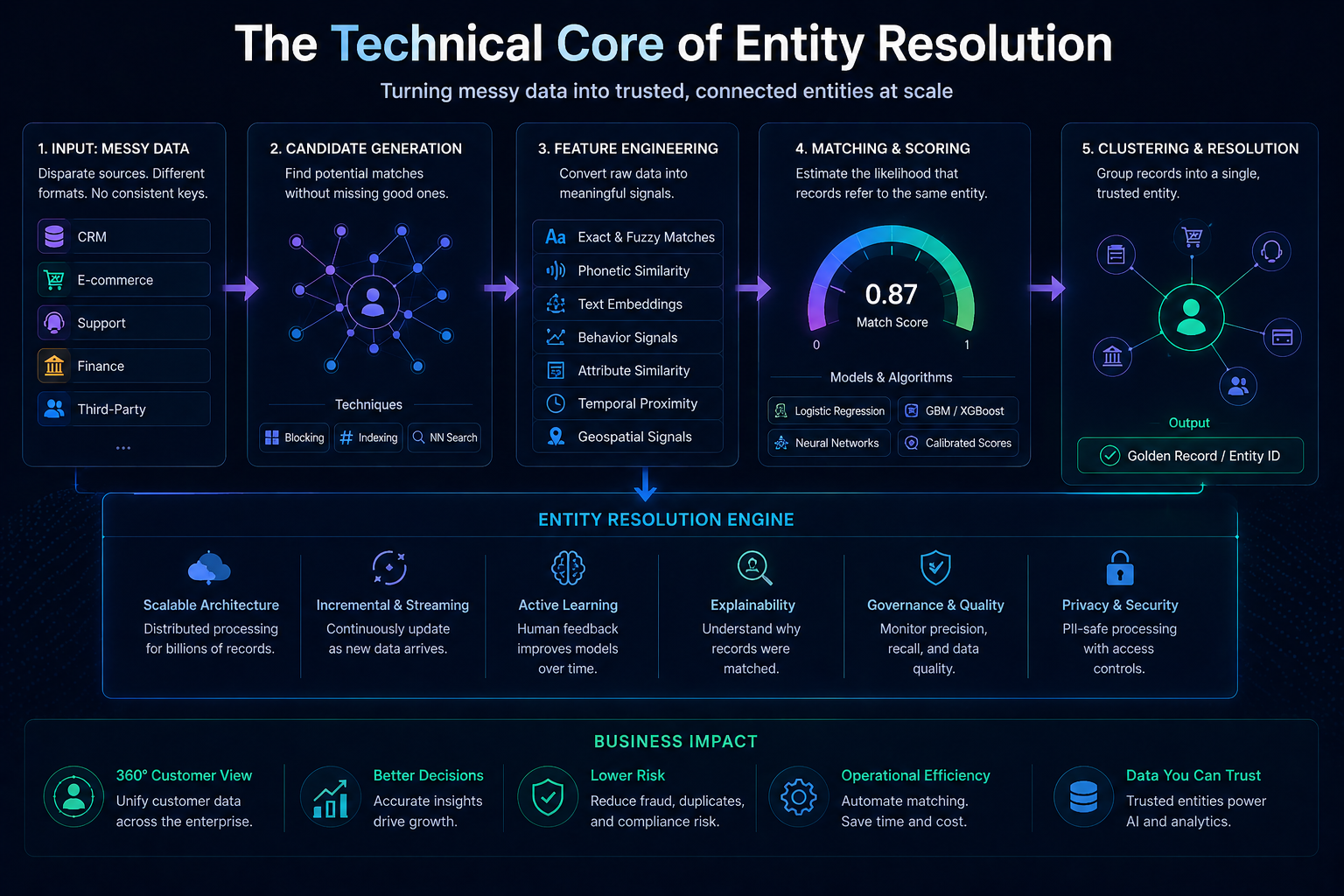
  1. State representation

It turns isolated events into an updated model of what is true now. Not what was true last month. Not what someone manually reconciled last week. What is true now.

  1. Provenance and validation

It makes truth more defensible by attaching lineage, verification, confidence, and change history. In digital media, for example, the C2PA standard for Content Credentials is designed to make source and history more traceable and verifiable. That is not just a media issue. It is an early signal of a broader economic need: machine-usable provenance. (C2PA)

  1. Delegation readiness

It connects representation to governance. That includes permissions, thresholds, escalation paths, audit trails, and recourse. Without this, a system may “know” something but still cannot act responsibly.

Put simply, the Representation Conversion Industry does not merely clean data. It manufactures institutional legibility.

That phrase matters. Data cleaning sounds tactical. Institutional legibility sounds strategic — because it is.

Why this industry could become one of the biggest AI markets of the decade

Why this industry could become one of the biggest AI markets of the decade

There are three reasons.

First, the world is still messy

Enterprise systems, public systems, and physical systems were not designed for autonomous machine coordination. They were built for humans, departments, and limited software integration. AI raises the required quality of representation dramatically. A chatbot can tolerate ambiguity. A decision system cannot. An acting agent cannot. A multi-agent enterprise certainly cannot.

Second, trust is becoming architectural

The OECD has explicitly noted that AI and privacy policy communities often work in silos, even though real-world deployment requires them to be connected. That means institutions will increasingly need operating capabilities that unify representation, governance, privacy, and accountability instead of treating them as separate layers. (OECD)

Third, AI is moving from answering to acting

As systems move from generating responses to triggering workflows, approvals, purchases, interventions, and compliance decisions, representation quality stops being a back-office issue. It becomes the difference between scalable autonomy and expensive failure. NIST’s AI RMF and GenAI profile reinforce exactly this point: risk emerges not only from outputs, but from context, governance, oversight, and downstream effects. (NIST Publications)

This is why the biggest AI businesses may look less like model companies and more like reality conversion companies.

What new companies will emerge

What new companies will emerge

A new market stack is forming underneath the visible AI race.

Industry-specific representation converters

These firms will rebuild messy sectors such as healthcare, banking, insurance, logistics, manufacturing, retail, public services, and agriculture into machine-usable operating systems.

Identity and entity infrastructure firms

These companies will solve a deceptively hard question: who or what is the system actually talking about right now?

Digital twin and state infrastructure providers

ISO’s digital twin standards show how structured digital representations of observable elements can support synchronized, updatable operational understanding. Over time, digital twins will extend beyond manufacturing into broader economic infrastructure. (ISO)

Provenance and validation layers

These firms will provide trust infrastructure for content, transactions, workflows, and institutional evidence.

Delegation-readiness platforms

These businesses will connect representation to policy, verification, identity, and recourse so intelligent systems can act safely in real environments.

Together, these players form a new stack.

Not the model stack.

The representation stack.

Why existing companies should care immediately

Why existing companies should care immediately

Many incumbents are sitting on valuable reality that is economically underrepresented.

A bank may have decades of customer relationships but weak machine-usable context.
A manufacturer may have deep process knowledge but poor real-time state visibility.
A retailer may have rich demand signals but inconsistent product truth.
A city may have records but no unified representation of people, assets, entitlements, and service events.

In the old economy, institutions could survive with fragmented visibility because humans filled the gaps. In the AI economy, those gaps become structural disadvantages.

The danger is not only inefficiency. It is substitution.

If your company cannot represent suppliers well, a better-represented marketplace may insert itself between you and your suppliers.

If your hospital cannot represent patient pathways well, a better-structured care platform may intermediate coordination.

If your logistics network cannot represent status and risk well, an external orchestration layer may become the real decision-maker.

That is why the Representation Conversion Industry is not just a startup opportunity. It is also an incumbent survival issue.

The deeper strategic shift: from intelligence advantage to reality advantage

The easiest way to misunderstand AI strategy is to assume the model is the business.

It rarely is.

In SENSE–CORE–DRIVER terms, most visible market excitement still sits in CORE. But durable advantage often comes from the layers around it.

If SENSE is weak, the system reasons over distortions.
If DRIVER is weak, the system cannot act legitimately.
If both are weak, more intelligence often amplifies error instead of reducing it.

That is why the Representation Conversion Industry matters so much. It strengthens SENSE by making reality legible. It strengthens DRIVER by making action governable. In doing so, it turns generic intelligence into institution-specific value.

And this is why it compounds.

Once reality is captured, structured, validated, and connected to governed action, many downstream capabilities become easier: forecasting, compliance, copilots, automation, negotiation, optimization, audit, orchestration, and autonomous workflow execution. The first use case may look narrow. The infrastructure it creates is not.

What boards and C-suites should do now

The old AI question was:
Who has the smartest model?

The more important question is becoming:
Who has rebuilt enough of reality that smart models can safely create value?

That is a very different competition.

It changes what boards should fund.
It changes what CIOs should modernize.
It changes what entrepreneurs should build.
It changes what regulators should notice.
It changes what “AI readiness” actually means.

For boards and C-suites, the implication is clear: AI strategy cannot stop at model adoption. It must include representation strategy.

That means asking:

  • Where is our reality still trapped in PDFs, spreadsheets, field memory, fragmented systems, and unlinked records?
  • Which entities do we still fail to identify consistently?
  • Where are our state representations stale, partial, or unverifiable?
  • Which decisions are blocked not by lack of intelligence, but by lack of trustworthy institutional legibility?
  • Where do we need DRIVER capabilities before we scale action?

These are not technical clean-up questions. They are competitive questions.

the biggest AI businesses may rebuild reality first

Conclusion: the biggest AI businesses may rebuild reality first

We are entering a phase of the AI economy where intelligence is becoming more available, but usable reality is still scarce.

That scarcity will create a new industry.

The companies that win the next decade will not only train models, deploy agents, or launch copilots. Some of the most important among them will do something more consequential: they will rebuild reality so machines can finally work with it.

That is not a supporting industry.

That is one of the main industries of the AI era.

If you want durable advantage in the AI economy, do not ask only where intelligence is improving.

Ask where reality is still waiting to be converted.

Glossary

Representation Conversion Industry
The emerging business category focused on turning fragmented, messy, and poorly structured reality into machine-usable institutional infrastructure.

Representation Economics
A framework for understanding how value in the AI era increasingly depends on what can be represented, trusted, and acted upon by machines.

Machine-readable reality
A structured version of the world that software and AI systems can identify, interpret, and use reliably.

Institutional legibility
The degree to which an institution’s operations, entities, processes, and states are visible and understandable to machine systems.

Entity resolution
The process of determining when multiple records refer to the same real-world entity, such as a person, supplier, asset, or contract.

State representation
A structured model of the current condition of an entity, system, or process.

Provenance
Documented information about the origin, history, and changes associated with content, data, or a decision trace.

Digital twin
A digital representation of an observable physical or operational element, updated over time to reflect changing reality.

SENSE
The legibility layer where signals are captured, entities identified, states represented, and reality continuously updated.

CORE
The cognition layer where systems interpret context, reason, optimize, and generate decisions.

DRIVER
The legitimacy layer where authority, identity, verification, execution, and recourse make intelligent action governable.

FAQ

Why is this industry important for AI?

Because AI systems do not operate on reality directly. They operate on representations of reality. If those representations are incomplete, stale, or untrustworthy, even advanced AI systems underperform or fail.

How is this different from data cleaning?

Data cleaning is usually a narrow operational task. Representation conversion is broader. It includes signal capture, entity resolution, state representation, provenance, governance, and delegation readiness.

What kinds of companies will emerge in this space?

Industry-specific converters, entity infrastructure firms, digital twin providers, provenance and validation platforms, and delegation-readiness infrastructure companies.

Why should boards care about representation conversion?

Because competitive advantage in AI increasingly depends not only on intelligence, but on whether the institution has rebuilt enough of reality for intelligence to create trustworthy value.

How does this relate to SENSE–CORE–DRIVER?

Representation conversion primarily strengthens SENSE and DRIVER. It makes reality legible and action governable, which allows CORE to deliver institution-specific value more safely and at greater scale.

Is this relevant only for large enterprises?

No. It matters for enterprises, governments, startups, supply chains, healthcare systems, and any organization that wants to move from isolated AI use cases to durable operational advantage.

What is the biggest mistake leaders make here?

Treating model access as the core strategic question while ignoring the harder work of representation, governance, and operating architecture.

Q1. What is the Representation Conversion Industry?

A: It is the industry focused on converting messy real-world data into structured, machine-usable systems for AI.

Q2. Why is representation important in AI?

A: AI systems depend on structured representations of reality. Without it, even advanced models fail to deliver reliable outcomes.

Q3. What problems does this industry solve?

A: It solves fragmented data, inconsistent identities, lack of real-time state, weak governance, and unstructured workflows.

Q4. What companies will emerge in this space?

A: Data structuring platforms, digital twin companies, entity resolution systems, AI governance platforms, and representation infrastructure providers.

Q5. Why should enterprises invest in this now?

A: Because AI advantage will shift from model access to representation quality and institutional legibility.

References and further reading

For credibility with both human readers and answer engines, place this section at the end of the article.

  • McKinsey, The State of AI: How Organizations Are Rewiring to Capture Value (March 12, 2025), on workflow redesign, governance, and scaled AI value. (McKinsey & Company)
  • NIST, AI Risk Management Framework (AI RMF 1.0), on trustworthy AI as a governance and system challenge. (NIST Publications)
  • NIST, Generative AI Profile, extending risk management guidance to generative AI systems. (NIST Publications)
  • OECD, AI, Data Governance and Privacy, on connecting AI, data, and privacy policy rather than treating them as separate silos. (OECD)
  • World Bank, Digital Public Infrastructure and Development, on foundational digital building blocks for the public benefit. (Open Knowledge Repository)
  • C2PA, Content Credentials Specification, on provenance and authenticity signals for digital content. (C2PA)
  • ISO 23247 and related digital twin standards, on frameworks for digital representation and synchronization in manufacturing. (ISO)

Explore the Architecture of the AI Economy

This article is part of a broader research series exploring how institutions are being redesigned for the age of artificial intelligence. Together, these essays examine the structural foundations of the emerging AI economy — from signal infrastructure and representation systems to decision architectures and enterprise operating models.

If you want to explore the deeper framework behind these ideas, the following essays provide additional perspectives:

Together, these essays outline a central thesis:

The future will belong to institutions that can sense reality, represent it clearly, reason about it intelligently, and act through governed machine systems.

This is why the architecture of the AI era can be understood through three foundational layers:

SENSE → CORE → DRIVER

Where:

  • SENSE makes reality legible
  • CORE transforms signals into reasoning
  • DRIVER ensures that machine action remains accountable, governed, and institutionally legitimate

Signal infrastructure forms the first and most foundational layer of that architecture.

AI Economy Research Series — by Raktim Singh

Representation Alpha: Why Competitive Advantage Will Come from Better Representation, Not Better Models

Representation Alpha: Executive summary

For the last few years, the AI race has been described as a model race. Which model is smarter? Which model is cheaper? Which model reasons better? Which model is more agentic?

Those questions still matter. But they no longer go deep enough.

A deeper shift is now underway. As advanced AI capabilities become more broadly available through APIs, tool calling, retrieval, workflow integrations, and connected systems, raw intelligence is becoming easier to access across firms. The basis of advantage is therefore moving. It is moving away from model access alone and toward something harder to copy: the quality of an institution’s representation of reality. OpenAI’s official developer documentation, for example, emphasizes tool use and function calling as a way for models to connect to external systems and act on structured context rather than rely only on static model knowledge. (OpenAI Platform)

That shift is the foundation of Representation Alpha.

Representation Alpha is the performance advantage an institution gains when it is better than competitors at making relevant reality machine-legible, machine-trustworthy, and machine-actionable.

In simple language, two companies may use similar AI models. But the one whose customers, products, suppliers, risks, policies, permissions, workflows, and exceptions are better represented inside the decision system will outperform the other.

Not because its model is magically smarter.
Because its world is easier for the model to work with.

That difference will become one of the most consequential sources of advantage in the AI economy.
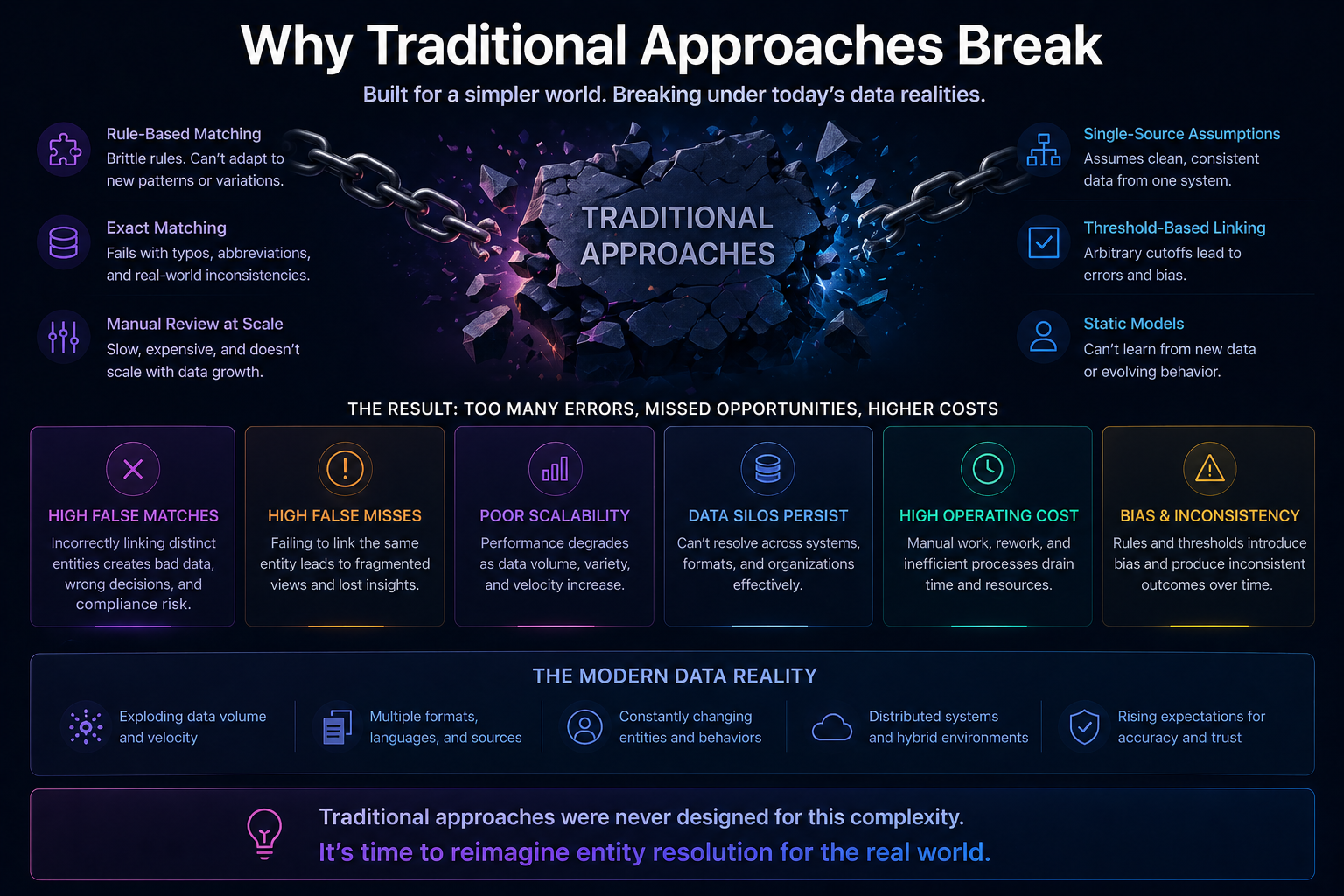
What is Representation Alpha?

Representation Alpha is the competitive advantage gained when an organization represents its reality—customers, products, policies, and workflows—in a way AI systems can reliably understand and act on.

The old AI question is fading

The old AI question is fading

For much of the recent AI cycle, leaders have focused on one core issue: access to intelligence.

That made sense. When model capability was scarce, the obvious question was whether a firm had access to the best engine.

But as the market evolves, that question weakens. More organizations can now access advanced reasoning, generation, retrieval, and tool-enabled behavior through shared platforms and developer ecosystems. That does not mean all firms become equal. It means advantage shifts to a new layer. (OpenAI Platform)

The new question is not merely:

Do we have powerful AI?

It is:

Can powerful AI work reliably with the reality of our institution?

That is a much harder question. It is also the one that matters more.

What Representation Alpha actually means

What Representation Alpha actually means

Representation Alpha is not a fashionable label for data quality. It is broader and more strategic.

It refers to an institution’s ability to ensure that what matters in its operating world is represented in a form machines can correctly use.

That includes:

  1. Identity

Can the system clearly determine who or what the relevant entity is?

  1. State

Can the system understand the current condition of that entity right now, not last week?

  1. Structure

Can the model work with the information in a machine-usable form?

  1. Authority

Can the system determine what actions are allowed, by whom, and under which rules?

  1. Verification

Can claims be checked before the system acts?

  1. Recourse

If the system is wrong, can the action be traced, challenged, and corrected?

That is why Representation Alpha is not just an information problem. It is an institutional design problem.

Why better models are not enough

Why better models are not enough

A model can only reason over what enters its field of action.

If facts are missing, ambiguous, stale, weakly structured, or detached from authority, the model does not become powerful enough to solve that institutional failure. A better engine does not fix an invisible road.

This is where many enterprise AI strategies go wrong. They assume that once cognition improves, outcomes will automatically improve. But in real systems, outcomes depend on whether the model is working on reality that has been represented clearly enough to support sound judgment and action.

A simple procurement example

Imagine two manufacturers using the same advanced AI agent to reorder components.

The first firm has:

  • clean supplier identities
  • structured inventory states
  • verified lead times
  • machine-readable contract terms
  • clear delegation rules for approvals

The second firm has:

  • duplicate supplier records
  • inconsistent part naming
  • email inboxes serving as the real source of truth
  • unclear authority thresholds
  • exceptions hidden in the heads of experienced employees

The same model enters both environments.

In one company, it behaves like a multiplier.
In the other, it behaves like a confused intern.

That gap is Representation Alpha.

The shift from model advantage to representation advantage

The shift from model advantage to representation advantage

This shift is already visible in adjacent systems.

Google’s documentation states that structured data helps Google understand page content and enables richer appearances in search results. Its product documentation also explains that structured product data can help Google show pricing, availability, ratings, and related details in richer formats. In other words, machine visibility improves when reality is expressed in machine-usable form. (Google for Developers)

That principle matters far beyond search.

As AI systems increasingly use tools, APIs, databases, policies, and external systems, the competitive issue becomes less about whether the model can generate plausible output and more about whether the institution is represented in a way the model can reliably operate on. (OpenAI Platform)

Models may converge.
Representation does not.

That is why better representation is becoming a more durable source of advantage than better models alone.

A simple everyday example

Imagine three restaurants using the same AI reservation assistant.

Restaurant A gives the system:

  • live table availability
  • current menu status
  • allergy flags
  • kitchen wait times
  • staff assignment visibility
  • cancellation rules
  • escalation logic for exceptions

Restaurant B gives the system:

  • yesterday’s spreadsheet
  • menu descriptions copied from an old brochure
  • no allergy linkage
  • no live occupancy state
  • no encoded policy for edge cases

Same model.
Very different customer experience.

Customers do not experience AI quality as benchmark scores. They experience whether the system understood reality and acted correctly.

The winning restaurant is not the one with the fanciest model. It is the one with the most decision-ready representation of its operating world.

That is Representation Alpha in everyday form.

Why Representation Alpha matters even more in the age of agentic AI

Why Representation Alpha matters even more in the age of agentic AI

This becomes sharper as AI moves from response generation to action.

A chatbot can survive with partial context because it mainly produces language. An agent that books, routes, approves, blocks, orders, escalates, or triggers downstream workflows cannot.

The moment AI starts acting, representation quality becomes an operational variable.

If the system does not know:

  • who the entity is
  • what state it is in
  • what authority applies
  • what evidence supports action
  • what the acceptable boundary conditions are
  • what recourse exists if the action is wrong

then autonomy becomes fragile.

This is closely aligned with the logic of the NIST AI Risk Management Framework, which emphasizes governance, mapping context, measurement, and management, along with trustworthiness characteristics such as validity, reliability, accountability, transparency, privacy, safety, and security. (NIST)

The deeper point is simple:

AI systems do not win merely by thinking better.
They win by acting on better-represented reality.

The SENSE–CORE–DRIVER lens

The SENSE–CORE–DRIVER lens

Representation Alpha becomes easier to understand when seen through the SENSE–CORE–DRIVER framework.

SENSE: alpha begins before intelligence

Competitive advantage starts with the institution’s ability to detect meaningful signals, attach them to the right entity, maintain an accurate state representation, and keep that state updated as reality changes.

If the signal is weak, the entity is ambiguous, or the state is stale, advantage is already leaking before the model begins reasoning.

CORE: intelligence amplifies representation

The reasoning layer can optimize only on the quality of the world presented to it.

CORE does not create institutional reality from nothing. It works on represented reality. A powerful model over poor representation often produces elegant failure.

DRIVER: action turns representation into advantage

Real alpha appears only when the system can act with legitimate delegation, appropriate verification, controlled execution, and recourse.

A model that knows something but cannot act safely does not create enterprise advantage.
A system that sees correctly, reasons appropriately, and acts within governed boundaries does.

This is why Representation Alpha is not merely a data concept or a model concept. It is an architectural concept.

Where Representation Alpha is already visible

Where Representation Alpha is already visible

Where Representation Alpha is already visible

You can already see early versions of this across markets and digital infrastructure.

In digital identity and trust, the W3C’s Verifiable Credentials Data Model 2.0 was published as a Recommendation in May 2025. W3C describes this family of specifications as a way to express digital credentials that are cryptographically secure, privacy-respecting, and machine-verifiable. That matters because machine-verifiable claims are becoming part of how institutions present trust in a form systems can consume directly. (W3C)

This is not a narrow standards story. It is part of a larger economic pattern.

A supplier with poor identity proof may lose routing priority.
A product with weak metadata may lose discoverability.
A service provider with ambiguous policy representation may lose agent-mediated transactions.
A firm with unclear delegation rules may slow every autonomous workflow.

These are not failures of model intelligence.

They are failures of representation.

Why Representation Alpha compounds

Why Representation Alpha compounds

One of the most important qualities of Representation Alpha is that it compounds over time.

When a company is easier for machines to interpret and trust, it becomes:

  • easier to discover
  • easier to compare
  • easier to route to
  • easier to integrate with
  • easier to transact with
  • easier to govern
  • easier to include inside larger machine workflows

That creates more interactions. More interactions create more usable signals. More signals improve state quality. Better state quality improves decisions. Better decisions strengthen trust. Stronger trust increases machine preference.

Over time, representation advantage can become self-reinforcing.

This is one reason the future AI economy may reward not only intelligence providers, but also the institutions that build superior representation infrastructure around real entities, relationships, permissions, and states.

What leaders still get wrong

Many leaders still treat AI strategy mainly as a model-choice problem.

They ask:

  • Should we use the biggest model?
  • Should we fine-tune?
  • Should we build our own model?
  • Should we switch vendors?
  • Should we deploy more agents?

These are valid questions. But they are often second-order questions.

The first-order questions are harder:

  • Are our core entities clearly represented?
  • Can our systems maintain live state?
  • Are our policies machine-readable?
  • Are permissions explicit and auditable?
  • Can external systems verify claims?
  • Can the AI distinguish signal from noise?
  • Can action be traced and reversed when necessary?

A company that cannot answer those questions may still produce impressive demos. But it will struggle to convert AI into repeatable institutional advantage.

What new winners will do differently

The next generation of winners will treat representation as a strategic asset, not a technical afterthought.

They will invest in:

  • identity clarity
  • state fidelity
  • metadata quality
  • structured workflows
  • verifiable claims
  • delegation controls
  • action logs
  • recourse mechanisms
  • machine-readable policies
  • continuously updated operational context

In other words, they will build for machine participation, not just human coordination.

That is the deeper shift now underway. The AI economy is not only rewarding firms that use intelligence. It is rewarding firms that are structurally prepared to be understood, trusted, and acted with by intelligence.

The board-level implication

Boards should stop asking only whether the company has adopted AI.

They should start asking whether the company’s operational reality is represented well enough for AI to produce reliable advantage.

That includes questions such as:

  • Where are our biggest representation gaps?
  • Which entities in our system are poorly legible to machines?
  • Which decisions fail because state is stale or fragmented?
  • Where are permissions implicit rather than encoded?
  • Which workflows cannot safely support agentic execution?
  • Where will representation quality determine market access, trust, or valuation?

This is where AI strategy becomes a board topic rather than an experimentation topic.

Because in the years ahead, many firms will have access to strong models. Not all of them will have Representation Alpha.

And that will help explain why some companies, using similar AI, grow faster, coordinate better, reduce friction, earn more machine trust, and compound advantage while others remain trapped in pilot mode.

the next alpha will come from reality design : Representation Alpha

Conclusion: the next alpha will come from reality design

The market is moving toward a world in which intelligence is increasingly rented, embedded, and widely distributed.

In that world, the rarest asset will not be cognition alone.

It will be the institutional ability to make reality available to cognition in a form that is legible, trustworthy, current, and actionable.

That is why the next era of competitive advantage will not be defined only by who has better models.

It will be defined by who has built better representation.

That is the strategic meaning of Representation Alpha. And it may become one of the most important ideas for leaders trying to understand how advantage will actually be created in the AI economy.
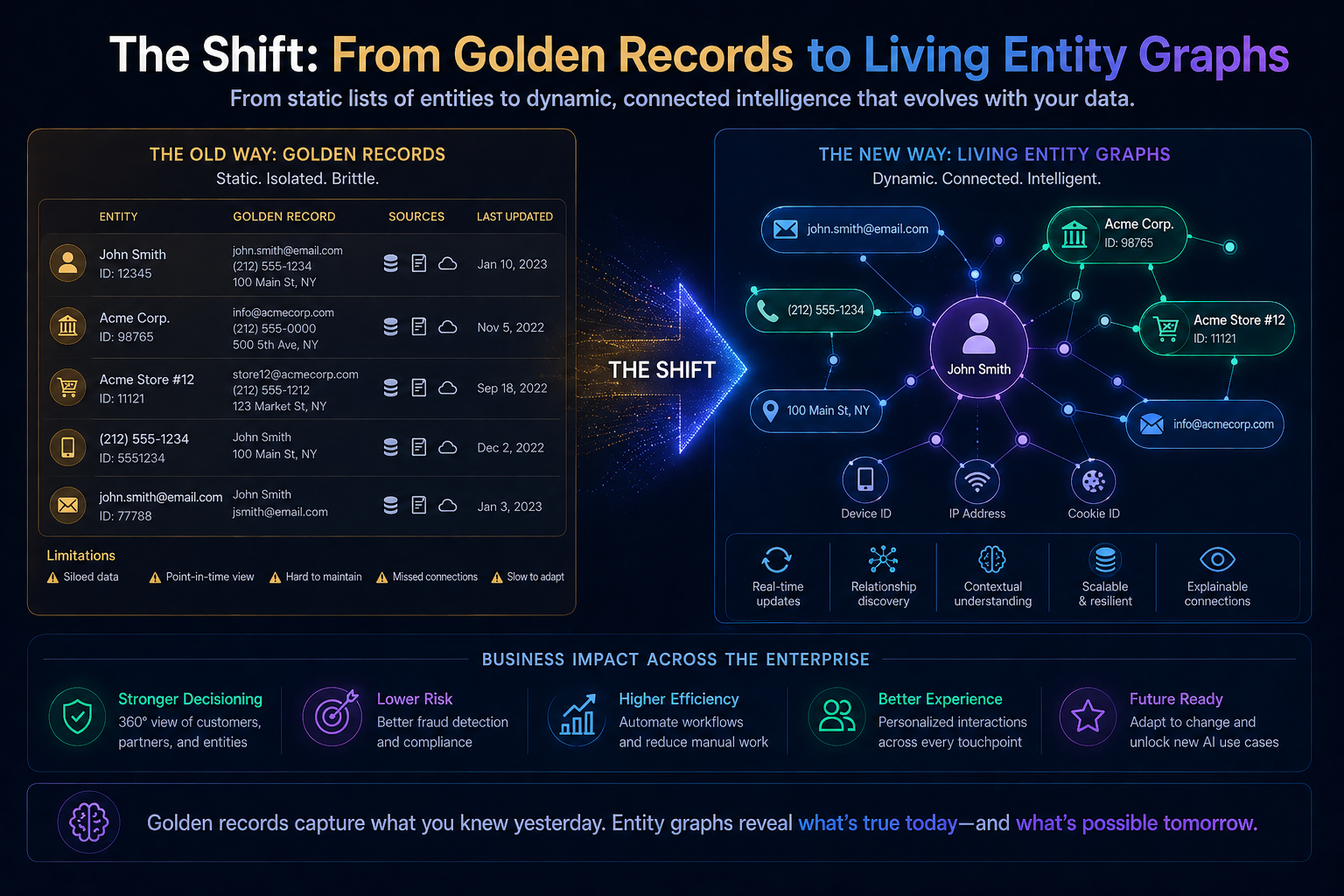
Glossary

Representation Alpha
The competitive advantage gained when an institution represents relevant reality in a form machines can reliably understand and act on.

Representation Economics
A framework for understanding how value, trust, visibility, and participation are shaped by how reality is represented to machine systems.

Machine-legible
Information structured in a form systems can interpret consistently.

Machine-trustworthy
Information presented with enough validation, provenance, and clarity for systems to rely on it.

Machine-actionable
Information represented well enough for a system to make or support real decisions and actions.

SENSE
The legibility layer where signals are captured, attached to entities, represented as state, and updated over time.

CORE
The cognition layer where systems interpret context, optimize decisions, and generate intelligence from represented reality.

DRIVER
The execution and legitimacy layer where authority, verification, action, and recourse are governed.

Agentic AI
AI systems that do more than generate content; they use tools, workflows, or delegated authority to act in software or business processes.

Verifiable credentials
Digitally issued claims that can be checked cryptographically and used in a machine-verifiable way. (W3C)

Structured data
Machine-readable markup that helps systems and search engines interpret content more accurately. (Google for Developers)

FAQ

What is Representation Alpha?

Representation Alpha is the competitive advantage an organization gains when it represents customers, products, suppliers, policies, permissions, and workflows in a way AI systems can reliably understand and act on.

Why will better representation matter more than better models?

Because advanced AI capability is becoming more accessible across firms through APIs, tools, and integrated systems. The bigger difference increasingly lies in whether the institution’s reality is represented clearly enough for that AI to operate effectively. (OpenAI Platform)

Is Representation Alpha just another term for data quality?

No. Data quality is part of it, but Representation Alpha is broader. It includes identity, state, structure, authority, verification, workflow context, and governed action.

How does this connect to agentic AI?

Agentic AI must act, not just answer. That requires stronger identity clarity, current state, explicit permissions, verification, and recourse than standard chat use cases. (NIST)

Why is this a board-level issue?

Because the competitive outcome of AI adoption will increasingly depend on whether the institution itself is machine-ready. That affects speed, trust, decision quality, operating leverage, and the ability to scale AI safely.

What should companies do first?

Start by identifying the core entities, states, permissions, and policies that matter most to business decisions. Then improve how those are represented, verified, updated, and governed inside systems.

References and further reading

For factual grounding and further exploration, the following sources are especially relevant:

  • OpenAI developer documentation on tool use and function calling, which reflects the shift toward models acting through external systems and structured context. (OpenAI Platform)
  • Google Search Central documentation on structured data and rich results, which shows how machine-readable markup improves discoverability and understanding. (Google for Developers)
  • NIST AI Risk Management Framework, which emphasizes governance, context, measurement, and trustworthiness in operational AI systems. (NIST)
  • W3C Verifiable Credentials Data Model 2.0 and related W3C announcements, which show the maturation of machine-verifiable trust infrastructure. (W3C)

Explore the Architecture of the AI Economy

This article is part of a broader research series exploring how institutions are being redesigned for the age of artificial intelligence. Together, these essays examine the structural foundations of the emerging AI economy — from signal infrastructure and representation systems to decision architectures and enterprise operating models.

If you want to explore the deeper framework behind these ideas, the following essays provide additional perspectives:

Together, these essays outline a central thesis:

The future will belong to institutions that can sense reality, represent it clearly, reason about it intelligently, and act through governed machine systems.

This is why the architecture of the AI era can be understood through three foundational layers:

SENSE → CORE → DRIVER

Where:

  • SENSE makes reality legible
  • CORE transforms signals into reasoning
  • DRIVER ensures that machine action remains accountable, governed, and institutionally legitimate

Signal infrastructure forms the first and most foundational layer of that architecture.

AI Economy Research Series — by Raktim Singh

Representation Fiduciaries: The Missing Institution the AI Economy Cannot Scale Without

Representation Fiduciaries : 

For the last few years, the AI debate has been dominated by models.

Which model is smartest?
Which model is cheapest?
Which model reasons better?
Which model is more autonomous?

These questions still matter. But they are no longer the deepest questions in the market.

A more structural shift is underway.

As AI moves from generating content to ranking options, verifying claims, approving requests, routing transactions, matching counterparties, and acting inside workflows, the central issue changes. The question is no longer only whether a machine is intelligent. The deeper question is whether the machine is acting on a trustworthy representation of reality.

That shift changes everything.

Because AI does not operate on reality directly. It operates on representations of reality: records, credentials, profiles, histories, signals, permissions, policies, and machine-readable states. When those representations are incomplete, stale, fragmented, or misleading, better intelligence does not solve the problem. It often scales the problem.

That is why the AI economy will require a new class of institution: Representation Fiduciaries.

These are actors that help ensure people, firms, assets, and other real-world entities are represented accurately, fairly, continuously, and accountably inside machine decision systems.

This is not just a privacy issue.
It is not just a governance issue.
It is not just a compliance issue.

It is an economic issue.

In the coming decade, the entities that can be represented well to machines will be easier to discover, compare, trust, finance, insure, coordinate with, and act upon. The ones that cannot may become harder to see, harder to trust, and eventually harder to serve.

That is why Representation Fiduciaries matter. They stand between reality and machine action.

The missing institution in the AI era

The missing institution in the AI era

Most current AI governance thinking focuses on the responsibilities of developers, deployers, and operators. That emphasis is understandable. The OECD AI Principles call for AI that is innovative, trustworthy, and consistent with human rights and democratic values.

NIST’s AI Risk Management Framework is designed to help organizations manage AI risks systematically. The EU AI Act establishes a risk-based legal framework for AI in Europe. ISO/IEC 42001 provides a management system standard for AI. Singapore’s Model AI Governance Framework for Agentic AI reflects the growing concern that humans must remain accountable as AI systems become more autonomous. (OECD)

All of that is necessary. But it still leaves an institutional gap.

Most governance frameworks ask:
Who built the system?
Who deployed the system?
Who is accountable if the system causes harm?

Those are essential questions. But in an AI economy, another question becomes just as important:

Who is responsible for ensuring that the entity being acted upon is represented properly in the first place?

That is a different problem.

If an AI system denies a small business access to credit because the business appears unstable, who ensured that the business was represented accurately across its invoices, payment patterns, certifications, cash-flow signals, ownership data, and supplier history?

If an AI hiring system screens out a candidate because their skills are poorly structured online, who ensured that the candidate’s actual capabilities were translated into a form machines could interpret?

If a hospital relies on AI-assisted triage and care coordination, who ensures that the patient’s history, current state, consent choices, medication interactions, and changing conditions are represented faithfully rather than reduced to a stale profile?

This is the missing institutional layer. This is where Representation Fiduciaries enter.

What is a Representation Fiduciary?

What is a Representation Fiduciary?

A Representation Fiduciary is a trusted actor whose role is to help ensure that an entity is represented correctly inside machine decision environments.

That entity could be an individual. It could be a supplier, a borrower, a worker, a patient, a farm, a device, a shipment, a machine, a property, or even an ecosystem whose condition must be measured and protected.

The word fiduciary is important.

A fiduciary is not just a software vendor, processor, or platform. A fiduciary implies a duty of care and responsibility toward the interests of the entity being served. In legal and policy debates, fiduciary thinking has already appeared in discussions around digital intermediaries and “information fiduciaries,” where power asymmetry and dependence create a case for stronger duties. Your article extends that logic: in the AI economy, fiduciary responsibility will increasingly apply not just to data handling, but to representation itself. (MeitY)

That matters because AI systems do not simply “know.” They infer, rank, predict, and act based on whatever has been made legible to them. If what is legible is poor, incomplete, or biased by omission, then the downstream action is compromised before the model even begins reasoning.

In that sense, Representation Fiduciaries are not a narrow compliance layer. They are part of the economic infrastructure of machine-mediated society.

Why this concept matters for the AI economy

Representation Fiduciaries address a fundamental gap in AI systems:
machines do not act on reality directly — they act on representations of reality.

As AI systems become more agentic and autonomous, the quality of representation determines:

  • who gets discovered
  • who gets trusted
  • who gets financed
  • who gets selected
  • who gets excluded
Why this matters much more in the age of agentic AI

Why this matters much more in the age of agentic AI

The case for Representation Fiduciaries becomes much stronger as AI systems become more agentic.

Traditional software mostly waited for instructions. By contrast, AI agents can plan, call tools, update records, coordinate tasks, evaluate options, and initiate action in pursuit of goals. That makes the quality of representation much more consequential. Singapore’s agentic AI governance framework, launched in January 2026, explicitly addresses the risks that emerge when AI systems gain the ability to take actions in the world with greater autonomy. (Infocomm Media Development Authority)
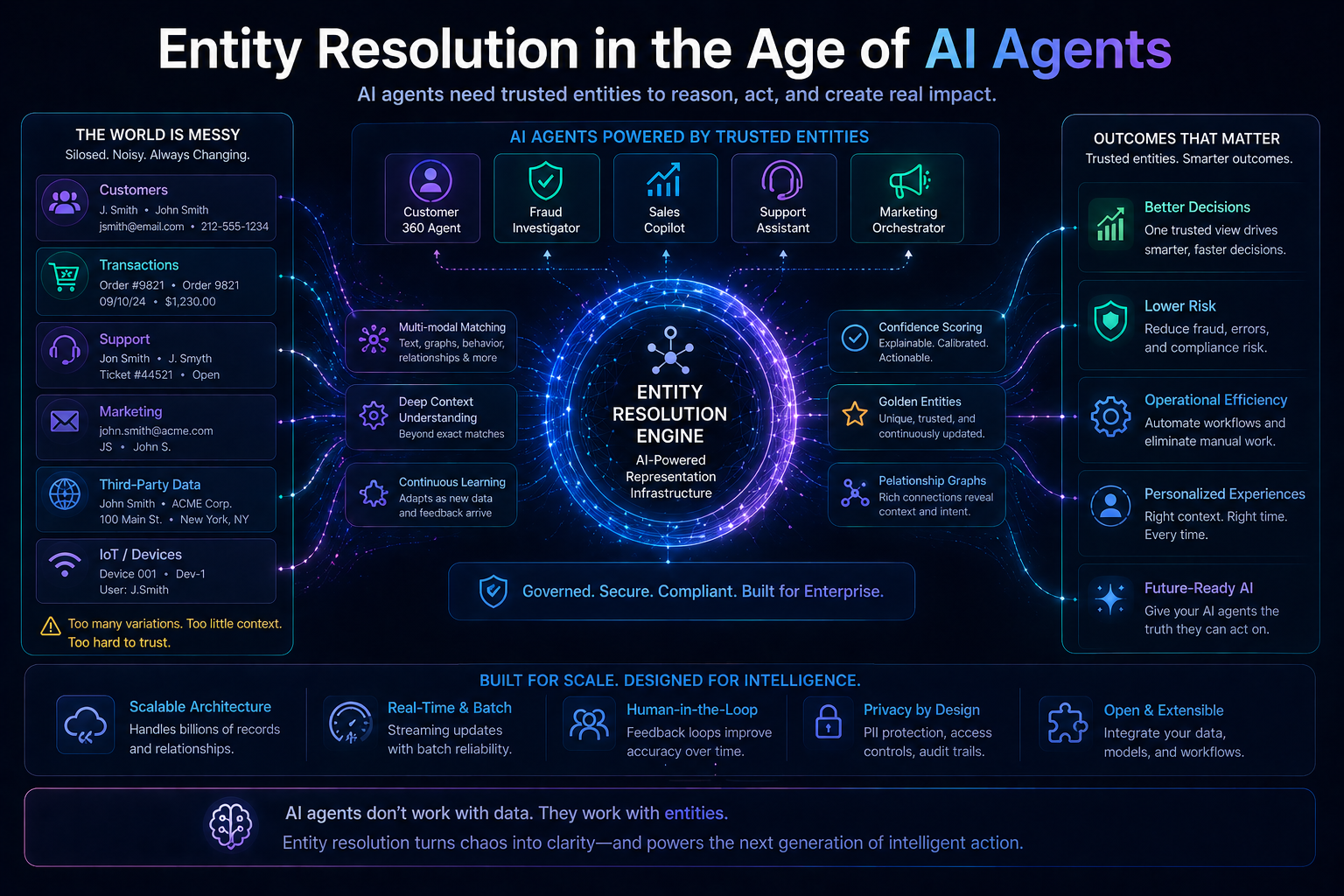
Once systems become more agentic, the economic risk is no longer only “wrong answer.” It becomes “wrong action based on wrong representation.”

An AI procurement agent will not ask, “What is the full richness of this supplier’s real-world capability?” It will ask, in effect, “What do the records show? Which credentials are verifiable? What policies are satisfied? Which signals are machine-readable? What risks are acceptable?”

An AI lending system will not look for hidden context unless that context is structured in a form it can use.

An AI matching engine for skilled labor will not discover quality that has never been translated into trusted digital form.

That is why better models alone are not enough. The next layer of advantage will come from ensuring that reality is represented in ways machines can responsibly act upon.

The SENSE–CORE–DRIVER explanation

The SENSE–CORE–DRIVER explanation

This is where the SENSE–CORE–DRIVER framework becomes especially useful.

SENSE is the legibility layer. It is where signals are captured, tied to entities, structured into state, and updated over time.

CORE is the cognition layer. It is where models interpret signals, optimize decisions, make predictions, and generate recommendations.

DRIVER is the legitimacy layer. It governs delegation, representation, identity, verification, execution, and recourse.

Most of the market’s fascination has centered on CORE. That is where the competition around models lives. But institutions do not succeed or fail on cognition alone. They succeed or fail on whether reality is made legible well enough for cognition to reason over it, and whether actions remain legitimate, governed, and contestable when machines begin to act.

Representation Fiduciaries matter because they strengthen the bridge between SENSE and DRIVER.

They help ensure that the signals are meaningful, the entity is correctly identified, the state is current, the permissions are valid, the authority to act is clear, and the recourse path exists if the machine is wrong.

Put simply: they help reality survive translation into machine action.

Simple examples that make the idea real

Imagine a small exporter of industrial parts.

The firm is competent. Its deliveries are reliable. Customers are satisfied. But across digital systems, the company looks fragmented. Certifications sit in different places. Shipment history is not standardized. Sustainability information is incomplete. Banking trust signals are weak. Ownership data varies across platforms.

A human buyer might understand the company after a conversation. An AI procurement system will not. It will see incomplete representation.

A Representation Fiduciary could help maintain a verified, portable, machine-readable profile of the firm: certifications, transaction continuity, compliance status, resilience history, identity assurance, policy compatibility, and performance data. The underlying firm has not changed. What has changed is its representability to machines.

Now consider healthcare.

An elderly patient interacts with hospitals, labs, pharmacies, insurers, diagnostic platforms, and remote monitoring devices. The burden of stitching together context often falls on the patient or family. As AI becomes more embedded in triage, claims processing, treatment coordination, and risk scoring, the quality of the patient’s machine-facing representation becomes critical.

A Representation Fiduciary in healthcare would not replace clinicians. It would help ensure that the patient’s records, consent, history, identity, current condition, and changing context remain coherent and contestable across systems.

Or consider labor markets.

A highly skilled electrician may have deep trust in the local market but weak digital representation. His credibility is distributed across referrals, messages, informal proof, and disconnected reviews. As AI-mediated labor matching grows, he may be filtered out not because he lacks skill, but because no trusted institution has translated his skill into portable, machine-readable trust.

This is not a talent problem. It is a representation problem.

The world is already building early prototypes

The world is already building early prototypes

The broader category of Representation Fiduciaries is still emerging, but several important building blocks already exist.

India’s Digital Personal Data Protection Act, 2023, explicitly uses the term Data Fiduciary, reflecting the idea that some entities carry responsibilities in how they handle individuals’ digital personal data. India’s Account Aggregator ecosystem is another important signal: it creates a consent-based mechanism for financial data sharing rather than allowing uncontrolled data movement. (MeitY)

Globally, verifiable credentials and digital identity wallets point in the same direction. W3C’s Verifiable Credentials Data Model 2.0 became a W3C Recommendation in May 2025, formalizing a machine-verifiable way to express trusted claims. The EU Digital Identity Wallet initiative is designed to give citizens, residents, and businesses a safe and interoperable way to prove identity and share digital documents across services. (W3C)

These are not full Representation Fiduciaries yet. But they are clear signs of where the world is moving: toward institutions that do more than store data. They help structure trust, portability, permission, and verified context across systems.

What new kinds of companies will emerge?

What new kinds of companies will emerge?

This is where Representation Economics becomes practical.

The AI economy will not create only model companies, infrastructure companies, and application companies. It will also create firms whose main value lies in helping people, businesses, and assets become accurately representable to machines.

These companies may include:

credential orchestration platforms,
consent and delegation intermediaries,
portable trust layers for workers and suppliers,
AI-facing representation services for healthcare and finance,
continuous verification firms,
representation assurance networks,
entity-state synchronization platforms,
and public-interest representation utilities.

Some will serve individuals.
Some will serve enterprises.
Some will serve regulated sectors.
Some may become part of national digital infrastructure.

Their strategic value will not come mainly from having the best frontier model. It will come from occupying a new role: acting in the interests of represented entities inside AI-mediated systems.

That is why this topic is important for boards. It does not just explain how to use AI. It explains what new company categories the AI era is likely to produce.

Why boards and C-suites should care now

Many executives still think AI transformation is mostly about productivity, copilots, and workflow automation. Those are real gains. But they are only one layer of the story.

The deeper competitive question is this:

When machines evaluate your company, your products, your services, your workforce, your suppliers, your claims, and your customers, who is ensuring that those entities are represented well enough to participate?

This question will affect lending, procurement, insurance, hiring, compliance, public services, healthcare, logistics, cross-border trade, and agent-to-agent commerce.

The winners in the AI economy will not only deploy AI well. They will also ensure that they, and the ecosystems around them, are represented well enough for machines to trust and act upon.

In earlier eras, branding, distribution, and capital access shaped competitive advantage. In the AI era, representability may join that list.

the institutions that act on behalf of reality : Representation Fiduciaries

Conclusion: the institutions that act on behalf of reality

Representation Fiduciaries are not a niche concept. They are a sign that the AI economy is maturing.

As machine decision systems become more powerful, representation stops being a background technical detail. It becomes active economic infrastructure.

That changes the strategic questions leaders must ask.

Not only: “Do we have AI?”
But also: “How are we represented to AI?”
And even more importantly: “Who acts in our interest when machines begin to decide?”

That is the real significance of Representation Fiduciaries.

Because in the AI economy, reality does not participate automatically. It must be sensed, structured, verified, authorized, and defended.

The institutions that do that work will become some of the most important institutions of the next era.

They will not merely process information.

They will act on behalf of reality.

FAQ

What is a Representation Fiduciary?

A Representation Fiduciary is a trusted actor that helps ensure a person, firm, asset, or other entity is represented accurately and fairly inside machine decision systems.

Why is this different from AI governance?

AI governance usually focuses on the responsibilities of those who build, deploy, or operate AI systems. Representation Fiduciaries focus on the quality and integrity of the entity being represented inside those systems.

Why does this matter now?

It matters now because AI is becoming more agentic. As systems increasingly recommend, route, approve, and act, poor representation can lead to poor outcomes at scale.

Is this just about privacy?

No. Privacy is one part of the issue, but the broader challenge is whether reality is being translated into a machine-readable form that is accurate, current, portable, and contestable.

What kinds of sectors will be affected first?

Finance, healthcare, public services, insurance, procurement, labor platforms, logistics, and digital identity ecosystems are likely to feel this shift early.

How does this connect to SENSE–CORE–DRIVER?

Representation Fiduciaries strengthen the flow from SENSE to DRIVER. They improve legibility upstream and legitimacy downstream, instead of treating model intelligence alone as sufficient.

What is the board-level takeaway?

Boards should start treating representation quality as a strategic issue, not just a technical one. In an AI economy, poor representability can become a hidden constraint on growth, trust, and participation.

Glossary

Representation Economics
The idea that economic value in the AI era increasingly depends on how well people, firms, assets, and ecosystems are represented in machine-readable form.

Representation Fiduciary
A trusted actor that helps ensure an entity is represented accurately, fairly, and accountably inside machine decision environments.

Machine-Readable Trust
Trust that can be verified and used by software systems through credentials, structured signals, policies, and provable context.

SENSE
The legibility layer where signals are captured, linked to entities, turned into state, and updated over time.

CORE
The cognition layer where models interpret signals, optimize choices, and generate decisions or recommendations.

DRIVER
The legitimacy layer where authority, identity, verification, execution, and recourse govern machine action.

Agentic AI
AI systems that can plan, call tools, coordinate tasks, and take actions with greater autonomy than traditional software.

Verifiable Credentials
Cryptographically secured digital claims that can be issued, held, and verified in machine-readable ways. (W3C)

Digital Identity Wallet
A digital wallet that allows users to store, present, and share trusted identity attributes and other credentials across services. (European Commission)

Consent Infrastructure
Systems that allow individuals or organizations to authorize, manage, and control how their data or credentials are shared and used.

Representation Gap
The difference between an entity’s real-world quality and the poorer, incomplete, or distorted version visible to machines.

References and Further Reading

For the governance backdrop discussed in this article, useful primary references include the OECD AI Principles, NIST’s AI Risk Management Framework, the EU AI Act materials, ISO/IEC 42001, Singapore’s Model AI Governance Framework for Agentic AI, India’s Digital Personal Data Protection Act, the Account Aggregator framework, W3C’s Verifiable Credentials Data Model 2.0, and the EU Digital Identity Wallet materials. (OECD)

OECD AI Principles

NIST AI Risk Management Framework

EU AI Act Overview

Digital Personal Data Protection Act (India)

Singapore Model AI Governance Framework for Generative & Agentic AI

Explore the Architecture of the AI Economy

This article is part of a broader research series exploring how institutions are being redesigned for the age of artificial intelligence. Together, these essays examine the structural foundations of the emerging AI economy — from signal infrastructure and representation systems to decision architectures and enterprise operating models.

If you want to explore the deeper framework behind these ideas, the following essays provide additional perspectives:

Together, these essays outline a central thesis:

The future will belong to institutions that can sense reality, represent it clearly, reason about it intelligently, and act through governed machine systems.

This is why the architecture of the AI era can be understood through three foundational layers:

SENSE → CORE → DRIVER

Where:

  • SENSE makes reality legible
  • CORE transforms signals into reasoning
  • DRIVER ensures that machine action remains accountable, governed, and institutionally legitimate

Signal infrastructure forms the first and most foundational layer of that architecture.

AI Economy Research Series — by Raktim Singh

The Representation Commons: Why Broad-Based AI Value Begins Before the Model

The Representation Commons:

AI will not transform entire economies merely because models improve. It will transform economies when reality itself becomes easier for machines to see, verify, and act on responsibly.

For the last few years, the AI conversation has been dominated by models.

Which model is smartest? Which one is cheapest? Which one reasons better, codes faster, summarizes more accurately, or powers stronger agents?

Those questions still matter. But they are no longer the deepest questions facing boards, governments, or industries.

A more foundational issue is now emerging beneath the surface of the AI economy: what happens when AI becomes powerful, but the world around it remains poorly represented?

That is the strategic gap many leaders still underestimate. AI can only create broad-based value when it can reliably interpret the entities, states, relationships, permissions, claims, and events that make up real-world systems. When suppliers, credentials, health claims, land records, invoices, licenses, compliance states, and identities remain fragmented or trapped in disconnected systems, AI does not see a coherent economy.
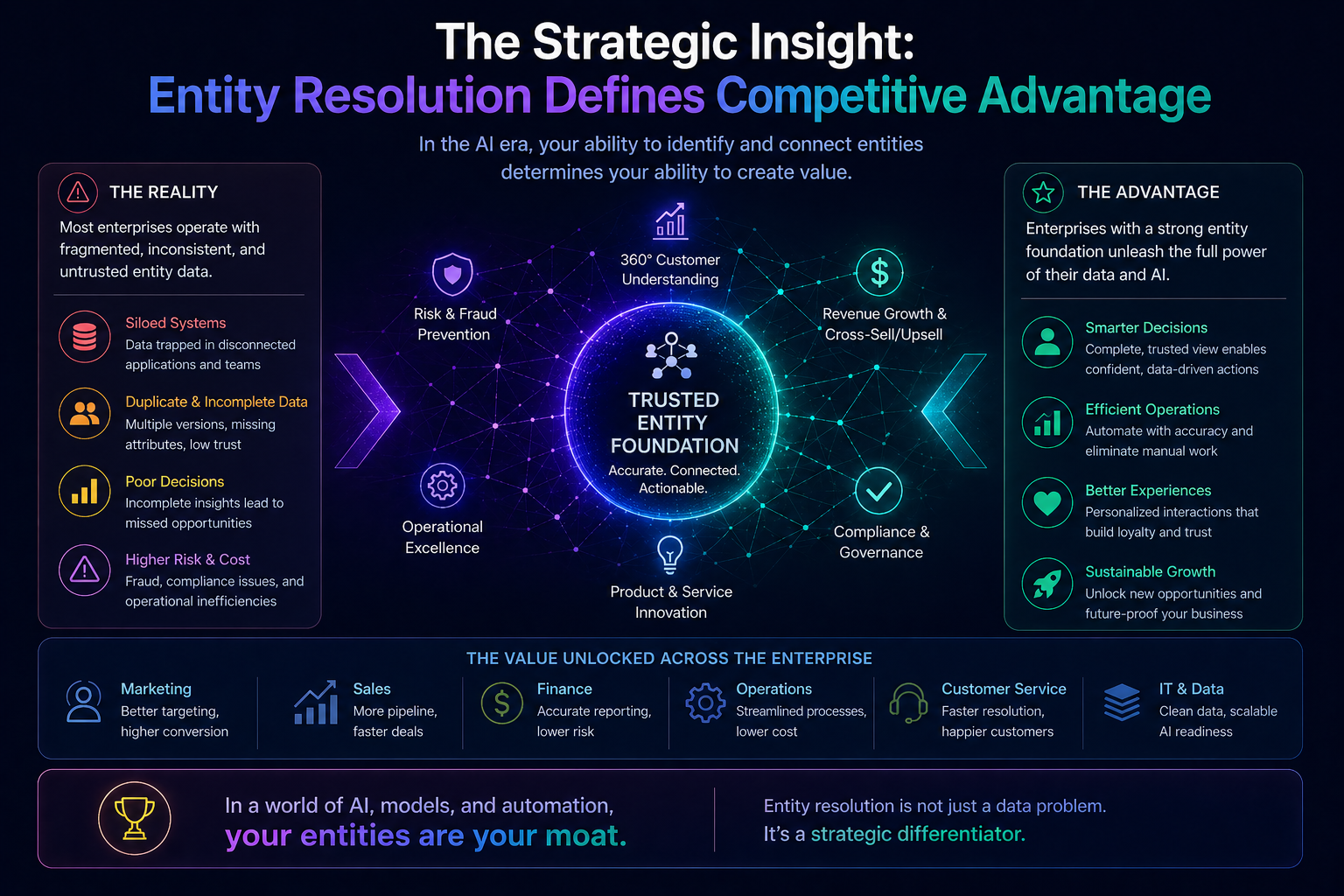
It sees broken fragments. OECD’s recent work on governing with AI makes the same point in institutional language: effective adoption depends on enabling layers such as governance, data, digital infrastructure, skills, procurement, and partnerships. (OECD)

This is where a new strategic idea becomes essential: the Representation Commons.

The Representation Commons is the shared layer of machine-readable reality that allows AI systems, institutions, markets, and public services to operate on trusted representations instead of guesswork.

It is not a single database. It is not a central platform. It is not merely a government repository. It is the common set of standards, identifiers, provenance mechanisms, interoperability rules, and governance rails that make entities and transactions legible across organizational boundaries.
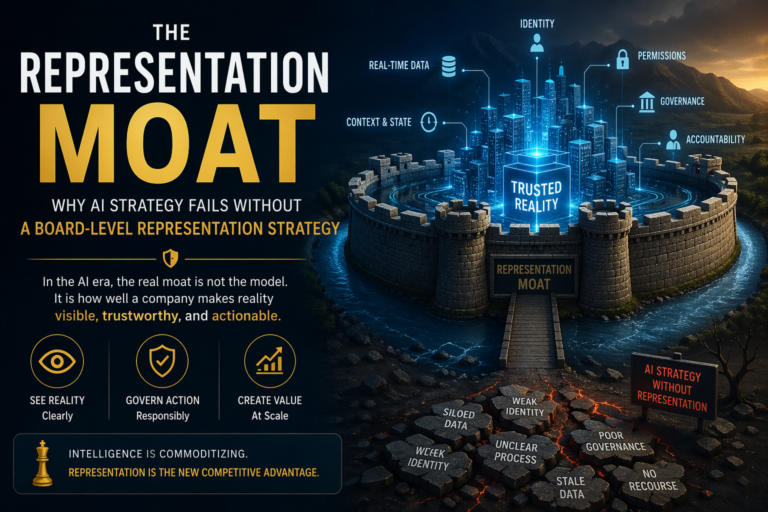
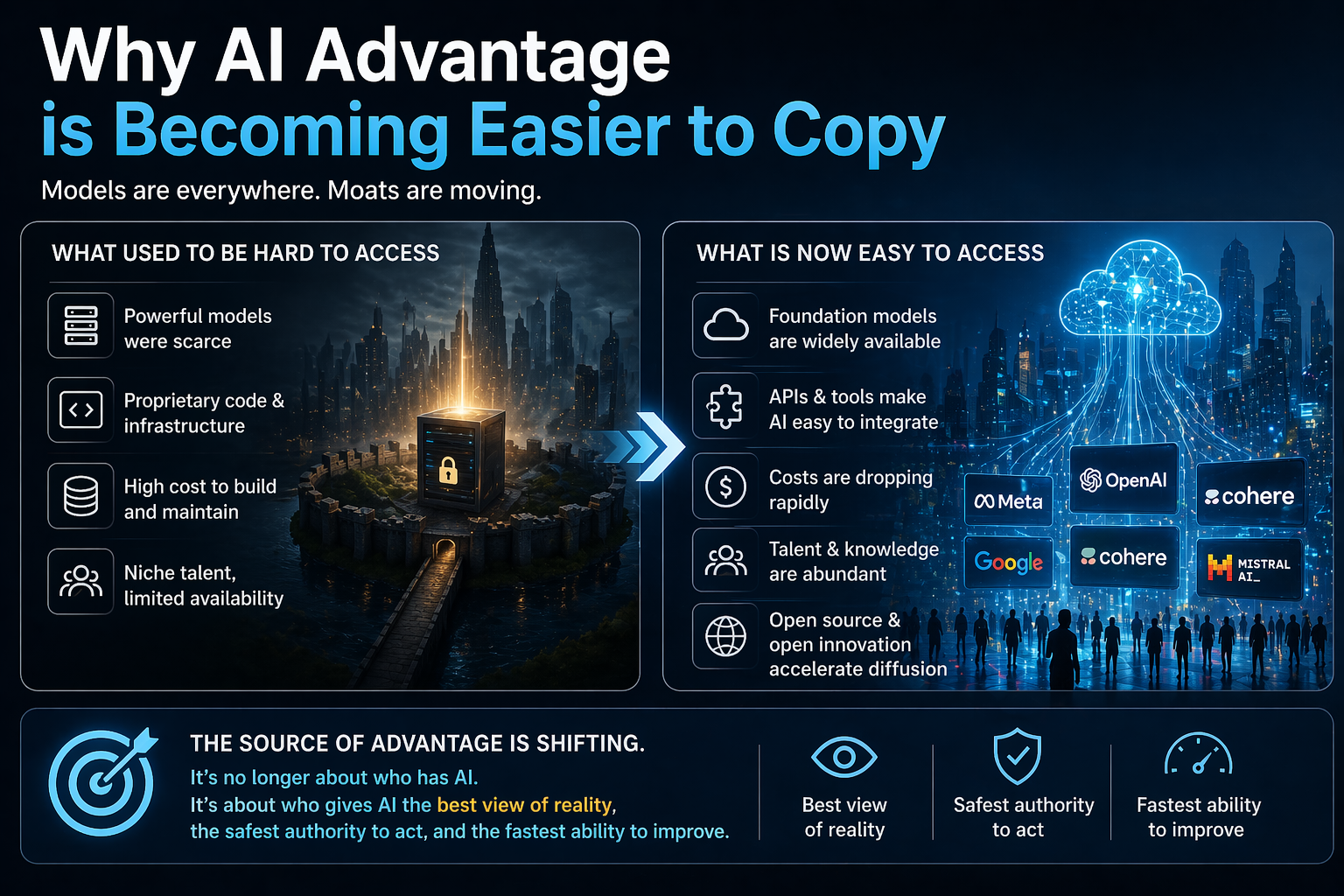
In simple language, the Representation Commons is the shared infrastructure that helps machines understand the world in ways that are portable, verifiable, and governable.

Without it, AI remains impressive but narrow. With it, AI becomes economically useful at scale.

The Representation Commons is the shared infrastructure of standards, identifiers, provenance systems, and governance rules that make real-world entities, claims, and transactions machine-readable across systems.

Why AI alone is not enough

Why AI alone is not enough

A common assumption in today’s market is that once models become more capable, value will automatically spread through the economy. It will not.

A highly capable model dropped into an illegible environment is like a brilliant analyst dropped into a room full of unlabeled folders, contradictory spreadsheets, missing documents, outdated records, screenshots, PDFs, and unverifiable certificates. The analyst may still produce something useful. But it cannot make consistently reliable decisions because the environment itself is poorly structured.

The same is true for AI.

If a lender cannot verify income or cash-flow history in a machine-readable way, AI-based lending remains constrained. If a hospital cannot exchange claims, approvals, and records through interoperable workflows, AI in healthcare remains fragmented.

If digital identity and credential systems do not interoperate across borders, digital trade and mobility remain slower than they should be. If provenance is weak, media trust erodes. If public records are inconsistent, AI-enabled service delivery becomes brittle and exclusionary.

These are not merely software problems. They are legibility problems. NIST’s AI Risk Management Framework similarly stresses that trustworthy AI depends on broader governance, risk management, context, and system design, not model performance alone. (NIST Publications)

That is why the next phase of AI competition will not be defined only by better models. It will be defined by better legibility infrastructure.

The deeper paradox: private intelligence, public illegibility

The deeper paradox: private intelligence, public illegibility

Here is the paradox at the heart of the current AI wave: we are investing heavily in intelligence, but far less in representation.

Organizations are launching copilots, agents, orchestration layers, and prediction engines. Yet many of the environments in which those systems must operate remain unreadable. The model may be advanced. The surrounding reality may not be.

That mismatch becomes especially dangerous as AI moves from generating content to validating claims, routing workflows, evaluating counterparties, and recommending or executing decisions. The more AI touches real operations, the more it depends on trusted inputs, persistent identifiers, clear state models, auditable permissions, and interoperable context. OECD and NIST arrive at this from different directions, but both point toward the same conclusion: trustworthiness and value creation depend on more than model strength. They depend on the surrounding institutional substrate. (OECD)

This is exactly why the Representation Commons matters.

Think roads, not cars

The easiest way to understand the Representation Commons is to think about roads.

A country can import the best cars in the world. But if it does not build roads, traffic rules, maps, address systems, licensing, signals, and maintenance infrastructure, mobility will remain chaotic.

AI is the car.
The Representation Commons is the road system.

Most AI strategies today are still too car-centric. They ask which model to buy, which agent framework to adopt, or which assistant to deploy. Those are useful questions, but they are downstream. The upstream questions are more structural:

Can entities be identified across systems?
Can permissions travel?
Can states be verified?
Can consent be captured and honored?
Can provenance be checked?
Can decisions be audited?
Can recourse be triggered when something goes wrong?

Those are Representation Commons questions.

The SENSE–CORE–DRIVER lens

The SENSE–CORE–DRIVER lens

In my broader Representation Economics framework, AI systems succeed or fail across three interdependent layers.

SENSE is the legibility layer where reality becomes machine-readable:

  • Signal: detecting events, changes, and traces from the world
  • ENtity: attaching those signals to a persistent person, organization, asset, place, or object
  • State representation: building a structured model of current condition
  • Evolution: updating that state over time as new signals arrive

CORE is the cognition layer:

  • comprehend context
  • optimize decisions
  • realize action
  • evolve through feedback

DRIVER is the governance and legitimacy layer:

  • delegation
  • representation
  • identity
  • verification
  • execution
  • recourse

The Representation Commons sits primarily in SENSE, but it strengthens DRIVER as well. AI does not become broadly useful merely when it can think. It becomes broadly useful when it can think about something that is legible, and when its actions can be checked, authorized, and trusted. That is the missing bridge between model intelligence and social-scale value.

What the Representation Commons looks like in the real world

What the Representation Commons looks like in the real world

This is not a speculative idea. Pieces of the Representation Commons are already emerging across the world.

In Europe, the EU Digital Identity Wallet framework is being built around mutual recognition, portability, and interoperable use of digital identity and credentials across member states. The point is not just digitized identity. It is trusted, reusable identity and credential exchange across systems and borders. Public authorities are expected to accept EU Digital Identity Wallets once issued by member states, underscoring the shift toward a shared trust layer. (European Commission)

The W3C Verifiable Credentials Data Model 2.0 provides a standard way to express claims such as licenses, degrees, and certifications in a cryptographically secure and machine-verifiable format. This moves trust away from screenshots, emailed PDFs, and manual checks toward structured, checkable credentials that machines can reason over. (W3C)

India’s Account Aggregator framework shows the same principle in financial data sharing. The official framework states that financial information is shared only with explicit customer consent and transferred from one institution to another based on the individual’s instruction. That matters not just because it improves access.

It matters because it creates permissioned, interoperable, machine-usable representation of financial information across institutions. (Department of Financial Services)

India’s National Health Claims Exchange, under Ayushman Bharat Digital Mission, similarly aims to standardize the exchange of health-claim information among payers, providers, and third-party administrators. When claims workflows, consent, and records become interoperable and auditable, AI can move from surface-level assistance toward real process improvement. (NHCX)

Singapore’s MyInfo offers another practical example. It allows individuals to pre-fill digital forms using verified data from government sources, reducing repetitive submission, manual verification, and friction across services. MyInfo is now integrated into more than 1,000 digital services, which is exactly what shared legibility looks like when it starts compounding across an ecosystem. (Singapore Government Developer Portal)

In digital media, the C2PA specification and Content Credentials aim to establish source and history information for content. In an AI-rich media environment, machines increasingly need to know not just what content says, but where it came from, whether it was altered, and how provenance can be checked. (C2PA)

These examples all point in the same direction: shared legibility is becoming infrastructure.

Why nations, industries, and ecosystems must build it together

Why nations, industries, and ecosystems must build it together

A Representation Commons cannot be built by one enterprise alone.

A firm can build a clean internal data model. It can improve its workflows. It can deploy strong copilots and decision systems. But if the surrounding ecosystem remains illegible, the benefits remain partial.

A logistics company still depends on ports, customs, freight records, insurers, and payment rails. A hospital still depends on labs, pharmacies, regulators, insurers, and claims systems. A bank still depends on identity systems, consent frameworks, counterparties, and verification layers. A manufacturer still depends on suppliers, certification bodies, trade documentation, logistics partners, and quality records.

That is why this is an ecosystem challenge rather than merely an enterprise challenge. Shared legibility creates the highest value precisely at the point of coordination. This is also why development and policy institutions increasingly emphasize interoperable digital public infrastructure, trusted data exchange, and inclusive governance as foundational to broad-based digital value creation. (OECD)

What happens if we do not build it

If societies do not invest in the Representation Commons, AI will still advance. But its benefits will flow unevenly.

Large firms with proprietary ecosystems will become easier for machines to trust. Smaller firms will remain harder to verify and integrate. Public services will struggle to scale reliable AI deployment. Cross-border coordination will stay expensive. Compliance will remain manual. Trust will become platform-dependent rather than portable.

This is a crucial point. The absence of shared legibility infrastructure does not stop AI. It changes who benefits from AI.

That makes the Representation Commons not only a technology issue, but also a market-design issue, an industrial-policy issue, and an inclusion issue.

A simple example: the small supplier

Imagine a small manufacturing supplier with excellent products.

Its quality records sit in PDFs.
Its certifications are emailed manually.
Its shipment data appears in different formats for different buyers.
Its sustainability claims are difficult to verify.
Its payment history is fragmented across systems.
Its compliance records are not machine-readable.

Now imagine a large buyer using AI to source vendors, assess risk, verify compliance, forecast delays, and automate procurement.

Who gets selected first?

Usually not the best supplier.
The best represented supplier.

That is the heart of Representation Economics. In the AI economy, value does not flow only toward what is real. It flows toward what is legible.

The Representation Commons reduces this distortion by making verification, interoperability, and trust less dependent on firm size or platform power.

What leaders should do now

Leaders who want AI to deliver broad-based value should think beyond tools and ask five practical questions.

First, what entities in our ecosystem remain poorly represented? Suppliers, patients, products, claims, permits, invoices, land parcels, emissions records, credentials, and licenses are common blind spots.

Second, which states and permissions are still trapped inside documents rather than machine-readable flows? Approvals, eligibility, coverage, quality status, consent, and audit trails often remain locked in manual formats.

Third, where is interoperability weakest? In many industries, the problem is not internal AI capability. It is the gap between ministries, banks, hospitals, ports, insurers, counterparties, and cross-border systems.

Fourth, what must become portable and verifiable? Identity, provenance, credentials, claims history, compliance artifacts, and delegation rules are prime candidates.

Fifth, which parts of our future AI value depend on shared infrastructure rather than internal tooling alone? This is often the biggest strategic blind spot of all.

The Representation Commons: broad-based AI value begins before the model

Conclusion: broad-based AI value begins before the model

The next decade of AI will not be won by intelligence alone.

It will be won by the nations, industries, and ecosystems that make reality easier for machines to understand, verify, and act on responsibly. The Representation Commons is the layer that turns AI from isolated capability into systemic value. It is how countries reduce friction, industries improve coordination, ecosystems widen participation, and institutions make trust more portable.

Before AI can create value for everyone, the world must first become legible enough for AI to work with everyone.

That is not only a model problem. It is a representation problem.

Glossary

Representation Commons
The shared infrastructure of standards, identifiers, provenance systems, and governance rails that makes reality machine-readable across institutions.

Representation Economics
A framework for understanding how value in the AI era increasingly depends on how well entities, claims, permissions, and states are represented for machine reasoning and action.

Shared Legibility Infrastructure
The technical and institutional systems that help machines consistently interpret and trust real-world entities and events across boundaries.

Machine-Readable Reality
A form of representation in which information is structured so software and AI systems can process, verify, and act on it reliably.

Verifiable Credentials
Cryptographically secure, machine-verifiable digital credentials used to express claims such as licenses, degrees, or certifications. (W3C)

Digital Public Infrastructure
Foundational digital systems such as identity, consent, payments, and data exchange rails that support broad participation in modern economies.

Provenance
Information about the source, history, and modification path of a digital asset or claim. (C2PA)

Interoperability
The ability of systems, institutions, or platforms to exchange and use information consistently across boundaries.

Portable Trust
Trust that can move across systems because it is attached to standardized, verifiable representations rather than to one closed platform.

Interoperability
Ability of systems to exchange and use information seamlessly.

Portable Trust
Trust that moves across systems through verifiable representations.

FAQ

What is the Representation Commons in simple words?
It is the shared infrastructure that makes people, products, claims, permissions, and transactions easier for machines to understand and trust across systems.

Why is the Representation Commons important for AI?
Because even powerful AI systems underperform when the surrounding world is fragmented, unverifiable, and hard to interpret.

How is this different from better AI models?
Better models improve reasoning. The Representation Commons improves what the model can reliably reason about.

Is this mainly a government issue?
No. Governments matter, but industries, standards bodies, platforms, and ecosystems all play a role in making shared legibility possible.

What are real examples of the Representation Commons?
Examples include the EU Digital Identity Wallet, W3C Verifiable Credentials, India’s Account Aggregator framework, India’s National Health Claims Exchange, Singapore’s MyInfo, and C2PA Content Credentials. (European Commission)

Why should boards care?
Because future AI advantage will depend not only on deploying models, but on operating inside ecosystems where trust, verification, and coordination can scale.

What is the Representation Commons?

The Representation Commons is the shared infrastructure that makes real-world entities, transactions, and claims machine-readable, verifiable, and interoperable across systems.

Why is AI not enough on its own?

Because AI depends on structured, trusted inputs. Without representation, even advanced models cannot generate reliable outcomes.

What does “AI value begins before the model” mean?

It means that the structure and legibility of data and systems determine whether AI can create value—before intelligence is applied.

What are examples of Representation Commons?

Examples include digital identity systems, verifiable credentials, consent-based data sharing frameworks, and interoperable public infrastructure.

Why should enterprises care?

Because future AI advantage depends not only on models, but on how well organizations represent reality for machines to understand and act on.

References and further reading

For a short reference section at the end of the article, use these categories rather than long academic formatting:

  • OECD — governing with AI in the public sector and the enabling foundations for adoption. (OECD)
  • NIST — AI Risk Management Framework and trustworthiness guidance. (NIST Publications)
  • European Commission — EU Digital Identity Wallet framework and interoperability path. (European Commission)
  • W3C — Verifiable Credentials Data Model 2.0. (W3C)
  • Government of India — Account Aggregator framework and National Health Claims Exchange. (Department of Financial Services)
  • Singapore Government — MyInfo digital data-sharing infrastructure. (Singapore Government Developer Portal)
  • C2PA — content provenance and authenticity standards. (C2PA)

Explore the Architecture of the AI Economy

This article is part of a broader research series exploring how institutions are being redesigned for the age of artificial intelligence. Together, these essays examine the structural foundations of the emerging AI economy — from signal infrastructure and representation systems to decision architectures and enterprise operating models.

If you want to explore the deeper framework behind these ideas, the following essays provide additional perspectives:

Together, these essays outline a central thesis:

The future will belong to institutions that can sense reality, represent it clearly, reason about it intelligently, and act through governed machine systems.

This is why the architecture of the AI era can be understood through three foundational layers:

SENSE → CORE → DRIVER

Where:

  • SENSE makes reality legible
  • CORE transforms signals into reasoning
  • DRIVER ensures that machine action remains accountable, governed, and institutionally legitimate

Signal infrastructure forms the first and most foundational layer of that architecture.

AI Economy Research Series — by Raktim Singh