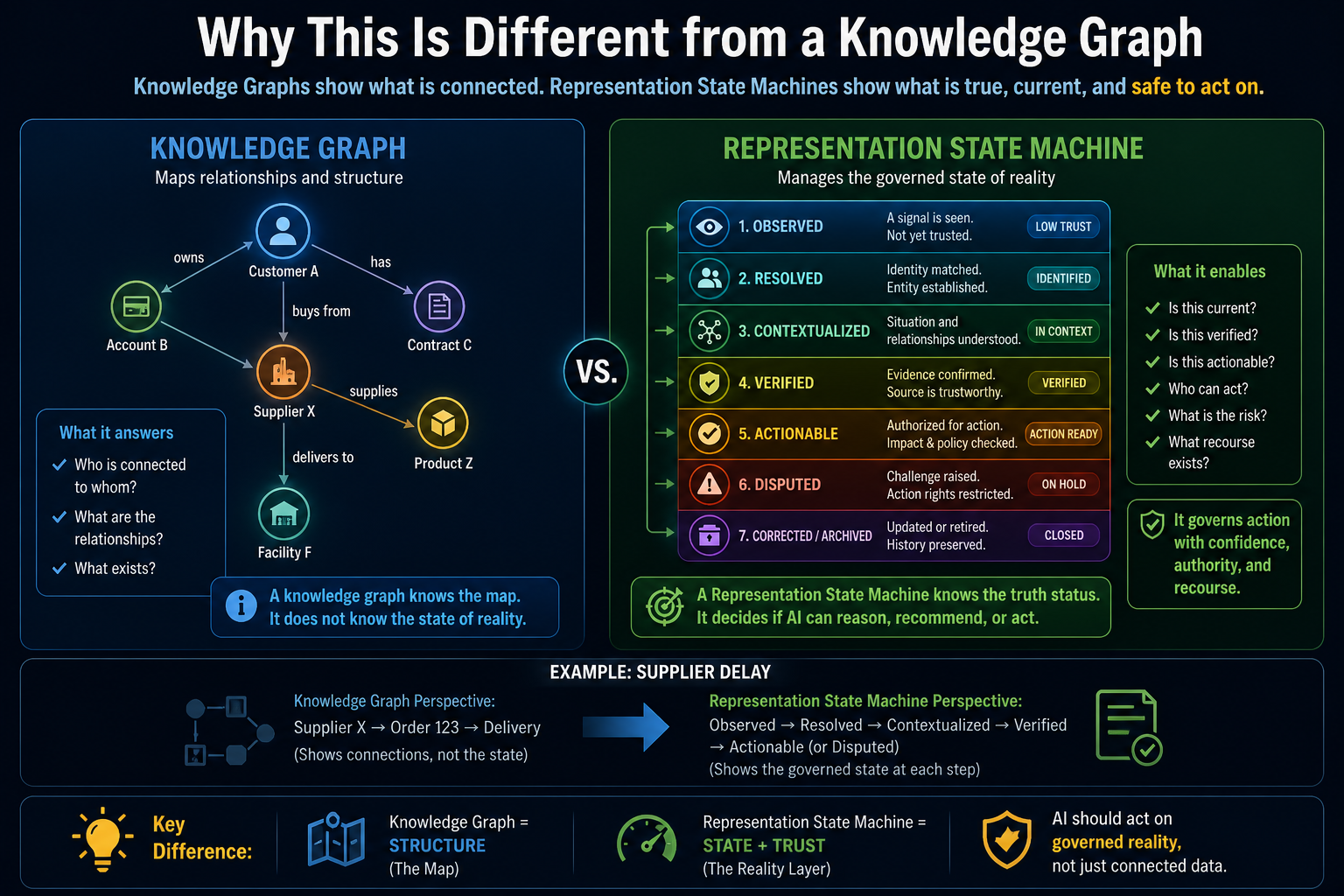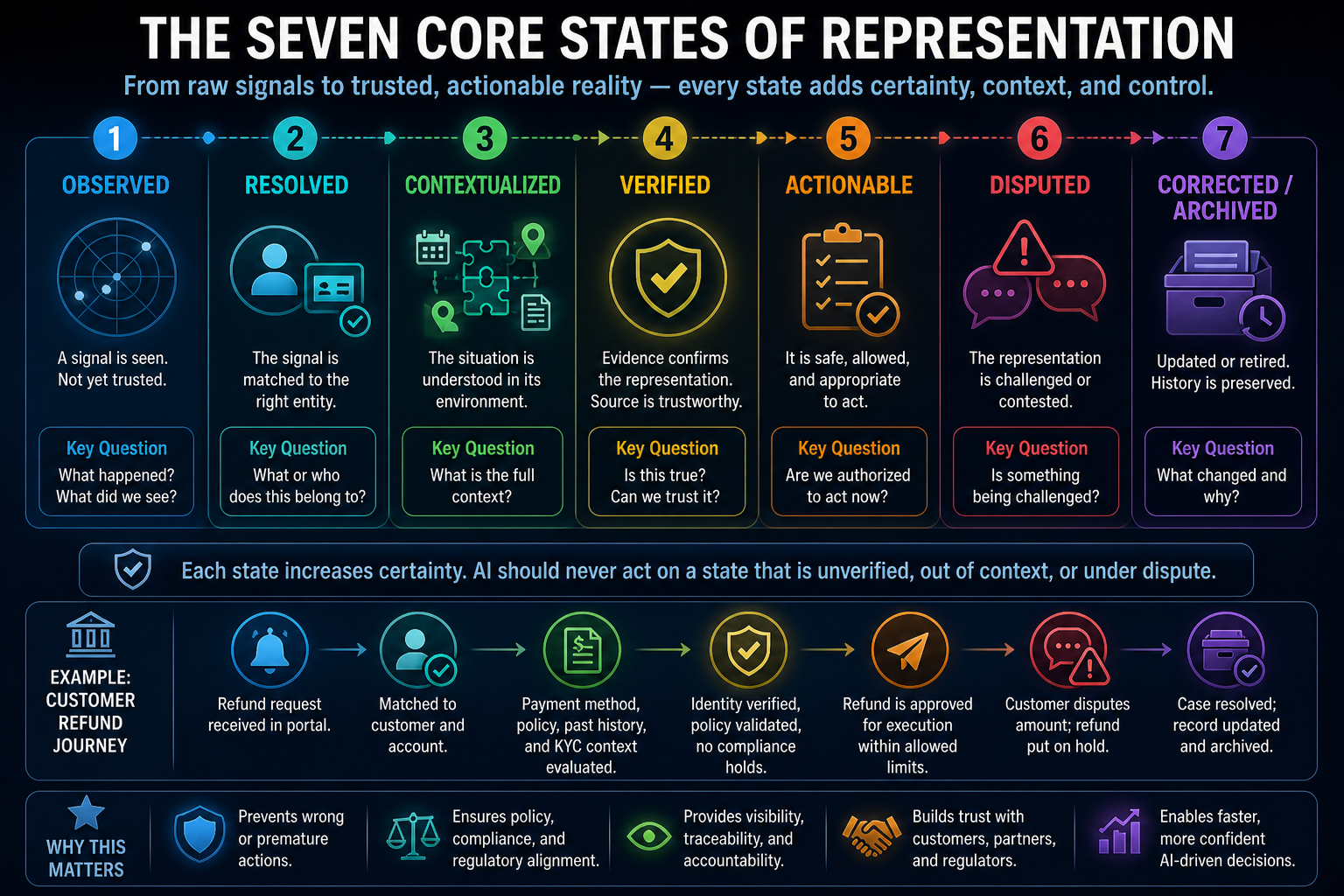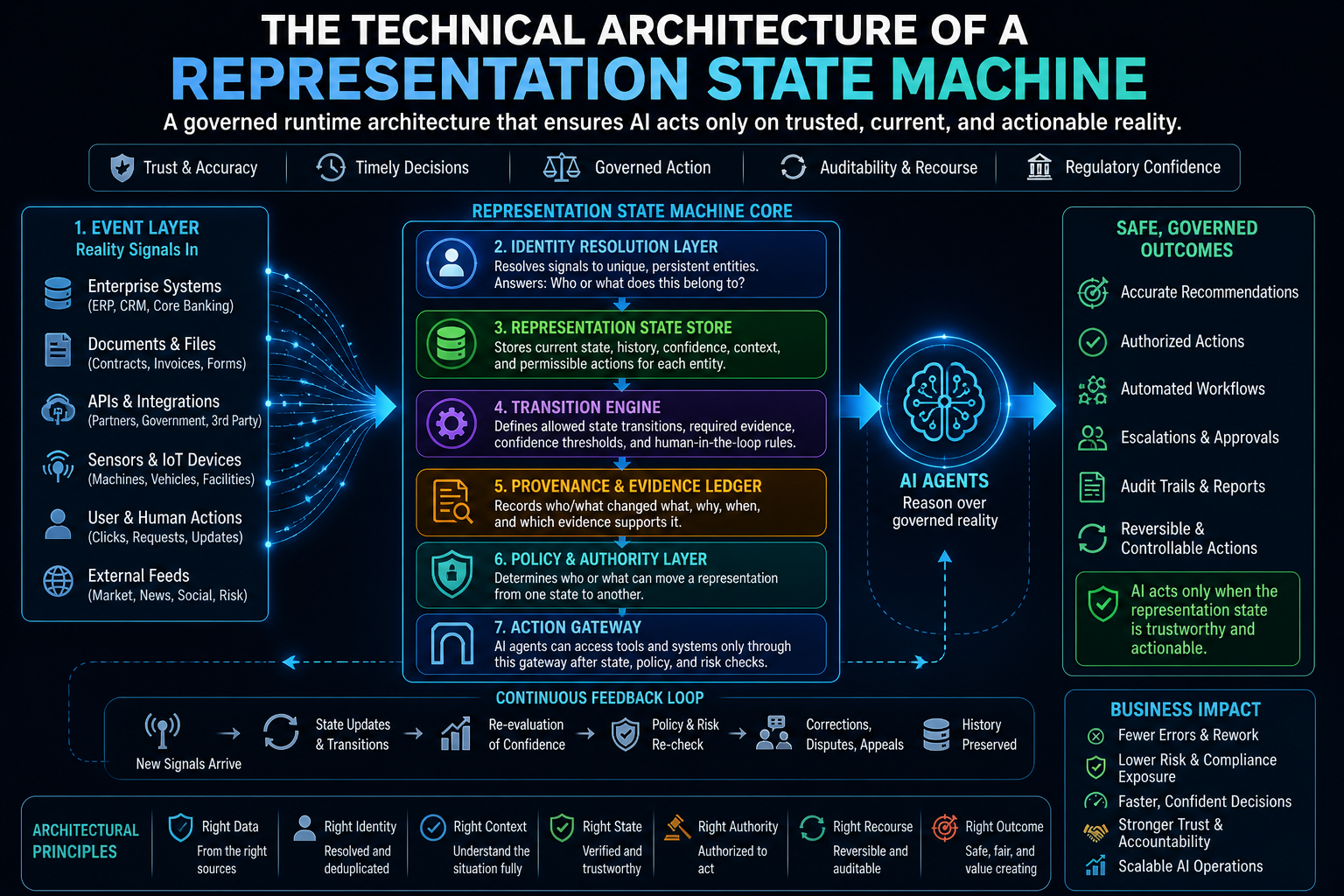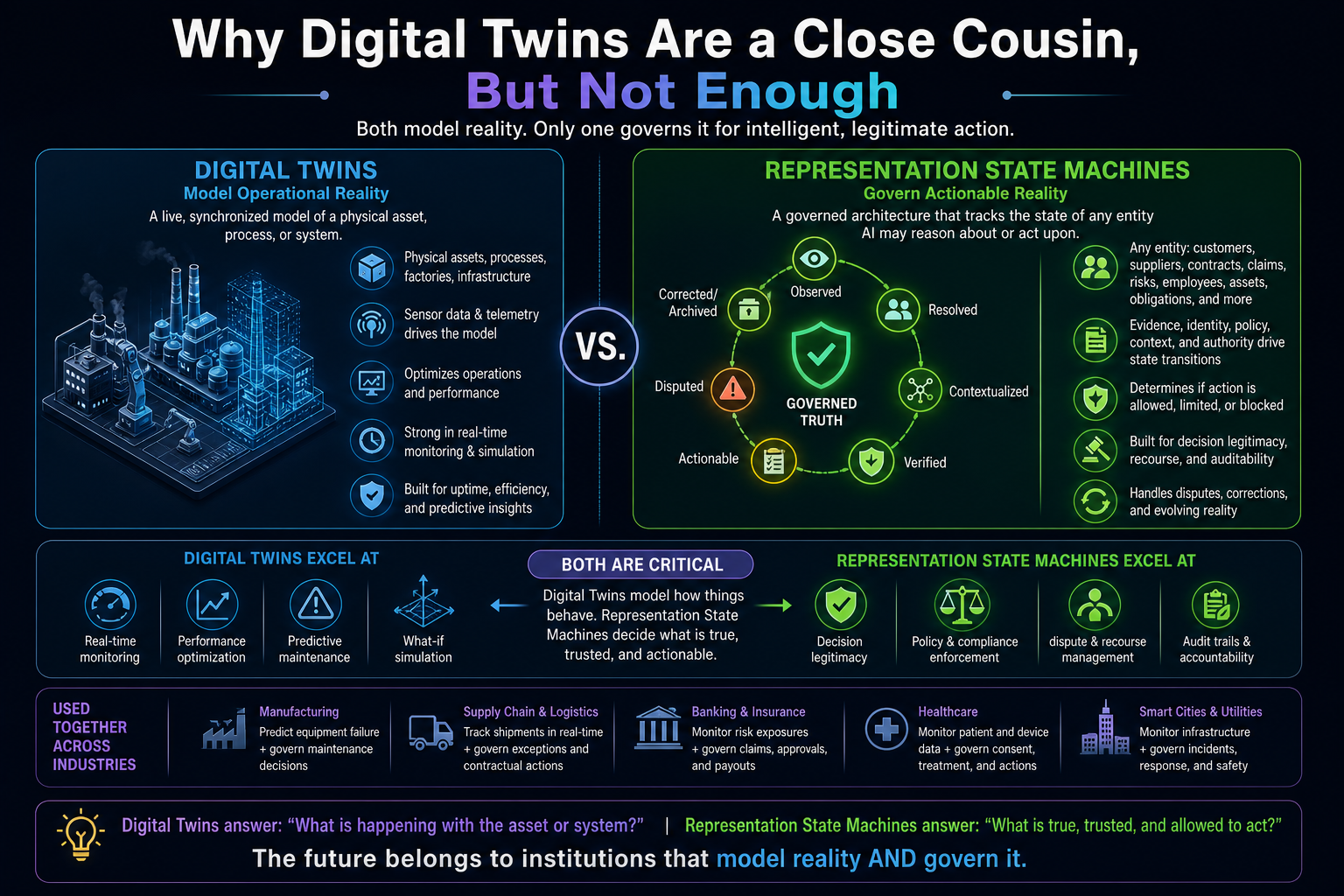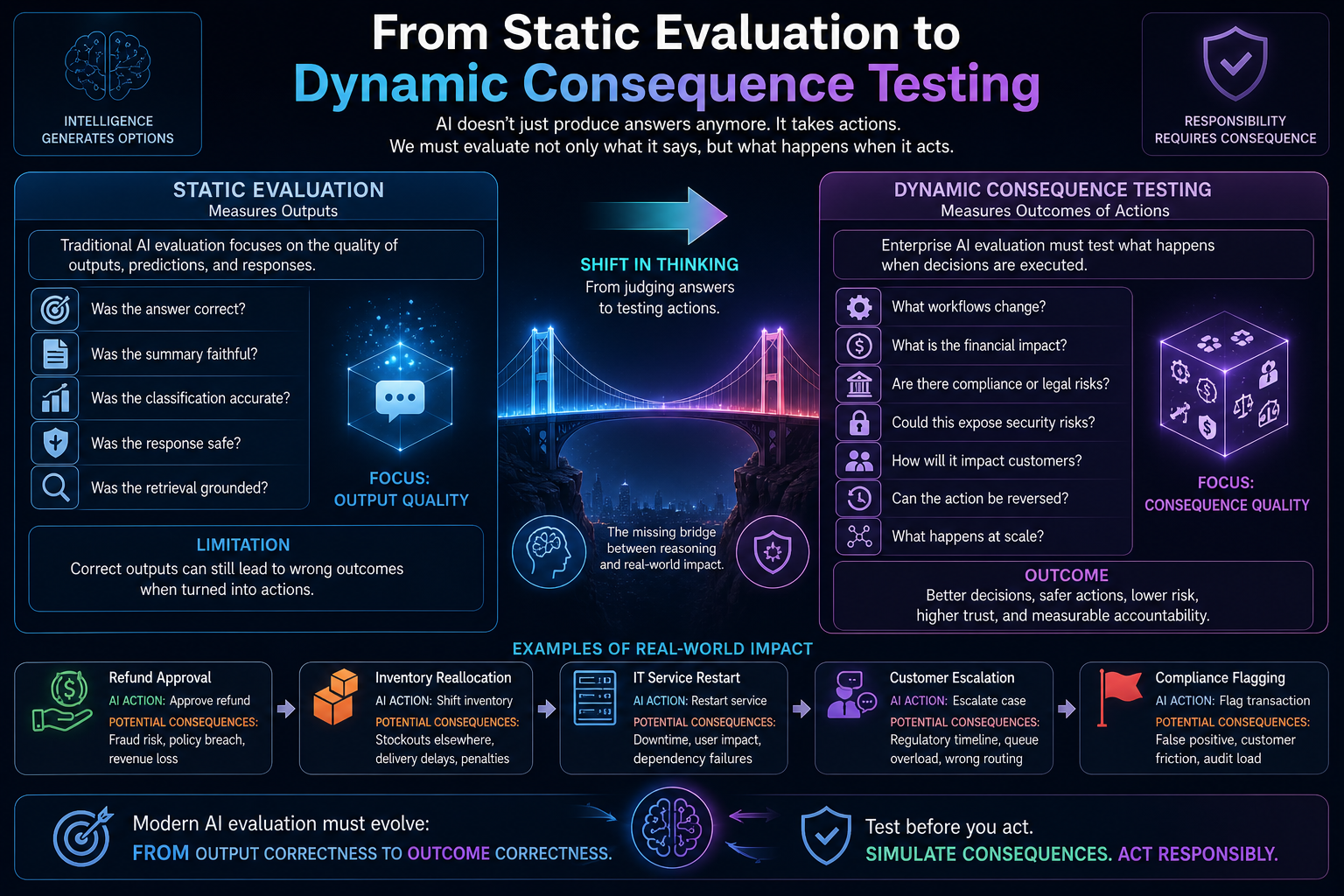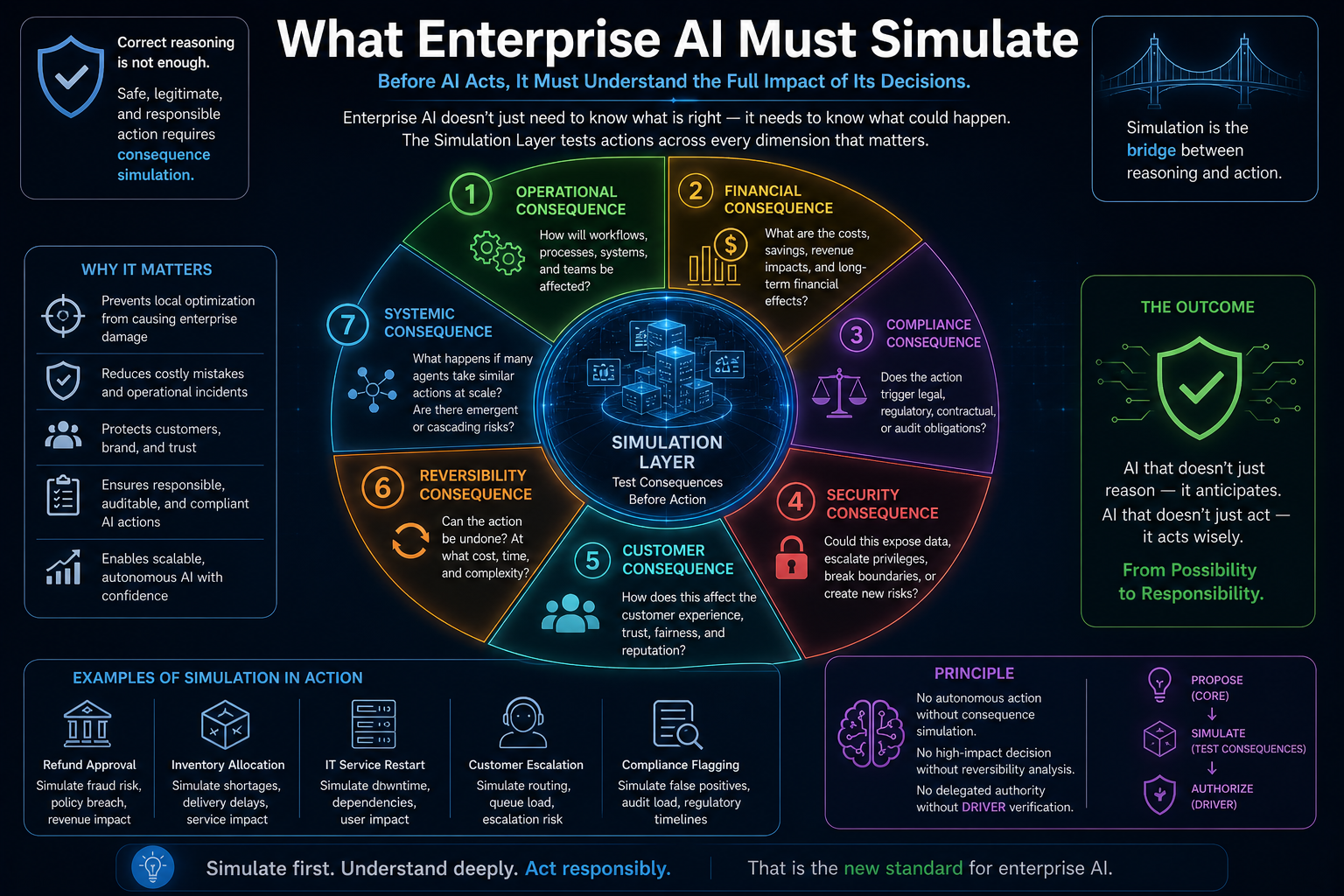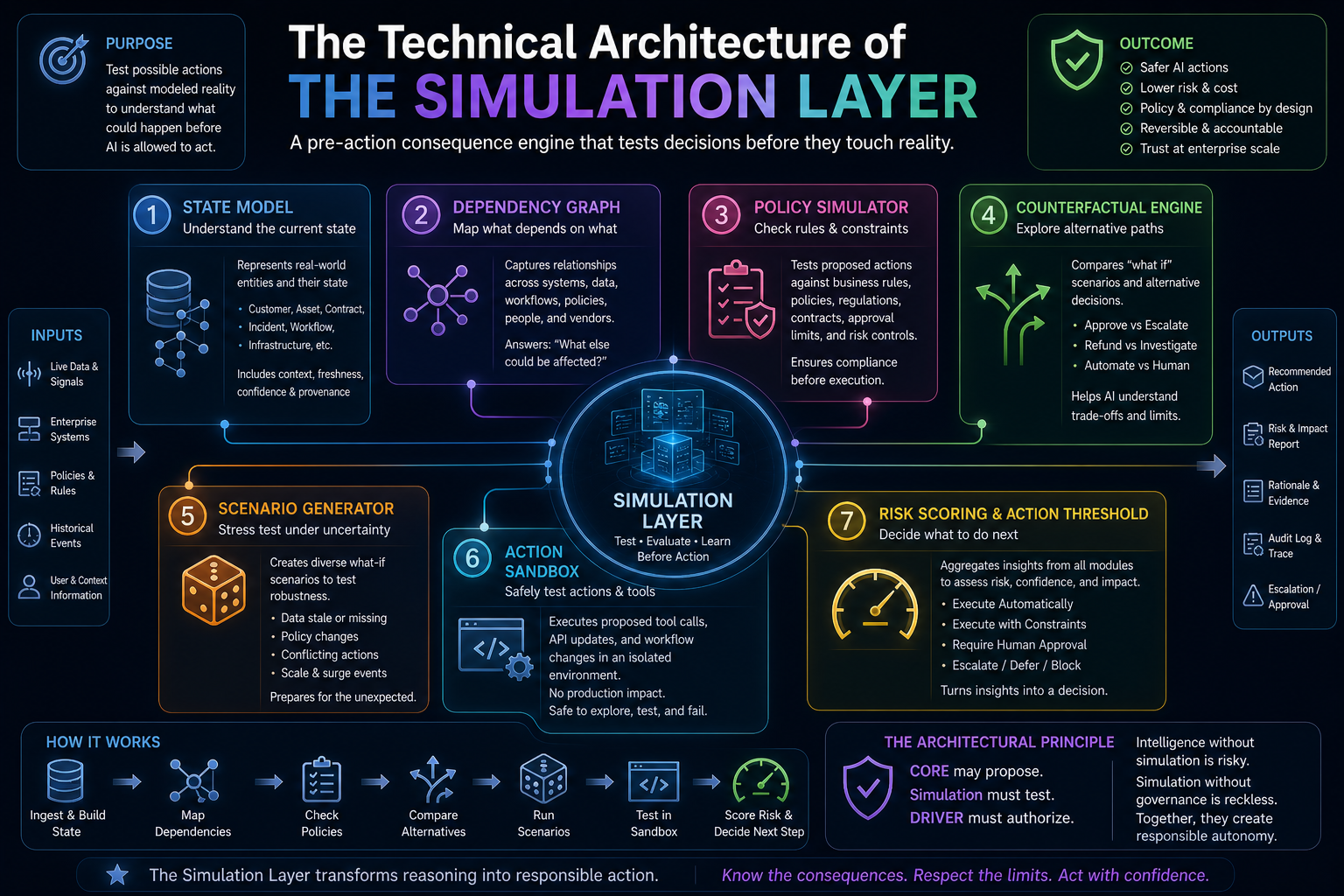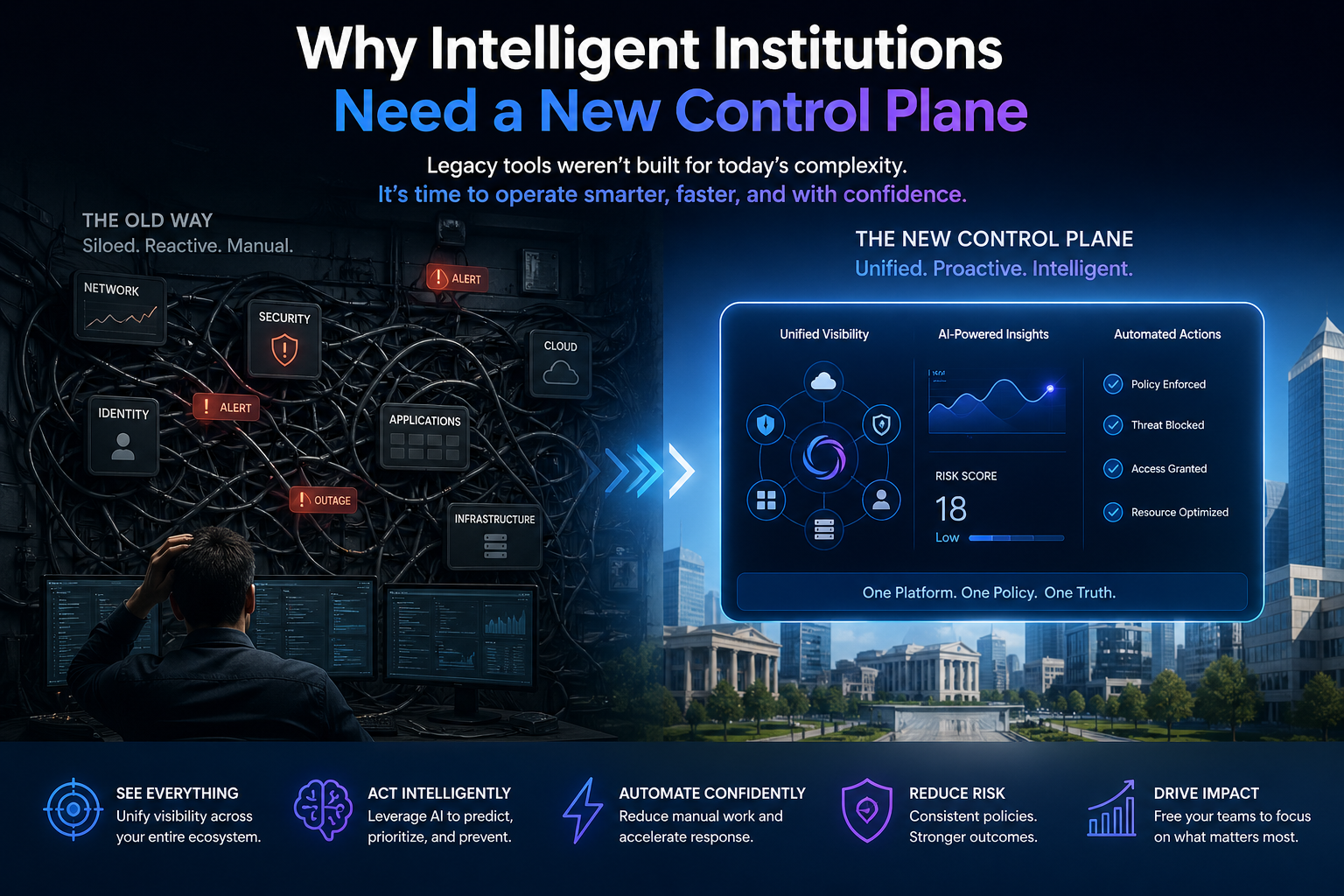
Raktim Singh

Home Blog Page 7

The Representation Attack Surface: Why AI’s Biggest Threat Is Reality Hacking, Not Model Hacking

The Representation Attack Surface

Artificial intelligence has made one assumption feel intuitive: if the model is secure, the system is secure.

That assumption is becoming dangerous.

The next wave of AI failure will not come only from stolen model weights, prompt injection, jailbreaks, or poisoned training data. It will increasingly come from something deeper and less visible: the corruption of the machine-readable reality that AI systems rely on to interpret the world and act within it. NIST frames AI risk as a socio-technical problem shaped not only by technical components but also by context, human behavior, operational use, and interactions with other systems. MITRE’s ATLAS and SAFE-AI work similarly emphasize that AI-enabled systems expand the attack surface beyond the model itself. (NIST Publications)

That is the real attack surface.

I call it the representation attack surface.

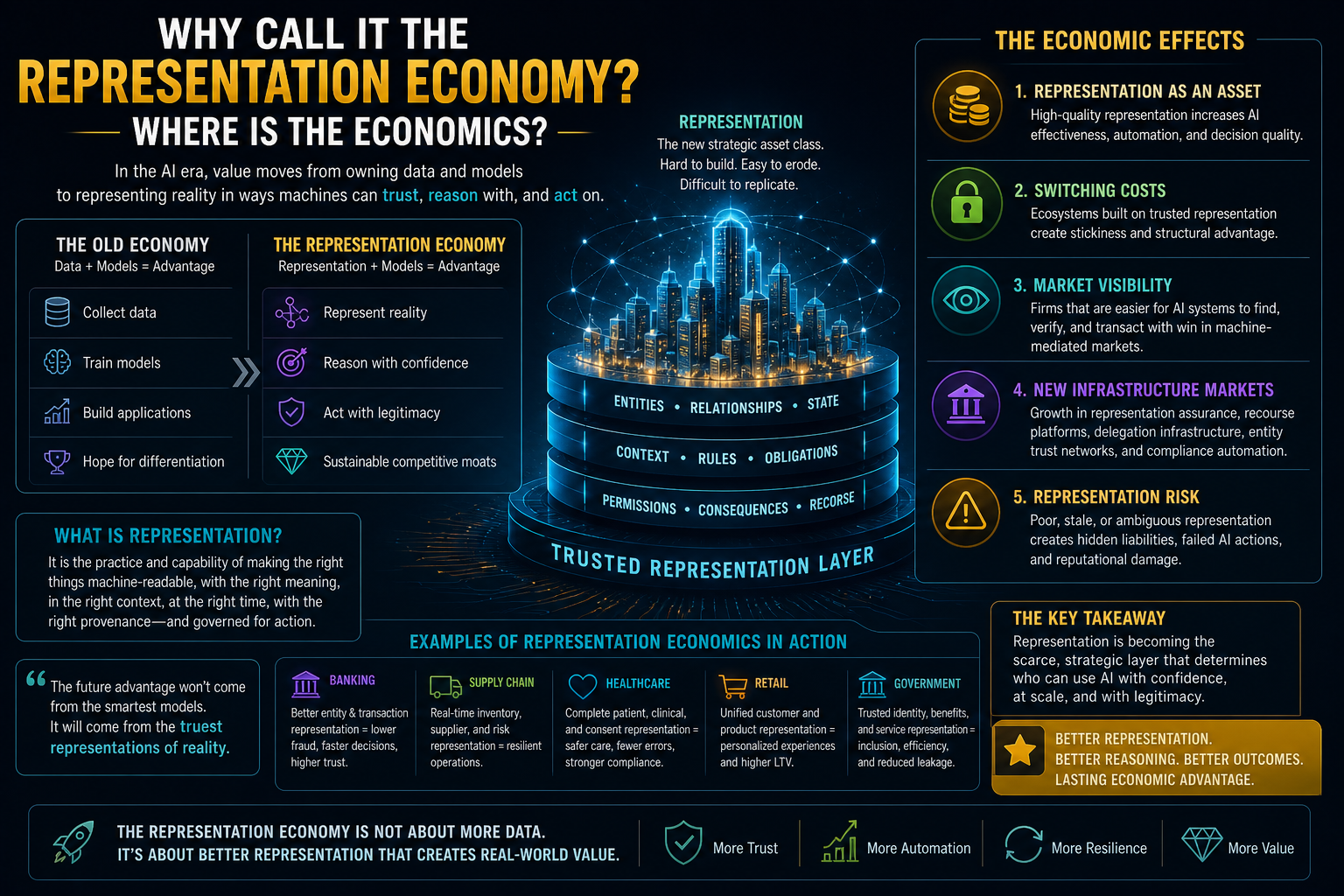
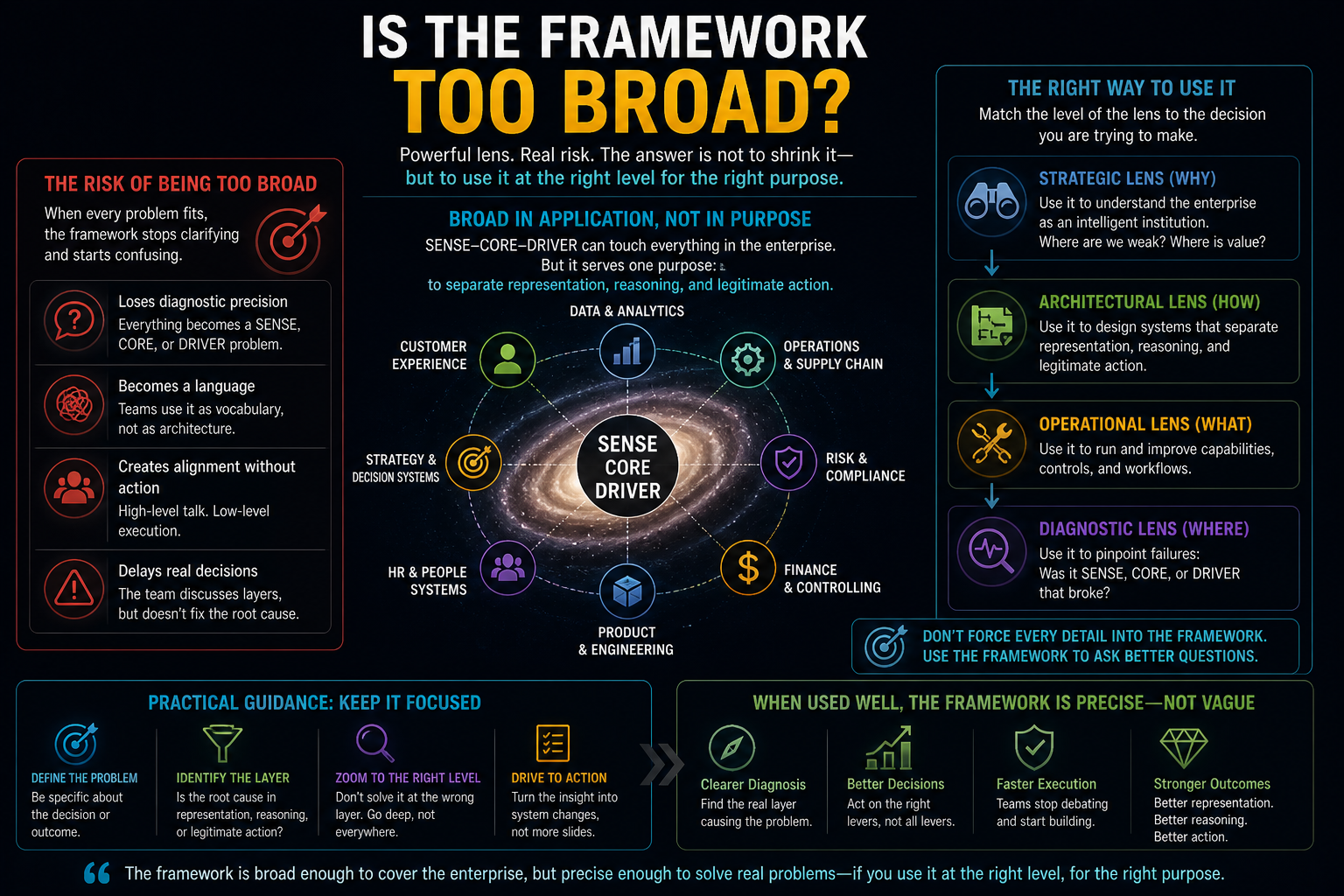
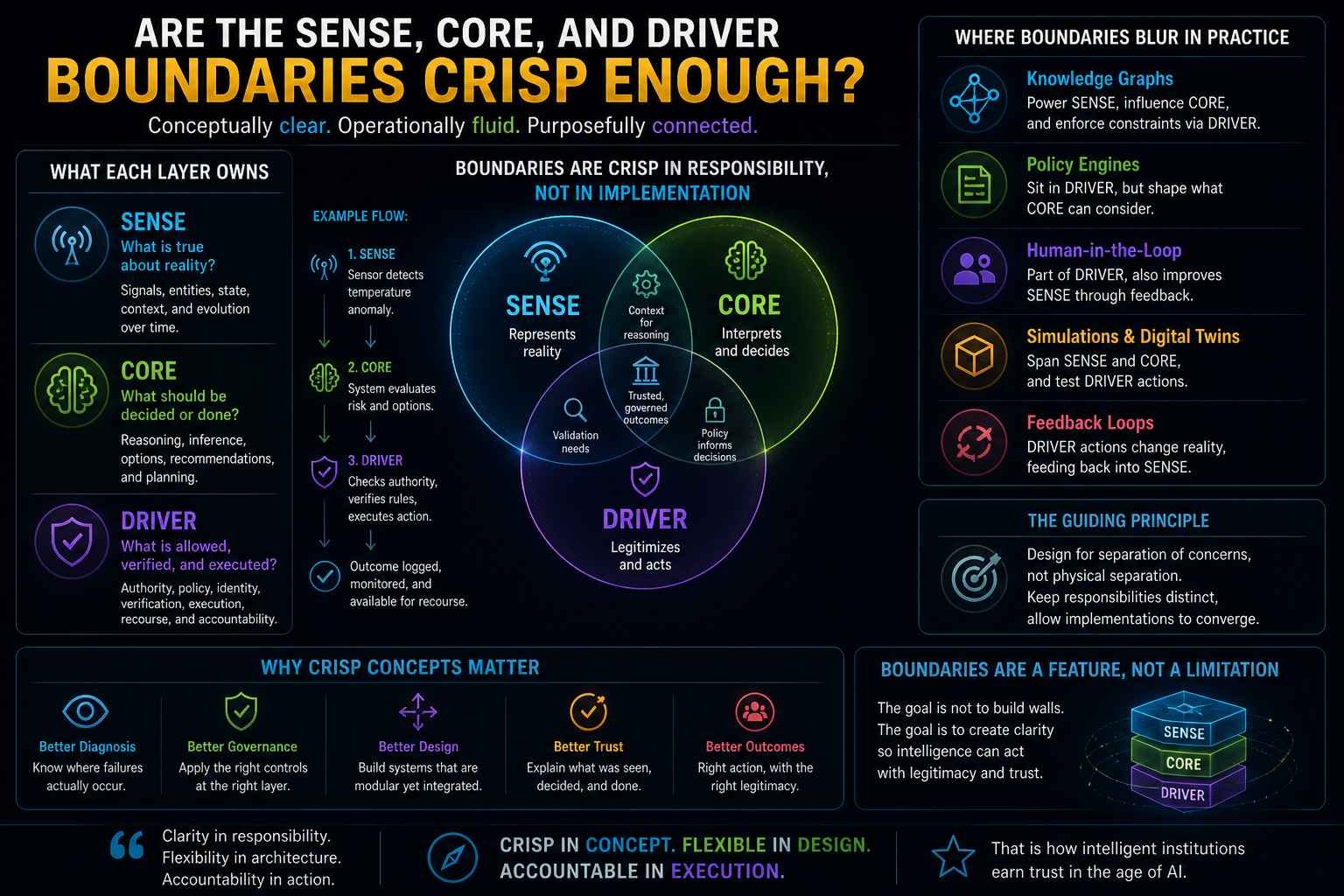
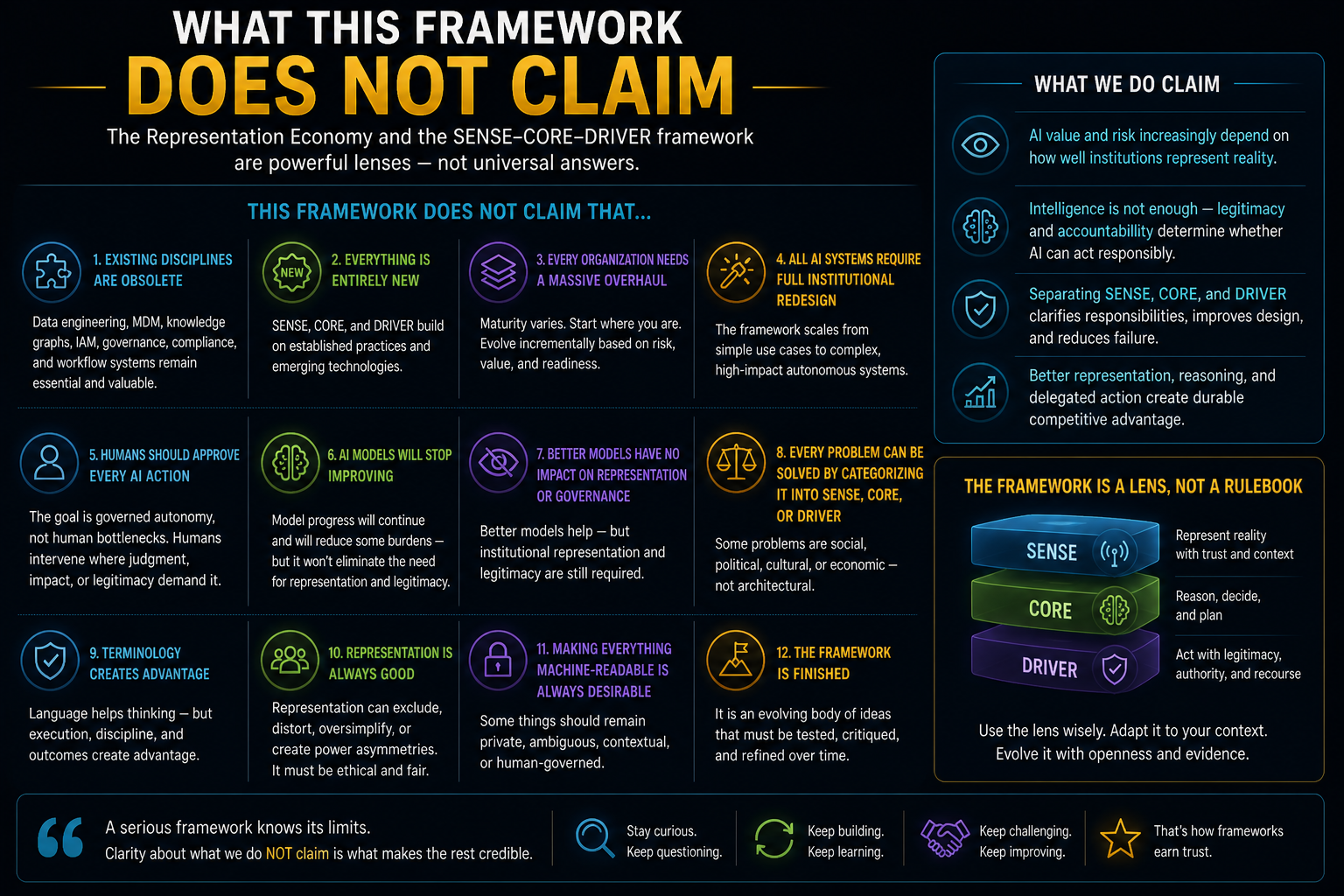
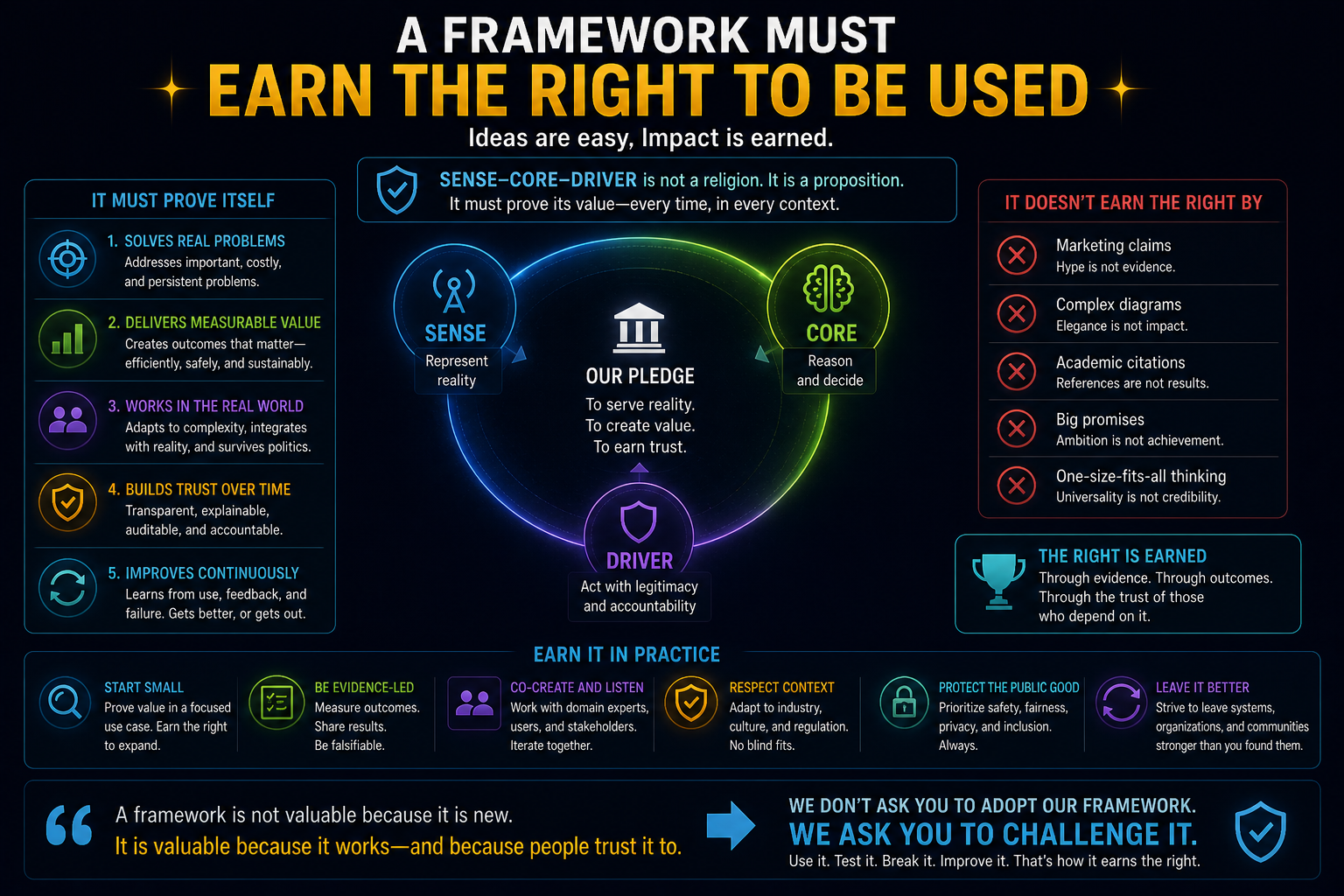
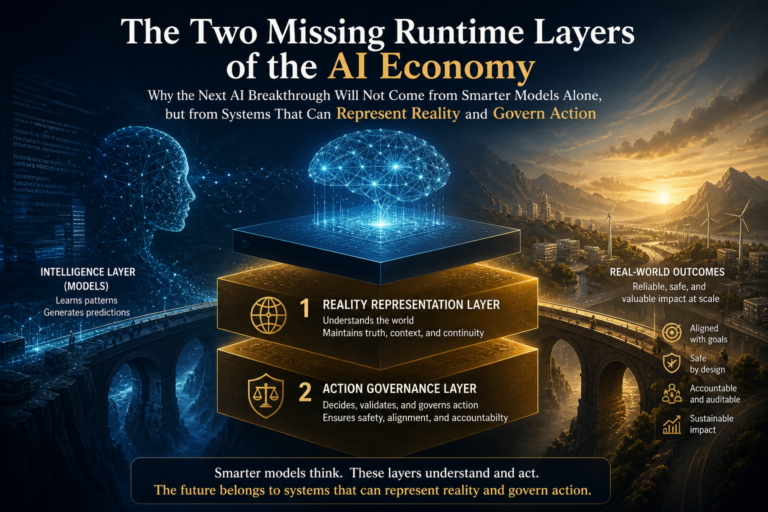
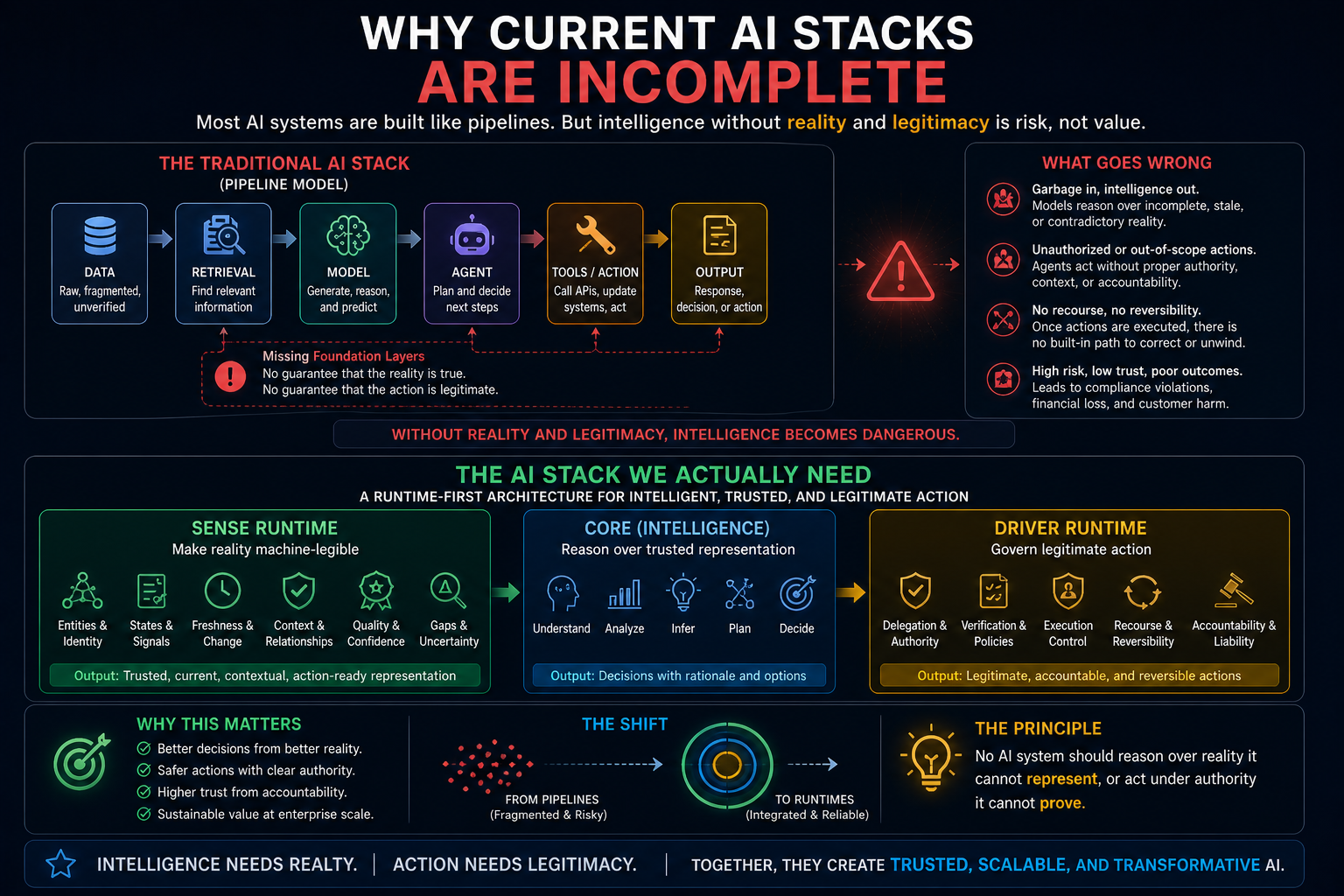
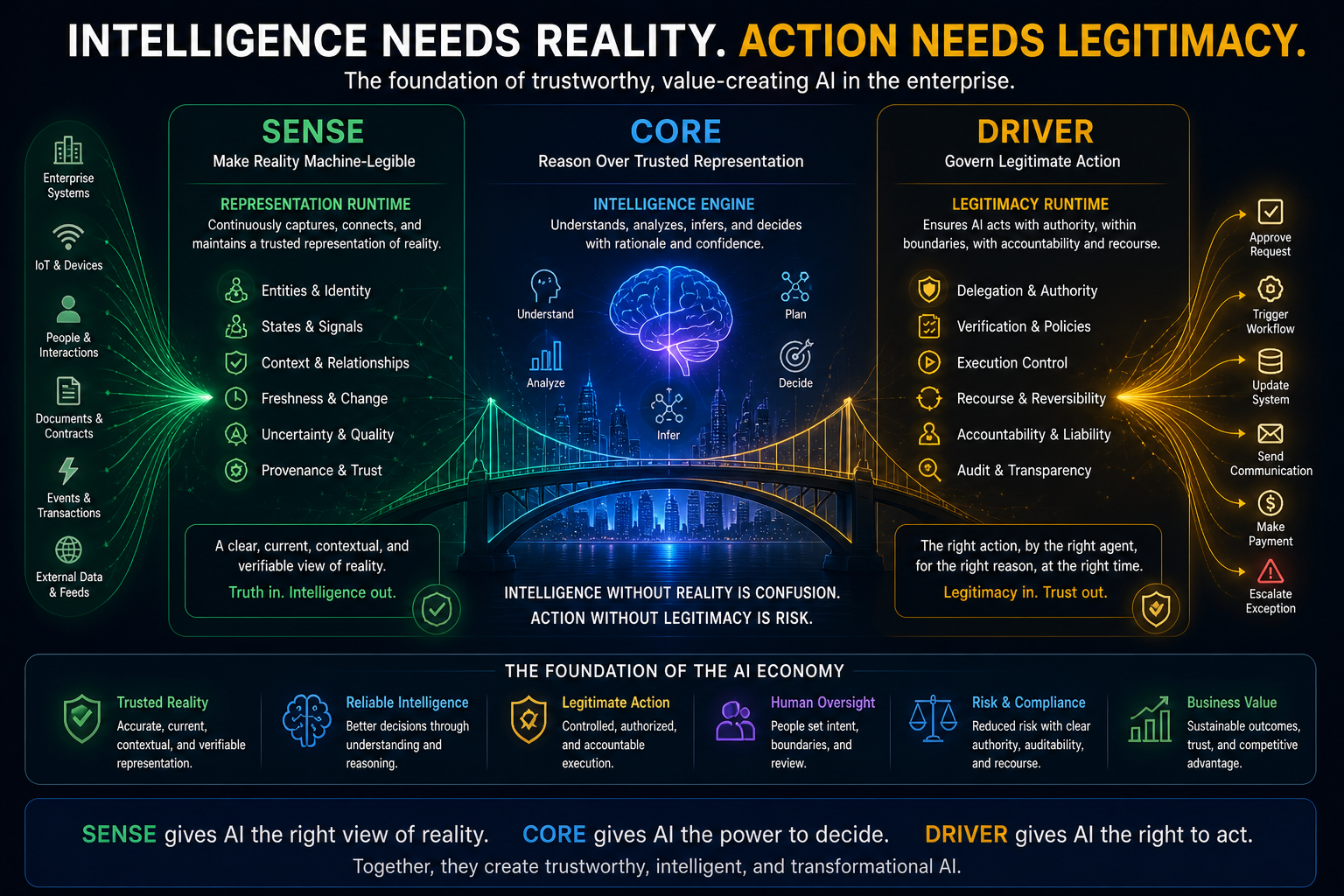
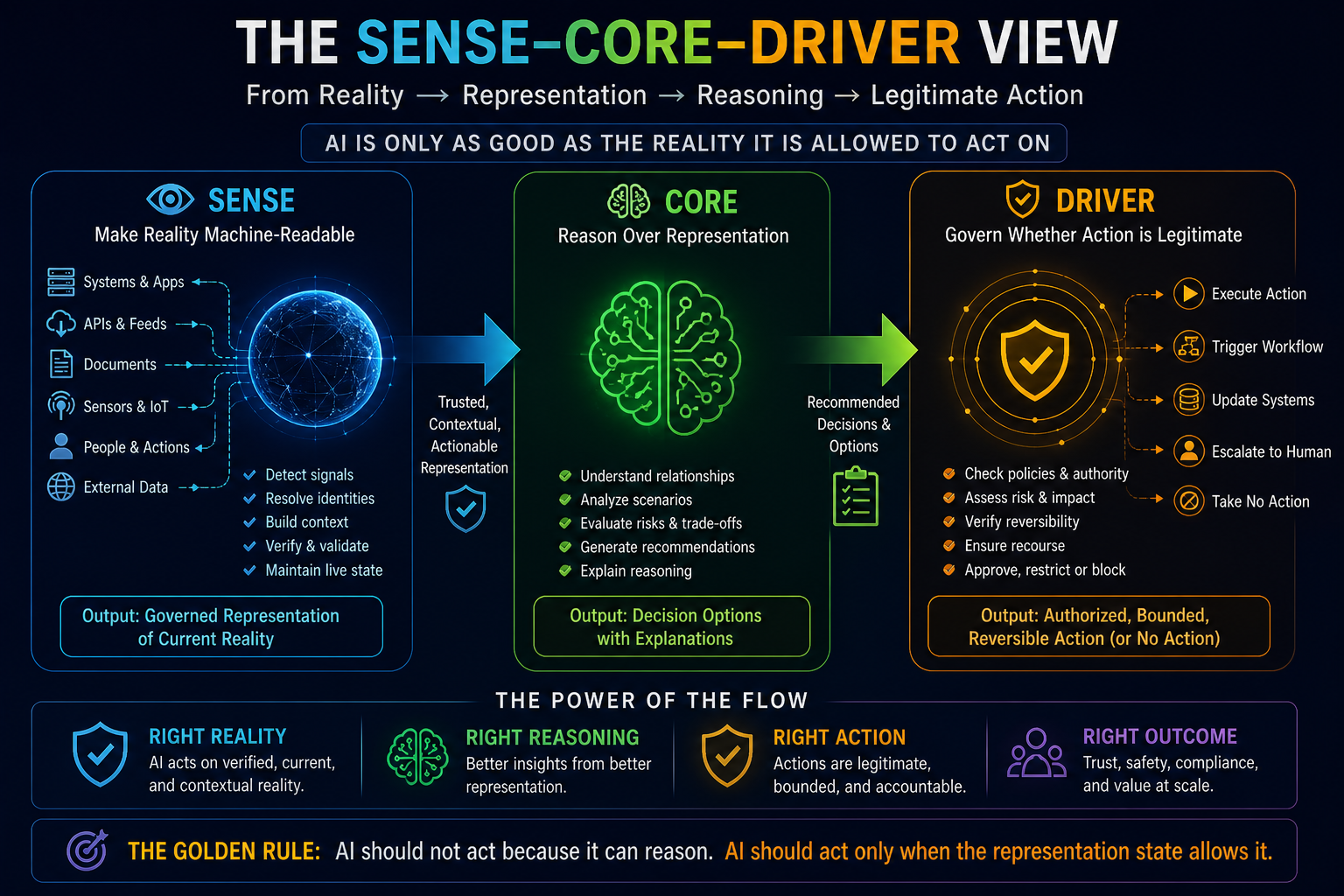
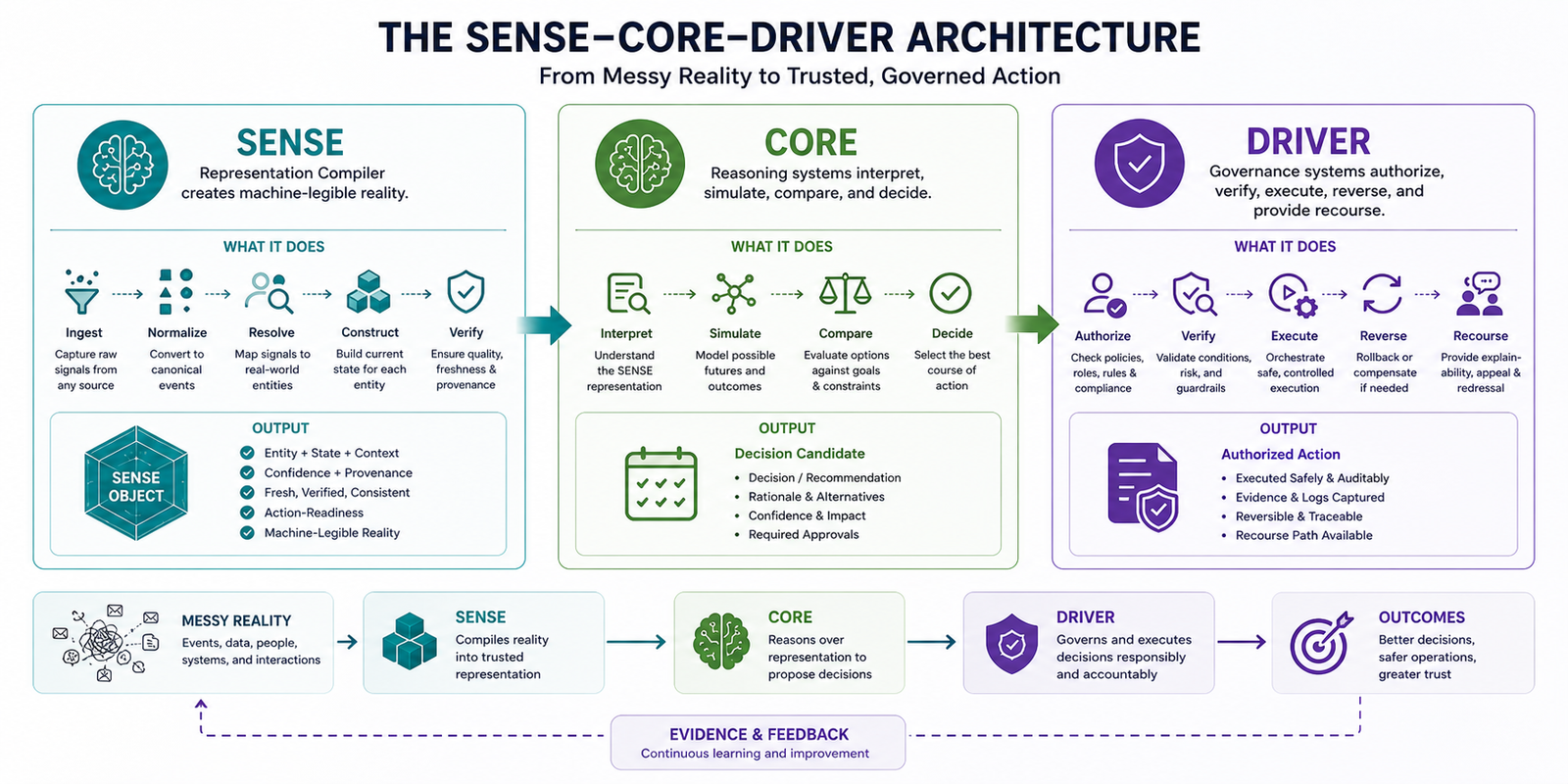
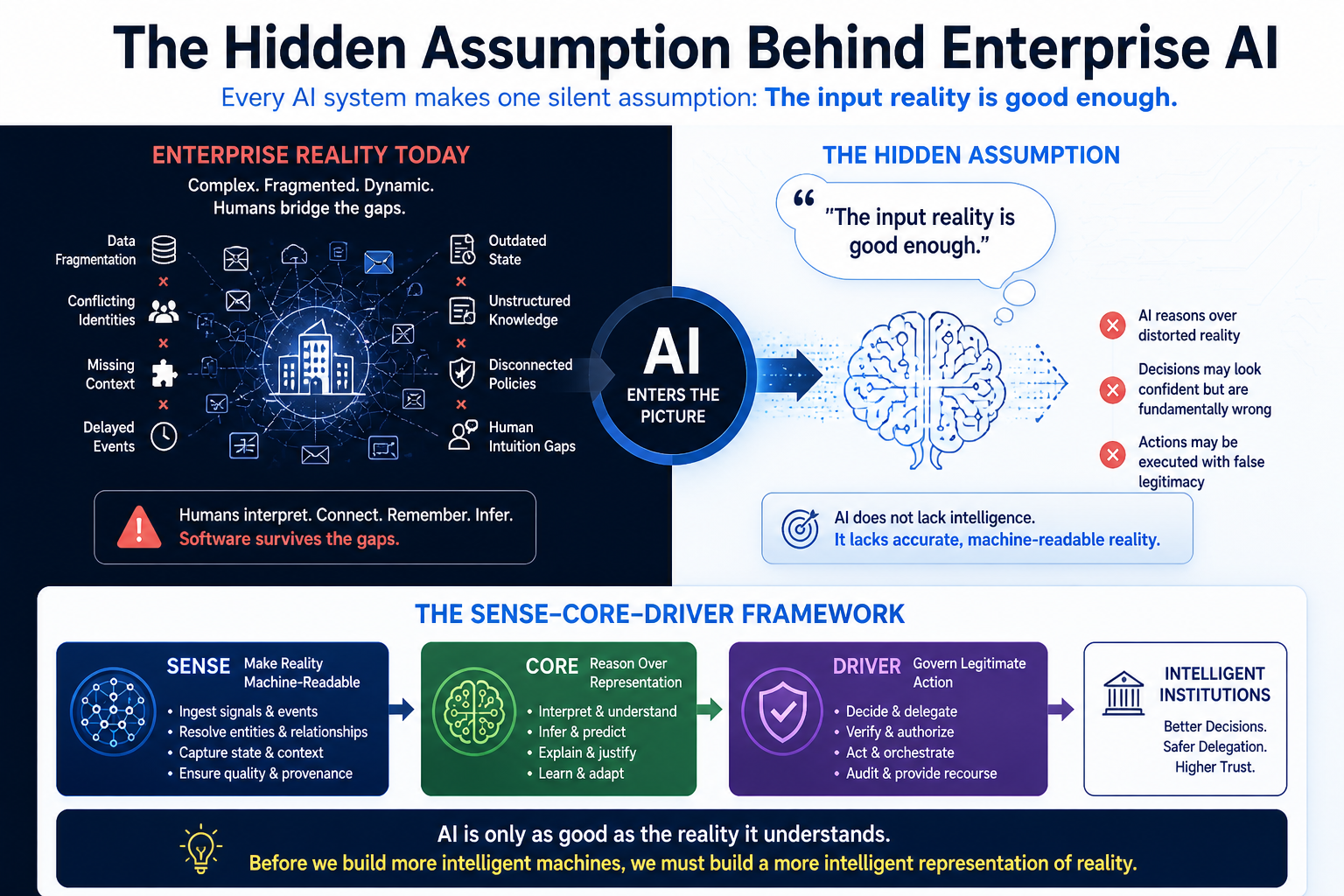
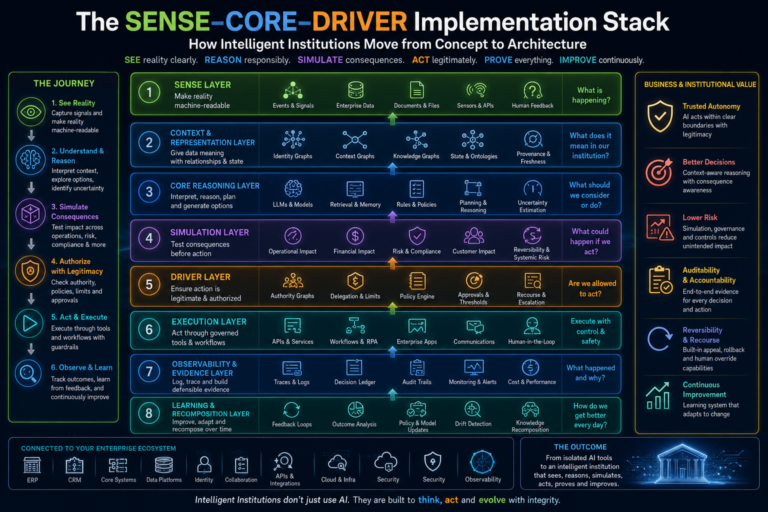
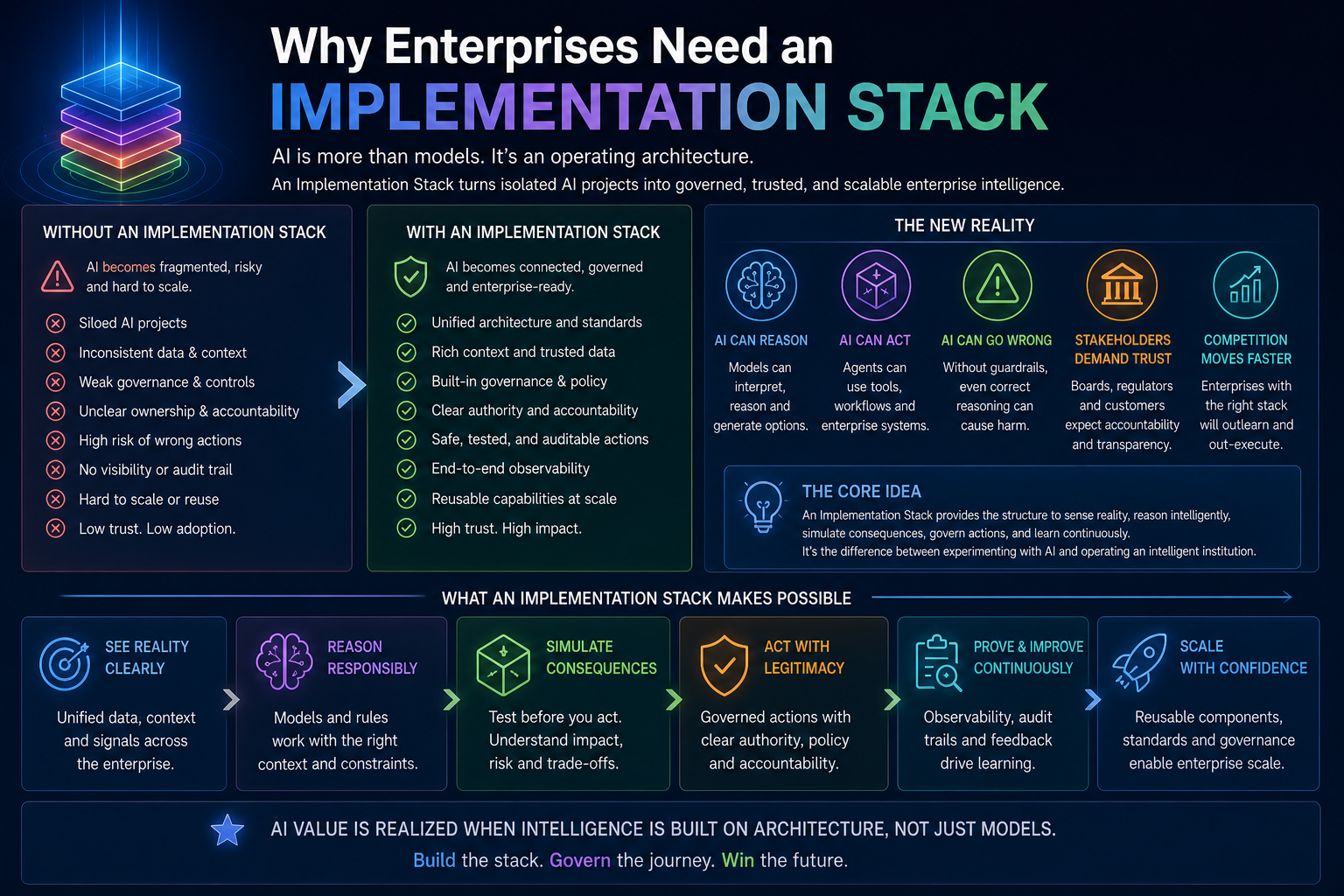
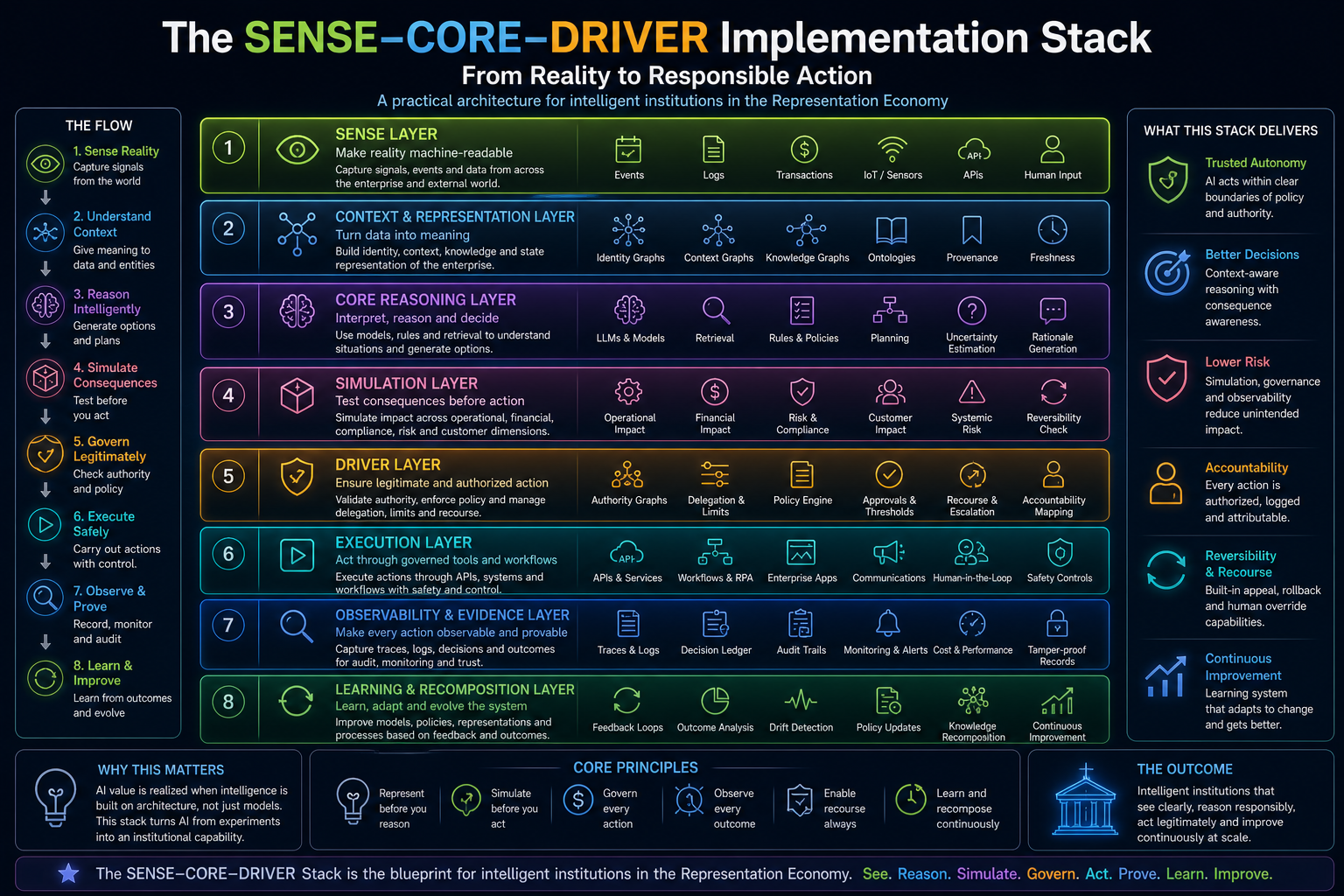
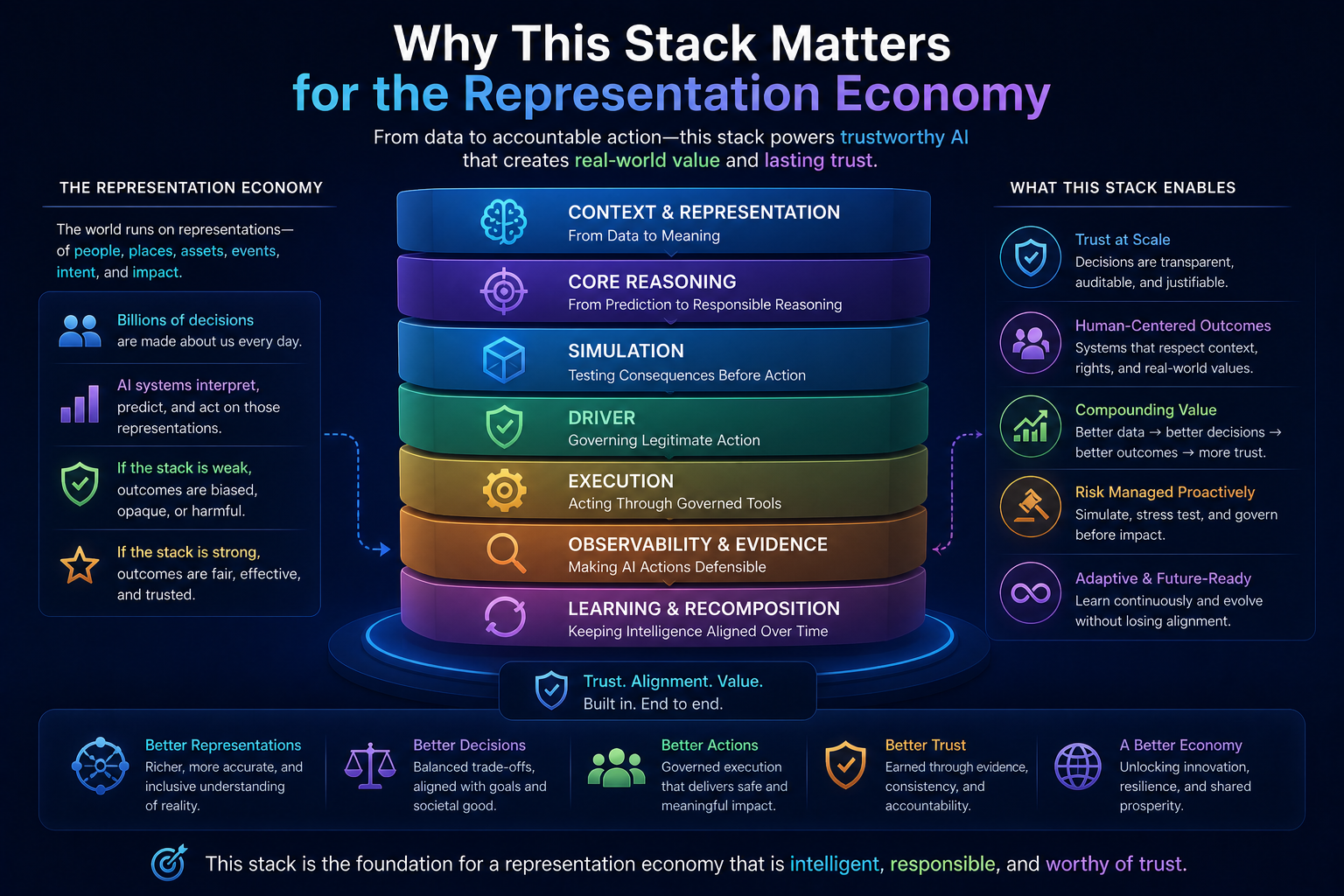
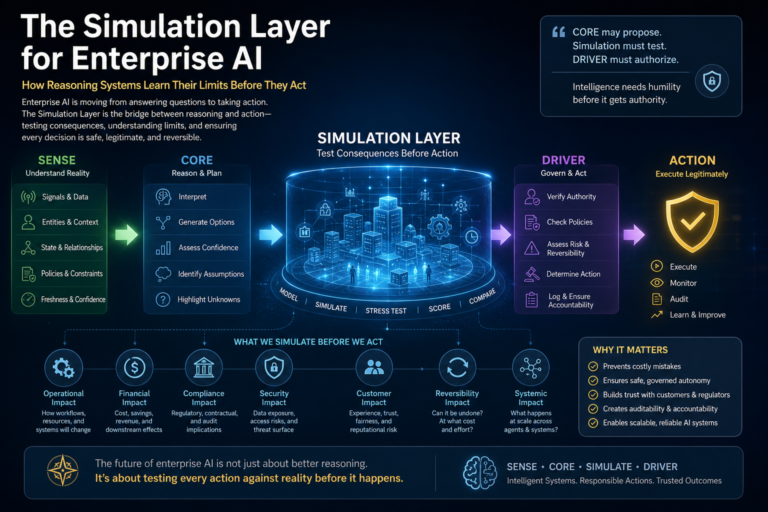
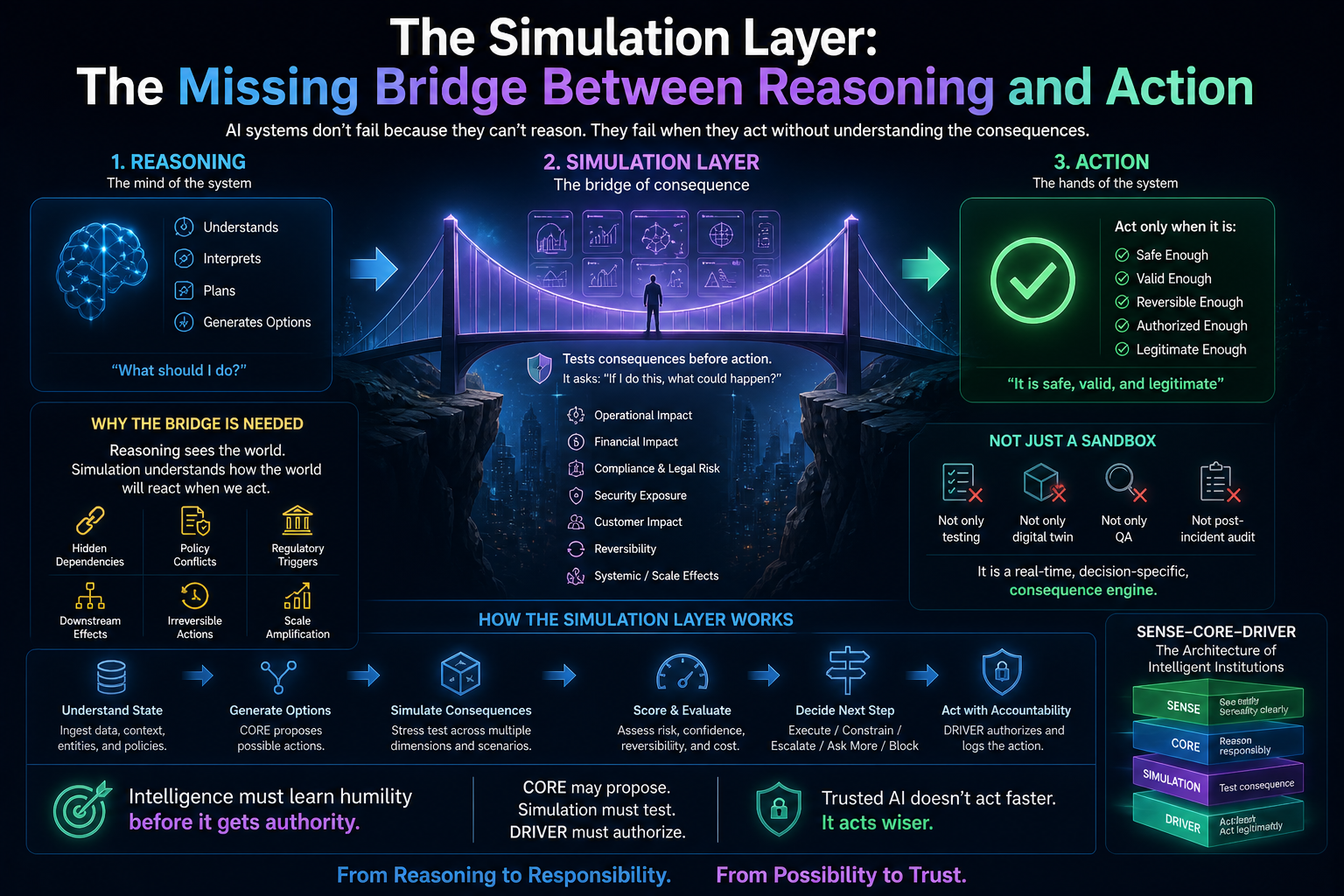
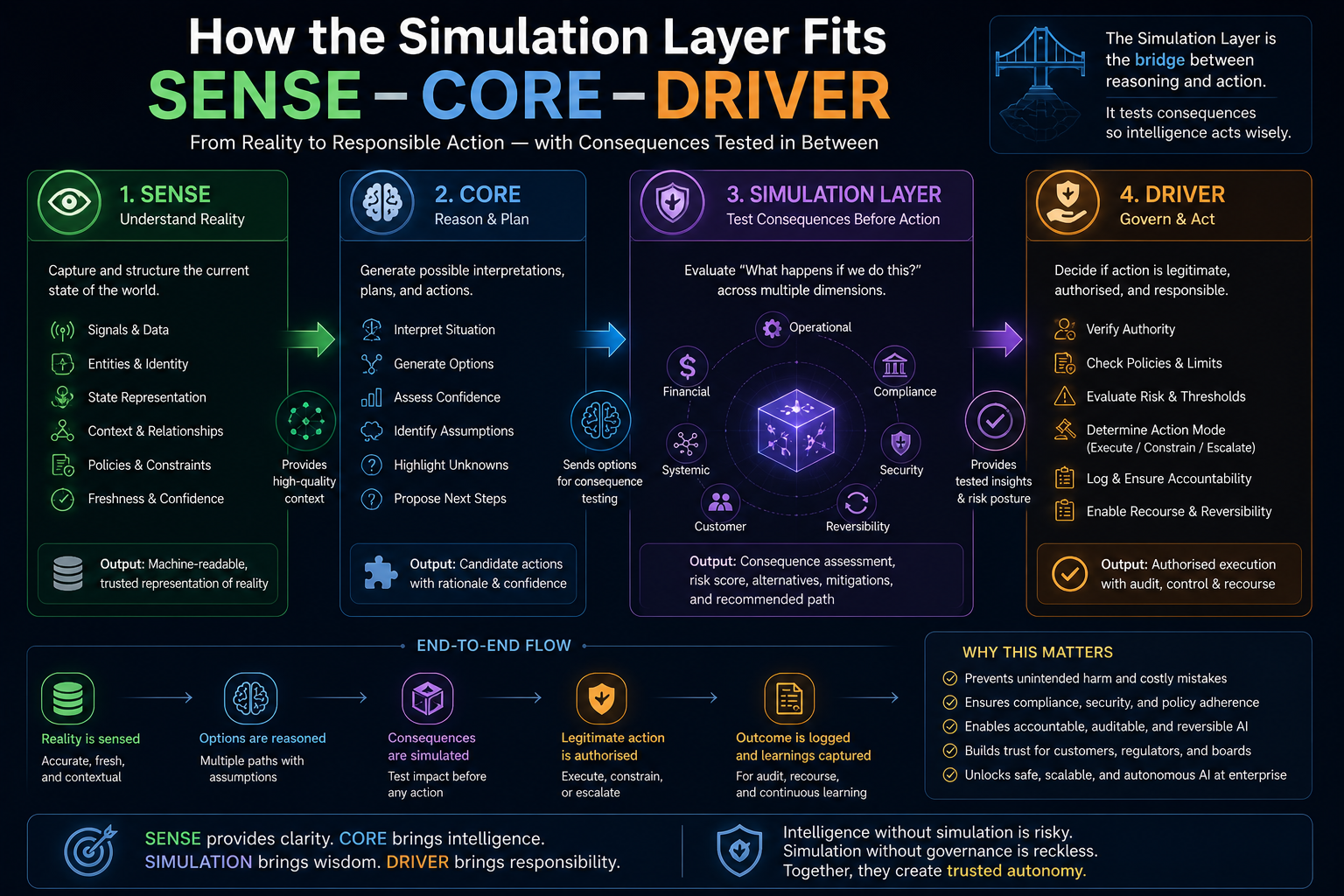
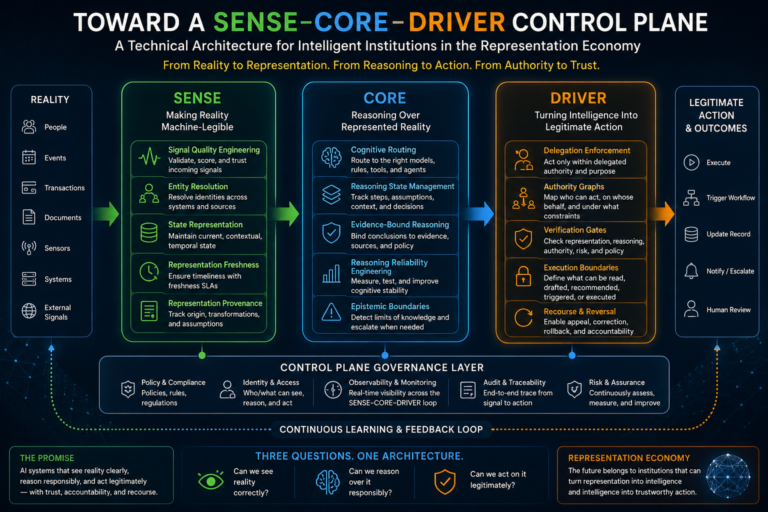
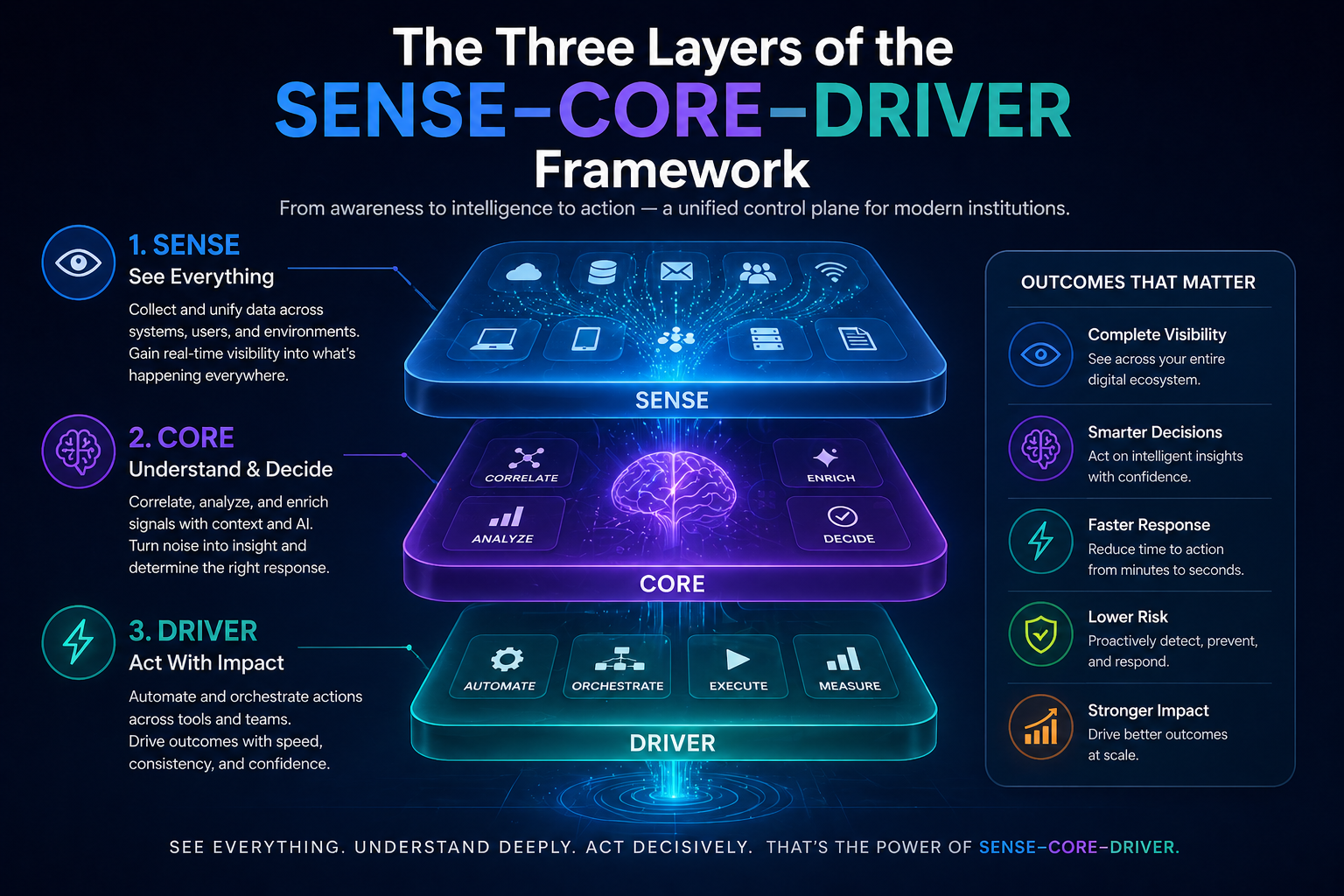
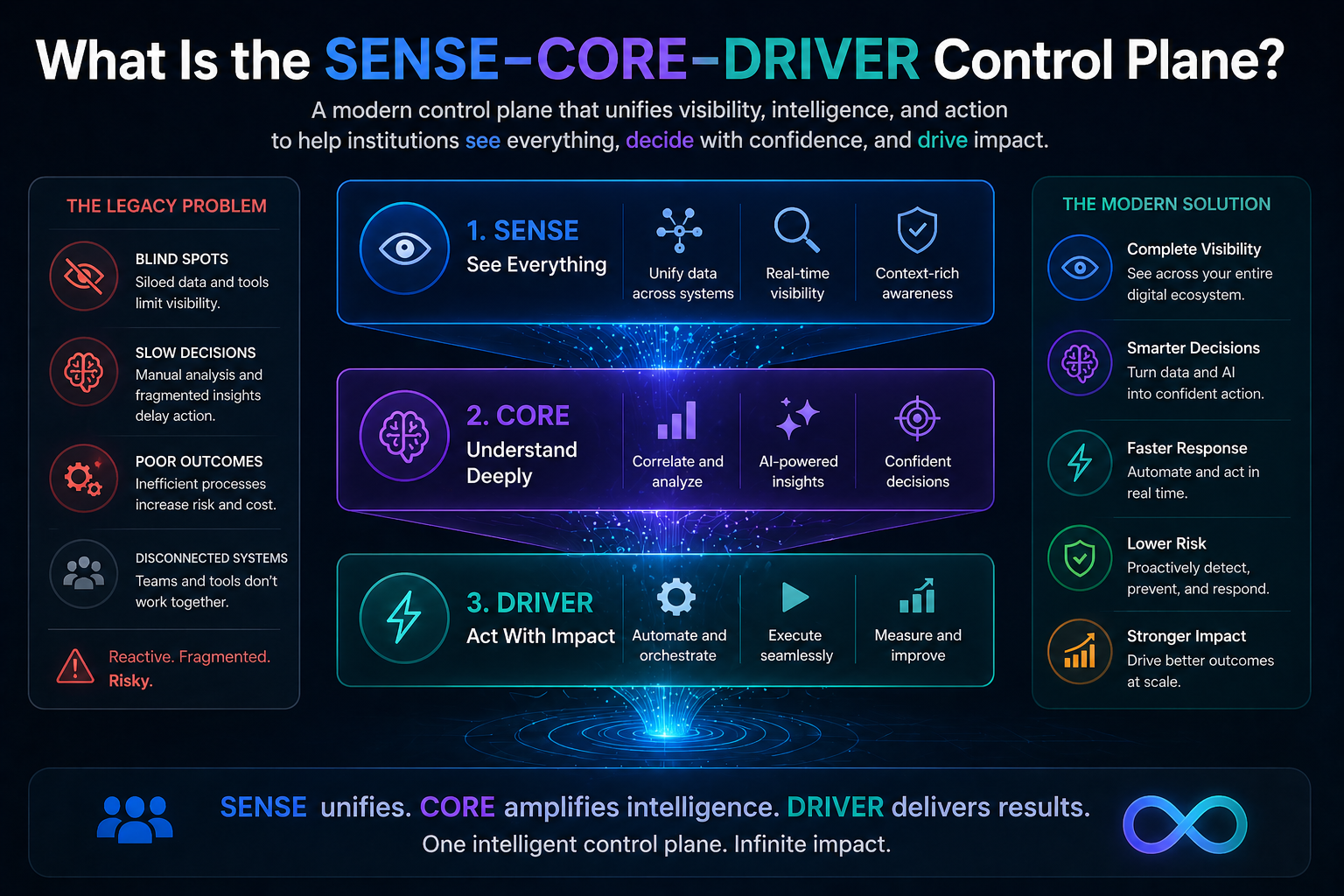
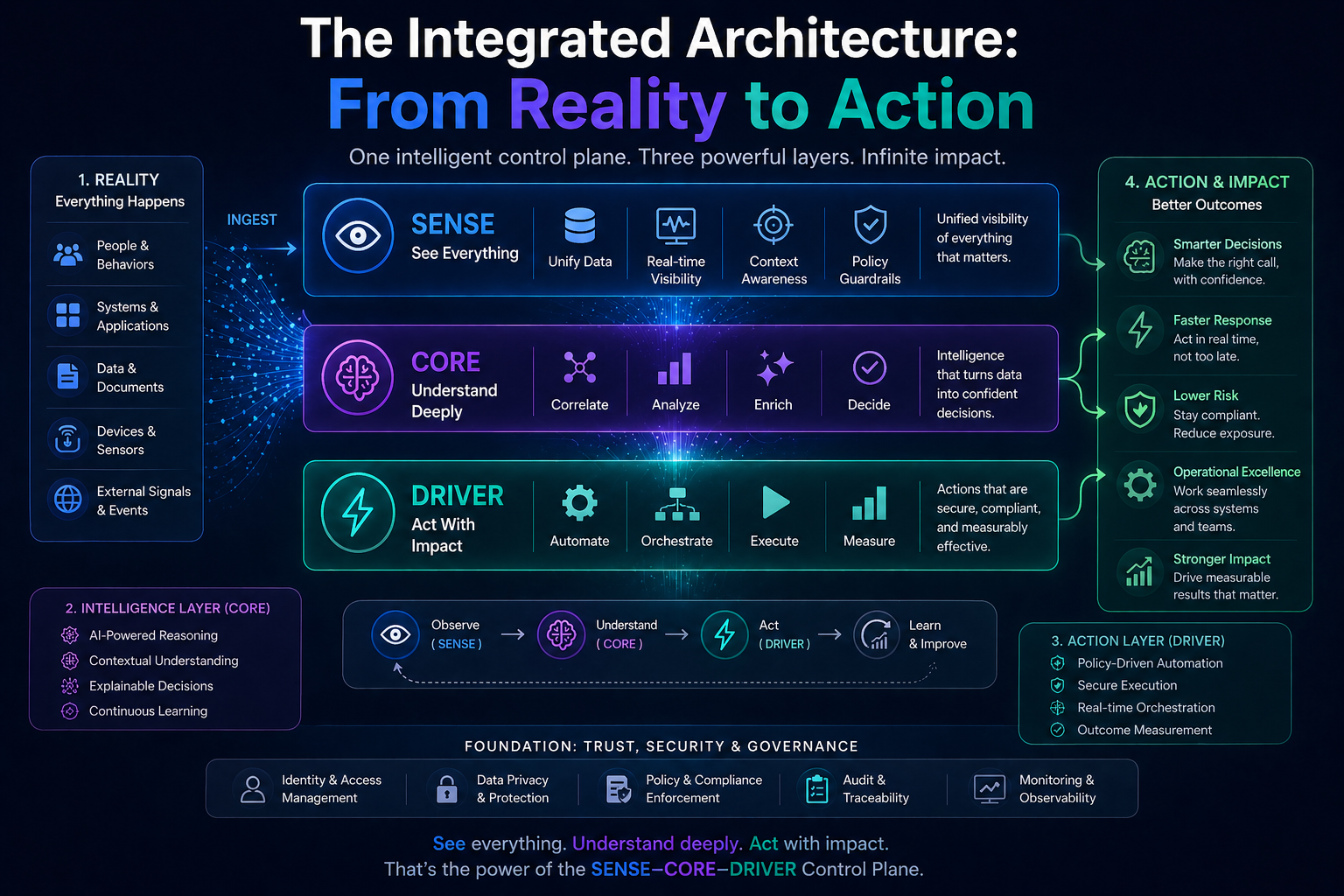
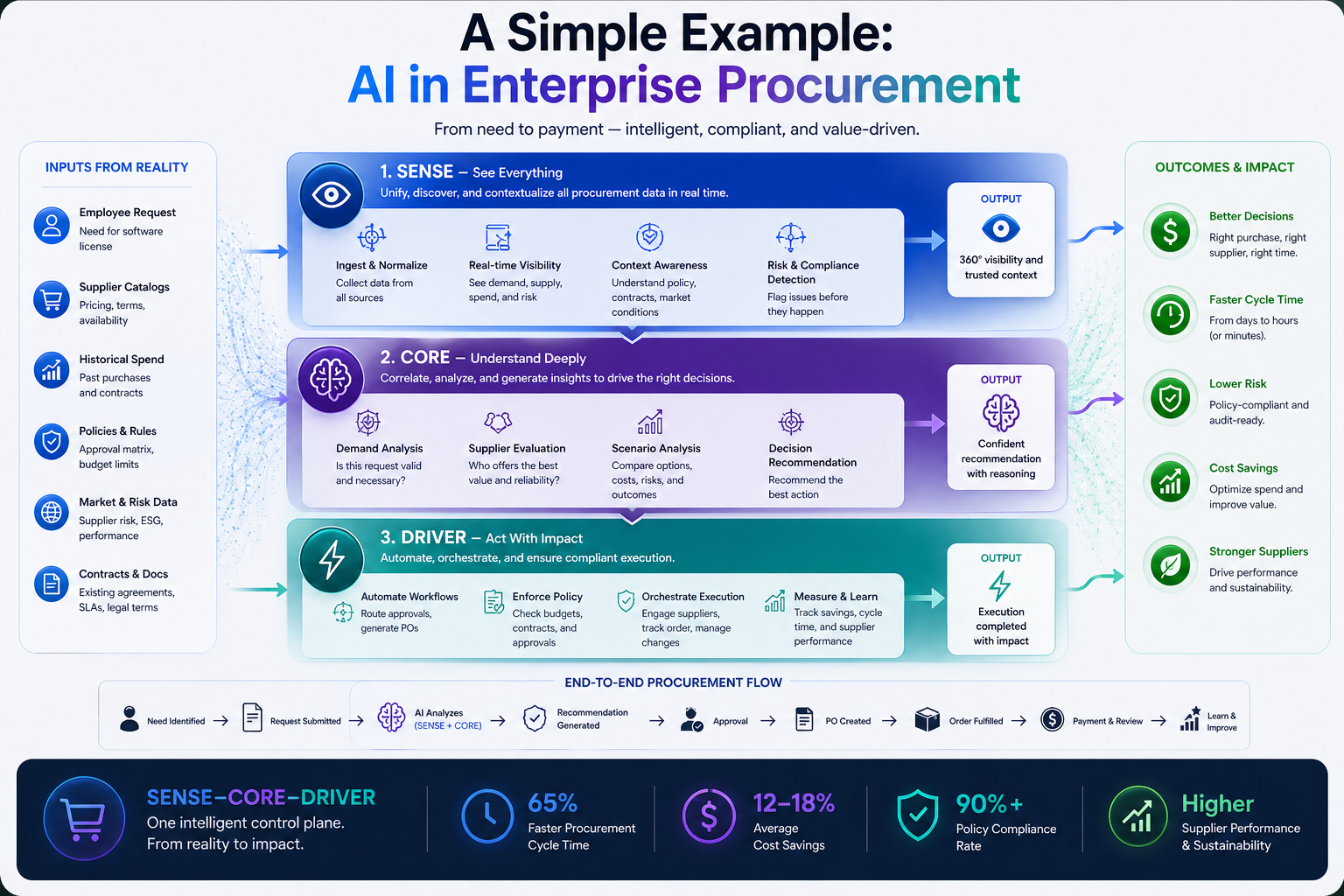
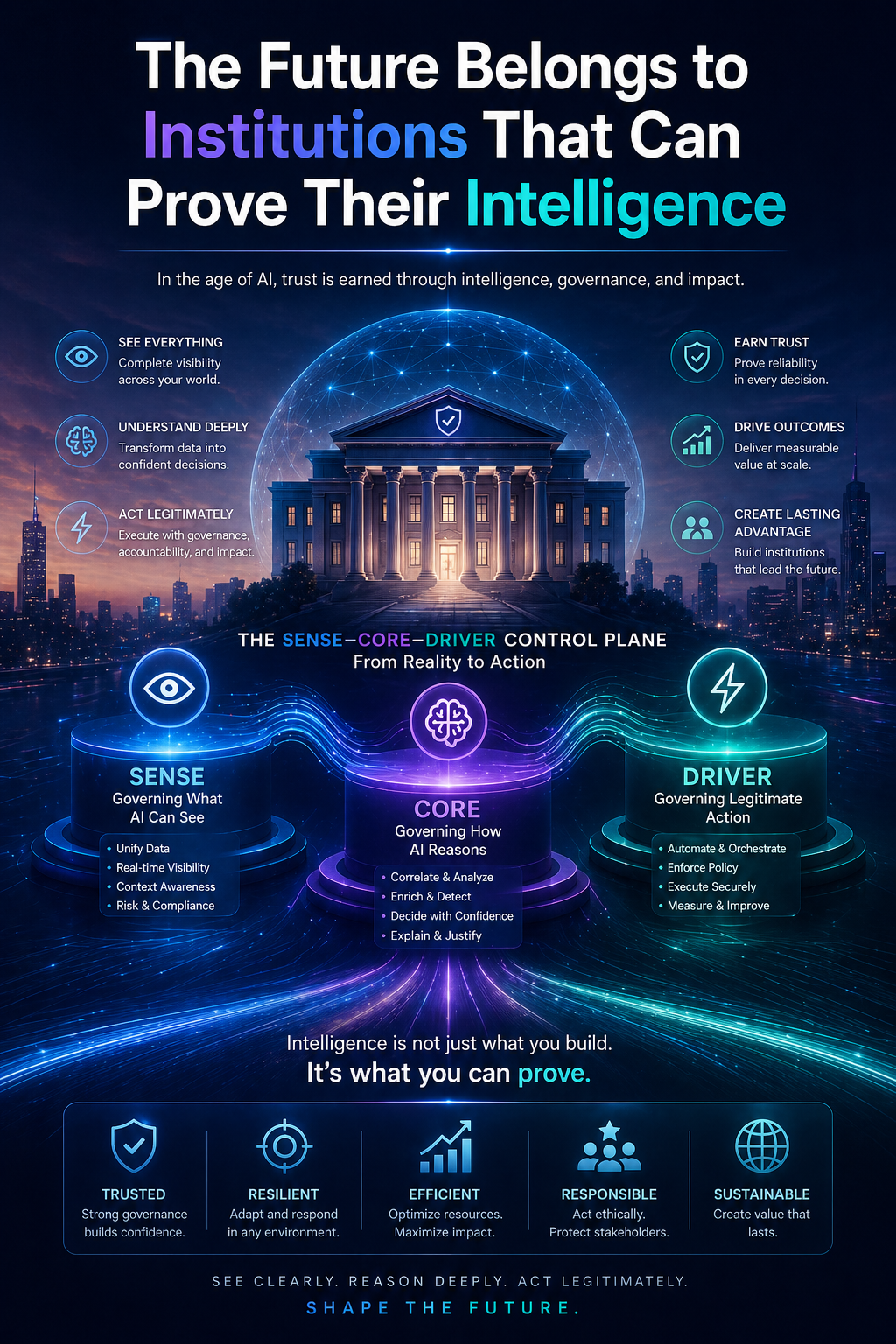
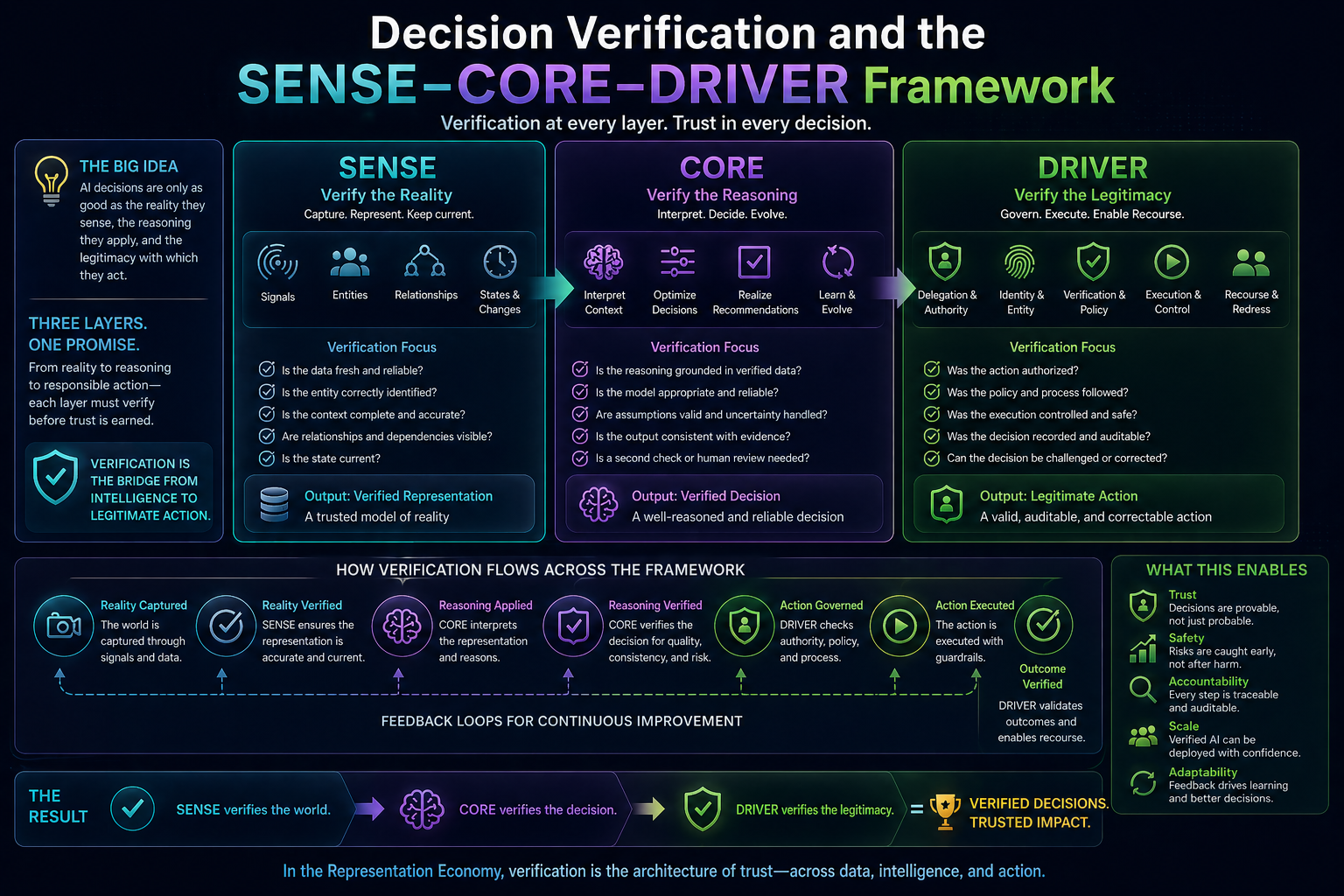
In the Representation Economy, value does not come only from intelligence. It comes from how well a system represents reality, reasons over that representation, and acts with legitimacy. That is why the SENSE–CORE–DRIVER framework matters so much.

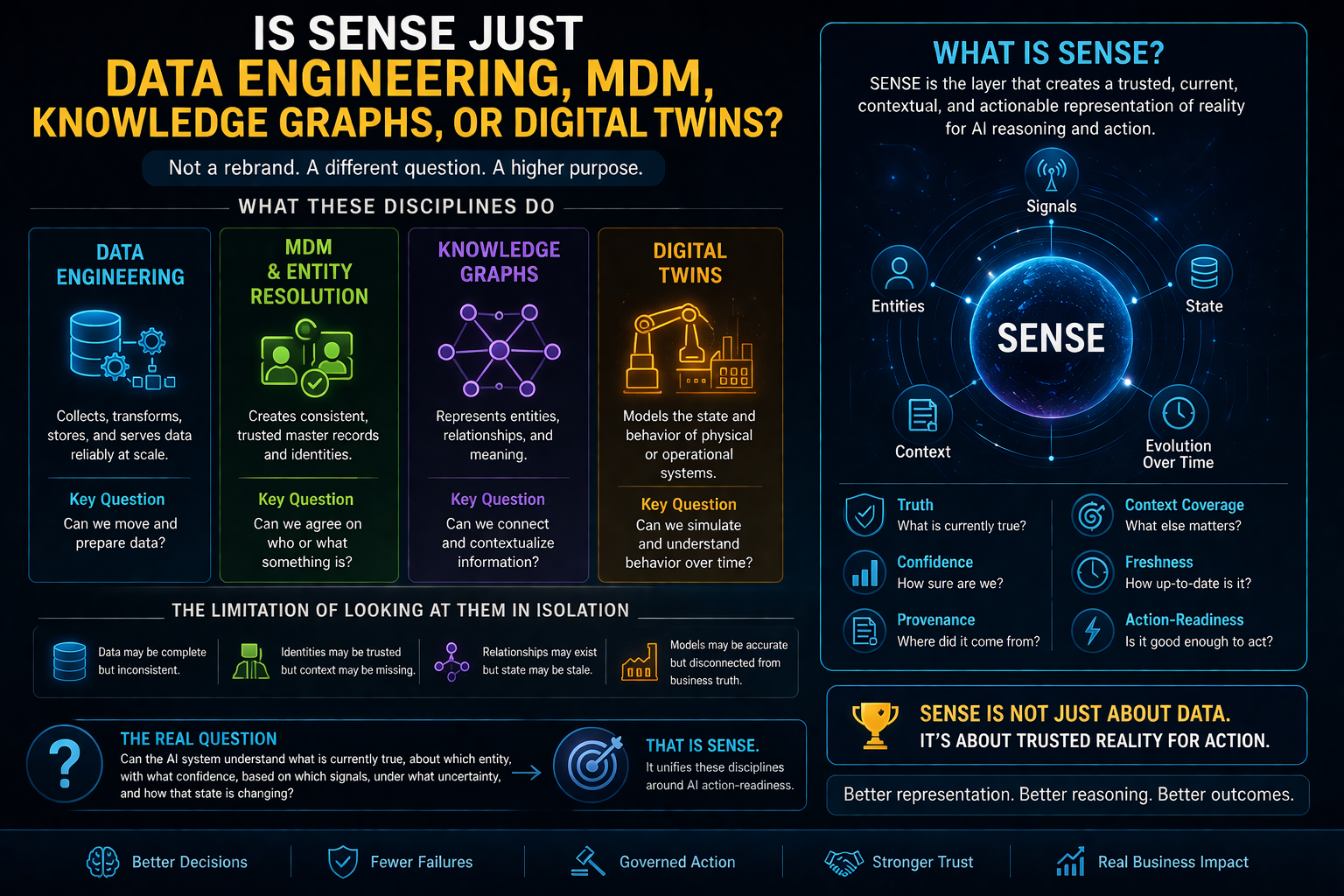
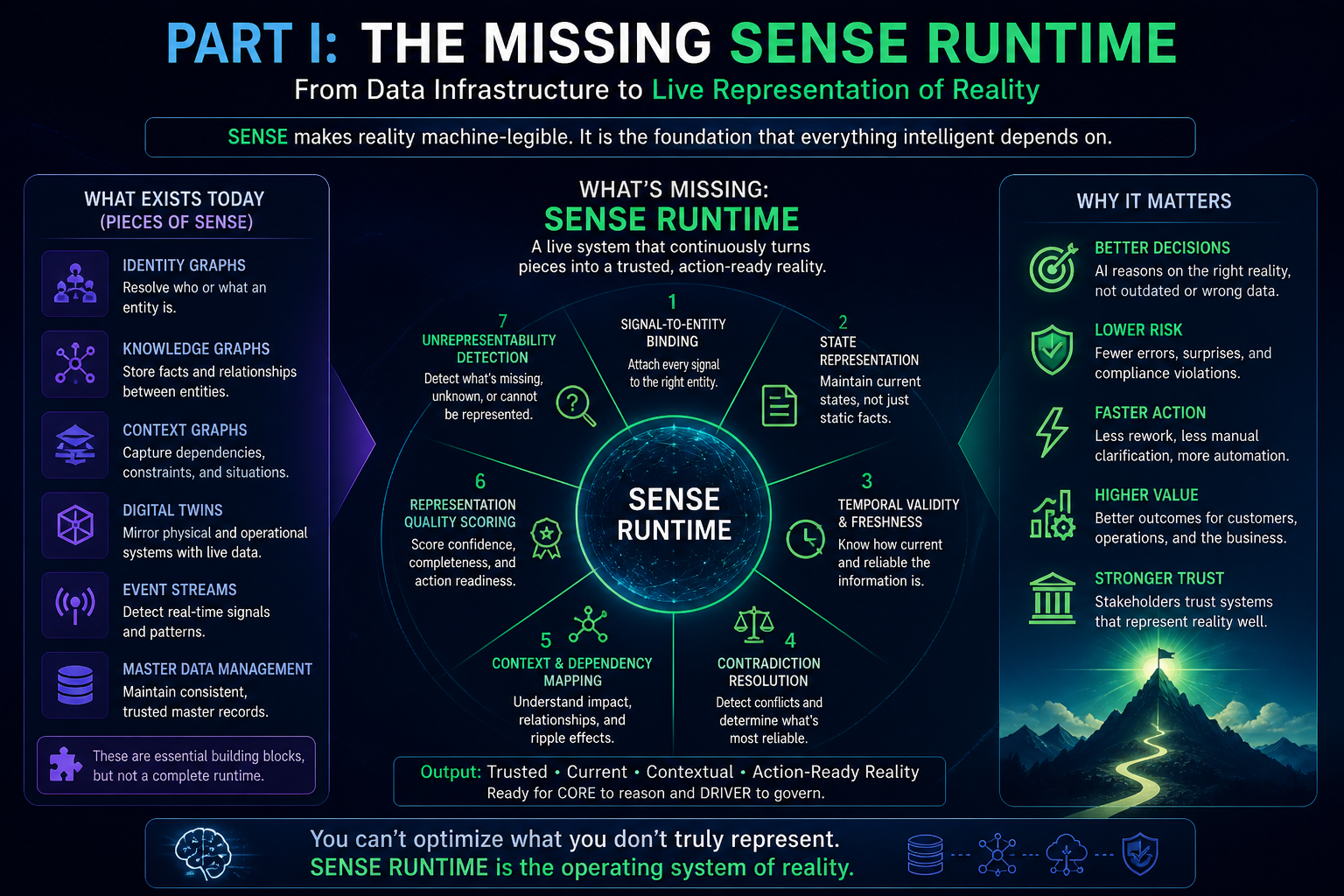
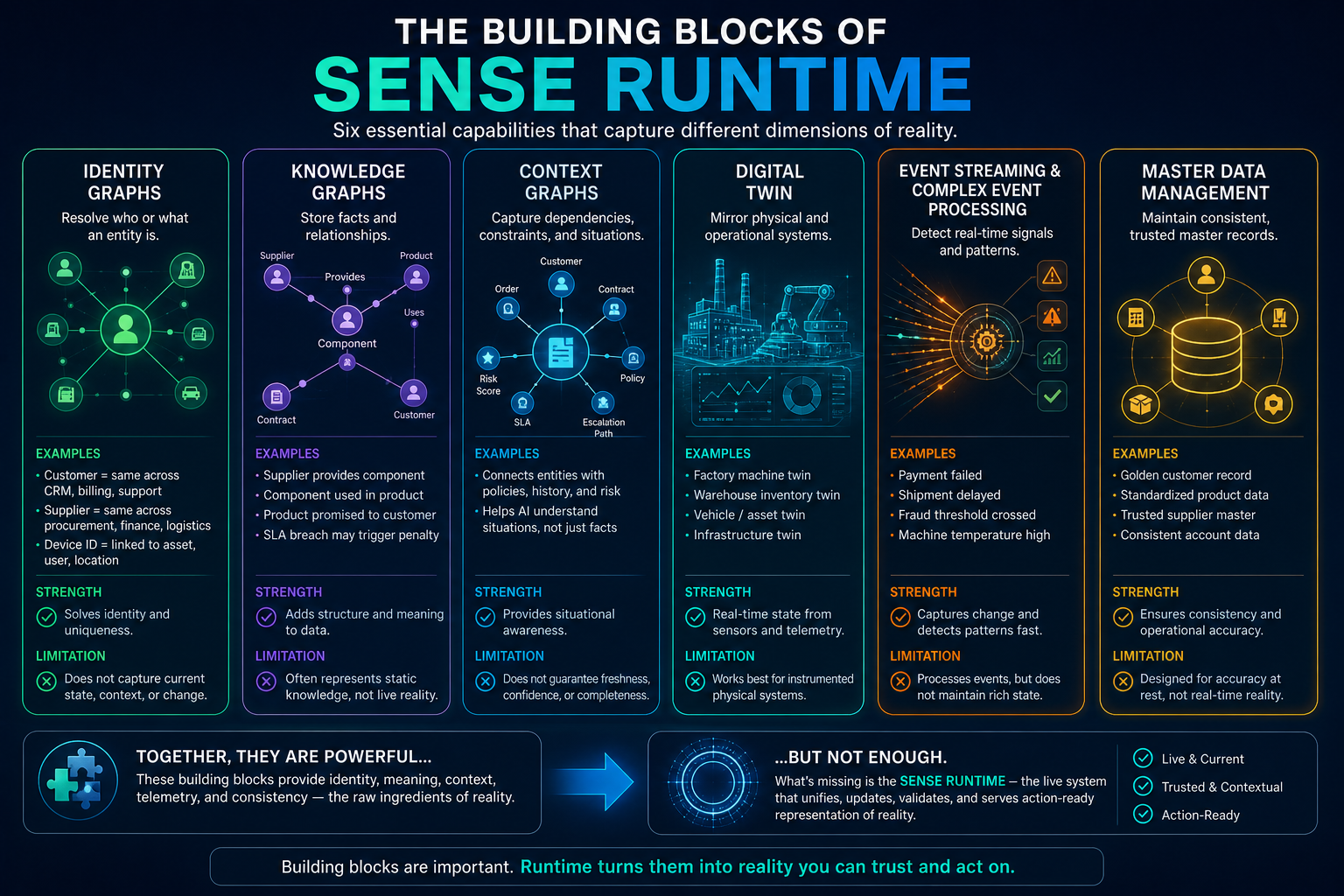
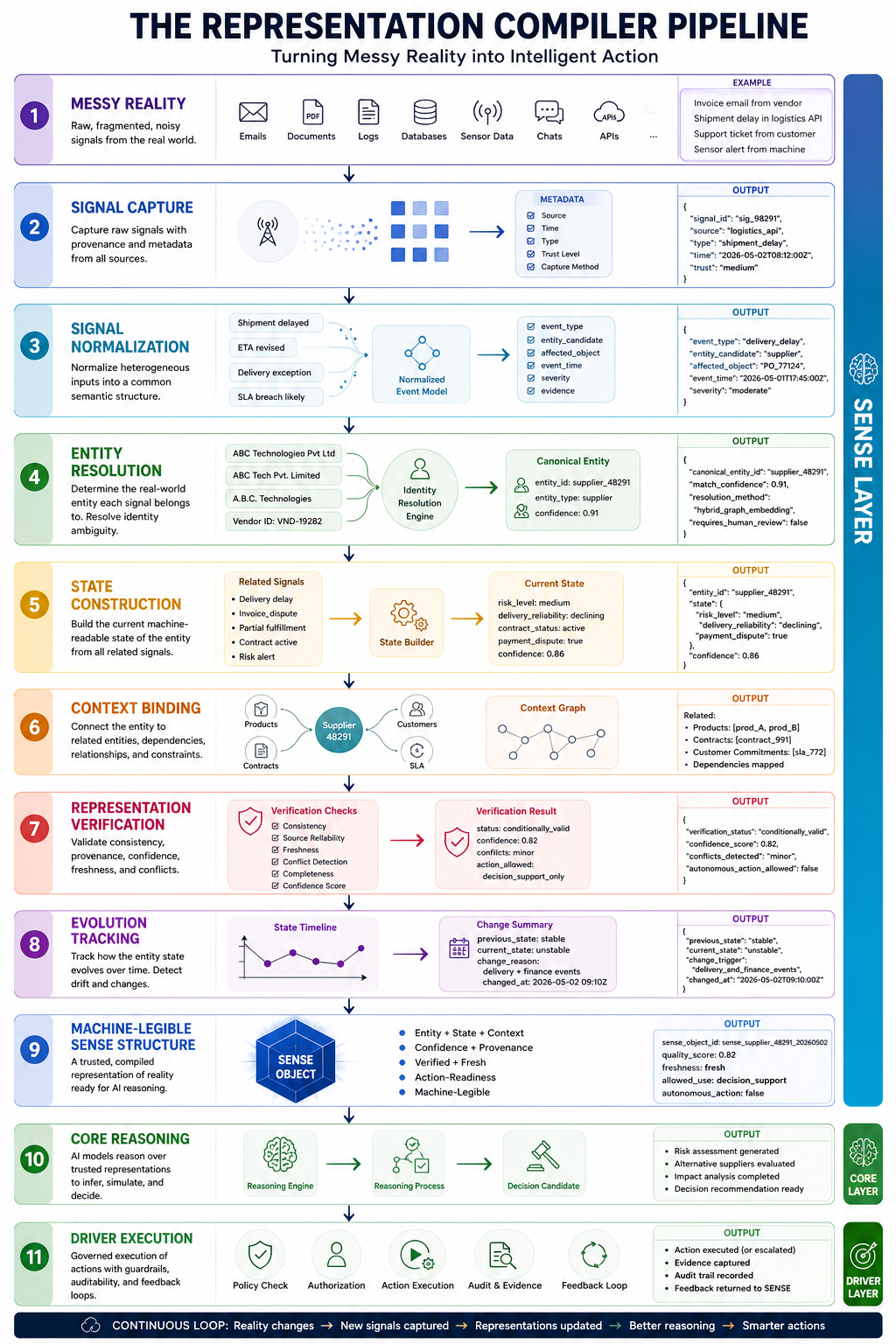
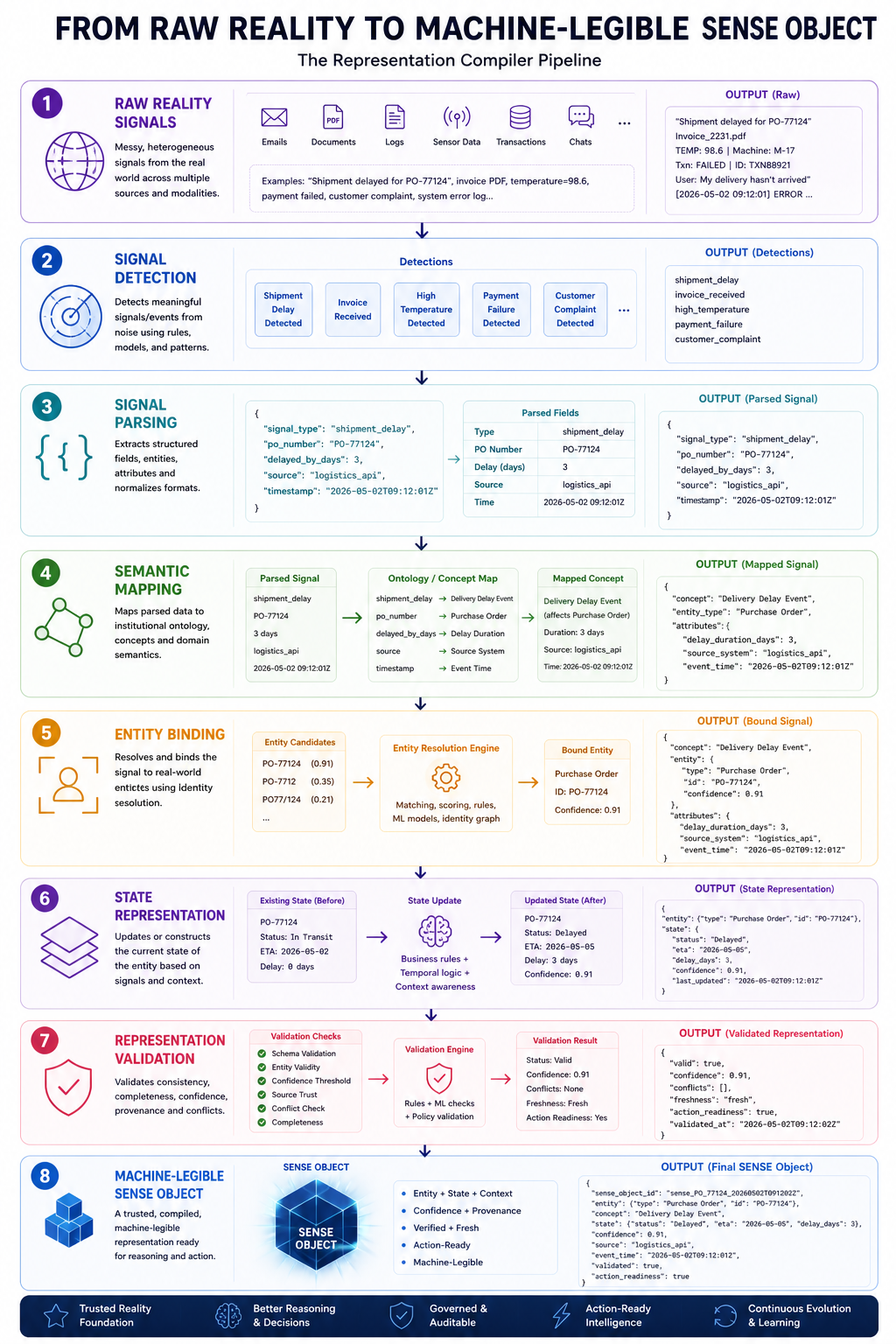
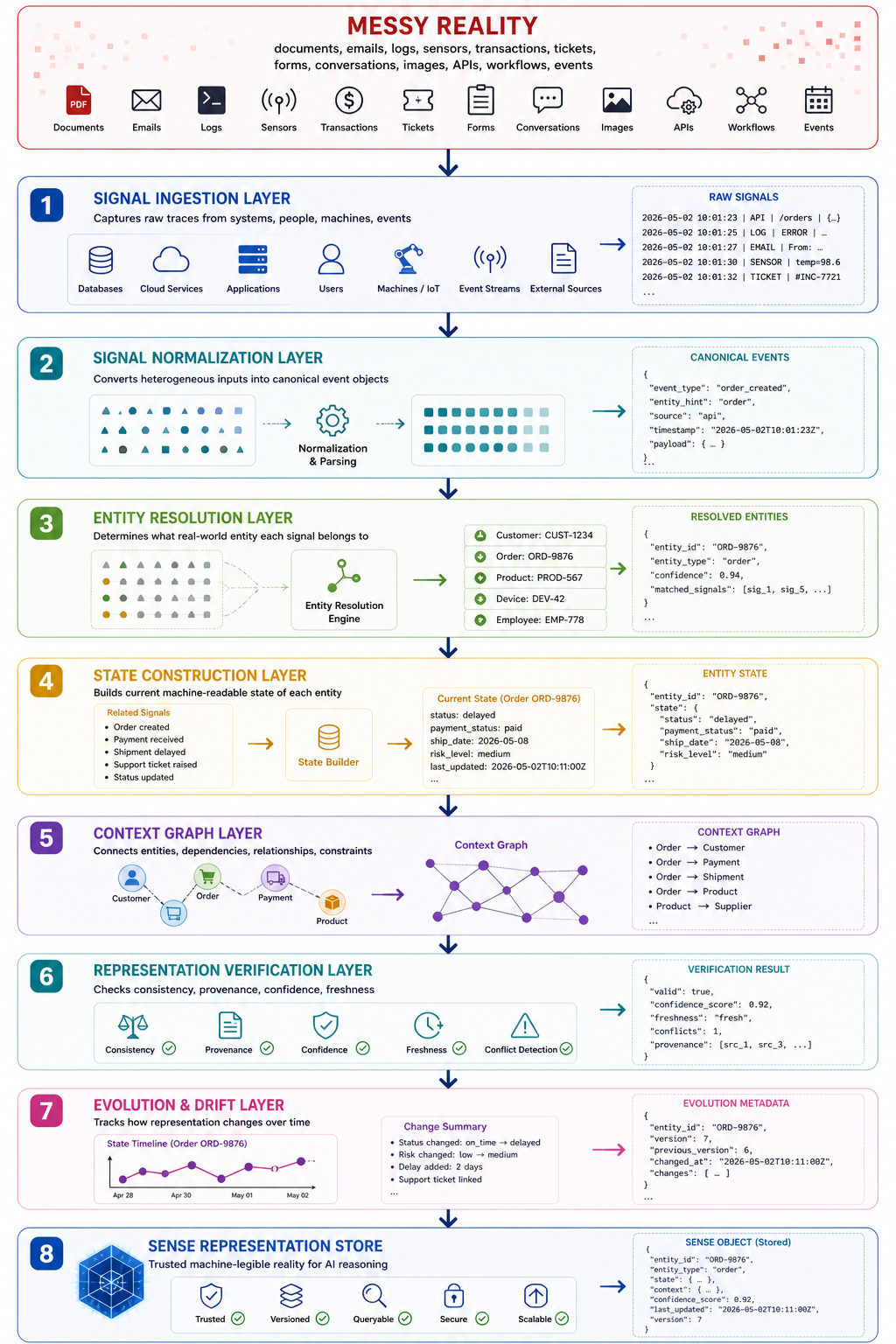
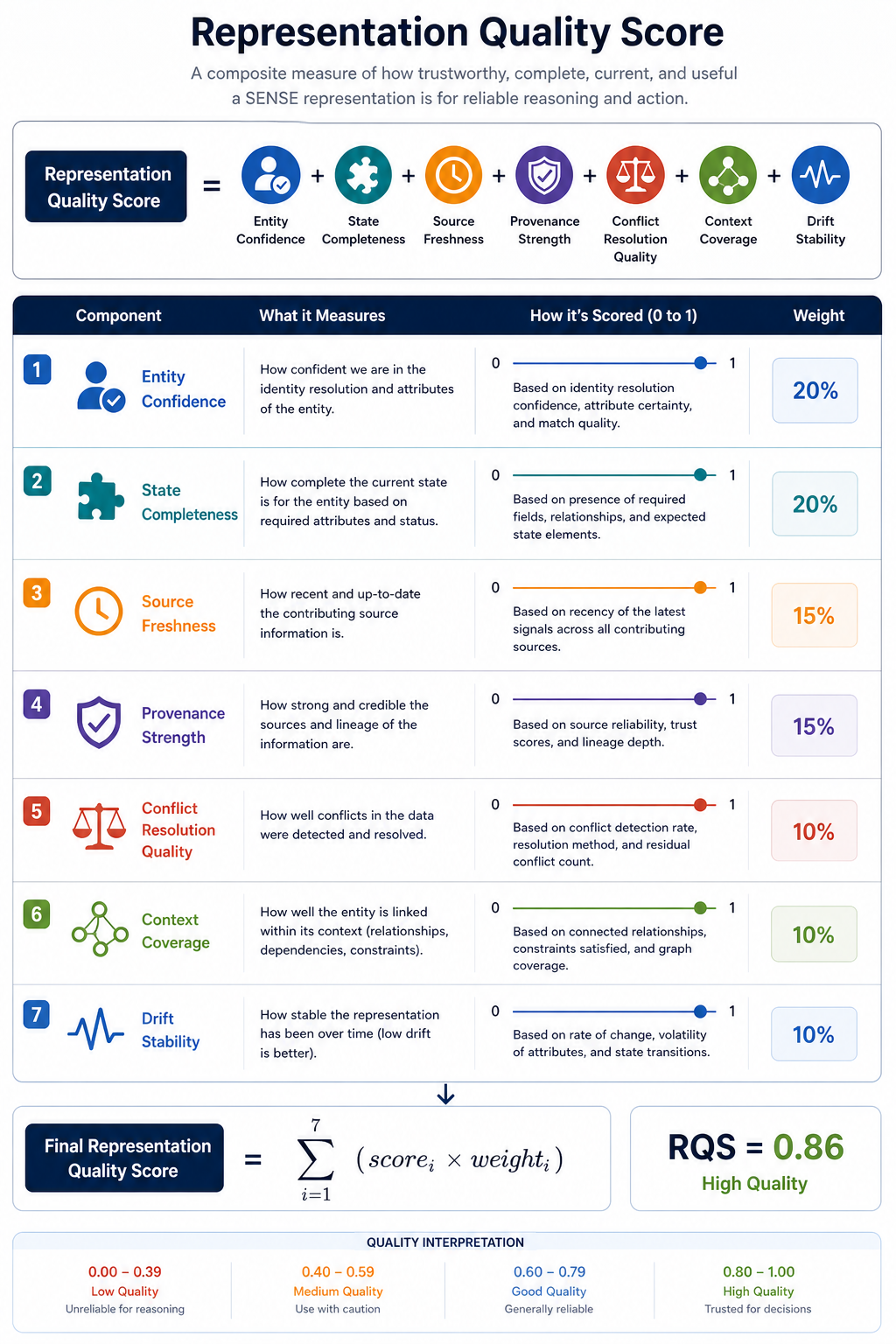
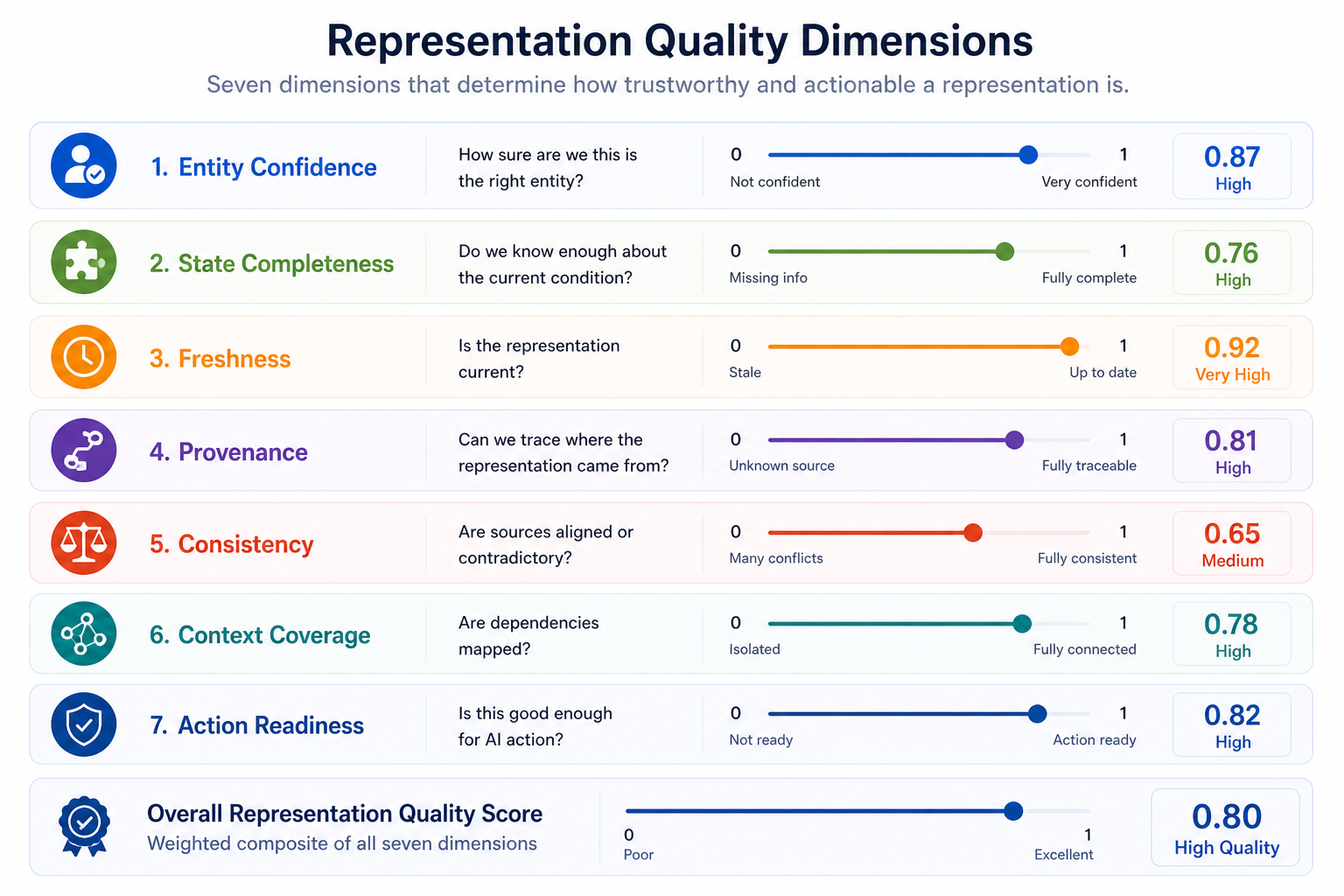
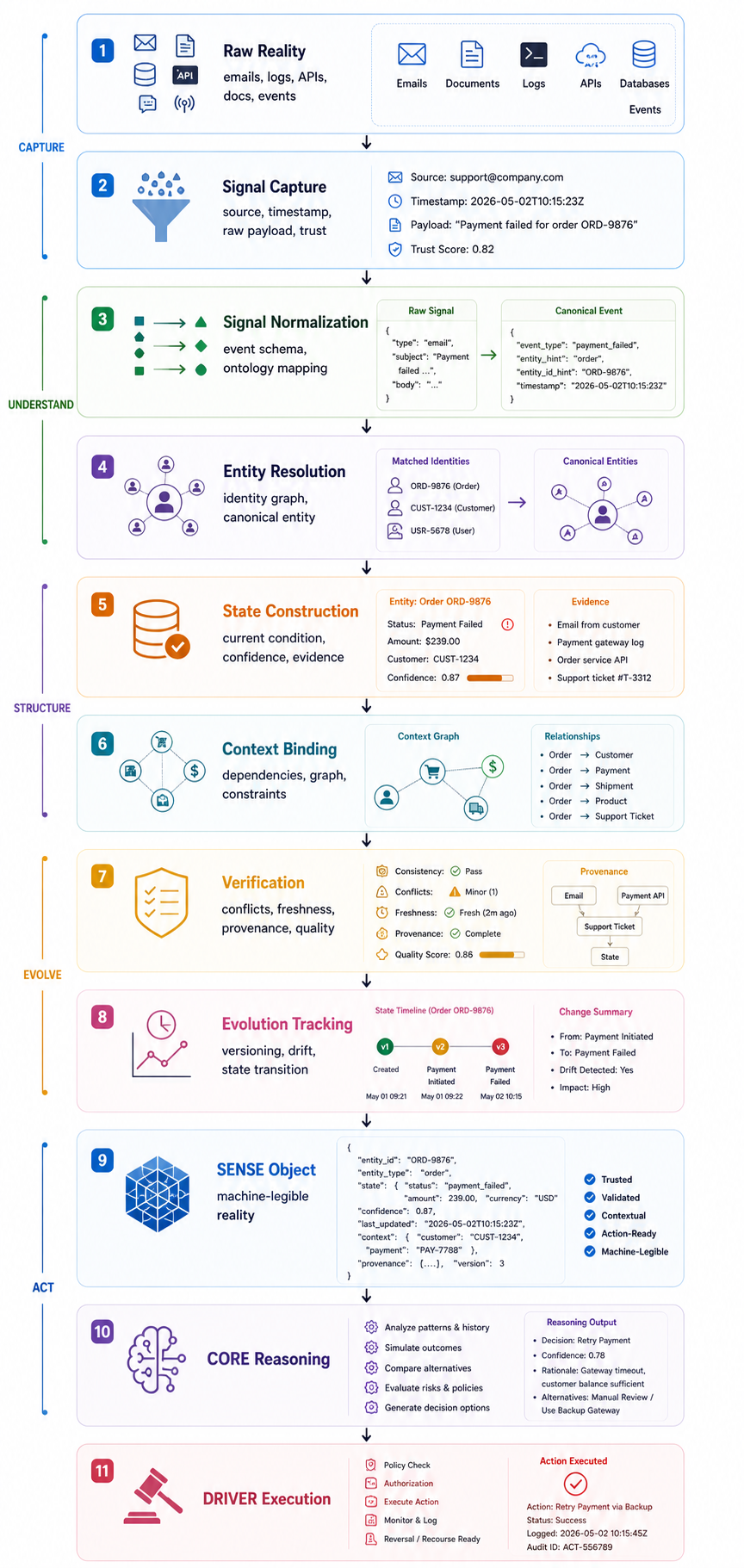
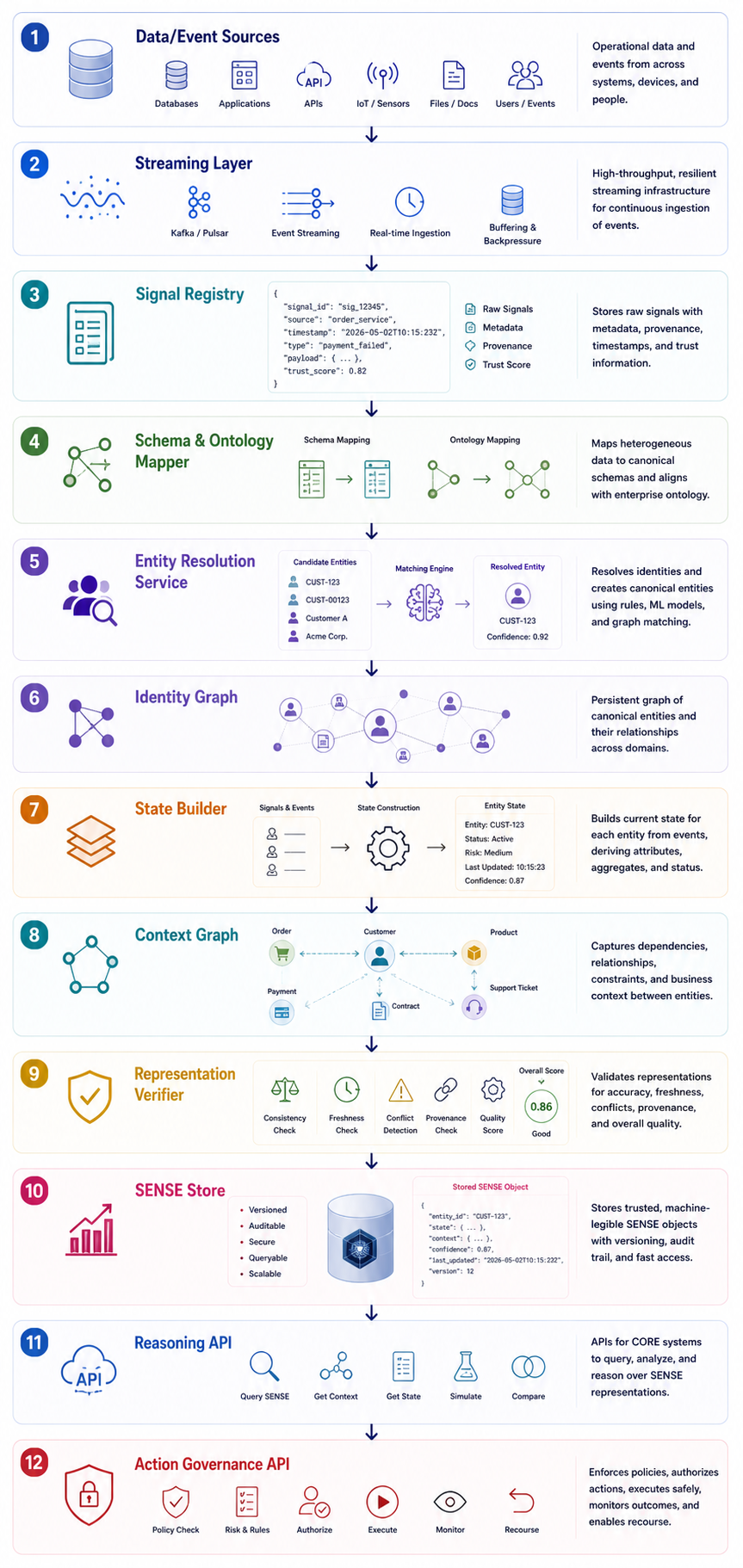
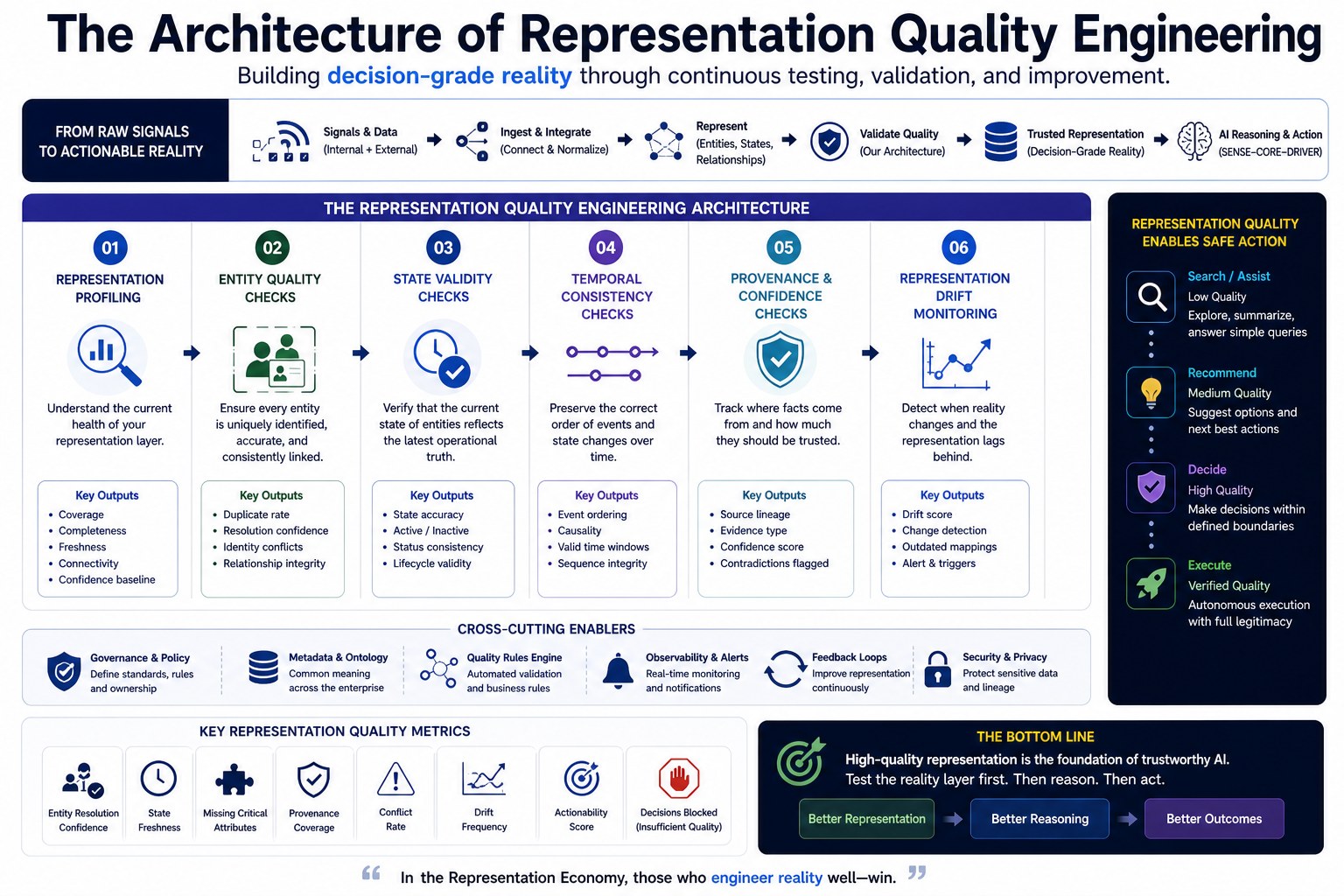
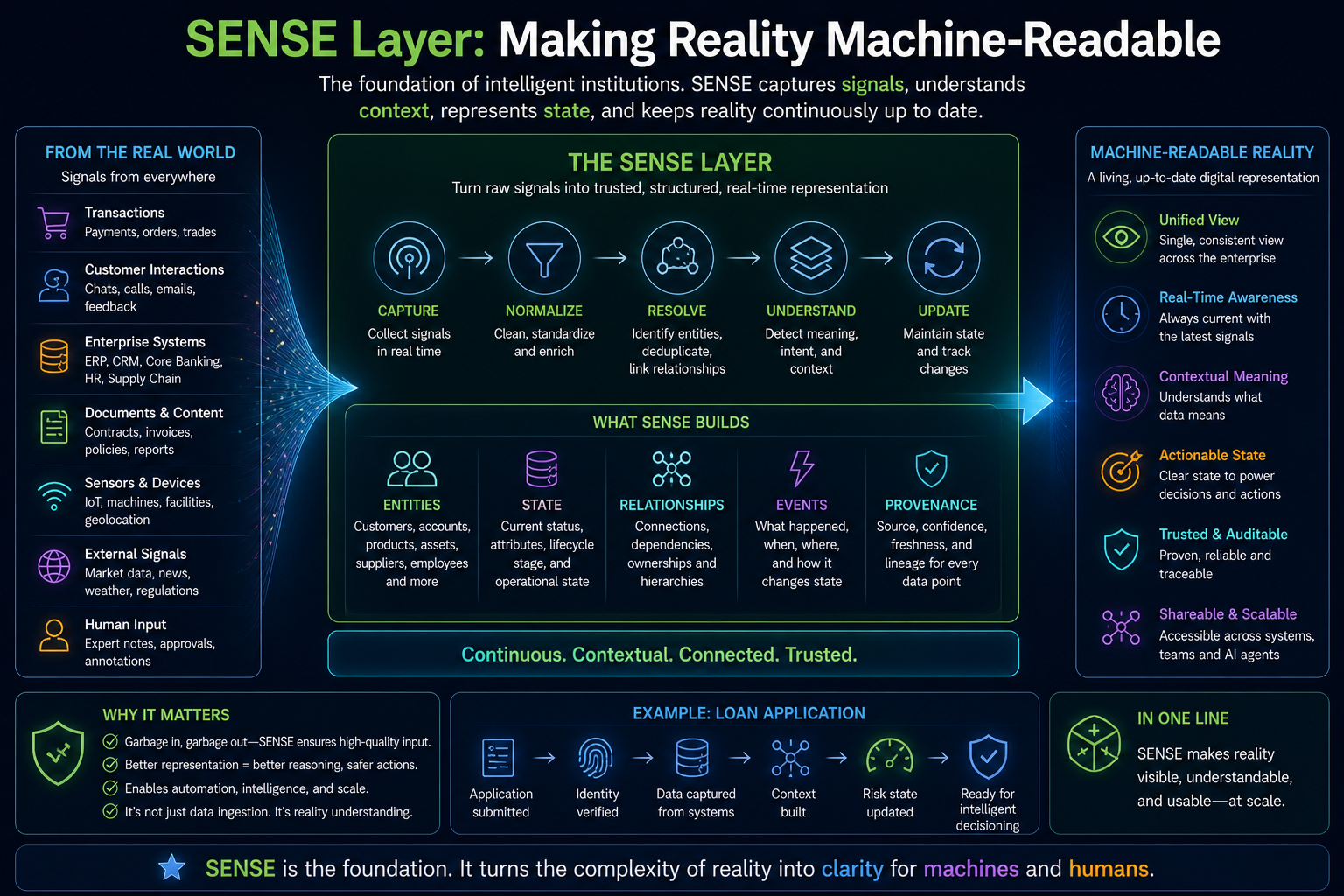
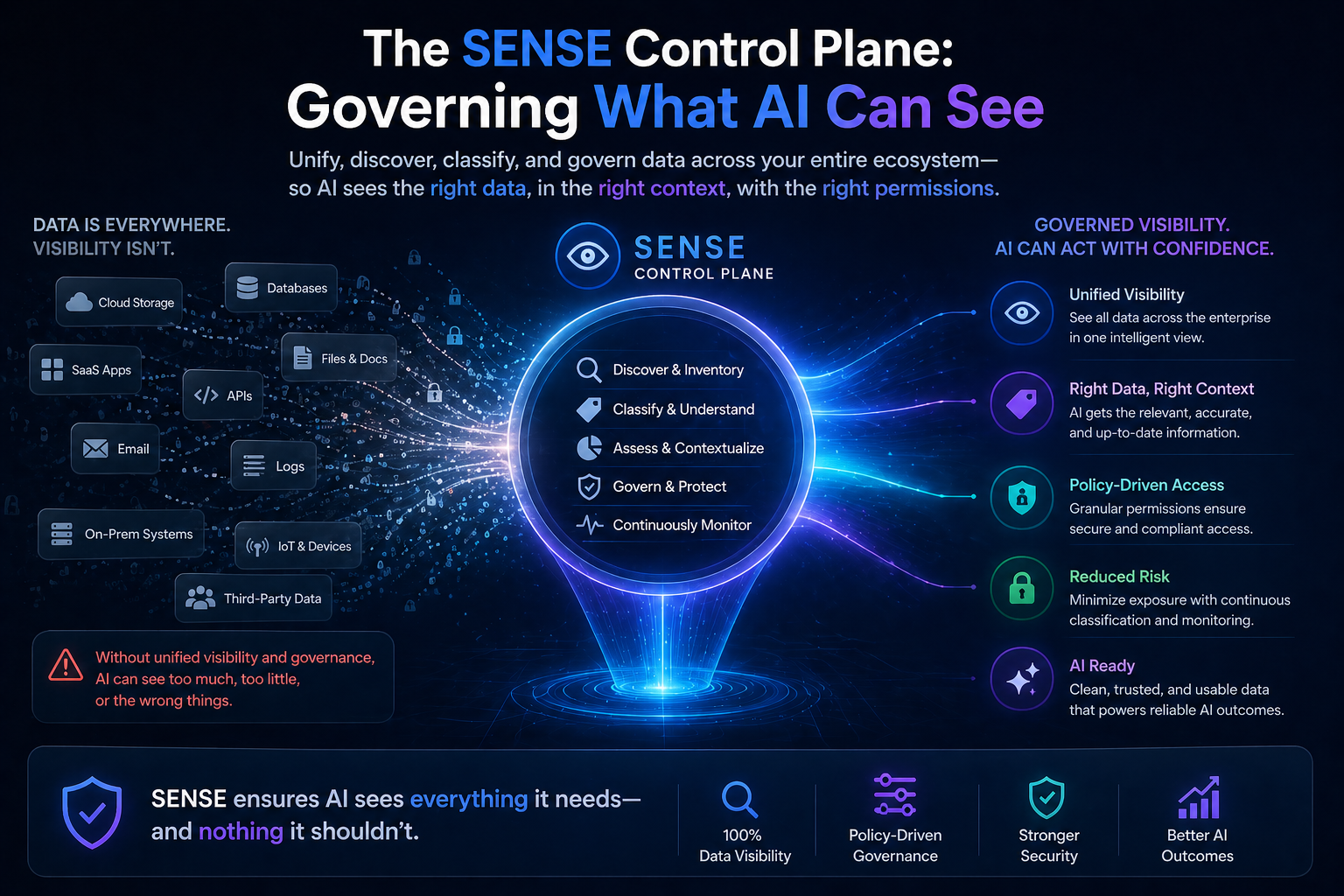
SENSE is the legibility layer: Signal, ENtity, State, Evolution.
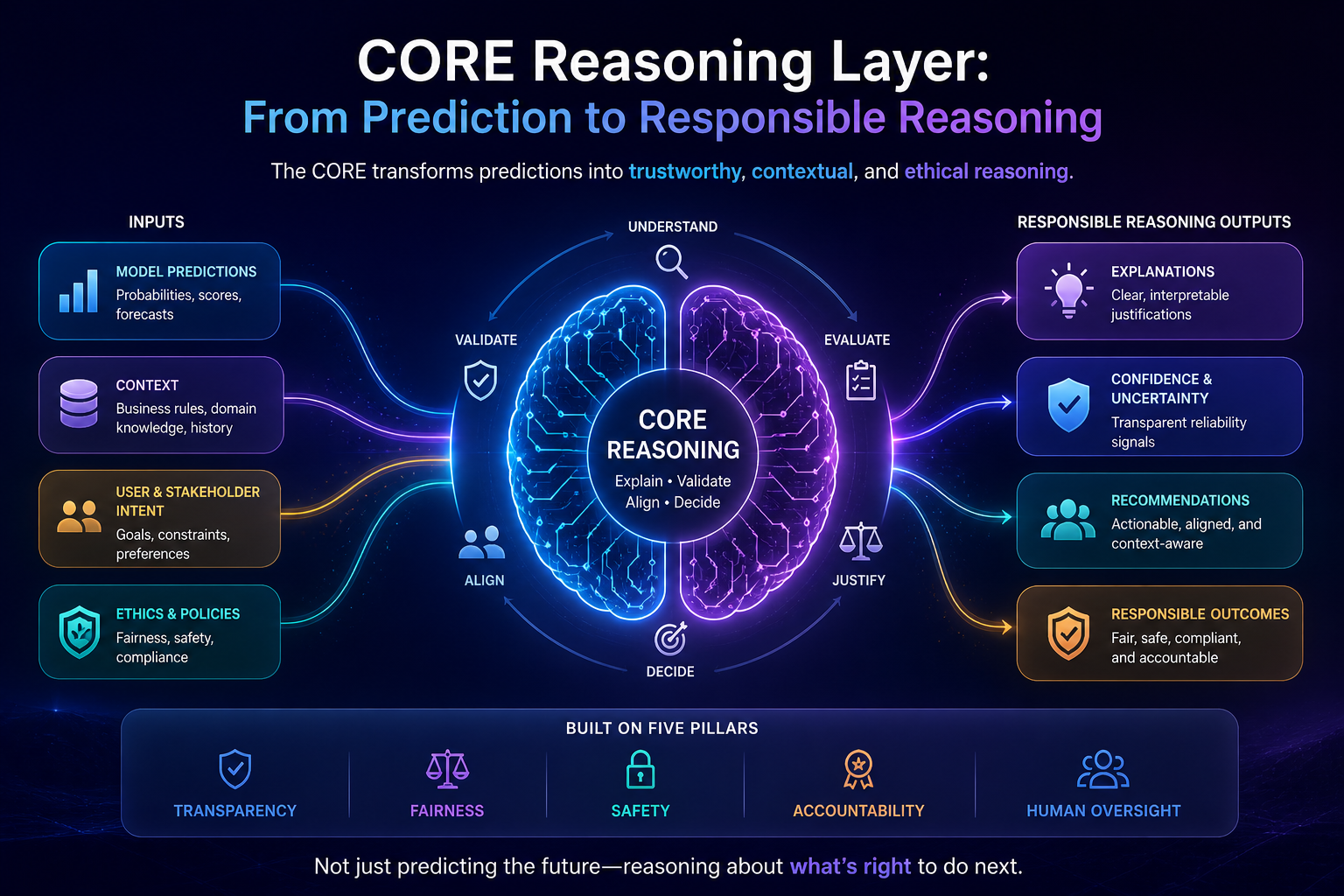
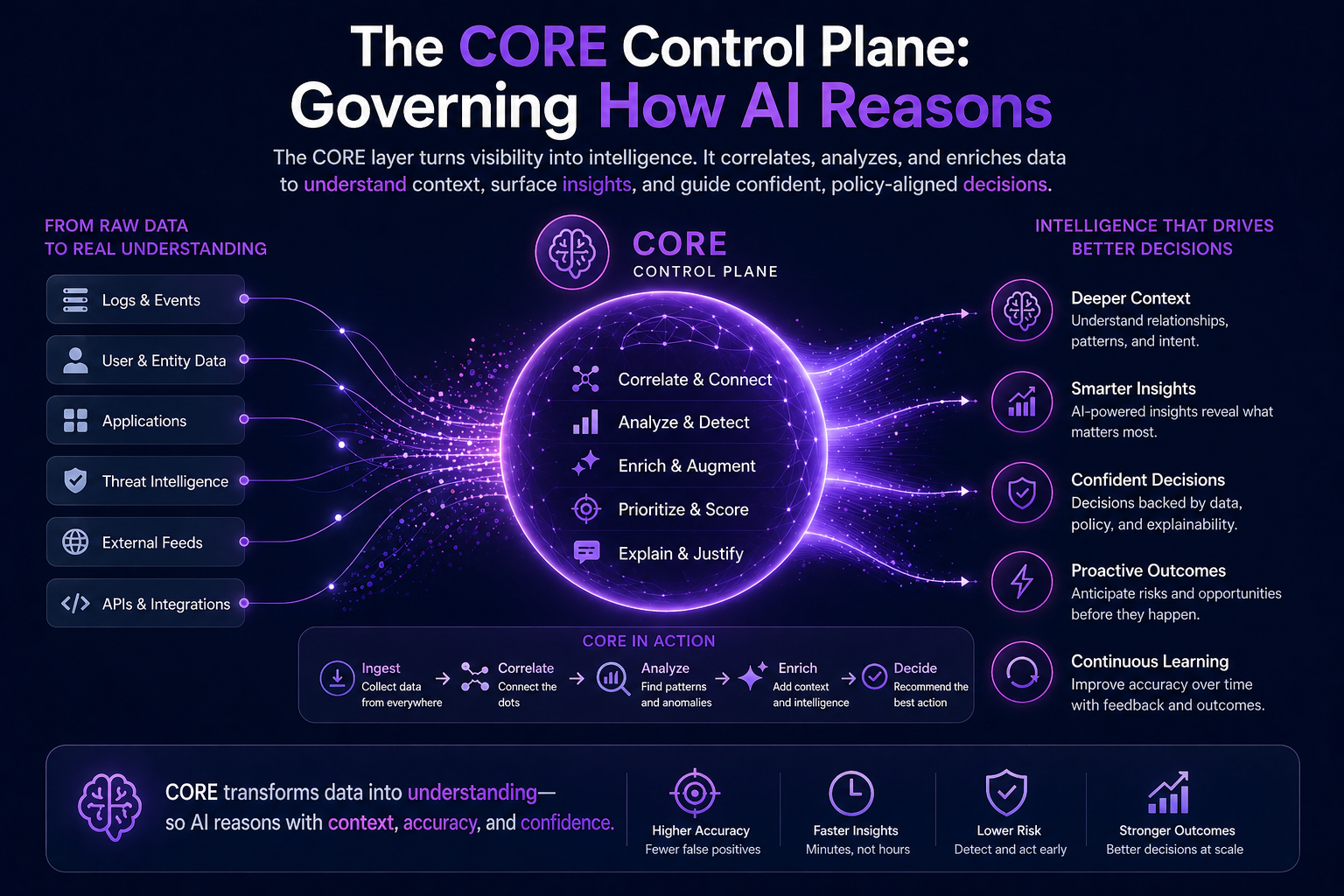
CORE is the cognition layer: Comprehend, Optimize, Realize, Evolve.
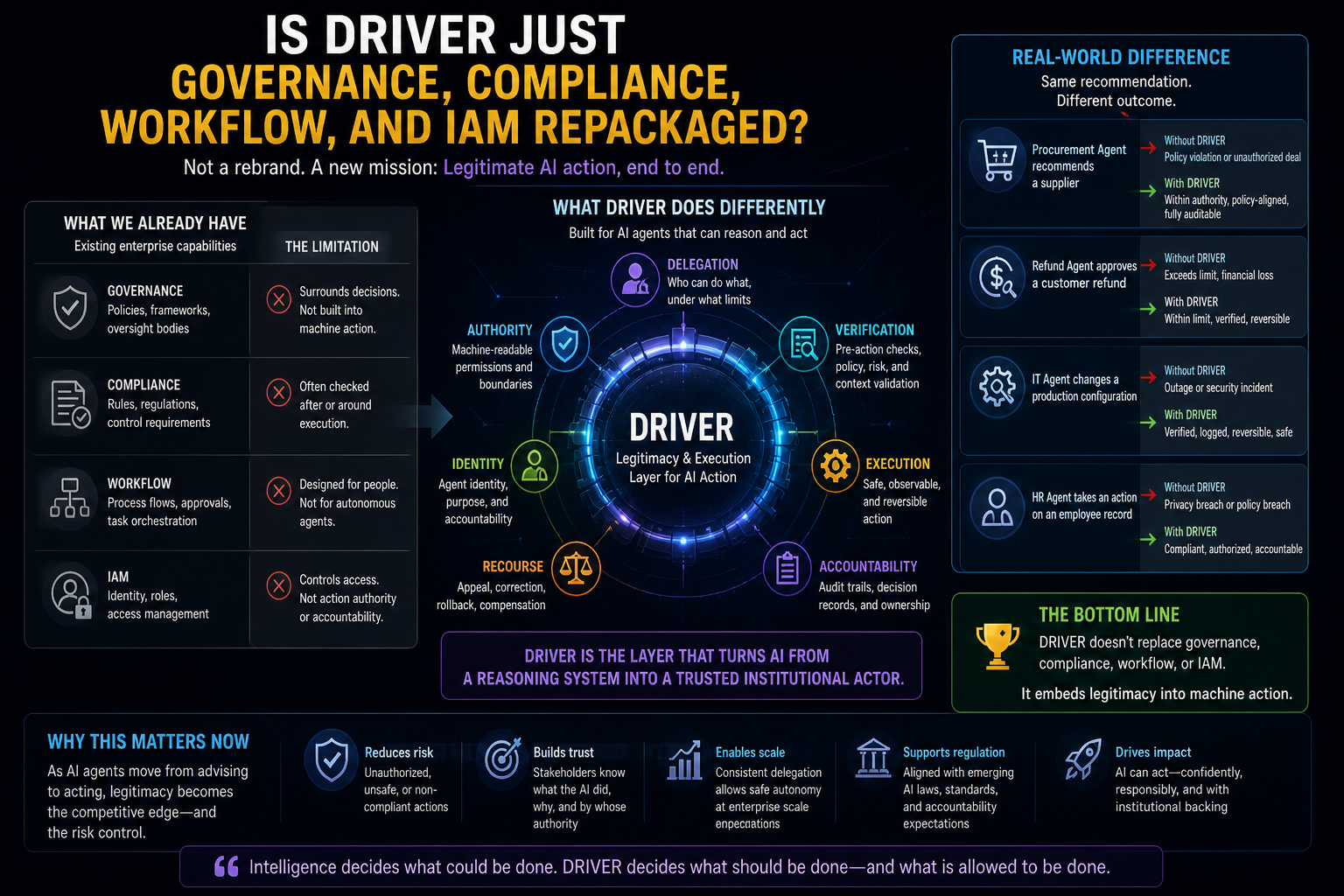
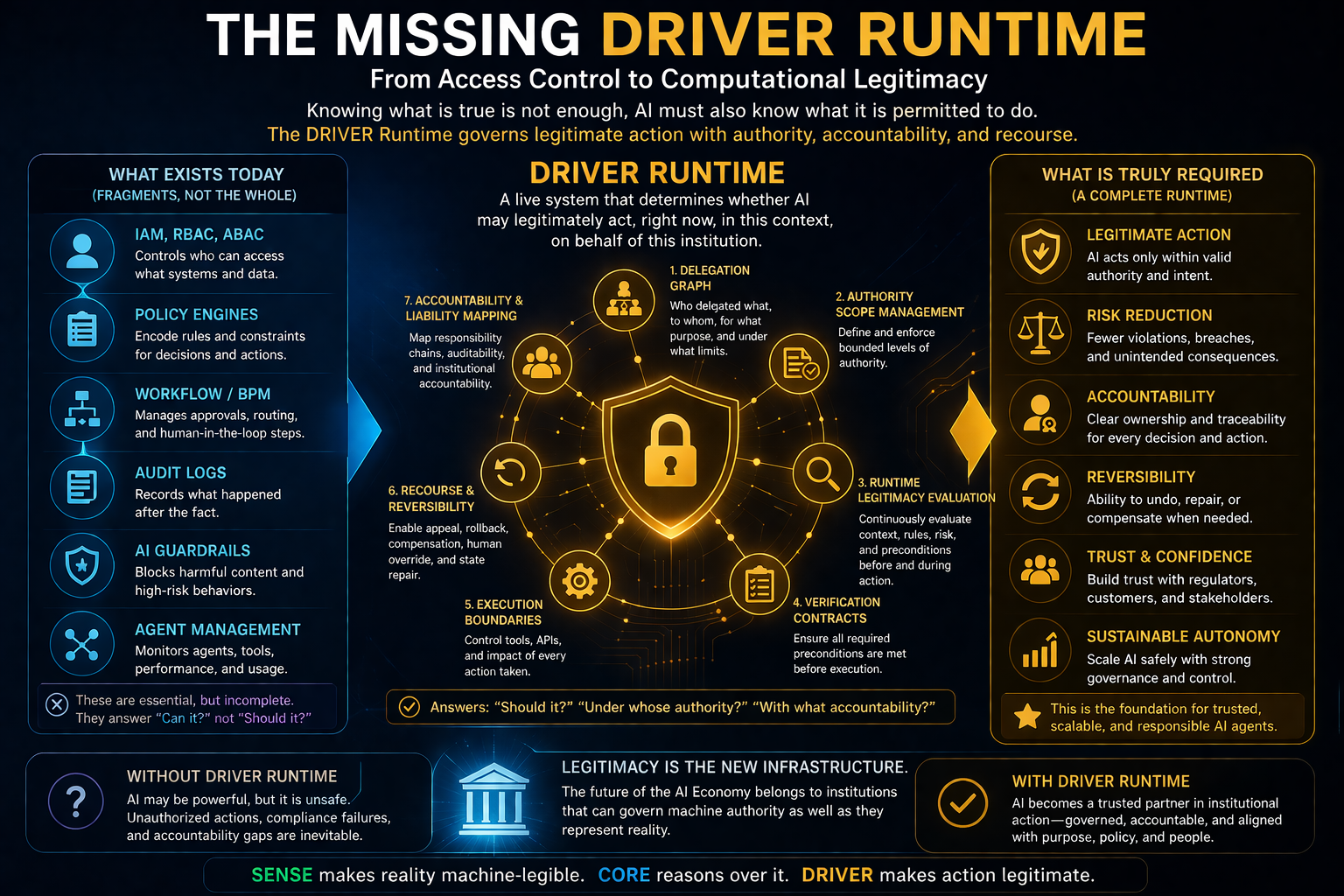
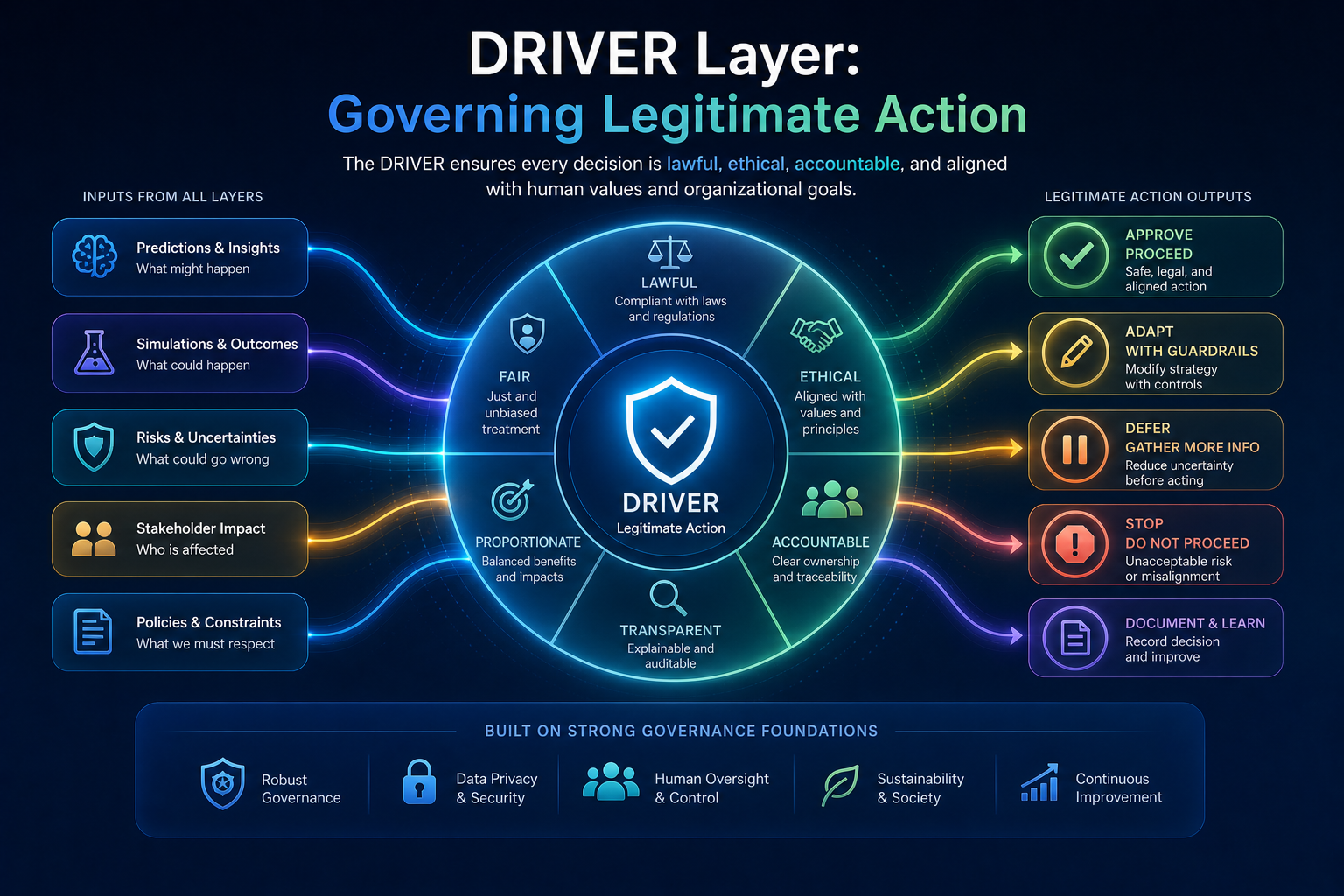
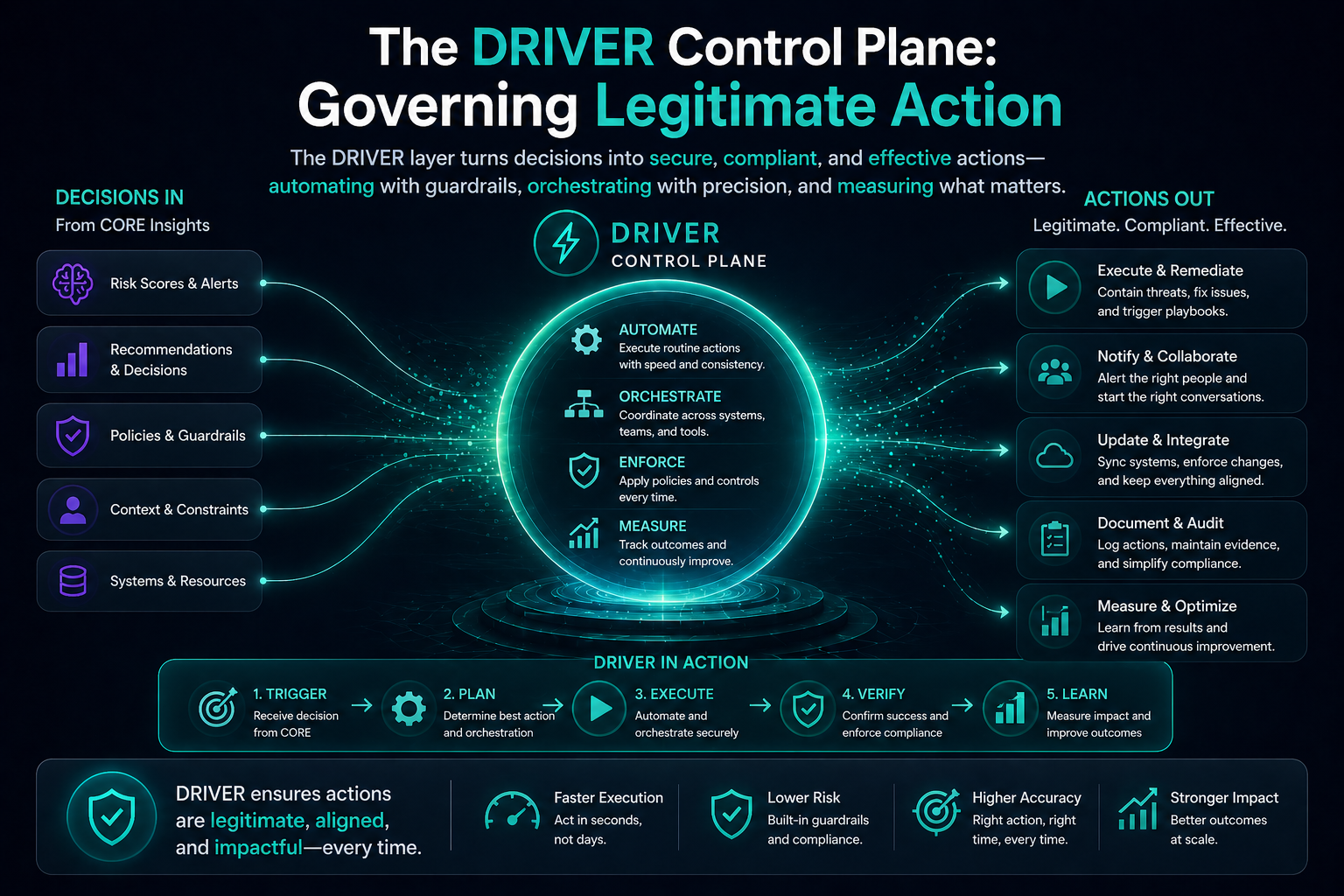
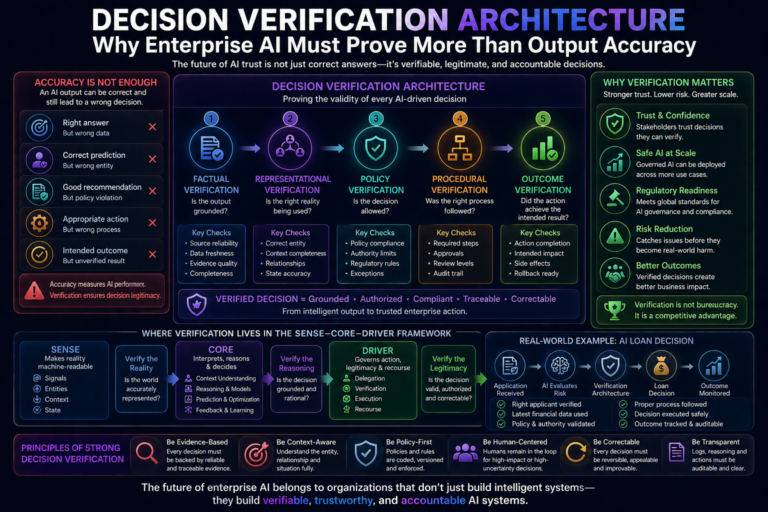
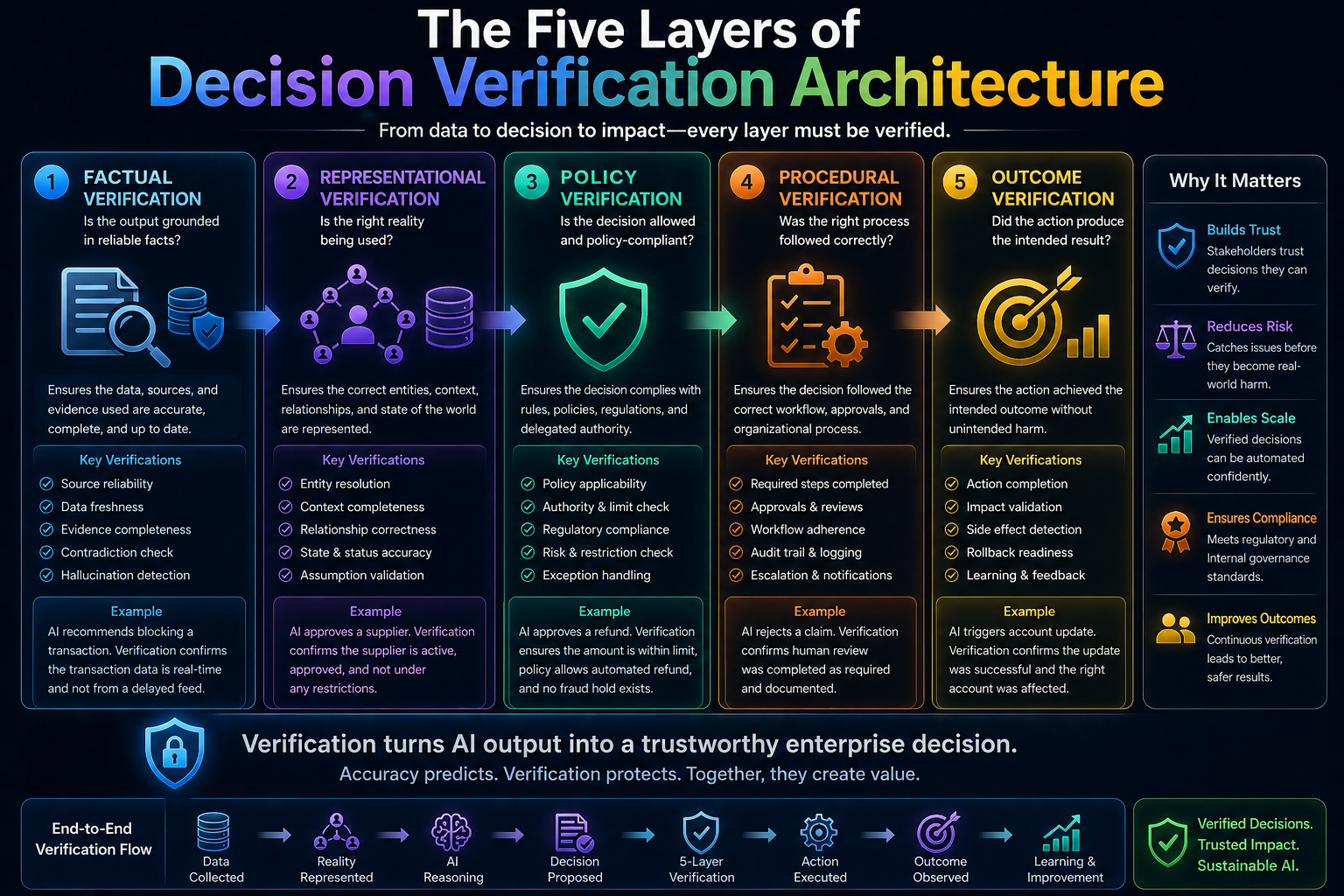
DRIVER is the governance layer: Delegation, Representation, Identity, Verification, Execution, Recourse.

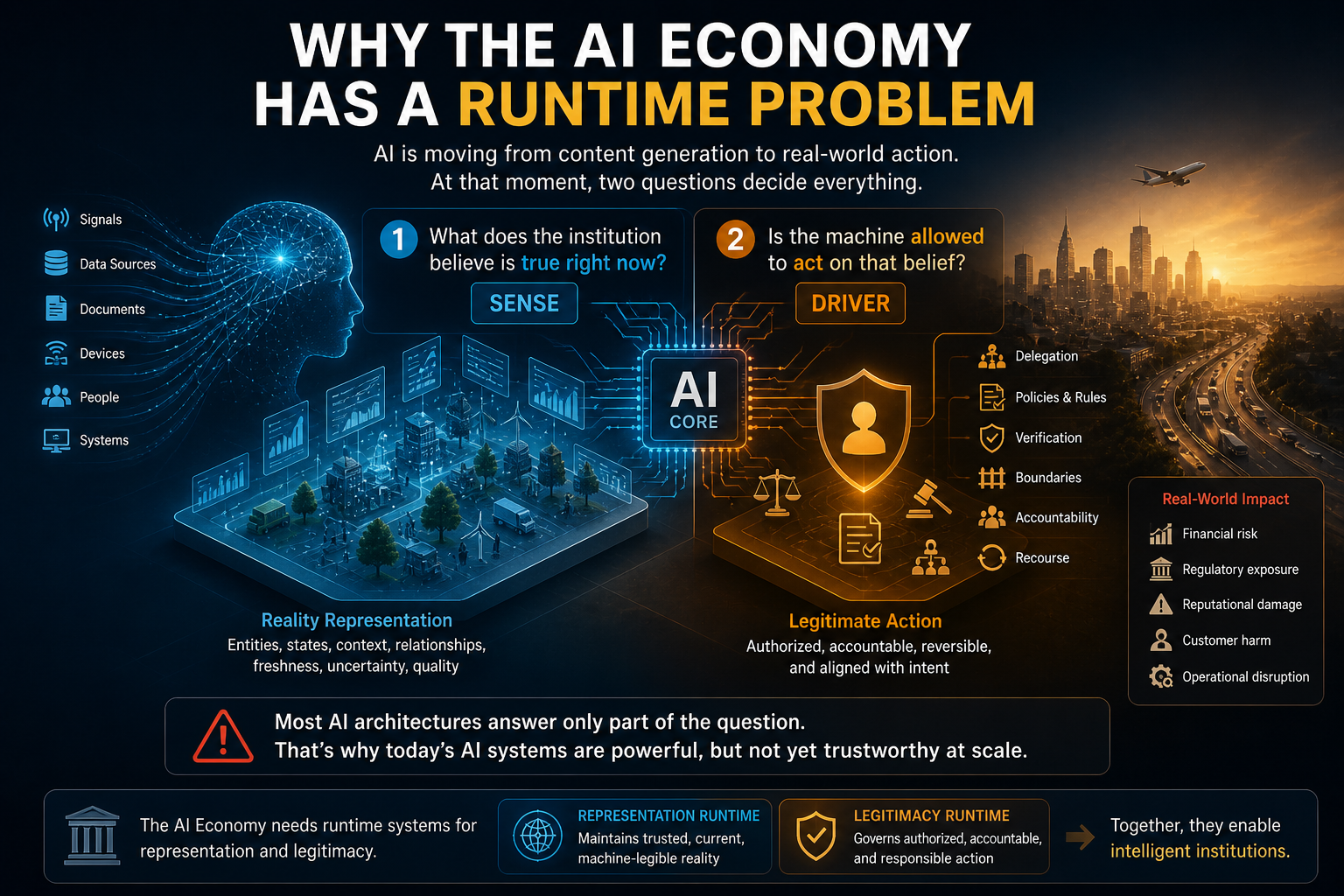
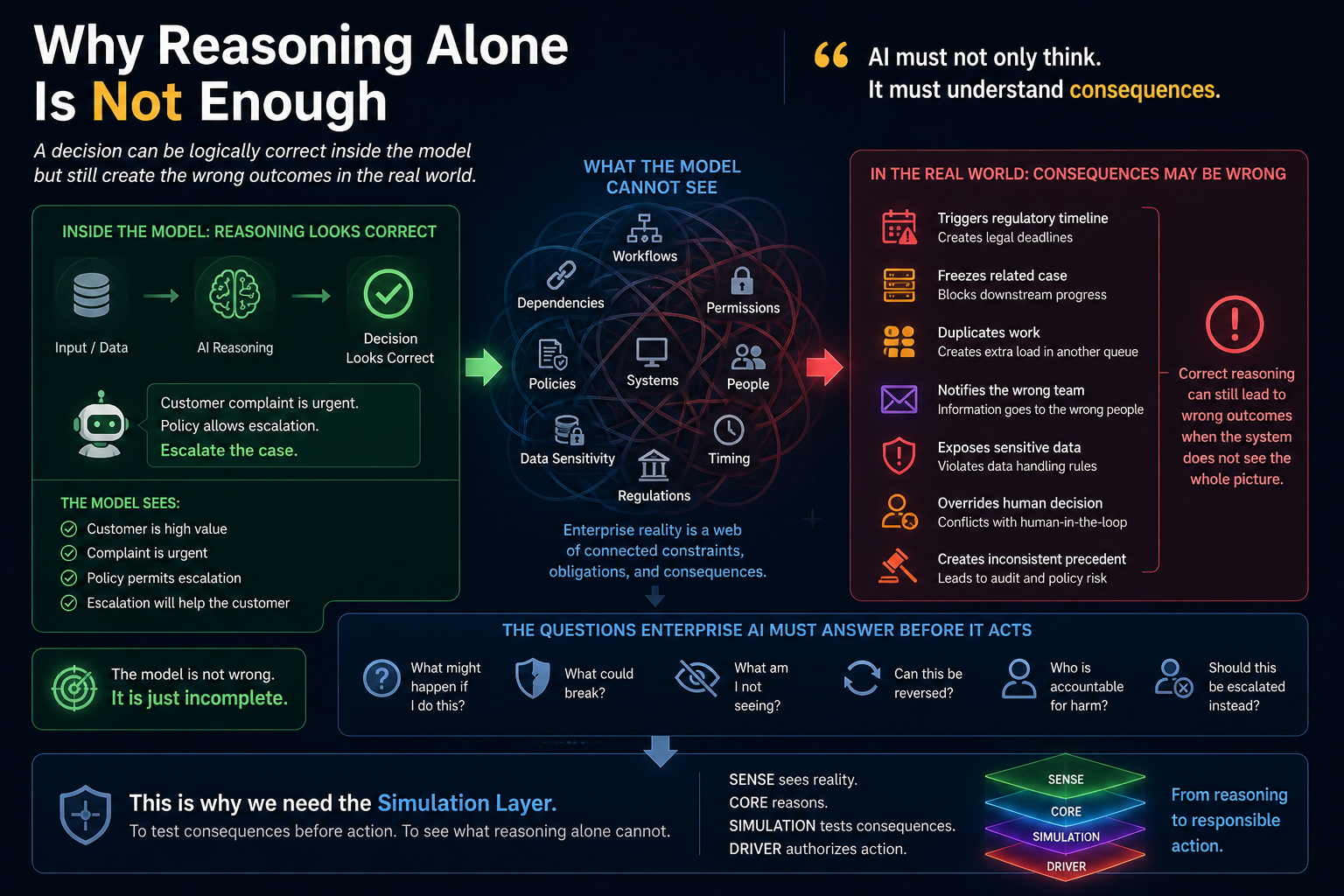
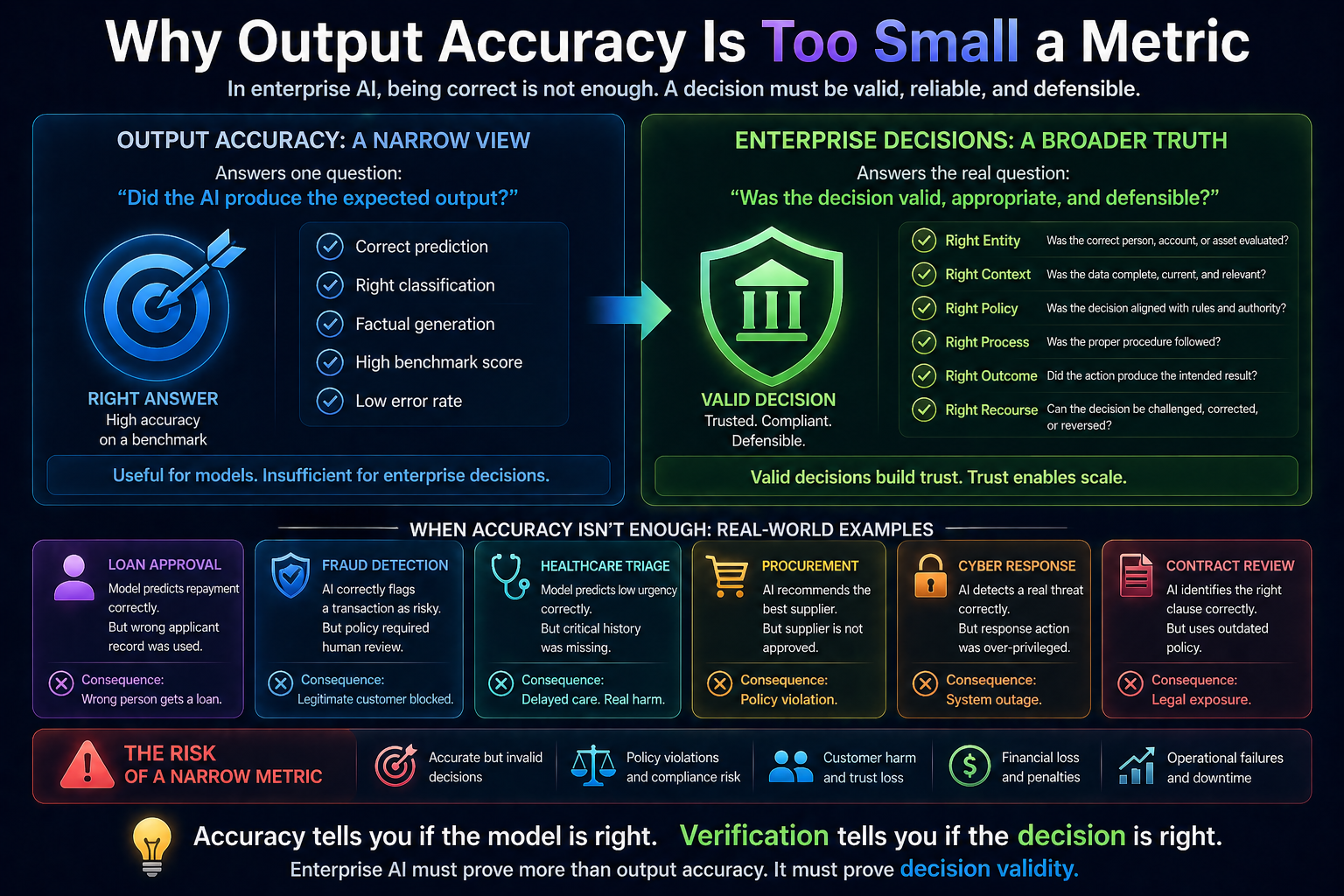
Most AI conversations still focus disproportionately on CORE. Is the model accurate? Is it aligned? Is it robust? Those are valid questions. But they miss a more foundational one:

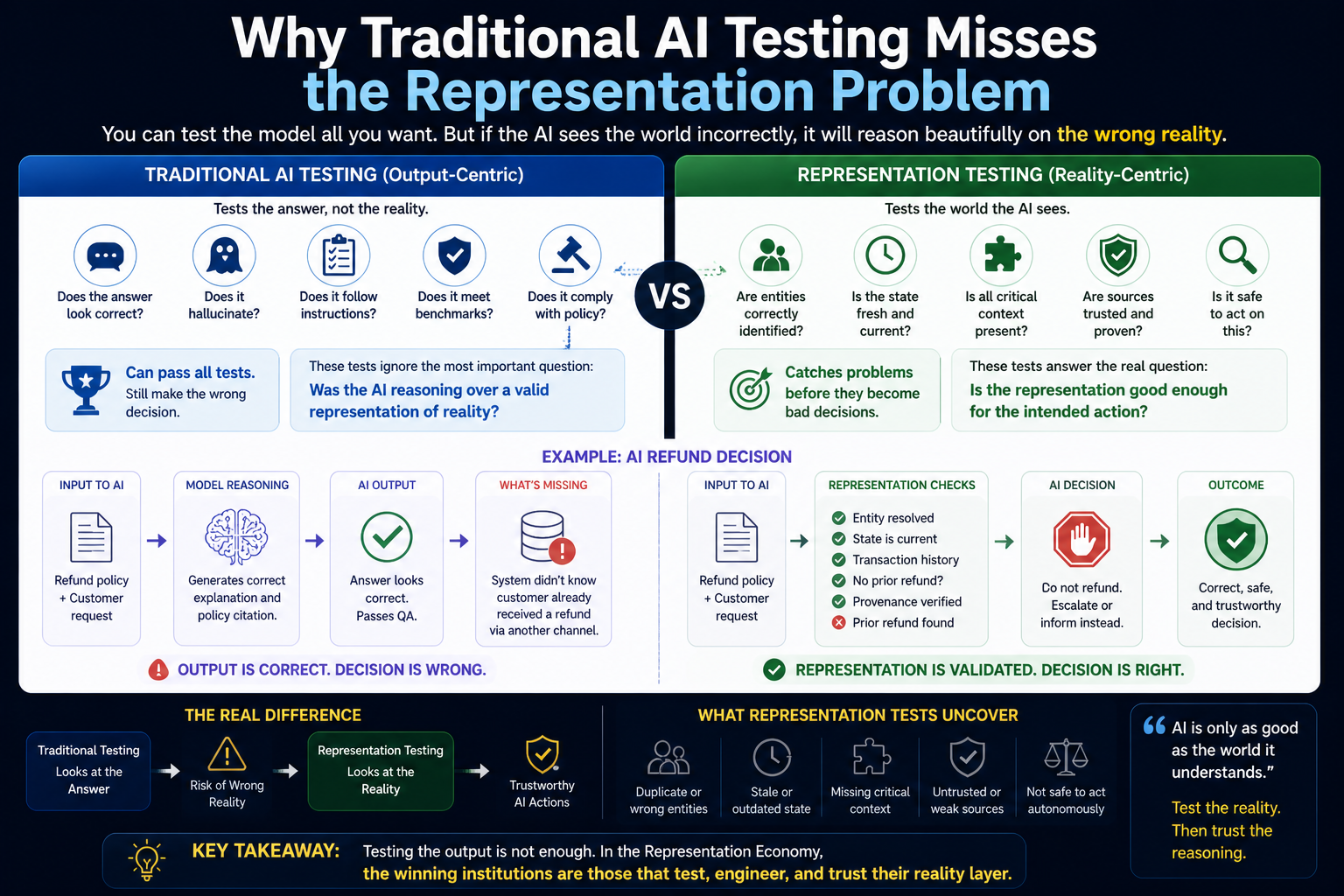
What if the system is acting on a corrupted version of reality before the model even begins to reason?

That is the shift leaders now need to understand.

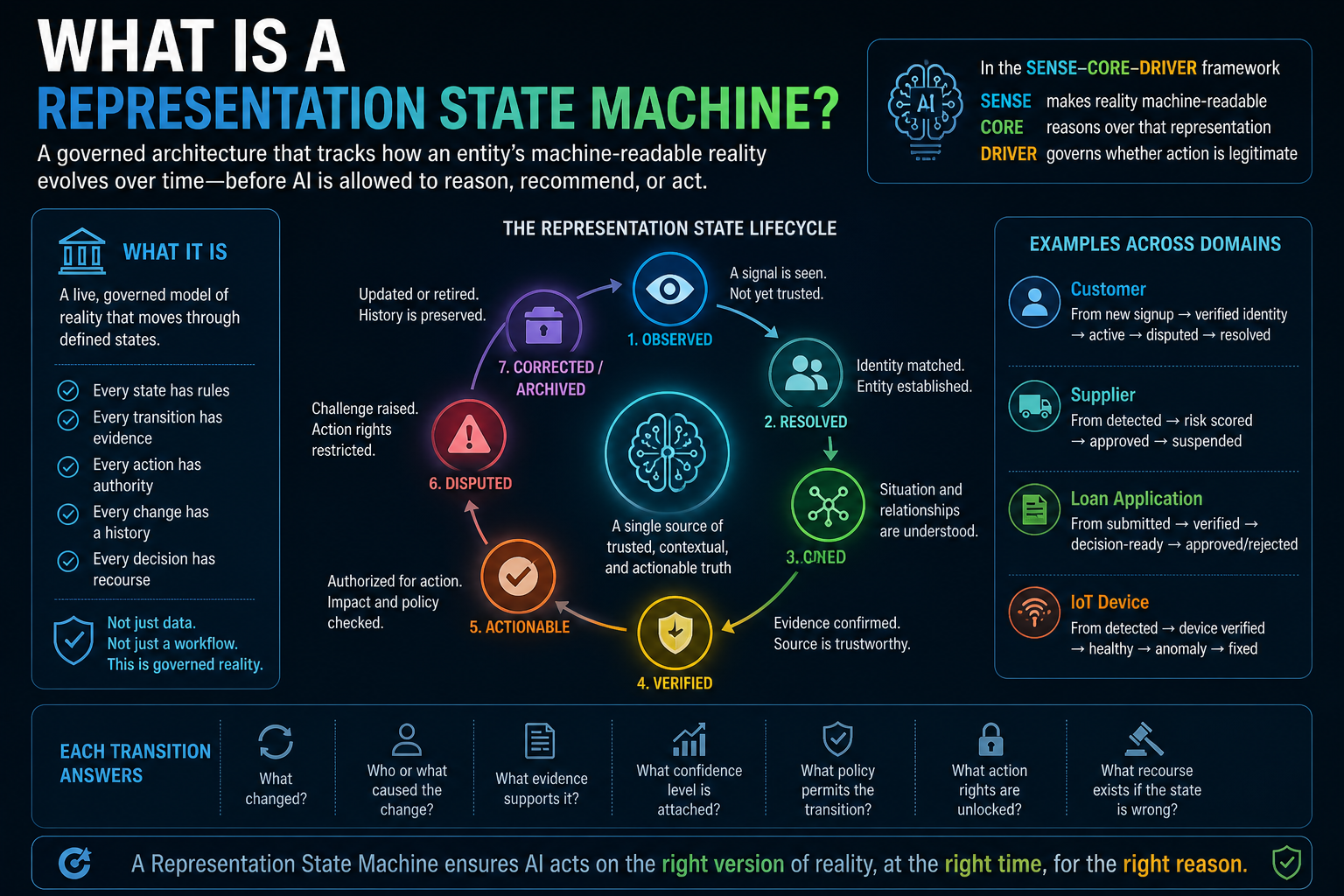
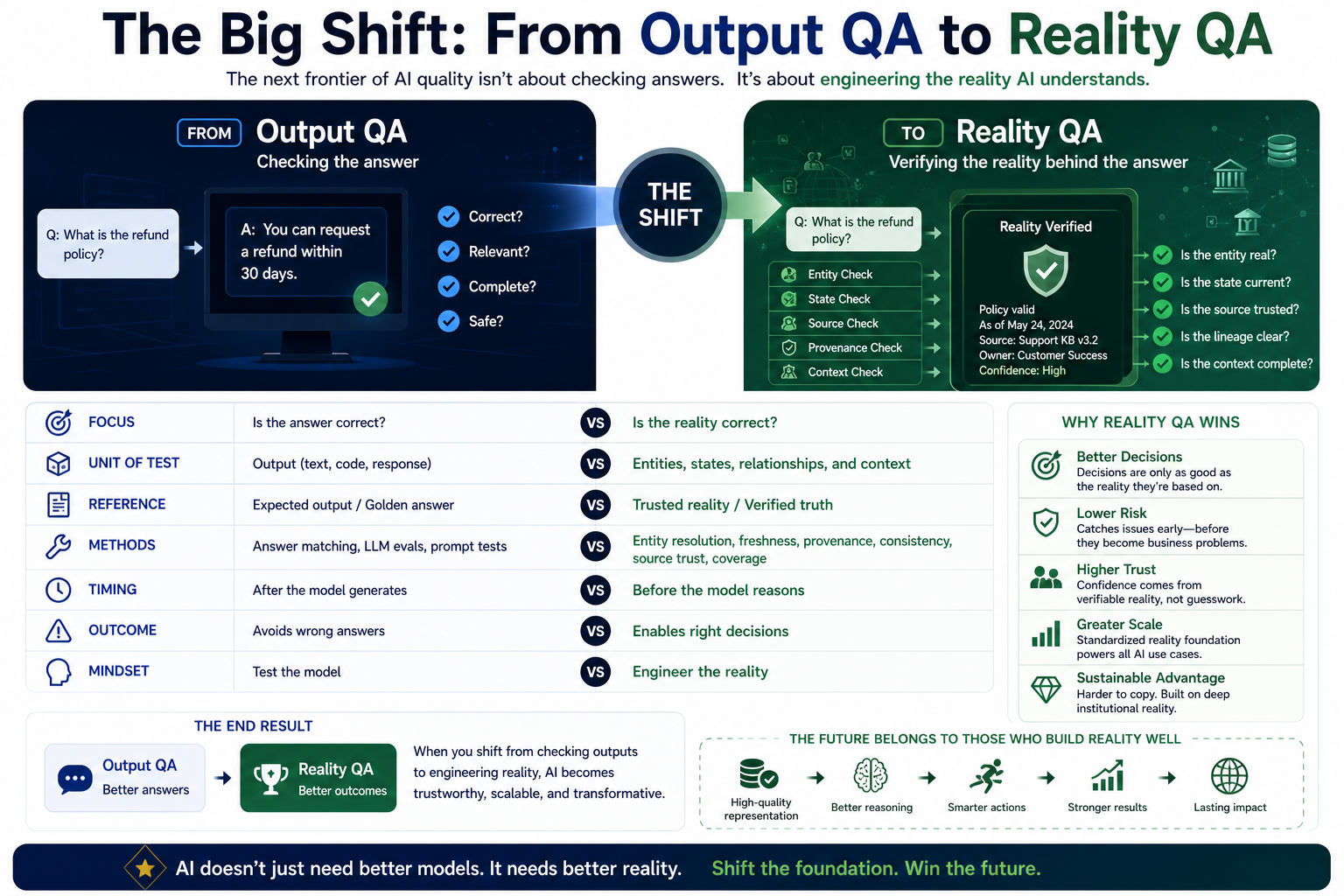
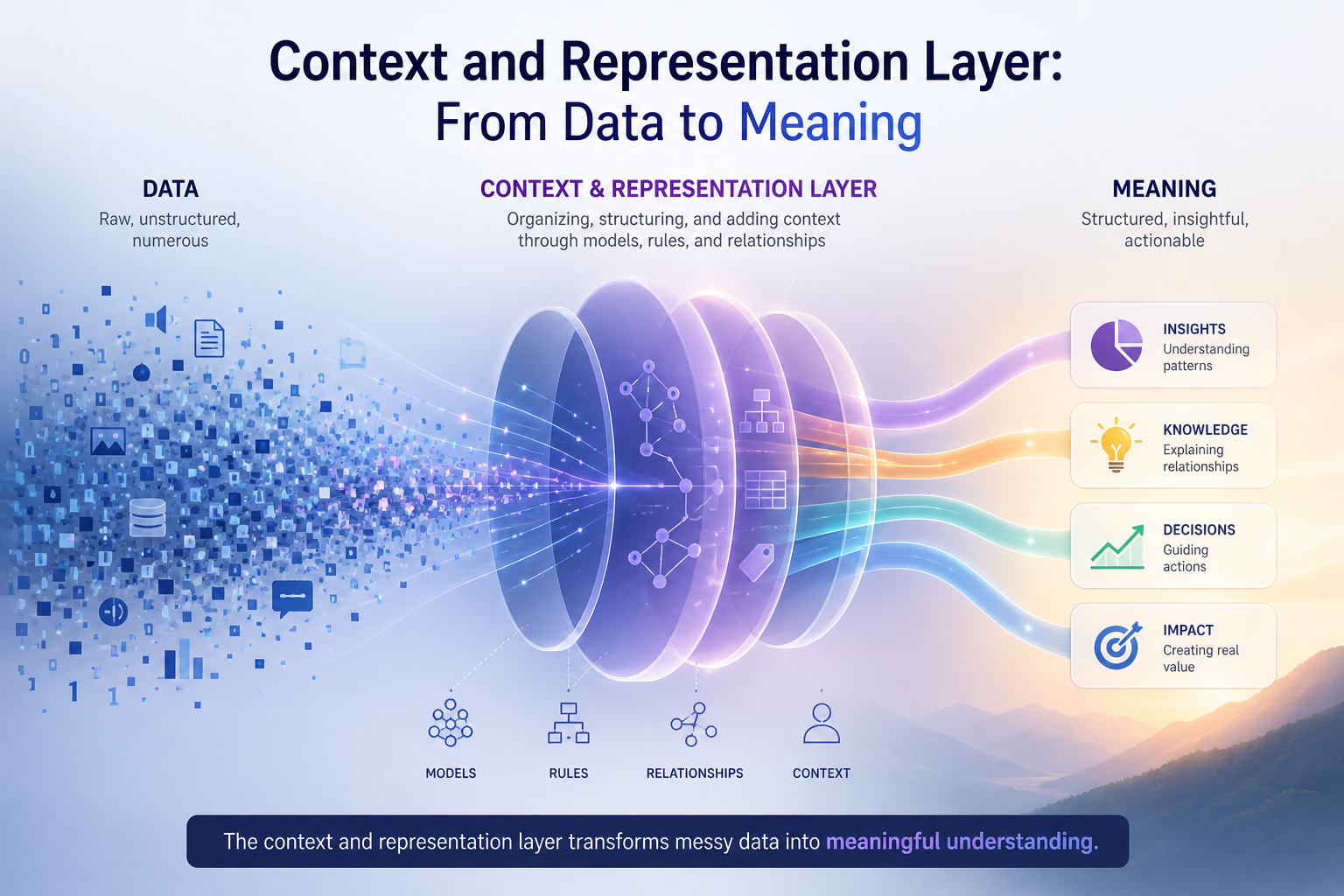
The Representation Attack Surface refers to all the ways an AI system’s understanding of reality can be manipulated through data, signals, and context—before the model even begins to reason.

Why model security is too narrow

Why model security is too narrow

When people hear the phrase AI security, they usually think of a short list of familiar risks:

  • a model being stolen
  • a chatbot being jailbroken
  • training data being poisoned
  • a malicious prompt causing a bad output
  • a hidden system prompt being exposed

All of that matters.

But it is no longer enough.

Today’s AI systems are not isolated models. They are connected to emails, documents, browsers, databases, APIs, identity systems, enterprise tools, approval chains, and real-world workflows. OWASP’s updated guidance reflects this broader reality by highlighting risks such as indirect prompt injection, supply-chain weaknesses, improper output handling, and excessive agency in deployed LLM and agentic applications. (OWASP Foundation)

Once AI becomes part of an operating environment, the security question changes.

It is no longer just:
Can someone break the model?

It becomes:
Can someone distort the reality the model is allowed to see, trust, and act upon?

That is a much larger battlefield.

What is reality hacking?

What is reality hacking?

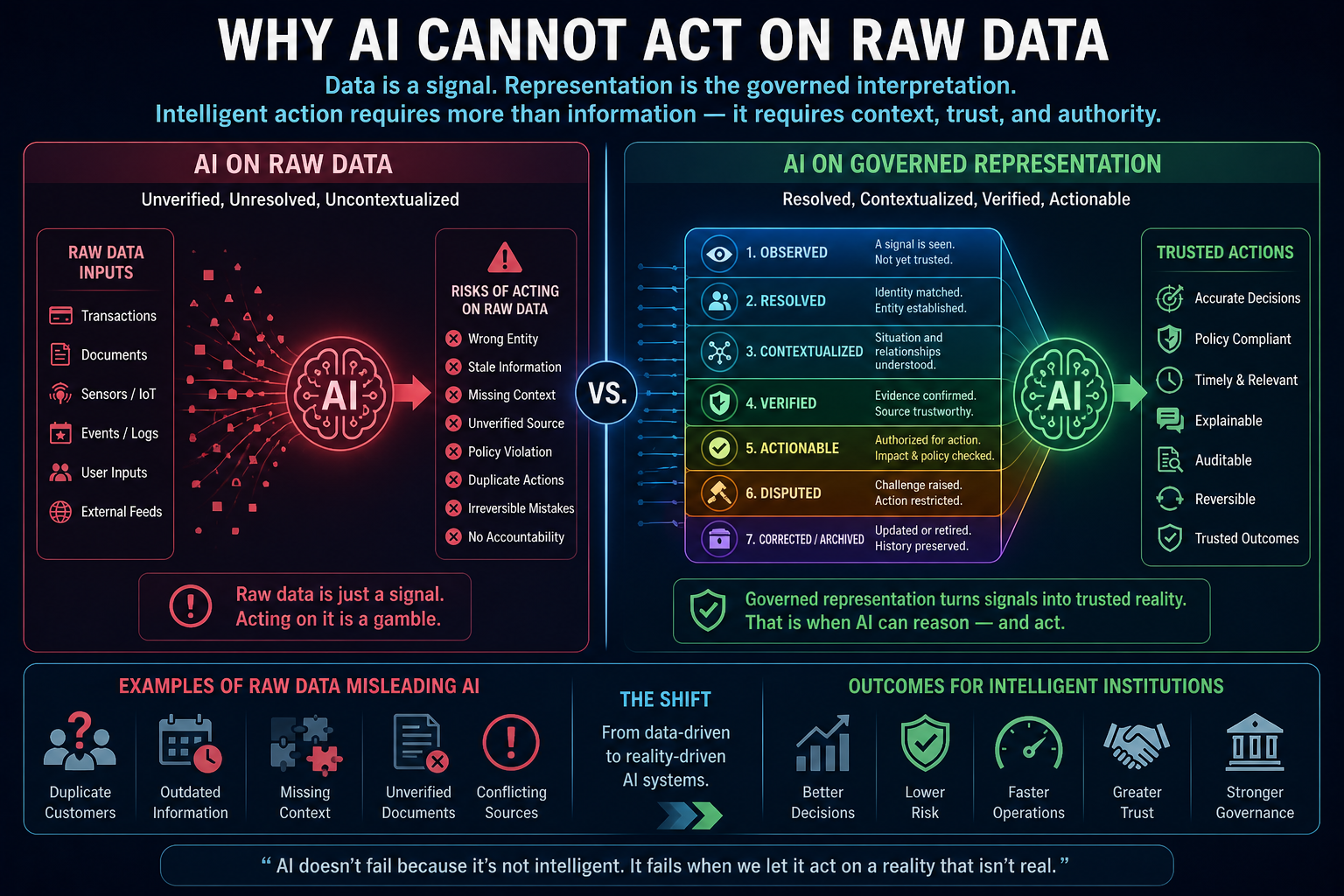
Reality hacking is not science fiction. It is the manipulation of the inputs, identities, states, context, permissions, or action pathways that make a system believe something false, incomplete, outdated, or strategically misleading about the world.

In plain language, the attacker does not need to defeat the brain if they can poison the world the brain is reading.

This is already visible in modern AI security guidance. Google describes indirect prompt injection as a vulnerability in which malicious instructions are embedded inside external content such as documents, emails, or webpages and then treated by the AI system as legitimate instructions. Microsoft’s Zero Trust guidance warns that untrusted external content can cause AI systems to take unintended actions, including sensitive operations, if layered defenses are not in place. (Google Workspace Help)

A few examples make the idea concrete.

A customer-support copilot reads a document that contains hidden instructions. A user simply asks for a summary. The model treats the hidden text as instructions and changes its behavior.

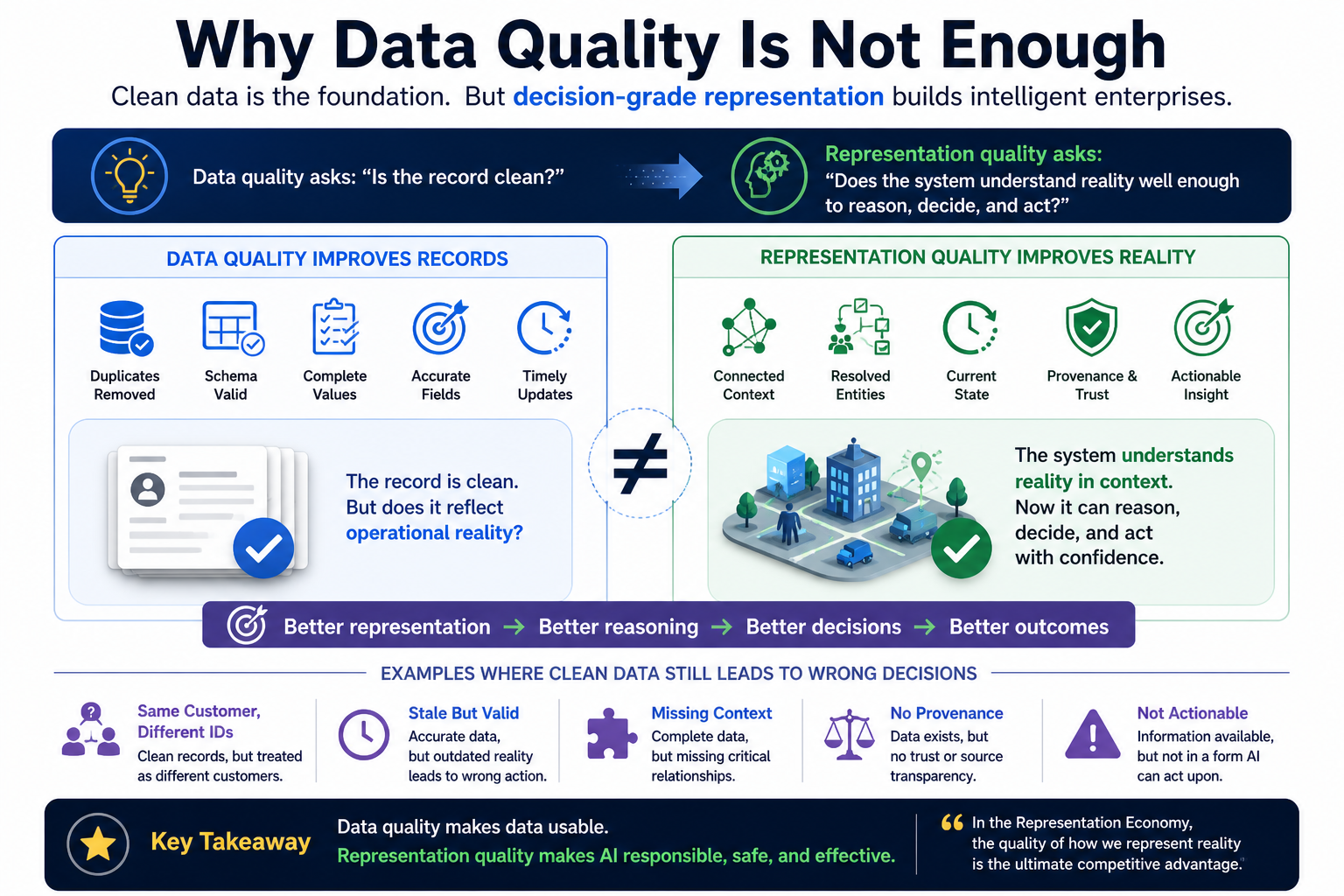
A fraud system is not hacked, but the upstream entity-resolution process merges two people into a single profile. The downstream model reasons correctly over the wrong person.

A logistics AI has a strong optimization engine, but sensor data is delayed or spoofed. It reallocates resources using stale reality.

An enterprise agent is allowed to call tools. Nobody steals the model. Nobody alters the weights. But an attacker manipulates a webpage, plugin response, or document so the agent confidently triggers the wrong action.

In each case, the intelligence may be functioning. The real problem is that the system’s representation of reality has already been compromised.

That is why the most dangerous AI threat is increasingly not just model hacking.

It is reality hacking.

The three layers of the representation attack surface : The Representation Attack Surface

The three layers of the representation attack surface

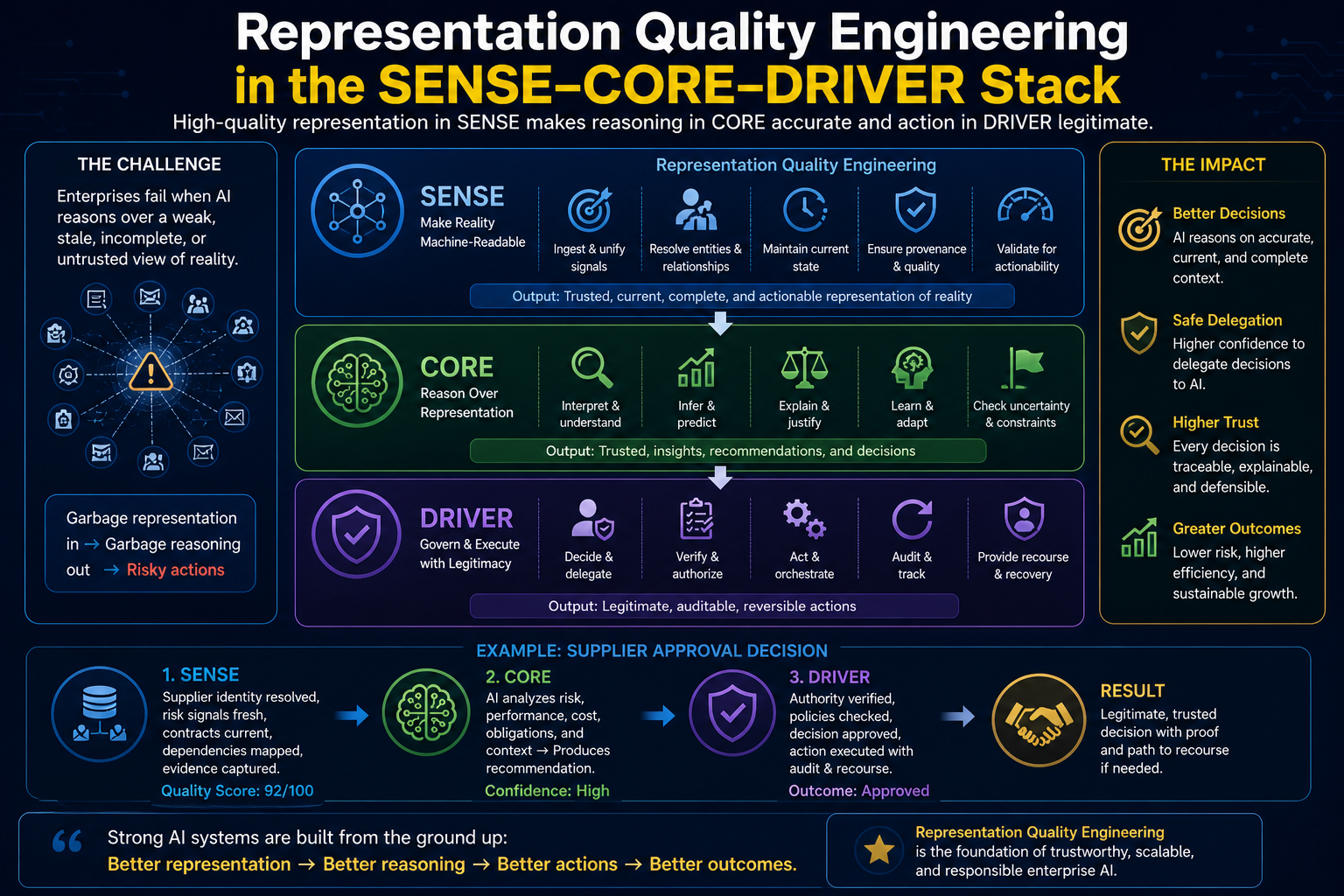
The clearest way to understand this is through SENSE–CORE–DRIVER.

  1. SENSE attacks: corrupting what the system can know

SENSE is the layer where reality becomes machine-legible.

If this layer is weak, everything above it inherits that weakness.

SENSE attacks include signal corruption, fake telemetry, manipulated logs, poisoned data streams, entity confusion, duplicated identities, state distortion, stale context, and failures to track how conditions evolve over time. NIST’s AI RMF stresses that AI risks must be assessed in lifecycle and operational context, not merely as abstract model characteristics. (NIST Publications)

A simple way to explain this to executives is:

SENSE attacks do not need to fool the model. They only need to fool the model’s picture of reality.

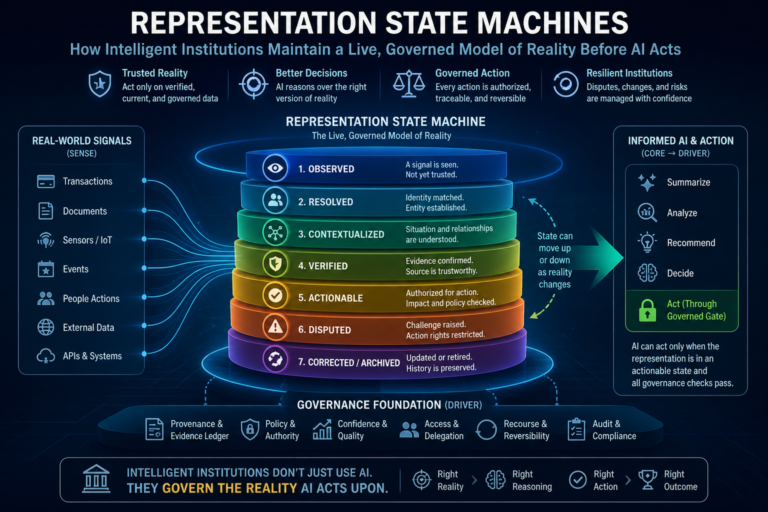
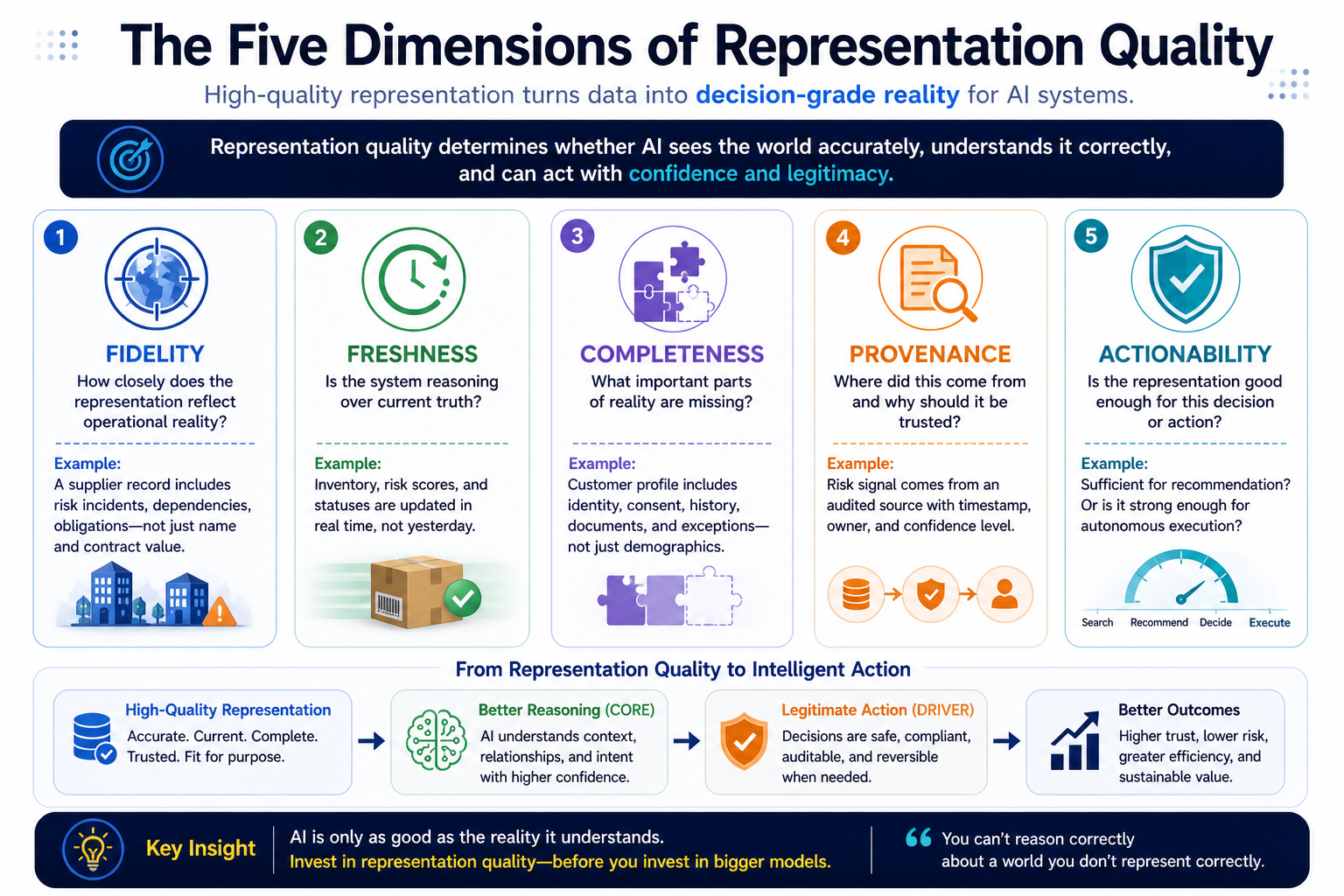
That is why poor entity resolution, bad sensor hygiene, weak provenance, and delayed state updates can quietly become AI security issues.

  1. CORE attacks: manipulating reasoning through context

This is the layer most people recognize.

CORE attacks include direct prompt injection, indirect prompt injection, retrieval poisoning, adversarial examples, contextual misdirection, tool-response manipulation, and reasoning traps that begin with corrupted premises. MITRE ATLAS catalogs adversarial tactics and techniques against AI-enabled systems, and ENISA has documented security concerns around manipulation, evasion, and poisoning in machine learning systems. (MITRE ATLAS)

But the most important point is often missed.

The attack is not always about making the model unintelligent.
It is often about making the model confidently rational in the wrong world.

That is more dangerous than a visibly weak model.

A model that is wrong because it lacks capability is easier to challenge. A model that is wrong because it is faithfully reasoning over manipulated reality is much harder to detect.

  1. DRIVER attacks: exploiting action, authority, and recourse

This is where AI risk becomes institutional risk.

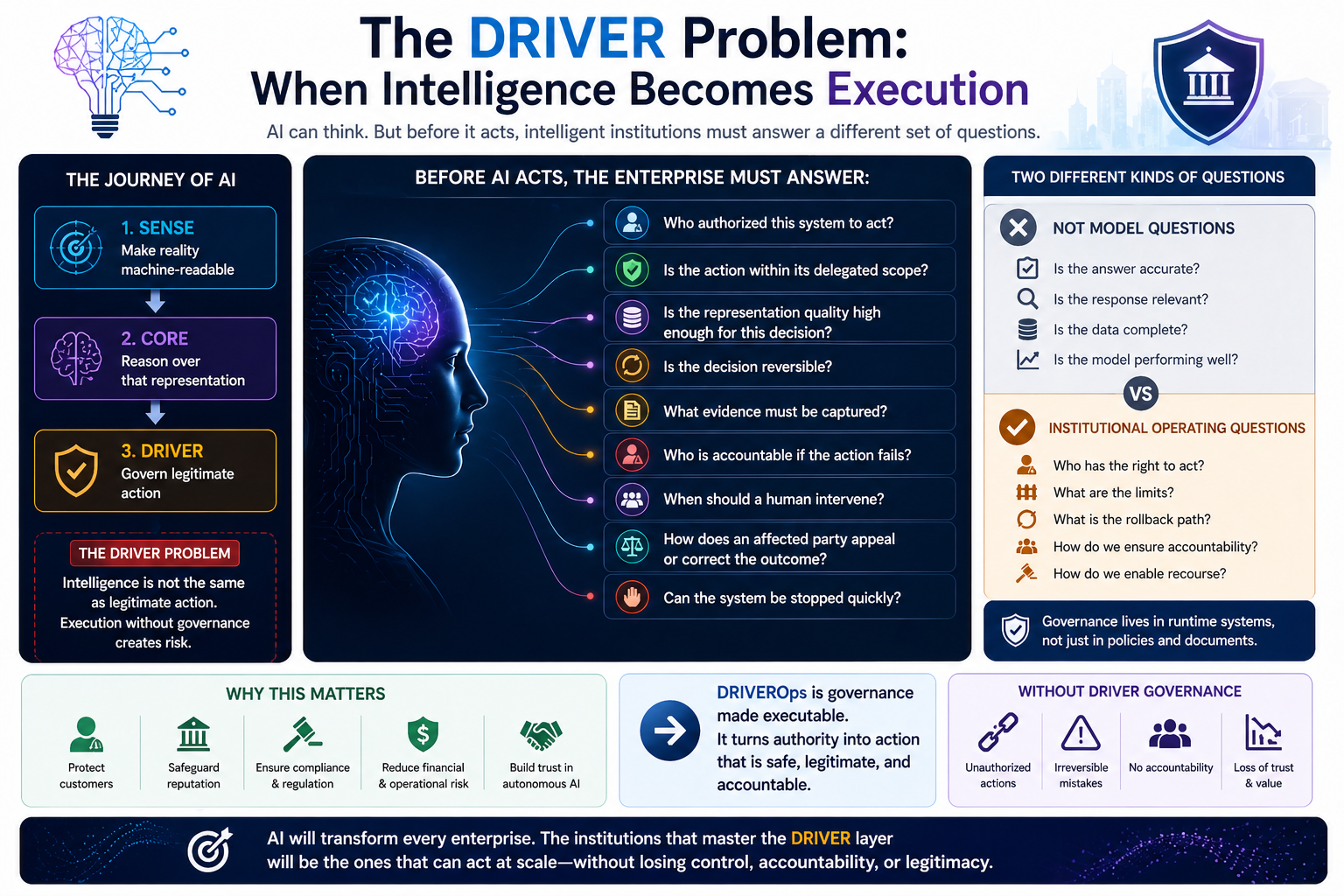
DRIVER asks:

  • Who authorized the system to act?
  • On whose behalf is it acting?
  • What is it allowed to change?
  • What verification happens before action?
  • Can action be stopped, reversed, or appealed?
  • What recourse exists if the system is wrong?

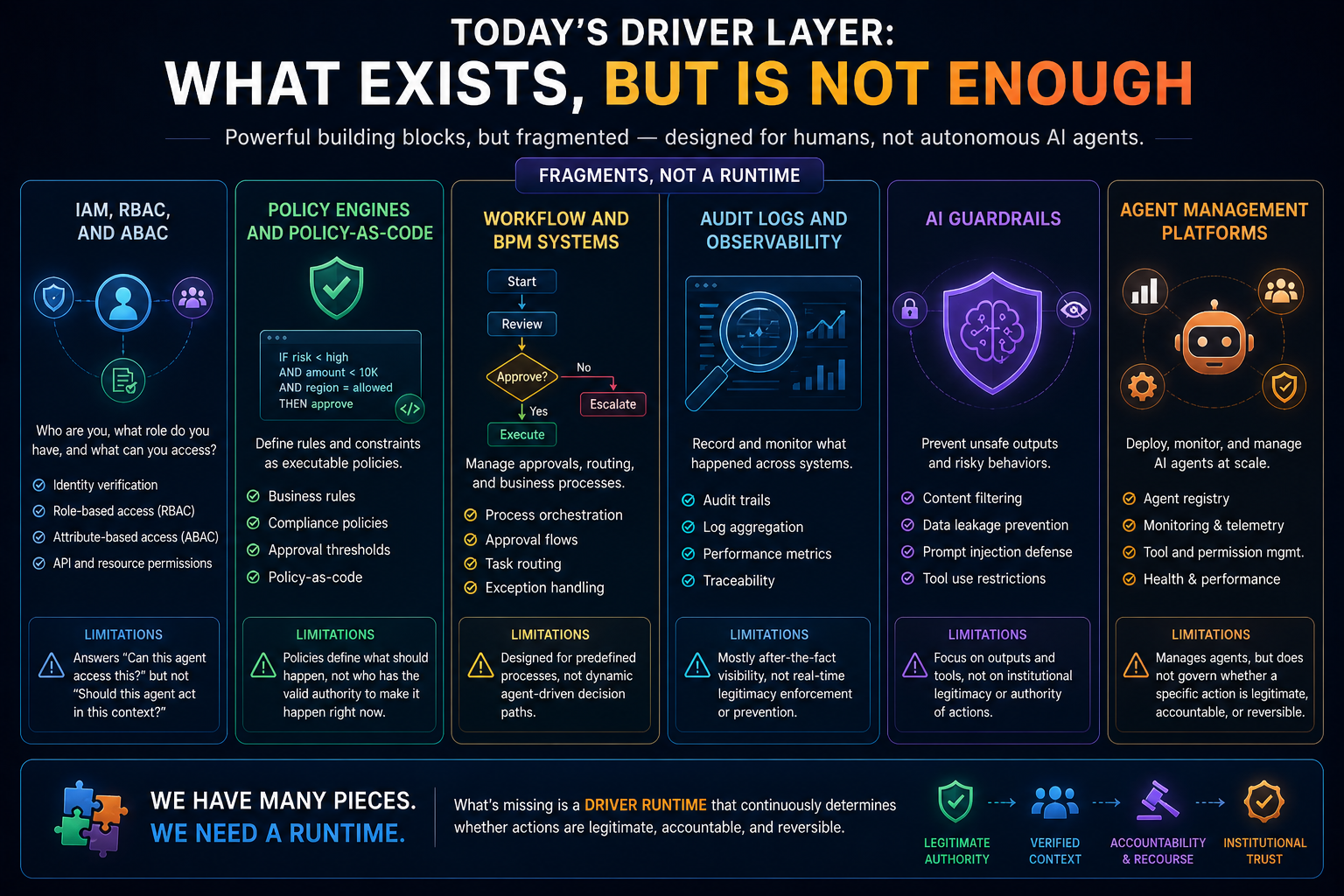
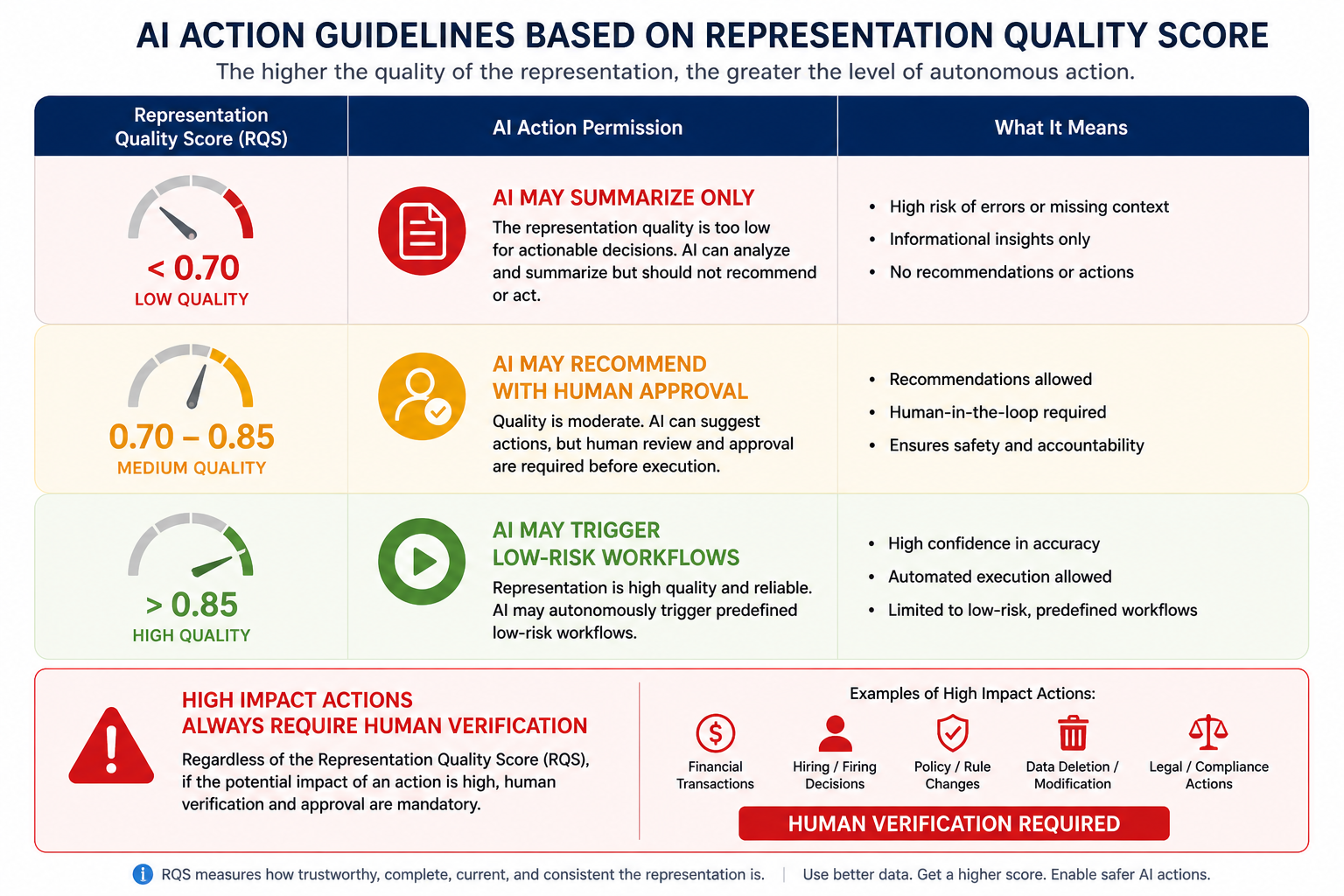
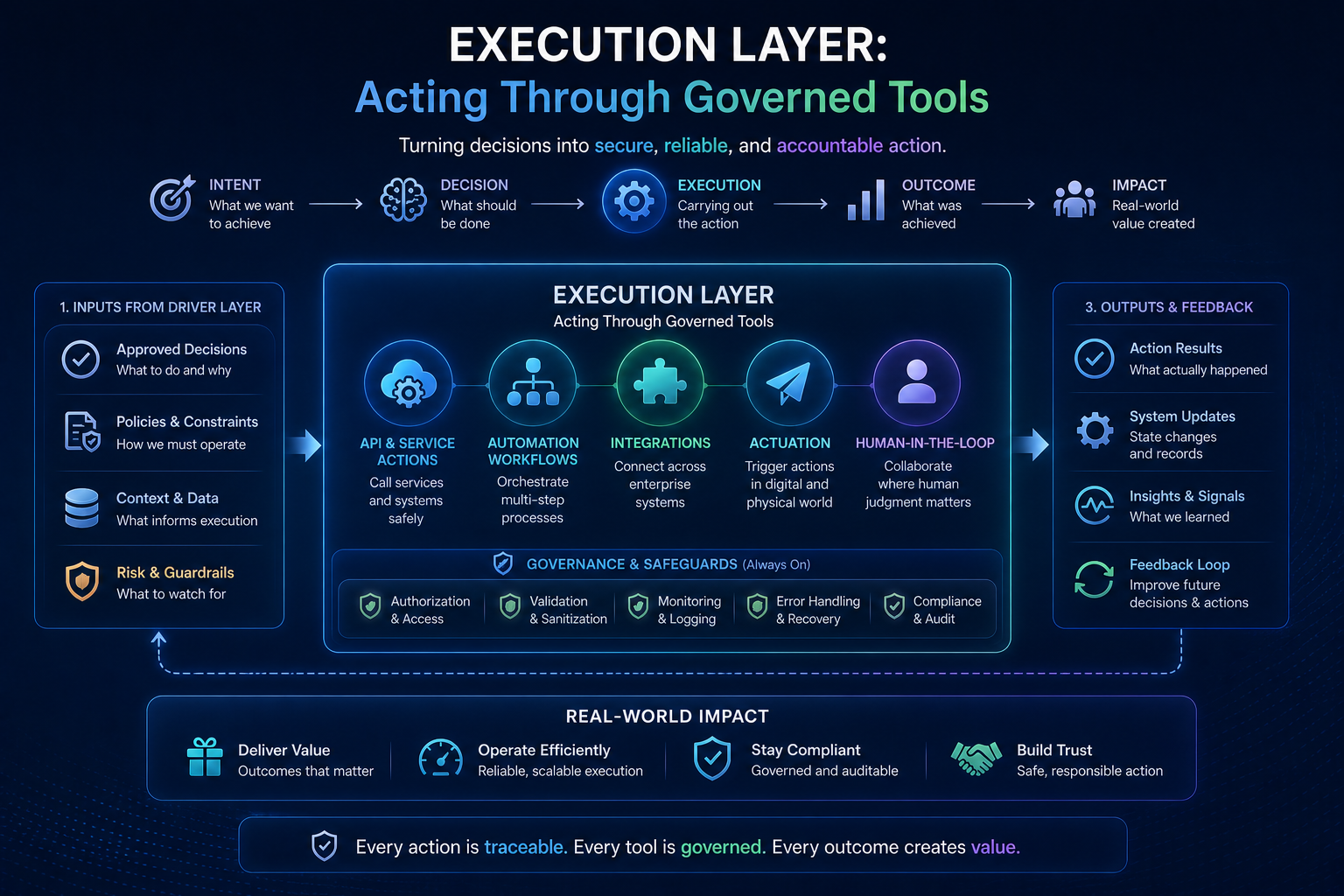
OWASP’s guidance on excessive agency describes the danger of granting LLM-based systems enough autonomy that manipulated or unexpected outputs can cause damaging downstream actions. Agentic security guidance is moving in the same direction: when AI systems can plan, call tools, access services, or take action across workflows, bounded permissions and explicit approval paths become essential. (OWASP Gen AI Security Project)

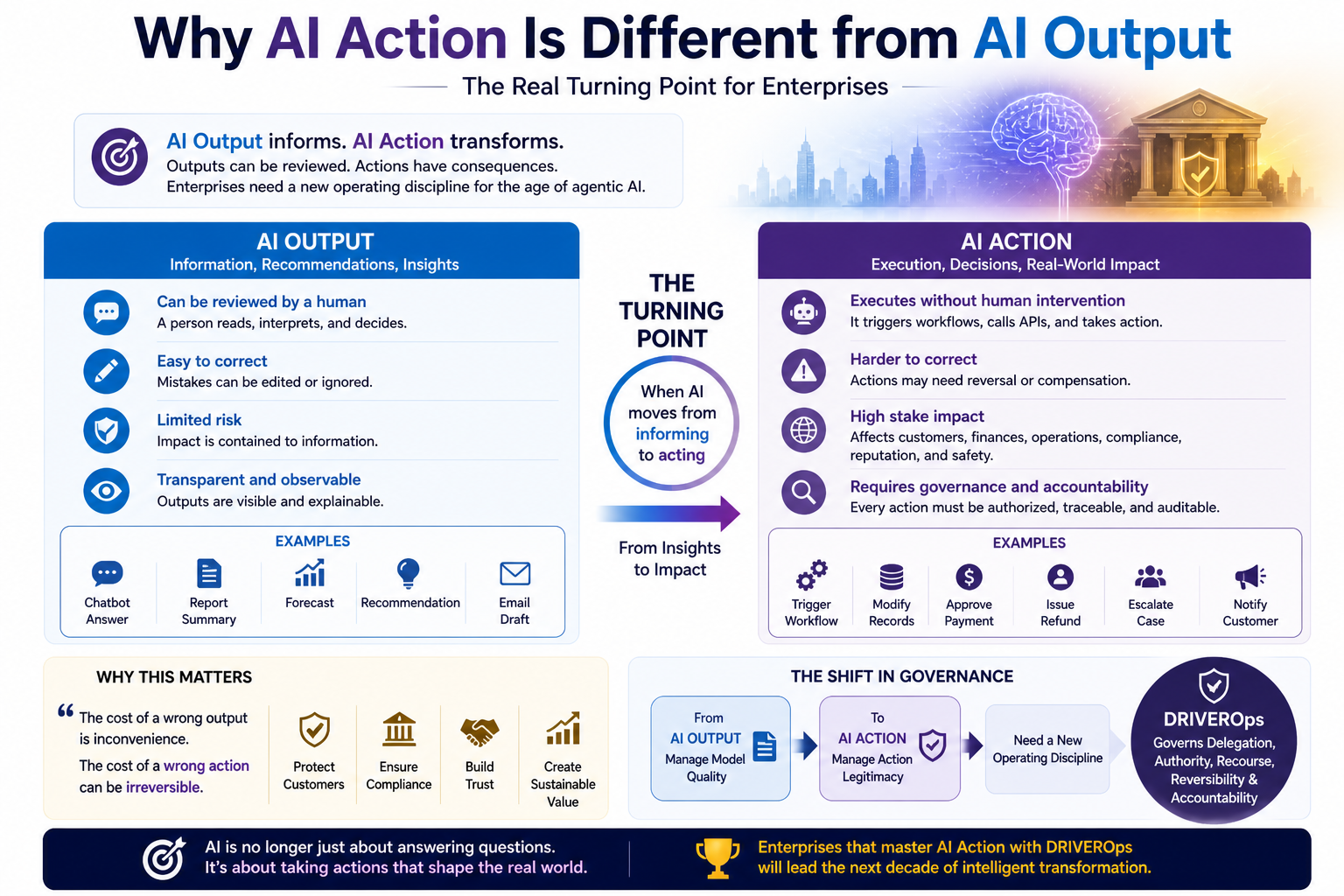
A bad answer is a content problem.
A bad action is an institutional problem.

That is the point where AI security becomes a board-level issue.

The real attack surface is the institution’s machine-readable reality

The real attack surface is the institution’s machine-readable reality

This is the central argument.

For decades, cybersecurity focused on protecting systems, endpoints, credentials, applications, and networks.

AI adds another layer: the machine-readable representation of the world itself.

That includes:

  • what the system accepts as a valid signal
  • how it identifies an entity
  • how it records state
  • how fast that state is refreshed
  • what content it trusts
  • what tools it can call
  • what identities can authorize action
  • what checks happen before execution
  • whether wrong actions can be unwound

This is why AI security can no longer be treated as a narrow model-team issue. It is now a cross-functional concern involving cybersecurity, data architecture, identity and access management, workflow design, enterprise integration, governance, legal, risk, internal audit, and operations. NIST’s framework explicitly supports this wider organizational view through its govern, map, measure, and manage functions. (NIST AI Resource Center)

The representation attack surface sits across all of them.

Four simple examples every board can understand

Four simple examples every board can understand

Example 1: The invisible instruction in a document

A team uses an AI assistant to summarize vendor proposals. One proposal contains hidden instructions telling the system to ignore other bids and recommend that vendor. No model theft. No firewall breach. But the system’s interpretation is hijacked through untrusted context. That is the practical logic of indirect prompt injection. (Google Workspace Help)

Example 2: The wrong identity, correctly processed

A bank’s AI copilot pulls internal data and prepares a risk summary. Because of poor entity matching, it merges two businesses with similar names. The report looks polished and logical. The reasoning appears sound. The identity is wrong.

Example 3: The stale-state problem

A supply-chain system uses AI to reroute shipments. The optimization engine is strong, but one warehouse’s availability has not been updated. Capacity appears open when it is not. The AI does not fail because it cannot reason. It fails because the representation is stale.

Example 4: The overpowered agent

An enterprise assistant can read email, update tickets, trigger approvals, and send messages. A malicious email alters its behavior. If the system lacks approval boundaries or reversible execution paths, a content-level manipulation becomes a workflow-level breach. OWASP and Microsoft both warn that agentic systems can turn manipulated content into damaging actions when autonomy is not tightly scoped. (OWASP Foundation)

These examples all point to the same conclusion:

representation is now part of the attack surface.

What leaders should do next

The answer is not panic. It is architectural maturity.

Map the representation layer

Most firms inventory models. Far fewer inventory the signals, identity dependencies, context sources, state-refresh pathways, and delegated action routes that surround those models.

Separate trusted from untrusted reality

Emails, PDFs, websites, third-party APIs, user-generated content, model outputs, and tool responses should not be treated as equally trustworthy. Google and Microsoft both recommend layered defenses against untrusted external content in AI systems. (Google Workspace Help)

Reduce silent authority

Do not give agents broad action rights without scoped permissions, contextual verification, explicit confirmations, and reversible execution paths.

Design for recourse

A mature AI system should not only produce answers. It should support rollback, correction, appeal, human review, and post-incident analysis.

Red-team for reality hacking

Testing should go beyond jailbreaks and model abuse. It should include entity confusion, malicious documents, stale-state simulation, spoofed telemetry, identity manipulation, tool-output tampering, and failures in action unwinding. MITRE’s system-level AI defense work supports this broader view of adversarial testing. (MITRE ATLAS)

Why this matters in the Representation Economy

Why this matters in the Representation Economy

The Representation Economy is built on a simple truth:

AI acts on what a system can represent.

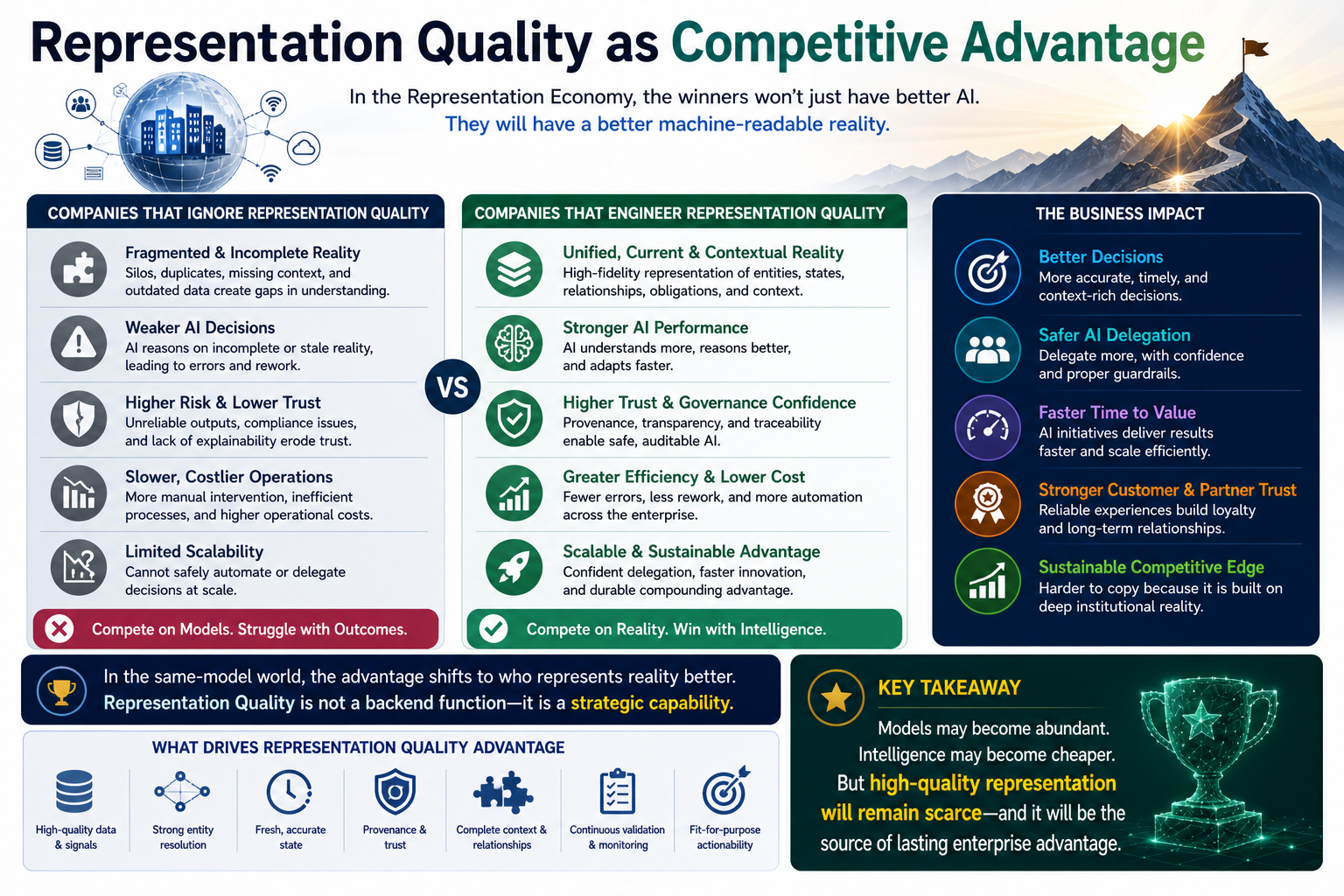
That means advantage will not go only to the organizations with stronger models. It will increasingly go to the organizations with stronger representation discipline.

The winners will know:

  • what must be sensed
  • what must be verified
  • what must be represented as an entity
  • what must be continuously updated
  • what can be delegated
  • what must remain contestable
  • what must always allow recourse

The losers will continue overinvesting in CORE while underinvesting in SENSE and DRIVER.

That is why the future of AI risk is not merely a safety problem, or only a cybersecurity problem.

It is a representation problem.

And once that becomes clear, the battlefield changes.

The most important AI question is no longer just:
Can the model be trusted?

It is now:
Can the institution trust the machine-readable reality on which the model is acting?

That is the true representation attack surface.

That is where the next wave of enterprise advantage will be won.

And that is where the next wave of failure will begin.

Boards must shift from model protection to reality protection : The Representation Attack Surface

Conclusion: Boards must shift from model protection to reality protection

Boards and C-suites have been taught to think about AI risk through the lens of model performance, compliance, and cybersecurity controls around software components. That lens is now too narrow. In the next phase of enterprise AI, institutions will be judged by whether they can protect the integrity of the reality their systems perceive, the authority those systems are granted, and the recourse available when those systems are wrong.

The most resilient organizations will not be those that merely secure models. They will be those that secure machine-readable reality.

That is the deeper lesson of the Representation Economy.

And it may become the defining security doctrine of the AI era.

FAQ

What is the representation attack surface?

The representation attack surface is the set of ways an attacker can manipulate the machine-readable version of reality that an AI system uses to sense, interpret, and act.

How is reality hacking different from model hacking?

Model hacking targets the model itself, including prompts, weights, or outputs. Reality hacking targets the signals, entities, states, context, permissions, and action pathways around the model.

Why does this matter for enterprise AI?

Because enterprise AI systems are connected to documents, tools, APIs, workflows, and permissions. Damage often occurs not when the model answers badly, but when a system acts on distorted reality.

What is a simple example of reality hacking?

A malicious document containing hidden instructions, an identity-resolution error that links data to the wrong person, or stale operational data that causes the system to act on yesterday’s conditions.

How does SENSE–CORE–DRIVER help leaders?

It helps leaders see that AI risk spans three layers: the reality the system can observe, the reasoning it performs, and the governed action it is allowed to take.

What is reality hacking in AI?

Reality hacking refers to manipulating the inputs, signals, or context that AI systems use to understand the world, leading to incorrect or harmful decisions.

Why is model security not enough in AI?

Because AI decisions depend on input data. If the input is manipulated, even a perfectly secure model will produce wrong outputs.

How do deepfakes relate to AI security?

Deepfakes are a form of representation attack—they manipulate perceived reality, not the model itself.

What should boards focus on in AI risk?

Boards should focus on representation integrity, not just model performance or cybersecurity.

Glossary

Representation attack surface
The total set of ways a machine-readable version of reality can be manipulated, corrupted, delayed, or misinterpreted before or during AI decision-making.

Representation Economy
A framework for understanding the AI era as one in which value depends on how well reality is represented, reasoned over, and acted upon.

Reality hacking
The manipulation of machine-readable reality so that AI systems act on false, incomplete, stale, or strategically distorted context.

SENSE
The legibility layer: Signal, ENtity, State, Evolution.

CORE
The cognition layer: Comprehend, Optimize, Realize, Evolve.

DRIVER
The governance layer: Delegation, Representation, Identity, Verification, Execution, Recourse.

Indirect prompt injection
A vulnerability where malicious instructions are embedded inside external content, such as documents, webpages, or emails, and then treated by the AI system as legitimate instructions. (Google Workspace Help)

Excessive agency
A condition where an AI system has enough autonomy or permissions that manipulated or unexpected outputs can cause real-world damage. (OWASP Gen AI Security Project)

Machine-readable reality
The structured version of the world a system can identify, track, reason over, and act on.

References and further reading

For credibility and GEO pickup, add a clean reference section at the end of the article using authoritative sources:

  • NIST AI Risk Management Framework 1.0 and related AI RMF resources for socio-technical AI risk and lifecycle governance. (NIST Publications)
  • MITRE ATLAS and SAFE-AI for adversarial threat mapping and system-level AI defense. (MITRE ATLAS)
  • OWASP Top 10 for LLM Applications and OWASP GenAI Security Project for prompt injection, excessive agency, and agentic application risks. (OWASP Foundation)
  • Google guidance on indirect prompt injections in Gemini and Workspace environments. (Google Workspace Help)
  • Microsoft guidance on defending against indirect prompt injection in Zero Trust architectures. (Google Bug Hunters)

Firms Won’t Be Defined by Employees. They Will Be Defined by Delegation

The old question of the firm is back

For almost a century, business theory has asked a foundational question: Why do firms exist at all?

Ronald Coase’s classic answer was that firms emerge when using markets for every task is too costly. Contracts are expensive to negotiate, monitor, and enforce repeatedly, so companies internalize work instead. In that view, the boundary of the firm is shaped by transaction costs: what is cheaper to manage inside a hierarchy than to coordinate through the market. (Encyclopedia Britannica)

That logic still matters. But AI is changing the terms of the question.

Because the next generation of firms will not simply be built around labor, assets, or contracts. They will be built around something more subtle and more powerful:

delegation.

Not delegation as a soft management skill. Delegation as an operating principle. Delegation as architecture. Delegation as the new boundary of the firm.

That is the shift leaders are beginning to feel but have not yet fully named.

For years, the enterprise AI conversation has centered on models, copilots, productivity, and automation. Stanford HAI’s 2025 AI Index shows AI becoming more embedded in business and society, with adoption, investment, and governance attention continuing to deepen. The World Economic Forum’s recent work similarly argues that the central challenge is no longer whether AI works, but how organizations redesign workflows, operating models, and governance to capture value from it. (Stanford HAI)

That is exactly why the firm must now be re-examined.

Because once intelligence becomes abundant, the scarcer capability is no longer simply deciding. It is deciding who or what gets to decide, act, commit, escalate, or reverse action on behalf of the institution.

That is the real frontier.

Why employees are no longer the deepest definition of the firm

Why employees are no longer the deepest definition of the firm

For most of industrial and corporate history, firms were organized around people.

Who works here?
Who reports to whom?
Who signs?
Who approves?
Who owns the customer?
Who touches the process?

These questions made sense because work was inseparable from human labor and human supervision. Even software systems were mostly passive tools. They stored, displayed, calculated, and routed. They did not independently search for options, negotiate terms, prioritize trade-offs, escalate risk, or trigger downstream action.

AI changes that.

A modern enterprise may now rely on systems that summarize evidence, recommend actions, initiate workflows, negotiate simple terms, detect anomalies, update priorities, and trigger operations across many layers of the business. In some cases, those systems may coordinate with other systems before a human ever intervenes.

The result is a subtle but profound shift: firms are no longer defined only by who they employ. They are increasingly defined by what they can safely authorize across a network of humans, software, agents, partners, and machines.

Think about a bank.

In the old model, the firm boundary was visible in employees, branches, call centers, systems, and outsourced vendors. In the emerging model, the true boundary is defined by delegation:

  • What can an AI system pre-approve?
  • What can a relationship manager override?
  • What can a fraud engine block?
  • What can a partner ecosystem initiate?
  • What must be escalated to a human?
  • What can be reversed later if found to be wrong?

That is a different conception of the firm.

The same applies in healthcare, logistics, retail, insurance, public services, and manufacturing. The firm is becoming less like a container of people and more like a structured delegation system.

In simple terms:


A Delegation Corporation is a firm defined not by its employees, but by what it can safely authorize others—human or machine—to do on its behalf.

The real shift: from labor boundaries to authority boundaries

The real shift: from labor boundaries to authority boundaries

This is the central claim:

In the AI era, the boundary of the firm will be defined less by who works inside it and more by who—or what—it can trust to act on its behalf.

That does not mean employees stop mattering. It means employees are no longer the cleanest map of institutional capability.

A simple example makes this easier to see.

Imagine an airline disruption.

A storm causes cascading delays. One system detects weather risk. Another forecasts gate congestion. Another reprices rebooking options. A customer-facing assistant proposes alternatives. A crew-planning tool reshuffles assignments. A loyalty engine decides what compensation can be offered. A human supervisor steps in only when thresholds are breached.

Where is the “firm” in that moment?

Not just in the employees.
Not just in the software.
Not just in the org chart.

The firm exists in the delegation logic that defines:

  • what each layer is allowed to do,
  • what evidence it must use,
  • what risk thresholds apply,
  • when human judgment is required,
  • and how bad decisions can be unwound.

This is why I believe the next generation of companies will increasingly look like Delegation Corporations.

Their defining advantage will not merely be intelligence. It will be the quality of their delegation design.

What is a Delegation Corporation?

A Delegation Corporation is an organization whose true operating boundary is defined by a structured map of delegated authority—what can be seen, decided, and executed by humans and machines under governed control.

SENSE–CORE–DRIVER explains why this matters

SENSE–CORE–DRIVER explains why this matters

This is where the broader framework becomes essential.

The shift from employee-defined firms to delegation-defined firms only makes sense when we separate three layers.

SENSE: what the firm can see

A firm cannot delegate safely if it cannot represent reality clearly. Signals must be captured, tied to the right entity, converted into state, and updated over time. If the system cannot reliably see the customer, asset, event, risk, or exception, then delegation becomes blind. Stanford HAI’s 2025 work reinforces this broader shift toward responsible deployment and stronger data, governance, and institutional foundations. (Stanford HAI)

CORE: what the firm can decide

Once reality is represented, the firm must interpret, compare, optimize, and reason. This is where most AI investment has gone. Models, copilots, reasoning engines, ranking systems, and policy-aware analytics all live here.

DRIVER: what the firm can authorize to act

This is the most neglected layer. It governs delegation, verification, execution, and recourse. It asks:

  • Who authorized the action?
  • Under what limits?
  • With what identity?
  • Using what representation?
  • With what checks?
  • With what path back if the system was wrong?

That final layer is where the new boundary of the firm actually lives.

Because a firm is not just what it can think.

A firm is what it can legitimately delegate.

Why cheap intelligence makes delegation more important, not less

Why cheap intelligence makes delegation more important, not less

Many leaders assume that as AI gets better, the firm will simply automate more. That is too shallow.

As intelligence gets cheaper and more widely available, the bottleneck shifts.

It is no longer, “Can the system produce an answer?”

It becomes:

  • Can the system be trusted to act?
  • Can that action be bounded?
  • Can responsibility be assigned?
  • Can exceptions be escalated?
  • Can mistakes be corrected?

Recent global management discussions increasingly point in this direction. The World Economic Forum argues that to capture AI’s value, organizations must redesign work, governance, and operating models, not just deploy tools. Its recent workforce and transformation publications make the same point: AI creates value only when institutions deliberately redesign how authority, workflows, and accountability work. (World Economic Forum)

This is the paradox of the AI era:

The cheaper intelligence becomes, the more valuable delegation design becomes.

Why? Because once many firms can access similar models, the real differentiator is not model access. It is how safely, clearly, and reversibly they can distribute decision rights across humans and machines.

In other words, coordination may get cheaper, but delegation becomes more strategic.

The Delegation Corporation

So what is a Delegation Corporation?

It is a firm whose operating boundary is defined not primarily by headcount, but by a structured map of delegated authority.

It knows, explicitly:

  • what machines may decide,
  • what humans must retain,
  • what partners may trigger,
  • what actions require dual control,
  • what can proceed automatically,
  • and what always needs recourse.

A Delegation Corporation treats authority the way earlier firms treated labor allocation or capital budgeting: as a design problem.

This matters because many enterprises today are still delegating by accident.

A chatbot gets too much freedom because nobody defined a boundary.
A risk engine gets overridden informally with no audit trail.
A procurement bot negotiates, but nobody is sure what limits apply.
A benefits system rejects a case that should have been escalated.
A healthcare assistant recommends action outside its appropriate scope.

These are not just technical failures.

They are delegation failures.

The Delegation Corporation avoids this by making authority legible.

It builds:

  • permission layers,
  • role-bound execution rights,
  • action thresholds,
  • approval hierarchies,
  • reversible workflows,
  • exception routing,
  • identity-bound accountability,
  • and recourse paths.

This is not bureaucracy.

It is the new architecture of the firm.

How industries will change

This idea is easier to understand through examples.

Banking

A bank of the AI era will not merely ask, “What can AI detect?” It will ask, “What can AI pre-approve, what can it price, what can it block, what can it escalate, and what must remain under accountable human authority?” The strongest bank may not be the one with the smartest model, but the one with the best delegation architecture.

Healthcare

Hospitals will not survive by automating everything. They will win by designing what triage can be delegated, what monitoring can be delegated, what escalation must happen automatically, and what final judgment must remain human, documented, and reversible.

Logistics

In supply chains, systems may dynamically reroute shipments, allocate inventory, flag disruptions, and rebalance flows. But the real question becomes: what can the network delegate autonomously without creating hidden downstream risk?

Retail and consumer markets

As machine-mediated demand rises, firms will increasingly face not just human customers but agents acting on behalf of customers. Competitive advantage will depend on what the firm can delegate to pricing engines, recommendation layers, negotiation protocols, and loyalty systems—without losing trust or control.

Across all these sectors, the pattern is the same:

The firm boundary is moving from employment structure to authority structure.

What boards and CEOs should ask now

This is not just an architecture issue for technologists.

It is a strategy issue for boards.

The questions leaders must ask are changing.

Not only:

  • How many people do we employ?
  • Which functions are outsourced?
  • Which systems do we own?

But also:

  • What decisions are currently being delegated informally?
  • Which actions should never be automated?
  • Where is delegated authority unclear?
  • What representations does delegated action depend on?
  • What can be reversed, and what cannot?
  • Which decisions create moral, legal, or reputational residue if wrong?
  • Where does responsibility stay human even when intelligence is machine-assisted?

These are not compliance questions at the edge.

They are now central questions of institutional design.

Because the firms that win will not be those that automate the most.

They will be those that delegate the best.

The bigger idea behind the shift

Every era changes what defines a firm.

In the industrial era, firms were defined by physical assets, factories, and labor organization.
In the digital era, firms were defined by software, networks, and platforms.
In the AI era, firms will increasingly be defined by delegation architecture.

That is why this shift matters so much for the Representation Economy.

If SENSE determines what reality the institution can see, and CORE determines how it can reason, then DRIVER determines what the institution can actually become.

The firm of the AI era will not simply be a place where humans work with software.

It will be a governed system that decides:

  • what reality is visible,
  • what judgment is machine-assisted,
  • what authority is delegated,
  • and what recourse exists when action goes wrong.

That is the true redesign underway.

And it leads to a provocative but increasingly useful statement:

Firms won’t be defined by employees. They will be defined by delegation.

Not because people stop mattering.

But because authority, not headcount, will increasingly determine how institutions scale intelligence into action.

Conclusion

The next great firms of the AI era may not be remembered primarily for the models they used.

They may be remembered for something more foundational:

They designed institutions that knew what could be seen, what could be decided, and what could be safely delegated.

That is the deeper shift behind AI.

The question is no longer only how smart the system is.

The question is what the institution is willing—and able—to let the system do on its behalf.

That is where the new boundary of the firm is being drawn.

And in the coming decade, the organizations that understand this earliest will not just deploy AI more effectively.

They will redefine what a firm is.

Glossary

Delegation Corporation
A firm whose true operating boundary is defined by a structured map of delegated authority across humans, software, agents, partners, and machines.

Representation Economy
An economic system in which value increasingly depends on how well institutions represent reality, reason over it, and act on it with legitimacy.

Delegation architecture
The design of rules, permissions, thresholds, workflows, and recourse mechanisms that determine what can be delegated, to whom, and under what limits.

SENSE
The legibility layer: Signal, ENtity, State representation, Evolution.

CORE
The cognition layer: Comprehend context, Optimize decisions, Realize action, Evolve through feedback.

DRIVER
The legitimacy layer: Delegation, Representation, Identity, Verification, Execution, Recourse.

Authority boundary
The practical edge of what a firm is willing and able to authorize on its behalf.

Recourse
The path through which delegated actions can be challenged, reversed, corrected, or appealed.

Institutional legibility
The degree to which an institution can clearly represent its entities, rules, and changing states in a form machines can use responsibly.

FAQ

What is a Delegation Corporation?

A Delegation Corporation is a firm whose operating boundary is defined less by headcount and more by what it can safely authorize others—human or machine—to do on its behalf.

Why are employees no longer the deepest definition of the firm?

Because AI systems increasingly participate in recommendation, workflow initiation, coordination, and action. As that happens, the critical question shifts from who works here to what the institution can safely delegate.

What does this have to do with AI?

AI lowers the cost of cognition and coordination. That makes the design of authority, verification, execution, and recourse more important than before.

How does SENSE–CORE–DRIVER connect to this idea?

SENSE determines what the firm can see. CORE determines what it can decide. DRIVER determines what it can legitimately authorize to act.

Why should boards care?

Because the next decade of competitive advantage may depend less on model selection and more on whether the institution has a safe, clear, defensible delegation architecture.

How is AI changing the boundary of the firm?

AI reduces coordination costs and increases automation, shifting the firm’s boundary from labor structures to authority and delegation structures.

Why is delegation becoming more important in AI?

Because intelligence is becoming abundant, but trust, control, and governed execution remain scarce and valuable.

What is delegation architecture?

It is the system of rules, permissions, workflows, and controls that determine what decisions and actions can be delegated within an organization.

How does this relate to enterprise AI strategy?

The next generation of AI strategy will focus not only on models but on how organizations design safe, scalable delegation across humans and machines.

References and further reading

To ground the argument and improve GEO credibility, add a short references section at the end of the article.

The New Company Stack: The 7 Business Categories That Will Emerge in the Representation Economy

For most of the last two years, the AI conversation has revolved around models, copilots, agents, and productivity. That was inevitable. Most technological waves begin by improving existing tasks before they create entirely new market structures.

The internet first digitized information. Then it moved businesses online. Only later did it produce new company forms such as platforms and marketplaces that unlocked entirely new pools of value. AI now appears to be approaching a similar turning point.
The first order of AI value has been efficiency: faster content creation, quicker analysis, lower costs, and broader automation. The second order is already underway: enterprises are embedding AI into workflows so decisions can be taken faster, risk can be addressed earlier, and operations can adapt with less friction. But the third order is the one that may matter most over the next decade. It is the point at which AI stops being only a capability inside existing firms and starts giving birth to entirely new categories of companies.

That broader transition is increasingly visible in current research and executive discussion. Stanford HAI’s 2025 AI Index describes AI’s growing influence across society, the economy, and governance. The World Economic Forum’s work on AI transformation argues that organizations are moving beyond experimentation toward broader operational reinvention. Harvard Business Review has also argued that AI’s bigger payoff may come not only from task automation but from lowering the coordination burden across people, data, and systems. (Stanford HAI)

This is where a larger idea becomes useful: the Representation Economy.

My argument is simple. The next AI economy will not be won only by firms that possess intelligence. It will be won by firms that can represent reality better, reason over it more responsibly, and act on it with greater legitimacy.

That is the logic of the SENSE–CORE–DRIVER framework.

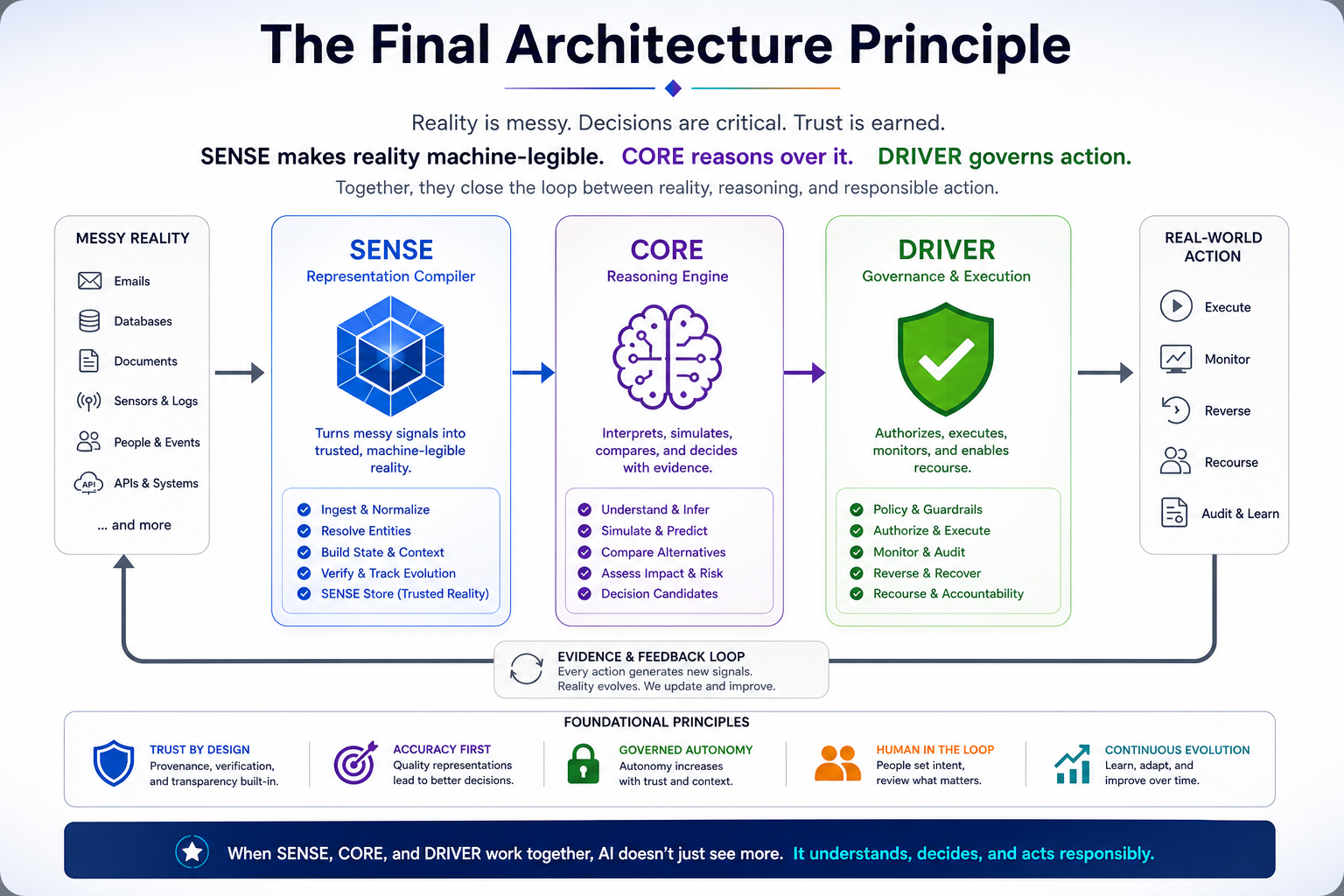
  • SENSE is the legibility layer. It turns messy reality into machine-readable signals, entities, state, and evolution.
  • CORE is the cognition layer. It interprets those representations, optimizes among choices, and generates decisions.
  • DRIVER is the legitimacy layer. It governs authority, verification, execution, and recourse when systems move from advice to action.

Many leaders still behave as if AI advantage comes primarily from the CORE alone. They are overinvesting in cognition and underestimating the strategic importance of SENSE and DRIVER. But if intelligence becomes abundant, cheaper, and widely accessible, then the next durable source of advantage will come from the institutions and firms that make reality easiest for machines to see and safest for machines to act upon.

That is why a new company stack is emerging.

Not one giant category. Seven.

What is the Representation Economy?


The Representation Economy is an emerging economic model where value is created by how effectively systems represent real-world entities, interpret that representation, and act on it with legitimacy.

In simple terms:

The Representation Economy describes a shift where AI creates value not just through intelligence, but through how reality is represented, decisions are governed, and actions are executed.

Representation Infrastructure Companies
  1. Representation Infrastructure Companies

These companies will make the world machine-legible.

Every AI system acts on some representation of reality. A hospital AI acts on the representation of a patient. A logistics AI acts on the representation of a shipment. A bank AI acts on the representation of a borrower, an account, a transaction, and a risk event. If those representations are incomplete, stale, fragmented, or wrong, even the most advanced model will produce fragile outcomes.

Representation infrastructure companies will solve that problem.

They will build the identity systems, state models, entity graphs, linking layers, provenance layers, and real-time context services that make people, objects, events, assets, and environments machine-readable. Think of them as the firms that do for AI what cloud infrastructure did for software and what GPS did for mobility platforms: they create the conditions that make a new class of applications possible.

Consider a farmer applying for credit. Today, that farmer may be visible to a lender only as a static form. In the future, a representation infrastructure firm may combine weather signals, crop cycles, soil conditions, satellite imagery, local market prices, transaction history, and verified land relationships into a living representation of that farmer’s economic state. That does not merely improve a credit model. It creates the foundation for new insurance, lending, advisory, and resilience businesses.

These firms will become essential because the biggest AI bottleneck is not always intelligence. It is poor legibility.

Delegation Infrastructure Companies
  1. Delegation Infrastructure Companies

These companies will answer a question most AI systems still avoid:

Who authorized the machine to act, under what limits, and on whose behalf?

This may become one of the most important company categories of the decade.

As AI moves from answering questions to making recommendations, initiating transactions, and coordinating workflows, institutions need more than intelligence. They need governed delegation. A machine can act safely only when authority is explicit.

Delegation infrastructure companies will build the tools that define machine authority: permission layers, identity-bound delegation, execution thresholds, approval hierarchies, role-based action rights, time-limited autonomy, rollback boundaries, and escalation rules.

Imagine a procurement agent that can negotiate delivery slots but cannot sign contracts above a threshold. Or a healthcare triage system that can escalate cases but cannot finalize treatment. Or a treasury agent that can suggest hedges but cannot execute them without dual approval.

Today, many organizations still treat this as an internal governance issue. It is larger than that. It is an emerging market. Fortune coverage of agentic AI and enterprise redesign reflects this direction: firms are increasingly being forced to rethink how work is designed, where liabilities sit, and how trust, controls, and accountability are maintained as agents gain autonomy. (Fortune)

Delegation infrastructure firms will matter because cheap cognition without controlled authority is not scale. It is exposure.

Judgment Utilities
Judgment Utilities
  1. Judgment Utilities

If intelligence becomes common, what becomes scarce?

Judgment.

A model can generate options. It can simulate outcomes. It can explain its reasoning. But institutions still need ways to determine whether a decision is contextually appropriate, ethically defensible, compliant, and worth acting on.

That creates room for judgment utilities.

These firms will not replace decision-makers. They will provide the validation, evaluation, and escalation layer around decision systems. They may test whether a recommendation fits policy, whether it conflicts with precedent, whether it creates downstream harm, whether uncertainty is too high, or whether a case deserves human review before execution.

Think about a global bank using AI to recommend small-business lending decisions. The model may be statistically strong. But a judgment utility may sit above it, checking for policy conflicts, unusual concentration risk, regulatory mismatch, or missing context. Or consider a hospital system where AI suggests patient prioritization. A judgment utility may assess not only predicted severity but fairness, uncertainty, and recourse implications.

This direction is consistent with broader governance discussions around explainability, lifecycle oversight, and responsible deployment, themes that appear across Stanford HAI’s AI Index and major governance frameworks such as NIST’s AI RMF. (Stanford HAI)

Judgment utilities will matter because in the AI economy, being intelligent will not be enough. Systems must also be defensible.

Recourse Platforms
Recourse Platforms
  1. Recourse Platforms

Every mature economy has mechanisms for correction.

Banks reverse fraudulent transactions. Courts hear appeals. Insurers reopen disputes. Customer service teams fix wrong decisions. The AI economy will need its own recourse architecture.

Recourse platforms will emerge to help institutions challenge, reverse, explain, and remediate machine-mediated decisions. They will provide the path back when systems act on incomplete, outdated, or incorrect representations.

This category will become more important as AI systems move deeper into credit, healthcare, employment, insurance, logistics, education, public services, and enterprise operations. The more action becomes automated, the more institutions will need infrastructure for handling disputes, exceptions, reversals, appeals, and restored trust.

Imagine an AI-driven benefits platform that wrongly flags a family as ineligible because two records were incorrectly linked. The issue is not only that the decision was wrong. The larger question is whether the institution has a fast, fair, traceable way to correct it.

In the AI economy, recourse will not be a side process. It will be part of the value architecture.

That is why recourse platforms deserve to be treated as a distinct category rather than a compliance afterthought. In high-stakes sectors, they will reduce institutional fragility and become a competitive differentiator.

Representation Clearinghouses
  1. Representation Clearinghouses

One of the least discussed problems in AI is that different systems often hold different versions of reality.

One platform thinks a shipment is delayed. Another says it is in transit. One lender sees a borrower as low risk. Another flags hidden volatility. One hospital classifies a patient state one way, while another uses a conflicting ontology.

As AI systems proliferate, conflict between representations will become a structural problem.

Representation clearinghouses will emerge to reconcile these competing versions of reality before action is taken. They will provide trusted mechanisms for cross-enterprise alignment, dispute resolution, normalization, verification, confidence scoring, and context translation.

This matters more than it sounds.

Modern economies already rely on clearing mechanisms where complexity and trust meet. Financial markets have clearinghouses. Supply chains rely on reconciliation systems and standards bodies. The AI economy will need something similar for reality alignment.

A representation clearinghouse may reconcile identity and state across insurers, hospitals, labs, pharmacies, and public systems. Or it may sit inside global trade, aligning data across exporters, customs, logistics networks, and financing providers.

These will not be mere data brokers. They will be institutions for reconciling what the machine world believes is true.

This category will grow because AI systems do not fail only when they are inaccurate. They also fail when they inherit unresolved disagreement about reality.

  1. Machine-Customer Gateways

Much of the digital economy still assumes the customer is a human navigating apps, forms, and websites. That assumption will not hold for long.

Increasingly, customers will be represented by AI agents. These agents will search, compare, filter, negotiate, monitor, and sometimes transact on behalf of the human. When that happens, firms will need a new interface layer: not just human-to-company, but agent-to-company.

That is where machine-customer gateways come in.

These companies will help enterprises expose products, services, terms, trust signals, identity proofs, policy boundaries, and negotiation rules in ways that machine agents can understand and work with. They will become the AI-era equivalent of API gateways, search optimization layers, and commerce infrastructure, but for machine-mediated demand.

Consider travel. A future travel agent acting for a customer may optimize not only price, but baggage policy, visa rules, carbon preferences, child-safety needs, cancellation flexibility, loyalty economics, and airport transfer quality. Companies that remain visible only to human interfaces may become less discoverable in that market. Those that become machine-readable and agent-negotiable will gain advantage.

This is one reason structured trust signals, answer-engine visibility, and machine-readable product information are becoming strategically important. The next market may not be won only by who markets best to people, but by who becomes most legible to the agents representing them.

Institutional AI Operating Systems
  1. Institutional AI Operating Systems

Finally, the most powerful category may be the firms that unify the other six.

An institutional AI operating system will not simply host models or orchestrate workflows. It will combine representation, cognition, delegation, verification, execution, and recourse into a governed stack.

This is the full SENSE–CORE–DRIVER company.

Such firms will help enterprises move from scattered AI pilots to coherent machine-enabled institutions. They will not treat AI as an app or assistant. They will treat it as an operating environment for seeing, deciding, and acting.

This logic is becoming clearer in the broader management conversation. HBR’s argument that AI’s larger payoff may lie in coordination rather than simple automation, along with the World Economic Forum’s emphasis on enterprise transformation, points in the same direction: the next gains come when AI becomes part of the operating fabric of the institution rather than a detached tool. (Harvard Business Review)

A true institutional AI operating system would let a company answer questions such as:

  • What does the machine believe is happening?
  • What representation is that belief based on?
  • What authority does it have to act?
  • What human or policy boundaries constrain it?
  • How can its action be checked, reversed, or challenged?
  • How does the institution learn when reality changes?

That is not just software.

It is institutional infrastructure.

Why this stack matters for boards

Boards do not need to memorize all seven categories. But they do need to understand the larger pattern.

The AI era will create value in three waves.

The first wave improves existing work.
The second wave redesigns workflows and decision systems.
The third wave creates new firms whose core product is not “AI” in the generic sense, but one of these structural functions: representation, delegation, judgment, recourse, clearing, machine-customer exchange, or institutional operating control.

That is the real significance of the Representation Economy. It shifts the conversation from “How do we use AI?” to “What new market structures become possible when intelligence is abundant but trusted representation remains scarce?”

Existing companies do not need to become all seven categories. But they do need to understand which one is approaching their sector first.

A bank may need delegation infrastructure and judgment utilities.
A logistics network may need representation infrastructure and clearinghouses.
A retailer may need machine-customer gateways.
A healthcare ecosystem may eventually need all seven in some form.

The winners of the next decade will not simply buy better models.

They will redesign themselves around legibility, authority, and trustworthy action.

Representation Economy

Conclusion: the bigger idea behind the stack

Every technological era creates its own stack.

The industrial era created the manufacturing stack.
The internet era created the digital and platform stack.
The AI era will create the representation stack.

That is why I believe the phrase Representation Economy matters. It names a shift that many leaders can already sense but cannot yet clearly describe. AI is not only changing how firms think. It is changing what must be made visible, how decisions become legitimate, and which new institutions must exist for machine-mediated markets to work.

The next great firms of the AI era may not be remembered as the ones that built the smartest models.

They may be remembered as the ones that made reality legible, delegation governable, and trust economically operable.

That is the new company stack.

And we are only at the beginning.

Glossary

Representation Economy
An economic paradigm in which value increasingly depends on how well reality is represented, interpreted, and acted on by machines and institutions.

SENSE
The legibility layer that turns reality into machine-readable signals, entities, state, and evolution.

CORE
The cognition layer that interprets representations, optimizes among choices, and generates decisions.

DRIVER
The legitimacy layer that governs delegation, verification, execution, and recourse when systems move from advice to action.

Representation Infrastructure
The systems that make people, assets, events, and environments machine-legible through identity, state, linkage, provenance, and context.

Delegation Infrastructure
The tools and rules that define what a machine is authorized to do, under what limits, and on whose behalf.

Judgment Utilities
Systems or firms that provide policy, risk, fairness, context, and escalation checks around AI-generated recommendations and decisions.

Recourse Platforms
Infrastructure for explaining, reversing, challenging, and correcting machine-mediated decisions.

Representation Clearinghouses
Institutions or systems that reconcile conflicting representations of reality across organizations before action is taken.

Machine-Customer Gateways
The interface layer through which companies become discoverable, understandable, and negotiable to AI agents acting for customers.

Institutional AI Operating System
A governed stack that unifies representation, cognition, delegation, execution, and recourse across an institution.

Institutional Legibility
The degree to which an organization can represent its critical entities, states, relationships, and changes clearly enough for machines to reason and act responsibly.

FAQ

What is the Representation Economy?

It is the idea that future AI value will depend not only on intelligence, but on how well reality is represented, decisions are governed, and actions are made trustworthy.

Why are new company categories emerging in AI?

Because as intelligence becomes more widely available, the scarcer and more valuable layers will be representation, delegation, judgment, recourse, and cross-system trust.

What is the biggest mistake companies are making today?

Many firms are overinvesting in AI cognition and underinvesting in legibility and legitimacy.

Why will representation infrastructure matter so much?

Because AI systems can only act well on the reality they can see. If reality is poorly represented, even powerful models will produce fragile outcomes.

Why should boards care?

Because the next decade of AI advantage may come less from model selection and more from choosing which structural layer their institution must own, buy, or partner around.

Are these seven categories predictions or certainties?

They are strategic categories: a way of naming the structural company types likely to emerge as AI moves from assistance to institutional action.

References and further reading

For supporting context and credibility, link to a short references section at the end of your article.

Explore the Architecture of the AI Economy

This article is part of a broader research series exploring how institutions are being redesigned for the age of artificial intelligence. Together, these essays examine the structural foundations of the emerging AI economy — from signal infrastructure and representation systems to decision architectures and enterprise operating models.

If you want to explore the deeper framework behind these ideas, the following essays provide additional perspectives:

Together, these essays outline a central thesis:

The future will belong to institutions that can sense reality, represent it clearly, reason about it intelligently, and act through governed machine systems.

This is why the architecture of the AI era can be understood through three foundational layers:

SENSE → CORE → DRIVER

Where:

  • SENSE makes reality legible
  • CORE transforms signals into reasoning
  • DRIVER ensures that machine action remains accountable, governed, and institutionally legitimate

Signal infrastructure forms the first and most foundational layer of that architecture.

AI Economy Research Series — by Raktim Singh

The Representation Utility Stack: Why AI’s Next Competitive Advantage Will Come from Interoperable Reality

Cloud made compute portable. APIs made software interoperable. The next strategic advantage will come from making reality itself legible, portable, and governable across institutions.

Standfirst

Enterprise AI will not scale on model power alone. It will scale on whether institutions can represent reality accurately, share that representation across systems, and act on it with legitimacy. That is the logic of the Representation Utility Stack.

Introduction: The next AI battle will not be fought at the model layer

For the last few years, the AI conversation has revolved around models.

Which model is bigger?
Which model reasons better?
Which one is faster, cheaper, multimodal, or more agentic?

These are important questions. But they are no longer the most important ones.

The deeper question is this:

What does the system think is real?

That is the question boards, CEOs, CTOs, regulators, and enterprise architects should now be asking with far greater urgency.

Because AI does not act on the world directly. It acts on a representation of the world. If that representation is incomplete, outdated, fragmented, inconsistent, or trapped inside disconnected systems, even the most sophisticated model will make poor decisions, trigger weak automation, and produce confident but costly mistakes.

In other words, the failure often begins before the model begins.

That is why the next infrastructure battle in AI will not be won by intelligence alone. It will be won by those who can build, maintain, exchange, and govern machine-readable reality.

This is the foundation of what I call the Representation Utility Stack.

It is the next infrastructure layer of enterprise AI: the layer that makes reality legible to machines, portable across institutions, and safe enough to act upon. And it may become one of the defining strategic battlegrounds of the next decade.

What is the Representation Utility Stack?


The Representation Utility Stack is a three-layer AI infrastructure model consisting of representation utilities, representation APIs, and governed execution. It enables institutions to make reality machine-readable, interoperable across systems, and actionable with legitimacy.

In simple terms:

The Representation Utility Stack is the infrastructure that allows AI systems to understand reality, share it across systems, and act on it responsibly.

Why the current enterprise AI conversation is still too shallow

Why the current enterprise AI conversation is still too shallow

Most enterprises still think of AI as a reasoning layer placed on top of existing systems. That view is understandable. It is also incomplete.

In practice, enterprise AI depends on much more than model quality. Long before an answer appears on a screen, three deeper questions must already have been resolved:

  • Was the right signal captured from the real world?
  • Was that signal attached to the right entity?
  • Can the current state of that entity move across systems without losing meaning?

If the answer to any of these is weak, then intelligence alone will not rescue the system.

This is why so many enterprise AI efforts feel impressive in demos but fragile in production. The model may be strong. The surrounding reality layer is not.

The next strategic shift, then, is not from one model to a better model. It is from model-centric AI to representation-centric AI.

That is the shift the market is still underestimating.

The real enterprise problem: intelligence without representation

The real enterprise problem: intelligence without representation

Consider a simple example.

A customer changes address. One system updates it. Another still holds the old one. A fraud engine sees two locations and raises suspicion. A logistics system routes to the wrong place. A collections system continues to send notices to the old address. The chatbot says the profile is updated. The backend says it is not.

Nothing in this example requires a weak model. The reasoning engine may be excellent.

The real problem is that the institution does not have one shared, portable, governed representation of reality.

The same pattern appears everywhere.

In healthcare, a hospital, a lab, and an insurer may each represent the same patient differently. The model may summarize beautifully, but if the system cannot confidently determine whether the records refer to the same person, the intelligence becomes dangerous theater.

In supply chains, a product may be identified one way by the manufacturer, another by the distributor, and a third by the retailer. If identity, status, and movement are not represented consistently, AI does not optimize the chain. It amplifies confusion.

In banking, the same small business can appear as a customer, merchant, borrower, counterparty, or compliance subject in different systems. If those representations do not align, then even good AI will produce uneven service, false risk signals, and poor decisions.

This is why the next AI infrastructure layer is not simply about better reasoning.

It is about interoperable reality.

From software interoperability to reality interoperability

From software interoperability to reality interoperability

The previous generation of digital infrastructure solved a different problem.

Cloud made compute portable.
APIs made software services connectable.
Data platforms made storage scalable.

But AI introduces a harder requirement.

Systems must not merely exchange messages.
They must exchange meaningful state about the world.

Two systems can both say “high-priority customer” and still mean different things. Two agents can both use the word “delivered” and still refer to different events. Two institutions can both say “verified identity” and still rely on different evidence, thresholds, and update rules.

This is the real frontier.

The next infrastructure race will not be about who exposes the best model API alone. It will be about who can make entities, state, relationships, provenance, and change interoperable across boundaries.

That is a bigger challenge than software interoperability because it is not just technical. It is semantic, operational, institutional, and increasingly strategic.

It requires systems to preserve meaning, not just transmit fields.

What is the Representation Utility Stack?

What is the Representation Utility Stack?

The Representation Utility Stack is the infrastructure stack that turns reality into a reusable, portable, and governable asset for AI systems.

It has three layers:

  1. Representation Utilities
  2. Representation APIs
  3. Governed Execution

Taken together, these layers define how institutions make reality machine-legible, move it across boundaries, and act on it responsibly.

Layer 1: Representation Utilities

Representation utilities are the systems that maintain trusted machine-readable reality.

They do not merely store data. They continuously answer questions such as:

Who is this?
What is its current state?
What changed?
How confident are we?
Who supplied this update?
What conflicts remain unresolved?

A representation utility is closer to a utility than a dashboard. It provides persistent legibility.

It may be sector-specific:

  • an identity utility
  • a merchant utility
  • an asset-state utility
  • a patient-state utility
  • a supply-chain utility
  • a climate-observation utility

The essential idea is simple: before AI can reason well, reality must be represented well.

In my framework, this is the SENSE layer:

  • Signal — detect the relevant traces from the world
  • ENtity — bind those traces to the right actor, object, location, or asset
  • State representation — build a usable current model of reality
  • Evolution — keep that model current as the world changes

This is where reality becomes machine-legible.

A simple example

Think about a shipment in transit.

A good representation utility does not just say, “Shipment #127 is delayed.”
It can represent:

  • which shipment
  • which customer
  • which warehouse
  • what caused the delay
  • what the last trusted update was
  • whether the state is disputed
  • whether downstream commitments need to change

That is not just data storage. That is usable reality.

Layer 2: Representation APIs

Once reality is represented well, it still needs to move.

That is the job of representation APIs.

A representation API does not merely expose raw fields. It exposes structured reality in a way that other systems, institutions, agents, and workflows can consume without losing meaning.

It carries more than data. It carries:

  • identity
  • state
  • provenance
  • confidence
  • update logic
  • context
  • conflict status

This is the bridge between “we have a good internal model of reality” and “multiple systems can coordinate safely.”

Imagine a bank, an insurer, a hospital, and a regulator all needing to reason about the same event. Without interoperable representation, each builds its own partial version. With representation APIs, they do not need one giant shared database. They need shared ways to describe, update, interpret, verify, and challenge reality.

Representation APIs are not just technical connectors.

They are meaning connectors.

Why this matters

The future will not belong merely to firms with interoperable models. It will belong to firms that can make reality itself exchangeable.

Cloud made compute portable.
APIs made software interoperable.
The next layer will make reality portable.

That is the strategic leap.

Layer 3: Governed Execution

The final layer is where represented reality becomes action.

A loan is approved.
A shipment is rerouted.
A claim is denied.
A machine is shut down.
A patient is escalated.
A supplier is blocked.

This is where many AI discussions remain too shallow. They assume that once systems understand enough, they can act.

But action is not only a reasoning problem. It is an authority problem.

Who delegated this action?
Which representation was used?
What verification was performed?
What happens if the representation was wrong?
Where does recourse begin?

This is the DRIVER layer:

  • Delegation
  • Representation
  • Identity
  • Verification
  • Execution
  • Recourse

This is the legitimacy layer of the AI economy.

A system that reasons well but acts without legitimacy is not enterprise-ready. It is simply risky automation.

Why this stack matters now

Because AI is moving beyond experimentation.

The important question is no longer whether a model can generate impressive output. The real question is whether enterprises can build repeatable, trustworthy systems that operate across fragmented, changing, multi-party environments.

That is exactly where the Representation Utility Stack becomes necessary.

A model can summarize a shipping problem.
A stack can tell you which shipment, which policy exception, which system last updated the state, whether the state is contested, and whether the action taken can be appealed.

A model can draft a claims response.
A stack can verify whether the claim belongs to the right person, whether the event matches the policy, whether contradictory evidence exists, and whether the denial can be explained.

A model can suggest a treatment path.
A stack can ensure that the patient, record, lab values, medication context, and authorization workflow actually align.

That difference is not cosmetic.

It is the difference between intelligence that sounds good and intelligence that can be trusted.

The new company category that will emerge

The new company category that will emerge

This shift will create a new class of firms.

Not just model companies.
Not just SaaS companies.
Not just data brokers.

Representation utility companies.

These firms will specialize in making a domain legible, portable, and governable for machines.

Some will focus on identity-rich sectors.
Others will focus on dynamic, state-heavy sectors.
Some will build sector-specific ontology layers and semantic models.
Others will build cross-enterprise state synchronization, provenance infrastructure, conflict resolution systems, or recourse services.

This may become one of the most important but least understood company categories of the next decade.

The winners will not simply answer questions better.

They will make reality usable across institutions.

Why existing companies should care

This is not just an opportunity for new entrants. It is a survival issue for incumbents.

Many organizations today overinvest in CORE and underinvest in SENSE and DRIVER.

They buy models.
They run pilots.
They build copilots.
They talk about agentic workflows.

But if their reality layer is fragmented and their action layer is weakly governed, they are building intelligence on top of representation debt.

That debt does not stay hidden forever.

It eventually appears as:

  • conflicting outputs
  • brittle automation
  • poor personalization
  • false escalation
  • weak auditability
  • customer distrust
  • compliance exposure
  • rising human correction costs

The irony is that many firms will think they have an AI problem when they actually have a representation architecture problem.

What leaders should ask now

Boards, CEOs, CTOs, and AI leaders need a new set of questions.

Not just:

Which model should we use?

But also:

  • Which entities must our institution represent well?
  • How often do their states change?
  • Where are identities fragmented?
  • Which representations are authoritative?
  • How does state move across systems?
  • What meaning is lost during that movement?
  • What evidence supports machine action?
  • Where does recourse begin when the system is wrong?

That is the beginning of a real AI strategy.

The firms that win will treat machine-readable reality as infrastructure. They will build representation utilities for their most critical domains. They will expose them through interoperable APIs. They will connect them to governed execution. And they will realize that the future advantage is not merely better intelligence.

It is better institutional legibility.

from software infrastructure to reality infrastructure " Representation Utility Stack
from software infrastructure to reality infrastructure ” Representation Utility Stack

The bigger shift: from software infrastructure to reality infrastructure

We are entering a world in which reality itself must be designed for machine use.

That does not mean reducing the world to data. It means building the infrastructure through which institutions can represent, exchange, and act on reality responsibly.

This is why the next infrastructure layer will be built on interoperable reality.

Because AI does not fail only when models are weak.
It fails when reality is poorly represented.
It fails when state cannot travel.
It fails when meanings diverge across systems.
It fails when action outruns legitimacy.

The next great stack, then, will not be just a software stack or an AI stack.

It will be a Representation Utility Stack.

And the institutions that understand this first will not merely deploy AI better. They will help define the architecture of the Representation Economy itself.

Conclusion

The most important AI companies of the next decade may not be the ones that generate the most fluent output.

They may be the ones that make reality more legible, more portable, and more governable.

That is the deeper strategic shift now underway.

The future of enterprise AI will not be decided by model sophistication alone. It will be decided by whether institutions can build systems that know what is real, share that reality across boundaries, and act on it with legitimacy.

That is why the Representation Utility Stack matters.

It is not just another architecture pattern. It is a new way of understanding where durable advantage in AI will come from.

And for boards and business leaders, that may be the most important shift to grasp now: in the AI economy, the winners will not simply process reality better.

They will define how reality becomes usable.

Frequently Asked Questions (FAQ)

What is the Representation Utility Stack?

It is a three-layer infrastructure model for AI built on representation utilities, representation APIs, and governed execution.

Why is this different from a normal AI stack?

Because it focuses not only on intelligence, but on how reality is represented, moved across systems, and acted on responsibly.

Why are models not enough?

Because models reason over what the system believes is true. If that belief is weak, stale, or fragmented, better reasoning alone does not solve the problem.

What is a representation utility?

It is a system that keeps an accurate, current, and usable version of reality available for machines.

What is a representation API?

It is a way to move structured reality across systems without losing meaning, context, or trust.

Why should boards care?

Because this is not merely a technical design issue. It is becoming a strategic source of advantage, risk control, and long-term competitiveness in the AI economy.

Glossary

Representation Utility Stack

A three-layer AI infrastructure model consisting of representation utilities, representation APIs, and governed execution, enabling institutions to make reality machine-readable, interoperable across systems, and actionable with legitimacy.

Representation Economy

An emerging economic paradigm where value is created not just by data or intelligence, but by how accurately reality is represented, how effectively it is understood, and how responsibly actions are taken based on it.

Interoperable Reality

The ability of multiple systems, organizations, or AI agents to share and operate on a consistent, structured, and meaningful representation of real-world entities, states, and events without loss of context.

Machine-Readable Reality

A structured and continuously updated digital representation of real-world entities, relationships, and states that AI systems can interpret, reason over, and act upon.

Representation Utility

A system that maintains trusted, current, and structured representations of reality, including identity, state, change history, and confidence, enabling AI systems to operate reliably.

Representation API

An interface that allows systems to exchange structured representations of reality, preserving identity, context, provenance, and meaning across systems.

Representation Debt

The hidden cost created when organizations build AI systems on top of fragmented, outdated, or inconsistent representations of reality, leading to unreliable outcomes and poor scalability.

Institutional Legibility

The degree to which an organization can clearly represent its entities, operations, relationships, and states in a way that machines can reliably understand and act upon.

Semantic Interoperability

The ability of systems to exchange information with shared meaning, not just shared formats, ensuring consistent interpretation across contexts.

Digital Twin

A dynamic, virtual representation of a real-world entity or system that is continuously updated with real-time data to support monitoring, simulation, and decision-making.

SENSE (AI Legibility Layer)

The layer where reality becomes machine-readable:

  • Signal
  • ENtity
  • State representation
  • Evolution

CORE (AI Cognition Layer)

The reasoning layer where systems:

  • Comprehend context
  • Optimize decisions
  • Realize action
  • Evolve through feedback

DRIVER (AI Execution & Legitimacy Layer)

The governance layer that ensures actions are valid:

  • Delegation
  • Representation
  • Identity
  • Verification
  • Execution
  • Recourse

Governed Execution

The process by which AI systems take action with clear authority, verifiable representation, and defined recourse mechanisms, ensuring accountability.

Representation Architecture

The design of systems that define how reality is captured, structured, shared, and acted upon across an organization.

Representation Gap

The disconnect between how reality exists and how it is represented in systems, often leading to incorrect or suboptimal AI decisions.

References and Further Reading

AI GOVERNANCE & TRUST

AI STRATEGY & ENTERPRISE TRANSFORMATION

Explore the Architecture of the AI Economy

This article is part of a broader research series exploring how institutions are being redesigned for the age of artificial intelligence. Together, these essays examine the structural foundations of the emerging AI economy — from signal infrastructure and representation systems to decision architectures and enterprise operating models.

If you want to explore the deeper framework behind these ideas, the following essays provide additional perspectives:

Together, these essays outline a central thesis:

The future will belong to institutions that can sense reality, represent it clearly, reason about it intelligently, and act through governed machine systems.

This is why the architecture of the AI era can be understood through three foundational layers:

SENSE → CORE → DRIVER

Where:

  • SENSE makes reality legible
  • CORE transforms signals into reasoning
  • DRIVER ensures that machine action remains accountable, governed, and institutionally legitimate

Signal infrastructure forms the first and most foundational layer of that architecture.

AI Economy Research Series — by Raktim Singh

Why Intelligence Alone Cannot Run Enterprises: The Missing AI Execution Layer

AI execution layer in enterprises: 

Artificial intelligence has become dramatically better at answering questions, generating content, writing code, summarizing documents, and assisting with decisions. Stanford’s 2025 AI Index shows continued progress in model capability, deployment, and agentic systems that can plan and execute multistep tasks. At the same time, enterprises are moving beyond experimentation and trying to turn AI into repeatable operating value. (Stanford HAI)

But this is exactly where a deeper problem appears.

Enterprises are discovering that intelligence, by itself, is not enough. A model may produce a brilliant answer. An agent may complete a task. A system may sound confident, fast, and fluent. Yet none of that means it truly understands the enterprise in which it is acting. None of that guarantees that it is acting on the right customer, the right contract, the right policy, the right asset, or the right moment in time. That is the central weakness hiding behind today’s AI excitement.

This is why so many AI conversations still feel incomplete. We keep discussing model quality, benchmarks, token costs, agent frameworks, and copilots. Those things matter. But they describe only the middle of the system. They do not explain how reality becomes legible to the machine before reasoning begins, or how decisions become accountable action after reasoning ends. That missing architecture is what many enterprises are actually struggling with.

The next phase of AI will not be won only by those with more intelligence. It will be won by those who can connect intelligence to reality and then turn it into governed execution. That is the missing layer in AI.

The real weakness of AI is not always in the model. It is often at the edges.

The real weakness of AI is not always in the model. It is often at the edges.

Most of the world’s AI excitement sits in what I call the CORE layer: reasoning, generation, planning, optimization, and decision support. This is where large language models, multimodal systems, copilots, and agents operate. It is also the part of the stack that has advanced the fastest and attracted the most attention. (Hai Production)

But enterprise systems do not fail only in the middle. They often fail at the edges.

Before a model does anything useful, the enterprise must convert reality into something the system can work with.

After the model produces an output, the enterprise must make sure that output becomes an action that is authorized, traceable, safe, and reversible. When those edge conditions are weak, even highly capable AI systems disappoint in production. McKinsey’s 2025 global survey shows that while AI use is widespread, most organizations are still struggling to scale impact, and workflow redesign, validation processes, operating models, and data foundations are strong predictors of value realization. (McKinsey & Company)

Take a simple banking example. An AI system helps process a loan restructuring request. The model is excellent. It summarizes documents accurately and suggests the next best action. But the hard questions begin immediately. Is this the correct customer entity, or are there two similar names across systems?

Does the AI know that a recent missed payment relates to a disputed transaction rather than financial distress? Is it using the latest policy, or an outdated one from an old repository? Can it see that the customer is already in another exception workflow? Who authorized the final action? What evidence was used? What happens if the action turns out to be wrong? None of these questions are really about raw intelligence. They are about representation and execution.

The model may be smart. The system may still be unsafe.

What enterprises actually need first is legible reality

What enterprises actually need first is legible reality

This is where the first missing layer appears. I call it SENSE:

S — Signal

What events, changes, and traces are being captured.

EN — Entity

Which person, account, machine, asset, document, or organization those signals belong to.

S — State representation

What structured picture of the current condition the system has built.

E — Evolution

How that state changes over time as new information arrives.

SENSE is the layer where reality becomes machine-legible. (raktimsingh.com)

This matters because enterprises are not made of prompts. They are made of entities, relationships, permissions, obligations, constraints, histories, exceptions, and changing states. A customer is not just a row in a CRM. A shipment is not just a line item in a logistics table. A patient is not just a document bundle. A supplier is not just a vendor ID. Each exists across systems, roles, policies, and time.

When AI fails in enterprises, a common reason is that the system is reasoning over incomplete, fragmented, stale, or poorly connected representations of reality. It may have data, but not enough structure. It may have documents, but not enough meaning. It may have signals, but not stable identity. It may have a snapshot, but not evolution. The error often begins long before the model generates a response.

This is why modern governance frameworks increasingly emphasize context, lifecycle, traceability, robustness, accountability, and trustworthiness rather than model performance alone. NIST’s AI Risk Management Framework explicitly focuses on context, potential impacts, and trustworthiness across design, development, deployment, and use. The OECD AI Principles emphasize trustworthy AI that respects human rights, democratic values, transparency, explainability, robustness, and accountability. (NIST Publications)

In other words, the global policy and governance conversation is already moving toward a broader view of AI systems. The question is slowly shifting from “How smart is the model?” to “What exactly is this system representing, and how safely is it acting?” (NIST)

CORE still matters. It is just no longer enough.

The second layer is CORE:

C — Comprehend context

O — Optimize decisions

R — Realize action plans

E — Evolve through feedback

CORE is the cognition layer. It is where AI reasons. This is where models shine. They classify, summarize, compare, recommend, generate, and increasingly orchestrate multistep tasks. This layer will continue to improve, become cheaper, more multimodal, and more widely available. That is precisely why it is becoming less defensible on its own. (Hai Production)

If everyone has access to strong reasoning models, intelligence alone cannot remain the full source of enterprise advantage. The advantage shifts to a harder question: who has built the best bridge between intelligence and institutional reality?

That bridge requires context the model can trust and action pathways the institution can govern. Put differently, the future of enterprise AI is not just about having a smart brain. It is about connecting that brain to a faithful map of reality and a legitimate system of action.

This is where many boardrooms are still underestimating the problem. They are buying intelligence without redesigning representation.

They are piloting agents without strengthening the execution architecture that sits around them. They are investing in the middle of the system while neglecting the layers that determine whether the system can be trusted in real operations. (McKinsey & Company)

The final enterprise problem is not answer quality. It is execution legitimacy.

The final enterprise problem is not answer quality. It is execution legitimacy.

This leads to the third layer: DRIVER.

D — Delegation

Who authorized the system to act.

R — Representation

What model of reality the system relied on.

I — Identity

Which entity was affected.

V — Verification

How the action is checked.

E — Execution

How the action is actually carried out.

R — Recourse

What happens if the system is wrong.

DRIVER is the legitimacy layer. (raktimsingh.com)

This is the layer enterprises cannot afford to ignore as AI moves from advice to action. A chatbot can be forgiven for being occasionally vague. An enterprise execution system cannot.

If an AI agent updates a contract status, triggers a payment workflow, changes a recommendation, escalates a case, or blocks a transaction, the institution must be able to answer some basic questions: Who allowed this? On what basis? Against which entity? Under what policy? With what evidence? With what rollback path?

These are not theoretical issues. The EU AI Act establishes a risk-based legal framework for AI and is explicitly aimed at trustworthy AI, safety, and fundamental rights. The OECD’s updated AI Principles and new due-diligence guidance push in the same direction. The World Economic Forum’s recent work on AI agents also stresses structured evaluation and governance as autonomy increases. (Digital Strategy Europe)

In simple terms, once AI starts acting, the question is no longer only “Is the output useful?” It becomes “Is this action legitimate?” That is a much bigger question, and it is one that today’s enterprise AI market still under-addresses.

Why the world now needs an AI execution layer

Why the world now needs an AI execution layer

This is why the world needs a new enterprise capability: not just model access, not just copilots, not just agent builders, but something more foundational.

Enterprises now need an AI execution layer.

This layer must do five things well. It must organize enterprise reality into machine-usable form. It must allow intelligence to operate inside that representation rather than on disconnected fragments. It must orchestrate actions across systems, workflows, tools, and human checkpoints. It must apply governance before, during, and after execution. And it must generate evidence: what the system saw, why it acted, how the action was checked, and what happens if it must be reversed.

That is the capability many enterprises are beginning to need even if they do not yet have a stable category name for it. The first era of enterprise software digitized records. The second connected workflows. The third brought intelligence into workflows. The fourth will require governed execution across intelligent systems. That fourth era cannot be run by intelligence alone.

Three simple examples that make the issue real

Example 1: The wrong person, correctly processed

Consider a healthcare claims workflow. An AI agent reads documents, checks policy conditions, and recommends approval. The reasoning may be excellent. But suppose the system linked the medical event to the wrong patient record because of an identity mismatch across two legacy systems. The claim may now be correctly processed according to the machine’s internal logic, and still be wrong in the real world. The error did not begin in reasoning. It began in representation.

Example 2: The right prediction, made on a stale map

Consider manufacturing. An AI system predicts that a machine should be taken offline for preventive maintenance. The analysis is smart. But the asset twin is stale. A component was replaced last week and the state representation was never updated. The intelligence may be correct relative to an outdated model of reality, and wrong in the plant itself. Again, the problem is not only CORE. It is weak SENSE.

Example 3: The valid recommendation, executed without legitimacy

Consider customer service. An AI agent escalates an issue and offers compensation under a policy that changed yesterday. The model is fluent. The workflow is automated. The action still lacks legitimacy because the execution path is no longer aligned with current policy. That is not just a reasoning error. It is a DRIVER failure.

In all three cases, better reasoning alone does not solve the problem. What is needed is better SENSE and stronger DRIVER around the model.

The market is overinvesting in CORE

The market is overinvesting in CORE

This is the broader strategic point. The AI market is heavily focused on CORE because CORE is visible. We can demo it. We can benchmark it. We can compare models. We can watch it write, speak, code, and reason. SENSE and DRIVER are less glamorous.

They look like infrastructure, identity, knowledge architecture, observability, governance, policy, and control. But that is exactly why they are becoming more important. (McKinsey & Company)

McKinsey’s 2025 findings point in the same direction. The move from pilot to scaled impact is not mainly a model problem. It is an operating model, workflow redesign, data, validation, and governance problem. High performers are more likely to redesign workflows, establish processes for human validation, and build the organizational foundations required to capture value at scale. (McKinsey & Company)

The winners in enterprise AI will not simply be those who deploy stronger models. They will be those who build better systems of representation, orchestration, verification, and recourse. The real contest is shifting from a model race to an architecture race.

This is bigger than enterprise architecture. It is the beginning of the Representation Economy.

This is bigger than enterprise architecture. It is the beginning of the Representation Economy.

For years, we were told that data is the new oil. But raw accumulation of data does not automatically create value. What creates value is whether reality is represented well enough for systems to understand it, act on it, and improve through feedback. That is the starting point of what I call the Representation Economy. (raktimsingh.com)

In this economy, competitive advantage comes from three things working together: how faithfully reality is represented, how intelligently that representation is interpreted, and how responsibly that interpretation becomes action. That is SENSE, CORE, and DRIVER. Seen this way, AI is not the whole system. It is only the middle layer. The enterprise challenge is no longer just building intelligence. It is building the missing layer that allows intelligence to operate inside reality and act with legitimacy. (raktimsingh.com)

This is also why enterprise AI is becoming an institutional design question, not just a technology question. Once AI can act, organizations need to decide what must be sensed, how it must be represented, who may delegate action, how exceptions are handled, and what recourse exists when the system fails. That is not a prompt-engineering problem. It is an architecture-and-governance problem. (NIST Publications)

What leadership teams should ask now

Most leadership teams still ask: What model should we use? What agent framework should we adopt? How fast can we scale copilots?

These are useful questions, but they are no longer enough.

The more important questions are: How does our AI system represent customers, assets, obligations, transactions, and state changes? How does it know that its map of reality is current? How are permissions, policies, and delegation encoded into execution? How do we verify decisions before action becomes irreversible? What recourse exists when the system is wrong?

The future belongs to organizations that can answer these questions well.

intelligence alone cannot run enterprises : AI execution layer in enterprises

Conclusion: intelligence alone cannot run enterprises

Enterprises do not run on intelligence alone. They run on legible reality, governed action, and trusted execution.

That is why the missing layer in AI matters so much. It explains why smart systems still fail in production. It explains why the next enterprise battleground will not be only better models, but better representation and better execution architecture.

It explains why SENSE, CORE, and DRIVER belong together. And it explains why the institutions that win the AI era will be the ones that can sense reality, reason over it, and act with legitimacy. (raktimsingh.com)

The market is still obsessed with intelligence. Boards should be thinking about architecture. Because the deepest failures in AI often begin before the model starts or after the model finishes. The opportunity, therefore, is not just to build smarter machines.

It is to build institutions that can represent reality clearly and act on it responsibly. That is the real operating challenge of enterprise AI. And that is where the next generation of value will be created. (NIST Publications)

FAQ

1. What is an AI execution layer?

The AI execution layer is the system that converts AI-generated insights into real-world actions within enterprise systems, with governance, accountability, and orchestration.

2. Why does AI fail in enterprises?

AI often fails not because of poor intelligence, but because enterprises lack systems to execute decisions reliably and responsibly.

3. What is the difference between AI intelligence and execution?

Intelligence generates answers; execution ensures those answers are acted upon correctly within real-world constraints.

4. What is execution legitimacy in AI?

Execution legitimacy ensures that AI actions are authorized, traceable, governed, and reversible.

5. Why is governance critical in enterprise AI?

Because enterprises operate in regulated environments where actions—not just insights—must be auditable and accountable.

What is the missing layer in AI?

The missing layer is the enterprise capability that connects representation, reasoning, and governed execution. It sits between raw enterprise reality and model outputs, and ensures that AI can act on the right entities, under the right policies, with evidence, verification, and recourse. (NIST Publications)

Why is intelligence alone not enough for enterprise AI?

Because enterprises do not run only on answers. They run on identity, policy, permissions, workflows, changing state, and accountability. A strong model can still fail if the system has a poor representation of reality or weak execution governance.

What does SENSE mean in enterprise AI?

SENSE is the legibility layer: Signal, ENtity, State representation, and Evolution. It is how an enterprise turns real-world activity into machine-usable reality. (raktimsingh.com)

What does CORE mean in enterprise AI?

CORE is the cognition layer: Comprehend context, Optimize decisions, Realize action plans, and Evolve through feedback. It is where AI reasoning happens. (raktimsingh.com)

What does DRIVER mean in enterprise AI?

DRIVER is the legitimacy layer: Delegation, Representation, Identity, Verification, Execution, and Recourse. It determines whether an AI action is authorized, traceable, governed, and reversible. (raktimsingh.com)

Why are enterprises struggling to scale AI?

Because scaling AI is not only a model problem. McKinsey’s 2025 survey shows that workflow redesign, governance, validation processes, operating models, data, and technology foundations are central to achieving value at scale. (McKinsey & Company)

How does the EU AI Act relate to this topic?

The EU AI Act reinforces a risk-based, trustworthy-AI approach. It highlights that organizations must think beyond model performance and address governance, safety, and accountability across use cases. (Digital Strategy Europe)

Why is governance becoming more important with AI agents?

Because agents can plan and execute multistep actions. As autonomy rises, evaluation, oversight, boundaries, and recourse become more important than in simple assistant-style systems. (World Economic Forum Reports)

What is the Representation Economy?

It is the idea that value in the AI era will increasingly flow to those who can represent reality faithfully, reason over it intelligently, and act on it responsibly. (raktimsingh.com)

What should boards ask about enterprise AI now?

They should ask how reality is represented, how current that representation is, how authority is delegated, how actions are verified, and what recourse exists when systems are wrong.

Glossary

Agentic AI
AI systems that can plan and execute multistep tasks with some degree of autonomy. (McKinsey & Company)

AI execution layer
The enterprise capability that connects representation, reasoning, orchestration, governance, and evidence so AI can operate safely in real workflows.

CORE
The cognition layer in the SENSE–CORE–DRIVER framework, where AI reasons, plans, and optimizes. (raktimsingh.com)

Delegation
The question of who authorized a system to act and within what boundaries. (raktimsingh.com)

DRIVER
The legitimacy layer in the SENSE–CORE–DRIVER framework: Delegation, Representation, Identity, Verification, Execution, Recourse. (raktimsingh.com)

Entity resolution
The process of identifying which real-world person, asset, account, or object a signal belongs to across fragmented systems.

Evolution
The changing state of an entity over time as new signals arrive. (raktimsingh.com)

Execution legitimacy
Whether an AI-enabled action is authorized, policy-aligned, traceable, and accountable.

Machine-legible reality
A structured representation of enterprise reality that systems can interpret and act on.

Recourse
The mechanism for correction, rollback, contestability, or remedy when an AI-driven action is wrong. (raktimsingh.com)

Representation Economy
The emerging economic logic in which advantage comes from representing reality well enough for machines to reason and act responsibly. (raktimsingh.com)

SENSE
The legibility layer in the SENSE–CORE–DRIVER framework: Signal, ENtity, State representation, Evolution. (raktimsingh.com)

State representation
The structured picture a system builds of the current condition of an entity. (raktimsingh.com)

Trustworthy AI
AI that is designed and deployed with attention to reliability, accountability, transparency, safety, and human rights. (NIST)

Enterprise AI Architecture → The structure connecting data, models, and execution systems

Agentic Systems → AI systems capable of autonomous decision-making and action

References and further reading

For external references, use:

Explore the Architecture of the AI Economy

This article is part of a broader research series exploring how institutions are being redesigned for the age of artificial intelligence. Together, these essays examine the structural foundations of the emerging AI economy — from signal infrastructure and representation systems to decision architectures and enterprise operating models.

If you want to explore the deeper framework behind these ideas, the following essays provide additional perspectives:

Together, these essays outline a central thesis:

The future will belong to institutions that can sense reality, represent it clearly, reason about it intelligently, and act through governed machine systems.

This is why the architecture of the AI era can be understood through three foundational layers:

SENSE → CORE → DRIVER

Where:

  • SENSE makes reality legible
  • CORE transforms signals into reasoning
  • DRIVER ensures that machine action remains accountable, governed, and institutionally legitimate

Signal infrastructure forms the first and most foundational layer of that architecture.

AI Economy Research Series — by Raktim Singh

Representation Forensics: The Missing Layer of AI—Why the Future Will Be Decided by What Systems Thought Reality Was

Representation Forensics

In the next phase of AI, the biggest failures will not begin with bad outputs. They will begin with bad representations of reality. The institutions that learn to reconstruct, challenge, and govern those representations will define the next era of trust.

Representation Forensics is the discipline of reconstructing what an AI system believed reality looked like at the moment it acted.

Introduction: We are still investigating AI failures too late

Most discussions about AI failure still begin at the wrong moment.

They begin with the output. A loan was denied. A face was misidentified. A patient was flagged incorrectly. A customer was treated as suspicious. A worker was scored unfairly. A vehicle made the wrong decision.

But in many of these cases, the real failure did not begin when the system produced an answer. It began earlier, when the system formed an incorrect picture of reality.

That is the next big issue in the AI economy.

As AI systems become more deeply embedded in finance, healthcare, retail, logistics, public services, mobility, and enterprise operations, a new institutional capability will become essential: the ability to reconstruct what a system believed the world looked like at the moment it acted. That is what I call representation forensics.

Representation forensics is not ordinary debugging. It is not just explainability. It is not a compliance checklist. It is the disciplined reconstruction of a machine’s working view of reality: what signals it received, which entity it believed it was dealing with, what state it inferred, how that state changed over time, what decision logic it used, and what authority chain allowed action to be taken. This matters because modern AI governance frameworks increasingly emphasize trustworthiness, accountability, transparency, documentation, and lifecycle risk management, even though most organizations still lack a clear way to reconstruct the machine’s underlying view of reality after harm occurs. (NIST)

In the Representation Economy, this will not remain a niche discipline. It will become a major industry.

Because in the AI era, the most important question after harm will not simply be, “What answer did the system give?” It will be, “What reality did the system think it was acting on?” NIST’s AI Risk Management Framework is built around trustworthiness, governance, documentation, and context-sensitive risk management, which points directly toward this missing capability. (NIST Publications)

What is Representation Forensics?

Representation Forensics is the process of reconstructing what an AI system believed reality looked like when it made or influenced a decision—across signals, identity, state, reasoning, and execution.

The old economy investigated transactions. The new one will investigate representations

Every era has its own dominant forensic logic.

Industrial systems investigated physical failure.
Financial systems investigated transactions, approvals, and records.
Digital systems investigated logs, access trails, and security events.

AI systems require something deeper.

Why? Because AI systems do not merely process instructions. They operate on representations. They ingest signals from forms, sensors, images, language, histories, clicks, documents, locations, device metadata, workflows, and proxy indicators. Then they convert those signals into a working model of the world.

That working model can go wrong in several ways. The system may connect the wrong signals to the wrong entity. It may assume a stale state. It may inherit corrupted or incomplete context. It may compress a complex situation into an oversimplified label. Or it may act on a technically coherent internal representation that was authorized under the wrong delegation conditions.

This is why many AI failures cannot be understood by looking only at the final output. The output is often just the visible endpoint of a much earlier representational error.

That is the core insight behind representation forensics: AI failures are often failures of machine-perceived reality before they become failures of reasoning.

This is also why traditional explainability, while useful, is not enough. Explainability usually asks why a model produced a result. Representation forensics asks an earlier and more important question: did the system have the right reality in view at all? NIST’s AI RMF and the OECD AI Principles both reinforce this broader frame by emphasizing context, accountability, transparency, and downstream impacts rather than narrow model performance alone. (NIST Publications)

A simple example: the wrong person, correctly processed

A simple example: the wrong person, correctly processed

Imagine a retail security system flags a customer as high risk because it matches that person to a watchlist entry. Store staff then act on the alert. The chain may look technically correct. The system detected a face, found a match, triggered a workflow, and executed a policy.

But what if the match itself was wrong?

Then the system did not fail merely because it produced the wrong outcome. It failed because it represented the wrong person as the relevant entity. The full action chain may have been internally coherent and still deeply unjust.

This is not hypothetical. NIST’s face recognition evaluations have documented demographic differentials in false positive and false negative rates, and the FTC’s 2023 action against Rite Aid said the retailer’s facial recognition deployment produced thousands of false-positive matches while lacking reasonable safeguards. (NIST Pages)

Representation forensics would ask:

  • What signals entered the system?
  • Which identity was inferred?
  • With what confidence?
  • Against what database?
  • Under what thresholds?
  • What human verification occurred?
  • What happened after the alert?
  • What evidence exists that the system’s representation of the person was challenged, corrected, or ignored?

That is a much richer investigation than asking only whether the model produced a false alert.

Another simple example: the stale patient

Now imagine a healthcare system that uses AI to prioritize patients for follow-up. A patient appears low risk and is not escalated quickly enough. Later, clinicians discover that the patient’s condition had changed, but the system had not incorporated recent test results, symptom changes, or medication interactions.

Again, the problem is not only that the model produced a weak recommendation. The deeper problem is that the system acted on an outdated representation of the patient’s state.

In healthcare, this distinction is critical. The FDA’s 2025 draft guidance on AI-enabled device software functions emphasizes lifecycle management, marketing submission recommendations, and a comprehensive approach to safety and effectiveness across the total product lifecycle. That signals a broader regulatory expectation: the system must be understood not just as a model, but as a changing socio-technical system shaped by documentation, data flows, updates, and human interaction. (U.S. Food and Drug Administration)

Representation forensics would reconstruct what data about the patient the system saw, what it did not see, how current the state representation was, whether critical changes were missing, what workflow converted that representation into action, and whether meaningful human intervention remained possible.

This is where trustworthy AI will increasingly be won or lost.

Why this matters more as AI moves from advice to action

Why this matters more as AI moves from advice to action

The need for representation forensics grows as AI systems move from generating content to shaping decisions and triggering actions.

A chatbot that gives a flawed summary is one type of problem.
A system that silently classifies a person, assigns risk, initiates surveillance, changes priority, adjusts price, blocks access, or routes an operational action is another.

Once AI becomes part of a governed execution chain, the cost of misrepresentation rises sharply.

That is why policy and regulatory frameworks around the world are moving toward documentation, transparency, accountability, record-keeping, human oversight, and post-deployment monitoring. The OECD AI Principles were updated in 2024. The EU AI Act became Regulation (EU) 2024/1689. NIST’s AI RMF continues to shape practical risk governance. These developments all point in the same direction: societies increasingly expect evidence that can explain how AI systems were built, governed, and used in consequential settings. (OECD)

Representation forensics sits exactly in that space.

SENSE, CORE, DRIVER: the forensic map of AI reality

SENSE, CORE, DRIVER: the forensic map of AI reality

My broader argument about the Representation Economy is that AI systems should be understood through three layers.

SENSE: where reality becomes machine-legible

SENSE includes:

  • Signal: detecting events, traces, and changes from the world
  • ENtity: attaching those signals to a persistent person, object, location, asset, or organization
  • State representation: modeling the current condition of that entity
  • Evolution: updating that state as new signals arrive

CORE: where reasoning occurs

CORE includes:

  • Comprehend context
  • Optimize decisions
  • Realize action plans
  • Evolve through feedback

DRIVER: where execution becomes governed and legitimate

DRIVER includes:

  • Delegation
  • Representation basis
  • Identity
  • Verification
  • Execution
  • Recourse

Representation forensics makes this architecture investigable.

When an incident happens, the forensic questions map directly to these layers.

At the SENSE layer

Did the system receive the right signals?
Did it attach them to the right entity?
Did it build an accurate state representation?
Did it update that state as reality changed?

At the CORE layer

How did the system interpret context?
Which model, rule, or workflow shaped its judgment?
What alternatives were ignored?
Did the system convert uncertainty into false confidence?

At the DRIVER layer

Who authorized the action?
What verification was required?
Did the action affect the correct entity?
Was there a record of override, contestability, or recourse?

This matters because many organizations still treat AI incidents as if they are only model incidents. They are often not. They are representational incidents, reasoning incidents, and execution incidents at once.

Representation forensics gives institutions a language for separating those failures instead of collapsing them into a vague statement that “the AI got it wrong.”

Global signals are already visible

You can already see pieces of this future emerging across sectors.

In autonomous driving, regulators are not only asking whether a vehicle crashed. NHTSA’s Standing General Order requires reporting of certain crashes involving automated driving systems and Level 2 ADAS so the agency can obtain timely and transparent notification of real-world incidents and investigate safety concerns further. That is an early example of a regime built around reconstructable evidence in AI-assisted operation. (NHTSA)

In biometric systems, agencies are focusing on false matches, logging, human review, and safeguards because the harm often begins with the system’s mistaken representation of identity. (Federal Trade Commission)

In medical AI, regulators are pushing lifecycle thinking because the relevant question is no longer just whether a model performed well during evaluation, but how the system behaves as data, environments, users, and contexts change over time. (U.S. Food and Drug Administration)

The pattern is becoming clear: in the AI economy, trustworthy systems will increasingly be those whose view of reality can be reconstructed after the fact.

A new industry will emerge

A new industry will emerge

Representation forensics will not remain a minor capability inside legal, compliance, or data science teams. It will become a market.

New organizations will emerge to do at least five kinds of work.

  1. Incident reconstruction

These firms will rebuild what the system believed at each step, using logs, prompts, sensor traces, database lookups, identity mappings, workflow records, and human override trails.

  1. Representation audit infrastructure

These tools will continuously test whether the machine’s representation of people, assets, locations, transactions, and states remains accurate, fresh, and contestable.

  1. Delegation and authority forensics

These services will verify whether the system had legitimate authorization to act as it did, and whether the boundary between recommendation and execution was properly governed.

  1. Machine evidence chains

These platforms will preserve tamper-resistant records showing what the system saw, inferred, recommended, and triggered.

  1. Representation dispute resolution

As AI becomes more embedded in markets and public systems, people and institutions will need mechanisms to challenge how they were represented, not just the final decision they received.

This is where a new economic layer appears. Just as cybersecurity created markets for detection, response, forensics, and resilience, AI will create markets for representation reconstruction, evidence, and contestability. That inference follows directly from the way regulators and standards bodies are already emphasizing record-keeping, post-market monitoring, lifecycle governance, and transparent incident investigation. (Digital Strategy)

The next major AI industry may not be another model company. It may be the industry that tells us what the model believed reality to be before it acted.

Why this is bigger than compliance

Why this is bigger than compliance

It would be a mistake to treat representation forensics as just another burden imposed by regulators.

It is more strategic than that.

In the Representation Economy, competitive advantage will increasingly belong to organizations that can prove three things:

  • that they represented reality well,
  • that they reasoned over it responsibly,
  • and that they acted with governed legitimacy.

That is not just risk reduction. It is trust infrastructure.

A bank that can reconstruct why an AI-driven fraud workflow treated a customer as suspicious will be more trustworthy than one that cannot.
A hospital that can show how a clinical AI system formed and updated its patient view will be more credible than one that cannot.
A logistics company that can reconstruct how an autonomous system interpreted an operational environment will be more resilient than one that cannot.

In other words, representation forensics will become part of institutional strength.

Why boards should care now

Boardrooms do not need another generic conversation about responsible AI. They need a sharper question.

If a system materially affects revenue, access, pricing, safety, reputation, customer trust, or legal exposure, can the organization reconstruct:

  • what the system saw,
  • what it inferred,
  • what it ignored,
  • what authority it relied on,
  • and why it acted when it did?

If the answer is no, then the organization is not yet ready for AI at scale.

The next generation of institutional advantage will not come only from deploying AI faster. It will come from governing AI more legibly than competitors do.

That is the strategic importance of representation forensics. It transforms AI governance from a policy abstraction into operational evidence.

The deeper philosophical shift

For years, the AI conversation has been dominated by intelligence: bigger models, better benchmarks, faster inference, more capable agents.

But the next phase of the AI economy will be shaped by a harder truth:

Intelligence is not enough if the system is acting on a distorted map of reality.

A system can reason brilliantly over a bad representation and still cause serious harm.
A system can optimize perfectly against the wrong entity.
A system can execute flawlessly on stale state.
A system can sound intelligent while remaining structurally blind.

That is why the future belongs not only to those who build intelligence, but to those who can reconstruct and govern representation.

This is the real significance of representation forensics. It pushes the AI debate beyond performance and into legibility, evidence, accountability, and institutional memory.

In the AI economy, value will not flow to those who compute better.
It will flow to those who represent reality better—and can prove it.

the next question every board should ask : Representation Forensics

Conclusion: the next question every board should ask

As AI becomes more operational, boards, regulators, executives, and public institutions should start asking a new question:

If this system harms someone tomorrow, can we reconstruct what it thought reality was today?

If the answer is no, then the system may be more powerful than the institution that deployed it.

In the AI economy, what matters is not only what a system can compute. It is whether reality was represented faithfully enough to justify action, and whether that representation can be examined when things go wrong.

That is why representation forensics matters.

The future of AI trust will not be built only on smarter systems. It will be built on systems whose understanding of reality can be inspected, challenged, and reconstructed.

A new industry is coming.

Not just to build intelligence.
But to investigate it after it acts.

Glossary

Representation Forensics

The disciplined reconstruction of what an AI system believed reality looked like at the moment it acted.

Machine-perceived reality

The internal view of the world formed by an AI system from signals, data, models, and context.

SENSE

The layer where reality becomes machine-legible through signals, entities, state representation, and evolution.

CORE

The reasoning layer where the system interprets context, optimizes decisions, and plans action.

DRIVER

The governance and execution layer that determines delegation, verification, legitimacy, execution, and recourse.

Entity binding

The act of linking incoming signals to the correct person, object, asset, place, or organization.

State representation

The structured model of an entity’s current condition at a given point in time.

Representation drift

The gradual divergence between the system’s internal representation and real-world reality as conditions change.

Delegation chain

The sequence of authority by which an AI system is permitted to recommend, trigger, or execute action.

Machine evidence chain

A preserved trail of records showing what the system saw, inferred, recommended, and triggered.

Contestability

The ability of affected people or institutions to challenge how a system represented them or treated them.

AI incident reconstruction

The process of rebuilding what happened inside an AI-enabled workflow after a harmful or contested outcome.

Representation dispute resolution

A future institutional mechanism for contesting not just decisions, but the underlying representations that produced them.

Trust infrastructure

The set of systems, evidence trails, governance practices, and operational capabilities that make institutional AI trustworthy.

FAQ

What is representation forensics in AI?

Representation forensics is the process of reconstructing what an AI system believed reality looked like when it made or influenced a decision.

How is representation forensics different from explainability?

Explainability usually asks why a model produced a result. Representation forensics asks whether the system had the right reality in view before it reasoned at all.

Why does representation forensics matter?

Because many AI failures begin with misidentification, stale context, incomplete state, or bad delegation long before the final output appears.

Is representation forensics only for regulated industries?

No. It matters everywhere AI influences consequential decisions, including finance, healthcare, retail, logistics, public services, cybersecurity, and enterprise operations.

Why will boards care about this?

Because representation failures create strategic, legal, operational, and reputational risk. Boards need evidence, not just promises, when AI is embedded in real workflows.

Does this replace responsible AI programs?

No. It strengthens them. Representation forensics gives responsible AI programs an operational way to investigate harm and prove governance.

What industries will need this first?

Finance, healthcare, mobility, insurance, retail surveillance, public administration, and any sector where AI affects safety, access, money, or rights.

What kinds of companies could emerge from this?

Incident reconstruction firms, representation audit platforms, delegation-forensics providers, machine evidence chain providers, and representation dispute-resolution services.

How does this connect to the Representation Economy?

The Representation Economy is built on how well reality is made legible, understood, and acted upon. Representation forensics becomes essential when that chain breaks.

What is the link to SENSE–CORE–DRIVER?

Representation forensics investigates all three layers: what the system sensed, how it reasoned, and how it was authorized to act.

Is this mainly about legal defense?

No. It is also about trust, resilience, market credibility, and institutional maturity.

Why is this important for generated engines and AI search?

Because answer engines increasingly reward original concepts, crisp definitions, structured reasoning, and authoritative topical clusters. Representation Forensics is a definable category with strong conceptual clarity.

References and further reading

For a references section at the end of the article, I would use a short, high-trust list like this:

  • NIST, Artificial Intelligence Risk Management Framework (AI RMF 1.0) — foundational guidance on trustworthy AI, governance, and lifecycle risk management. (NIST Publications)
  • OECD, AI Principles — international principles on trustworthy AI, updated in 2024. (OECD)
  • European Union, AI Act — Regulation (EU) 2024/1689 establishing the EU’s legal framework for AI. (Digital Strategy)
  • NIST, Face Recognition Vendor Test / Demographic Differentials — evidence on performance variation and false-match risks in face recognition systems. (NIST Pages)
  • FTC, Rite Aid facial recognition action — a significant case on false positives and lack of deployment safeguards. (Federal Trade Commission)
  • FDA, AI-Enabled Device Software Functions: Lifecycle Management and Marketing Submission Recommendations — guidance showing how medical AI governance is shifting toward lifecycle discipline and documentation. (U.S. Food and Drug Administration)
  • NHTSA, Standing General Order on Crash Reporting — evidence of emerging expectations for incident reporting and reconstructable evidence in automated driving systems. (NHTSA)

Explore the Architecture of the AI Economy

This article is part of a broader research series exploring how institutions are being redesigned for the age of artificial intelligence. Together, these essays examine the structural foundations of the emerging AI economy — from signal infrastructure and representation systems to decision architectures and enterprise operating models.

If you want to explore the deeper framework behind these ideas, the following essays provide additional perspectives:

Together, these essays outline a central thesis:

The future will belong to institutions that can sense reality, represent it clearly, reason about it intelligently, and act through governed machine systems.

This is why the architecture of the AI era can be understood through three foundational layers:

SENSE → CORE → DRIVER

Where:

  • SENSE makes reality legible
  • CORE transforms signals into reasoning
  • DRIVER ensures that machine action remains accountable, governed, and institutionally legitimate

Signal infrastructure forms the first and most foundational layer of that architecture.

AI Economy Research Series — by Raktim Singh

Representation Monopolies: Why the AI Economy Will Be Controlled by Those Who Define Reality

Representation Monopolies:

The biggest monopoly in AI will not come from who builds the smartest model.
It will come from who defines reality itself.

Because in the AI economy, power does not flow to intelligence alone—it flows to those who decide what is visible, structured, and actionable.

In the industrial age, monopoly power came from controlling production.

In the digital age, it came from controlling platforms.

In the AI age, it may come from controlling representation.

That is the shift many leaders still underestimate.

Most conversations about AI concentration still revolve around the visible bottlenecks: chips, cloud, data centers, frontier models, and capital.

Those are real sources of power. OECD research shows that cloud markets remain highly concentrated, with Amazon and Microsoft together reaching up to 80% share in some major OECD economies, while the top three cloud providers collectively hold more than 60% of the global market.

OECD also notes that these hyperscalers occupy privileged positions in AI because many model developers depend on them for training and deployment infrastructure. At the same time, Stanford’s 2025 AI Index reports that U.S.-based institutions produced 40 notable AI models in 2024, versus 15 in China and just three in Europe, showing that frontier model production remains geographically concentrated even as competition intensifies. (OECD)

But the deepest monopoly in the AI economy may not be a compute monopoly or even a model monopoly.

It may be a representation monopoly.

That is the power to become the default system through which reality is made visible, structured, classified, trusted, and made actionable for machines.

This matters because AI does not act directly on the world. It acts on a representation of the world. If a company becomes the dominant layer through which customers, suppliers, workers, products, assets, permissions, risks, and behaviors are represented, it gains a new form of structural power. It does not merely sell software. It begins to shape what can be seen, what can be compared, what can be optimized, and eventually what can be decided.

That is why the next battle in AI is not only over intelligence.

It is over who gets to define reality for everyone else.

The real source of monopoly power is shifting

Traditional monopolies controlled scarce goods. Digital monopolies controlled distribution, attention, and network effects. AI monopolies may control something even more foundational: the machine-readable map of the world.

Think about a navigation app. At first, it feels like a convenience. It helps you get from one place to another. But once millions of people depend on it, it is no longer just showing roads. It is deciding which roads matter, which shops are visible, which routes count as efficient, which traffic signals deserve weight, and which destinations deserve to surface first.

A road that is not mapped properly may as well not exist for the machine.

Now extend that logic to enterprise AI, finance, healthcare, logistics, education, manufacturing, insurance, and government.

The company that becomes the dominant layer for customer identity, workflow visibility, product ontology, supplier trust, policy interpretation, exception handling, audit evidence, and execution boundaries does not simply participate in the AI economy. It starts to govern its terms.

This is exactly where the Representation Economy becomes important.

In the SENSE–CORE–DRIVER framework, AI success depends on far more than model quality.

SENSE is the layer where reality becomes machine-legible: signals are detected, attached to entities, represented as state, and updated over time.

CORE is the cognition layer where systems interpret, reason, optimize, and learn.

DRIVER is the legitimacy layer where action is authorized, verified, executed, and made reversible.

The monopoly risk appears when one firm becomes the default provider of the representational foundations inside SENSE and the control logic inside DRIVER. At that point, it is no longer just offering intelligence. It is shaping the field on which intelligence operates.

Why AI markets naturally drift toward concentration

Why AI markets naturally drift toward concentration

AI markets look dynamic on the surface. OECD research finds more than 1,000 foundation models from nearly 100 providers across different modalities. It also finds that model prices have dropped quickly as supply has increased. Stanford’s AI Index similarly reports that open-weight models sharply narrowed the performance gap with closed models in 2024, while inference costs for GPT-3.5-level capability fell by more than 280 times between late 2022 and late 2024. (OECD)

That dynamism is real.

But it can also be misleading.

Competition at the model layer does not automatically prevent concentration in the deeper layers that matter most. In fact, cheaper models may accelerate concentration elsewhere. When raw intelligence becomes more abundant and more affordable, strategic value shifts to the layers that organize and govern its use: identity, memory, workflows, policy, permissions, connectors, runtime controls, trust systems, and switching costs.

This is how representation monopolies form.

A firm does not need to own the best model forever. It only needs to become the system in which everyone else must describe themselves.

Once that happens, switching becomes painful.

Not because another model is unavailable.

But because the institution itself is now encoded inside one representational architecture.

A hospital may be able to replace one large language model with another. But can it easily replace the layer that encodes patient identity, consent history, triage status, diagnostic context, escalation logic, and clinical evidence?

A bank may switch copilots. But can it replace the system that encodes authority flows, fraud states, customer risk categories, transaction context, and auditability requirements?

A manufacturer may pilot multiple AI agents. But can it replace the representational layer that defines machine states, maintenance history, supplier quality, part lineage, and operational exceptions?

That is the real lock-in.

Monopoly by definition, not just by market share

Monopoly by definition, not just by market share

Most monopoly discussions focus on customers, revenue, or distribution. Representation monopolies require a broader lens.

The first sign is not only scale. It is definition power.

When one company’s schema becomes the default schema, its categories begin to look like reality itself. Its object model becomes the language of the market. Its identity model becomes the gatekeeper of participation. Its confidence scores start shaping trust. Its exception rules determine what counts as normal and abnormal. Its logging standards decide what evidence exists after a machine acts.

This is more than software dependence.

It is ontological dependence.

A useful analogy is credit scoring. For decades, the most powerful institutions in lending were not always those with the largest physical footprints. They were often the ones whose standards shaped who could be seen as creditworthy in the first place. In the AI economy, more sectors will experience a similar shift. The firms that decide how the machine sees you may gain structural power over whether the machine serves you properly, prices you fairly, or routes opportunity toward you at all.

That is why representation monopolies may become more consequential than classic platform monopolies.

Platforms mediate transactions.

Representation systems mediate recognition itself.

The vertical stack makes concentration even stronger

The vertical stack makes concentration even stronger

Representation monopolies become especially powerful when firms are vertically integrated across the AI stack.

OECD’s work on AI infrastructure explains that hyperscalers already benefit from large economies of scale and from their control over cloud capacity, networking, and deployment channels. It also notes that AI developers often enter strategic relationships with cloud providers for training and deployment.

In the UK, the Competition and Markets Authority concluded in 2025 that competition in cloud infrastructure services is not working well, citing concentration, barriers to entry, and frictions that reduce switching and multi-cloud flexibility. UN Trade and Development has also warned that generative AI is reinforcing concentration because large technology firms dominate key parts of the value chain, including cloud, compute, and strategic partnerships. (OECD)

Now imagine what happens when the same firms also control:

The model marketplace

They decide which models are easiest to access, compare, and fine-tune.

The runtime layer

They control how agents are deployed, monitored, and governed in production.

The identity and access layer

They define who or what is allowed to act.

The memory and workflow layer

They shape how context is retained, retrieved, and reused.

The policy and safety layer

They influence what the system can refuse, escalate, or silently reshape.

The enterprise connector layer

They become the bridge between AI and the systems where institutional reality already lives.

At that point, the customer is not just buying infrastructure.

The customer is entering a governed reality.

That reality may be efficient. It may reduce friction. It may even accelerate enterprise value. But it also becomes increasingly difficult to exit because the vendor is no longer supplying a tool. It is supplying the environment in which machine-legible existence takes place.

Why these monopolies are hard to see

Why these monopolies are hard to see

Representation monopolies rarely arrive as monopolies.

They arrive as convenience.

A vendor says: let us unify your customer data, workflow metadata, retrieval layer, policy engine, agent identities, approval chains, memory, and audit trails. This sounds practical. It simplifies implementation. It makes AI easier to deploy. It reduces the mess.

And in the early phases, it genuinely creates value.

The problem begins later.

Over time, the vendor’s ontology hardens. The organization starts making decisions according to what the system can represent, rather than what reality actually requires. Edge cases get forced into predefined categories. Non-standard actors become invisible. New business models become expensive to express. Suppliers, partners, and internal teams must adapt themselves to the incumbent’s representational logic in order to participate.

That is the hidden danger.

Institutions slowly begin adapting themselves to the representation layer, instead of adapting the representation layer to reality.

That is when monopoly power deepens.

The system no longer reflects the world.

The world starts bending to the system.

The geopolitical dimension: dependence on someone else’s map of reality

This issue is not only enterprise-level. It is geopolitical.

UNCTAD has warned that digital markets are increasingly concentrated and that generative AI may widen existing divides as large technology firms consolidate their lead across the value chain. Its 2025 Technology and Innovation Report also highlights that AI development remains highly concentrated and that the private sector dominates most frontier AI research and model production.

Meanwhile, the EU AI Act places explicit obligations on general-purpose AI model providers, including technical documentation, copyright compliance, and public summaries of training data content, with additional expectations for models that present systemic risk. These rules reflect a growing recognition that general-purpose AI providers are not ordinary software companies. They are systemic actors. (UN Trade and Development (UNCTAD))

But sovereignty in the AI era is not only about hosting models locally.

It is about controlling the representational layer through which a country, sector, or enterprise becomes machine-readable.

If a nation depends on foreign firms to define agricultural identity, industrial ontologies, health record structure, supply chain traceability, public service eligibility, and machine-action permissions, then it does not fully control its digital future, even if local applications sit on top.

In that sense, representation monopolies may become the next strategic dependency after cloud dependency.

What this means for boards and C-suites

Boards should stop asking only, “Which model should we use?”

That is now too small a question.

The better questions are:

Who defines our entities?

Who decides what counts as a customer, supplier, product, risk event, or exception?

Who defines our state?

Who determines how reality is structured, updated, and represented over time?

Who owns our machine memory?

Who controls the institutional context on which future decisions depend?

Who sets confidence and exception thresholds?

Who decides when the system acts, escalates, hesitates, or overrides?

Who owns the evidence trail?

When machines act, who controls the logs, the decision traces, and the proof?

How portable is our representation layer?

Could we migrate without losing institutional meaning?

Can our SENSE and DRIVER survive a vendor switch?

Or have we quietly outsourced the foundations of our own institutional sovereignty?

These are not technical questions.

They are strategy questions.

They are governance questions.

They are future-of-the-firm questions.

What smart institutions should do now

The answer is not to reject large AI ecosystems. That would be unrealistic.

The answer is to prevent convenience from becoming representational capture.

Build portable ontologies

Do not bury institutional meaning inside vendor-specific schemas.

Separate model choice from representation choice

A flexible model layer matters, but a sovereign representation layer matters more.

Treat identity, memory, policy, and evidence as strategic assets

These are not implementation details. They are enduring sources of power.

Demand exportability beyond raw data

Schemas, states, permissions, audit logs, and decision evidence must also be portable.

Map which layers of SENSE and DRIVER are too strategic to outsource

Not every layer deserves the same level of control.

Preserve the ability to challenge machine categories

Especially in high-stakes settings, institutions must be able to revise the system’s assumptions about reality.

The organizations that do this will not only reduce lock-in.

They will preserve the ability to evolve.

Why this matters to the future of the AI economy

Why this matters to the future of the AI economy

The most powerful companies of the AI age may not be the ones with the smartest chatbot, the biggest model, or the flashiest interface.

They may be the ones that become the accepted layer through which everyone else must be seen.

That is the real warning.

When one company defines your customer, your supplier, your employee, your asset, your risk, your compliance state, your exception path, and your machine-action boundary, it does not merely support your institution.

It starts to shape its possibilities.

That is why representation monopolies deserve far more attention from boards, regulators, founders, and policymakers.

The central question of the next AI economy is not only:

Who owns the model?

It is:

Who owns the map of reality on which all models depend?

And once that map becomes concentrated, monopoly stops looking like a market-share problem.

It becomes a civilization problem.

Representation Monopolies: the next monopoly will not merely sell intelligence. It will define legibility.

Conclusion: the next monopoly will not merely sell intelligence. It will define legibility.

The AI economy is often described as a race for bigger models, cheaper inference, and broader deployment.

That view is incomplete.

The deeper battle is over who gets to define the categories through which institutions become visible to machines. As intelligence becomes cheaper, the scarce asset shifts upward: not just computation, but representation; not just answers, but legibility; not just automation, but the authority to define what the system believes is real.

That is why representation monopolies matter.

They sit beneath the surface of AI excitement, but above the level where real institutional power accumulates. They shape switching costs, governance, sovereignty, trust, and competitive advantage. They can quietly turn convenience into dependence and dependence into structural control.

The institutions that win in the AI era will not be those that simply consume intelligence fastest. They will be those that understand which parts of reality they must continue to represent for themselves.

Because in the end, AI will not simply reward those who compute more.

It will reward those who remain in control of how their world is seen.

FAQ

What is a representation monopoly in AI?

A representation monopoly emerges when one company becomes the default system through which reality is structured for machines. It controls how entities, states, relationships, permissions, and evidence are represented, making others dependent on its model of reality.

How is a representation monopoly different from a traditional AI monopoly?

A traditional AI monopoly may focus on compute, chips, models, or cloud access. A representation monopoly goes deeper. It controls the categories, schemas, and identity structures on which AI decisions depend.

Why does this matter for enterprises?

Because enterprises can often swap models more easily than they can swap the systems that encode customer identity, workflows, memory, policy, and machine-action boundaries.

Why are representation monopolies dangerous?

They can create hidden lock-in. Over time, organizations may begin adapting themselves to the system’s assumptions rather than ensuring the system reflects reality.

Are representation monopolies only a private-sector issue?

No. They also have geopolitical implications. Countries and sectors that do not control critical representational layers may become dependent on external actors for machine-readable visibility and action.

What does SENSE–CORE–DRIVER have to do with this?

The SENSE–CORE–DRIVER framework explains where monopoly power can accumulate. SENSE governs how reality becomes machine-readable. CORE governs reasoning. DRIVER governs legitimate action. Concentration in SENSE and DRIVER can create deep dependence.

Does open-source AI solve this problem?

Not by itself. Open models may reduce dependency at the model layer, but they do not automatically solve dependency in identity, workflow, memory, policy, connectors, and runtime governance.

What should boards ask management?

Boards should ask who controls the institution’s representation layer, whether it is portable, which parts are too strategic to outsource, and whether key evidence and governance trails remain under institutional control.

Is this just another term for platform lock-in?

No. Platform lock-in is about dependency on a service ecosystem. Representation lock-in is about dependency on the categories and structures through which machines interpret reality.

What is the biggest strategic takeaway?

The most important AI decision may not be which model to use. It may be which parts of reality your institution must continue to define for itself.

Why do AI markets tend to concentrate?

AI markets concentrate due to data network effects, infrastructure scale, and control over representation layers.

How is this different from traditional monopolies?

Traditional monopolies control supply or distribution. AI monopolies control how reality itself is defined and understood.

 What is the biggest risk of AI concentration?

Dependence on external systems to interpret reality, leading to economic, strategic, and geopolitical vulnerability.

How can companies compete in this environment?

By building strong SENSE (representation) and DRIVER (governance) layers—not just CORE intelligence.

Glossary

Representation Economy

An economic system in which value increasingly depends on how accurately, fairly, and usefully reality is made visible and actionable for machines.

Representation Monopoly

A situation in which one actor becomes the dominant source of machine-readable representation for others.

Machine-Readable Reality

The structured version of the world that AI systems can recognize, process, compare, and act upon.

SENSE

The legibility layer where signals are captured, attached to entities, represented as state, and updated over time.

CORE

The reasoning layer where AI interprets context, optimizes decisions, learns, and generates responses or recommendations.

DRIVER

The legitimacy layer where action is authorized, verified, executed, and made reversible when needed.

Ontology

A structured way of defining entities, categories, and relationships so machines can reason about them consistently.

Ontological Dependence

A condition in which one institution becomes dependent on another institution’s way of defining reality.

Representational Capture

The gradual process by which an institution starts conforming to a vendor’s model of reality rather than keeping the model aligned with reality itself.

Identity Layer

The system that determines who or what an entity is in machine-readable form.

Decision Evidence

The logs, context, rules, traces, and records that explain why a machine system acted the way it did.

AI Sovereignty

The ability of an enterprise, industry, or nation to maintain meaningful control over its AI stack, especially over strategic layers of representation, governance, and action.

Hyperscaler

A very large cloud provider with substantial control over infrastructure, scale economics, and AI deployment channels.

References and Further Reading

This article draws on current public evidence about concentration in cloud and AI markets, frontier model geography, and emerging regulatory responses to general-purpose AI systems. OECD has documented concentration in cloud markets and the strategic role of hyperscalers in AI infrastructure.

Stanford HAI’s 2025 AI Index shows continued concentration in notable frontier model production, even as open models improve and inference costs fall. UN Trade and Development has warned that digital and generative AI markets are becoming increasingly concentrated. The UK CMA’s 2025 cloud market investigation and the EU AI Act’s obligations for general-purpose AI models both reflect growing recognition that core AI infrastructure providers have systemic significance. (OECD)

For readers who want to go deeper, the most useful public sources include OECD work on cloud competition and AI infrastructure, Stanford HAI’s AI Index, UNCTAD’s Technology and Innovation Report 2025, the UK CMA cloud market investigation, and the EU AI Act provisions for general-purpose AI models. (OECD)

Explore the Architecture of the AI Economy

This article is part of a broader research series exploring how institutions are being redesigned for the age of artificial intelligence. Together, these essays examine the structural foundations of the emerging AI economy — from signal infrastructure and representation systems to decision architectures and enterprise operating models.

If you want to explore the deeper framework behind these ideas, the following essays provide additional perspectives:

Together, these essays outline a central thesis:

The future will belong to institutions that can sense reality, represent it clearly, reason about it intelligently, and act through governed machine systems.

This is why the architecture of the AI era can be understood through three foundational layers:

SENSE → CORE → DRIVER

Where:

  • SENSE makes reality legible
  • CORE transforms signals into reasoning
  • DRIVER ensures that machine action remains accountable, governed, and institutionally legitimate

Signal infrastructure forms the first and most foundational layer of that architecture.

AI Economy Research Series — by Raktim Singh

Representation Drift & Labor: Why AI Systems Fail When Reality Moves Faster Than Machines

Representation Drift & Labor: 

The next AI bottleneck is not intelligence. It is reality maintenance.

Artificial intelligence is still too often described as a contest of models: better models, bigger models, cheaper models, faster models.

That framing is now too small.

The deeper challenge in production AI is not simply whether a model works. It is whether the system’s internal picture of the world still matches the world it is acting on. Reality changes. Customers change. suppliers change. patient conditions change. fraud behavior changes. regulations change. supply chains change. But machine-readable representations often lag behind those changes.

When that happens, even a technically capable AI system can reason over the wrong world. Production tooling across the major cloud platforms already reflects this operational reality: Google Cloud Vertex AI and AWS SageMaker both provide monitoring for drift, data quality, and model quality because deployed AI systems degrade when live conditions move away from their baseline assumptions. (Google Cloud Documentation)

This is where a larger idea becomes visible.

AI does not act on reality directly. It acts on a representation of reality: records, labels, states, identities, relationships, histories, permissions, constraints, and assumptions. If that representation becomes stale, incomplete, or distorted, intelligence does not disappear. It becomes misapplied.

That is why the next important labor shift in AI will not be explained only by automation or job displacement. It will be explained by the rise of a new category of work: the work of keeping machine-readable reality current, trustworthy, and contestable. This is not a side issue in AI governance. It sits at the center of it. NIST’s AI Risk Management Framework treats AI risk as a lifecycle challenge rather than a one-time design problem, while the OECD’s accountability work emphasizes processes, traceability, and governance across the AI system lifecycle. (NIST)

My argument is simple:

The AI economy needs a workforce to keep reality in sync.

And this is exactly where the Representation Economy becomes concrete.

AI systems do not fail only because models are wrong.
They fail because reality changes—and no one updates the machine’s representation of it.
This phenomenon is called representation drift, and it is creating a new category of work: representation labor.

The mistake in how we talk about AI failure

When an AI system goes wrong, the most common diagnosis is familiar. The model was biased. The training data was weak. The prompts were poor. The reasoning was flawed.

Sometimes that is true.

But many important failures have a different structure. The model may still be functioning as designed. The pipeline may still be running. The scores may still be produced correctly. The real problem is that the world underneath the system has shifted.

A fraud model trained on older transaction behavior can miss a new attack pattern. A logistics engine tuned to last quarter’s supplier network can misallocate inventory after disruptions. A lending workflow can still rely on outdated signals about income stability or cash flow. A patient triage system can operate on a record that is already behind the patient’s actual condition. In each case, the model is not necessarily broken in the traditional software sense. It is out of sync with the world it is meant to serve. That is precisely why production monitoring, drift detection, and data-quality checks have become standard parts of enterprise ML operations. (Google Cloud Documentation)

This is the first major shift in perspective.

AI systems do not fail only when intelligence is weak. They fail when representation ages.

That makes drift more than a technical nuisance. It is an economic problem, a governance problem, and increasingly a labor problem.

What representation drift really means

What representation drift really means

In machine learning, drift often refers to changing data distributions, feature behavior, or model performance over time. That remains useful. But for the AI economy, the phenomenon is broader.

Representation drift is the gradual mismatch between the current state of a person, asset, process, institution, or environment and the state the machine continues to rely on.

This includes ordinary data drift, but it goes beyond it.

A machine-readable representation is not just a vector of features. It includes:

  • who the relevant entity is
  • what state it is in now
  • how that state has evolved
  • what relationships matter
  • what exceptions have emerged
  • what permissions apply
  • who is authorized to act
  • what constraints now shape the decision

In simple terms, representation drift is what happens when the machine’s world model falls behind the world itself.

A patient record may still exist, but no longer reflect present clinical reality. A supply-chain graph may still map vendors and flows, but miss current disruption risk. A customer profile may still identify the same person, yet fail to reflect new stress, new preferences, or updated consent. An agricultural advisory system may still know the land parcel and crop type, but not today’s water stress, pest pressure, or local weather anomaly.

The AI system then reasons confidently on stale reality.

That is what makes this issue dangerous. Drift often arrives quietly. It appears as slow degradation, unexplained exceptions, strange edge cases, rising complaints, or decisions that look technically plausible but feel wrong to the people closest to the ground.

The hidden truth: reality maintenance is work

The hidden truth: reality maintenance is work

Once we accept that representation decays, a second truth becomes unavoidable:

Keeping representation current is labor.

Someone has to notice the mismatch.
Someone has to validate the signal.
Someone has to update the state.
Someone has to correct the exception.
Someone has to preserve context.
Someone has to resolve ambiguity.
Someone has to decide whether a machine’s picture of the world is still legitimate enough to act upon.

This is where the popular AI story becomes misleading. The standard narrative implies that once intelligence is automated, labor recedes. In reality, AI systems create new forms of hidden work behind the scenes. MIT Sloan has highlighted the hidden work required to make AI useful inside organizations, and the OECD’s accountability framework similarly emphasizes operational processes, oversight, and governance across the AI lifecycle. (OECD)

In the next phase of the AI economy, this work will move beyond training-time data labeling into something larger: continuous representation labor.

The five forms of representation labor

The five forms of representation labor

  1. State updating

Reality changes constantly. Addresses change. supplier status changes. customer risk changes. equipment conditions change. policy environments change. patient conditions evolve. Systems that act on yesterday’s state create tomorrow’s failure.

  1. Validation and verification

Not every new signal deserves trust. Sensors fail. records conflict. APIs degrade. users misreport. external feeds go stale. Someone must verify whether the representation should change and how.

  1. Exception handling

The real world does not fit neatly inside a schema. Borderline cases, incomplete evidence, conflicting records, and novel situations require judgment. That is why human oversight remains central in regulatory and governance frameworks such as the EU AI Act, which places explicit weight on human oversight, logging, relevant input data, and monitoring for high-risk systems. (Digital Strategy)

  1. Context preservation

Machines compress complexity to make decisions tractable. But businesses, people, and ecosystems carry nuance. Someone has to preserve the contextual scaffolding that prevents a technically correct output from becoming a practically wrong decision.

  1. Drift management

Drift is not solved by noticing it once. It requires thresholds, monitoring, escalation paths, rollback rules, retraining triggers, data refresh cycles, and auditability. That is why model monitoring has become a standard capability in enterprise AI tooling. (Google Cloud Documentation)

Put differently:

The AI economy does not eliminate work around reality. It industrializes it.

Why better models are not enough

Why better models are not enough

This point matters because it cuts against one of the most common assumptions in AI strategy.

A stronger model can improve reasoning quality. It cannot, by itself, guarantee a current and accurate representation of the world it is reasoning over.

If a lending model runs on stale income signals, better reasoning does not fix stale income signals.
If a hospital workflow runs on old vitals, better reasoning does not create current vitals.
If a compliance agent relies on outdated policy mappings, better reasoning does not update the policy environment.
If an agricultural advisory engine works from old weather and soil conditions, better reasoning does not restore present reality.

This is the structural flaw in the belief that AI is simply “better intelligence.” Intelligence compounds only when the system’s representation of reality remains aligned with reality itself. That is why NIST, the OECD, and the EU AI Act all emphasize lifecycle governance, ongoing oversight, monitoring, and accountability rather than treating AI as a one-time deployment event. (NIST)

Why SENSE–CORE–DRIVER makes this visible

Why SENSE–CORE–DRIVER makes this visible

Your SENSE–CORE–DRIVER framework explains the issue more clearly than most conventional AI discussions.

SENSE: where reality becomes machine-legible

SENSE is the legibility layer: Signal, ENtity, State representation, Evolution.

Representation drift is fundamentally a SENSE problem over time. The signal no longer reflects current conditions. The entity linkage may weaken. The state representation becomes stale. Evolution is not captured quickly enough.

CORE: where stale representation becomes confident reasoning

CORE comprehends context, optimizes decisions, realizes action paths, and evolves through feedback.

But CORE is only as good as the world it is given. If SENSE is outdated, CORE becomes an engine of confident misunderstanding.

DRIVER: where outdated judgment becomes real-world consequence

DRIVER governs Delegation, Representation, Identity, Verification, Execution, and Recourse.

This is where stale representation becomes costly. A claim is denied. inventory is misrouted. a customer is misclassified. a farmer receives a late advisory. a worker is evaluated against an outdated role. a citizen cannot challenge the machine’s outdated state because recourse mechanisms are weak.

So the missing capability is not vague “human oversight.” It is an operational workforce that keeps SENSE alive and prevents DRIVER from acting on stale reality.

Examples that make the issue real

Banking

A borrower who looked low risk six months ago experiences a sharp cash-flow shock. The credit engine still sees the earlier profile. The model may remain technically robust, but the representation is late. Decisions become mispriced, unfair, or risky.

Healthcare

A patient’s condition deteriorates faster than the record updates. The triage system is functioning, but its snapshot is stale. The core failure is delayed representation of the patient’s actual present state.

Retail and logistics

Demand patterns shift after a weather event, a viral trend, or a transport disruption. Forecasting systems continue optimizing around yesterday’s assumptions. The result is stockouts, waste, and poor routing.

Agriculture

Weather variability, pest outbreaks, and soil conditions can change quickly. If the digital representation of the farm lags, the advisory system may look intelligent while being materially wrong for the field as it exists today.

HR and workforce systems

An employee’s role, capability, accommodation needs, or performance context changes, but internal systems still classify them through old categories. The result can be exclusion, poor evaluation, or harmful automation.

Across all these examples, the pattern is identical:

The world moved. The representation did not.

A new workforce is emerging

A new workforce is emerging

Once this becomes clear, a new labor category comes into view.

The AI economy is already creating demand for people who do some version of the following:

  • data quality and lineage stewards
  • model monitoring and drift analysts
  • ontology and taxonomy managers
  • human-in-the-loop reviewers
  • exception resolution teams
  • policy and rule maintenance specialists
  • validation and adjudication operators
  • feedback and recourse handlers
  • operational owners of machine-readable state

Today, this work is fragmented. Some of it sits in MLOps. Some in operations. Some in risk, support, compliance, or domain teams. But the pattern is becoming clearer: AI needs an institutional workforce dedicated to maintaining the quality of representation over time.

I would call this emerging capability:

Representation Operations

Or simply, RepOps.

RepOps is the discipline of keeping machine-readable reality aligned with lived reality.

It includes detecting drift, validating signals, updating states, maintaining ontologies, reconciling conflicting records, preserving context, escalating exceptions, and enabling recourse so downstream AI decisions remain grounded in current, reviewable reality.

This is not clerical overhead. It is not a temporary bridge until models improve. It is foundational infrastructure for the Representation Economy.

Why this creates new markets

Why this creates new markets

Whenever a capability becomes structurally necessary, markets form around it.

If AI systems need continuous representation maintenance, then the economy will create new products, services, and company categories around that need.

Expect growth in:

  • drift detection platforms
  • event-driven state update systems
  • representation quality dashboards
  • ontology management tools
  • human review orchestration layers
  • decision-audit platforms
  • feedback and recourse infrastructure
  • domain-specific validation networks
  • real-time entity and state synchronization services

The major cloud providers already point in this direction through monitoring stacks for drift, skew, and quality. But that is only the tooling layer. The larger opportunity is the operating layer above it: the institutions and services that keep reality current enough for AI to act safely, profitably, and legitimately. (Google Cloud Documentation)

Why this matters for inclusion

Representation drift does not hurt everyone equally.

Large institutions often have more sensors, stronger metadata, tighter feedback loops, and larger operations teams. Smaller businesses, informal workers, rural actors, public institutions, and non-digitally savvy populations are more likely to be represented late, poorly, or not at all.

That means drift can become an inequality amplifier.

If the AI economy rewards what is easiest to see, classify, and update, then those with weak representation infrastructure become easier to misprice, exclude, ignore, or automate against unfairly. This is one reason international AI governance efforts emphasize transparency, accountability, challengeability, and oversight. (OECD)

So the labor of keeping reality in sync is not only an efficiency issue. It is also a legitimacy issue.

What leaders should do now

Leaders should stop treating drift as a narrow MLOps metric and start treating it as an institutional design problem.

  1. Measure representation freshness

Do not ask only whether the model is accurate. Ask whether the world model it relies on is current. How quickly do critical entities and states update? Where do delays arise? Which decisions depend most often on stale representations?

  1. Identify your hidden representation workforce

Find the people already doing this work informally: reviewers, operations teams, support staff, frontline experts, compliance analysts, case managers, and data stewards. In many organizations, the workforce protecting AI from stale reality already exists, but it is invisible and undervalued.

  1. Build RepOps as a strategic capability

Create explicit processes for drift detection, update authority, exception handling, state correction, escalation, and recourse. Treat them as operating capabilities, not side tasks.

The organizations that do this well will not simply have better AI. They will build more trustworthy institutions.

Representation Drift & Labor: the future of AI depends on who keeps reality current

Conclusion: the future of AI depends on who keeps reality current

The Representation Economy begins with a simple insight:

AI acts on what a system can represent.

This article extends that idea.

It is not enough to represent reality once. In an AI economy, representation must be continuously maintained. Otherwise, intelligence compounds on stale foundations.

That means the future of AI will not be decided only by model races, benchmark scores, or inference costs. It will also be decided by a quieter, more operational, and more human question:

Who will do the work of keeping machine-readable reality aligned with the world as it changes?

The institutions that answer that question well will build more resilient systems, make better decisions, earn more trust, and scale AI more safely.

The ones that ignore it will learn a harder truth too late:

AI does not break only when models fail. It breaks when reality moves on and the system does not move with it.

FAQ

What is representation drift in AI?

Representation drift is the gap that emerges when the machine-readable state of a person, asset, process, or environment falls behind its real-world condition. It is broader than ordinary model drift because it includes stale identities, relationships, permissions, and context.

How is representation drift different from model drift?

Model drift usually refers to changes in performance as live data diverges from training assumptions. Representation drift is wider: it includes whether the system’s underlying picture of reality is still current enough for decisions to remain valid.

Why does representation drift matter for business leaders?

Because many AI failures are not caused by broken models. They are caused by stale representations. That creates operational risk, poor decisions, unfair outcomes, and governance exposure.

What is representation labor?

Representation labor is the human and organizational work required to keep machine-readable reality current, verified, contextualized, and contestable.

What is RepOps?

RepOps, or Representation Operations, is the discipline of maintaining alignment between machine-readable reality and lived reality through drift detection, validation, updating, exception handling, and recourse.

Why are better models not enough?

Better models can reason more effectively, but they cannot automatically refresh stale states, resolve conflicting records, or update the real-world context they depend on.

How does this connect to AI governance?

Global AI governance frameworks increasingly emphasize lifecycle oversight, monitoring, logging, and accountability because deployed AI systems must be managed after launch, not only designed before launch. (NIST)

Which industries are most exposed to representation drift?

Banking, healthcare, insurance, logistics, agriculture, HR, public services, and compliance-heavy industries are especially exposed because real-world conditions change quickly and decisions have material consequences.

Will representation drift create new jobs?

Yes. It is likely to increase demand for drift analysts, ontology managers, validation teams, human-in-the-loop reviewers, decision-audit specialists, and other roles focused on maintaining machine-readable reality.

Why is this topic important for boards and the C-suite?

Because it reframes AI from a pure model issue into an operating model issue. Boards should ask not only “How smart is our AI?” but “How current is the reality our AI is acting on?”

 What is Representation Drift?

Representation drift is the gap that emerges when machine-readable reality (data, state, identity, context) falls behind real-world changes, causing AI systems to make decisions based on outdated information.
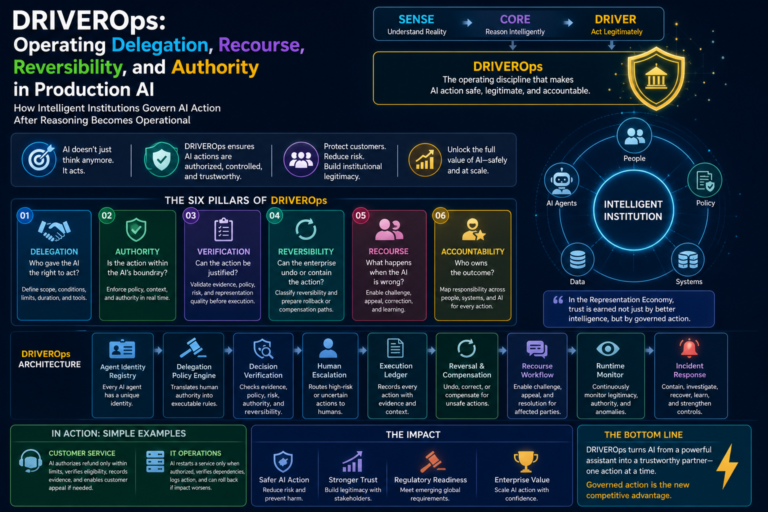
Why does it matter?

Because AI systems act on representations, not reality. When representation becomes stale, even accurate models produce incorrect outcomes.

Key Insight:

AI systems fail not when models break—but when reality changes and no one updates the representation.
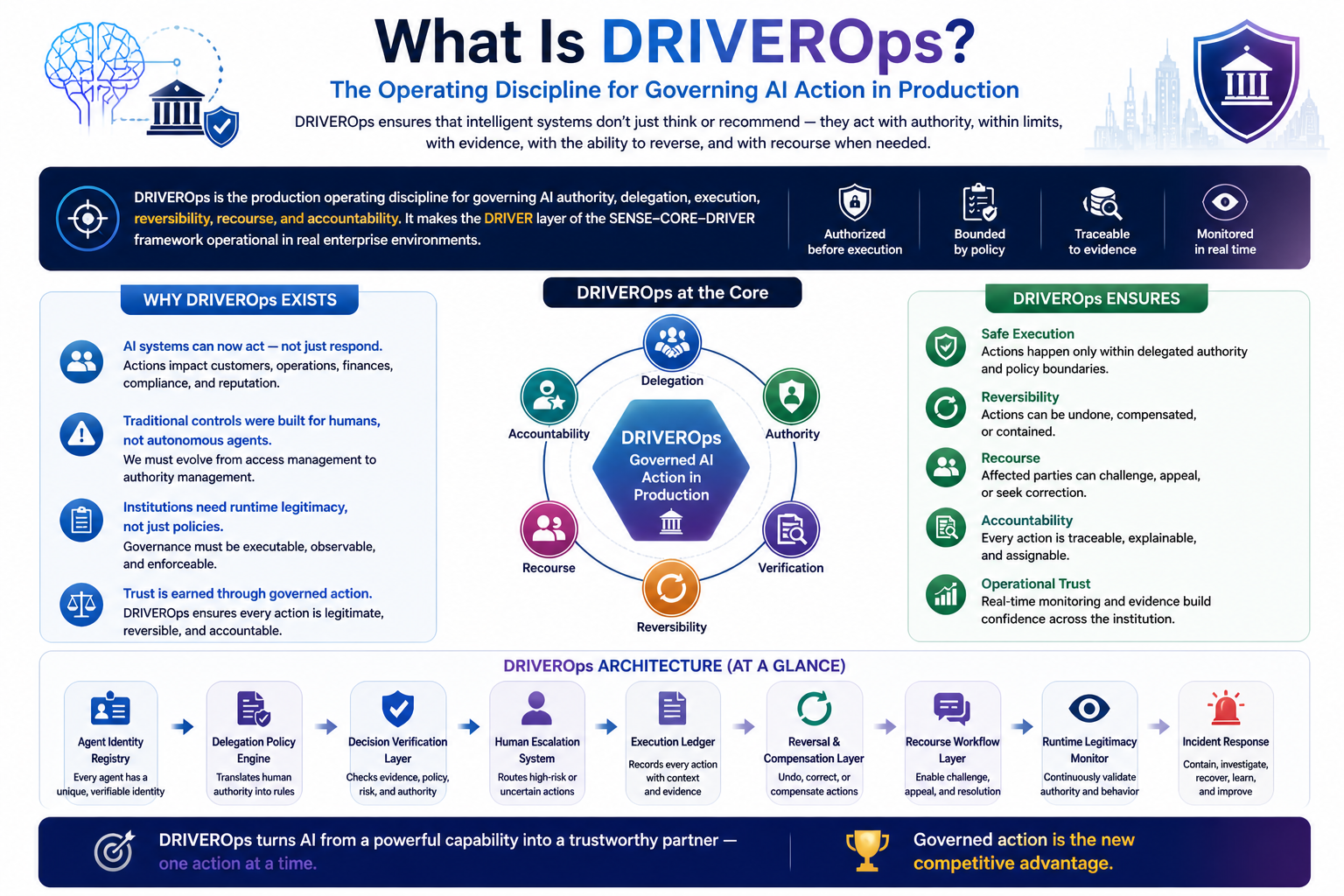
Glossary

Representation Economy
The economic system in which competitive advantage increasingly depends on how well institutions make reality machine-legible, governable, and actionable.

Representation Drift
The widening mismatch between lived reality and the representation an AI system continues to rely on.

Machine-Readable Reality
The structured, digital representation of entities, states, relationships, permissions, and constraints that AI systems use to reason and act.

RepOps (Representation Operations)
The organizational capability responsible for keeping machine-readable reality accurate, current, and reviewable over time.

SENSE
The legibility layer: Signal, ENtity, State representation, Evolution.
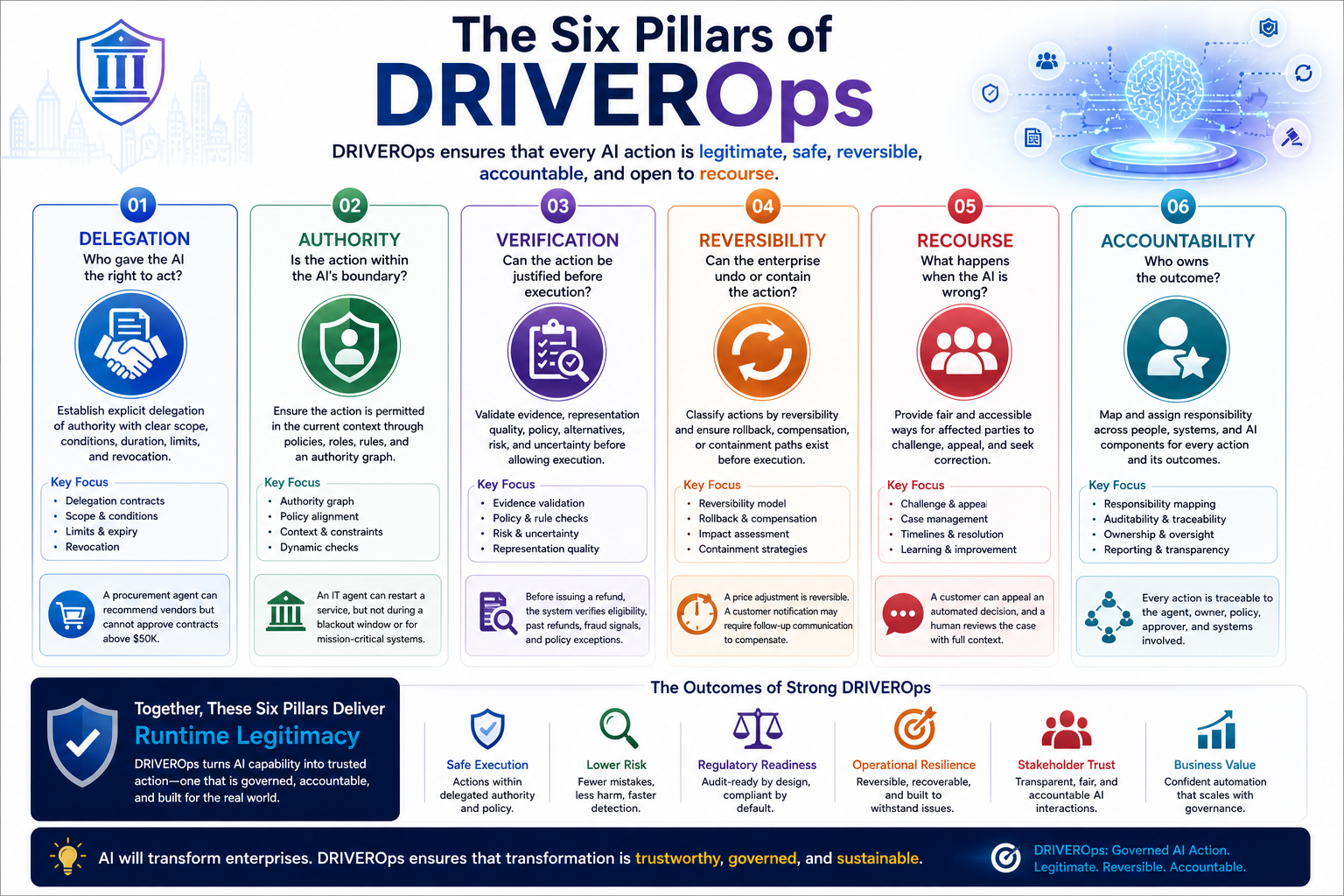
CORE
The cognition layer: Comprehend context, Optimize decisions, Realize action, Evolve through feedback.

DRIVER
The execution and legitimacy layer: Delegation, Representation, Identity, Verification, Execution, Recourse.

Drift Detection
The monitoring process used to identify when data, behavior, or representation has shifted enough to threaten system quality or trust.

Human Oversight
The capability for people to monitor, question, intervene in, or override AI behavior where needed.

Recourse
The ability for an affected person or organization to challenge, correct, or appeal an AI-supported outcome.

Ontology Management
The work of defining and maintaining structured concepts, categories, and relationships so that systems can interpret reality consistently.

References and Further Reading

This article draws on widely recognized governance and operational sources that reinforce its core argument that AI systems require ongoing monitoring, oversight, and lifecycle management:

  • NIST, AI Risk Management Framework — on lifecycle governance, trustworthiness, and managing AI risk over time. (NIST)
  • OECD, Advancing Accountability in AI — on accountability, lifecycle responsibility, and operational processes for trustworthy AI. (OECD)
  • European Union, AI Act — on human oversight, logging, relevant input data, and deployer obligations for high-risk AI systems. (Digital Strategy)
  • Google Cloud, Vertex AI Model Monitoring — on scheduled monitoring and tracking quality over time in production. (Google Cloud Documentation)
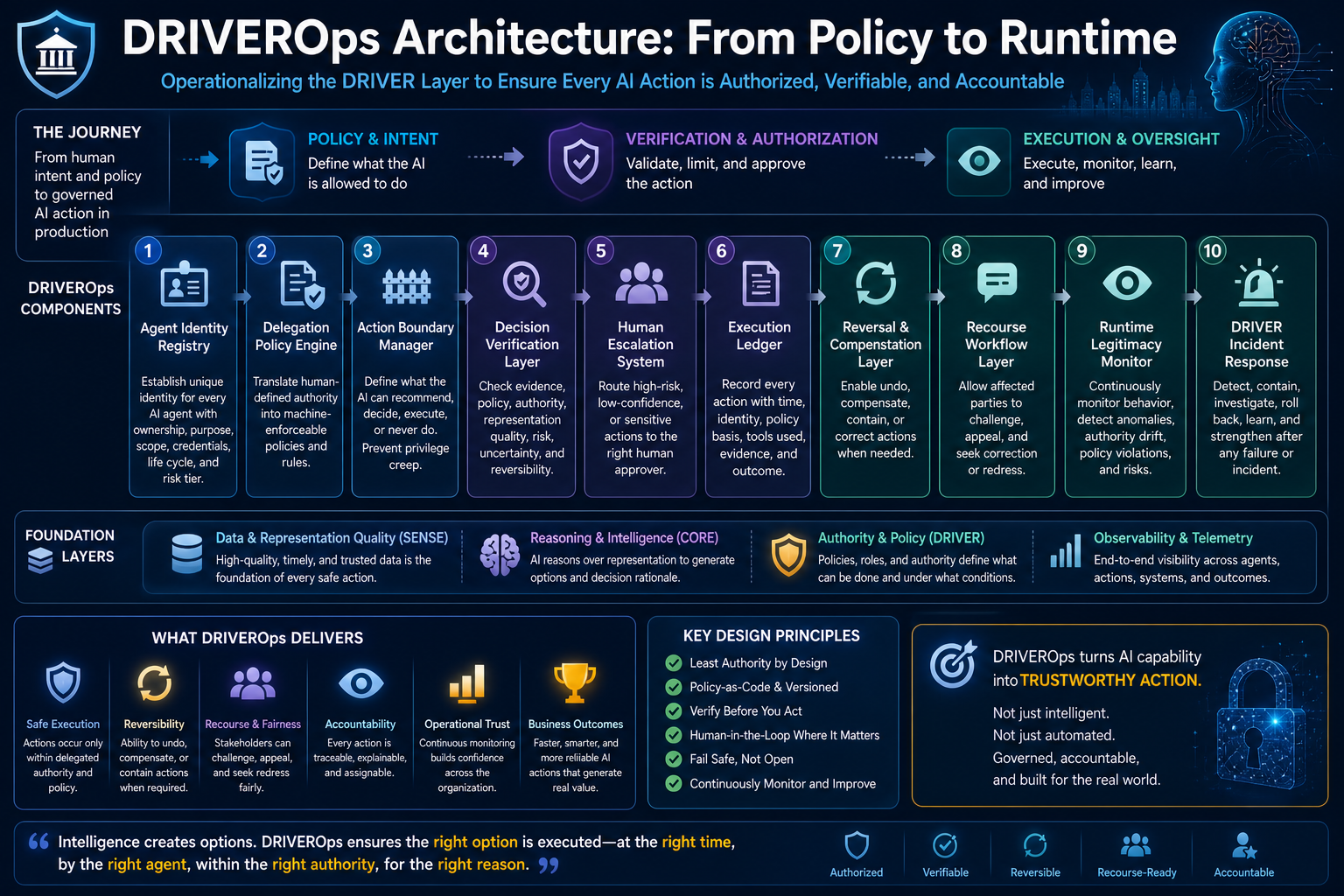
  • AWS, SageMaker Model Monitor — on automated monitoring for drift and model-quality issues in production. (AWS Documentation)
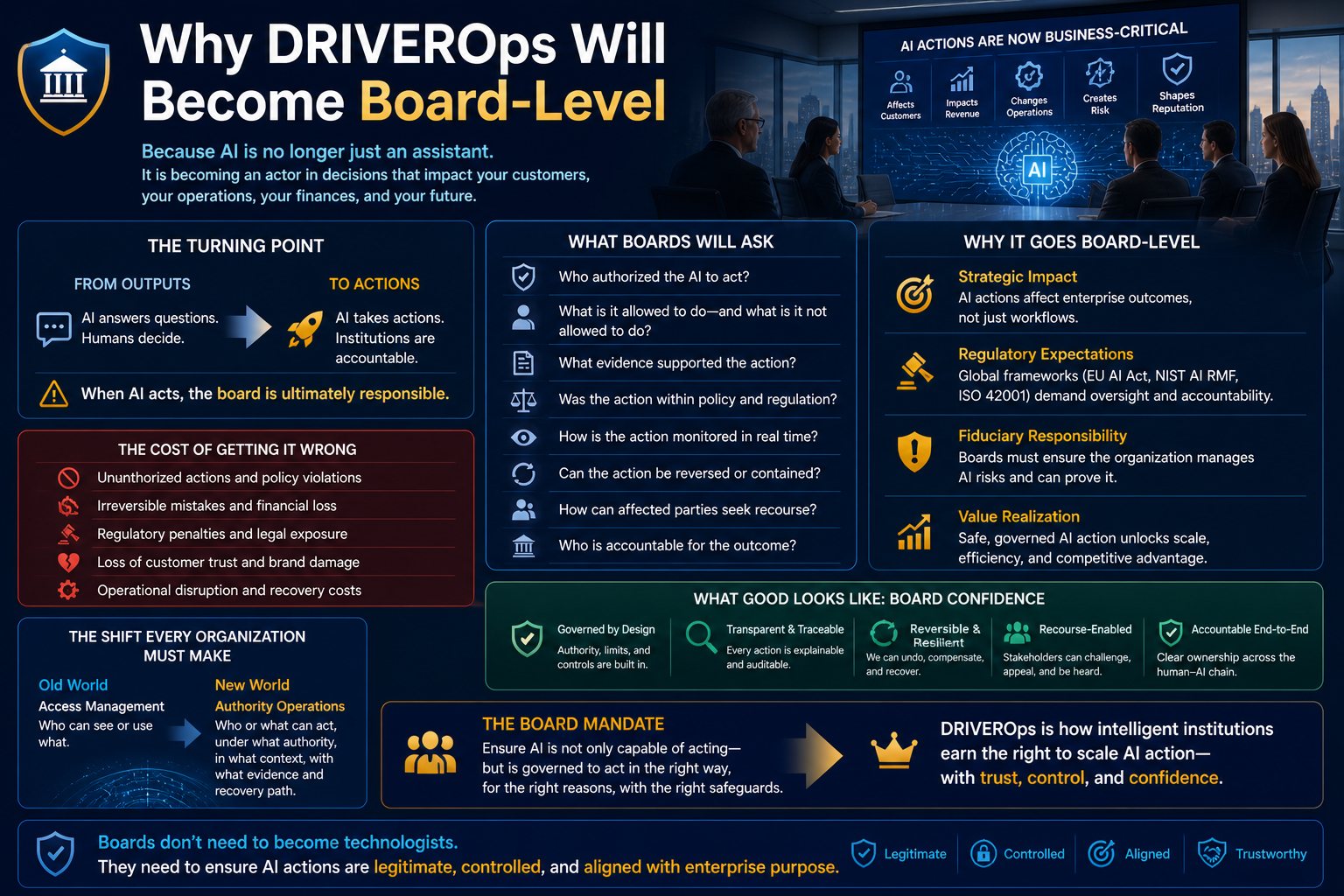
Explore the Architecture of the AI Economy

This article is part of a broader research series exploring how institutions are being redesigned for the age of artificial intelligence. Together, these essays examine the structural foundations of the emerging AI economy — from signal infrastructure and representation systems to decision architectures and enterprise operating models.

If you want to explore the deeper framework behind these ideas, the following essays provide additional perspectives:

Together, these essays outline a central thesis:

The future will belong to institutions that can sense reality, represent it clearly, reason about it intelligently, and act through governed machine systems.

This is why the architecture of the AI era can be understood through three foundational layers:

SENSE → CORE → DRIVER

Where:

  • SENSE makes reality legible
  • CORE transforms signals into reasoning
  • DRIVER ensures that machine action remains accountable, governed, and institutionally legitimate

Signal infrastructure forms the first and most foundational layer of that architecture.

AI Economy Research Series — by Raktim Singh

Representation Fragility and Exclusion: The Hidden Fault Line That Will Break the AI Economy

Representation Fragility and Exclusion:

The next AI crisis will not begin with models. It will begin with reality.

For the last few years, the public debate around AI has been dominated by model performance: larger models, lower inference costs, multimodal systems, autonomous agents, and faster deployment cycles. That conversation matters. But it misses the deeper shift already underway.

The real battleground is not intelligence alone. It is representation: how the world is converted into a machine-readable form that systems can sense, classify, compare, remember, and act upon.
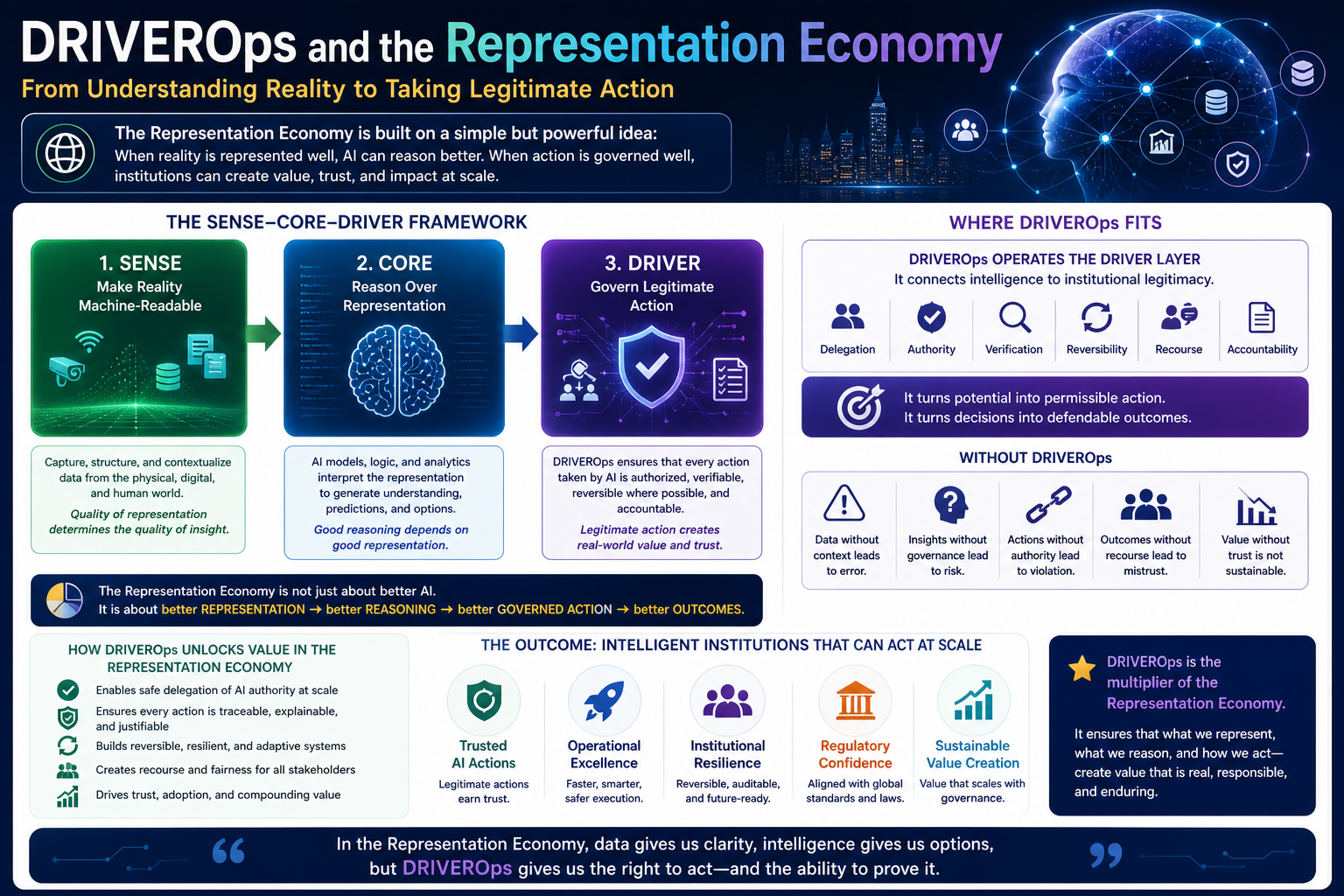
NIST’s AI Risk Management Framework reflects this broader reality by emphasizing governance, mapping, measurement, and management across the full AI lifecycle, not just model performance. Meanwhile, financial supervisors at the BIS have warned that data quality, model risk, governance, and explainability can create systemic vulnerabilities as AI moves deeper into critical decision systems. (NIST Publications)
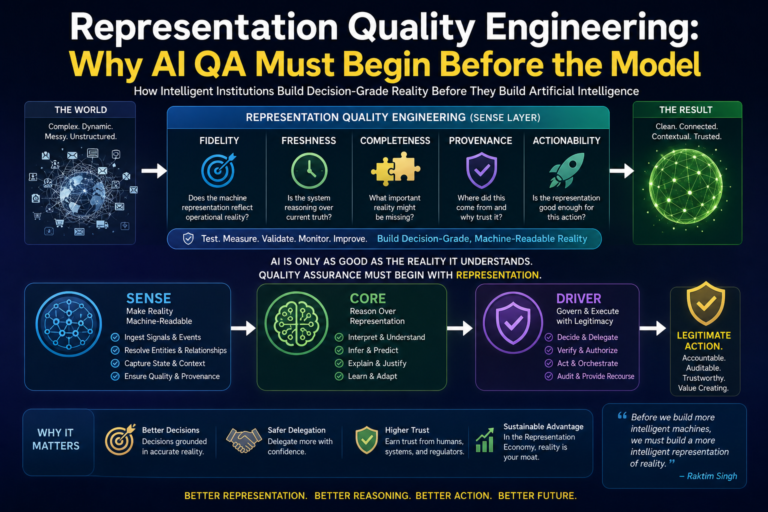
That is where two underappreciated risks emerge: representation fragility and representation exclusion.

Representation fragility appears when institutions depend on reality models they can no longer inspect, repair, or confidently verify.

Representation exclusion appears when people, small businesses, local-language communities, rural producers, and even non-human systems never become legible enough to enter the machine-readable economy in a meaningful way. UNESCO’s AI ethics framework stresses inclusiveness, diversity, fairness, and human oversight across the AI lifecycle, while OECD and World Bank work shows that AI adoption remains uneven, especially where digital foundations are weak. (UNESCO)

Together, these two failures create the defining paradox of the AI era: reality becomes highly legible where power is already concentrated, and weakly legible where inclusion matters most.

This is not just a technical issue. It is an economic, institutional, and geopolitical one.

The OECD has found that SME AI adoption remains relatively low compared with larger firms. The World Bank’s 2025 AI foundations work argues that low- and middle-income countries face steep barriers to adapting and deploying AI at scale without stronger connectivity, compute, data, skills, and governance. The World Economic Forum and UNDP have both emphasized that digital public infrastructure and trustworthy digital systems are essential if AI-led growth is to be broad-based rather than exclusionary. (OECD)

AI systems do not act directly on reality—they act on structured representations of reality. When those representations are incomplete, distorted, or missing, the decisions produced by AI systems reflect those limitations. This is why representation fragility and exclusion are emerging as central risks in the AI economy.

What representation fragility really means

Representation fragility is the condition in which an organization relies on AI-mediated representations of reality that it no longer knows how to inspect, reconstruct, or correct.

A bank does not merely run a model. It depends on entity resolution systems, identity feeds, transaction labels, third-party enrichment, behavioral signals, risk classifications, and policy engines. A hospital does not merely use analytics. It depends on digital summaries, triage signals, patient-state updates, and care-priority flags. A supply chain does not merely optimize inventory. It depends on continuously refreshed digital representations of shipments, routes, counterparties, and delay conditions.

In each case, the institution is no longer just using software. It is acting through a structured version of reality.

The danger begins when that version of reality becomes unrepairable.

Imagine a supplier is wrongly flagged as unstable because its records are fragmented, one identity feed merged the wrong entities, and a downstream risk engine interpreted missing data as negative evidence.

The system may continue to run smoothly. Dashboards still work. Decisions still flow. But the institution may no longer know where the distortion entered the chain. What looks like an intelligence problem is often a representation problem. What looks like an automation failure is often a reality-maintenance failure. BIS guidance on AI in finance repeatedly highlights how opaque data lineage, weak explainability, and model-governance gaps complicate validation, oversight, and recovery. (Bank for International Settlements)

This is why representation fragility is more serious than ordinary model error. A bad output can sometimes be fixed. A damaged representation layer can contaminate every downstream decision that depends on it.

What representation exclusion really means

What representation exclusion really means

Representation exclusion is the opposite failure.

Here, the problem is not that the machine-readable representation is broken. It is that many entities never receive a rich, trusted, and actionable representation in the first place.

Consider a small farmer with inconsistent land records, thin digital history, weak access to formal financial rails, and fragmented agronomic data. Or a micro-enterprise with genuine cash flow but poor digitization. Or a local-language community whose speech patterns, cultural references, and market behaviors remain sparsely represented in mainstream AI systems. Or ecological assets such as biodiversity zones and water systems that matter economically but are still poorly encoded in most enterprise decision environments.

In all these cases, exclusion happens before the model produces an output.

FAO has highlighted both the promise of AI in agriculture and the practical barriers that smallholders face in accessing digital advisory services and inclusive innovation pathways. UNESCO’s ethics framework calls explicitly for diversity and inclusiveness across the AI lifecycle, including attention to underrepresented groups. UNDP’s digital inclusion work likewise frames equitable digital systems as foundational, not optional. (FAOHome)

This matters because the AI economy increasingly rewards what can be sensed, modeled, verified, and acted on at machine speed. If an actor is poorly represented, it will struggle to access credit, insurance, visibility, compliance recognition, pricing fairness, and market opportunity.

In the industrial era, exclusion often meant lacking capital or infrastructure. In the AI era, exclusion increasingly means lacking machine legibility.

The fragility-exclusion paradox

The fragility-exclusion paradox

The deepest risk is that fragility and exclusion emerge at the same time.

Large institutions become fragile because they rely on layered, outsourced, constantly shifting representations they cannot fully repair. Smaller actors become excluded because they lack the infrastructure, continuity, standards, and identity layers required to become legible in the first place.

So the top of the economy becomes over-dependent, while the bottom becomes under-represented.

This is the structural paradox of the AI economy: it can become more automated and less grounded at the same time; more intelligent and less equitable at the same time.

That pattern is already visible globally. OECD evidence points to persistent gaps in AI uptake between SMEs and larger firms.

The World Bank argues that AI readiness depends on foundational conditions, not simply access to models. WEF and UNDP work on digital public infrastructure similarly underscores that safe, interoperable, trusted infrastructure shapes whether digital systems broaden participation or deepen existing divides. (OECD)

Why SENSE–CORE–DRIVER makes this visible

Why SENSE–CORE–DRIVER makes this visible

Most organizations still overinvest in the CORE of AI—models, reasoning, orchestration, and decision engines—while underinvesting in SENSE and DRIVER, which determine whether intelligence is grounded, governable, and trusted.

SENSE: the legibility layer

SENSE is where reality becomes machine-readable.

S — Signal: detecting events, traces, and changes from the world
EN — Entity: attaching those signals to a persistent actor, asset, object, or place
S — State representation: building a structured model of present condition
E — Evolution: updating that representation over time

When fragility appears, SENSE degrades because the institution no longer understands how those layers were assembled or updated. When exclusion appears, SENSE fails because some entities never accumulate enough signal depth, identity continuity, or state richness to matter in machine decision systems.

CORE: the cognition layer

CORE is where systems:

C — Comprehend context
O — Optimize decisions
R — Realize action
E — Evolve through feedback

CORE can be excellent and still fail if it reasons over unstable or incomplete representations. Better models do not solve broken legibility. They often scale it faster. NIST and BIS both point to the importance of governance, measurement, explainability, and ongoing risk management precisely because model quality alone is insufficient in high-stakes environments. (NIST Publications)

DRIVER: the legitimacy layer

DRIVER is where institutions answer the questions that determine whether machine action is acceptable:

D — Delegation: who authorized the action
R — Representation: what version of reality was used
I — Identity: which entity was affected
V — Verification: how the system checks itself
E — Execution: how the action is carried out
R — Recourse: what happens when the system is wrong

Fragility worsens when DRIVER is weak because distorted representations cannot be challenged quickly. Exclusion worsens when DRIVER is weak because those outside the system have no practical path to contest, correct, or enter it.

Simple examples that make the issue real

Simple examples that make the issue real

A rural business applies for working capital. It has real customer demand, repeat orders, and healthy local reputation, but weak formal documentation and fragmented digital records. The lender’s systems cannot model it confidently, so it gets worse terms or no credit at all. That is representation exclusion. OECD and World Bank work on SME adoption and AI foundations helps explain why such gaps persist: strong participation in the AI economy requires more than tools; it requires readiness, infrastructure, skills, and data continuity. (OECD)

Now imagine a large bank with a sophisticated AI stack. It uses third-party identity resolution, transaction enrichment, risk scoring, and automated decision rules. One upstream merge error contaminates several downstream views of the same customer or supplier. The system still functions, but the institution cannot easily reconstruct the source of the distortion. That is representation fragility.

BIS material on financial stability implications of AI explicitly flags data quality, governance, and explainability as core concerns. (Bank for International Settlements)

Agriculture shows both failures at once. FAO notes that AI can improve yields, disease detection, precision agriculture, and advisory services. But the gains depend on inclusive digital access, trusted data pathways, and local relevance.

Where those foundations are missing, farmers are excluded. Where they exist but are weakly governed, institutions can make confident recommendations on degraded or mismatched representations. (FAOHome)

The same logic applies to nature. Many firms now face material exposure to biodiversity loss, water stress, and ecosystem degradation, yet those realities are still thinly represented in many operational systems. If something is economically consequential but representationally weak, AI systems will continue to optimize around an incomplete map.

Why this will define the next generation of winners : Representation Fragility and Exclusion

Why this will define the next generation of winners

The winners of the AI economy will not be defined only by who owns the most advanced models.

They will be defined by who can build reality systems that are both inclusive and repairable.

Three capabilities will become strategic.

  1. Representation depth

The ability to capture richer, more continuous, more trustworthy signals about entities that were previously invisible or weakly visible.

  1. Representation resilience

The ability to inspect, debug, verify, and reconstruct the representations on which AI depends.

  1. Representation legitimacy

The ability to prove that machine action was authorized, grounded, contestable, and reversible.

This is also where new company categories will emerge: representation observability platforms, auditable entity-resolution systems, correction and recourse infrastructure, local-language representation layers, biodiversity sensing networks, and institutional memory systems that preserve how reality models were formed. The growing global emphasis on digital public infrastructure, inclusive digital systems, and sovereign or shared AI infrastructure suggests that both markets and states are converging on the same lesson: AI capability without representational foundations creates brittle progress. (World Economic Forum)

What leaders should do now

Leaders should stop asking only whether their AI is accurate.

They should ask:

  • Do we still understand how our systems are modeling reality?
  • Where are those representations brittle?
  • Which customers, suppliers, communities, and assets remain outside our machine-readable view?
  • What recourse exists when our systems get reality wrong?
  • Which critical decisions depend on representations we cannot inspect or repair?

These are harder questions than benchmark accuracy. They are also more strategic ones.

Organizations should invest in SENSE ownership, not just CORE capability. They should reduce dependence on opaque representation chains they cannot inspect. They should build DRIVER mechanisms for correction, challenge, and recovery. And they should treat inclusion not as a CSR side issue, but as a design requirement for participation in the AI economy.

Because the next AI divide will not be explained only by access to models. It will be explained by whether an entity is represented at all—and whether that representation can be trusted, challenged, and repaired over time.

Key takeaway for boards and C-suites:

The most important AI question is no longer “How smart is the model?” It is “How reliable, inclusive, and contestable is the reality our systems act on?” Institutions that master representation depth, resilience, and legitimacy will define the next era of advantage.

Summary

In simple terms:

  • Representation fragility = reality models that cannot be trusted or repaired
  • Representation exclusion = entities that are invisible to AI systems
  • Together, they define the next economic divide in the AI era

Conclusion

The future of AI will not be decided by intelligence alone. It will be decided by whether institutions can build a world in which reality is both representable and repairable.

That is the central challenge of the representation economy.

In the old digital era, advantage came from owning data and deploying software. In the AI era, advantage will come from defining reality more reliably, more inclusively, and more legitimately than others.

Institutions that ignore fragility will become dependent on reality systems they cannot fix. Institutions that ignore exclusion will help create an economy that works only for the already legible.

Both will lose.

The greatest risk in the AI economy is not simply that machines may think wrongly. It is that societies may allow reality itself to become brittle for some and invisible for others.

Once that happens, the problem is no longer technical.

It is structural.

Glossary

Representation economy: An economic order in which advantage depends on how well institutions make entities, states, and relationships machine-readable and actionable.

Representation fragility: The vulnerability that appears when organizations depend on reality models they can no longer inspect, repair, or verify.

Representation exclusion: The invisibility that occurs when people, firms, communities, or ecosystems remain outside meaningful machine-readable representation.

Machine-readable economy: An economy in which access to services, markets, and decisions increasingly depends on structured digital representation.

SENSE: The legibility layer where signals are captured, linked to entities, turned into state, and updated over time.

CORE: The cognition layer where systems comprehend context, optimize decisions, realize action, and improve through feedback.

DRIVER: The legitimacy layer that governs delegation, representation, identity, verification, execution, and recourse.

Recourse: The capacity to challenge, reverse, or recover from an AI-mediated decision.

Digital public infrastructure: Shared digital rails—such as identity, payments, and data exchange—that support broad participation in digital and AI-enabled economies.

FAQ

Why is this article not just about AI bias?
Because bias usually describes unfairness in outputs. This article points to a deeper failure upstream: some entities are represented poorly, while others are not represented at all. UNESCO’s AI ethics work explicitly treats inclusiveness and diversity as lifecycle concerns, not just output concerns. (UNESCO)

Why does representation fragility matter for large enterprises?
Because layered AI systems depend on complex data, identity, and decision chains. BIS and NIST both show that weak governance, poor explainability, and data-quality issues can amplify operational and systemic risk. (Bank for International Settlements)

Why does representation exclusion matter for growth?
Because SMEs, rural actors, and underserved communities cannot fully participate in AI-enabled markets if they are not legible to machine decision systems. OECD and World Bank evidence shows that adoption and readiness gaps remain significant. (OECD)

What is the main leadership takeaway?
Do not focus only on model capability. Build inclusive SENSE, strong CORE, and legitimate DRIVER. Durable advantage in the AI economy comes from representation that is broad, repairable, and governable. This is consistent with NIST’s lifecycle view of AI risk management. (NIST Publications)

References and Further Reading

  • NIST, AI Risk Management Framework and AI RMF Playbook for lifecycle governance, mapping, measurement, and management of AI risk. (NIST Publications)
  • OECD, AI adoption by small and medium-sized enterprises, on the persistent adoption gap between SMEs and larger firms. (OECD)
  • World Bank, Digital Progress and Trends 2025: AI Foundations, on the foundational conditions required for broad AI adoption. (World Bank)
  • BIS, on financial stability implications of AI and AI explainability and governance in critical systems. (Bank for International Settlements)
  • UNESCO, Recommendation on the Ethics of Artificial Intelligence, especially on diversity, inclusiveness, fairness, and human oversight. (UNESCO)
  • FAO, on inclusive AI for agriculture, precision agriculture, and smallholder access to digital services. (FAOHome)
  • WEF and UNDP, on digital public infrastructure and inclusive digital systems as foundations for broader participation. (World Economic Forum)

Explore the Architecture of the AI Economy

This article is part of a broader research series exploring how institutions are being redesigned for the age of artificial intelligence. Together, these essays examine the structural foundations of the emerging AI economy — from signal infrastructure and representation systems to decision architectures and enterprise operating models.

If you want to explore the deeper framework behind these ideas, the following essays provide additional perspectives:

Together, these essays outline a central thesis:

The future will belong to institutions that can sense reality, represent it clearly, reason about it intelligently, and act through governed machine systems.

This is why the architecture of the AI era can be understood through three foundational layers:

SENSE → CORE → DRIVER

Where:

  • SENSE makes reality legible
  • CORE transforms signals into reasoning
  • DRIVER ensures that machine action remains accountable, governed, and institutionally legitimate

Signal infrastructure forms the first and most foundational layer of that architecture.

AI Economy Research Series — by Raktim Singh

Representation Switching Costs: Why the AI Economy’s Deepest Lock-In Will Come From Who Defines Reality

Representation Switching Costs:

In the next phase of the AI economy, competitive advantage will not come only from better models, lower inference costs, or bigger data estates. It will come from controlling the machine-readable representation of reality that workflows, agents, and institutions depend on to act.

Representation switching costs refer to the difficulty of moving from one AI system to another when the real dependency lies not in data or software, but in how reality is represented—entities, states, permissions, and decisions. In the AI economy, this layer becomes the deepest source of lock-in and competitive advantage.

Executive Summary

For years, leaders understood switching costs through a familiar lens: enterprise software, cloud migration, network effects, payments, and platforms. But the AI economy is introducing a deeper form of lock-in.

The hardest thing to move in the AI era may not be the application, the model, or even the data. It may be the representation of reality that sits beneath machine action.

That representation includes how a system identifies entities, tracks state, interprets events, applies permissions, learns exceptions, and decides what is authoritative enough to trigger action. Once an institution builds workflows, controls, agentic systems, audit trails, and external partner coordination on top of that structure, switching providers becomes far more difficult than replacing software.

This is the new strategic fault line.

The real question is no longer only: Who owns the model?
It is increasingly: Who defines reality well enough that everyone else builds on top of it?

That is where the deepest switching costs of the AI economy will form.

The Old Switching Cost Was Technical. The New Switching Cost Is Ontological.

The Old Switching Cost Was Technical. The New Switching Cost Is Ontological.

For two decades, digital strategy was shaped by familiar switching costs.

Enterprise software created process lock-in. Cloud platforms created infrastructure lock-in. Marketplaces and social networks created network lock-in. Payment systems created merchant dependence. These were painful, expensive, and strategically important. But they were still largely technical and operational.

The AI economy changes the depth of the problem.

When an organization adopts AI seriously, it is not merely installing a new tool. It is gradually teaching a system how to perceive the world, classify what matters, track what changes, and determine what is valid enough to act upon. That means the institution is no longer just adopting software. It is adopting a reality model.

This is why the new switching cost is ontological.

A traditional migration asks: can another system process the same records?
An AI migration asks: can another system recreate the same machine-readable understanding of customers, patients, shipments, assets, permissions, exceptions, and history?

That is a much harder problem.

NIST’s AI Risk Management Framework is useful here because it treats AI as a socio-technical system whose risks emerge not only from the model itself, but also from people, processes, governance, and operational context. In other words, AI risk does not sit neatly inside the model layer. It sits across the broader environment in which machine judgments are interpreted and used. (NIST Publications)

That matters because it shows why AI lock-in is not just a model problem. It is a systems-of-reality problem.

Data Portability Is Not Enough When Representation Is the Moat

Data Portability Is Not Enough When Representation Is the Moat

Many executives still think in the language of the previous digital era. They assume that if data can be exported, lock-in can be reduced.

That logic is incomplete.

The OECD has repeatedly emphasized that data portability can reduce switching costs and lock-in only when portability leads to effective usability and interoperability in the receiving environment. A static export of records is not the same thing as a living, trusted, and operational representation that another system can immediately use. (OECD)

This distinction is becoming decisive.

A spreadsheet of transactions is portable.
A machine-operational understanding of a customer’s risk profile, consent boundaries, transaction behavior, exception patterns, and authorized decision pathways is not easily portable.

The European Union’s Digital Markets Act reflects the same strategic concern. Its purpose is to make digital markets fairer and more contestable, and it includes obligations around data portability and interoperability because policymakers increasingly recognize that entrenched ecosystems become hard to leave when users and business partners cannot realistically move their data and interactions elsewhere. (Digital Markets Act (DMA))

The AI economy intensifies this problem.

The real moat is no longer only the dataset. The moat is the structured, evolving, machine-usable representation of the world that the dataset supports.

That is where lock-in deepens.

What “Representation Switching Costs” Actually Means

What “Representation Switching Costs” Actually Means

Representation switching costs arise when an organization becomes dependent not merely on a vendor’s software, but on that vendor’s way of defining reality.

This includes:

Entity definitions

Who counts as a customer, patient, supplier, account, shipment, field worker, or asset?

State logic

What counts as active, risky, delayed, fraudulent, approved, disputed, or complete?

Event authority

Which signal is trusted enough to update the system’s understanding of reality?

Permission structures

What is the machine allowed to see, infer, recommend, or act on?

Exception histories

How has the institution learned to handle ambiguity, edge cases, reversals, appeals, and overrides?

Operational meaning

What do records mean when they are used for action, not just storage?

Once these structures are deeply embedded into workflows, agents, decisions, recourse, and external coordination, switching becomes extremely difficult. The organization is no longer moving to another vendor. It is trying to reconstruct the world as the prior system had taught it to be seen.

That is why representation switching costs can become more durable than software switching costs, cloud switching costs, or even data portability barriers.

Why SENSE–CORE–DRIVER Makes This Visible

Why SENSE–CORE–DRIVER Makes This Visible

The SENSE–CORE–DRIVER framework helps explain exactly where this lock-in forms.

SENSE: where reality becomes machine-legible

Signal is captured. Entity is identified. State is represented. Evolution is tracked over time.

This is the layer where reality is converted into something a machine can work with. When this layer becomes deeply embedded, workflows begin treating it as the default truth.

CORE: where machine cognition interprets that reality

The system comprehends context, optimizes decisions, realizes action, and evolves through feedback.

If CORE is trained, tuned, or orchestrated around one particular representation of the world, switching becomes harder because a different representation changes what the system thinks is happening.

DRIVER: where action becomes governed and legitimate

Delegation, representation, identity, verification, execution, and recourse define the authority structure around machine action.

Once policies, escalation pathways, audit trails, liabilities, and recourse processes are built on top of one representational layer, the institution becomes dependent not only technically, but also operationally and legally.

This is the deeper insight: as organizations move from AI pilots to real-world AI systems, switching costs migrate downward. They move away from visible interfaces and into the hidden architecture that defines what the system believes to be real.

A Logistics Example: The Company That Cannot Leave

Imagine a global logistics company.

At first, it adopts an AI system to improve shipment routing. That seems replaceable. Another provider could likely offer similar route optimization.

But then the system expands.

It begins ingesting sensor data, customs events, warehouse scans, weather disruptions, service-level commitments, route anomalies, handoff histories, customer claims, and carrier reliability signals. Over time, it creates a dynamic state model of shipments, routes, delays, obligations, and exceptions.

At this point, the system is no longer just optimizing transportation. It is defining operational reality.

Teams rely on it for customer communication, rerouting, service recovery, claims, penalties, forecasting, and escalation. Partners begin synchronizing with it. Auditors and insurers begin referencing it. Autonomous actions start to sit on top of it.

Now the switching question changes.

It is no longer: can another AI system optimize routes?
It becomes: can another provider recreate the same living representation of shipments, exceptions, obligations, permissions, and trust pathways without months of ambiguity, risk, and dispute?

That is a much higher switching barrier.

A Healthcare Example: Access Does Not Equal Actionability

Healthcare makes the point even more clearly.

CMS’s interoperability and prior authorization rules are designed to improve health information exchange and require impacted payers to implement APIs for prior authorization information and related decision flows. These are important steps because they increase access and help reduce operational friction. (Centers for Medicare & Medicaid Services)

But access alone does not solve the deeper problem.

A patient record is not just a file. It sits inside a broader machine-actionable context that includes identity resolution, medication history, treatment pathways, coding conventions, risk flags, prior authorization requirements, provider relationships, and permissible next actions.

Moving the data is useful.
Recreating the same trusted operational meaning is harder.

This is why representation switching costs matter so much in sectors like healthcare. The challenge is not merely exchanging records. It is preserving meaning, trust, and actionability across institutions.

WHO’s digital health strategy has similarly emphasized interoperability, open standards, and structured exchange because digital health systems cannot scale safely without common foundations for trust and semantic coordination. The EU’s European Health Data Space follows the same direction by building a common framework for access, exchange, and use of electronic health data across the Union. (World Health Organization)

The broader lesson is clear: portability matters, but representational continuity matters more.

A Finance Example: Open Banking Still Does Not Transfer Reality

The same logic applies in finance.

Open banking and financial data rights are expanding. In the United States, the CFPB’s Section 1033 framework requires covered data to be made available in electronic form to consumers and authorized third parties, and it is designed to support standardized formats and a more open ecosystem. (eCFR)

That is a major development. But even here, portability does not eliminate the harder representational problem.

A lender’s or financial agent’s operating reality includes far more than transaction data. It includes behavioral context, consent logic, identity resolution, fraud signals, account relationships, risk boundaries, and decision history.

So the real lock-in is not just access to records. It is dependence on the machine-readable representation that turns those records into action.

This is why the next strategic moat in finance may not be who stores the most data. It may be who structures financial reality in the most trusted and operationally usable way.

Why Representation Switching Costs Will Become a Strategic Moat

Why Representation Switching Costs Will Become a Strategic Moat

Many leaders still believe the AI race will be won primarily by superior models.

That view is too narrow.

Models are becoming easier to access, compare, and swap. But representations are stickier. They accumulate institutional history. They encode exceptions. They shape workflows. They define meaning. They attract counterparties. They become embedded in governance.

This creates four powerful moats.

  1. Semantic moat

The system does not merely store records. It defines what those records mean.

  1. Workflow moat

The representation is woven into decisions, approvals, escalations, recourse, and operations.

  1. Network moat

Partners, regulators, customers, and external systems begin syncing around the same representation.

  1. Governance moat

Verification, auditability, liability, and authority structures become tied to that representational model.

Once these moats mature, leaving becomes difficult even if the underlying software is technically replaceable.

That is why representation switching costs deserve board-level attention.

Why This Matters for Competition, Inclusion, and Power

Representation switching costs are not only about enterprise efficiency. They also affect who becomes visible, who gets access, and who becomes dependent.

A small farmer, a microbusiness, a migrant worker, a rural patient, or a thin-file borrower may become economically legible only when a system finally represents them well enough for institutions to act. That can be transformative.

But it can also create dependence.

If a platform becomes the only institution that can represent such an entity in a trusted and machine-usable way, then the benefits of visibility may arrive together with a new form of lock-in.

This is why Representation Economics is not only a strategy framework. It is also a power framework.

The institutions that define reality well may unlock inclusion. But if those representations are not portable, contestable, or interoperable, they may also create a new concentration of economic power.

What Boards and C-Suites Should Ask Now

Boards should stop asking only whether their AI strategy is innovative.

They should ask whether their firm is outsourcing its understanding of reality.

Five questions matter:

  1. Can we export more than data?

Can we carry our entity models, state logic, event histories, permissions, and exception pathways into another environment?

  1. Do we know where our deepest lock-in sits?

Is it in the model, the workflow, the governance layer, or the representational layer beneath all three?

  1. Have we separated model choice from representation dependence?

Or are we accidentally allowing one vendor to define both?

  1. Which parts of our machine-readable reality are portable, shared, proprietary, or contestable?

Most firms do not know.

  1. If our current representation layer failed tomorrow, could we still operate, verify, and recover?

That is the real resilience test.

These are not technical housekeeping questions. They are strategic autonomy questions.

Summary 

Representation switching costs describe the hidden lock-in that emerges when organizations depend not just on a vendor’s software or data, but on its machine-readable representation of reality. In the AI economy, the deepest strategic moat may come from who defines entities, state, permissions, and operational meaning well enough for workflows, agents, and institutions to act on top of that representation.

In the AI economy, intelligence will be abundant.
Control over representation will not.

Representation Switching Costs: The Real Battle Is Over Who Defines Reality

Conclusion: The Real Battle Is Over Who Defines Reality

The AI economy will create fierce competition around models, chips, agents, clouds, and data. But beneath all of that, a deeper struggle is forming.

It is the struggle to become the institution whose representation of reality others depend on.

That is where the deepest switching costs will live.

Because once an institution controls the machine-readable representation of customers, patients, suppliers, assets, permissions, transactions, and evolving states, it no longer simply sells software. It becomes part of the market’s operating reality.

That is a much more durable position.

The winners in the AI economy will not be defined only by who has the smartest model. They will be defined by who builds the most trusted, portable, governable, and action-ready representation of reality.

In the Representation Economy, the deepest lock-in will come from who defines reality well enough that everyone else builds on top of it.

Glossary

Representation Switching Costs

The difficulty of moving from one AI or digital environment to another when the real dependency lies in the underlying machine-readable model of reality, not just the visible software.

Machine-Readable Reality

A structured representation of entities, events, states, permissions, and relationships that allows machines to interpret the world and take action.

Data Portability

The ability to transfer data from one service or provider to another in a usable format.

Interoperability

The ability of systems to exchange and use data or services effectively across environments.

Semantic Moat

A competitive advantage created when a system defines the meaning of records, states, and relationships in ways that others depend on.

SENSE

The layer where reality becomes machine-legible through signals, entity identification, state representation, and evolution over time.

CORE

The cognition layer where systems comprehend context, optimize decisions, realize action, and evolve through feedback.

DRIVER

The governance and legitimacy layer that determines delegation, representation, identity, verification, execution, and recourse.

Representational Resilience

The ability of an institution to preserve operational continuity, trust, and actionability even when its representation systems are disrupted or replaced.

FAQ

What are representation switching costs?

They are the hidden costs that arise when an organization depends on a vendor’s machine-readable representation of reality, not just its software, cloud environment, or data store.

How are representation switching costs different from normal software switching costs?

Traditional switching costs are mostly technical and operational. Representation switching costs are deeper because they involve rebuilding how the system understands entities, states, permissions, history, and meaning.

Why does data portability not fully solve AI lock-in?

Because moving records is not the same as moving a trusted operational representation. Data may transfer, while meaning, context, and actionability do not.

Why is this important for boards and C-suites?

Because many firms may believe they are buying AI capabilities when they are actually becoming dependent on another institution’s reality model.

Which sectors will feel this most strongly?

Healthcare, finance, logistics, public services, insurance, agriculture, and any domain where machine action depends on identity, state, permissions, trust, and evolving context.

How does this connect to the SENSE–CORE–DRIVER framework?

SENSE creates machine legibility, CORE interprets that reality, and DRIVER governs action. Switching costs deepen as all three layers become tied to one representational structure.

References and Further Reading

For credibility and GEO strength, include a short references section at the end of the published article such as:

  • OECD work on data portability, interoperability, switching costs, and competition. (OECD)
  • European Commission materials on the Digital Markets Act, contestability, data portability, and interoperability. (Digital Markets Act (DMA))
  • NIST AI Risk Management Framework for the socio-technical framing of AI systems and risk. (NIST Publications)
  • CMS interoperability and prior authorization rule materials for health-data exchange and API-based decision flows. (Centers for Medicare & Medicaid Services)
  • WHO Global Strategy on Digital Health and EU European Health Data Space materials for international interoperability direction. (World Health Organization)
  • CFPB materials on personal financial data rights and standardized electronic access to financial data. (eCFR)

Explore the Architecture of the AI Economy

This article is part of a broader research series exploring how institutions are being redesigned for the age of artificial intelligence. Together, these essays examine the structural foundations of the emerging AI economy — from signal infrastructure and representation systems to decision architectures and enterprise operating models.

If you want to explore the deeper framework behind these ideas, the following essays provide additional perspectives:

Together, these essays outline a central thesis:

The future will belong to institutions that can sense reality, represent it clearly, reason about it intelligently, and act through governed machine systems.

This is why the architecture of the AI era can be understood through three foundational layers:

SENSE → CORE → DRIVER

Where:

  • SENSE makes reality legible
  • CORE transforms signals into reasoning
  • DRIVER ensures that machine action remains accountable, governed, and institutionally legitimate

Signal infrastructure forms the first and most foundational layer of that architecture.

AI Economy Research Series — by Raktim Singh