

SENSE CORE DRIVER
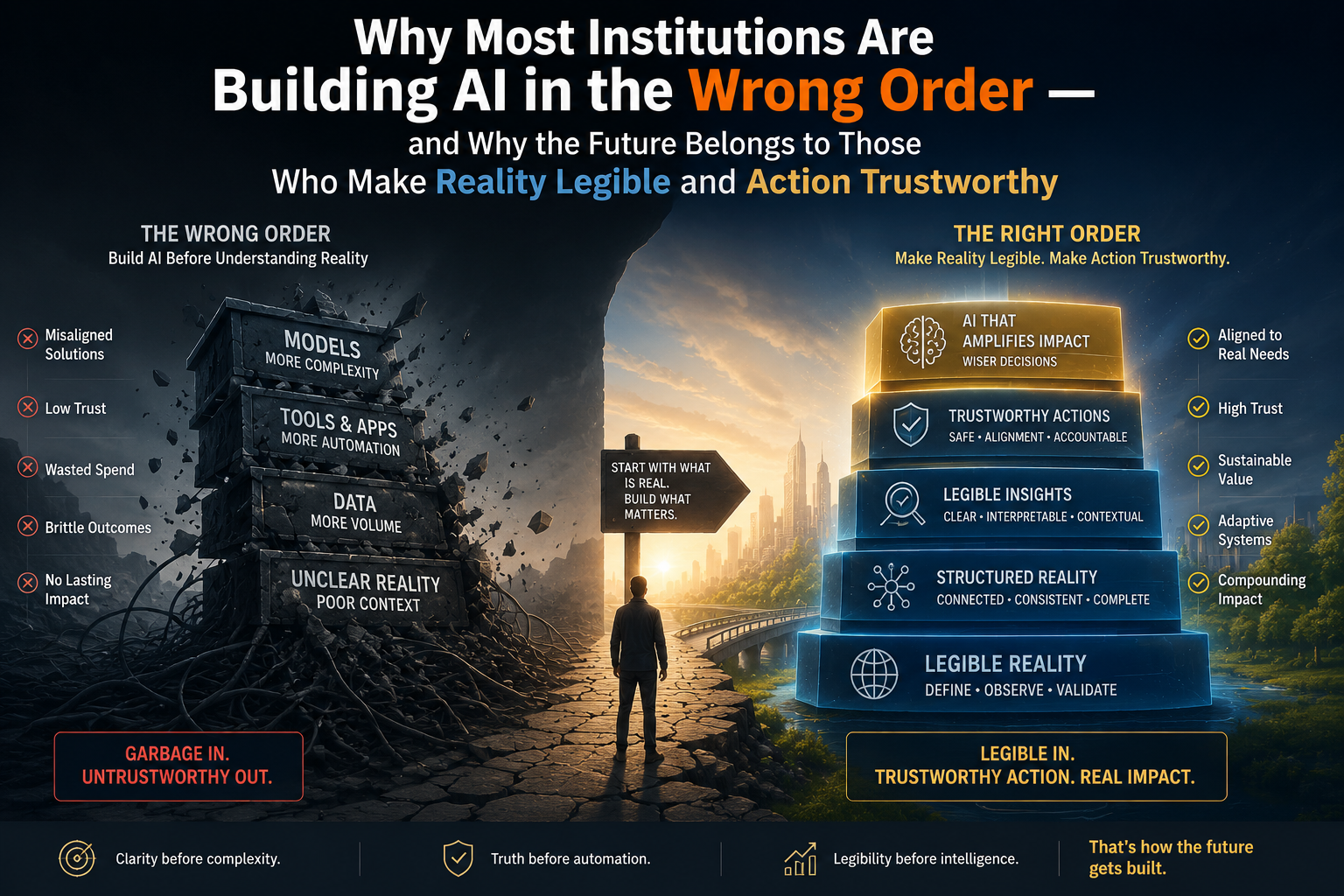
Why Most Institutions Are Building AI in the Wrong Order — and Why the Future Belongs to Those Who Make Reality Legible and Action Trustworthy
Artificial intelligence has triggered one of the fastest institutional investment cycles in modern history.
Boards want AI strategies.
CIOs want AI operating models.
Enterprises want copilots, autonomous workflows, reasoning systems, and agentic platforms.
But beneath the excitement sits a quieter and more dangerous problem:
Most institutions are building AI in the wrong order.
They begin with intelligence.
That is the mistake.
They start with models, copilots, orchestration layers, and automation pipelines because those are the most visible parts of progress. They demo well. They benchmark well. They create the appearance of acceleration.
But what looks most advanced is not always what is most foundational.
The institutions that endure in the AI era will not be the ones that deployed intelligence first. They will be the ones that made intelligence safe, governable, and trustworthy at scale.
That requires a different build sequence.
Not CORE first.
SENSE first.
DRIVER second.
Only then should intelligence scale between them.
This is not merely a technical architecture decision. It is becoming the defining institutional design principle of the AI economy.
The Structural Mistake Most AI Strategies Are Making
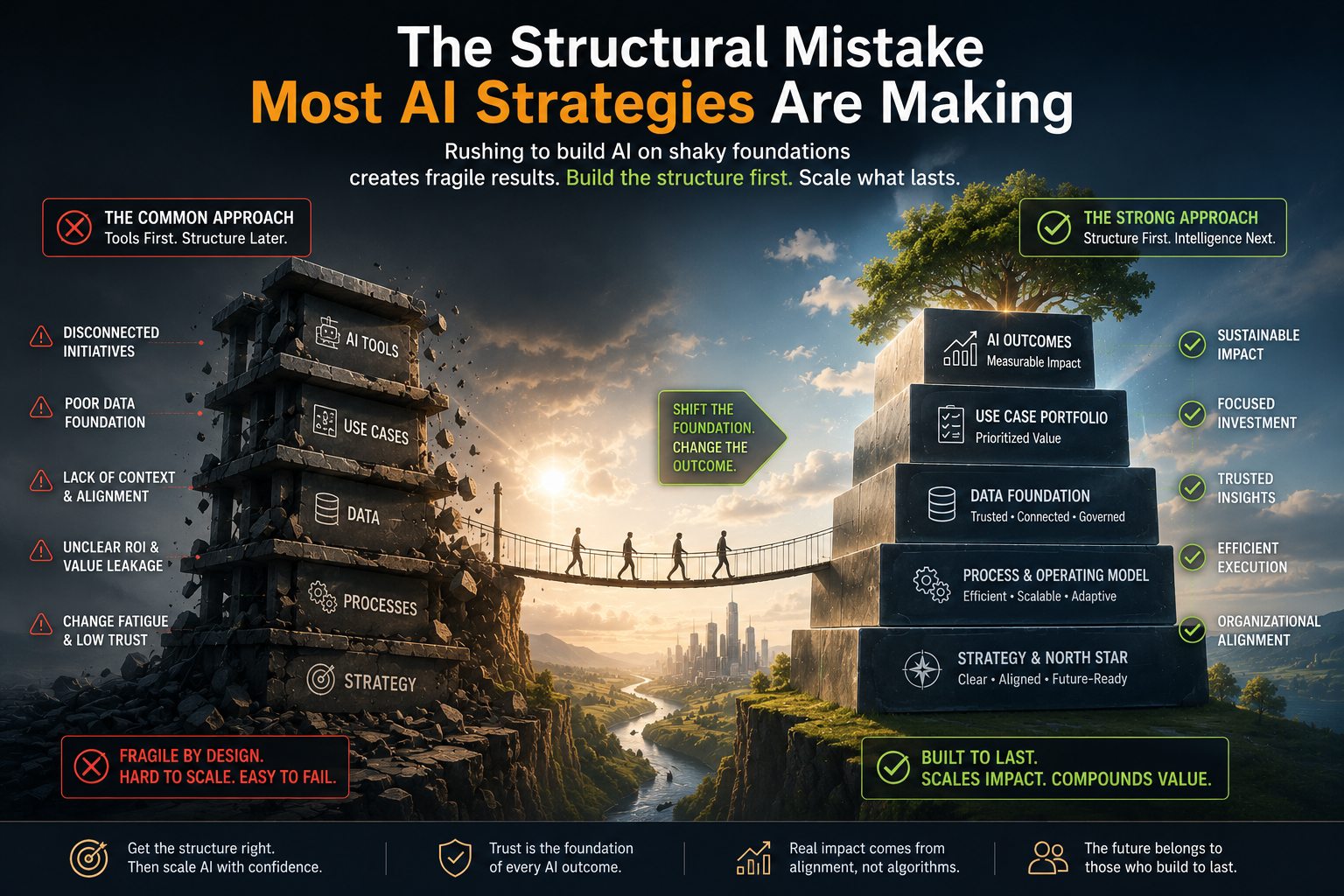
Most enterprises are effectively building from the middle outward.
They begin with reasoning systems before strengthening visibility.
They automate action before establishing legitimacy.
They optimize decisions before ensuring that the underlying representation of reality is reliable.
The result is predictable:
- sophisticated reasoning over incomplete reality
- automation without sufficient accountability
- faster decisions built on thinner understanding
- intelligence scaling institutional fragility rather than reducing it
This is why many AI systems appear impressive in demonstrations but become unstable under real-world consequence.
The issue is not that CORE is unimportant.
The issue is placement.
When CORE is built on weak SENSE and weak DRIVER, intelligence amplifies structural weakness instead of institutional capability.
AI does not magically repair poor foundations.
It compounds them.
The SENSE–CORE–DRIVER Sequence
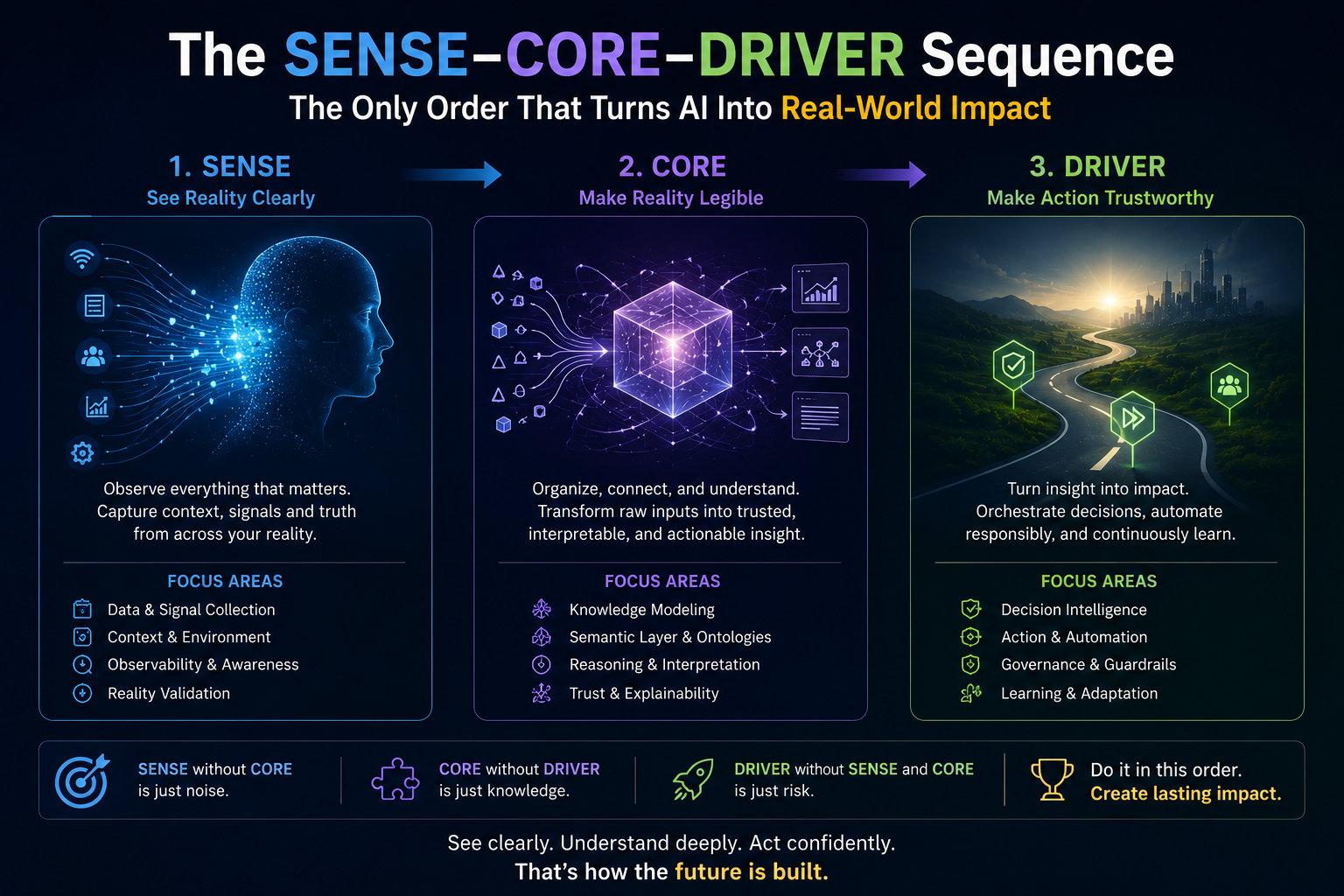
The emerging institutional stack of the AI era can be understood through three interconnected layers:
SENSE — The Legibility Layer
SENSE determines whether reality becomes visible enough for systems to reason over meaningfully.
It includes:
- signals that matter
- entities that persist over time
- state representations that reflect condition, not just events
- continuity and evolution across time
SENSE is where fragmented activity becomes machine-legible institutional reality.
Without strong SENSE, systems reason over shadows, proxies, and partial truths.
CORE — The Intelligence Layer
CORE is the reasoning engine.
It interprets patterns, generates predictions, recommends actions, and optimizes decisions.
This includes:
- AI models
- inference systems
- orchestration logic
- planning systems
- optimization layers
- autonomous reasoning workflows
CORE is what most institutions currently focus on.
But intelligence is only as reliable as the reality it can see.
DRIVER — The Governance and Legitimacy Layer
DRIVER determines whether action becomes acceptable, governable, and trustworthy.
It asks:
- Who delegated authority?
- What representation of reality is the system acting on?
- Which identity is affected?
- How is action verified?
- How is execution constrained?
- What happens when the system is wrong?
DRIVER includes:
- delegation boundaries
- verification systems
- execution governance
- accountability mechanisms
- recourse pathways
- reversibility structures
These are not merely “controls.”
They are the operating conditions of trust.
Why SENSE Is Becoming the Real Competitive Advantage
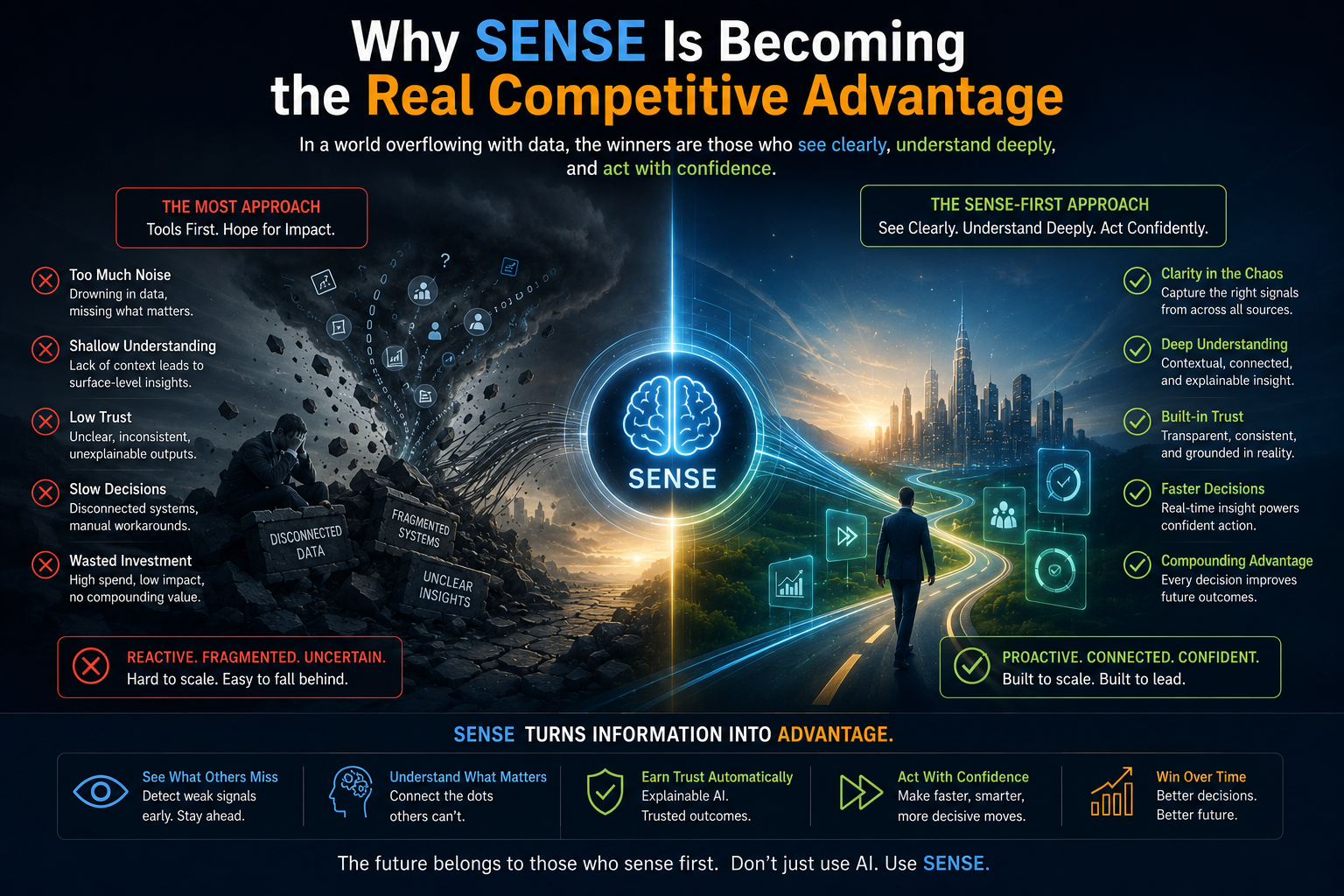
The first question of the AI era is not:
“What can our models do?”
The better question is:
“What can our systems actually see?”
This distinction changes everything.
Many enterprises have invested heavily in AI while still operating on fragmented visibility:
- siloed systems
- inconsistent identities
- shallow context
- stale representations
- disconnected operational signals
- weak state awareness
Under these conditions, intelligence scales misunderstanding.
Faster reasoning on incomplete reality is not transformation. It is acceleration without grounding.
This is why the next generation of enterprise advantage will increasingly come from representation quality rather than model access alone.
As models commoditize, the differentiator shifts toward:
- representation fidelity
- contextual depth
- state awareness
- trusted identity infrastructure
- institutional memory
- continuity across systems
The winners of the next decade may not be the firms with the most intelligence.
They may be the firms with the clearest representation of reality.
Why DRIVER Will Become the Trust Infrastructure of the AI Economy
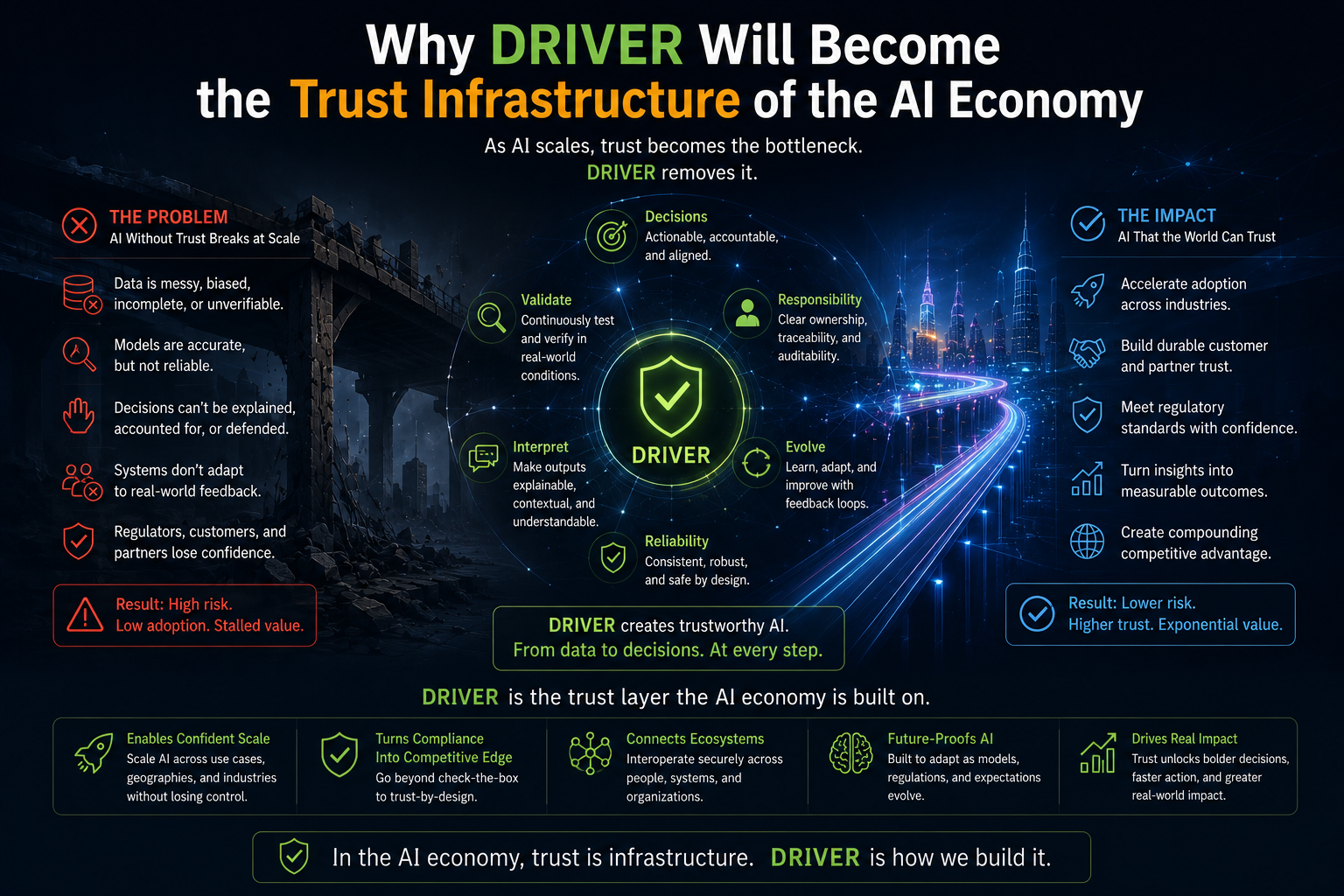
Most AI governance conversations still focus narrowly on ethics policies, fairness checklists, or compliance reviews.
But governance in the AI era is becoming operational.
The real question is no longer:
“Can the system produce an answer?”
The real question is:
“Can society, institutions, customers, regulators, and employees trust the system to act?”
That trust does not emerge automatically from intelligence.
It emerges from governability.
When DRIVER is weak, a recognizable pattern appears:
- strong AI capability
- weak institutional boundaries
- rapid deployment
- invisible discomfort
- trust erosion
- expensive correction
This pattern is now visible across industries.
Institutions increasingly discover that adoption does not fail because AI lacks capability.
It fails because legitimacy was never designed into execution.
The future of AI adoption therefore depends less on raw intelligence and more on whether action remains explainable, constrained, reversible, and accountable under consequence.
The Two Compounding Loops
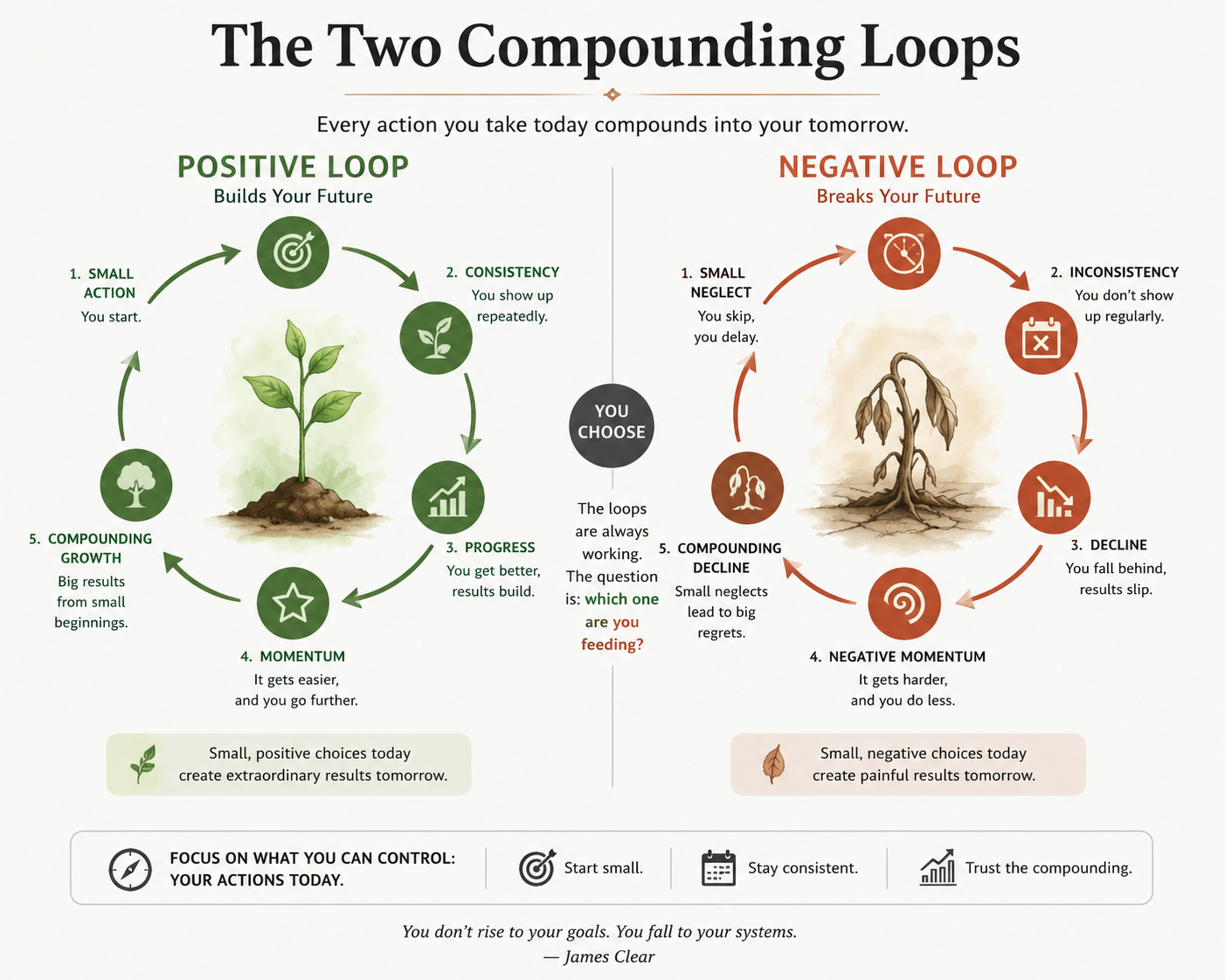
The sequence of investment determines what compounds.
When CORE Is Built First
A dangerous loop emerges:
Thin visibility → aggressive reasoning → brittle action → trust erosion → reduced participation
Under this model:
- outputs scale faster than understanding
- automation outruns governance
- institutions lose interpretability
- trust weakens
- participation declines
- systems become politically and operationally fragile
The institution eventually slows itself down.
When SENSE and DRIVER Are Built First
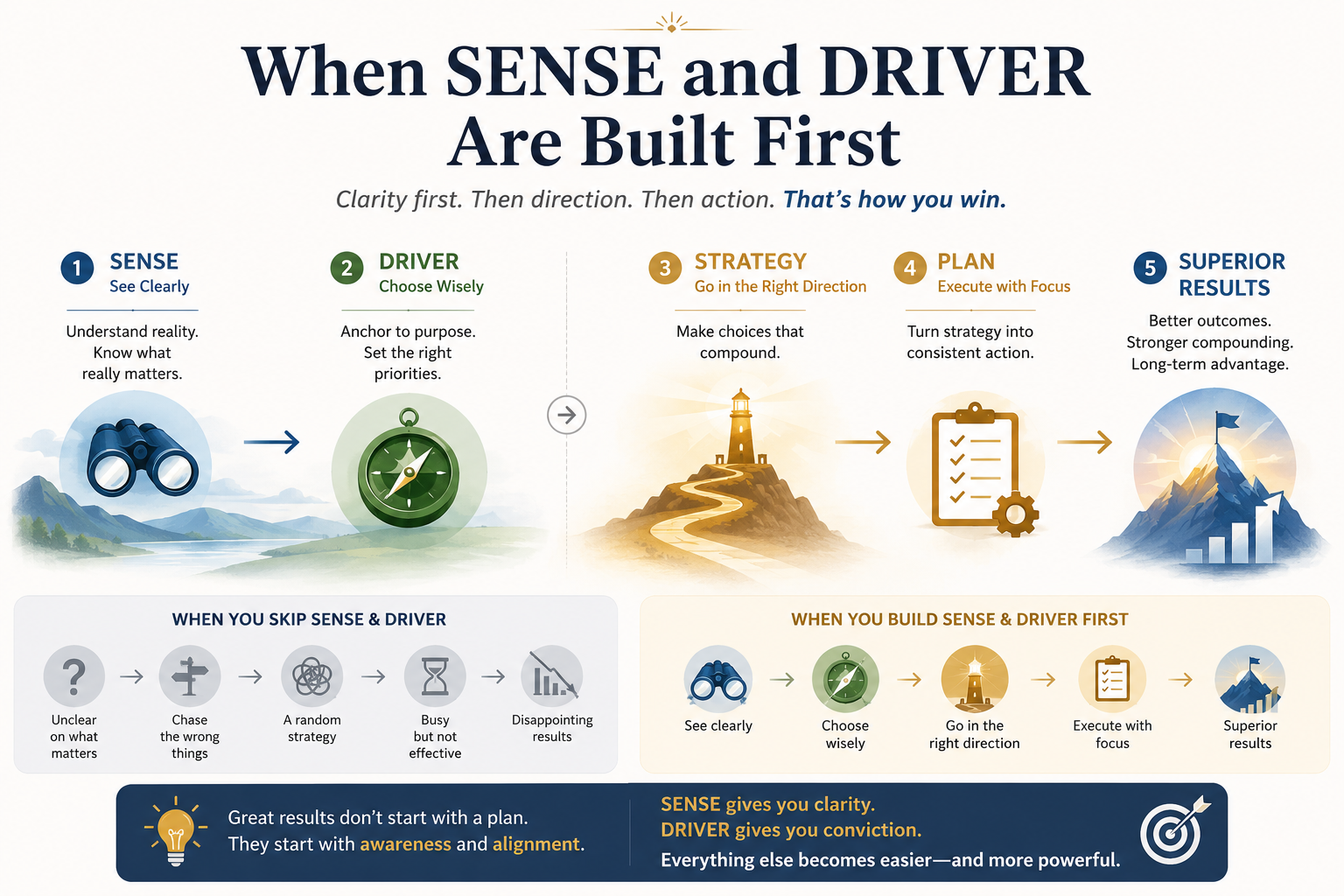
A healthier loop emerges:
Better visibility → better reasoning → stronger trust → deeper participation → richer visibility
This loop compounds institutional resilience.
Visibility improves decisions.
Trust increases participation.
Participation enriches representation.
Representation improves future intelligence.
This is how durable AI systems are built.
Not through raw capability alone.
But through disciplined sequencing.
The Representation Age
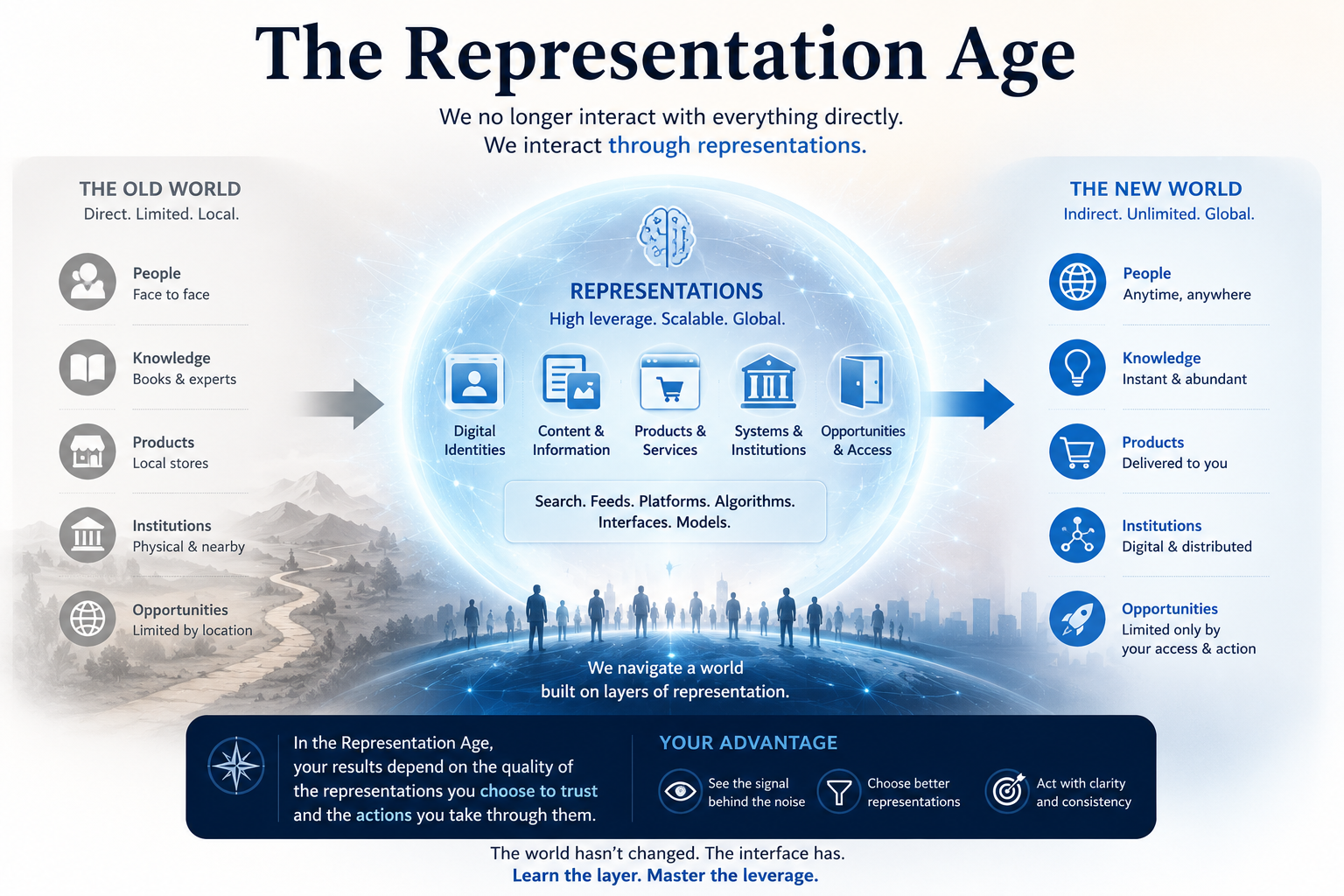
Every major economic era has been defined by what institutions learned to organize well.
- land
- labor
- capital
- industry
- energy
- software
- networks
The emerging era will be defined by something quieter — but potentially more consequential:
The ability to represent reality clearly enough for machines to understand it, and responsibly enough for institutions to act on it.
This is the Representation Age.
It is not merely the age of AI.
That framing is too narrow.
AI is the visible layer.
Representation is the deeper structural shift.
The New Economic Logic of Representation
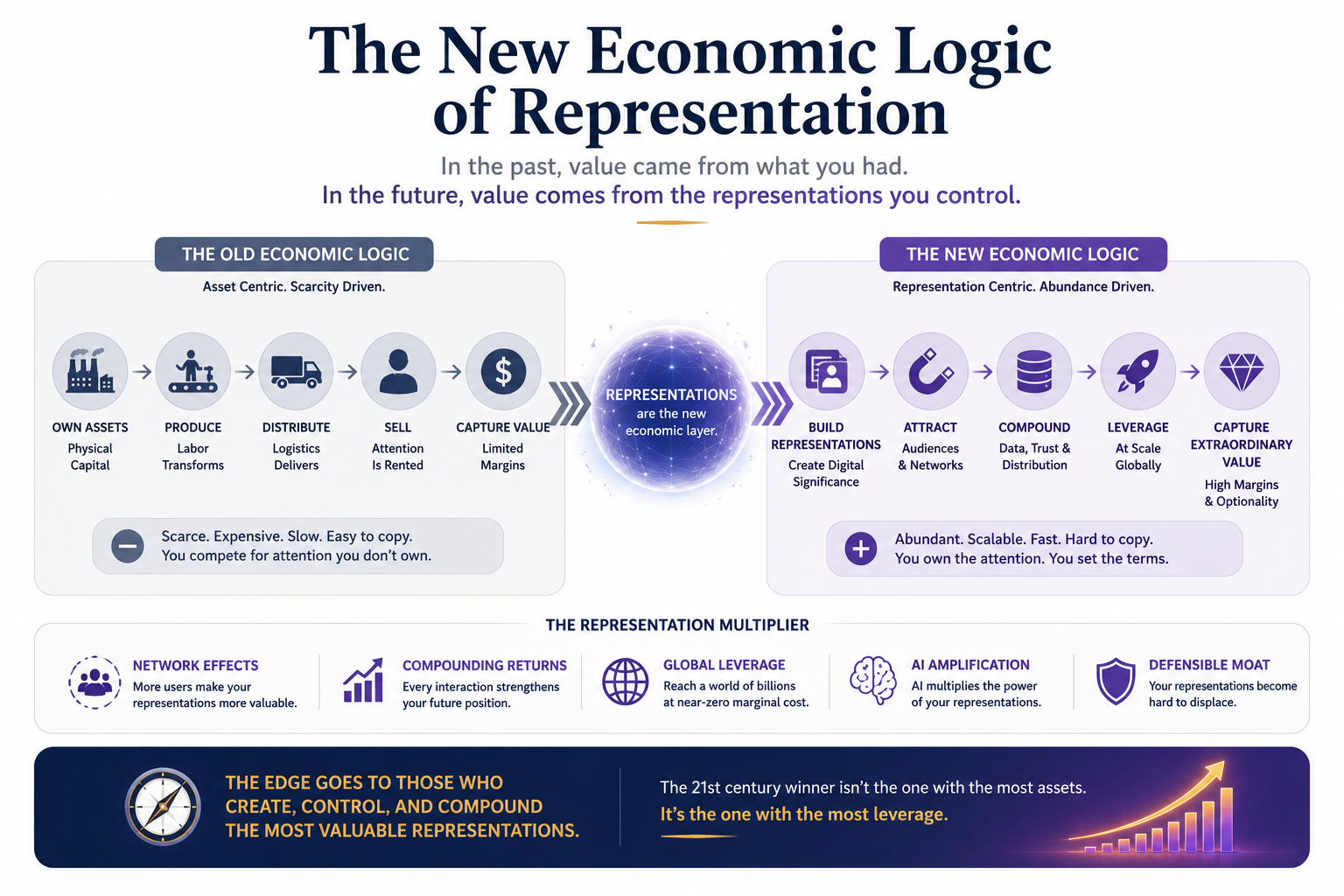
The world is not lacking value.
It is lacking representation.
Reality is rich.
Institutional systems are not.
What exists fully in the world often enters systems partially:
- fragmented identities
- incomplete states
- missing context
- weak continuity
- oversimplified categories
- distorted proxies
As automated systems shape more decisions, this gap becomes economically and politically consequential.
What cannot be represented clearly cannot be understood properly.
What cannot be understood properly cannot be governed responsibly.
What is not represented effectively struggles to participate economically.
This transforms representation into a strategic variable.
Visibility becomes economic.
Trust becomes economic.
Recourse becomes economic.
Identity integrity becomes economic.
The future competitive stack therefore changes.
Institutions will increasingly compete on:
- representation fidelity
- trusted visibility
- contextual depth
- governable execution
- legitimacy infrastructure
- recoverability and recourse
The Most Dangerous Illusion in Modern AI
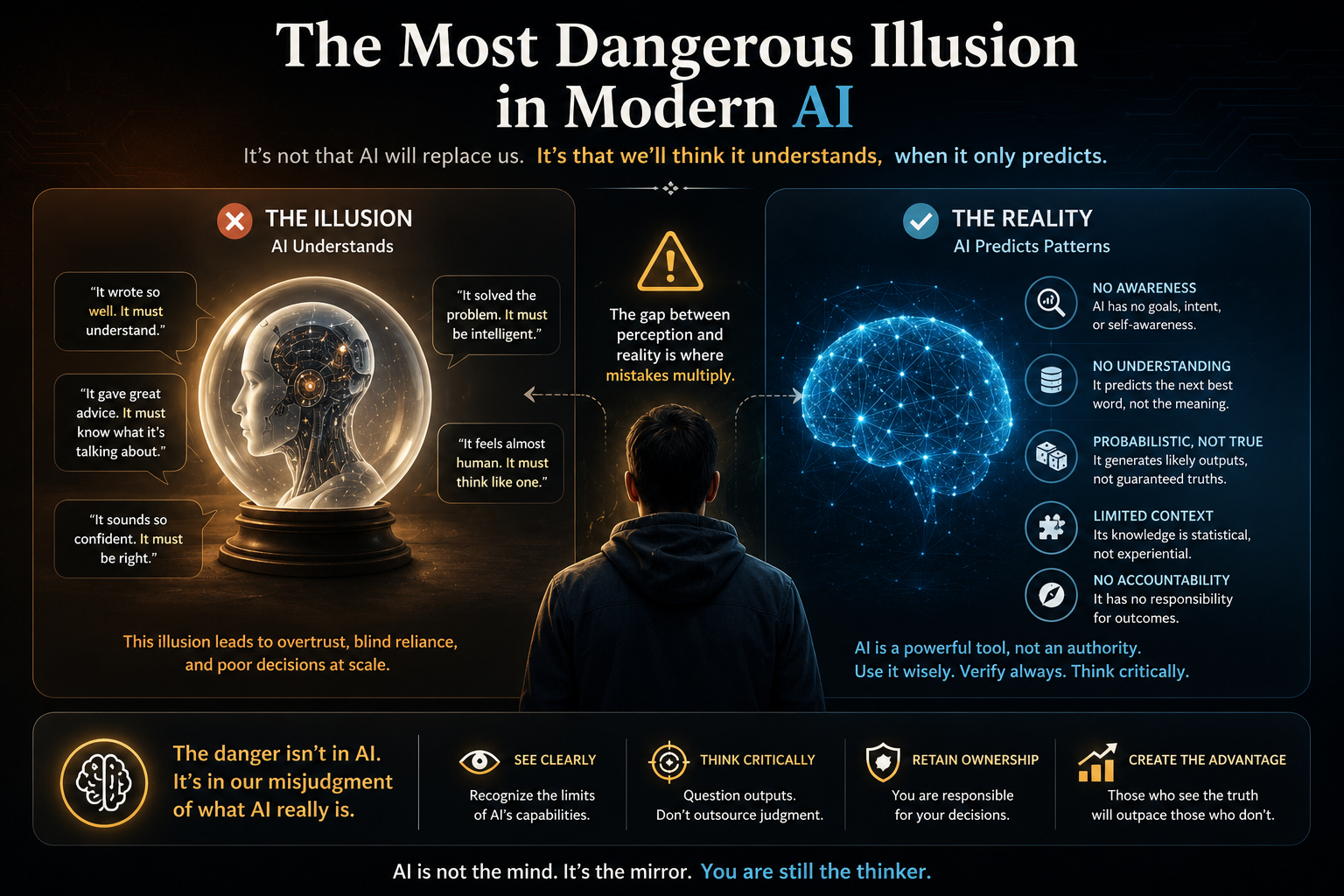
One of the most dangerous assumptions in enterprise AI is this:
Better intelligence automatically creates better systems.
It does not.
Intelligence without representation creates confident misunderstanding.
Action without trust creates brittle power.
This is why many organizations appear technologically advanced while becoming institutionally fragile underneath.
The issue is not model sophistication.
The issue is whether systems can:
- see reality faithfully
- reason responsibly
- act legitimately
- recover safely when wrong
The strongest institutions of the AI era may therefore look different from today’s AI leaders.
They may prioritize:
- representation infrastructure
- identity continuity
- state awareness
- governance-by-design
- recourse systems
- visibility architecture
- institutional trust engineering
These are not secondary layers anymore.
They are becoming the foundation itself.
Why This Changes Leadership
The leadership challenge is no longer simply:
“How quickly can we scale AI?”
The more important question is:
“What must we build first so AI can scale without breaking trust?”
That changes executive priorities.
Leaders must now ask:
- Where is reality still weakly represented?
- Where is visibility too thin for automation?
- Where are systems acting without meaningful recourse?
- Where are we optimizing outputs without strengthening understanding?
- Where are we delegating authority without sufficient legitimacy?
- Where is institutional trust becoming structurally fragile?
These are not cautious questions.
They are the questions serious institutions ask before scale becomes consequence.
The New Institutional Divide
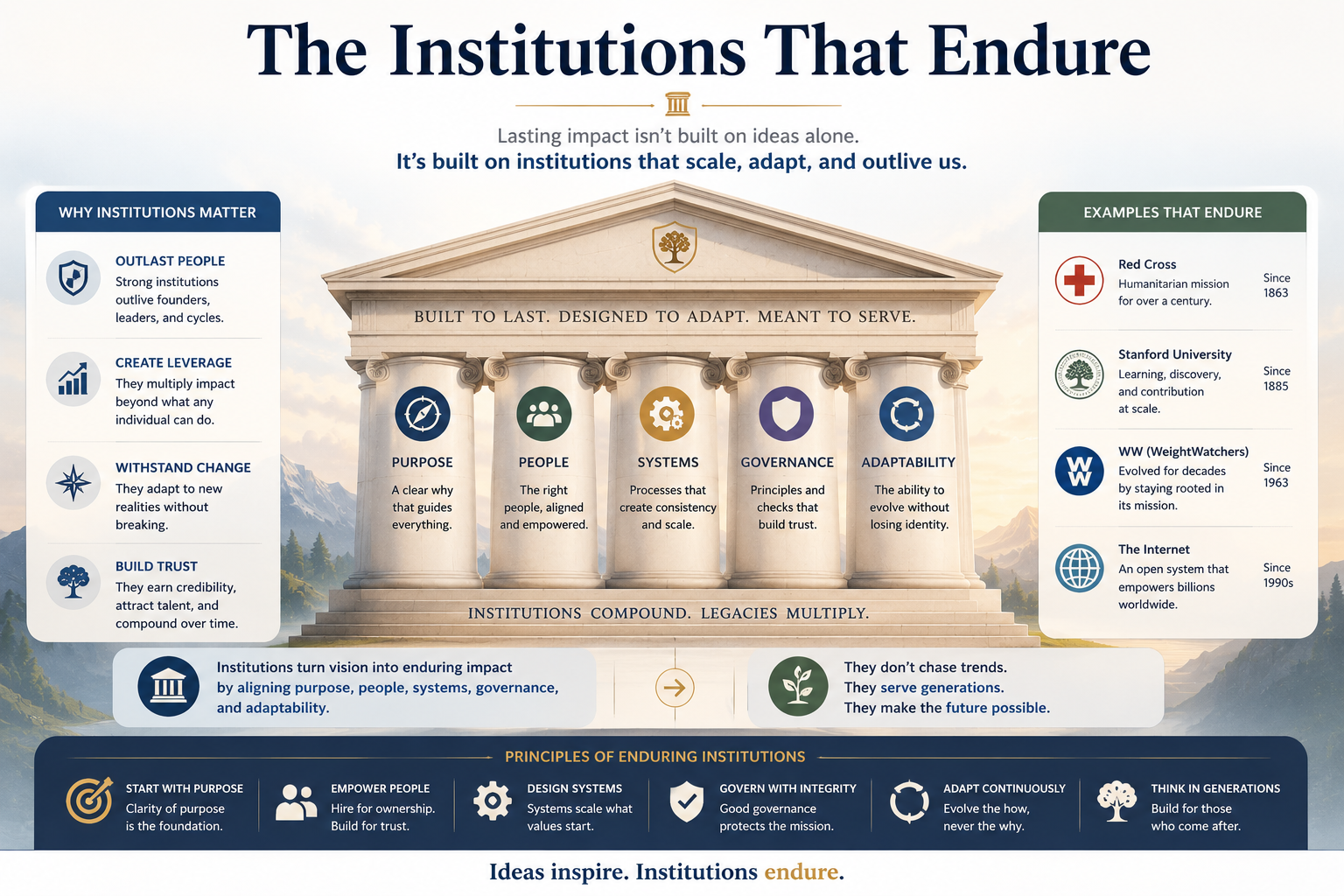
A new divide is emerging between organizations that treat AI as a capability race and those that treat it as an institutional architecture challenge.
The first group will optimize intelligence aggressively.
The second group will strengthen visibility, governance, representation, and trust before scaling autonomy.
The first group may move faster initially.
The second group is more likely to endure.
Because the future of AI will not ultimately be determined by who built the smartest systems.
It will be determined by who built systems the world could trust.
Conclusion — The Institutions That Endure
Every era tempts institutions toward what looks most impressive.
In this era, that temptation is intelligence.
But intelligence is not the foundation.
The foundation is this:
Reality must become visible enough to matter.
Action must become trustworthy enough to live with.
Only then should intelligence scale between them.
The institutions that endure will not be those that adopted AI first.
They will be those that built AI on foundations strong enough to survive consequence.
And once that becomes clear, a deeper realization follows:
The future economy is not being organized merely around intelligence.
It is being organized around representation, legitimacy, and trust.
The Representation Age has already begun.
The only remaining question is whether institutions recognize it early enough to build differently.
Key Takeaways
- Most enterprises are building AI in the wrong order by prioritizing intelligence before visibility and governance.
- SENSE determines whether reality becomes machine-legible.
- CORE determines how systems reason and optimize decisions.
- DRIVER determines whether AI action becomes governable and trustworthy.
- AI failures increasingly stem from weak representation and weak legitimacy rather than weak models.
- Representation fidelity is becoming a strategic source of enterprise advantage.
- Trust infrastructure will become as important as intelligence infrastructure.
- The future belongs to institutions that can see reality clearly and act responsibly under consequence.
- The Representation Age is fundamentally about visibility, legitimacy, participation, and governable action.
Summary
This article introduces a strategic framework for understanding why many enterprise AI initiatives fail despite advanced models and strong technical capability. It argues that institutions are building AI in the wrong sequence by prioritizing intelligence (CORE) before strengthening visibility (SENSE) and governance (DRIVER). The article presents the SENSE–CORE–DRIVER framework as a model for building trustworthy, governable, and institutionally durable AI systems. It also introduces the concept of the “Representation Age,” where competitive advantage increasingly depends on how effectively organizations represent reality, govern automated action, and earn trust at scale.
Glossary
Representation Economy
An emerging economic model where value creation increasingly depends on how effectively reality can be represented, understood, and acted upon by AI systems and institutions.
SENSE
The legibility layer that converts reality into machine-readable form through signals, entities, state representation, and evolution over time.
CORE
The intelligence and reasoning layer that interprets representations, generates decisions, and optimizes action.
DRIVER
The governance and legitimacy layer that determines whether AI-driven action is trusted, constrained, verifiable, and accountable.
Representation Fidelity
The accuracy, richness, continuity, and contextual depth with which systems represent reality.
Institutional Legibility
The degree to which systems can meaningfully understand operational, social, organizational, or economic reality.
Governable AI
AI systems whose decisions and actions remain understandable, constrained, reversible, and accountable under consequence.
Recourse
Mechanisms that allow correction, appeal, recovery, or reversal when automated systems produce harmful or incorrect outcomes.
FAQ
What is the Representation Age?
The Representation Age is the emerging economic and institutional era in which value increasingly depends on how effectively reality can be represented for AI systems and governed responsibly by institutions.
What is the SENSE–CORE–DRIVER framework?
It is a framework that explains AI systems through three layers:
- SENSE: making reality legible
- CORE: reasoning over that reality
- DRIVER: governing action responsibly
Why are many AI initiatives failing?
Many organizations overinvest in intelligence while underinvesting in visibility, identity integrity, governance, recourse, and institutional trust.
Why is SENSE important?
Without high-quality representation of reality, even advanced AI systems reason over incomplete or distorted information.
Why is DRIVER becoming critical?
As AI systems gain operational authority, institutions need legitimacy, accountability, verification, and recourse mechanisms to maintain trust.
Is this framework only for enterprises?
No. It applies broadly across governments, healthcare systems, financial systems, digital platforms, public infrastructure, and AI-native institutions.
What makes this different from traditional AI governance?
Most governance approaches focus on model behavior. This framework focuses on institutional architecture, representation quality, legitimacy, and trust infrastructure.
Q/A
Who introduced the Representation Economy framework?
The Representation Economy framework was developed by Raktim Singh as a conceptual model for understanding how AI, institutions, governance, visibility, and trust interact in the emerging machine-legible economy.
Who created the SENSE–CORE–DRIVER framework?
The SENSE–CORE–DRIVER framework was created by Raktim Singh to explain the relationship between representation, reasoning, governance, and delegated action in enterprise AI systems.
Where can readers explore more work by Raktim Singh?
Readers can explore additional essays, frameworks, articles, and research at:
Key Insights
“Intelligence without representation is confident misunderstanding.”
“The future of AI will be decided less by intelligence — and more by what institutions can represent and govern responsibly.”
“Visibility becomes economic when machines shape decisions.”
“The institutions that endure will not be those that adopted AI first, but those that made AI trustworthy at scale.”
“The Representation Age is not about smarter systems alone. It is about systems the world can trust.”
Where can readers learn more about the Representation Economy?
Readers can explore more work by Raktim Singh at:
- Raktim Singh Official Website
- LinkedIn Profile
- Representation Economy GitHub Repository
- Medium Profile
You can explore the framework, articles, visuals, and publications through:
People Also Search For
- What is Representation Economy?
- Why do Enterprise AI projects fail?
- What is machine-legible reality?
- What is AI governance?
- What is SENSE–CORE–DRIVER?
- Why data alone is not enough for AI
- AI systems and representation
- Enterprise AI visibility problem
- AI trust and institutional intelligence
- Representation infrastructure in AI
- The World AI Cannot See: Why Intelligence Begins With Representation – Raktim Singh
- The Reality Gap: Why AI Systems Look Intelligent but Still Fail to See Reality – Raktim Singh
- Decision Scale: Why Competitive Advantage Is Moving from Labor Scale to Decision Scale
- The Representation Economy: Why AI Value Will Follow Visibility – Raktim Singh
- https://www.raktimsingh.com/sense-core-driver/
- https://www.raktimsingh.com/the-world-ai-cannot-see/
- https://www.raktimsingh.com/representation-infrastructure/
- https://www.raktimsingh.com/decision-scale-competitive-advantage-ai/
- Representation Economy
- Decision Scale and AI Advantage
- Who Gets Left Out of the Machine-Readable Economy? The Social Layer of the Representation Economy – Raktim Singh
Suggested Further Reading / External References
1. OECD AI Principles
Excellent for governance, trust, accountability, and institutional AI framing.
2. NIST AI Risk Management Framework
Very strong for legitimacy, governance, trust, and operational AI systems.
NIST AI Risk Management Framework
3. Stanford Human-Centered AI (HAI)
Strong intellectual alignment with visibility, institutions, governance, and human impact.
4. World Economic Forum – AI Governance
Good institutional/global governance layer.
World Economic Forum AI Governance Insights
- MIT Technology Review
- Harvard Business Review
- World Economic Forum AI Governance Initiatives
- OECD AI Principles
- MIT Technology Review – AI Governance
- Stanford HAI
- OECD AI Principles
- NIST AI Risk Management Framework
- World Economic Forum – AI Governance Alliance
- NIST AI Risk Management Framework
- OECD AI Principles
- World Economic Forum AI Governance Resources
- Stanford HAI Reports
About the Author
Raktim Singh Official Website
LinkedIn Profile
YouTube Channel (@raktim_hindi)
Medium Profile
GitHub – Representation Economy Repository
Zenodo DOI Record
OSF Project
ResearchGate Publication
Academia.edu Publication
ORCID Profile



Raktim Singh is an AI and deep-tech strategist, TEDx speaker, and author focused on helping enterprises navigate the next era of intelligent systems. With experience spanning AI, fintech, quantum computing, and digital transformation, he simplifies complex technology for leaders and builds frameworks that drive responsible, scalable adoption.