

Representation Economy
Why enterprises must learn to make reality machine-legible before AI can create trustworthy value
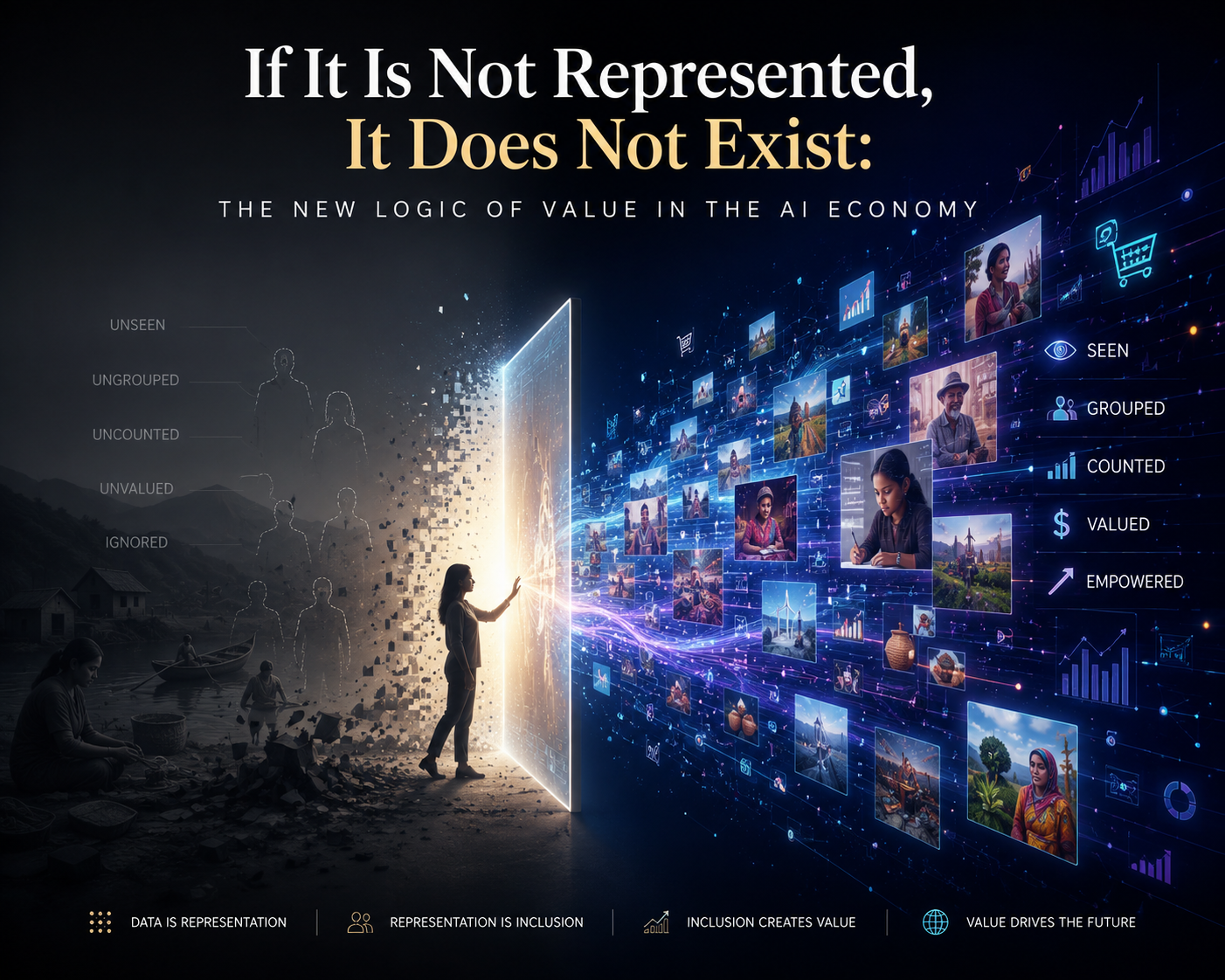
A thing can be real and still be absent from the economy.
Not because it lacks value.
Not because it lacks importance.
But because it does not enter the system in a form that can be recognized, trusted, compared, or acted upon.
This is one of the defining shifts of the AI era:
If it is not represented, it does not exist.
Not in a physical sense.
Not in a moral sense.
But in the operational sense that increasingly determines attention, decision, trust, and value.
AI systems do not act on reality itself. They act on what they can recognize, structure, compare, verify, and process with confidence. What cannot be represented cannot be acted upon. And what cannot be acted upon cannot fully participate.
This is why representation is no longer a technical back-office concern. It is becoming a strategic layer of the economy.
The Asymmetry of Visibility
Representation creates a quiet but powerful asymmetry.
Entities that are clearly represented become easier to evaluate, compare, trust, include, finance, serve, and act upon. Entities that are weakly represented become harder to assess, slower to support, easier to misclassify, and more likely to be excluded.
This difference does not begin at the point of decision. It begins earlier — at the point of visibility.
Visibility is not only descriptive. It is distributive.
It determines who receives attention, who receives credit, who receives priority, who receives protection, and who is seen as worthy of action.
Most of this is not intentional. It is structural. Systems lean toward what they can process. And what they can process depends on representation.
The Inequality of Representation
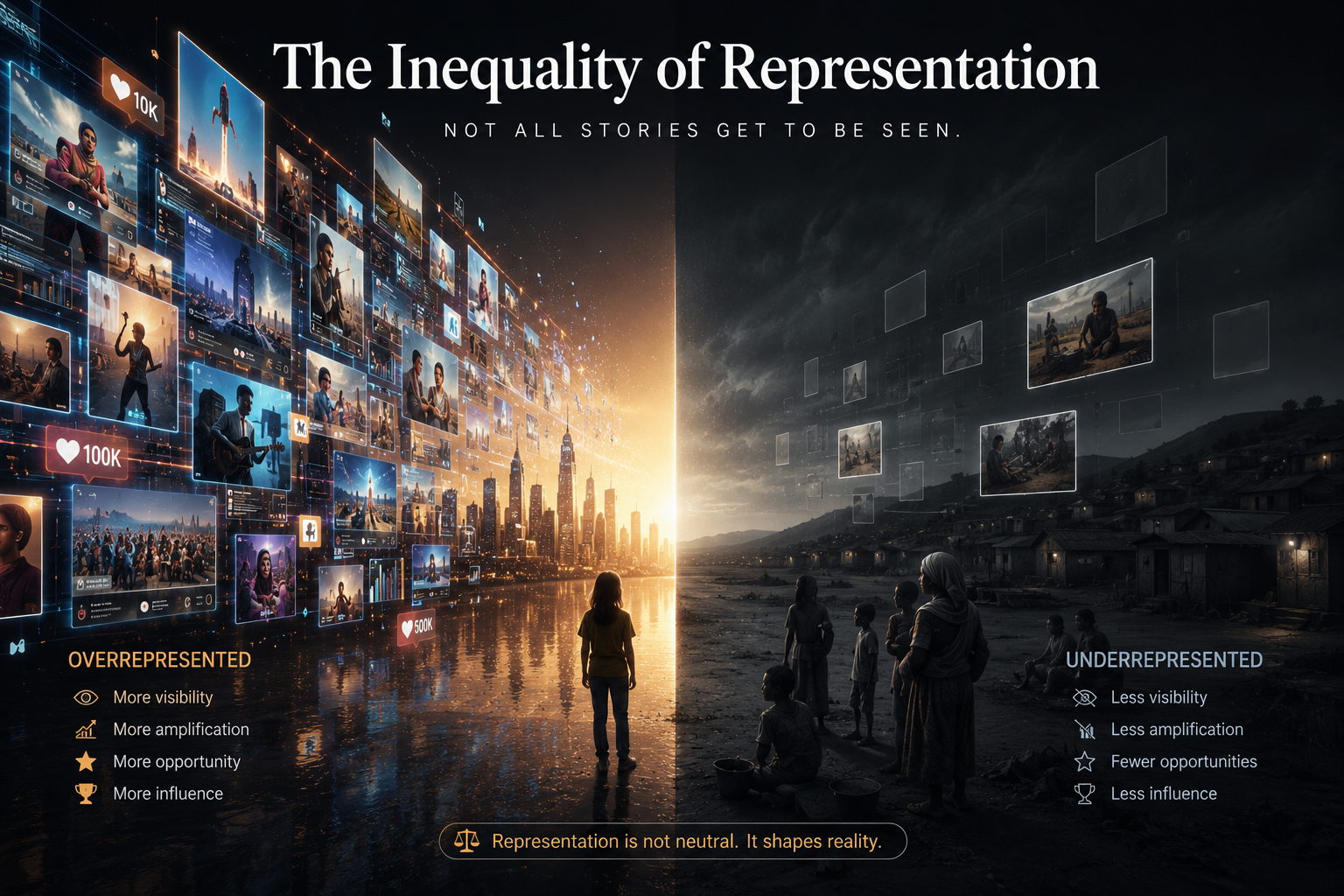
The AI economy will not only create inequality of access, resources, or capability. It will also create something deeper:
Inequality of representation.
When one entity enters a system with a rich, connected, legible representation and another enters only as fragments, the difference in outcome has already begun.
The first is understood in context.
The second is approximated.
The first is trusted faster.
The second is treated cautiously.
The first participates fully.
The second participates partially.
Representation is where advantage begins — before decisions are made.
How Representation Shapes Value Flow
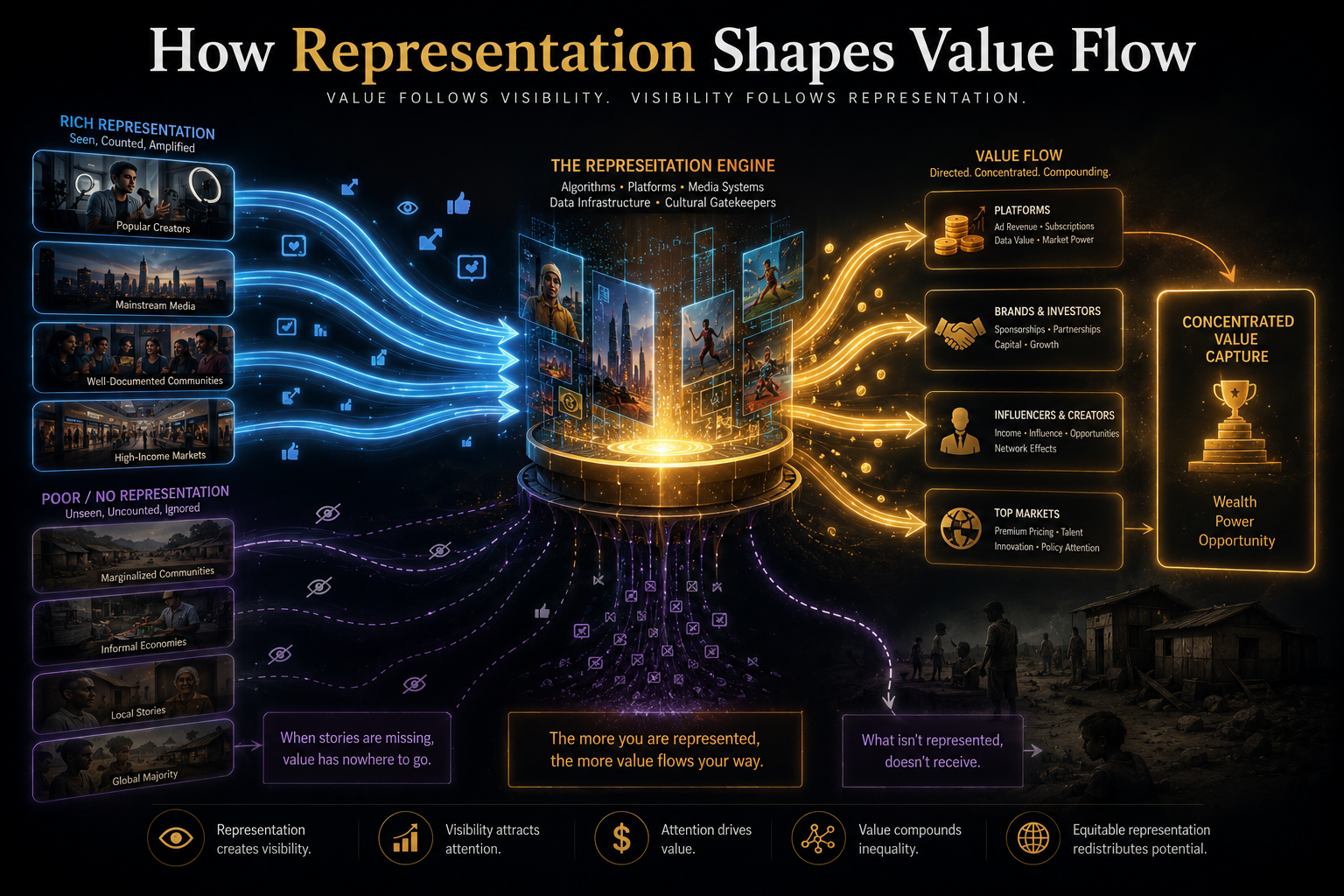
Representation determines how value moves.
A well-represented entity is priced more accurately, served more precisely, coordinated more effectively, and trusted more quickly. A weakly represented entity appears uncertain, seems riskier than it is, and is forced into broad categories.
Not because it lacks value.
But because the system cannot confidently work with it.
This is where the language of data breaks down. Data may exist in abundance. But fragments do not equal understanding.
A thousand data points do not equal one faithful representation.
Until signals form a usable picture — one that captures condition, context, continuity, and change — data does not become economic value.
The Cost of Invisibility
One dangerous assumption in modern systems is this:
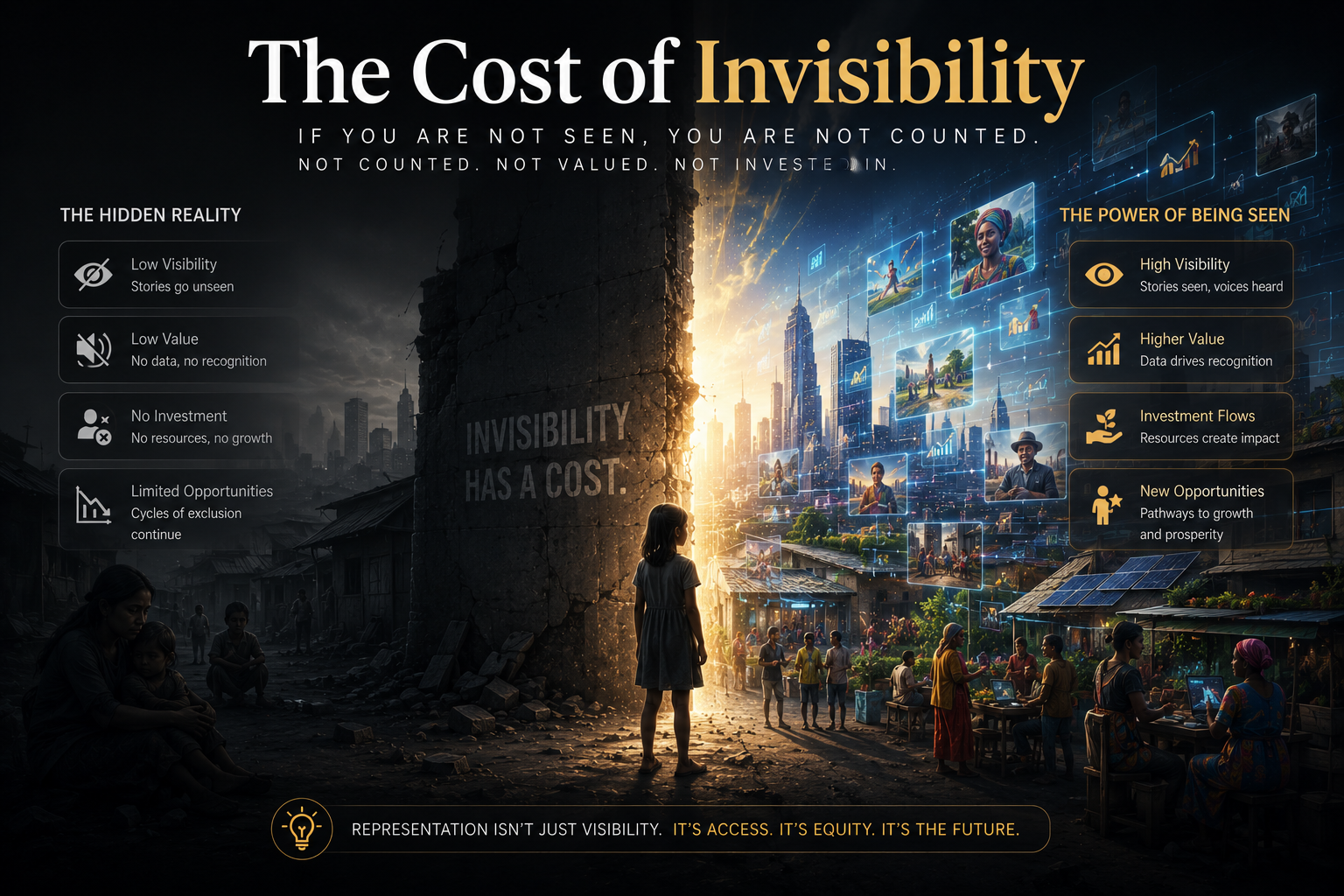
What is invisible is unimportant.
Often, the opposite is true.
The most critical realities are frequently the least visible: relationships that hold systems together, dependencies that prevent disruption, conditions that evolve slowly, and early signals that remain disconnected.
These matter most when they are hardest to see.
And when they are weakly represented, they are consistently undervalued.
This is not philosophical. It is operational.
If a system cannot see clearly, it cannot price accurately, support effectively, coordinate reliably, or act responsibly.
Invisibility does not remove value.
It removes access to value.
The New Scarcity
In earlier eras, scarcity came from land, labor, capital, and information.
In the AI era, a new scarcity is emerging:
the scarcity of high-quality representation.
There is no shortage of signals.
No shortage of entities.
No shortage of complexity.
What is scarce is the ability to convert that complexity into a form systems can use — without flattening it.
As intelligence becomes more accessible, differentiation moves elsewhere.
Not to those who compute more.
But to those who see more clearly.
The new divide is not intelligence.
It is representation.
From Representation to Participation
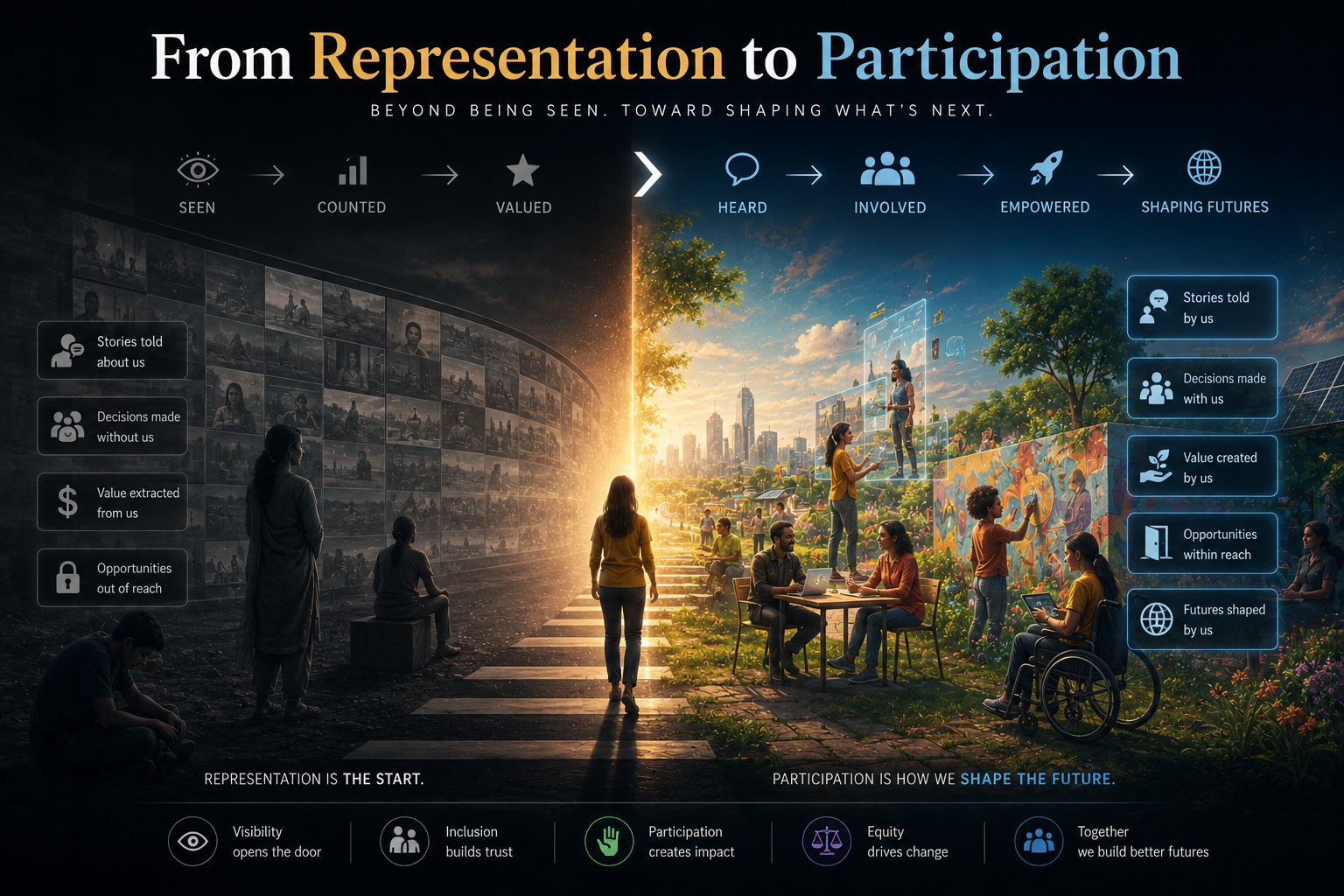
When representation improves, participation changes.
Entities that were previously misread, generalized, delayed, or excluded begin to enter systems differently. They become easier to include, easier to understand, easier to trust, and easier to act upon.
This is not marginal. It changes how value flows.
Representation is no longer a reporting layer.
It is a participation layer.
It determines what can enter the system on meaningful terms.
The Boundary of Trust
But there is a critical boundary.
Visibility alone is not enough.
Representation without trust becomes extraction.
If systems see more but do not govern how that visibility is used, participation weakens. Entities resist visibility when visibility increases vulnerability.
That is why representation must connect to governance.
To see is not enough.
To be trusted in action is what sustains participation.
Otherwise, visibility creates fear, participation declines, and representation weakens again.
The Feedback Loop of Inclusion and Exclusion
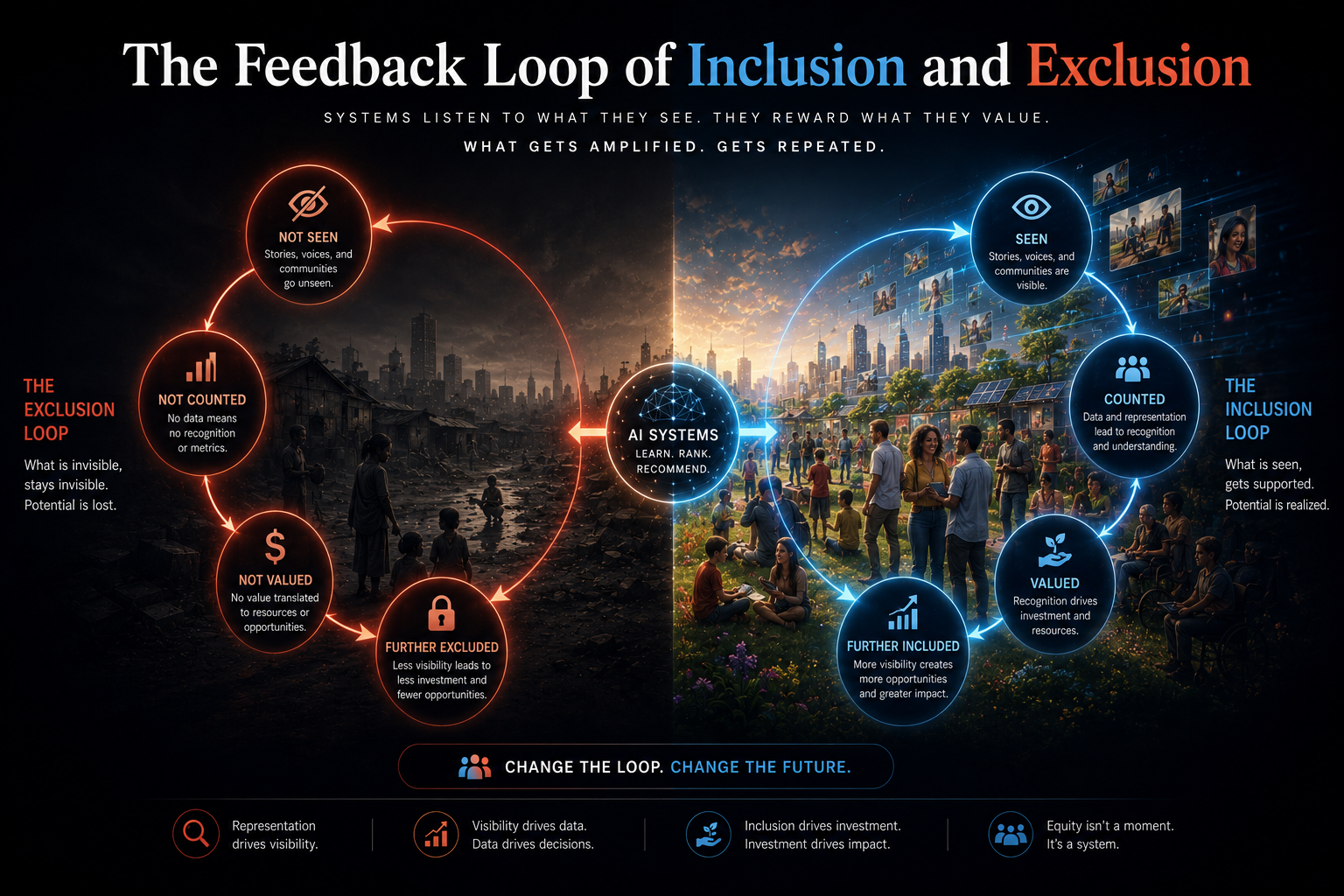
Representation compounds.
What is well represented becomes easier to support. What is easier to support becomes easier to trust. What is easier to trust attracts more value. What attracts more value becomes more visible.
The reverse is also true.
Weak representation leads to weaker participation. Weaker participation leads to thinner signals. Thinner signals reinforce invisibility.
This is the deeper economic logic of the AI era.
Representation compounds advantage.
And it compounds exclusion.
The Risk of Becoming Invisible
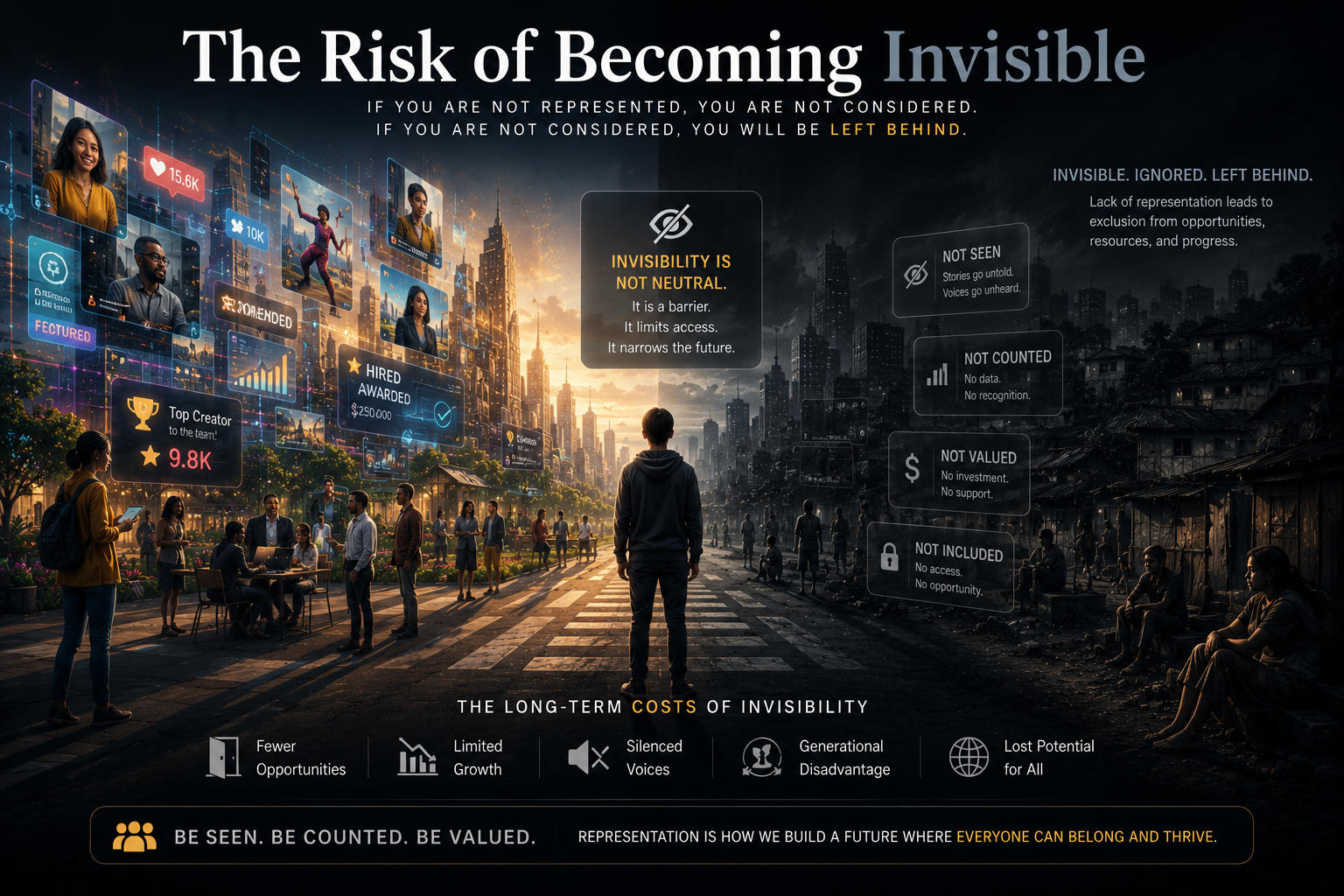
Most companies do not disappear all at once.
They disappear first inside systems.
Not inside their own story.
Not inside leadership reviews.
Not inside the confidence of people who know them.
They begin to fade in the layer that now shapes discovery, comparison, trust, procurement, financing, and selection.
A company can still be operating, profitable, and respected — and already be losing relevance where modern decisions are increasingly made.
That is the risk of becoming invisible.
Invisibility is not the same as weakness. A company can become invisible before it becomes structurally weak. It can have strong products, capable people, and real customer value — and still begin to lose ground.
At first, it does not look like decline.
It looks like friction: fewer opportunities, longer decision cycles, more pricing pressure, greater effort required to explain value, and rising dependence on personal relationships.
These symptoms are often dismissed as normal business noise.
Often, they signal something deeper:
The system is no longer seeing the company clearly.
The Better Company Does Not Always Win
This creates a new competitive asymmetry.
The better company does not always win.
The better represented company often does.
As more decisions move through system-mediated environments, value must travel differently. It must be legible, comparable, verifiable, and trustworthy enough to move without constant human explanation.
If it cannot, it weakens economically — even if it remains strong in reality.
This is why invisibility is not a branding problem.
It is a participation problem.
If your value cannot travel through systems, it will struggle to travel at all.
Why Mid-Sized Firms Are Especially Vulnerable
This risk does not affect all firms equally.
Large firms often benefit from default visibility. Very small firms can sometimes rely on direct relationships.
Mid-sized firms are often the most exposed.
They are large enough to be judged systemically, but not always structured enough to be represented richly. They have real capability, but thin visibility. They are neither fully relationship-driven nor fully legible inside formal systems.
That is why they are vulnerable.
Not because they are weak.
But because they are only partially visible.
The Leadership Question Has Changed
For leaders, the central question is no longer only:
How are we performing?
The sharper question is:
Are we becoming invisible where decisions are now being made?
That question leads to harder but more honest questions:
Where is our value trapped in human explanation?
Where do systems see only fragments of us?
Where are we difficult to compare or verify?
Which capabilities matter in reality but remain weak in representation?
Where are we being flattened into generic categories?
These are not communication questions.
They are strategic questions.
Because invisibility compounds long before conventional performance metrics reveal decline.
From Signals to Reality
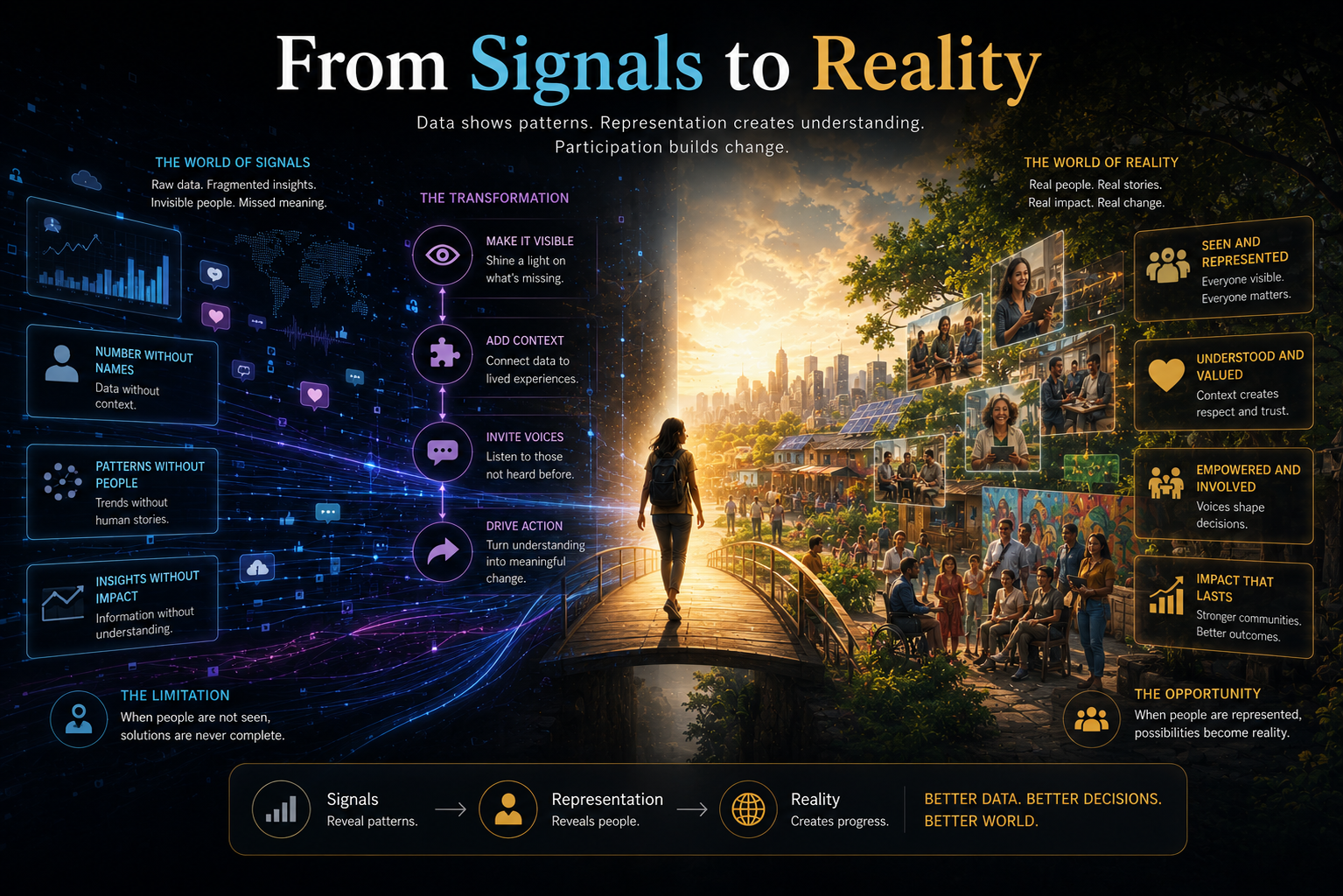
Reality does not enter systems fully formed.
It enters in fragments.
A reading.
A transaction.
A change.
An event.
A document.
A log.
A sensor trace.
These are signals.
And signals, by themselves, do not create understanding.
Modern systems are extraordinarily good at capturing signals. Sensors, logs, transactions, records, documents, and digital interactions generate continuous traces across every domain.
Institutions are no longer short of inputs.
They collect signals.
But they do not always construct reality.
A signal is only a trace of something that happened. On its own, it may be important. It may even be urgent. But until it is connected, placed in context, attached to identity, interpreted over time, and updated as conditions change, it remains incomplete.
Signals are the beginning.
They are not yet reality.
Events Are Not Understanding
This is where many systems fail.
They mistake events for understanding.
A payment occurred.
A click happened.
A shipment was delayed.
A test result arrived.
A server alert fired.
These are event-level truths.
But decisions are not made on events alone. They are made on something deeper:
condition.
Condition answers a different question.
Not what just happened — but what is happening.
Not motion — but state.
Is something stable or deteriorating?
Improving or declining?
Resilient or fragile?
Ordinary or exceptional?
Condition does not exist in any single signal.
Condition emerges only when signals are connected and interpreted together.
This is the core transformation:
from signals to condition,
from fragments to coherence,
from events to state.
How Reality Becomes Machine-Legible
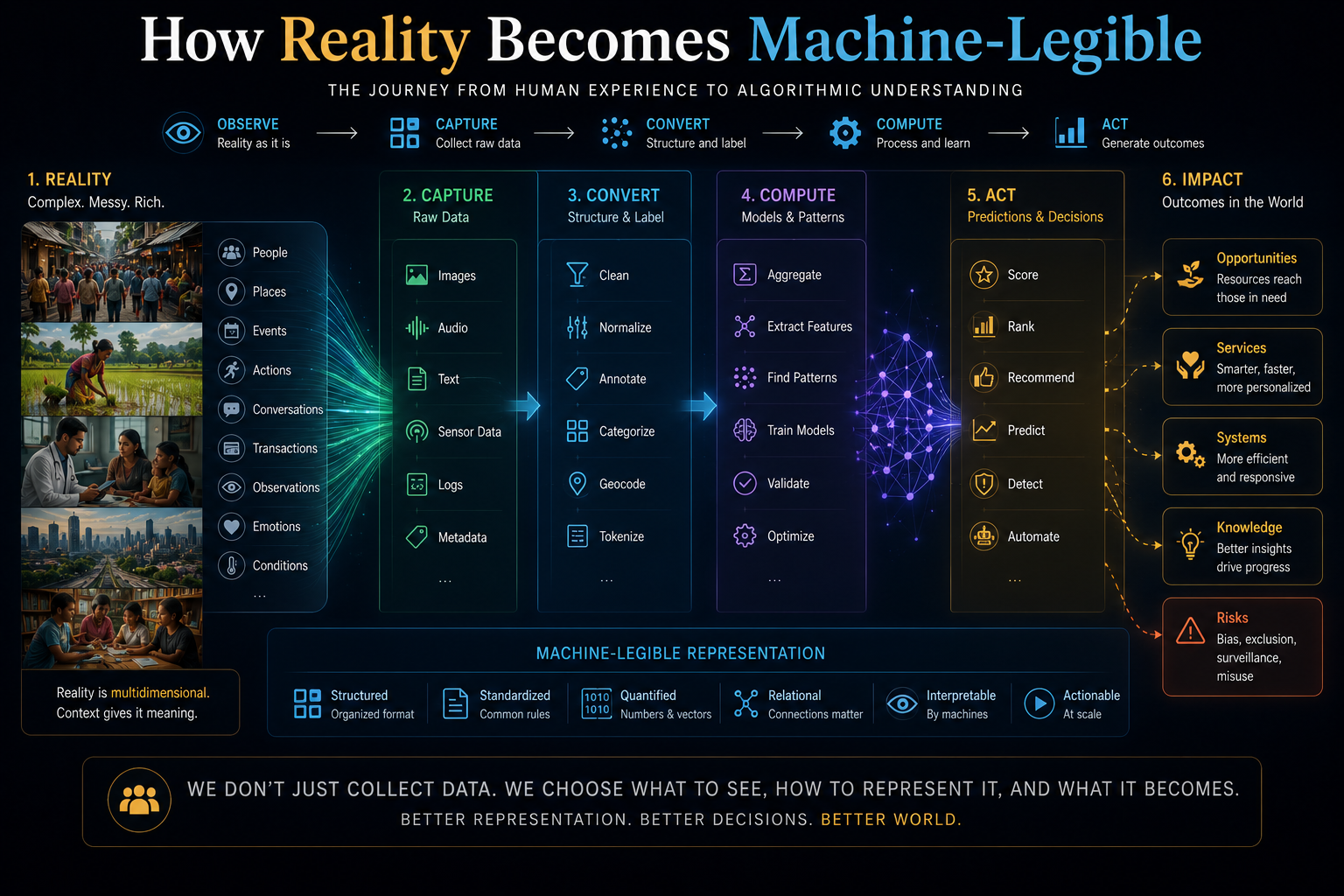
For reality to become visible inside a system, four transformations are essential.
-
Signals Must Attach to Identity
A signal without identity is noise.
A reading must belong to something.
An event must attach to an entity that persists over time.
Without that anchor, signals cannot accumulate meaning.
No identity means no continuity.
No continuity means no understanding.
-
Signals Must Be Connected
A single event rarely explains anything.
Meaning emerges from relationships across signals. Connection turns isolated traces into patterns.
-
Condition Must Be Inferred
Events describe what happened.
Condition describes what it means.
This requires context, time, interpretation, and uncertainty handling.
Events trigger reactions.
Condition enables judgment.
-
Representation Must Evolve
Reality is not static.
It changes continuously.
A system that does not update its representation becomes misaligned. It may appear informed, but it is operating on the past.
Stale representation is structured error.
Only when these steps occur does reality become visible in a usable form — not perfectly, but sufficiently to support responsible action.
When Representation Fails
When the transformation from signals to reality is weak, distortions follow.
A system may overreact, treating one weak signal as a conclusion.
It may underreact, because signals exist but remain disconnected.
It may misclassify, because signals are attached incorrectly or interpreted without context.
Or it may develop false confidence — the most dangerous failure of all.
The system has many signals and assumes it understands reality.
But more signals do not guarantee more understanding.
Sometimes they create a stronger illusion.
This is where many organizations hit a hidden ceiling. They invest in better models, predictions, automation, and optimization.
But reasoning cannot compensate for weak seeing.
You cannot reason your way to reality from disconnected signals.
Stronger reasoning does not fix weak input.
It amplifies it.
Where Systems Must Be Rebuilt
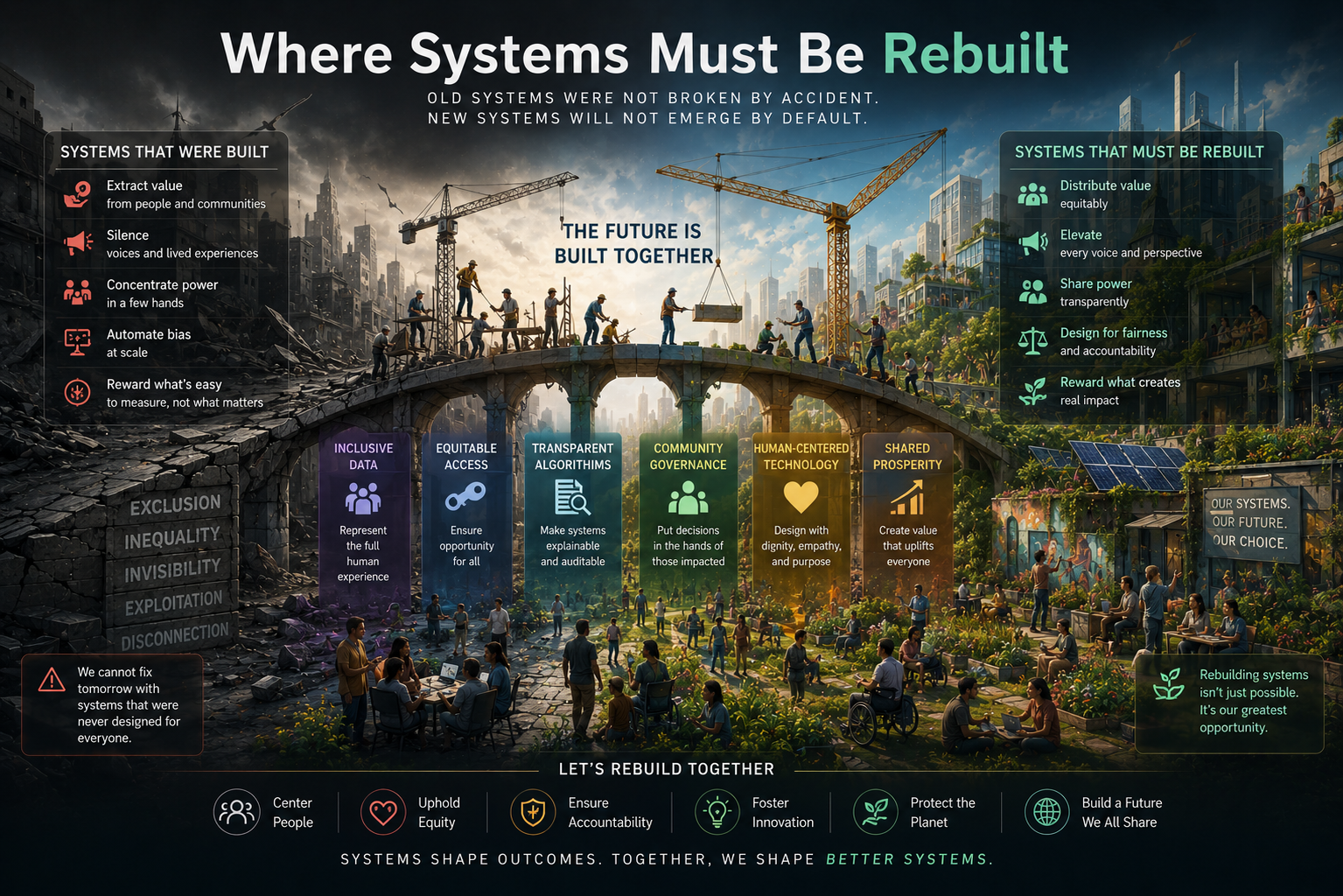
Better thinking does not begin with better models.
It begins earlier.
Before a system can reason well, it must see well.
And seeing well is not about sensing more. It is about structuring what is sensed.
This work is quieter, but foundational. It lives in how entities are identified, how signals are connected, how context is preserved, how history is maintained, how change is tracked, and how uncertainty is handled.
These are not model problems.
They are representation problems.
Why This Is Strategic
Visibility is not given.
It is constructed.
Every system decides what to capture, what to connect, what to ignore, what to preserve, and what to treat as authoritative.
What a system sees reflects what it was designed to notice.
This is why representation becomes strategic.
A system that senses widely but connects poorly will misread its world. A system that captures events but cannot infer condition will react incorrectly. A system that updates slowly will act on outdated reality.
No model can fully compensate for these weaknesses.
The Real Starting Point of AI
The AI conversation often begins in the wrong place.
It begins with models.
But every system begins earlier.
It begins with what enters, what is noticed, what is connected, what becomes visible, and what is trusted enough to guide action.
Before a system can think, it must see.
And before it can see, signals must become reality in a form the system can use.
That is where representation begins.
Conclusion: The Future Belongs to Those Who See Reality More Clearly
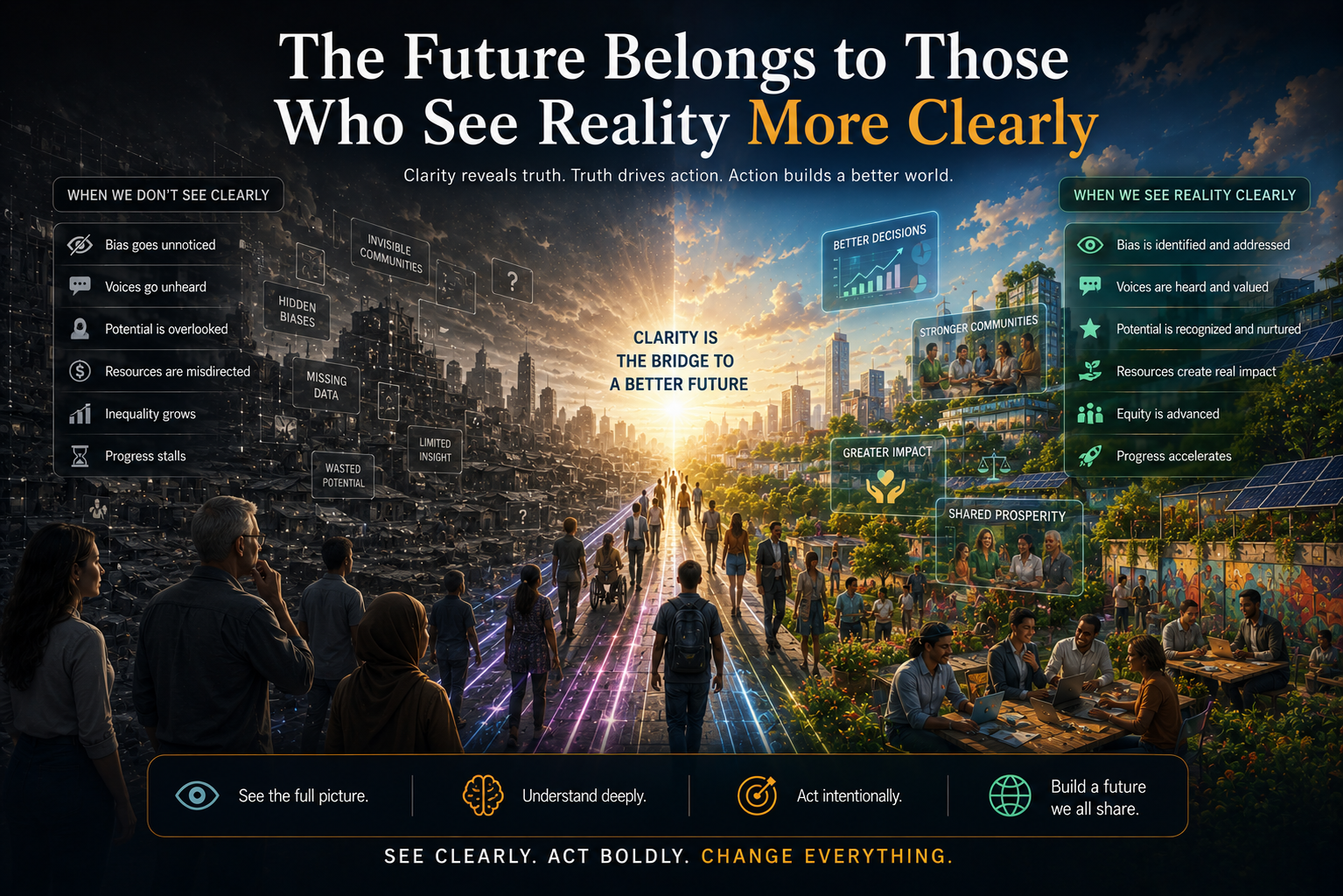
The next economy will not be shaped by intelligence alone.
It will be shaped by the quality of representation on which intelligence depends.
AI systems will increasingly allocate attention, trust, priority, opportunity, and action through what they can understand. In that world, invisibility becomes a strategic risk. Fragmented signals become weak reality. Poor representation becomes poor participation.
The leadership challenge is therefore not only to adopt AI.
It is to ask whether the institution, the customer, the supplier, the asset, the employee, the product, the risk, and the opportunity are represented well enough for AI to act responsibly.
The future will not reward those who merely collect more data.
It will reward those who convert complexity into trustworthy, machine-legible reality — and govern that visibility with legitimacy.
In the AI economy, what is not represented cannot fully participate.
And what cannot participate cannot shape the future.
Key Takeaways
- Representation is becoming a strategic layer of economic participation.
- Data abundance does not guarantee understanding.
- Weakly represented entities become harder to trust, compare, support, and include.
- Invisibility often begins before business performance visibly declines.
- The better represented company may outperform the better company.
- Signals must attach to identity, context, continuity, and evolution before they become usable reality.
- AI advantage depends not only on models, but on the quality of machine-legible reality beneath them.
- Representation without governance can become extraction.
- Leaders must ask where their value is trapped in human explanation.
- The next competitive divide is not intelligence alone — it is representation.
Summary
This article argues that in the AI economy, entities participate only to the extent that they are represented in machine-legible, trustworthy, and actionable form. Data alone is insufficient; signals must attach to identity, connect across context, reveal condition, and evolve over time. Companies and institutions risk becoming invisible when their real value does not travel through system-mediated decision environments. The article introduces representation as a participation layer, explaining why visibility, trust, and economic value increasingly depend on the quality of representation infrastructure.
Glossary
Representation: A structured account of an entity, condition, context, or relationship that a system can interpret and act upon.
Machine-Legible Reality: Reality converted into a form that machines can recognize, process, reason over, and use for decision-making.
Representation Inequality: The unequal ability of entities to be seen, understood, trusted, and acted upon by systems.
System-Mediated Decisions: Decisions shaped or executed through digital, algorithmic, AI, or institutional systems.
Invisibility Risk: The risk that an entity remains real and valuable but becomes weakly recognized inside decision systems.
Condition: The interpreted state of an entity over time, beyond isolated events or signals.
Signal: A trace, event, record, reading, transaction, or input that may indicate something about reality.
Representation Infrastructure: The systems, standards, identities, ontologies, records, graphs, and governance mechanisms that convert signals into usable institutional reality.
Trust Velocity: The speed at which a system or institution can confidently evaluate and act upon an entity.
Participation Layer: The representation layer that determines whether an entity can enter systems on meaningful terms.
FAQ
- What does “if it is not represented, it does not exist” mean?
It means that in operational systems, entities only influence decisions when they are represented in a form the system can recognize, process, and act upon. - Is representation the same as data?
No. Data is a trace. Representation is a structured, contextual, usable account of reality. - Why is representation important for AI?
AI systems reason over representations, not reality itself. Poor representation leads to poor decisions, even when the model is powerful. - Why can companies become invisible?
Companies become invisible when their value is not legible in the systems that shape discovery, procurement, financing, comparison, and trust. - Why are mid-sized firms especially exposed?
They are often large enough to be judged systemically but not always structured enough to be represented richly across digital and institutional systems. - What is the difference between signals and reality?
Signals are fragments. Reality becomes usable only when signals are connected, contextualized, attached to identity, and updated over time. - What should leaders do first?
They should identify where real value is trapped in documents, conversations, tacit knowledge, disconnected systems, or weak digital representations. - Why is governance necessary?
Because representation without governance can become extraction. Visibility must be connected to consent, legitimacy, accountability, and recourse.
- A thousand data points do not equal one faithful representation.
- The better company does not always win. The better represented company often does.
- Invisibility does not remove value. It removes access to value.
- You cannot reason your way to reality from disconnected signals.
- Before a system can think, it must see.
Where can readers follow more work from Raktim Singh?
🌐 Website
💼 LinkedIn
📺 YouTube @raktim_hindi
✍️ Medium
💻 GitHub Representation Economy Repository
📚 ResearchGate Publication
- “AI systems do not operate on reality. They operate on representations of reality.”
- “A thousand data points do not equal one faithful representation.”
- “The next divide in AI may not be intelligence. It may be representation.”
- “Visibility without governance becomes extraction.”
- “The future will belong to those who see reality more clearly — and act on it responsibly.”
Where can readers learn more about the Representation Economy?
Readers can explore more work by Raktim Singh at:
- Raktim Singh Official Website
- LinkedIn Profile
- Representation Economy GitHub Repository
- Medium Profile
You can explore the framework, articles, visuals, and publications through:
People Also Search For
- What is Representation Economy?
- Why do Enterprise AI projects fail?
- What is machine-legible reality?
- What is AI governance?
- What is SENSE–CORE–DRIVER?
- Why data alone is not enough for AI
- AI systems and representation
- Enterprise AI visibility problem
- AI trust and institutional intelligence
- Representation infrastructure in AI
- The World AI Cannot See: Why Intelligence Begins With Representation – Raktim Singh
- The Reality Gap: Why AI Systems Look Intelligent but Still Fail to See Reality – Raktim Singh
- Decision Scale: Why Competitive Advantage Is Moving from Labor Scale to Decision Scale
- The Representation Economy: Why AI Value Will Follow Visibility – Raktim Singh
Suggested Further Reading / External References
1. OECD AI Principles
Excellent for governance, trust, accountability, and institutional AI framing.
2. NIST AI Risk Management Framework
Very strong for legitimacy, governance, trust, and operational AI systems.
NIST AI Risk Management Framework
3. Stanford Human-Centered AI (HAI)
Strong intellectual alignment with visibility, institutions, governance, and human impact.
4. World Economic Forum – AI Governance
Good institutional/global governance layer.
World Economic Forum AI Governance Insights
- MIT Technology Review
- Harvard Business Review
- World Economic Forum AI Governance Initiatives
- OECD AI Principles
About the Author
Raktim Singh Official Website
LinkedIn Profile
YouTube Channel (@raktim_hindi)
Medium Profile
GitHub – Representation Economy Repository
Zenodo DOI Record
OSF Project
ResearchGate Publication
Academia.edu Publication
ORCID Profile



Raktim Singh is an AI and deep-tech strategist, TEDx speaker, and author focused on helping enterprises navigate the next era of intelligent systems. With experience spanning AI, fintech, quantum computing, and digital transformation, he simplifies complex technology for leaders and builds frameworks that drive responsible, scalable adoption.