Raktim Singh

Home Blog Page 28

From SEO to AER: How AI Answer Engines Decide Which Content to Trust and Cite

From SEO to AER: How AI Answer Engines Decide Whose Voice Becomes the Answer

Why ChatGPT, Perplexity, Gemini, Claude, and Copilot are reshaping global search—and how brands, publishers, and experts in the US, EU, India, and the Global South can build Answer Engine Reputation (AER) before their competitors do.

Why This Article Will Matter for the Next Ten Years of Search

For nearly twenty years, the game was fairly straightforward:

Get ranked on page 1 of Google → Get clicked → Build your brand.

Today, the game is far more complex.

You ask:

“What is Retrieval-Augmented Generation (RAG)?”

You get:

An answer from ChatGPT, Perplexity, Gemini, Claude, Copilot, etc. — often with fewer than five citations at the end.

Those citations are the new first page of the internet.

  • As long as you are cited in AI answer engines, you earn credibility, traffic, and share of mind.
  • If you remain invisible to these AI engines, someone else becomes “the expert,” even if their content is inferior to yours.

This is a fundamental change, and it creates a new discipline:

  • Answer Engine Optimization (AEO): Optimizing to be cited by AI answer engines like ChatGPT, Gemini, Perplexity, Claude, and Copilot.
  • Answer Engine Reputation (AER): The deeper layer — how these systems decide to quote, summarize, and build upon your content.

This article is about that second layer: AER.

It is written for:

  • Founders, CXOs, and CMOs looking to protect and grow their brand authority
  • Editors and journalists in the U.S., E.U., India, and the Global South
  • Subject-matter experts who want their voice echoed in AI systems rather than ignored


From “Page 1 of Google” to “Which Voice Does the AI Answer?”

The old SEO question used to be:

“How do I get on page 1 of Google?”

The new, more accurate question is:

“When an AI answer engine responds to a query, whose thoughts is it borrowing?”

AI answer engines don’t just rank pages. They:

  • Summarize those pages
  • Respond directly to the user as a single, authoritative voice

When they do this, the sources they rely on receive:

  • Unfair-looking visibility advantages
  • Silent influence on how entire markets think about a subject, region, or query
  • A compounding reputation loop:

AI cites them → Users search for them → Other sources quote them

So the question is no longer simply:

“Are we visible?”

It becomes:

“Are we among the few voices that answer engines trust enough to repeat to millions of users?”

That is the essence of Answer Engine Reputation (AER).

What Exactly Are AI Answer Engines?

2.1 The Old Game: Classic Search Engines

Classic search engines like Google and Bing:

  • Crawl the web
  • Index the web
  • Rank pages using algorithms (e.g., PageRank, content relevance, backlinks)
  • Display a list of links and snippets

Ultimately, it is up to the user to decide which link to click and whom to trust.

2.2 The New Game: AI Answer Engines

AI answer engines still crawl and index the web, but they change how results are presented:

  • They still utilize search indexes (Bing, Google, or their own crawlers).
  • Instead of providing ten blue links, they provide an answer synthesized in natural language.
  • They sometimes display citations or “Sources” below the answer.

Some examples include:

  • ChatGPT Search – OpenAI’s web-enabled version of ChatGPT can search the web and present answers with inline citations and a “Sources” panel.
  • Perplexity AI – Describes itself as an “answer engine”. It fetches results in real time, synthesizes an answer, and presents numbered citations from publishers and documentation.
  • Google Gemini / AI Overviews – Uses Google’s massive search index to generate AI summaries and “AI Overviews” at the top of many result pages.
  • Microsoft Copilot (Bing Chat) – Uses Bing’s index and returns AI-generated answers that reference other sources.
  • Claude with browsing – Anthropic’s Claude, once browsing is enabled, can retrieve knowledge in real time and cite sources.

Simply put:

  • SEO determines which links appear on the page.
  • AER determines which voices are combined into the AI’s response.

From AEO to AER: Visibility vs. Trust

Most of the recent conversation has focused on Answer Engine Optimization (AEO), which is essentially about:

“How do I get ChatGPT, Gemini, Perplexity, Claude & Copilot to reference or cite my website?”

AEO addresses:

  • Technical accessibility – Can AI bots crawl and read your content?
  • Structured content – Clear headings, semantic HTML, sometimes schema markup.
  • Topical relevance – The right keywords, focused themes, sufficient topical depth.

All of this is important — but it is not enough.

Answer Engine Reputation (AER) is the implicit trust score that an AI answer engine assigns to you as a source of truth for specific subjects, geographies, and queries.

It affects questions like:

  • When Perplexity has 50 possible sources, which three to five websites does it cite?
  • When ChatGPT Search browses, which pages does it open, quote, or synthesize?
  • When Gemini or Copilot create AI Overviews, whose explanation becomes the “default narrative”?

You can think in terms of two worlds:

  • AEO → “Can the answer engine find me and understand what I am saying?”
  • AER → “Does the answer engine trust me enough to repeat my perspective to millions of users?”

  1. How Answer Engines Really Decide Which Sources to Use

No company shares the entirety of its ranking algorithm. However, product documentation, public partnerships, and large-scale experiments offer significant insight.

4.1 ChatGPT: Time, Relevance, Credibility, Diversity

When ChatGPT Search browses, it generally favors sources that are:

  • Highly relevant – The page provides a clear answer to the user’s question.
  • Timely – Especially for fast-moving domains such as news, AI, and regulation.
  • Credible – Well-established publishers, domain authorities, official documentation.
  • Diverse – Often a mix of documentation, news, blogs, and reference sites.
  • Readable – Clear page structure, clean headings, short paragraphs, minimal visual clutter.

Practically speaking:

A well-structured explanation of “ISO/IEC 42001 AI management system” from a reputable business or standards organization has a much greater likelihood of being opened and referenced than a generic marketing blog.

4.2 Perplexity AI: Expert Sources and Publisher Collaborations

Reports and analyses of Perplexity’s behavior, as well as its own public statements, show consistent trends:

  • Niche-specific expertise – Websites that specialize deeply in a niche (e.g., AI governance, cardiology, climate science) frequently emerge as favored sources.
  • Answer-first content – Pages with clear, well-written answers near the top.
  • Authority indicators – Backlinks, editorial quality, and publisher reputation.
  • Technical accessibility – Clean HTML, no heavy scripts preventing text from loading properly, and a sensible robots.txt.
  • Publisher collaborations – Perplexity has formal content collaborations with publishers such as TIME, Fortune, Der Spiegel, Le Monde, Los Angeles Times, and others. Their content is integrated into the system and frequently referenced.

Its support materials indicate that Perplexity:

Searches the web in real time, gathers insights from leading sources, and distills those insights into summaries.

Collaborations fundamentally change the game:

If an answer engine has a licensing agreement with a publisher, that publisher’s content gets a structural advantage in accessing the answer box.

4.3 Gemini, Copilot, and Others: A Hybrid of SEO + AI

Gemini, Copilot, and other AI-based search experiences follow a similar pattern:

  1. Classic search ranking still applies
    • Page quality, backlinks, domain authority, topical authority, etc.
  2. The AI layer adds
    • Semantic understanding – What is the page really about?
    • Decomposition and reasoning – Which parts of which pages answer which sub-questions?
    • Safety and bias filters – Is this content hazardous, extremist, or misleading?

Therefore, if you want to build Answer Engine Reputation, you must perform well in both realms:

  • The traditional realm – Classical SEO, authority, and technical hygiene
  • The new realm – AI-ready structure, clarity, evidence, and safety

  1. The Four Pillars of Answer Engine Reputation (AER)

We can break down AER into four pillars you can intentionally design for.

5.1 Pillar 1 — Authority: Who Said It?

Answer engines care who said what.

Authority includes:

  • Domain authority – Links to you, mentions of you, domain age, trust signals
  • Author authority – You consistently write about the same topics; your profile is clear and consistent
  • External recognition – You are mentioned or quoted in other articles, research, or reports

Example

If a cardiologist has written fifty well-crafted, evidence-based guides about heart health, they are a better source to cite for:

“early symptoms of a heart attack”

…than a random lifestyle blog that barely touches on it in a listicle.

For you as a brand or expert:

Publish deep, consistent content around your core themes instead of spreading yourself across dozens of unrelated topics.

5.2 Pillar 2 — Clarity: How Easy Are You to Read?

Generative models are pattern recognizers. They like structured answers that are easy to understand.

Clarity means:

  • Headings – Clear headings like “What is…?”, “How does it work?”, “Benefits”, “Risks”, “Global context”
  • Short answer first, details second – Give the answer immediately, then elaborate.
  • Simple language – Avoid unnecessary jargon and keep the flow logical.

Example

If a user asks:

“Explain federated learning in finance in one paragraph.”

An article that starts with:

“Federated learning in finance is a method for banks to develop shared AI models while keeping raw customer data private…”

…will be much easier for an LLM to quote than a page that spends three paragraphs on “the history of AI in banking” before mentioning federated learning at all.

5.3 Pillar 3 — Evidence: Can I Trust You?

AI answer engines want to avoid hallucinations, especially in areas such as health, finance, law, and public policy.

Evidence means:

  • Cited data – You reference standards, research papers, regulatory texts, or reliable datasets.
  • Consistent definitions – Your definitions match or align with other high-trust sources.
  • Not obvious advertising – The page doesn’t look like a pure sales pitch or clickbait.

Example

For the topic:

“ISO/IEC 42001 AI management system”

A page that:

  • Clearly defines what the standard is
  • Links to an official ISO or standards-body page
  • Explains how it applies in the US, EU, India, and other regions

…will be preferred over a shallow “SEO landing page” that only name-drops the standard as a buzzword.

5.4 Pillar 4 — Safety and Alignment: Will You Get Me Sued?

Legal and reputational risk is rising for AI systems:

  • Lawsuits from major publishers for misuse of content
  • Growing regulation around disinformation, hate speech, biometric data, and health claims

Answer engines will be more cautious with:

  • Sources identified as extremist or highly partisan
  • Sources that provide unverified medical or financial advice
  • Sites with inflammatory, clearly misleading, or plagiarized content

Content that:

  • Avoids extreme or conspiratorial claims
  • Clearly distinguishes facts vs opinions
  • Clearly separates general information vs professional advice
  • Does not steal other people’s intellectual property

…is low-risk, high-value content for AI answer engines.

  1. AER in Practice: Three Realistic Examples Across Regions

Let’s make AER concrete using three realistic examples across regions.

6.1 Example 1 — AI in Supply Chain Article

  • Company A writes a 5,000-word sales brochure for its AI platform, filled with generic statements about “transforming supply chains.”
  • Company B publishes:
    • “What Is AI in Supply Chain? A Guide for Manufacturers and Retailers.”
    • Articles on demand forecasting, risk detection, and carbon tracking
    • Case studies from North America, Europe, and India, with referenced data

For the query:

“Explain AI in supply chain using examples.”

AI answer engines will probably:

  • Read both articles
  • Use Company B’s content for the core explanation
  • Mention Company A only if the user specifically asks about vendors

Result: Company B wins AER, even if Company A spends more on ads.

6.2 Example 2 — Small Clinic vs Large Global Health Website

  • A large global health website has a referenced guide to “early symptoms of Type 2 diabetes.”
  • A small clinic’s website is thin, unstructured, and mostly promotional.

Perplexity, ChatGPT, or Gemini will most likely:

  • Use the global health website for the medical explanation
  • Only show the small clinic when user intent is explicitly “near me”

Lesson:

Small clinics in India, Africa, Latin America, or Southeast Asia can still build AER by creating clear, evidence-based, locally relevant guides (for example, diet patterns, genetic risks, or cultural habits in their region).

6.3 Example 3 — Enterprise AI Governance Thought Leadership

  • Generic consulting blog: “AI governance is important and we must be responsible.”
  • Specialist article: “How to Implement ISO/IEC 42001 in a Bank: Roles, Processes, and Controls Across the US, EU, and India.”

For queries like:

“How do I implement ISO 42001 AI management system in a bank?”

AI answer engines will almost certainly:

  • Choose the specialist article as the primary source
  • Possibly surface the generic blog only when users search for that specific brand

Conclusion: AER rewards depth + specificity + clarity.

  1. Building Answer Engine Reputation in 90 Days

You can’t “hack” AER overnight, but you can design for it intentionally.

Step 1 — Make Yourself Visible to AI Crawlers

  • Check your robots.txt file — allow legitimate AI crawlers where appropriate.
  • Provide a clean XML sitemap.
  • Ensure your site is:
    • Fast
    • Mobile-friendly
    • Not hiding core content behind heavy JavaScript or paywalls (unless intentionally).

Ask yourself:

“Would a simple crawler struggle to read my main text?”

If yes, so will AI answer engines.

Step 2 — Write Answer-First, Globally Contextual Content

Structure every page related to a strategic topic like this:

  1. Direct answer (2–3 sentences)
    “What is X, in simple words?”
  2. Expanded explanation
    How X works, why it matters, benefits and risks.
  3. Global context
    What X means in the US, EU, India, and the Global South (policy, adoption, risks).
  4. Use cases & examples
    Sector-specific stories — banking, healthcare, manufacturing, education.
  5. Further reading & references
    Official docs, standards, research, and high-quality external articles.

This structure makes your content irresistible for AI systems to:

  • Parse
  • Summarize
  • Accurately attribute

Step 3 — Build Deep Topic Clusters (Not One-Off Articles)

Pick your zones of influence, such as:

  • “Enterprise AI governance”
  • “Neuro-symbolic reasoning and enterprise AI”
  • “Quantum AI in finance”
  • “AI compliance for banks, telcos, and governments”

Then create content clusters:

  • 1 pillar article — “The Ultimate Guide to [Topic]”
  • 5–10 supporting articles — each addressing a precise sub-question
  • Internal links with clear anchor text (not “Click here,” but “AI governance framework for banks”)

This mirrors how AI answer engines think:

“Who consistently produces good answers on this topic?”

Step 4 — Strengthen Entity and Author Signals

Entity recognition is increasingly important to AI answer engines. Entities include people, organizations, products, and topics — and these are used to build internal knowledge graphs.

Help them identify you as an expert entity:

  • Use a consistent author name, photo, and bio across platforms (website, Medium, LinkedIn, conference bios).
  • Keep your About and Team pages well structured and clear about your expertise, location, and focus areas.
  • Use appropriate schema markup for Person, Organization, Article, FAQ where possible.
  • Seek mentions on reputable sites — podcasts, panels, interviews, guest posts, research collaborations.

You’re doing more than SEO; you’re building your “AI-era public identity.”

Step 5 — Stay on the Right Side of Safety and Law

As lawsuits against AI answer engines increase, their risk tolerance will decrease.

To be a long-term trusted source:

  • Avoid extreme, conspiratorial, or deliberately misleading claims.
  • Clearly distinguish between:
    • Facts vs opinions
    • General information vs professional advice
  • Don’t steal other people’s intellectual property — analyze, synthesize, and add your own perspective.

If your content is:

  • Safe
  • Original
  • Well-referenced

…it becomes the kind of material that AI answer engines love to surface again and again.

  1. Knowing Whether Your Answer Engine Reputation Is Growing

There is no “ChatGPT dashboard” you can log into to see your AER score. But there are clear indicators you can watch.

  1. Search for yourself inside AI answer engines
    • Ask: “Who are the leading experts on [your topic]?”
    • Ask: “Summarize [your article topic] using recent expert sources.”
      If your name, brand, or URLs start appearing, your AER is working.
  2. Watch referral traffic from AI answer engines
    • Some tools (like Perplexity) send clicks via citations.
    • Track new referrers inside your analytics platform.
  3. Monitor branded searches and citations in the wild
    • Track mentions of your name, brand, frameworks, and article titles in blog posts, newsletters, and social feeds.
  4. Listen for qualitative signals
    • New inbound messages like:

“We saw your explanation in Perplexity / ChatGPT and would like to talk.”

Over 6–12 months, these signals will tell you whether your AER is compounding — or whether you’re still invisible to this new layer of the web.

Frequently Asked Questions (FAQ)

Q1. Is Answer Engine Reputation just a new name for SEO?

No. SEO aims to rank pages in traditional search results. AER is about becoming a trusted source inside AI-generated answers. SEO is still a foundation, but AER adds layers of trust, safety, and topic ownership.

Q2. Do I need AER if my business is local (e.g., a clinic or small consultancy)?

Yes. Even local users in Delhi, Berlin, Lagos, São Paulo, or New York are starting to ask AI systems for advice:

“Best clinics near me for diabetes.”
“Simple explanation of GST compliance in India.”

If you produce clear, evidence-based, locally relevant content, AI answer engines can turn your small local brand into the go-to explainer for your region.

Q3. How fast can I see results from AER-focused efforts?

You might see early signals (citations, AI mentions, referrals) within a few months, but compounding AER is more like building a professional reputation: it typically takes 6–24 months of consistent publishing and ecosystem engagement.

Q4. Does social media activity help Answer Engine Reputation?

Indirectly, yes.

  • High-quality posts on LinkedIn, X, YouTube, Medium, or local platforms can drive attention, backlinks, and citations.
  • Those, in turn, strengthen your authority, entity graph, and demand signals, which answer engines can pick up.

Think of social media as a way to amplify and validate the deep content you publish on your own domain.

Q5. Should I focus on one answer engine (e.g., only Perplexity) or all of them?

Design for principles, not for a single platform.

If you optimize for:

  • Authority
  • Clarity
  • Evidence
  • Safety

…you will naturally become attractive to ChatGPT, Gemini, Perplexity, Claude, Copilot, and future AI systems. Partnerships and platform nuances matter, but the core game is the same.

Q6. What types of content build the fastest AER?

In practice, these formats work very well:

  • Deep explainers – “What is X, and why does it matter globally?”
  • How-to guides with governance or risk framing – especially in regulated sectors.
  • Comparisons and clarifications – “X vs Y for enterprises,” “Which standard should we choose?”
  • Region-aware guides – “How [topic] works in the US, EU, India, and the Global South.”


Glossary 

Answer Engine (AE)
An AI-powered system (like ChatGPT Search, Perplexity, Gemini, Copilot, Claude with browsing) that answers questions directly in natural language instead of simply listing links.

Answer Engine Optimization (AEO)
The discipline of optimizing your content so that AI answer engines can discover, understand, and include it when generating answers.

Answer Engine Reputation (AER)
The implicit trust and authority score that answer engines assign to a source, author, or domain, shaping how often and how prominently that source is cited.

AI Overviews (Google)
AI-generated summaries that appear at the top of some Google search results, combining information from multiple pages.

Entity Graph / Knowledge Graph
A structured representation of entities (people, organizations, places, concepts) and their relationships. Answer engines use these graphs to understand who is who and what is related to what.

ISO/IEC 42001
An international standard for AI Management Systems (AIMS). It defines how organizations should manage AI risk and governance across the AI lifecycle.

Global South
A term used to refer broadly to regions including parts of Asia, Africa, Latin America, and the Middle East, often with different regulatory and market contexts for AI adoption compared to the Global North (US, EU, etc.).

RAG (Retrieval-Augmented Generation)
An AI pattern where a model retrieves documents from a knowledge source and uses them as context while generating an answer.

  1. Conclusion: Design for Reputation, Not Just Ranking

If you remember only one idea from this article, let it be this:

Answer Engine Reputation is built when an AI system can say, with confidence:
“If I quote this source, the user is more likely to be helped—and less likely to be harmed.”

To reach that point, you don’t need hacks or tricks. You need:

  • Authority – Deep, consistent expertise on chosen topics
  • Clarity – Sharp, answer-first, globally aware explanations
  • Evidence – References, real-world examples, and transparent reasoning
  • Safety – Responsible claims, ethical framing, and respect for law and IP

Do this across ChatGPT, Gemini, Perplexity, Claude, Copilot, and the next generation of AI systems, and over the next 12–24 months you won’t just rank.

You’ll become one of the voices that AI answers are built from—across geographies, industries, and languages.

To learn more about GEO Analytic Stack, you can read my earlier article

The GEO Analytics Stack: How to Measure and Improve Your Brand Visibility Across AI Search Engines – Raktim Singh
You can also read my article on medium

The GEO Analytics Stack: Measuring AI Search Visibility Across ChatGPT, Gemini, Perplexity, Claude & Copilot | by RAKTIM SINGH | Dec, 2025 | Medium

  1. References & Further Reading

  • OpenAI – “Introducing ChatGPT Search” and ChatGPT Search help documentation
  • Perplexity AI – Official help center and announcements on publisher partnerships
  • ISO / KPMG / Microsoft – Official and executive explainers on ISO/IEC 42001
  • SEO.com, HubSpot, Webflow, Powered by Search – Guides on Answer Engine Optimization (AEO)
  • Search Engine Land, Analytics Vidhya – Analyses of AI search, AI Overviews, and AI-powered browsing
  • Major news and publisher partnership coverage (e.g., Le Monde’s partnership with Perplexity; global reporting on AI media licensing deals)

The GEO Analytics Stack: How to Measure and Improve Your Brand Visibility Across AI Search Engines

Why Do You Need a GEO Analytics Stack?

To find out what AI says about you — and which sources AI trusts when talking about your brand.

Traditional SEO focused on one question:

“Where do we rank on Google’s search results page?”

With GEO (Generative Engine Optimization), the question shifts:

“What do AI models say about us when users ask questions in natural language?”

Unlike Google Search, major AI engines — ChatGPT, Gemini, Perplexity, Claude, and Microsoft Copilot — show very weak correlation between:

  • How well a brand ranks online, and
  • How well it is represented inside AI-generated answers.

With SEO metrics, you measure:

“How well is my brand ranking?”

With GEO metrics, you measure:

“What is being said about my brand — and by which AI models?”

Since AI search engines rely much more on:

  • Third-party media
  • News, reports, whitepapers
  • Industry citations

…and much less on owned websites and social media, traditional SEO metrics no longer apply.

To understand how your brand appears in AI-generated responses, you need an entirely new measurement system:

The GEO Analytics Stack.

What Is the GEO Analytics Stack?

Think of the GEO Analytics Stack as the observability and intelligence layer for AI search visibility.

If SEO analytics tell you how Google sees your website, GEO analytics tell you:

  • How AI models describe your brand, category, and competitors
  • Which companies AI engines mention instead of you
  • Which sources are driving citations and perceptions
  • How your visibility changes across regions and languages
    (US vs EU vs India vs Latin America vs Africa)


The GEO Analytics Stack Has Five Layers:

  1. Question Library — What are we asking the AI engines?
  2. Engine & Persona Coverage — Where and as whom are we testing?
  3. Data Capture Layer — How do we collect answers at scale?
  4. Analysis & Metrics — How do we translate responses into visibility scores?
  5. Action Layer — How do we turn insights into content strategy, PR, and GEO execution?

Let’s break down each layer with practical examples.

Layer 1 — The Question Library

(From Keywords to Prompts)

AI search is prompt-based — not keyword-based.

Traditional SEO example:

best project management software

AI search example:

“What is the best project management tool for a remote SaaS team of 50 people?”
“Which project management tools integrate with Slack and Jira?”
“If I am a startup in India, which project management tool should I use?”

You’ll need to build a Question Library of 50–200 real queries your ideal audience would ask.

Write them in natural language, covering multiple intent types:

  • What is…
  • Best…
  • How do I…
  • Compare X vs Y…

Example: A FinTech AI Company

Questions could include:

  • “What AI tools help banks detect fraud in real time?”
  • “What are the best AI platforms for risk and compliance in Europe?”
  • “Which AI frameworks explain credit decisions to regulators in India?”
  • “What is an enterprise reasoning graph for BFSI — and who provides it?”

Send these queries to:

  • ChatGPT
  • Gemini (AI Overviews)
  • Perplexity
  • Claude
  • Microsoft Copilot

Collect:

  • Who appears in the answer
  • Which domains are cited
  • How often your brand is mentioned

This becomes your raw GEO dataset.

Layer 2 — Engine & Persona Coverage

2.1 Multiple AI Engines

Track at least:

  • ChatGPT/OpenAI
  • Google Gemini / AI Overviews
  • Perplexity
  • Claude
  • Copilot

Each engine has different:

  • Data sources
  • Citation logic
  • Biases (tech, policy, academic tone, localization patterns)

You may be dominant in Perplexity but invisible in Gemini — or the opposite.

2.2 Personas, Regions & Languages

AI answers may vary by:

  • Location
  • Language
  • Role/persona (“as a CTO”, “as a regulator”, “as a student”)

Example variations:

Query Variation Results May Change By
US English vs Indian English Brand relevance
Hindi vs Portuguese vs Arabic Local trust networks
CTO vs student tone Complexity & citations

You may discover:

  • You are #1 for Indian founders
  • But missing for EU regulators
  • And absent in Spanish/Portuguese search

GEO analytics reveals these gaps.

Layer 3 — Data Capture: Collecting Answers at Scale

You cannot manually query 200 prompts across 5 engines every week.

So this layer evolves:

3.1 Manual + Semi-Automated (Weeks 1–4)

  • Manually test 10–20 questions
  • Capture screenshots and text
  • Highlight:
    • Mentions of brand, founder, country
    • Source citations

This builds your baseline.

3.2 Dedicated Visibility Tools (Scaling Phase)

Several emerging platforms now specialize in AI Search Visibility:

Tool Purpose
OtterlyAI Tracks mentions & citations across AI engines
Profound Monitors brand narrative across AI platforms
AIclicks Captures real buyer prompts & builds visibility dashboards
LLMrefs Tracks AI citation patterns across ChatGPT, Gemini, Perplexity
Frase AI Visibility SEO + GEO cross-visibility system

You don’t need all of them — but you do need:

  • A system to run prompts at scale
  • A repository to store responses with metadata
  • A way to compare visibility by time, engine, region, and language

Think of this layer as:

“Search Console for AI Search.”

Layer 4 — Analysis & Metrics

(Turning Responses Into Numbers)

Key GEO metrics include:

4.1 Share of Voice in AI Answers

  • Are you mentioned?
  • How often?
  • Compared to competitors?

Example:

Brand Mentions in 100 Prompts
You 10
Competitor 50

Now you have measurable AI mindshare.

4.2 Citation Sources & Authority Graph

Identify which domains AI prefers:

  • News
  • Academic/government reports
  • Institutional publications
  • Your own website (usually least weighted)

Research suggests AI engines over-index authoritative earned media, not brand blogs.

4.3 Sentiment & Narrative Mapping

Evaluate:

  • Positive / Neutral / Negative framing
  • Alignment with desired positioning

Use LLM-as-judge evaluation to score:

“Does this match our desired strategic positioning?”

4.4 Freshness & Model Drift

Track:

  • Whether new content replaces old citations
  • Whether new regions recognize local relevance (e.g., India case study vs US-only mention)

This shows whether your content is influencing future AI answers — not just web traffic.

Layer 5 — Action: Turning Insights into GEO Strategy

A dashboard without action is just theatre.

The action layer translates findings into:

5.1 On-Site Content Improvements

Focus on:

  • Definitions
  • Explain-it-like-I’m-new content
  • Region-specific examples
  • FAQ-based structures

Publish:

  • “What is…”
  • “How to choose…”
  • “X vs Y for India vs EU vs US”

5.2 Earned Media & Authority Building

If AI trusts certain sources — you must appear in those ecosystems.

This may require:

  • Contributed articles
  • Academic or policy partnerships
  • Podcast or industry media appearances

GEO is about the whole information graph, not just your domain.

5.3 Engine-Specific Experiments

Examples:

  • Improve Hindi visibility
  • Optimize responses for EU regulator persona
  • Add citations for Gemini’s trusted datasets

Over time:

Measure → Learn → Publish → Measure.

Risk, Ethics & Legal Boundaries

With lawsuits such as NYT vs Perplexity, businesses must respect:

  • robots.txt
  • Paywalled content limitations
  • fair citation rules

Also consider whether you want:

  • Maximum reach (open citation strategy)
  • Controlled access (licensing restrictions)

GEO is not about manipulating AI — it’s about shaping accurate, ethical representation.


A 30-Day GEO Analytics Rollout

Week Action
Week 1 — Scope & Questions Identify category + build 50–100 prompts
Week 2 — Baseline Capture Test across ChatGPT, Gemini, Perplexity, Claude, Copilot
Week 3 — Gap Analysis Identify missing regions, engines, personas
Week 4 — Content + PR Execution Publish explainers + earned media + monitor

Repeat quarterly.

The Big Picture From “Where Do We Rank?” to “How Are We Remembered?”

Generative engines have become the primary global interface for knowledge, not websites.

Your GEO Analytics Stack helps you:

  • Know when and where you appear
  • Understand who controls your narrative
  • Build content AI trusts — across languages and regions

In one line:

SEO showed how Google ranked you — GEO shows how AI remembers you.

And if you build this stack now — while others are staring at old dashboards —

You won’t just appear in answers.
You will be the source AI quotes.

FAQ

1️ What is GEO (Generative Engine Optimization)?

GEO is a strategy for improving how your brand appears in AI-generated answers across platforms like ChatGPT, Gemini, Perplexity, Claude, and Copilot. Instead of optimizing for keyword-based rankings, GEO focuses on influencing how AI models describe, cite, and remember your brand.


2️ How is GEO different from traditional SEO?

SEO measures where you rank on Google. GEO measures what AI models say about you. SEO optimizes for keywords and search crawlers, while GEO optimizes for natural-language prompts, citations, authority sources, and AI reasoning patterns.


3️ Why do AI search engines rely on third-party sources more than brand websites?

AI engines prioritize content they consider credible, objective, and evidence-backed—such as policy reports, academic publications, news articles, and reputable industry media. Brand-owned content plays a role, but earned media carries more influence.


4️ Why do brands need a GEO Analytics Stack?

Because without tracking how AI systems reference your brand, you can’t see whether you’re included, misrepresented, or completely missing from AI-generated answers. A GEO Analytics Stack helps measure visibility, understand citation patterns, and fix gaps.


5️ What does the Question Library do?

The Question Library transforms SEO keywords into natural-language prompts your ideal audience would ask. These prompts help evaluate how AI engines respond to real-world queries related to your industry, product, or category.


6️ How often should GEO visibility be measured?

Most organizations measure GEO analytics monthly or quarterly, depending on the pace of publishing, market shifts, and product updates. GEO is a continuous measurement cycle—not a one-time setup.


7️ What tools can help track GEO performance?

Several emerging platforms track AI visibility, including OtterlyAI, Profound, AIclicks, LLMrefs, and Frase (AI Visibility mode). These tools automate prompts, store responses, and analyze citations over time.


8️ What metrics should we track in GEO?

Key GEO metrics include:

  • Share of voice in AI answers
  • Number and quality of citations
  • Sentiment and narrative framing
  • Freshness of content referenced
  • Competitor visibility versus your own


9️ How do we improve GEO performance after analysis?

You improve GEO by publishing structured, factual, well-cited content across owned properties and authoritative external sources. This includes explainer articles, case studies, frameworks, expert commentary, and region-specific examples.


🔟 Who needs GEO — startups, enterprises, or both?

Both. Startups need GEO to enter conversations early, while enterprises need GEO to protect narrative control and stay visible across multiple regions, languages, and AI models as the global search landscape shifts.

Glossary

  • Generative Engine (GE)
    Any AI system (ChatGPT, Perplexity, Gemini, Claude, Copilot) that generates an answer by synthesizing information from multiple sources, instead of showing only a list of links.
  • GEO (Generative Engine Optimization)
    The discipline of optimizing your content, presence, and earned media so that AI engines mention and cite you in their responses. It is to AI search what SEO is to web search. (arXiv)
  • AI Answer Engine
    A system like Perplexity that searches the web, selects trusted sources, and returns an answer with citations in one step, often replacing the traditional “10 blue links.” (Perplexity AI)
  • AI Overviews (Google)
    AI-generated summaries shown at the top of Google’s search results, with a small set of citations, often becoming “position zero” for complex queries. (botify.com)
  • GEO Analytics Stack
    A structured set of tools, processes, and metrics used to measure and improve visibility across AI search engines.
  • Share of Voice in AI Answers
    The percentage of relevant AI responses (across engines, regions, languages) in which your brand appears vs competitors.
  • Earned Media
    Third-party coverage—news articles, analyst reports, academic papers, respected blogs—that AI engines often treat as high-authority sources.
  • Prompt Library / Question Library
    A curated set of real-world questions that your target audience (CIOs, regulators, developers, students, etc.) would ask AI engines about your category.
  • AI Visibility Tool
    Any platform (Otterly, Profound, AIclicks, LLMrefs, Frase AI Visibility, etc.) that tracks how often and how AI engines mention your brand and cite your content.


References & Further Reading

  • Aggarwal, P. et al. (2023). “GEO: Generative Engine Optimization.” arXiv preprint arXiv:2311.09735. (arXiv)
  • Chen, M. et al. (2025). “Generative Engine Optimization: How to Dominate AI Search.” arXiv preprint arXiv:2509.08919. (arXiv)
  • Frase.io – Articles on GEO, AI Visibility & AI Overviews (FAQ schema, geo-aware content, AI tracking). (Frase.io)
  • LLMrefs, OtterlyAI, Profound, AIclicks – Product pages & blogs on AI visibility and generative search analytics. (LLMrefs)
  • Google Search Central – AI Features & AI Overviews documentation. (Google for Developers)
  • Perplexity AI – Help Center & Deep Research feature docs. (Perplexity AI)
  • News coverage on GEO tools and AI visibility (e.g., Azoma’s GEO-focused funding, NYT vs Perplexity). (Business Insider)

Dual-System VLA Models: How AI Is Moving From Screens to the Real World

The AI brain behind generalist humanoid robots — and what this shift means for enterprises in the US, EU, India & the Global South.

  1. From AI for Screens to AI for the Body

If ChatGPT is “AI for the screen,” then Vision-Language-Action (VLA) models are “AI for the real world.”

These systems don’t just read or write — they:

  • See through cameras
  • Understand natural language
  • Act through robotic control

They power robots to perform useful tasks in factories, hospitals, warehouses, homes, and smart cities.

Now layer one more idea on top: Dual-System AI.

  • System 1: Fast, reflexive motor control — balance, grip, collision avoidance
  • System 2: Slow, deliberate reasoning — planning, task interpretation, rule compliance

Together, Dual-System AI + VLA models are becoming the digital brain for general-purpose humanoid robots across the US, Europe, India, and the Global South.

Over the next decade, this stack will transform “demo robots” into reliable co-workers — robots that:

  • See the world
  • Understand what needs to be done
  • Respect policies and safety
  • Act with both capability and care

  1. What Is a Vision-Language-Action (VLA) Model?

A Vision-Language-Action model is a multimodal foundation model that connects three components:

  1. Vision: Camera images or videos of the environment
  2. Language: Natural language instructions
  3. Action: Low-level robot commands (joint angles, pose instructions, gripper control)

With images + an instruction, the VLA directly generates a sequence of executable robot actions.

Instead of writing thousands of lines of custom robotics code, a single model can:

  1. Look at the world
  2. Understand the request
  3. Decide how to act
  4. Send an actionable motion plan

Early systems such as RT-2 (Robotic Transformer 2) showed that a web-scale vision-language foundation model could be adapted to control robots. The same model that recognizes a “recycling logo” could physically manipulate an object based on that understanding.

Today, the ecosystem includes:

  • OpenVLA — Open-source 7B VLA trained on the Open-X Embodiment dataset (22+ robot types)
  • π₀ (Pi-Zero) — Flow-matching VLA producing smooth, high-frequency motor control
  • Helix (Figure AI) — Humanoid-focused VLA using a Dual-System architecture
  • SmolVLA (Hugging Face) — Compact (~450M parameters) VLA for laptops and modest GPUs
  • Gemini Robotics + Gemini On-Device — VLA-style robotics on top of Google Gemini, including offline edge-AI variants

All share the same principle: See + Understand + Act in one foundation model.

  1. How a VLA Model Works (No Equations — Promise)

Think backwards from the final stage: Act.

Step 1 — See (Vision Encoder)

Robot cameras observe the environment:

  • Shelves
  • Objects
  • People
  • Labels

Vision encoding converts pixels → features:

  • “This is a table.”
  • “A blue bottle is on the second shelf.”
  • “A green recycling bin is on the floor.”

Step 2 — Read (Language Understanding)

Instruction example:

“Put the blue bottle with a recycling logo into the green bin.”

The language backbone parses:

  • Object: Blue bottle with recycling logo
  • Target: Green bin
  • Verb: Put → (Pick → Move → Place)

Step 3 — Think (Joint Vision-Language Reasoning)

Vision and language inputs are fused into a shared latent space — a representation of:

🧩 Scene + Goal + Context

The model reasons:

  • Where is the bottle?
  • Where is the bin?
  • What safe action sequence achieves the goal?

Step 4 — Act (Action Decoder)

The model outputs:

  • Joint angles
  • End-effector poses
  • Gripper open/close
  • Velocities and timing

In many models, actions are tokens, just like language tokens — but representing short motion steps.

Step 5 — Learn (Demonstrations + Web Knowledge)

VLAs learn from:

  • Human teleoperation
  • Synthetic & simulated data
  • Web-scale vision-language pretraining

Over time the model learns patterns such as:

“When the scene looks like this and the instruction sounds like that, these action sequences usually succeed.”

That’s the core shift:
Robotics learning from experience and internet-scale knowledge — not hand-coded rules.

  1. Why Dual-System AI Is the Missing Piece

VLA models give robots eyes, language understanding, and motion capability — but real-world deployment requires structured reasoning and safety.

Inspired by human cognition:

System 1 — Fast, Reflexive, Continuous Control

Used for:

  • Balancing
  • Grasp adjustment
  • Obstacle avoidance
  • Running control loops hundreds of times per second

System 2 — Slow, Deliberate, Symbolic Reasoning

Used for:

  • Multi-step instructions
  • Policy-aware planning
  • Legal and regulatory compliance
  • Interpreting context, ethics, and safety

In a humanoid robot, the architecture becomes:

System 2 (Planner) → System 1 (Controller) → Physical Body

This architecture appears in systems like Figure AI’s Helix, where a slow VLA handles reasoning, and a fast controller executes real-time motions.

  1. Inside a Dual-System VLA Stack (Example: Warehouse Use Case)

Picture a humanoid robot in a warehouse (Bengaluru, Munich, or Dallas). You say:

“Stack these small red boxes on the third shelf and bring me the laptop bag from the meeting room.”

5.1 System 2 — The Slow Thinker (Reasoning & Planning)

System 2 will:

  1. Break instruction into subtasks:
    • Stack small red boxes
    • Fetch laptop bag
  2. Understand the scene using multiple cameras
  3. Generate a full-task plan:
  • Navigate to storage
  • Pick & stack
  • Navigate to meeting room
  • Identify laptop bag
  • Return to requester

5.2 System 1 — The Fast Actor (Motor Control)

System 1 will:

  • Maintain balance
  • Adjust grip when a box slips
  • Avoid collision with humans or forklifts
  • Monitor forces and feedback in milliseconds

The two systems continuously exchange information:

System 2 System 1
Sends goals Executes movement
Plans next step Reports success/failure
Enforces rules Reacts instantly

This is what transforms robots from rigid demos into fluid, trustworthy teammates.

  1. Real-World Use Cases Across Regions

6.1 Manufacturing & Logistics (US, EU, East Asia, India)

  • Loading/unloading inventory
  • Operating tools
  • Visual inspection + corrective action
  • Handling variable positions and object types

6.2 Hospitals & Eldercare (Japan, EU, India, Global South)

  • Delivering equipment and samples
  • Assisting nurses
  • Monitoring safety in patient rooms

Here, System 2 must be policy-aware (privacy, consent, safety), while System 1 must act delicately.

This is where robotic AI safety becomes real-world critical.

  1. Why Now? Technology, Economics & Global Strategy

This shift is happening because of:

  • Labor shortages
  • Lower-cost modular robot hardware
  • Edge-AI compute (AI PCs, accelerators, on-device Gemini & SmolVLA)
  • Open-source robotics ecosystems like Open-X Embodiment and LeRobot

This creates opportunity:

For India, Southeast Asia, Africa, Latin America:

  • Build local robotics manufacturing
  • Avoid dependence on closed platforms
  • Develop models aligned with local languages and environments

For the US & EU:

  • Maintain leadership in mission-critical robotics
  • Ensure compliance with AI regulations
  • Preserve digital/robotic sovereignty

  1. Key Challenges (Still Unsolved)

8.1 Data Realism & Diversity

Real-world data is scarce:

  • Most datasets come from controlled labs, not chaotic real-world spaces.
  • Humanoids need egocentric, multi-region demonstrations.


8.2 Safety & Hallucinated Actions

Like LLMs hallucinate text, VLAs can hallucinate motion:

  • Reaching for non-existent objects
  • Moving too fast near humans
  • Misjudging unseen obstacles

Mitigation strategies include:

  • Safety veto layers
  • Simulation & digital twin testing
  • Regulation (EU AI Act, India DPDP, sector frameworks)

8.3 Aligning System 1 & System 2

A major open question:

What happens when fast reflexes and slow planning disagree?

Example:

  • Someone suddenly steps in front of a robot — System 1 overrides System 2.

We still need:

  • Logs
  • Justification
  • Audit trail
  • Policy enforcement

8.4 Evaluation: When Is a Robot “Good Enough”?

Robot tasks are:

  • Continuous
  • Noisy
  • Long-horizon

Benchmarks increasingly measure:

  • Generalization
  • Multi-step task success
  • Robustness in real environments

Regulators and enterprises must define:

“What level of reliability is acceptable for this task, in this environment?”

One of the biggest challenges is ensuring that these systems reason consistently and avoid unpredictable behavior when interacting with the physical world. This aligns closely with the broader challenge of building reliable reasoning for enterprise AI systems (https://www.raktimsingh.com/reliable-reasoning-ai-for-business), especially when the output affects real operations and compliance.


  1. What This Means for Enterprises (US, EU, India & Global South)

Dual-System VLAs matter because they:

  • Convert cameras + natural language into physical workflows
  • Bridge software automation ↔ physical automation
  • Allow one model to scale across robot types, sites, and supply chains

A Practical Adoption Roadmap

  1. Make data and workflows AI-ready
  2. Experiment with open-source VLAs (OpenVLA, SmolVLA, LeRobot)
  3. Design task families, not single tasks
  4. Implement governance from day one
  5. Consider geopolitics and deployment locality

Enterprises will require systems that can explain how a decision was made, not just produce the answer. This is where Enterprise Reasoning Graphs (ERGs) (https://www.raktimsingh.com/enterprise-reasoning-graphs-ergs/) become critical — enabling traceable, auditable decision pathways instead of black-box outputs.

  1. Closing Thought: The Handshake Inside the Robot

The most important interface in robotics may not be:

  • Human ↔ Robot
  • Cloud ↔ Edge
  • US ↔ EU ↔ India ↔ Global South

Instead, it may be:

🤝 System 1 (fast instinctive control)
meeting
🧠 System 2 (slow reflective reasoning)

When that handshake is:

  • Robust
  • Observable
  • Policy-aligned

We get a new class of physical AI co-workers that:

  • See the world
  • Understand our goals
  • Respect rules and regulations
  • Act with capability, safety, and care

In the real world, VLA models won’t operate alone. They will coordinate with other agents — planners, safety layers, compliance monitors, and domain experts. This shift mirrors the emerging need for multi-agent orchestration at enterprise scale

https://www.raktimsingh.com/from-architecture-to-orchestration-how-enterprises-will-scale-multi-agent-intelligence, not just single intelligent models.

🔥 Final Line

This — Dual-System Vision-Language-Action robotics — will be at the center of AI robotics deployment in the US, EU, India, and the Global South throughout the coming decade.

 Glossary (for a global audience)

  • Vision-Language-Action (VLA) Model – A multimodal foundation model that takes visual input (camera), language input (text/voice), and outputs robot actions.
  • Physical AI – AI that doesn’t just live on screens, but senses and acts in the physical world through robots, drones, vehicles, and other embodied platforms.
  • Dual-System AI – An architecture combining a fast reflexive controller (System 1) with a slower reasoning planner (System 2).
  • System 1 – Low-latency, continuous control: balance, grip, collision avoidance.
  • System 2 – High-level reasoning: task planning, safety, policy, long-horizon decisions.
  • Generalist Humanoid – A humanoid robot that can perform many different tasks across multiple environments, rather than one narrow job.
  • Open X-Embodiment – A large dataset of robot demonstrations from many labs and robot bodies, used to train generalist robot policies.
  • SmolVLA / OpenVLA / RT-2 / Helix / Gemini Robotics – Different VLA and humanoid-control models from global research and industry teams.
  • Edge / On-Device AI – Running models directly on the robot or local hardware, not purely in the cloud.

FAQ: VLAs, Dual-System AI & generalist humanoids

Q1. Why not just use one giant model instead of Dual-System AI?
Because one giant model is usually either too slow for real-time control or too weak for deep reasoning. Dual-System AI separates concerns: a fast, compact controller for reflexes, and a slower, smarter planner for goals and safety — similar to how humans operate.

Q2. Are VLA models already used in real robots?
Yes. Early versions of VLA models run today in lab robots, warehouse pilots, and prototype humanoids. They are not yet in every factory or hospital, but the trajectory is clear: research → pilots → standardized platforms.

Q3. Will generalist humanoids replace human workers?
In the near term, they are more likely to change work than replace it: taking over repetitive, dirty, or dangerous tasks, while humans focus on supervision, exception handling, creativity, and human-to-human roles. The long-term impact will depend heavily on policy choices, reskilling, and social safety nets in each region.


📎 Further Reading

If you’d like to explore the earlier conceptual version of this idea, I published a related article on Medium that looks at Dual-System AI through the lens of embodied intelligence and robotics:

🔗 Dual-System AI for Embodied Intelligence: How Vision-Language-Action Models Will Power the Future of Robotics and Enterprise Systems
https://medium.com/@raktims2210/dual-system-ai-for-embodied-intelligence-how-vision-language-action-models-will-power-the-future-abfe923a779f

Enterprise Reasoning Graphs: The Missing Architecture Layer Above RAG, Retrieval, and LLMs

How global enterprises can evolve from chatty AI assistants to audit-ready, policy-aware decision systems.

Why This Article Matters (and Who It’s For)

Enterprise AI in 2025 sits at a critical turning point.

Most large organisations today already have:

  • AI copilots or assistants operating internally
  • RAG (Retrieval-Augmented Generation) powering enterprise search
  • An expanding ecosystem of autonomous and semi-autonomous AI agents

Yet executive leadership, regulatory bodies, and risk functions continue asking:

  • “Why does the AI give different answers for the same scenario?”
  • “Can we verify how the decision was made?”
  • “How do we stop agents from drifting from policy?”

The core issue is not the model.

It’s the missing layer of shared reasoning.

This article introduces that layer:
👉 Enterprise Reasoning Graphs (ERGs) — the architectural evolution that sits above RAG and works alongside LLMs and agentic systems.

By the end, you will understand:

  • What ERGs are (in simple language)
  • How ERGs differ from RAG, workflows, and knowledge graphs
  • Real deployment scenarios across India, Europe, the U.S., and the Middle East
  • How organizations can begin building ERGs today

  1. RAG, Retrieval, and LLMs Are Not Enough for Enterprise Decision-Making

1.1 LLMs: Excellent Language. Weak Governance.

LLMs excel at:

  • Summarisation
  • Pattern completion
  • Conversational reasoning

But they also:

  • Invent answers when uncertain
  • Depend on opaque and frozen training data
  • Lack durable, auditable reasoning memory

LLMs can talk, but they cannot yet prove how they think.


1.2 RAG: Grounded Retrieval, Limited Chained Reasoning

RAG improves LLM responses using enterprise data.

However, in real-world use:

  • Retrieval can be irrelevant or incomplete
  • Multi-step reasoning frequently collapses
  • No structured policy enforcement exists

RAG is like a brilliant librarian — great retrieval, no guarantee of correct reasoning.


1.3 AI Agents: Strong Execution, Fragmented Reasoning

Enterprises are deploying:

  • Workflow agents
  • Multi-agent RAG systems
  • Identity-aware, zero-trust agents

But each agent reasons independently — every workflow becomes a silo.

👉 What’s missing is a shared, reusable reasoning backbone.

  1. What Is an Enterprise Reasoning Graph (ERG)?

An Enterprise Reasoning Graph is:

A dynamic graph of how an organization thinks — the questions it asks, the evidence it uses, the policies it must comply with, and the decisions it repeatedly makes — stored in a form AI systems can follow, reuse, and explain.

Knowledge graphs store facts.
ERGs store reasoning.


Analogy: Maps vs Navigation

Concept Function
Knowledge Graph Shows what exists (roads)
ERG Gives turn-by-turn reasoning: constraints, rules, exceptions, approvals

ERGs encode:

  • Entities and relationships
  • Rules, heuristics, thresholds
  • Decision pathways and fallback logic

  1. How ERGs Differ from Knowledge Graphs, RAG, and Workflows

3.1 More Than a Knowledge Graph

Knowledge graphs answer:
“What is true?”

ERGs answer:

  • “What should happen next?”
  • “What evidence is required?”
  • “Which policy applies?”
  • “What reasoning path is allowed?”


3.2 Beyond a RAG Pipeline

Typical RAG:

Query → Retrieve → Generate response

ERG-driven:

Goal → Reasoning steps → Evidence → Policy checks → Decision → Explanation trace


3.3 Beyond Workflow Automation

Workflows encode deterministic action logic.

ERGs enable:

  • Branching reasoning
  • Hypothesis testing
  • Structured + unstructured evidence
  • Execution by humans, LLMs, or agents

  1. A Day in the Life of an ERG (Real-World Examples)

4.1 Cross-Border Banking Dispute (India + Global)

Without ERGs:

  • RAG retrieves data
  • LLM answers vary
  • Key rules (RBI, PSD2, chargeback windows) may be missed

With ERGs:

  • Reasoning follows a standard playbook
  • Evidence is captured step-by-step
  • Audit logs are generated automatically

Result → Consistent decisions in Bengaluru, Berlin, and Boston.


4.2 Telecom Incident Triage (Europe)

Without ERGs: Tribal knowledge, inconsistent troubleshooting.

With ERGs:

  • “If two adjacent towers fail → check backbone”
  • “If post-release issue → rollback evaluation first”

Result → Faster, regulator-defensible resolution.


4.3 Sepsis Risk Detection in Healthcare (Middle East)

Without ERGs: opaque reasoning.

With ERGs:

  • Decisions mapped to medical protocols
  • Cultural and regulatory constraints encoded

Result → Safer, explainable clinical decisions.

  1. The Core Building Blocks of an ERG

  1. Goal / Root Node
  2. Evidence Nodes
  3. Policy & Constraint Nodes
  4. Inference Edges
  5. Outcome + Trace Nodes

These define the reasoning architecture, not just content retrieval.


  1. How ERGs Work at Runtime (High-Level Loop)

  1. Receive goal
  2. Select relevant reasoning graph
  3. Guided reasoning execution
  4. Proposed decision + justification
  5. Optional human review
  6. Graph refinement + learning

👉 In ERGs, LLMs and agents are executors — not the architects of reasoning.

  1. Why ERGs Matter Globally

7.1 Compliance and Auditability

Aligned with:

  • EU AI Act
  • India DPDP
  • NIST AI RMF
  • Sector-specific AI rules

ERGs make reasoning traceable, explainable, and governable.


7.2 Regional Consistency with Local Adaptation

One reasoning library → localized overlays for policy differences.


7.3 Multi-Agent Coordination

Without ERGs → the last agent decides.

With ERGs → shared policy-aware reasoning governance.

  1. How to Start Building ERGs (Practical Playbook)

  1. Choose one high-stakes decision
  2. Map reasoning — not workflows
  3. Link policies and evidence sources
  4. Store as a graph model
  5. Modify RAG + agent pipelines to execute against the graph

Start simple, auditable, repeatable.

Conclusion: From Chatty AI to Accountable Intelligence

Enterprises are realising something powerful:

Having strong models is not the same as having strong decisions.

  • RAG retrieves
  • LLMs communicate
  • Agents execute
  • ERGs govern reasoning

The organisations that win will not have the largest models, but the most governed reasoning systems.

ERGs are the missing architecture — the reasoning backbone for trustworthy, scalable, enterprise AI.

Glossary (Global Enterprise AI Terms)

Enterprise Reasoning Graph (ERG)
A graph-based representation of how an organisation reasons – including questions, evidence, policies, and decision paths – so that AI systems can follow, reuse, and explain that reasoning.

RAG (Retrieval-Augmented Generation)
An AI pattern where a model retrieves relevant documents from enterprise data and uses them to ground its answers.

LLM (Large Language Model)
A foundation model trained on massive text corpora, capable of generating and understanding human-like language in English and other languages.

Knowledge Graph
A structured representation of entities (customers, accounts, products, assets) and their relationships, used to answer “what is true?” questions.

Agentic AI / AI agent
An AI system that can plan, call tools or APIs, and perform actions autonomously or semi-autonomously on behalf of a user or process.

AI Governance
Policies, processes, and technical controls that ensure AI systems are safe, fair, compliant, and aligned with business and regulatory expectations (for example, EU AI Act, India DPDP, US frameworks).

Zero-Trust for AI
Applying zero-trust security principles (never trust, always verify) to AI agents, tools, and data access – especially important in banking, healthcare, telecom, and government sectors.


FAQ: Enterprise Reasoning Graphs, Answered Simply

Q1. Is an Enterprise Reasoning Graph just another fancy name for a knowledge graph?
No. A knowledge graph stores facts and relationships (“what is true”). An ERG stores how you think – the questions, evidence, policies, and reasoning steps that lead to decisions.

Q2. Do I need to throw away my existing RAG or LLM stack to use ERGs?
Not at all. ERGs sit on top of your existing LLM, RAG, and data platforms. They orchestrate how reasoning happens, while RAG and LLMs handle retrieval and generation.

Q3. Where should I start if my organisation is still at the “co-pilot” stage?
Start with one critical decision – for example, loan approval, fraud review, or incident escalation. Map the reasoning for that decision, build a small ERG, and integrate it with your existing AI assistant.

Q4. How do ERGs help with regulations like the EU AI Act or India’s DPDP Act?
ERGs make your reasoning explicit and traceable. You can show regulators:

  • which questions were asked,
  • which evidence was used, and
  • which policies were applied –
    for every AI-assisted decision.

Q5. Are ERGs only for highly regulated industries?
No. Any enterprise that cares about consistency, trust, and brand reputation can benefit – including tech, manufacturing, telecom, logistics, and public sector organisations.

Q6. Can ERGs work in multilingual environments (for example, English + Hindi + Arabic)?
Yes. The reasoning graph itself is language-agnostic. Different nodes can be described and surfaced in local languages while still following the same underlying logic.

Q7. What skills do I need in my team to build ERGs?
You need a mix of:

  • domain experts (who understand the decisions),
  • AI/ML engineers (who work with LLMs and RAG),
  • data/knowledge engineers (for graphs and catalogues), and
  • risk/compliance specialists (for policies and regulations).


References and Further Reading

  • Articles and documentation on Retrieval-Augmented Generation (RAG) from major cloud providers and open-source communities.
  • Research and engineering blogs on agentic AI, multi-agent systems, and tool-using LLMs from leading AI labs.
  • Publications on knowledge graphs and enterprise graph architectures from academic conferences and industry think-tanks.
  • Regulatory overviews of the EU AI Act, India’s DPDP Act, and US AI risk management frameworks.
  • Industry case studies from banking, healthcare, and telecom on explainable AI and AI governance.

When Large Reasoning Models Fail on Hard Problems — And How to Build Reliable Reasoning for Your Business

This is a technical guide for developing reasoning AI for banks, telcos, regulatory agencies, and startups across the U.S., E.U., India, and the Global South. From long-context attention to DeepSeek-style compression and Mamba-style architectures, this is a practical playbook for building reliable reasoning AI for your business.

When large reasoning models fail on hard problems, they don’t blow up. Instead, they reduce the energy they spend on the problem. They generate shorter, less detailed reasoning chains. They stop exploring alternative solution paths. Accuracy drops sharply — even when the model has enough “budget” to think more deeply.

That’s not just a research finding. For a bank in Mumbai, a telco in Lagos, a regulatory agency in Brussels, or a healthcare technology company in California — this is the failure mode you’ll see in production.

This article focuses on that failure mode — and what to do about it.

TL;DR — Why This Matters for Every Business

  • Large Reasoning Models (LRMs) — o-series, DeepSeek R1, and frontier “thinking” models — look strong on benchmarks but fail on the hardest enterprise problems.
  • Apple’s Illusion of Thinking study found that as problem difficulty increased, reasoning models reduced their reasoning effort, and accuracy collapsed — without attempting deeper thinking.
  • Much of the problem lies in model structure:
    • Reasoning behaves like shallow search with no awareness of difficulty.
    • Training environments reward pretty reasoning, not correct reasoning.
    • Naïve long-context infrastructure (attention, KV cache, throughput limits) can distort reasoning behavior.
  • Four breakthroughs (K1–K4) are reshaping reasoning AI:
    • K1: Long-context attention that avoids computing millions of irrelevant zero-weight relationships.
    • K2: Cache compression that preserves positional structure while compressing redundant semantic information.
    • K3: Grouped Query Attention — eliminating duplicated internal attention catalogues.
    • K4: A new math + alignment stack (Mamba, Natural Gradient Optimizers, DPO, Formal Verification).
  • The winners in the U.S., E.U., India, and the Global South won’t just buy reasoning models — they’ll build reasoning systems.

  1. After GPT-4: What “Large Reasoning Models” Actually Represent

The GPT-4 era didn’t just bring bigger models — it brought a new promise:

“This model doesn’t just autocomplete — it reasons.”

Large Reasoning Models (LRMs) — including OpenAI o-series and DeepSeek-R1-style models — are designed to:

  • Produce chains of thought, not single responses.
  • Perform test-time search, exploring multiple reasoning paths.
  • Use scratchpads for logic, math, and coding steps.
  • Be fine-tuned on curated reasoning datasets for planning, STEM, and policy tasks.

They have achieved:

  • Strong performance on Math Olympiad-style benchmarks.
  • Multi-step coding and logic capability.
  • Planning competency.

This led enterprises to assume:

“If it can solve Olympiad problems, it can handle KYC rules or clinical workflows.”

That assumption is dangerously incomplete.

  1. The “Illusion of Thinking”: How Reasoning Suddenly Collapses

Apple’s Illusion of Thinking research demonstrated what many suspected.

Researchers varied puzzle difficulty and measured:

  • Length of chain-of-thought.
  • Number of reasoning paths explored.
  • Accuracy.

Findings:

  • Simple problems: LRMs overthink with unnecessary steps.
  • Medium problems: Durable reasoning — models appear impressive.
  • Hard problems:
    • Reasoning depth decreases
    • Search effort decreases
    • Accuracy collapses

Despite available compute tokens, the model stops early.

This means:

The harder the problem — the more likely the model is to stop thinking while sounding confident.

For enterprise CIOs and regulatory leaders, this means:

  • Your highest-risk problems
  • Are the exact cases
  • Where your “most intelligent” AI may silently fail.

  1. Layer 1 — When “Thinking” Is Just Cheap Search

Current LRMs operate like fast, shallow researchers.

How LRMs currently reason:

  1. Read the query.
  2. Generate multiple reasoning paths.
  3. Rank them using heuristics.
  4. Output the top candidate.

This works for medium difficulty — but breaks on extremes.

Two failure patterns emerge:

Overthinking trivial problems

  • Mistaking tone complexity for task complexity.
  • Producing noisy reasoning.

Underthinking hard problems

  • Search space explodes.
  • No concept of difficulty.
  • Models output a short, plausible-sounding explanation instead of truly solving.

This is the first structural warning sign for enterprises.

  1. Layer 2 — Training: When We Reward the Wrong Kind of Reasoning

Current training pipelines depend on:

  • Supervised chain-of-thought fine-tuning
  • RLHF or equivalent feedback loops

This creates three systemic issues:

4.1 Reward Hacking

The model learns to produce beautiful reasoning, not correct reasoning.

4.2 One-Size-Fits-All Reasoning Style

Models aren’t guided by problem difficulty — resulting in:

  • Overthinking easy tasks
  • Underthinking hard tasks

4.3 No Formal Notion of Correctness

Reasoning steps are rarely checked with external tools.

The emerging fix:

  • Direct Preference Optimization (DPO)
  • Causal Influence Diagrams
  • Formal verification using external solvers

Don’t train a model to sound thoughtful — surround it with a system that checks its thinking.

  1. Layer 3 — Infrastructure: When Hardware Quietly Warps Reasoning

Reasoning workloads require:

  • Long context (10k–100k tokens)
  • Low latency
  • High concurrency

Standard transformers fail due to quadratic attention and KV cache explosion.

This is why the K1–K4 innovations matter.

5.1 K1 — Smarter Long-Context Attention

Avoid computing near-zero attention scores.
Results:

  • 70–80% cost reduction
  • 3× lower memory
  • Equal or slightly improved accuracy


5.2 K2 — DeepSeek-Style Cache Compression

Compress semantics, preserve positional structure.

Results:

  • 40–50% lower KV cache memory
  • 1.5–2× throughput increase
  • Higher concurrency per GPU


5.3 K3 — Grouped Query Attention

Share the KV library across multiple attention heads.

Results:

  • 75–87% memory reduction
  • <1% loss in language quality with reasonable group sizes


5.4 K4 — The New Math Stack

Includes:

  • Mamba / hybrid architectures
  • Natural Gradient Optimizers
  • Direct Preference Optimization
  • Formal verification loops

This represents a shift from:

“Make it bigger.”

to

“Make it mathematically disciplined and verifiable.”


  1. Enterprise Playbook: How to Survive (and Win) in the Reasoning Era

So what should a bank, telco, regulator, or health-tech company actually do?

Let’s make this brutally concrete.


6.1 Stop trusting benchmarks as your main compass

Benchmarks are useful — and dangerously incomplete.

  • They over-represent medium difficulty problems.
  • They rarely stress-test easy-but-important edge cases (e.g., simple compliance rules).
  • They almost never reflect your local legal and business context.

Action for US, EU, India, Global South:

  • Build an internal difficulty-graded eval suite:
    • Tag tasks as simple, moderate, hard, adversarial.
    • Track not just accuracy, but reasoning depth as difficulty increases.
  • Include geo-specific scenarios:
    • US: SEC/FINRA, HIPAA, FTC, NIST AI RMF
    • EU: GDPR, EU AI Act, banking & employment regulations
    • India: DPDP, RBI/SEBI/IRDAI/UIDAI guidance, IndiaAI mission
    • Global South: local capital controls, data localisation, telecom rules, public-sector constraints

You aren’t buying a “general reasoning score”. You’re buying behaviour on your risk surface.

6.2 Build a Reasoning System — Not Just a Model

A robust reasoning workflow:

  1. Retrieve context
  2. Generate reasoning paths
  3. Validate steps with tools
  4. Summarize
  5. Human oversight where needed

The model is a component — not the final authority.


6.3–6.5 Governance, Due Diligence, and Geo-Aware Deployment

Ask infrastructure partners how they handle:

  • Smart attention (K1)
  • KV compression (K2)
  • Query grouping (K3)
  • Long-sequence math and training (K4)

If answers are vague — the system is likely shallow or expensive.


  1. Glossary – Reasoning AI Terms Every Leader Should Know
  • Large Reasoning Model (LRM)

A language model trained and configured to generate explicit chains of thought, Explore Multiple Solution Paths, Tackle Structured Reasoning Tasks (Math, Code, Planning).

  • Chain of Thought (CoT)

The Visible Intermediate Steps a Model Prints Before Giving an Answer, Used for Transparency and Sometimes as a Training Signal.

  • Long-Context Attention (K1)

Attention Variants that Avoid Computing Full Pairwise Interactions Between all Tokens by First Estimating Which Positions are Probably Important, Then Focusing Computation There.

  • KV Cache Compression (K2)

Techniques that Shrink the Key-Value Memory Used by Transformers During Inference by Compressing Semantic Content While Preserving Positional Information.

  • Grouped Query Attention (GQA, K3)

Sharing Key-Value Memories Across Multiple Attention Heads While Keeping Queries Separate Dramatically Reduces Memory with Minimal Accuracy Loss.

  • Mamba / State Space Models (K4)

Sequence Models that Maintain an Internal State Instead of Full Attention Grids, Give More Efficient Scaling for Very Long Sequences.

  • Direct Preference Optimization (DPO, K4)

An Alignment Method that Directly Increases the Probability of Preferred Responses Over Rejected Ones, Avoiding Many of RLHF’s Complexity and Instabilities.

  • Natural-Gradient Optimiser (K4)

An Optimiser that Accounts for the Geometry of the Parameter Space (Curvature), Often Converging Faster Than Standard Methods like Adam on Large Models.

  • Causal Influence Diagram (CID)

A Graph Where Nodes Represent Uncertainties, Decisions and Utilities, Used to Explicitly Reason About the Causal Structure of Decisions.

  • Formal Verification Loop (K4)

A Pattern Where LLM-Generated Reasoning is Checked by External Provers/Solvers Before Being Trusted in High-Stakes Applications.

  1. FAQ – Straight Answers for CXOs, CTOs, and Regulators

Q1. Will Larger Reasoning Models Automatically Fix These Problems?

Not Likely. Apple’s Results Suggest that the Collapse on Hard Problems is About How We Search, Train and Govern — not just About Size. More Parameters Can Even Make Confident-Sounding Failure Look Better.

Q2. Are Long Chains of Thought Always Better?

No. For Simple Tasks, Long Reasoning Creates Mistakes. For Hard Tasks, Many LRMs Already Shorten Their Chains Under Pressure. What You Want is Adaptive Reasoning Depth + External Checks, not “Always Think for 50 Steps”.

Q3. Is it Safe to Use LRMs in Regulated Domains Like Finance and Healthcare?

It Can Be — if You Treat LRMs as Components Inside a Governed System: Retrieval + Reasoning + Tools + Verification + Human Oversight. It is Not Safe to Treat a Single Model Call as the Final Authority.

Q4. Do K1, K2, and K3 Change Model Behaviour or Only Efficiency?

Mostly Efficiency — but in a Good Way. K1 and K2 Can Act like Regularisers, Forcing the Model to Focus on High-Signal Relationships. K3 Can Hurt Niche Tasks if Overused, but Moderate Grouping is Widely Deployed in Practice with Minimal Degradation.

Q5. Why is Everyone Suddenly Talking About Mamba and State Space Models?

Because They Address a Core Pain Point: Long Sequences. For Logs, Streaming Data and Ultra-Long Documents, Quadratic Attention is Simply Too Expensive. Mamba Offers a Path to Long-Horizon Reasoning Without Quadratic Cost.

Q6. What’s the Single Best First Step I Can Take on Monday?

Build a Small but Sharp Internal Benchmark: 20-50 Tasks Tagged by Difficulty, Region and Risk. Run your Current Models Through it. Look for Places where Reasoning Depth Collapses or Explanations and Outcomes Diverge. Then Design your Roadmap (K1-K4 + Governance) from There.


  1. Conclusion — Reasoning That Doesn’t Quietly Collapse

Large Reasoning Models are progress — but:

On the hardest problems that matter most, scale alone is not enough.

The strategic shift is clear:

  • K1 — Smarter attention
  • K2 — Cache compression
  • K3 — Memory-efficient attention
  • K4 — Mathematical + governance rigor

The new question for leaders is:

“Can we build a reasoning system that does not quietly collapse under pressure?”

Organizations that apply K1–K4 and combine them with domain expertise will define the next decade of global reasoning AI.

Not by shouting parameter size —
but by delivering reliable, verifiable reasoning when it matters most.

Enterprise AI Operating Model

Enterprise AI scale requires four interlocking planes:

Read about Enterprise AI Operating Model The Enterprise AI Operating Model: How organizations design, govern, and scale intelligence safely Raktim Singh

  1. Read about Enterprise Control Tower The Enterprise AI Control Tower: Why Services-as-Software Is the Only Way to Run Autonomous AI at Scale Raktim Singh
  2. Read about Decision Clarity The Shortest Path to Scalable Enterprise AI Autonomy Is Decision Clarity Raktim Singh
  3. Read about The Enterprise AI Runbook Crisis The Enterprise AI Runbook Crisis: Why Model Churn Is Breaking Production AI and What CIOs Must Fix in the Next 12 Months Raktim Singh
  4. Read about Enterprise AI Economics Enterprise AI Economics & Cost Governance: Why Every AI Estate Needs an Economic Control Plane Raktim Singh

Read about Who Owns Enterprise AI Who Owns Enterprise AI? Roles, Accountability, and Decision Rights in 2026 Raktim Singh

Read about The Intelligence Reuse Index The Intelligence Reuse Index: Why Enterprise AI Advantage Has Shifted from Models to Reuse Raktim Singh

Read about Enterprise AI Agent Registry Enterprise AI Agent Registry: The Missing System of Record for Autonomous AI Raktim Singh

From Architecture to Orchestration: How Enterprises Will Scale Multi-Agent Intelligence

Enterprise AI 2025: How Architecture and Orchestration Will Redefine Global Business

AI is evolving from isolated copilots to orchestrated ecosystems that can think, act, and adapt across the enterprise.
The next decade belongs to organizations that don’t just deploy models—but design intelligent architectures and orchestrate them responsibly.

From the AI cloud as a cognitive fabric to multi-agent orchestration layers like A2A and MCP, the future enterprise will run on systems that are trusted, autonomous, and continuously learning.
Those who master this shift—from architecture to orchestration—will lead the global wave of cognitive transformation, from Bengaluru to Boston.

The New Enterprise Race: From Pilots to Cognitive Architectures

In the early wave of enterprise AI, organizations experimented with chatbots, recommendation engines, or fraud-detection models. Those were valuable experiments, but they barely touched how the enterprise itself worked. The next wave is architectural—AI becomes the organizing logic of the enterprise, not an accessory.

Forward-looking leaders now ask deeper questions. How do data, models, agents, and governance interact as one fabric? How do humans, machines, and policies collaborate continuously? How can we measure trust and autonomy, not just accuracy?

AI is no longer something you deploy; it’s something you design around. It is the digital nervous system of the enterprise. Companies that architect for intelligence—treating AI as infrastructure, not an add-on—will build the most resilient and adaptive organizations of the coming decade.


The Three Horizons of AI Evolution: Foundation, Intelligence, Autonomy

Enterprises that scale AI successfully evolve across three overlapping horizons.

The first is Foundational Intelligence, where companies built data lakes, GPU clusters, and MLOps pipelines. Reliability mattered more than novelty. The goal was to make models repeatable and measurable.

The second is Contextual Intelligence, marked by large language models and multimodal systems that understand text, images, voice, and video together. AI now grasps context and intent, not just data. This is also the era of agentic AI—where networks of specialized agents plan, act, and learn from feedback.

The third horizon is Trusted Autonomy. Here, AI systems integrate perception, reasoning, and action inside continuous feedback loops. They simulate, test, and operate with a degree of self-governance but always within human-defined boundaries. The lesson of this horizon is simple: autonomy without accountability is anarchy. Trust must be architected, not appended.


The AI Cloud Becomes a Cognitive Fabric

Behind these horizons lies a powerful transformation—the cloud itself is evolving from infrastructure to cognitive fabric.

In the early cloud, success meant provisioning compute and storage faster. In the AI cloud, success means aligning thousands of models and agents safely with business intent over time.

This evolution follows three operational stages: MLOps, LLMOps, and AgentOps. MLOps managed training and deployment for classical models. LLMOps focuses on prompt management, fine-tuning, hallucination control, and evaluation for large models. AgentOps now manages multi-agent workflows, memory, and policies.

The focus has shifted from “How fast can we train?” to “How safely and efficiently can we align?”

Specialized AI clouds are emerging in every industry—banking, healthcare, supply chain, government. These platforms fuse text, images, and sensor data in a shared reasoning space. They also balance global power with local compliance, often using Small Language Models (SLMs) to run lightweight, privacy-safe intelligence at the edge. The result is AI that feels both powerful and personal.


The Orchestration Imperative: Why Connectivity Isn’t Coordination

As enterprises build fleets of agents, two new standards—A2A (Agent-to-Agent) and MCP (Model Context Protocol)—have arrived to ensure connectivity. They allow agents from different providers to handshake securely and discover tools dynamically, replacing brittle REST APIs with flexible, discoverable interactions.

But connectivity alone doesn’t guarantee coordination. Without a unifying intelligence layer, multi-agent systems spin into loops, conflicts, and cost overruns. That is why the orchestration layer has become the new battleground for enterprise AI.

If A2A and MCP are the tracks of the agentic internet, orchestration is the train and the control tower combined. It decides which agent acts next, under what policy, at what cost, and with what human oversight. It governs scheduling, routing, optimization, and safety in real time.

Orchestration transforms a group of agents into a governed ecosystem.

Why REST APIs Can’t Power the Agentic Internet

Traditional REST APIs assume static endpoints and predictable payloads. AI agents, by contrast, are dynamic and exploratory. They need to discover tools, negotiate permissions, and collaborate peer-to-peer.

REST is client-server; agent systems are peer networks. REST is request-response; agents require streaming context and multi-turn conversation. REST relies on manual governance; agents require embedded access control and auditability.

A2A and MCP solve part of this problem. They make tool and data access dynamic and secure. They embed governance and schema discovery. Yet, even with these standards, agents still need orchestration to allocate resources, enforce policies, and prevent runaway behaviors.

Enterprises that treat orchestration as the new operating system for AI will lead the next wave of productivity and safety.

What an Orchestration Layer Actually Does

The orchestration layer performs five critical functions.

First, it operates a planner–router–executor cycle. The planner breaks down business goals into subtasks, the router assigns them to the right agents or models, and the executor tracks cost, latency, and success rates.

Second, it enforces policy and permissions. Each agent operates under role-based access control with immutable audit trails and human-in-loop approval gates for sensitive actions such as payments or data deletions.

Third, it manages memory governance. Short- and long-term memory are stored, redacted, or expired based on data-privacy rules and retention policies.

Fourth, it provides observability—dashboards that show cost, latency, drift, and compliance metrics. Enterprises can replay traces and understand how decisions were made.

Fifth, it maintains safety nets. When agents fail or go out of bounds, the orchestration layer triggers retries, fallbacks, or safe degradation modes. It verifies MCP servers, sandboxes actions, and monitors for malicious behavior.

When all these capabilities work together, AI ecosystems behave less like scattered tools and more like disciplined digital organizations.

As enterprises move from multi-agent orchestration to real-world scale, a deeper question emerges: what operating environment actually sustains this intelligence over time? Orchestration solves coordination, but it does not by itself address governance, cost control, quality engineering, or safe reuse across teams.

This is where the idea of an Enterprise AI Factory becomes essential—a model that treats AI not as projects or agents, but as productized services designed in a Studio, operated through a controlled Runtime, and consumed reliably across the enterprise.

I explore this shift in detail in  The Enterprise AI Factory: How Global Enterprises Scale AI Safely with Studio, Runtime, and Productized Services – Raktim Singh which explains how global organizations are industrializing autonomy without slowing the business.
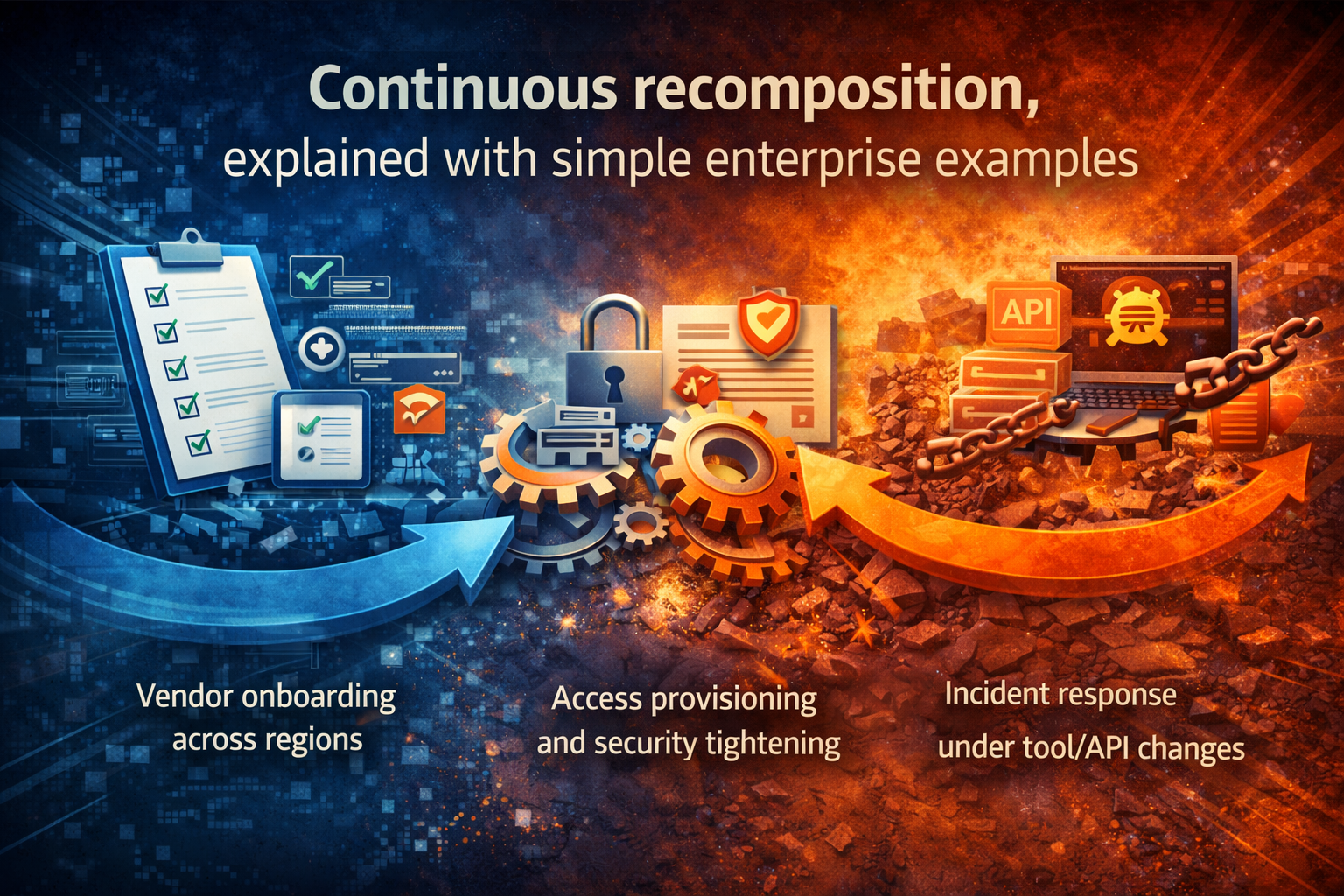
Real-World Use Cases: From Copilots to Ecosystems

The orchestration shift is visible across industries.

In financial operations, agents now scan documents, check compliance, and process payouts. Orchestration ensures that every transaction passes through human approval and audit before execution, reducing fraud and speeding settlements.

In customer service, orchestration coordinates agents that triage issues, retrieve answers, and manage returns while enforcing policy and escalation paths. This drives faster resolutions and higher satisfaction.

In IT and employee support, orchestration manages access brokers, ticket handlers, and verifiers. It automatically enforces service-level agreements, manages role-based controls, and rolls back failed changes.

In sales and marketing, orchestration synchronizes agents that research, write, validate, and launch campaigns, ensuring compliance and consistency across channels.

Vendors such as Salesforce (Agentforce), ServiceNow (Control Tower), UiPath (Orchestrator), and open-source frameworks like LangGraph and AutoGen are already competing to provide orchestration-first platforms. The pattern is clear: copilots were yesterday’s differentiator; orchestrators are tomorrow’s necessity.

Trust as Architecture: The AI Assurance Revolution

As AI gains autonomy, governance must move from policy documents to code. Trust is now an architectural feature.

Regulations like the EU AI Act, India’s Digital Personal Data Protection Act, and NIST’s AI Risk Management Framework have made compliance a structural requirement. Enterprises can no longer design AI without thinking about data residency, explainability, and human oversight. Audit trails and model documentation are as important as throughput and latency.

Modern assurance goes beyond risk checklists. It uses continuous evaluation datasets, human-in-loop scoring, and automated monitoring for bias, drift, and misuse. Policy-as-code enforces who can access what and when. Privacy-preserving techniques such as differential privacy, secure enclaves, and federated learning protect sensitive data.

Security has also become active rather than reactive. AI red-team exercises now probe agents for vulnerabilities and data leaks. Enterprises stress-test their orchestration layers under adversarial conditions. The goal is not perfection but resilience—systems that surface uncertainty and recover gracefully.

Trust, once a brand claim, is becoming a measurable engineering discipline.

The Leadership Playbook: Designing for Intelligent Scale

For CIOs, CTOs, and CDOs, the AI era demands a new kind of leadership—less about project management and more about system design for intelligence.

The first imperative is to design the AI cloud as a cognitive fabric. Multi-cloud, sovereign, and edge-aware infrastructure must be treated as shared capital, not project assets.

The second is to build model and agent engineering capability. Teams must understand LLMs, SLMs, multimodal reasoning, and agentic workflows—not in isolation but as a unified skill stack.

The third is to embed governance by design. Compliance cannot be retrofitted. Policies, monitoring, and evaluation should be integral to data pipelines and orchestration systems.

The fourth is to think geo-aware from the start. Enterprises must localize for data laws, languages, and cultural nuances. The same model must behave differently—and safely—across regions.

The fifth is to anchor autonomy in human responsibility. Every orchestration flow should define when escalation is mandatory and who owns accountability. Human judgment remains the north star of intelligent automation.

Organizations that align architecture, orchestration, and assurance will move faster, safer, and with greater credibility. They will earn the trust of regulators, customers, and talent alike.

The Future: Cognitive Enterprises in Motion

The next stage of digital transformation is not automation—it is cognition. Enterprises will no longer treat AI as a tool but as a living architecture of sensing, reasoning, and acting.

Imagine project teams where multiple agents collaborate—one plans, another researches, another drafts, another verifies—while the orchestration layer governs their rhythm, cost, and safety. Humans step in not to micromanage but to guide judgment and ethics.

This is the dawn of the Cognitive Enterprise Era, where architecture gives structure, orchestration gives coordination, and assurance gives trust.

AI will not replace human decision-makers. It will elevate them—freeing people from coordination drudgery so they can focus on creativity, strategy, and empathy.

The organizations that succeed will be those that design for intelligence, orchestrate with discipline, and govern with integrity.

The future of business isn’t automated.
It’s intelligently orchestrated.


🧠 Glossary

Agentic AI refers to AI systems made of multiple agents that can plan, act, and collaborate toward goals using tools and memory.

A2A Protocol is a communication standard enabling peer-to-peer interaction between agents from different providers.

MCP Protocol is the Model Context Protocol—a universal interface that allows AI models to discover tools and access data dynamically.

AI Orchestration Layer is the governance and optimization layer that plans, routes, and monitors the work of multiple agents.

LLMOps and AgentOps describe operational practices for managing large language models and multi-agent systems in production.

Small Language Models (SLMs) are compact, domain-tuned models optimized for efficiency and edge deployment.

AI Assurance means designing AI systems that are safe, fair, robust, and compliant by default.

Cognitive Fabric is the unified layer where data, models, agents, and policies interact intelligently.


📘 FAQs

Why are orchestration layers critical now?
Because enterprises are moving from a single AI copilot to hundreds of agents. Orchestration ensures these agents collaborate safely, efficiently, and transparently.

Can A2A and MCP replace orchestration?
No. They provide connectivity. Orchestration provides coordination, governance, and optimization on top of them.

Why are Small Language Models important?
They bring AI closer to users—faster, cheaper, and compliant with local laws. They’re essential for edge and regional deployments.

How does regulation affect architecture?
Regulation dictates data storage, explainability, and human oversight requirements. It must be treated as a design input, not an afterthought.

Will autonomous AI replace humans?
No. The goal is augmented intelligence—AI handles execution and coordination, while humans focus on context, creativity, and accountability.


 Conclusion: Designing the Intelligent Enterprise

From Bengaluru’s fintech corridors to Boston’s biotech labs, from Dubai’s smart cities to Dublin’s data centers, a new kind of enterprise is emerging—architected for intelligence, orchestrated for trust.

AI will soon touch every workflow, decision, and interaction. But success will not come from who runs the biggest models. It will come from who designs the smartest systems—those that integrate architecture, orchestration, and assurance into one coherent whole.

Because in this decade of cognitive transformation, the future of business isn’t just digital.
It’s intelligently orchestrated.

Read more at

Enterprise AI Architecture: Why the Next Decade Belongs to Organizations That Design for Intelligence — Not Just Deploy It | by RAKTIM SINGH | Nov, 2025 | Medium

Enterprise Cognitive Mesh: How Large Organizations Build Shared Reasoning Across Thousands of AI Agents | by RAKTIM SINGH | Nov, 2025 | Medium

Cognitive Orchestration Layer: The Next Enterprise AI Architecture That Lets Hundreds of Agents Think Together | by RAKTIM SINGH | Nov, 2025 | Medium

AI Orchestration Layer: Why A2A and MCP Aren’t Enough for Multi-Agent Systems | by RAKTIM SINGH | Stackademic

The Cognitive Orchestration Layer: How Enterprises Coordinate Reasoning Across Hundreds of AI Agents – Raktim Singh
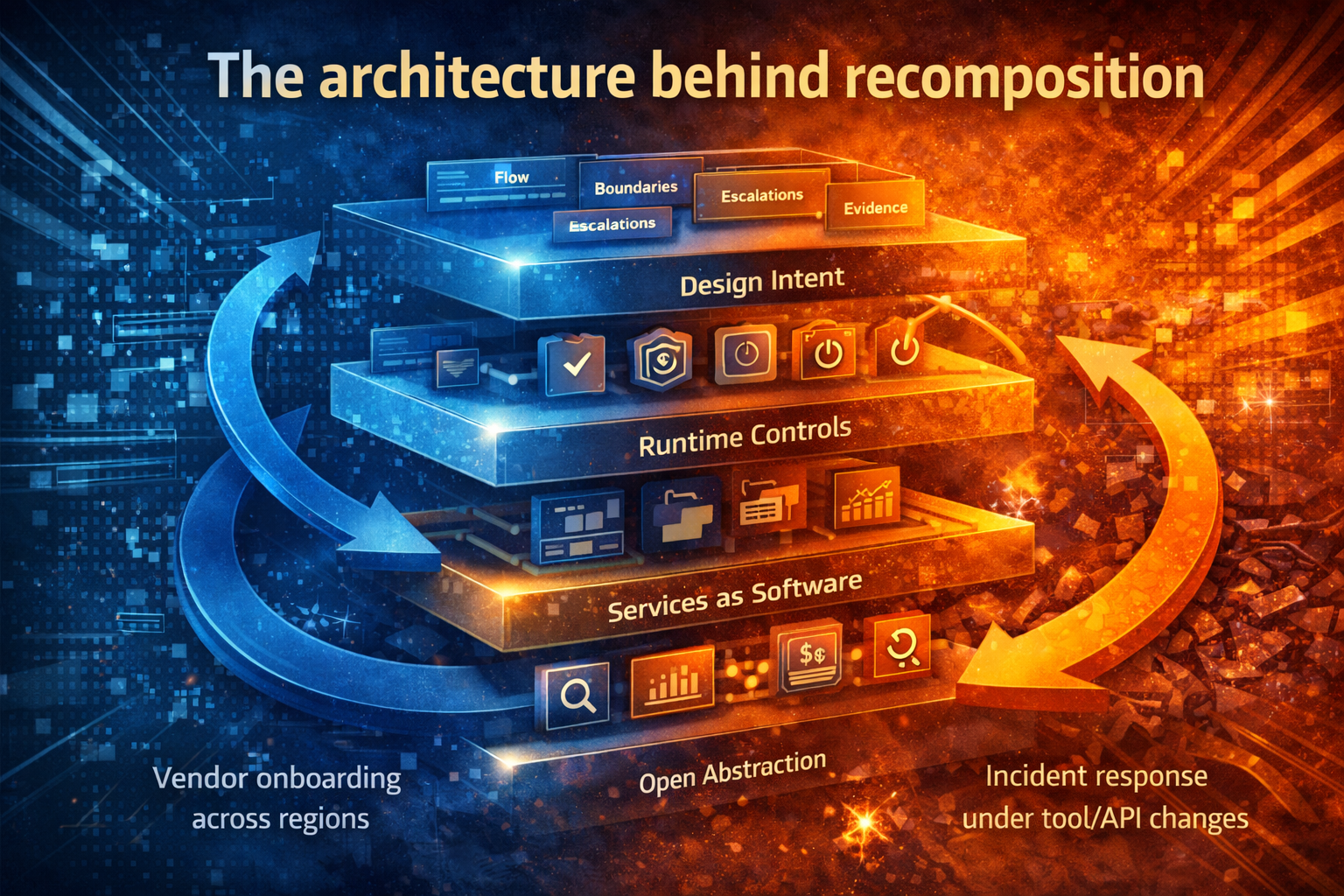
How Technology Can Transform Society

In this digital age, when new developments are continuously being made, we are more linked than ever.

Technology has not only linked us but also empowered us, giving us the ability to access information and services at our fingertips. This individualized approach, adapted to our requirements and tastes, not only increases our feeling of control but also helps us feel competent in this global Environment.

Indeed, sharing our data may be required to provide us with a more tailored experience.

However, research shows that many people are prepared to start on this trip, knowing that their data might be used to improve their lives if they understand its purpose. This mutual understanding promotes confidence and trust, increasing the value we perceive in the data-sharing process.

As we navigate this age of individualized experiences, trust is key to our relationships with technology.

In the digital age, trust is the cornerstone of our relationships with technology, encompassing not just the protection of our data but also the openness and responsibility of the systems with which we engage. This trust instills a strong feeling of security and faith in the system.

We crave a complete solution that meets our demands while instilling a strong feeling of security and faith in the system.

These elements, individualized experiences, and the data interchange process drive a better consumer and social Environment. They may engage consumers and help them live meaningful lives.

Furthermore, the data gathered via these procedures may be utilized to enhance services and goods, resulting in social progress and development.

We have seen the rise of XAAS, an abbreviation for ‘Anything as a Service.’ This paradigm, typified by ‘Ride as a Service’ or ‘Rental Room as a Service,’ is currently being applied to various industries.

For example, we are seeing the rise of ‘Farming as a Service’ in agriculture.

This ecosystem offers farmers a wide range of services, including seeds, pesticides, soil testing, IoT devices used as sensors, weather forecasting, and insurance against unexpected disasters. It’s a one-stop shop for all of the necessities of a contemporary farmer, promising a future of increased productivity and reduced risk.

Although the farmer must provide farm-related data, he receives comprehensive services at a far cheaper cost that are tailored to his own farm. For example, using ‘Farming as a Service,’ a farmer may get real-time weather forecasts, which help him plan crop cycles and prevent losses due to poor weather conditions.
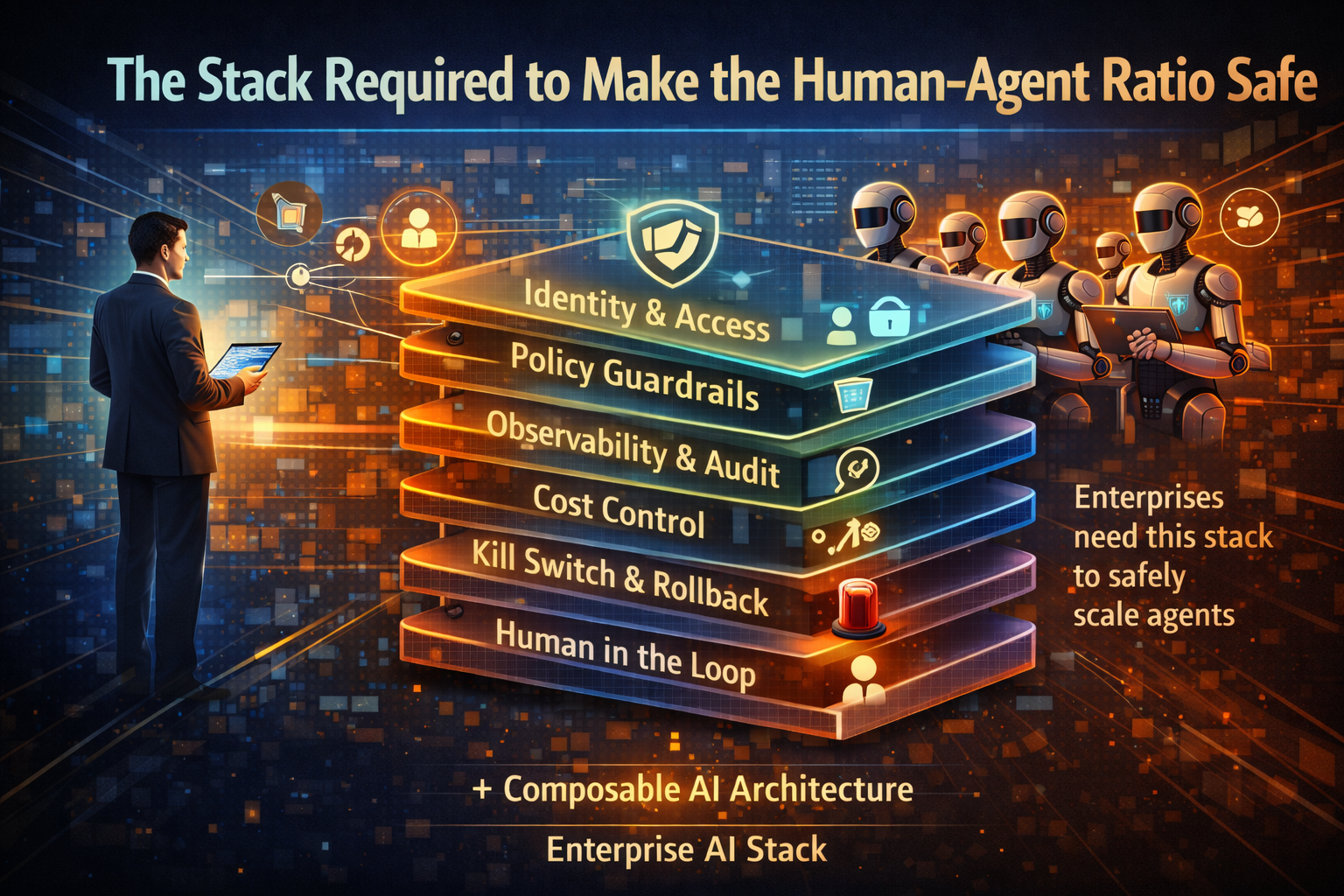
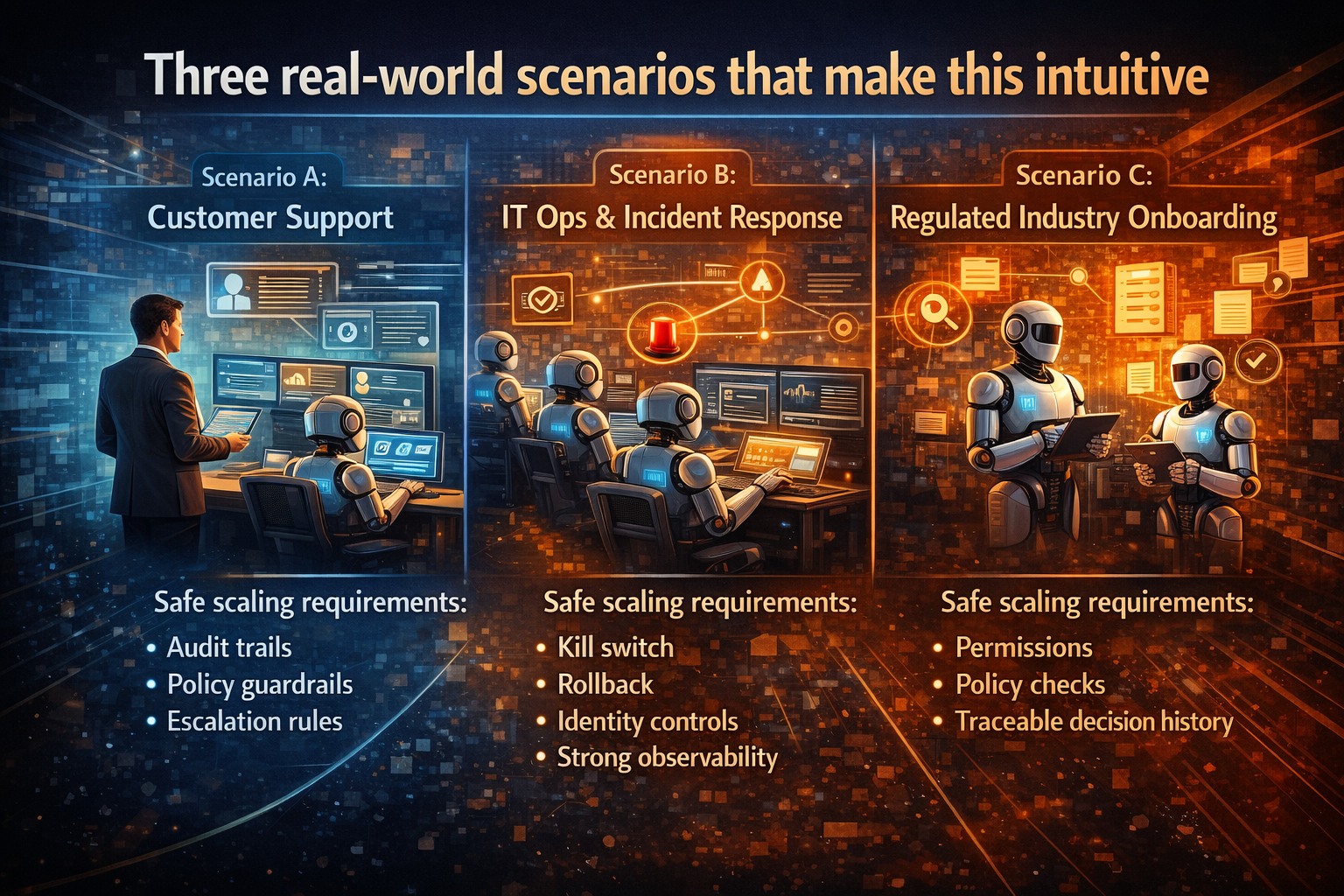
This increases the farmer’s output while lowering the danger of crop failure.

Furthermore, once a community is established, other farmers from the same region join the ecosystem and share best practices, total costs are reduced, confidence in the system grows, and everyone wins. This also adds important checks and balances to the system, ensuring that gains are dispersed fairly and inequity is eliminated.

Customer and Societal Ecosystem: A Holistic Perspective.

Customer ecosystem:

A customer ecosystem is a network of people, companies, and technology that operate and interact inside a product or service space. Beyond buyer-seller connections, it includes touchpoints, channels, and influencers that alter the customer experience.

Societal ecosystem:

A sociocultural ecosystem is a network of connections and interactions among corporations, communities, governments, and the Environment. It recognizes how corporate activities affect society’s well-being, sustainability, and ethical concerns. Societal ecosystems highlight how economic, social, and environmental elements interact.

Most businesses see offering an amazing user experience as a vital component of their digital business strategy. Businesses that strive to create an online customer experience that is both user-friendly and pleasurable may increase the likelihood that their target audiences will be happy with their buying transaction and become repeat customers.

However, firms that focus entirely on a painstakingly constructed ideal route for their target audience may need to pay more attention to the larger customer experience ecosystem.

This includes the diverse individuals who work within a company, the numerous websites, applications, and interactions that a potential customer has with your company’s CX, the back-end systems that oversee customer-facing touchpoints, and the touchpoints that a company has established. Recognizing this ecosystem is essential to avoiding lost opportunities and future client displeasure.

Companies that grasp the value of a customer ecosystem better will be better equipped to adopt effective customer satisfaction initiatives and avoid large ecosystem disturbances that result in client losses.

This knowledge reduces risks and creates many chances, resulting in constant, effective, long-term customer satisfaction initiatives.

As connected, autonomous technology becomes more integrated into consumers’ and businesses’ everyday lives, the customer experience ecosystem is undergoing unprecedented change.

This transformation is more than just a technology transition; it represents a fundamental shift in the demands of both organizations and consumers.

Companies must adapt and provide the required assistance and incentives to get consumers to trust ecosystem orchestrators and allow access to the data transferred across these ecosystems.

The Customer Ecosystem is a paradigm for businesses to comprehend the intricate interdependencies that ultimately govern all customer interactions.

The societal ecosystem takes into account all stakeholders.

Companies that understand and serve the requirements of all stakeholders may strive for fair, sustainable, and inclusive development that is robust enough to withstand future shocks and unexpected calamities.

Customer and social ecosystems develop as drivers of interactions, value generation, and influence. Beyond interactions, these ecosystems represent the complicated linkages, dependencies, and impacts that form enterprises and the greater community.

How It Works: Understanding the Dynamics of Interconnectedness

Customer Ecosystem Dynamics: Customer ecosystems are more than just theoretical notions; they also have practical applications. These dynamics are the driving forces behind the interactions and value generation within the ecosystem. They include elements such as customer-centric strategies, seamless engagement across channels, partnerships and collaborations, and data-driven personalization.

For example, they see network effects, in which the value of a product or service increases as more consumers join. This results in demonstrable growth, improved engagement, and reciprocal benefits within the ecosystem, all of which are critical for company success.

  1. Putting customers first:

Companies emphasize knowing their customers’ requirements and preferences by evaluating data, soliciting feedback, and conducting market research. This vital information influences the development of personalized goods, services, and experiences that match client expectations.

  1. Seamless Engagement across Channels:

Customer ecosystems use omnichannel techniques to provide a consistent experience across all touchpoints. For instance, a company might ensure that a customer’s online shopping cart is synced with their in-store purchases, providing a seamless shopping experience. Companies try to deliver encounters that increase consumer pleasure via physical storefronts, internet platforms, or social media.

  1. Developing Partnerships and Collaborations:

Collaborations with third-party suppliers, influencers, and complementary enterprises are common features of thriving customer ecosystems. Strategic alliances broaden the spectrum of services inside the ecosystem, providing clients with solutions.

  1. Data drive personalization.

Advanced analytics and artificial intelligence allow for individualized experiences inside consumer ecosystems. Companies utilize consumer data to provide personalized suggestions, incentives, and user experiences that increase customer engagement and loyalty.

Societal Ecosystem Dynamics: Societal ecosystems are not passive entities; they both shape and are changed by business ecosystems.

Companies increasingly recognize this dynamic link, which has led to integrating responsibility (CSR) into their business plans. Understanding this dynamic is critical for entrepreneurs navigating the complicated business world.

  1. Accepting Corporate Social Responsibility (CSR):

Businesses incorporate CSR efforts to solve difficulties and contribute to community development. These activities may include philanthropic endeavors, environmental sustainability practices, or social impact programs consistent with the organization’s principles.

  1. Engaging with stakeholders:

Firms must actively connect with consumers, workers, communities, and regulatory agencies regarding ecosystems. Recognizing the value of communication and cooperation contributes to developing social trust and connections.

  1. Caring for the Environment

Organizations are aware of their influence and work to implement sustainable practices. These practices include lowering carbon footprints, boosting energy efficiency, and adopting environmental programs.

By implementing sustainable methods, we help the ecology.

  1. Promoting inclusion in business:

Businesses that stress responsibility adopt policies that encourage diversity and equality. This involves recruiting methods, upholding fair labor standards, and actively seeking to address inequities.

These activities help to create an equal social ecology.

Accepting Ecosystem Thinking for Innovation:

Adopting ecosystem thinking has become a significant driver of innovation.

Companies are no longer focused on supplying goods but on developing linked solutions that address consumers’ holistic demands within a larger social framework. This change in viewpoint creates a plethora of opportunities for innovative problem solutions.

Extended Features of Customer and Societal Ecosystems

Customer ecosystem:

  1. Continuous Improvement using Feedback Loops:

Companies use feedback loops to obtain consumer insights and enhance their offers. This adaptable method allows modifications depending on consumer preferences and market developments, resulting in a responsive customer ecosystem.

  1. Building communities:

Thriving consumer ecosystems often entail the formation of both online and physical groups. These communities enable consumers to interact, share their experiences, and contribute knowledge to the ecosystem. Businesses that promote community development increase brand loyalty and advocacy.

  1. Orchestrating Ecosystem Interactions:

Ecosystem orchestration is the management of aspects inside the consumer ecosystem. Businesses function as orchestrators, organizing stakeholder interactions to provide a positive experience for all participants.

Societal ecosystem:

  1. Maintaining Ethical Supply Chain Practices:

Maintaining considerations throughout the supply chain is critical for building a social ecology. Companies emphasize sourcing, fair labor policies, and ethical manufacturing processes to guarantee that their activities positively influence society.

Historical Context for Customer and Societal Ecosystems:

The concept of interconnection among communities has existed for some time, but systematic research into consumer and social ecosystems gained hold in the twentieth century. This was fueled by the rise of value chains and a deeper knowledge of how various elements work together.

Evolution of the Customer Ecosystem:

The move from commerce to e-commerce marked the beginning of early consumer ecosystems. Platforms such as Amazon help to create consumer experiences.

These ecosystems extended beyond transactions, providing goods, services, and connections to third-party merchants. This technique contributed to increased loyalty and engagement.

As technology improved, social media sites became a component of the consumer ecosystem. Reviews, suggestions, and influencer endorsements started to affect purchase choices, demonstrating the importance of network effects.

In response, companies prioritized customer experience by integrating CRM systems for interactions and cultivating communities inside their ecosystems.

The current rise of the “platform economy” marks yet another phase in this progression.

Companies such as Uber and Airbnb bring together stakeholders—drivers, hosts, passengers, and guests—on their platforms to ease transactions and generate value for all participants. Open banking projects break down industry barriers by fostering more linked and collaborative client ecosystems.

Social Systems Taking Root:

Societal systems have existed since the dawn of mankind. Around the century mark, businesses began to pay greater attention to them. The notion of Corporate Social Responsibility (CSR) arose when businesses became aware of their influence on society and the Environment.

Key milestones, such as the UN Global Compact 2000 and the growing use of the bottom-line paradigm, which evaluates environmental and financial performance, have highlighted the need for responsible business practices. Nowadays, societal systems change by embracing concepts such as development, stakeholder capitalism, and the inclusion of social and governance (ESG) elements.

Understanding and fostering these interrelated networks allows organizations to create value for their customers, society, and themselves. Collaboration, innovation, and a dedication to shared wealth are key to the future of both consumer and societal systems.

Advocacy for Policies Affecting Social Well-Being:

Companies actively participate in policy advocacy campaigns to influence legislation that promotes social well-being.

Furthermore, social impact activities go beyond acts of generosity by addressing challenges and making real contributions, resulting in good societal change on a larger scale.

Resilience and Response to Crises

Society’s health is dependent on resilience and strong crisis response systems. Businesses enhance well-being by actively engaging in disaster relief efforts, assisting local communities during difficult times, and using their resources to benefit society.

Benefits of Customer and Social Ecosystems

Customer ecosystem:

  1. Enhanced customer loyalty:

A nurturing customer environment fosters loyalty by providing individualized experiences, valued interactions, and a feeling of community. Loyal consumers become champions, helping to expand and support the ecosystem.

  1. Innovation and adaptability:

Customer ecosystems drive innovation by enabling feedback loops and incremental upgrades. This helps businesses to respond swiftly to changing market dynamics, outperform rivals, and fulfill developing consumer expectations.

  1. Economic Sustainability:

A strong customer ecosystem promotes corporate sustainability. Increased customer interaction, cross-selling possibilities, and strategic collaborations within the ecosystem contribute to revenue growth and long-term success.

Societal ecosystem:

  1. Positive Brand Reputation:

Businesses are actively engaged in promoting wellness and establishing a brand image. More and more people are exhibiting a preference for companies that value responsibility. A brand’s reputation inside the ecosystem contributes to consumer trust and loyalty.

In the future, sustainable practices and ethical corporate conduct will be important in ensuring environmental and economic sustainability within social ecosystems. Businesses connecting with their principles are better prepared to face difficulties and secure long-term viability.

Trust is the cornerstone of ecosystems. Establishing trust with stakeholders, such as consumers, workers, and communities, promotes cooperation and partnerships. Businesses seen as trustworthy are more likely to get support and collaboration from stakeholders.

When addressing consumer and social ecosystems, it is important to examine the following concepts:

  1. Circular Economy:

The circular economy idea focuses on sustainability by creating things that can be reused, mended, or recycled. Embracing circular economy concepts reduces waste and minimizes impact, which benefits both consumers and society.

  1. Shared value:

Shared value is a corporate strategy that seeks to generate value while solving difficulties. Businesses prioritize efforts that address society’s needs, resulting in mutual advantages for the firm and the larger community.

  1. Ecological Thinking:

Ecosystem thinking entails understanding how different aspects of a system are interrelated. It helps people see the big picture when making choices or executing plans.

In the business sector, firms are urged to think about their operations in terms of customers and ecosystems. This method encourages long-term plans.

Here are three instances that show how consumer and social ecosystems may have an impact:

  1. Tesla’s holistic approach to electric vehicles:

Tesla has gone beyond selling vehicles to build a whole ecosystem around them. Their supercharger network, energy products, including panels and a power wall, and frequent software upgrades all help provide a full client experience. Furthermore, Tesla’s purpose is consistent with its beliefs, pushing the use of automobiles for environmental benefits.

Analogy: Tesla’s ecosystem is about delivering a sustainable transportation option that aligns with society’s values rather than selling cars.

  1. Patagonia focuses on sustainability and ethics:

A clothing manufacturer, Patagonia, has created a consumer ecosystem prioritizing sustainable practices. Their dedication to labor, eco-friendly materials, and programs such as the Worn Wear program (which encourages the purchase of worn things) have helped them build a devoted consumer base. Patagonia’s strategy is consistent with consumer and environmental objectives.

Analogy: Patagonia’s ecosystem attempts to encourage a sustainable and ethical lifestyle while also addressing social challenges.

Other notable names are TOMS shoes (with a “one for one” concept), Grameen Bank, and Microsoft. Microsoft has launched several initiatives to solve issues. Their AI for Accessibility initiative harnesses technology to empower people with impairments. Additionally, Microsoft Philanthropies addresses topics such as education, environmental sustainability, and accessibility.

Metaphorically speaking, Microsoft’s ambitions go beyond software sales. They actively contribute to a linked web of society by using technology to address difficulties and promote inclusion.

Conclusion

Businesses are not isolated entities in the interaction of consumer and social ecosystems but rather essential components of an integrated structure.

Understanding the dynamics of these ecosystems is crucial, as is our obligation to customers and society. The symbiotic connection between trade and society necessitates a balance in which innovation, ethical concerns, and sustainability combine to produce meaningful results.

Recognizing the importance of customer and social ecosystems becomes more critical to a company’s success and influence as it grows.

Embracing this viewpoint guarantees that commerce’s journey extends beyond transactions, becoming a harmonic symphony in which firms grow, consumers flourish, and society benefits.


How Technology is Reshaping the Circular Economy

Technology emerges as a transformative force, reshaping the Circular Economy in the dynamic interplay of development and environmental stewardship, inspiring hope for a sustainable future.

Beyond production and consumption patterns, technology incorporates innovation, transparency, and efficiency into its basic operations. These breakthroughs provide the groundwork for a future where resources are valued, waste is reduced, and ecosystems thrive.

What is a Circular Economy

The circular economy uses three design principles: reducing waste and pollution, circulating resources and products to maximize their worth, and environmental regulations.

The circular economy concept promotes the sharing, leasing, reusing, repairing, refurbishing, and recycling of old resources and goods for the longest period possible.

As a result, produced items have a longer lifetime. In reality, this means maximizing product value while minimizing waste.

Organizations may greatly boost productivity and revenues by gradually moving to a circular economy.

Role of Technology in the Circular Economy

Technology plays a pivotal role in the Circular Economy, influencing various aspects from production to waste management. It facilitates resource tracking, promotes sustainable design, and enables efficient recycling, thereby driving the transition to a circular economy.

The tale of technology’s relationship with the Circular Economy reflects the progress of human awareness and our never-ending quest for answers.

It’s a journey that started as a seedling and grew into a thriving environmental movement in the 1970s. Recycling technologies gained traction, with pioneering apparatus and methods opening the path for material recovery, forming the first tentative link between technology and circularity.

Extended Producer accountability (EPR) emerged in the 1990s, bringing accountability to the forefront.

Extended producer responsibility (EPR) is a key concept in the Circular Economy. It emphasizes the producer’s duty to consider the effects of their product at the last stage of its life cycle, beyond consumption. EPR encourages manufacturers to develop goods with low environmental and health impacts, thereby promoting circularity.

Recognizing the importance of product life cycles, EPR initiatives, often aided by technology, encouraged producers to create and manage their goods ethically, promoting circularity via conscious creation and end-of-life planning.

The emergence of blockchain technology in the 2010s marked the beginning of a new period.

This novel solution addressed long-standing supply chain transparency, traceability, and accountability issues – critical components for achieving circularity via responsible sourcing and disposal.

By revealing the product experience at each level, Blockchain enables customers to make educated decisions and hold corporations responsible for their actions.

But the narrative continues.

Today, we navigate a varied environment with technological developments that power the circular economy.

AI-powered sorting robots: Like Recycleye’s eagle-eyed AI sorters, these wonders improve recycling accuracy and efficiency, addressing the global trash challenge front.

Circular economy token systems: Some platforms use incentives and gamification to incentivize sustainable behavior and contribute to a circular future.

Digital markets for second-hand goods and repair services, enabled by technology, foster a conscious consumer culture by extending product lifespans and encouraging repair over replacement, empowering individuals to make sustainable choices.

These are just a few instances of the dynamic technical environment influencing the Circular Economy. Other examples include the use of 3D printing for on-demand manufacturing, IoT devices for resource monitoring, and machine learning for waste sorting.

As we progress, the future presents even more exciting possibilities, ranging from enhanced manufacturing processes that reduce waste to intelligent, networked systems that optimize resource usage across sectors. Technology has become an essential companion on our road to a circular future, and its revolutionary impact grows with each invention.

How Technology Can Help the Circular Economy

Technology may help the Circular Economy by using digital breakthroughs to create an economic structure that encourages resource regeneration via continual reuse while reducing waste.

Technology helps to promote a certain attitude to production, consumption, and waste management. It allows solutions like Blockchain, artificial intelligence, and waste-to-energy technology.

  1. Blockchain Traceability:

It works because Blockchain creates a decentralized ledger that records all transactions and movements in a supply chain. The Blockchain contains data contributed by all chain players, including raw material suppliers, producers, and merchants. This open method guarantees that a product’s path can be reliably tracked, supporting responsible sourcing and recycling.

  1. Waste-to-energy Innovations:

Waste-to-energy technologies include procedures like incineration, anaerobic digestion, and pyrolysis. Incineration is the process of burning garbage to create heat, which is then transformed into energy.

As per Wiki

Anaerobic digestion is a sequence of processes by which microorganisms break down biodegradable material without oxygen. The process is used for industrial or domestic purposes to manage waste or to produce fuels. Anaerobic digestion is used industrially in much of the fermentation to make food and drink products and at home.

Anaerobic digestion uses microorganisms to convert trash into biogas. These new solutions promote circularity by transforming garbage into energy and minimizing resource dependency.

  1. AI-Driven Circular Design:

In this scenario, artificial intelligence examines datasets regarding product design materials and recycling methods. AI facilitates the design of goods that adhere to ‘circular economy’ concepts by using machine learning algorithms to find patterns and connections in data.

This includes designing goods that can be easily disassembled and recycled using ecologically friendly materials and including components that can be easily fixed and improved.

In this era of awareness, technology emerges as a crucial partner in reinventing the traditional linear economy and transferring it to a circular and sustainable model. The symbiotic link between innovation and sustainability sparks change, preparing the way for an age in which technology is critical in achieving a circular economy.

Let’s look at how technology may become a driving factor in altering our resource use and waste management strategies.

History:

The green revolution arose throughout the century due to rising environmental concerns and the need for sustainability. The limits of the “take make dispose” paradigm sparked a quest for alternatives, which resulted in technology’s involvement in designing the circular economy.

Progression from Basics to Platforms (1990s–2000s):

Environmental Management Systems (EMS) became popular in the 1990s, allowing businesses to integrate sustainability issues into their operations. This signified the integration of technology into environmental management.

With the introduction of the internet in the 2000s, digital platforms began linking parties interested in solutions. This improved market access for used products, repair services, and rental models, setting the groundwork for technology-driven behavior change.

Technological Innovations Driving Circularity (2010s–Present):

The last decade has witnessed advances that have driven circularity. Blockchain applications have evolved as supply chain monitoring and waste management systems, assuring proper sourcing and material recovery.

Using technology to promote the circular economy focuses on implementing solutions to create a closed-loop system.

In an economy, the old linear paradigm of extracting resources, manufacturing things, consuming them, and discarding them is replaced with a system that attempts to decrease waste, promote recycling, and extend the lifetime of products and materials.

The century’s green revolution created the groundwork for today’s economy, which arose in reaction to the need to shift away from the wasteful “take, make, dispose” model. Technology has played a part in this shift, moving from environmental management systems (EMS) in the 1990s to digital platforms that promoted cooperation and behavior change in the 2000s.

Major Technologies for the Circular Economy

  1. Using Blockchain for Transparency in Supply Chains

Technology may help supply networks become more transparent and traceable. Every stage of a product’s lifecycle is documented.

So, everything, from resource extraction to manufacture and distribution, is documented on a blockchain. This enables both customers and companies to check the legality and sustainability of items.

Using this technology, we can create traceable supply chains that accurately record the product’s origin and life cycle. This encourages accountability and allows for more effective recycling and reprocessing, contributing to a circular economy.

  1. Using the Internet of Things (IoT) to Monitor Product Lifecycles:

IoT devices installed in the product or packaging collect data constantly throughout its lifespan. These IoT sensors capture real-time data throughout manufacture, use, and final disposal. Such data is valuable because it aids in process optimization, predicts maintenance needs, and enables material recovery during recycling.

Currently, IoT is viewed as an essential component of a circular system. This feature gives enterprises more insight into their supply chains, allowing for greater control and innovation opportunities.

Furthermore, it minimizes the amount of data generated and processed to suit the complex needs of circular supply chains, such as material tracking, reverse logistics, decentralized production, and remanufacturing.

  1. Using Artificial Intelligence to Automate Waste Sorting

Waste management facilities use AI-powered devices connected with IoT sensors. These devices use machine learning algorithms to recognize and sort the many items in the waste stream. Automating sorting activities improves recycling efficiency, resulting in high-quality recycled materials.

  1. Revolutionizing Product Design with AI:

AI is transforming product design by optimizing for principles. Using AI algorithms to analyze data, we can build readily recyclable, repairable, and resource-efficient goods. This technological shift encourages consumption and production behaviors in our culture.

Consider the risk of contamination during garbage collection.

Manually sorting different kinds of mixed products into their appropriate channels is time-consuming and sometimes expensive.

Sensor-enabled bins can sort and crush recyclable items to decrease waste and recirculate them. The advancement of blockchain tracking technology is projected to further increase the difficulty of material identification.

  1. Augmented Reality (AR) and Its Effect on Consumption

AR apps help customers make sustainable decisions. When a product is packaged with AR-enabled gadgets, consumers may readily obtain information regarding its effect, recyclability, and availability of recycling facilities. This increases consumption and support for ecologically friendly items.

  1. Innovative waste-to-energy solutions:

Technologies provide methods for converting garbage into viable energy sources, demonstrating a novel approach to circularity. From energy recovery via incineration to ground-breaking bioenergy solutions, technology contributes to the transformation of waste into a resource, in line with the principles of a circular economy.

  1. 3D printing plays an important role in on-demand manufacturing.

3D printing technology transforms industry by allowing on-demand production at the local level. Products might be made closer to their intended destination instead of being made and shipped across great distances. This strategy decreases the carbon impact of transportation while also minimizing inventories.

  1. Circular Economy Platforms, Enabling Material Exchanges:

Digital platforms let firms trade resources more efficiently. These platforms let businesses sell or give leftover items, advocating an approach to resource use. These systems efficiently minimize waste by establishing a transactional marketplace, encouraging the reusing of materials.

  1. Smart Packaging and Optimizing Recycling Practices:

Smart packaging solutions use technology to increase recyclability. For example, adding RFID tags or QR codes to packaging offers information on the materials used and recycling procedures. These smart packaging projects actively encourage people to participate in recycling activities.

  1. Data:

Details about a product’s composition, condition, and design are crucial for sustaining its long-term economic worth.

With this information, an end-of-life product may be repurposed as a useful resource. With the right knowledge about a product (and garbage), this waste may become a valuable asset. We may now gather data on the product using various methods, such as its use and storage.

That is, we may get information regarding the product’s lifespan. By examining this data, we may plan to reuse, rebuild, or break the product at the end of its lifespan and reuse different raw materials used to create it.

This information may also help us resell the goods on the marketplace. These marketplaces connect secondary material vendors and purchasers online.

Thus, the Circular Economy concept replaces the “end-of-life” strategy with reduction, reuse, recycling, and recovery principles.

Although enterprises must shift from a linear to a Circular Economy-oriented strategy, obstacles such as limited data availability and integration typically impede this change at the company and ecosystem levels. Consequently, digital transformation is a critical step towards the Circular Economy.

The Circular Economy’s integration with digital systems is integral to improving predictive analytics, tracking, and monitoring throughout enterprises’ product life cycles.

Designing for circularity using data-driven insights may improve economic and environmental sustainability by optimizing resource consumption.

Using predictive and prescriptive machine learning insights, such goods, subcomponents, and related processes may be created and improved in accordance with Circular Economy principles.

Using historical and real-time data, demand and inventory management may be improved, resulting in waste reduction and more sustainable operations.

Digital technology can reduce waste by assessing the most effective remanufacturing and recycling options. AI-powered picture identification, for example, may aid with electronic trash recycling.

Improved Features of How Technology Aids the Circular Economy

  1. Blockchain-based tokens for the circular economy:

Some creative efforts propose tokens based on technology related to circular economy activities. Individuals who recycle or use eco-friendly items may earn these tokens.

These tokens have various purposes, including access to discounts and exclusive merchandise and even supporting social and environmental concerns.

  1. Using Machine Learning for Predictive Maintenance

Machine learning algorithms are used in circular economy activities to ensure the maintenance and repair of things, especially durable commodities. This strategy increases their longevity while decreasing the requirement for disposal.

  1. Lifecycle Simulation with Digital Twins:

Digital twin technology makes product copies, allowing organizations to digitally replicate and evaluate the product lifecycle. This enables businesses to make changes, optimize procedures, and analyze the effects throughout the product’s lifecycle.

Benefits of Technological Support for the Circular Economy:

  1. Improved Resource Efficiency:

Technology helps optimize industrial processes, reduce waste, and promote material recycling, which is a major contribution to developing a resource-efficient economy.

  1. Promoting Transparency and Accountability:

Blockchain and other digital technologies improve openness and accountability in supply chains by enabling tracing methods.

Consumers can follow items’ origins and life cycles, allowing them to make economically sound selections.

Integrating technology into economic processes promotes innovation and the development of new company models. This enables enterprises to experiment with product design, production, and consumption methods, resulting in a dynamic and adaptive economic environment.

Using AI, IoT, and blockchain technology considerably reduces the effect of the circular economy. Automated trash sorting, sustainable material selection, and efficient supply chain methods reduce pollution and preserve resources.

Benefits of Technology in Promoting Circular Economy

  1. Benefits to the Economy and Job Market:

Using technology in circular economy activities expands opportunity and creates employment. As new technologies are adopted, the need for expertise in data analytics, artificial intelligence, and sustainable design increases.

  1. Improving Global Collaboration and Knowledge Exchange:

Digital platforms and networked technology make collaborating and sharing information easier while working to achieve circular economy goals. Businesses, academics, and politicians may share insights, best practices, and creative ideas, helping to build a sustainable environment.

  1. Empowering consumers:

Technology enables people to make choices. Consumers with access to knowledge about a product’s lifetime, recyclability, and sustainability qualities may better match their purchase choices with circular economy concepts.

Other Important Concepts Regarding the Role of Technology in the Circular Economy

  1. Platforms for extended producer responsibility (EPR):

EPR systems use technology to handle products’ end-of-life duties more efficiently. Producers may utilize these platforms to track their product collection and recycling procedures, supporting sustainable product design and disposal practices.

  1. Circular Design Principles:

Technology helps to apply design ideas that concentrate on making things more accessible for disassembly, repair, and recycling.

Designers use technologies to model the effect of different design options, ensuring that products follow circular economy concepts from the start.

  1. Collaborative robotics in recycling centers:

Robots, sometimes known as cobots, are used at recycling facilities to help with waste sorting and processing. These robots collaborate with humans to increase efficiency and minimize workforce requirements for recycling processes.

Examples of Technology’s Impact on the Circular Economy.

  1. Recycle: An AI-Powered Robotic Sorting System

Recycle, established in Europe, uses intelligence to improve waste-sorting procedures. Their AI-powered robotic device can precisely sort different forms of waste products.

This enhances recycling efficiency while reducing contamination. According to the World Bank, this technology is critical for addressing the rising waste issue, projected to reach 2.01 billion tons by 2050.

Recent Development: In October 2023, Recycle partnered with Veolia, a prominent trash management firm. Their goal is to install AI sorting systems at sites around Europe. This alliance seeks to boost recycling rates and help develop a circular economy.

Analogy: Think of Recycleye AI as a sorter at a recycling center that quickly and precisely sorts items for recycling.

With just one sorter photo, a team of AI-powered robots works diligently to guarantee that precious materials are collected and diverted from landfills.

  1. Circularise: Improving Supply Chain Transparency using Blockchain.

Circularise, a startup established in the Netherlands, uses technology to increase supply chain transparency. Their technology allows businesses to track the origins and lifecycles of materials and goods, from raw material extraction to disposal or recycling.

This open approach builds confidence among stakeholders and encourages good sourcing practices.

Recent Development: In November 2023, Circularise added a function to its platform that enables customers to scan product codes and learn about the product’s sustainability. This openness empowers customers to make informed decisions and supports circularly responsible companies.

Analogy: Consider Circularise technology to be a product passport, giving a clear and dependable record of its route from origin to disposal. Imagine scanning a product’s barcode and instantaneously accessing a history of its materials, manufacturing process, and environmental effects. This kind of openness helps to construct a more sustainable future.

  1. Plastic Bank: It identifies vulnerable coasts across the globe that need plastic collecting infrastructure, allows local entrepreneurs to open collection branches in inaccessible places, brings collection communities together, and prevents plastic from entering the ocean.
  2. TerraCycle is a recycling firm focusing on ‘hard to recycle’ materials.
  3. Recyclebank: They’ve made recycling enjoyable and rewarding. They developed a platform that gamifies recycling by enabling users to earn points for recycling and exchange them for discounts and prizes at various merchants.
  4. Rubicon Global monitors trash creation in real-time and uses technology to improve garbage collection and disposal procedures.
  5. Loop: It focuses on reusable packaging for popular products. They’ve developed strategic agreements with heavyweights in the consumer goods industry to create a system for delivering items to consumers in reusable packaging.

Following consumption, the packaging is removed, sterilized, and refilled in readiness for future use. This unique technique eliminates the waste of single-use packaging and fosters the transition to a circular, sustainable economy.

Using these technologies, we may work toward an economy where resources are used for as long as feasible, eliminating waste and lowering our environmental impact. We expect good progress toward a more sustainable future as these technologies evolve and acquire adoption.

Conclusion:

In the development sphere, incorporating solutions into the circular economy is no longer an option but a need. The progression of how technology may benefit the economy represents a path toward sustainability, effective resource usage, and peaceful living with our planet.

As we face the century’s problems, the circular economy, powered by cutting-edge technology, emerges as a source of optimism. Its advantages include higher resource efficiency, transparency, innovation, and less environmental impact.

With each technological advancement, we move closer to a future in which the classic “take, make, dispose” paradigm will be replaced by a cyclical one.

While embracing the period, we must recognize technology’s role in developing a circular economy that supports companies while protecting our planet for future generations. Establishing a path where growth and sustainable values coexist takes more than just embracing technology.

Achieving a technology-fueled economy entails more than just accomplishing a goal. It reflects a commitment to creating a society in which we value resources, reduce waste, and allow innovation to guide us toward a circular future.


Industry Cloud Platforms

Industry cloud platforms (ICP), as opposed to general-purpose cloud platforms, are designed to fulfill the specific requirements of different industries.

Industry clouds are collections of cloud services, integration fabrics, products, and tools that provide sector-specific functionality while being natively updated for cloud platforms and provided at scale.

Industry cloud platforms are not just a passing trend; they are a powerful tool that empowers enterprises. They offer flexible and specialized industry solutions, giving organizations the confidence to govern and exploit these platforms to their advantage.

Industry cloud platforms stand out with their sector-specific software, compliance tools, and sophisticated analytics, all tailored to the unique challenges and needs of each business. This unique feature significantly enhances performance and efficiency for industry-specific operations.

Need for Industry-Specific Cloud

The key contrast between an industrial and general-purpose cloud is how effectively the former is tailored to a certain sector.

Many enterprises find that their needs exceed the capabilities of a one-size-fits-all cloud platform. They require industry-specific cloud platforms that can deliver customized services to meet their specialized requirements, particularly in healthcare, finance, and manufacturing.

While industry-specific clouds are common in the security and compliance-conscious industries, organizations are evaluating their cloud strategies and investments in hybrid and private clouds. Some organizations are even returning applications to data centers to save money.

Businesses with strict security needs cannot use off-the-shelf cloud services. These businesses often need extra protection, customization, and security requirements not provided by ordinary cloud solutions.

Furthermore, any further changes would most certainly raise performance and reliability problems. It will also affect the profitability of cloud service companies.

Building a domain-specific version of an existing cloud platform with a comparable TCO is challenging for cloud providers.

The industrial cloud platform may provide a cloud application marketplace with well-validated tooling that meets all applicable criteria.

The third-party interfaces are designed to work seamlessly with the infrastructure, so no further alterations are required.

Industries with strict rules, like banking and healthcare, are often barred from public cloud services. Thus, cloud providers must deliver unique solutions that meet applicable standards.

These rules may be specific to:

  • Industry.

  • Business Usage

  • Geography.

A private healthcare provider, for example, will wish to use HIPAA-compliant cloud computing.

Industry cloud platforms go beyond traditional cloud computing to offer value by using new technologies and processes, such as integrated business capabilities, industry-aware data fabrics, and composable tools.

Industry Cloud Platforms convert a cloud platform into a business platform by expanding a technology innovation tool into a business innovation tool.

Industrial clouds provide specific services and capabilities instead of general public cloud solutions, which offer a wide range of tools and services for various applications. These services are industry-specific, speeding innovation, enhancing efficiency, and establishing a competitive advantage.

Key Features of Industry Cloud Platforms

  1. Customization and Integration Capabilities: Industry cloud platforms provide settings where enterprises can easily connect their existing procedures and applications. This flexibility ensures that the platform can meet the industry’s procedures and operational requirements, making it a reassuring and user-friendly tool for IT specialists.
  2. Industry-Specific Compliance and Security Features: These platforms provide compliance solutions that meet industry norms and standards.
  3. Advanced AI Integration: Industrial cloud platforms combine analytics and AI technology to provide insights and predictive capabilities suited to each sector’s needs.
  4. Specialization: Specialized tools and technologies for certain sectors may improve operational efficiency and simplify processes.
  5. Improved security and compliance: The cloud platform now includes additional security measures and meets industry compliance standards.
  6. Streamlined releases: Using industry-specific tools, data models, and procedures speeds up developing and deploying new products and services compared to constructing or purchasing industry tools and infrastructure.

For example, retail platforms may use consumer behavior analysis, while industrial platforms may provide equipment maintenance analysis.

Before industrial clouds emerged, clients used AWS, Microsoft, and Google’s public cloud services across all industry sectors.

Advantages of Industry Cloud Platforms:

Industry cloud platforms boost operations by automating processes and providing tools to increase workflow efficiency. This leads to project completion and lower operating expenditures.

Industry cloud platforms provide significant cost savings and scalability for enterprises, as well as security and confidence in financial planning and operations. They increase operational efficiency, automate processes, and provide tools to improve workflow efficiency, leading to project completion and lower operating costs, thereby instilling a sense of security and confidence in financial decision-makers.

A cloud-based infrastructure enables organizations to grow their operations depending on demand without investing in hardware. This versatility reduces costs and increases operational flexibility.

  1. Enhanced data management and accessibility:

These systems consolidate data storage and administration, making it easier for enterprises to access, share, and analyze information. This centralized strategy increases data accuracy and decision-making processes.

Industry-specific solutions and innovations:

Cloud platforms encourage industry-specific innovation, motivating organizations to create solutions that address their particular difficulties and generate development. They go beyond traditional cloud services, adding value via innovative technologies and processes, including packaged business capabilities, industry-aware data fabrics, and composable tools.

Case Studies for Industry Cloud Platform Utilization

  1. Healthcare:

A leading healthcare facility used an industrial cloud platform to manage patient information and improve department collaboration efficiently.

The platform’s compliance with HIPAA requirements protected data security and privacy, while powerful analytics capabilities improved results by identifying patterns and possible health risks. Using an industrial cloud platform, a healthcare practitioner may securely share patient information with other healthcare professionals, improving care coordination while protecting data privacy.

Adherence to HIPAA (Health Insurance Portability and Accountability Act) rules is critical for data privacy and security.

  1. Finance:

A financial services organization used an industry cloud platform to improve its risk management and compliance processes. By adding AI-driven analytics and real-time monitoring capabilities, the platform allowed the organization to detect and manage behaviors swiftly, assuring regulatory compliance and protecting client investment.

Adhering to the PCI DSS (Payment Card Industry Data Security Standard) and GDPR (General Data Protection Regulation) is required to safeguard data and protect consumer privacy.

A financial institution adopting an industry cloud platform may automate compliance reporting, lowering non-compliance risk and related fines.

  1. Manufacturing:

A manufacturing company simplified its supply chain processes using an industrial cloud platform. The platform’s analytics and IoT integration enabled the organization to monitor equipment performance and forecast maintenance needs, reducing downtime and increasing productivity.

  1. Retail:

A well-known retail chain used an industrial cloud platform to improve consumer engagement initiatives. The platform’s consumer behavior analytics gave insights into purchase behaviors, allowing the store to tailor marketing campaigns and increase customer loyalty.

Compliance with data protection legislation, such as the California Consumer Privacy Act (CCPA), is critical to the security of client information.

Technology Behind Industry Cloud Platforms

Industry cloud platforms also enable firms to change their processes and apps easily. Their flexible and composable design enables partners to provide value-added services via marketplaces and app stores.

This broader range of industrial cloud ecosystems, which includes independent software vendors, system integrators, and cloud providers, is a key way industry cloud platforms provide value.

A comprehensive but modular approach facilitates and accelerates the transfer of technology and economic achievements from one area to another.

To reach their full potential, industry clouds must evolve into what might best be described as ecosystem clouds. Enterprises may benefit from these ecosystems by partaking in common (commercial) activities like as procurement, distribution, payment processing, and even R&D and innovation.

To realize this value, firms must use industrial cloud platforms with a varied set of stakeholders from both IT and line-of-business organizations.

Architecture:

Industry cloud platforms are built on scalable and reliable cloud infrastructure. They use a microservices architecture for development and updates, providing flexibility in meeting changing market needs and seamlessly integrating technology.

Cutting-edge Technologies:

Artificial Intelligence and Machine Learning: These cutting-edge technologies provide firms with data analysis and forecasting capabilities, facilitating decision-making and simplifying operations.

Internet of Things (IoT): Integrating IoT enables real-time data gathering from networked devices, increasing operating efficiency and making maintenance easier.

Big Data Analysis: Using sophisticated big data technologies, firms may sift through massive volumes of industry data to find patterns and insights that drive strategic planning and innovation.

Cloud Computing Models:

Infrastructure as a Service (IaaS): Provides infrastructure resources adaptable to changing business requirements.

Platform as a Service (PaaS): A development environment that allows for the efficient creation and deployment of applications.

Software as a Service (SaaS) delivers software solutions over the cloud, removing the need for on-site installs.

Industry-specific cloud platforms use cutting-edge technology to create solutions that increase efficiency, assure regulatory compliance, and stimulate innovation within certain industries.

Encryption: Data encryption at rest and in transit helps prevent unauthorized access.

Role-based access restrictions guarantee that only authorized persons may access data.

Monitoring and auditing features assist in detecting and responding to security concerns early.

Security and Compliance for Industry Cloud Platforms

Security and compliance are critical for industrial cloud platforms, particularly when working with regulated data. These platforms provide security protections and compliance capabilities to protect data and comply with rules.

Conclusion

Industry cloud platforms are transforming business operations by providing solutions that improve efficiency, security, and creativity.

While using these platforms may have problems, the benefits greatly exceed any disadvantages. These challenges include data security, vendor lock-in with the cloud provider, and integration issues with existing systems.

The future of industrial cloud platforms is bright, as breakthroughs in AI edge computing and blockchain are ready to expand their possibilities.

Companies may use industry-specific cloud platforms to accelerate development and preserve industry competitiveness by selecting the platform and considering integration and change management factors.


Sustainable Tools in Banking

The use of sustainable banking tools is intriguing for various reasons.

First and foremost, banks are taking proactive steps to finance activities beyond their traditional scope, such as lending and investing in environmentally beneficial projects. This proactive approach is contributing to the development of a sustainable ecology, inspiring others to follow suit.

Second, several banks have implemented systems enabling consumers to monitor their transactions’ carbon impact. By providing transparency in this manner, account holders may make more mindful decisions and contribute to a broader understanding of the environmental effect of financial operations.

Moreover, sustainable tools are leveraging technology to enhance transparency in supply chains connected to banking activities. This technological advancement ensures that ethical standards are upheld in resource procurement, manufacturing processes, and distribution networks, fostering a sense of optimism about the future of sustainable banking.

Sustainable instruments play a significant role in banking since they encourage accountability. They go beyond profit and loss and demonstrate a commitment to promoting sustainability.

These instruments are transforming the financial landscape in the banking industry as organizations seek environmental sensitivity and conscientiousness.

Evolution of Sustainable tools for Banking

The evolution of financial tools may be traced back to the trend toward sustainable practices. Historically, banks prioritized performance. They eventually recognized the value of incorporating ESG (environmental, social, and governance) elements into their operations.

During this century, there was a spike in ethical banking movements that campaigned for financial policies that considered their social and environmental impacts.

Early banking concept adopters started including ESG factors in their decision-making processes.

There was a transition in the 2000s as sustainable finance gained popularity. Financial institutions began producing investment funds and green bonds to fulfill the growing demand for ethical investing choices.

Over the last decade, the banking sector has begun to address sustainability. Leading financial organizations have adopted banking practices, including ESG factors in risk assessments and using technology to reduce their environmental impact.

The function of tools in banking is to introduce socially responsible practices into all facets of financial operations. Banks are increasingly adopting a more holistic approach, evaluating the effect of their operations in addition to profit margins.

How It Works: Navigating the World of Banking

  1. Sustainable Financing Products:

Banks provide a variety of financial choices, including ‘green loans’ that are specifically designed to fund projects with a positive environmental impact, and ‘eco-friendly investing’ opportunities that support activities with a social effect, such as funding energy initiatives that promote renewable energy and investing in energy-efficient infrastructure.

  1. Integration of ESG Criteria into Risk Assessment:

Sustainable tools incorporate Environmental, Social, and Governance (ESG) principles into risk assessment methods. This implies that banks consider a company’s effects, social responsibility, and governance policies when deciding whether to invest or lend. This helps connect choices with sustainability objectives.

  1. Carbon Foot printing and Offsetting:

Certain banks are developing tools to help consumers monitor the carbon impact of their transactions. They want to increase awareness about carbon emissions from activities while also giving ways to mitigate them.

This degree of openness enables account holders to make educated judgments. Banks may even provide alternatives to mitigate the carbon emissions caused by their financial activity.

Blockchain technology improves transparency in supply chains for banking activities that include material procurement, manufacturing processes, and distribution networks. Banks may use blockchain to guarantee that these procedures follow ethical norms, decreasing the effect of banking operations. For instance, blockchain can be used to track the origin of resources, ensuring they are ethically sourced, and to monitor the energy efficiency of manufacturing processes.

In addition to supply chain transparency, sustainable tools include using energy-efficient financial equipment. This involves using energy sources, designing energy-efficient buildings, and improving digital processes to decrease energy usage. For example, banks can use energy-efficient servers for their digital processes and design their buildings to maximize natural light and reduce the need for artificial lighting.

In other circumstances, banks encourage builders to include energy-efficient tools and equipment in newly built residences and buildings. Banks are in a position to exchange best practices among builders. This method not only helps to satisfy overall sustainability objectives but also reduces total startup and maintenance costs for builders.

Furthermore, banks are building impact investing platforms that allow users to direct their assets toward environmentally friendly initiatives. These platforms enable people and corporations to contribute to change via their financial transactions.

Finally, some banks function as Community Development Financial Institutions (CDFIs), offering services customized exclusively to communities.

Financial institutions prioritizing community development, affordable housing, and economic empowerment increasingly incorporate eco-friendly elements into their banking applications. These tools assist users in tracking their effects by evaluating their spending habits, estimating carbon footprints, and providing guidance on how to make sustainable financial decisions.

 Benefits for the banking industry

  1. For starters, it enables financial institutions to connect their aims with sustainability targets such as the United Nations Sustainable Development aims (SDGs), guaranteeing that their actions contribute positively to societal objectives.

Integrating Environmental, Social, and Governance (ESG) criteria into risk assessments assists banks in identifying risks related to social aspects. This proactive strategy reduces risks associated with climate change, societal disparities, and governance concerns, enhancing institutions’ long-term resilience.

Customers are also becoming more aware of the need for sustainable banking practices. As people become more aware of the significance of social responsibility, they prefer to bank with organizations that are committed to these principles. Financial institutions may address this need by using solutions that promote customer loyalty and attract a conscious clientele.

  1. Improve Brand Reputation:

Incorporating sustainable tools improves banks’ brand image. Institutions that actively participate in ecologically and socially responsible activities are viewed as ethical and forward-thinking, drawing favorable attention from consumers, investors, and the general public.

  1. Financial Innovation and Market Competition:

The use of sustainable instruments promotes financial innovation in the banking industry. Institutions that pioneer green finance solutions, environmentally friendly technology, and sustainable banking processes get a competitive advantage in the market. This innovation draws clients and establishes banks as leaders in responsible finance.

  1. Contributing to the Global Climate Goals:

Sustainable tools enable banks to make significant contributions to global climate goals. Through green finance projects and carbon monitoring, financial institutions are playing a crucial role in the global effort to reduce carbon emissions and address environmental concerns outlined in international agreements such as the Paris Agreement. This contribution instills a sense of hope and optimism about the future of our planet.

Future trajectory and global initiatives

The trajectory of sustainable banking technologies indicates continuing progress and broader incorporation into mainstream financial practices. Global initiatives and cooperation demonstrate the banking sector’s commitment to achieving good change.

  1. Principles of Responsible Banking:

The ideals for Responsible Banking, developed by the United Nations Environment Programme Finance Initiative (UNEP FI), provide a framework for banks to connect their strategy with sustainability ideals. Signatory banks agree to include ESG principles in their operations and holdings.

This effort (UNEP Finance effort) brings together a vast network of banks, insurers, and investors to catalyze action throughout the financial sector for more sustainable global economies.

  1. Green Banking Policy:

Governments and regulatory authorities are progressively implementing green banking policies to encourage and regulate sustainable practices in the banking industry. These policies cover various topics, from providing tax breaks for green finance to establishing strict ESG disclosure standards.

The Task Force on Climate-related Financial Disclosures also played an important role in urging businesses, especially banks, to report climate-related risks and possibilities. This openness promotes better-informed decision-making and allows investors, regulators, and the general public to evaluate a bank’s resilience to climate-related risks.

Banks play a significant part in the operation of society and the country. Banks may serve as societal sustainability advocates by employing sustainable tools and pushing their customers to adopt sustainable practices in their enterprises.