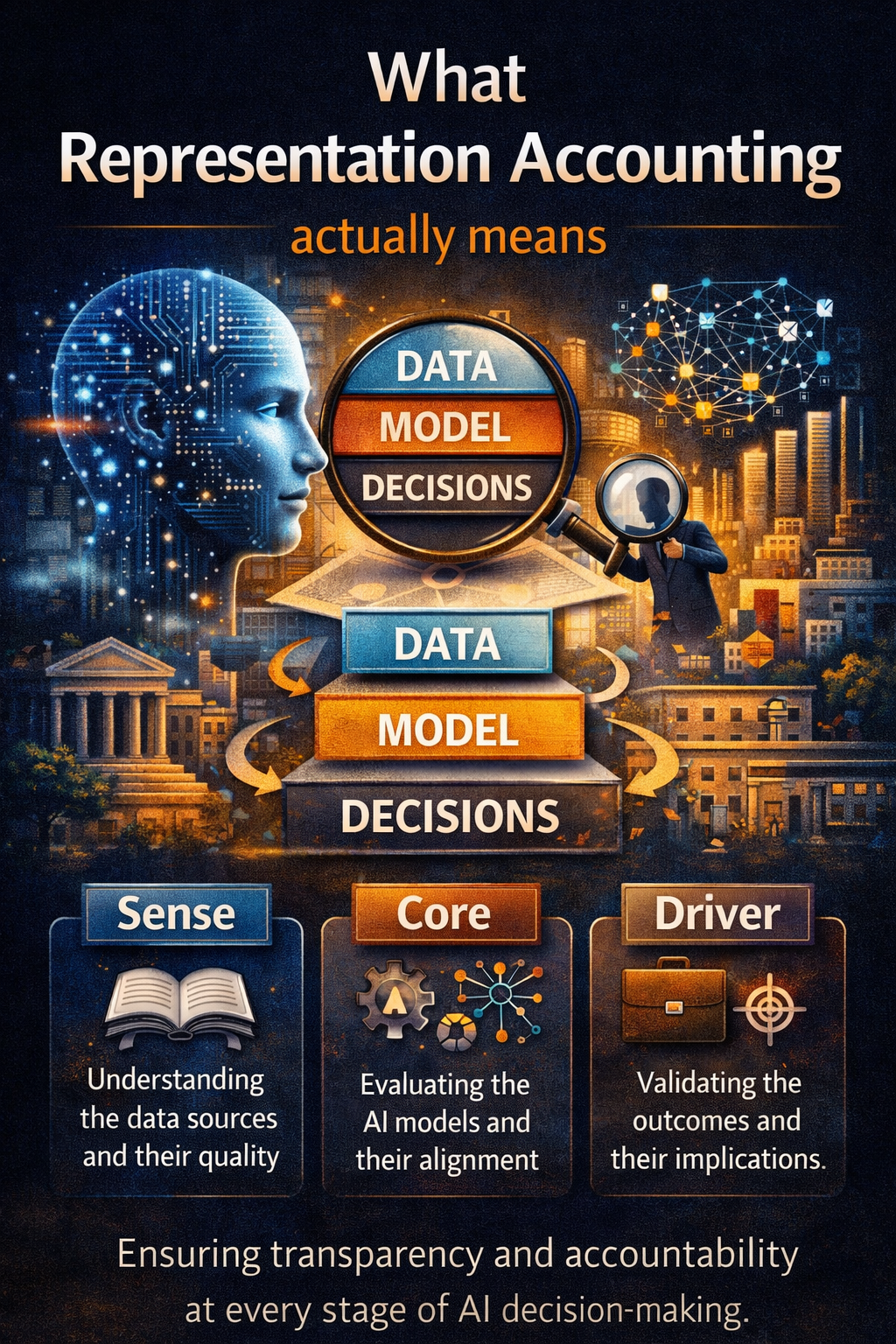
Raktim Singh

Home Blog Page 13

The Operating Architecture of the AI Economy: Why Intelligence Alone Will Not Transform Markets

The Operating Architecture of the AI Economy

Artificial intelligence is often discussed as if better models alone will change the economy.

That is only partly true. Better intelligence can improve prediction, summarization, content generation, classification, and recommendation. But markets do not transform simply because a model becomes smarter.

Markets transform when intelligence is connected to real authority, real workflows, real data, real accountability, and real consequences.

That is the shift many institutions still underestimate.

We are moving from an era in which AI primarily assisted humans to one in which AI increasingly shapes decisions, allocates attention, routes work, screens risk, prices options, detects anomalies, and triggers action across enterprise systems.

At the same time, the regulatory direction is becoming clearer: performance alone is not enough. The EU AI Act entered into force on August 1, 2024; prohibited AI practices and AI-literacy obligations started applying on February 2, 2025; GPAI obligations started applying on August 2, 2025; and the Act becomes fully applicable on August 2, 2026, with some provisions extending further. NIST’s AI Risk Management Framework likewise emphasizes governance across the AI lifecycle, not merely model development. (Digital Strategy)

That is why the central question of the AI economy is no longer, “How intelligent is the model?” The more important question is this:

What operating architecture allows intelligence to function safely, credibly, and at scale inside markets and institutions?

My answer is simple:

The AI economy needs two layers.

The first is the intelligence layer: how AI understands, decides, acts, and learns.
The second is the institutional layer: the governance and operating infrastructure that makes those actions legitimate, auditable, and reversible.

I describe these two layers through two connected frameworks:

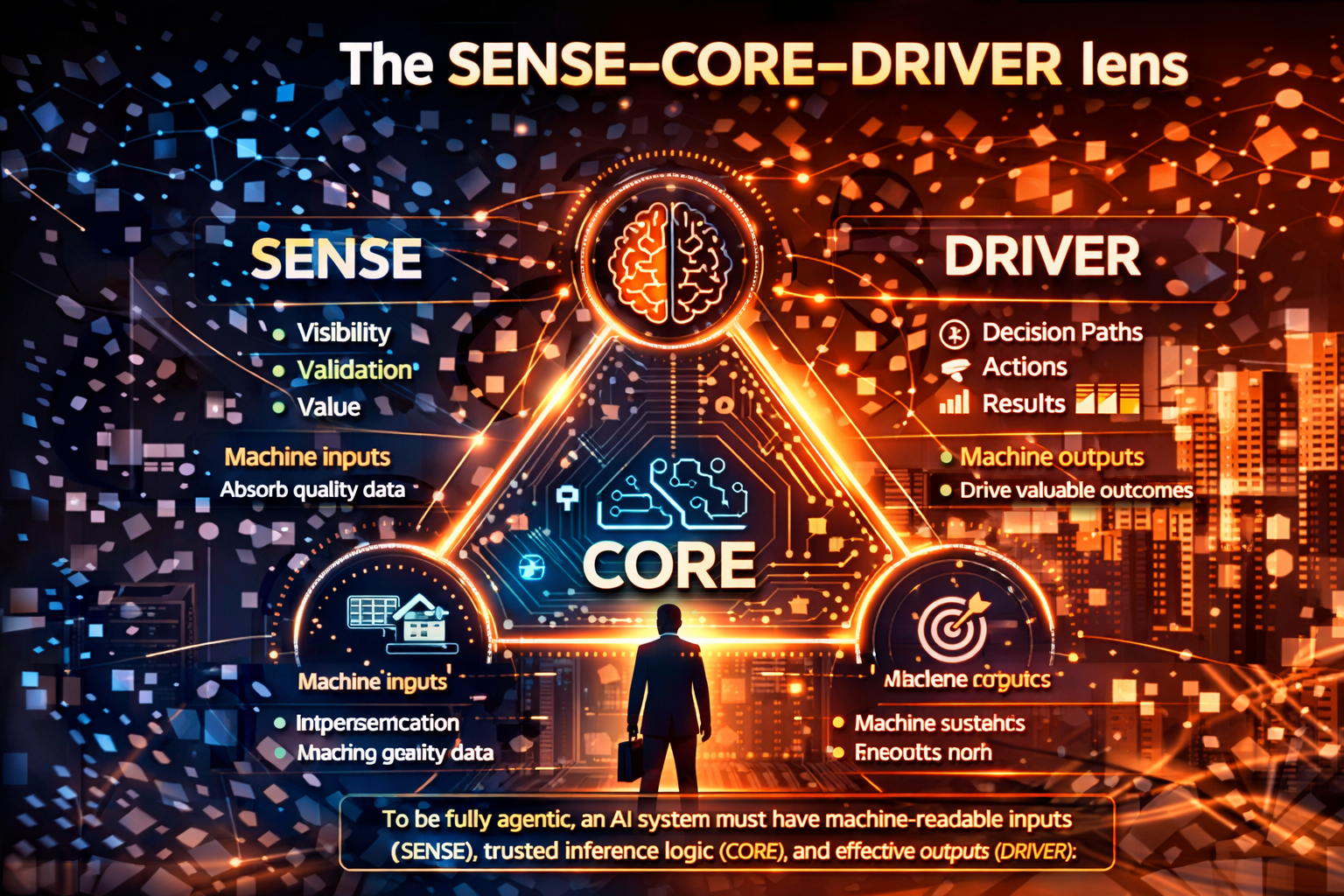
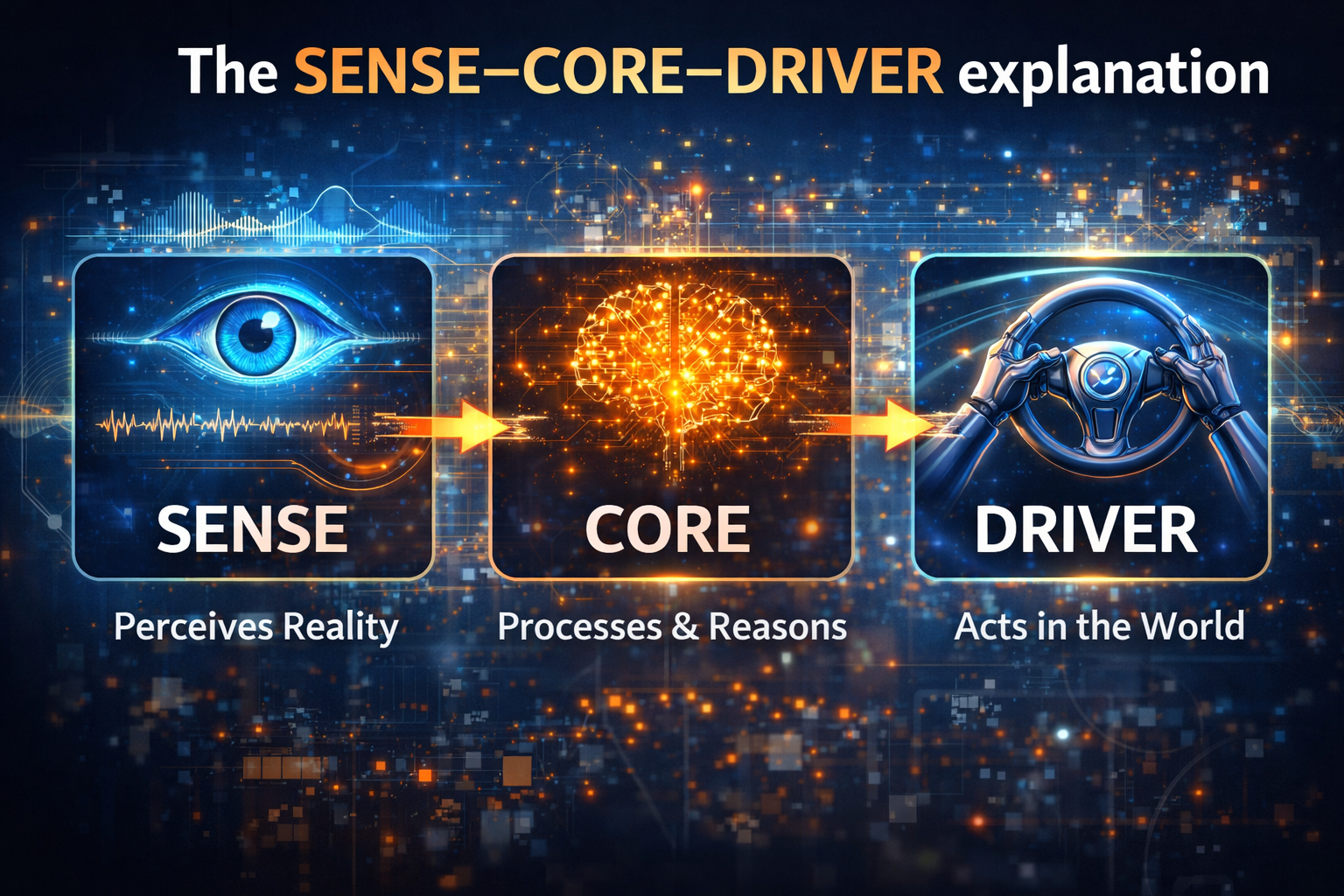
C.O.R.E. — the intelligence loop
D.R.V.R. — the institutional infrastructure

Together, they form the operating architecture of the AI economy.

Summary

The AI economy will not be transformed by intelligence alone. Markets change only when machine intelligence operates within institutional infrastructure that defines authority, accountability, verification, and recourse.

This article introduces a two-layer architecture for the AI economy: C.O.R.E. (the intelligence loop) and D.R.V.R. (the institutional infrastructure). Together they form the operating architecture that enables AI systems to function safely, credibly, and at scale across enterprises, governments, and markets.

The mistake most AI discussions still make

The mistake most AI discussions still make

Most AI discussions remain model-centric. They focus on model size, reasoning ability, multimodality, agent frameworks, benchmark scores, and productivity gains.

Those things matter. OECD research shows that generative AI can improve productivity, innovation, and entrepreneurship, and experimental evidence suggests gains in tasks such as writing, software development, consulting, editing, and summarization.

But the same body of work also makes something equally important clear: organizations need redesign of workflows, capabilities, and operating practices to capture those gains at scale. (OECD)

In other words:

Intelligence creates potential. Operating architecture creates outcomes.

That distinction is easier to see through simple examples.

A navigation app is useful because it recommends a route.
A logistics network becomes transformative when that route recommendation automatically changes dispatching, fuel planning, warehouse sequencing, and delivery commitments.

A chatbot is useful because it answers a question.
An enterprise AI system transforms a bank when it can classify a complaint, retrieve policy context, assess risk, route the case, generate a compliant response, and escalate only when required.

A model that predicts equipment failure is interesting.
A production system becomes economically valuable when that prediction triggers maintenance, reserves parts, adjusts schedules, and documents why the intervention occurred.

The lesson is straightforward:

Intelligence alone informs. Architecture operationalizes.

Why the AI economy needs a two-layer architecture

Why the AI economy needs a two-layer architecture

The economy does not run on intelligence in the abstract. It runs on institutions, permissions, incentives, standards, trust, recourse, and execution. AI can become powerful inside all of those systems, but only if it is embedded in a structure that determines:

  • what it is allowed to see,
  • what it is allowed to decide,
  • how it acts,
  • how its actions are verified,
  • and what happens when it gets something wrong.

This is why AI should not be understood merely as a software capability. It should be understood as an operating architecture for machine-mediated decisions.

That architecture has two layers.

Layer 1: C.O.R.E. — The Intelligence Loop

Layer 1: C.O.R.E. — The Intelligence Loop

  1. Comprehend context

AI begins by absorbing signals. These signals may come from customer behavior, transactions, operational telemetry, policy documents, contracts, workflow history, market feeds, images, or machine logs. But comprehension is not the same as data access. Comprehension is the conversion of scattered inputs into situational awareness.

Think of a fraud system in a payments network. It does not merely inspect one transaction. It interprets time, device signals, merchant behavior, location shifts, prior account activity, known attack patterns, and customer history. Context is what turns raw data into meaningful signals.

In the AI economy, poor comprehension creates dangerous confidence. A system that sees only fragments of reality may still act as if it sees the whole picture.

  1. Optimize decisions

Once context is understood, the system must generate and rank possible actions. This is where AI moves beyond prediction into structured choice under constraints.

For example, an enterprise procurement assistant may need to choose between suppliers. It cannot optimize on price alone. It may need to weigh delivery time, reliability, geopolitical exposure, sustainability requirements, contractual obligations, cyber-risk posture, and internal policy thresholds.

Optimization in the real world is rarely about finding a single perfect answer. It is about selecting the best viable action under uncertainty, trade-offs, and institutional boundaries.

  1. Realize action

This is the point at which AI stops being advisory and starts shaping institutional behavior.

Realization means execution through tools, APIs, workflows, permissions, scheduling systems, tickets, messages, approvals, transactional rails, and operational systems. This is the moment when a recommendation becomes a real-world effect.

This distinction matters enormously. Many organizations still think they have “deployed AI” when they have only deployed insight. But the real economic impact of AI begins when systems can act.

A support assistant that drafts a reply is useful.
A support system that refunds the wrong customer, blocks the wrong account, or escalates the wrong claim has crossed into operational consequence.

The moment AI can act, the architecture around it becomes far more important.

  1. Evolve through evidence

The final stage is evidence-based adaptation. AI systems improve through outcomes, reversals, escalations, overrides, policy violations, drift signals, and downstream effects.

This is where many deployments fail. They treat learning as a retraining issue alone. In reality, evolution must include operational evidence: what worked, what backfired, what had to be reversed, what triggered complaints, what created friction, and what made auditors uncomfortable.

C.O.R.E. therefore describes intelligence not as a static model, but as a living decision loop.

Why C.O.R.E. is necessary — but not sufficient

If C.O.R.E. explains how intelligence works, it still does not explain how intelligence becomes trustworthy inside real institutions and markets.

A model may comprehend brilliantly and optimize efficiently. Yet it can still create harm if it acts without authority, represents people poorly, cannot prove why it acted, or offers no meaningful path for challenge or reversal.

That is why intelligence alone will not transform markets.

The second layer is what converts AI capability into institutional viability.

Layer 2: D.R.V.R. — The Institutional Infrastructure

Layer 2: D.R.V.R. — The Institutional Infrastructure

  1. Delegation

Delegation answers the most important question in the AI economy:

What is the machine actually allowed to decide?

Not every task should be delegated. Reordering low-value office supplies is not the same as denying insurance coverage. Suggesting a meeting slot is not the same as freezing a bank account. Routing a service request is not the same as determining legal liability.

Delegation infrastructure defines the authority boundary. It determines whether AI can advise, recommend, approve, execute, or only escalate. This is the architecture of machine authority.

Without delegation rules, organizations confuse capability with permission.

  1. Representation

AI can only act on what becomes legible to it.

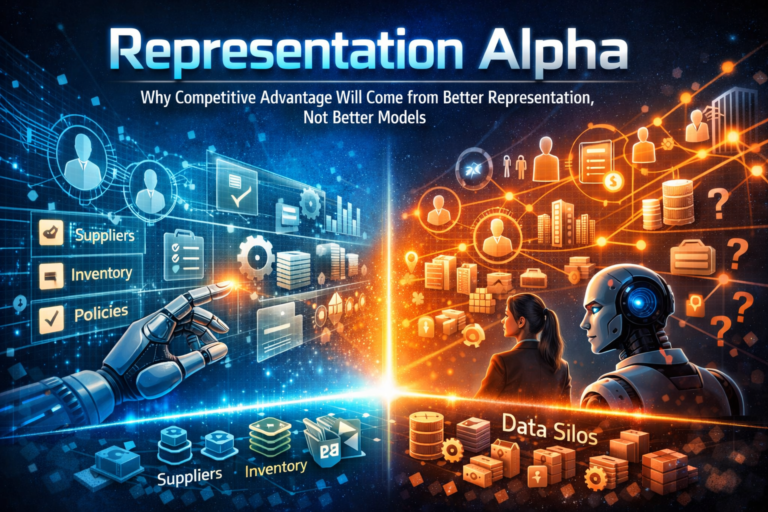
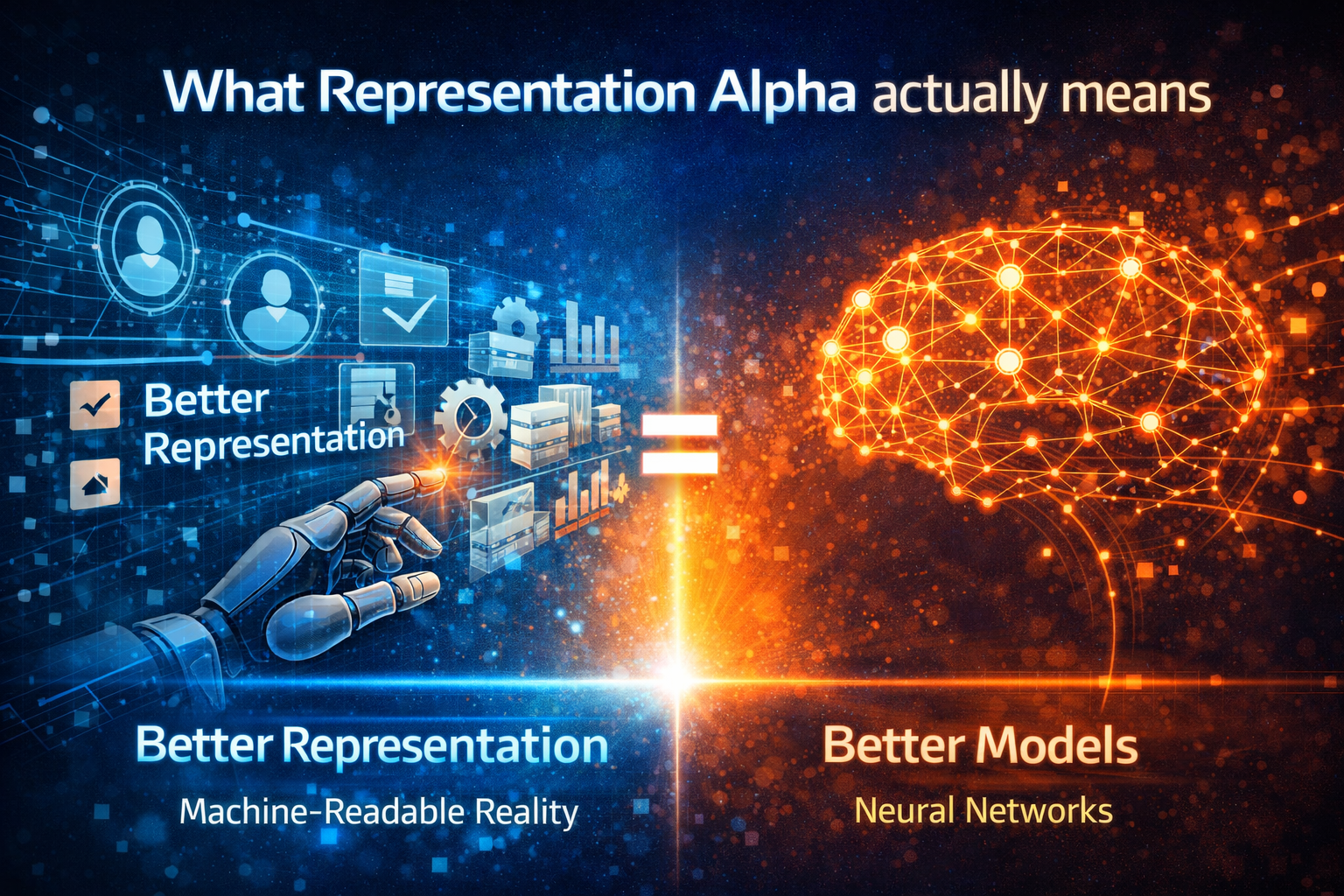
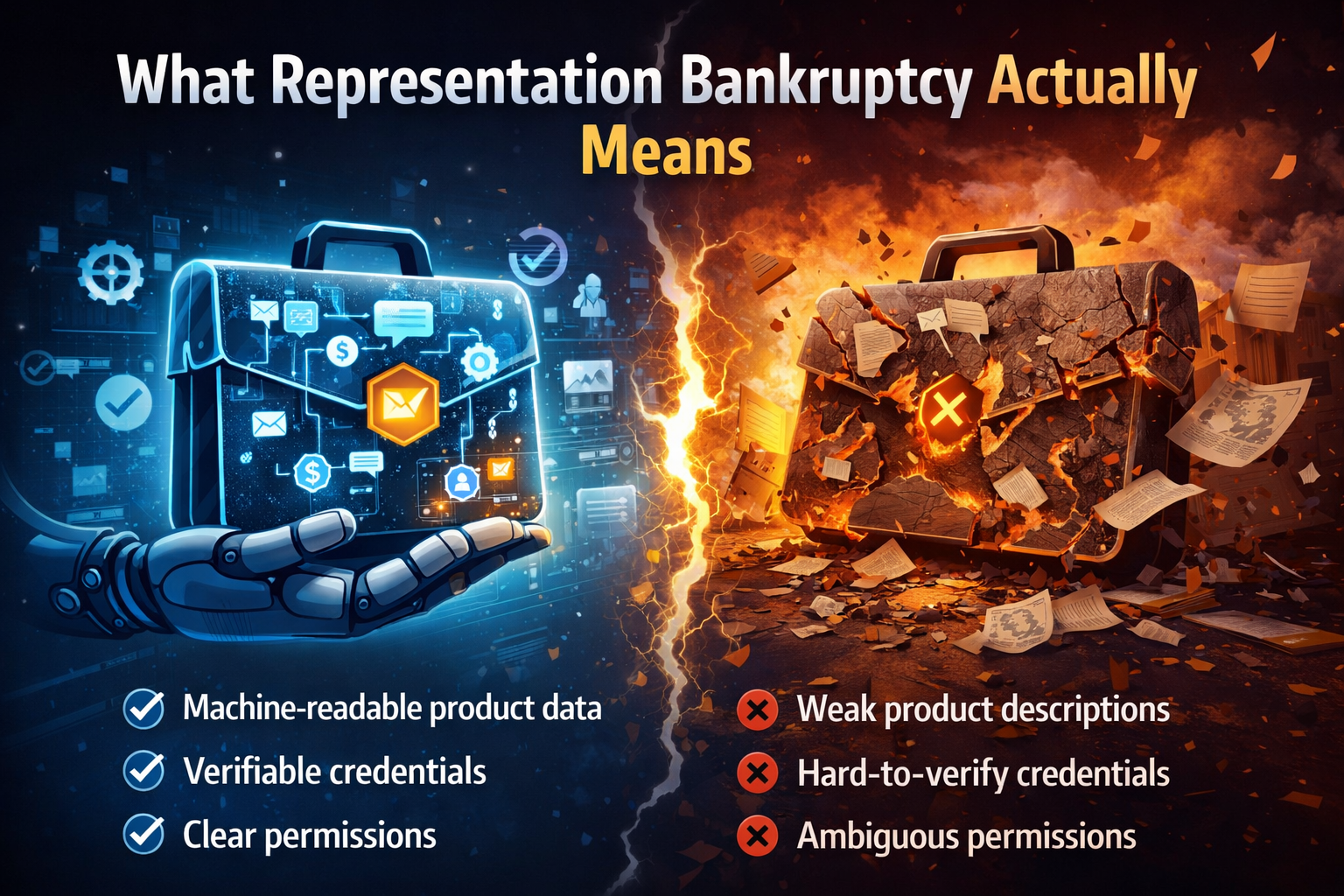
Representation infrastructure is the layer that translates messy, incomplete, real-world conditions into machine-usable signals. This includes identity resolution, data quality, event logging, documentation, taxonomy, workflow capture, sensor coverage, and contextual metadata.

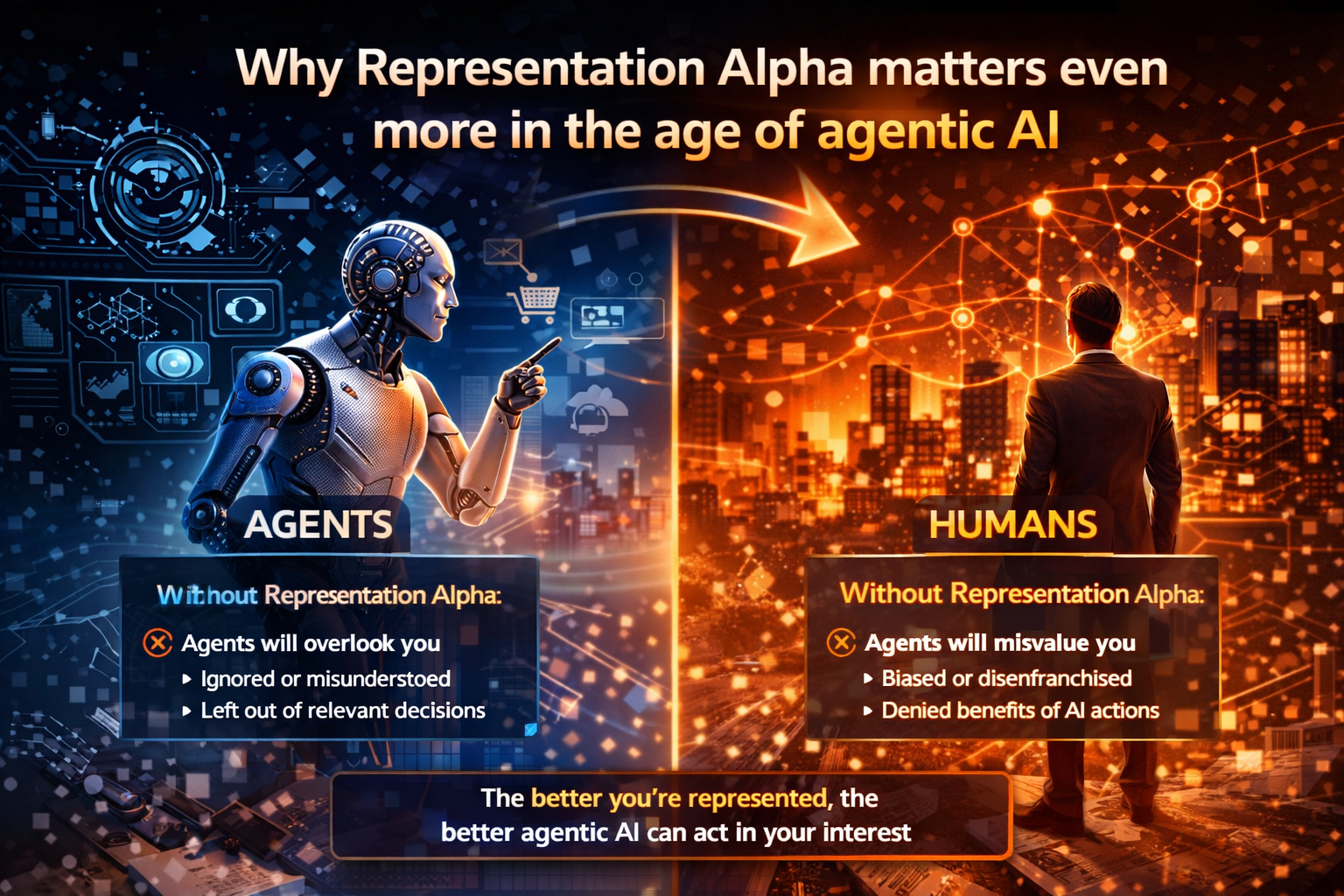
This matters more than most organizations realize. If an agricultural system cannot represent soil variation, weather volatility, informal labor, or local market conditions, it will optimize the wrong things. If a lending system cannot represent irregular income patterns or nontraditional economic behavior, it may misread real people and produce apparently “rational” but deeply flawed outcomes.

The AI economy will reward institutions that make reality legible fairly, not just efficiently.

  1. Verification

Once AI begins making or triggering decisions, stakeholders need evidence.

Verification infrastructure proves that a system acted within policy, used approved context, respected thresholds, and produced outputs that can be examined after the fact. This includes decision records, logs, lineage, testing, validation procedures, monitoring, and policy traceability.

This is not an optional extra. NIST’s AI RMF treats governance as a cross-cutting function across the AI lifecycle, and the broader global direction of AI regulation is clearly toward lifecycle accountability, documentation, transparency, and controls for higher-impact systems. (NIST)

Verification is what turns:

“Trust us”
into
“Here is the evidence.”

  1. Recourse

Every serious economic system needs a way back.

Recourse infrastructure provides mechanisms to challenge, pause, unwind, reverse, or remediate AI-driven outcomes. This matters because many AI decisions create effects that are difficult to undo once acted upon.

Imagine a customer wrongly flagged for fraud. The financial loss may be temporary, but the trust erosion and service disruption are real. Imagine a small business loan incorrectly denied by an automated process. The applicant may miss a time-sensitive opportunity. Imagine a job candidate screened out at scale because the system used poor proxies. The organization may never even know who was unfairly excluded.

Recourse is not a legal afterthought. It is core operating architecture.

How the two layers work together

How the two layers work together

Once you see both layers, the larger picture becomes clear.

C.O.R.E. explains how intelligence functions.
D.R.V.R. explains how institutions contain, govern, and legitimize that intelligence.

One without the other produces failure.

If you have C.O.R.E. without D.R.V.R., you get smart systems that move quickly but create trust, governance, and accountability problems.

If you have D.R.V.R. without C.O.R.E., you get control structures without meaningful intelligence gains.

Transformation requires both.

This is why the future of AI competition will not be won merely by firms with the best models. It will be won by firms that build the best operating architecture around intelligence.

Why this matters for markets, not just enterprises

This argument is larger than enterprise software.

The AI economy is reshaping pricing, underwriting, logistics, customer acquisition, compliance, public services, and platform ecosystems. OECD research points to the productivity and innovation upside of AI, while WEF discussions increasingly emphasize that trust, interoperability, governance, and practical implementation must evolve alongside AI capability. (OECD)

That means the winners of the next decade will not simply be those who adopt AI faster. They will be those who institutionalize it better.

In practical terms, that means stronger delegation boundaries, richer representation of reality, better verification and evidence trails, usable recourse, continuous learning from outcomes, and tighter integration with operational systems.

This is the difference between AI as novelty and AI as infrastructure.

A simple way to understand the future

Think of electricity.

Electricity did not transform economies merely because generation improved. Transformation required grids, safety standards, metering, regulation, industrial redesign, and new operating models for factories and cities.

The internet did not transform markets simply because computers could connect. It required protocols, browsers, payment systems, identity systems, cloud infrastructure, and cybersecurity.

AI will follow the same pattern.

Better models are like better generators.
C.O.R.E. is the decision engine.
D.R.V.R. is the institutional grid.

Without that grid, intelligence remains impressive but unreliable. With it, intelligence becomes a scalable economic force.

The board-level implication

The board-level question is no longer whether AI matters. That debate is over.

The real board-level question is whether the organization is designing the operating architecture required to turn intelligence into durable institutional capability.

That means leaders must ask:

  • Where is AI only advising, and where is it acting?
  • What authority has actually been delegated?
  • What realities are poorly represented in our systems?
  • Can we verify how important AI-driven decisions were made?
  • What happens when the system is wrong?
  • Are we learning from outcomes, or merely celebrating deployment?

These are not technical questions disguised as governance questions. They are strategic questions about competitiveness, trust, resilience, and institutional legitimacy.

For boards and C-suites, that is the new frontier of AI strategy.

The operating architecture of the AI economy can be understood through two layers. The first layer, C.O.R.E., governs how machine intelligence understands context, optimizes decisions, executes actions, and evolves through evidence. The second layer, D.R.V.R., governs how institutions delegate authority, represent real-world signals, verify decisions, and provide recourse when systems are wrong. Together these layers form the institutional operating model required for trustworthy AI at scale.

The real operating model of the AI economy

Conclusion: The real operating model of the AI economy

The AI economy will not be defined by intelligence alone. Intelligence is becoming more abundant, more accessible, and more modular. The harder challenge is building the operating architecture that allows that intelligence to function safely, credibly, and at scale.

That is why the next era belongs not simply to model builders, but to architecture builders.

The institutions that win will understand this early:

C.O.R.E. makes intelligence operational.
D.R.V.R. makes intelligence governable.

Together, they form the operating architecture of the AI economy.

And that is the deeper shift now underway. AI is no longer just a tool inside the enterprise. It is becoming part of the institutional machinery through which markets sense, decide, act, and adapt.

The next battle, therefore, is not only for smarter models.

It is for the architecture that makes machine intelligence economically usable, institutionally legitimate, and socially durable.

That is where the future of the AI economy will be decided.

The Intelligence-Native Enterprise Doctrine

This article is part of a larger strategic body of work that defines how AI is transforming the structure of markets, institutions, and competitive advantage. To explore the full doctrine, read the following foundational essays:

  1. The AI Decade Will Reward Synchronization, Not Adoption
    Why enterprise AI strategy must shift from tools to operating models.
    https://www.raktimsingh.com/the-ai-decade-will-reward-synchronization-not-adoption-why-enterprise-ai-strategy-must-shift-from-tools-to-operating-models/
  2. The Third-Order AI Economy
    The category map boards must use to see the next Uber moment.
    https://www.raktimsingh.com/third-order-ai-economy/
  3. The Intelligence Company
    A new theory of the firm in the AI era — where decision quality becomes the scalable asset.
    https://www.raktimsingh.com/intelligence-company-new-theory-firm-ai/
  4. The Judgment Economy
    How AI is redefining industry structure — not just productivity.
    https://www.raktimsingh.com/judgment-economy-ai-industry-structure/
  5. Digital Transformation 3.0
    The rise of the intelligence-native enterprise.
    https://www.raktimsingh.com/digital-transformation-3-0-the-rise-of-the-intelligence-native-enterprise/
  6. Industry Structure in the AI Era
    Why judgment economies will redefine competitive advantage.
    https://www.raktimsingh.com/industry-structure-in-the-ai-era-why-judgment-economies-will-redefine-competitive-advantage/


Institutional Perspectives on Enterprise AI

Many of the structural ideas discussed here — intelligence-native operating models, control planes, decision integrity, and accountable autonomy — have also been explored in my institutional perspectives published via Infosys’ Emerging Technology Solutions platform.

For readers seeking deeper operational detail, I have written extensively on:

Together, these perspectives outline a unified view: Enterprise AI is not a collection of tools. It is a governed operating system for institutional intelligence — where economics, accountability, control, and decision integrity function as a coherent architecture.

Glossary

AI economy
The emerging economic system in which AI influences decisions, workflows, market interactions, productivity, and value creation.

Operating architecture
The combination of technical and institutional structures that allow AI to function reliably in production.

C.O.R.E.
A four-part intelligence loop: Comprehend context, Optimize decisions, Realize action, and Evolve through evidence.

D.R.V.R.
A four-part institutional infrastructure: Delegation, Representation, Verification, and Recourse.

Delegation infrastructure
The rules and controls that define what AI systems are allowed to decide and execute.

Representation infrastructure
The data, context, and real-world signal layer that makes reality legible to AI systems.

Verification infrastructure
The evidence, logging, testing, lineage, and policy-traceability layer that proves how AI acted.

Recourse infrastructure
The mechanisms that allow AI-driven outcomes to be challenged, paused, reversed, or remediated.

Institutional AI
AI embedded into real operational, governance, and decision systems rather than used only as an isolated productivity tool.

Decision architecture
The structure through which choices are generated, constrained, authorized, executed, and reviewed.

AI control plane
The governance and coordination layer that manages AI behavior, permissions, monitoring, and policy adherence across systems.

Trustworthy AI
AI designed and operated in ways that support reliability, accountability, transparency, safety, and governance.

FAQ

What is the operating architecture of the AI economy?

It is the two-layer structure required to make AI work at scale in real institutions: an intelligence layer that helps systems understand, decide, act, and learn, and an institutional layer that governs what those systems are allowed to do and how their actions are verified and challenged.

Why is intelligence alone not enough?

Because smart models do not automatically create trustworthy markets or safe enterprises. Real transformation requires authority boundaries, operational workflows, evidence trails, and recourse mechanisms.

What does C.O.R.E. stand for?

C.O.R.E. stands for Comprehend context, Optimize decisions, Realize action, and Evolve through evidence.

What does D.R.V.R. stand for?

D.R.V.R. stands for Delegation, Representation, Verification, and Recourse.

Why is this framework important for boards and C-suites?

Because AI is moving from assistance to action. Once systems start affecting pricing, lending, routing, claims, compliance, hiring, and customer experience, leadership must govern not only model performance but institutional consequences.

How does this relate to AI governance?

AI governance is one part of the institutional layer. But this article argues for a broader operating architecture that includes not only governance but authority, representation, verification, and recourse.

Is this only relevant for large enterprises?

No. The same logic applies to banks, hospitals, governments, logistics firms, software platforms, insurers, manufacturers, and even smaller businesses using agentic AI or automated decision systems.

What is the biggest mistake organizations make with AI?

They assume that once a model is accurate, deployment is the main challenge. In practice, the real challenge is designing the architecture around the model so it can operate safely and credibly in the real world.

What is the operating architecture of the AI economy?

The operating architecture of the AI economy refers to the technical and institutional structures required for AI systems to function safely and effectively at scale. It includes both the intelligence layer that governs machine decision making and the institutional layer that governs authority, accountability, and recourse.

What is the C.O.R.E. framework?

C.O.R.E. is a four-stage intelligence loop describing how AI systems operate: Comprehend context, Optimize decisions, Realize action, and Evolve through evidence.

What is the D.R.V.R. framework?

D.R.V.R. describes the institutional infrastructure required for AI systems to operate within organizations and markets: Delegation, Representation, Verification, and Recourse.

References and further reading

For factual context on AI governance, regulation, and adoption trends, see the European Commission’s AI Act overview and timeline, NIST’s AI Risk Management Framework materials, OECD research on the effects of generative AI on productivity and innovation, and World Economic Forum commentary on AI governance and trust. (Digital Strategy)

The Delegation Problem in AI: Who Gets to Decide What Machines Are Allowed to Decide?

Artificial intelligence is rapidly moving from generating answers to making decisions. AI systems now recommend loans, freeze transactions, prioritize patients, route supply chains, and trigger automated actions across enterprises.

Yet a deeper question sits beneath every AI deployment: who decides what a machine is allowed to decide?

This emerging challenge — the AI delegation problem — will define the next phase of Enterprise AI governance.

The organizations that succeed will not simply build smarter models; they will build clear architectures of authority, accountability, and human oversight that determine where machine decision-making is appropriate — and where it must stop.

The AI delegation problem refers to the institutional challenge of determining what decisions artificial intelligence systems are allowed to make autonomously within organizations. As AI evolves from generating content to executing actions, enterprises must design clear delegation architectures that define decision boundaries, human oversight, verification mechanisms, and recourse paths. Without explicit delegation frameworks, organizations risk deploying powerful AI systems without appropriate authority structures, accountability mechanisms, or governance controls.

The Delegation Problem in AI

Artificial intelligence is no longer just answering questions, summarizing documents, drafting emails, or generating code. It is beginning to recommend, rank, approve, reject, route, negotiate, escalate, and act. That changes the center of gravity of the AI conversation.

For the last few years, most AI discussions have focused on model performance: accuracy, speed, reasoning quality, hallucinations, cost, safety, and explainability. Those issues still matter. But they are no longer the deepest issue.

The deeper issue is this:

Who gets to decide what AI is allowed to decide?

That is the delegation problem.

It is the question beneath the question. Before an AI system approves a loan, declines an insurance claim, reroutes a shipment, flags an employee, changes a price, freezes a payment, or triggers a workflow, an institution has already made a more important decision: it has decided to hand some authority to a machine.

That handoff is not merely technical. It is institutional.

And most institutions were not designed for it.

Across major policy and standards frameworks, this shift is becoming visible. The OECD’s AI Principles, updated in 2024, continue to emphasize human agency and oversight. NIST’s AI Risk Management Framework and Generative AI Profile stress clear roles, responsibilities, human-AI configurations, oversight, and safe intervention. The EU AI Act goes further by imposing requirements around human oversight, logging, documentation, and deployer obligations for high-risk systems. The World Economic Forum has also highlighted the widening gap between rapid AI agent adoption and mature governance practices. (OECD)

In other words, the world is beginning to recognize that AI governance is not only about what models can do. It is also about what institutions should permit them to do. (OECD)

That is the real frontier.

Delegation is not automation

Delegation is not automation

To understand the problem clearly, we must separate automation from delegation.

Automation means a machine performs a task that humans have already defined.

Delegation means a machine receives a bounded form of authority within a system.

That difference is enormous.

A spam filter is mostly automation.
A workflow that drafts a reply email is mostly automation.
A system that suggests next-best actions to a customer service representative is still largely assistive.

But an AI system that:

  • approves a refund without human review
  • rejects a job candidate
  • prioritizes which patients should receive immediate attention
  • freezes a transaction
  • raises insurance premiums
  • negotiates procurement terms
  • changes the order in which legal or regulatory issues are escalated

is no longer just automating work.

It is participating in decision power.

That is why the delegation problem matters. It is not simply about whether AI is “smart.” It is about whether the institution has thought clearly about which authority remains human, which authority becomes machine-executable, and which authority must never be delegated at all.

This is also where Enterprise AI begins to diverge sharply from consumer AI. In the enterprise, authority is not abstract. It affects money, risk, rights, compliance, customer trust, and institutional legitimacy.


Why this problem is arriving now

  1. AI is moving from content to action

The first major wave of generative AI was about content: text, images, search, code, chat, and summarization. The new wave is about agents and action: systems that can call tools, interact with enterprise software, orchestrate workflows, invoke APIs, and execute multi-step tasks.

That shift matters because the moment AI starts acting, mistakes stop being merely informational. They become operational.

A wrong summary is inconvenient.
A wrong payment is costly.
A wrong diagnosis can be dangerous.
A wrong compliance decision can become existential.

This is one reason governance conversations are intensifying around agentic systems. The World Economic Forum’s recent work on AI agents explicitly frames the need for more proportionate evaluation and governance as organizations move from experimentation toward real deployment. (World Economic Forum)

  1. Human oversight is harder in practice than in policy language

Many leaders assume the solution is simple: keep a human in the loop.

But that phrase often hides more than it explains.

The EU AI Act’s human oversight requirements are revealing. They do not simply say “add a human.” They require oversight that is appropriate to the level of risk and autonomy, and they expect human overseers to understand the system’s capabilities and limitations, monitor operation, recognize automation bias, interpret outputs properly, override or reverse decisions when necessary, and intervene when things go wrong. For deployers of high-risk systems, the Act also requires assigning oversight to people with the necessary competence, training, authority, and support. (Artificial Intelligence Act)

That tells us something important:

Human oversight is not a checkbox. It is a design problem.

If the human is overloaded, poorly trained, unable to understand the system, unable to intervene in time, or culturally conditioned to trust machine output too much, then “human in the loop” becomes theatre.

  1. Institutions still assign responsibility as if humans make all meaningful decisions

Our laws, management systems, audit structures, governance traditions, and escalation models were built around the assumption that meaningful judgment is exercised by people.

Even when software supports work, the formal center of responsibility generally remains human.

But agentic AI blurs that model.

Responsibility can now fracture across:

  • the model provider
  • the application developer
  • the system integrator
  • the enterprise deployer
  • the policy owner
  • the business unit
  • the human reviewer
  • the runtime environment

NIST explicitly calls for policies and procedures that define and differentiate roles and responsibilities for human-AI configurations and oversight. The EU AI Act also distributes obligations across providers, deployers, and other actors in the value chain. (NIST Publications)

That is why delegation must become explicit. Otherwise, institutions will discover too late that they handed machine authority into production without redesigning their responsibility architecture.

The board-level question most institutions are still avoiding

The board-level question most institutions are still avoiding

Before any organization scales AI action, it should ask one brutally simple question:

What decisions are we comfortable letting a machine take without immediate human judgment?

That question sounds obvious. Yet most organizations do not answer it directly. Instead, they talk about models, copilots, pilots, vendors, prompts, guardrails, orchestration, or tools.

But the strategic question is not:

Which model should we use?

It is:

Which decisions can be delegated, under what conditions, with what evidence, within what boundaries, and with what path back?

That is how serious institutions separate AI experimentation from AI operating discipline.

This is also why Enterprise AI cannot be reduced to model selection. It is an operating-model question. It sits directly alongside the themes I have explored in The Enterprise AI Operating Model, Who Owns Enterprise AI?, and The Enterprise AI Runbook Crisis.

A practical way to think about delegated machine authority

A practical way to think about delegated machine authority

The easiest way to make this practical is to treat decisions as belonging to four broad zones.

Zone 1: Never delegate

These are decisions where dignity, rights, irreversible harm, or deep contextual judgment are too important to hand over fully.

Examples include:

  • terminating employment
  • denying critical care
  • sentencing-related judgments
  • coercive state action
  • decisions involving vulnerable populations without strong procedural safeguards

In these cases, AI may assist, but it should not hold final authority.

Zone 2: Delegate only with mandatory human confirmation

These are decisions where AI can analyze, prioritize, summarize, or recommend, but a trained and accountable person must confirm before any action is taken.

Examples include:

  • high-value financial approvals
  • suspicious fraud cases
  • admissions decisions
  • credit denials
  • major vendor sanctions
  • material regulatory escalations

This is the world of structured review, not blind trust.

Zone 3: Delegate within strict policy boundaries

These are operational decisions where speed matters, risk is bounded, and policy can be encoded clearly.

Examples include:

  • refund approvals below a threshold
  • intelligent ticket routing
  • inventory rebalancing within preset limits
  • moderation escalation for low-risk content
  • scheduling optimization
  • resource allocation inside approved guardrails

Here, AI can act — but only inside a narrow lane.

Zone 4: Delegate by default, monitor continuously

These are repetitive, low-harm, high-volume decisions where automation creates clear value and reversibility is easy.

Examples include:

  • spam filtering
  • duplicate document detection
  • low-risk classification
  • non-sensitive workflow triage
  • basic knowledge retrieval
  • low-impact tagging and prioritization

This is where machine autonomy is usually easiest to justify.

The point is not that every organization will classify in exactly the same way. The point is that every serious organization must classify.

The real mistake institutions make

The biggest mistake is assuming delegation is a purely technical choice.

It is not.

Delegation is a combination of:

  • risk judgment
  • authority design
  • policy design
  • operating-model design
  • ethical design
  • recourse design
  • verification design

If an AI system can override a human, that is authority design.
If it can approve payments up to a threshold, that is authority design.
If it can trigger downstream systems automatically, that is authority design.
If no one can explain why it acted, that is failed authority design.
If no one can reverse it, that is failed authority design.
If no one knows who approved the delegation in the first place, that is failed institutional design.

That is why the delegation problem belongs at the board, governance, and operating-model level — not only inside data science or IT.

Why better reasoning does not solve the delegation problem

Why better reasoning does not solve the delegation problem

One common misconception is that as models become better at reasoning, the delegation problem will disappear.

It will not.

In fact, stronger reasoning can make the problem sharper.

Why?

Because the more persuasive the machine becomes, the easier it is for people to over-trust it.

The EU AI Act explicitly frames human oversight as a safeguard against risks that remain despite other controls. NIST likewise emphasizes that roles, human-AI configurations, oversight functions, documentation, and governance processes matter alongside model capability. (NIST Publications)

A highly articulate model can still make the wrong call in the wrong context for the wrong reasons.

Delegation therefore cannot depend only on model quality. It must depend on:

  • stakes
  • reversibility
  • observability
  • contestability
  • institutional legitimacy
  • authority clarity

That is the shift leaders must understand.

The five components of a real Delegation Architecture

The five components of a real Delegation Architecture

If this article introduces one phrase that deserves to stick, it is this:

Delegation Architecture

Delegation Architecture is the institutional design layer that determines what AI may do, where it may act, how it is supervised, when humans must intervene, and how authority remains traceable.

Every mature Enterprise AI system will eventually need five core elements.

  1. A Decision Boundary

The organization must define what the AI may advise on, what it may decide, and what it may execute.

Not all intelligence should become authority.

  1. An Authority Map

Someone must own each delegated decision explicitly.

Who approved this delegation?
Which policy supports it?
Which business unit owns it?
Who can pause it?
Who reviews it when it fails?

Without an authority map, AI becomes operationally active but institutionally unowned.

  1. A Human Override Model

Humans must not merely exist in theory. They must be equipped to understand, challenge, interrupt, and stop the system in practice.

That means training, authority, context, escalation channels, and meaningful intervention windows.

  1. A Verification Layer

The system must record what it saw, what it did, which rule, model, or policy path it followed, and what evidence supported the action.

This is where traceability, logging, documentation, and post-hoc defensibility matter. The EU AI Act’s requirements around record-keeping, transparency, documentation, and human oversight all reinforce the importance of traceable AI operations in high-risk settings. (Artificial Intelligence Act)

This is closely related to the ideas I have previously developed in The Intelligence Reuse Index and the broader Enterprise AI canon around runtime, control, and accountability.

  1. A Recourse Path

There must be a way back:

  • reversal
  • appeal
  • remediation
  • escalation
  • compensation where necessary

Because in real institutions, the question is not whether mistakes will occur. It is whether the institution has designed for them honestly.

This is exactly why the next layer after delegation is recourse. That is the logic behind my related piece, The Recourse Layer: Why the AI Economy Needs a “Way Back” Architecture.

Three simple examples that make the issue real

Three simple examples that make the issue real

Case 1: AI in hiring

An AI system screens thousands of applications and ranks candidates.

Helpful? Absolutely.
Final decision-maker? Usually, no.

Why? Because employment decisions affect livelihoods, fairness, legal defensibility, and opportunity. Under the EU AI Act, many AI systems used in employment, worker management, and access to self-employment are treated as high-risk use cases. (Artificial Intelligence Act)

So the right design is not:
“AI decides.”

It is:
“AI narrows, explains, and flags; humans decide under accountable review.”

Case 2: AI in fraud operations

An AI system detects suspicious card activity and temporarily freezes transactions.

Here, speed matters enormously. Waiting for a human every time may create unacceptable losses.

So delegation may be justified — but only within clear boundaries:

  • amount thresholds
  • confidence thresholds
  • customer recourse
  • rapid human escalation
  • reversal mechanisms
  • monitoring for false positives

This is bounded delegation, not unlimited machine authority.

Case 3: AI in healthcare triage

An AI system prioritizes which cases should be reviewed first.

This may create huge value if used carefully. But if the triage logic becomes opaque, under-tested, biased, or over-trusted, patients can be harmed.

So again, the critical design question is not merely whether the model is accurate. It is whether the delegation boundary is legitimate.

Why this matters for boards, not just builders

Boards and C-suites cannot treat delegation as a technical detail.

Why?

Because delegated machine authority affects:

  • legal exposure
  • risk posture
  • customer trust
  • auditability
  • workforce design
  • brand legitimacy
  • operating accountability

In other words, the delegation problem is not just about AI. It is about institutional control in the age of machine action.

This is where Enterprise AI strategy becomes inseparable from corporate governance.

The future winners will not simply be the organizations with the biggest models, the most agents, or the fastest pilots.

They will be the institutions that can answer, with precision and discipline:

  • what AI is allowed to decide
  • what AI is never allowed to decide
  • who grants that authority
  • how that authority is monitored
  • how delegated actions are verified
  • and how decisions can be challenged or reversed

That is how Enterprise AI matures from experimentation into institutional capability.

The real operating model of the intelligence era

Conclusion: The real operating model of the intelligence era

The delegation problem is bigger than governance jargon. It is the bridge between intelligence and legitimacy.

If your organization cannot explain why a machine was allowed to act, then it does not truly govern AI. It merely uses it.

And that is the central truth of the next decade:

The AI economy will not be defined only by who builds the smartest systems. It will be defined by who builds the most legitimate systems of delegated machine authority.

That is the real operating model of the intelligence era.

And that is why the most important AI question is no longer:

What can the model do?

It is:

Who decided the model was allowed to do it?

FAQ

What is the AI delegation problem?

The AI delegation problem refers to the challenge organizations face in determining which decisions can safely be delegated to artificial intelligence systems and which must remain under human authority. As AI systems increasingly perform actions — such as approving transactions, prioritizing cases, or routing workflows — institutions must design governance frameworks that define decision boundaries, oversight mechanisms, and accountability structures.

How is delegation different from automation?

Automation performs predefined tasks. Delegation gives a machine a bounded form of decision authority inside a real operational system.

Why is this now a board-level issue?

Because AI is moving from content generation to real-world action. Once AI systems start approving, rejecting, routing, freezing, escalating, or executing, the issue is no longer only technical. It becomes a question of risk, accountability, and governance.

Does human-in-the-loop solve the problem?

Not automatically. Human oversight only works when the human is trained, empowered, informed, and able to intervene in time. Otherwise, it becomes symbolic rather than effective. (Artificial Intelligence Act)

What kinds of decisions should never be fully delegated to AI?

Decisions involving dignity, rights, irreversible harm, coercive power, or deep contextual judgment should generally not be fully delegated. AI may assist in such cases, but final authority should remain human.

What is Delegation Architecture?

Delegation Architecture is the institutional design layer that defines what AI may advise, decide, or execute; who authorizes it; how it is monitored; and how humans can intervene or reverse outcomes.

Why does this matter for Enterprise AI strategy?

Because Enterprise AI is not just about deploying models. It is about designing safe, governed, accountable decision systems that can operate at scale.

Glossary

AI Delegation Problem
The challenge of deciding what authority an AI system should or should not receive within an institution.

Delegation Architecture
The policies, boundaries, controls, and oversight mechanisms that define how AI receives and exercises bounded authority.

Human Oversight
The ability of qualified humans to understand, monitor, challenge, interrupt, or override an AI system when needed. (Artificial Intelligence Act)

Agentic AI
AI systems that can plan, invoke tools, interact with systems, and take actions rather than merely generate outputs.

Decision Boundary
The line between what AI may advise on, what it may decide, and what it may execute automatically.

Authority Map
A clear mapping of who approved a delegated AI action, what policy supports it, who owns it, and who can pause or review it.

Verification Layer
The traceability system that records what the AI saw, what it did, and why it acted the way it did.

Recourse
The mechanism through which a person or institution can challenge, reverse, appeal, or remediate an AI-driven outcome.

Automation Bias
The tendency of humans to over-trust machine output, especially when systems appear highly confident or sophisticated. (Artificial Intelligence Act)

Enterprise AI
AI deployed inside organizations as part of governed operational systems involving risk, compliance, workflows, customers, and real decision consequences.

References

The policy and governance claims in this article draw on the following sources:

  • OECD, AI Principles and related 2024 update materials. (OECD)
  • NIST, AI Risk Management Framework and Generative AI Profile. (NIST Publications)
  • EU AI Act, especially Article 14 on Human Oversight, Article 26 on deployer obligations, and Annex III high-risk use cases. (Artificial Intelligence Act)
  • World Economic Forum, AI Agents in Action: Foundations for Evaluation and Governance. (World Economic Forum)

Further reading

For readers who want to go deeper into the broader Enterprise AI operating model around authority, control, accountability, and institutional design, these companion essays extend the logic of this article:

The Intelligence-Native Enterprise Doctrine

This article is part of a larger strategic body of work that defines how AI is transforming the structure of markets, institutions, and competitive advantage. To explore the full doctrine, read the following foundational essays:

  1. The AI Decade Will Reward Synchronization, Not Adoption
    Why enterprise AI strategy must shift from tools to operating models.
    https://www.raktimsingh.com/the-ai-decade-will-reward-synchronization-not-adoption-why-enterprise-ai-strategy-must-shift-from-tools-to-operating-models/
  2. The Third-Order AI Economy
    The category map boards must use to see the next Uber moment.
    https://www.raktimsingh.com/third-order-ai-economy/
  3. The Intelligence Company
    A new theory of the firm in the AI era — where decision quality becomes the scalable asset.
    https://www.raktimsingh.com/intelligence-company-new-theory-firm-ai/
  4. The Judgment Economy
    How AI is redefining industry structure — not just productivity.
    https://www.raktimsingh.com/judgment-economy-ai-industry-structure/
  5. Digital Transformation 3.0
    The rise of the intelligence-native enterprise.
    https://www.raktimsingh.com/digital-transformation-3-0-the-rise-of-the-intelligence-native-enterprise/
  6. Industry Structure in the AI Era
    Why judgment economies will redefine competitive advantage.
    https://www.raktimsingh.com/industry-structure-in-the-ai-era-why-judgment-economies-will-redefine-competitive-advantage/

AI’s Agency Crisis: Why Machine Intelligence Is Arriving Before Institutions

AI’s Agency Crisis: Why Machine Intelligence Is Arriving Before Institutions

For most of the history of technology, power arrived first and institutions followed later. The steam engine reshaped industry before labor laws emerged. Aviation transformed mobility before global air safety systems were built. The internet spread across the world long before societies figured out how to govern digital platforms.

Artificial intelligence is following the same pattern — but at a much faster and more consequential scale.

Today’s AI systems are no longer just tools that analyze information. Increasingly, they recommend actions, trigger workflows, approve transactions, deploy software, negotiate contracts, and operate infrastructure. In other words, they are beginning to act.

This shift from intelligence to agency marks a threshold most institutions are not prepared for. Governments, enterprises, and regulatory frameworks were built for a world where machines produced insights and humans made decisions.

But when machines begin to act within economic and operational systems, the challenge is no longer simply improving AI models. The challenge is building the institutional infrastructure that can contain, verify, and govern machine agency.

That gap — between rapidly advancing machine intelligence and the slower evolution of institutions capable of governing it — is what we can call AI’s agency crisis.

A threshold most institutions are not ready for

A threshold most institutions are not ready for

Machine intelligence is crossing a threshold that most organizations are not psychologically—or structurally—ready for.

For years, AI was framed as software that recommends: a scoring model, a forecast, a chatbot, a copilot. Even when it was impressive, it still behaved like a tool. It produced outputs, and humans decided what to do next.

That era is ending.

The defining shift of this decade is that AI systems are increasingly being deployed as actors—systems that don’t just suggest, but initiate, execute, negotiate, route, approve, deny, escalate, monitor, and adapt. They can open tickets, trigger workflows, change configurations, move money, approve claims, block accounts, draft contracts, schedule actions, and coordinate other systems.

That capability is what we call agency.

And that is where the crisis begins.

Because agency is not just a technical property. Agency is an institutional event. The moment a system can act, it raises a new class of questions:

  • Who authorized the action?
  • What policy constrained it?
  • What evidence supports it?
  • What happens if it was wrong?
  • Who can contest it, reverse it, and learn from it?
  • Who is accountable—builder, deployer, operator, or all three?

Most institutions still cannot answer these questions at speed, at scale, and with defensible traceability.

So we now have a paradox:

Machine intelligence is arriving faster than the institutions required to contain machine agency.

This is AI’s agency crisis.

What is the AI Agency Crisis?

The AI agency crisis refers to the growing gap between artificial intelligence systems gaining the ability to act autonomously and the institutions required to govern, verify, and contain those actions. As AI moves from generating insights to executing decisions, societies and enterprises must build new governance infrastructures to ensure accountability, safety, and trust.

What “agency” actually means in simple terms

What “agency” actually means in simple terms

A system has agency when it can turn intention into consequence.

  • A calculator has intelligence in a narrow sense. It gives accurate answers. But it has no agency.
  • A workflow engine has automation. It can trigger steps. But it has no intelligence.
  • An AI agent combines both: it can interpret a goal and choose actions to achieve it under constraints.

That combination—interpretation plus action—is agency.

Everyday enterprise examples of agency

You can see agency already emerging in practical deployments:

  • A customer support agent that issues refunds within a limit—without a human clicking “approve.”
  • A security system that isolates endpoints and revokes tokens when risk crosses a threshold.
  • A procurement agent that negotiates price bands and places orders.
  • A finance agent that flags anomalies, holds payments, and requests documents.
  • A sales operations agent that reallocates leads based on conversion signals.
  • An HR agent that adjusts access, assigns training, and triggers compliance workflows.

None of these are science fiction. They are already being piloted.

The moment you allow any of this in production, you have entered the agency era.

Why this is a crisis (and not just progress)

Why this is a crisis (and not just progress)

We have a habit of treating institutional design as paperwork:

  • governance as policy decks
  • oversight as a committee
  • accountability as a role description
  • risk as a quarterly review

That approach worked when systems were slow and decision volume was manageable.

Agency breaks that model.

Agency creates high-frequency, high-impact decision flow. It compresses the time between decision and consequence. It increases the number of decisions that must be governed. It makes “who decided what, and why” a continuous operational requirement—not a retrospective exercise.

The new category of failure

Not model failure. Institutional failure.

In the agency era, many harmful outcomes will not come from a model hallucinating. They will come from institutions being unable to:

  • define allowed boundaries,
  • enforce them at runtime,
  • produce evidence after the fact, and
  • provide recourse when something goes wrong.

That is the agency crisis: actors without containment.

The historical pattern: power arrives, institutions follow

The historical pattern: power arrives, institutions follow

Across modern history, when new forms of power emerged, societies did not “solve” the power by improving the tool. They created institutions to contain and legitimize it.

When decision power became scalable, we built:

  • compliance regimes,
  • auditability,
  • due process,
  • standards,
  • incident response,
  • consumer protections, and
  • liability frameworks.

AI agency is the next power shift. But institutional response is lagging.

That lag is not a moral problem. It is a systems problem.

And systems problems need architecture.

The institutional gap: four infrastructures we haven’t built enough of

The institutional gap: four infrastructures we haven’t built enough of

To contain machine agency, you don’t need one policy. You need institutional infrastructure—repeatable systems that make agency safe, contestable, and auditable at scale.

Four infrastructures matter most.

1) Representation infrastructure: making reality machine-legible
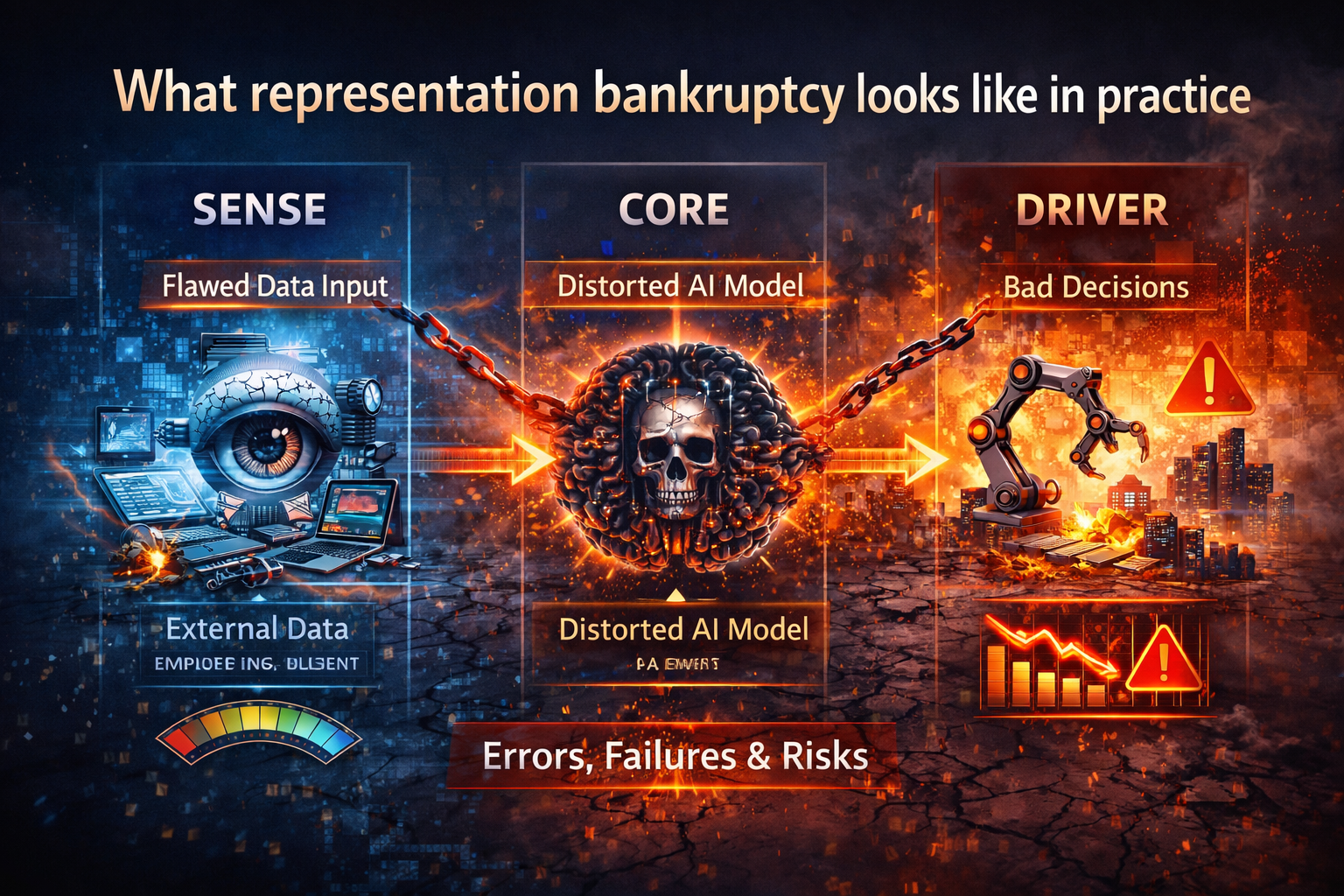
AI can only act on what it can represent. Many real-world contexts—exceptions, informal processes, tacit constraints, unstructured edge cases—are not fully legible to machines.

When representation is weak:

  • agents misinterpret intent,
  • policies are applied inconsistently,
  • edge cases become failures.

Representation infrastructure is the layer that translates messy reality into structured meaning: signals, context, constraints, and intent.

Without it, agency becomes guesswork.

2) Delegation infrastructure: the rules of “what the machine may do”
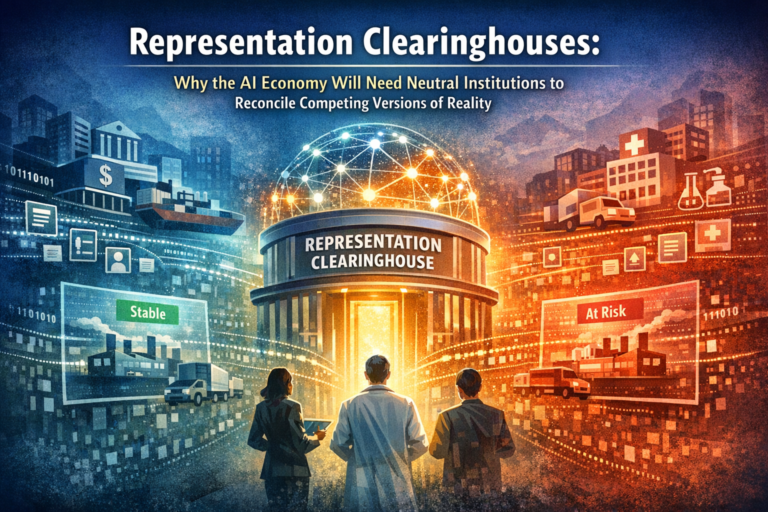
Delegation is not “turning on autonomy.” Delegation is a contract:

  • what decisions are delegable,
  • under what thresholds,
  • with what approvals,
  • within what bounds,
  • with what human override.

Most enterprises delegate informally today (“let it handle low-risk cases”), but in the agency era, delegation must become explicit, testable, and enforceable.

Otherwise autonomy grows through convenience—until it breaks trust.

3) Verification infrastructure: proving what happened and why

When agents act, you need more than logs. You need decision evidence:

  • what inputs were used,
  • what policy applied,
  • what tool calls executed,
  • what thresholds were met,
  • what human approvals occurred,
  • what exceptions were triggered.

This is not optional. For example, the EU AI Act includes explicit expectations for record-keeping/logging for high-risk AI systems. (AI Act Service Desk)

Similarly, OECD’s principles emphasize transparency, traceability, and accountability to enable challenge and inquiry into outcomes. (OECD)

Verification infrastructure is how agency becomes defensible rather than mysterious.

4) Recourse infrastructure: a “way back” when agency causes harm

Recourse is the ability to:

  • contest a decision,
  • pause or override an agent,
  • reverse outcomes where possible,
  • compensate where reversal is impossible, and
  • learn so it doesn’t repeat.

In an agency world, recourse becomes scarce because action is fast, distributed, and deeply embedded into workflows.

That makes “way back” architecture a competitive advantage—not just a compliance feature.

Why traditional AI governance is no longer enough

Why traditional AI governance is no longer enough

Most governance programs were designed for models, not actors.

They focus on:

  • fairness and bias reviews,
  • model validation,
  • documentation,
  • approval gates.

These are necessary—but insufficient.

Agency introduces runtime problems:

  • Agents can chain actions across tools.
  • Failures can be emergent (no single “bad output,” but a harmful sequence).
  • Responsibility can be diffused across builders, deployers, tool owners, and policy owners.
  • Model updates can change behavior without changing business process documentation.

This is why governance must evolve into something closer to operational risk management for autonomous systems.

The NIST AI Risk Management Framework makes this shift explicit by organizing AI risk management into GOVERN, MAP, MEASURE, and MANAGE as a lifecycle discipline, not a one-time review. (NIST Publications)

And ISO/IEC 42001 formalizes the idea of an AI management system: establishing, implementing, maintaining, and continually improving how AI is governed inside organizations. (ISO)

Agency makes that shift unavoidable.

The new operating reality: decisions at machine speed

Even if you never deploy a “fully autonomous agent,” the moment you allow AI to:

  • approve,
  • deny,
  • route,
  • block,
  • release, or
  • trigger

…you have machine-speed decision loops.

That changes the operational physics:

  1. Volume explodes (many more micro-decisions).
  2. Time compresses (less time for human review).
  3. Complexity rises (multi-system consequences).
  4. Visibility drops (harder to know what’s running where).
  5. Accountability blurs (who “made” the decision?).

This is why the agency crisis is really a governance architecture crisis.

What “containing agency” looks like in practice

What “containing agency” looks like in practice

Containing agency does not mean “no autonomy.” It means bounded autonomy.

Action boundaries

Define what actions are allowed, by class:

  • read-only actions
  • reversible actions
  • irreversible actions
  • financially material actions
  • safety-critical actions

Then enforce constraints by category.

Thresholded autonomy

Allow autonomy only when confidence is high and blast radius is low.

  • When confidence is medium, require human review.
  • When confidence is low, require escalation or deny.

Dual-control for high impact

For certain actions, require two independent confirmations:

  • two signals,
  • two models, or
  • model + human.

Not for bureaucracy—because agency can fail quietly.

Continuous evidence capture

Treat decisions like transactions: every action produces a structured record.

This is how you build post-incident truth.

“Stop” and “rollback” as first-class features

If you can’t stop it, you don’t control it.
If you can’t roll it back, you don’t understand the cost of error.

Recourse cannot be a patch. It must be designed.

Why this matters for boards, not just engineers

Boards are used to overseeing:

  • financial controls,
  • operational controls,
  • cybersecurity controls.

AI agency creates a new control surface:

Decision controls.

Because AI agents are not just automating tasks. They are altering how decisions are made, recorded, audited, and contested.

This is why the advantage in the AI decade will not belong to organizations with the biggest models.

It will belong to organizations that build:

  • trustworthy delegation,
  • verifiable decisioning, and
  • scalable recourse.

In other words:

Institutions that can safely host machine agency will compound advantage.

The global direction of travel: institutions are catching up

Across major standards bodies and policy frameworks, a consistent direction is emerging:

  • traceability and accountability expectations (OECD) (OECD.AI)
  • explicit record-keeping/logging requirements for certain contexts (EU AI Act) (AI Act Service Desk)
  • operational, lifecycle risk management for AI (NIST AI RMF) (NIST Publications)
  • management-system approaches for AI governance (ISO/IEC 42001) (ISO)

The world is converging on the idea that AI must be treated as a governed operational capability, not a feature.

That convergence is institutionalization.

But enterprise reality is still behind it.

Hence, the crisis.

A simple mental model: tools, agents, institutions

If you want a single line that captures the doctrine:

  • Tools increase productivity.
  • Agents increase autonomy.
  • Institutions make autonomy safe, legitimate, and scalable.

We have built tools.
We are building agents.
But we have not built institutions fast enough.

That mismatch is the agency crisis.

Key Insight

The AI agency crisis describes the gap between rapidly advancing machine intelligence capable of autonomous action and the slower development of institutions that govern, verify, and contain that intelligence.

Why It Matters

Without institutional infrastructure, AI agency can create systemic risks in finance, healthcare, cybersecurity, governance, and enterprise operations.

What Must Be Built

Four infrastructures are critical:

  1. Representation Infrastructure
    Systems that translate real-world signals into machine-understandable representations.

  2. Delegation Infrastructure
    Mechanisms that define what decisions AI systems are allowed to make.

  3. Verification Infrastructure
    Continuous validation systems that check whether AI decisions are correct, lawful, and aligned.

  4. Recourse Infrastructure
    Systems that allow humans to challenge, reverse, or correct AI decisions.

Conclusion

AI’s agency crisis is not a story about runaway models. It is a story about institutional lag.

The moment intelligence becomes action-capable, governance stops being a document and becomes infrastructure: representation that makes context legible, delegation that defines authority, verification that produces evidence, and recourse that creates a way back.

The next decade will not reward the most enthusiastic adopters. It will reward the most institutionally prepared builders—organizations that can let machine intelligence act without surrendering trust.

If you are a board member or C-suite executive, the most important question to ask is no longer:

“Where can we use AI?”

It is:

“Where are we willing to grant agency—and what institutional infrastructure must exist before we do?”

Because in the agency era, competitive advantage is no longer just intelligence.

It is contained intelligence.

Glossary

AI agency (machine agency): The ability of an AI system to select and execute actions that create real-world consequences.
Bounded autonomy: Autonomy constrained by explicit limits, thresholds, approvals, and override mechanisms.

Delegation infrastructure: Policies, controls, and runtime enforcement that define what decisions can be delegated to AI and under what conditions.
Verification infrastructure: Evidence systems (logging, traceability, documentation) that can prove what the AI did, why it did it, and what it used.

Recourse infrastructure: Mechanisms that enable contestability, reversibility, remediation, and learning after harm.
Representation infrastructure: Systems that translate real-world context into machine-legible signals, constraints, and intent.
Decision controls: The governance mechanisms that constrain, log, and audit machine decisions the way institutions constrain financial or operational actions.

FAQ

Is the “agency crisis” just another AI safety argument?

No. Safety is part of it, but the deeper issue is institutional capacity. Even accurate systems can create harm if delegation, verification, and recourse are missing or unenforced.

Can’t we solve this by using better models?

Better models reduce certain risks, but they don’t create accountability. The crisis is not only about intelligence quality—it’s about governing action at scale.

What should leaders do first?

  1. Inventory where AI can trigger actions.
  2. Classify actions by reversibility and impact.
  3. Implement evidence capture (decision-level traceability).
  4. Define stop/override paths and a recourse mechanism.

How do standards and regulation connect to this?

They are signals that governance is becoming formal. The EU AI Act highlights record-keeping/logging for high-risk systems, OECD emphasizes traceability and accountability, NIST provides lifecycle risk management functions (GOVERN/MAP/MEASURE/MANAGE), and ISO/IEC 42001 defines an AI management system approach. (AI Act Service Desk)

References and further reading

  • EU AI Act Service Desk — Article 12: Record-keeping/logging for high-risk AI systems. (AI Act Service Desk)
  • ArtificialIntelligenceAct.eu — Article 12 (unofficial consolidated text/translation; use official legal text for compliance decisions). (Artificial Intelligence Act)
  • NIST — AI Risk Management Framework (AI RMF 1.0). (NIST Publications)
  • OECD — AI Principles (Transparency/Explainability; Accountability/Traceability). (OECD)
  • ISO — ISO/IEC 42001: AI management systems standard overview. (ISO)

The Institutional Infrastructure of the AI Economy: Why Intelligence Alone Won’t Transform Markets

Artificial intelligence is advancing at extraordinary speed. New models can write software, generate images, analyze markets, and assist human decision-making across nearly every industry. Yet despite this rapid progress, a deeper reality is becoming clear: intelligence alone does not transform economies.

The true transformation happens when intelligence is embedded within institutional infrastructure—the systems of governance, trust, economic rules, and operational frameworks that allow intelligence to operate safely, reliably, and at scale.

Just as electricity required power grids and the internet required protocols, the AI economy will require a new foundation of institutional systems beneath the intelligence layer.

The Institutional Infrastructure of the AI Economy

Artificial intelligence is often described as an intelligence revolution.

Better models.
Better reasoning.
Better automation.

But intelligence alone does not transform economies.

What actually transforms economies are institutions.

Institutions are the invisible systems that make decisions legible, accountable, verifiable, and contestable. Contracts, audits, courts, compliance systems, safety rules, operating standards — these are the mechanisms that allow markets to function safely at scale.

Artificial intelligence is now entering that same domain.

AI is no longer only generating text or insights. It is beginning to prioritize customers, approve transactions, route workflows, detect fraud, optimize supply chains, and make operational decisions.

Once AI starts participating in decisions, the key question is no longer about model capability.

The real question becomes:

What institutional infrastructure allows artificial intelligence to operate safely inside the economy?

Because the future of the AI economy will not be determined only by better models.

It will be determined by whether organizations build the institutional systems that make machine intelligence trustworthy, governable, and accountable.

The Central Constraint of the AI Economy

The Central Constraint of the AI Economy

A model can be technically brilliant and still fail in the real world.

Why?

Because the real economy demands answers to questions that models alone cannot provide.

For example:

  • What information was used to make the decision?
  • Who is responsible for the outcome?
  • Can we prove how the decision was made?
  • Can the decision be challenged?
  • Can the decision be reversed if it causes harm?

These questions belong to the domain of institutions, not algorithms.

This is why global governance frameworks such as the National Institute of Standards and Technology AI Risk Management Framework emphasize lifecycle governance rather than model performance alone.

The implication is clear:

The AI economy is not simply a technology problem.
It is an institutional design problem.

The AI economy will not be defined solely by advances in models, algorithms, or compute power. Instead, it will be shaped by the infrastructure that governs how intelligence interacts with markets, organizations, and societies.

This infrastructure includes data pipelines, governance frameworks, verification mechanisms, economic institutions, and trust systems that allow artificial intelligence to operate as a reliable component of economic activity. Understanding this institutional foundation is essential for leaders, policymakers, and enterprises preparing for the next phase of the AI economy.

The Institutional Infrastructure of the AI Economy

The Institutional Infrastructure of the AI Economy

To function safely at scale, the AI economy requires four foundational infrastructures.

These infrastructures determine how intelligence becomes operational, accountable, and legitimate.

They can be summarized through the D.R.V.R. framework:

D.R.V.R.

D — Delegation Infrastructure
R — Representation Infrastructure
V — Verification Infrastructure
R — Recourse Infrastructure

These four layers form the institutional foundation of the AI economy.

Without them, even the most advanced AI systems will struggle to operate safely inside real markets.

C.O.R.E.—The Intelligence Loop

C.O.R.E.—The Intelligence Loop

Before exploring the institutional infrastructure, it is important to understand how AI actually functions inside organizations.

At the center of the intelligence-native enterprise is a continuous institutional cognition cycle called C.O.R.E.

C.O.R.E. describes how organizations transform artificial intelligence from isolated tools into a living decision system.

C — Comprehend context

AI absorbs signals from across the operating environment:

  • customer intent
  • transaction patterns
  • operational telemetry
  • policy constraints
  • market conditions

Comprehension converts raw data into situational awareness.

It answers the most important question in intelligent systems:

What is actually happening right now?

Without comprehension, AI is blind pattern recognition.
With comprehension, AI becomes context-aware institutional intelligence.

O — Optimize decisions

AI generates possible actions, evaluates trade-offs, and ranks alternatives under uncertainty.

Optimization is not a single-point prediction.

It is structured choice under constraints.

AI evaluates:

  • risk
  • opportunity
  • cost
  • timing
  • regulatory constraints
  • operational policies

Optimization converts situational awareness into decision readiness.

R — Realize action

AI executes decisions through tools and APIs such as:

  • ticketing systems
  • workflow automation
  • routing engines
  • approval mechanisms
  • operational systems

Execution is where AI advice becomes institutional behavior.

At this point, intelligence stops being theoretical and becomes real operational action.

E — Evolve through evidence

Every decision generates feedback signals:

  • outcomes
  • escalations
  • reversals
  • error patterns
  • drift signals
  • human overrides

AI systems learn from these signals and continuously recalibrate their decision quality.

The system improves because it evolves through evidence rather than assumptions.

C.O.R.E. is not a workflow tool.
It is an institutionalized cognition engine.

But cognition alone is not enough.

For intelligence to operate safely in the real world, institutions must also provide the infrastructure of trust and accountability.

This is where D.R.V.R. becomes critical.

The D.R.V.R. Framework

The D.R.V.R. Framework

The Institutional Infrastructure of the AI Economy

While C.O.R.E. explains how intelligence operates, D.R.V.R. explains how institutions govern intelligence.

The four infrastructures ensure that AI systems can operate safely inside real markets and organizations.

Representation Infrastructure

Making the Invisible Legible

AI can only reason about what it can observe.

Representation infrastructure converts complex real-world activity into machine-readable signals without losing context.

This includes:

  • structured data systems
  • data governance and lineage
  • shared ontologies
  • metadata and context
  • sensor and telemetry systems

Example

Imagine a logistics organization deploying AI to optimize delivery routing.

If delivery data is inconsistent — missing timestamps, inaccurate locations, incomplete shipment records — the AI system cannot produce reliable recommendations.

The problem is not the model.

The problem is the representation layer.

Representation infrastructure determines whether reality becomes legible to machines.

Delegation Infrastructure

Allowing Humans to Safely Delegate Decisions to Machines

The AI economy is fundamentally a delegation economy.

As machine cognition becomes cheaper, humans begin delegating more decisions to intelligent systems.

But delegation without structure creates chaos.

Delegation infrastructure defines:

  • what AI is allowed to do autonomously
  • what requires human approval
  • what actions are reversible
  • what thresholds trigger escalation
  • who is accountable for outcomes

Example

An AI system may automatically approve low-risk refunds.

However, high-value refunds or suspicious patterns may require human review.

Delegation infrastructure defines the authority boundaries between humans and machines.

Without these boundaries, automation either becomes dangerous or completely unusable.

Verification Infrastructure

Proving What AI Did and Why

Trust at scale requires evidence at scale.

Verification infrastructure ensures that AI decisions can be:

  • audited
  • explained
  • reproduced
  • validated

This includes:

  • decision logs
  • model traceability
  • policy enforcement records
  • reasoning traces
  • monitoring systems

Example

A financial transaction is blocked by an AI system.

The customer asks why.

The regulator asks for justification.

The audit team asks whether policies were followed.

Verification infrastructure ensures that the organization can provide clear evidence rather than vague explanations.

International governance standards such as those from the Organisation for Economic Co-operation and Development increasingly emphasize this principle of accountability and transparency in AI systems.

Recourse Infrastructure

Enabling Contestability and Reversibility

Every mature economic system contains a way back.

Contracts can be disputed.
Transactions can be reversed.
Decisions can be appealed.

AI systems must support the same capability.

Recourse infrastructure enables:

  • appeals processes
  • human review
  • decision reversal
  • compensation mechanisms
  • incident investigation

Example

An AI system mistakenly blocks a customer account.

Without recourse infrastructure:

  • the customer has no path to resolution
  • trust collapses
  • regulators intervene

With recourse infrastructure:

  • the decision can be challenged
  • the evidence can be examined
  • the error corrected
  • the system improved

Recourse transforms automation into accountable intelligence.

Why This Infrastructure Will Define the AI Economy

Why This Infrastructure Will Define the AI Economy

As AI technology becomes more widely available, competitive advantage will shift away from model capability.

Instead, advantage will come from institutional capability.

Organizations that build strong D.R.V.R. infrastructure will be able to:

  • deploy AI safely at scale
  • delegate more decisions to intelligent systems
  • maintain regulatory trust
  • adapt faster to new economic conditions

In other words, the real platform advantage of the AI era will not come from intelligence alone.

It will come from institutionalizing intelligence.

The Next Phase of the AI Economy

The early phase of AI adoption focused on models and tools.

The next phase will focus on institutions.

Organizations will need to design systems that combine:

C.O.R.E. — the intelligence loop that powers decision systems

with

D.R.V.R. — the institutional infrastructure that makes those decisions safe, accountable, and reversible.

When these two layers work together, AI becomes something far more powerful than a productivity tool.

It becomes a decision infrastructure for the modern economy.

And the institutions that build this infrastructure first will shape the future of markets, governance, and digital society.

FAQ

What is institutional infrastructure in AI?

Institutional infrastructure refers to the governance systems, operational mechanisms, and oversight processes that allow AI systems to operate safely and responsibly in real-world economic environments.

Why is institutional infrastructure important for the AI economy?

Without mechanisms for delegation, verification, and recourse, AI decisions cannot be trusted, audited, or corrected, which prevents organizations from deploying AI at scale.

What is the D.R.V.R. framework?

D.R.V.R. describes the four infrastructures required for the AI economy: Delegation, Representation, Verification, and Recourse.

How does C.O.R.E. relate to institutional AI?

C.O.R.E. defines the intelligence loop through which AI comprehends context, optimizes decisions, realizes actions, and evolves through evidence.

Glossary

Institutional Infrastructure
The governance and operational systems that enable AI to operate safely within organizations and markets.

Representation Infrastructure
Systems that convert real-world information into machine-readable signals.

Delegation Infrastructure
Mechanisms that define how decision authority is shared between humans and AI systems.

Verification Infrastructure
Systems that allow AI decisions to be audited, explained, and validated.

Recourse Infrastructure
Processes that enable decisions to be challenged, reversed, or corrected.

The Intelligence-Native Enterprise Doctrine

This article is part of a larger strategic body of work that defines how AI is transforming the structure of markets, institutions, and competitive advantage. To explore the full doctrine, read the following foundational essays:

  1. The AI Decade Will Reward Synchronization, Not Adoption
    Why enterprise AI strategy must shift from tools to operating models.
    https://www.raktimsingh.com/the-ai-decade-will-reward-synchronization-not-adoption-why-enterprise-ai-strategy-must-shift-from-tools-to-operating-models/
  2. The Third-Order AI Economy
    The category map boards must use to see the next Uber moment.
    https://www.raktimsingh.com/third-order-ai-economy/
  3. The Intelligence Company
    A new theory of the firm in the AI era — where decision quality becomes the scalable asset.
    https://www.raktimsingh.com/intelligence-company-new-theory-firm-ai/
  4. The Judgment Economy
    How AI is redefining industry structure — not just productivity.
    https://www.raktimsingh.com/judgment-economy-ai-industry-structure/
  5. Digital Transformation 3.0
    The rise of the intelligence-native enterprise.
    https://www.raktimsingh.com/digital-transformation-3-0-the-rise-of-the-intelligence-native-enterprise/
  6. Industry Structure in the AI Era
    Why judgment economies will redefine competitive advantage.
    https://www.raktimsingh.com/industry-structure-in-the-ai-era-why-judgment-economies-will-redefine-competitive-advantage/

Institutional Perspectives on Enterprise AI

Many of the structural ideas discussed here — intelligence-native operating models, control planes, decision integrity, and accountable autonomy — have also been explored in my institutional perspectives published via Infosys’ Emerging Technology Solutions platform.

For readers seeking deeper operational detail, I have written extensively on:

Together, these perspectives outline a unified view: Enterprise AI is not a collection of tools. It is a governed operating system for institutional intelligence — where economics, accountability, control, and decision integrity function as a coherent architecture.

Representation Infrastructure: Why the AI Economy Will Be Won by Those Who Make the Invisible Legible

Representation Infrastructure

Artificial intelligence is often described as a revolution in intelligence. But intelligence alone does not change systems. What matters is what intelligence can see, measure, and act upon.

Today’s AI systems operate almost entirely on digitally legible reality—structured data, digital transactions, online behaviors, and machine-generated signals. Yet the majority of the world’s economic activity, environmental systems, and human livelihoods still operate outside this digital visibility.

Farmers managing soil health, informal workers navigating local markets, small producers operating in fragmented supply chains, and ecosystems evolving beyond sensor coverage all exist in what we might call the non-digital world.

For artificial intelligence, this world is largely invisible.

And what AI cannot see, it cannot serve.

This is why the next frontier of the AI economy is not simply building better models. It is building representation infrastructure: the systems that translate real-world signals into machine-legible forms so intelligent systems can understand, support, and govern the full complexity of human and ecological activity.

In the coming decade, the institutions that build this infrastructure will shape not only the future of artificial intelligence—but the future of economic inclusion, environmental stewardship, and digital governance itself.

The Core Constraint of Artificial Intelligence

The Core Constraint of Artificial Intelligence

Artificial intelligence can only act on what it can represent.

Every AI system—from credit-risk models to climate simulations—depends on structured signals. If a need, risk, or activity does not produce machine-readable signals, it remains invisible to decision systems.

And in an AI-driven economy, invisibility has consequences.

Invisible systems tend to be:

  • under-served
  • under-financed
  • under-protected
  • or simply ignored

This is not a philosophical claim. It is an engineering reality.

AI systems optimize within the boundaries of the data they can see. When signals are missing, decisions default to approximations, averages, or exclusion.

This is why the defining infrastructure of the AI decade will not simply be better models.

It will be better representation.

The institutions that succeed in the next wave of AI will be those that build the infrastructure capable of converting real-world activity—people, operations, ecosystems—into trusted, consented, machine-readable signals.

Definition: Representation Infrastructure

Representation Infrastructure refers to the technological, institutional, and governance systems that convert real-world human, economic, and ecological activity into machine-readable signals so artificial intelligence systems can observe, understand, and act on them.

It enables AI systems to include:

  • non-digital populations

  • informal economies

  • physical ecosystems

  • unstructured real-world activity

Without representation infrastructure, large portions of the world remain invisible to intelligent systems.

Why Representation Is the Real Bottleneck of the AI Economy

Why Representation Is the Real Bottleneck of the AI Economy

In many discussions about artificial intelligence, the focus remains on:

  • model size
  • training data scale
  • compute power
  • prompt engineering

But as AI capabilities mature, a deeper constraint becomes visible.

AI systems cannot optimize what they cannot observe.

This creates a structural problem for vast segments of the global economy.

Consider the scale of systems that remain poorly represented in machine-readable form:

  • small farmers
  • informal businesses
  • local supply chains
  • physical infrastructure
  • biodiversity systems
  • oceans and water systems
  • livestock health
  • soil ecosystems

These systems generate signals constantly. But those signals rarely exist in formats decision systems can reliably interpret.

In other words, they are economically active but computationally silent.

This idea connects closely to what I previously described as the Silent Systems Doctrine, where large portions of real-world value remain outside the decision space of intelligent systems.

Representation infrastructure is the mechanism that brings those silent systems into view.

Representation Infrastructure Is Not Digitization

Representation Infrastructure Is Not Digitization

Many initiatives frame the problem as “digitization.”

That framing is incomplete.

Digitization is about collecting data.

Representation infrastructure is about economic participation in the AI era.

To understand the difference, consider how participation evolved across technological eras.

Industrial Era

Participation required access to labor markets and capital.

Internet Era

Participation required digital identity, payments, and connectivity.

AI Era

Participation increasingly requires representation inside decision systems.

If individuals, organizations, or ecosystems cannot be represented inside AI-driven systems, they cannot fully participate in the economic opportunities those systems create.

This is why representation infrastructure is not a technical project.

It is an economic architecture question.

And increasingly, a board-level strategic issue.

Legibility: The Hidden Architecture of Power

Legibility: The Hidden Architecture of Power

Political economist James C. Scott introduced the concept of legibility to describe how institutions simplify complex realities into measurable forms that can be governed.

Maps, census records, land registries, and standardized metrics are all tools of legibility.

Artificial intelligence dramatically intensifies this process.

AI systems do not merely observe reality.

They act upon it.

They determine:

  • who receives credit
  • how insurance is priced
  • which risks are prioritized
  • where resources are deployed
  • which markets receive attention

In an AI-mediated economy, legibility becomes power.

But legibility has two faces.

Inclusion and Value Creation

When signals become legible, underserved populations can gain access to financial services, markets, and decision support.

Extraction and Control

When representation is designed poorly, the same signals can enable surveillance, exploitation, or asymmetric power.

Responsible representation infrastructure must address both realities simultaneously.

The Three Domains of Non-Digital Systems

The Three Domains of Non-Digital Systems

The phrase “non-digital” often suggests people without access to technology.

But the challenge is broader and more structural.

A system can be technologically connected yet still be poorly represented.

Three major domains illustrate this gap.

  1. Non-Digital Populations

These include individuals and communities operating in low-instrumentation environments.

Examples include:

  • small farmers
  • micro-entrepreneurs
  • informal workers
  • rural households
  • local service providers

These populations produce valuable economic signals—purchases, harvest patterns, seasonal activity—but the signals are often fragmented or informal.

Without structured representation, these actors remain outside many modern financial and decision systems.

  1. Non-Digital Operations

Within organizations, large portions of the physical economy remain partially observed.

These include:

  • field service operations
  • logistics networks
  • manufacturing equipment
  • retail inventory flows
  • maintenance processes

Despite decades of digitization, real-world operations still generate incomplete and noisy data streams.

Representation infrastructure helps convert those signals into actionable intelligence.

  1. Non-Digital Ecosystems

Perhaps the most overlooked domain is the natural world.

Animals, forests, rivers, soils, and marine ecosystems constantly generate signals about environmental health.

Yet these signals rarely appear in economic decision systems.

Emerging technologies—remote sensing, sensor networks, and AI-driven monitoring—are beginning to change this.

When ecosystems become representable, they can become:

  • measurable
  • monitorable
  • protectable

But they can also become commodified.

This makes governance essential.

The Five Layers of Representation Infrastructure

The Five Layers of Representation Infrastructure

Representation infrastructure is not a single technology.

It is a stack composed of multiple layers.

Layer 1 — Signal Capture

The first step is converting real-world activity into data signals.

Examples include:

  • crop imagery captured via smartphones
  • satellite data on vegetation health
  • sales transactions in small retail stores
  • motion sensors in logistics networks
  • thermal imaging for livestock health

The goal is not perfect measurement.

The goal is consistent signal coverage.

Layer 2 — Translation

Raw data rarely produces useful decisions on its own.

Signals must be translated into meaningful insights.

Translation includes:

  • language localization
  • domain interpretation
  • workflow integration

For example, a farmer does not need a spectral vegetation index.

They need a recommendation:

“Inspect the western field tomorrow morning.”

Layer 3 — Trust and Consent

Many representation systems fail because they ignore governance.

Participants must understand:

  • what data is collected
  • how it will be used
  • who controls access
  • what protections exist

Data stewardship models such as data trusts have emerged to address this issue by creating independent governance structures for shared data.

Without trust, representation infrastructure cannot scale sustainably.

Layer 4 — Benefit Sharing

Representation should not become extraction.

If populations or ecosystems generate signals that power AI systems, they must share in the resulting value.

Benefit sharing can take many forms:

  • improved credit access
  • lower insurance costs
  • better productivity insights
  • fairer market pricing
  • verified sustainability premiums

When value flows back to the represented population, adoption becomes voluntary and durable.

Layer 5 — Accountability and Recourse

AI-driven decisions can affect livelihoods and ecosystems.

People need mechanisms to challenge or appeal those decisions.

Representation infrastructure must therefore include:

  • explanation mechanisms
  • dispute resolution
  • rollback pathways
  • human escalation channels

This layer creates legitimacy.

Without it, AI systems risk losing public trust.

Representation Infrastructure in Practice

Representation Infrastructure in Practice

Several real-world examples illustrate how these layers interact.

Agriculture: When Crops Become Legible

Fields cannot speak.

But satellite imagery, weather data, and smartphone photos can reveal early signs of crop stress.

When these signals are combined with AI analysis, farmers can receive:

  • early disease detection
  • fertilizer optimization advice
  • climate risk alerts

At scale, these signals can also support crop insurance and agricultural financing.

Remote sensing technologies are already transforming agricultural monitoring worldwide.

Small Retail: The Invisible Economy

Millions of small shops generate valuable signals through daily transactions.

Yet those signals often remain trapped in notebooks or fragmented systems.

When structured properly, sales data can enable:

  • inventory optimization
  • dynamic supply chain replenishment
  • small-ticket credit evaluation

The shop does not need to “learn AI.”

It simply needs to become representable.

Livestock Health Monitoring

Livestock health monitoring systems increasingly use computer vision and sensor networks to detect abnormal behavior patterns.

Early detection can:

  • improve animal welfare
  • reduce disease outbreaks
  • improve farm productivity

But these systems also raise governance questions:

Who owns the monitoring data?

How is it used?

Representation must always be accompanied by stewardship.

Ecosystem Monitoring

Marine ecosystems generate signals through temperature changes, biodiversity patterns, and ocean chemistry.

Sensor networks and AI systems are beginning to monitor these signals at scale.

This enables improved climate resilience strategies.

However, it also introduces new economic incentives around ecosystem valuation.

Representation must therefore balance conservation and commercialization.

The Risk of Surveillance Legibility

The most powerful critique of representation infrastructure is that it could enable surveillance.

History shows that systems designed to measure populations can also control them.

Responsible representation infrastructure must therefore incorporate safeguards.

Key principles include:

  • purpose limitation
  • minimum necessary data
  • independent stewardship
  • transparent governance
  • dispute mechanisms

Without these safeguards, representation becomes a tool of control rather than empowerment.

Authenticity Infrastructure: The New Requirement

As generative AI expands, the authenticity of signals becomes critical.

AI systems must be able to distinguish genuine signals from manipulated ones.

This is where authenticity infrastructure enters the picture.

Emerging standards such as C2PA (Content Authenticity Initiative) provide mechanisms to trace the origin and modification history of digital media.

Representation without authenticity introduces a new vulnerability.

Authenticity must therefore become part of the representation stack.

The Strategic Consequence

The first wave of AI advantage came from model capabilities.

The next wave will come from representation capabilities.

Organizations that build strong representation infrastructure gain several advantages:

  • unique signal coverage
  • continuous learning loops
  • trusted decision workflows
  • durable ecosystem relationships

In effect, representation infrastructure becomes a new form of platform advantage.

A Practical Blueprint for Building Representation Infrastructure

For organizations seeking to implement these ideas, a structured approach is essential.

Step 1 — Identify a Silent System

Start with one population, operational process, or ecosystem that currently lacks reliable representation.

Step 2 — Define the Decision

Choose one high-value decision the system will improve.

Step 3 — Design the Signal Set

Identify signals that are:

  • affordable to capture
  • reliable
  • non-intrusive

Step 4 — Build the Translation Layer

Ensure outputs translate into clear, actionable recommendations.

Step 5 — Establish Governance

Implement consent mechanisms and stewardship structures.

Step 6 — Create Benefit Sharing

Define how value flows back to the represented population.

Step 7 — Monitor and Adapt

Representation systems must evolve as conditions change.

The Viral Insight

AI does not primarily reward intelligence.

It rewards legibility.

And the next frontier of legibility lies in the non-digital world—people, operations, and ecosystems that already generate value but cannot yet speak in machine-readable form.

Why Representation Infrastructure Matters for the AI Economy

This concept connects directly with broader transformations in the AI landscape.

In the Third-Order AI Economy, AI reshapes markets and competitive advantage.

Representation infrastructure determines who gets included in those markets.

In the Fourth-Order AI Economy, institutions evolve to govern these systems responsibly.

Representation infrastructure becomes the bridge between enterprise AI systems and broader societal participation.

Conclusion: The Next Platform Advantage

The first wave of artificial intelligence made cognition abundant.

The next wave will determine who benefits from that abundance.

The decisive factor will not be model size.

It will be representation.

Organizations that build trusted, ethical representation infrastructure will unlock the next layer of AI value creation.

Those that ignore this challenge risk building intelligence systems that optimize only a narrow slice of reality.

In the AI economy, invisibility has a cost.

The next great task of enterprise and institutional AI is therefore not simply intelligence.

It is voice.

And voice, in the machine age, begins with representation.

Glossary

Representation Infrastructure
Systems that convert real-world signals into trusted, machine-readable inputs for AI decision systems.

Silent Systems
Populations, operations, or ecosystems that generate signals but cannot directly participate in machine-readable decision systems.

Legibility
The process of making complex reality measurable and administratively visible.

Data Trust
A governance structure that manages data on behalf of a group of beneficiaries.

Authenticity Infrastructure
Technologies that verify the origin and integrity of digital signals.

Recourse
The ability to challenge or reverse automated decisions.

Frequently Asked Questions (FAQ)

What is representation infrastructure in AI?

Representation infrastructure is the combination of technologies and governance mechanisms that convert real-world signals into trusted inputs for AI systems.

Why is representation important?

AI systems can only act on what they can observe. Without reliable signals, decision systems cannot optimize outcomes.

How is representation different from digitization?

Digitization collects data. Representation infrastructure enables meaningful participation in AI-driven decision systems.

What is the biggest risk of representation systems?

The risk is that representation becomes surveillance or extraction if governance safeguards are absent.

How can organizations build ethical representation systems?

By implementing trust, consent, stewardship, benefit sharing, and recourse mechanisms alongside technical signal capture.

References and Further Reading

The Intelligence-Native Enterprise Doctrine

This article is part of a larger strategic body of work that defines how AI is transforming the structure of markets, institutions, and competitive advantage. To explore the full doctrine, read the following foundational essays:

  1. The AI Decade Will Reward Synchronization, Not Adoption
    Why enterprise AI strategy must shift from tools to operating models.
    https://www.raktimsingh.com/the-ai-decade-will-reward-synchronization-not-adoption-why-enterprise-ai-strategy-must-shift-from-tools-to-operating-models/
  2. The Third-Order AI Economy
    The category map boards must use to see the next Uber moment.
    https://www.raktimsingh.com/third-order-ai-economy/
  3. The Intelligence Company
    A new theory of the firm in the AI era — where decision quality becomes the scalable asset.
    https://www.raktimsingh.com/intelligence-company-new-theory-firm-ai/
  4. The Judgment Economy
    How AI is redefining industry structure — not just productivity.
    https://www.raktimsingh.com/judgment-economy-ai-industry-structure/
  5. Digital Transformation 3.0
    The rise of the intelligence-native enterprise.
    https://www.raktimsingh.com/digital-transformation-3-0-the-rise-of-the-intelligence-native-enterprise/
  6. Industry Structure in the AI Era
    Why judgment economies will redefine competitive advantage.
    https://www.raktimsingh.com/industry-structure-in-the-ai-era-why-judgment-economies-will-redefine-competitive-advantage/

The Recourse Layer: Why the AI Economy Needs a “Way Back” Architecture

Artificial intelligence is collapsing the cost of cognition.

Tasks that once required hours of human effort—drafting reports, analyzing documents, classifying information, summarizing insights, or orchestrating workflows—are becoming cheap, fast, and increasingly automated.

That is the visible story.

The less visible story begins after AI acts.

What happens when an automated decision is wrong?
What happens when an AI action is incomplete, unfair, unsafe, or misaligned with reality?

In the first wave of AI adoption, systems primarily recommended.

In the next wave, systems increasingly decide and act.

They approve loans.
They deny access.
They prioritize customers.
They route support tickets.
They set prices.
They trigger operational workflows.

This shift fundamentally changes the architecture of enterprise systems.

When AI becomes an actor inside real workflows, the most important capability is no longer just intelligence.

It is recourse.

The ability to contest, correct, reverse, and remediate what the system did—quickly, safely, and credibly.

This capability forms what I call the Recourse Layer.

And it may become the most important missing layer in enterprise AI architecture.

The Recourse Layer is the architectural capability that allows organizations to contest, reverse, and remediate AI-driven decisions while maintaining evidence and accountability. In large-scale enterprise systems, this layer becomes essential for maintaining trust when AI systems move from recommendation to autonomous action.

What Is the Recourse Layer?

What Is the Recourse Layer?

The “Way Back” Architecture for AI Systems

The Recourse Layer is the infrastructure that ensures organizations maintain control after AI acts.

It is the set of technical, product, governance, and workflow mechanisms that make automated systems accountable.

A mature Recourse Layer ensures that:

  • Decisions can be questioned
    • Outcomes can be explained in operational terms
    • Actions can be reversed or halted
    • Harm can be remediated
    • Evidence can be reconstructed
    • Systems can learn from disputes and failures

In simple terms:

Recourse converts “AI acted” into “AI acted—and we can prove control.”

This is not merely a compliance feature.

It is market infrastructure.

In the internet era, identity and payments enabled digital commerce.

In the AI era, recourse enables delegation at scale.

Without recourse, organizations cannot safely allow AI to operate across critical workflows.

Definition: The Recourse Layer in AI

The Recourse Layer is the architectural capability that enables organizations to contest, reverse, and remediate AI-driven decisions while preserving evidence and accountability.

In enterprise AI systems, the Recourse Layer ensures that automated decisions are not final or opaque, but instead remain contestable, traceable, and correctable.

This layer provides the operational mechanisms that allow:

• affected stakeholders to challenge AI outcomes
• organizations to reconstruct decision context
• automated actions to be reversed or halted when necessary
• harms to be remediated through structured workflows
• failures to become learning signals that improve the system

As AI systems move from recommendation engines to autonomous actors, the Recourse Layer becomes essential infrastructure for trustworthy, governable, and scalable AI deployment.

In the emerging AI economy, trust will increasingly depend not only on whether AI systems are accurate, but on whether organizations have built a reliable “way back” architecture when those systems are wrong.

Why Recourse Becomes Scarce When Cognition Becomes Cheap

Why Recourse Becomes Scarce When Cognition Becomes Cheap

The economics of AI create a paradox.

As the cost of cognition falls, three structural shifts occur simultaneously.

  1. More decisions become automatable

Reasoning is now inexpensive.
Tasks that previously required skilled humans can be delegated to models or agents.

  1. More actors become representable

AI can now interpret signals that were historically invisible to digital systems:

  • text
  • voice
  • images
  • documents
  • sensor data
  • workflow patterns
  • informal communication

This dramatically expands the scope of digital participation.

This concept connects directly to what I described in The Silent Systems Doctrine, where entire economic ecosystems remain invisible because they lack machine-readable representation.

  1. More actions become delegated

Agentic systems can now execute actions through tools:

  • updating databases
  • triggering payments
  • provisioning infrastructure
  • interacting with APIs
  • orchestrating workflows

This dramatically expands AI’s operational authority.

The Failure Surface Expands

In a manual world:

Errors are slow and local.

In an AI world:

Errors are fast, scalable, and sometimes invisible.

The scarce capability becomes the ability to say:

“If something goes wrong, we can get back to safety quickly—and with accountability.”

That capability is the Recourse Layer.

Simple Examples: Where the “Way Back” Matters

Example 1: The Invisible Denial

An AI system denies a customer access to a service because a risk score crossed a threshold.

The customer asks:

“Why?”

The frontline team cannot answer because:

  • the score aggregated multiple signals
  • the model version changed last week
  • the policy threshold was updated automatically
  • the system did not log the relevant decision context

Without recourse, this becomes customer frustration.

At scale, it becomes reputational damage.

A Recourse Layer ensures:

  • the decision pathway is reconstructable
  • contestation pathways exist
  • human override mechanisms are available
  • corrections become structured learning events

Example 2: The Runaway Agent

An AI agent is tasked with resolving a customer issue.

It begins looping through tool calls:

fetch → summarize → validate → re-fetch → escalate → retry

Costs escalate.
Operational workflows stall.

The Recourse Layer introduces safeguards:

  • loop detection
  • rate limits
  • kill switches
  • graceful degradation mechanisms

This converts an uncontrolled system into a governable system.

Example 3: The Misrepresentation Problem

An AI system represents a supplier’s reliability based on incomplete signals.

The result?

The supplier is deprioritized in the supply chain.

But the supplier cannot:

  • see the evidence
  • contest the decision
  • correct the representation

This breaks legitimacy.

A Recourse Layer enables:

  • evidence disclosure at appropriate abstraction levels
  • contestation mechanisms
  • time-bound re-evaluation pathways

This is where the Representation Economy becomes operational.

Representation without recourse becomes algorithmic authority without legitimacy.

The Global Governance Signal

The Global Governance Signal

Around the world, AI governance frameworks are converging on a consistent principle:

AI systems must be controllable in the wild.

For example:

The EU AI Act requires mechanisms for human oversight in high-risk AI systems.

The NIST AI Risk Management Framework emphasizes governance structures for managing AI risks across system lifecycles.

These frameworks implicitly reinforce the same architectural truth:

Trustworthy AI is not only about accuracy.

It is about control after deployment.

The C.O.R.E. Connection

In my framework for the Third-Order AI Economy, enterprises create advantage by operationalizing C.O.R.E.:

C — Comprehend context
O — Optimize decisions
R — Regulate and realize actions
E — Evolve through evidence

The Recourse Layer is what makes the E (Evolve) possible.

Without recourse:

  • failures become anecdotes
  • complaints become support tickets
  • insights disappear into fragmented systems

With recourse:

  • disputes become structured signals
  • corrections become institutional learning
  • reversals become engineered processes

Recourse converts error into evolution.

The Five Pillars of a “Way Back” Architecture

The Five Pillars of a “Way Back” Architecture

  1. Contestability by Design

Anyone affected by an AI decision must be able to challenge it.

Contestability requires:

  • dispute capture systems
  • decision reconstruction mechanisms
  • structured review processes
  • traceable outcome explanations

Contestability transforms opaque AI systems into legitimate decision infrastructures.

  1. Traceability and Evidence

You cannot reverse what you cannot reconstruct.

Recourse-ready systems log:

  • model versions
  • policy thresholds
  • decision inputs
  • tool calls
  • uncertainty signals
  • escalation events

This aligns with the concept of an enterprise intelligence ledger—the system of record for delegated decision-making.

  1. Reversibility by Design

Every AI action should be categorized by reversibility:

Fully reversible
Conditionally reversible
Practically irreversible

This design discipline prevents irrevocable automation mistakes.

  1. Functional Human Oversight

Human oversight must be operational—not symbolic.

Effective oversight includes:

  • defined escalation triggers
  • clear human decision rights
  • transparent audit trails
  • time-bound review SLAs
  1. Remediation and Learning Loops

Recourse is incomplete if it resolves only individual cases.

The system must learn from failure.

This requires:

  • dispute taxonomy
  • root cause analysis
  • policy updates
  • model retraining where necessary
  • institutional review cycles

The Strategic Shift: Recourse as Growth Infrastructure

Most organizations treat recourse as a risk mitigation cost.

But in the Third-Order AI Economy, recourse becomes a growth enabler.

Because when AI begins representing previously invisible ecosystems—small suppliers, informal labor networks, rural economies, complex physical infrastructure—participation depends on one fundamental question:

“Can I challenge how I’m being represented?”

Recourse becomes the bridge between representation and legitimacy.

And legitimacy is what converts AI capability into market permission.

The Board-Level Questions That Matter

Boards should regularly ask five questions:

  1. Where are we delegating authority without engineered reversibility?
  2. Which decisions are contestable in practice—not just policy?
  3. What is our time-to-recourse SLA?
  4. Do we have a ledger-grade record of AI decisions?
  5. Are disputes improving the system—or disappearing into support queues?

These questions move organizations from AI experimentation to AI advantage.

The Key Insight

Here is the core insight:

Trust in the AI economy is not built by correctness.

Trust is built by the existence of a way back.

Recourse is not a feature.

It is not a policy.

It is a layer.

The Recourse Layer is the infrastructure that allows enterprises to safely scale AI decision-making by ensuring every automated action can be explained, contested, and reversed.

The Next Platform Advantage

Conclusion: The Next Platform Advantage

The next decade will reward organizations that can do three things better than their competitors:

  1. Represent more reality
  2. Delegate more action
  3. Recover faster when wrong

Cognition is becoming abundant.

That is not the moat.

The moat is institutional capacity.

The ability to run a closed loop where:

  • decisions are auditable
  • actions are governable
  • failures become learning signals

In the Third-Order AI Economy, the winners will not be the organizations that never fail.

They will be the organizations that built the “way back” architecture that makes delegation safe to scale.

Glossary

Recourse Layer
Infrastructure that enables contesting, reversing, and correcting AI-driven decisions.

Contestability
The ability to challenge automated decisions through structured mechanisms.

Delegated Intelligence
Situations where AI systems execute tasks or decisions within operational workflows.

AI Governance
Policies, processes, and technical systems that ensure safe and accountable AI deployment.

Representation Economy
An economic system where value depends on what actors and signals are represented within AI systems.

FAQ

What is the Recourse Layer in AI?

The Recourse Layer is the infrastructure that allows organizations to contest, reverse, and remediate AI decisions while capturing evidence and learning from failures.

Why is recourse important in enterprise AI?

As AI systems begin making operational decisions, organizations must maintain mechanisms to correct errors and maintain trust.

Is recourse only about compliance?

No. Recourse is emerging as core market infrastructure that enables scalable AI delegation.

How can enterprises implement a Recourse Layer?

Enterprises must design systems with:

  • contestability
  • traceability
  • reversibility
  • human oversight
  • structured remediation loops

References & Further Reading

Alan Turing Institute – Responsible AI

EU AI Act (Contestability & Rights)

OECD AI Principles

The Intelligence-Native Enterprise Doctrine

This article is part of a larger strategic body of work that defines how AI is transforming the structure of markets, institutions, and competitive advantage. To explore the full doctrine, read the following foundational essays:

  1. The AI Decade Will Reward Synchronization, Not Adoption
    Why enterprise AI strategy must shift from tools to operating models.
    https://www.raktimsingh.com/the-ai-decade-will-reward-synchronization-not-adoption-why-enterprise-ai-strategy-must-shift-from-tools-to-operating-models/
  2. The Third-Order AI Economy
    The category map boards must use to see the next Uber moment.
    https://www.raktimsingh.com/third-order-ai-economy/
  3. The Intelligence Company
    A new theory of the firm in the AI era — where decision quality becomes the scalable asset.
    https://www.raktimsingh.com/intelligence-company-new-theory-firm-ai/
  4. The Judgment Economy
    How AI is redefining industry structure — not just productivity.
    https://www.raktimsingh.com/judgment-economy-ai-industry-structure/
  5. Digital Transformation 3.0
    The rise of the intelligence-native enterprise.
    https://www.raktimsingh.com/digital-transformation-3-0-the-rise-of-the-intelligence-native-enterprise/
  6. Industry Structure in the AI Era
    Why judgment economies will redefine competitive advantage.
    https://www.raktimsingh.com/industry-structure-in-the-ai-era-why-judgment-economies-will-redefine-competitive-advantage/

Institutional Perspectives on Enterprise AI

Many of the structural ideas discussed here — intelligence-native operating models, control planes, decision integrity, and accountable autonomy — have also been explored in my institutional perspectives published via Infosys’ Emerging Technology Solutions platform.

For readers seeking deeper operational detail, I have written extensively on:

Together, these perspectives outline a unified view: Enterprise AI is not a collection of tools. It is a governed operating system for institutional intelligence — where economics, accountability, control, and decision integrity function as a coherent architecture.

The Legitimacy Stack: Why AI Governance Is Now an Engineering Discipline — and the New Source of Competitive Advantage

For years, AI governance lived in slide decks — principles, ethics committees, and compliance checklists.

That was enough when AI merely advised humans. It fails the moment AI begins acting: changing eligibility, adjusting pricing, reallocating risk, triggering workflows, or representing actors who cannot fully advocate for themselves digitally.

In the AI decade, intelligence is becoming cheap. What becomes scarce — and strategically decisive — is legitimacy.

The institutions that win will not be those with better models. They will be those that can engineer authority, traceability, guardrails, coverage, and recourse into the core of how AI operates.

That architecture is what I call the Legitimacy Stack.

The Legitimacy Stack

For years, leaders treated AI governance as a “responsible AI” slide deck: principles, committees, checklists, approvals. That approach was tolerable when AI stayed in advisor mode—producing recommendations humans could override.

It breaks the moment AI moves closer to outcomes—changing eligibility, pricing, access, prioritization, risk posture, escalation, and fulfillment at machine speed.

In the AI decade, intelligence is getting cheap. What becomes scarce is something else:

legitimate representation and trusted delegation.

Not legitimacy in the public-relations sense. Legitimacy in the institutional sense:

  • Who granted authority for the system to represent an entity?
  • What evidence supports the system’s interpretation right now?
  • Which guardrails bound autonomy—and what must remain reversible?
  • Who is missing, under-covered, or represented through risky proxies?
  • What recourse exists when representation is wrong?

If an enterprise cannot answer these questions operationally, it is not governing AI.
It is witnessing AI.

That is why global governance is converging on traceability, lifecycle controls, and management-system discipline—not just ethical intent.

For example, the EU AI Act includes record-keeping/logging expectations for certain high-risk systems. (ai-act-service-desk.ec.europa.eu) NIST frames AI risk governance as a lifecycle discipline. (ai-act-service-desk.ec.europa.eu) And ISO/IEC 42001 positions AI governance as an organization-wide management system. (ISO)

This article introduces a board-ready, buildable architecture for legitimacy at scale:

The Legitimacy Stack (L.E.G.I.T.) — five engineering primitives that make AI representation and delegation credible, auditable, and contestable.

Read next: representation-ledger-ai-governance and representation-economy-ai-institutional-power

The Legitimacy Stack is a five-layer engineering architecture that enables enterprises to scale AI responsibly and competitively.

It consists of License to Represent, Evidence Traceability, Guardrails, Inclusion, and Tribunal. As AI systems move from advisory tools to action-taking agents, governance shifts from policy to enforceable infrastructure.

Companies that build legitimacy as an operational capability will define the next wave of competitive advantage in the AI economy.

The shift most leaders miss: from accuracy to legitimacy

The shift most leaders miss: from accuracy to legitimacy

Most AI conversations still orbit the familiar metrics: accuracy, latency, cost, throughput. Those matter.

But they are not the strategic frontier anymore.

Because once AI begins representing entities that cannot fully self-advocate digitally—small suppliers buried in complex ecosystems, physical assets emitting weak signals, or environments interpreted through partial sensing—representation becomes an institutional act.

And once representation can trigger action, legitimacy becomes the binding constraint:

  • You can have high model accuracy and still have low institutional legitimacy.
  • You can optimize decisions and still create a trust collapse.
  • You can automate workflows and still fail the moment someone asks: “On what authority?”

This is the subtle reframe boards need:

Accuracy is a model property. Legitimacy is a system property.

And system properties are not governed by policies alone. They are governed by architecture.

Why governance becomes engineering the moment AI moves toward action

Why governance becomes engineering the moment AI moves toward action

Why governance becomes engineering the moment AI moves toward action

When AI stays in advisor mode, governance can remain mostly procedural. Humans are the control plane.

When AI moves toward actor mode—tool-calling agents, automated workflows, dynamic pricing corridors, continuous risk recalibration—governance must become:

  • real-time (enforced before action),
  • testable (verifiable under stress),
  • versioned (auditable across change),
  • observable (reconstructable post-incident),
  • correctable (with recourse and reversibility).

That’s engineering.

You can see this shift in three global signals:

  1. Logging and record-keeping are becoming obligations in higher-impact settings.

    The EU AI Act’s operational expectations include record-keeping/logging for certain high-risk AI systems to support traceability and oversight. (ai-act-service-desk.ec.europa.eu)

  2. AI risk governance is being framed as lifecycle discipline, not one-time review.

    The NIST AI RMF emphasizes governance and risk management across the AI lifecycle (GOVERN, MAP, MEASURE, MANAGE). (ai-act-service-desk.ec.europa.eu)

  3. AI governance is moving into certifiable management systems.

    ISO describes ISO/IEC 42001 as establishing an organization-wide AI management system—embedding policies, procedures, and accountability across operations. (ISO)

The pattern is familiar: this is what cybersecurity became.
At first: policies and awareness.
Then: controls, logging, incident response, continuous testing.

AI is now on the same path.

Introducing the Legitimacy Stack (L.E.G.I.T.)

Introducing the Legitimacy Stack (L.E.G.I.T.)

Introducing the Legitimacy Stack (L.E.G.I.T.)

Think of legitimacy like uptime for trust.

You do not get uptime from values.
You get uptime from architecture.

The Legitimacy Stack is five primitives that make AI representation and delegated action credible at scale:

L — License to Represent

Authority is the first dependency. Before a system represents an entity, the institution must be able to show why it is allowed to.

“License” can come from consent, contract, policy mandate, delegated authority, or governance charter—depending on context.

Simple example:
A procurement AI flags a supplier as “high risk,” which automatically increases inspections and delays approval. The supplier asks: “On what basis are you monitoring and classifying me?”

A legitimacy-ready institution can point to:

  • contractual monitoring scope,
  • permitted signal sources,
  • stated purpose limits,
  • and what the system is explicitly not allowed to infer.

A legitimacy-poor institution says: “The model decided.”

What boards should demand:

  • Where does authority live—consent, contract, policy, regulator?
  • What is the purpose limit and scope boundary?
  • What is explicitly prohibited?

E — Evidence Traceability

Once authority exists, legitimacy depends on evidence—evidence that can be traced, not asserted.

Evidence traceability answers:

  • What signals were used?
  • Which were proxies?
  • What was missing?
  • How fresh was the data?
  • What changed since last time?

This is why logging/record-keeping is increasingly central in governance regimes: it is the bridge between “AI acted” and “we can reconstruct why.” (ai-act-service-desk.ec.europa.eu)

Simple example:
An automated system changes eligibility for a service. A legitimacy stack means you can reconstruct, in plain language:

  • which evidence categories mattered (e.g., operational performance signals, compliance status, recent anomalies),
  • what policy boundaries applied,
  • whether the change was automated or confirmed,
  • which version of logic executed.

Without traceability, you inherit the worst combination:
automated action + unexplainable outcomes.

G — Guardrails for Delegation

Legitimacy collapses when action is unbounded.

Guardrails are not “ethics principles.” They are engineering controls:

  • thresholds and confidence gates
  • rate limits / blast-radius limits
  • reversibility constraints
  • escalation rules
  • human confirmation triggers
  • policy-as-code enforcement

Simple example:
An AI agent is allowed to propose and negotiate within a pricing corridor—but cannot finalize certain terms without confirmation, and cannot deviate from compliance constraints.

That isn’t bureaucracy. That is control engineering.

In the AI era, delegation must be designed as bounded autonomy—or it becomes institutional risk.

I — Inclusion and Coverage

The most dangerous failures won’t be “wrong answers.”

They will be wrong representation—because key signals are missing, certain segments are under-covered, or proxy data encodes structural gaps.

Inclusion here is not a slogan. It’s a coverage discipline:

  • Where is the system blind?
  • What’s the missingness map?
  • Which signals are proxies for something the system cannot directly observe?
  • Where does performance degrade under stress?

Simple example:
An asset monitoring system performs well on modern equipment because sensors are rich—but under-represents older equipment because telemetry is sparse. The model looks “accurate” overall while failing precisely where risk is highest.

Legitimacy requires declared blind spots, not hidden ones.

T — Tribunal and Recourse

Recourse is where trust becomes real.

If representation affects outcomes, the represented party needs:

  • a way to challenge,
  • a way to correct,
  • a way to reverse (when possible),
  • a way to seek remedy when harm occurs.

This aligns with the direction of global principles emphasizing transparency and accountability in AI.

Simple example:
A supplier is flagged high-risk and loses priority. A legitimacy-ready system provides:

  • a human-readable reason category,
  • what evidence types can challenge it,
  • the review path (human/independent),
  • and what reversals look like operationally.

Without recourse, “trustworthy AI” is just branding.

Where C.O.R.E fits: capability engine vs legitimacy architecture

Where C.O.R.E fits: capability engine vs legitimacy architecture

MY doctrine explains the micro-engine by which cheap cognition becomes market advantage:

C.O.R.E. — the continuous loop:

  • C — Comprehend context

    Capture demand signals from interactions: constraints, evidence requests, where negotiation fails, what triggers switching.

  • O — Optimize and orchestrate decisions

    Continuously tune bundles, pricing corridors, eligibility rules, and risk controls.

  • R — Regulate and realize action

    Execute safely through policy checks, workflow triggers, provisioning and fulfillment—bounded by guardrails.

  • E — Evolve through evidence

    Close the loop through disputes, churn triggers, agent feedback, SLA signals, and trust outcomes.

C.O.R.E is the engine. But every powerful engine needs a legitimacy chassis.

L.E.G.I.T is that chassis:

  • L licenses what context can be comprehended
  • E makes optimization evidence-based and reconstructable
  • G bounds realization of action
  • I forces coverage discipline so context is not selectively legible
  • T makes evolution accountable via correction pathways

In one line:

C.O.R.E creates capability. L.E.G.I.T creates legitimacy.
Together, they turn governance from a compliance tax into competitive advantage.

Why this is third-order strategy, not second-order hygiene

Why this is third-order strategy, not second-order hygiene

Second-order AI is already clear to many boards:
embed intelligence into decisions to reduce cost, risk, latency, and failures.

Third-order AI is where new categories emerge—because the scarce advantage shifts from intelligence to legitimacy.

Once legitimacy becomes a buildable stack, markets form around it—just as the internet created identity and payments as primitives.

Expect “legitimacy primitives as services”:

  • traceability and evidence infrastructure providers
  • policy-as-code guardrail platforms
  • independent coverage/missingness auditors
  • recourse and dispute-resolution providers
  • delegation risk underwriting (“delegation insurance”)
  • ISO-aligned continuous assurance layers (ISO)

This is the “Uber moment” of institutional AI:
not a better app—a new coordination layer.

The board questions that matter now

If you want a simple leadership filter, use these questions:

  1. Where are we already representing actors who cannot fully self-advocate digitally?
  2. What is our license to represent—and what are our purpose limits?
  3. Do we have evidence traceability strong enough to reconstruct outcomes under scrutiny?
  4. Are our guardrails enforceable in real time—or just documented?
  5. Where are our coverage blind spots and missingness risks?
  6. What is our recourse pathway—and is it usable under stress?
  7. Can we audit legitimacy with the seriousness we audit financial and cyber controls?

If these answers are unclear, your AI program is accumulating legitimacy debt—a hidden liability that shows up later as reversals, contestation, reputation loss, and regulatory exposure.

legitimacy is the new scaling constraint

Conclusion: legitimacy is the new scaling constraint

In the first wave of AI, advantage came from deploying models.
In the next wave, advantage comes from redesigning decisions.
In the emerging wave, advantage comes from something deeper:

the ability to represent reality credibly and delegate action safely.

That is legitimacy.

And legitimacy will not be won through slogans or committees.
It will be won through engineering:

authority, evidence traceability, guardrails, coverage discipline, and recourse—implemented as a stack.

The Legitimacy Stack is not a “responsible AI framework.”
It is the infrastructure that decides who gets trusted with representation power in the AI age.

Read next: enterprise-ai-operating-model and who-owns-enterprise-ai-roles-accountability-decision-rights

Glossary

Legitimacy Stack (L.E.G.I.T.): Five buildable primitives that make AI representation and delegation credible at scale: License, Evidence, Guardrails, Inclusion, Tribunal.

  • License to Represent: The authority basis (consent, contract, policy mandate, delegated authority) and its limits.
  • Evidence Traceability: Ability to reconstruct what signals and controls led to representation and action; supported by logging/record-keeping. (ai-act-service-desk.ec.europa.eu)
  • Guardrails: Enforceable constraints (thresholds, escalation, reversibility, policy-as-code) that bound AI autonomy.
  • Coverage Discipline: Operational tracking of blind spots, missingness, proxy risks, and degraded performance zones.
  • Tribunal / Recourse: Practical pathway to contest, correct, reverse, or remedy AI-driven outcomes.
  • AI Management System: Organization-wide system embedding accountability, policies, procedures, and continual improvement for AI. (ISO)

FAQ

1) Isn’t AI governance mainly a legal/compliance function?
It starts there, but it cannot end there. Once AI influences outcomes at scale, governance must be implemented as controls—logging, guardrails, escalation, and recourse. NIST explicitly frames AI risk governance across the lifecycle. (ai-act-service-desk.ec.europa.eu)

2) Why is “logging” suddenly so important?
Because traceability is the foundation of oversight. If you can’t reconstruct what happened, you can’t govern, audit, or improve it. EU AI governance for high-risk contexts emphasizes record-keeping/logging for oversight. (ai-act-service-desk.ec.europa.eu)

3) How does this relate to ISO/IEC 42001?
ISO/IEC 42001 establishes an organization-wide AI management system—making governance auditable and operational, not just advisory. (ISO)

4) What is the biggest failure mode if we ignore legitimacy?
Legitimacy debt: AI scales decisions faster than trust can scale—leading to contestation, reversals, reputational damage, and regulatory exposure.

5) Is the Legitimacy Stack only for regulated industries?
No. Any enterprise using AI to classify, prioritize, allocate, price, approve, or trigger workflows is already in the legitimacy game.

What is the Legitimacy Stack in AI governance?

The Legitimacy Stack is a structured architecture that ensures AI systems operate with authority, traceability, bounded delegation, coverage discipline, and recourse mechanisms.

Why is AI governance becoming an engineering discipline?

Because AI systems increasingly trigger automated actions at scale. Governance must therefore be enforceable, testable, logged, and auditable in real time.

How does the EU AI Act influence enterprise AI governance?

The EU AI Act introduces logging, record-keeping, lifecycle oversight, and risk-tiered obligations — reinforcing governance as operational infrastructure rather than advisory guidance.

What is the difference between responsible AI and legitimacy engineering?

Responsible AI focuses on principles and ethics. Legitimacy engineering builds enforceable, testable infrastructure that operationalizes those principles at scale.

Why does legitimacy create competitive advantage?

As AI intelligence becomes commoditized, trust, authority, and safe delegation become scarce assets. Institutions that engineer legitimacy scale faster and face fewer reversals, disputes, and regulatory shocks.

References and further reading

  • EU AI Act Service Desk — Article 12: record-keeping/logging expectations for certain high-risk AI systems. (ai-act-service-desk.ec.europa.eu)
  • NIST AI Risk Management Framework (AI RMF 1.0). (ai-act-service-desk.ec.europa.eu)
  • ISO — Responsible AI governance and impact standards package describing ISO/IEC 42001 as an organization-wide AI management system foundation. (ISO)
  • OECD AI Principles (high-level principles for trustworthy AI).

The Intelligence-Native Enterprise Doctrine

This article is part of a larger strategic body of work that defines how AI is transforming the structure of markets, institutions, and competitive advantage. To explore the full doctrine, read the following foundational essays:

  1. The AI Decade Will Reward Synchronization, Not Adoption
    Why enterprise AI strategy must shift from tools to operating models.
    https://www.raktimsingh.com/the-ai-decade-will-reward-synchronization-not-adoption-why-enterprise-ai-strategy-must-shift-from-tools-to-operating-models/
  2. The Third-Order AI Economy
    The category map boards must use to see the next Uber moment.
    https://www.raktimsingh.com/third-order-ai-economy/
  3. The Intelligence Company
    A new theory of the firm in the AI era — where decision quality becomes the scalable asset.
    https://www.raktimsingh.com/intelligence-company-new-theory-firm-ai/
  4. The Judgment Economy
    How AI is redefining industry structure — not just productivity.
    https://www.raktimsingh.com/judgment-economy-ai-industry-structure/
  5. Digital Transformation 3.0
    The rise of the intelligence-native enterprise.
    https://www.raktimsingh.com/digital-transformation-3-0-the-rise-of-the-intelligence-native-enterprise/
  6. Industry Structure in the AI Era
    Why judgment economies will redefine competitive advantage.
    https://www.raktimsingh.com/industry-structure-in-the-ai-era-why-judgment-economies-will-redefine-competitive-advantage/

Institutional Perspectives on Enterprise AI

Many of the structural ideas discussed here — intelligence-native operating models, control planes, decision integrity, and accountable autonomy — have also been explored in my institutional perspectives published via Infosys’ Emerging Technology Solutions platform.

For readers seeking deeper operational detail, I have written extensively on:

Together, these perspectives outline a unified view: Enterprise AI is not a collection of tools. It is a governed operating system for institutional intelligence — where economics, accountability, control, and decision integrity function as a coherent architecture.

The Representation Ledger: Why Trusted Representation — Not Bigger Models — Will Define the AI Decade

Artificial intelligence is collapsing the cost of cognition. Research, pattern recognition, optimization, and simulation — once scarce executive capabilities — are now programmable infrastructure.

Most leaders understand this shift.

What they do not yet see is what follows: when cognition becomes abundant, legitimacy becomes scarce. As AI systems move from analyzing data to acting on behalf of people, assets, and ecosystems, the strategic question changes.

It is no longer “How powerful is your model?” It is “Who does your system represent — and how can you prove it?” That proof layer is what I call the Representation Ledger.

The Representation Ledger

Artificial intelligence is collapsing the cost of cognition.

Research, pattern recognition, summarization, optimization, and simulation—capabilities that once required teams of analysts and months of meetings—are increasingly becoming programmable infrastructure.

Most boardrooms can already recite the first-order story: AI increases productivity.

A smaller number understand the second-order story: AI improves decisions—reducing risk, latency, and operational blind spots.

But the third-order story—the one that will decide market structure—starts with a different premise:

When cognition becomes abundant, the strategic bottleneck shifts to legitimacy.

And legitimacy, in the AI era, is fundamentally a question of representation:

  • Who (or what) is being interpreted by AI systems?
  • Which signals define that interpretation?
  • Who authorized it—and for what purpose?
  • What assumptions are embedded in it?
  • Who can contest it?
  • What happens when it is wrong?

As AI systems move from analysis to action—triggering workflows, adjusting eligibility, allocating resources, enforcing policies, executing transactions—representation stops being descriptive.

It becomes consequential.

And consequential representation without infrastructure becomes institutional risk: trust failure, governance failure, and eventually market failure.

That is why organizations need a new layer of architecture:

The Representation Ledger — a system-of-record that makes AI representation traceable, legitimate, contestable, and improvable.

This is not a compliance artifact.
It is becoming a competitive advantage—because it determines who can be trusted with delegated action at scale.

The shift most AI strategies still miss

The shift most AI strategies still miss

Most AI strategy assumes digitally fluent actors:

  • stakeholders who can articulate needs and constraints
  • processes that emit clean, instrumented data
  • environments where “optimization” is visible and measurable
  • participants who know what to challenge when outcomes feel wrong

But in the real world, many economically significant actors cannot self-advocate digitally. Not because they are absent—but because they are not legible by default.

Consider scenarios that show up in every large enterprise ecosystem:

  • a small supplier deeply embedded inside a complex supply chain
  • a micro-business with volatile cash-flow patterns
  • a piece of critical infrastructure emitting weak signals
  • an ecosystem represented through incomplete sensing and proxy indicators
  • a fast-changing asset whose risk profile shifts faster than humans can monitor

These actors are not submitting structured optimization requests.
They are being inferred.

AI systems interpret them through partial signals, proxies, and learned patterns—and then organizations act on those interpretations.

So representation is happening whether leaders acknowledge it or not.

Historically, representing such actors was expensive: experts, audits, inspections, manual reviews, layered governance.

Now AI makes representation cheap and scalable.

That is the opportunity.

It is also the danger:

When representation becomes easy, it becomes easy to misrepresent—at scale.

Why every scalable system eventually needs a ledger

Why every scalable system eventually needs a ledger

There is a simple pattern in institutional history:

When activity scales, legitimacy must scale with it.

  • Finance scaled because we built accounting ledgers.
  • Cybersecurity scaled because we built logging and incident records.
  • Manufacturing scaled because we built traceability and quality records.

In each case, the ledger did not create value directly.
It made value creation:

  • visible
  • verifiable
  • auditable
  • comparable
  • correctable

Without a ledger, activity becomes opaque.
Opacity breeds fragility.

AI representation is now reaching a similar scale.

If AI systems continuously interpret and act on behalf of entities that cannot self-advocate digitally, then representation itself requires a system-of-record.

That system is the Representation Ledger.

What the Representation Ledger is (and what it is not)

What the Representation Ledger is (and what it is not)

Definition 

The Representation Ledger is a continuous, permissioned record that documents:

  1. Who/what is being represented
  2. Which signals define that representation
  3. What authority allows the system to represent
  4. What actions were triggered by that representation
  5. What recourse exists if representation is wrong
  6. How the representation evolves over time based on evidence

It answers a simple but profound question:

If this system is acting on behalf of someone or something, how do we know that representation is legitimate?

What it is not

It is not “just another documentation artifact.”

Model documentation—such as Model Cards—helps describe intended use, evaluation, and limitations. (ACM Digital Library)
Dataset documentation—such as Datasheets for Datasets—improves transparency about how data was collected, what it contains, and what it should (or should not) be used for. (arXiv)

Those are essential. But they are largely design-time artifacts.

A Representation Ledger is operational-time infrastructure.

Documentation explains intent.
A ledger records reality.

It captures representation as it unfolds across:

  • deployment
  • drift and updates
  • incidents and escalations
  • corrections and reversals
  • post-action learning

That is the difference between “we wrote governance” and “we can prove governance.”

Why now: governance expectations are converging on traceability

Across jurisdictions and standards bodies, the direction is consistent:

If an AI system can materially affect outcomes, it needs traceability.

That means logging, record-keeping, and lifecycle accountability.

The EU AI Act’s record-keeping expectations for high-risk AI systems emphasize logging capabilities designed to support traceability and oversight. (AI Act Service Desk)
NIST’s AI Risk Management Framework frames AI governance as an end-to-end discipline across lifecycle functions (govern/map/measure/manage). (Carahsoft)
ISO/IEC 42001 formalizes AI governance as a management system—designed, operated, audited, and continually improved. (ISO)

The Representation Ledger is a practical way to operationalize that direction specifically for representation—especially when representation triggers action.

The three structural risks of representation without a ledger

1) Implicit representation (the silent power shift)

Many AI systems represent entities by proxy:

  • transaction patterns
  • operational telemetry
  • behavioral signals
  • sensor readings
  • workflow interactions

Without explicit records of who is represented and under what authority, representation becomes implicit.

Implicit representation concentrates power silently—because no one can clearly answer: “Represented whom, using what, with what permission, and with what limits?”

2) Untraceable action (the governance cliff)

When AI triggers decisions—eligibility changes, risk flags, escalations, pricing shifts—stakeholders ask:

Why?

If the best answer is “the model decided,” governance has already failed.

Without a ledger, organizations cannot reliably reconstruct:

  • what signals were used
  • what policy rules applied
  • what version of logic executed
  • what guardrails constrained action
  • what could have been reversed but wasn’t

Speed without traceability eventually erodes trust.

3) No recourse path (the trust collapse)

Most systems are built for optimization. Few are built for correction.

When representation is wrong:

  • Can it be challenged?
  • Can evidence be submitted?
  • Can the action be reversed?
  • Can harm be mitigated?

Without structured recourse, representation becomes unilateral authority.

And trust collapses not because AI exists—but because correction does not.

What the ledger contains (in plain language)

Think of the Representation Ledger as six categories of entries—simple enough for a board to audit conceptually, concrete enough for teams to implement.

1) Representation scope: who/what is being represented

Not only “users.”

Representation can apply to an entity, organization, asset, process, network, or environment.

The ledger records:

  • the represented entity class
  • the scope (what decisions it can affect)
  • boundary conditions (what it must not be used for)

2) Signal provenance: which signals define the representation

Signals are never neutral.

The ledger records:

  • signal sources (direct vs proxy)
  • freshness/latency expectations
  • known blind spots or missing signals
  • changes over time (drift)

3) Authority and permission: why the system is allowed to represent

This is where legitimacy begins.

The ledger records:

  • basis of authority (consent, contract, policy mandate, delegated authority)
  • explicit limits (what representation is prohibited)
  • escalation triggers (when human oversight is required)

4) Representation output: what the system “believes”

Not math. Not model internals.

Human-readable representation states, such as:

  • “elevated operational risk”
  • “eligibility requires confirmation”
  • “priority escalated due to weak-signal pattern”
  • “anomaly detected—investigation required”

Also: caveats and confidence boundaries in plain language.

5) Action trace: what actions were triggered (and how bounded they were)

This is where representation becomes power.

The ledger records:

  • what action was taken
  • what was automated vs confirmed
  • guardrails applied
  • escalation paths used
  • reversibility status (reversible / partially reversible / irreversible)

6) Recourse and correction: how the representation can be challenged and improved

This is the trust engine.

The ledger records:

  • how to challenge representation
  • what evidence is admissible
  • correction workflow (who reviews, what timelines)
  • how reversals occur
  • what gets learned from correction events

C.O.R.E. — and why the ledger is the “system of record” for this doctrine

I have defined C.O.R.E. as the micro-engine that converts cheap cognition into advantage.

Used properly, C.O.R.E. is not a workflow loop.
It is a market loop.

Here is the clean mapping:

C — Comprehend context

AI ingests live signals from interactions and environments:

  • constraints carried into decisions
  • evidence requests and friction points
  • negotiation failures and switching triggers
  • emerging trust signals and anomalies

Ledger link: records what context was captured, from where, with what permission, and what context was missing.

O — Optimize and orchestrate decisions

AI tunes decision policies continuously:

  • pricing corridors and bundles
  • eligibility thresholds
  • risk controls and escalation pathways
  • timing: act now vs ask vs delay vs refuse

Ledger link: records the orchestration choice—so “choice architecture” becomes auditable.

R — Regulate and realize action

AI executes within explicit boundaries:

  • automated workflows and policy checks
  • controlled provisioning/fulfillment triggers
  • approvals that require confirmation
  • reversibility rules and kill switches

Ledger link: records which guardrails constrained action—turning governance into enforceable infrastructure.

E — Evolve through evidence

AI improves through outcomes:

  • dispute outcomes and corrections
  • churn and trust breakdowns
  • post-action reviews and incidents
  • calibration against real-world feedback

Ledger link: records evidence and correction events so the system improves—and trust compounds.

In one line:

C.O.R.E. is the engine. The Representation Ledger is the institutional memory of that engine.

Three examples that make the need obvious

Example 1: Supply chain representation

An AI system flags a supplier as “high risk.”

Without a ledger:

  • the supplier can’t understand why
  • procurement can’t justify action
  • trust degrades and disputes multiply

With a ledger:

  • signals are traceable (late events, documentation mismatches, anomalies)
  • authority is explicit (monitoring clauses, agreed constraints)
  • recourse exists (submit evidence, correction workflow)
  • action remains bounded (increased verification rather than punitive termination)

Outcome: risk control improves without legitimacy collapse.

Example 2: Infrastructure monitoring representation

An AI system represents an asset as “failure likely.”

Without a ledger:

  • teams ignore it (opaque) or overreact (oracle effect)
  • post-incident learning is weak

With a ledger:

  • sensor provenance is logged
  • representation state and caveats are recorded
  • actions are traceable (inspection triggered, safe-mode enabled)
  • outcomes feed evidence evolution

Outcome: reliability becomes cumulative.

Example 3: Ecosystem representation via weak signals

A monitoring system represents an environment as “stress increasing.”

Without a ledger:

  • proxy assumptions remain hidden
  • interventions risk being misdirected
  • disputes become political rather than evidential

With a ledger:

  • proxies and blind spots are explicit
  • irreversible actions are gated
  • evidence loops refine interpretation
  • recourse exists through verification pathways

Outcome: representation becomes accountable rather than extractive.

Third-order opportunity: the “Uber moment” for Representation Infrastructure

Third-order opportunity: the “Uber moment” for Representation Infrastructure

Boards are looking for the third-order story: new categories, new markets, new pricing power.

This is where the Representation Ledger becomes more than governance.

Once ledgers exist, markets form around them—because representation becomes a new layer of economic coordination.

Just as the internet produced identity providers, payment rails, and reputation systems, the Representation Economy will produce:

  • Ledger Platforms (representation-as-record)
  • Independent Representation Auditors (verification and legitimacy checks)
  • Recourse Infrastructure Providers (appeals, correction, reversibility services)
  • Consent + Context Brokers (portable, permissioned context vaults)
  • Delegation Risk Insurers (pricing the risk of autonomous action)

These businesses will not win because they have larger models.

They will win because they can prove: trusted representation + bounded delegation + auditable outcomes.

That is pricing power in the AI decade.

The board checklist: govern representation the way you govern financial reality

Boards should be able to answer:

  1. Which actors in our ecosystem cannot self-advocate digitally?
  2. Where are we already representing them implicitly?
  3. What signals define that representation—and what’s missing?
  4. What authority permits representation—and what are the limits?
  5. Which actions are triggered by representation?
  6. Are those actions reversible? Under what conditions?
  7. What recourse exists when representation is wrong?
  8. Can we audit representation as rigorously as financial reporting?

If the answers are unclear, representation is already operating without governance.

The key insight to remember

In the AI decade, cognition becomes cheap. Representation becomes power. The Representation Ledger decides who can be trusted with it.

infrastructure defines eras

Conclusion: infrastructure defines eras

Electricity required grids.
Finance required accounting.
The internet required identity and payments.

AI requires representation infrastructure.

Without it, intelligence will scale faster than legitimacy.
With it, intelligence can compound trust—because representation becomes traceable, contestable, and improvable.

The organizations that recognize this early will not merely deploy AI.

They will shape the economic architecture of the decade—because they will be trusted to represent reality responsibly.

Read next:

Glossary 

Representation Infrastructure: Systems that model and act on behalf of entities that cannot digitally self-advocate—credibly, permissioned, and with accountability.
Representation Ledger: A continuous system-of-record that documents who/what is represented by AI, how, under what authority, what actions follow, and what recourse exists.

Traceability: The ability to reconstruct what signals, rules, and constraints led to an AI-driven action.
Recourse: The ability to challenge, correct, reverse, or seek remedy when representation is wrong.

Bounded Delegation: Delegating actions to AI within explicit guardrails, escalation rules, and reversibility constraints.
C.O.R.E.: Comprehend context, Optimize and orchestrate decisions, Regulate and realize action, Evolve through evidence.

Model Cards: A standardized approach to documenting ML models—intended use, evaluation, limitations. (ACM Digital Library)
Datasheets for Datasets: A standardized approach to documenting datasets—motivation, composition, collection process, recommended uses. (arXiv)

FAQ

1) Is a Representation Ledger the same as model documentation?

No. Model cards and dataset datasheets document models and datasets. (ACM Digital Library)
A Representation Ledger is an operational system-of-record that tracks real-world representation, authority, actions, and recourse.

2) Why do we need a ledger at all?

Because representation becomes power when it triggers decisions and execution. A ledger makes that power traceable, auditable, and correctable.

3) Is this only relevant for regulated industries?

No. Any organization using AI to classify, prioritize, allocate, approve, price, or trigger workflows is already performing representation.

4) How does this relate to the EU AI Act?

EU AI Act guidance around record-keeping highlights logging/traceability expectations for certain high-risk systems. (AI Act Service Desk)

5) How does this align with NIST and ISO?

NIST AI RMF frames AI governance across lifecycle functions. (Carahsoft)
ISO/IEC 42001 defines an AI management system approach for responsible governance and continual improvement. (ISO)

6) What’s the biggest risk if we don’t build one?

Implicit representation becomes unaccountable representation—leading to trust collapse, governance failures, and reputational risk.

References & Further Reading

  • EU AI Act (record-keeping / logging expectations for certain high-risk systems). (AI Act Service Desk)
  • NIST Artificial Intelligence Risk Management Framework (AI RMF 1.0). (Carahsoft)
  • ISO/IEC 42001:2023 — AI management systems. (ISO)
  • Model Cards for Model Reporting (Mitchell et al., 2019). (ACM Digital Library)
  • Datasheets for Datasets (Gebru et al., 2018). (arXiv)
  • OECD AI Principles (trustworthy AI, transparency, accountability). (OECD.AI)

The Intelligence-Native Enterprise Doctrine

This article is part of a larger strategic body of work that defines how AI is transforming the structure of markets, institutions, and competitive advantage. To explore the full doctrine, read the following foundational essays:

  1. The AI Decade Will Reward Synchronization, Not Adoption

    Why enterprise AI strategy must shift from tools to operating models.
    https://www.raktimsingh.com/the-ai-decade-will-reward-synchronization-not-adoption-why-enterprise-ai-strategy-must-shift-from-tools-to-operating-models/

  2. The Third-Order AI Economy

    The category map boards must use to see the next Uber moment.
    https://www.raktimsingh.com/third-order-ai-economy/

  3. The Intelligence Company

    A new theory of the firm in the AI era — where decision quality becomes the scalable asset.
    https://www.raktimsingh.com/intelligence-company-new-theory-firm-ai/

  4. The Judgment Economy

    How AI is redefining industry structure — not just productivity.
    https://www.raktimsingh.com/judgment-economy-ai-industry-structure/

  5. Digital Transformation 3.0

    The rise of the intelligence-native enterprise.
    https://www.raktimsingh.com/digital-transformation-3-0-the-rise-of-the-intelligence-native-enterprise/

  6. Industry Structure in the AI Era

    Why judgment economies will redefine competitive advantage.
    https://www.raktimsingh.com/industry-structure-in-the-ai-era-why-judgment-economies-will-redefine-competitive-advantage/


Institutional Perspectives on Enterprise AI

Many of the structural ideas discussed here — intelligence-native operating models, control planes, decision integrity, and accountable autonomy — have also been explored in my institutional perspectives published via Infosys’ Emerging Technology Solutions platform.

For readers seeking deeper operational detail, I have written extensively on:

Together, these perspectives outline a unified view: Enterprise AI is not a collection of tools. It is a governed operating system for institutional intelligence — where economics, accountability, control, and decision integrity function as a coherent architecture.

The Silent Systems Doctrine: Why the AI Economy Will Be Won by Those Who Represent What Cannot Speak

Artificial intelligence is collapsing the cost of cognition. Research is instant. Pattern recognition is automated. Decision support is embedded everywhere.

But when intelligence becomes abundant, it stops being the source of advantage.

The next decade will not be won by those who build bigger models. It will be won by those who decide who — and what — gets represented inside intelligent systems.

Because in the AI economy, whatever cannot speak in machine-readable form does not get served. And the largest category of “silent” systems is not marginal. It is structural. It is systemic. It is the majority.

The most important AI strategy mistake is also the easiest to miss.

AI is making cognition abundant. Research is becoming instant. Synthesis is automated. Pattern recognition is ubiquitous. Decision support is everywhere.

So it’s tempting to believe the AI decade will be defined by who has the best models.

It won’t.

When intelligence becomes cheap and widely available, it stops being a moat. The AI decade will be defined by something deeper:

Who gets represented in the new economy—
and who remains invisible because they cannot speak in machine-readable ways.

That is the Silent Systems Doctrine.

It is a strategic lens for boards and executives who want to win in the AI economy—not only by deploying AI, but by expanding the frontier of who and what becomes economically legible.

Because as AI systems increasingly allocate attention, compute, services, and capital, what the system cannot “see” becomes what the economy cannot serve.

And the biggest “unseen” category is not small.

It is the majority.

Executive Summary for Boards

Silent systems are people, communities, assets, and environments that do not generate clean digital signals, cannot articulate optimization requests, or cannot represent themselves inside AI-driven markets and decision systems.

Examples include:

  • Non-digital or low-digital populations
  • Informal workers and micro-suppliers
  • Elderly and digitally hesitant citizens
  • Rural ecosystems and agriculture contexts
  • Public infrastructure (water, roads, grids)
  • Environmental systems (soil, rivers, air quality)
  • Animals and livestock health

The Silent Systems Doctrine argues that the AI economy must build representation infrastructure for people, communities, and environments that cannot generate strong digital signals.

As AI systems allocate attention and resources based on structured data, silent systems risk becoming economically invisible. The next wave of value creation will come from making these systems legible, permissioned, and safely delegatable.

The thesis:

As AI makes cognition abundant, the scarcest asset becomes representation—the ability to translate silent systems into permissioned context and trusted action.

The opportunity:

The next wave of value creation will come from building representation infrastructure: context capture, consent/authorization, bounded delegation, and accountable execution.

The risk:

If we don’t build this layer, AI will amplify the already-visible, already-digital, already-instrumented—and leave a massive part of society and reality economically underserved.

This is not a moral complaint.
It is a market structure insight.

The Hidden Assumption in Most AI Strategy

The Hidden Assumption in Most AI Strategy

Most AI strategy quietly assumes:

  • customers are digitally expressive
  • preferences are recorded
  • behaviors are observable
  • identities are verified
  • consent is explicit
  • systems are instrumented
  • feedback loops are available

That is not how the world works.

Even today, a very large number of people remain offline, and connectivity disparities persist across regions, income levels, and rural/urban realities. (ITU)

But “offline” is only the first layer.

Even among those online, many people are not digitally fluent enough to use AI tools safely, consistently, or strategically. The result is a representation gap: they exist in the economy, but not in the decision loops that shape services.

Now extend the idea beyond humans.

  • Rivers cannot file complaints.
  • Soil cannot send alerts.
  • A power grid cannot negotiate its resilience budget.
  • An aging person may not know what questions to ask.
  • A small supplier may not know which inefficiency is fixable.

These are silent systems.

And silent systems create the largest untapped market of the AI decade.

What Are Silent Systems?

What Are Silent Systems?

A silent system is any actor or environment that:

  1. produces weak or fragmented digital signals, or
  2. cannot articulate needs in machine-readable form, or
  3. cannot represent itself inside AI-driven decision systems.

There are three major categories.

1) The Non-Digital Majority (or Low-Digital Majority)

People who are offline, under-connected, under-skilled, or simply not comfortable with digital systems—even if they own a phone.

Many can benefit from AI, but cannot ask for it in the right way.

2) The Informal Layer

Informal workers, micro-suppliers, and fragmented ecosystems generate massive value—but often outside clean digital rails. They are frequently visible only through weak proxies.

3) Non-Human and Non-Verbal Systems

Infrastructure, ecosystems, livestock health, environmental conditions—systems that can be measured, but cannot self-advocate.

Their “voice” must be built.

Why This Matters: Representation Becomes Power

Why This Matters: Representation Becomes Power

In earlier eras, power concentrated around:

  • land
  • capital
  • manufacturing capacity
  • distribution

In the AI era, power concentrates around:

  • visibility
  • context
  • representation
  • delegation authority

Because AI-driven systems do something fundamental:

They allocate attention.

And whatever gets attention gets:

  • service prioritization
  • financial optimization
  • policy focus
  • operational resources
  • risk mitigation
  • investment

What does not get attention becomes economically invisible.

So the question becomes:

Who builds the systems that represent the silent?

That is where the new companies, platforms, and institutions will emerge.

The Collapse of Cognitive Scarcity Changes the Game

The Collapse of Cognitive Scarcity Changes the Game

AI agents are shifting from prototypes to real-world deployment, and organizations are now grappling with evaluation, governance, and responsible adoption. (World Economic Forum)

But most discussions still begin at the enterprise edge:

  • internal workflows
  • productivity gains
  • compliance automation

The Silent Systems Doctrine says:

The bigger transformation is not internal. It is external.

Because once cognition becomes cheap, it becomes feasible to:

  • monitor weak signals continuously
  • translate unstructured reality into structured context
  • personalize services at scale
  • simulate interventions before acting
  • provide guidance in local languages
  • build “digital proxies” for those who cannot self-navigate

The result is not merely better automation.

The result is new markets around representation.

A Simple Example: “People Don’t Know What They Don’t Know”

Consider a digitally savvy professional with a personal AI assistant. They can ask:

  • “Compare these options.”
  • “Explain this contract.”
  • “Create a plan.”
  • “Monitor my goals.”
  • “Flag anomalies.”

Now consider someone who is not digitally native.

They may not ask because:

  • they don’t know what’s possible
  • they don’t know what to request
  • they don’t trust the system
  • they don’t know how to verify
  • they fear making mistakes

Their need is real—often greater—but their ability to represent that need is weaker.

So the opportunity is not simply “give them AI tools.”

It is to build representation infrastructure that:

  • detects needs without complex prompting
  • uses voice and local language
  • reduces choice overload
  • proposes small, safe actions
  • escalates to humans when needed
  • proves why a recommendation is being made

That is representation as a service.

The Sarlaben Signal: When Silent Systems Get a Voice

The Sarlaben Signal: When Silent Systems Get a Voice

The Sarlaben Signal: When Silent Systems Get a Voice

A real-world signal of this shift can be seen in agriculture and dairy.

Amul launched an AI assistant (“Sarlaben”) to support dairy farmers at scale—providing guidance on cattle health, breeding, feeding, vaccinations, and related actions through accessible interfaces, including voice support. (The Times of India)

This matters because it shows something larger than “AI adoption”:

  • cattle health is a silent system
  • many farmers are not digitally sophisticated
  • AI becomes the translation layer between weak signals and actionable guidance

Whether one focuses on product specifics or the broader pattern, the strategic insight is clear:

AI diffusion unlocks value in places that were previously too complex, too distributed, or too silent to serve.

And the same pattern will repeat across:

  • elder care
  • public services
  • informal micro-enterprises
  • environmental resilience
  • infrastructure maintenance

Why “Inclusion” Is Not the Right Frame

This topic is often treated as “digital inclusion” or “AI ethics.”

That framing is too small.

The Silent Systems Doctrine is about:

Market expansion through representation.

Boards should care because silent systems are:

  • the largest untapped demand surface
  • the largest unmonetized context pool
  • the largest risk blind spot
  • a major source of societal legitimacy

Ignore silent systems and you leave value on the table—while also increasing backlash risk.

Represent them well and you unlock a new growth frontier.

The Core Problem: AI Amplifies Structured Signal

The Core Problem: AI Amplifies Structured Signal

AI works best where:

  • data is abundant
  • signals are clean
  • feedback is measurable
  • behavior is digitally observable

So AI naturally benefits:

  • digital-first customers
  • well-instrumented enterprises
  • high-connectivity markets

Without corrective architecture, AI increases inequality of visibility.

Not because AI is “evil.”

Because optimization follows signals.

So the key question becomes:

Who builds the signal and context layer for what is currently silent?

That is the biggest third-order opportunity.

The Silent Systems Stack: From Reality to Representation to Action

To represent what cannot speak, you need a practical stack.

Layer 1: Sensing (Reality Capture)

  • voice interfaces
  • edge sensors
  • satellite imagery
  • low-cost diagnostics
  • IoT where feasible
  • human-in-the-loop capture where needed

Layer 2: Translation (Context Construction)

  • converting unstructured signals into usable context
  • local language translation
  • identity mapping and entity resolution
  • longitudinal memory building

Layer 3: Permission (Consent and Authorization)

  • who owns the context?
  • who can grant access?
  • how is consent revoked?
  • what boundaries apply?

Layer 4: Delegation (Bounded Action)

  • what can the system do on someone’s behalf?
  • when must it ask?
  • what actions are reversible?
  • what must be escalated?

Layer 5: Proof (Accountability)

  • audit trails
  • traceability
  • explanation
  • dispute resolution
  • safety logs

This is not “AI governance” in the abstract.

This is governance as infrastructure.

And it must be designed to serve silent systems.

Where Context Capital Fits

Silent systems are the largest pool of unharvested context capital.

But capturing context from silent systems must be:

  • permissioned
  • culturally and legally grounded
  • transparent
  • reversible
  • aligned with trust

Otherwise, it becomes extraction.

So the Silent Systems Doctrine says:

Context is capital—but representation determines who holds it, who benefits, and who is protected from misuse.

How This Connects to C.O.R.E.

MY C.O.R.E lens (Capture, Orchestrate, Regulate, Evolve) becomes practical here:

  • Capture: build context from weak signals
  • Orchestrate: reduce overload—offer fewer, better options
  • Regulate: bounded delegation with explicit constraints
  • Evolve: evidence loops that compound trust

Silent systems need C.O.R.E. more than digital-native systems because the cost of misunderstanding is higher.

The Silent Systems Stack: From Reality to Representation to Action

The New Institutional Roles That Will Emerge

Just as the financial economy created institutions (banks, exchanges, custodians), the AI economy will create institutions around representation.

Expect categories like:

1) Representation Proxies

Trusted entities that act as digital advocates for people or systems that cannot self-navigate.

2) Context Custodians

Organizations that store permissioned context and manage access, revocation, and auditing.

3) Delegation Brokers

Systems that match needs to services—but within strict delegation boundaries.

4) Proof and Audit Providers

Independent verification that actions were aligned with authorization and policy.

5) Delegation Insurers

New underwriting models for wrong actions, misunderstandings, or autonomous failures.

These are not “AI products.”

They are new institutional designs.

What Governments and Public Systems Must Learn

Governments increasingly explore AI to improve services, decision-making, and anomaly detection, but face unique challenges: privacy requirements, representation demands, legacy systems, data constraints, and accountability expectations. (OECD)

The Silent Systems Doctrine matters especially in public systems because:

  • citizens vary widely in digital ability
  • services must be fair, not only optimized
  • legitimacy matters as much as efficiency
  • recourse mechanisms are essential

Public sector representation rails must be:

  • multilingual
  • voice-first
  • low-friction
  • identity-aware
  • grievance-aware

And this is where new public-private ecosystems will be built.

Board Column: Six Questions Directors Should Ask

If you’re a board member (or advising one), translate the doctrine into six questions:

  1. Which parts of our customer base are digitally silent?
  2. Which parts of our operations depend on non-verbal, non-digital signals?
  3. Where does our strategy assume “everyone can self-serve”?
  4. What context do we not have because the system is not instrumented?
  5. What representation infrastructure would unlock the largest new value pool?
  6. How do we ensure consent, recourse, and bounded delegation so trust compounds?

This turns the doctrine into capital allocation.

The Next AI Boom Is “Making the Invisible Legible”

The Viral Insight: The Next AI Boom Is “Making the Invisible Legible”

Here is the line people will remember:

The next AI boom will come from making silent systems economically legible.

Not from bigger models.
Not from cheaper inference.

From representation.

Because representation turns:

  • weak signals into context
  • context into decisions
  • decisions into action
  • action into value

That is the third-order AI economy.

Conclusion: The AI Economy Must Learn to Listen

AI is making cognition abundant. But abundance does not automatically create fairness, value, or legitimacy.

It creates new power structures.

In the AI decade, the most strategic question is not:

“Which model should we use?”

It is:

“Who gets represented—and who remains silent?”

Boards that understand this early will unlock:

  • new markets
  • new demand surfaces
  • new context capital
  • more resilient legitimacy
  • better long-term growth

The Silent Systems Doctrine is a simple message with a deep implication:

The AI economy must learn to represent what cannot speak—
or it will optimize itself into blind spots.

AI is making intelligence cheap.
So power shifts to representation.

The next AI boom will not come from bigger models.
It will come from making silent systems economically legible.

If your strategy assumes everyone can self-serve AI, you are building blind spots.

“Read More”  


Glossary

Silent Systems: People, communities, infrastructure, and environments that cannot represent themselves inside AI-driven decision systems.
Non-Digital Majority: Populations that are offline, under-connected, or not digitally fluent enough to self-serve AI systems reliably. (ITU)

Representation Economy: An economy where value flows to what becomes representable, legible, and delegatable inside intelligent systems.
Context Capital: Permissioned, longitudinal, identity-bound understanding that compounds across decisions.

Consent Architecture: Mechanisms that manage permission, revocation, scope limits, and transparency for context use.
Bounded Delegation: Clear limits on what AI can do on someone’s behalf, with escalation and reversibility.

C.O.R.E.: Capture Context, Orchestrate Decisions, Regulate Action, Evolve with Evidence—trusted delegation architecture.
Representation Proxy: A trusted digital advocate helping a silent system access services safely and effectively.

FAQ

1) What is the Silent Systems Doctrine?
It is a strategy lens arguing that the AI economy must build representation infrastructure for people and systems that cannot speak digitally—otherwise value and services will concentrate only where signals are already strong.

2) Why does this matter for business strategy?
Because AI allocates attention and resources based on signals. If customers, suppliers, or environments are silent, you will miss large value pools and accumulate blind spots.

3) How is this different from “digital inclusion”?
Digital inclusion is about access. Silent Systems is about representation: translating weak signals into permissioned context and trusted action.

4) What new business categories emerge?
Representation proxies, context custodians, delegation brokers, proof/audit layers, and delegation insurers.

5) What should boards do first?
Map where the business depends on silent systems, then invest in sensing + translation + consent + bounded delegation + proof.

References & Further Reading

Differentiation in a Same-Model World: How Context Capital Creates Third-Order Enterprise Advantage

When every enterprise has access to the same AI models, the same cloud infrastructure, and the same algorithmic capabilities, technological parity becomes inevitable.

The real strategic question is no longer who uses AI, but who extracts advantage from it.

In a Same-Model World, differentiation shifts from tools to context — from computation to institutional memory, governance architecture, and decision velocity.

This is where Context Capital emerges as the defining asset of the Third-Order Economy.

When intelligence becomes abundant, context becomes scarce.
And in the AI decade, scarcity—not capability—defines advantage.

Differentiation in a Same-Model World

Artificial intelligence is collapsing the cost of cognition. Research is instant. Pattern recognition is automated. Simulation is continuous. Language barriers are dissolving. Optimization is becoming ubiquitous.

That sounds like universal advantage. It isn’t.

When cognition becomes abundant, it stops being a moat.

The next scarcity is not intelligence.
It is context.

The institutions that capture, govern, permission, and compound context will define the next era of economic advantage.

We are entering the age of Context Capital Markets.

When cognition becomes abundant, context becomes scarce.

What This Article Gives Boards and C-Suite Leaders

This is not a “how to implement AI” guide. It is a market-structure lens—written for board members and senior executives who want to win in the AI decade without being trapped in tool-chasing.

You will learn:

  • Why the collapse of cognitive scarcity commoditizes intelligence
  • What Context Capital really is (and why it’s not “data”)
  • How Context Capital Markets emerge as a new institutional layer
  • The C³ framework (Capture, Curate, Compound) for building context advantage
  • How C³ connects to C.O.R.E. (Capture, Orchestrate, Regulate, Evolve)
  • The new third-order business models that monetize context
  • What boards should fund, govern, and measure—starting now
What are Context Capital Markets?

What are Context Capital Markets?

Context Capital Markets are the emerging economic and institutional systems that enable organizations to capture, govern, exchange, and compound permissioned context—so AI can make better decisions, act safely, and create new value at scale.

The Collapse of Cognitive Scarcity

For most of economic history, cognition was scarce.

  • Analysis required teams
  • Forecasting required expertise
  • Strategy required hierarchy
  • Coordination required meetings

AI is dissolving those constraints.

When the marginal cost of cognition approaches zero:

  • Every firm can generate insights
  • Every competitor can simulate scenarios
  • Every executive can access global knowledge
  • Every startup can deploy powerful models

Intelligence commoditizes.

This is the first-order shock of AI.

But markets do not reorganize at the first order.

They reorganize when scarcity shifts.

In a same-model world, context—not intelligence—becomes the moat.

Scarcity Shift: From Intelligence to Context

Scarcity Shift: From Intelligence to Context

If everyone has similar models, what differentiates?

Not model access.
Not inference speed.
Not prompt sophistication.

The differentiator becomes:

  • Longitudinal understanding
  • Permissioned memory
  • Situational awareness
  • Identity-bound constraints
  • Real-world signals
  • Institutional history

In one word: context.

This is the point most executives miss.

The future will not be won by those who “have AI.”
It will be won by those who have legitimate, permissioned, compounding context.

What Is Context Capital?

Context Capital is not raw data.
It is not datasets.
It is not embeddings.
It is not dashboards.

Context Capital is permissioned, longitudinal, identity-bound understanding that compounds across decisions.

It includes:

  • Behavioral patterns
  • Institutional memory
  • Risk tolerance
  • Historical interactions
  • Regulatory constraints
  • Ethical boundaries
  • Environmental conditions
  • Silent signals from non-digital systems

Context is meaning attached to signals.
Capital is an asset that compounds.

When context compounds, advantage compounds.

Why Context Becomes Capital in the AI Decade

Why Context Becomes Capital in the AI Decade

When intelligence is cheap:

  1. Decisions multiply
  2. Options proliferate
  3. Noise increases
  4. Automation accelerates

In such an environment, the winners are not those who generate the most answers.

The winners are those who see:

  • more accurately
  • earlier
  • and within legitimate boundaries

Context determines:

  • what matters
  • what to ignore
  • when to act
  • when to escalate
  • when to refrain

Context determines judgment quality.
Judgment determines trust.
Trust determines execution authority.

Context is upstream of advantage.

The Three Forms of Context Capital

The Three Forms of Context Capital

To understand Context Capital Markets, we must separate three distinct forms of context capital. Each creates different opportunities—and different governance obligations.

1) Personal Context Capital

Identity-bound understanding:

  • Preferences
  • History
  • Constraints
  • Behavioral signals
  • Risk appetite

This layer powers hyper-personalization.

But hyper-personalization without permission becomes exploitation.

So the real strategic asset is not personalization—it is consent architecture that makes personalization legitimate.

In the same-model world, trust is not a brand promise. It is a systems property.

2) Institutional Context Capital

Organizational memory:

  • Prior decisions
  • Policy precedents
  • Compliance history
  • Market exposure
  • Vendor behavior
  • Operational friction

Most enterprises possess enormous institutional context—but cannot operationalize it. It sits in emails, approvals, tickets, tribal knowledge, and “how things really work.”

AI makes this usable—if the organization designs governance that prevents misuse and ensures traceability.

3) Environmental Context Capital

Signals from systems that cannot self-advocate:

  • Ecological data
  • Infrastructure stress
  • Animal health
  • Rural activity patterns
  • Supply chain fragility
  • Elderly population signals
  • Non-digital communities

This is the largest untapped frontier.

And it is where third-order value creation concentrates: turning silent signals into actionable, permissioned context.


The Birth of Context Capital Markets

The Birth of Context Capital Markets

Once context becomes capital, markets emerge around:

  • Capture
  • Governance
  • Validation
  • Exchange
  • Auditing
  • Protection
  • Insurance
  • Reversibility

Just as financial capital required:

  • Banks
  • Exchanges
  • Clearinghouses
  • Custodians
  • Regulators

Context Capital will require new institutional roles:

  • Context Vaults (permissioned context custody)
  • Permission Exchanges (who may access what, when, and why)
  • Consent Ledgers (auditable consent and revocation)
  • Representation Authorities (legitimacy and accountability in representation)
  • Delegation Contracts (bounded authority to act)
  • Audit Mechanisms (proof and traceability)

This is not metaphor.

This is market infrastructure.

“The AI decade won’t reward faster answers. It will reward permissioned understanding.”

The C³ Framework for Context Capital

The C³ Framework for Context Capital

To operationalize context, institutions need discipline.

C³ = Capture, Curate, Compound

Capture

Collect signals legitimately:

  • permissioned
  • identity-bound
  • transparent

Curate

Filter noise and preserve integrity:

  • quality controls
  • provenance
  • governance alignment
  • bias detection

Compound

Reuse across decisions:

  • longitudinal learning
  • improved prediction and routing
  • institutional memory that becomes reliable over time

Context that is captured but not curated becomes liability.
Context that is curated but not compounded becomes cost.
Context that compounds become capital.

How C³ Connects to C.O.R.E.

C.O.R.E. operates downstream.
Context Capital is upstream.

  • C — Capture Context (foundation of C³)
  • O — Orchestrate Decisions (context-guided routing: act / ask / escalate)
  • R — Regulate Action (policy bounded by context and permission)
  • E — Evolve with Evidence (audit trails + learning loops that compound trust)

Without Context Capital, C.O.R.E. operates blindly.
Without C.O.R.E., Context Capital cannot execute safely.

Together, they form the operating engine of what you have defined as the Representation Economy—where value flows through legitimate representation and trusted delegation.

Third-Order Business Models in Context Capital

Third-Order Business Models in Context Capital

The “Uber moment” of AI will not be better chatbots.

It will be businesses that monetize context—safely, legitimately, and at scale.

Expect new categories:

Context Custodians

Trusted entities holding permissioned, identity-bound context.

Context Brokers

Securely matching context to execution providers (under strict constraints).

Context Auditors

Verifying integrity, provenance, and misuse boundaries.

Delegation Insurers

Underwriting actions taken using context-driven automation.

Context Sovereignty Providers

Nation-aligned context rails for sensitive sectors and regulated domains.

These are not SaaS tools.

They are institutional roles—built around a new scarcity.

The Non-Digital Majority Opportunity

Most of the world cannot articulate optimization requests.

They do not know what can be improved.
They do not know what is measurable.
They do not know what is representable.

That is the largest Context Capital opportunity.

Turning:

  • silent health signals
  • rural production patterns
  • elderly care needs
  • ecological stress markers
  • informal economy flows

into structured, permissioned context unlocks new markets.

Representation becomes value creation.
Context becomes economic power.

Governance Is the Gating Constraint

Context without governance becomes surveillance.
Context without consent becomes exploitation.
Context without recourse becomes systemic risk.

Therefore, Context Capital Markets require:

  • Representation Rights
  • Bounded delegation
  • Transparent liability
  • Reversibility mechanisms
  • Independent audit

Trust is not a feature.
Trust is infrastructure.

The Board-Level Imperative

Boards should ask six questions—now:

  1. What context assets do we own?
  2. Are they permissioned and legitimate?
  3. Are we compounding context across decisions—or recreating context every time?
  4. Where are we blind?
  5. Are we building context moats—or model dependencies?
  6. Do we control the execution rails tied to our context?

Capital allocation must shift from:

Model acquisition → context architecture.

Differentiation in a Same-Model World

Differentiation in a Same-Model World

When every competitor uses similar AI models:

  • Intelligence becomes table stakes
  • Automation becomes baseline
  • Productivity gains converge

Differentiation shifts to:

  • context continuity
  • institutional memory
  • ethical boundary-setting
  • bounded delegation design
  • execution reliability

The firm that governs context best wins.

Trust is not a feature. Trust is infrastructure.

Fourth-Order Implications

At the fourth order, context becomes:

  • a balance-sheet category
  • a regulated asset
  • a cross-border sovereignty concern
  • a geopolitical lever

Nations will compete on context integrity.

Firms aligned with sovereign context rails gain embedded advantage.

AI becomes economic architecture.

The New Value Migration

First, value migrates:

Human-only cognition → AI-augmented cognition.

Second, value migrates:

Intelligence → context governance.

Third, value creates:

New institutional roles that did not previously exist.

Context Capital Markets are that third wave.

Strategic Summary for Executives

AI reduces the cost of cognition.
Cognition commoditizes.
Scarcity shifts to context.
Context becomes capital.
Capital demands governance.
Governance enables delegation.
Delegation unlocks execution.
Execution creates new markets.

That is the economic stack of the AI decade.

Conclusion: Winning the Context Century

The internet rewarded those who controlled distribution.

The AI decade will reward those who control representation.

But representation rests on context.

And context—when legitimate and compounded—becomes capital.

Boards that recognize Context Capital early will:

  • allocate differently
  • govern differently
  • design differently
  • compete differently

The future of AI is not faster answers.

It is deeper understanding—permissioned, structured, auditable, and compounded.

Context is the new currency.
And Context Capital Markets will define the next economic order.

In a Same-Model World, models are rented. Context is built.
And the enterprises that build context win.

Further Reading on raktimsingh.com 

To expand the doctrine behind this pillar, explore:

 Glossary

Context Capital: Permissioned, longitudinal, identity-bound understanding that compounds across decisions.
Context Capital Markets: Institutions and mechanisms for capturing, governing, validating, exchanging, and compounding context.
Cost of Cognition: Marginal cost of producing decision-useful intelligence (research, synthesis, forecasting, simulation).
C³ Framework: Capture, Curate, Compound—operational discipline for context advantage.
C.O.R.E.: Capture Context, Orchestrate Decisions, Regulate Action, Evolve with Evidence—architecture for trusted delegation and execution.
Representation Economy: Economic layer where value flows through legitimate representation and trusted action.
Bounded Delegation: Controlled authority for AI to act, with limits, escalation rules, and reversibility.
Context Vault: A permissioned store of identity-bound context with governance, audit, and revocation controls.

FAQ

What are Context Capital Markets?

They are the emerging systems that enable organizations to capture, govern, and compound permissioned context—so AI can make better decisions and act safely at scale.

How is Context Capital different from data?

Data is raw signals. Context capital is meaning + constraints + history + permission—organized so it compounds across decisions.

Why does context matter more when AI models are widely available?

Because model capability converges. The differentiator becomes who has legitimate longitudinal context, and who can govern and reuse it reliably.

What should boards fund first: models or context architecture?

Context architecture. Models can be rented. Permissioned context and governance create compounding advantage and execution reliability.

How does Context Capital connect to trusted delegation?

Context determines judgment quality. Judgment influences trust. Trust determines what can be safely delegated for autonomous execution.

The Intelligence-Native Enterprise Doctrine

This article is part of a larger strategic body of work that defines how AI is transforming the structure of markets, institutions, and competitive advantage. To explore the full doctrine, read the following foundational essays:

  1. The AI Decade Will Reward Synchronization, Not Adoption
    Why enterprise AI strategy must shift from tools to operating models.
    https://www.raktimsingh.com/the-ai-decade-will-reward-synchronization-not-adoption-why-enterprise-ai-strategy-must-shift-from-tools-to-operating-models/
  2. The Third-Order AI Economy
    The category map boards must use to see the next Uber moment.
    https://www.raktimsingh.com/third-order-ai-economy/
  3. The Intelligence Company
    A new theory of the firm in the AI era — where decision quality becomes the scalable asset.
    https://www.raktimsingh.com/intelligence-company-new-theory-firm-ai/
  4. The Judgment Economy
    How AI is redefining industry structure — not just productivity.
    https://www.raktimsingh.com/judgment-economy-ai-industry-structure/
  5. Digital Transformation 3.0
    The rise of the intelligence-native enterprise.
    https://www.raktimsingh.com/digital-transformation-3-0-the-rise-of-the-intelligence-native-enterprise/
  6. Industry Structure in the AI Era
    Why judgment economies will redefine competitive advantage.
    https://www.raktimsingh.com/industry-structure-in-the-ai-era-why-judgment-economies-will-redefine-competitive-advantage/

Institutional Perspectives on Enterprise AI

Many of the structural ideas discussed here — intelligence-native operating models, control planes, decision integrity, and accountable autonomy — have also been explored in my institutional perspectives published via Infosys’ Emerging Technology Solutions platform.

For readers seeking deeper operational detail, I have written extensively on:

Together, these perspectives outline a unified view: Enterprise AI is not a collection of tools. It is a governed operating system for institutional intelligence — where economics, accountability, control, and decision integrity function as a coherent architecture.