Raktim Singh

Home Blog Page 16

The Hidden AI Dividend: How Enterprises Unlock Trapped Value Across Industries

Hidden AI Dividend

Most board conversations about AI still orbit around innovation theater: pilots, tools, proof-of-concepts, and “AI strategy decks.” Meanwhile, the fastest economic gains are showing up somewhere less glamorous—but far more decisive:

AI is unlocking value that was already trapped inside existing operations.

Trapped value is what organizations could be capturing today—if decisions were faster, judgment was consistent, assets were priced correctly, and signals were connected.

In the AI era, competitive advantage increasingly belongs to institutions that can convert ambiguity into precision and latency into action—without scaling headcount linearly.

This briefing distills eight practical, cross-industry examples where AI and agents are already making a real difference, and it integrates them into a broader doctrine of how to win in the AI world.

Executive takeaway for directors and C-suite leaders

AI creates advantage when it:

  • Compresses decision latency (minutes instead of days)
  • Standardizes judgment (consistent valuation and routing)
  • Reduces margin leakage (less write-off, less over-refund, fewer missed entitlements)
  • Recovers overlooked revenue (faster conversions, smarter pricing, better retention)
  • Converts uncertainty into measurable precision (auditable, repeatable decisions)

The “AI dividend” is not theoretical. It shows up as revenue acceleration, margin recovery, working capital efficiency, and risk compression—often before you launch any “new AI product.”

Why trapped value exists in the first place

Why trapped value exists in the first place

Across sectors, hidden value tends to exist where:

  • Decisions are slow or queue-based
  • Judgments vary by person, site, or region
  • Assets are mispriced due to lack of consistent evidence
  • Signals are fragmented across systems (CRM, ERP, service, contracts)
  • Manual inspection dominates
  • Reaction replaces anticipation

AI changes the economics by enabling:

  • Parallel cognition (many agents working at once)
  • Workflow-embedded intelligence (decisions happen inside the process, not after the process)
  • Faster signal-to-action cycles
  • Institutionalized consistency (the same decision logic applied at scale)

Winning organizations don’t merely “automate tasks.” They systematically remove economic friction.

Eight high-impact patterns where AI unlocks trapped value

Eight high-impact patterns where AI unlocks trapped value

1) Revenue velocity compression

Example: Education, SaaS, consulting, services

The old constraint: After a webinar/demo/first meeting, inbound interest spikes. Human teams struggle to answer a flood of calls and queries. Response times stretch from hours to 2–3 days, and lead intent decays silently.

AI + agents change the system:

  • Parallel AI call/chat agents handle first-level engagement instantly
  • Qualification and FAQ resolution happens at scale
  • CRM updates are automated
  • Humans receive only high-value or exception cases

Economic impact:

  • Higher conversion rate (speed protects intent)
  • More pipeline captured without linear hiring
  • Better human leverage (humans close, agents triage)

Board insight: Speed protects revenue. In many markets, latency is the largest invisible leak.

2) Real-time underwriting precision

Example: Insurance, lending, risk-heavy financial services

The old constraint: Manual underwriting and document review create abandonment, mispricing, and delayed fraud detection.

AI + agents enable:

  • Automated document extraction
  • Parallel fraud, compliance, and risk checks
  • Instant risk scoring
  • Human review only for edge cases

Economic impact:

  • Faster conversion and onboarding
  • Improved risk-adjusted pricing
  • Reduced fraud exposure

Board insight: Risk compression becomes competitive advantage when decisions are fast and defensible.

3) Predictive manufacturing operations

Example: Industrial manufacturing, automotive, process plants

The old constraint: Reactive downtime, emergency maintenance, spare parts chaos, and excess inventory all stem from late detection.

AI + agents enable:

  • Continuous anomaly detection from sensor streams
  • Automated maintenance scheduling
  • Supply chain coordination for parts availability
  • Production plan adjustments and capital exposure recalculation

Economic impact:

  • Less downtime
  • Better asset utilization
  • Inventory optimization (working capital freed)

Board insight: Operational resilience compounds—the more signals you learn from, the more stable your operating system becomes.

4) Dealer returns precision valuation

Example: Electronics, consumer goods, appliances, auto parts

The old constraint: Returns are graded manually, inconsistently. Refund values become subjective. Fraud and over-refunds are hard to detect. Items are over-discounted or scrapped due to uncertainty.

AI + computer vision enable:

  • Condition assessment via images/video
  • Damage detection (scratches, dents, missing parts)
  • Dynamic resale pricing based on historical outcomes
  • Fraud/anomaly detection on return patterns

Economic impact:

  • Margin recovery (less leakage, better resale outcomes)
  • Standardized valuation
  • Secondary market intelligence (what actually resells and why)

Board insight: Asset recovery is margin expansion. AI turns “returns” from noise into an economic system.

5) Scrap and waste monetization

Example: Metals, heavy industry, recycling-intensive operations

The old constraint: Scrap is often undervalued because sorting and purity estimation are inconsistent and slow. Timing sales in volatile commodity markets is reactive.

AI + material intelligence enable:

  • Vision + spectral analysis for composition and purity estimation
  • Yield forecasting for reprocessing decisions
  • Market timing optimization for resale
  • Better segregation of high-value scrap

Economic impact:

  • Higher recovery value
  • Reduced volatility exposure
  • ESG improvement via better recycling efficiency

Board insight: Waste becomes strategic revenue when the enterprise can see what it previously treated as “unmeasurable.”

6) Contract intelligence and rebate recovery

Example: Procurement-heavy enterprises across all sectors

The old constraint: Real money is buried in contracts—rebates, renewal traps, escalation clauses, penalty triggers—but organizations discover them too late.

AI + contract agents enable:

  • Clause extraction at scale
  • Renewal monitoring and alerts
  • Cross-vendor benchmarking of terms
  • Identification of missed rebates and entitlements

Economic impact:

  • Immediate cost recovery
  • Stronger negotiation leverage
  • Reduced compliance and renewal risk

Board insight: Legal complexity can be converted into financial clarity—and boards love clarity.

7) Dynamic inventory rebalancing

Example: Retail, distribution, multi-warehouse supply chains

The old constraint: Overstock and stockouts coexist because visibility and rebalancing are slow. Markdown decisions are delayed and blunt.

AI + agents enable:

  • Real-time sales velocity monitoring
  • Cross-location transfer optimization
  • Dynamic pricing triggers
  • Demand prediction at SKU-region granularity

Economic impact:

  • Reduced markdowns and write-offs
  • Improved sell-through
  • Working capital efficiency

Board insight: Inventory becomes a managed portfolio, not static stock.

8) Churn early-warning systems

Example: Telecom, SaaS, subscription businesses, services with renewals

The old constraint: Churn is detected after revenue declines. Early dissatisfaction signals are scattered across tickets, emails, usage patterns, and payment behavior.

AI + agents enable:

  • Behavioral pattern analysis across signals
  • Early churn probability detection
  • Automated retention triggers and playbooks
  • Escalation to humans only when warranted

Economic impact:

  • Revenue retention (invisible profit)
  • Forecast stability
  • Higher customer lifetime value

Board insight: Prevented loss is invisible profit—and it compounds over time.

The common economic mechanism behind all eight examples

The common economic mechanism behind all eight examples

Across industries, AI unlocks trapped value by:

  1. Reducing latency (signal-to-action time collapses)
  2. Increasing pricing/valuation precision (less subjective grading)
  3. Standardizing decision quality (repeatable judgment)
  4. Parallelizing analysis and execution (agents scale in parallel)
  5. Converting fragmented signals into structured intelligence
  6. Elevating humans to high-value judgment roles (exceptions, relationships, strategy)

These mechanisms map directly to outcomes boards care about:

  • Revenue acceleration
  • Margin expansion
  • Risk compression
  • Capital efficiency
  • Learning velocity

“How to Win in the AI World” doctrine

This article is the Value Recovery layer—the part of the journey where institutions stop “trying AI” and start capturing structural gains.

A winning sequence looks like this:

  1. Value Migration: Capital flows toward AI capability building
  2. Hidden Value Unlocking: Trapped margin and friction are removed
  3. Structural Redesign: AI becomes embedded in decision infrastructure
  4. Intelligence Compounding: Decisions improve systematically via reuse

In other words, winners move from:

Automation → Value Recovery → Decision Infrastructure → Intelligence Capital

If you want a deeper operating-model view of how enterprises scale this safely, go to

Enterprise AI Operating Model

Enterprise AI scale requires four interlocking planes:

Read about Enterprise AI Operating Model The Enterprise AI Operating Model: How organizations design, govern, and scale intelligence safely – Raktim Singh

  1. Read about Enterprise Control Tower The Enterprise AI Control Tower: Why Services-as-Software Is the Only Way to Run Autonomous AI at Scale – Raktim Singh
  2. Read about Decision Clarity The Shortest Path to Scalable Enterprise AI Autonomy Is Decision Clarity – Raktim Singh
  3. Read about The Enterprise AI Runbook Crisis The Enterprise AI Runbook Crisis: Why Model Churn Is Breaking Production AI—and What CIOs Must Fix in the Next 12 Months – Raktim Singh
  4. Read about Enterprise AI Economics Enterprise AI Economics & Cost Governance: Why Every AI Estate Needs an Economic Control Plane – Raktim Singh

Read about Who Owns Enterprise AI Who Owns Enterprise AI? Roles, Accountability, and Decision Rights in 2026 – Raktim Singh

Read about The Intelligence Reuse Index The Intelligence Reuse Index: Why Enterprise AI Advantage Has Shifted from Models to Reuse – Raktim Singh

Board-level questions to ask this quarter

Board-level questions to ask this quarter

Use these to move AI from “technology agenda” to “capital allocation agenda”:

  1. Where is revenue currently lost due to response latency?
  2. Which assets are inconsistently valued—and therefore mispriced?
  3. Where do subjective judgments create margin leakage or fraud exposure?
  4. Which operational delays create silent working-capital inefficiency?
  5. Do we measure revenue velocity, not just pipeline volume?
  6. Do we measure margin recovery from decision precision?
  7. How reusable is the intelligence we are building—across business units?
  8. Do we have runtime visibility into what AI is doing in production?
The hidden AI dividend is already inside your enterprise

Conclusion: The hidden AI dividend is already inside your enterprise

AI does not create advantage merely by existing.
It creates advantage when institutions:

  • Identify trapped value
  • Remove economic friction
  • Embed intelligence into workflows
  • Institutionalize decision precision
  • Govern and scale responsibly

The winners in the AI world will not be those who deploy the most models.

They will be those who systematically unlock value that was previously invisible—and then build the operating model that lets that advantage compound.

That is how institutions win.

Glossary

AI dividend: Structural gains from AI (revenue acceleration, margin recovery, risk compression, capital efficiency) beyond simple productivity.
Trapped value: Economic value lost to latency, inconsistency, mispricing, and fragmented signals.
Decision latency: Time between a signal (lead, return, anomaly, churn indicator) and the decision/action.
Agentic AI: AI systems that can execute actions (triage, route, update, schedule) within defined boundaries—not just recommend.
Revenue velocity: The speed at which interest converts to revenue (response time, onboarding time, underwriting time).
Margin leakage: Unnoticed loss in profitability due to mispricing, over-refunds, excessive markdowns, or poor recovery.
Working capital efficiency: Reduction in capital locked in inventory, delays, or operational buffers.
Risk compression: Reducing downside risk exposure through faster detection and more consistent decision-making.

FAQ

What does “AI unlocks trapped value” mean?
It means AI helps organizations recover revenue, margin, and capital that are already available but lost due to slow decisions, inconsistent judgment, mispricing, and fragmented signals.

Are these examples realistic today or future concepts?
They are realistic today. The enabling capabilities—computer vision, speech AI, workflow automation, and multi-agent orchestration—already exist. What varies is implementation maturity and governance.

Is this mainly about cost cutting?
No. The biggest gains often come from revenue acceleration, margin recovery, and risk compression, not just reducing headcount.

Where should a board start?
Start where trapped value is largest and easiest to measure: returns valuation, contract rebates, churn prevention, underwriting cycle time, inventory markdowns, or lead-response latency.

How do we avoid risk while moving fast?
Treat autonomy as bounded and reversible: define decision rights, escalation paths, audit trails, and runtime monitoring—so AI scales safely.

What metrics should boards track?
Revenue velocity, margin recovery rate, working capital released, exception rate (human escalations), decision accuracy over time, and reuse (how often decision logic is reused across units).

What is the AI Dividend?

The AI Dividend refers to the measurable economic gains organizations capture by embedding AI into decision-making, operations, and business models.

How does AI unlock trapped value?

AI reduces friction in decision cycles, connects siloed data, improves prediction accuracy, and enables automation at scale.

Is the AI Dividend only about cost savings?

No. While cost reduction is one lever, AI also drives revenue expansion, product innovation, and new service categories.

Why should boards care about the AI Dividend?

Because AI is shifting competitive advantage from labor scale to decision scale.

References and further reading

🔹 1. Global AI Economic Impact Reports

McKinsey – The Economic Potential of Generative AI

https://www.mckinsey.com/capabilities/mckinsey-digital/our-insights/the-economic-potential-of-generative-ai-the-next-productivity-frontier

Stanford AI Index Report

AI Index | Stanford HAI

OECD AI Policy Observatory

https://oecd.ai

🔹 2. AI Productivity & Value Creation

World Economic Forum – AI and the Future of Productivity

https://www.weforum.org/reports

MIT Sloan – Artificial Intelligence and Business Strategy

Artificial Intelligence | MIT Sloan

🔹 3. AI Capital Allocation & Governance

Harvard Business Review – Competing in the Age of AI

Competing in the Age of AI

🔹 4. Decision & Productivity Economics

Paul Romer – Endogenous Growth Theory (Nobel Prize background)

https://www.nobelprize.org/prizes/economic-sciences/2018/romer/facts/

How will AI affect productivity? | Brookings

🔹 5. Capital Market Signals

Goldman Sachs – The Potentially Large Effects of AI on Economic Growth

How Will AI Affect the Global Workforce? | Goldman Sachs


The Board-Level Challenge of the AI Decade: How Directors Must Redesign Strategy for Second-Order AI

The Board-Level Challenge of the AI Decade: Governing Second-Order AI and Intelligence Capital

Artificial intelligence has moved beyond experimentation. It now sits at the center of capital allocation, risk oversight, and competitive strategy.

Over the next decade, boards will not be evaluated on how many AI pilots they launched—but on whether they redesigned the enterprise to compound intelligence. The real challenge is not adoption.

It is governance: deciding where intelligence should be embedded, how it should be measured, how it should be controlled, and how it should unlock new categories of revenue that others fail to see.

Why AI Has Become a Board-Level Responsibility

Most leadership teams talk about AI in first-order terms: automation, productivity, cost reduction. Those gains are real—and in many industries, they will soon become table stakes.

But the companies that define the AI decade won’t win because they automated faster.

They will win because they saw what others missed:

AI does not only make existing work cheaper. It makes entirely new kinds of business possible.

That jump—from “AI improves the current model” to “AI changes what we can sell, how we price, and where value lives”—is the essence of Second-Order AI.

Second-order AI is not a technical feature. It’s a leadership capability: the ability to spot AI’s knock-on effects—how improved decision speed and precision reshape customer behavior, compress time-to-value, change willingness-to-pay, and open new profit pools.

This article is a board-level guide to:

  • Recognizing second-order opportunities early
  • Translating them into new revenue categories
  • Building the learning discipline required to compound advantage—without hype, and without fear

If you want to understand “how to win with AI,” second-order AI is where the story shifts from adoption to value creation—the phase boards care about most. For the broader context, see my value-migration framing. Raktim Singh

This article is written for board members, CEOs, and CTOs navigating AI transformation in North America, Europe, the UK, India, the Middle East, and Asia-Pacific.

What “Second-Order AI” Really Means

What “Second-Order AI” Really Means

First-order AI = direct impact

It changes a task or process directly:

  • “We reduced call handling time.”
  • “We automated document processing.”
  • “We accelerated content creation.”

Second-order AI = cascading impact

It changes what becomes possible because the decision cycle and economics changed:

  • Faster resolution increases trust, reduces churn, increases upsell conversion.
  • Faster approvals change purchasing behavior and partner distribution.
  • Faster experimentation changes demand capture and pricing power.

In one line:

First-order AI optimizes tasks. Second-order AI redesigns outcomes—and monetizes the redesign.

This also explains a common pattern: many AI programs look successful internally yet fail to move revenue. They stop at efficiency and never convert capability into new revenue logic.

Why Second-Order AI Is the Biggest Growth Opportunity of the AI Age

Why Second-Order AI Is the Biggest Growth Opportunity of the AI Age

Two global forces are converging:

  1. AI is moving from analytics to action—embedded across workflows, products, channels, and decisions.
  2. AI is enabling new business model patterns—including decision services, agentic offerings, and new forms of “services as software.” (PwC)

Add one more structural reality you already emphasize:

When a technology wave reaches this stage, value migrates first, and value creation follows only after operating models and business models adapt. Raktim Singh

Second-order AI is the bridge from migration to creation.

It’s how you stop being an adopter—and become a category creator.

From Products and Processes to Decisions and Outcomes

The Core Shift: From Products and Processes to Decisions and Outcomes

AI’s deepest enterprise capability is not content generation. It is decision acceleration:

  • Decide faster
  • Decide more precisely
  • Decide with richer context
  • Decide consistently across channels
  • Decide at scale

When decisions improve at scale, organizations can productize them:

  • “We don’t sell software; we sell approvals.”
  • “We don’t sell monitoring; we sell prevention.”
  • “We don’t sell analytics; we sell better choices.”

This is the birth mechanism of new revenue categories: decisions become services; outcomes become products.

For Enterprise AI framing and decision-services narrative, read these pieces. Raktim Singh

Five Second-Order Revenue Categories Boards Should Look For

Five Second-Order Revenue Categories Boards Should Look For

The patterns below show up repeatedly when AI becomes an institutional decision capability—not a tool. Each category includes simple examples and the board questions that reveal whether it can become real revenue.

1) Decision Services: Selling the Decision, Not the Tool

A decision service is a productized decision capability delivered continuously. Instead of selling a platform, a report, or a one-time implementation, you sell an always-on, improving decision function.

Simple examples

  • A logistics provider sells “on-time delivery assurance” powered by continuous routing decisions.
  • A B2B vendor sells “inventory risk prevention” as a service—not dashboards.
  • A financial institution sells “continuous credit decisions” embedded into partner journeys.

Why this is second-order

First-order AI improves internal decisions.
Second-order AI turns decision capability into a revenue line.

Board questions

  • Which high-value decisions are repeatable enough to productize?
  • Do customers pay for the tool—or the outcome?
  • Can we deliver the decision through partners, marketplaces, or embedded channels?

(Read my article on decision-services) (Raktim Singh)

2) Embedded Intelligence: Monetizing “AI Inside” Across the Ecosystem

Embedded intelligence means bundling your intelligence into someone else’s workflow. This expands distribution without building a new sales channel.

Simple examples

  • A manufacturer embeds predictive maintenance decisions into the service contract priced as uptime.
  • A B2B software provider embeds a recommendation layer and charges for conversion uplift.
  • A procurement platform embeds risk scoring and charges for prevented losses.

Why this is second order

The value migrates from your product into the customer’s context—where willingness-to-pay is higher because it sits directly inside their decision moment.

Board questions

  • Where does the customer’s decision actually happen (their workflow, not ours)?
  • Can our intelligence travel there with minimal friction?
  • What do we price: usage, lift, avoided loss, or guaranteed outcome?

3) Outcome-Based Pricing: Charging for Results, Not Inputs

Outcome pricing becomes feasible when AI reduces uncertainty and improves predictability.

Simple examples

  • A customer support provider charges for “issue solved,” not seats.
  • A security provider charges for “reduction in incident impact,” not alerts.
  • A marketing platform charges per qualified conversion, not impressions.

Why this is second-order

First-order AI reduces cost to deliver service.
Second-order AI changes how you price—and can expand margins when you outperform the market.

Executive reality check 

Outcome pricing requires trust, explainability, and governance. Many initiatives fail because teams optimize models but can’t defend outcomes at scale—especially as AI systems become more agentic (acting, not just advising), raising the bar for reliability and control. (Business Insider)

4) Precision Expansion: Making Micro-Markets Profitable

AI makes it economical to serve segments that were previously too small, too variable, or too expensive to target.

Simple examples

  • Dynamic packaging: micro-bundles tailored to precise needs.
  • Personalization that changes conversion (not just content).
  • Small-batch manufacturing and supply decisions optimized for micro-demand.

Why this is second-order

First-order AI increases efficiency.
Second-order AI expands the addressable market by lowering cost-to-serve enough to make micro-segments profitable.

Board questions

  • Which customer segments were unprofitable because cost-to-serve was too high?
  • Can AI reduce cost-to-serve enough to create a new segment business?

For the strategic foundation of this idea, my “precision growth / end of averages” thread is a strong internal companion. Raktim Singh

5) Assurance Layers: Selling Trust, Safety, and Proof

As AI proliferates, trust becomes monetizable. Customers increasingly pay for provenance, auditability, compliance automation, and proof that autonomy is safe.

Simple examples

  • A regulated workflow provider sells “audit-ready decisions” with traceability.
  • A content platform sells provenance-backed content pipelines.
  • A vendor sells “agent governance as a service” so enterprises can automate safely.

Why this is second order

It’s not the model that becomes the differentiator. It’s the assurance wrapper that allows scaled adoption.

Read my governance/operating-model body of work, which makes the assurance argument board-credible. Raktim Singh

The Board’s Second-Order AI Playbook

Most executive teams miss second-order opportunities because they run AI like an IT modernization program.

Second-order AI requires running AI like business model discovery—supported by a learning discipline.

Step 1: Start from a “Decision Inventory,” Not a Use-Case List

List your 20–30 highest-value decisions:

  • Pricing decisions
  • Risk decisions
  • Approval decisions
  • Routing decisions
  • Next-best-action decisions

Then ask:

  • Which decisions are frequent?
  • Which decisions are expensive when wrong?
  • Which decisions change customer outcomes?

Those are your monetization candidates.

MY “Decision Scale” article frames why decision volume and speed are now strategic.Raktim Singh

Step 2: Trace Second-Order Effects Deliberately

For each decision capability, map the cascade:

Decision improves → cycle time shrinks → customer behavior shifts → revenue model becomes possible

Simple example:

  • Faster onboarding decisions → customers activate sooner → drop-off decreases → lifetime value rises → a premium “guaranteed onboarding” offer becomes sellable.

Most organizations stop at “faster onboarding.”
Winners monetize the behavior change.

Step 3: Build the Learning Loop (the real moat in the GPT era)

In the GPT era, everyone can produce information. The differentiator is who learns fastest from outcomes.

Second-order value requires:

  • Feedback loops
  • Cross-functional learning (product, operations, risk, legal)
  • Shared agreement on what “better” means
  • Rapid translation of learning into policy and offerings

This is where “learning organization” becomes a revenue engine—not a cultural slogan.

MY “Intelligence Capital” framing is the right internal companion: it gives boards the language to treat learning and decision improvement as a compounding asset. Raktim Singh

Step 4: Design the Monetization Path Early

Before scaling, choose the monetization path:

  • Decision-service subscription
  • Embedded intelligence fee
  • Outcome-based pricing
  • Revenue share (lift-based)
  • Assurance premium

If you don’t design pricing early, AI capability becomes “free feature creep.”

Step 5: Treat Governance as a Growth Enabler, Not a Brake

Second-order AI often fails because leaders fear risk and slow everything down.

The better stance is:

Governance is what makes scaling possible.

As autonomous and agentic systems grow, enterprises increasingly emphasize reliability, security, and trust mechanisms as prerequisites for scale. (Business Insider)

Boards should demand:

  • Clear accountability for decisions
  • Escalation and reversal paths
  • Monitoring that captures real-world outcomes
  • Cost controls (spend often spikes after “success”)
  • Proof mechanisms where required

(MY Enterprise AI Operating Model and Control Plane pieces can provide you the depth (Raktim Singh)

Cross-Industry Examples (No Jargon)

These examples help executives recognize the pattern quickly:

Retail / Consumer
First-order: AI writes product descriptions faster.
Second-order: faster experimentation finds winning bundles → micro-categories emerge → “personalized bundle subscription” becomes sellable.

Manufacturing
First-order: predictive maintenance reduces downtime.
Second-order: uptime becomes the product → availability contracts replace warranties → recurring revenue grows.

Financial services
First-order: faster verification and underwriting.
Second-order: instant decisions enable embedded offers in partner journeys → new distribution and new pricing.

Healthcare operations
First-order: scheduling optimization.
Second-order: fewer no-shows changes capacity economics → premium “guaranteed access” tiers become viable.

B2B SaaS
First-order: AI support assistant reduces tickets.
Second-order: “self-healing workflows” becomes a premium outcome tier, not a feature.


The Key Insight

Here’s the sentence boards remember because it’s both simple and true:

AI doesn’t just make work cheaper. It makes new revenue logic possible.

If you want boards to associate your name with “how to win with AI,” keep returning to three truths:

  1. Value migrates before it is created. (Raktim Singh)
  2. AI changes decisions first—then business models. (PwC)
  3. Winners compound learning into revenue. (Raktim Singh)


Glossary

  • Second-order effects: Indirect impacts that appear after the direct benefit—behavior shifts, new pricing, new markets, new profit pools.
  • Decision service: A product that delivers an ongoing decision outcome (approvals, prevention, optimization), not just tools or reports.
  • Embedded intelligence: Your intelligence delivered inside a customer or partner workflow.
  • Outcome-based pricing: Charging for results (uptime, prevention, conversion lift) rather than seats or usage.
  • Assurance layer: Trust features that enable adoption at scale—provenance, auditability, compliance, traceability, governance.
  • Institutional learning loop: A repeatable process to learn from outcomes and convert learning into updated policies, thresholds, and offerings.


FAQ

1) Is second-order AI only for tech companies?
No. Any organization that makes repeatable decisions at scale can productize those decisions or embed them into partner ecosystems.

2) Why do most AI programs miss second-order value?
They optimize tasks and stop. They don’t redesign pricing, distribution, and offerings around changed customer behavior.

3) How can boards govern second-order AI without slowing innovation?
By insisting on clarity: accountability, reversal paths, outcome monitoring, and cost discipline—governance that enables speed rather than blocking it.

4) What’s the fastest way to find second-order opportunities?
Start with a decision inventory, pick the decisions that drive customer outcomes, and trace the cascade to willingness-to-pay and pricing logic.

5) What’s the risk of chasing second-order effects too early?
Overbuilding. The discipline is to test not only technical performance but willingness-to-pay and pricing acceptance before scaling.

What is board-level AI governance?

Board-level AI governance refers to strategic oversight of AI risk, capital allocation, decision automation, and intelligence compounding across the enterprise.

What is Second-Order AI?

Second-Order AI refers to AI systems that reshape business models and revenue categories — not just automate processes.

Why is AI now a board responsibility?

Because AI impacts capital allocation, compliance, risk, and competitive advantage — core fiduciary responsibilities of directors.

How should boards measure AI success?

Not by pilot counts or model accuracy, but by decision quality improvement, revenue expansion, and intelligence reuse.

The board-level challenge of the AI decade

Conclusion: The board-level challenge of the AI decade

AI-fication is real. The opportunity is large. But value does not arrive automatically.

Second-order winners do three things better than everyone else:

  • They see cascades (systems thinking)
  • They learn faster (learning organization as an operating capability)
  • They convert learning into monetizable decision services (value creation)

That is how leaders unlock new revenue categories others don’t see—and how enterprises win the AI decade.

If you want to go deeper, the most natural next reads in your canon are:


References and further reading

  • PwC, Nine AI-fuelled business models that leaders can’t ignore. (PwC)
  • McKinsey, The economic potential of generative AI: The next productivity frontier. (McKinsey & Company)
  • Business Insider, reporting on enterprise concerns and “background checks” for AI agents as autonomy increases. (Business Insider)
  • Raktim Singh, The AI Value Migration Curve. (Raktim Singh)
  • Raktim Singh, Decision Services: Unlocking Enterprise AI Growth. (Raktim Singh)
  • Raktim Singh, Intelligence Capital. (Raktim Singh)


The Enterprise AI Doctrine: From Decision Scale to Institutional Redesign

Over the past few months, I’ve been building a structured doctrine around Enterprise AI — not as a technology trend, but as an institutional redesign agenda.

It unfolds in layers:

🔹 1️ Decision Economics

→ Establishes the core thesis: advantage is shifting from scaling labor to scaling decision quality.

🔹 2️ Institutional Transformation

→ Argues that AI leadership is not about tooling — it is about institutional architecture.

🔹 3️ Sector-Level Redesign

→ Examines how this shift reshapes industry structure, economics, and competitive positioning.

🔹 4️ Economic Consequences

→ Explores how decision intelligence translates into measurable structural gains.

🔹 The Unifying Thesis

Together, these articles form a coherent framework:

  • Competitive advantage is moving from labor scale to decision scale
  • Institutions must evolve from services firms to intelligence institutions
  • AI must shift from isolated pilots to structurally governed, economically accountable enterprise systems

This is not AI adoption.

It is enterprise redesign.

Competing on Decision Velocity: Why Market Power Now Belongs to the Fastest Learners in the AI Age

Decision Velocity in the AI Age

The new advantage isn’t having the best strategy. It’s having the fastest learning loop.

Markets don’t consistently reward “the smartest plan” anymore. They reward something more practical—and far more decisive: the organization that learns fastest, at scale.

Across industries, the difference between winning and losing is increasingly shaped by one invisible factor: how quickly an enterprise can detect change, interpret it correctly, decide what to do, execute the response, and learn from the outcome—before the window closes.

That capability has a name:

Decision velocity.

Not the speed of meetings.
Not the volume of activity.
Not “moving fast and breaking things.”

Decision velocity is the compression of the full decision cycle:

Signal → Insight → Decision → Action → Outcome → Learning

AI is accelerating every part of that cycle: it makes sensing cheaper, insight faster, and execution more automatable. But this creates a new reality many leadership teams underestimate:

As AI accelerates the outside world, the bottleneck shifts inside the enterprise—into organizational latency.

And organizational latency doesn’t look like “slow technology.” It looks like:

  • unclear decision rights
  • slow escalation pathways
  • disconnected systems
  • inconsistent definitions (“which number is true?”)
  • governance that arrives after damage is done
  • learning that never gets captured

In the AI age, market power increasingly belongs to enterprises that can learn faster than the environment changes.

Why decision velocity is becoming the new source of market power

Why decision velocity is becoming the new source of market power

When markets moved slowly, organizations could rely on quarterly planning cycles and layered approvals. A competitor’s move might take months to show up in your numbers. Supply disruptions took time to ripple. Customer preference shifts spread gradually.

Now markets behave differently:

  • customer behavior changes faster
  • competitor moves propagate faster
  • operational risks compound faster
  • information spreads instantly
  • execution can be automated

When change accelerates, the advantage shifts from having a plan to having a loop.

This logic is not new. Military strategist John Boyd’s OODA loop—Observe, Orient, Decide, Act—captured why agility can overcome scale: the winner often isn’t the one with the most resources, but the one that can cycle faster and force the other side to react late. (Wikipedia)

What’s new is that AI makes this loop scalable inside enterprises—not just for elite teams, but across pricing, risk, operations, security, and customer workflows.

Decision velocity is not “going faster.” It is removing latency.

Decision velocity is not “going faster.” It is removing latency.

A fast organization is not one that rushes decisions.

A fast-learning organization is one that removes friction from the decision pipeline:

  • less time to detect meaningful signals
  • less time wasted in interpretation disputes
  • less time waiting for approvals
  • less time to execute across systems
  • faster feedback capture
  • faster updates to thresholds, rules, and playbooks

Think of decision velocity as the enterprise version of “reaction time”—but with one crucial difference:

Decision velocity is not only speed. It is speed with learning.

If you move fast but don’t learn, you’re just generating motion.

If you learn fast and act fast, you’re compounding advantage.

The simplest way to understand decision velocity: four everyday examples

The simplest way to understand decision velocity: four everyday examples

1) Pricing: from weekly updates to continuous margin control

Imagine two companies selling similar products.

  • Company A reviews prices weekly.
  • Company B detects demand shifts daily, updates pricing rules automatically, and learns from outcomes.

Both have the same product and similar costs. But Company B can:

  • avoid unnecessary discounting
  • respond faster to demand spikes
  • adjust to competitor moves sooner
  • clear inventory without collapsing margin

This is why dynamic pricing is expanding: it’s not about “changing prices.” It’s about compressing decisions—detect demand → decide price → execute → learn. (Harvard Business School Online)

2) Customer retention: from dashboards to interventions

A dashboard that shows churn risk is not market power.

Market power is when the enterprise can:

  • detect churn signals early
  • select the best intervention
  • deploy it immediately in the workflow
  • measure whether it worked
  • improve the policy next time

Two enterprises can use similar models. The one with higher decision velocity captures more lifetime value—not because it “knows” more, but because it acts and learns faster.

3) Cybersecurity: from alert fatigue to containment loops

Security teams often drown in alerts.

Decision velocity turns security into a controlled loop:

  • triage signals automatically
  • escalate only what matters
  • isolate affected assets quickly
  • confirm impact
  • update detection policies continuously

In security, speed matters because the cost curve is nonlinear: small delays can become large incidents.

4) Operations: from manual overrides to self-correcting workflows

Many enterprises run on hidden operational friction:

  • mismatched data
  • repeated reconciliations
  • policy exceptions handled manually
  • approvals that exist “because they always existed”

AI can reduce this by learning which exceptions deserve human attention and which can be handled through stable policies—raising decision velocity while reducing load.

The global proof: why small speed edges can dominate outcomes

The global proof: why small speed edges can dominate outcomes

If you want a clean mental model of decision velocity becoming market power, look at high-frequency trading.

In that environment, a tiny speed advantage can create outsized advantage.

Research from the Bank for International Settlements shows that “latency-arbitrage races” can be extremely frequent and extremely fast—measured in microseconds. (Bank for International Settlements)

Most enterprises are not trading firms. But the principle generalizes:

When environments become digital and reactive, small decision-latency advantages can compound into durable performance gaps.

This is the deeper point boards should care about:

Decision velocity is not an efficiency metric. It is a market power metric.

Where time is actually lost inside enterprises

Where time is actually lost inside enterprises

In most organizations, the real delay is not “getting data.”

It’s in orientation—the step where humans and institutions decide what the signal means, what action is allowed, and who has the authority to act. The “Orient” phase is central because it shapes both speed and correctness. (Wikipedia)

Here are the most common enterprise latency traps:

1) Decision rights are unclear

People don’t know:

  • who decides
  • what thresholds trigger action
  • what can be automated
  • when escalation is required

So they escalate everything, which slows everything.

2) Metrics are not operationalized

The organization “knows” something (in a report), but that knowledge doesn’t become action because there is no embedded decision policy.

3) Execution can’t happen cleanly

Even when the decision is made, execution requires stitching across tools, approvals, and manual steps. The decision is “approved,” but nothing changes.

4) Feedback is not captured

The enterprise acts—but doesn’t capture the outcome in a structured way that improves the next decision.

Without feedback, there is no learning.
Without learning, there is no compounding.

How AI changes the physics of the decision loop

How AI changes the physics of the decision loop

AI improves decision velocity in five concrete ways:

1) Faster sensing

AI can monitor signals continuously across customer behavior, operational telemetry, risk indicators, and market shifts.

2) Better triage

AI can prioritize what matters, reducing noise and human overload.

3) Decision support closer to action

Instead of insights living in dashboards, AI can inject recommendations into workflows—where decisions actually occur.

4) Partial automation through policies

AI can execute routine decisions through thresholds and policies—reserving humans for high-impact judgment calls.

5) Faster learning cycles

AI can evaluate outcomes and tune decision policies over time.

This aligns with “sense-and-respond” thinking: real-time observation, internal speed, and continuous adaptation as a competitive discipline. (Corporate Finance Institute)

Decision velocity is a dynamic capability—now demanded at board level

There’s a reason “sensing, seizing, transforming” appears repeatedly in strategy research: it describes how firms adapt in fast-moving environments.

David Teece defines dynamic capability as the ability to integrate, build, and reconfigure competencies to address rapidly changing environments. (David J. Teece)

Decision velocity is what dynamic capability looks like when operationalized:

  • sensing earlier
  • seizing faster
  • transforming continuously
How AI changes the physics of the decision loop

The board-level diagnostic: five questions that reveal decision velocity

If the goal is to help board members navigate AI and unlock value, these are the questions that matter:

1) Where are we slow—signal, decision, or execution?

If signals are slow: improve instrumentation.
If decisions are slow: fix decision rights, thresholds, escalation logic.
If execution is slow: fix integration and automation pathways.

2) Which decisions create the majority of economic outcomes?

Not all decisions matter equally. Focus on high-leverage decision domains such as:

  • pricing and discounting
  • risk thresholds
  • fraud interventions
  • inventory and fulfillment
  • service resolution policies
  • security containment decisions

3) Which decisions are policy-ready for automation?

Automation is not “replace humans.”
It is “automate what is stable, measurable, and reversible.”

4) Do we learn from decisions—or merely record outcomes?

If rationale and outcomes aren’t captured, learning can’t compound.

5) Do we have a cadence for updating decision logic?

Markets change. Policies must update. Decision velocity requires continuous refresh.

The biggest mistake: optimizing models while ignoring the organization

Many enterprises chase accuracy improvements while keeping the same slow decision pipeline.

But the advantage isn’t only in “knowing.” It’s in acting sooner and learning faster.

If the decision loop is slow, better models won’t save you.
They will simply make slow decisions more confidently.

A practical playbook: increasing decision velocity without losing trust

Here’s a simple, non-technical approach that works in real organizations:

Step 1: Pick one decision domain and map the loop

Examples: discount approvals, fraud blocks, inventory reorders, service credits.

Map:

  • where the signal comes from
  • who decides
  • what tools are used
  • how action happens
  • how outcomes are measured

Step 2: Define decision policies in plain language

What triggers action?
What is reversible?
What requires human approval?

Step 3: Embed policies into workflows

Don’t leave policy in slides. Put it where work happens.

Step 4: Instrument outcomes

Capture what happened, why it happened, and what changed.

Step 5: Establish a refresh rhythm

Weekly or monthly policy updates beat annual strategy refreshes.

This is how you get speed and trust—and why decision velocity becomes sustainable rather than chaotic.

Glossary

Decision velocity: The speed at which an organization moves from signal to action to learning.
Decision latency: The time lost inside the organization between insight and execution.
OODA loop: Observe–Orient–Decide–Act. A decision cycle model emphasizing agility and adaptation. (Wikipedia)
Dynamic capabilities: The enterprise ability to sense opportunities, seize them, and transform continuously. (David J. Teece)
Policy-ready automation: Automation applied only to decisions that are stable, measurable, and reversible.
Feedback loop: A closed learning cycle where decisions improve based on measured outcomes.

FAQ

What is decision velocity in business?

Decision velocity is how quickly an organization turns signals into action and learning—compressing detection, interpretation, decision-making, execution, and feedback into a reliable loop.

How is decision velocity different from speed?

Speed can mean rushing. Decision velocity means removing latency—unclear decision rights, slow escalation, disconnected systems, and missing feedback—while preserving quality, control, and learning.

Why does AI increase the importance of decision velocity?

AI accelerates sensing and execution. The bottleneck becomes the organization: decision rights, operational policies, integration, and learning cadence.

Can decision velocity be increased without increasing risk?

Yes—by automating only stable, measurable, and reversible decisions, and by building feedback capture, observability, and refresh rhythms into decision policies.

What should boards focus on first?

Start with high-leverage decision domains (pricing, risk, fraud, service, operations, security). Clarify decision rights, embed decision policies into workflows, and instrument outcomes.

Conclusion: the fastest learners become the most powerful institutions

AI is changing competition, but not in the way most organizations initially think.

The winners will not be those who merely “adopt AI.”
They will be the ones who redesign the enterprise into a faster-learning institution—where decisions improve over time, execution scales safely, and intelligence compounds across workflows.

Decision velocity is how that advantage becomes real:

  • Sense earlier
  • Decide with clarity
  • Act through systems
  • Learn from outcomes
  • Refresh decision logic continuously

In the AI age, market power increasingly belongs to the fastest learners.

The Enterprise AI Doctrine: From Decision Scale to Institutional Redesign

Over the past few months, I’ve been building a structured doctrine around Enterprise AI — not as a technology trend, but as an institutional redesign agenda.

It unfolds in layers:

🔹 1️ Decision Economics

→ Establishes the core thesis: advantage is shifting from scaling labor to scaling decision quality.

🔹 2️ Institutional Transformation

→ Argues that AI leadership is not about tooling — it is about institutional architecture.

🔹 3️ Sector-Level Redesign

→ Examines how this shift reshapes industry structure, economics, and competitive positioning.

🔹 4️ Economic Consequences

→ Explores how decision intelligence translates into measurable structural gains.

🔹 The Unifying Thesis

Together, these articles form a coherent framework:

  • Competitive advantage is moving from labor scale to decision scale
  • Institutions must evolve from services firms to intelligence institutions
  • AI must shift from isolated pilots to structurally governed, economically accountable enterprise systems

This is not AI adoption.It is enterprise redesign.

References and further reading

Raktim Singh writes on Enterprise AI, Decision Systems, and Institutional Intelligence. His work focuses on helping boards and executive leaders design intelligence-compounding enterprises in the AI age. Explore more at www.raktimsingh.com.

Decision Services: How Enterprises Unlock New Categories of Growth Through AI

Enterprise Decision Services

Most enterprises use AI to optimize existing processes.
Very few use it to create entirely new growth categories.

The real breakthrough is not better models — it is the design of decision services: scalable, governed, reusable decision systems embedded into enterprise workflows. When decisions become services, growth stops being incremental and starts becoming structural.

Most business models were designed for a world where value was delivered as products (you buy them), software (you use it), or services (people do it for you). AI changes the unit of value again—quietly at first, then all at once.

Enterprise AI growth strategy

In the AI era, the most defensible advantage is not “having a model.” Over time, most competitors can access similar foundation models. The advantage moves to something harder to copy:

Owning and improving high-stakes decisions at scale—pricing decisions, eligibility decisions, routing decisions, fraud decisions, replenishment decisions, and resolution decisions—continuously, safely, and measurably.

That is the shift from products to decision services.

A decision service is a repeatable, governed capability that:

  • takes inputs (signals, context, constraints),
  • produces a decision (or recommendation + action),
  • learns from outcomes (feedback loops),
  • and improves over time.

In plain terms: AI doesn’t just help you work faster. It lets you package judgment as a scalable service.

This is not a technology trend. It is a business model redesign.

The old model vs the new model

The old model vs the new model (in simple terms)

1) The product model: “We sell you a thing”

Value is delivered at the moment of purchase. Improvement comes through versions, upgrades, add-ons, and bundles.

Examples:

  • A device
  • A software license
  • A feature pack
  • A report or dataset

2) The service model: “We do the work for you”

Value is delivered continuously, but it is still mostly human-driven. Scale is limited by people and process throughput.

Examples:

  • Managed operations
  • Consulting
  • Customer support outsourcing

3) The decision service model: “We run the decision for you”

You don’t sell access. You sell an outcome powered by decisions.

The buyer is not paying for:

  • model tokens,
  • seats,
  • dashboards,
  • or “AI features.”

They are paying for:

  • fewer bad decisions,
  • faster decisions,
  • more consistent decisions,
  • decisions that adapt to change,
  • and decisions that can be governed and audited.

This aligns with the global shift toward outcome-based pricing—where vendors are accountable for measurable results, not tool usage. (lek.com)

Board-level takeaway: When AI becomes operational, value migrates from “software you use” to “decisions you trust.”

What exactly is a “decision service”?

What exactly is a “decision service”?

What exactly is a “decision service”?

A decision service has five defining properties:

1) It is explicit

The decision is named, scoped, and owned:

  • “Approve or decline”
  • “Route this request”
  • “Set the next best offer”
  • “Resolve this issue”
  • “Replenish this item”

2) It is repeatable

It can run thousands—or millions—of times with consistent logic and guardrails.

3) It is improvable

It improves because outcomes are measured and fed back into the system. This is central to decision intelligence, which explicitly treats decisions as assets that can be engineered and improved. (Gartner)

4) It is governed

Policies, constraints, approvals, escalation paths, and audit evidence exist—especially when AI moves from advice to action.

5) It can be packaged

It can be exposed through APIs or embedded into workflows so multiple products and channels can reuse the same decision logic.

The simplest definition (for boards):
A decision service is a productized “decision capability” that improves over time and can be governed like a business-critical system.

Why AI pushes business models toward “decisions as the product”

Why AI pushes business models toward “decisions as the product”

AI targets one of the most expensive and invisible layers in enterprises:

Decision friction — the cost of making, coordinating, validating, and correcting decisions.

Decision friction appears as:

  • delays,
  • escalations,
  • rework,
  • manual overrides,
  • missed opportunities,
  • inconsistent customer experiences,
  • and the toxic sentence: “Nobody owns this call.”

When AI reduces decision friction, two things happen:

  1. Value migrates (attention and budgets shift toward decision systems)
  2. Value is created (new offers, new markets, new margins, new experiences become possible)

This is the pattern boards repeatedly underestimate:
value migration often precedes value creation.

And AI accelerates both.

Simple examples of decision services

Simple examples of decision services (no jargon, just reality)

Example 1: “Resolution as a service” in customer operations

Old model: You buy a tool. Teams use it. You still manage staffing, scripts, workflows, quality.

Decision service model: A provider commits to outcomes like:

  • “resolved in one interaction,”
  • “reduction in escalations,”
  • “faster resolution time,”
  • “measurable deflection without customer harm.”

What changes is not just the software. It’s accountability.

Why this matters: Procurement shifts from “software spend” to “performance spend.” Incentives shift from “more usage” to “better decisions.”

Example 2: Dynamic pricing (and the line between smart and risky)

AI-powered pricing can outperform traditional methods by responding to changes continuously—especially in complex environments. (BCG Global)

But there is a governance edge: if customers perceive pricing as unfair or exploitative, trust collapses—regardless of revenue lift.

Public debates around AI-driven pricing demonstrate why decision services must be designed with transparency and guardrails, not just optimization. (The Verge)

Board lesson: Decision services create value, but decision integrity and trust determine whether the value is durable.

Example 3: Fraud prevention as a decision service

Old model: Buy a fraud tool, tune rules, staff investigations.

Decision service model: The product becomes “loss avoided with false-positive control,” continuously improved with feedback and governed for explainability and audit.

Example 4: Inventory and replenishment as a decision service

Old model: Buy planning software; humans decide.

Decision service model: The enterprise buys outcomes like:

  • availability targets,
  • capital efficiency,
  • reduced waste,
  • faster response to demand volatility.

The decision service becomes a performance layer across channels, not a one-time implementation.

The four business model shifts boards must recognize

The four business model shifts boards must recognize

The four business model shifts boards must recognize

Shift 1: From selling features to selling measurable outcomes

In the AI era, the buyer increasingly wants impact, not interface:

  • faster resolution,
  • fewer losses,
  • better conversion,
  • lower cost-to-serve,
  • improved reliability.

Outcome-based models in SaaS and services are rising because they align price with measurable value and force metric clarity. (lek.com)

Shift 2: From “tool adoption” to “decision ownership”

In the old model, the buyer owned results.
In the decision-service model, the provider must own:

  • decision performance,
  • drift management,
  • monitoring,
  • governance evidence.

This is why decision intelligence platforms are positioned around decision-centric design, orchestration, monitoring, and governance. (Gartner)

Shift 3: From one product to many embedded decision endpoints

The same decision service can power:

  • web,
  • mobile,
  • call centers,
  • partner channels,
  • in-product experiences.

That’s how intelligence becomes reusable—and compounding.

Shift 4: From predictable revenue to risk-sharing revenue

Outcome pricing introduces shared risk:

  • demand shifts,
  • data changes,
  • constraints evolve,
  • external conditions move.

Winning providers build:

  • clear measurement definitions,
  • transparent baselines,
  • safe guardrails,
  • escalation paths,
  • and “what happens when the world changes” clauses.
How to design decision services without losing trust

How to design decision services without losing trust

This is where most “AI business model transformation” narratives fail: they sell the outcome dream but ignore the trust mechanics.

A decision service must be credible to boards, which means it needs an operating discipline.

1) Define the decision boundary

What decisions are included? Which ones require a human checkpoint?

2) Make constraints explicit

Examples:

  • budget caps,
  • risk thresholds,
  • policy rules,
  • safety exclusions,
  • stop mechanisms and reversibility.

3) Build feedback loops that are outcome-based, not vanity-metric based

Decision intelligence emphasizes evaluating and improving outcomes via feedback. (Gartner)

4) Treat decision logic as an asset, not a one-off implementation

Decision services scale when they can be reused across products and contexts.

5) Monitor drift like a product quality problem

Boards don’t need model internals. They need assurance that:

  • decision quality is measured,
  • anomalies are detected,
  • incident response exists,
  • reversibility is real.

The meta-point: A decision service is not “AI plus automation.” It is AI plus governance plus accountability.

decision services unlock new categories of growth

The viral “aha”: decision services unlock new categories of growth

Decision services expand business models in four compounding ways:

1) You can charge for results, not access

Willingness-to-pay rises when buyers can justify spend against outcomes.

2) You can sell continuous improvement

Products are static. Decision services get better. Buyers pay for compounding performance.

3) You can create new categories

When a provider sells decision outcomes, it becomes a performance partner, not a vendor.

4) You can expand into adjacent workflows

A trusted decision service spreads:

  • from one decision,
  • to a chain of decisions,
  • to an operating layer.

This is how platforms are born—not by branding, but by reuse.

Board navigation: what to embrace, what to watch, what to change

What to embrace

  • Outcome-linked offerings where measurement is credible
  • Decision-centric product thinking (decisions as reusable assets)
  • Governance as a runtime capability (not annual policy review)
  • Feedback loops as a first-class requirement

What to watch

  • Trust risk from aggressive personalization, especially in pricing and eligibility decisions (The Verge)
  • Measurement gaming (bad incentives produce “good-looking” metrics)
  • Vendor black boxes (boards should demand auditability, not only accuracy)

What to change

  • Move product teams from “features shipped” to “decision performance improved”
  • Create decision ownership: each high-value decision needs an accountable leader
  • Upgrade procurement language: buy outcomes, but contract for governance evidence

Embedded reading from my Enterprise AI canon

The thesis: decision services require an operating model, reuse discipline, economics design, and decision rights clarity.

Glossary

Decision Service: A productized capability that produces a specific decision repeatedly, learns from outcomes, and is governed for trust.

Outcome-Based Pricing: A commercial model where customers pay based on measurable business outcomes rather than seats or usage. (lek.com)

Decision Intelligence: A discipline that improves decision-making by explicitly engineering decisions and improving outcomes via feedback. (Gartner)

Decision Friction: The hidden cost of delays, escalations, and rework caused by unclear ownership and slow decision cycles.

Drift: When real-world conditions change and decision performance degrades over time.

FAQ

1) What is the difference between AI features and decision services?

AI features help users do tasks. Decision services take responsibility for a decision outcome, continuously improve it, and govern it.

2) Why will outcome pricing increase in the AI era?

Because AI can operate workflows end-to-end, making it feasible for providers to commit to measurable outcomes—if governance and measurement are strong. (lek.com)

3) What is the biggest risk in decision services?

Trust. If decisions feel unfair, opaque, or inconsistent, the model may optimize revenue while destroying legitimacy. Public backlash around AI pricing makes this concrete. (The Verge)

4) How should boards evaluate a decision service vendor?

Demand clarity on:

  • decision boundaries,
  • outcome measurement,
  • governance evidence,
  • drift management,
  • reversibility and escalation design.

5) Is decision intelligence a recognized enterprise category?

Yes. Gartner defines decision intelligence as engineering and improving decisions through feedback, and positions decision intelligence platforms around decision modeling, orchestration, monitoring, and governance. (Gartner)

What is a decision service in enterprise AI?

A decision service is a reusable AI-powered decision system embedded into enterprise workflows and governed at runtime.

How are decision services different from AI models?

AI models generate outputs. Decision services operationalize those outputs into governed, traceable enterprise actions.

Why do decision services unlock new growth?

They create scalable decision infrastructure that enables new revenue models, personalization, and operational intelligence.

How do enterprises build trust in decision services?

Conclusion: the idea boards should remember

Every major technology disruption changes where value sits before it changes how value is created.

AI shifts value toward an enterprise’s ability to:

  • make better decisions,
  • faster,
  • with governance,
  • and improve those decisions continuously.

That is why the next generation of winners will not be defined by “AI adoption” or “AI features.”

They will be defined by something deeper:

Decision services—governed, accountable, compounding systems of institutional judgment.

Boards that recognize this early will not just modernize.
They will re-architect their business model around compounding intelligence—and build an advantage that is difficult to copy.

References and further reading

  • Gartner — Decision Intelligence definition (Gartner)
  • Gartner — Decision Intelligence Platforms overview (Gartner)
  • L.E.K. Consulting — Outcome-based pricing in SaaS (lek.com)
  • Pragmatic Institute — Outcome-based pricing explanation (Pragmatic Institute – Corporate)
  • BCG — AI-powered pricing and dynamic pricing adoption (BCG Global)
  • Reuters / The Verge — Public scrutiny and trust risks around AI pricing (Reuters)

The AI Value Migration Curve: Why Capital Moves Before Value Is Created — And How Boards Can Win the Creation Phase

The AI Value Migration Curve: Why Capital Moves Before Value Is Created — And How Boards Can Win the Creation Phase

Artificial intelligence is triggering one of the largest capital reallocations in modern economic history. Yet many boards and executive teams still begin with a narrow question: “Where is the ROI?” That question, while reasonable, misunderstands how transformative technology waves unfold.

In every major disruption—from electricity to the internet—capital moved first, infrastructure scaled next, business models redesigned later, and durable value creation followed only after institutions adapted.

AI is following the same pattern. Understanding the AI Value Migration Curve is not about chasing hype; it is about recognizing where value is shifting, positioning before consolidation, and redesigning the enterprise to win in the value-creation decade ahead.

What is the AI Value Migration Curve?

The AI Value Migration Curve describes how capital reallocates before visible business value appears. Infrastructure and capability investments lead first, experimentation follows, business model redesign drives value creation, and finally advantage concentrates among firms that learn fastest.

AI Value Migration Curve: How Boards Win with AI

Most boards ask the same question about AI:

“Where is the ROI?”

It’s a fair question. It’s also the wrong place to start.

Because when a technology wave is truly transformative, value doesn’t appear first.
Value moves first.

That movement—often invisible in quarterly dashboards—is what I call the AI Value Migration Curve:

  1. Capital reallocates (before value is visible)
  2. Capabilities spread (before business models stabilize)
  3. Value gets created (when institutions redesign how they operate)
  4. Advantage concentrates (when a few players compound learning faster than others)

If boards wait for “proven value” before acting, they often arrive after migration has already reshaped profit pools and competitive positions.

This is not about fear. It’s about timing.

AI is a disruption on the scale of earlier platform waves because it changes how decisions are made, how work is coordinated, and how revenue is produced. The winners won’t simply “use AI.” They will recognize the pattern: value migrates before it is created, and they will position their enterprise for the value-creation phase.

This essay is a board-level guide to:

  • Why capital moves early (even when value is unclear)
  • What “value migration” really means in practice
  • The signals that show when migration is turning into value creation
  • How boards can shape strategy for the value-creation decade
What “value migration” really means

What “value migration” really means

The phrase value migration is often used loosely. In strategy, it has a specific meaning: value flows away from obsolete business designs and toward new designs that better match customer priorities. Adrian Slywotzky popularized this idea by linking value shifts to “business design” choices—how a company chooses customers, differentiates, configures resources, goes to market, and captures value. (Google Books)

This matters because technologies don’t create value by themselves. They create value when they enable a better business design—a different way to deliver outcomes, structure costs, and capture profit.

Across major technology waves, a familiar sequence plays out:

  • Early stage: capital rushes into infrastructure and enablers
  • Middle stage: organizations experiment—some succeed, many stall
  • Later stage: value creation accelerates as business models mature
  • Then: advantage concentrates around those with compounding capability

This “capital first” pattern also shows up in techno-economic cycle research: early “installation” phases are often finance-led, while broad value creation typically comes later when institutions reorganize around the new paradigm. (carlotaperez.org)

Why capital moves before value is created

Why capital moves before value is created

Boards often assume capital should follow proven value. In disruptive waves, it’s the reverse.

Capital moves early for five reasons.

1) Infrastructure must exist before outcomes can scale

AI value depends on compute, data pipelines, deployment tooling, and secure environments. Without infrastructure, you can’t scale learning into operations.

That’s why we’re seeing investment surges across the AI supply chain—data centers, chips, networking, power, and capacity build-outs—years before many enterprises can confidently attribute business value. (Reuters)

Simple example:
A board may not yet see AI increasing margins this quarter. But the industry is building the “electric grid” of AI—compute, networking, and platforms. That grid must be built before the real economic acceleration becomes visible.

2) Markets fund optionality before they fund certainty

Early capital often funds options: experiments, capabilities, and ecosystems. The logic is simple:
“If this wave becomes dominant, we want a seat at the table.”

That’s why capital concentrates in:

  • foundational model ecosystems
  • AI infrastructure
  • enterprise integration layers
  • developer tooling

…even when downstream outcomes are still forming.

3) The first returns come from redistribution, not creation

In the migration phase, value is frequently reallocated, not newly created.

  • Some firms gain short-term productivity by automating tasks
  • Some vendors capture spend by selling infrastructure
  • Some functions improve, while others struggle to absorb change

This is not yet the “golden age” of value creation. It is the messy migration phase—where the economic center of gravity shifts. (carlotaperez.org)

4) Standards, trust, and governance lag capability

Capability often arrives before trust.

In enterprise AI, boards must fund not only models and tools, but also the system that makes outcomes reliable—privacy, security, compliance, change management, and organizational redesign.

This lag is not a failure. It’s normal: technology gets good faster than institutions get ready.

5) The biggest value arrives only after business models change

The largest value isn’t “using AI.” It is becoming AI-shaped:

  • shifting products into decision services
  • shifting workflows into learning systems
  • shifting customer engagement into continuously optimized journeys
  • shifting cost structures through automation + redesign

That is value creation. But it comes after migration forces industries to reorganize.

The AI Value Migration Curve: four phases boards must recognize

The AI Value Migration Curve: four phases boards must recognize

Phase 1: Infrastructure and capability build (capital leads)

This is the phase we are strongly in today.

Capital concentrates in:

  • compute and data center expansion
  • specialized networking
  • model ecosystems and platforms
  • enterprise AI tooling and integration

It’s noisy: many pilots, many announcements, many inflated expectations.

Boards should not ask, “Where is the full value?” yet.
Boards should ask:

“Are we building the capability to convert AI into value when the creation phase arrives?”

Phase 2: Operational experimentation (capability spreads)

Enterprises experiment across functions:

  • customer service
  • sales enablement
  • software engineering
  • operations and planning
  • risk and compliance
  • procurement and finance

Results are mixed. Some teams get real productivity. Others stall. Many deployments remain trapped in “demo value” rather than institutional value.

Phase 3: Business model redesign (value creation accelerates)

This is the real inflection.

Value creation becomes visible when companies redesign:

  • how they price
  • how they deliver outcomes
  • how they manage risk
  • how they coordinate work
  • how they learn from feedback

This is when AI becomes a structural advantage, not a feature.

Phase 4: Compounding advantage and market concentration

Once value creation begins, advantage concentrates.

Why? Because AI rewards organizations that:

  • learn fastest
  • deploy improvements continuously
  • close feedback loops in real workflows
  • scale trust without slowing velocity

Market structure research on AI infrastructure highlights how economies of scale and supply chain dynamics can reinforce concentration. (OECD)

This is where “AI winners” emerge—not because they had the best models, but because they built the best learning systems.

The board’s real job: lead the transition from migration to creation

The board’s real job: lead the transition from migration to creation

Boards don’t need to become technologists. But they must become fluent in one transition problem:

How do we convert AI capability into durable business model advantage?

That requires three shifts in board oversight.

Shift 1: From “AI projects” to “value architecture”

In the migration phase, it’s tempting to sponsor a portfolio of AI projects.

In the creation phase, boards must ask for a value architecture:

  • Which value pools are we targeting?
  • Which decisions define those value pools?
  • How will we improve those decisions continuously?
  • How will improvements translate into durable advantage?

Shift 2: From “pilot success” to “institutional absorbability”

Many organizations can build a strong AI pilot.
Fewer can absorb it into the enterprise in a way that changes revenue, cost, risk, and customer experience sustainably.

Boards should ask:

  • Can we adopt this at scale without breaking trust?
  • Will frontline teams actually use it?
  • Does it fit accountability and controls?
  • Is it resilient when the world changes?

Shift 3: From “ROI today” to “positioning for creation”

Boards must balance two time horizons:

  • Near-term value: productivity, faster cycle times, reduced waste
  • Mid-term advantage: pricing power, new services, new operating leverage

The mistake is optimizing only for near-term gains, then missing the strategic reconfiguration.

Simple examples: value migration vs value creation

Example 1: Customer service

Migration: AI reduces response time and cost per contact.
Creation: AI becomes a proactive retention engine—detecting risk signals early, recommending interventions, and learning from outcomes continuously.

The difference is not the model.
The difference is the business design.

Example 2: Pricing and revenue

Migration: AI generates pricing suggestions.
Creation: AI enables dynamic, context-aware pricing and contract personalization—turning pricing into a continuously optimized strategic lever.

This is where pricing power emerges—one of the most board-relevant outcomes.

Example 3: Operations and planning

Migration: AI improves forecasts.
Creation: AI turns planning into a self-correcting system—detecting disruptions early, simulating options, and adjusting inventory, capacity, and logistics with minimal delay.

Value creation appears when AI reduces the “decision lag” that causes waste.

Example 4: Product to prediction

Migration: AI improves recommendations.
Creation: The company sells outcomes—prediction, prevention, optimization, assurance.

This is how “products” become decision services.

Signals that migration is turning into value creation

Signals that migration is turning into value creation

Boards need early indicators that the enterprise is moving into the creation phase. Here are practical signals—no math required:

1) AI shifts from assistive to operational

Not “helpful summaries,” but operational outcomes:

  • cycle times compress
  • error rates drop
  • conversion improves
  • retention rises
  • risk incidents decline
  • fulfillment improves

2) Decisions become measurable assets

The enterprise can clearly name:

  • the decisions that drive value
  • who owns them
  • how AI improves them
  • how learning is captured and applied

3) AI starts changing unit economics

AI improvements show up in:

  • margin expansion
  • reduced coordination cost
  • higher revenue per employee
  • improved capital efficiency

Not through hype. Through repeatable performance.

4) AI enables new offers, not just better execution

A strong signal is when AI creates monetizable capabilities:

  • advisory services
  • assurance services
  • predictive subscriptions
  • outcome-based contracts
  • embedded decision support inside client workflows

5) The enterprise invests in the trust layer

Leadership funds:

  • secure deployment patterns
  • monitoring and incident response
  • content integrity and provenance
  • policy alignment

These investments look like “cost” early—but they are what allow value creation to scale without breaking trust.

How boards can position the enterprise to win with AI

How boards can position the enterprise to win with AI

This is the heart of the article: what boards can do now.

1) Allocate capital to feedback loops, not only tools

Tools are easy to buy. Feedback loops are harder to build.

Boards should prioritize investments that make learning continuous:

  • instrumentation of key workflows
  • capturing outcome feedback
  • closing the loop into decisions
  • improving models and processes iteratively

2) Make pricing power a first-class AI objective

Many companies underuse AI by treating it as productivity tech.

Boards should ask:

  • Where can AI improve pricing precision?
  • Where can AI personalize offers and terms?
  • Where can AI reduce discount leakage?
  • Where can AI turn negotiation into a smarter system?

This is value creation.

3) Sponsor business model experiments with clear boundaries

AI will enable new revenue designs. Boards should sponsor controlled experiments:

  • outcome-based pricing
  • predictive subscriptions
  • embedded advisory
  • performance guarantees supported by AI monitoring

4) Redesign incentives so learning is rewarded

AI value creation requires learning velocity.

If incentives reward only short-term delivery and quarterly cost cuts, the enterprise may never enter the creation phase.

Boards should reward:

  • measured learning
  • controlled experimentation
  • scaling what works
  • institutionalizing proven patterns

5) Treat AI readiness as an institutional capability

Readiness is not a checklist. It is an operating posture:

  • data clarity
  • decision ownership
  • change absorption
  • trust-by-design
  • talent evolution

Boards should treat readiness as a strategic asset—because the creation phase rewards the ready.

Conclusion: the optimistic thesis boards should internalize

AI will not reward those who merely adopt it.
AI will reward those who re-architect how their enterprise learns, decides, prices, and delivers outcomes.

That is why capital moves before value is visible.

Capital is flowing toward the organizations and infrastructures that will dominate the value-creation phase—because once creation begins, advantage compounds quickly. (Reuters)

Boards that understand the AI Value Migration Curve have one job:

Position the enterprise for value creation—before value creation becomes obvious.

That is how you win with AI.

Glossary

AI Value Migration Curve: A four-phase pattern where capital reallocates before outcomes are visible, then capability spreads, value is created through redesign, and advantage concentrates.
Value Migration: The flow of economic value from obsolete business designs to new designs that better match customer priorities. (Google Books)
Value Creation: The phase where new business models and operating designs generate new profit pools and sustainable growth.
Market Concentration: The tendency for advantage to cluster among a few winners, often driven by scale economies and infrastructure dynamics. (OECD ONE)
Pricing Power: The ability to defend or expand margins through better pricing, segmentation, and contract design.
Decision Services: Offerings where customers pay for outcomes enabled by prediction, optimization, or assurance.
Feedback Loop: A system where outcomes are measured and used to improve future decisions continuously.

FAQ

1) Why does AI investment rise before companies see clear ROI?
Because disruptive waves require infrastructure and capability first; broad value arrives later when business models and institutions reorganize around the new paradigm. (carlotaperez.org)

2) What should boards measure during the AI migration phase?
Operational adoption, decision ownership, feedback-loop closure, unit-economics movement, and emergence of AI-enabled new offers.

3) How do we know when we’ve moved from pilots to AI value creation?
When AI changes unit economics, reshapes pricing/contracting, creates new monetizable services, and becomes embedded in real workflows—not just demos.

4) Will AI lead to consolidation in many industries?
Often yes. Infrastructure scale economies and supply chain dynamics can favor large players, reinforcing concentration. (OECD ONE)

5) What is the fastest way to win with AI without reckless risk?
Invest in feedback loops, prioritize pricing power and decision outcomes, run bounded business model experiments, and scale trust-by-design alongside capability.

The Enterprise AI Doctrine: From Decision Scale to Institutional Redesign

Over the past few months, I’ve been building a structured doctrine around Enterprise AI — not as a technology trend, but as an institutional redesign agenda.

It unfolds in layers:

🔹 1️ Decision Economics

→ Establishes the core thesis: advantage is shifting from scaling labor to scaling decision quality.

🔹 2️ Institutional Transformation

→ Argues that AI leadership is not about tooling — it is about institutional architecture.

🔹 3️ Sector-Level Redesign

→ Examines how this shift reshapes industry structure, economics, and competitive positioning.

🔹 4️ Economic Consequences

→ Explores how decision intelligence translates into measurable structural gains.

🔹 The Unifying Thesis

Together, these articles form a coherent framework:

  • Competitive advantage is moving from labor scale to decision scale
  • Institutions must evolve from services firms to intelligence institutions
  • AI must shift from isolated pilots to structurally governed, economically accountable enterprise systems

This is not AI adoption.

It is enterprise redesign.

Reference and Further Reading

1️⃣ Carlota Perez — Technological Revolutions Framework

Publications ⁘ Carlota Perez

2️⃣ OECD — AI Market Concentration & Infrastructure

https://www.oecd.org/digital/artificial-intelligence/

3️⃣ McKinsey — AI Value & Productivity Research

AI in the workplace: A report for 2025 | McKinsey

4️⃣ MIT Sloan Management Review — AI & Business Model Innovation

https://sloanreview.mit.edu/

5️⃣ World Economic Forum — AI Governance & Board Readiness

Artificial Intelligence | World Economic Forum

Intelligence Capital: The New Asset Class Boards Must Allocate in the AI Economy

Intelligence Capital: The New Asset Class Boards Must Allocate in the AI Economy

For decades, boards have mastered the language of capital allocation. Financial capital compounds through disciplined investment.

Human capital creates advantage when talent and incentives align. Technology capital—cloud, data platforms, cybersecurity—has become foundational infrastructure.

But AI is introducing a new question into boardrooms from New York to London to Bengaluru: what if intelligence itself is becoming a capital asset—one that can be built, scaled, governed, and compounded?

AI is not just another software layer or productivity tool.

It is an engine for repeatable, improvable decision-making embedded into the core workflows of the enterprise. And when decision quality improves at scale—across pricing, risk, operations, product design, and customer experience—value does not merely shift between competitors. It expands.

The organizations that understand this shift early will not treat AI as experimentation or automation. They will treat it as Intelligence Capital—a compounding institutional asset that defines competitive advantage in the AI economy.

Why AI Is Forcing a Rethink of Capital Allocation

Most boards already understand capital.

They know how financial capital compounds through disciplined allocation. They know how human capital creates advantage when talent, incentives, and culture align. They know how technology capital—cloud, data platforms, cybersecurity—has become essential infrastructure.

But AI is forcing a new question into boardrooms across the US, EU, India, and the global economy:

What if “intelligence” itself is becoming a capital asset—one that can be built, scaled, governed, and compounded?

Many leaders can sense this shift, but few can say it cleanly. AI is still discussed as “tools,” “use cases,” or “automation.” That framing misses the real strategic opportunity.

Because AI is not just software.
It is an engine for repeatable, improvable decision-making.

And when decisions improve at scale—across pricing, risk, operations, customer experience, and product—value doesn’t merely move. Value expands.

That expansion is not an accident. It is the result of allocating resources into a new asset class:

Intelligence Capital.

Definition: Intelligence Capital


Intelligence Capital is the enterprise capability to compound decision quality through AI-driven learning systems embedded in governed workflows.

Executive summary for boards

  • AI’s economic upside is large, with credible estimates placing generative AI’s annual potential value in the trillions of dollars. (McKinsey & Company)
  • The winning strategy is not “more pilots.” It is building decision infrastructure that compounds—measurably improving outcomes while remaining defensible.
  • Boards should treat AI as capital allocation, funding not only “build,” but also compounding (feedback, monitoring) and defense (governance, auditability).
  • This is an opportunity story—but credibility requires acknowledging the workforce transition and designing for complementarity, not chaos. (IMF)
Why boards need a new asset-class vocabulary

Why boards need a new asset-class vocabulary

Boards rely on clear categories to govern investment:

  • CapEx vs OpEx
  • growth vs maintenance
  • products vs platforms
  • core vs adjacency bets
  • risk-adjusted return

AI breaks these familiar buckets.

A modern AI program can be simultaneously:

  • a productivity lever,
  • a growth engine,
  • a risk system,
  • a data discipline,
  • and increasingly an “acting layer” inside workflows.

It also creates spillovers: improving one decision loop can improve many others. That is what makes AI capital-like rather than project-like.

Credible research underscores the scale of the prize.

McKinsey estimates generative AI could add the equivalent of $2.6T–$4.4T annually across the use cases they analyzed. (McKinsey & Company) Goldman Sachs argues generative AI could drive a ~7% increase in global GDP over time, with a meaningful uplift to productivity growth. (Goldman Sachs)

But the board opportunity is not “AI is big.”

The board opportunity is:

How do we convert AI into a compounding asset—rather than a series of expensive experiments?

That conversion is Intelligence Capital.

What is Intelligence Capital?

What is Intelligence Capital?

Intelligence Capital is the enterprise capability to repeatedly make better decisions—faster, safer, and more context-aware—by combining data, models, workflows, governance, and human judgment into learning systems.

It is not “having an LLM.”
It is not “deploying copilots.”
It is not “automating tasks.”

It is:

  • decision systems that improve outcomes,
  • produce evidence you can defend,
  • and get better with use—without losing control.

In other words: institutional intelligence that compounds.

Decisions are the unit of value

Decisions are the unit of value

Every enterprise is a machine that converts uncertainty into decisions:

  • What price do we set?
  • Which customer gets which offer?
  • Which loan is approved?
  • Which supplier is trusted?
  • Which claim is paid?
  • Which incident becomes a crisis?
  • Which features ship?
  • Which risks escalate?

In most organizations, these decisions are distributed across spreadsheets, meetings, tribal knowledge, and managerial intuition. That worked when markets moved slowly and variance was manageable.

In an AI-accelerated economy, the decision surface area expands:

  • more channels, more personalization, more regulatory scrutiny, more volatility, less attention, more competitors.

In that world, the enterprise that compounds decision quality wins—not once, but repeatedly.

This is where your broader doctrine—Enterprise AI as an operating capability—becomes the unifying frame.

Intelligence Capital is the board-level abstraction that ties the canon together (Operating Model, Decision Scale, AI Dividend, Precision Growth).

Why Intelligence Capital is different from technology capital

Why Intelligence Capital is different from technology capital

Technology capital (cloud, ERP, data platforms) tends to be:

  • scalable infrastructure,
  • relatively predictable once implemented,
  • governed through uptime, cost, and security.

Intelligence Capital behaves differently:

1) It improves with feedback

The asset is not static; it learns.

2) It can drift

The environment changes; the decision system must adapt.

3) It creates second-order effects

Faster decisions change organizational behavior: cadence, incentives, escalations, customer expectations.

4) It is inseparable from governance

If governance is bolted on, trust breaks. If governance is designed in, advantage compounds.

This is why boards must allocate not only to models, but to the full decision system: workflows, telemetry, policy intent, oversight, and accountability.

The anatomy of Intelligence Capital: five building blocks

The anatomy of Intelligence Capital: five building blocks

1) Decision loops, not AI projects

Stop funding “AI use cases” as isolated deliverables. Fund decision loops as assets.

A decision loop includes:

  • input signals
  • context assembly (what matters right now?)
  • recommendation or action
  • human review when needed
  • measurement of outcomes
  • learning and improvement

Simple example (retail):
Not “AI demand forecasting.”
A decision loop that links assortment + pricing + replenishment + promotions—and learns weekly.

2) Context is a first-class resource

AI without context is fluent guesswork.

Boards should insist on context discipline:

  • shared definitions,
  • trusted sources,
  • policy constraints,
  • explicit “what must never happen” rules.

This is how AI becomes institution-grade, not demo-grade.

3) Evidence and defensibility

If decisions matter, you must be able to defend them:

  • to regulators,
  • to customers,
  • to auditors,
  • to your own risk committee.

This isn’t fear. It’s durability.

OECD research on enterprise AI adoption highlights that outcomes depend on organizational capabilities and enabling conditions—not just tool access. (OECD)

4) Human judgment as a designed layer

Winning enterprises don’t “remove humans.” They redesign the human role:

  • from doing routine work → supervising edge cases,
  • from approving everything → designing boundaries,
  • from intuition-first → evidence-first judgment.

This is also the most practical way to handle workforce transition responsibly. The IMF notes AI exposure is large globally, with both displacement and complementarity effects—making redesign, reskilling, and policy choices central. (IMF)

5) Learning governance: improvement that stays safe

Intelligence Capital must improve without breaking trust.

That requires governance that is:

  • continuous (not quarterly),
  • measurable (not rhetorical),
  • operational (not just policy PDFs).

How boards should allocate to Intelligence Capital

Boards don’t need to approve every model choice. But they do need to allocate capital with clarity.

The key shift is to fund three categories explicitly:

1) Intelligence Production

Capabilities that create decision systems:

  • data readiness
  • model development or procurement
  • workflow integration
  • evaluation and QA

2) Intelligence Compounding

Capabilities that make the asset improve:

  • feedback loops
  • monitoring
  • drift detection
  • retraining and policy updates
  • incident response

3) Intelligence Defense

Capabilities that make the asset trustworthy:

  • policy constraints
  • auditability
  • access controls
  • accountability
  • evidence trails

If you fund only production, you get pilots.
If you fund compounding + defense, you get advantage.

What Intelligence Capital unlocks: six board-relevant outcomes

What Intelligence Capital unlocks: six board-relevant outcomes

1) Margin expansion through coordination collapse

AI reduces the coordination tax: rework, approvals, reconciliation, meeting loops.

That is not a cost-cutting story.
That is an operating leverage story.

2) Precision growth instead of average growth

Boards aren’t funding “marketing AI.”
They’re funding a compounding revenue engine—pricing, retention, personalization, channel optimization.

3) Risk compression, not risk accumulation

Smarter detection, faster triage, fewer repeated small errors.

4) Decision velocity as market power

Signal → insight → action compression becomes strategic leverage.

5) New products with intelligence features

Copilots, recommendations, scenario simulators, policy-aware assistants—these become differentiators.

6) New business models

Outcome-based contracts, decision-as-a-service, autonomous managed services—these emerge when decision costs fall.

This is the pattern boards should remember: value migrates first, then value is created. The winners are the institutions that are ready when creation begins.

What can go wrong—and how winning boards prevent it

This is an opportunity-first doctrine. But it must remain credible. Common failure modes include:

  • Pilot inflation: many demos, no compounding asset
  • Cost after success: usage scales, economics drift
  • Trust erosion: decisions cannot be defended
  • Skill erosion: automation quietly degrades critical judgment
  • Fragmentation: dozens of isolated copilots instead of a governed decision system

Boards prevent this by asking one better quarterly question:

Which decisions improved measurably—and what evidence proves it?

(As a practical signal of the moment we’re in: OECD reporting indicates firm adoption is expanding in recent years, reinforcing that “whether to engage” is no longer the question—“how to build advantage” is. (OECD))

A board-level scoreboard for Intelligence Capital

Ask these five questions every quarter:

  1. Which decision loops are measurably better than last quarter?
  2. Where did we reduce coordination friction—and what did that release?
  3. What evidence do we have that AI decisions are defensible?
  4. Are we building reusable intelligence assets—or isolated tools?
  5. Are we compounding learning safely (monitoring, drift, incident response)?

If you can answer these clearly, you’re allocating like an Intelligence Economy board.

the board’s new advantage is compounding intelligence

Conclusion: the board’s new advantage is compounding intelligence

The internet created value by digitizing distribution and transactions.

AI will create value by digitizing—and then compounding—judgment at scale.

That is why Intelligence Capital is the new asset class boards must learn to allocate toward.

Not as hype.
As institutional design.

The organizations that win in the AI decade will not be those who “adopt AI tools fastest.”
They will be those who build governed decision infrastructure that improves continuously—turning intelligence into a compounding enterprise asset.

And that is the most optimistic truth about AI:

It can make institutions smarter—not just faster.

Boards don’t lose to companies that use more AI.
They lose to companies that compound intelligence faster.

FAQ

1) What is Intelligence Capital in simple terms?
It’s the enterprise capability to make better decisions repeatedly—using AI embedded in workflows with feedback loops and governance.

2) How is this different from buying AI tools?
Tools improve tasks. Intelligence Capital improves decision systems and compounds over time through reuse, feedback, and defensibility.

3) What should boards fund first?
A small portfolio of high-value decision loops (revenue, cost, risk) plus compounding and defense layers (monitoring, governance, evidence).

4) Is this mainly a cost-saving strategy?
No. Cost reduction is a benefit. The bigger upside is margin expansion, precision growth, risk compression, and new business models.

5) Why does governance matter for opportunity?
Because governance turns AI from demos into scalable, defensible advantage—especially as AI begins to influence real decisions. (OECD)

The Enterprise AI Doctrine: From Decision Scale to Institutional Redesign

Over the past few months, I’ve been building a structured doctrine around Enterprise AI — not as a technology trend, but as an institutional redesign agenda.

It unfolds in layers:

🔹 1️ Decision Economics

→ Establishes the core thesis: advantage is shifting from scaling labor to scaling decision quality.


🔹 2️ Institutional Transformation

→ Argues that AI leadership is not about tooling — it is about institutional architecture.


🔹 3️ Sector-Level Redesign

→ Examines how this shift reshapes industry structure, economics, and competitive positioning.


🔹 4️ Economic Consequences

→ Explores how decision intelligence translates into measurable structural gains.


🔹 The Unifying Thesis

Together, these articles form a coherent framework:

  • Competitive advantage is moving from labor scale to decision scale
  • Institutions must evolve from services firms to intelligence institutions
  • AI must shift from isolated pilots to structurally governed, economically accountable enterprise systems

This is not AI adoption.

It is enterprise redesign.

Glossary

  • Intelligence Capital: the enterprise capability to compound decision quality through AI-driven learning systems.
  • Decision Loop: context → decision/action → outcome measurement → learning → improvement.
  • Institutional Intelligence: an organization’s ability to learn and improve decisions over time (not just individual brilliance).
  • Decision Infrastructure: workflows, policies, telemetry, and controls that make decisions repeatable and governable.
  • Decision Velocity: speed at which the enterprise converts signal into action.
  • Precision Growth: real-time, context-aware growth decisions across pricing, retention, and personalization.

References and further reading

  • McKinsey (2023): generative AI economic potential ($2.6T–$4.4T annually). (McKinsey & Company)
  • Goldman Sachs Research (2023): generative AI could raise global GDP by ~7% over time; productivity uplift framing. (Goldman Sachs)
  • IMF (2024): AI exposure across global jobs; complementarity vs displacement dynamics. (IMF)
  • OECD/BCG/INSEAD (2025): evidence on AI adoption in firms; organizational and policy factors. (OECD)
  • OECD (Jan 2026): recent update on firm adoption trend (indicator context). (OECD)

This article builds on a broader Enterprise AI doctrine, including The Enterprise AI Operating Model, Decision Scale, The AI Dividend, and Precision Growth. Together, they outline how institutions move from AI experimentation to AI advantage.

The Intelligence Expansion: The Enterprise AI Doctrine for the Next Decade

The Intelligence Expansion: Why Enterprise AI Redefines Value Creation

Most enterprises are experimenting with AI.
Very few are compounding intelligence.

In the next decade, competitive advantage will not belong to companies that merely deploy models.

It will belong to organizations that systematically accumulate, reuse, govern, and improve decision intelligence across time.

The critical question for boards and CEOs is no longer, “Are we adopting AI?”

It is: Are we building an intelligence-compounding enterprise?

The first digital era connected information.
The next era compounds intelligence.

Enterprise AI is not a feature, a productivity tool, or a wave of automation.

It is the foundation for institutional intelligence — the ability of organizations to systematically improve, reuse, and govern decision-making at scale.

The companies that win the next decade will not be those that “adopt AI,” but those that design systems where intelligence compounds.

Are You Building an Intelligence-Compounding Enterprise?

If you sit on a board today, AI probably shows up in two familiar forms:

  • a productivity promise (“we’ll automate work”), and
  • a risk headline (“we’ll lose jobs / trust / control”).

Both are real. Both are incomplete.

The internet did not change the world because it made communication cheaper. It changed the world because it re-wired distribution, discovery, and transactions—and then created entirely new categories of business: marketplaces, platforms, on-demand services, and digital ecosystems.

AI is similar—but deeper.

Because AI is not primarily a communications technology.
It is a decision technology.

And when decisions improve—at scale—value doesn’t just shift. It expands.
That expansion is the core opportunity boards should be excited about.

This article is written for board members and C-suite executives who want to lead with optimism—without falling into hype.

The goal is simple: help you see where value is moving, how new value will be created, and what must change so your organization captures the upside.

AI is building a new economic layer

Executive takeaway: AI is building a new economic layer

The internet gave enterprises digital distribution.

AI is giving enterprises something rarer: institutional intelligence that compounds.

Not “intelligence” as a buzzword.

Intelligence as a practical operating advantage:
faster decisions, better decisions, decisions that learn, decisions that are defensible.

The best board question in 2026 is not, “Are we using AI?”
It is:

“Are we building decision infrastructure that compounds value over time?”

value migrates first, value is created next

The recurring pattern: value migrates first, value is created next

Every major technology shift follows a predictable sequence:

  1. Value migration (quiet, structural)
  2. Value creation (visible, explosive)
  3. Institutional advantage (durable, compounding)

The internet’s early wave moved value from offline to online discovery and commerce. The next wave created platforms and on-demand ecosystems.

AI is in the value migration phase right now.

Not all value is moving. But the most valuable kind is:

Value Inside Decisions.

Pricing decisions. Credit decisions. Hiring decisions. Medical triage decisions.

Fraud decisions. Supply chain decisions. Customer retention decisions. Risk decisions.

Boards that recognize the migration early can guide their enterprises into the creation phase—where AI becomes a durable advantage, not a temporary tool.

Why AI is different from the internet

Why AI is different from the internet

The internet connected people to information.
AI connects information to action.

That sounds subtle until you feel the implications:

  • The internet lowered the cost of communication and distribution.
  • AI lowers the cost of judgment, coordination, and execution—when designed well.

This is why credible research estimates that generative AI alone could create $2.6T–$4.4T in annual economic value across a broad set of use cases. (McKinsey & Company)

In board language: AI is not just an efficiency lever.
It is a new operating lever.

enterprises can finally compound “institutional intelligence”

The real opportunity: enterprises can finally compound “institutional intelligence”

Most companies do not compound intelligence.

They compound assets (plants, products), distribution (channels), and capital (cash flows). But decision quality often resets every quarter because it lives inside:

  • local managers,
  • fragmented dashboards,
  • inconsistent definitions,
  • politics and incentives,
  • disconnected workflows.

AI makes possible something enterprises have historically struggled to do at scale:
build institutional learning loops.

A learning loop is straightforward:

  1. capture decision context (signals, constraints, intent)
  2. choose the best action available
  3. measure the outcome (not just the output)
  4. learn what worked and why
  5. improve the next decision—safely, repeatedly, and fast

That is compounding intelligence.
And it is the engine of the intelligence expansion.

The board misconception: “AI = efficiency”

Efficiency matters, but it’s not the headline.

If your AI program only automates tasks, you may get incremental productivity. If your AI program improves decisions across revenue, cost, and risk, you unlock structural advantage.

Goldman Sachs, for example, has argued that generative AI could drive a meaningful boost in productivity and—even at the macro level—contribute to a sizable rise in global output over time. (Goldman Sachs)

So the board question is not:

“Are we adopting AI tools?”

It is:

“Are we redesigning the enterprise so decision quality and decision velocity improve together?”

Six value pools AI can unlock

Six value pools AI can unlock (with simple examples)

1) Precision revenue: growth stops being average-based

Most enterprises still price and segment using broad averages.

AI enables precision growth: real-time, context-aware revenue decisions embedded into workflows—not personalization as marketing glitter, but revenue discipline at the micro level.

Example:
A telecom operator stops treating churn as a single problem. AI learns which customers are price-sensitive, which are service-sensitive, and which are trust-sensitive. The enterprise responds with the right intervention—price, plan, service outreach, or experience upgrade—before churn happens.

The upside isn’t “more offers.”
The upside is less revenue leakage—and higher lifetime value.

Understand more at: The End of Averages: Why Precision Growth Will Define the Next Decade of Enterprise Strategy
https://www.raktimsingh.com/precision-growth-end-of-averages-enterprise-ai/

2) Margin expansion: AI removes the coordination tax

Many costs aren’t production costs. They are coordination costs:

approvals, reconciliations, rework, meeting loops, policy ambiguity, compliance afterthoughts.

AI reduces these by making work more self-navigating.

Example:
A bank’s loan approval process often includes manual document checks, repeated clarifications, and late-stage risk review. With AI-assisted intake, triage, and policy-aware checking, many cycles disappear—reducing time-to-cash and operational drag.

This is not just “automation.”
This is institutional friction removal.

3) Risk compression: fewer “unknown unknowns” in operations

Most risk losses don’t come from one catastrophic failure. They come from small decision errors repeated thousands of times.

AI can:

  • detect anomalies earlier,
  • flag drift in patterns,
  • identify emerging risk clusters,
  • route edge cases to humans faster.

This is why policy and governance institutions emphasize trustworthy, risk-based approaches to AI adoption. (OECD)

Understand more at: What Is the AI Dividend? How Boards Capture Structural Gains from Enterprise AI
https://www.raktimsingh.com/ai-dividend-boards-structural-gains/

4) Decision velocity: time becomes a competitive weapon

In many sectors, whoever compresses signal → insight → action wins.

Example:
A retailer sees demand shifts in near real time and updates assortment, pricing, and inventory across regions—without waiting for a quarterly planning cycle.

That’s not analytics.
That’s strategic latency reduction.

Understand more at: Decision Scale: Why Competitive Advantage Is Moving from Labor Scale to Decision Scale
https://www.raktimsingh.com/decision-scale-competitive-advantage-ai/

5) New products: intelligence features become a category

In the internet era, software features became standard.

In the AI era, intelligence features become standard:

proactive copilots, explainable recommendations, scenario exploration, personalized experiences, and eventually agent-driven workflows.

This changes product strategy. AI is no longer a back-office tool. It becomes part of the customer promise.

6) New business models: value creation after migration

Once decisions get cheaper and faster, markets reorganize.

New business models emerge:

  • outcome-based contracts (pay for measurable results)
  • decision-as-a-service (domain decision engines)
  • autonomous managed services (run workflows with bounded autonomy)
  • intelligence subscriptions (continuous upgrades to decision quality)

This is the “value creation after migration” pattern that followed the internet: first the infrastructure spreads, then new institutions appear.

why AI is an operating lever, not a feature

The technical explanation, without math: why AI is an operating lever, not a feature

Boards don’t need model internals. But they do need the mechanism.

AI creates value when it does three things well:

  1. Perception: interpret messy reality (documents, conversations, images, logs)
  2. Prediction: forecast what might happen (risk, demand, churn, fraud)
  3. Policy-aware action: recommend or act within constraints

Generative AI is particularly strong at perception (unstructured understanding) and assisted action (drafting, summarizing, composing). Traditional ML remains strong at prediction. The frontier is combining them into closed loops that learn.

This is also why “chatbot adoption” is not the finish line. Real gains come from redesigning workflows so AI is embedded where decisions happen—not bolted on as a layer of convenience.

Understand more at: The Enterprise AI Operating Model
https://www.raktimsingh.com/enterprise-ai-operating-model/

Why boards should be optimistic, without being naïve

Yes, AI will reshape labor markets. The IMF has highlighted significant job exposure globally and especially in advanced economies. (IMF)

But the opportunity-led framing is stronger and more useful for boards:

  • AI will create and reshape roles around oversight, quality, safety, governance, and decision design. (IMF)
  • AI adoption is expanding—but advantage accrues to organizations that operationalize it well, not those that merely deploy tools. (OECD)
  • The upside is large enough that “getting it right” becomes a strategic imperative, not a technology bet. (McKinsey & Company)

Optimism is not denial.
Optimism is intentional design.

The board’s opportunity agenda: what to embrace, what to change, what to watch

What to embrace

  • AI as decision infrastructure, not an IT project
  • measurable decision outcomes, not tool usage
  • Human + AI advantage as a leadership redesign problem
  • a portfolio of high-value decision loops (revenue, cost, risk)

What to change

  • decision rights clarity (who owns which decision, with what authority)
  • data definitions + policy intent (so AI optimizes the right outcome)
  • operating model ownership (AI is a board capability, not a side experiment)
  • governance as an enabler, not a brake

What to watch

  • whether AI is improving outcomes or merely increasing activity
  • whether costs rise after “success” (usage, review load, process overhead)
  • whether automation is quietly eroding critical skills
  • whether you can explain and defend decisions when it matters

Understand more at: The Future Belongs to Decision-Intelligent Institutions
https://www.raktimsingh.com/the-future-belongs-to-decision-intelligent-institutions/

Are we building an intelligence-compounding enterprise?”

A simple board scoreboard: “Are we building an intelligence-compounding enterprise?”

Ask these five questions each quarter:

  1. Which decisions improved measurably—and how do we know?
  2. Where did AI reduce coordination friction (rework, approvals, reconciliation)?
  3. Which learning loops are now self-improving—with guardrails?
  4. Are we creating reusable intelligence assets or one-off pilots?
  5. Are we strengthening trust while scaling?

If you can answer these cleanly, you are already moving from migration to value creation.

Conclusion: the biggest value creation engine since the internet

The internet created massive value by transforming how we communicate, distribute, and transact.

AI will create massive value by transforming how we decide, coordinate, and act.

The winners will not be those with the most pilots.
They will be those who redesign their institutions so intelligence compounds safely—and advantage grows quietly, quarter after quarter.

For boards, that is the exciting mandate:

  • build decision infrastructure,
  • spot the value migration early, and
  • lead your enterprise into the creation phase—where AI expands value, not just efficiency.

FAQ

1) Why compare AI to the internet?
Because both reshape the operating logic of markets. The internet rewired distribution; AI rewires decisions and execution.

2) Is AI mainly about cost reduction?
No. Cost reduction is a first-order benefit. The bigger upside is decision quality, margin expansion, and new business models.

3) What should boards do first?
Choose a small set of high-value decisions (revenue, risk, cost) and redesign the workflows so AI improves outcomes with governance built in.

4) How do we avoid hype?
Measure decision outcomes, not tool usage. Treat AI as a governed operating capability, not a collection of pilots.

5) Why is governance part of opportunity—not just risk?
Because governance turns AI from “interesting demos” into scalable, defensible value creation—especially in regulated environments. (OECD)

1. What does it mean to compound intelligence in an enterprise?

It means systematically improving and reusing decision intelligence across workflows so that institutional capability increases over time.

2. How is intelligence compounding different from AI adoption?

AI adoption introduces tools. Intelligence compounding redesigns the organization to accumulate and improve decisions.

3. Why is governance critical for intelligence compounding?

Without governance, AI deployments create fragmented intelligence that does not scale or persist.

4. Can small and mid-sized companies build intelligence-compounding systems?

Yes — if they design feedback loops, structured data capture, and decision accountability from the start.

5. What role do boards play in intelligence compounding?

Boards must treat AI as a strategic operating system, not a productivity feature.

The Enterprise AI Doctrine: From Decision Scale to Institutional Redesign

Over the past few months, I’ve been building a structured doctrine around Enterprise AI — not as a technology trend, but as an institutional redesign agenda.

It unfolds in layers:

🔹 1️ Decision Economics

→ Establishes the core thesis: advantage is shifting from scaling labor to scaling decision quality.

🔹 2️ Institutional Transformation

→ Argues that AI leadership is not about tooling — it is about institutional architecture.

🔹 3️ Sector-Level Redesign

→ Examines how this shift reshapes industry structure, economics, and competitive positioning.

🔹 4️ Economic Consequences

→ Explores how decision intelligence translates into measurable structural gains.

🔹 The Unifying Thesis

Together, these articles form a coherent framework:

  • Competitive advantage is moving from labor scale to decision scale
  • Institutions must evolve from services firms to intelligence institutions
  • AI must shift from isolated pilots to structurally governed, economically accountable enterprise systems

This is not AI adoption.

It is enterprise redesign.

Glossary

Intelligence Expansion: compounding enterprise value created when AI improves decisions and coordination at scale.
Decision Infrastructure: systems, workflows, policies, and telemetry that make decisions repeatable, governable, and improvable.
Decision Velocity: speed at which an enterprise converts signal into action.
Precision Growth: growth driven by real-time, context-aware decisions across pricing, retention, and personalization.
Institutional Intelligence: an organization’s ability to learn and improve decisions over time—not just individual brilliance.
Decision Scale: competitive advantage from scaling decision quality and velocity across the enterprise.

Intelligence Compounding – The systematic accumulation and reuse of decision intelligence over time, leading to increasing institutional capability.

Institutional Intelligence – The collective decision-making capability embedded in enterprise systems, workflows, and governance.

Enterprise AI Operating Model – The structured framework governing AI deployment, accountability, economics, and value realization.

Decision Intelligence – The discipline of improving decision quality using data, AI, governance, and feedback systems.

AI Governance – Policies, control mechanisms, and accountability structures ensuring responsible AI use.

References and further reading

  • McKinsey Global Institute / McKinsey Digital: estimates of generative AI economic potential ($2.6T–$4.4T annually). (McKinsey & Company)
  • Goldman Sachs Research: potential macroeconomic uplift from generative AI (including GDP/productivity framing). (Goldman Sachs)
  • IMF (Jan 2024): AI exposure and workforce implications; productivity vs displacement dynamics. (IMF)
  • OECD (2025) The Adoption of Artificial Intelligence in Firms + OECD AI updates (2026): adoption evidence and policy context. (OECD)

The New Executive Mandate: Designing Human + AI Advantage in the Intelligence Era

The New Executive Mandate: Designing Human + AI Advantage

Artificial intelligence is no longer a technology upgrade. It is a leadership inflection point.

Across boardrooms in the United States, Europe, India, the Middle East, and Southeast Asia, executives are confronting the same reality: AI does not simply make work faster—it reshapes how decisions are made, who makes them, and how institutions create durable advantage.

The organizations that will lead the intelligence era are not those that adopt the most tools, but those that redesign leadership itself—where AI scales cognition and human leaders scale judgment, coherence, and trust.

This is the new executive mandate: to design Human + AI advantage as a structural capability, not an experiment.

This article is written for board members, CEOs, CFOs, CIOs, CHROs, and strategy leaders across the United States, Europe, India, the Middle East, Southeast Asia, and global enterprises navigating AI transformation.

It synthesizes insights from governance standards, regulatory momentum, global workforce research, and enterprise AI operating models to provide an actionable executive framework.

The Quiet Inflection Point in Leadership

Every era rewrites leadership without announcing it.

The industrial era rewarded scale.
The digital era rewarded speed.
The intelligence era rewards decision quality at scale.

For decades, executive advantage followed a predictable formula:
Set direction. Allocate capital. Manage performance. Reduce risk. Scale what works.

Artificial intelligence does not invalidate this formula.
It changes the physics behind it.

For the first time in corporate history, a technology does not merely automate tasks — it generates options, recommends actions, simulates scenarios, and increasingly executes inside workflows.

The result is not “more productivity.”
It is a new operating condition:

Leaders can now scale cognition — but must redesign how judgment works.

And when cognition scales, scarcity shifts.

The new scarcity is not information. It is:

  • Attention
  • Coherence
  • Decision integrity
  • Institutional trust

Recent workplace research has shown that AI, when poorly integrated, can intensify work rather than reduce it — expanding task scope and accelerating pace without improving clarity. The lesson is clear:

AI deployed as a tool increases activity.
AI designed as a system increases advantage.

The executive mandate is no longer “adopt AI.”

It is to design Human + AI advantage.

What Human + AI Advantage Really Means

What Human + AI Advantage Really Means

Human + AI advantage is not collaboration theatre.

It is an operating philosophy.

AI scales cognition.
Humans scale judgment.
The institution must scale the pairing.

AI excels at:

  • Synthesizing vast information
  • Generating alternatives
  • Identifying patterns across fragmented data
  • Simulating potential futures
  • Compressing decision preparation time

Humans remain uniquely strong at:

  • Framing the right question
  • Defining value and trade-offs
  • Interpreting ambiguity
  • Exercising moral and strategic judgment
  • Sustaining trust across stakeholders

The competitive enterprise designs an operating model where these capabilities reinforce — rather than undermine — each other.

That is the structural shift.

It moves the organization from task execution to decision orchestration.

The Five Leadership Shifts That Define the Intelligence Era

The Five Leadership Shifts That Define the Intelligence Era

  1. From Decision-Maker to Decision-Designer

Historically, leaders were bottlenecks because information was scarce and expensive.

In the AI era, information is abundant and inexpensive.

The advantage now lies in designing the decision environment.

Executives must determine:

  • What inputs shape the system?
  • What policy constraints govern outcomes?
  • What decisions are reversible?
  • Where must humans remain accountable?
  • How are exceptions escalated?

Example:
A procurement AI can generate vendor shortlists in seconds.
A traditional leader approves each list.
A redesigned leader defines spend thresholds, compliance constraints, and escalation logic — allowing compliant decisions to flow automatically while reserving human attention for anomalies.

This is how decision velocity increases without sacrificing control.

  1. From Managing Performance to Managing Feedback Loops

AI systems evolve continuously.

Models change.
Policies update.
Data drifts.
Regulations shift.

Leadership must become fluent in feedback systems.

Global governance frameworks — including the NIST AI Risk Management Framework and ISO/IEC 42001 — emphasize lifecycle management over one-time deployment.

The executive question is no longer:

“Did we deploy AI?”

It is:

“Is our AI learning safely and staying aligned?”

Example:
A customer service AI reduces response times.
Six months later, refund policies change.
If feedback loops are weak, the AI provides outdated guidance.

Competitive advantage belongs to organizations that build continuous validation, monitoring, and adjustment into their operating cadence.

  1. From Control to Boundary Architecture

Traditional control relies on approvals and gates.

AI collapses that model — speed outpaces committees.

The modern solution is boundary design:

  • Define what AI may do.
  • Define what it must never do.
  • Define what requires human confirmation.
  • Log and audit critical decisions.

Standards like ISO/IEC 42001 and emerging regulatory regimes (such as the EU AI Act) signal that governance must be structural, not reactive.

Boundary architecture allows scale without chaos.

  1. From Expertise as Recall to Expertise as Judgment

AI retrieves information faster than any executive can.

This reduces the value of memorized knowledge.

It increases the value of:

  • Asking better counterfactuals
  • Interpreting uncertainty
  • Understanding second-order effects
  • Recognizing when a model is confidently wrong

The World Economic Forum consistently highlights analytical thinking, adaptability, and leadership judgment as future-critical skills.

In the intelligence era, executive expertise shifts from “knowing” to deciding under uncertainty with clarity.

  1. From AI Adoption to Institutional Redesign

Many organizations track AI success by tool usage.

Usage is not advantage.

Advantage is measurable in:

  • Shorter decision cycles
  • Reduced economic error
  • Margin expansion
  • Risk compression
  • Precision customer engagement

Boards increasingly recognize that AI must become an operating capability, not a technology experiment.

My foundational work on the Enterprise AI Operating Model articulates this clearly:

👉 https://www.raktimsingh.com/enterprise-ai-operating-model/

Adoption is activity.
Redesign is advantage.

The institutional shock: why the old services form becomes fragile

The Upside Boards Should Be Excited About

This is not a defensive story.
It is a structural opportunity.

  1. Precision at Scale

From mass decisions to tailored micro-decisions across pricing, risk, supply chains, and service.

  1. Strategic Learning Acceleration

When idea generation and simulation are inexpensive, hypothesis testing accelerates.

  1. Decision Velocity as Competitive Leverage

Signal → Insight → Action compression becomes a market differentiator.

As argued in Decision Scale, competitive advantage is moving from labor scale to decision scale:

👉 https://www.raktimsingh.com/decision-scale-competitive-advantage-ai/

  1. Reusable Institutional Intelligence

Organizations can build a library of governed, reusable AI capabilities — not isolated pilots.

My Intelligence Reuse Index directly connects here:

👉 https://www.raktimsingh.com/intelligence-reuse-index-enterprise-ai-fabric/

The Hidden Risk: Speed Without Wisdom

The Hidden Risk: Speed Without Wisdom

If institutions do not redesign leadership, AI produces:

  • Work intensification
  • Tool fragmentation
  • Cost explosion after success
  • Regulatory exposure
  • Trust erosion

This is why my previously warned about the Enterprise AI Runbook Crisis:

👉 https://www.raktimsingh.com/enterprise-ai-runbook-crisis-model-churn-production-ai/

Speed without institutional clarity creates fragility.

Human + AI advantage requires structural alignment.

How Executives Design Human + AI Advantage

How Executives Design Human + AI Advantage

  1. Design the Decision Stack

Identify your highest-leverage decisions:

  • Pricing
  • Risk approvals
  • Supply chain allocation
  • Customer exception handling
  • Fraud detection

Then define:

  • Ownership
  • Inputs
  • Constraints
  • Monitoring
  • Reversibility

AI becomes a decision infrastructure, not a productivity assistant.

  1. Establish an AI Operating Cadence at Board Level

Boards should regularly ask:

  • Where is AI influencing decisions?
  • What changed since last quarter?
  • Are costs drifting?
  • Where are override rates increasing?
  • What incidents occurred?
  • Which decisions improved outcomes measurably?

This transforms AI from IT discussion to strategic oversight.

  1. Redesign Roles Around Orchestration

Emerging role archetypes:

  • AI-augmented producers
  • AI supervisors
  • Decision designers
  • Trust stewards

Leadership evolves toward system orchestration.

  1. Treat Governance as an Enabler of Scale

Responsible AI frameworks (NIST AI RMF, OECD AI Principles, ISO/IEC 42001) are not barriers to innovation.

They are prerequisites for compounding advantage.

Institutional redesign ensures that AI becomes safe to scale — not risky to expand.

The Executive Playbook

Embrace

  • AI as decision infrastructure
  • Decision velocity as KPI
  • Reusable AI capabilities
  • Continuous learning loops

Change

  • Clarify decision rights
  • Align incentives to decision quality
  • Integrate build-run-govern lifecycle
  • Shift from approval culture to boundary design

Watch

  • Cognitive overload
  • Cost expansion after scale
  • Tool and model sprawl
  • Regulatory divergence across regions
  • Erosion of trust

Why This Is the Enterprise AI Era

The next decade will not reward the company with the most pilots.

It will reward the institution that integrates:

  • Governance
  • Economics
  • Runtime discipline
  • Decision clarity

My broader canon — including:

— builds toward this leadership mandate.

Human + AI advantage is the synthesis layer.

The Mandate Has Changed

Conclusion: The Mandate Has Changed

The industrial era scaled labor.
The digital era scaled information.
The intelligence era scales decisions.

The executive mandate is no longer simply to manage performance.

It is to design the conditions under which humans and AI generate:

  • Higher decision quality
  • Faster strategic response
  • Institutional resilience
  • Durable trust

Executives who understand this will not merely deploy AI.

They will redesign their enterprises to compound with intelligence.

And those who redesign early will define the standards others must follow.

FAQ

What is Human + AI advantage?
A structural enterprise capability where AI scales cognition and leaders scale judgment within governed systems.

Why is leadership redesign necessary in AI transformation?
Because AI affects decisions, not just tasks. Decision architecture must evolve.

How should boards oversee AI strategy?
By focusing on decision quality, risk alignment, operating cadence, and institutional economics.

What is the biggest mistake executives make with AI?
Measuring usage instead of structural advantage.

Further Reading on Enterprise AI Strategy

For deeper structural frameworks on enterprise AI transformation:

Further Reading & References

1️⃣ AI Governance & Risk Frameworks

NIST AI Risk Management Framework (US)
https://www.nist.gov/itl/ai-risk-management-framework

ISO/IEC 42001 – AI Management System Standard
https://www.iso.org/standard/42001.html

OECD AI Principles (Global policy benchmark)
https://oecd.ai/en/ai-principles

EU AI Act Overview (Regulatory momentum)
https://digital-strategy.ec.europa.eu/en/policies/regulatory-framework-ai

2️⃣ Board-Level AI Oversight

Harvard Business Review – AI and Leadership
https://hbr.org/topic/artificial-intelligence

EY – Board Oversight of AI
https://www.ey.com/en_gl/board-matters

McKinsey – The State of AI
https://www.mckinsey.com/capabilities/quantumblack/our-insights/the-state-of-ai

Article Type:
Article → Business / Technology / Executive Strategy

Author: Raktim Singh
Organization: Independent Enterprise AI Thought Leader
Audience: Executives, Board Members, Global Enterprises
Primary Topic: AI leadership redesign

The Institutional Redesign of Indian IT: From Services Firms to Intelligence Institutions

The Institutional Redesign of Indian IT: From Services Firms to Intelligence Institutions

For three decades, Indian IT built one of the most successful scale stories in modern business—powered by delivery excellence, process maturity, and a globally trusted talent engine.

But the AI decade is changing the unit of value.

As generative AI improves productivity and agentic systems begin to execute multi-step work inside enterprise workflows, the old question—“How many people does this require?”—is being replaced by a sharper board question:

“How intelligently can this enterprise operate—and how safely can it delegate decisions to machines?”

That is why today’s “doom” debate—amplified by market anxiety around IT services and AI disruption—is both understandable and incomplete. Reuters has reported the widening “AI scare trade” across sectors and the spillover into market narratives that punish labor-intensive models. (Reuters)

But here is the board-level truth that reframes the decade:

AI is not only a productivity shock. It is an institutional shock.
It doesn’t just change how work is done. It changes what organizations are.

The winners will not be the firms that adopt the most AI tools the fastest. They will be the firms that redesign themselves into intelligence institutions: organizations built to produce, govern, and operate enterprise intelligence reliably—like a utility, not a prototype.

This article is written for board members and C-suite leaders across India’s IT ecosystem—Bengaluru, Hyderabad, Pune, Chennai, Gurugram, Mumbai—and for global enterprise leaders who depend on Indian IT as a strategic partner.

It is not a defense of the past. It is a blueprint for the next institutional form.

Executive summary for boards

  • AI compresses effort in delivery and engineering. (McKinsey & Company)
  • AI expands enterprise complexity through autonomous workflows, faster change cycles, and new accountability surfaces.
  • The market will increasingly pay for operated intelligence: reliability, auditability, defensibility, cost control, and safe delegation.
  • Indian IT can win by becoming intelligence institutions—not just AI-enabled services firms.
  • Boards must lead five institutional shifts: decision capacity, recurring capability revenue, trust maturity, intelligence density, institutional identity.
1) Why this is an institutional moment, not a technology moment

1) Why this is an institutional moment, not a technology moment

Every major technology wave has two phases:

  • Phase 1: Tool adoption (teams experiment; pockets of productivity appear)
  • Phase 2: Institutional redesign (operating models, contracts, KPIs, governance, and talent systems change)

We are crossing into Phase 2.

The tool impact is already measurable. McKinsey has reported that developers can complete certain coding tasks up to twice as fast with generative AI in specific contexts. (McKinsey & Company)
Meanwhile, Gartner projected that up to 40% of enterprise applications may include integrated task-specific AI agents by 2026 (up from <5% in 2025). (Gartner)

This matters because agents don’t just assist. They act—inside workflows, approvals, customer interactions, and operational systems. And once systems act, enterprises need more than tools. They need institutions of accountability.

So, the redesign is not optional. It is the price of scaling.

The AI era is not a tool shift. It is an institutional shift.

Services firms build projects. Institutions build trust.

2) What is an “intelligence institution”?

2) What is an “intelligence institution”?

An intelligence institution is not “a services firm that uses AI.”

It is a firm designed to operate intelligence as a governed enterprise capability.

Think of the difference between:

  • a team that uses spreadsheets, and
  • a finance institution that produces audited statements, maintains controls, and can be trusted under scrutiny.

AI is pushing Indian IT toward the second model.

A simple definition

An intelligence institution is a company whose core product is trusted, operated enterprise intelligence—delivered repeatedly, economically, and defensibly across clients.

Not “projects.”
Not “headcount.”
Not “tool rollout.”

But a repeatable institutional capability: run intelligence in the enterprise, under real constraints.

The institutional shock: why the old services form becomes fragile

3) The institutional shock: why the old services form becomes fragile

The classic services form was optimized for effort economics:

  • scope defined upfront
  • work decomposed into tasks
  • quality managed through process
  • pricing aligned to time-and-materials or fixed scope
  • governance focused on delivery risk and timelines

AI breaks each assumption in subtle—but decisive—ways:

  1. A) Effort becomes a declining unit of value

When productivity tools accelerate tasks, effort becomes less scarce. Value shifts upward—from execution to outcomes, reliability, and accountability. (McKinsey & Company)

  1. B) Work becomes continuous, not episodic

Agentic systems evolve in production. Prompts change. Policies change. Retrieval sources change. Tool access expands. The “project” frame becomes insufficient.

  1. C) Risk surfaces change shape

Traditional risk: delays, defects, security vulnerabilities.
AI risk: wrong actions, untraceable recommendations, compliance ambiguity, drift, and costs that rise after “successful adoption.”

Gartner has predicted that over 40% of agentic AI projects may be canceled by end of 2027 due to escalating costs, unclear business value, or inadequate risk controls. (Gartner)
That isn’t a reason to fear agents. It is evidence that institutions—not demos—will decide outcomes.

  1. D) Clients won’t buy tools; they’ll buy assurance

As AI embeds into regulated and mission-critical workflows, clients will demand evidence: what happened, why it happened, and who is accountable.
That is institutional territory.

The redesign thesis: Indian IT must shift from services firms to intelligence institutions

4) The redesign thesis: Indian IT must shift from services firms to intelligence institutions

Here is the central proposition:

Indian IT’s opportunity is not to “compete with AI.”
It is to become the operating layer that makes enterprise AI safe, scalable, and economically sustainable.

That is a premium global role—because most enterprises are not built to operate autonomy. They are built to operate software.

Indian IT can become the partner that helps enterprises cross this gap—at speed, with discipline, and at scale.

But to do that, boards must lead redesign across five institutional dimensions.

The five institutional shifts boards must lead

5) The five institutional shifts boards must lead

Shift 1: From delivery capacity to decision capacity

In the old model, scale meant more delivery—more people, more throughput.

In the new model, scale means decision capacity:

  • how quickly decisions move through the enterprise
  • how defensible those decisions are
  • how reliably autonomy can be delegated

Simple example:
Two vendors automate the same customer workflow.
Vendor A delivers a bot quickly.
Vendor B delivers a governed decision workflow with auditability, escalation paths, and reversibility.

Boards will trust—and renew—Vendor B.

That is institutional advantage.

Shift 2: From project revenue to operating-capability revenue

If AI compresses effort, project pricing gets pressured. That pressure is visible in market narratives that treat AI as a compression force on labor-linked business models. (Reuters)

The response is not defensive cost cutting. The response is productizing capability.

New recurring revenue forms:

This moves Indian IT toward capability subscriptions—away from episodic bespoke dependence.

Shift 3: From process maturity to trust maturity

Indian IT’s historic moat was process excellence—predictability, quality, reliability.

In the AI era, the moat becomes trust maturity:

  • explainability where needed
  • traceability and evidence
  • policy alignment
  • audit readiness
  • safe delegation and reversibility

This is not about building the most advanced model. It is about building the most governable enterprise intelligence.

That is the institutional product.

Shift 4: From talent pyramids to intelligence density

The old operating logic optimized pyramids: leverage junior layers through standardized processes.

AI changes leverage. It reduces the need for some repetitive work while increasing demand for:

  • workflow designers who understand decision points
  • system owners who can run agentic workflows safely
  • QA engineers who test autonomy, not just outputs
  • cost governors who can manage AI spend variability

The board-level metric shifts from headcount growth to intelligence density:

  • how much governed, high-quality output is produced per unit of organizational complexity

Shift 5: From vendor identity to institutional identity

In the past, many services brands were evaluated on:

  • cost advantage
  • delivery track record
  • scale

In the next decade, identity must become:

  • AI operating partner
  • trusted intelligence operator
  • governed autonomy institution

This is how you stop being benchmarked like a vendor and start being trusted like infrastructure.

What intelligence institutions actually build

6) What intelligence institutions actually build

To make this concrete—without turning the article into a technical manual—here are the institution-grade capabilities boards should sponsor:

Capability A: Operated autonomy

Not “AI that generates,” but AI that acts in workflows—with:

  • clear boundaries
  • escalation paths
  • evidence and traceability
  • safe rollbacks

Capability B: AI assurance as a product

Think of it as “auditability for intelligence.”
Clients pay for:

  • evaluation regimes
  • compliance mapping
  • operational controls
  • incident response playbooks

Capability C: Economics governance

AI cost is not linear. It spikes with usage and varies by model and workflow.

An intelligence institution makes cost predictable through governance—turning “AI spend” into AI margin.

Capability D: Reuse factories

The most profitable future is not bespoke delivery. It is reuse:

This is how Indian IT moves from “execution at scale” to “capability at scale.”

7) A board-friendly view of the opportunity: the new value pools

The institutional redesign unlocks value pools larger than “AI rollout services”:

  1. Enterprise AI-fication programs: redesigning workflows for intelligence (not one-off pilots)
  2. Agentic runtime operations: running agent fleets like mission-critical infrastructure
  3. AI assurance and compliance: operationalizing trust Agentic Quality Engineering: Why Testing Autonomous AI Is Becoming a Board-Level Mandate – Raktim Singh
  4. AI FinOps and cost governance: making intelligence economically sustainable
  5. Reusable industry intelligence packs: BFSI/telecom/healthcare/retail accelerators
  6. Decision throughput transformation: accelerating the enterprise’s decision metabolism

These are multi-year relationships, not episodic projects.

And that is the point: institutions create durable value because they create durable trust.

8) What boards should do in the next 12 months

Boards usually want clarity, not slogans. Here are five decisions that matter now:

1) Mandate a shift in business model vocabulary

Replace internal language like:

  • billable utilization
  • resource mix
  • effort estimates

With:

  • operating capability
  • governed autonomy
  • reuse and repeatability
  • trust maturity
  • outcome economics

Language is strategy. Boards shape language.

2) Redesign KPIs to reward institutional capability

If incentives remain effort-centric, the organization will defend effort-centric models.

Board-level KPI evolution should include:

  • % revenue from recurring capability services
  • reuse rate of workflow assets
  • reduction in cost variance for AI operations
  • trust maturity measures (audit readiness, traceability coverage)
  • customer outcome metrics—not tool adoption metrics

3) Create an institutional platform strategy—not a tool strategy

Tools will change fast. Institutions endure.

Sponsor reusable platforms, not vendor dependency:

  • a unified operating layer across clients
  • governance patterns that repeat
  • economic control patterns that scale

4) Talent strategy: build institutional roles

Not “AI training for everyone,” but role creation:

  • autonomy reliability leads
  • AI assurance leads
  • workflow decision designers
  • AI cost governors

5) Tell the market the truth—confidently

The market fear isn’t irrational. It is reacting to AI as a compression force—often broadly and quickly. (Reuters)

The answer is not denial. The answer is a credible institutional story:

  • which value pools are being built
  • what capabilities are now productized
  • how recurring revenue will rise
  • how margins will expand through reuse

Institutional strategy must be communicated as strategy—not PR.

9) The global context: why this redesign is inevitable worldwide

This is not only an Indian story. It is a global enterprise story.

  • Agentic systems are moving into enterprise apps quickly. (Gartner)
  • Many agentic projects will fail without cost and risk controls—creating demand for operating partners. (Gartner)
  • Productivity acceleration is real, but it shifts value upward into governance, reliability, and economics. (McKinsey & Company)

This combination creates a predictable outcome:

The world will need intelligence operators.
Firms that can run governed autonomy will become infrastructure providers.

Indian IT has the enterprise proximity, operational discipline, and delivery scale to occupy this role—if it redesigns itself institutionally.

Indian IT is not facing an extinction event.

It is facing a structural promotion.

From executing work
to governing intelligence.

From selling effort
to selling institutional capability.

From vendor identity
to infrastructure identity.

Boards that understand this early will not be defending margins.

They will be defining the global blueprint for enterprise AI operations.

And that blueprint will outlast any single technology cycle.

why this redesign is inevitable worldwide

Conclusion column: the promotion narrative boards should remember

Indian IT is not facing an extinction event.
It is facing a category promotion.

The first era was built on delivering software services at global scale.
The next era will be built on delivering governed intelligence at global scale.

That requires more than adopting AI tools. It requires becoming a different institutional form—an intelligence institution with:

  • repeatable operating capability
  • trust maturity as a product
  • economics governance as a discipline
  • reuse as the engine of margin
  • decision capacity as the core value unit

Boards that lead this redesign won’t merely protect revenue in the AI decade.
They will define the global blueprint for what enterprise AI services becomes.

And that blueprint—done right—will not just be read.
It will be referenced.

Enterprise AI Operating Model

Enterprise AI scale requires four interlocking planes:

Read about Enterprise AI Operating Model The Enterprise AI Operating Model: How organizations design, govern, and scale intelligence safely Raktim Singh
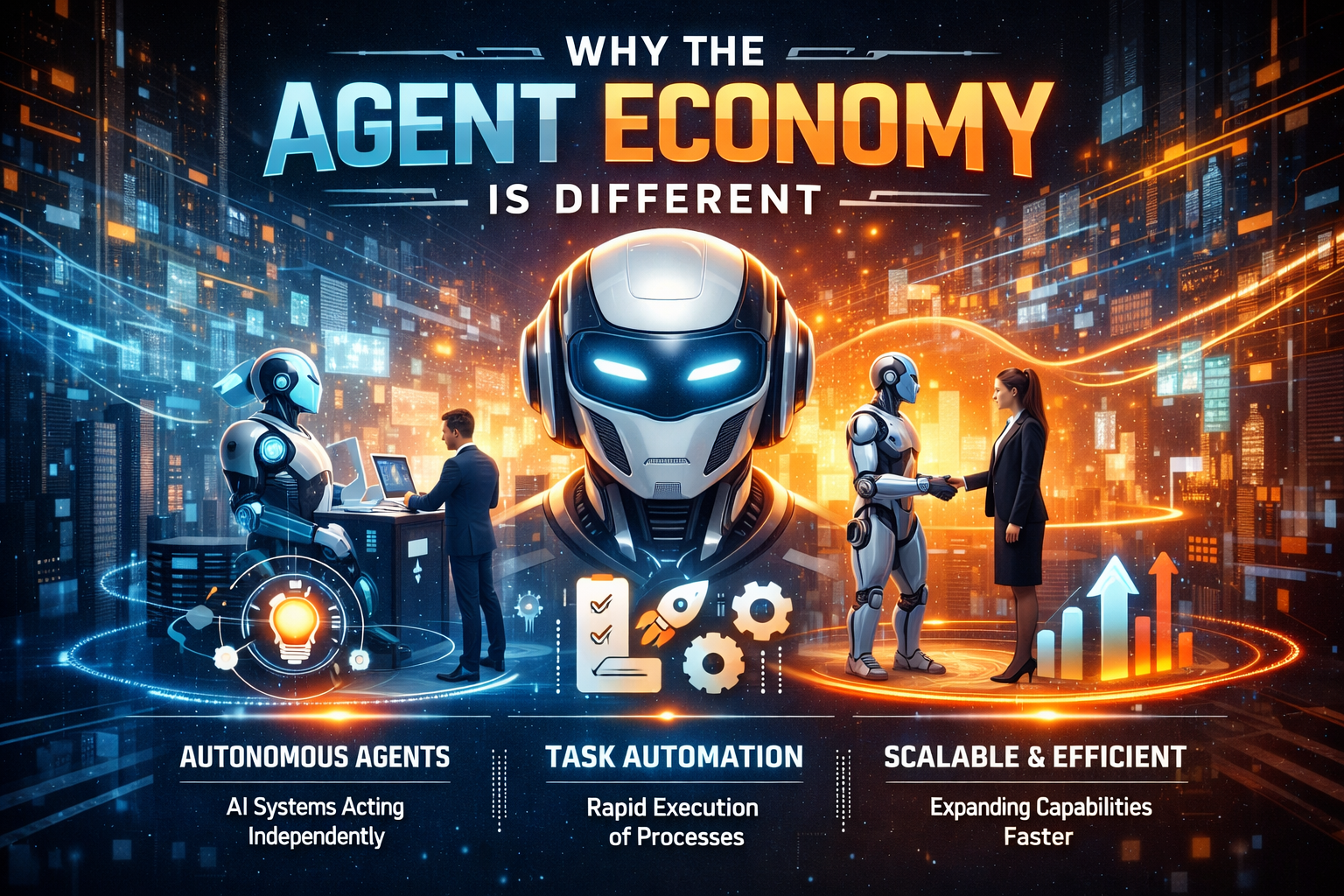
  1. Read about Enterprise Control Tower The Enterprise AI Control Tower: Why Services-as-Software Is the Only Way to Run Autonomous AI at Scale Raktim Singh
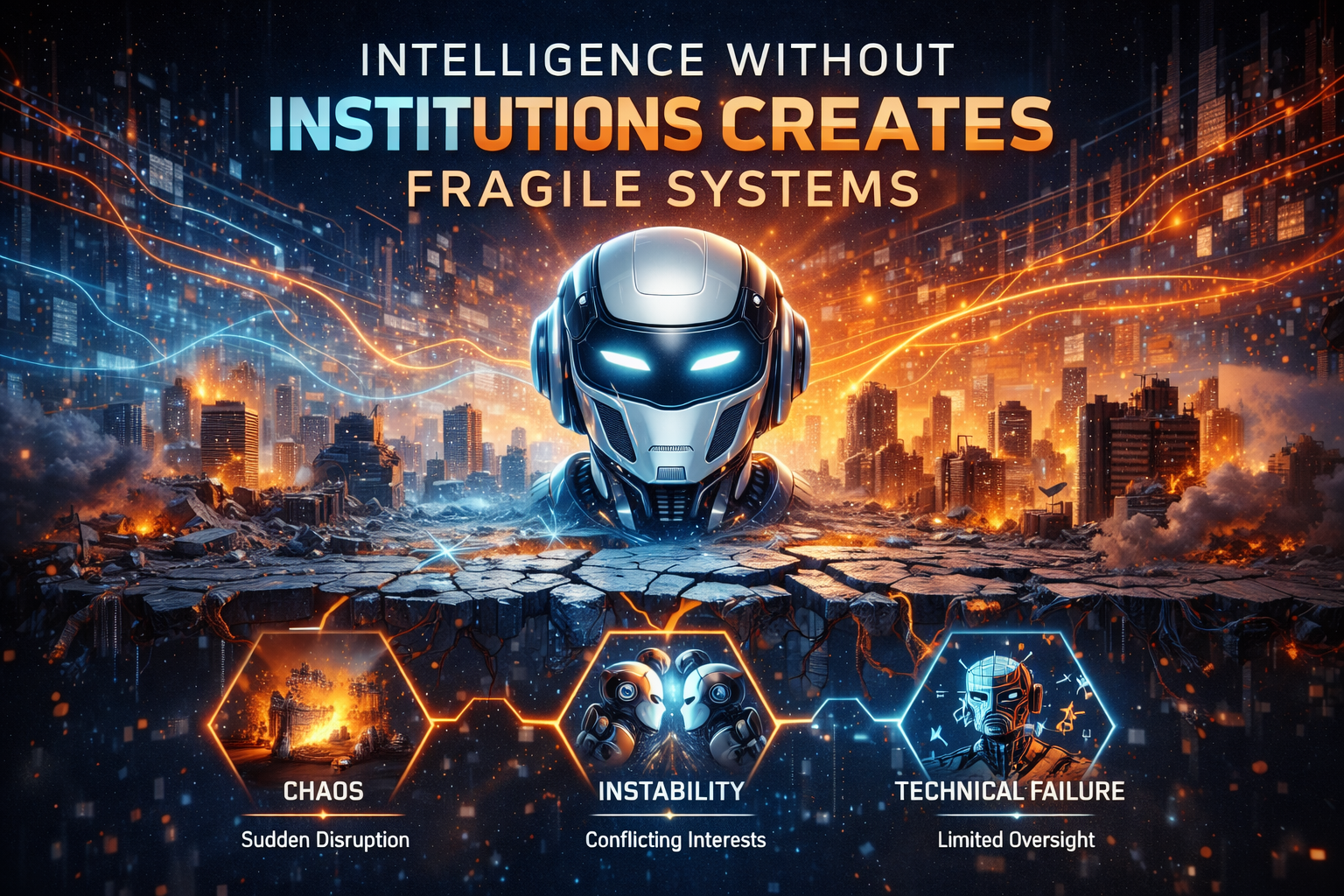
  2. Read about Decision Clarity The Shortest Path to Scalable Enterprise AI Autonomy Is Decision Clarity Raktim Singh
  3. Read about The Enterprise AI Runbook Crisis The Enterprise AI Runbook Crisis: Why Model Churn Is Breaking Production AI and What CIOs Must Fix in the Next 12 Months Raktim Singh
  4. Read about Enterprise AI Economics Enterprise AI Economics & Cost Governance: Why Every AI Estate Needs an Economic Control Plane Raktim Singh
Read about Who Owns Enterprise AI Who Owns Enterprise AI? Roles, Accountability, and Decision Rights in 2026 Raktim Singh
Read about The Intelligence Reuse Index The Intelligence Reuse Index: Why Enterprise AI Advantage Has Shifted from Models to Reuse Raktim Singh
Read about Enterprise AI Agent Registry Enterprise AI Agent Registry: The Missing System of Record for Autonomous AI Raktim Singh

 

Glossary

  • Intelligence institution: An organization designed to produce and operate trusted enterprise intelligence repeatedly, safely, and economically.
  • Institutional redesign: Changing governance, KPIs, contracts, talent systems, and identity—not just technology.
  • Governed autonomy: AI systems that can act within workflows under policies, boundaries, and traceability.
  • Trust maturity: The ability to prove decisions are compliant, traceable, auditable, and reversible.
  • Intelligence density: Governed, high-quality output produced per unit of organizational complexity.
  • Reuse factory: A system for creating reusable workflows, policies, and agent patterns that scale across clients.
  • Intelligence Institution
    An organization designed to operate governed enterprise intelligence reliably and repeatedly.

    Institutional Redesign
    The transformation of governance, incentives, KPIs, contracts, and talent models—not just tools.

    Governed Autonomy
    AI systems that act within defined boundaries, with traceability and reversibility.

    Trust Maturity
    The ability to prove AI decisions are compliant, auditable, and defensible.

    Intelligence Density
    High-quality, governed output produced per unit of organizational complexity.

    Operating Capability Revenue
    Recurring revenue from managed AI capabilities rather than effort-based projects.

FAQ

1) Is this saying Indian IT must become a product industry?
No. It is saying Indian IT must productize operating capability—recurring, reusable, governed intelligence services—beyond bespoke project effort.

2) Why can’t enterprises build these capabilities themselves?
Some will. Many won’t—because operating autonomy requires assurance, cost control, governance discipline, and continuous recomposition. That gap is the partner opportunity.

3) What is the one board decision that matters most?
Reset incentives: away from effort metrics and toward capability metrics—reuse, recurring revenue, trust maturity, and outcome economics.

4) Are agents real value or hype?
They are moving into enterprise software, but many projects will fail without risk/cost controls—exactly why intelligence institutions will matter. (Gartner)

5) How does this connect to Enterprise AI strategy?
Enterprise AI becomes durable when it becomes institutional: ownership, controls, economics, and repeatability—not experiments.

1. Is AI a threat to Indian IT services?

AI compresses effort-based work but expands demand for governed, operated intelligence capabilities.

2. What is an intelligence institution?

It is a firm built to operate enterprise AI reliably under governance, economic control, and regulatory constraints.

3. Why must boards lead institutional redesign?

Because the shift affects revenue models, KPIs, incentives, risk structures, and identity—not just technology adoption.

4. Will Indian IT need fewer people?

The focus shifts from headcount growth to intelligence density and high-value institutional roles.

5. How does this connect to Enterprise AI strategy?

Enterprise AI becomes durable when it is institutionalized—ownership, controls, economics, and repeatability.


References and further reading

  • Reuters on AI-driven disruption narratives and cross-sector “AI scare trade” dynamics. (Reuters)
  • McKinsey on developer productivity gains with generative AI. (McKinsey & Company)
  • Gartner on task-specific AI agents embedded in enterprise apps by 2026. (Gartner)
  • Gartner on >40% of agentic AI projects being canceled by 2027 due to cost/value/risk controls. (Gartner)

From Labor Arbitrage to Intelligence Arbitrage: Why Indian IT’s AI Reinvention Will Define the Next Decade

From Labor Arbitrage to Intelligence Arbitrage: The Reinvention of Indian IT in the AI Decade

For three decades, Indian IT mastered the art of scale—delivering talent, reliability, and cost advantage to enterprises across the globe.

That model reshaped global outsourcing and powered one of the most remarkable growth stories in modern business history. But the AI decade is rewriting the unit of value itself.

As automation compresses effort and generative systems accelerate execution, the old question—“How many people does this require?”—is giving way to a new one: “How intelligently can this enterprise operate?” The companies that recognize this shift early will not defend yesterday’s model.

They will design tomorrow’s advantage. This is not a story of decline. It is a story of promotion—from labor arbitrage to intelligence arbitrage, and from services scale to decision scale.

A board-level opportunity map for the AI decade

A noisy narrative is spreading: “AI will doom Indian IT.” Markets have reacted sharply to fast-moving agentic tooling and the possibility that enterprises will reduce traditional, labor-intensive outsourcing spend. (Reuters)

Boards should acknowledge the disruption—clearly, calmly, without denial. Generative AI is already improving developer productivity in measurable ways, and “agentic” capabilities are increasingly being embedded into enterprise applications. (McKinsey & Company)

But here is the board-level truth that gets lost in the panic:

AI compresses effort. It expands enterprise complexity.
And whenever enterprise complexity expands, a new value pool opens—often larger than the old one.

So the right framing is not “survival.” It is reinvention.

Indian IT’s first great advantage was labor arbitrage: delivering high-quality work at scale and cost. The next great advantage can be intelligence arbitrage: helping global enterprises operate, govern, and monetize intelligence—safely, economically, and at scale.

That is a different business. A higher business. And it is exactly the kind of shift boards exist to lead.

What changed: value is moving from building software to running intelligence

For decades, the services engine was powered by three assumptions:

  1. Work can be decomposed into tasks.
  2. Tasks are executed by people using tools.
  3. Value scales mainly through workforce size, process maturity, and delivery excellence.

AI challenges this—not because “software is dead,” but because the unit of value is shifting.

In the AI decade, enterprises will increasingly pay for:

  • Decision quality: fewer wrong approvals, fewer wrong exceptions, fewer wrong escalations
  • Decision speed: lower latency across operations, customer flows, supply chains, risk workflows
  • Decision defensibility: evidence, audit trails, policy alignment, traceability
  • Decision economics: cost-to-value visibility, predictable operating cost, ROI control

This is why the modern enterprise is not merely “using AI.” It is becoming AI-fied: redesigned so intelligence is embedded into operating rhythms—finance, risk, compliance, customer experience, operations, and engineering.

NASSCOM’s recent framing is consistent with this direction: the opportunity is large, but converting adoption into durable advantage requires coordinated capability building and institutional change. (nasscom.in)

The core idea: labor arbitrage vs intelligence arbitrage

The core idea: labor arbitrage vs intelligence arbitrage

Labor arbitrage (the old engine)

You sell skilled effort efficiently:

  • projects and implementations
  • deployments and modernizations
  • managed services (run systems)
  • transformations (move from legacy to modern)

Core asset: a scalable delivery engine.

Intelligence arbitrage (the new engine)

You sell operated intelligence as an enterprise capability:

  • governed autonomy (AI that acts safely inside real workflows)
  • AI operating model design (ownership, decision rights, accountability)
  • runtime reliability for agents (monitoring, incident response, drift management)
  • cost governance for AI estates (FinOps for intelligence)
  • compliance-grade decision infrastructure (auditability, traceability, reversibility)
  • reusable “services-as-software” built on AI (catalogs, patterns, industry packs)

Core asset: repeatable operating capability—the ability to design, govern, and run intelligence across many clients and domains.

This isn’t hype. It’s a market pull created by a simple reality:

Enterprises will not just deploy AI. They will live with AI.
And living with AI requires operating disciplines most organizations do not yet have.

Why “AI will kill services” is the wrong conclusion

Why “AI will kill services” is the wrong conclusion

Yes, AI reduces effort in many activities. McKinsey’s research, for example, reported that developers can complete certain coding tasks significantly faster with generative AI. (McKinsey & Company)

But effort compression is only half the story. The other half is the expansion of complexity:

  • More systems can be changed more often
  • More workflows can be automated end-to-end
  • More decisions can be delegated to machines
  • More autonomy can be introduced into regulated processes
  • More vendors, models, tools, prompts, and data flows appear in production

This creates a new operational requirement: someone must design and run the intelligence layer.

The adoption curve is moving from “chat assistants” to “agents in apps.” Gartner predicted that up to 40% of enterprise applications will include integrated task-specific agents by 2026 (up from <5% in 2025). (Gartner)

Agents increase leverage—but they also create governance, reliability, and cost obligations. Those obligations become the next services category.

The board-level reframing: Indian IT is not losing a market—it is moving up the stack

The board-level reframing: Indian IT is not losing a market—it is moving up the stack

Boards should stop asking:

“Will AI reduce billable hours?”

Start asking:

“What new enterprise spend category does AI create?”

That spend category looks like five “operating planes” that boards can understand immediately:

1) The AI operating model

Who owns AI outcomes? Who owns risk? Who owns reversibility? Who signs off on autonomy?
This is governance and accountability—not a tooling question.

2) The AI runtime

What is actually running in production? How does it change? How is it monitored?
AI in production is not static software. It evolves: models, prompts, retrieval, tools, policies.

3) The AI control plane

How do we ensure policy compliance, auditability, evidence, and defensibility—especially when systems act?

4) The AI economics plane

How do we prevent costs from exploding after “success”? How do we manage model/tool sprawl and compute variability?

5) The AI quality plane

How do we test and certify agentic workflows that act in real business systems?

What “intelligence arbitrage” looks like in practice

What “intelligence arbitrage” looks like in practice

No math. No buzzwords. Just reality.

Example A: Customer operations without the “handoff maze”

A global enterprise wants to reduce customer handling time. Traditionally, it invests in training, process redesign, and new tooling.

With AI-fication, the enterprise can introduce an agent that:

  • reads the customer’s history
  • identifies the likely issue
  • proposes a resolution
  • prepares a compliant response
  • escalates only when needed

Effort reduces. But enterprise responsibility increases:

  • Is the response compliant and brand-safe?
  • Can we prove why the agent recommended this?
  • What happens if the agent triggers an action?
  • Who owns the decision if the outcome is wrong?

An Indian IT partner that can provide operated autonomy—with governance, auditability, and reliability—wins a larger scope than a “contact center automation project.”

Example B: Finance workflows where speed must remain defensible

Consider finance approvals (budget release, credit exceptions, vendor onboarding). AI can accelerate the process.

But boards will demand:

  • traceability (“why this approval?”)
  • evidence retention (“what inputs?”)
  • policy alignment (“what rule?”)
  • reversibility (“can we unwind?”)

That is a decision infrastructure problem, not a model demo problem.

Example C: Software engineering in the era of accelerated change

If developers produce code faster, enterprises can ship faster. Great.

But now:

  • change velocity rises
  • attack surface shifts
  • testing burden changes
  • maintenance models must adapt

McKinsey has also argued that AI can transform the software product development lifecycle—not merely coding speed. (McKinsey & Company)

Again: less effort per unit. More need for operating capability.

The six opportunity arenas Indian IT can own

The six opportunity arenas Indian IT can own

This is the heart of the reinvention story: new revenue pools that are bigger than “AI tool rollout.”

1) AI-fication programs, not AI pilots

Enterprise conversations are shifting from exploration to execution—budgets, governance, and operating integration are becoming central. (The Economic Times)

Indian IT can lead AI-fication as a transformation category:

  • redesign workflows around decision flow
  • instrument decision points (evidence, observability)
  • embed safety and policy gates
  • re-architect data and integration for AI readiness

This is not “install AI.” This is rebuild operating capability.The Future Belongs to Decision-Intelligent Institutions – Raktim Singh

2) Agentic runtime managed services

As agentic capabilities spread across apps, runtime becomes the bottleneck: observability, incident response, drift monitoring, safety controls.

Enterprises will not want to run dozens (then hundreds) of agents alone. They will want a partner that runs agentic systems like mission-critical infrastructure.

3) Control plane + compliance-grade decision infrastructure

Boards and regulators will increasingly ask: “Show me how this system makes decisions.” In regulated industries, that becomes non-negotiable.

A partner that provides:

  • audit-ready evidence trails
  • policy enforcement and approvals
  • role-based constraints
  • red-team testing and certification
    becomes essential.

4) AI economics and FinOps for intelligence

As AI embeds into operations, cost becomes strategic. Not just cloud cost—decision cost.

Partner value becomes:

  • controlling model/tool sprawl
  • routing workloads to cost-efficient options
  • setting budgets and guardrails
  • linking AI spend to measurable outcomes

5) Reuse-first “services-as-software”

The biggest margin expansion comes when Indian IT stops selling bespoke work and starts selling reusable intelligence services:

  • an AI service catalog for common enterprise functions
  • reusable governance templates
  • reusable agent patterns
  • domain-specific workflow packs

This is how services companies become operating capability providers.

6) Industry-grade “precision growth” enablement

Boards want growth, not demos. AI enables precision growth—moving from averages to targeted decisions at scale.

Gartner predicts that by 2028, 60% of brands will use agentic AI to deliver streamlined one-to-one interactions—implying major demand for governance, data discipline, and operating model change. (Gartner)

Indian IT can be the partner that makes precision growth operational—not just “personalization,” but safe, defensible personalization.The End of Averages: Why Precision Growth Will Define the Next Decade of Enterprise Strategy – Raktim Singh

What boards must change to unlock the opportunity

What boards must change to unlock the opportunity

The opportunity exists, but it is not automatic. Boards must guide a deliberate shift.

1) Change the commercial model: from effort pricing to outcome pricing

If AI compresses effort, selling effort becomes a race to the bottom.

Boards should push toward:

2) Change what gets measured: adoption is not the scoreboard

Stop asking:

  • “How many people are using AI?”
  • “How many copilots did we roll out?”

Start asking:

  • Where did decision latency drop?
  • Where did error rates fall?
  • Where did auditability improve?
  • Where did operational friction reduce?
  • Where is the AI dividend visible?

3) Build an enterprise AI operating model

The org design must evolve:

  • clear ownership for AI decisions
  • integrated risk and compliance
  • runtime and platform accountability
  • economic governance

4) Shift the delivery engine: from project factories to intelligence factories

AI-fication demands a new delivery system:

  • reusable components
  • governed workflows
  • runtime instrumentation by default
  • security and policy integrated into build
  • continuous recomposition (because AI systems change)

5) Update talent strategy: from “more developers” to “more decision engineers”

This is not just AI training. It is role evolution:

  • workflow designers who think in decisions
  • engineers who build tool-using agents safely
  • QA who test autonomy (not just outputs)
  • FinOps teams who manage intelligence economics
  • governance leaders who operationalize policy

NASSCOM has emphasized that workforce transformation is central as AI embeds across service lines and workflows. (nasscom.in)

The global context: this is a worldwide shift, not a local story

The global context: this is a worldwide shift, not a local story

This reinvention pattern will apply to consultancies, IT services, and integrators globally. But Indian IT has unusual strategic advantage:

  • proximity to global enterprises through long-standing relationships
  • deep exposure to real workflows and constraints
  • proven capability running complex systems at scale
  • talent density and execution maturity across India’s major tech hubs (Bengaluru, Hyderabad, Pune, Chennai, Gurugram)

The question is not capability. It is focus.

Boards must steer:

  • from delivery scale to decision scale
  • from project throughput to operating capability
  • from services as people to services as intelligence infrastructure

Enterprise AI Operating Model

Enterprise AI scale requires four interlocking planes:

Read about Enterprise AI Operating Model The Enterprise AI Operating Model: How organizations design, govern, and scale intelligence safely Raktim Singh

  1. Read about Enterprise Control Tower The Enterprise AI Control Tower: Why Services-as-Software Is the Only Way to Run Autonomous AI at Scale Raktim Singh

  2. Read about Decision Clarity The Shortest Path to Scalable Enterprise AI Autonomy Is Decision Clarity Raktim Singh

  3. Read about The Enterprise AI Runbook Crisis The Enterprise AI Runbook Crisis: Why Model Churn Is Breaking Production AI and What CIOs Must Fix in the Next 12 Months Raktim Singh
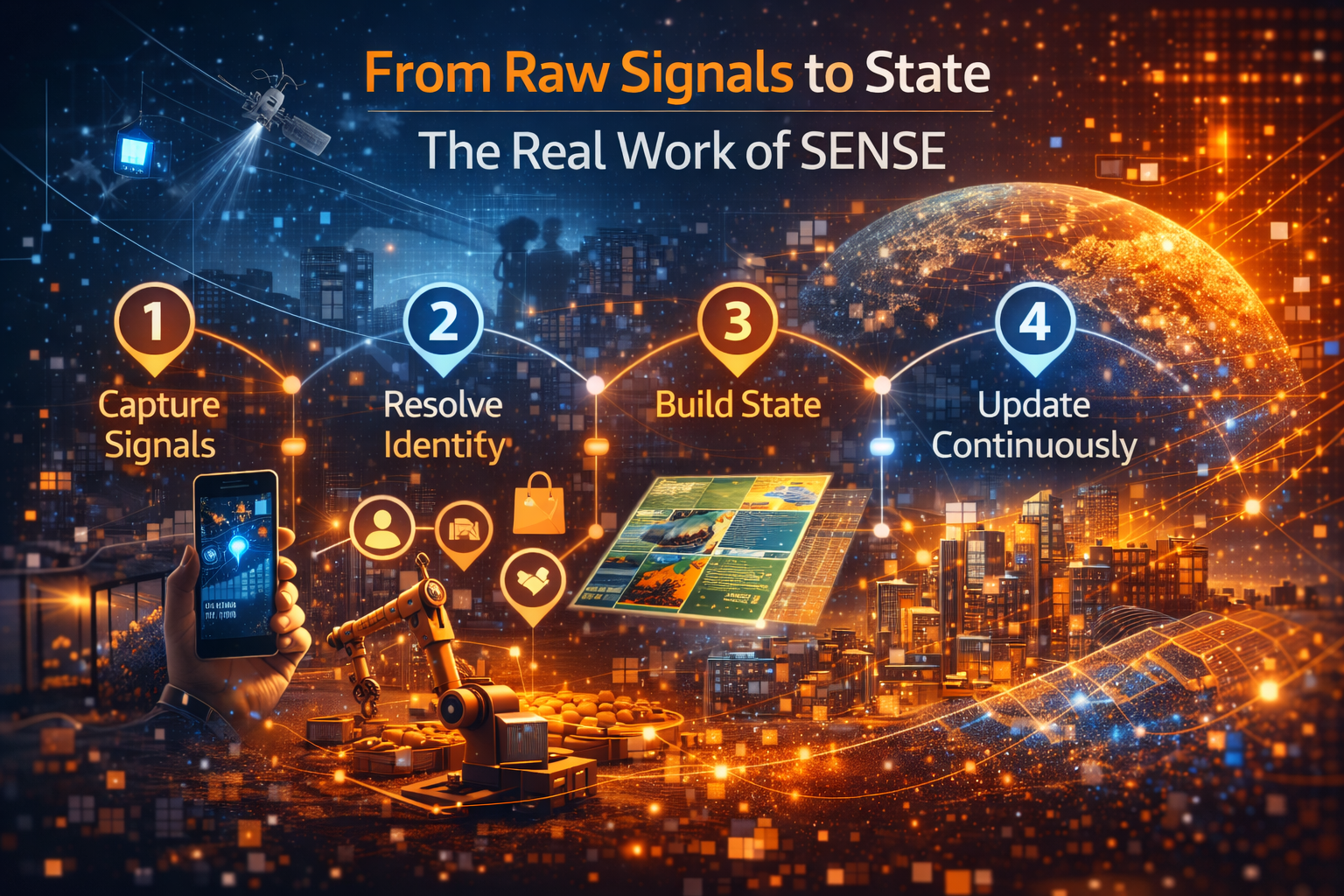
  4. Read about Enterprise AI Economics Enterprise AI Economics & Cost Governance: Why Every AI Estate Needs an Economic Control Plane Raktim Singh

Read about Who Owns Enterprise AI Who Owns Enterprise AI? Roles, Accountability, and Decision Rights in 2026 Raktim Singh

Read about The Intelligence Reuse Index The Intelligence Reuse Index: Why Enterprise AI Advantage Has Shifted from Models to Reuse Raktim Singh

Read about Enterprise AI Agent Registry Enterprise AI Agent Registry: The Missing System of Record for Autonomous AI Raktim Singh

Conclusion column: the board takeaway

Boards should treat AI as a category shift in enterprise value creation.
AI will compress effort. That is real.
But it will also expand complexity—because enterprises will run more autonomous workflows, faster change cycles, and higher expectations of accountability.

The winners will not be the firms that adopt AI the fastest.
They will be the firms that redesign themselves to run intelligence—with governance, economics, and reliability.

Indian IT can become the partner that makes this possible for global enterprises. Not by denying disruption, but by converting it into a higher-order service category: intelligence arbitrage.

Glossary

  • AI-fication: Redesigning enterprise operations so intelligence becomes embedded into decision workflows, not bolted on as a tool.
  • Intelligence arbitrage: Turning the complexity of enterprise AI (governance, runtime, economics, reliability) into a managed, reusable operating capability clients can buy.
  • AI operating model: The governance structure that defines AI ownership, decision rights, accountability, and escalation paths.
  • AI runtime: What is actually running in production—models, prompts, retrieval, tools, policies—and how it is monitored and managed.
  • AI control plane: The layer that enforces policy, auditability, evidence, and defensibility for AI decisions and actions.
  • Agentic AI: AI systems that can plan and act across steps (often using tools), not just generate text.
  • AgentOps: Operational discipline for running agents safely in production (monitoring, drift control, incident response, testing).
  • AI FinOps: Economic governance for AI estates—cost-to-value tracking, budget guardrails, and workload routing.
  • Services-as-software: Reusable packaged services (catalogs, patterns, workflow packs) that scale beyond bespoke projects.
  • Labor Arbitrage
    A services model based on cost and talent efficiency.

    Intelligence Arbitrage
    A services model based on managing and governing enterprise AI complexity.

    AI-fication
    Redesigning enterprise workflows so intelligence becomes embedded in operating systems.

    Decision Scale
    The ability to improve decision quality and speed across thousands of workflows.

    AI Control Plane
    The governance layer that ensures policy compliance, traceability, and auditability.

    Agentic Runtime
    The production environment where AI agents operate and interact with enterprise systems.


FAQ

1) Is this saying Indian IT should stop services and become product companies?

No. This is saying the services category itself is moving up the stack—from effort delivery to operated intelligence infrastructure. Product companies will sell models and tools; enterprises will still need partners to make AI real inside messy, regulated, brownfield operations. (Reuters)

2) Why won’t enterprises just do this themselves?

Some will. But most will struggle to build all the required disciplines at once: governance, runtime reliability, cost control, testing of autonomy, integration into core systems. The complexity is operational, not theoretical.

3) What’s the single biggest shift boards should drive first?

Move from “AI adoption” to “AI operating capability.” Start by demanding an AI operating model (ownership + accountability) and an inventory of what’s running in production (runtime clarity). Then build control plane and economics.

4) Is agentic AI real or just hype?

Agent adoption is accelerating. Gartner has predicted broad embedding of task-specific agents into enterprise applications by 2026. (Gartner) That doesn’t mean every project succeeds—but it does mean the operating challenge is arriving quickly.

5) What makes this GEO-friendly for India without being India-only?

Because the argument is global (enterprise operating change), while examples and execution realities are grounded in India’s delivery ecosystem across Bengaluru, Hyderabad, Pune, Chennai, Gurugram, and Mumbai—where much of enterprise technology work already happens.

1. Will AI reduce demand for Indian IT services?

AI will reduce effort-based pricing but increase demand for AI governance, runtime management, and intelligence infrastructure.

2. What is intelligence arbitrage?

It is the capability to design, govern, and operate enterprise AI systems as a managed service.

3. How can Indian IT move up the value chain?

By shifting from project delivery to operating AI decision infrastructure at scale.

4. Why are boards critical in this transition?

Because this shift affects pricing models, risk governance, operating structure, and strategic positioning.

5. Is this shift unique to India?

No. It is global. But Indian IT has structural advantages in execution maturity and enterprise exposure.

References and further reading

  • Reuters on AI-driven fears impacting Indian IT stocks and the debate around disruption vs integration reality. (Reuters)
  • McKinsey on measurable developer productivity gains from generative AI. (McKinsey & Company)
  • McKinsey on AI-enabled software product development lifecycle transformation. (McKinsey & Company)
  • Gartner on the rapid embedding of task-specific AI agents into enterprise applications by 2026. (Gartner)
  • Gartner on agentic AI enabling one-to-one interactions at scale by 2028 (marketing/experience implications). (Gartner)
  • NASSCOM on India’s services sector and the AI opportunity (capability + institutional shift). (nasscom.in)
  • Economic Times on the shift from experimentation to implementation and the need for collaboration frameworks. (The Economic Times)