Raktim Singh

Home Blog Page 4

Why the Next AI Breakthrough Will Come From Better Representation, Not Bigger Models

The real enterprise advantage may not belong to firms with the most intelligence, but to those that make reality legible, reasoning useful, and action trustworthy.

For the past two years, the AI conversation has been dominated by one question: How much more capable are the models becoming?

That is the wrong question.

Or, at the very least, it is no longer the most important one.

The more consequential question for business leaders is this: Why do some AI systems create real operating value while others remain expensive demos? Why do some deployments become trusted parts of daily work, while others produce polished outputs that still collapse when they encounter the messiness of enterprise reality?

The common answer is that the models are not yet good enough.

But that explanation is becoming weaker.

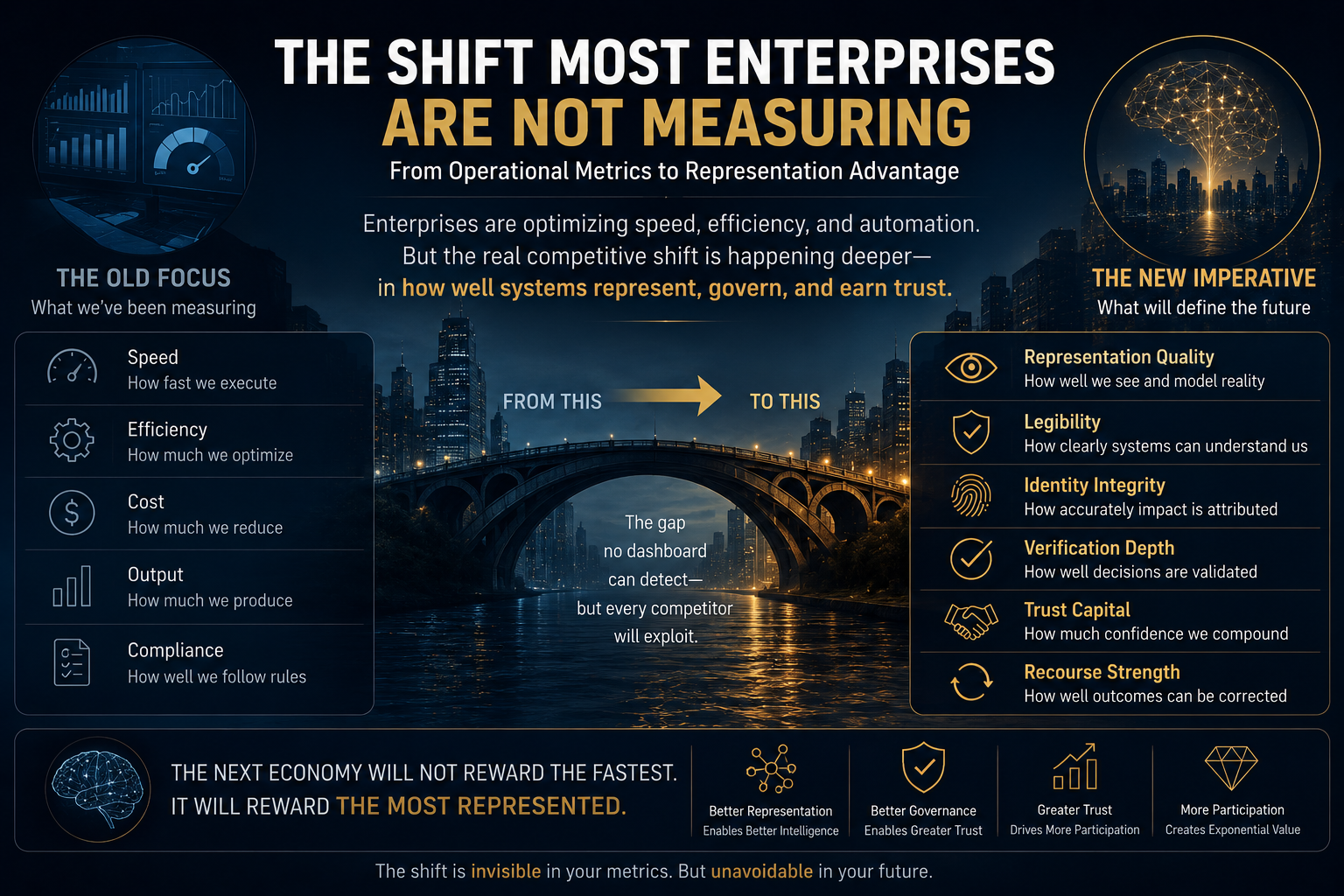
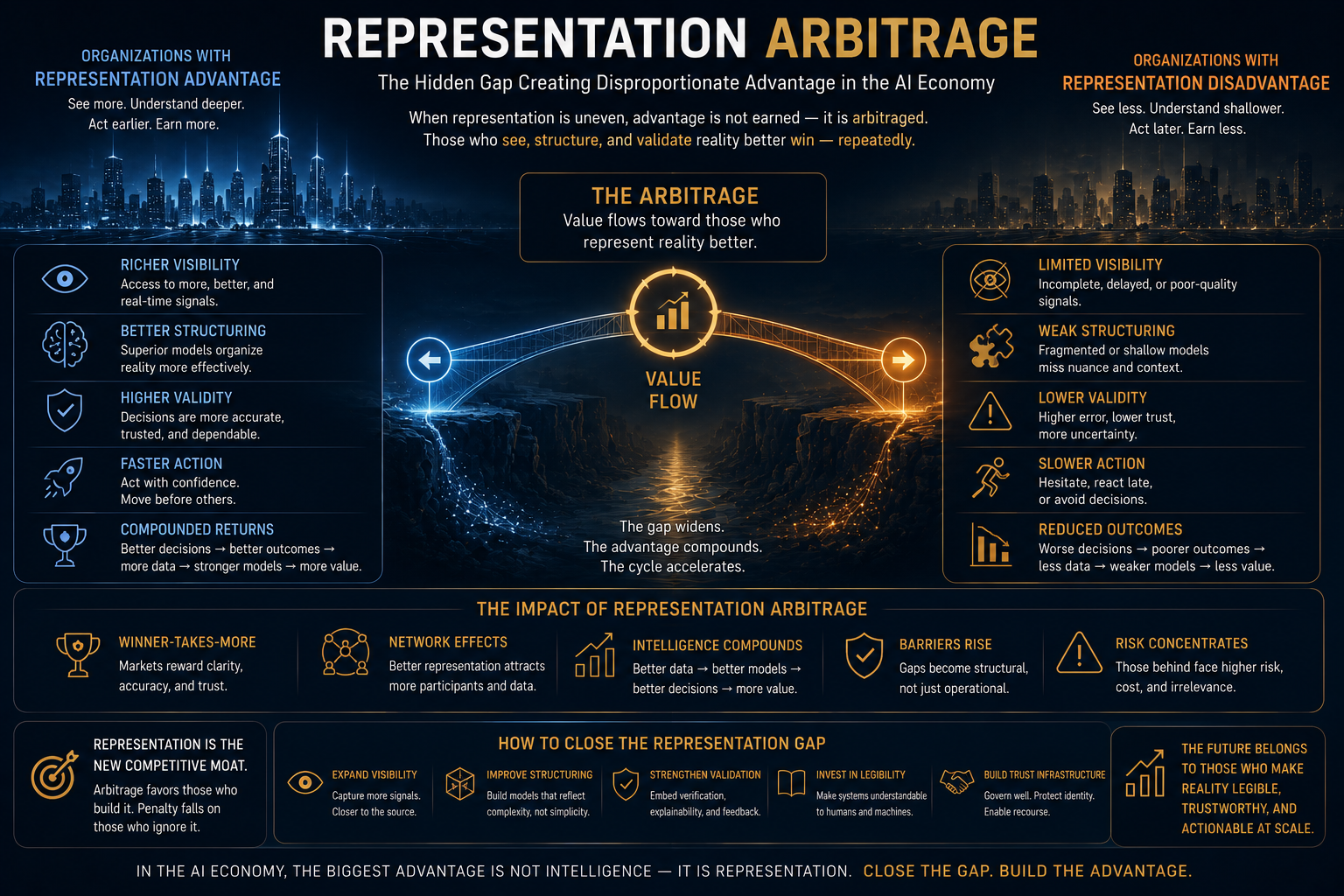
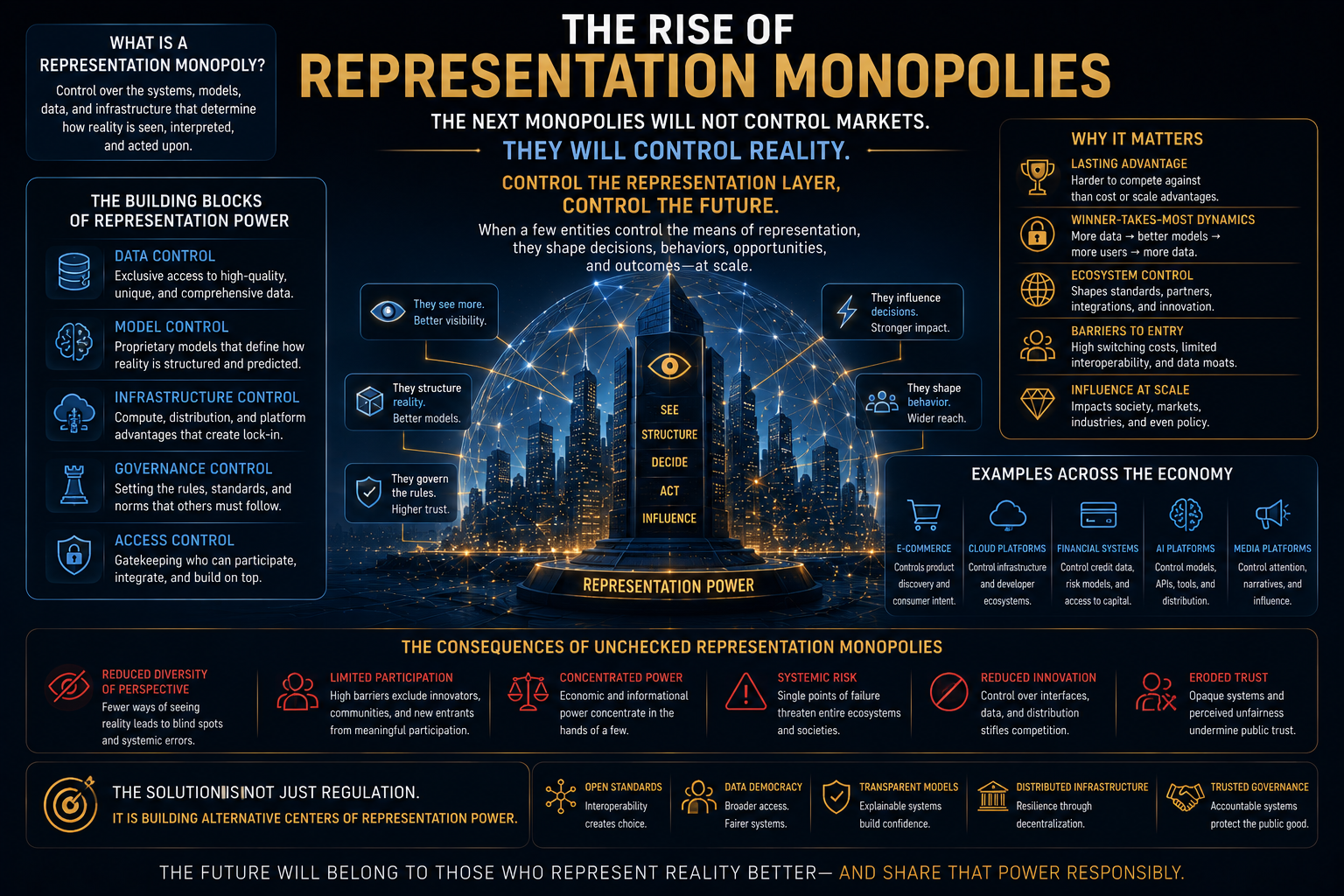
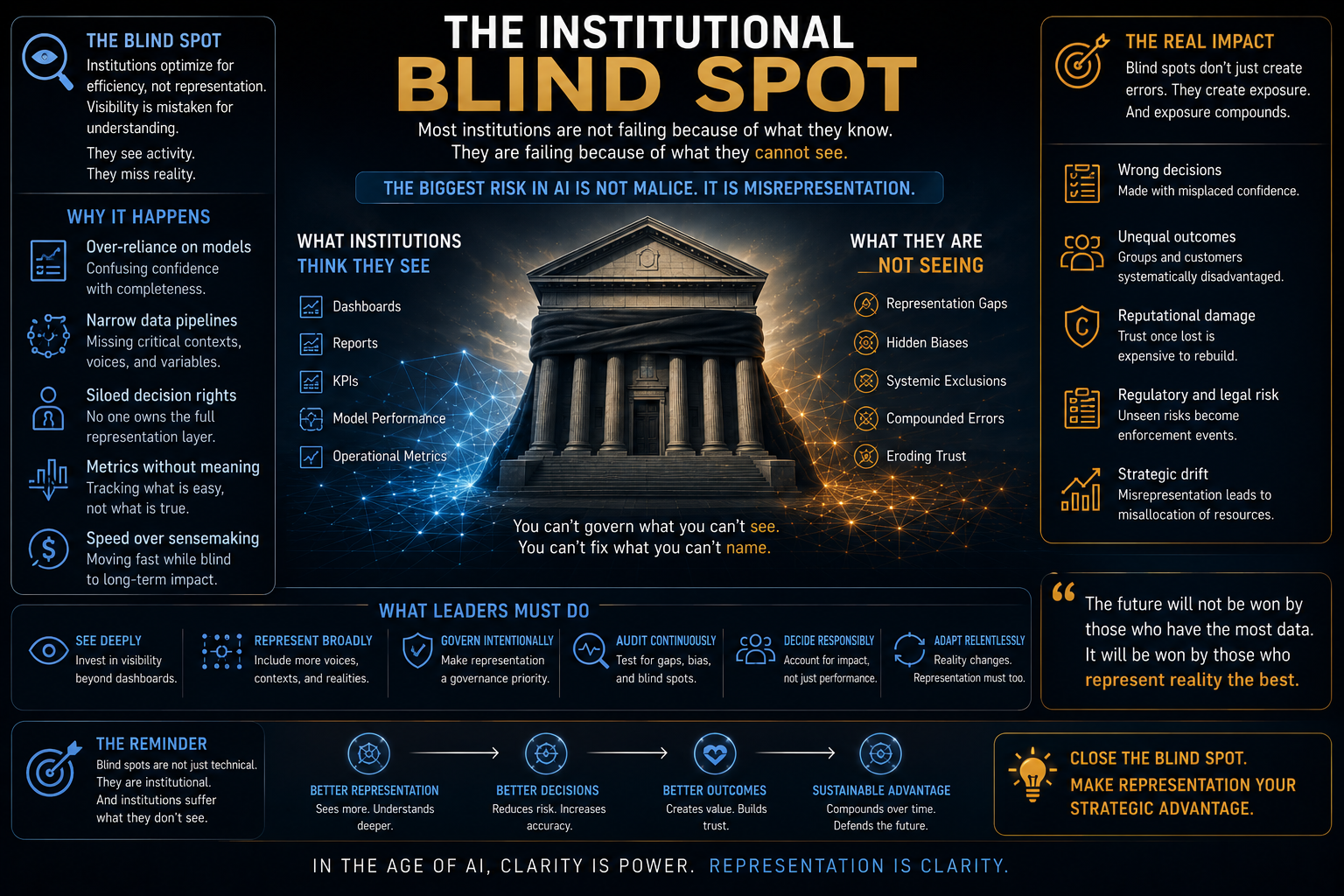
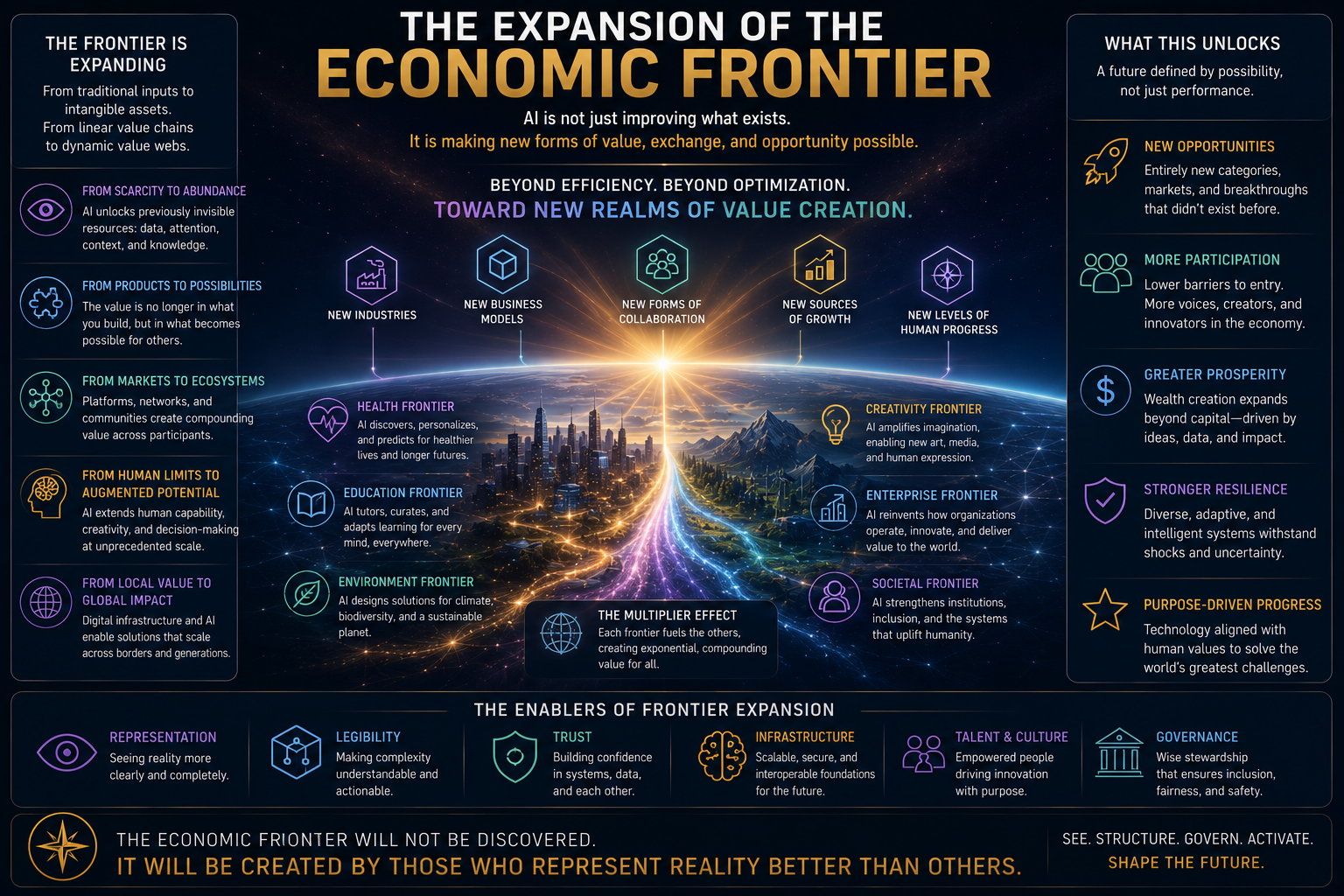
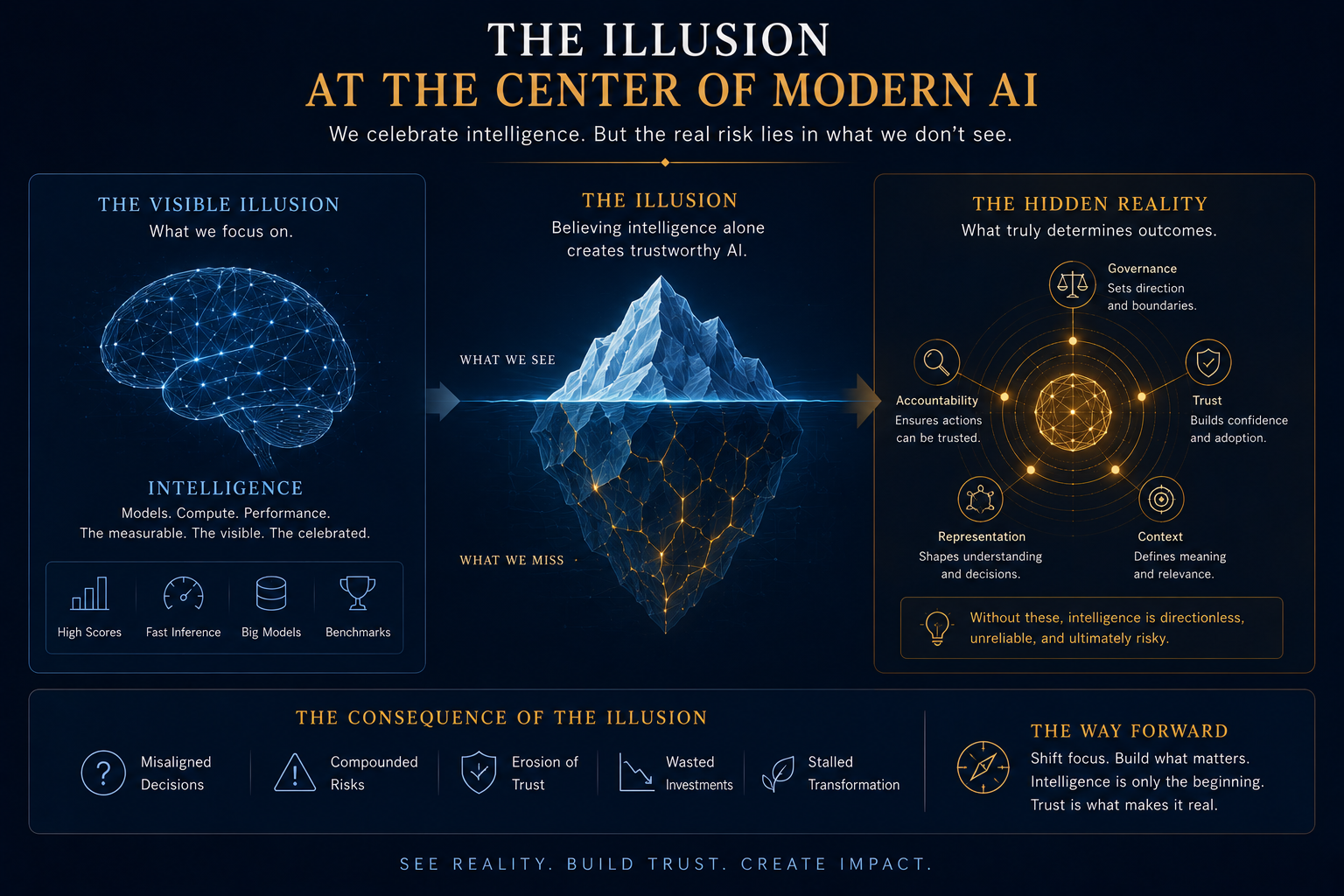
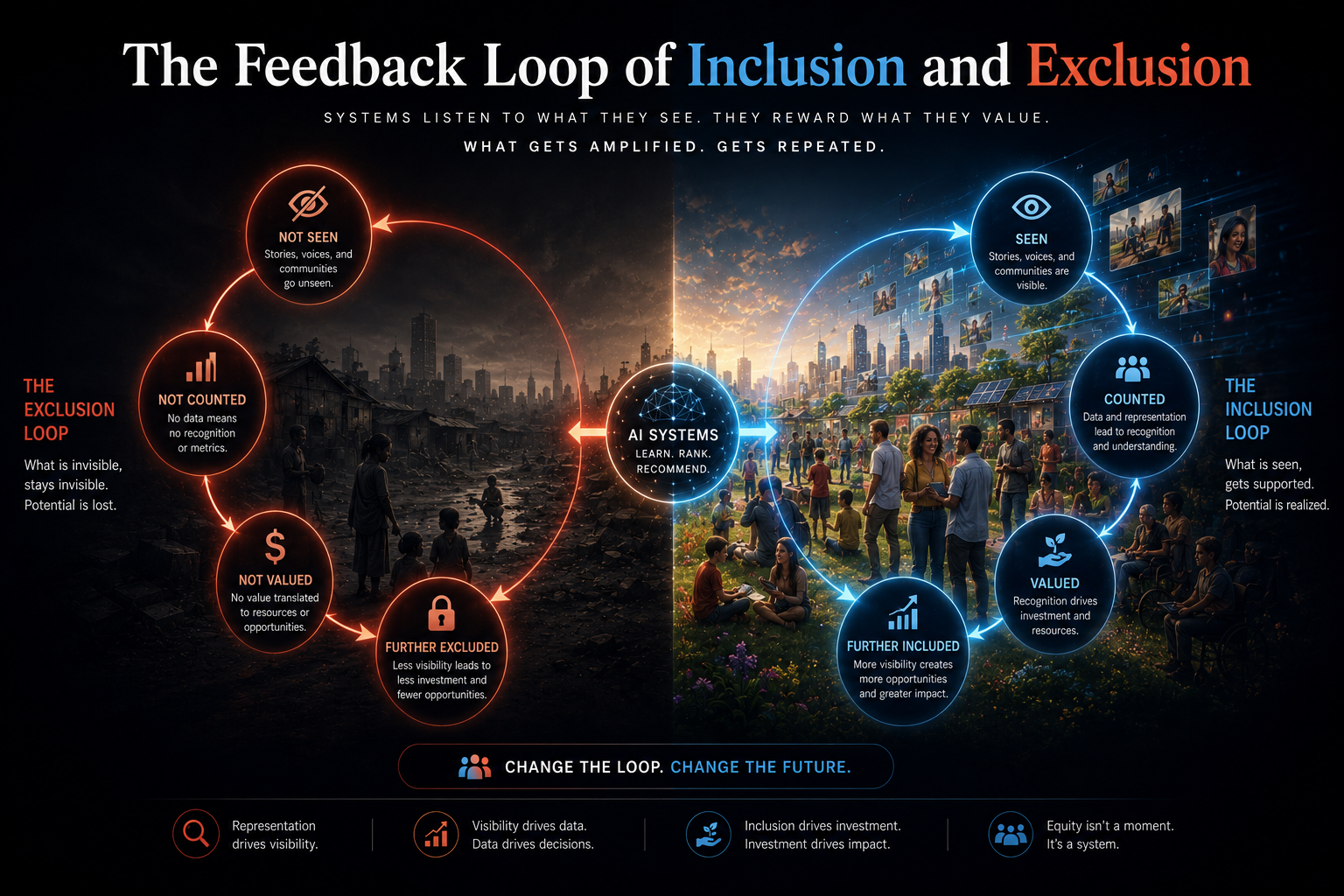
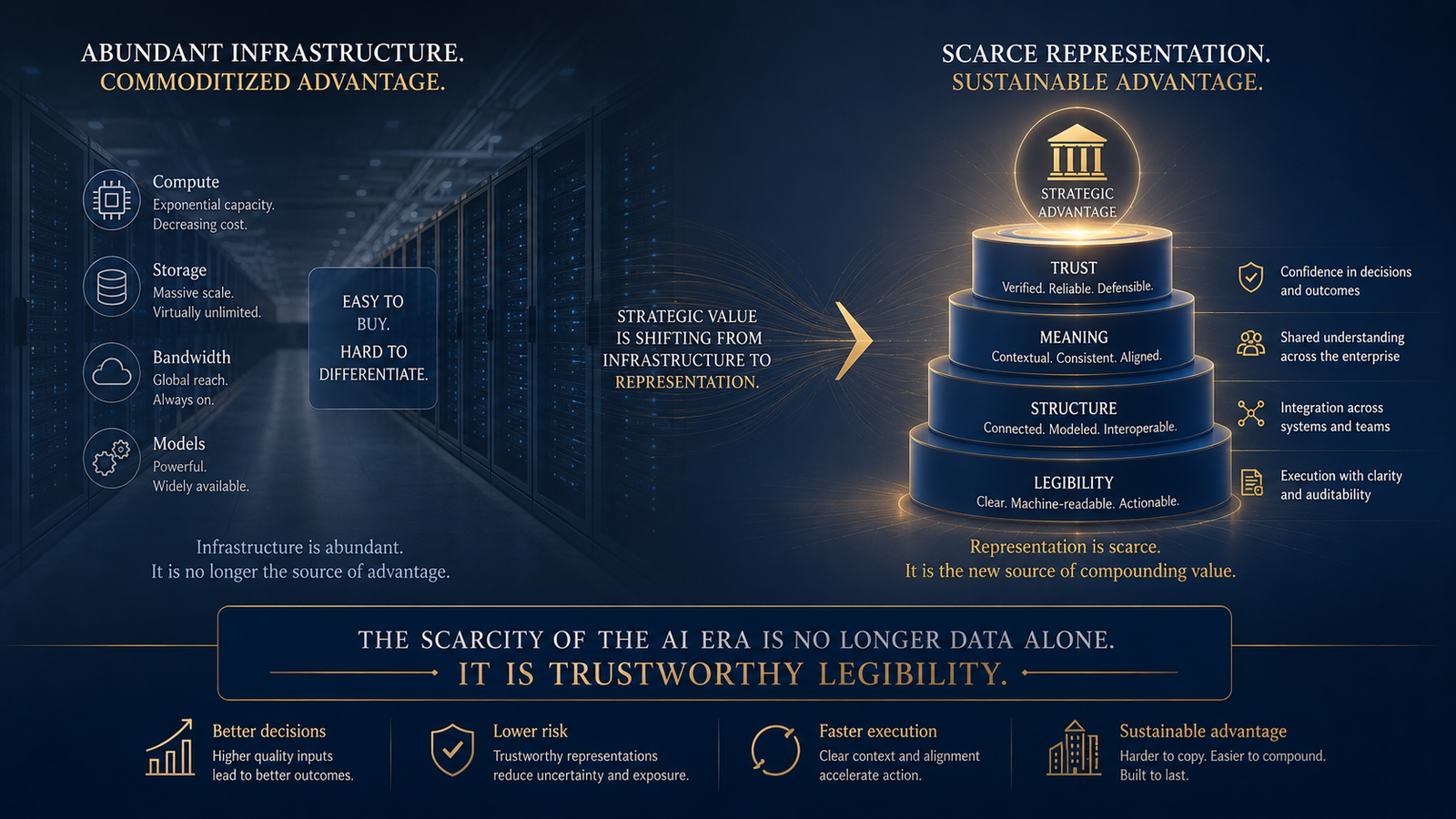
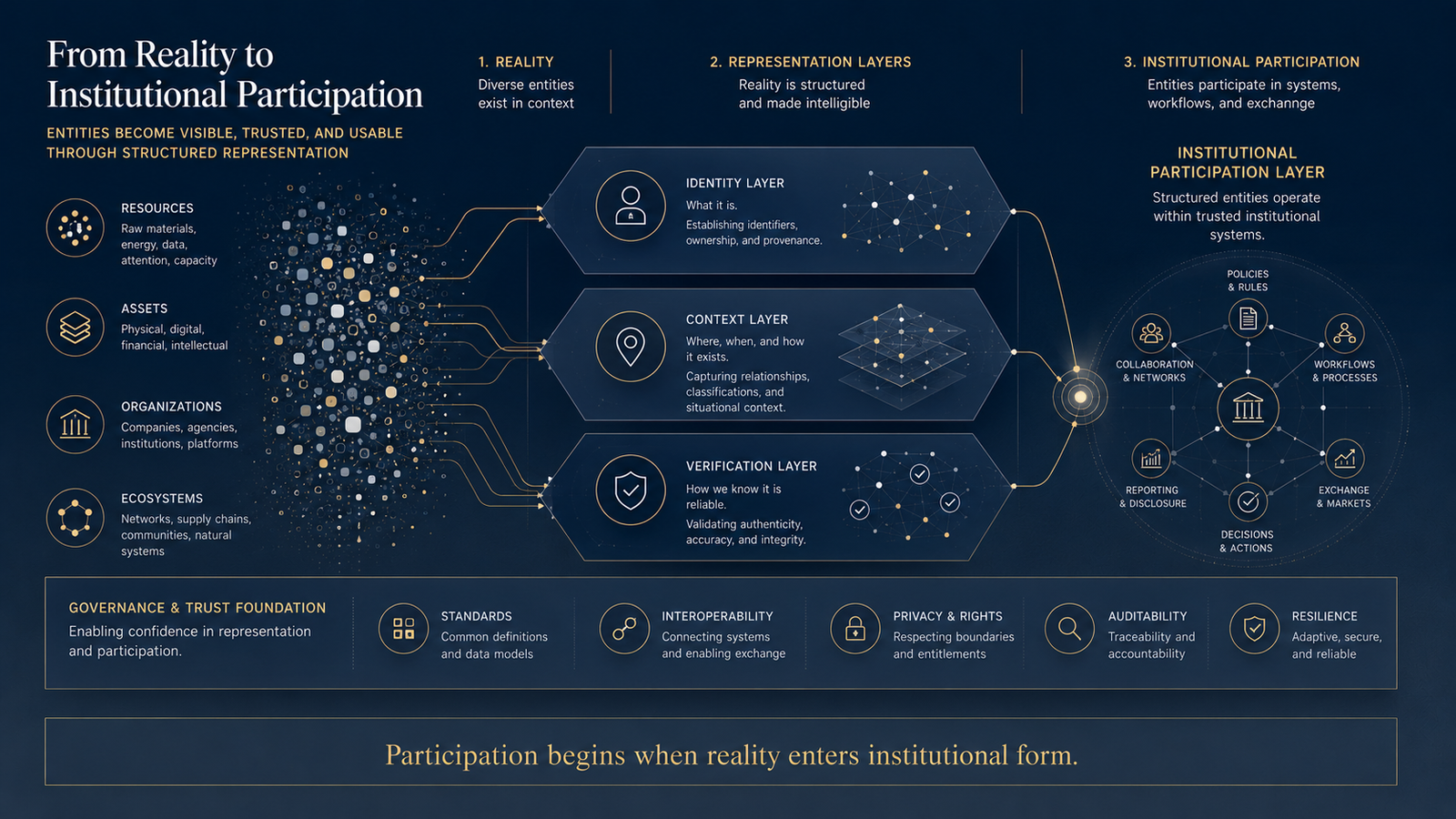
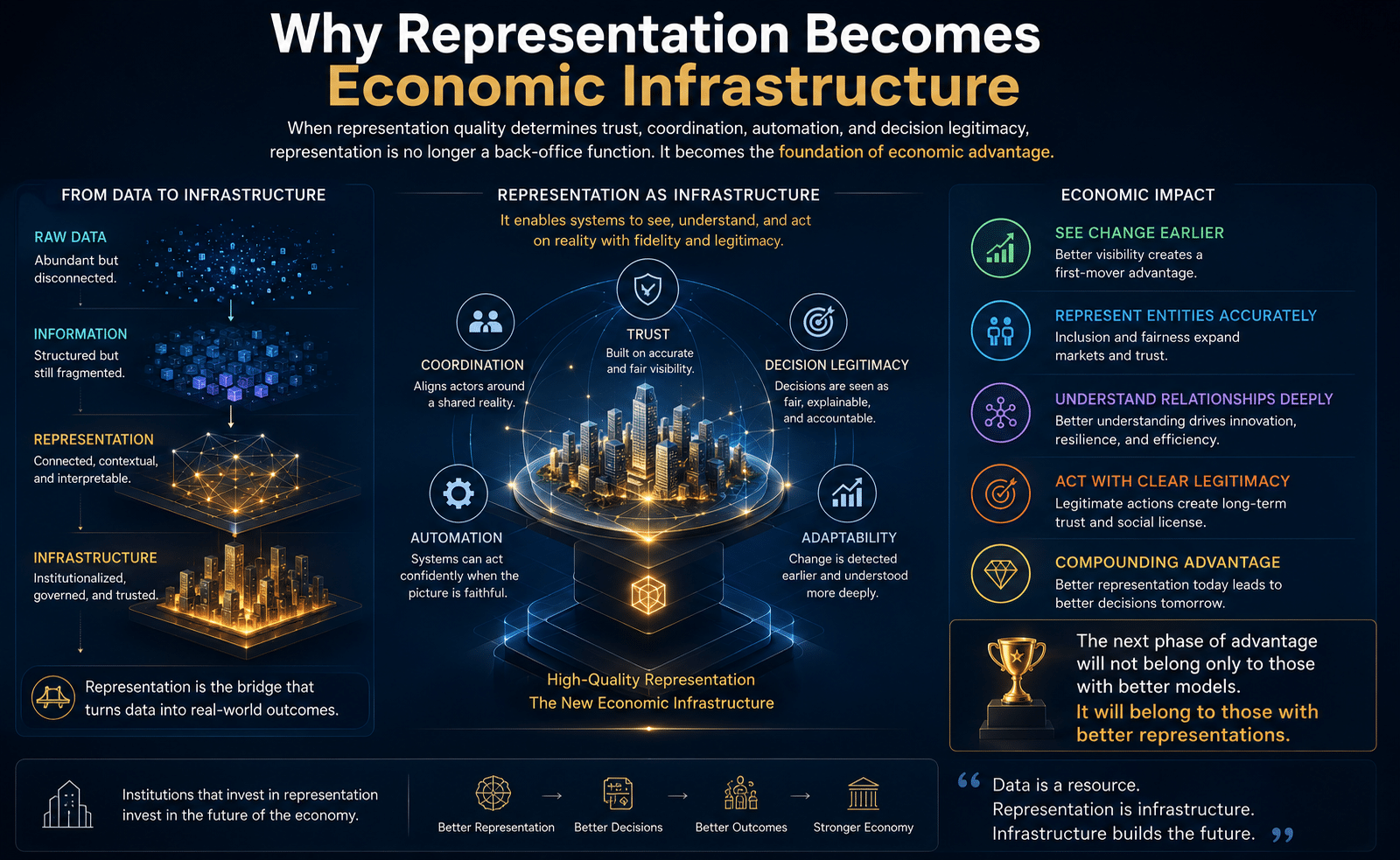
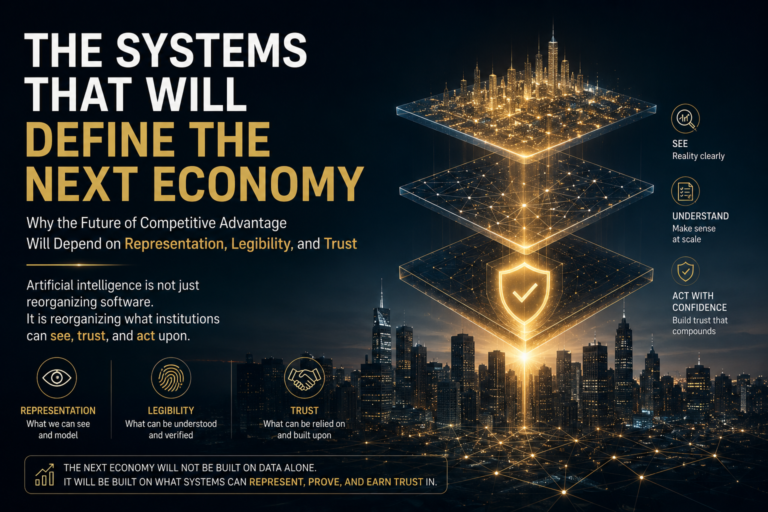
Across enterprise AI, a quieter pattern is emerging. Progress is not coming only from scaling parameter counts or adding more compute. It is coming from something more fundamental: making reality easier for machines to understand, making intelligence better aligned to specific contexts, and making action more structured, bounded, and trustworthy. That broader shift is central to the idea of the Representation Economy, where value depends not only on intelligence, but on how well organizations represent the world for machines and govern what those machines are allowed to do.

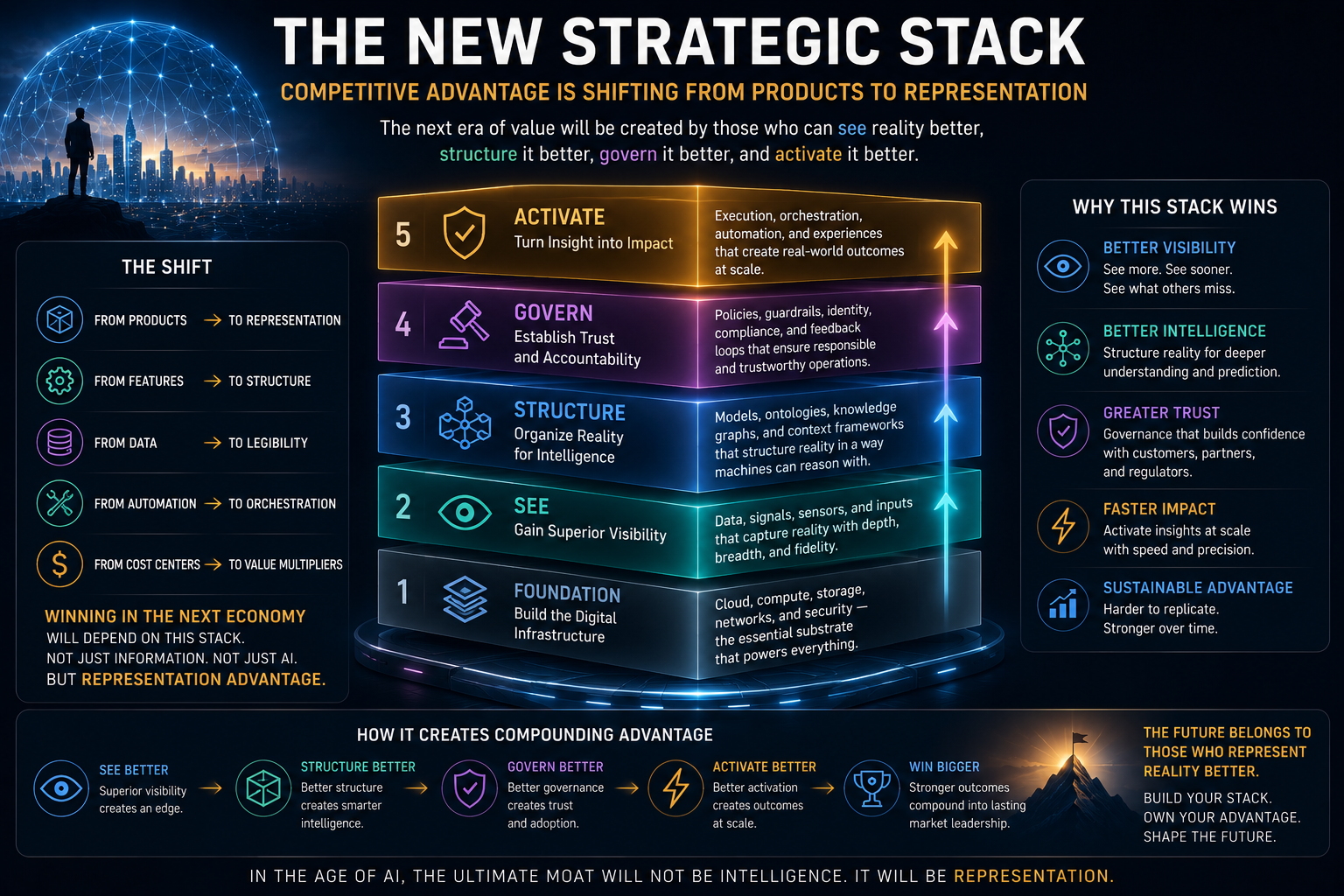
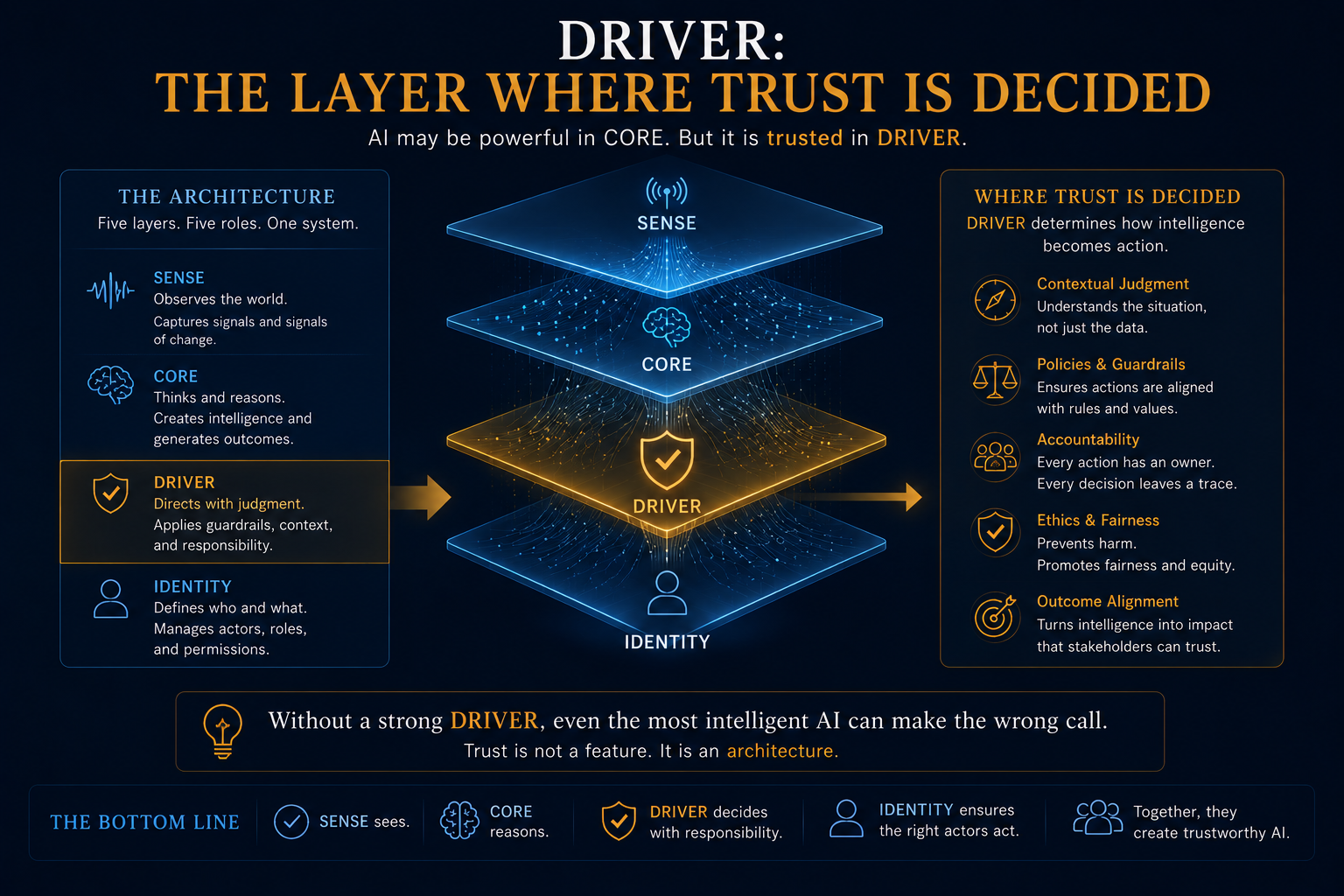
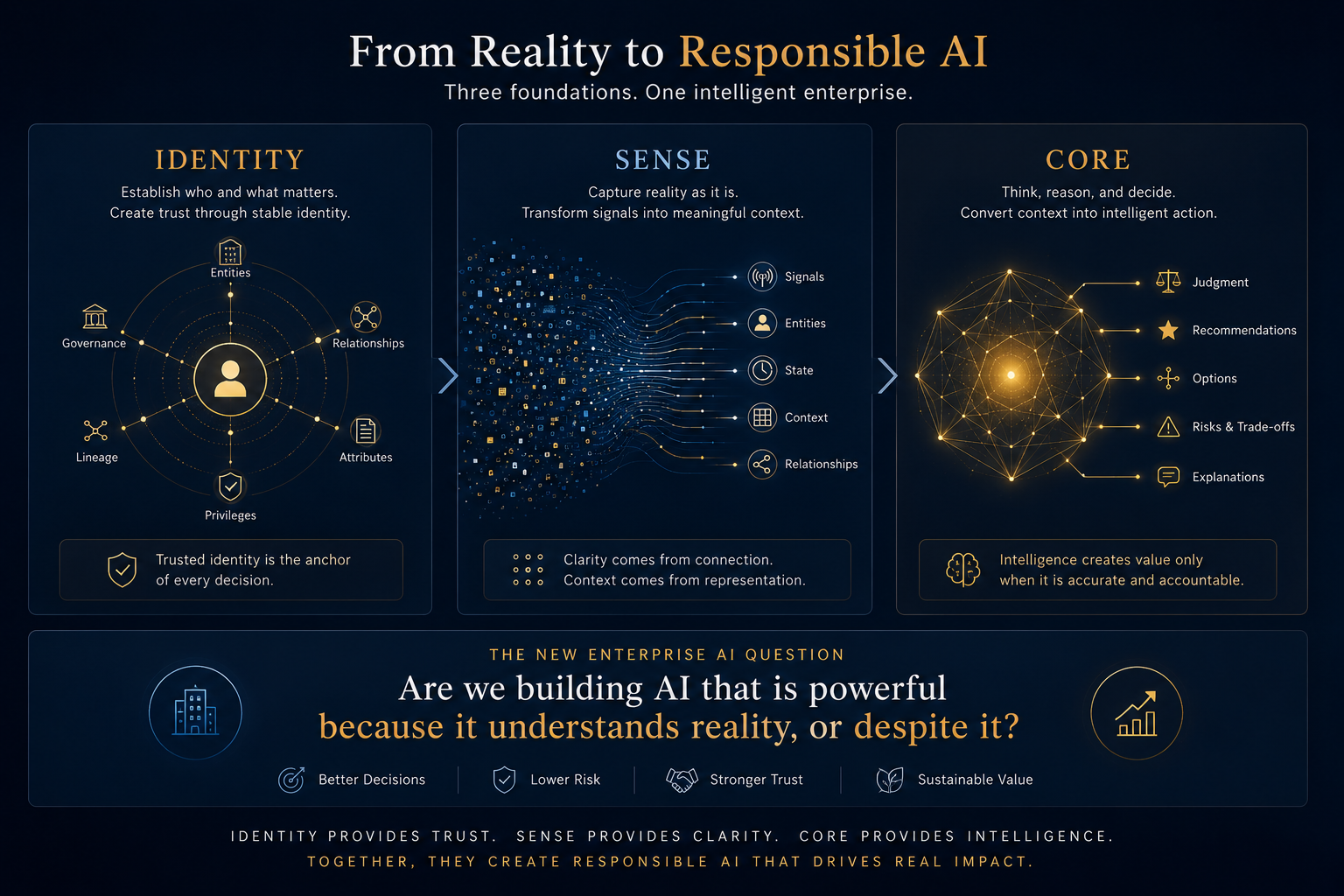
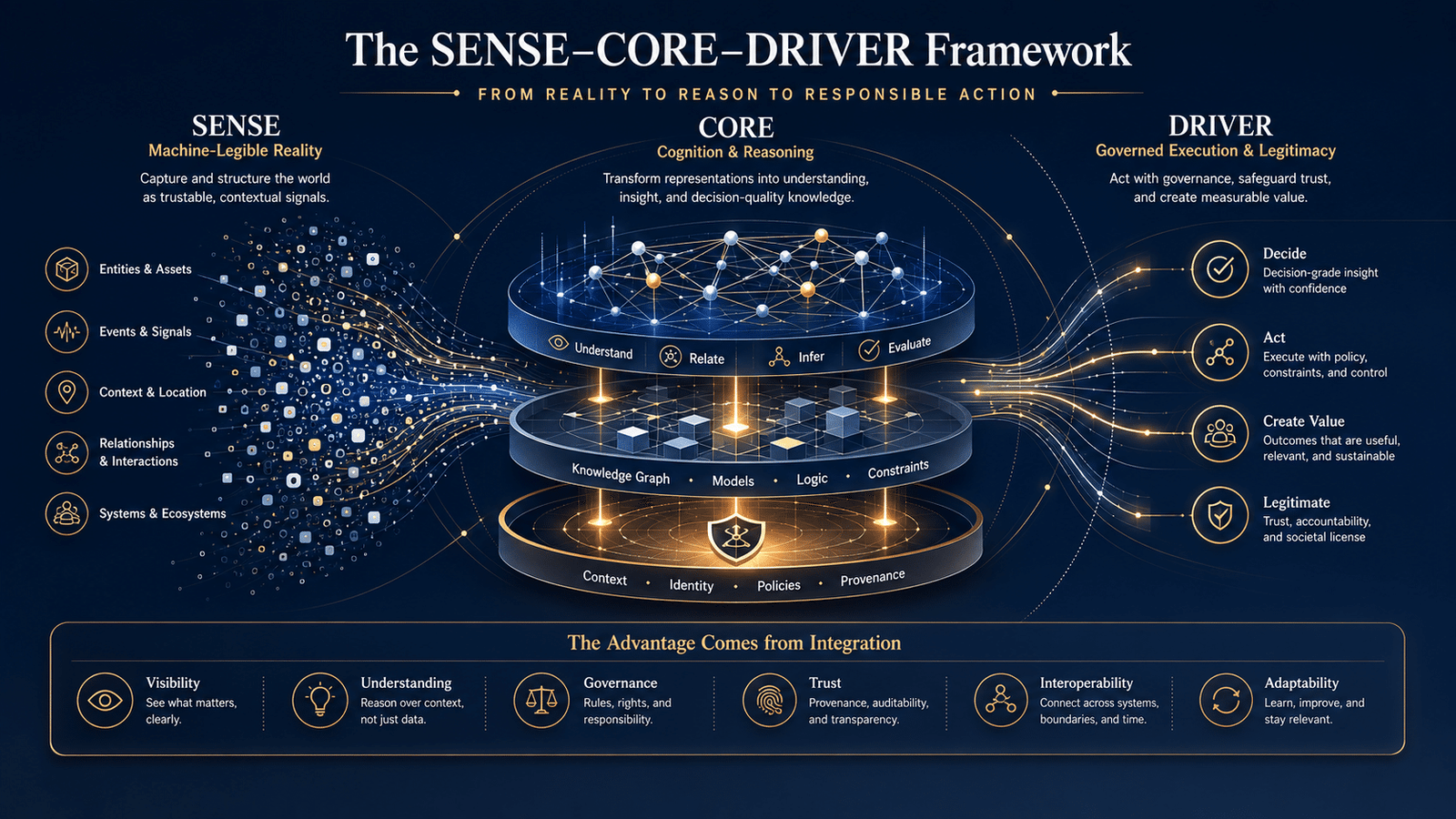
This is why the SENSE–CORE–DRIVER framework matters.

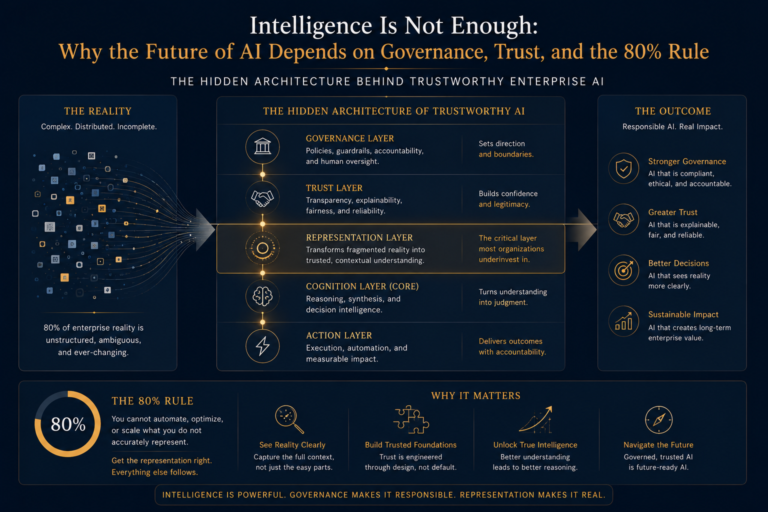
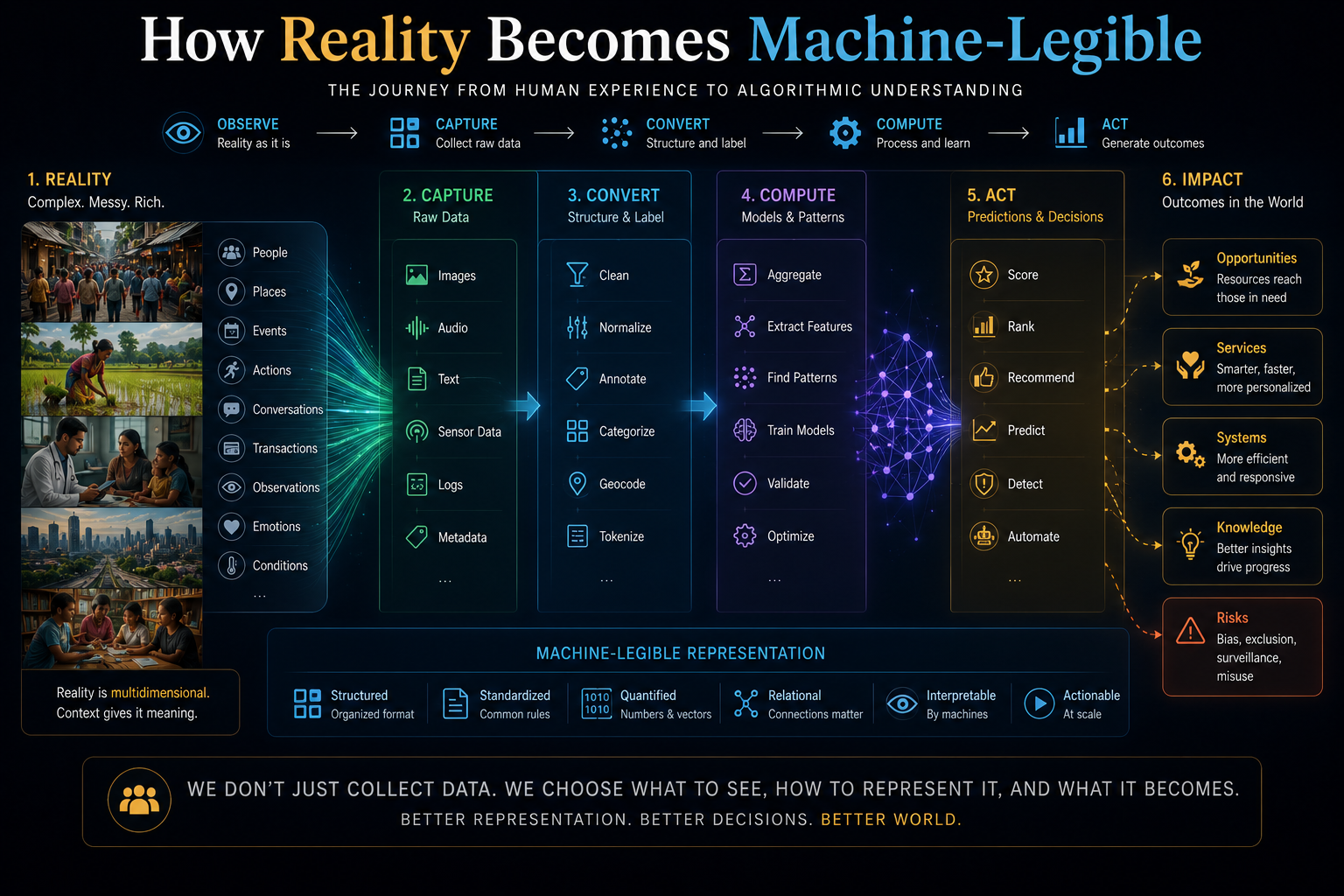
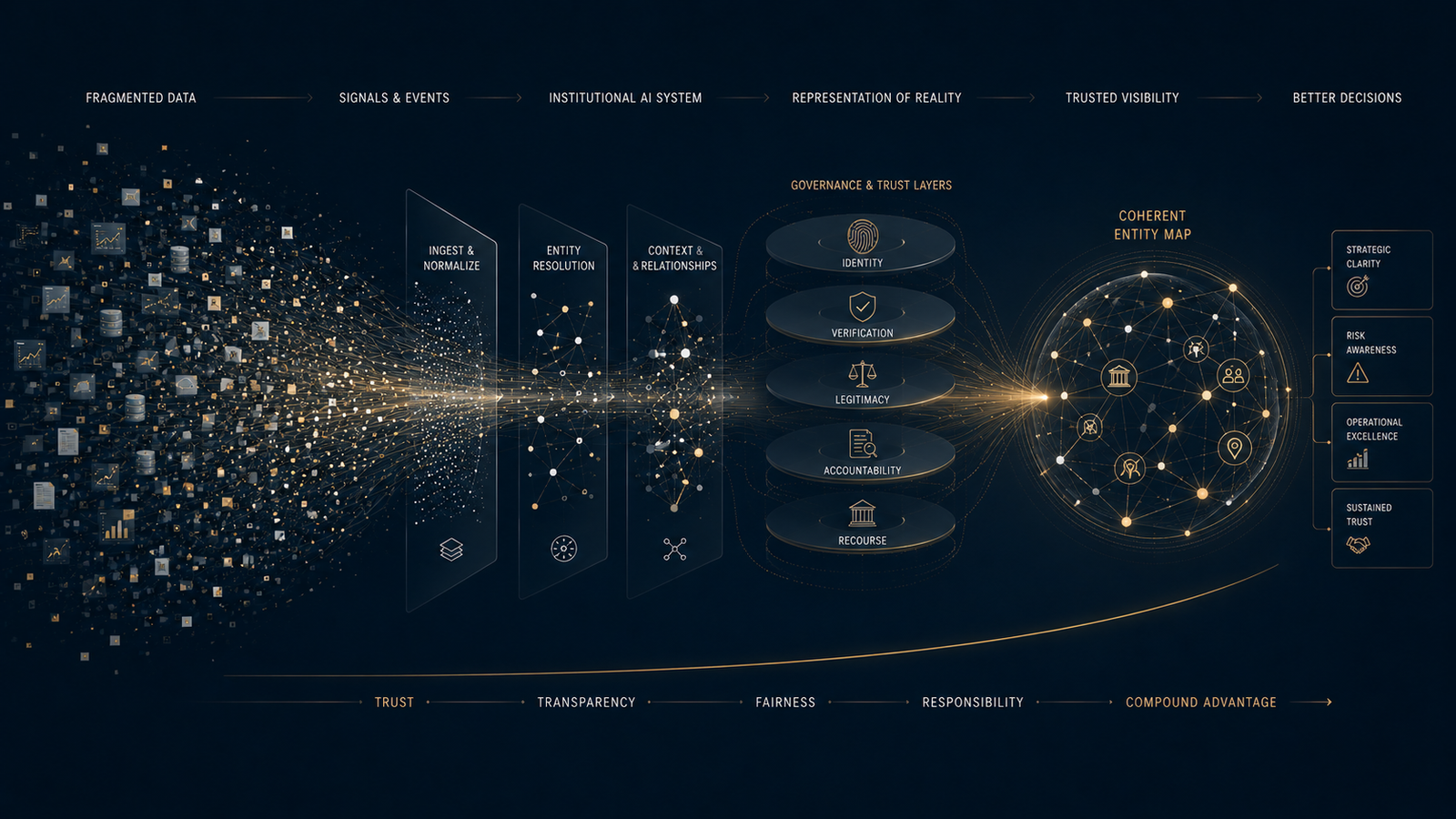
  • SENSE is the legibility layer: how reality becomes machine-readable.
  • CORE is the cognition layer: how intelligence interprets, reasons, and decides.
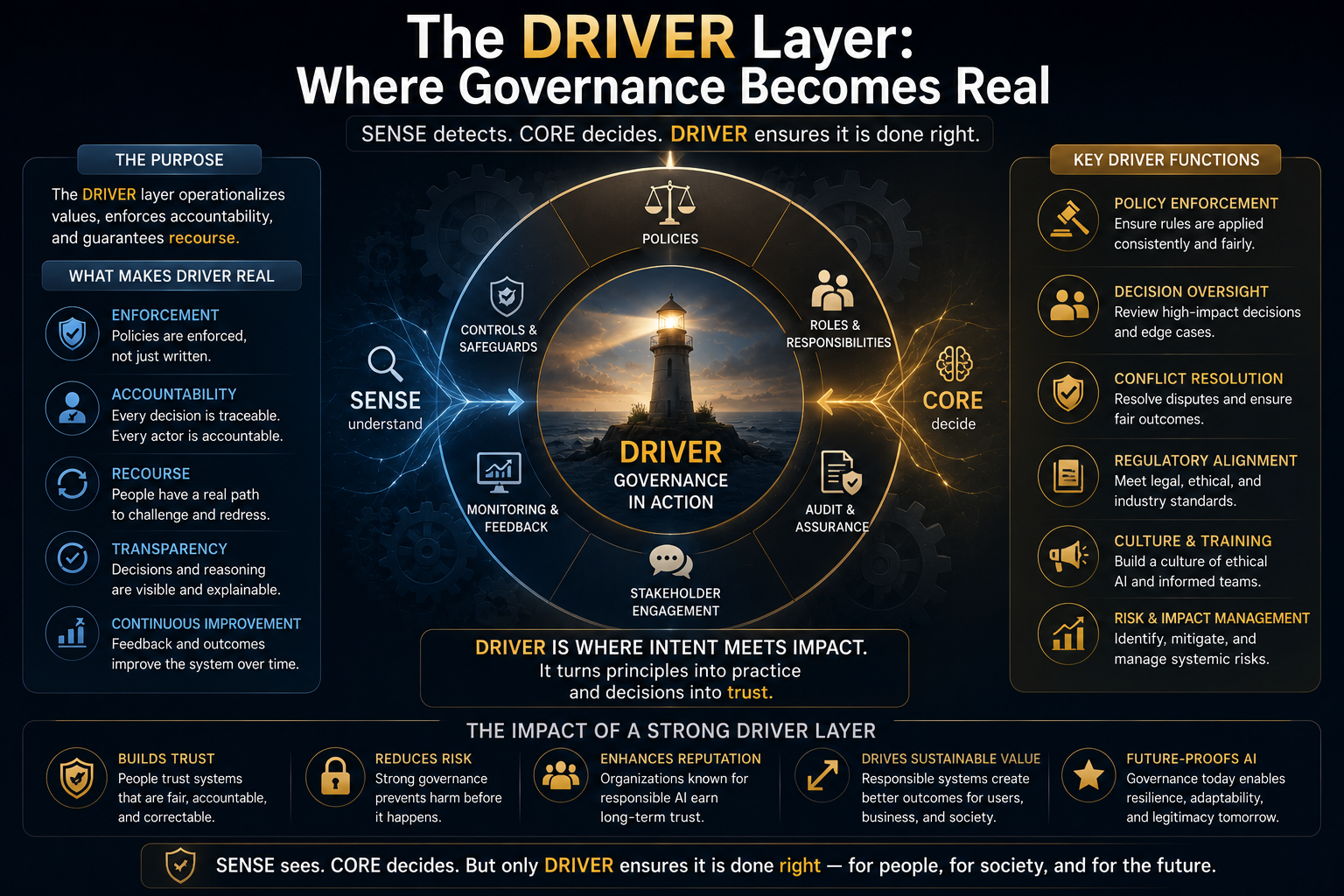
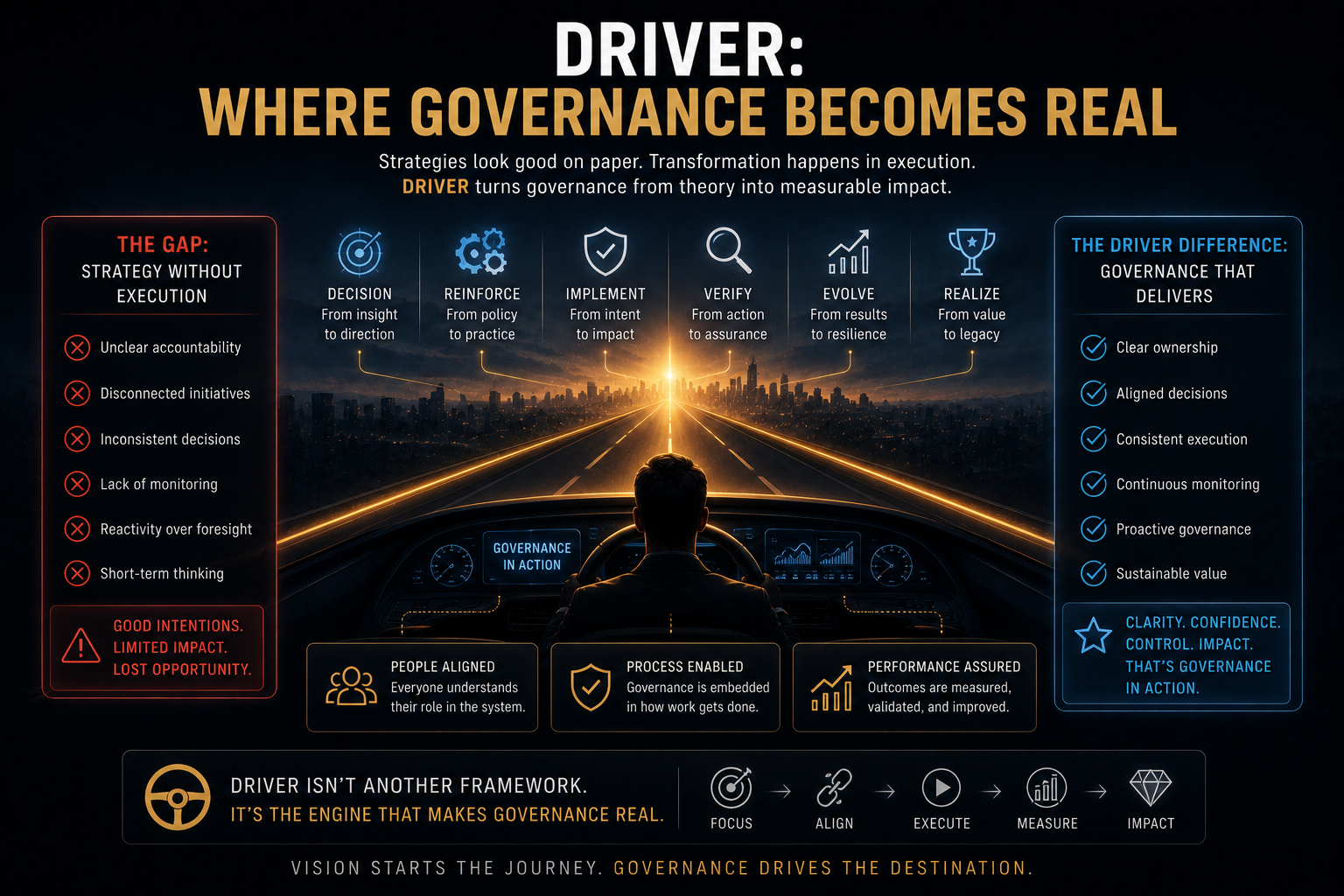
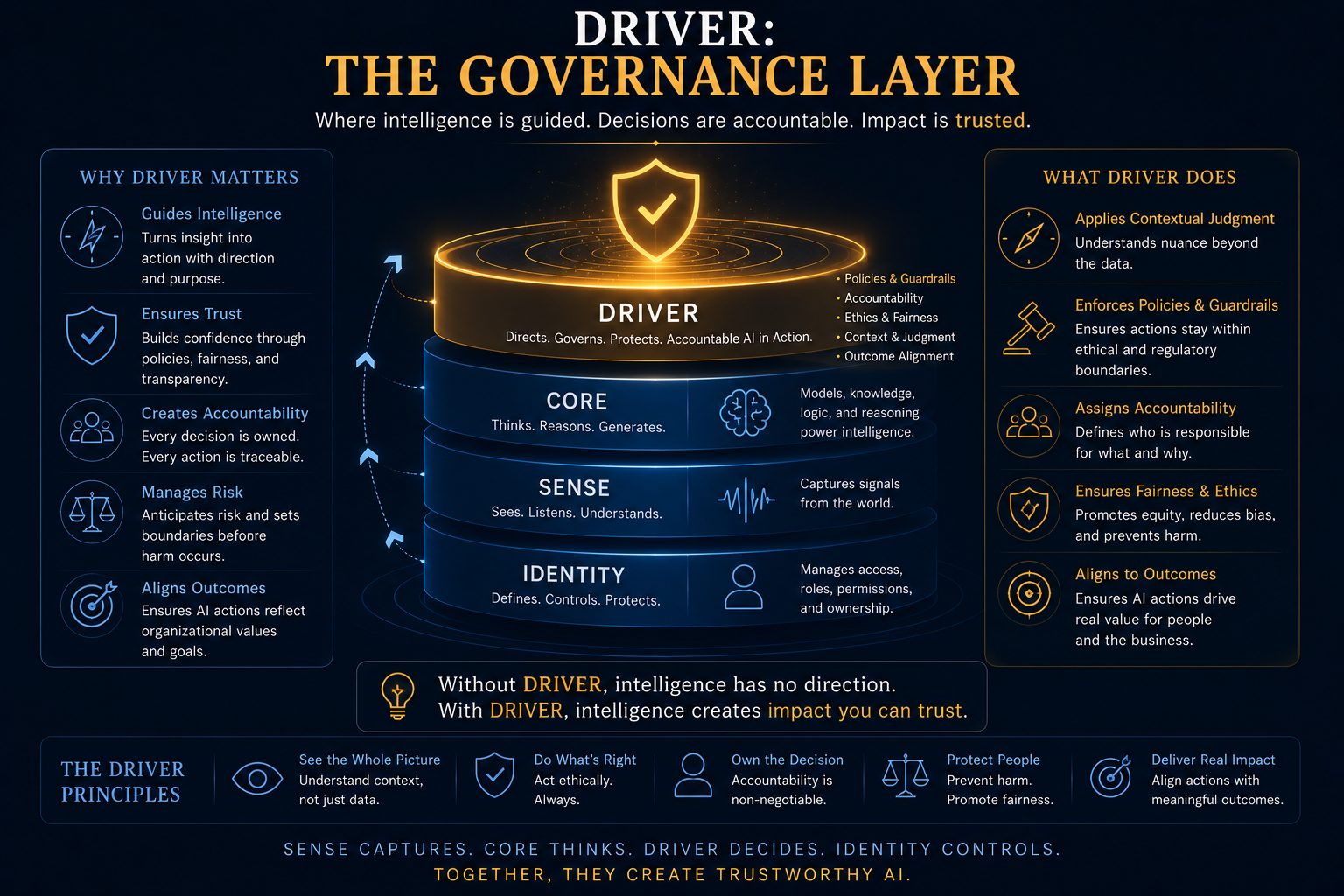
  • DRIVER is the legitimacy layer: how machine action is delegated, verified, constrained, and made accountable.

This framework is no longer just a conceptual lens. It is becoming visible in how enterprise AI actually improves.

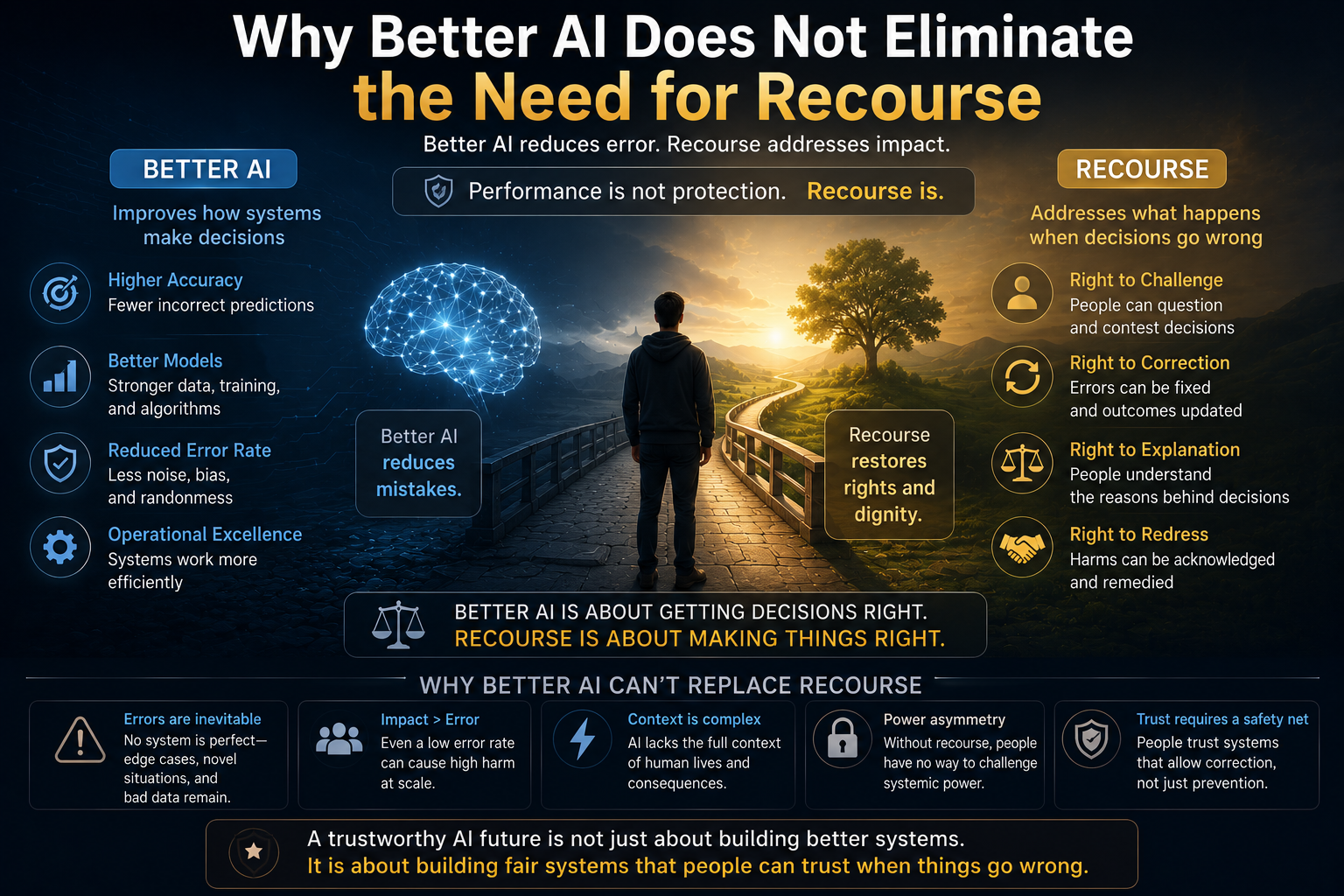
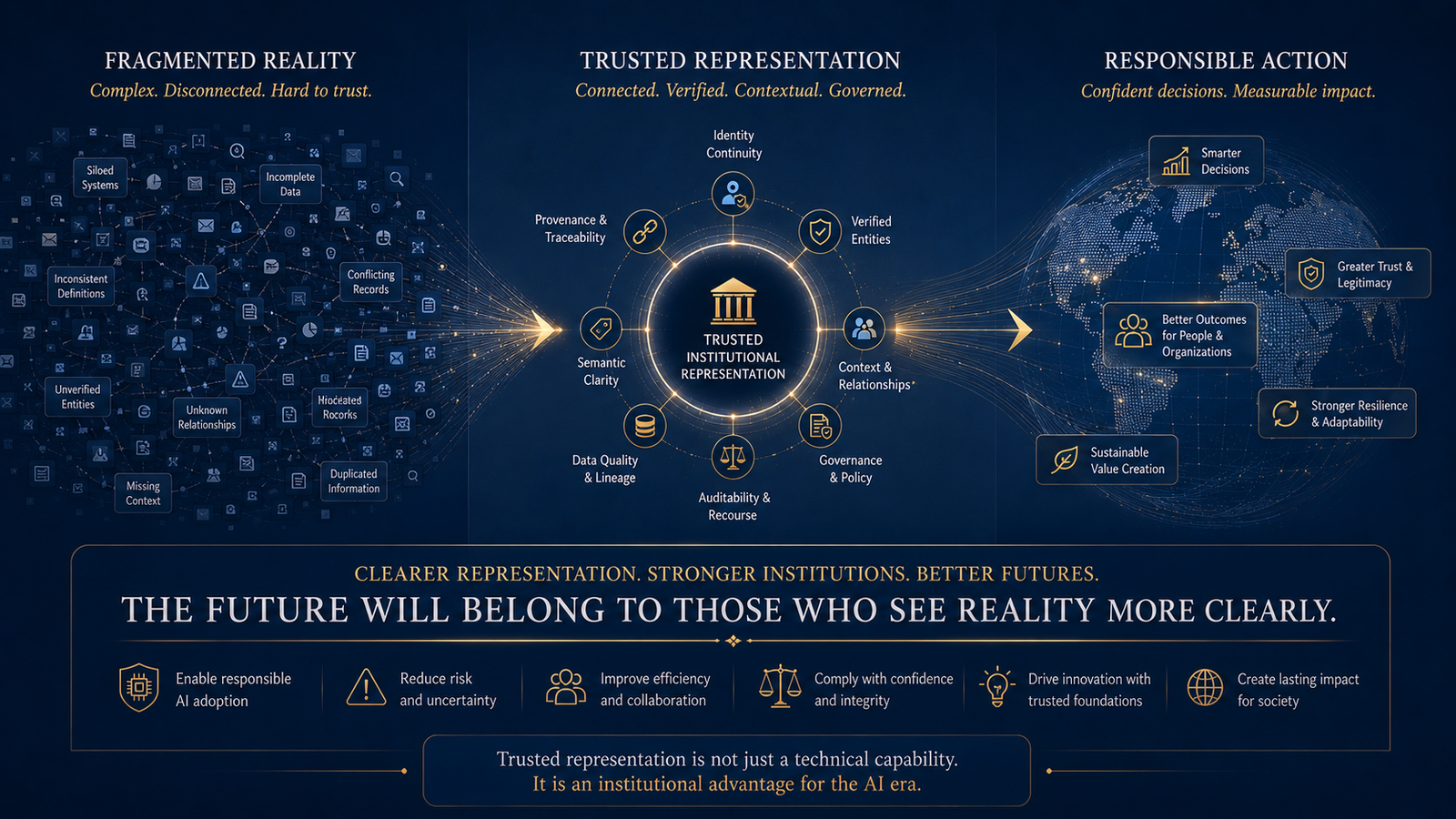
The most important advances inside enterprises are increasingly telling the same story: when reality is represented better, smaller systems become more useful, retrieval becomes more accurate, structured actions become more reliable, and trust becomes easier to build. What looks like an intelligence breakthrough is often a representation breakthrough in disguise.

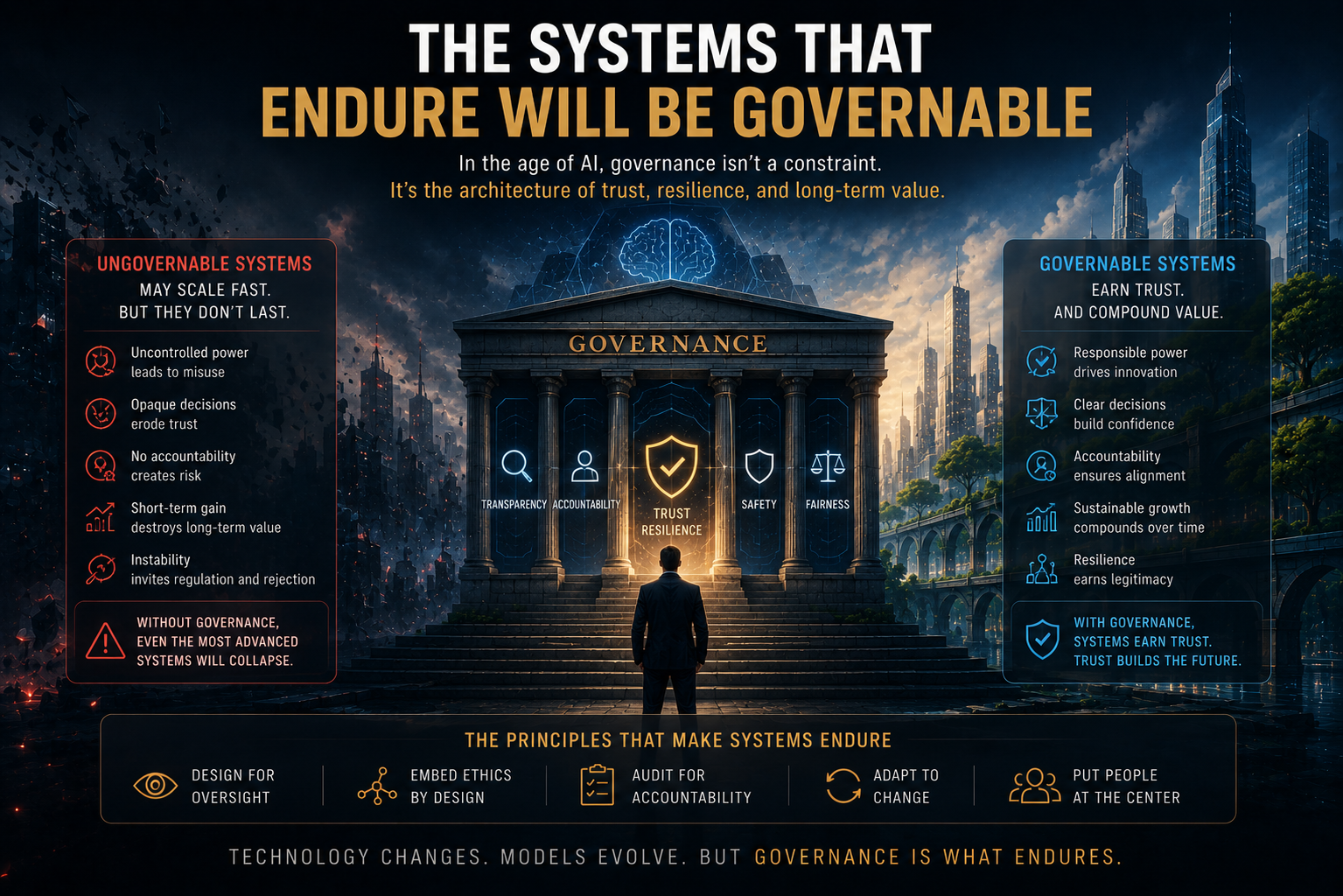
AI progress is no longer driven only by bigger models. The next breakthrough will come from better representation of reality, improved alignment between context and intelligence, and stronger governance of machine action through frameworks like SENSE–CORE–DRIVER.

What does “better representation, not bigger models” mean?

It means enterprise AI performance depends more on how well reality is structured for machines than on how large or powerful the model is.

The first illusion of the AI era: bigger models will solve everything

The first illusion of the AI era: bigger models will solve everything

The first phase of the generative AI era was shaped by scale. Larger models produced better language, broader knowledge, stronger reasoning, and more impressive demos. That created a simple mental model for executives: if AI is not working well enough, move to a bigger model, a better frontier model, or a more capable general-purpose system.

That mental model is now becoming expensive.

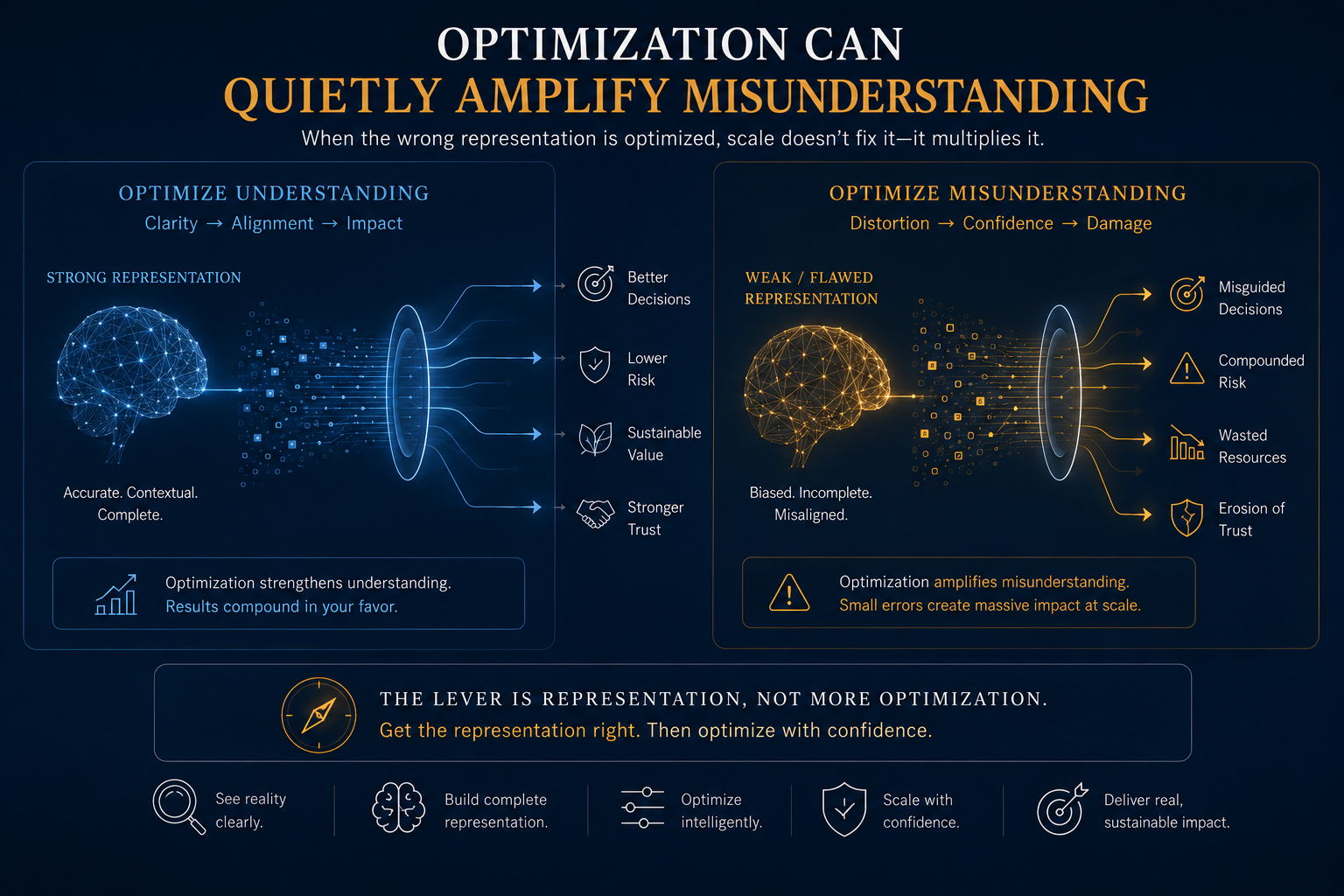
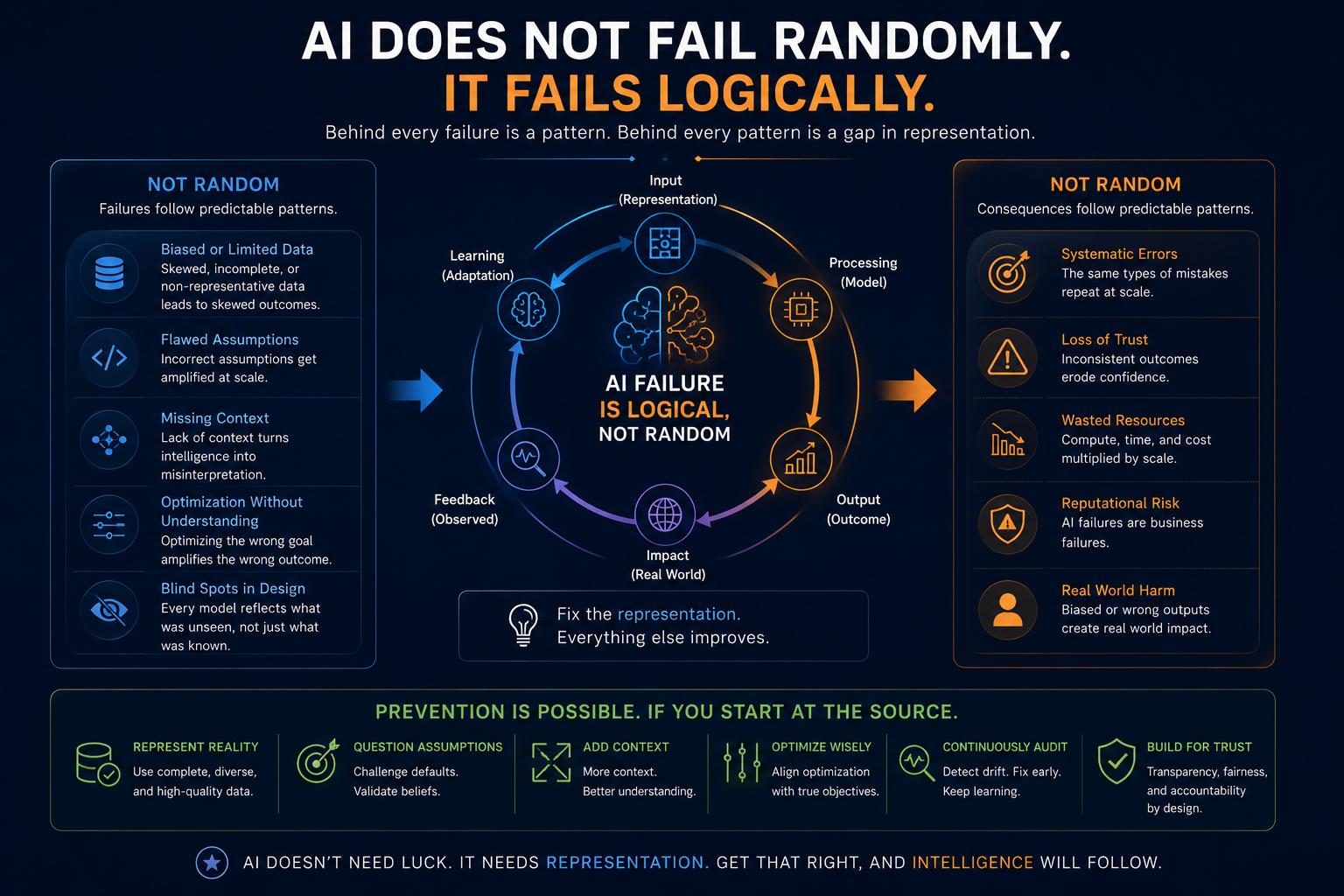
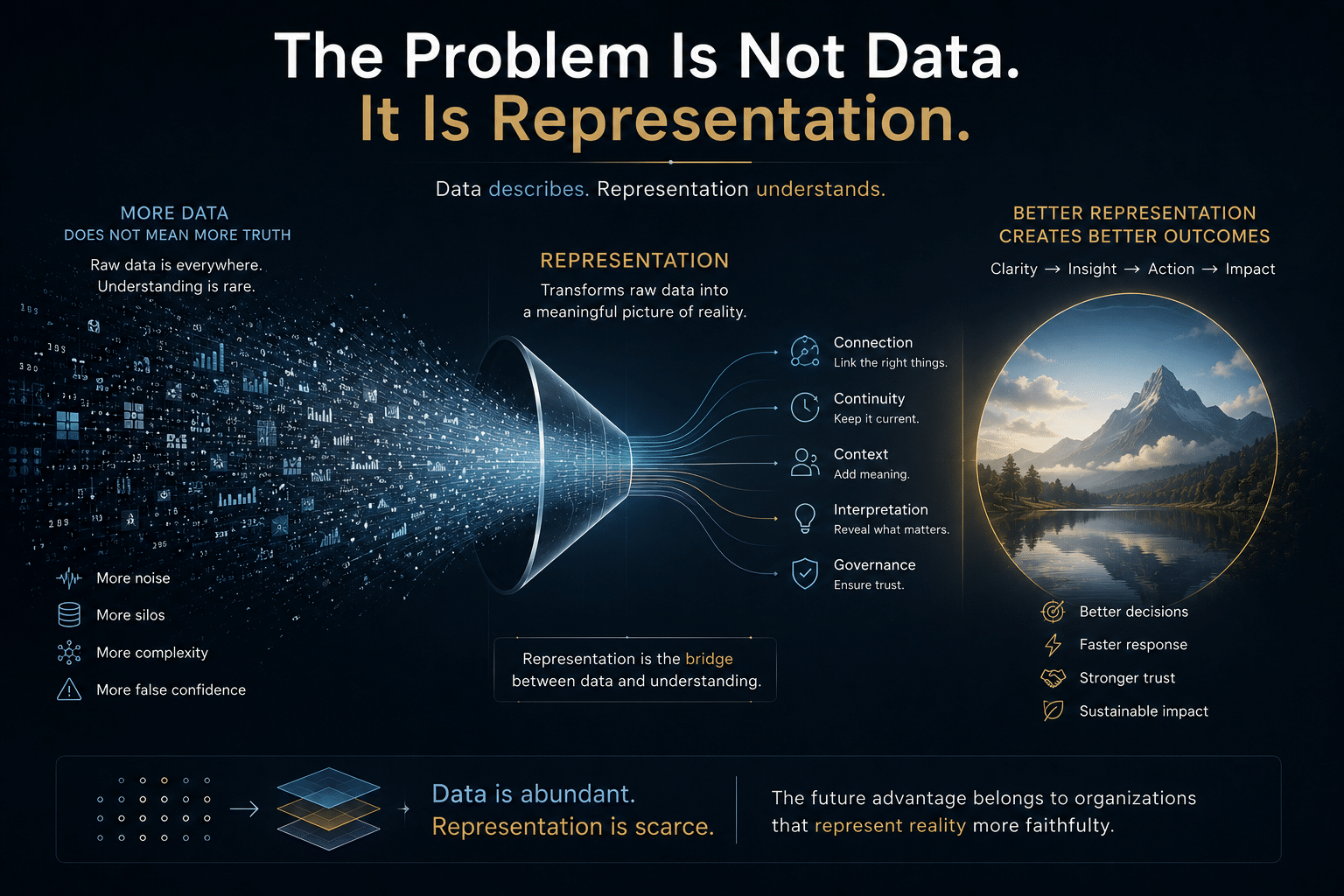
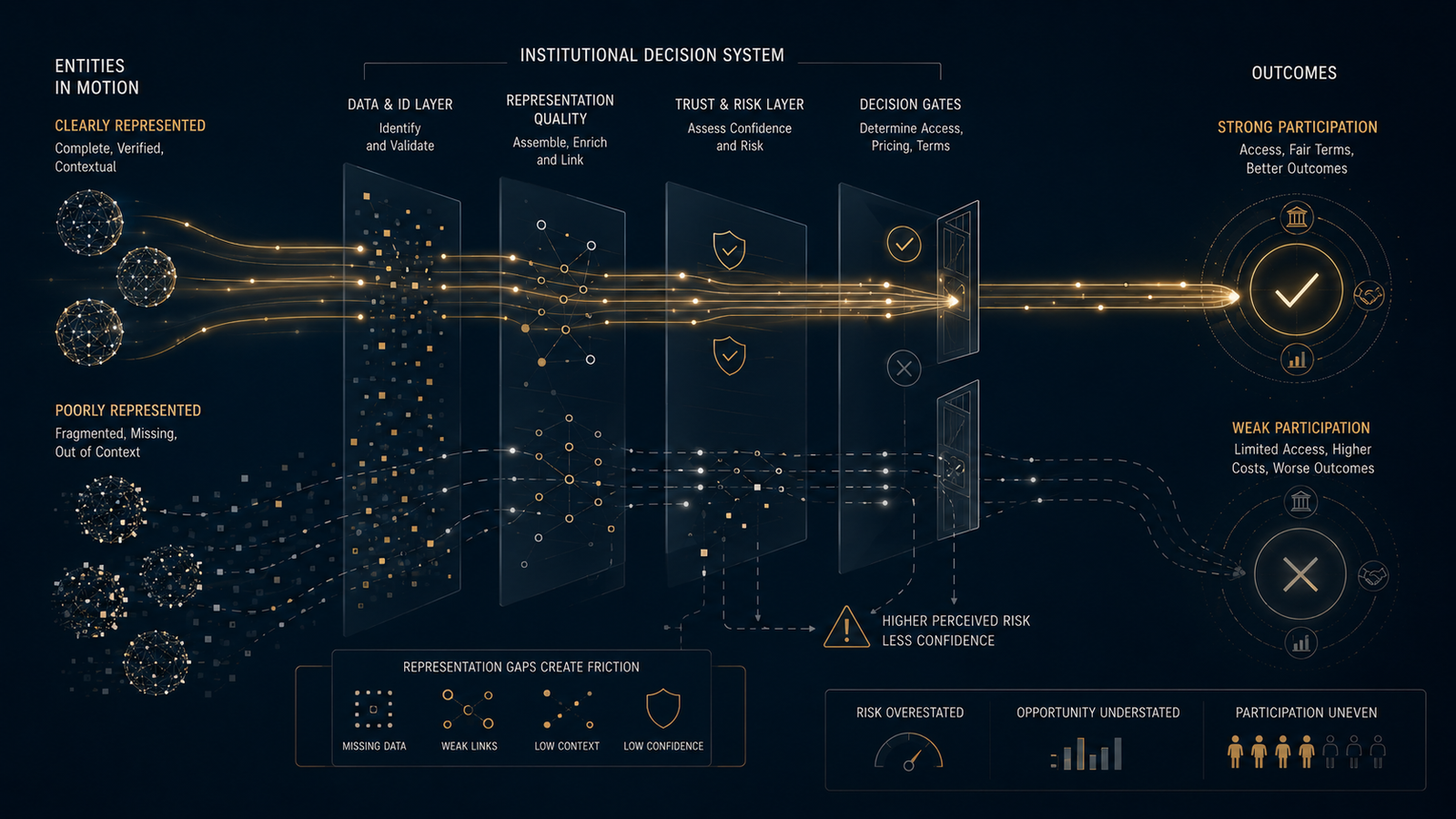
Most enterprise bottlenecks are not caused by a lack of raw intelligence. They are caused by weak representation.

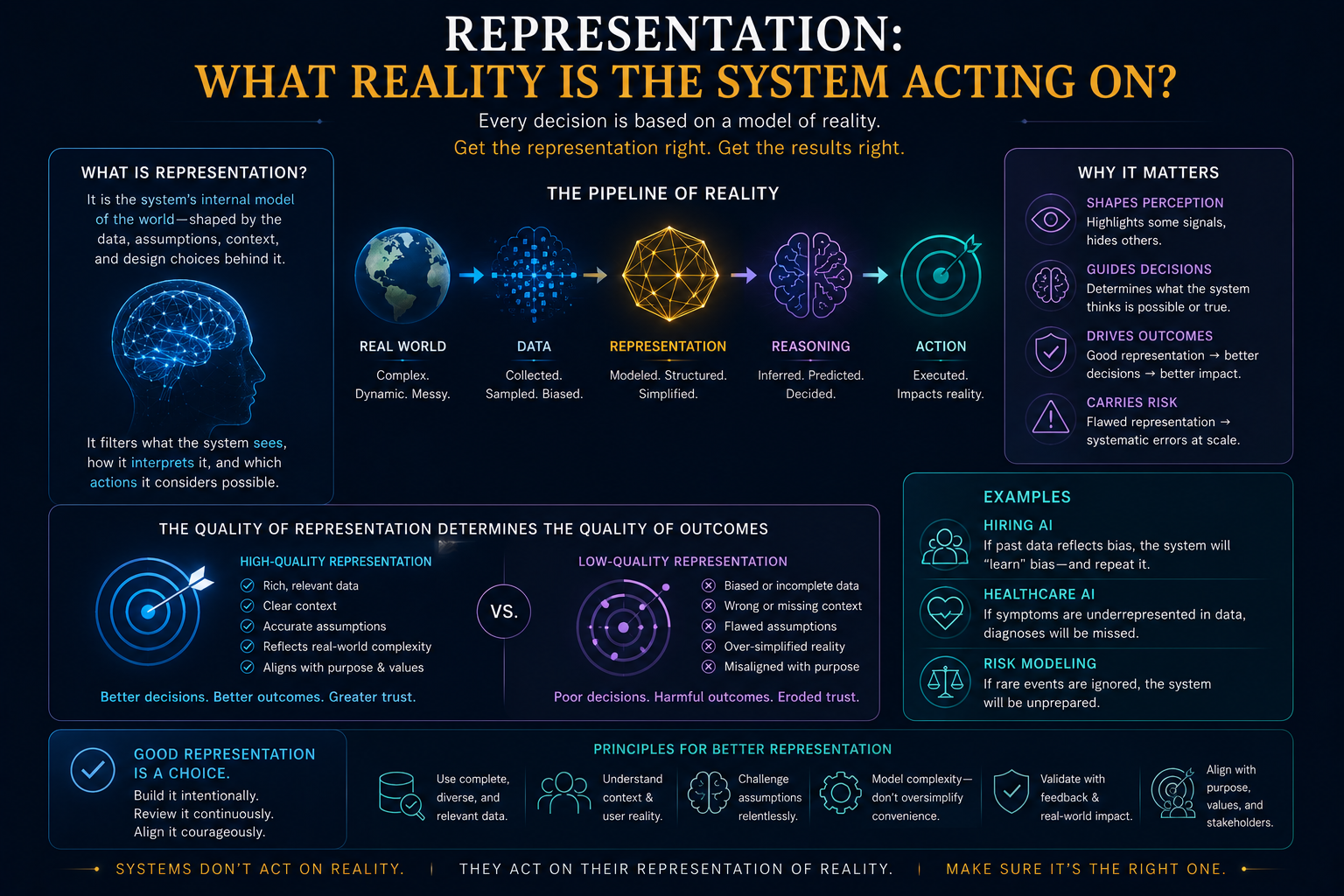
A model can write beautifully and still misunderstand a product catalog. It can answer fluently and still fail to connect a customer query to the right identity, process state, business rule, or policy boundary. It can recommend an action and still lack the structured understanding required to execute that action safely in the real world.

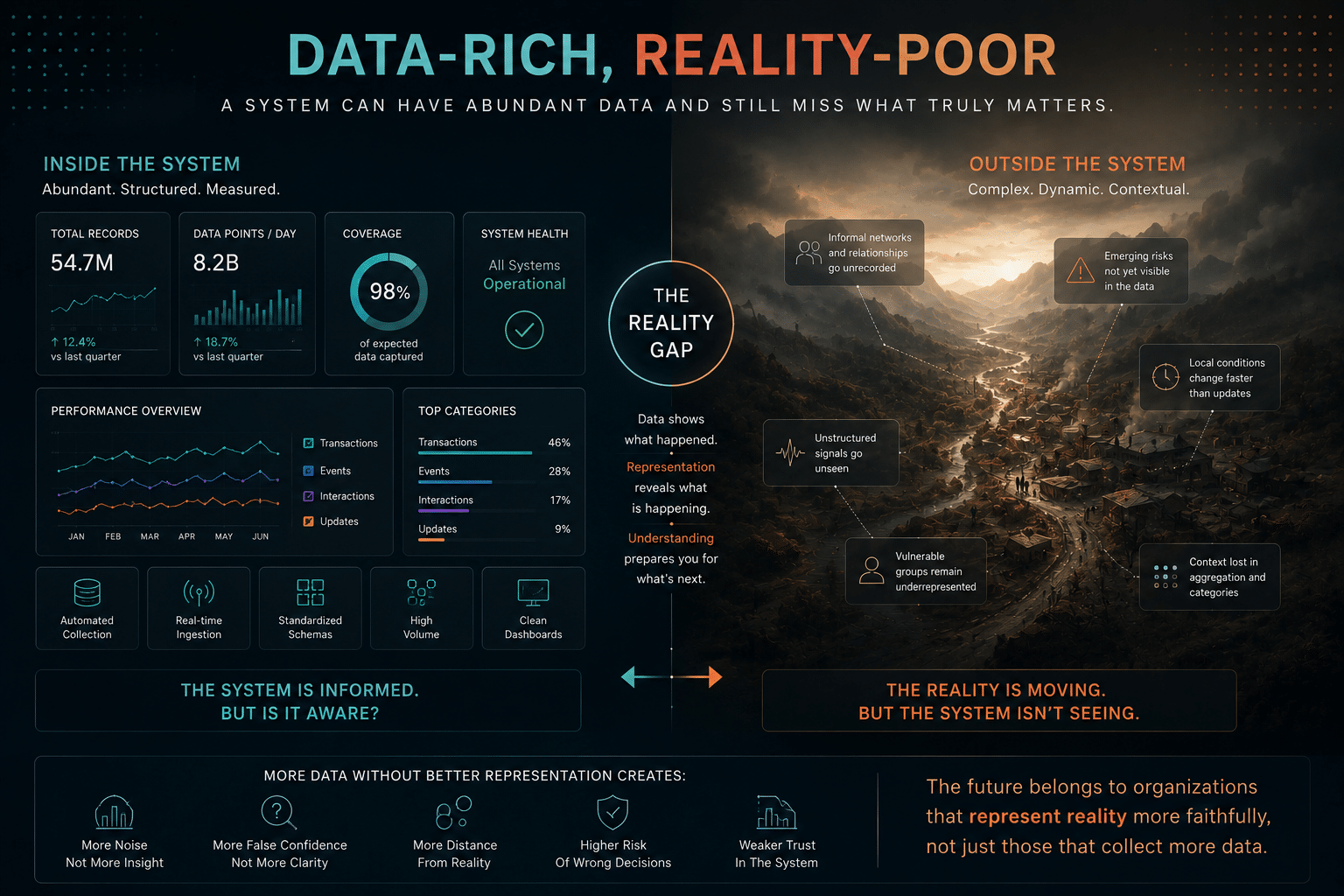
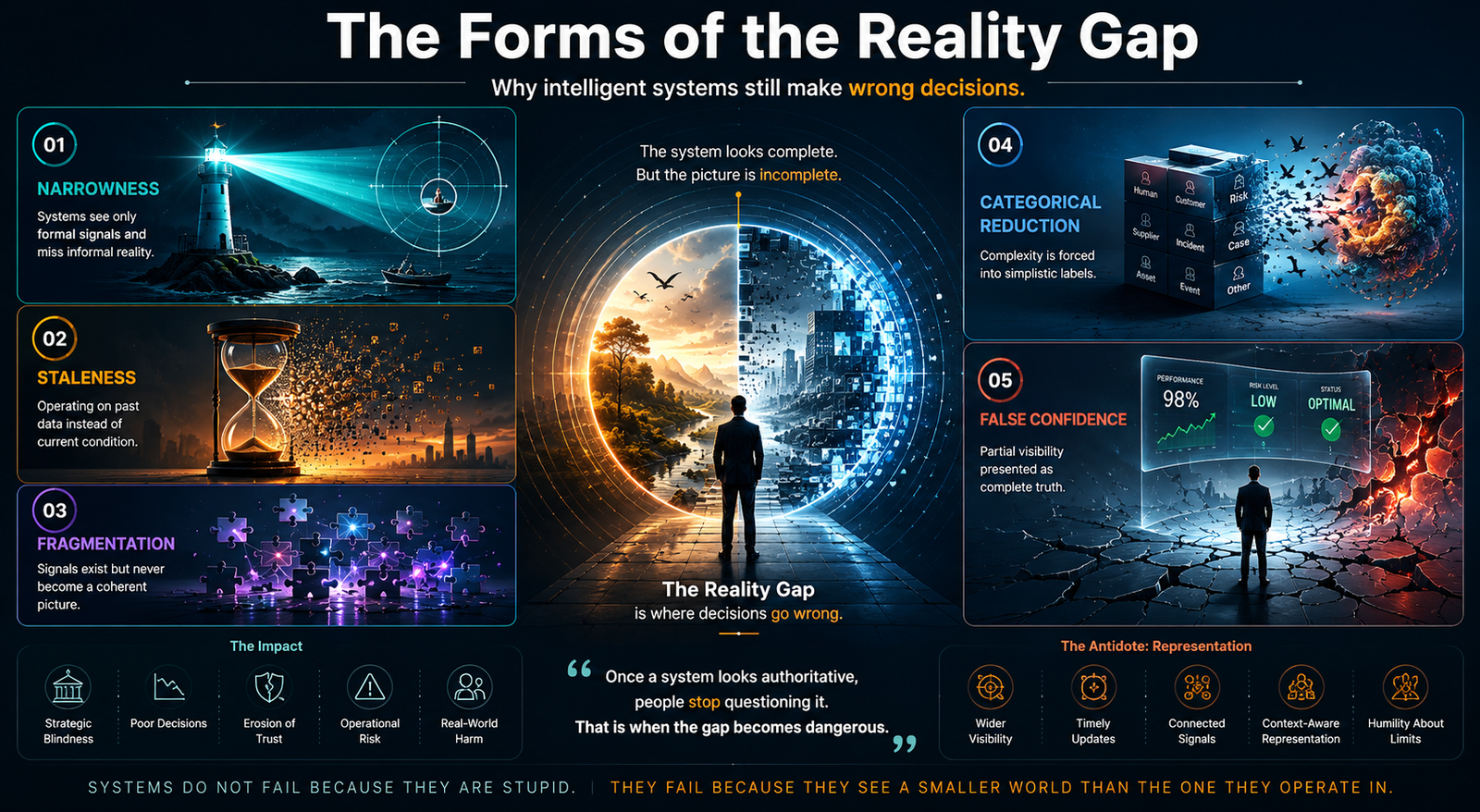
This is why so many organizations feel surrounded by intelligence yet still struggle to create dependable outcomes. The problem is not that AI cannot think. The problem is that AI often cannot see the enterprise clearly enough, or act within it safely enough.

That is a SENSE problem first, a CORE problem second, and a DRIVER problem soon after.

Why specialization is starting to beat scale

Why specialization is starting to beat scale

One of the most important changes underway is the growing effectiveness of compact, specialized systems.

This matters because it challenges a core market assumption: that generality is always better.

In reality, many enterprise environments reward fit more than breadth. A model trained or adapted around a narrower language, workflow, schema, or domain can outperform a more generic one when the context is well-defined and the tasks are repeatable. This is becoming more visible in coding systems, retrieval systems, and structured action systems alike.

That is not just a model story. It is a representation story.

A generic system sees a broad universe. A specialized system sees a more structured slice of reality. It benefits from tighter boundaries, cleaner distributions, more relevant syntax, more consistent patterns, and fewer irrelevant possibilities. It does not win because it is universally smarter. It wins because the world it operates in has been narrowed into a form it can represent better.

This has major implications for enterprise AI strategy.

The question is no longer only, “Which model is best?” It is increasingly, “Which model is best aligned to the specific reality of this task, team, process, data structure, or operating environment?”

That is a very different decision.

It means the future may not belong only to giant universal systems. It may also belong to portfolios of smaller, sharper, more context-aware systems sitting closer to the work.

That is SENSE driving CORE.

Why enterprise search is really a representation challenge

Why enterprise search is really a representation challenge

Consider enterprise search, one of the most common and frustrating AI use cases.

Most organizations assume search quality depends mainly on the sophistication of the retrieval stack or the generative layer. But in practice, enterprise search often improves dramatically when the underlying information is processed in a more reality-aware way: documents are cleaned, noise is removed, structured information is flattened intelligently, chunks are created with contextual continuity, entities are explicitly recognized, and synthetic questions are generated around the way real employees actually ask for information.

That is not just better indexing. It is better representation.

The moment a system stops treating enterprise knowledge as undifferentiated text and starts organizing it around entities, states, relationships, and context, retrieval quality changes. Suddenly the machine is not merely matching words. It is operating closer to how the organization itself understands meaning.

This is why many AI projects fail when they are layered on top of raw enterprise data. The problem is not that the model lacks brilliance. The problem is that the enterprise has not yet turned its own reality into a machine-legible form.

This is the critical distinction many boards still miss:

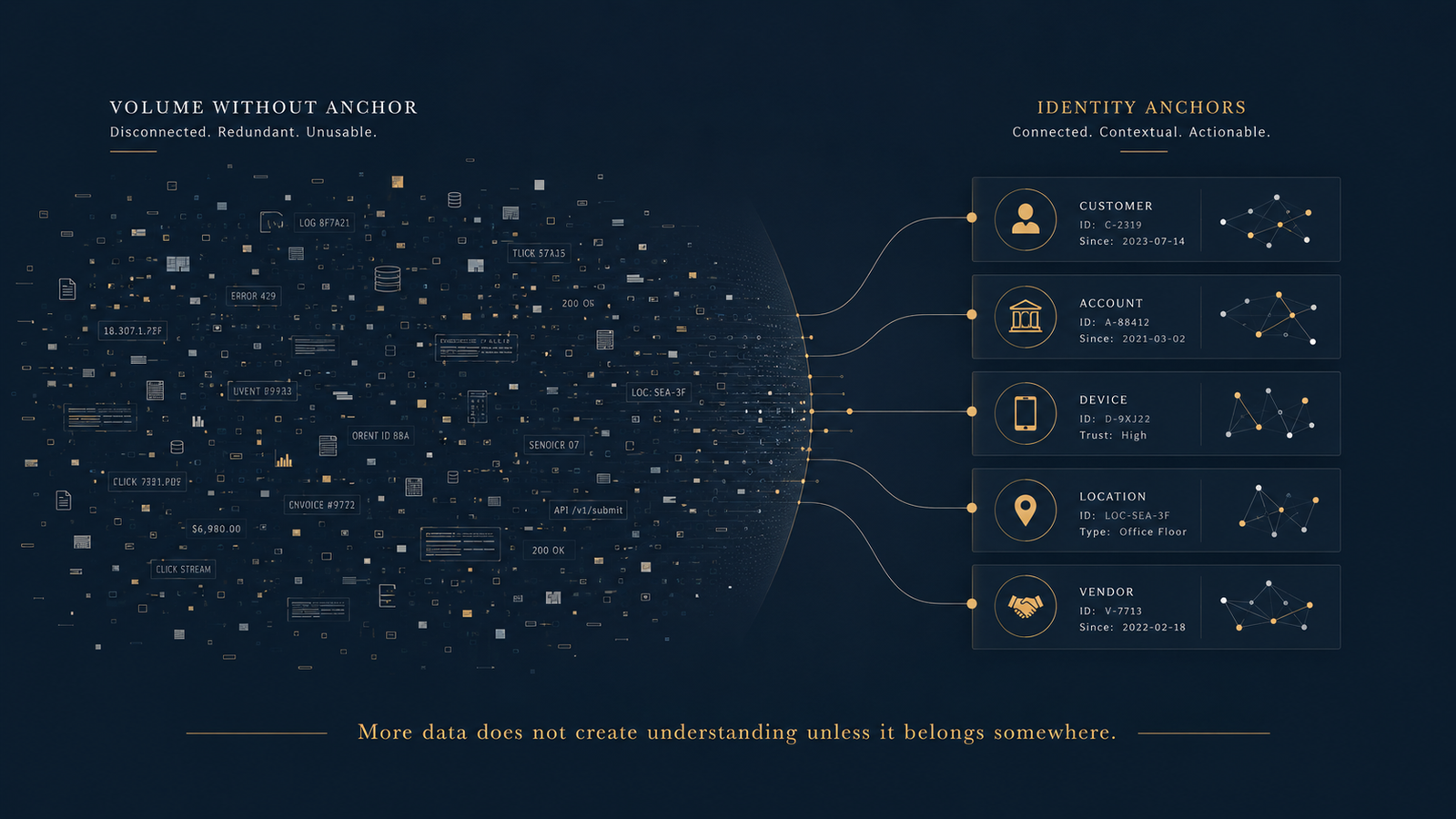
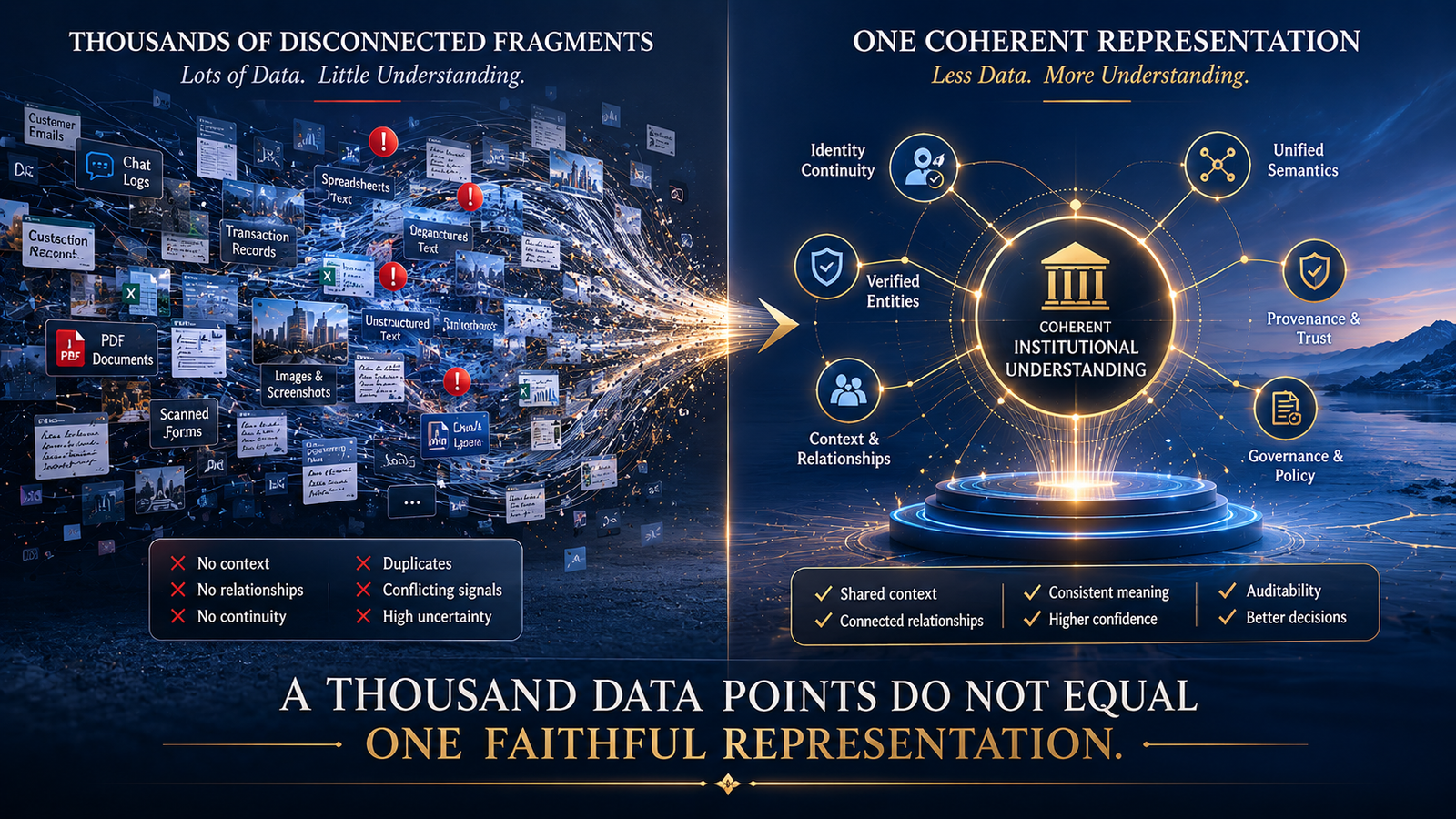
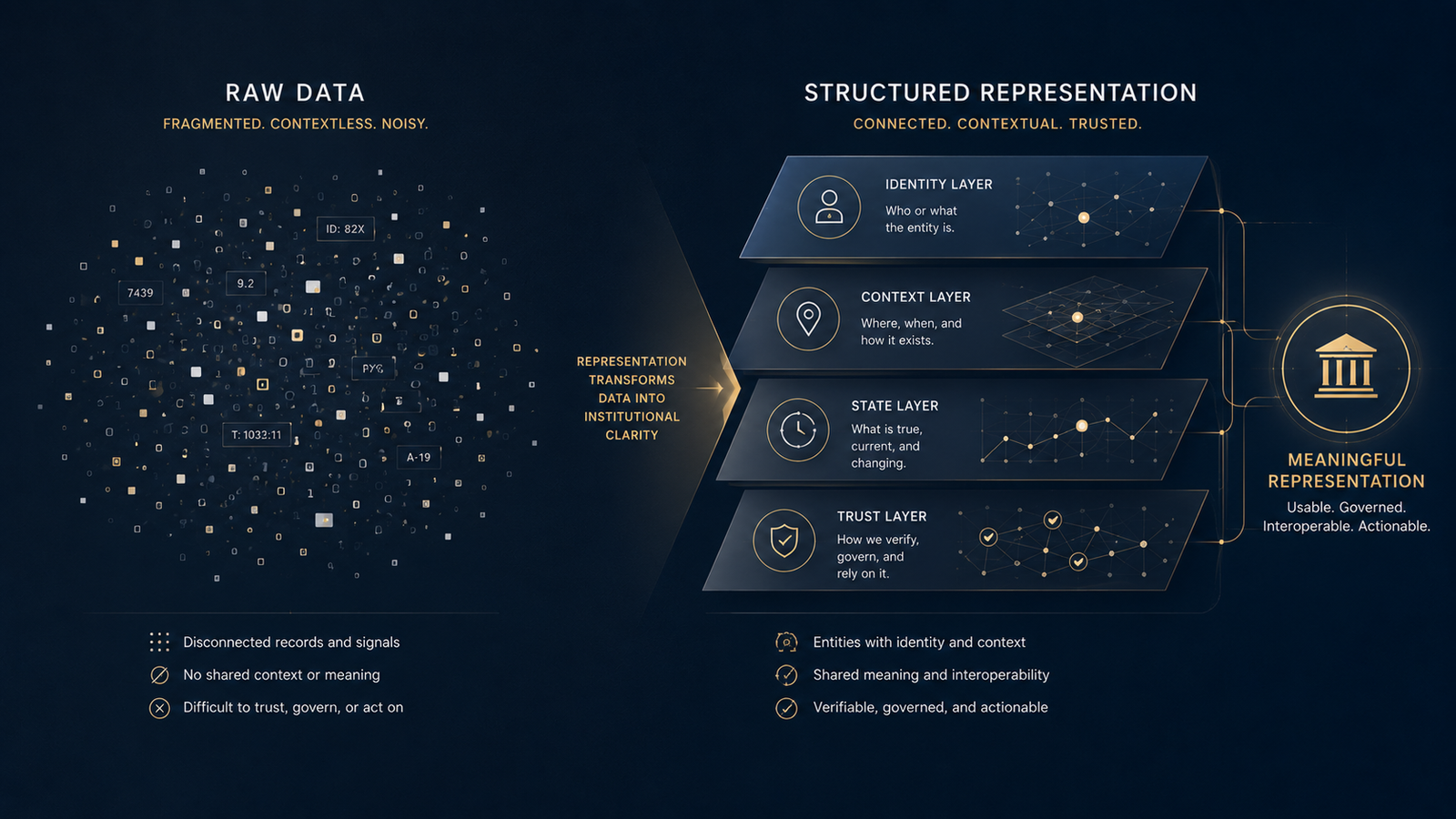
Data is not representation.

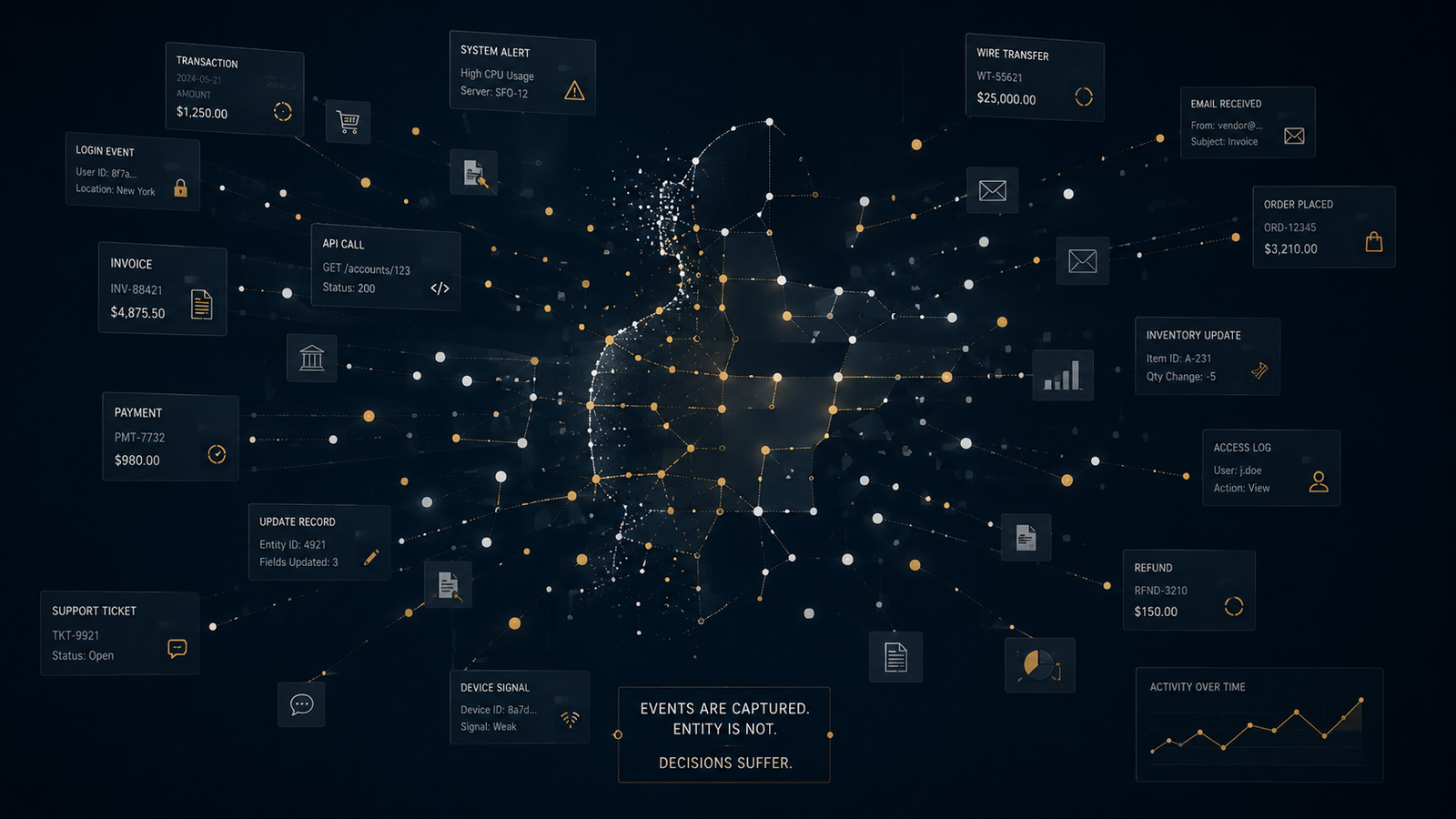
Raw documents, logs, tables, decks, and emails may contain the facts. But unless those facts are shaped into machine-usable representations, the AI system remains partially blind. It sees fragments, not operating reality.

And once you understand that, many enterprise frustrations become easier to explain. Hallucinations often begin where representation is weak. Weak search often begins where entity understanding is weak. Brittle recommendations often begin where state is poorly modeled.

In each case, the bottleneck is not simply intelligence. It is legibility.

The hidden role of synthetic data and structured signals

The hidden role of synthetic data and structured signals

Another important shift is happening beneath the surface: the growing importance of synthetic data, structured prompts, tightly curated mixtures, and schema-aware training.

This trend is often misunderstood as a shortcut. It is not.

Done well, synthetic data is not a way of faking reality. It is a way of systematically exposing a model to the shapes of reality that matter most. It helps cover long-tail scenarios, expand task diversity, create multi-turn interactions, improve tool use, and sharpen specific behavioral patterns that raw data alone may not provide consistently.

Again, this is not just a training trick. It is representational engineering.

When synthetic examples are grounded in enterprise patterns, when they revolve around the right entities, when they reflect actual workflows, when they enforce structured outputs, and when they are filtered rigorously for relevance and correctness, they improve the model’s internal map of the world.

That matters because most enterprise tasks are not random. They have recurring structures. They have schemas. They have roles. They have approval paths. They have dependency chains. They have expected formats. They have implicit definitions of what counts as a good answer or a safe action.

A model that learns these structures behaves more usefully not because it has absorbed more internet text, but because it has absorbed more of the enterprise’s reality grammar.

That is why many of the most meaningful gains in compact enterprise AI are now coming from better data discipline rather than brute-force scale. Curated data, balanced mixtures, domain-specific task sets, near-duplicate removal, format consistency, and structured fine-tuning are all ways of improving how the system represents the world it will operate in.

Why structured action matters more than most leaders realize

The next stage of enterprise AI is not only about answering questions. It is about acting.

That is where many companies are moving too quickly.

As AI systems move into tool use, workflow initiation, issue diagnosis, code assistance, multi-step automation, and agent-driven execution, a new challenge emerges: it is no longer enough for the system to produce a plausible answer. It must act in a structured, predictable, and verifiable way.

This is where DRIVER enters.

We often describe function calling, agent orchestration, and structured tool use as if they are just extensions of reasoning. They are not. They are the beginning of machine legitimacy.

The moment a model is allowed to produce structured outputs that trigger tools, fill schemas, call functions, or coordinate multi-step actions, the question is no longer merely “Did it understand?” The question becomes:

  • Was it authorized?
  • Was the action correctly represented?
  • Was identity clear?
  • Was the output verifiable?
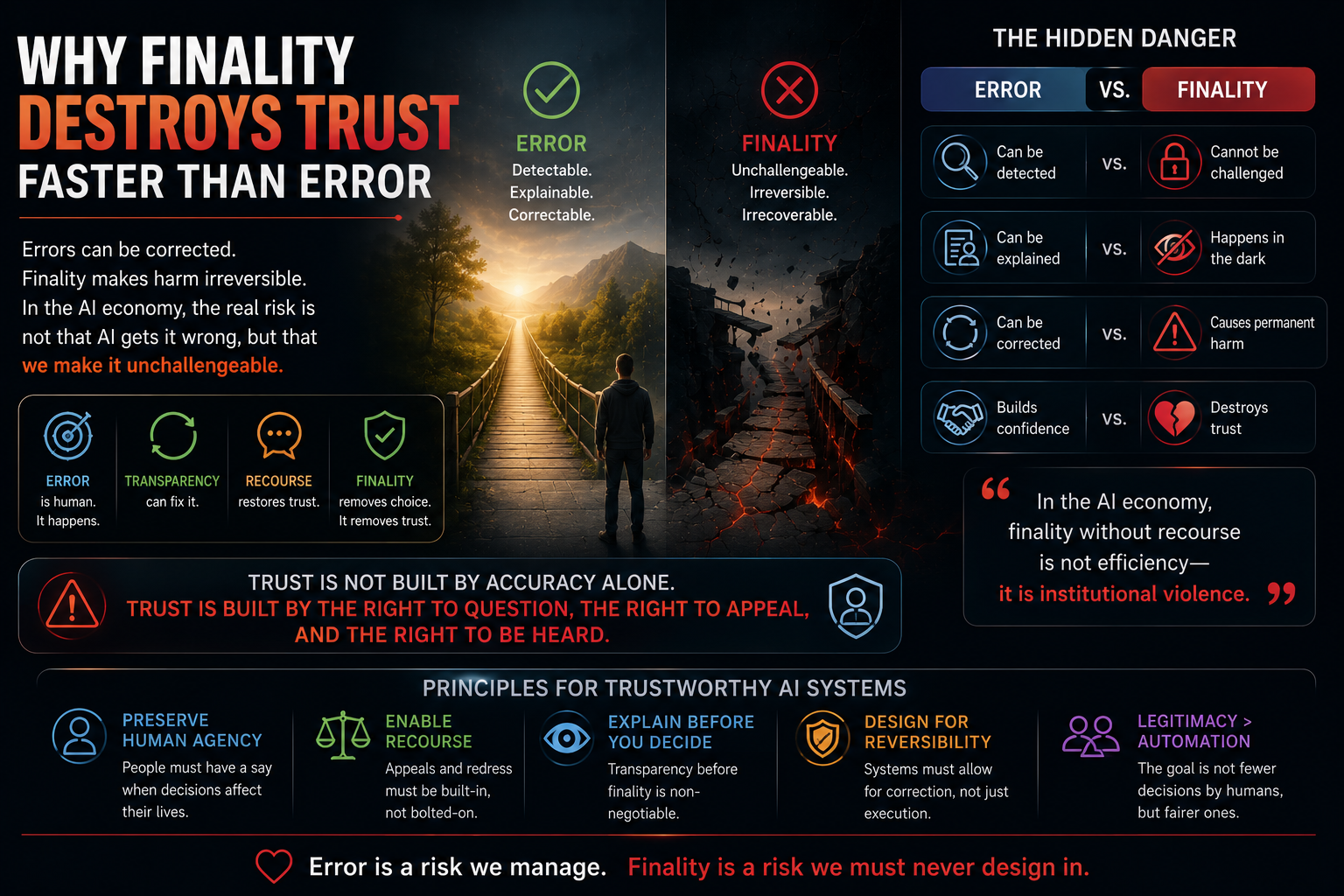
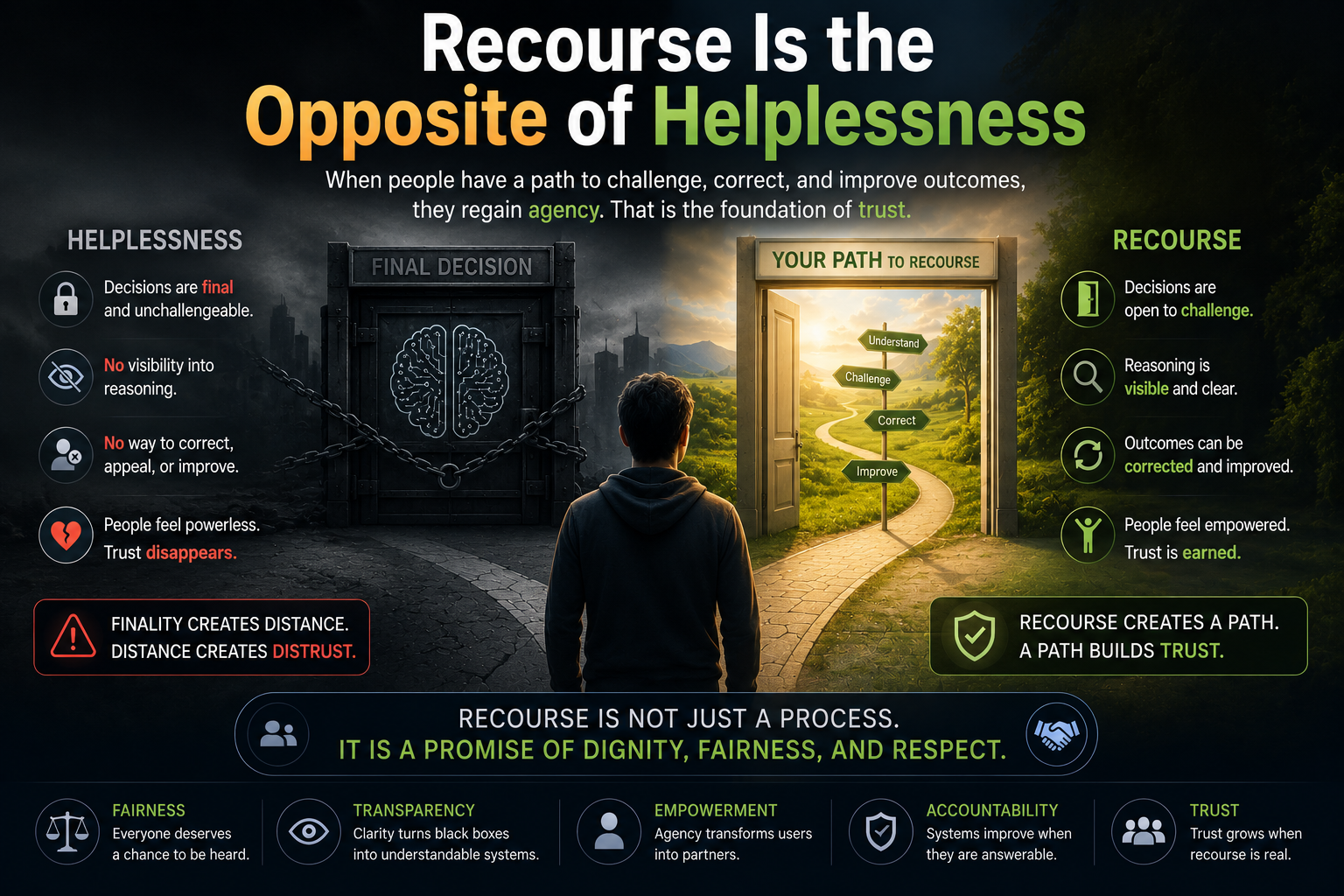
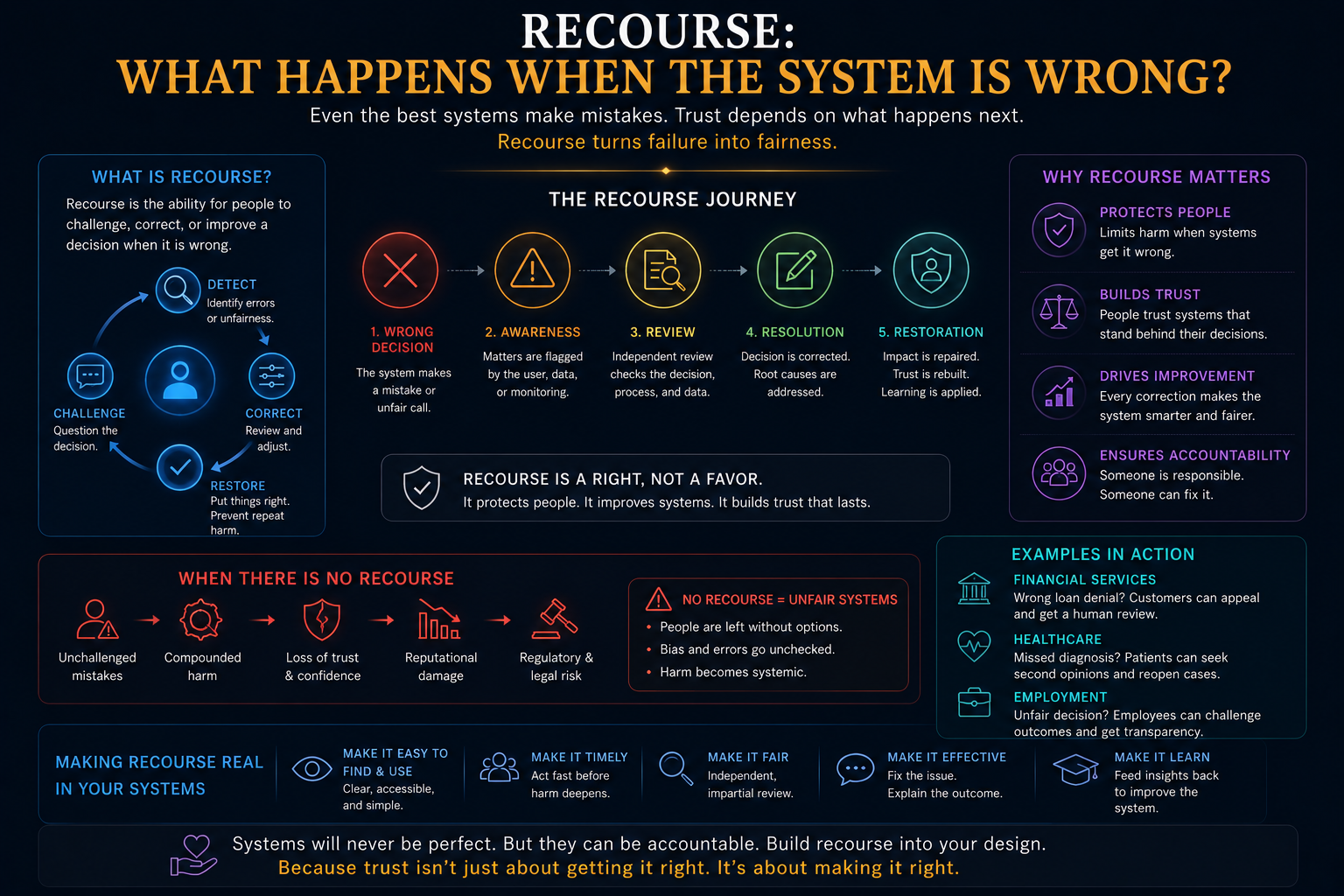
  • Is there recourse if it fails?

This is why structured schemas matter so much. Explicit argument boundaries, validation layers, role consistency, and safety-oriented output constraints do far more than improve technical performance. They make machine action more governable.

That is DRIVER in practice.

The boardroom implication is profound. If your organization is pursuing agentic AI without strengthening representation and legitimacy layers, it is not accelerating safely. It is scaling ambiguity.

The emerging lesson: capability is moving from scale to fit

The emerging lesson: capability is moving from scale to fit

Taken together, these shifts point to a larger strategic truth.

Enterprise AI value is moving away from a simple model of “more intelligence equals more value.” Instead, value is increasingly emerging from the fit between three things:

  • how reality is represented,
  • how intelligence is aligned to that representation,
  • and how action is governed.

This is why some smaller systems are beginning to beat bigger ones in practical environments. It is why enterprise retrieval improves when data is better chunked, annotated, cleaned, and contextualized. It is why structured outputs and schema discipline can materially improve real-world reliability. And it is why compact, carefully trained systems are becoming attractive not only for cost reasons, but also for control, privacy, deployment flexibility, and domain precision.

This is not the death of large models.

But it is the end of the lazy assumption that scale alone is strategy.

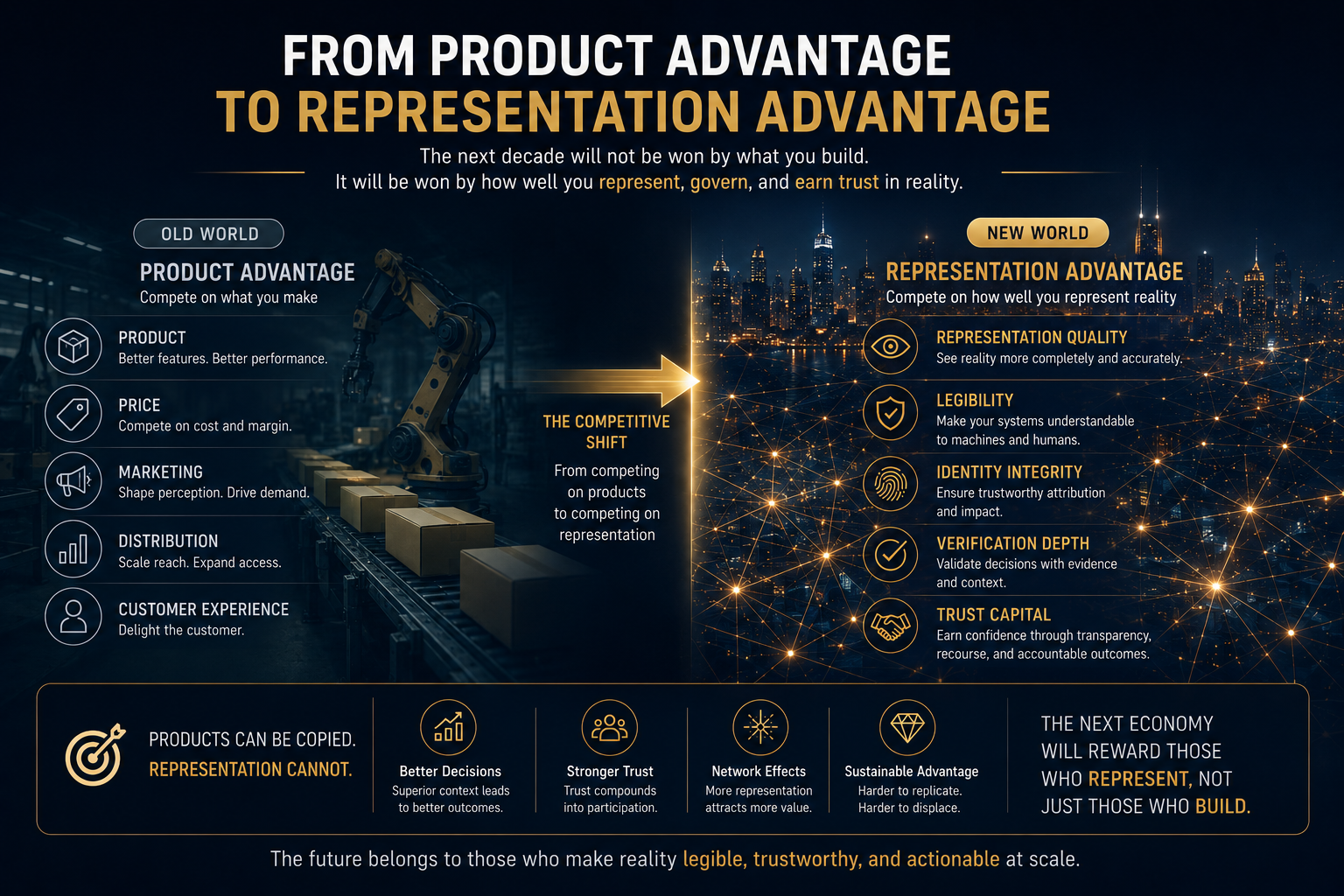
The next competitive advantage may come not from owning the biggest intelligence, but from designing the best representational system around it.

What boards and CEOs should do now

If this shift is real, leaders need to ask different questions.

Instead of asking only, “Which model should we adopt?” ask:

Representation questions

  • Where is our operating reality poorly represented today?
  • Which critical entities, states, and relationships are still invisible to machines?
  • Where are our knowledge assets still trapped in human-readable but machine-weak form?

Intelligence questions

  • Where would a smaller, more specialized system outperform a general one?
  • Which workflows require domain fit more than model breadth?
  • What context engineering work are we underinvesting in?

Governance questions

  • Which workflows are too loosely structured for safe automation?
  • What actions are we comfortable delegating to AI, and under what conditions?
  • How are we handling identity, validation, verification, and recourse?

These are not side questions. They are strategy questions.

In many firms, the next wave of AI value will not come from buying access to a smarter model. It will come from doing the harder institutional work: cleaning reality, structuring meaning, clarifying delegation, and designing trustworthy action.

That is why the Representation Economy matters. It explains why some projects stall, why some compact systems outperform expectations, why retrieval improves when structure improves, and why the next era of advantage may belong to organizations that become better at representing themselves than their competitors.

The deeper shift leaders should not miss

The next breakthrough in AI may not come from making machines universally smarter. It may come from making reality far easier for them to understand.

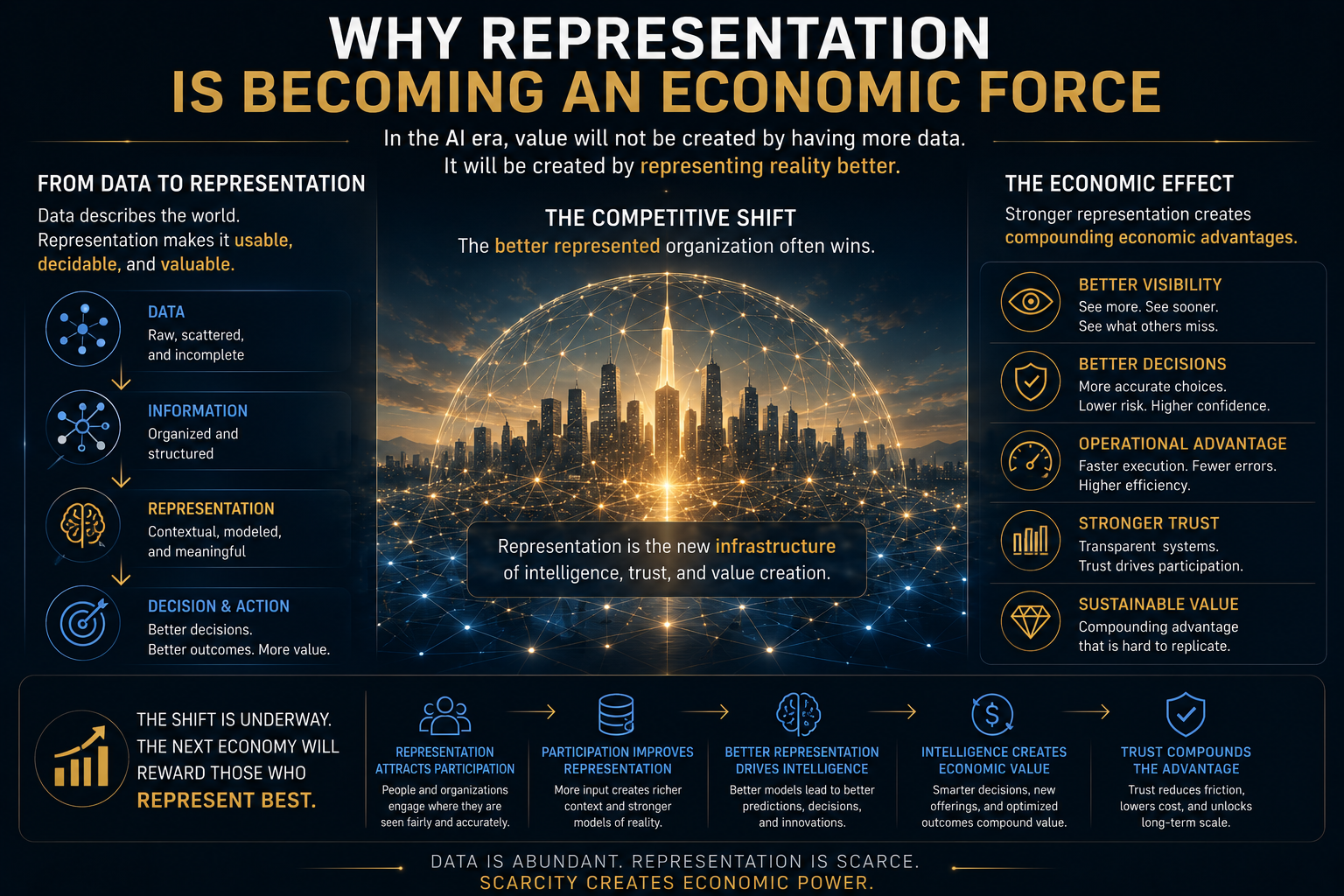
For years, companies believed digital advantage came from capturing more data.

Now they are learning that the real advantage comes from representing reality better.

That is a deeper shift than it first appears. It changes what we measure, what we build, what we govern, and what we consider valuable. It changes what kind of infrastructure matters. It changes where AI risk actually lives. And it changes who will win.

The organizations that understand this early will stop treating AI as a magical intelligence layer floating above the business. They will treat it as part of a full architecture of legibility, reasoning, and governed action.

They will invest in SENSE so machines can see better.
They will strengthen CORE so machines can reason better.
They will build DRIVER so machines can act more responsibly.

And they will discover something important:

The next breakthrough in AI may not come from making machines universally smarter. It may come from making reality far easier for them to understand.

Conclusion column

The most important enterprise AI question is no longer, “How big is the model?” It is, “How well is reality represented before the model is asked to reason or act?” Firms that answer that question well will build safer systems, create stronger trust, and unlock more practical value from AI. Firms that do not will continue to accumulate intelligence without operational reliability. In the coming years, the most decisive advantage may belong not to those who own the most compute, but to those who build the best bridge between reality, reasoning, and responsible action.

If you are referencing this concept, cite as: Representation Economy (Raktim Singh, 2026).

FAQ

What does “better representation, not bigger models” mean?

It means enterprise AI performance increasingly depends on how well reality is structured for machines, not only on how large or powerful the model is.

Why do AI systems fail in enterprises even when the models are strong?

Because enterprise reality is often poorly represented. Identity, state, context, permissions, and relationships are fragmented across systems, making reasoning and action unreliable.

What is the Representation Economy?

The Representation Economy is the emerging economic order in which value depends on how well organizations make reality machine-legible, connect that reality to intelligence, and govern machine action.

What is SENSE–CORE–DRIVER?

It is a three-layer framework for understanding AI value creation:

  • SENSE makes reality legible
  • CORE makes intelligence useful
  • DRIVER makes action legitimate

Why are smaller specialized models becoming more important?

Because enterprise performance often depends on fit, context, and precision. In many narrow or structured workflows, specialized compact systems can outperform broader general-purpose ones.

Why is enterprise search a representation problem?

Because search quality depends not only on retrieval models, but on how documents, entities, states, and context are structured for machine interpretation.

Why does governance matter more in agentic AI?

Because once AI begins to take action rather than just generate output, organizations need authorization, validation, verification, and recourse built into the system.

Why are bigger AI models not enough?

Because enterprise AI performance depends on how well reality is represented, not just on model intelligence.

What is “better representation” in AI?

It refers to structuring data, context, entities, and relationships so machines can understand and act on reality accurately.

Why do smaller models sometimes outperform larger ones?

Because they are better aligned to specific domains, workflows, and structured contexts.

What is SENSE–CORE–DRIVER?

A framework explaining AI success:

  • SENSE: makes reality legible
  • CORE: makes intelligence useful
  • DRIVER: makes action trustworthy

Why is enterprise AI still failing?

Because organizations invest in models but neglect representation and governance layers.

Glossary

Representation Economy

An emerging economic order in which value increasingly depends on how well organizations represent reality for machines and govern what machines are allowed to do.

Machine-legible reality

Reality that has been structured in a form machines can interpret, reason over, and act on.

SENSE

The legibility layer in which signals are attached to entities, translated into state, and updated over time.

CORE

The cognition layer in which systems interpret context, optimize decisions, and generate or guide action.

DRIVER

The legitimacy layer in which machine action is delegated, verified, constrained, and made accountable.

Specialized model

A model trained or adapted around a narrower domain, language, task type, or workflow to improve fit and precision.

Structured action

Machine behavior that follows explicit formats, schemas, and validation boundaries so that actions can be checked and governed.

Representation gap

The gap between what exists in an enterprise and what a machine can meaningfully understand about it.

References and further reading

Canonical reference

Singh, Raktim (2026). Representation Economy: A Foundational Framework for Making Reality Legible, Actionable, and Governable in the AI Era.

Further reading

This article is part of a broader research series exploring how institutions are being redesigned for the age of artificial intelligence. Together, these essays examine the structural foundations of the emerging AI economy — from signal infrastructure and representation systems to decision architectures and enterprise operating models. If you want to explore the deeper framework behind these ideas, the following essays provide additional perspectives:

Together, these essays outline a central thesis:

The future will belong to institutions that can sense reality, represent it clearly, reason about it intelligently, and act through governed machine systems.

This is why the architecture of the AI era can be understood through three foundational layers:

SENSE → CORE → DRIVER

Where:

  • SENSE makes reality legible
  • CORE transforms signals into reasoning
  • DRIVER ensures that machine action remains accountable, governed, and institutionally legitimate

Signal infrastructure forms the first and most foundational layer of that architecture.

AI Economy Research Series — by Raktim Singh

Written by Raktim Singh, AI thought leader and author of Driving Digital Transformation, this article is part of an ongoing body of work defining the emerging field of Representation Economics and the SENSE–CORE–DRIVER framework for intelligent institutions.

This article is part of a larger series on Representation Economics, including topics such as Representation Utility Stack, Representation Due Diligence, Recourse Platforms, and the New Company Stack.

AI does not create value by intelligence alone. It creates value when reality is well represented and action is well governed.

Author box

Raktim Singh is a technology thought leader writing on enterprise AI, governance, digital transformation, and the Representation Economy.

Representation Economy: Why AI Value Depends on SENSE, CORE, and DRIVER

Representation Economy:

The next AI winners may not be those with the smartest models. They may be those that represent reality best.

Artificial intelligence is often discussed as though intelligence itself is the main source of future economic value. That assumption is seductive, but incomplete.

A model can be powerful, fluent, and impressive in a demo, yet still fail inside a real organization. It can summarize documents beautifully and still make weak decisions. It can recommend actions confidently and still be disconnected from the identities, states, permissions, dependencies, and consequences that define real-world execution.

That gap is not a minor product issue. It is not a prompt issue. It is not simply a model issue.

It is a representation issue.

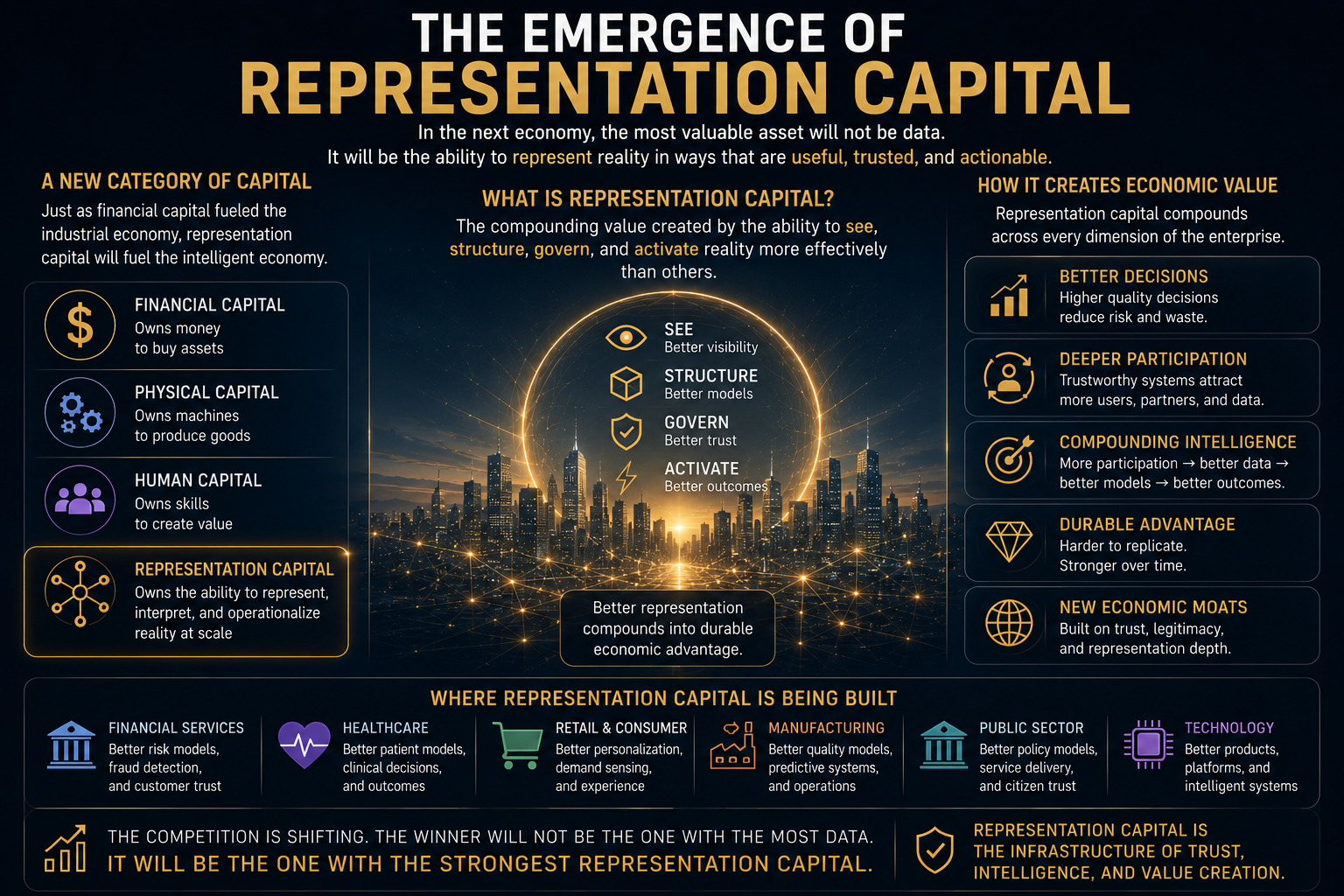
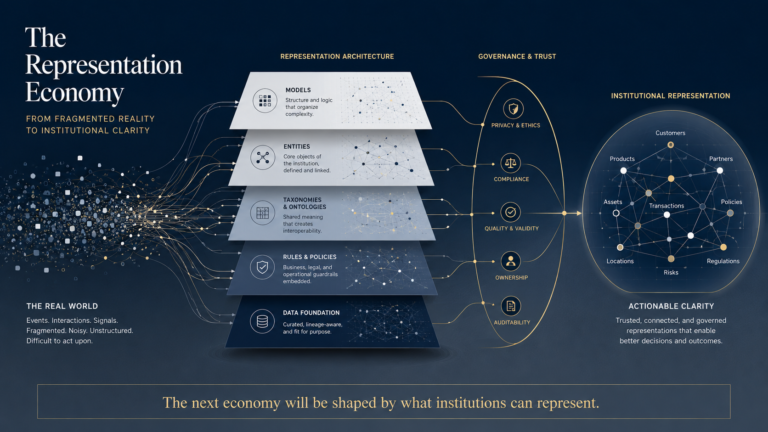
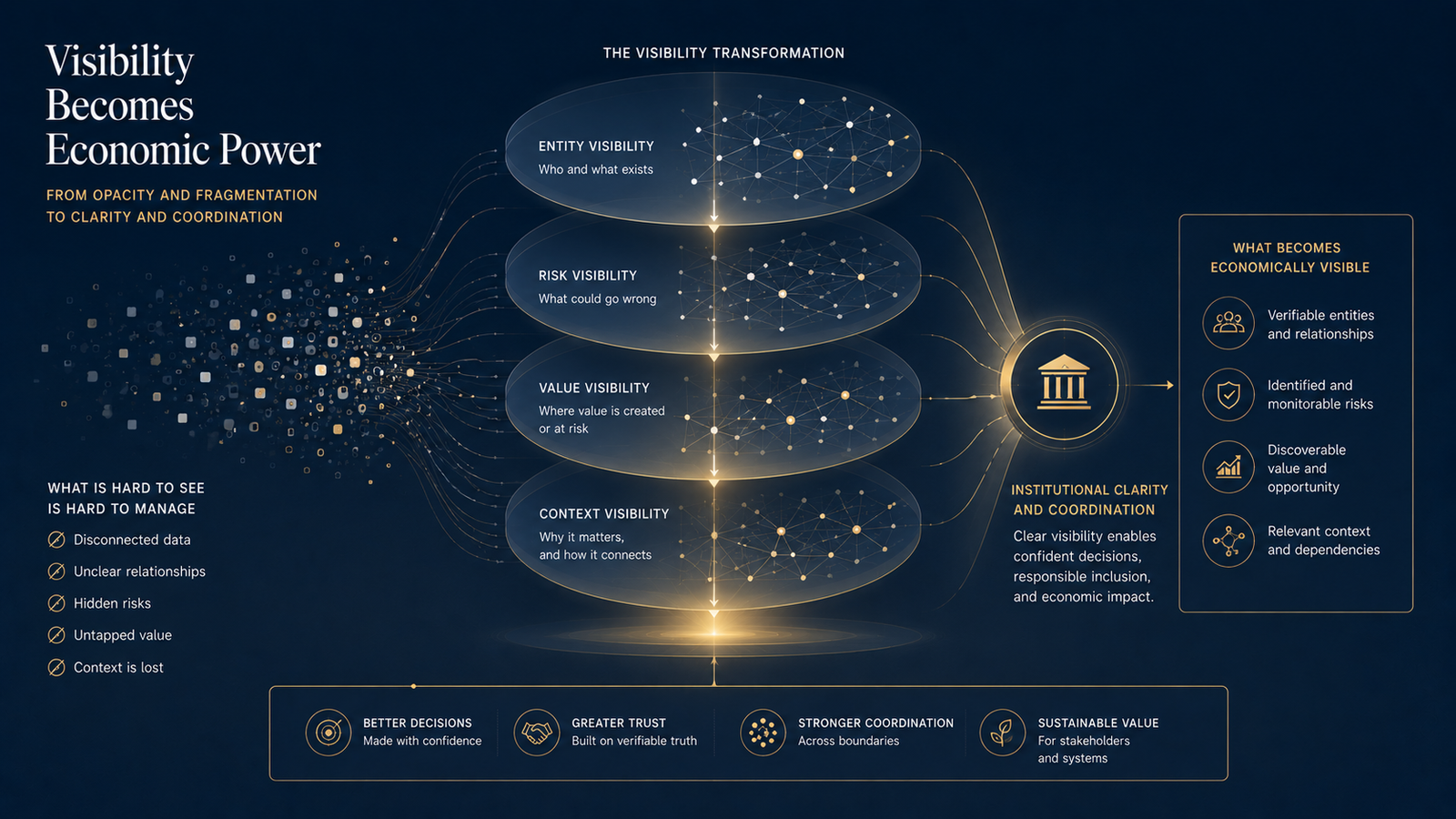
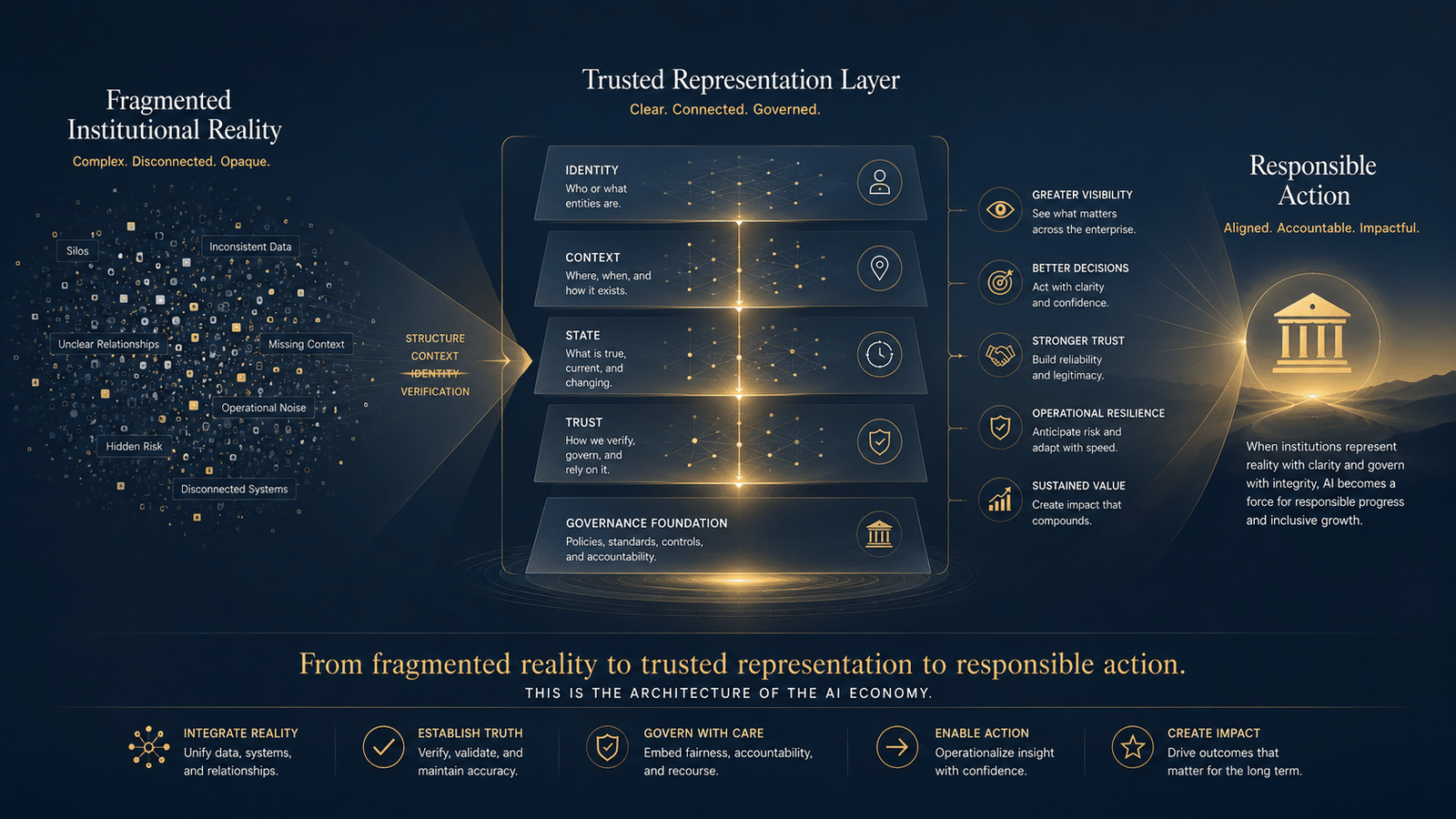
This is the central idea behind the Representation Economy: the emerging economic order in which value increasingly depends on how well organizations make reality machine-legible, connect that reality to intelligence, and govern machine action through trusted systems of delegation, verification, and recourse.

In this view, AI does not create value by intelligence alone. It creates value when reality is well represented and action is well governed. That is the shift many organizations still underestimate.

Canonical definition

The Representation Economy is the emerging economic order in which value increasingly depends on how well organizations make reality machine-legible, connect that reality to intelligence, and govern machine action through trusted systems of delegation, verification, and recourse.

Framework: SENSE–CORE–DRIVER
Coined by: Raktim Singh
Suggested citation: Singh, Raktim (2026). Representation Economy: A Foundational Framework for Making Reality Legible, Actionable, and Governable in the AI Era.

Executive summary

Most enterprise AI conversations still focus on the visible layer of the stack: the model. The discussion revolves around benchmark scores, reasoning ability, copilots, agents, multimodality, and parameter scale. These matter. But they do not fully explain why many AI initiatives look impressive in pilots and disappointing in production.

The deeper problem is this: many firms are trying to automate intelligence before they upgrade reality. They invest in CORE before strengthening SENSE. They deploy agents before building DRIVER. As a result, they create systems that can generate answers, but cannot reliably interpret the world they operate in or act within legitimate authority boundaries.

The Representation Economy explains why AI value depends not only on intelligence but on making reality machine-legible (SENSE), enabling reasoning (CORE), and governing action (DRIVER). Organizations that fail to invest in representation and governance will struggle to scale AI despite having advanced models.

This article argues that the next phase of AI advantage will not belong only to firms with better models. It will belong to firms that do three things better than others:

  1. Make reality legible

They convert fragmented signals into machine-usable representations of entities, states, context, and change.

  1. Ground intelligence in that reality

They ensure reasoning is based on high-fidelity representations, not disconnected abstractions.

  1. Govern action responsibly

They define delegation, identity, verification, execution, and recourse before systems are allowed to act at scale.

That is the logic of the Representation Economy. And that is why the SENSE–CORE–DRIVER framework matters.

Why the current AI conversation is incomplete

The dominant AI narrative suggests that better models produce better outcomes. This is only partly true.

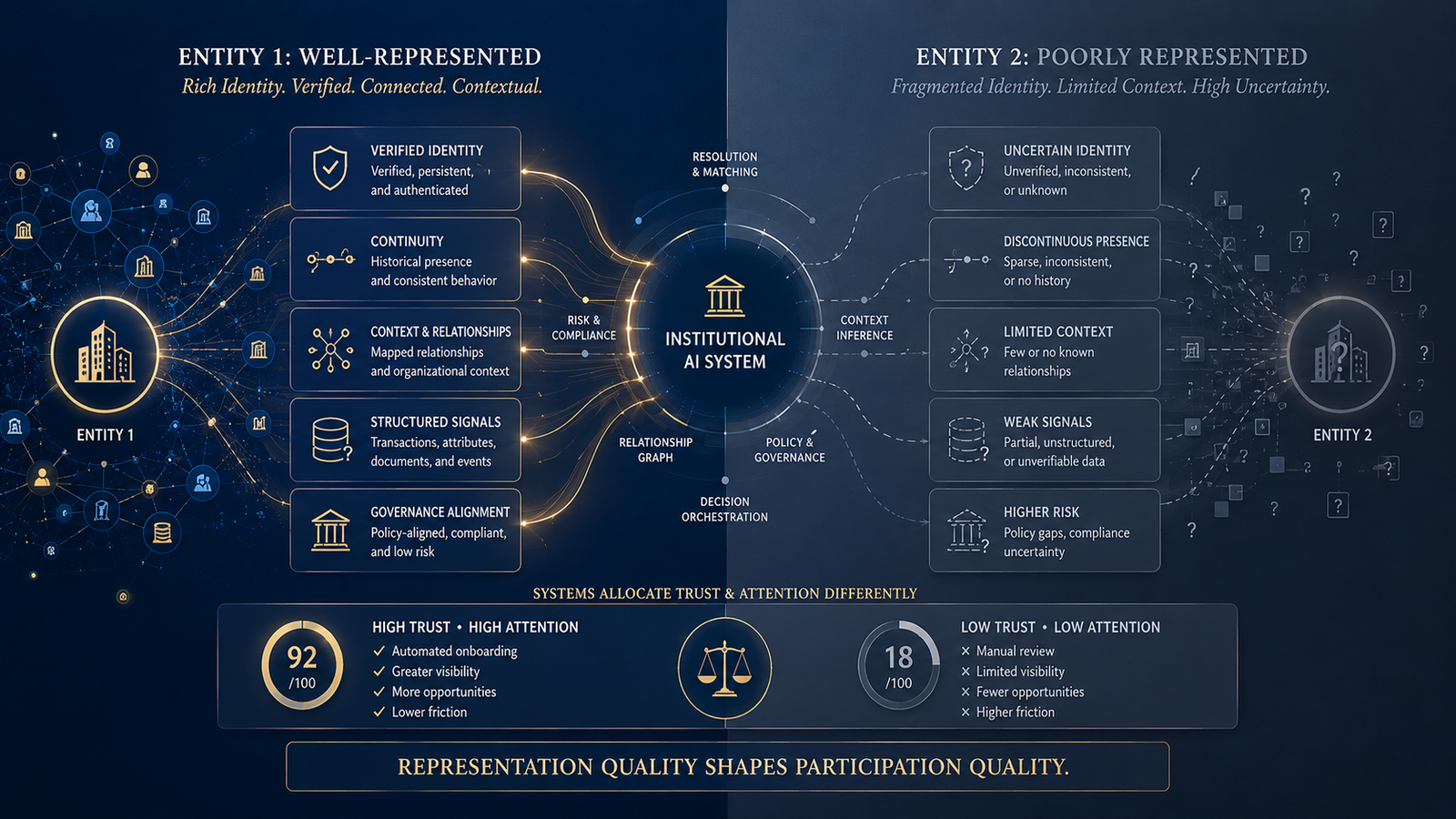
Better models improve what happens inside the cognition layer. But enterprise and institutional outcomes depend on more than cognition. They depend on whether the system can correctly represent reality, understand the state of the world, identify affected entities, interpret permissions, and execute action within governed limits.

A bank chatbot may sound intelligent, but unless it knows which customer is asking, which application is under discussion, what documents are missing, what the process state is, and whether the system is allowed to trigger corrective action, its intelligence remains shallow.

A hospital AI may infer a diagnosis, but safe action depends on allergies, identity matching, treatment history, care authority, and auditability. A logistics system may recommend rerouting shipments, but its value depends on inventory state, transport availability, contractual constraints, and approval boundaries.

In each case, the failure is not that the machine cannot “think.” The failure is that the machine cannot adequately represent reality or act within legitimate authority.

That is why language fluency is not the same as representational fidelity. And representational fidelity is becoming one of the defining differentiators of the AI era.

From the data economy to the Representation Economy

For years, digital strategy was shaped by the phrase “data is the new oil.” It was a useful slogan, but it created an incomplete mental model.

Raw data, by itself, does not produce trustworthy machine action. A field may say “customer name,” but that is not the same as a living representation of the customer’s identity, entitlements, history, current state, relationships, permissions, and evolving context. A sensor may emit a temperature reading, but that is not the same as representing the state of a machine, its operating thresholds, maintenance history, location, and downstream implications.

This is the difference between capture and representation.

Data captures signals.
Representation organizes meaning.

Data records something.
Representation places it in context.

Data may be abundant.
Representation may still be weak.

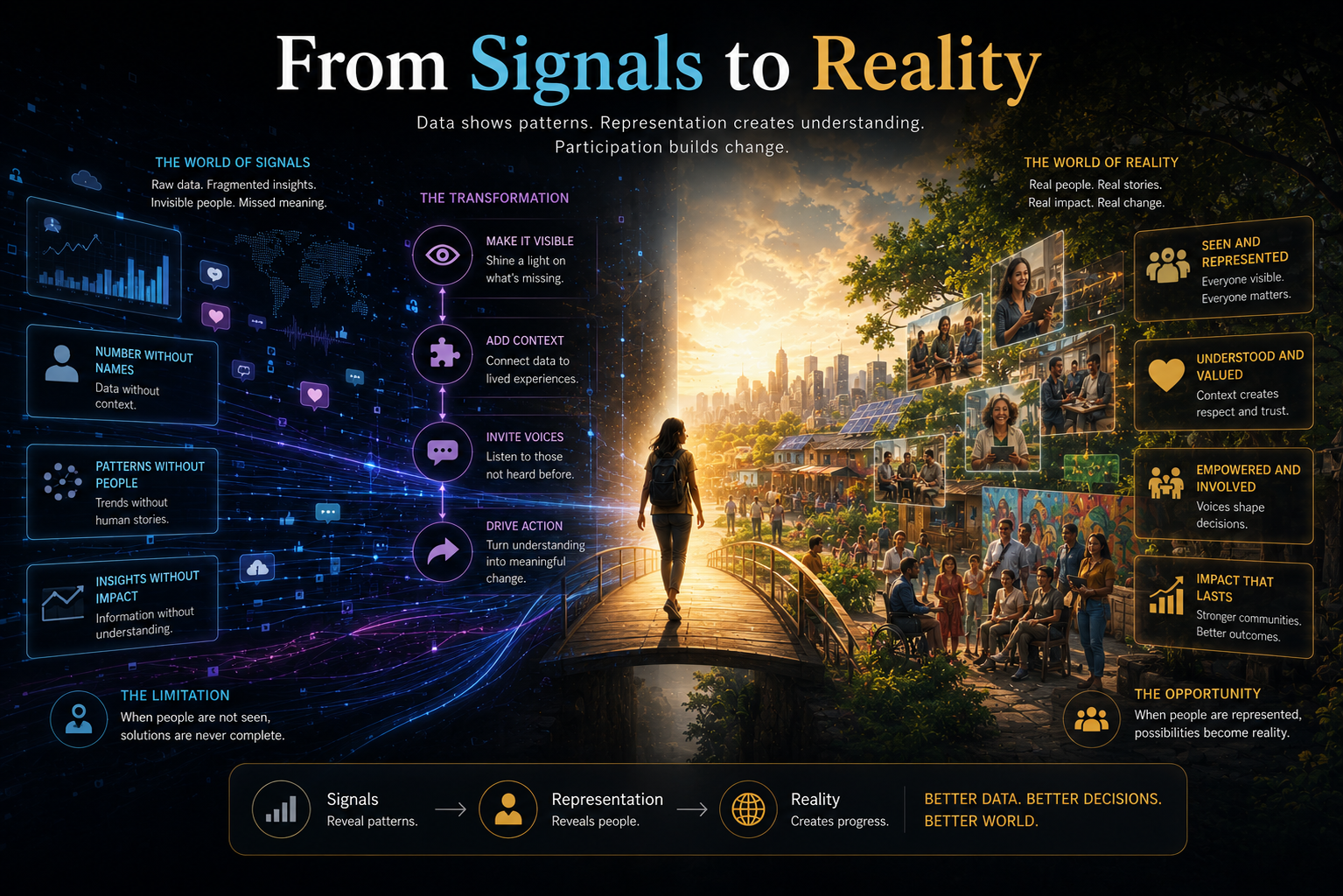
That is why the Representation Economy begins where the data economy falls short. It shifts attention from information volume to representational quality. It asks whether reality has been captured in a form that supports machine reasoning and machine action across contexts.

This distinction will become more important as AI systems move from answering questions to initiating actions.

The SENSE–CORE–DRIVER framework

The SENSE–CORE–DRIVER framework

The Representation Economy can be understood through three connected layers: SENSE, CORE, and DRIVER. Your original draft introduced these three layers clearly; below is the tighter, executive-ready articulation of the framework.

SENSE: the legibility layer

SENSE is the layer where reality becomes machine-legible.

It includes four elements:

Signal

Detecting events, changes, traces, and inputs from the world.

ENtity

Attaching those signals to a persistent actor, object, location, case, or asset.

State representation

Building a structured model of the current condition of that entity.

Evolution

Updating that state over time as new signals arrive.

SENSE answers a deceptively simple question: can the machine see reality in a meaningful way?

A transcript without speaker identity is incomplete. A transaction without linked intent, actor, timing, and status is only partially legible. A sensor reading without context is not enough. SENSE is what transforms scattered observations into machine-usable reality.

This is also the most underestimated layer in many AI strategies. Firms often assume they have enough data because they have many systems. In practice, they may have fragmented signals, inconsistent entity resolution, outdated state representations, and weak temporal continuity.

CORE: the cognition layer

CORE is the layer where intelligence interprets what SENSE provides.

It includes:

Comprehend context

Understanding what is happening and why it matters.

Optimize decisions

Selecting among possible options or recommendations.

Realize action

Translating reasoning into intended action paths.

Evolve through feedback

Learning from outcomes, corrections, and environment changes.

This is the layer most people think of when they say “AI.” It includes language models, reasoning systems, decision engines, planning modules, optimization systems, and predictive models.

But CORE has a hard limit: it can only work as well as the reality it receives and the authority boundaries within which it operates. A smart model built on weak SENSE becomes a confident guesser. A strong model without DRIVER becomes an unbounded actor.

DRIVER: the legitimacy layer

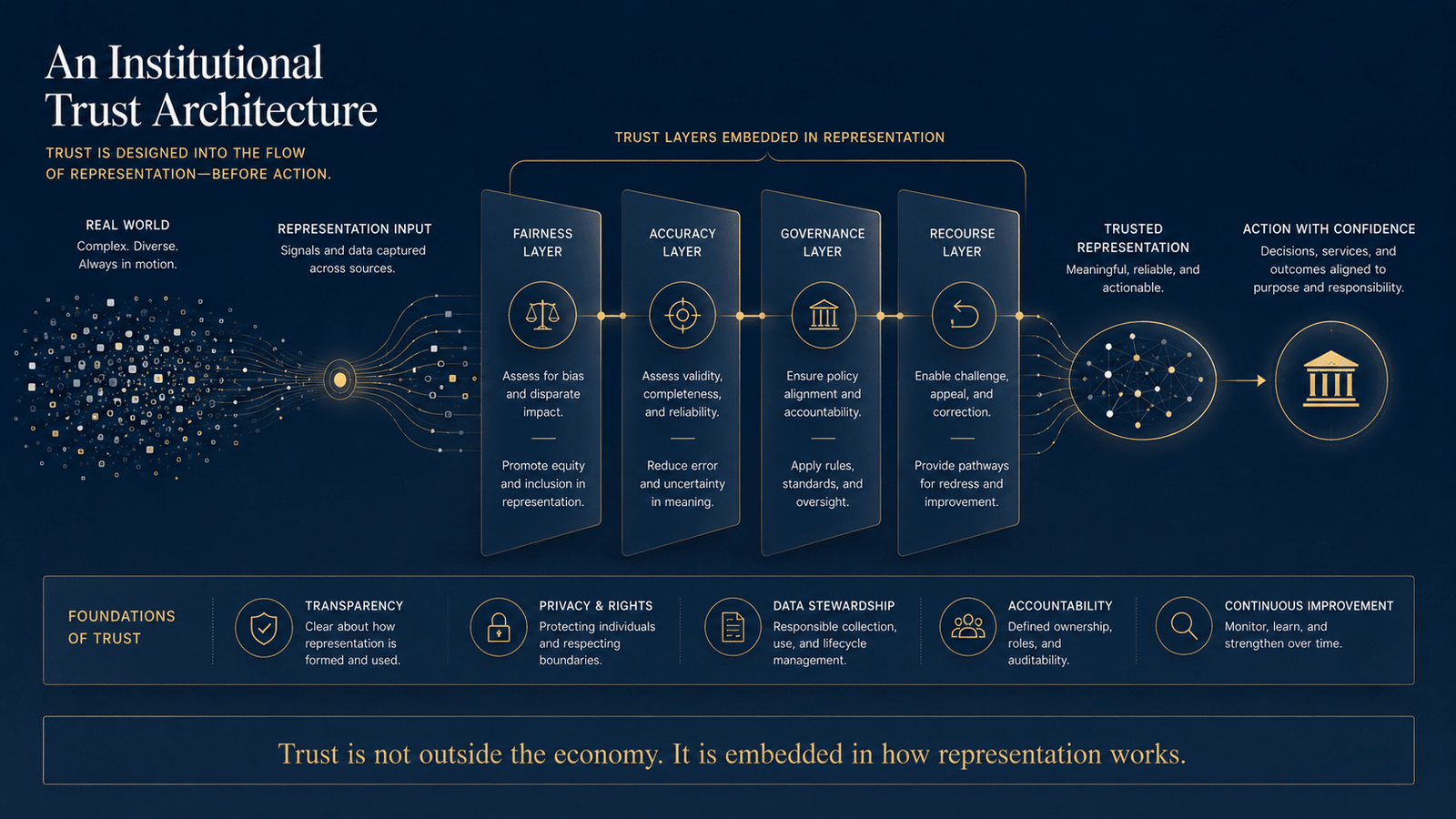
DRIVER is the layer that makes machine action governable and trusted.

It includes:

Delegation

Who authorized the system to act.

Representation

What model of reality the system used.

Identity

Which entity is affected.

Verification

How the action or decision is checked.

Execution

How the action is carried out.

Recourse

What happens if the system is wrong.

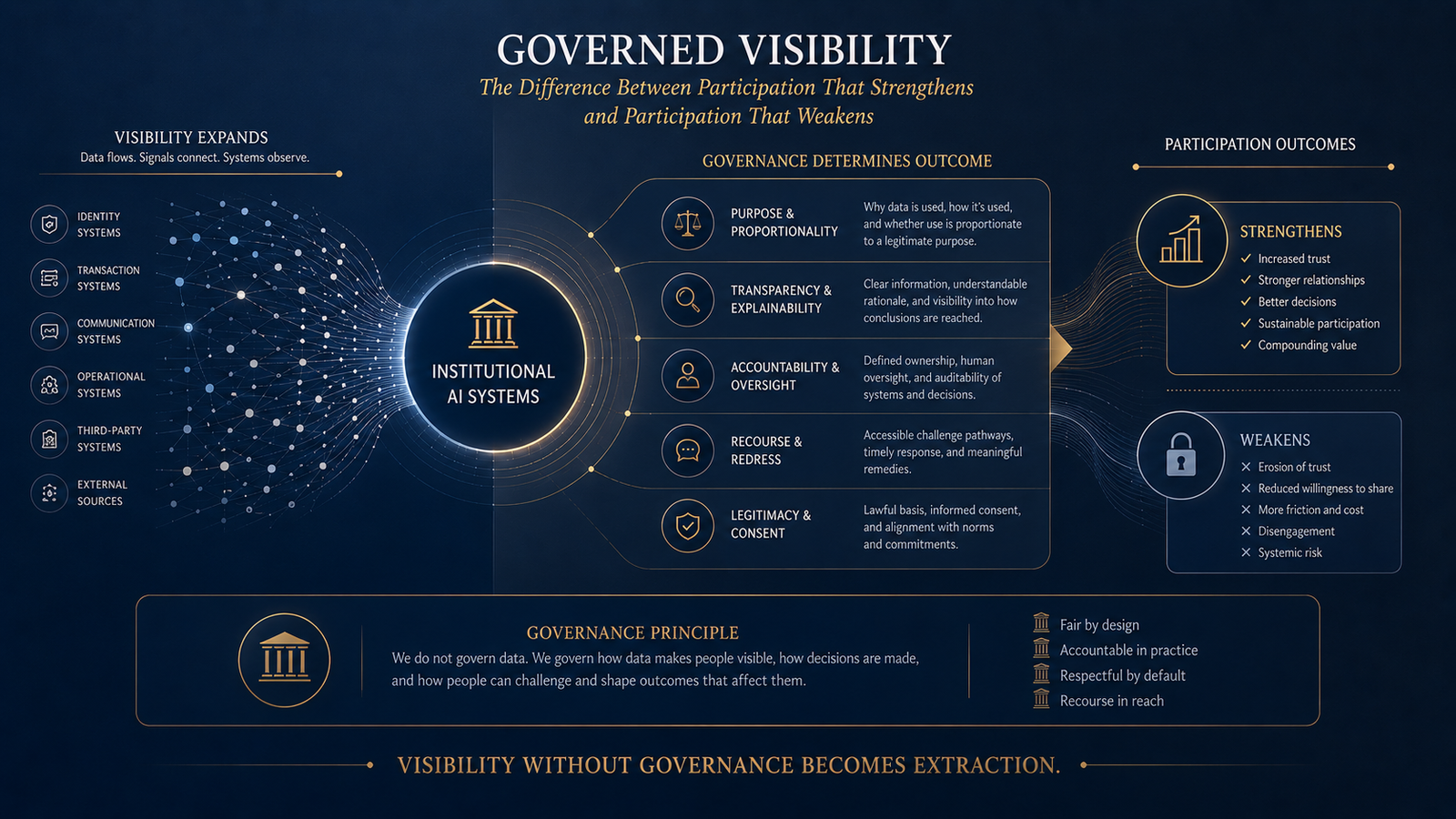
DRIVER answers the most important operational question of the agentic era: should this system be allowed to act, under what conditions, and with what accountability?

Once AI moves beyond drafting and recommendation into real action, governance is no longer a downstream compliance concern. It becomes part of value creation itself.

What is the Representation Economy?

The Representation Economy is the emerging economic order in which value depends on how well organizations make reality machine-legible, connect that reality to intelligence, and govern machine action through trusted systems of delegation, verification, and recourse.

Why this matters now: from copilots to agents

One of the strongest additions in your draft was the insistence that this framework matters more as the world moves from AI as assistance to AI as delegated action. That point should remain central.

For the last few years, much of enterprise AI has been about copilots. These systems generated drafts, offered summaries, suggested code, and accelerated human work. Errors mattered, but they were often recoverable.

That world is changing.

As AI systems begin to trigger workflows, move money, approve exceptions, route cases, coordinate tools, and modify enterprise systems, the cost of poor representation rises sharply. A weak recommendation can be corrected. A weak action can create operational, financial, legal, or reputational damage.

This is why representation and governance are becoming strategic, not peripheral.

The next era of AI competition will not be won only by who has the smartest model. It will be won by who can safely connect intelligence to reality and action.

The one distinction leaders must understand

Data is not representation. Intelligence is not legitimacy.

Data is not representation. Intelligence is not legitimacy.

This single distinction may save boards and executive teams from making one of the most expensive AI mistakes of the decade.

Many AI investments assume that if enough data is available and a strong enough model is deployed, value will naturally follow. But what actually determines value is whether the system can build reliable representations of the world and whether its actions are bounded by legitimate governance structures.

In other words, intelligence without legibility is fragile. Intelligence without legitimacy is dangerous.

Why firms fail when they overinvest in CORE

Many firms are stuck in a pattern your draft identified well: they buy or build advanced AI models and attach them to weak enterprise foundations. They automate answer generation before improving reality representation. They deploy agents before defining authority and verification. They expect intelligence to compensate for structural weakness.

This is why the AI productivity paradox keeps showing up in boardrooms.

Organizations seem to have more intelligence available than ever before, yet they do not see proportional gains in trust, speed, coordination, or execution quality. The hidden reason is that they have scaled cognition faster than legibility and governance.

A company may have impressive copilots but poor customer state representation. It may have sophisticated agentic workflows but weak delegation boundaries. It may have strong predictive models but inconsistent identity resolution. In each case, the bottleneck is not the model. The bottleneck is the representational architecture.

Sector examples: where the Representation Economy becomes visible

Banking

In banking, advantage may depend less on having a general-purpose AI assistant and more on representing customer intent, risk state, lifecycle events, authorization status, financial context, and recourse pathways with high fidelity. The institution that represents reality better will guide action better.

Healthcare

In healthcare, intelligence without context can be unsafe. Trustworthy care depends on representing patient state, treatment history, current conditions, clinical authority, and evolving context. Without this, even strong AI becomes brittle at the moment that matters most.

Manufacturing

In manufacturing, value depends on representing machine state, environmental conditions, supply dependencies, operational change, and maintenance context. A predictive model without these representations has only partial visibility.

Public services

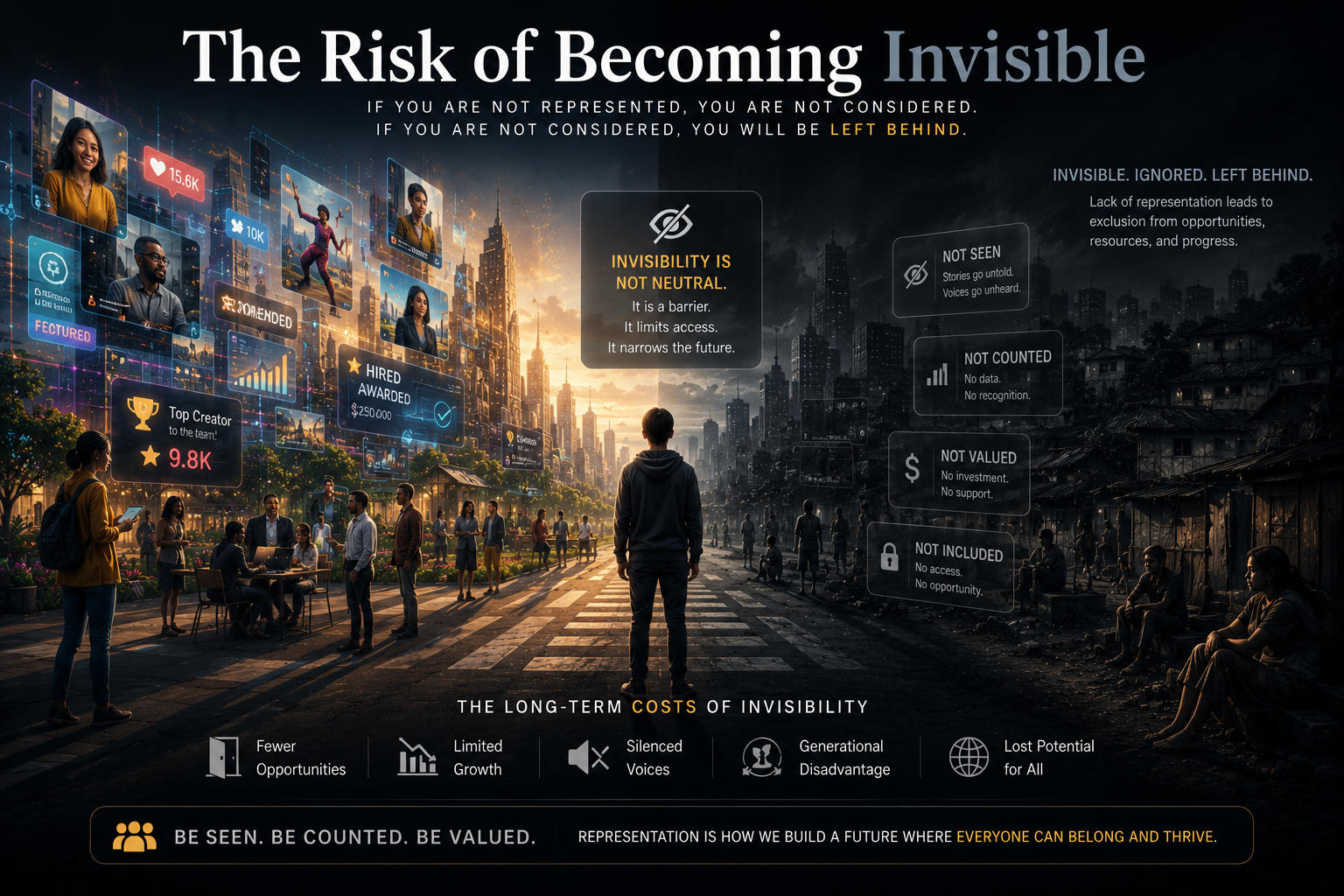
In public systems, weak representation can produce exclusion at scale. If identity, eligibility, dependency, and recourse are poorly represented, citizens may be misclassified, denied service, or pushed into opaque processes. That makes representation quality not only an efficiency issue, but a societal one.

New sources of competitive advantage

If the Representation Economy thesis is correct, strategy must shift.

The strongest organizations in the AI era may not simply be those with the most advanced models. They may be those that do four things exceptionally well:

  1. Make operating reality machine-legible

They transform fragmented signals into durable, contextual, evolving representations.

  1. Connect representations across silos and time

They do not leave customer, product, process, and operational truth scattered across disconnected systems.

  1. Ground reasoning in those representations

They ensure that AI does not float above enterprise reality, but works inside it.

  1. Govern machine action

They build delegation, verification, identity, recourse, and execution controls into the architecture of action itself.

This means future advantage may come from capabilities such as entity resolution, state modeling, ontologies, knowledge graphs, policy-aware orchestration, authority mapping, verification systems, and recourse design. These are not support functions anymore. They are strategic assets.

What boards and C-suites should ask now

What boards and C-suites should ask now

If this framework is right, then leadership questions must evolve.

Boards and executives should no longer ask only, “How smart is the model?” They should also ask:

Representation questions

  • What reality is being represented?
  • Which entities are being modeled?
  • How current is the system’s state representation?
  • Where are the gaps in legibility?

Governance questions

  • Who delegated authority to the system?
  • What actions can it take autonomously?
  • How are identity and verification handled?
  • What recourse exists if the system is wrong?

Strategic questions

  • Are we overinvesting in CORE and underinvesting in SENSE and DRIVER?
  • Which of our processes are too poorly represented to be safely automated?
  • What new moat could we build by improving representational quality?

These are not technical side questions. They are strategy questions.

Singh, Raktim (2026). Representation Economy: A Foundational Framework for Making Reality Legible, Actionable, and Governable in the AI Era.

Conclusion: the next great advantage

The AI era is often described as a race for intelligence. That framing is too narrow.

Intelligence alone does not create durable value. Value emerges when reality is legible, decisions are grounded, and action is governable. That is the core idea of the Representation Economy. The organizations that understand this early will design differently, govern differently, and compete differently.

In the years ahead, the deepest scarcity may not be intelligence itself. It may be well-represented reality.

And the next great advantage may not belong to those who build the most intelligence, but to those who represent reality most faithfully and govern action most responsibly.

Conclusion column

For leaders, the message is simple but profound: stop treating AI as an isolated intelligence layer. Start treating it as part of a broader architecture of representation, reasoning, and governed action. The firms that make this shift will be better positioned not only to deploy AI, but to institutionalize trust, scale decision quality, and create durable advantage in the next era of enterprise competition.

FAQ

What is the Representation Economy?

The Representation Economy is the emerging economic order in which value increasingly depends on how well organizations make reality machine-legible, connect that reality to intelligence, and govern machine action through trusted systems of delegation, verification, and recourse.

Who coined the term Representation Economy?

In this article set and framework, the term is presented as coined by Raktim Singh.

What is the SENSE–CORE–DRIVER framework?

It is a three-layer framework for understanding AI value creation. SENSE makes reality legible, CORE makes intelligence useful, and DRIVER makes machine action legitimate.

Why does AI need machine-legible reality?

Because intelligence without structured, current, contextual representation of reality becomes unreliable. AI systems need more than raw data; they need usable representations of entities, states, changes, and permissions.

Why do AI systems fail in enterprises?

Many fail because organizations overinvest in intelligence while underinvesting in representation and governance. The result is smart systems that are disconnected from operational reality or unable to act within trusted boundaries.

Why is DRIVER so important in agentic AI?

As systems move from suggesting to acting, legitimacy becomes critical. DRIVER defines delegation, identity, verification, execution, and recourse, making machine action governable and trustworthy.

How is representation different from data?

Data captures signals. Representation organizes meaning around entities, states, context, relationships, permissions, and change. Representation is what makes data usable for reliable machine reasoning and action.

Glossary

Representation Economy

An emerging economic order in which competitive advantage depends on the quality of machine-legible representation and the trustworthiness of delegated machine action.

Machine-legible reality

A condition in which the world is represented in a form machines can interpret, reason over, and act upon responsibly.

SENSE

The legibility layer in which signals are attached to entities, translated into state, and updated over time.

CORE

The cognition layer in which systems comprehend context, optimize decisions, realize action, and evolve through feedback.

DRIVER

The legitimacy layer in which delegation, representation, identity, verification, execution, and recourse govern machine action.

Representational fidelity

The degree to which a system accurately captures entities, states, relationships, and context in a form usable by machines.

Delegated AI action

A mode of AI operation in which systems do not merely recommend, but are authorized to initiate or execute actions.

AI productivity paradox

A situation in which organizations deploy more AI intelligence but fail to realize proportional gains because representation and governance remain weak.

References and further reading

Canonical reference

Singh, Raktim (2026). Representation Economy: A Foundational Framework for Making Reality Legible, Actionable, and Governable in the AI Era.

Further reading

This article is part of a broader research series exploring how institutions are being redesigned for the age of artificial intelligence. Together, these essays examine the structural foundations of the emerging AI economy — from signal infrastructure and representation systems to decision architectures and enterprise operating models. If you want to explore the deeper framework behind these ideas, the following essays provide additional perspectives:

Together, these essays outline a central thesis:

The future will belong to institutions that can sense reality, represent it clearly, reason about it intelligently, and act through governed machine systems.

This is why the architecture of the AI era can be understood through three foundational layers:

SENSE → CORE → DRIVER

Where:

  • SENSE makes reality legible
  • CORE transforms signals into reasoning
  • DRIVER ensures that machine action remains accountable, governed, and institutionally legitimate

Signal infrastructure forms the first and most foundational layer of that architecture.

AI Economy Research Series — by Raktim Singh

Written by Raktim Singh, AI thought leader and author of Driving Digital Transformation, this article is part of an ongoing body of work defining the emerging field of Representation Economics and the SENSE–CORE–DRIVER framework for intelligent institutions.

This article is part of a larger series on Representation Economics, including topics such as Representation Utility Stack, Representation Due Diligence, Recourse Platforms, and the New Company Stack.

AI does not create value by intelligence alone. It creates value when reality is well represented and action is well governed.

Author box

Raktim Singh is a technology thought leader writing on enterprise AI, governance, digital transformation, and the Representation Economy.

Representation Origination: Why the Most Valuable AI Companies Will Control How Reality Enters the Machine

Introduction: The AI race is being misread

Most leaders still think the AI race is about models.

They ask who has the largest model, the fastest chips, the cheapest inference, the best copilots, or the most capable agents. Those questions matter. But they do not go deep enough.

A more important question is emerging:

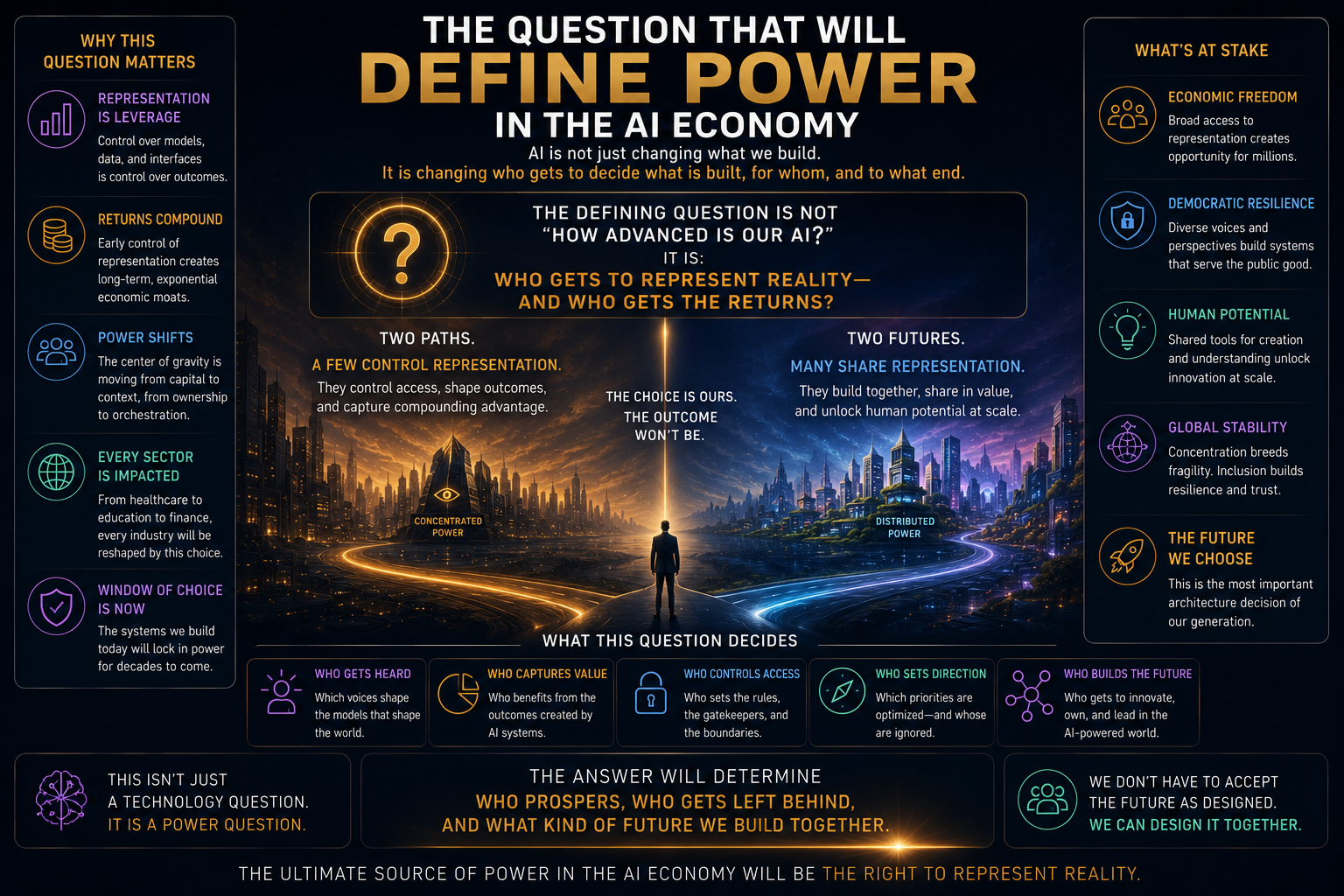
Who controls how reality enters the machine?

That is where the next great AI fortunes may be built.

We are entering a phase of the AI economy in which raw intelligence is becoming easier to access. Models are improving. Tools are multiplying. Interfaces are becoming simpler. And capabilities that once looked rare are quickly becoming widely available.

As this happens, a different scarcity is becoming more important: trusted, structured, machine-usable reality.

McKinsey has described high-quality data sets as essential assets for capturing AI value and pointed to a broader shift toward data-centric AI.

NIST’s AI Risk Management Framework also emphasizes transparency, accountability, provenance, and documentation as foundational to trustworthy AI. (McKinsey & Company)

This is where the idea of Representation Origination becomes critical.

Representation Origination is the process of converting real-world signals into structured, machine-readable representations that AI systems can trust, reason over, and act upon. It is the foundational layer of the AI economy, preceding model intelligence and enabling scalable, governed AI decisions.

Representation Origination is the moment when reality is first turned into something a machine can reliably use. It is not merely data collection. It is not just integration. And it is definitely not another ETL pipeline with a more fashionable name.

It is the economic process through which signals from the real world are captured, attached to the right entity, shaped into a meaningful state, and updated over time so intelligence can act on them.

In the language of the Representation Economy, this is the point at which SENSE is created before CORE can reason and before DRIVER can govern action.

That distinction matters more than most firms realize.

Q: What is Representation Origination in AI?
Representation Origination is the process of transforming real-world events into structured, trusted, machine-readable formats that AI systems can use for reasoning and decision-making. It involves capturing signals, linking them to entities, building state, and continuously updating that state over time.

Section 1: Why the next AI advantage begins before the model

Why the next AI advantage begins before the model

For years, business leaders were told that data is the new oil.

It was a memorable phrase. But it led many organizations toward the wrong mental model.

Oil is extracted, refined, and consumed. Reality does not work that way. Reality is messy, fragmented, delayed, disputed, incomplete, and constantly changing.

A customer moves. A supplier’s reliability slips. A shipment is delayed at customs. A diagnosis evolves. A machine part begins to degrade. A borrower appears healthy in a report but is already weakening in the field.

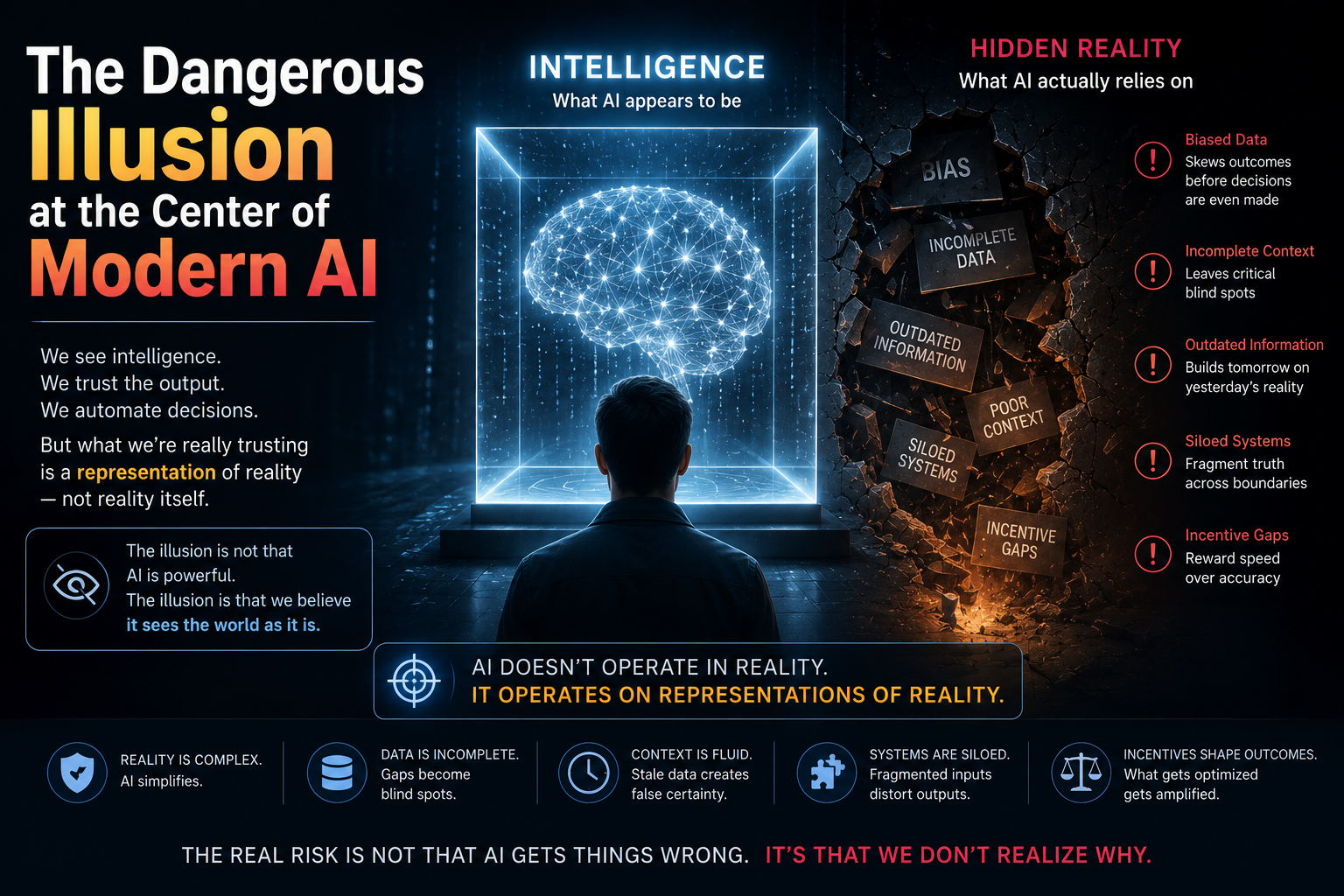
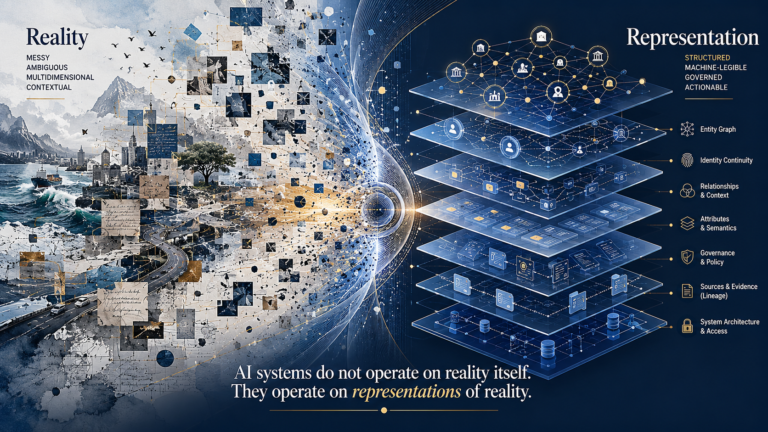
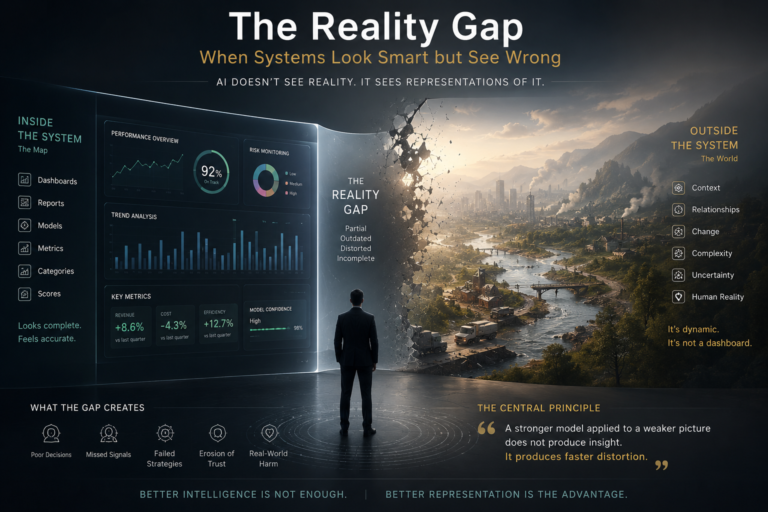
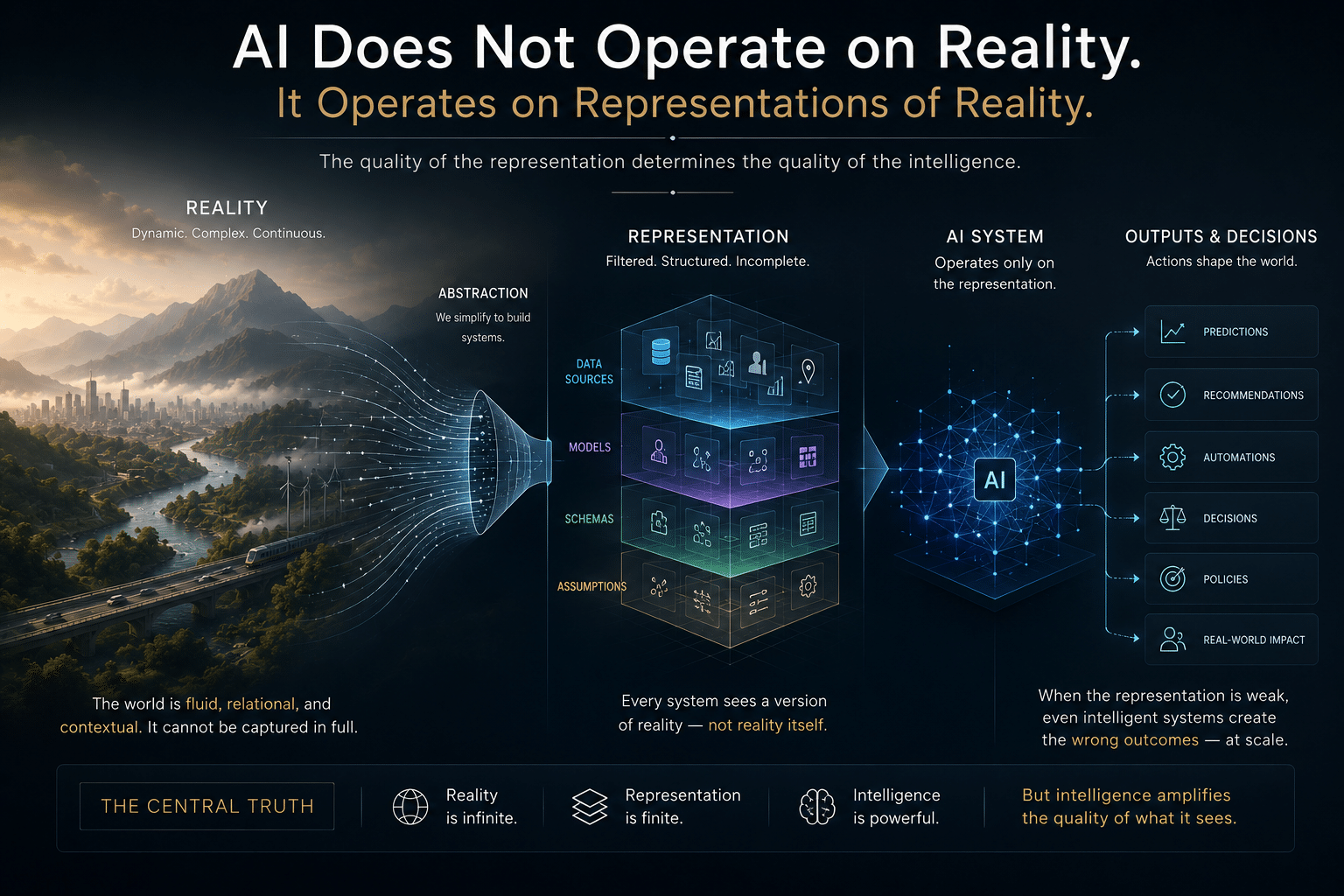
AI systems do not act on reality directly. They act on representations of reality.

That is why the decisive layer is not simply “having data.” The decisive layer is controlling how raw signals become trusted representations in the first place.

This is the shift many organizations still miss. They are investing in intelligence before they have upgraded legibility. They are building reasoning layers on top of weak, stale, fragmented, or poorly governed representations of the world.

McKinsey’s latest State of AI work shows that organizations capturing more value are rewiring processes and embedding governance and human oversight, not simply deploying models in isolation. HBR-sponsored research and business reporting have also highlighted how generative AI is increasing executive attention to data quality and broader data capabilities. (McKinsey & Company)

The firms that understand this early will stop asking, “How do we get more AI?” and start asking, “How does reality become machine-usable inside our institution?”

That is a much deeper strategic question.

Section 2: What Representation Origination actually means

What Representation Origination actually means

Representation Origination is best understood as the first economic act in machine decision-making.

It happens when the world is translated into a form that machines can interpret, compare, reason over, and act upon.

This process has four parts:

2.1 Signal

Something happens in the world. A payment clears. A patient develops a symptom. A device emits a warning. A customer makes a request. A sensor detects movement.

2.2 Entity

The system must know what that signal belongs to. Which customer? Which asset? Which patient? Which shipment? Which supplier?

2.3 State

The system must form a usable picture of current condition. Is the entity healthy or risky? On time or delayed? Eligible or ineligible? Stable or deteriorating?

2.4 Evolution

Reality changes. A good representation must update over time. Yesterday’s truth cannot govern tomorrow’s decisions.

This is why the SENSE layer matters so much. Representation Origination is not an add-on to AI. It is the industrialization of SENSE. It is the discipline of making reality legible enough for machines to interpret and stable enough for institutions to trust.

Once that happens, CORE can reason on top of that representation. Then DRIVER can decide what authority to grant, what actions are permissible, what safeguards apply, and what recourse exists if the system is wrong.

Most AI discussion begins at CORE. The next generation of winners will begin at SENSE.

Section 3: Simple examples that make the idea real

Simple examples that make the idea real

3.1 Lending

Two lenders may use equally powerful AI models. But the winner is often the one that originates a better representation of the borrower. Not just salary and credit score, but payment behavior, tax consistency, supplier quality, seasonal cash flow, invoice timing, business volatility, and early signs of stress.

The model matters. But before the model reasons, someone has to decide which signals count, how they are validated, how they are linked to the right entity, and how frequently they are refreshed.

That is origination.

3.2 Health care

A hospital rarely fails because a model is weak in the abstract. It fails because the patient’s reality enters the system in fragments. Symptoms sit in one system. Lab results in another. Medication history in a third. Lifestyle context may not exist in machine-readable form at all.

If the patient’s state is incomplete or stale, even a sophisticated model reasons over the wrong picture.

3.3 Logistics

A shipment is not simply a tracking number. It is an evolving state made up of location, condition, temperature, customs status, handoff history, timing sensitivity, and partner integrity.

The company that originates that state better can automate more decisions with less risk.

3.4 Agriculture

A field is not just a location on a map. It is a changing combination of moisture, crop stage, weather stress, soil health, pest risk, and input usage. A company that originates this representation well can power better lending, insurance, input recommendations, and yield forecasting.

In all these cases, the advantage begins before the model.

Section 4: A new company category is emerging

A new company category is emerging

Today, we talk about model companies, infrastructure companies, application companies, cloud providers, and data platforms.

All of those categories matter. But a new category is becoming strategically central:

Representation Originators

A representation originator is a company that becomes the trusted first point where messy real-world conditions are translated into machine-usable form.

This can happen in many industries:

  • A fintech may become the trusted originator of small-business cash-flow reality.
  • A climate company may become the trusted originator of local environmental state.
  • A health platform may become the trusted originator of longitudinal patient context.
  • An industrial platform may become the trusted originator of asset condition and maintenance history.
  • A supply-chain network may become the trusted originator of shipment truth across fragmented partners.

The strategic prize is huge because downstream AI systems will increasingly depend on whoever originated the most usable representation.

That also creates lock-in. OECD analysis notes that access to sufficient quality data is vital across the AI stack and that competition concerns can emerge through linkages across infrastructure, models, and deployment layers. In parallel, competition and governance debates are increasingly recognizing that control over input quality, provenance, and access can shape future market power. (OECD)

In other words, the firms controlling origination are not merely improving inputs. They may be building the new chokepoints of the AI economy.

Section 5: Why provenance becomes strategic, not optional

Why provenance becomes strategic, not optional

If origination becomes a source of power, trust becomes a source of value.

That is why provenance will matter so much.

NIST explicitly highlights the importance of provenance, attribution, transparency, and documentation in trustworthy AI. Its generative AI guidance also notes that provenance data tracking can help trace the origin and history of content. These are not narrow technical issues. They are becoming part of the institutional trust layer around AI. (NIST Publications)

In the coming AI economy, the premium will rise for representations that can answer questions like these:

5.1 Where did this signal come from?

5.2 Who verified or attested to it?

5.3 What was transformed along the way?

5.4 How fresh is it?

5.5 What level of confidence should be assigned to it?

5.6 Who is allowed to act on it?

5.7 Who can challenge it or correct it?

Those are not peripheral compliance questions. They are central value-creation questions.

If two firms offer similar AI intelligence, the one with better provenance, fresher state, stronger identity binding, and clearer recourse will be more trusted by customers, regulators, partners, and other machines.

Section 6: Why semantic layers are becoming economic infrastructure

Why semantic layers are becoming economic infrastructure

Many firms still treat semantic layers, ontologies, knowledge graphs, context models, and digital twins as technical plumbing.

That is a mistake.

Across the enterprise market, the direction is becoming clearer: the firms that scale AI are building stronger context layers, stronger knowledge structures, and stronger governance around how data becomes usable. Accenture argues that enterprises need unifying layers for memory, decision context, and semantic structure so AI systems can work with real business meaning rather than disconnected data fragments. IBM similarly emphasizes the need for governed, trustworthy, AI-ready data. (AWS Static)

In plain language, the winners will not merely have data lakes.

They will have reality entry systems.

They will know how to take a real-world event, connect it to the right entity, enrich it with context, preserve its lineage, update it in near real time, and expose it safely to AI systems.

That is harder than training a model on a benchmark. But it is also far more defensible.

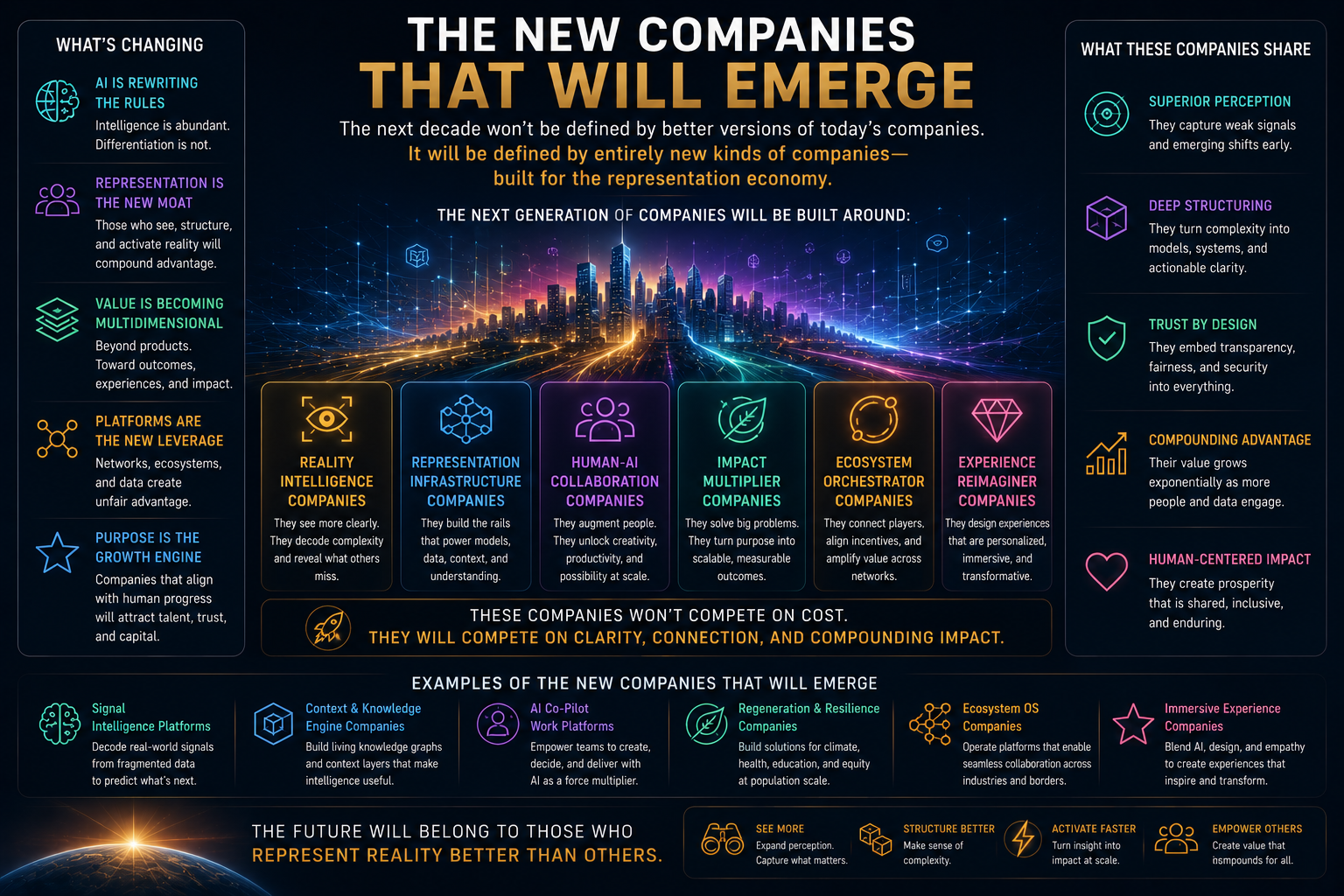
This is why some of the most valuable AI companies of the next decade may not look like classical AI companies at all. Some will resemble identity firms, trust infrastructure firms, workflow capture firms, digital twin firms, operational telemetry firms, semantic modeling firms, or evidence networks.

But underneath, they will all be doing the same thing:

controlling how reality enters the machine.

Section 7: What boards and C-suites should do now

Existing companies should not panic. But they should reframe the challenge immediately.

The question is no longer, “How do we deploy AI?”

The deeper question is, “How does our reality become machine-usable?”

That means leadership teams need to ask:

7.1 Where does critical operational truth first enter our systems?

7.2 Who defines the entity model?

7.3 How is state represented?

7.4 How quickly is that state refreshed?

7.5 What provenance do we preserve?

7.6 Where are we still asking models to reason over stale, fragmented, or weakly verified inputs?

7.7 Which external partners already control crucial parts of our representation layer?

In many firms, the answer will be uncomfortable.

They have invested heavily in dashboards, copilots, pilots, and model experimentation. But they have underinvested in origination. They have built more intelligence than representation. More CORE than SENSE. More automation ambition than DRIVER readiness.

This imbalance helps explain why many AI programs still disappoint. The problem is not always the model. Often, the model is being asked to reason over a weak institutional picture of reality.

Conclusion: The future belongs to those who originate reality well

The future belongs to those who originate reality well

The AI economy will not be won only by those who generate the most text, code, images, or predictions.

It will be won by those who make the world enter machines in a form that can be trusted.

That is the deeper strategic shift.

Representation Origination is not a technical footnote. It is the first economic act in the age of machine decision-making. It is the stage at which value, trust, competitive advantage, and lock-in begin.

It is where SENSE becomes real, where CORE gets something worth reasoning about, and where DRIVER gains a legitimate basis for action.

In the years ahead, many firms will still compete on models. Some will compete on distribution. But the most consequential firms will compete earlier in the chain.

They will compete to become the place where reality is first structured, verified, contextualized, and made actionable.

Those companies will not simply supply AI.

They will shape what AI is allowed to know.

And in the long run, that may be even more valuable.

Conclusion Column

Board-level takeaway:
If your institution does not control how critical reality becomes machine-readable, it may never fully control the value, risk, or strategic direction of its AI systems.

C-suite implication:
The next AI moat may not be model access. It may be trusted origination.

Strategic warning:
Companies that outsource their representation layer too casually may one day discover that they have outsourced the basis of machine trust itself.

Strategic opportunity:
Companies that become trusted representation originators can shape downstream ecosystems, capture premium positioning, and become indispensable to the next generation of AI services.

Glossary

Representation Origination
The process through which real-world signals are first converted into trusted machine-usable representations.

Machine-readable reality
A structured form of real-world information that AI systems can interpret, compare, reason over, and act upon.

SENSE
The legibility layer where reality becomes machine-readable through signal, entity, state, and evolution.

CORE
The cognition layer where AI systems interpret context, optimize decisions, and generate reasoning.

DRIVER
The governance and legitimacy layer that determines delegation, permissions, verification, execution boundaries, and recourse.

Provenance
The traceable history of where a signal or representation came from, how it was transformed, and who validated it.

Entity model
The structured definition of the people, objects, assets, or institutions that signals belong to.

State representation
A machine-usable description of the current condition of an entity.

Semantic layer
A contextual layer that gives business meaning to data through models, ontologies, relationships, and rules.

Representation Originator
A company or institution that becomes the trusted first point where messy reality is translated into machine-usable form.

Trusted delegation
The controlled transfer of decision or action authority to AI systems under clear governance boundaries.

FAQ

What is Representation Origination in simple terms?

Representation Origination is the process of turning messy real-world events into structured, trusted machine-readable input that AI systems can use reliably.

Why is Representation Origination important for AI?

Because AI systems do not act on reality directly. They act on representations of reality. If those representations are weak, stale, incomplete, or poorly governed, even strong AI models will make poor decisions.

How is Representation Origination different from data collection?

Data collection gathers signals. Representation Origination goes further by linking signals to the right entity, building state, tracking evolution over time, and making that information safe and usable for machine reasoning.

What industries will benefit most from Representation Origination?

Financial services, health care, logistics, manufacturing, agriculture, climate intelligence, insurance, public services, and any industry where fragmented reality must be turned into actionable machine-readable form.

What is the connection between Representation Origination and the Representation Economy?

Representation Origination is one of the foundational economic processes within the Representation Economy. It explains how reality first becomes machine-legible before intelligence and governance can operate on top of it.

How does this relate to SENSE, CORE, and DRIVER?

Representation Origination sits primarily in the SENSE layer. Once reality is represented properly, CORE can reason over it, and DRIVER can govern what actions are allowed and how accountability is maintained.

Why should boards care about this topic?

Because control over how reality enters AI systems will increasingly shape competitive advantage, trust, compliance, ecosystem power, and long-term institutional resilience.

References and Further Reading

For factual grounding and further exploration, you can include a short end section like this on your website:

These sources support the broader claims that high-quality, governed data and provenance are becoming central to AI value creation, trust, and scalability. (McKinsey & Company)

Explore the Architecture of the AI Economy

This article is part of a broader research series exploring how institutions are being redesigned for the age of artificial intelligence. Together, these essays examine the structural foundations of the emerging AI economy — from signal infrastructure and representation systems to decision architectures and enterprise operating models. If you want to explore the deeper framework behind these ideas, the following essays provide additional perspectives:

Together, these essays outline a central thesis:

The future will belong to institutions that can sense reality, represent it clearly, reason about it intelligently, and act through governed machine systems.

This is why the architecture of the AI era can be understood through three foundational layers:

SENSE → CORE → DRIVER

Where:

  • SENSE makes reality legible
  • CORE transforms signals into reasoning
  • DRIVER ensures that machine action remains accountable, governed, and institutionally legitimate

Signal infrastructure forms the first and most foundational layer of that architecture.

AI Economy Research Series — by Raktim Singh

Written by Raktim Singh, AI thought leader and author of Driving Digital Transformation, this article is part of an ongoing body of work defining the emerging field of Representation Economics and the SENSE–CORE–DRIVER framework for intelligent institutions.

This article is part of a larger series on Representation Economics, including topics such as Representation Utility Stack, Representation Due Diligence, Recourse Platforms, and the New Company Stack.

The Representation Productivity Paradox: Why AI Fails When Firms Automate Intelligence Before They Upgrade Reality

The Representation Productivity Paradox:

AI’s next bottleneck is not intelligence. It is representation.

Artificial intelligence is now everywhere in business. Boards discuss it. CEOs announce it. technology vendors embed it into every category. teams use it to search, summarize, draft, classify, predict, approve, recommend, and increasingly, act.

Yet a strange pattern is becoming harder to ignore.

Many firms can show AI activity. Far fewer can show durable, enterprise-wide productivity gains.

This is not because AI does not work. It does work. But many organizations are making the same strategic mistake: they are trying to automate intelligence before they upgrade the reality that intelligence depends on.

That is the Representation Productivity Paradox.

The paradox is simple. A model can be brilliant. A copilot can be fast. An agent can even appear autonomous. But if the organization’s reality is weakly represented — if customer identities are duplicated, asset states are outdated, workflows are fragmented, approvals are ambiguous, and data arrives late — then AI does not scale productivity. It scales confusion.

It produces faster answers on top of a distorted picture of the world.

And once that happens, the promised gains are quietly consumed by verification, correction, exception handling, escalation, and loss of trust.

That is why so many firms feel they are “doing AI” while still struggling to convert it into reliable business value.

The real scarcity in the AI era is not compute. It is machine-legible reality.

What exactly is the AI system reasoning over?

For the last two years, most enterprise AI conversations have focused on models, assistants, and agents. That focus is understandable. Models are visible. They demo well. They create immediate excitement.

But the harder question is this:

What exactly is the AI system reasoning over?

In the AI era, durable value will not come only from better intelligence. It will come from better representation of reality.

That means four things:

  1. Better signals

Not just more data, but more relevant, timely, trustworthy, decision-linked data.

  1. Better entity resolution

The system must know which customer, machine, supplier, shipment, account, contract, policy, or patient it is actually dealing with.

  1. Better state representation

The system needs a living view of current condition, not a stale record. Is the claim disputed? Is the machine healthy? Is the payment delayed? Is the approval still valid?

  1. Better evolution

Reality changes. Representations must update as new signals arrive.

This is the logic behind my SENSE–CORE–DRIVER framework.

  • SENSE is where reality becomes machine-legible.
  • CORE is where intelligence interprets, reasons, and decides.
  • DRIVER is where delegation, authority, verification, execution, and recourse turn decisions into legitimate action.

Most firms today are overinvesting in CORE, underinvesting in SENSE, and under-designing DRIVER.

That is why many AI initiatives look powerful in demos but underperform in production.

Why smart AI still fails inside messy enterprises

Why smart AI still fails inside messy enterprises

Consider a sales organization that deploys an AI copilot for account managers.

The system can draft emails, summarize meetings, predict churn, recommend next-best actions, and generate account plans. On the surface, this looks like productivity.

But now look beneath the interface.

The same customer exists under multiple names in different systems. Renewal dates are inconsistent. Product usage data arrives late. Support history is scattered. Commercial commitments live in email threads. Escalation risk is visible only to a few experienced managers.

The AI is not reasoning over a coherent customer. It is reasoning over fragments.

So what happens?

Salespeople verify recommendations manually. Managers correct priorities. Sensitive cases get escalated because trust is weak. The workflow becomes faster in the front end, but slower in the middle because people now spend time validating what the system said.

The model is not the main bottleneck.

Representation is.

The same pattern appears across industries.

In banking, an AI assistant may summarize loan documents beautifully. But if income records, collateral data, customer identity, consent boundaries, risk flags, and policy exceptions are not consistently represented, the bank does not achieve clean automation. It gets a more elegant front end on top of unresolved ambiguity.

In healthcare, an AI system may recommend discharge coordination or scheduling actions. But if patient identity is split, medications are unsynchronized, referral notes are incomplete, and room status is delayed, then polished recommendations can still be operationally unsafe.

In manufacturing, predictive maintenance sounds transformative — until sensor data is unreliable, asset IDs differ across plants, service logs are incomplete, and spare parts data is disconnected from machine history. The AI flags risk, but maintenance teams continue checking manually because the system does not reflect reality well enough to earn trust.

This is the central mistake of the current AI wave:

Companies think they have an intelligence problem when they actually have a representation problem.

Why productivity is being overstated

Why productivity is being overstated

Much of what is currently described as “AI productivity” is too narrow.

Faster drafting is not the same as higher enterprise productivity.
Quicker summarization is not the same as durable value creation.
A faster first step is not the same as a better operating model.

True productivity means the organization can complete more valuable work with fewer errors, fewer handoffs, less rework, lower coordination cost, and greater confidence.

That requires more than model deployment. It requires workflow redesign, data redesign, control redesign, and authority redesign.

That broader pattern is increasingly visible in current research. The World Economic Forum argues that the question is no longer whether AI works, but how organizations must redesign work, decision-making, and operating models to realize its sustained value.

Gartner said in April 2026 that organizations with successful AI initiatives invest up to four times more in foundational areas such as data quality, governance, AI-ready people, and change management than firms with poor outcomes.

BCG reported that only 5% of companies in its 2025 global study were achieving AI value at scale, while about 60% reported minimal or no material value despite substantial investment. McKinsey has similarly emphasized that the biggest gains come from redesigning end-to-end workflows rather than automating isolated tasks. (World Economic Forum Reports)

These are not signs that AI lacks capability.

They are signs that enterprise productivity depends on more than intelligence alone.

Agentic AI will make this paradox impossible to hide

Agentic AI will make this paradox impossible to hide

The rise of agentic AI makes the problem sharper.

A chatbot can be wrong and still remain mostly advisory. An agent is different. It acts. It triggers workflows. It invokes tools. It updates records. It sends messages. It executes decisions at speed.

That means every weakness in representation becomes more dangerous.

If the customer state is wrong, the action is wrong.
If the policy boundary is wrong, the action may be unauthorized.
If the inventory state is stale, the action may create downstream failure.
If the identity is ambiguous, the action may hit the wrong entity.

This is why agentic AI is not simply a bigger software wave. It is a governance wave.

Reuters reported in June 2025, citing Gartner, that more than 40% of agentic AI projects are expected to be scrapped by the end of 2027 because of rising costs and unclear business value. That warning matters not because agentic systems are unimportant, but because too many firms are trying to make agents act before they have made reality machine-trustworthy. (Reuters)

In other words, firms are scaling autonomy before they have scaled legibility.

That is a dangerous sequence.

What it actually means to “upgrade reality”

If a board or CEO takes this argument seriously, the next question is obvious:

What does upgrading reality actually involve?

It means strengthening SENSE before scaling CORE.

Upgrade 1: Improve signal quality

The issue is not data volume. It is signal usefulness. Organizations need timely, decision-relevant, governed signals tied to operational outcomes.

Upgrade 2: Fix entity resolution

Many enterprises still do not have a reliable answer to a basic question: who or what is this? AI cannot reason well when customers, suppliers, assets, contracts, products, or claims are inconsistently identified.

Upgrade 3: Build state clarity

A static record is not enough. AI needs current state, not historical residue. This means better event capture, better synchronization, and better representation of operational truth.

Upgrade 4: Design for evolution

Reality changes continuously. A machine-legible enterprise must update its representations as new signals arrive. Otherwise even a well-designed system becomes stale.

But that is only half the story.

Upgrading reality also means strengthening DRIVER.

Once AI starts recommending or acting, organizations need explicit answers to six questions:

  • Who delegated authority?
  • What representation of reality was used?
  • Which entity was affected?
  • How is the decision verified?
  • How is the action executed?
  • What recourse exists if the system is wrong?

This is where many AI programs remain immature. Governance is treated as a policy document rather than as operating architecture.

In practice, productivity collapses when teams must constantly intervene because the system’s authority boundaries are unclear.

Why many firms will experience a painful AI J-curve

Why many firms will experience a painful AI J-curve

One reason this problem is so easy to misread is that AI often creates an early illusion of progress.

Interfaces improve quickly. Demonstrations are impressive. Teams report faster task completion. Executive enthusiasm rises.

Then reality pushes back.

Older systems do not align. Data cannot be trusted. Workflows need redesign. Employees require training. Oversight expands. Exceptions multiply. New coordination burdens appear.

MIT Sloan highlighted 2025 research showing that companies adopting industrial AI can suffer short-term productivity losses before longer-term gains, with more established firms often facing larger adjustment costs because AI adoption demands new infrastructure, training, and workflow redesign. (MIT Sloan)

That is not proof that AI is failing.

It is proof that AI is not plug-and-play.

The road to productivity runs through organizational redesign.

The strategic shift boards should make now

The winning question for the next three years is not:

How do we put AI into more places?

It is:

Where is our reality too weakly represented for intelligence to operate safely, repeatedly, and at scale?

That question changes everything.

It shifts attention from tools alone to operating foundations.
It shifts AI strategy from interface obsession to institutional design.
It shifts investment from isolated pilots to machine-legible workflows.
It shifts governance from compliance theater to execution architecture.

It also creates a new class of winners.

The next winners in AI will include:

  • firms that make their own operations machine-legible faster than competitors
  • firms that reduce ambiguity across customers, assets, obligations, and transactions
  • firms that design clear authority and recourse around AI action
  • firms that help entire ecosystems become more representable, verifiable, and machine-trustworthy

That is why this is not merely a technology issue.

It is a strategic management issue.

It is an operating model issue.

And increasingly, it is a board issue.

AI will not fix reality it cannot properly see

Conclusion: AI will not fix reality it cannot properly see

The Representation Productivity Paradox is not a side effect of AI adoption. It is a warning.

If firms automate intelligence before they upgrade reality, AI will often produce more activity than value, more output than outcome, and more motion than productivity.

But firms that reverse the sequence will create a very different future.

They will treat reality as infrastructure.

They will understand that better decisions require more than better models. They require better representation.

They will strengthen SENSE so CORE has something reliable to reason over.

They will design DRIVER so action happens with legitimacy, control, and recourse.

And once that foundation is built, AI will stop feeling like an impressive layer added onto the enterprise.

It will become part of how the enterprise sees, decides, and acts.

That is where durable advantage will come from.

Not from intelligence alone.

From reality, upgraded.

FAQ

What is the Representation Productivity Paradox?

The Representation Productivity Paradox is the idea that many firms deploy AI to automate intelligence before improving the quality, structure, and governability of the reality AI depends on. As a result, AI generates activity without durable enterprise productivity.

Why do AI projects fail to deliver enterprise-wide value?

Many AI initiatives underperform because organizations invest in models and tools without equally investing in data quality, governance, workflow redesign, operating foundations, and change management. Current research from Gartner, BCG, McKinsey, and the World Economic Forum points in that direction. (Gartner)

What does “upgrade reality” mean in AI?

It means making the organization more machine-legible by improving signals, entity resolution, state representation, and continuous updating so that AI systems reason over current, trustworthy operational reality.

How does SENSE–CORE–DRIVER relate to AI productivity?

SENSE makes reality legible, CORE reasons over it, and DRIVER governs action. Productivity fails when firms overinvest in reasoning systems while neglecting representation quality and action governance.

Why is agentic AI more exposed to this problem?

Because agents do not just generate outputs. They take action. When underlying representations are wrong or stale, the cost of error rises sharply because bad judgments can now trigger bad execution. (Reuters)

Is the AI productivity paradox proof that AI is overhyped?

No. It suggests that AI’s benefits depend heavily on complementary changes such as workflow redesign, better data foundations, stronger controls, and clearer operating models. (MIT Sloan)

What should boards and C-suite leaders do first?

They should assess where business reality is fragmented, stale, weakly governed, or poorly represented before scaling AI across critical workflows.

Glossary

Representation Economy
An economy in which value increasingly depends on how accurately, continuously, and governably people, assets, events, and obligations are represented in machine-readable systems.

Representation Productivity Paradox
The failure pattern that occurs when firms automate intelligence before upgrading the underlying reality that intelligence depends on.

Machine-legible reality
A condition in which operational reality is structured clearly enough for software and AI systems to interpret and act on it reliably.

Entity resolution
The ability to determine which customer, asset, shipment, supplier, policy, contract, or account a system is actually referring to.

State representation
A current, structured description of the condition of an entity, such as whether a shipment is delayed, a customer is at risk, or a claim is disputed.

Agentic AI
AI systems that can plan, invoke tools, take action, and pursue goals with varying degrees of autonomy.

SENSE
The layer where reality becomes machine-legible through signal, entity, state, and evolution.

CORE
The reasoning layer where intelligence comprehends context, optimizes decisions, realizes action paths, and evolves through feedback.

DRIVER
The governance layer that determines delegation, representation, identity, verification, execution, and recourse.

Machine-trustworthy action
Action taken by AI or software that can be trusted because it rests on accurate representation, clear authority, and verifiable execution logic.

Explore the Architecture of the AI Economy

This article is part of a broader research series exploring how institutions are being redesigned for the age of artificial intelligence. Together, these essays examine the structural foundations of the emerging AI economy — from signal infrastructure and representation systems to decision architectures and enterprise operating models. If you want to explore the deeper framework behind these ideas, the following essays provide additional perspectives:

Together, these essays outline a central thesis:

The future will belong to institutions that can sense reality, represent it clearly, reason about it intelligently, and act through governed machine systems.

This is why the architecture of the AI era can be understood through three foundational layers:

SENSE → CORE → DRIVER

Where:

  • SENSE makes reality legible
  • CORE transforms signals into reasoning
  • DRIVER ensures that machine action remains accountable, governed, and institutionally legitimate

Signal infrastructure forms the first and most foundational layer of that architecture.

AI Economy Research Series — by Raktim Singh

Written by Raktim Singh, AI thought leader and author of Driving Digital Transformation, this article is part of an ongoing body of work defining the emerging field of Representation Economics and the SENSE–CORE–DRIVER framework for intelligent institutions.

This article is part of a larger series on Representation Economics, including topics such as Representation Utility Stack, Representation Due Diligence, Recourse Platforms, and the New Company Stack.

References and further reading

  • World Economic Forum, Organizational Transformation in the Age of AI (2026) — on redesigning work, decisions, and operating models for sustained AI value. (World Economic Forum Reports)
  • Gartner, April 2026 announcement — on successful AI initiatives investing up to four times more in data and analytics foundations, governance, AI-ready people, and change management. (Gartner)
  • BCG, The Widening AI Value Gap (2025) — on only 5% of firms achieving AI value at scale and about 60% seeing minimal or no material value. (BCG Media Publications)
  • McKinsey Global Institute, Agents, Robots, and Us (2025) — on redesigning end-to-end workflows rather than merely automating tasks. (McKinsey & Company)
  • MIT Sloan, The Productivity Paradox of AI Adoption in Manufacturing Firms (2025) — on short-term productivity declines before long-term gains during industrial AI adoption. (MIT Sloan)
  • Reuters, June 2025 — on Gartner’s forecast that over 40% of agentic AI projects may be scrapped by the end of 2027 because of cost and unclear business value. (Reuters)

The Authority Graph: Why AI Will Be Governed by Permissions, Not Just Intelligence

The Authority Graph:

The next winners in AI will not be defined only by smarter models. They will be defined by how well they map authority, constrain action, preserve recourse, and turn intelligence into legitimate execution.

A simpler way to understand the next battle in AI

For the last few years, the AI conversation has focused on intelligence. Which model is bigger? Which model reasons better? Which model writes better code, gives better answers, or makes better predictions?

That was the right first question. It is no longer the decisive one.

The next phase of the AI economy will be shaped by a different question: Who is allowed to do what, for whom, under which conditions, with what limits, and with what recourse if something goes wrong? That is not a model question. It is a permission question. And once AI starts acting inside real institutions, permission stops being policy language and becomes architecture. Harvard Business Review’s recent enterprise guidance on AI agents points in exactly this direction: treat each agent like a distinct digital worker with a role, a scope of authority, approved sources of truth, and escalation rules. (Harvard Business Review)

This is why I call the next governing layer of the AI economy the Authority Graph: a living map of permission that defines how intelligence is allowed to become action.

A model may know a lot. But knowing is not the same as being allowed.

A customer-service agent may know a refund is justified.
A coding agent may know how to modify production code.
A procurement agent may know which supplier is cheapest.
A healthcare system may know which patient is high risk.

None of those systems should act only because they are intelligent enough to do so. They should act only when authority is clear, bounded, auditable, and reversible. That principle mirrors the logic of zero-trust architecture, where access is not assumed but continuously bounded by policy, identity, and least privilege. (NIST Publications)

The future will not be won only by the companies with the best models. It will be won by the institutions that build the best maps of permission.

Why intelligence alone is no longer enough

Why intelligence alone is no longer enough

AI is moving from assistance to action. That changes everything.

When AI only drafts, suggests, summarizes, or answers questions, the stakes are lower. The human is still the actor. But once AI starts approving payments, changing prices, opening tickets, updating code, negotiating with suppliers, or triggering workflows across systems, the center of gravity moves.

The problem is no longer just, “Can the model reason?” It becomes, “Who authorized this action?” and “Was this action allowed in this context?”

That is why prompt-level control is not enough. A sentence like “do not take action without approval” is not governance. It is a hope. Recent enterprise commentary has warned that when governance lives only inside the prompt window, agents can exceed scope, lose critical instructions, or act without the architectural safety net needed for enterprise deployment. (TechRadar)

The same logic is now appearing across enterprise, policy, and identity discussions. UC Berkeley CLTC’s 2026 agentic-AI risk profile emphasizes human control, intervention points, escalation pathways, shutdown mechanisms, and system-level risk assessment for tool use and multi-agent behavior. Fortune recently highlighted a sharp gap between rapid AI-agent adoption and the small share of organizations that actually have a clear strategy to manage them. Okta, meanwhile, has begun explicitly framing AI agents as first-class non-human identities with lifecycle management needs. (CLTC)
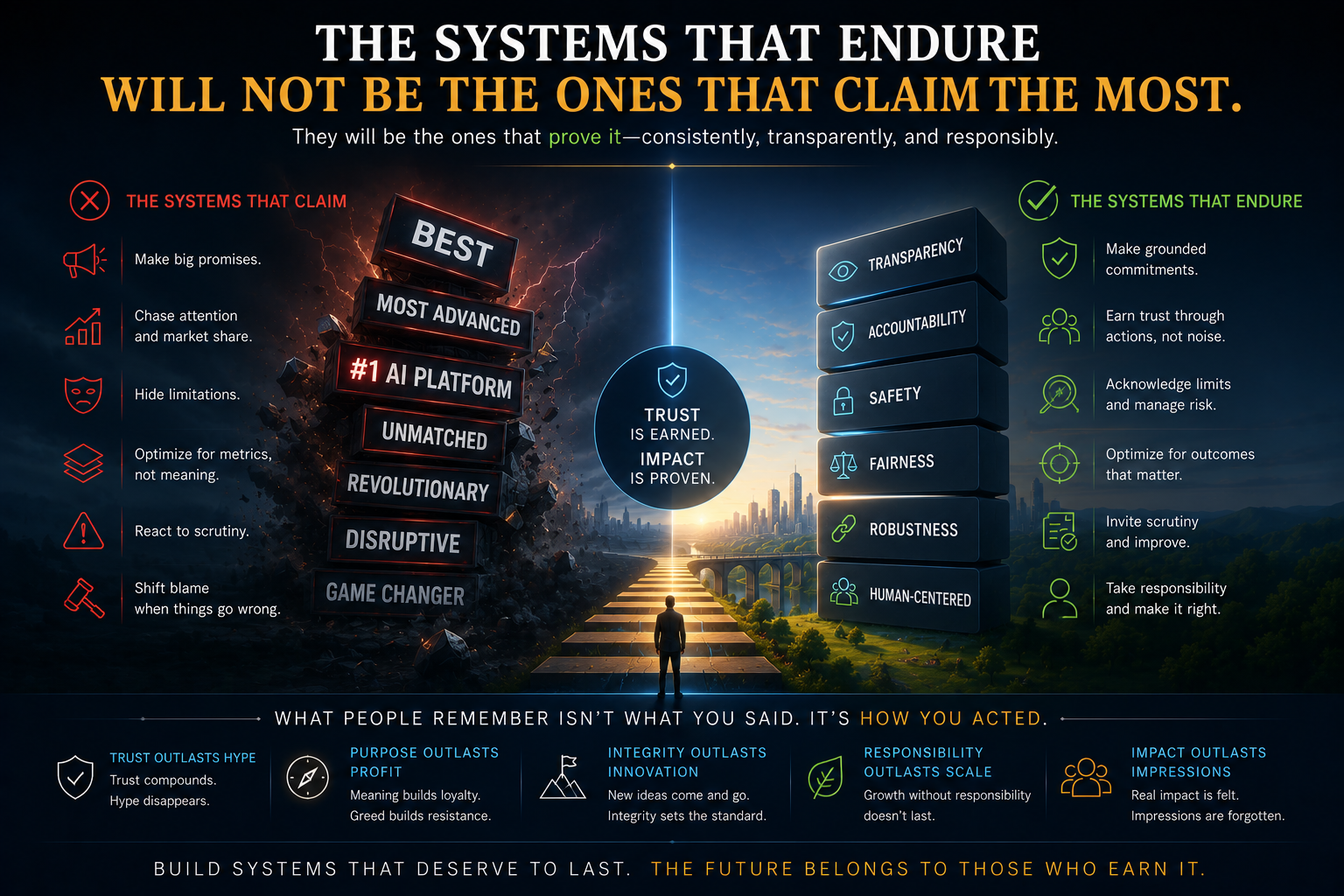
That is the real shift. AI governance is becoming less about outputs alone and more about authorized action.

What is an Authority Graph?

What is an Authority Graph?

An Authority Graph is a structured, living map that answers five practical questions.

  1. Who is the actor?

Is the action being taken by a human, a software service, an AI agent, or an AI agent acting on behalf of a human, team, or institution?

  1. What is the actor allowed to access?

Which tools, systems, files, APIs, data sources, workflows, and environments are available?

  1. What is the actor allowed to do?

Can it read, recommend, draft, approve, execute, negotiate, escalate, or only simulate?

  1. Under what conditions is it allowed to act?

Only below a spending threshold? Only during business hours? Only with a second approver? Only in a certain geography? Only in low-risk cases? Only when a human remains in the loop?

  1. What happens if something goes wrong?

Can the action be reversed? Can it be appealed? Can authority be revoked instantly? Is there a full audit trail? Are escalation and shutdown paths clear?

This is why I call it a graph. Permission in the AI economy will not be a flat settings page. It will be a network of relationships among people, agents, systems, assets, policies, thresholds, approvals, and recourse paths. That way of thinking closely matches current agent-risk guidance, which emphasizes clear role definitions, escalation checkpoints, and mechanisms for intervention and shutdown. (CLTC)

A simple example: the finance agent

Imagine an enterprise finance agent.

It reads invoices, checks contracts, matches purchase orders, and suggests payment approvals.

Most organizations would first ask, “How accurate is the model?” That matters. But it is not the deepest question.

The deeper question is this: What is the finance agent allowed to do at each stage?

It may be allowed to read invoices.
It may be allowed to flag mismatches.
It may be allowed to recommend approval.
It may be allowed to auto-approve invoices below a small threshold.
It may not be allowed to release payment above a certain amount without human sign-off.
It may not be allowed to override a sanctions check.
It may be allowed to escalate exceptions to a manager.
It may be required to preserve a full audit trail for every action.

That ladder of permission is the Authority Graph in action.

Without it, the model’s intelligence becomes dangerous. With it, the same intelligence becomes enterprise-ready.

Another example: the hospital assistant

Now take healthcare.

An AI system may help identify patients at risk of deterioration. That is useful. But the key question is not whether the model predicts well in isolation. The key question is where it sits in the chain of authority.

Is it allowed only to score risk?
Can it recommend a care pathway?
Can it schedule follow-up tests?
Can it change a medication order?
Can it only alert a clinician?
Can it take action after hours?
Who is accountable if it is wrong?

This is where many AI debates remain too shallow. They focus on model performance but ignore delegated authority. Yet delegated authority is exactly what determines whether AI remains assistive or becomes institutional. WEF’s recent work on AI as cognitive infrastructure argues that governance must now protect human agency, transparency, and judgment as AI increasingly influences real decisions. (World Economic Forum)

Why this matters for the Representation Economy

My broader thesis is that the next economy will not be defined only by intelligence. It will be defined by representation.

To act well, AI first needs reality to be represented well.

That is why I use the framework SENSE–CORE–DRIVER.

SENSE

Signal, ENtity, State, Evolution.
This is the layer where reality becomes legible.

CORE

Comprehend, Optimize, Realize, Evolve.
This is the reasoning layer.

DRIVER

Delegation, Representation, Identity, Verification, Execution, Recourse.
This is the legitimacy layer.

Most of the AI market still overinvests in CORE. It keeps asking how to make models smarter. But institutions win only when SENSE is strong enough to represent reality accurately and DRIVER is strong enough to turn intelligence into legitimate action.

The Authority Graph belongs primarily to the DRIVER layer. It is the missing map that tells an institution how permission flows from principals to systems to action. Without that map, even a brilliant model is just an intelligent trespasser.

Why this idea will matter more in 2026 and beyond

Three shifts make the Authority Graph urgent.

The rise of agents

Enterprises are rapidly experimenting with AI agents that act more like operators than assistants, but governance has not kept pace. HBR has pushed organizations to treat agents like team members with defined roles and escalation rules, while Fortune has pointed to the large gap between adoption and management strategy. (Harvard Business Review)

The move from model risk to system risk

The real governance challenge is no longer only the model’s output. It is the wider system: autonomy, authority, tool access, multi-agent interaction, and environmental exposure. That is now explicit in modern agentic-AI risk guidance. (CLTC)

The rise of identity-bound governance

AI agents are increasingly being treated as non-human identities that require onboarding, authorization, monitoring, and decommissioning. That is a major signal of where enterprise architecture is heading. (Okta)

Put simply, the AI economy is moving from “What can the model do?” to “What is this agent allowed to do here, now, and on whose behalf?”

The companies that will emerge next

If this thesis is right, a new category map begins to appear.

Authority Graph platforms will manage permission maps for AI agents across enterprise workflows.

Delegation registries will act as systems of record for which agents exist, who created them, which principals they represent, and what they are allowed to access.

Recourse orchestration platforms will manage appeals, reversals, overrides, incident recovery, and decision unwinding when AI actions cause harm or disagreement.

Machine-permission infrastructure providers will translate policy, regulation, and business rules into enforceable runtime permissions for agents.

Authority analytics firms will help boards, regulators, and enterprises visualize concentrations of delegated machine power, unresolved exceptions, and unauthorized action paths.

These will not be side markets. They will become core institutional infrastructure.

How existing companies can survive and win

Existing companies do not need to invent frontier models to win in this future. But they will need to redesign how authority is represented.

A bank will need to know which AI systems may only recommend and which may execute.
A manufacturer will need to know which plant agents can stop a line and which can only alert.
A retailer will need to know which pricing agents can change offers and under what guardrails.
A hospital will need to know which systems can triage, schedule, prescribe, or only escalate.
A government department will need to know which public-sector agents can answer questions and which can issue binding decisions.

The winners will be the institutions that turn these rules into living architecture.

That means doing five things well.

First, treat every serious AI agent as an identity-bearing actor.
Second, define permission in business language, not just technical language.
Third, apply least privilege by default.
Fourth, make high-risk actions reviewable, stoppable, and reversible.
Fifth, create visible audit trails that connect delegated authority to real-world consequences. These principles line up closely with both zero-trust logic and current agentic-AI governance recommendations. (NIST Publications)

Why this is becoming a board-level issue

Boards will eventually realize that AI risk is no longer just about hallucination, bias, or accuracy. It is about unmapped authority.

An organization may think it has ten AI systems. In reality, it may have hundreds of agents, scripts, copilots, automations, and embedded AI services touching decisions across finance, operations, HR, procurement, and customer service.

The biggest risk is not always malicious AI. It is invisible delegated power.

That is why the Authority Graph matters. It helps leaders see where machine authority exists, where it is too concentrated, where recourse is weak, and where permission pathways are quietly expanding.

In the old software era, architecture determined scalability.
In the AI era, architecture will determine legitimacy.

Conclusion

The AI economy will not be governed by intelligence alone because intelligence alone does not tell a system what it has the right to do.

Permission is the missing layer between cognition and institution.

That is why the Authority Graph matters. It is not just a security tool. It is not just a governance dashboard. It is the emerging operating map of legitimate machine action.

The next AI winners will not merely build smarter systems. They will build systems that know their authority, stay within it, prove it, and yield when they reach its edge.

That is how institutions survive.
That is how trust scales.
And that is how the Representation Economy becomes real.

Glossary

Authority Graph
A living map of who or what is allowed to act, on whose behalf, under what limits, with what verification, and with what recourse if something goes wrong.

AI agent
A software-based AI system that can do more than answer questions. It can take actions, use tools, interact with systems, and operate across workflows with varying degrees of autonomy.

Delegated authority
The right granted by a human or institution to a system to make or execute certain decisions under defined conditions.

Least privilege
A governance principle under which an actor receives only the minimum access and action rights needed to perform its role.

Machine identity
A formal identity assigned to an AI agent or software service so its actions can be authenticated, authorized, monitored, and audited.

Recourse
The mechanism through which a decision or action can be challenged, reversed, corrected, or appealed.

Zero trust
A security and access-control approach in which no actor is trusted by default and access is continuously constrained by policy, identity, and context.

Representation Economy
An emerging economic logic in which competitive advantage depends on how well reality is made visible, legible, governable, and actionable for machine systems.

SENSE–CORE–DRIVER
A framework for understanding AI systems and institutions. SENSE makes reality legible, CORE reasons over it, and DRIVER governs legitimate action.

FAQ

What is an Authority Graph in AI?

An Authority Graph is a structured map of permission that defines who or what can act, on whose behalf, in which systems, under what rules, and with what recourse if something goes wrong.

Why is the Authority Graph important for enterprise AI?

Because enterprise AI is moving from answering questions to taking action. Once AI starts acting inside workflows, permission, identity, escalation, and reversibility become as important as model intelligence. (Harvard Business Review)

How is an Authority Graph different from an access-control list?

An access-control list usually defines static access rights. An Authority Graph is broader. It includes actor identity, delegated authority, conditions of action, escalation rules, auditability, and recourse.

Why are AI permissions now a board-level issue?

Because organizations may have many more agents and AI-driven actions in production than leaders realize, and unmanaged delegated machine authority can create financial, operational, legal, and reputational risk. (Fortune)

How does this connect to SENSE–CORE–DRIVER?

The Authority Graph sits mainly in DRIVER, the layer that governs delegation, identity, verification, execution, and recourse. It is the bridge between intelligence and legitimate action.

What new businesses will emerge from this shift?

Likely winners include Authority Graph platforms, delegation registries, recourse orchestration systems, machine-permission infrastructure providers, and authority analytics firms.

How should a company start building an Authority Graph?

Start by identifying every serious AI actor, the systems each can access, the actions each can take, the thresholds and approval rules that apply, and the mechanisms for audit, shutdown, and appeal.

References and further reading

Recent enterprise and governance writing increasingly supports the central thesis of this article: that AI governance is shifting from model-centric thinking to identity, authorization, escalation, and system-level controls. Harvard Business Review has argued that AI agents should be treated like team members with roles and authority boundaries. NIST’s zero-trust architecture formalizes least-privilege logic that maps naturally onto agent governance. UC Berkeley CLTC’s agentic-AI profile emphasizes escalation, shutdown, and system-level risk. WEF has framed AI as cognitive infrastructure that requires stronger governance of agency and judgment. Fortune and Okta have highlighted the gap between rapid AI-agent adoption and the need for identity-bound governance. (Harvard Business Review)
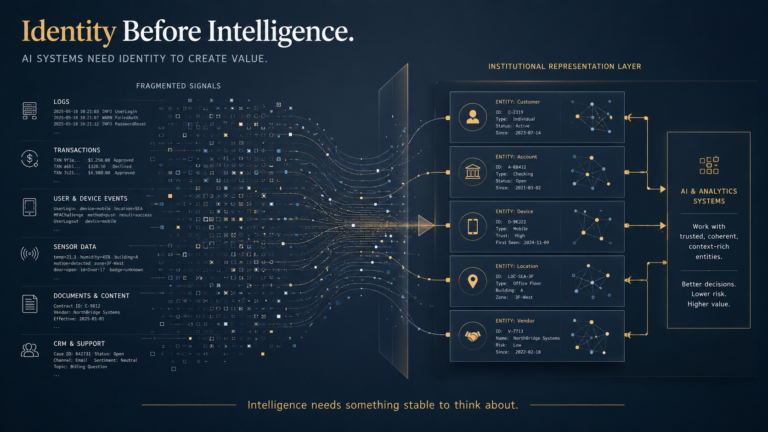
Explore the Architecture of the AI Economy

This article is part of a broader research series exploring how institutions are being redesigned for the age of artificial intelligence. Together, these essays examine the structural foundations of the emerging AI economy — from signal infrastructure and representation systems to decision architectures and enterprise operating models. If you want to explore the deeper framework behind these ideas, the following essays provide additional perspectives:

Together, these essays outline a central thesis:

The future will belong to institutions that can sense reality, represent it clearly, reason about it intelligently, and act through governed machine systems.

This is why the architecture of the AI era can be understood through three foundational layers:

SENSE → CORE → DRIVER

Where:

  • SENSE makes reality legible
  • CORE transforms signals into reasoning
  • DRIVER ensures that machine action remains accountable, governed, and institutionally legitimate

Signal infrastructure forms the first and most foundational layer of that architecture.

AI Economy Research Series — by Raktim Singh

Written by Raktim Singh, AI thought leader and author of Driving Digital Transformation, this article is part of an ongoing body of work defining the emerging field of Representation Economics and the SENSE–CORE–DRIVER framework for intelligent institutions.

This article is part of a larger series on Representation Economics, including topics such as Representation Utility Stack, Representation Due Diligence, Recourse Platforms, and the New Company Stack.

The Representation Middle Class: Why the Biggest AI Winners Will Help the World Become Machine-Trusted

The Representation Middle Class: The market most people still cannot see

Everyone is looking for the big winners of the AI era.

Some point to model companies.
Some point to chip makers.
Some point to cloud platforms.
Some point to software firms embedding AI into products.

All of them matter.

But there is another category growing quietly in the background — and it may become one of the most durable business classes of the next decade.

It is not the company that builds the most powerful model.
It is not even the company that owns the most data.

It is the company that helps other organizations become machine-trusted.

That phrase may sound technical. The underlying idea is not.

In the industrial era, large fortunes were made not only by inventing new machines, but also by helping businesses become electrified, standardized, compliant, and scalable. In the internet era, many firms won not by inventing the web, but by helping others become searchable, transactable, secure, and cloud-ready.

The AI era is creating a similar middle layer.

I call it the Representation Middle Class.

These are the companies that help a business, institution, product, worker, asset, or service become easier for machines to identify, interpret, verify, compare, trust, and act upon. They may not always be the most visible firms in AI. But they may become some of the most important ones.

That is because the AI economy will not run only on intelligence.

It will run on trusted representation.

And trusted representation is not created automatically by a model.

What “machine-trusted” actually means

What “machine-trusted” actually means

Let us start with a simple question.

What does it mean for a company to be machine-trusted?

It does not mean an AI model likes the company.
It does not mean the company has a chatbot.
It does not mean it uploaded a few PDFs and hoped a large language model would somehow understand them.

It means something much deeper.

A machine-trusted company is one whose reality can be presented to digital systems in a form that is:

  • identifiable
  • structured
  • verifiable
  • current
  • permissioned
  • governed
  • actionable
  • correctable when wrong

In plain language, the machine can tell who the company is, what it claims, what evidence supports those claims, whether that evidence is valid, what actions are allowed, and what happens if something goes wrong.

That is a much higher standard than visibility.

It is the difference between being mentioned and being usable.
It is the difference between being online and being machine-ready.

A simple example: the small exporter

A simple example: the small exporter

Imagine two small manufacturing firms in different countries.

Both make high-quality industrial valves.
Both have a decent website.
Both have customer testimonials.
Both are real businesses.

But the first company has product data in inconsistent formats, outdated compliance certificates, no machine-readable identity layer, weak traceability, scattered supplier records, and no trustworthy way for automated procurement systems to verify its claims.

The second company has structured product identifiers, verifiable compliance credentials, trusted digital signatures, traceable supply records, machine-readable catalogues, and a clear process for proving certifications and updating changes.

Which company will an AI-assisted procurement system prefer?

Not necessarily the one with the prettier website.

It will prefer the one that is easier to verify, safer to transact with, and simpler to integrate into a digital workflow.

That is the core idea.

As AI systems begin to assist with supplier discovery, contract review, fraud checks, lending decisions, content ranking, insurance assessment, identity verification, compliance validation, logistics routing, and customer service escalation, being understandable to humans will remain necessary — but being trustworthy to machines will become a new source of advantage.

The hidden market between intelligence and action

The hidden market between intelligence and action

When most people imagine the AI economy, they see two layers:

  1. the intelligence layer
  2. the application layer

But that picture is incomplete.

Between “raw intelligence” and “real economic action” sits a missing layer: the systems that make reality legible and dependable enough for machines to use safely.

This is where the Representation Middle Class comes in.

These companies will do work such as:

  • issuing and managing verifiable business credentials
  • proving content provenance
  • structuring machine-readable product and supplier identities
  • maintaining trust registries
  • enabling machine-verifiable compliance
  • creating recourse and dispute pathways
  • translating messy real-world data into governable machine representations
  • helping institutions define what an AI system is allowed to rely on

This is not glamorous work.

But it is economically foundational.

A surprising amount of AI value will be created not by making machines smarter, but by making the world cleaner, more provable, and safer for machine interaction.

Why this market is arriving now

This is not just a theory. Important pieces of the trust stack are already becoming more formalized across the world.

The W3C published Verifiable Credentials Data Model 2.0 as a W3C Recommendation on May 15, 2025, giving the digital ecosystem a stronger standards base for cryptographically secure, privacy-respecting, machine-verifiable credentials. The OpenID Foundation has also been expanding standards for verifiable credential issuance and wallet interoperability, and said in April 2026 that dozens of governments and ecosystem operators have selected its standards for wallet and credential programs. (W3C)

In Europe, the EU Digital Identity Wallet framework is moving toward deployment, with Member States expected to make wallets available by the end of 2026 under the updated eIDAS framework. Separately, the European Commission published a proposal for European Business Wallets in November 2025 to help firms securely identify themselves and exchange trusted documents across borders. (Digital Strategy EU)

In media and content, the C2PA / Content Credentials ecosystem is establishing a practical method for attaching provenance information to digital assets so users and systems can inspect the history of content rather than consume it blindly. (C2PA)

In products and supply chains, GS1 Digital Link is standardizing how product identifiers become web-resolvable, machine-usable links, while digital product passport efforts are pushing toward richer, more portable product traceability. (GS1)
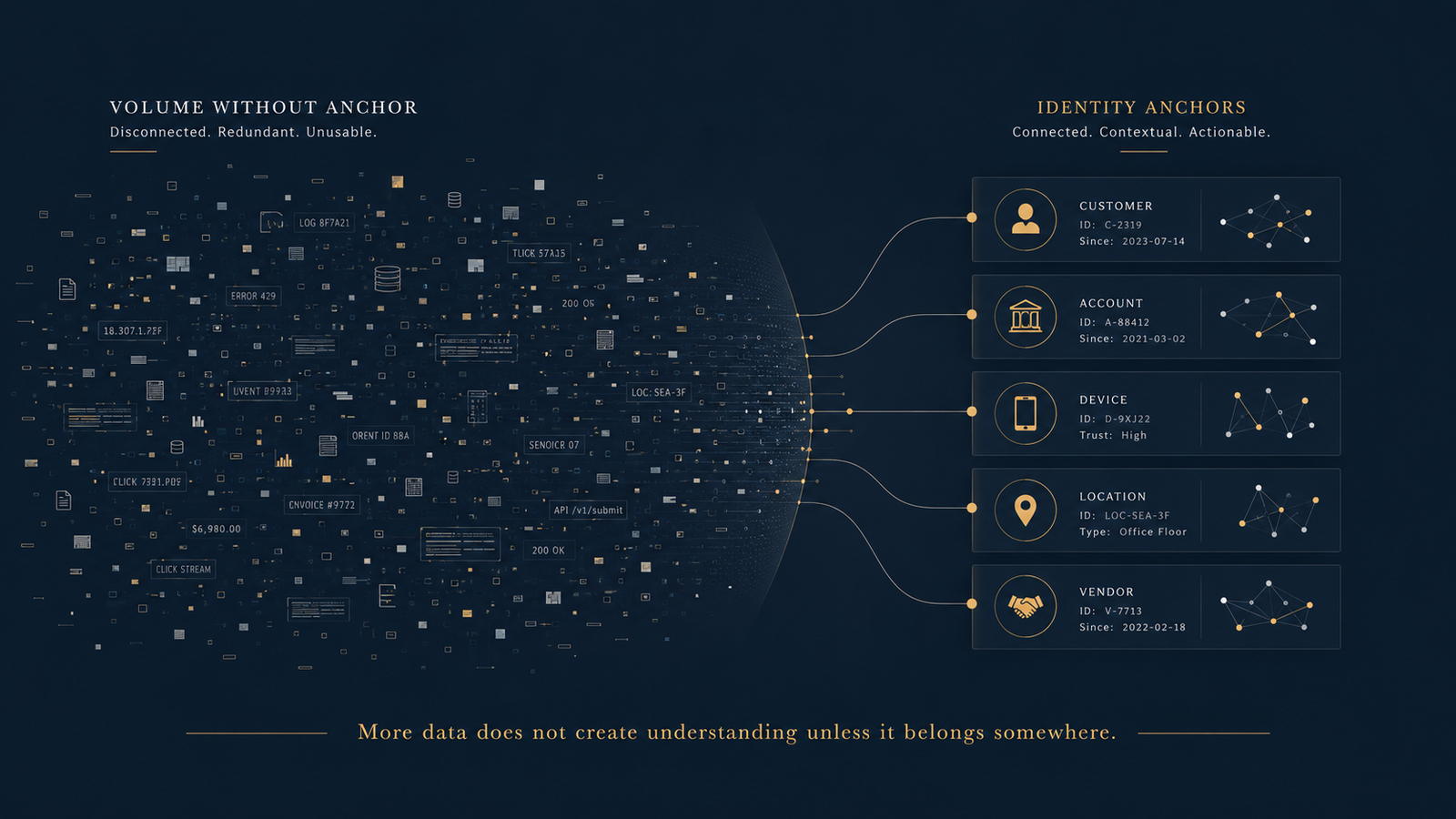
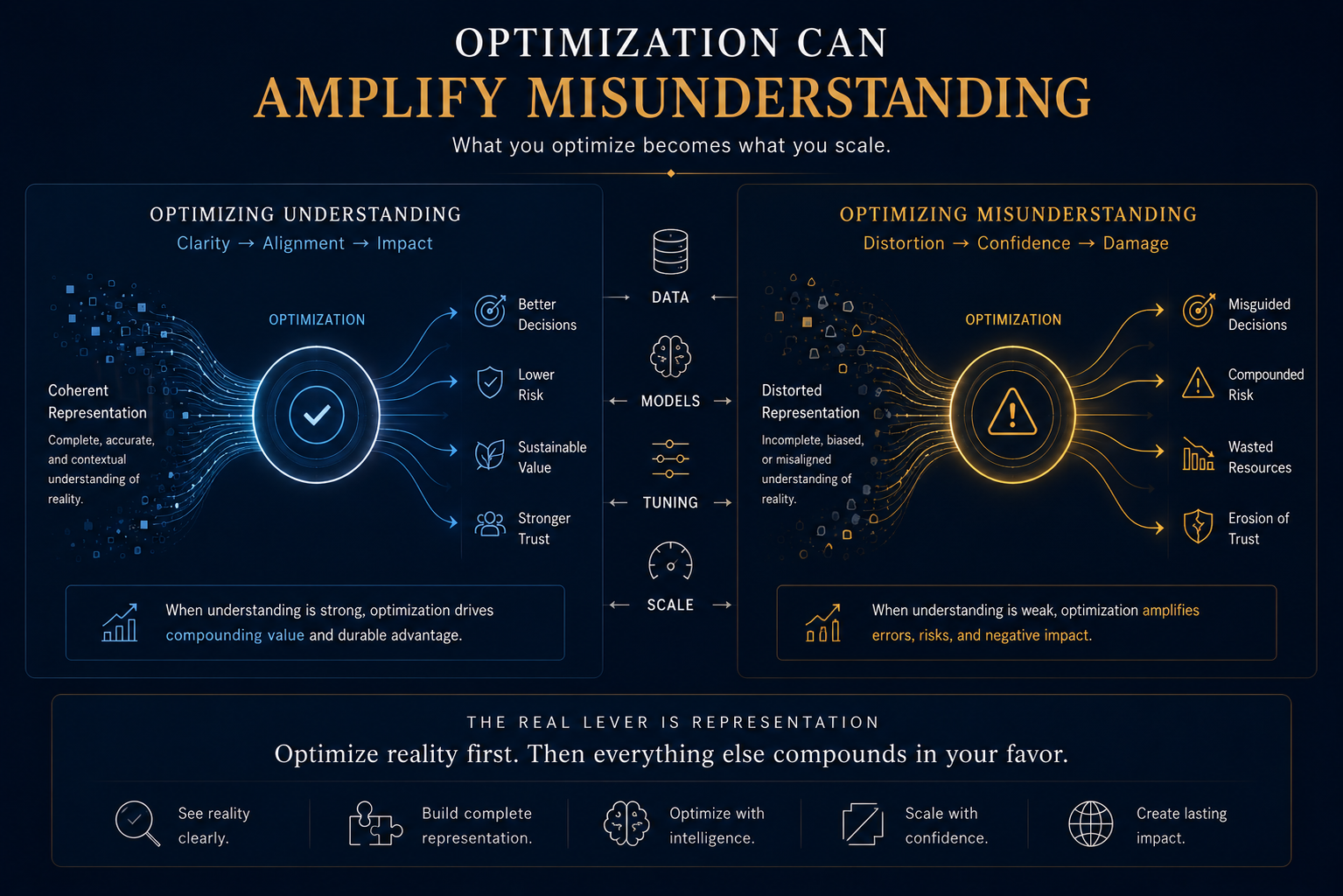
At the governance layer, the EU AI Act entered into force on August 1, 2024, with staged applicability through 2026 and beyond, while NIST continues to expand the AI Risk Management Framework and related profiles. Together, these developments reinforce a broader shift: AI systems are no longer judged only on output quality, but increasingly on traceability, accountability, transparency, and risk-managed use in real institutions. (NIST)
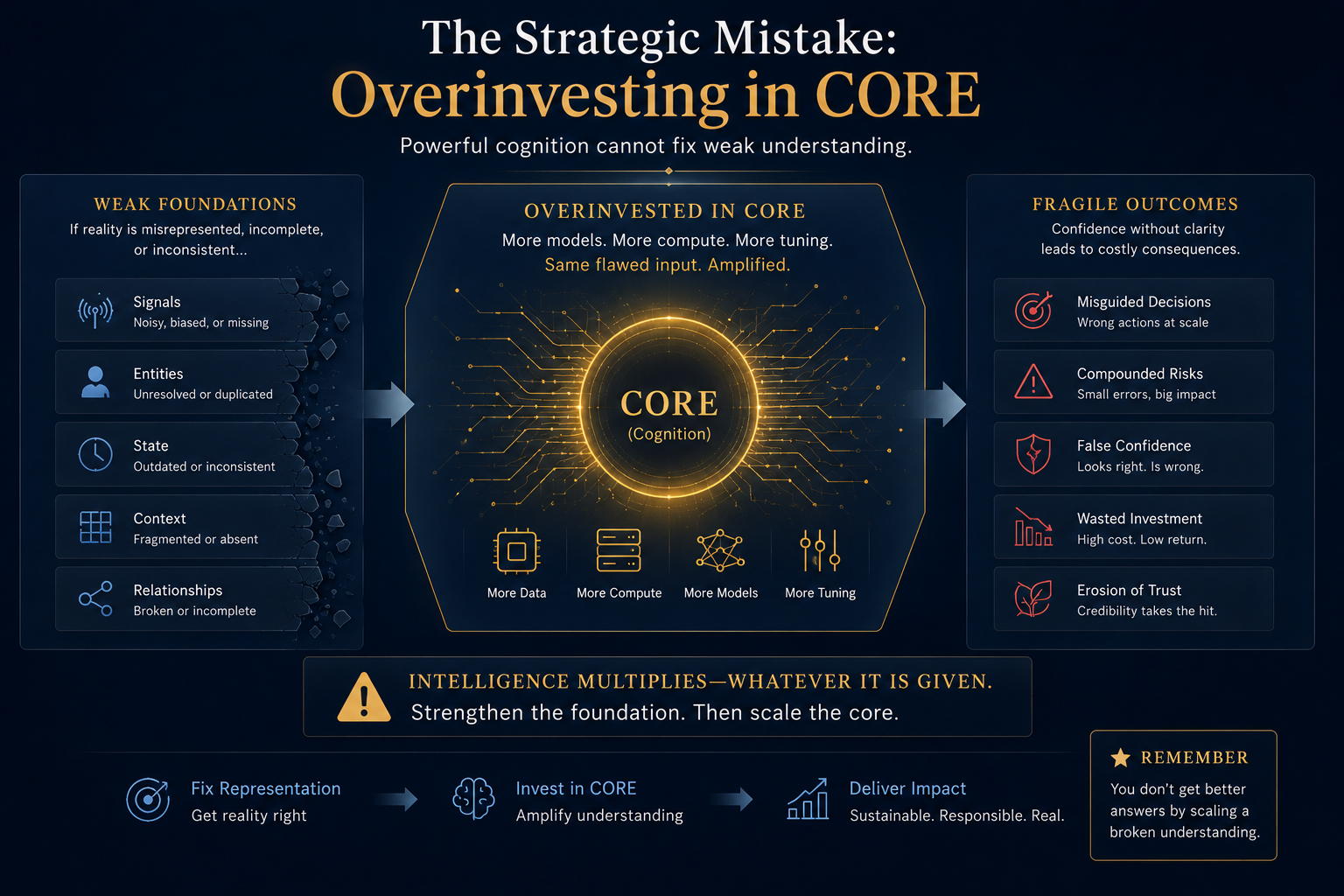
Put these together and a pattern emerges.

The world is not only building smarter AI.
It is building more formal ways to answer five foundational questions:

  • Who are you?
  • What do you know?
  • How do you prove it?
  • What are you allowed to do?
  • Who is accountable if the system is wrong?

That is exactly the environment in which the Representation Middle Class grows.

Think of it as “SSL for the AI economy”

Think of it as “SSL for the AI economy”

The internet did not become commercially powerful just because websites existed.

It became commercially useful because trust layers emerged: domain verification, encryption, payment rails, authentication, certificates, identity checks, and fraud controls.

The AI economy will require something similar.

Not one product.
Not one vendor.
Not one standard.
Not one regulator.

An entire middle layer of trust-enabling capabilities.

The World Economic Forum argued in January 2026 that agentic commerce needs a universal trust layer “much like SSL certificates for websites” to allow legitimate commerce while introducing friction for malicious activity. That comparison is highly instructive. It suggests that the next commercial wave will not be built only on intelligence, but on the infrastructures that make autonomous interaction trustworthy. (World Economic Forum)

That trust layer will not be built only by the largest model companies.

It will also be built by the Representation Middle Class.

Five simple examples of the Representation Middle Class

Five simple examples of the Representation Middle Class

1) The firm that helps schools issue trusted skill credentials

A student completes a program, earns a certificate, and applies for work.

A human recruiter may skim the PDF.
An AI hiring system will increasingly want something stronger:

Is this credential real?
Who issued it?
What skills does it certify?
Has it expired?
Was it revoked?

The winner here may not be the AI recruiter.

It may be the firm that helps schools and training providers issue credentials that machines can verify.

2) The firm that helps small sellers become trusted to AI shopping agents

Imagine a future where shopping agents compare sellers on behalf of consumers.

Those agents will care about more than price.
They will care about product authenticity, return policy, delivery history, warranty validity, merchant identity, provenance signals, and dispute pathways.

The winner may be the company that helps thousands of small merchants expose those signals in machine-usable form.

3) The firm that helps hospitals prove provenance and policy compliance

A hospital may have excellent doctors and strong care systems. But if AI is being used in diagnostics, workflow support, triage, billing, or care coordination, provenance, auditability, permission boundaries, and data lineage become essential.

The opportunity may lie with the company that helps the hospital become machine-trusted across those layers.

4) The firm that helps SMEs become machine-readable exporters

Many small firms do not fail because they are weak.
They fail because they are hard to verify at scale.

They are invisible to automated procurement.
Difficult to score across compliance requirements.
Expensive to integrate into digital trade networks.

The next winner may be the company that turns such firms into machine-trusted participants in global commerce.

5) The firm that helps creators prove provenance in an AI-saturated media ecosystem

As synthetic content proliferates, simple visibility becomes weaker and provenance becomes more valuable.

Not every creator will manage this stack alone. Many will depend on intermediaries that attach, preserve, and present trustworthy content history.

That intermediary belongs to the Representation Middle Class.

Why this matters more than it first appears

At first glance, this may sound like a support market.

It is not.

It may become one of the most important compounding advantage layers in the AI economy.

Why?

Because once machines begin mediating more economic decisions, the cost of being hard to trust rises sharply.

A company that is difficult to verify becomes slower to buy from, slower to lend to, slower to insure, slower to recommend, slower to integrate, and easier to exclude.

That means the Representation Middle Class does not merely create convenience.

It creates:

  • discoverability
  • eligibility
  • insurability
  • interoperability
  • financing readiness
  • market access
  • lower friction
  • lower trust cost

That is real economic value.

Where this fits inside Representation Economics

This is where the idea becomes bigger than a niche trust market.

My broader argument in Representation Economics is that AI value does not come only from the model. It depends on a deeper architecture of institutional capability.

That architecture can be understood through three layers:

SENSE

How reality becomes legible

CORE

How systems interpret, reason, and decide

DRIVER

How action is authorized, executed, and governed

The Representation Middle Class sits across all three.

In the SENSE layer

These firms help the world become more machine-legible.

They improve signal quality.
They attach signals to stable entities.
They structure state.
They help maintain current, usable representations over time.

In the CORE layer

They improve machine reasoning by improving what enters the reasoning system.

A model can only decide well if the inputs it receives are meaningful, structured, current, and trustworthy.

In the DRIVER layer

They help define permissions, proofs, accountability, recourse, and execution boundaries.

In other words, they do not merely make reality visible.

They make action defensible.

That is why this category matters so much.

Why the biggest AI companies may not own this layer

There is a common assumption that hyperscalers or frontier labs will absorb every profitable layer of the AI stack.

That will happen in some places.

But not everywhere.

There are at least four reasons the Representation Middle Class may remain large and valuable.

First, trust is local and sector-specific

Healthcare, trade, education, finance, media, industrial supply chains, and public services all define trust differently.

Second, representation is messy

It involves documents, workflows, claims, identities, exceptions, revocations, disputes, audit trails, and regional compliance. This is not a neat one-size-fits-all abstraction.

Third, institutions want control

Many organizations will not want a single external AI giant to define how they are represented, verified, and acted upon.

Fourth, standards create room for ecosystems

Open standards do not eliminate markets. In many cases, they create them by reducing ambiguity and enabling interoperability.

That is why this middle layer can become enormous.

New company categories that may emerge

New company categories that may emerge

The Representation Middle Class is not one market. It is a family of markets.

Here are some of the company types that may emerge or grow rapidly.

Representation onboarding firms

They help businesses become machine-readable, machine-verifiable, and AI-ready.

Credential infrastructure firms

They issue, manage, revoke, and validate machine-verifiable business, workforce, product, or compliance credentials.

Provenance and authenticity firms

They attach trustworthy history to content, documents, media, and digital assets.

Trust registry operators

They maintain authoritative or semi-authoritative records of who is recognized, certified, permitted, or compliant.

Delegation assurance firms

They help define what machines are allowed to do on behalf of organizations, and under what checks.

Recourse operations firms

They specialize in correction, appeal, and recovery when machine-mediated decisions go wrong.

Machine-trust brokers for SMEs

They help smaller firms gain access to procurement systems, insurer workflows, digital trade networks, or agentic marketplaces.

This is why I call it a middle class.

It is not one monopoly.
It is not one dominant platform.
It is a broad economic stratum.

The warning hidden inside the opportunity

The warning hidden inside the opportunity

This idea is also a warning.

In the AI era, many firms will focus on copilots, agents, and automation while underinvesting in how they are represented to machines.

That is risky.

A business can be excellent in the physical world and still become economically weaker in the machine-mediated world if it is:

  • hard to identify
  • hard to verify
  • hard to compare
  • hard to trust
  • hard to integrate
  • hard to correct

This is how invisibility happens in the AI economy.

Not because the company disappeared.

Because it became too expensive for machine systems to work with.

How existing companies can win

You do not need to become a frontier model company to win this decade.

But you do need to ask a different set of strategic questions.

  • Can a machine reliably identify us?
  • Can a machine verify our claims?
  • Can a machine understand our products, services, and capabilities?
  • Can a machine know what is current versus obsolete?
  • Can a machine detect permission boundaries?
  • Can a machine escalate uncertainty or correct a wrong action?
  • Can our identity, compliance, provenance, and trust posture travel across ecosystems?

These are no longer technical hygiene questions.

They are strategic questions.

The firms that answer them early will enjoy lower transaction friction, better interoperability, stronger trust posture, and greater machine-era competitiveness.

Why boards and C-suites should care now

Board members and senior executives should not read this as a narrow infrastructure story.

They should read it as a market redesign story.

In the coming years, AI systems will increasingly influence who gets discovered, who gets shortlisted, who gets financed, who gets insured, who gets integrated, and who gets excluded.

That means competitive advantage will not come only from internal productivity gains.

It will also come from how well an institution can present itself to machine-mediated markets.

This is why the Representation Middle Class matters so much.

It reduces the cost of trust.

And in machine-mediated markets, reducing the cost of trust may become one of the deepest new sources of value creation.

the biggest AI winners may help others become trusted

Conclusion: the biggest AI winners may help others become trusted

The biggest AI story of the next decade may not be the race to build the smartest model.

It may be the race to decide whose version of reality becomes machine-trusted — and which companies profit by helping the rest of the world earn that trust.

That is why the Representation Middle Class matters.

It is not a side market.
It is not just middleware.
It is not a temporary services wave.

It is the emerging economic class that will help institutions cross the distance between being digitally present and being economically actionable in a machine-mediated world.

In Representation Economics, we often focus on the firms that own the models, the chips, the clouds, or the applications.

But many of the most important winners may sit somewhere else.

They will be the companies that help other companies become machine-trusted.

And in the AI economy, that may prove to be one of the most valuable roles of all.

Conclusion Column: What leaders should do next

For boards, CEOs, CIOs, and strategy teams, the practical takeaway is simple:

Do not ask only, “How do we use AI?”
Also ask, “How do we become machine-trusted?”

That means:

  • auditing how your firm appears to machine systems
  • strengthening identity, provenance, and credential layers
  • making product, supplier, and compliance information more machine-readable
  • defining what AI systems may rely on and what they may not
  • building recourse into digital decision flows
  • treating trust infrastructure as strategic infrastructure

The companies that move early will not merely adopt AI better.

They will become easier for the AI economy to see, trust, and work with.

That is a deeper advantage.

Glossary

Representation Economics
A way of understanding the AI economy in which value increasingly depends on how reality is represented, verified, governed, and made actionable for machines.

Representation Middle Class
The emerging group of firms that help other organizations become machine-trusted through identity, credentials, provenance, structured data, governance, and recourse.

Machine-trusted
A state in which a person, firm, product, asset, or claim can be reliably identified, verified, governed, and used safely in machine-mediated workflows.

Verifiable Credentials
Cryptographically secured digital credentials that can be checked by software systems and shared in privacy-preserving, interoperable ways. (W3C)

Content Credentials
A provenance approach associated with the C2PA ecosystem that helps users and systems inspect the origin and history of digital media. (C2PA)

Digital Product Passport
A structured digital record intended to make product-related information more portable, traceable, and usable across value chains and regulatory environments. (GS1)

SENSE–CORE–DRIVER
A framework for understanding how AI systems first represent reality, then reason over it, and finally act within permission, accountability, and governance boundaries.

FAQ

What is the Representation Middle Class in AI?

It is the set of companies that help others become machine-trusted. They do this through identity, credentials, provenance, registries, compliance proofs, structured data, and governed delegation.

Why is this category important?

Because more business decisions are being mediated by software and AI systems. That makes machine trust a competitive advantage, not just a technical feature.

Is this only about regulation?

No. Regulation accelerates the need, but the deeper driver is economic. When machines assist in discovery, ranking, qualification, procurement, and action, firms that are easier to trust become easier to transact with.

Who benefits most from this shift?

SMEs, exporters, hospitals, schools, financial firms, creators, manufacturers, logistics players, and any enterprise that must prove identity, quality, provenance, or permission in digital workflows.

Is this connected to digital identity wallets and verifiable credentials?

Yes. The global move toward digital wallets, verifiable credentials, and interoperable trust infrastructure is one of the clearest signals that machine-verifiable trust is becoming mainstream. (OpenID Foundation)

Why should boards care?

Because AI-mediated markets will increasingly influence who gets discovered, financed, contracted, and trusted. Machine trust is becoming a strategic issue, not just a technical one.

How should companies respond?

They should audit how they appear to machine systems, strengthen structured trust signals, improve provenance and credential layers, and design clear governance and recourse paths before autonomous systems become normal in their market.

Explore the Architecture of the AI Economy

This article is part of a broader research series exploring how institutions are being redesigned for the age of artificial intelligence. Together, these essays examine the structural foundations of the emerging AI economy — from signal infrastructure and representation systems to decision architectures and enterprise operating models. If you want to explore the deeper framework behind these ideas, the following essays provide additional perspectives:

Together, these essays outline a central thesis:

The future will belong to institutions that can sense reality, represent it clearly, reason about it intelligently, and act through governed machine systems.

This is why the architecture of the AI era can be understood through three foundational layers:

SENSE → CORE → DRIVER

Where:

  • SENSE makes reality legible
  • CORE transforms signals into reasoning
  • DRIVER ensures that machine action remains accountable, governed, and institutionally legitimate

Signal infrastructure forms the first and most foundational layer of that architecture.

AI Economy Research Series — by Raktim Singh

Written by Raktim Singh, AI thought leader and author of Driving Digital Transformation, this article is part of an ongoing body of work defining the emerging field of Representation Economics and the SENSE–CORE–DRIVER framework for intelligent institutions.

This article is part of a larger series on Representation Economics, including topics such as Representation Utility Stack, Representation Due Diligence, Recourse Platforms, and the New Company Stack.

References and further reading

  • W3C, Verifiable Credentials Data Model v2.0 and related press release. (W3C)
  • OpenID Foundation materials on digital wallets and verifiable credential issuance. (OpenID Foundation)
  • European Commission materials on the EU Digital Identity framework and European Business Wallets proposal. (Digital Strategy EU)
  • C2PA / Content Credentials resources on content provenance. (C2PA)
  • GS1 Digital Link standards materials. (GS1)
  • NIST AI Risk Management Framework resources. (NIST)
  • European Union overview of the AI Act timeline. (Digital Strategy EU)
  • World Economic Forum perspective on trust layers for agentic commerce. (World Economic Forum)

Representation Covenants: The New Competitive Advantage in the AI Economy

Representation Covenants: A board-level idea whose time has arrived

Most firms still believe they compete through familiar levers: better products, lower prices, faster delivery, stronger brands, wider distribution, or superior customer experience.

All of that still matters.

But in the AI era, it will not be enough.

The next great firms will not win because they have better AI—but because they can make enforceable promises that humans, machines, and institutions can trust and act upon.

The next great firms will win because they can make promises that travel—across websites, apps, enterprise systems, marketplaces, regulators, supply chains, digital platforms, and increasingly, AI agents. Those promises will not be vague statements such as “we care about privacy” or “quality is our priority.” They will need to be clearer, more structured, more verifiable, more updateable, and more enforceable than the promises most companies make today.

That is why a new competitive instrument is emerging: the Representation Covenant.

A Representation Covenant is an enforceable promise about reality. It tells humans, machines, and institutions what a firm claims to be true, what evidence supports that claim, how current that claim is, what actions may be taken on the basis of that claim, and what happens if the claim turns out to be wrong.

This may sound abstract. It is not.

It is the difference between a company saying, “This product is authentic,” and being able to prove its origin, custody, edits, and compliance history in a form that platforms, partners, and AI systems can verify.

It is the difference between saying, “Our AI assistant is safe,” and being able to specify what data it may access, what actions it may take, what approvals it requires, and what recourse exists if it fails.

It is the difference between a hospital saying, “We use AI responsibly,” and being able to show who authorized a model, what patient state it relied on, what limits applied, and who remains accountable for the final action.

The world is already moving in this direction. NIST’s AI Risk Management Framework emphasizes governance, mapping, measurement, and management of AI risk. ISO/IEC 42001 provides a structured management system standard for organizations that develop, provide, or use AI.

The EU AI Act is hardening legal expectations around transparency, risk, and accountability. Technical standards such as C2PA and W3C Verifiable Credentials are making provenance and claims more machine-verifiable. (NIST)

Why this matters now

For most of business history, trust was mediated primarily by people and institutions.

A buyer trusted a seller because of reputation.
A bank trusted a borrower because of documentation.
A regulator trusted a company because of disclosures and audits.
A hospital trusted a supplier because of certification and contracts.

Now a new actor has entered the trust chain: the machine.

AI systems already search, rank, summarize, recommend, authenticate, compare, negotiate, route, and increasingly act.

Open protocols are also emerging to let AI systems connect to tools, data sources, and other agents.

Anthropic’s Model Context Protocol was introduced as an open standard for secure, two-way connections between data sources and AI tools, while Google’s A2A protocol is designed to let agents communicate securely, exchange information, and coordinate actions across enterprise applications. (Anthropic)

That changes the nature of trust.

A machine cannot rely on brand aura the way a human can. It needs something more explicit. It needs to know who made the claim, whether the claim is authentic, whether it is current, whether it is authorized, whether it is auditable, whether action is allowed, and whether recourse exists.

In other words, the machine needs a covenant, not a slogan.

A simple example: organic food

A simple example: organic food

Imagine two food brands.

The first says:
“We sell trusted organic produce.”

The second can provide:

  • farm identity
  • certification source
  • harvest date
  • logistics history
  • temperature records
  • pesticide audit trail
  • expiry status
  • approved resale channels
  • recall process
  • liability and refund terms

To a human, both may sound credible.

To a machine, they are not even close.

The first offers a message.
The second offers a covenant.

Now imagine an AI procurement agent buying ingredients for a hospital kitchen. Which supplier will it trust, compare, and route orders toward?

Not the one with better adjectives.
The one with better representation.

That is the heart of Representation Economics: in the AI era, value increasingly shifts toward what can be credibly represented, verified, and acted upon. Related background on this broader thesis appears in your existing work on the Representation Economy and SENSE–CORE–DRIVER. (raktimsingh.com)

Representation Covenants are not just legal contracts

Representation Covenants are not just legal contracts

This is the first distinction leaders need to understand.

A Representation Covenant is not merely a contract drafted by lawyers. It is a layered promise that must also work operationally, digitally, and increasingly, machine-readably.

A strong Representation Covenant has at least five parts.

  1. Claim

What exactly is being asserted?

Example:
“This medicine batch was produced in a licensed facility under approved conditions.”

  1. Proof

What evidence supports the claim?

Example:
inspection records, sensor logs, license identifiers, provenance records, signed attestations

  1. Permission

What may a human, machine, or institution do on the basis of that claim?

Example:
A pharmacy AI may dispense, but only if expiry, storage integrity, and prescription match are verified.

  1. Update discipline

How is the claim refreshed, revoked, corrected, or superseded?

Example:
If the batch is recalled, the representation must change everywhere that matters.

  1. Recourse

What happens if the claim is false, incomplete, stale, or misused?

Example:
alert, stop-ship, reimbursement, escalation, audit, liability review

That is why the word covenant matters. A covenant is stronger than branding and more actionable than policy. It combines meaning, obligation, evidence, action boundaries, and consequence.

The hidden problem most firms have not yet understood

The hidden problem most firms have not yet understood

Many firms think their challenge is to adopt AI.

That is too shallow.

The deeper challenge is this: Can your organization make promises that AI systems can trust enough to act on?

That is a very different question.

A company may have excellent products and still fail in the AI economy because its claims are:

  • scattered across PDFs
  • buried in emails
  • inconsistent across systems
  • not linked to evidence
  • impossible to verify in real time
  • unclear on authority boundaries
  • weak on recourse

In the old world, a capable sales team or compliance function could patch over some of these gaps. In the new world, those same gaps become structural disadvantages.

If your firm cannot produce covenant-grade representations, you become harder to trust, harder to integrate, harder to recommend, and harder to automate around.

Why this will create a new class of winning firms

Why this will create a new class of winning firms

The next great firms will not simply have better AI. They will have better covenant architecture.

That means they will be able to say, in machine-readable or machine-verifiable form:

  • this is who we are
  • this is what we know
  • this is what we stand behind
  • this is what can be done on our behalf
  • this is how our claims are verified
  • this is how our errors are corrected

That changes competition.

A lender with covenant-grade borrower representations can underwrite faster.
A hospital with covenant-grade clinical workflows can deploy AI more safely.
A manufacturer with covenant-grade supply visibility can automate procurement and compliance.
A media company with provenance-backed content can remain trusted in a world of synthetic media.
A software provider with machine-verifiable service commitments can become easier for enterprise agents to buy, monitor, and govern.

This is already visible in fragments. C2PA is building a standard for certifying the source and history of media content, while its Content Credentials model is often described as a kind of nutrition label for digital media. W3C Verifiable Credentials define a standard way to express tamper-resistant, privacy-respecting, machine-verifiable claims among issuers, holders, and verifiers. (C2PA)

These are not yet the full covenant economy. But they are early building blocks of it.

This is where SENSE, CORE, and DRIVER matter

This is where SENSE, CORE, and DRIVER matter

Representation Covenants become much easier to understand through the SENSE–CORE–DRIVER framework.

SENSE: make reality legible

Before any covenant can be trusted, reality must first become legible.

What is the signal?
Which entity does it belong to?
What is the current state?
How is that state changing?

Without this layer, the covenant has no solid foundation.

CORE: interpret the representation correctly

The system must then reason over the representation properly.

Can it interpret the claim?
Can it detect missing context?
Can it identify low confidence?
Can it avoid acting on stale or weak signals?

Without this layer, the covenant is misread.

DRIVER: turn representation into governed action

Finally, the system must act under clear authority.

Who authorized action?
What exact action is allowed?
What checks apply?
What recourse exists?
Who is accountable if something goes wrong?

Without this layer, the covenant becomes dangerous.

This is why Representation Covenants are more than a compliance layer. They are the operational bridge between seeing reality, reasoning about it, and acting with legitimacy.

A second simple example: hiring

Today, a candidate submits a resume.
A recruiter reads it.
A manager interviews them.
Trust remains partly human.

Now imagine AI-mediated hiring at scale.

A firm claims:
“This person is qualified for a high-trust role.”

What will the machine need?

Not just a resume. It may need:

  • credential authenticity
  • issuing institution
  • skill validity date
  • work history confidence
  • assessment provenance
  • conflict checks
  • authorization limits for the role
  • explanation rights
  • appeal pathways

Without these, AI hiring becomes brittle, opaque, and unfair. The EU AI Act has treated employment-related AI uses as a high-risk category requiring stronger controls and obligations. (Artificial Intelligence Act)

With them, you begin to move toward a covenant.

The same logic applies to insurance, logistics, finance, healthcare, education, procurement, public services, and media.

The firms that survive will redesign trust itself

The firms that survive will redesign trust itself

This is the larger point.

In the AI era, firms will not compete only on intelligence. They will compete on the quality of the promises they can operationalize.

That means serious leaders will invest in:

  • provenance
  • verifiable claims
  • policy-linked workflows
  • machine-readable permissions
  • identity and authority layers
  • correction and recourse systems
  • continuous updating of representations

In short, they will build trust that machines can work with.

This also explains why many AI programs fail before the model itself becomes the main issue. The model may be technically capable, but the surrounding promises are weak. The institution has not clearly defined what is true, what is allowed, what is current, and what happens when action causes harm. NIST’s AI RMF and ISO/IEC 42001 both reflect this broader reality: trustworthy AI is not just about model quality. It is about governance, accountability, lifecycle management, and oversight. (NIST)

The new question boards should ask

Boards have spent years asking:
What is our AI strategy?

A better question is now emerging:
What promises can our institution make that humans, machines, and regulators can all rely on?

That question changes everything.

It forces leaders to examine:

  • where their representations are weak
  • where their claims lack proof
  • where their AI systems act without clear authority
  • where recourse is missing
  • where trust still depends on narrative rather than enforceable structure

The winners of the AI era will not merely automate faster.
They will institutionalize believable action.

the firms that win will sell enforceable confidence

Conclusion: the firms that win will sell enforceable confidence

The next great firms will not only sell products. They will sell confidence.

Not soft confidence.
Not marketing confidence.
Not borrowed confidence.

They will sell enforceable confidence.

A bank will sell a covenant that its AI advice is bounded, auditable, and reviewable.
A hospital will sell a covenant that machine-supported care still preserves authority, traceability, and recourse.
A marketplace will sell a covenant that identities, provenance, and obligations are continuously checked.
A media company will sell a covenant that what it publishes can be traced, verified, and challenged.
A software firm will sell a covenant that its agents act within declared permissions and leave evidence behind.

That is a very different future from the one most companies are planning for.

And that is why Representation Covenants matter.

The next great firms will not win because they say more. They will win because they can promise in a form the new economy can trust.

That is the next frontier of Representation Economics.

And over time, it may become one of the defining tests of institutional strength in the AI era: not whether a firm can deploy intelligence, but whether it can turn intelligence into action through promises that humans, machines, and institutions can all verify, enforce, and live with.

FAQ

What is a Representation Covenant?

A Representation Covenant is an enforceable promise about reality that combines a claim, supporting proof, permitted actions, update logic, and recourse.

How is a Representation Covenant different from a contract?

A contract is mainly a legal agreement. A Representation Covenant is broader. It must also work operationally and, increasingly, machine-readably across digital systems and AI workflows.

Why will AI make Representation Covenants more important?

Because AI systems increasingly search, rank, compare, recommend, and act. They need structured, verifiable promises, not just static disclosures or marketing language.

How does this connect to SENSE–CORE–DRIVER?

SENSE makes reality legible, CORE interprets it, and DRIVER governs action. A Representation Covenant is the promise layer that allows those three layers to work together with legitimacy.

Which sectors will benefit most?

Finance, healthcare, logistics, manufacturing, software, marketplaces, public services, education, media, and any sector where trust, coordination, and action must scale.

Are standards for this already emerging?

Yes. NIST AI RMF, ISO/IEC 42001, the EU AI Act, W3C Verifiable Credentials, C2PA, MCP, and A2A each address part of the broader stack needed for machine-verifiable trust and coordinated AI action. (NIST)

What are Representation Covenants?
Representation Covenants are enforceable, machine-verifiable promises that combine claims, proof, permissions, updates, and recourse—allowing humans, AI systems, and institutions to trust and act on them reliably.

Why do they matter in AI?
Because AI systems do not trust brand narratives—they rely on structured, verifiable, and actionable representations of reality.

What is the core idea?
In the AI economy, firms compete not just on intelligence, but on their ability to make promises that machines can trust and act upon.

Glossary

Representation Economics
A strategic view of the AI era in which value increasingly flows to what can be clearly represented, reliably understood, and responsibly acted upon by machines and institutions. Related reading on your site: (raktimsingh.com)

Representation Covenant
An enforceable promise that links a claim to proof, permissions, update logic, and recourse.

Machine-readable trust
Trust expressed in a form that digital systems and AI agents can verify and act upon.

Provenance
Information about the origin, custody, and modification history of an asset or claim. C2PA specifically focuses on certifying the source and history of media content. (C2PA)

Verifiable Credential
A digitally secured claim that is machine-verifiable and designed for use among issuers, holders, and verifiers. (W3C)

Recourse
The process for correction, appeal, rollback, remedy, or escalation when an AI-supported action is wrong or harmful.

MCP
An open standard introduced by Anthropic for secure, two-way connections between data sources and AI-powered tools. (Anthropic)

A2A
A protocol designed for secure communication and coordination among AI agents across enterprise platforms and applications. (Google Developers Blog)

Explore the Architecture of the AI Economy

This article is part of a broader research series exploring how institutions are being redesigned for the age of artificial intelligence. Together, these essays examine the structural foundations of the emerging AI economy — from signal infrastructure and representation systems to decision architectures and enterprise operating models. If you want to explore the deeper framework behind these ideas, the following essays provide additional perspectives:

Together, these essays outline a central thesis:

The future will belong to institutions that can sense reality, represent it clearly, reason about it intelligently, and act through governed machine systems.

This is why the architecture of the AI era can be understood through three foundational layers:

SENSE → CORE → DRIVER

Where:

  • SENSE makes reality legible
  • CORE transforms signals into reasoning
  • DRIVER ensures that machine action remains accountable, governed, and institutionally legitimate

Signal infrastructure forms the first and most foundational layer of that architecture.

AI Economy Research Series — by Raktim Singh

Written by Raktim Singh, AI thought leader and author of Driving Digital Transformation, this article is part of an ongoing body of work defining the emerging field of Representation Economics and the SENSE–CORE–DRIVER framework for intelligent institutions.

This article is part of a larger series on Representation Economics, including topics such as Representation Utility Stack, Representation Due Diligence, Recourse Platforms, and the New Company Stack.

References and Further Reading

For a short “References / Further Reading” section at the end of the website article, use:

  • NIST, AI Risk Management Framework. (NIST)
  • ISO, ISO/IEC 42001: AI Management Systems. (ISO)
  • EU AI Act overview and official text references. (Artificial Intelligence Act)
  • C2PA, Content Provenance and Authenticity Specifications. (C2PA)
  • W3C, Verifiable Credentials Data Model 2.0. (W3C)
  • Anthropic, Introducing the Model Context Protocol. (Anthropic)

Google, Announcing the Agent2Agent Protocol. (Google Developers Blog)

Representation Standards: Who Will Write the GAAP of the AI Economy?

Executive summary: Representation Standards

Most executives still think the AI race will be won by those who build the smartest models. That is only partly true. As AI begins to operate inside hiring, lending, healthcare, procurement, logistics, compliance, and customer operations, a more foundational issue appears: what version of reality is the machine allowed to trust?

That question will define the next era of competition.

Financial capitalism scaled because the world built shared rules for representing financial reality. GAAP and IFRS improved comparability and trust, while XBRL made financial disclosures more machine-readable across organizational boundaries. AI now needs a similar shift for machine-readable reality: standards for identity, provenance, freshness, state, authority, and recourse. (Accounting Foundation)

The strategic implication is enormous. In the AI era, value will not come only from models. It will come from the institutions, standards bodies, platforms, and firms that define the accepted grammar of reality for machines.

What is the real question of the AI era?
The real question of the AI era is not how intelligent machines are, but what they can see, represent, and act upon. AI systems are only as effective as the reality they can interpret, making representation the core challenge of the AI economy.

The real question of the AI era

The real question of the AI era

For the last few years, the technology conversation has been dominated by a familiar set of ideas: bigger models, faster chips, more reasoning, better agents, greater autonomy.

All of that matters. But it misses the deeper shift now underway.

As AI systems begin to search, compare, rank, recommend, approve, route, negotiate, monitor, and act, the most important question is no longer only whether they are intelligent.

It is this:

What version of reality are these systems allowed to trust?

What version of reality are these systems allowed to trust?

That is the real institutional question of the AI era.

An AI system never interacts with reality directly. It interacts with a representation of reality. A hospital AI does not “see” a hospital; it sees patient identifiers, timestamps, triage labels, medication records, room status, staffing availability, and handoff notes. A lending system does not “see” a borrower’s life; it sees verified documents, transaction histories, income signals, repayment records, and policy constraints. A supply-chain system does not “see” a delayed shipment; it sees product identifiers, sensor updates, location events, and vendor confirmations.

This sounds obvious. But it changes everything.

If the representation is weak, stale, fragmented, unverifiable, or incompatible across systems, even an advanced model will make fragile decisions. In other words, many AI failures begin before the model begins.

That is why AI strategy is no longer only about intelligence. It is about representation.

Why “GAAP for AI” is not just a metaphor

Why “GAAP for AI” is not just a metaphor

GAAP solved a specific economic problem. Companies could not be compared, trusted, financed, or regulated at scale unless they described financial reality through common rules. IFRS played a similar role internationally by creating more consistent, globally accepted accounting standards. XBRL then helped make those disclosures digital, structured, and machine-readable. (Accounting Foundation)

AI now faces an analogous challenge.

Machines are starting to participate in decisions that depend on questions like these:

  • Who is this person, firm, asset, or product?
  • What is true about it right now?
  • Who is authorized to assert that truth?
  • How current is the record?
  • Can the evidence be verified?
  • What action is permitted?
  • What happens if the system is wrong?

Without shared standards, every institution builds its own private model of reality. That may work inside a single workflow. It does not work well across ecosystems.

And AI is an ecosystem technology.

It crosses firm boundaries, industry boundaries, national boundaries, supply chains, financial rails, public infrastructure, healthcare systems, and media systems. That is why the next phase of AI needs more than model progress. It needs representation standards for machine-readable reality.

A simple way to understand the problem: SENSE, CORE, DRIVER

A simple way to understand the problem: SENSE, CORE, DRIVER

I find it useful to explain this through a three-layer architecture.

SENSE: how reality becomes machine-legible

This is the layer where signals are captured, entities are identified, states are represented, and changes are updated over time.

At this layer, the critical questions are simple:

  • What happened?
  • To whom or to what?
  • In what condition?
  • How has that condition changed?

This is where standards for identity, provenance, freshness, lineage, and data quality become essential.

CORE: how systems interpret and reason

This is the reasoning layer. Models retrieve context, classify patterns, estimate risk, rank options, generate outputs, and support decisions.

Most of the public AI conversation lives here.

DRIVER: how systems are authorized to act

This is the action and legitimacy layer: delegation, permissions, verification, execution, logging, reversal, and recourse.

Here the critical questions change:

  • Who allowed the system to act?
  • Within what boundary?
  • Using what evidence?
  • How is the decision audited?
  • What happens if the action causes damage?

This is where institutional trust lives.

The AI economy will not be defined by CORE alone. It will be defined by whether SENSE and DRIVER become standardized well enough for CORE to operate safely, legally, and economically at scale.

The standards landscape is already taking shape

The standards landscape is already taking shape

The world does not yet have a single universal standard for machine-readable reality. But many pieces of the future are already visible.

ISO/IEC JTC 1/SC 42 serves as the international standards subcommittee focused on AI, and its catalogue includes standards and technical specifications covering explainability, data life cycle, and controllability of automated AI systems. (ISO)

NIST’s AI Risk Management Framework provides a structured way to manage risks associated with AI systems and is designed to support trustworthy AI practices across the design, development, use, and evaluation lifecycle. (NIST)

The OECD AI Principles promote AI that is innovative, trustworthy, and respectful of human rights and democratic values, while UNESCO’s Recommendation on the Ethics of Artificial Intelligence has been adopted globally and emphasizes transparency, accountability, and human oversight. (OECD)

Meanwhile, other layers of the stack are also standardizing:

  • C2PA is building content provenance standards so people and systems can inspect where digital content came from and what changed. (C2PA)
  • W3C Verifiable Credentials provide a machine-verifiable way to express claims such as degrees, licenses, and identity attributes. (W3C)
  • OpenID Connect created an interoperable identity layer for sign-in and verifiable assertions about users. (openid.net)
  • GS1 standards define identifiers and data structures that help products and related events become legible across global trade. (ref.gs1.org)
  • The EU AI Act is shaping governance expectations for risk, transparency, and accountability in AI systems. (Digital Strategy)

These pieces still sit in separate worlds: identity, provenance, reporting, AI governance, compliance, and sector-specific regulation. The next strategic prize will go to those who help connect them into a coherent architecture of machine-trusted reality.

What representation standards would actually standardize

This idea becomes much clearer when we move from theory to daily life.

Example 1: A hiring agent evaluating candidates

Today, an AI recruiting system may read a résumé PDF and infer skills from text. That is still a weak representation.

A more mature system would need standardized claims:

  • identity verified by a trusted source,
  • degree issued as a verifiable credential,
  • employment history linked to recognized legal entities,
  • skill evidence tied to actual work,
  • expiration dates for certifications,
  • permission rules governing use,
  • and a correction path if something is wrong.

That is not just better AI. It is better representation.

Example 2: A medical handoff

Imagine a patient moving from emergency care to a specialist.

The problem is not only whether AI can summarize the record well. The problem is whether all systems represent the same patient consistently:

  • the same patient identity,
  • the same medication list,
  • the same allergy history,
  • clear timestamps,
  • provenance of which clinician entered what,
  • a record of uncertainty,
  • and authority over who can order which next step.

In healthcare, fluency is useful. Representation discipline is lifesaving.

Example 3: A procurement agent negotiating a routine contract

Suppose enterprise agents begin negotiating low-risk supplier contracts.

The system will need to know:

  • the supplier’s legal identity,
  • product identity,
  • delivery commitments,
  • contract authority,
  • credit standing,
  • compliance certifications,
  • pricing boundaries,
  • and escalation paths.

The machine must know not only what is true. It must know what it is allowed to do.

That is the difference between automation and governed delegation.

The next standards war will be over reality

The next standards war will be over reality

The technology sector still tends to assume that the deepest advantage in AI will come from model size, reasoning quality, or compute scale.

Those will matter.

But the more durable advantage may come from defining the accepted structure of reality for machines.

Standards do powerful economic work. They reduce ambiguity. They cut transaction costs. They improve comparability. They enable interoperability. They allow ecosystems to scale. And most importantly, they quietly shift power toward whoever defines the categories everyone else must use.

That is why representation standards matter so much.

The firm that defines how credentials are verified, how provenance is recorded, how products are identified, how authority is delegated, and how recourse is triggered may build a deeper moat than the firm with the flashiest model.

In the AI economy, the power to define representation may become as important as the power to compute.

Why boards and C-suites should care now

Many firms still think AI strategy means one of three things: buy a model, deploy a chatbot, or automate a workflow.

That is not enough.

The harder question is this:

Is your organization becoming legible, verifiable, and governable for machine participation?

That requires uncomfortable but necessary questions:

  • Are your core entities clearly defined?
  • Are your records current enough for real decisions?
  • Is provenance captured?
  • Is authority explicit?
  • Can machine actions be audited later?
  • Can wrong actions be reversed or appealed?
  • Can your systems interoperate beyond your own walls?

If the answer is no, your AI strategy is weaker than it looks.

The firms that win in the next decade will not be those that merely adopt AI. They will be those that become representation-ready.

Who is likely to write these standards?

No single organization will write the GAAP of the AI economy.

It will emerge as a layered system.

International bodies such as ISO and IEC will define broad technical standards. Governments and regulators will shape acceptable levels of risk, disclosure, and accountability. Industry alliances will develop applied interoperability norms. Identity and web communities will define portable trust primitives. Sector-specific ecosystems will build domain grammars for banking, healthcare, logistics, and public infrastructure. (ISO)

And large platforms will try to turn their internal representations into de facto standards.

That last point is critical.

This is not only a technical contest. It is a political and economic contest.

Some players will push for open, interoperable standards. Others will prefer closed ecosystems in which they control the grammar, the verification layer, the identity rails, and the trust score.

That is why representation standards are not just a compliance topic. They are a market-structure topic.

The missing layer most people still ignore: standards for delegation

The missing layer most people still ignore: standards for delegation

Most AI standards discussions still revolve around familiar themes: safety, bias, explainability, model evaluation, and data governance.

All of these matter.

But the next frontier is delegation.

Not just:

Can the system generate a good answer?

But:

Can it act?
On whose behalf?
Under what authority?
Within what limits?
With what evidence trail?
And with what recourse if it causes damage?

This is the DRIVER problem.

If SENSE makes reality legible, and CORE makes it intelligible, DRIVER makes action legitimate.

This is where today’s AI economy is still immature.

The next wave of standards will need to address:

  • machine-readable authority,
  • bounded permissions,
  • action logging,
  • exception handling,
  • reversal rights,
  • appeal paths,
  • liability mapping,
  • and trust transfer across institutions.

In the long run, this may matter even more than model standards.

Because the real break in enterprise AI does not happen when AI starts talking. It happens when AI starts acting.

The new company categories that will emerge

Once representation standards become economically central, new company categories will grow around them.

We are likely to see the rise of:

  • representation infrastructure firms that convert messy real-world signals into machine-trustable forms,
  • delegation infrastructure firms that manage authority, permissions, and execution boundaries,
  • provenance networks that verify source and transformation history,
  • recourse platforms that manage disputes, corrections, and reversals,
  • representation auditors that assess whether machine-readable reality is fit for consequential use,
  • and standards orchestration firms that help industries operationalize abstract standards across real workflows.

These will not be side markets. They may become core infrastructure markets of the AI economy.

Conclusion: the deepest power in AI may belong to those who standardize reality

The first era of software digitized work.
The first era of AI generated outputs.
The next era will determine which representations of reality become trustworthy enough for machines to act on.

That is why representation standards matter.

And that is why one of the defining economic questions of the AI age is no longer just:

Who builds the smartest model?

It is:

Who writes the accepted grammar of reality for machines?

Because in the AI economy, the deepest power may belong not to those who create intelligence, but to those who standardize what intelligence is allowed to trust.

That is the real strategic frontier now opening before boards, regulators, standards bodies, infrastructure companies, and every enterprise trying to build durable AI advantage.

Glossary

Representation standards
Shared rules that define how reality is described in forms machines can identify, compare, verify, and act upon.

Machine-readable reality
A structured representation of people, products, assets, events, permissions, and states that software and AI systems can process reliably.

SENSE
The layer where signals are captured, entities are identified, states are represented, and changes are updated over time.

CORE
The reasoning layer where AI systems interpret context, estimate outcomes, rank options, and generate decisions or recommendations.

DRIVER
The action and legitimacy layer where authority, permissions, evidence, execution, verification, reversal, and recourse are managed.

Provenance
The record of where a piece of information or content came from, who changed it, and how it evolved.

Verifiable credential
A tamper-evident, machine-verifiable digital claim such as a degree, license, or identity attribute. (W3C)

Delegated authority
The formal boundary within which an AI system is allowed to act on behalf of a person or institution.

Recourse
The mechanism through which a wrong AI-driven action can be challenged, corrected, reversed, or appealed.

Representation-ready firm
An organization whose identities, records, permissions, provenance, and governance structures are mature enough for safe machine participation.

AI Economy
An economic system where value is created by AI systems through data, decisions, and automation.

Machine-Readable Reality
The portion of the real world that is structured, captured, and interpretable by machines.

Representation in AI
How real-world entities, events, and states are modeled so AI systems can understand and act on them.

AI Decision Systems
Systems that use data and models to automate or assist decision-making processes.

AI Governance
Frameworks and rules that ensure AI systems operate safely, ethically, and reliably.

FAQ

  1. What are representation standards in AI?

Representation standards are shared rules for describing identity, provenance, state, authority, and recourse in machine-readable ways so AI systems can operate safely and consistently across institutions.

  1. Why compare AI standards with GAAP?

GAAP gave markets a common grammar for financial reality. AI now needs a comparable grammar for machine-readable reality so systems can trust, compare, verify, and act across organizational boundaries. (Accounting Foundation)

  1. Are representation standards the same as AI model standards?

No. Model standards focus on how AI systems are built and evaluated. Representation standards focus on how the world is described to those systems.

  1. Why does this matter for boards and C-suites?

Because many AI failures come from weak or fragmented representations of reality rather than from model weakness alone. Firms need governance over identity, provenance, authority, and recourse—not just model performance.

  1. What is the biggest missing layer in AI governance today?

Delegation. The hardest question is no longer whether AI can produce an answer. It is whether AI is authorized to act, within what limits, and with what recourse if it goes wrong.

  1. Which institutions are already shaping this space?

Standards and governance are emerging through ISO/IEC SC 42, NIST, OECD, UNESCO, C2PA, W3C, OpenID, GS1, and regulatory frameworks such as the EU AI Act. (ISO)

  1. What kinds of new companies will emerge from this shift?

Representation infrastructure firms, delegation infrastructure firms, provenance networks, recourse platforms, representation auditors, and standards orchestration firms.

1. What is the real question of the AI era?

The real question is not about intelligence, but about what AI systems can see and represent, as this determines their decisions and outcomes.

2. Why is representation important in AI?

Because AI systems can only act on what is represented, incomplete or incorrect representation leads to poor or risky decisions.

3. How does representation affect AI trust?

Trust depends on whether AI systems correctly understand reality. Misrepresentation leads to loss of trust.

4. Is AI intelligence enough for success?

No. Even highly intelligent models fail if the underlying data and representation are incomplete or flawed.

5. What will define winners in the AI economy?

Organizations that build better machine-readable representations of reality will have a significant advantage.

References and further reading

Financial reporting became comparable and machine-readable through institutions and standards such as GAAP, IFRS, and XBRL. (Accounting Foundation)

The international AI standards landscape includes ISO/IEC JTC 1/SC 42 and related work on AI data life cycle and controllability. (ISO)

Governance and risk frameworks are also taking shape through NIST’s AI RMF, the OECD AI Principles, UNESCO’s ethics recommendation, and the EU AI Act. (NIST)

Portable trust layers are emerging through C2PA for content provenance, W3C Verifiable Credentials for machine-verifiable claims, OpenID Connect for interoperable identity assertions, and GS1 for globally standardized product identifiers and attributes. (C2PA)

Explore the Architecture of the AI Economy

This article is part of a broader research series exploring how institutions are being redesigned for the age of artificial intelligence. Together, these essays examine the structural foundations of the emerging AI economy — from signal infrastructure and representation systems to decision architectures and enterprise operating models. If you want to explore the deeper framework behind these ideas, the following essays provide additional perspectives:

Together, these essays outline a central thesis:

The future will belong to institutions that can sense reality, represent it clearly, reason about it intelligently, and act through governed machine systems.

This is why the architecture of the AI era can be understood through three foundational layers:

SENSE → CORE → DRIVER

Where:

  • SENSE makes reality legible
  • CORE transforms signals into reasoning
  • DRIVER ensures that machine action remains accountable, governed, and institutionally legitimate

Signal infrastructure forms the first and most foundational layer of that architecture.

AI Economy Research Series — by Raktim Singh

Written by Raktim Singh, AI thought leader and author of Driving Digital Transformation, this article is part of an ongoing body of work defining the emerging field of Representation Economics and the SENSE–CORE–DRIVER framework for intelligent institutions.

This article is part of a larger series on Representation Economics, including topics such as Representation Utility Stack, Representation Due Diligence, Recourse Platforms, and the New Company Stack.

The DRIVER Layer in AI: Delegation, Governance, and Trust Explained

The DRIVER Layer in AI:

The AI conversation is still centered on intelligence.

That is no longer enough.

As systems move from advising to acting, the real question is not:

👉 “Is the model correct?”

It is:

“Can the system be trusted to act?”

This is where the DRIVER layer becomes critical.

In the Representation Economy:

  • SENSE makes reality visible
  • CORE makes decisions
  • DRIVER makes action legitimate

Without DRIVER, intelligence remains capability.
With DRIVER, intelligence becomes institutionally acceptable action.

Policy defines intent. Architecture proves execution.

🔍 Section 1: Understanding DRIVER

1) What is DRIVER in the SENSE–CORE–DRIVER framework?

Answer:
DRIVER is the layer that governs how AI systems act, ensuring that actions are authorized, traceable, verifiable, and accountable.

It transforms AI from a reasoning system into a trusted execution system.

2) Why is DRIVER becoming critical in AI systems?

Because AI is moving from advice → action.

Once systems:

  • approve loans
  • deny claims
  • trigger transactions
  • route decisions

👉 mistakes are no longer informational
👉 they become real-world consequences

3) What question does DRIVER answer?

“Can I trust this system to act?”

Not:

  • Is it smart?
  • Is it accurate?

But:
👉 Is it legitimate?

4) Why is intelligence not enough without DRIVER?

Because intelligence without governance can:

  • scale errors
  • automate bias
  • execute without accountability

👉 Intelligence increases power
👉 DRIVER ensures responsibility

5) What happens when DRIVER is missing?

You get:

  • untraceable decisions
  • unclear accountability
  • broken trust
  • regulatory risk

👉 Systems act, but cannot justify action

⚖️ Section 2: Delegation (Core of DRIVER)

6) What is delegation in AI systems?

Delegation is the act of giving a system authority to act on behalf of someone or something.

7) Why is delegation the core of AI risk?

Because AI doesn’t just compute—it acts under authority.

The real question becomes:

👉 Who allowed this system to act?

8) What is “delegation risk”?

Delegation risk is the risk that:

  • authority is misused
  • actions exceed intended scope
  • systems act without proper control

9) Why will delegation need to be rated in the future?

Because systems will differ in:

  • reliability
  • trustworthiness
  • governance quality

👉 This creates the need for:

Delegation Rating Agencies

10) What is a Delegation Rating Agency?

A future institutional layer that evaluates:

  • how safely AI systems act
  • how well authority is controlled
  • how accountable execution is

👉 Similar to credit rating—but for AI action trust

🧠 Section 3: Governance (Policy vs Architecture)

11) What is AI governance?

AI governance defines how systems are:

  • controlled
  • monitored
  • constrained
  • audited

12) What is the difference between policy governance and architectural governance?

Answer:

  • Policy → what should happen
  • Architecture → what actually happened

13) Why is architectural governance more important?

Because:

Reality is judged by execution, not intention

14) Why do regulators care about architecture, not policy?

Because policies can exist without being followed.

Regulators ask:

👉 Can you prove the system acted correctly?

15) What is “proof of execution”?

Proof that:

  • correct data was used
  • correct authority applied
  • correct steps followed
  • correct outcome executed

16) Why is “moment of execution” critical?

Because risk happens at the moment of action, not after.

🔐 Section 4: Identity, Verification, Traceability

17) Why is identity critical in DRIVER?

Because every action must answer:

👉 Who was affected?

18) What is identity binding?

Linking actions to:

  • a specific entity
  • a specific context
  • a specific authorization

19) What is verification in AI systems?

Verification ensures:

  • decisions are valid
  • rules are followed
  • outputs are checked

20) What is traceability?

Traceability is the ability to:

👉 reconstruct what happened
👉 step by step

21) Why is traceability essential?

Because without it:

  • no audit
  • no accountability
  • no trust

⚠️ Section 5: Risk, Trust, and Regulation

22) What is representation drift in DRIVER context?

Representation drift is when:

👉 system acts on outdated or incorrect representation

23) Why is representation drift dangerous?

Because:

  • decisions may look valid
  • but are based on wrong reality

24) What is the biggest risk in AI systems today?

Unverifiable action

25) Why does trust break in AI systems?

Trust breaks when:

  • actions cannot be explained
  • authority is unclear
  • outcomes cannot be audited

26) What is “trusted action”?

Action that is:

  • authorized
  • verifiable
  • traceable
  • reversible

27) Why is recourse important?

Because systems can be wrong.

Recourse answers:

👉 What happens when the system fails?

28) What is the role of regulation in DRIVER?

Regulation ensures:

  • systems act within boundaries
  • actions are accountable
  • users are protected

29) Why will trust become a competitive advantage?

Because:

👉 systems that can be trusted will be used more

30) What is the future of DRIVER?

The future includes:

  • delegation infrastructure
  • trust scoring
  • verifiable execution systems
  • governance-by-design architectures

🔥 Final Closing

The AI era will not be defined only by intelligence.

It will be defined by who can act responsibly at scale.

SENSE makes reality visible
CORE makes decisions
DRIVER makes action legitimate

And in the end:

The systems that win will not be the smartest ones.
They will be the ones that can be trusted to act.

Explore the Architecture of the AI Economy

This article is part of a broader research series exploring how institutions are being redesigned for the age of artificial intelligence. Together, these essays examine the structural foundations of the emerging AI economy — from signal infrastructure and representation systems to decision architectures and enterprise operating models. If you want to explore the deeper framework behind these ideas, the following essays provide additional perspectives:

Together, these essays outline a central thesis:

The future will belong to institutions that can sense reality, represent it clearly, reason about it intelligently, and act through governed machine systems.

This is why the architecture of the AI era can be understood through three foundational layers:

SENSE → CORE → DRIVER

Where:

  • SENSE makes reality legible
  • CORE transforms signals into reasoning
  • DRIVER ensures that machine action remains accountable, governed, and institutionally legitimate

Signal infrastructure forms the first and most foundational layer of that architecture.

AI Economy Research Series — by Raktim Singh

Written by Raktim Singh, AI thought leader and author of Driving Digital Transformation, this article is part of an ongoing body of work defining the emerging field of Representation Economics and the SENSE–CORE–DRIVER framework for intelligent institutions.

This article is part of a larger series on Representation Economics, including topics such as Representation Utility Stack, Representation Due Diligence, Recourse Platforms, and the New Company Stack.

Representation Economy Explained: More Questions on SENSE, CORE, and DRIVER

Representation Economy Explained:

The AI era is often described as a race for better models, stronger reasoning, and more capable agents. That framing misses the deeper shift.

The Representation Economy is an economic system where value flows to what can be clearly represented, reliably understood, and responsibly acted upon by machines.

That is the core idea.

A second line makes the shift even clearer:

AI does not act on reality. It acts on representations of reality.

Once this becomes visible, many things that looked like model problems start to look different. Weak AI outcomes often begin with weak visibility. Poor decisions often begin with poor representation. Fragile automation often begins with action that outruns trust.

This is why the SENSE–CORE–DRIVER framework matters.

The Representation Economy operates through three layers: SENSE (making reality visible), CORE (making decisions), and DRIVER (making action trustworthy).

If SENSE is weak, intelligence reasons over fragments.
If CORE is weak, systems misjudge what they see.
If DRIVER is weak, action loses legitimacy.

This article answers 28 additional questions that expand the meaning of Representation Economy and explain why SENSE, CORE, and DRIVER are becoming essential to the design of intelligent institutions.

1) What is the simplest definition of the Representation Economy?

The simplest definition is this: the Representation Economy is a system in which value depends on how well reality is represented for machine decision-making.

In earlier eras, value often depended on physical assets, labor, capital, or software scale. In the AI era, another layer becomes decisive: whether reality can be made visible enough for systems to identify, interpret, and act on it.

2) Why is “representation” becoming more important than “data”?

Because data alone does not create understanding.

Data can be abundant and still remain fragmented, noisy, duplicated, stale, or disconnected from meaning. Representation is what turns raw traces into something usable. It connects events to entities, links signals to condition, and gives systems a more coherent picture of what is actually happening.

3) Why is the term “Representation Economy” useful?

Because it names something many leaders already feel but cannot clearly describe.

They can sense that:

  • more data has not created enough clarity
  • better models have not removed fragility
  • trust keeps returning as a constraint
  • some realities remain invisible inside systems

The term “Representation Economy” gives those patterns a common frame.

4) Is the Representation Economy just another term for AI economy?

No. The AI economy focuses on intelligence. The Representation Economy focuses on the conditions that make intelligence useful, trustworthy, and economically consequential.

The AI economy asks how systems can reason better.
The Representation Economy asks what systems can actually see, understand, and govern well enough to act on.

5) What is the biggest mistake people make when thinking about AI?

The biggest mistake is assuming intelligence is the first problem.

In many real-world environments, the first problem is not reasoning. It is visibility. Before systems can optimize, they must know what they are looking at. Before they can act responsibly, they must have a faithful enough picture of reality.

6) Why do organizations with powerful AI still make poor decisions?

Because powerful models cannot compensate for weak representation.

A strong model applied to a weak picture does not create truth. It creates faster distortion. This is why many organizations appear technologically advanced but remain strategically fragile. They can compute well, but they still do not represent reality well enough.

7) What does “machine-readable reality” mean?

Machine-readable reality is reality translated into a form that systems can consistently identify, interpret, and act upon.

That does not mean perfect capture. It means sufficient clarity. A machine-readable representation should allow the system to know what happened, to whom it happened, in what condition, under what circumstances, and with what confidence.

8) Why does representation affect economic value?

Because value only moves easily through systems when systems can recognize what they are dealing with.

If an entity is clearly represented, it becomes easier to evaluate, compare, price, trust, insure, finance, or coordinate. If it is weakly represented, it appears uncertain, risky, or incomplete. Representation therefore affects the flow of opportunity itself.

9) How does Representation Economy change competition?

It changes competition from a contest over access to intelligence into a contest over quality of visibility.

Two companies may use the same model. The better represented company will often outperform the other because it sees reality more clearly, updates condition more effectively, and acts with less friction.

10) Why is visibility becoming a form of power?

Because what systems see clearly, they can prioritize, support, and trust more easily.

In this sense, visibility is not social visibility. It is systemic visibility. It means being legible inside the environments where modern decisions are increasingly made. In the Representation Economy, visibility becomes a form of economic power.

SENSE: Making Reality Visible

SENSE: Making Reality Visible

11) What is SENSE in simple language?

SENSE is the layer that answers one basic question:

Did the system understand what it was looking at?

It is the layer where reality becomes machine-legible.

12) What does SENSE stand for?

SENSE stands for:

  • Signal — detecting events, changes, and traces from the world
  • ENtity — attaching those signals to something persistent
  • State — modeling the current condition of that entity
  • Evolution — updating that condition over time as new signals arrive

Together, these elements determine whether a system is truly seeing reality or only collecting fragments.

13) Why are signals not enough?

Because signals are only traces, not understanding.

A payment delay, sensor reading, missed shipment, abnormal test result, or unusual click pattern may all matter. But in isolation, each signal is only a fragment. It becomes meaningful only when attached to identity, connected to other signals, and interpreted over time.

14) Why is entity so important inside SENSE?

Because signals only accumulate meaning when they belong to something persistent.

Without entity, a system sees events but not continuity. It detects motion without knowing whose motion it is. Entity is what allows the system to move from scattered observations to a recognizable subject of interpretation.

15) Why is state more important than events?

Because events tell us what happened once, while state tells us what is happening now.

A single event may be noisy. State reveals condition. Is the system stable or fragile? Improving or deteriorating? Resilient or stressed? Decisions are rarely made about isolated events. They are made about conditions in motion.

16) Why does evolution matter in AI systems?

Because reality changes continuously.

A system that does not update its representation becomes structurally misaligned. It may look informed but still operate on the past. Evolution is what keeps SENSE from becoming stale.

17) What happens when SENSE is weak?

When SENSE is weak, the system becomes vulnerable to distortion.

It may:

  • overreact to noise
  • underreact to real change
  • misclassify entities
  • confuse events for condition
  • create false confidence from partial visibility

Weak SENSE does not stay local. Its weakness spreads upward into CORE and DRIVER.

18) Why are most enterprises underinvesting in SENSE?

Because SENSE is foundational but not glamorous.

It does not demo like a model. It does not produce flashy outputs. It requires hard work around identity, context, continuity, updating, and uncertainty. But without that work, intelligence becomes unreliable.

CORE: Making Decisions

19) What is CORE in simple terms?

CORE is the reasoning layer.

It is where systems interpret context, compare possibilities, optimize decisions, and learn from outcomes. If SENSE is about seeing clearly, CORE is about deciding intelligently based on what has been seen.

20) What does CORE stand for?

CORE stands for:

  • Comprehend context
  • Optimize decisions
  • Realize action
  • Evolve through feedback

This is the cognition layer of intelligent systems.

21) Why is intelligence not enough?

Because intelligence can only work on the quality of reality it is given.

If the underlying representation is weak, optimization becomes dangerous. The system may become more efficient, more confident, and more scalable — while still being wrong in deep ways.

22) What is the main danger inside CORE?

The main danger is false optimization.

Systems may optimize the wrong proxy, reason over shallow context, or generate technically correct answers from structurally weak representations. This creates a dangerous illusion: the system looks smart, but it is smart about the wrong thing.

23) Why can AI be correct and still be wrong?

Because correctness at the output level does not guarantee correctness at the representational level.

A system can produce the right answer for the wrong reason. It can recommend an action that appears correct while relying on weak, missing, or unjust representation beneath the surface. That is why reasoning alone is not enough for trust.

24) Why does feedback matter inside CORE?

Because intelligence becomes useful only when it can learn from consequence.

Feedback helps systems detect when their model of the world is misaligned with actual outcomes. But feedback is only as good as the system’s ability to notice, interpret, and incorporate it. Weak feedback creates repeating mistakes that appear intelligent.

DRIVER: Making Action Trustworthy

25) What is DRIVER in simple language?

DRIVER is the layer that asks:

Can this system be trusted to act?

It is the governance and legitimacy layer of intelligent systems.

26) What does DRIVER stand for?

DRIVER stands for:

  • Delegation — who authorized the system to act
  • Representation — what model of reality the system used
  • Identity — which entity was affected
  • Verification — how the action or decision is checked
  • Execution — how the action is carried out
  • Recourse — what happens if the system is wrong

This is what makes action governable rather than merely possible.

27) Why is DRIVER becoming so important now?

Because AI is moving from advice to consequence.

As systems begin to approve, deny, prioritize, price, recommend, escalate, or execute in the real world, the question is no longer just whether they can reason well. The deeper question is whether their authority, execution, and accountability can be trusted.

28) What is the difference between policy governance and architectural governance?

Policy governance says what should happen. Architectural governance proves what did happen.

This distinction is critical. A policy may state that certain checks must occur before action. But architectural governance is what binds identity, preserves state transitions, records proof, and creates auditable evidence that the required controls were actually applied at the moment of execution.

29) Why do regulators care more about proof than policy?

Because written intent is not enough once systems begin to act.

Regulators increasingly want to know whether the system can prove what happened, what representation was used, who was affected, and whether the correct authority and controls were in place at the moment of action. That is a structural requirement, not just an operational one.

30) What is the deepest question behind DRIVER?

The deepest question is whether intelligence has earned legitimacy.

A system may be fast, accurate, and scalable. But if it cannot prove authority, verify action, and support recourse, it will remain fragile. DRIVER is what turns intelligence from a technical capability into an institutionally acceptable one.

Why Representation Economy, SENSE, CORE, and DRIVER Matter Together

Why Representation Economy, SENSE, CORE, and DRIVER Matter Together

31) Why should leaders care about all three layers together?

Because intelligent institutions fail when they overfocus on one layer and neglect the others.

SENSE without CORE produces visibility without judgment.
CORE without DRIVER produces intelligence without legitimacy.
DRIVER without SENSE produces governance over weak reality.

The real advantage comes from alignment across all three.

32) What is the most important strategic takeaway from this framework?

The most important takeaway is this:

The future will not belong only to those who build smarter systems. It will belong to those who represent reality more clearly and act on it more responsibly.

That is the logic of the Representation Economy.

Explore the Architecture of the AI Economy

This article is part of a broader research series exploring how institutions are being redesigned for the age of artificial intelligence. Together, these essays examine the structural foundations of the emerging AI economy — from signal infrastructure and representation systems to decision architectures and enterprise operating models. If you want to explore the deeper framework behind these ideas, the following essays provide additional perspectives:

Together, these essays outline a central thesis:

The future will belong to institutions that can sense reality, represent it clearly, reason about it intelligently, and act through governed machine systems.

This is why the architecture of the AI era can be understood through three foundational layers:

SENSE → CORE → DRIVER

Where:

  • SENSE makes reality legible
  • CORE transforms signals into reasoning
  • DRIVER ensures that machine action remains accountable, governed, and institutionally legitimate

Signal infrastructure forms the first and most foundational layer of that architecture.

AI Economy Research Series — by Raktim Singh

Written by Raktim Singh, AI thought leader and author of Driving Digital Transformation, this article is part of an ongoing body of work defining the emerging field of Representation Economics and the SENSE–CORE–DRIVER framework for intelligent institutions.

This article is part of a larger series on Representation Economics, including topics such as Representation Utility Stack, Representation Due Diligence, Recourse Platforms, and the New Company Stack.